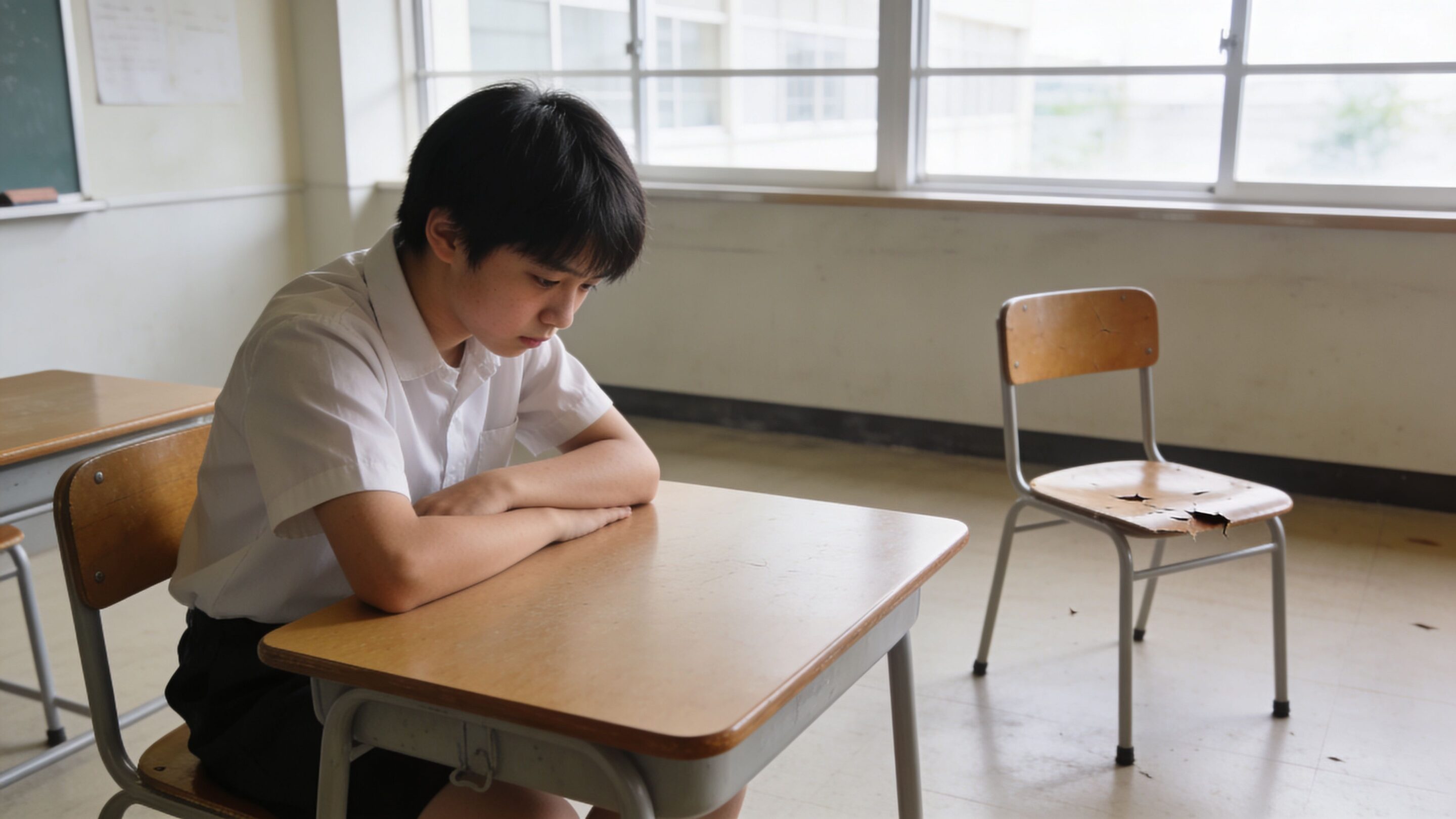
A student stops raising their hand after you called on them and then brushed off their answer. Your child nods when you ask if they’re fine, but the warmth is gone after you broke a promise you made twice. A staff member says “no problem” in the hallway, yet gives you only the minimum in meetings after a decision landed on them instead of with them.
That’s what broken trust often looks like. Not a dramatic confrontation. A pullback. Less openness. Less risk-taking. Less honesty.
If you’re trying to figure out how to earn trust back, start here: trust repair is not about one perfect apology. It’s about helping the other person feel safe enough to believe your words again because your actions keep matching them. In schools and homes, that matters even more. Children learn what trust feels like from repeated moments with adults. Staff do too.
Trust can be rebuilt. It usually takes longer than the person who caused the hurt wants. It also takes more specificity than is commonly expected. Vague regret rarely repairs much. Clear ownership, calm listening, and consistent follow-through do.
When Trust Is Broken The Path to Repair
In a classroom, trust often breaks in ordinary moments. A teacher promises to check in with a student and forgets. A principal says student voice matters, then rushes through concerns after an incident. A parent says, “You can tell me anything,” and then reacts with anger when the child finally does.
For children, trust is closely tied to psychological safety. They don’t separate relationship from learning the way adults try to. If an adult feels unpredictable, dismissive, or defensive, the child may protect themselves by withdrawing, acting out, or saying as little as possible. The same pattern shows up with staff. Once people start bracing, they stop bringing you the truth.
That’s why trust repair belongs inside SEL practice. It isn’t extra. It’s part of teaching self-awareness, responsible communication, and conflict repair. If you want a helpful outside perspective on relationship repair language, Securely Loved's trust recovery guide offers useful reminders about accountability and patience. For a school-centered lens, Soul Shoppe’s article on building trust in relationships is a strong companion.
What trust repair actually asks of you
Most adults want to jump to reassurance.
They say things like:
“You can trust me.” “I said I was sorry.” “I’m doing better now.”
The problem is that the hurt person doesn’t need your conclusion. They need your reliability.
A better starting point is:
Name the break clearly so the other person doesn’t have to prove it happened.
Acknowledge the impact instead of focusing on your intention.
Invite honest response without punishing it.
Show change in small visible ways long enough for the nervous system to catch up.
Practical rule: Trust usually returns quietly. You’ll notice it in renewed eye contact, more honest answers, and a greater willingness to ask for help.
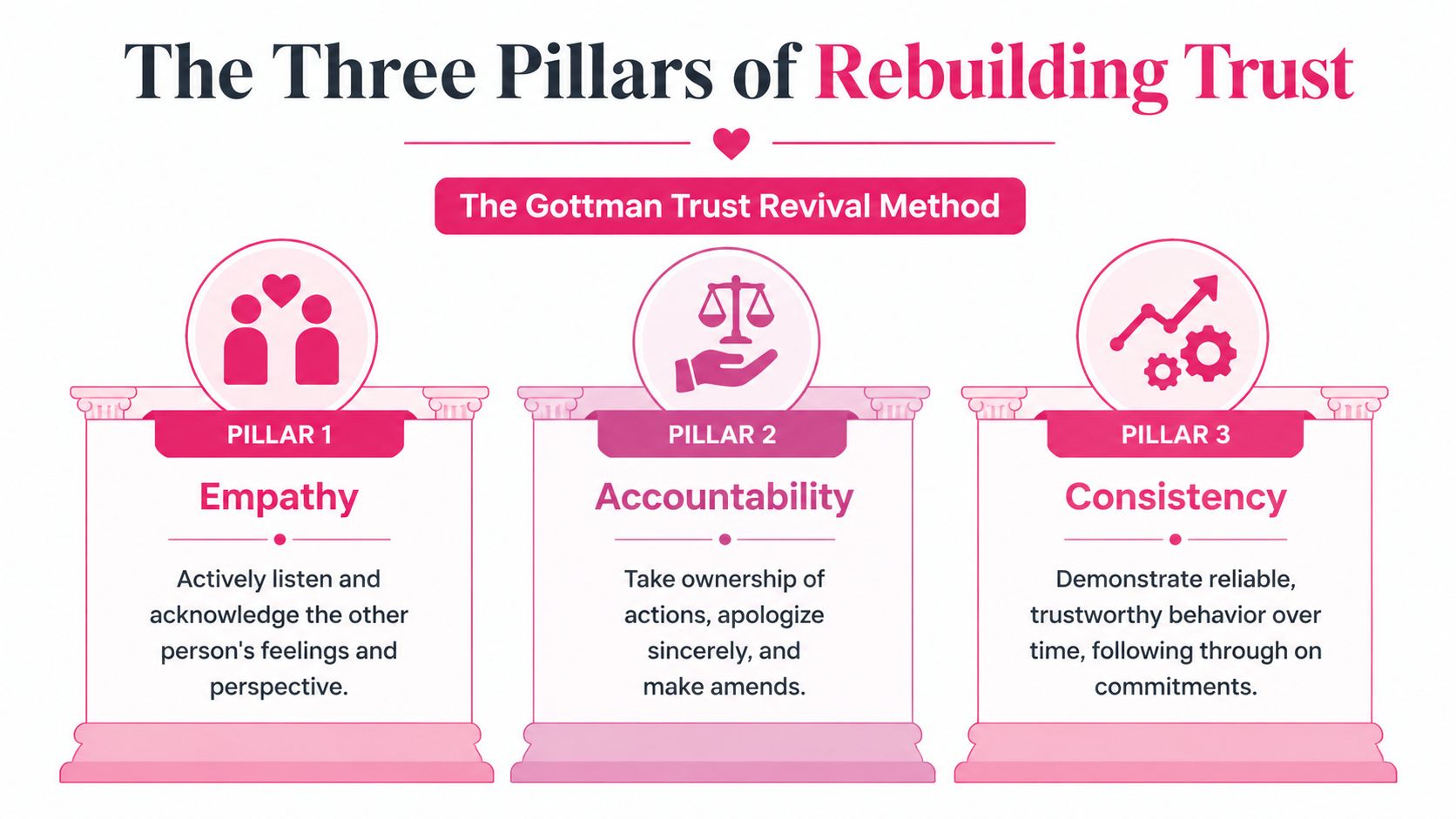
The Three Pillars of Rebuilding Trust
A useful framework comes from the Gottman Trust Revival Method: Atone, Attune, Attach. In work with families and schools, these three words are memorable because they match what children and adults both need after a breach. First, they need the adult to own it. Then they need to feel understood. Then they need new experiences that make the relationship feel safe again.
According to the Gottman Institute’s discussion of reviving trust after betrayal, couples who complete all three phases report a 70 to 85% success rate, and partial accountability fails in 80% of cases during the Atone phase because the trust-breaker needs to take 100% ownership (Gottman’s overview of Atone, Attune, and Attach).
Atone means full ownership
Atone is not self-criticism. It is precise responsibility.
If a teacher says, “I’m sorry you felt embarrassed,” that’s not ownership. If a principal says, “Communication could have been better,” that spreads responsibility into the air. If a parent says, “I was stressed,” before acknowledging the child’s experience, the child hears explanation before care.
Atone sounds more like this:
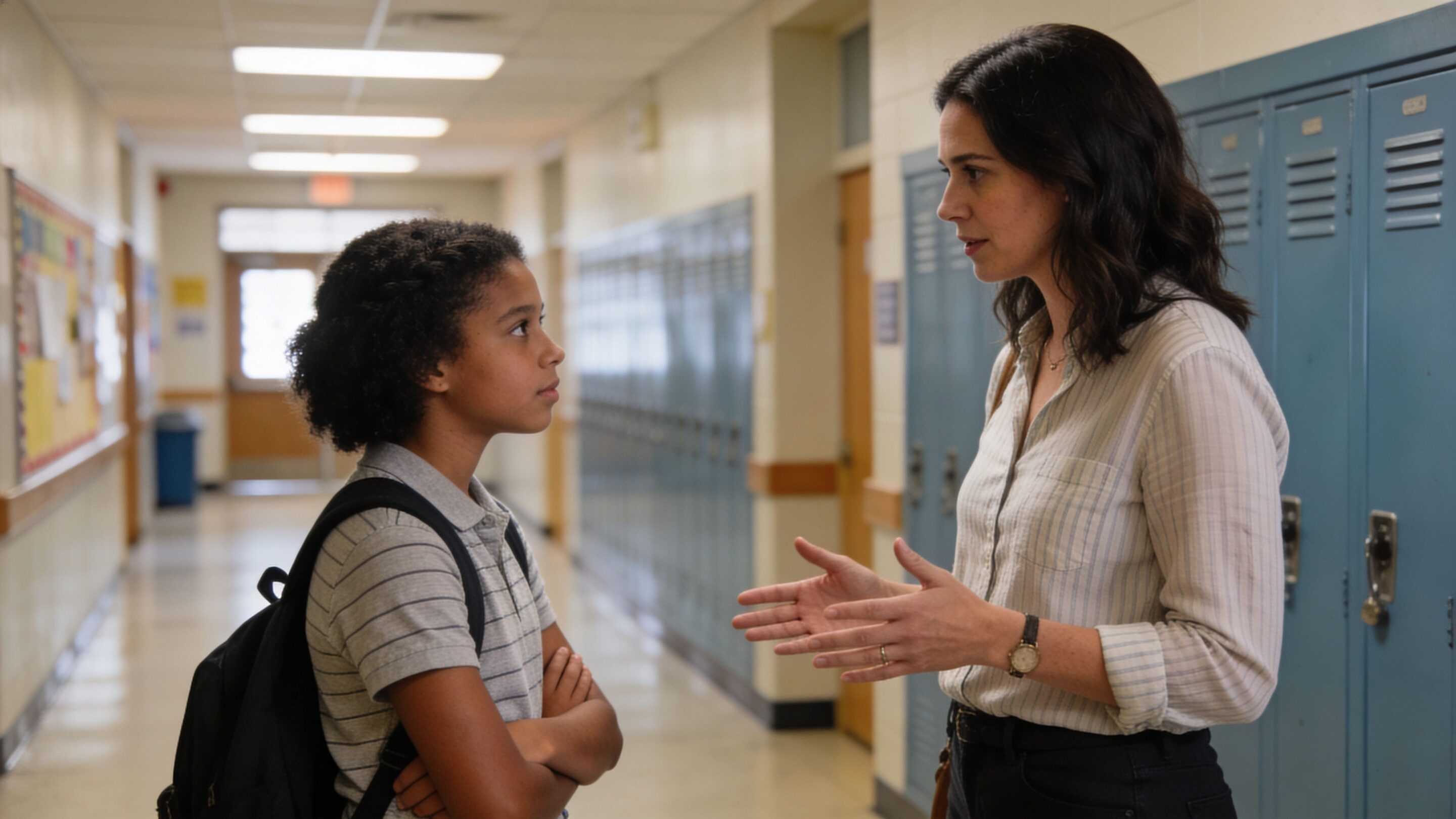
Teacher to student: “I called out your behavior in front of the class. That put you on the spot. I should have spoken with you privately.”
Parent to child: “I promised I’d come to your performance and I didn’t. You had a right to expect me there.”
Principal to staff: “I announced the schedule change before discussing it with the team most affected. That damaged trust.”
This phase matters because people can’t relax into repair if they still feel they have to convince you there was harm.
Attune means stay with the feelings
Once you’ve owned the action, the next job is harder for many adults. You have to hear the impact without defending yourself.
That means letting a child say, “You always say you’ll help and then you forget,” without correcting every word. It means letting a teacher say, “I didn’t feel respected,” without replying, “That wasn’t my intent.” Intent can matter later. In the repair moment, impact comes first.
A few attunement habits work well in schools and homes:
Reflect back what you heard: “You stopped asking for help because you expected me to dismiss you again.”
Validate the emotion: “That makes sense.”
Keep your body calm: lower your volume, slow your pace, don’t loom over a child.
Ask one more question: “What felt hardest about that?”
Soul Shoppe’s explanation of the five core SEL competencies fits here well because attunement depends on self-awareness, self-management, relationship skills, and social awareness all at once.
If the hurt person has to take care of your feelings while telling the truth, trust repair stalls.
Attach means build new proof
After a good apology and a real conversation, many adults assume trust should come back. Usually it doesn’t. Not yet.
Attach is the phase where you create repeated moments that feel different from the old pattern. You don’t argue someone back into trust. You give them enough lived evidence to update their expectations.
Here’s what that can look like:
Relationship
Old pattern
New proof
Teacher and student
Public correction
Private check-in before discussing behavior
Parent and child
Broken promises
One small promise kept daily or weekly
Principal and staff
Decisions announced late
Preview decisions early and invite feedback
The key trade-off is speed versus depth. Adults often want closure. Trust repair asks for patience. Rushing to “Are we good now?” usually serves the person who caused the hurt, not the person carrying it.
Actionable Scripts for Every Relationship
Specific language helps because it keeps adults from falling into the same old habits: explaining, minimizing, or pushing for quick forgiveness. In relationships affected by a significant trust breach, 86% of couples who commit to full vulnerability and detailed, honest discussions about the events succeed in rebuilding trust, while 32% of those who discuss it with very little detail regain very little trust according to this breakdown of trust rebuilding through detailed honesty. The setting in that research is intimate partnership, but the practical lesson carries into schools and homes. Detail matters.
Teacher to student after a letdown
A student usually knows when an adult is trying to smooth things over. They can hear the difference between a polished apology and a grounded one.
Use a script with four parts:
Name what happened
Name the likely impact
Take responsibility
Offer a concrete next step
“I told you I would check your project before the end of class, and I didn’t. You were left waiting and then had to turn it in without the support I promised. That’s on me. Tomorrow, I’m meeting with you first during work time, and if I ever can’t follow through, I’ll tell you directly instead of leaving you guessing.”
If the student is upset, don’t chase agreement.
Try:
“You don’t have to say it’s okay. I wanted to be honest about what happened and what I’m doing differently.”
That line lowers pressure. It also signals that the apology is about repair, not relief for the adult.
Parent to child after breaking a promise
Parents often rush to the explanation because the context feels important. Work ran late. Traffic was bad. A younger sibling melted down. Sometimes those things are true and relevant. They just can’t come first.
Start here:
“I said I’d be there, and I wasn’t. That hurt, and I understand why you’d be mad.”
Then add needed detail:
“You may have been looking for me and wondering if I forgot or if it didn’t matter to me. I did not want you to carry that feeling, but I created it anyway.”
Then make the repair visible:
Offer one do-over with structure: “I can’t redo the game, but I can protect Friday from start to finish and show up early.”
Invite the child’s input: “What would help you believe me next time?”
Accept a guarded response: “It makes sense if you don’t trust this right away.”
When children have ADHD, language processing differences, or impulsivity in conflict, clarity matters even more. Parents and educators who need help reducing crossed wires may find Sachs Center's ADHD communication solutions useful because repair conversations go better when instructions, expectations, and emotional language are more concrete.
Administrator to staff after a leadership misstep
Trust repair with staff has one extra layer. People are often evaluating not only your character, but also whether speaking truthfully is safe.
A principal might say:
“I moved ahead with the assembly plan without giving grade-level teams time to raise concerns. That decision affected your classrooms and your credibility with students. I own that. Today I want to hear what the impact was, and then I’ll share how we’ll change the process before the next schoolwide event.”
What not to add in the opening:
“We were under a lot of pressure.”
“Everyone had a part in this.”
“I hope we can move forward.”
Those statements may be discussable later. In the first repair moment, they dilute accountability.
Scripts that don’t work well
It helps to hear the contrast.
Common script
Why it fails
Better replacement
“I’m sorry you were upset.”
Focuses on reaction, not action
“I’m sorry I did that.”
“That wasn’t my intention.”
Prioritizes self-explanation
“The impact mattered, even though I didn’t intend it.”
“Can we move on now?”
Pressures for closure
“I know trust may take time to rebuild.”
“You need to tell me what to do.”
Pushes the labor back to the hurt person
“I’m starting with these changes, and I’m open to what would help.”
For adults who want more support with wording, Soul Shoppe’s examples of I-statements that reduce defensiveness can help shift a tense conversation into something more workable.
When the child says nothing
Silence is common after trust has been damaged. Don’t confuse it with indifference.
A student may stare at the floor. A child may shrug. A staff member may say, “It’s fine.” In many cases, that means the person doesn’t yet believe honesty will be handled safely.
Use low-pressure invitations:
“You don’t have to respond right now. I wanted to own my part.”
“If talking feels hard, you can write it, draw it, or tell me later.”
“I’ll check back tomorrow. I’m not dropping this because it matters.”
That last sentence is powerful because it separates persistence from pressure.
A short visual can help adults rehearse these moments before they happen:
What this can look like in a real day
Different moments call for different levels of support.
Time of day
What’s happening
How to use the box breathing visual
Arrival
Students carry energy from home
One whole-class round after unpacking
Transition to math
Anxiety rises
Teacher points to square and leads two silent cycles
Conflict after group work
Voices are sharp
Students pause, breathe separately, then rejoin conversation
End of day
The room feels scattered
One final round before dismissal directions
The big mistake is saving the tool only for the child who is “having a hard time.” When the whole class uses it, the practice feels normal rather than corrective.
Adapting Box Breathing for Different Ages and Needs
A strong box breathing visual for adults can still miss the mark with children. The issue usually isn’t the breath itself. It’s the mismatch between the child’s developmental stage and the way the tool is presented.
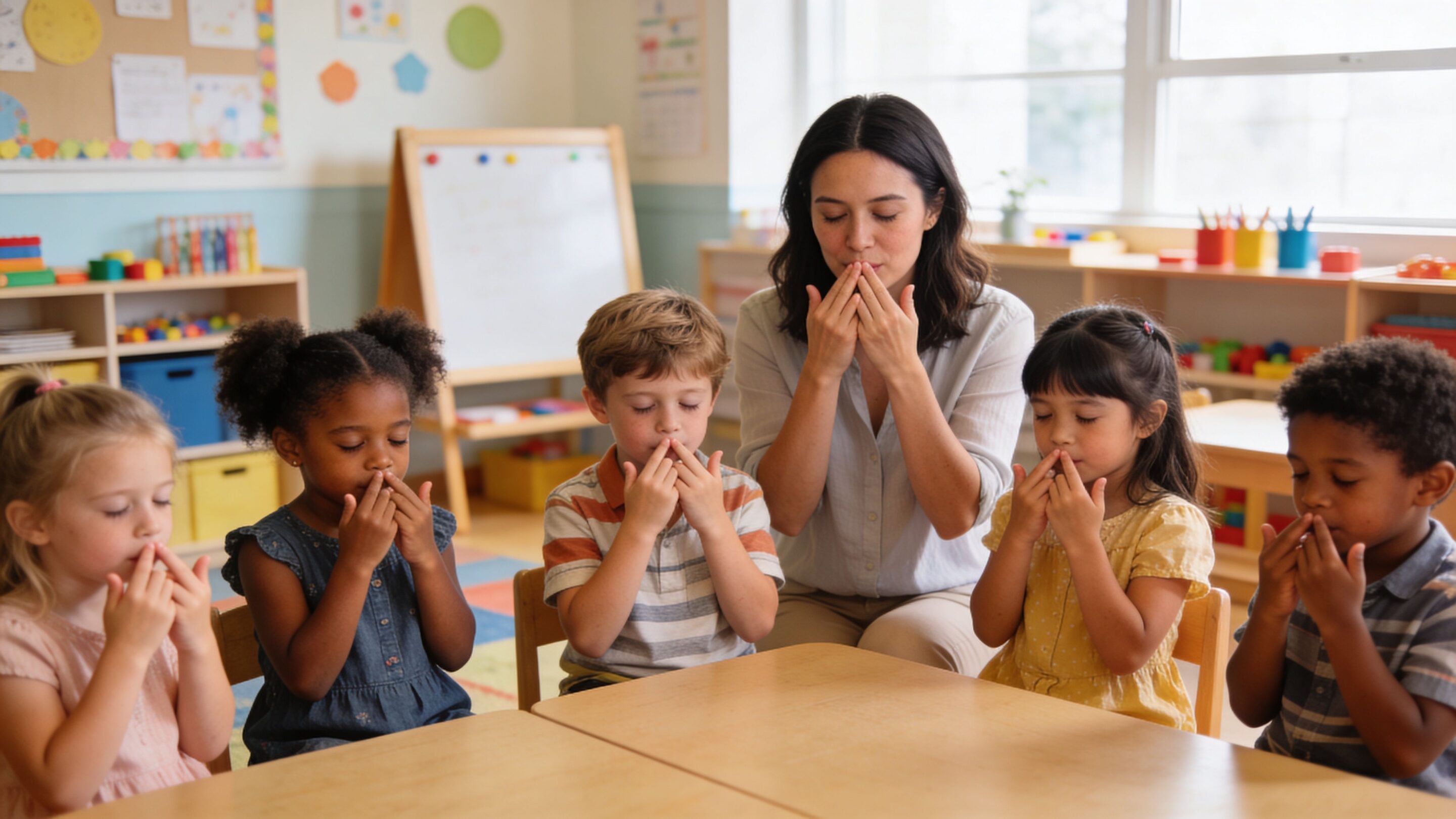
One adjustment matters more than most: young children generally manage shorter breath cycles of two to three seconds better than the standard four-second version. That’s a useful reminder for anyone trying to teach the same pattern to every grade level.
Kindergarten through grade 2
Young children need brevity, movement, and imagery. Four counts can feel long, especially if they’re upset or impulsive. A 2 or 3 count square often works better.
Try language like:
“Smell the flower.”
“Freeze.”
“Blow the feather.”
“Freeze.”
Let them trace a square on the carpet, on their palm, or on a card with bright edges. Some teachers use finger puppets, small laminated “magic square” cards, or a square taped onto the floor for line-up time.
A practical example: A first-grade class comes in from lunch loud and bumping into each other. The teacher stands at the rug and says, “Show me your finger square.” Everyone traces one small box in the air while breathing together. No one has to close their eyes or sit perfectly still.
Grades 3 through 5
This age group can usually handle the classic 4 count pattern, but they still benefit from concrete context. Tie the skill to situations they already care about. Friendship tension, test nerves, getting picked for teams, frustration during writing.
A box breathing visual can sit in:
a calm corner
a take-a-break folder
a desk caddy
the top of a worksheet packet during longer tasks
Students this age also like ownership. Invite them to design a class square, choose colors, or create one for a buddy classroom.
A child is more likely to use a regulation tool they helped create.
Grades 6 through 8
Older students often resist anything that feels childish or performative. The language should be cleaner and more respectful. Focus, reset, steadiness, composure, and performance are usually better entry points than “calm down.”
Use it before:
speeches
band or choir performances
athletic competition
difficult peer conversations
tests
A middle school counselor might say, “One cycle before you walk in. In four, hold four, out four, hold four.” That works because it’s private, fast, and not loaded with extra explanation.
Neurodivergent students and flexible use
Some students need the visual but not the hold. Others need the tracing but not the counting. Some do best with a shorter pattern and repeated practice across the day.
Helpful adjustments include:
Shorter counts: Better for students who feel trapped by long holds
Silent tracing: Good for students who don’t want to stand out
Desk-based visuals: Useful when transitions are activating
Adult co-regulation: Child watches the adult breathe first, then joins if ready
The aim isn’t to make every child do the method the exact same way. The aim is to help each child find a version they can use.
What to Do When Box Breathing Gets Complicated
You introduce box breathing after lunch. One student starts huffing loudly. Two more start laughing. Another puts their head down and refuses. That kind of moment is common in K through 8 settings, and it does not mean the practice has failed. It means the adults in the room need a flexible plan.
Complications usually come from one of three places. The child feels exposed. The breathing pattern feels uncomfortable. The tool is being introduced too late, after the nervous system is already running hot.
Technique matters, but comfort matters too. A randomized controlled trial on box breathing for post-mastectomy pain syndrome noted that participants were taught diaphragmatic breathing as part of the practice, which supports the same coaching move many teachers and caregivers use with children: a hand on the belly can help shift breathing out of the chest and into a slower, steadier pattern (study details here). With students, I keep that cue simple. “Let your belly do the work.”
What if students get the giggles
The giggles usually mean the group is activated, self-conscious, or unsure what is being asked of them. Treat it as information.
Try these responses:
“We’re doing one quiet square together.”
“Watch my finger and match the pace.”
“You do not have to do it perfectly. Just stay with me for one round.”
If the whole group tips into silliness, shorten the practice and save the longer version for another time. In a classroom, protecting the tone matters more than squeezing in extra rounds.
What if a child says it’s not working
Take that seriously. “Not working” can mean the count is too long, the hold feels bad, the child is embarrassed, or they need a different regulation tool altogether.
Start with a quick adjustment:
Check body comfort: “Does the breath feel tight or forced?”
Shrink the square: Use a shorter count
Change the entry point: Trace the visual together instead of asking for closed eyes
Simplify the task: Keep only the exhale slow
Offer another tool: Pair breathing with grounding, movement, or co-regulation
That adjustment helps many younger students, anxious students, and neurodivergent students who feel trapped by breath holding. You can still use the square as a pacing visual. Breathe in for one side, out for the next, and keep the pattern going without the pauses.
Adults sometimes worry that changing the pattern means they are no longer doing “real” box breathing. In practice, a usable version is better than a perfect version that the child avoids.
The best version of the tool is the version the child can actually use.
What if adults only use it during crisis
Children notice that quickly. If box breathing shows up only when someone is upset, it starts to feel like a correction instead of a skill.
Teach it before the hard moment:
at arrival
before a quiz
after recess
before transitions
at bedtime or before homework at home
That proactive use is what makes the visual familiar enough to help later. By middle school, students are far more willing to use a quiet reset they already know than a new strategy introduced in the middle of embarrassment or conflict.
A quick troubleshooting guide
Challenge
What often happens
What works better
Child escalates quickly
Adult teaches the strategy for the first time in the moment
Practice earlier during neutral parts of the day
Child breathes high in the chest
Adult repeats the count louder
Add a hand-on-belly cue or model one slow breath
Group gets silly
Adult pushes through a long round
Do one short round and try again later
Student resists the hold
Adult insists on the full pattern
Remove the hold and keep the visual pacing
Older student shuts down
Adult uses language that feels childish
Use private, respectful cues like “reset” or “steady”
Patience matters here. Children are learning a body-based skill, and body-based skills rarely look polished at the start. In classrooms and homes, success usually looks ordinary: one quieter transition, one less power struggle, one child who remembers to use the square before things fall apart.
Frequently Asked Questions About Box Breathing
Is box breathing the best breathing method for every situation
No. It’s a strong choice for focus, composure, and steadying the body, but it isn’t the only useful breathing pattern. A source discussing a 2023 study notes that cyclic sighing, which emphasizes a longer exhale, was more effective than box breathing for improving mood and reducing respiratory rate, according to this comparison of breathing approaches. That’s why tool-matching matters.
A simple rule of thumb helps:
Use box breathing when a child needs structure and focus
Use a longer-exhale pattern when a child needs deeper downshifting
How long should a child practice
Keep it realistic. In a classroom, one to three rounds may be enough for a reset before instruction. At home, a child might use a few rounds before homework, bedtime, or a difficult conversation.
For longer-term skill building, consistency matters more than intensity. A short daily practice usually works better than saving the tool for major meltdowns.
Can kids use a box breathing visual during a panic moment
Sometimes, yes, but with care. If a child can still follow simple cues, a visual can help them orient and slow down. If they’re too overwhelmed to count or hold, simplify. Trace the shape together. Focus only on a slower exhale. Sit nearby and co-regulate first.
If a child experiences repeated panic symptoms, severe anxiety, or distress that doesn’t ease with support, breathing tools should be part of a larger plan that includes professional guidance.
Should children close their eyes
Usually not in group settings. Many children regulate better with eyes open and focused on the square. Closing the eyes can feel too vulnerable, too hard, or too activating.
What if my child refuses because it feels babyish
Change the framing. Call it a reset cycle, performance breathing, or tactical breathing. Give older kids privacy and choice. A strategy doesn’t need to look cute to be effective.
Building a Culture of Calm and Connection
A box breathing visual is small. That’s part of its power. You can tape it to a desk, post it by the classroom door, slide it into a homework folder, or keep it in a counseling office. It doesn’t require a special room or a long lesson. It asks for something more important. Consistent use, calm modeling, and language that respects children.
When adults use the tool as a shared practice instead of a correction, children learn something bigger than one breathing pattern. They learn that strong feelings can be noticed without panic. They learn that a pause is available before a reaction. They learn that classrooms and homes can become places where regulation is taught, not demanded.
That culture grows through repetition. A teacher points to the square after recess. A parent traces one before homework. A counselor uses the same rhythm before a hard conversation. Over time, the cue becomes familiar. Then usable. Then internal.
Start small:
post one child-friendly square where kids can see it
teach it when the room is already calm
use the same brief script each time
adapt the count for the child in front of you
treat practice as skill-building, not compliance
A calmer classroom and a calmer home rarely come from one dramatic intervention. They come from ordinary moments handled with steadiness, over and over again.
If you want support building that kind of steady, connected school culture, Soul Shoppe offers practical SEL programs, workshops, and resources that help students and adults develop shared language for self-regulation, empathy, and healthy relationships.
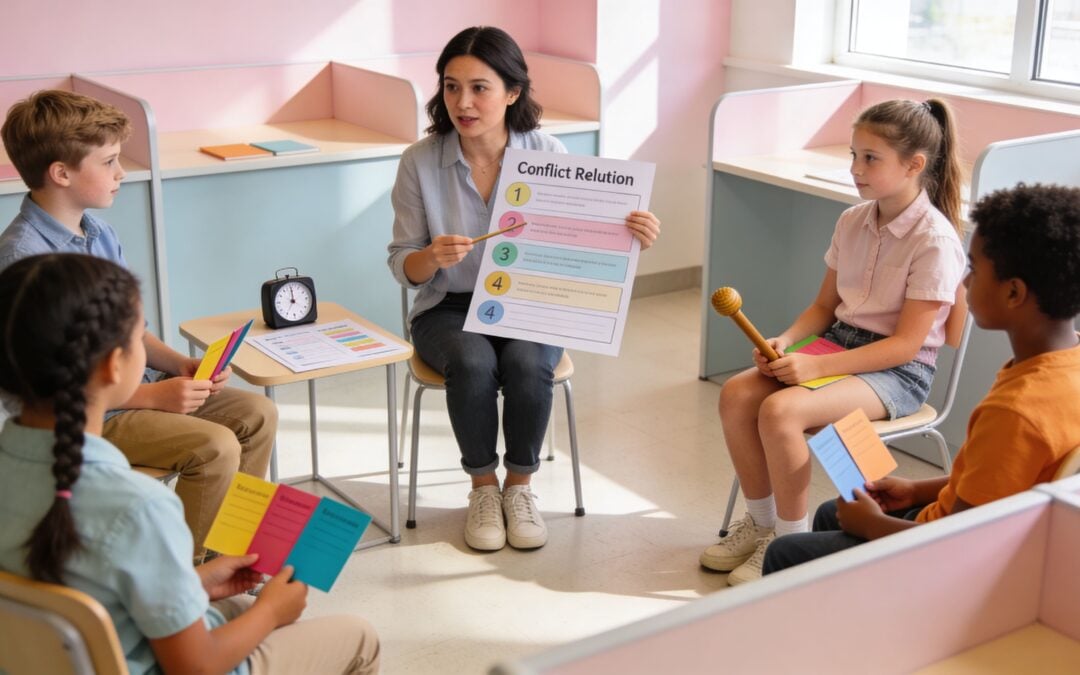
A disagreement over a shared toy. Hurt feelings after a comment at recess. A group project that falls apart because no one feels heard. If you work with kids, you’ve seen how fast small moments can turn into tears, silence, blame, or pushing.
Conflict is part of school life. That won’t change. What can change is how students move through it. With practice, a tense moment can become a lesson in listening, problem-solving, empathy, and repair. That’s why conflict resolution activities for students matter so much. They don’t just calm a classroom in the moment. They help children build habits they’ll use in friendships, family life, and future work.
The good news is that you don’t need to wait for a big behavior issue to start. You can teach these skills in morning meeting, partner work, read-aloud discussions, recess support, advisory, and family conversations at home. Many educators also build on essential conflict resolution techniques to create shared language across classrooms.
At Soul Shoppe, we’ve spent more than 20 years helping schools build connected, safe communities through experiential social-emotional learning. One thing we’ve seen again and again is simple: kids rise when adults give them tools, scripts, and steady practice. The ten strategies below aren’t just one-off activities. They’re practical mini-systems you can use from kindergarten through middle school to help students handle conflict with more confidence and care.
1. Peer Mediation Programs
Two students storm in from recess, each talking over the other, each sure they were wronged. The teacher has twenty other children waiting, a lesson to start, and about thirty seconds to decide what happens next. Peer mediation gives schools a middle path between ignoring the conflict and turning every disagreement into an adult-run event.
At its best, peer mediation works like a student version of a good traffic signal. It slows the moment down, creates turns, and helps everyone move more safely. Trained student mediators do not hand out punishments or decide who is telling the truth. They guide a process so classmates can listen, name what happened, and agree on a repair step they can both carry out.
This approach is especially useful for recurring peer conflicts such as exclusion at recess, arguments over shared materials, teasing, friendship strain, and misunderstandings that grow because no one pauses to check the facts. In Soul Shoppe’s 20-plus years of working with schools, we’ve seen that students often accept peer support more readily when the process is clear, supervised, and practiced. It sends a powerful message. Problem-solving belongs to the whole community.
How it looks in practice
A fourth grader and a fifth grader are stuck in a kickball argument. Both want an adult to declare a winner. A trained mediator brings them to a quiet spot and starts with one simple norm:
“One person talks at a time. First, tell what happened from your point of view. Then your classmate gets a turn.”
From there, the mediator might ask, “What part felt unfair?” “What did you want to happen instead?” and “What is one step that would help fix this today?” Those questions shift the conversation from proving a case to solving a problem. For many students, that is the moment the temperature drops.
Peer mediation works best as part of a larger school system. Students need to know which conflicts fit mediation, how to request it, when an adult steps in, and what happens after an agreement is made. Schools often pair mediation with class agreements and follow-up reflection. If you want the repair side of this work to feel stronger, Soul Shoppe shares related practices in its guide to restorative circles in schools and in its guide to conflict resolution for schools.
K-8 differentiation
K-2: Keep it short and adult-supported. Use picture cards for feelings, sentence frames such as “I felt ___ when ___,” and one concrete repair choice.
3-5: Train student mediators to paraphrase, check for understanding, and help peers agree on one next step they can do the same day.
6-8: Add confidentiality guidelines, note-taking, and practice with more layered conflicts such as rumors, shifting friend groups, and online issues that spill into school.
A simple SEL script for training mediators
Start with language students can remember:
“Tell me what happened from your side.”
“What were you feeling at the time?”
“What did you need or want?”
“Now let’s hear the other person.”
“What is one fair step you both agree to next?”
For younger students, shorten it even more. For older students, add, “Can you repeat what you heard before you respond?” That one move often prevents the conversation from sliding back into debate.
Reflection prompts for staff and student mediators
Which conflicts should go to mediation, and which need immediate adult support?
Do students see mediation as fair, private, and helpful?
Are agreements specific enough to follow through on?
What support do mediators need after a tough case?
Peer mediation is one strategy in this larger toolkit. It builds student voice, shared responsibility, and everyday repair skills that support a more peaceful school culture.
2. Restorative Practices, Circles, Community Conferences, and Classroom Practices
It is 10:15 on a Tuesday. Two students are glaring at each other after a recess argument, the rest of the class is watching, and instruction has stalled. In that moment, a consequence alone rarely repairs the room. Students also need a process that helps them name impact, hear one another, and make a clear plan to put things right.
That is the role of restorative practices. They give schools a repeatable way to handle conflict before it grows, during the hard moment, and after harm has happened. A weekly circle, a short partner check-in, and a formal community conference are all part of the same system. The goal is not only to respond to problems. The goal is to teach students how a healthy community repairs strain.
Restorative work shifts the questions adults ask. Instead of focusing only on rule-breaking, teachers guide students to consider who was affected, what each person experienced, and what repair now looks like. That change matters because accountability becomes concrete. Students are not just receiving a consequence. They are practicing responsibility.
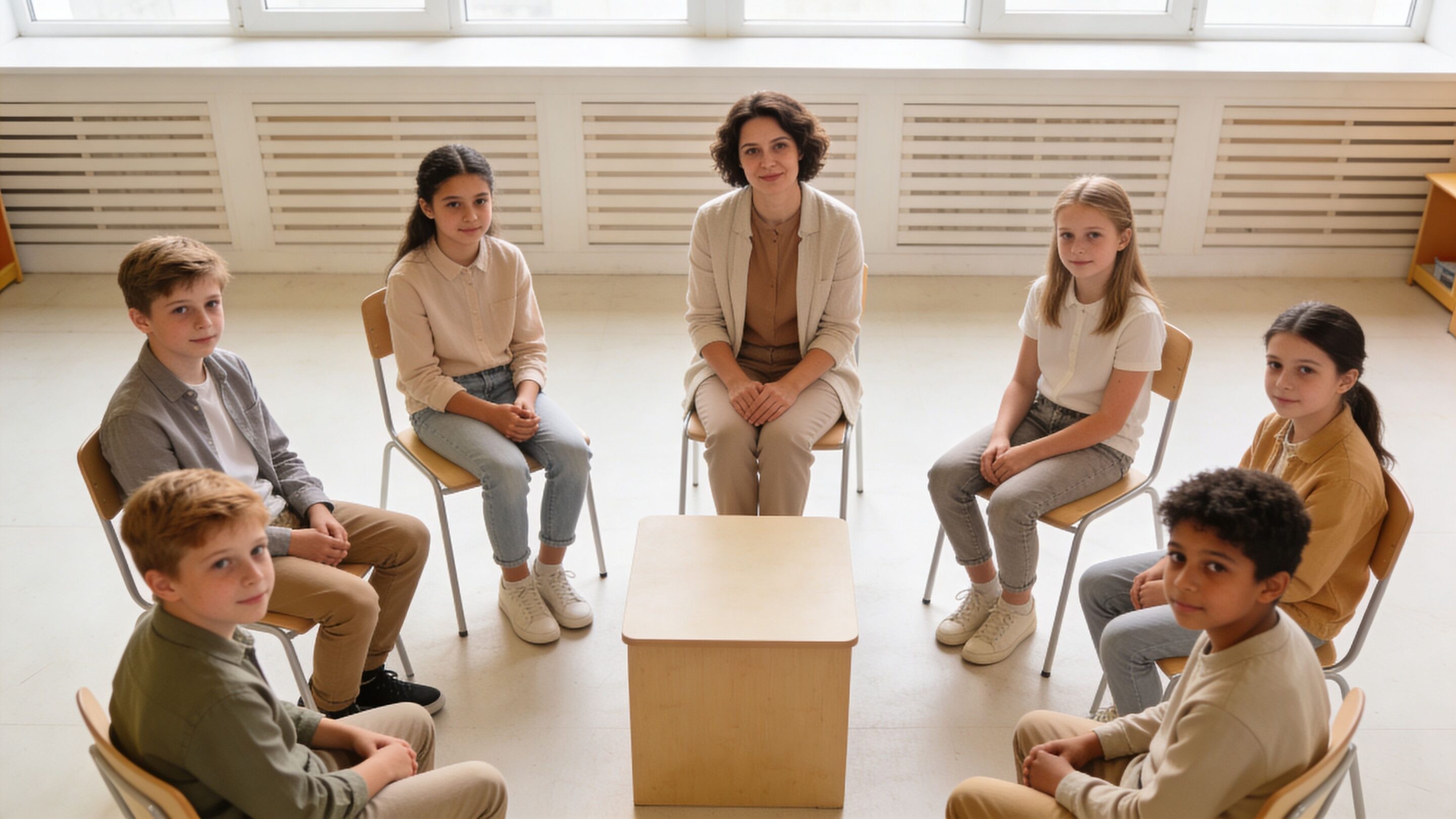
A classroom circle works like a homeroom meeting with more structure and more intention. The format is simple, but the routine does a lot of heavy lifting over time. It builds listening stamina, emotional vocabulary, and trust before students need those skills in a tense conversation. Soul Shoppe shares practical examples of restorative circles in schools that teachers can adapt across grade levels.
A simple classroom circle
Try this in a grade 2 classroom after repeated line-cutting conflicts:
Opening prompt: “What helps you feel respected in a line?”
Middle prompt: “What happens in your body when someone cuts in front of you?”
Repair prompt: “What can our class agree to do next time?”
For older students, the structure can widen into a community conference. That might include the student who caused harm, the student affected, a staff member, and a caregiver. The adult’s job is to keep the conversation steady and specific so it stays on impact, responsibility, and repair rather than blame or debate.
Start with low-stakes circles first. Students need practice with turn-taking and honest sharing before they can use circles well during conflict.
A helpful way to picture the progression is this: circles build the classroom soil, and conferences address the specific damage. If the soil is dry, the repair conversation has very little to grow in. That is why schools with strong restorative practice do not treat circles as a one-time activity. They use them as a routine that supports safety, belonging, and honest problem-solving.
Research and practice summaries from the International Institute for Restorative Practices describe stronger relationships and healthier school climate as common outcomes of well-implemented restorative approaches. In Soul Shoppe’s work with schools over more than 20 years, the pattern is familiar. Students are more willing to repair harm when adults have already taught the structure, modeled calm language, and protected everyone’s dignity during the process.
3. Role-Playing and Perspective-Taking Scenarios
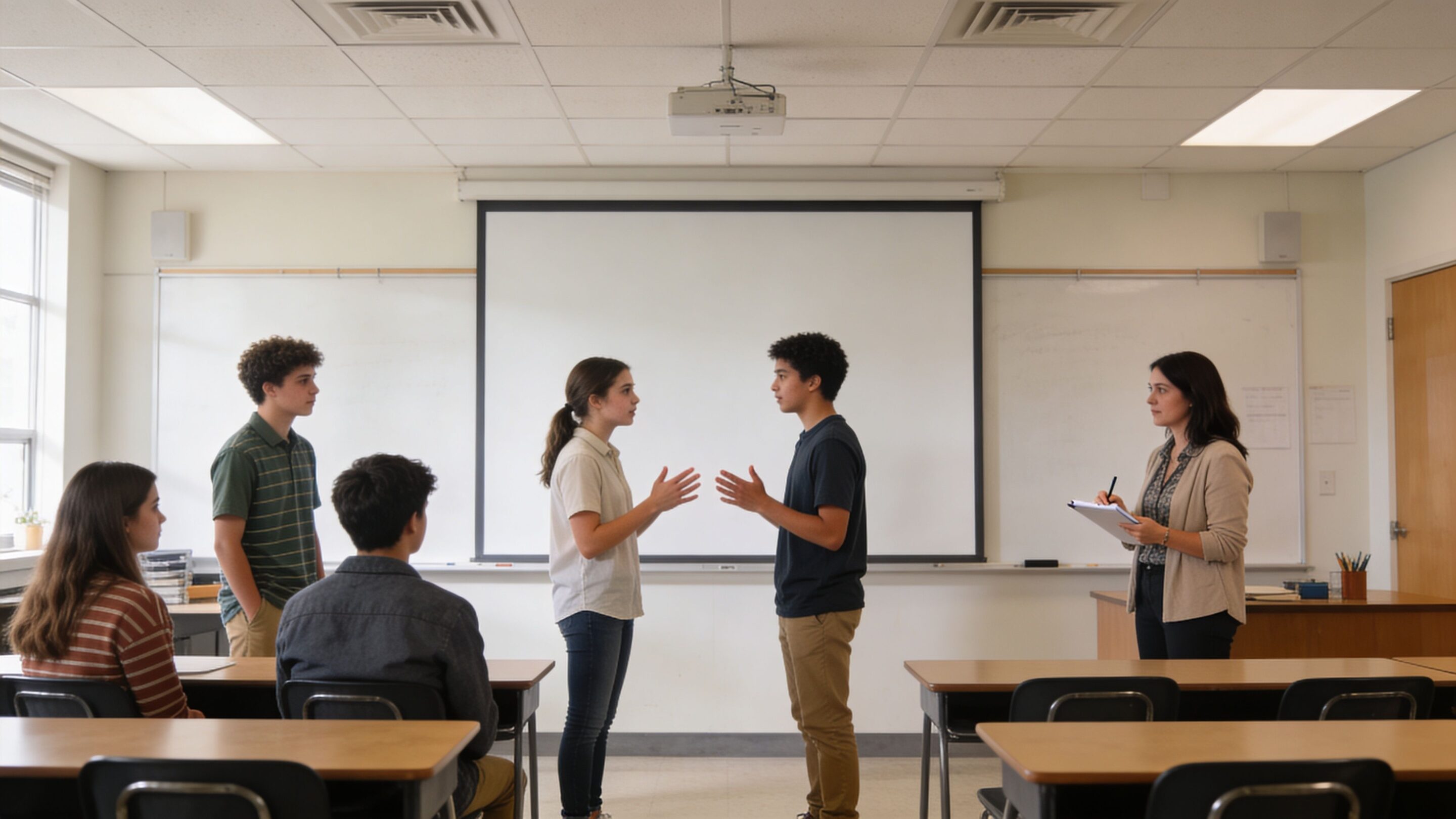
Students need rehearsal before real-life conflict shows up. Role-play gives them that rehearsal. It lets them try language, make mistakes, and build confidence while the stakes are low.
A useful role-play isn’t dramatic for drama’s sake. It’s familiar. Two students want the same marker set. One student feels left out of a game. A lab partner takes over the whole assignment. Those are the conflicts kids recognize.
A role-play format that works
Use three roles:
Student A
Student B
Coach or observer
Give the observer a job. They listen for one thing, such as interrupting, blaming language, or whether each student offered a solution. That makes the debrief much sharper.
Try these sentence starters:
“When that happened, I felt…”
“What I needed was…”
“Next time, could we…?”
“Let me say back what I heard.”
In primary grades, use puppets, stuffed animals, or character cards. In upper elementary and middle school, ask students to switch roles halfway through so they must argue the other person’s side. That’s where empathy often clicks.
Here’s a classroom video you can use as a discussion starter before students practice.
Reflection prompts
After each role-play, ask:
What words helped lower the heat?
Where did the conflict get worse?
What would you try differently in a real situation?
This kind of practice is especially promising in digital and gamified environments too. Analysis of 16,597 players in the FLIGBY serious game found improvements in conflict recognition, decision-making, and self-awareness through simulated scenarios.
4. Social Emotional Learning Curriculum Integration
A familiar classroom moment. Two students argue over materials during science. The teacher helps them settle it, but by lunch the same pattern shows up again with different students, different words, same stuck cycle.
That is why conflict resolution grows faster when it lives inside the school day instead of sitting in a once-a-month lesson. Students need repeated practice, in real contexts, with the same language showing up across classrooms, recess, advisory, and family communication. Over time, those skills start to work like a shared map. Children know where to go when feelings rise.
Integrated SEL gives students more than a reminder to “be nice” or “use your words.” It teaches the building blocks underneath conflict. Naming feelings. Noticing body signals. Listening for the other person’s perspective. Asking for what you need without blame. Repairing harm after a hard moment.
What integration can look like across the day
In kindergarten, that might mean using picture cards for words like “frustrated,” “left out,” and “proud” during morning meeting, then returning to those same words during play-based conflicts.
In grades 3 to 5, a teacher might pause a group project and ask, “What skill would help this group right now. Taking turns, listening, compromise, or repair?” Students begin to connect the lesson to the moment, which is where transfer happens.
In middle school, advisory can become a steady practice space for friendship conflict, digital communication, boundary setting, and problem-solving scripts. The key is repetition with adult modeling, not a single polished lesson.
Programs such as Second Step, PATHS, and Responsive Classroom are often used this way. What matters most is that the adults share language, protect time for practice, and reinforce the same skills outside the SEL block. Soul Shoppe has seen this pattern across more than 20 years of building connected and safe school communities. Students use conflict tools more consistently when the whole campus treats SEL as part of how school works, not an extra program on the side.
Practical rule: If adults are not using the same phrases students are learning, students usually stop using them under stress.
A simple planning test can help. Ask, “Where will students learn this skill, where will they practice it, and where will they use it during a real problem?” If a school can answer all three, integration is taking root.
For schools comparing approaches, Soul Shoppe shares helpful implementation questions in its guide to social-emotional learning programs for schools. Research summarized by CASEL on schoolwide SEL points to stronger student relationships, better emotion management, and improved academic engagement when these skills are taught intentionally and reinforced across the school environment.
5. Conflict Resolution Think-Pair-Share and Discussion Protocols
Not every student is ready to process conflict out loud in front of a class. Think-pair-share gives them time to collect their thoughts first. That pause alone can prevent shutdown or escalation.
This strategy is simple. Students think privately, talk with one partner, then share with a larger group if they’re ready. Because the first step is quiet reflection, more students can participate thoughtfully.
Try this with a real conflict theme
Prompt: “Two students both think the other one was rude during partner work. What could each student say to start repairing the problem?”
Give students one minute to write or draw. Then ask them to turn to a partner and compare ideas. Finally, invite a few responses to the group and chart the language that sounds respectful and clear.
Useful protocols include:
Talking piece circles for equal turns
Fishbowl discussions where one group models while another observes
Dialogue rounds with one question and no interruptions
This works well after recess incidents, before group projects, or after reading a story with a conflict scene. It also helps multilingual learners and quieter students because they get rehearsal time.
Helpful prompts by age
K-2: “What can you say if someone grabs your crayon?”
3-5: “How can you disagree without being mean?”
6-8: “What’s the difference between honesty and public embarrassment?”
The teacher’s role is to model curiosity instead of rushing to a verdict. If a child says, “I’d tell them they’re selfish,” you can ask, “What message do you want them to hear, and what wording would make that more likely?”
6. Cooperative Learning and Team-Building Activities
A group project starts. One student grabs the markers, another goes quiet, a third complains that they always do all the work, and the fourth checks out before the task really begins. By the time the disagreement shows up out loud, the conflict has usually been building for several minutes. Sometimes for several weeks.
That is why cooperative learning matters in a conflict resolution toolkit. It gives students practice with shared responsibility, turn-taking, and repair during low-stakes tasks, so they have something to stand on when real tension shows up. In Soul Shoppe’s 20+ years of work with schools, we have seen this pattern again and again. Students handle conflict better when adults teach collaboration as a skill, not as a hope.
A team task works like a practice field. If the structure is loose, stronger personalities can take over and quieter students can disappear. If the structure is clear, students get repeated chances to use conflict resolution moves in real time.
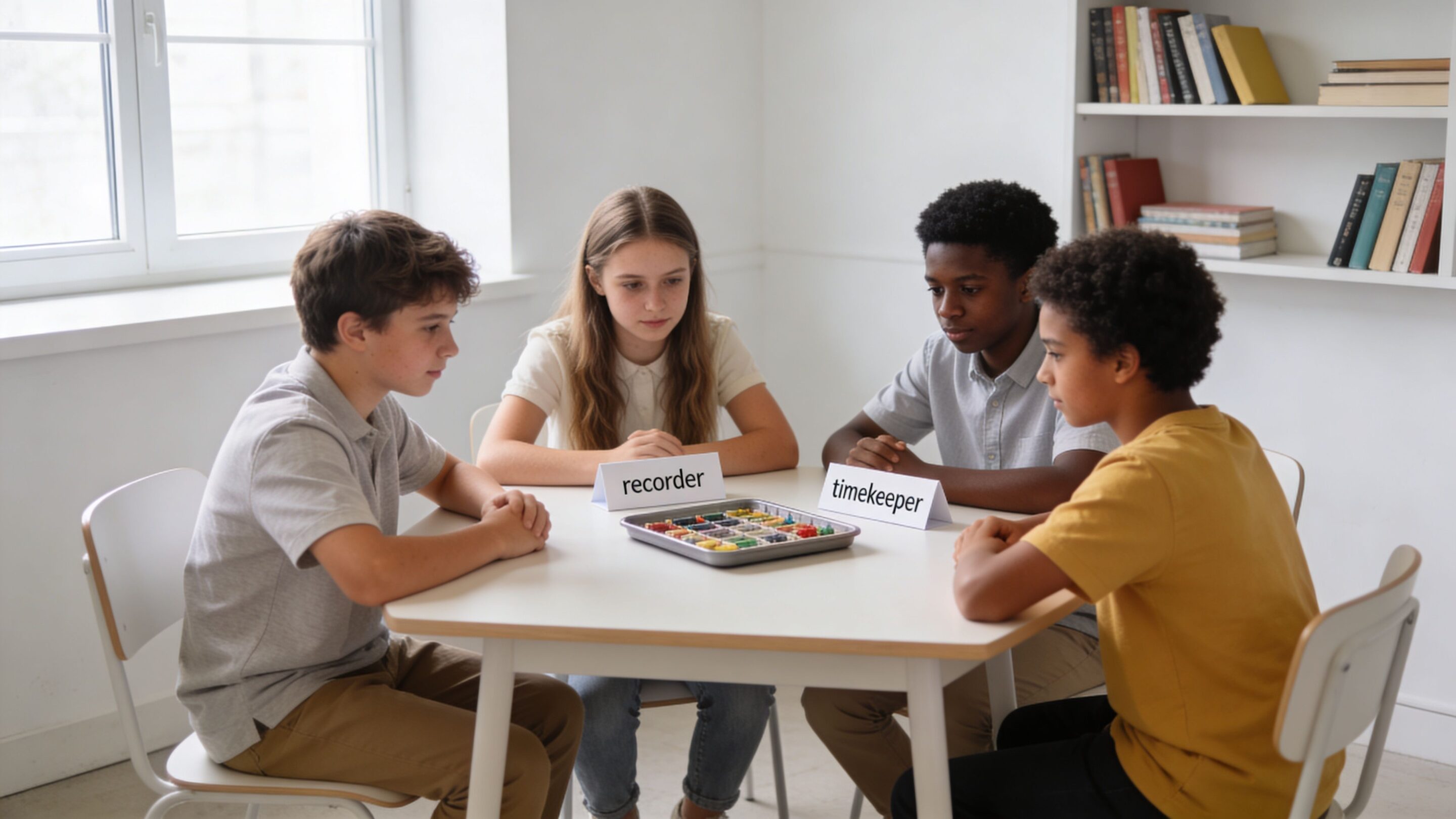
Start with roles that rotate:
facilitator
recorder
materials manager
timekeeper
inclusion checker
That last role often makes the biggest difference. The inclusion checker watches for who has spoken, who has been interrupted, and whether the group is making room for every voice.
Try a shared-challenge task
In a fourth grade classroom, give each team a building challenge with limited supplies. One student handles tape. One reads directions. One tracks time. One notices whether every idea gets heard before the group chooses a plan.
Then debrief the process, not just the product. That is where students learn how cooperation works.
Ask:
Who helped the group stay focused when opinions were different?
What did your team do when two ideas competed?
When did someone feel left out or unheard?
What sentence helped your group get back on track?
K-8 differentiation
K-2: Use short partner tasks with clear visuals and one shared material, such as one box of crayons for two students. Teach simple lines like, “My turn next, please,” and, “Let’s do it together.”
3-5: Add rotating jobs and a quick reflection sheet. Students at this age can start noticing patterns like interrupting, blaming, or deciding too fast.
6-8: Use longer group challenges with checkpoints. Older students benefit from naming group dynamics directly, such as social exclusion, sarcasm, unequal effort, or leadership struggles.
SEL script educators can use
Try a brief coaching script during group work:
“I’m noticing two strong ideas. Pause first. Let’s hear each one all the way through, then choose a plan together.”
If one student dominates, try: “Your ideas matter. Your job now is to make space for someone else’s idea too.”
If a student withdraws, try: “I want to make sure your voice is in the group. Do you want to share with a partner first, then bring your idea to the team?”
These prompts help students experience conflict as something they can handle, not something adults always have to fix for them.
Research on cooperative learning has found that well-structured group work can support stronger peer relationships and more positive academic and social outcomes, especially when students depend on one another to succeed. A helpful summary appears through the Education Endowment Foundation’s guidance on collaborative learning approaches. For playful practice beyond the classroom, some families and educators also use cooperative board games.
A simple reflection closes the loop: “How did we treat each other while we worked?” That question turns one activity into a repeatable strategy, which is exactly what helps a classroom grow from isolated conflict lessons into a steady culture of peace.
7. Mindfulness and Self-Regulation Practices
Some students know exactly what they should say in a conflict, but they can’t access that skill when they’re flooded. Their heart is racing, their jaw is tight, and their brain is locked on defense. Self-regulation practices help bridge that gap.
Mindfulness in schools doesn’t have to mean long silent meditation. It can be brief, concrete, and child-friendly. A breathing pattern. A body check. A hand on the heart. A “notice five things” reset before a hard conversation.
Use it before, during, and after conflict
Try this sequence:
Before conflict practice: “Take one slow breath and relax your shoulders.”
During conflict: “Pause. Name what you’re feeling before you answer.”
After conflict: “What is your body telling you now?”
For younger students, use visuals like “smell the flower, blow out the candle.” For older students, teach a private reset they can use without drawing attention to themselves, such as pressing their feet into the floor and counting breaths.
A child who can pause has a much better chance of listening.
Ask students, “What’s your early warning sign that you need a reset?” Common answers include hot cheeks, clenched fists, fast talking, or wanting to walk away. That awareness is a conflict resolution skill.
8. Nonviolent Communication and Feelings and Needs Vocabulary
Many students are fluent in blame. “You’re rude.” “You never let me play.” “He did it on purpose.” They need help turning those reactions into language another person can hear.
Nonviolent Communication offers a useful frame. Students learn to separate what happened from the story they’re telling about it. Then they identify a feeling, connect it to a need, and make a clear request.
A student-friendly formula
Try:
When…
I felt…
Because I needed…
Next time, I’d like…
Example: “When you laughed while I was reading, I felt embarrassed because I needed respect. Next time, I’d like you to wait until I finish.”
That’s very different from, “You always make fun of me.”
For younger children, shorten it: “When you took my block, I felt mad. I want a turn.”
Post a feelings chart, but don’t stop there. Students also need needs words: fairness, space, help, inclusion, calm, choice, respect, clarity. Once kids can name what they need, they’re more likely to problem-solve instead of attack.
A helpful routine is to model this language as adults:
“I’m feeling scattered. I need everyone’s eyes for one minute.”
“I felt concerned when voices got louder. We need a reset so everyone feels safe.”
When adults use the script naturally, students trust it more.
9. Empathy-Building Activities and Perspective-Taking Exercises
Students don’t resolve conflict well if they can’t imagine another person’s inner world. Empathy-building activities help them move past “I’m right” and toward “I can see how that felt for you.”
This can start with literature, art, and storytelling. You don’t always need to begin with a live conflict. Sometimes the safest entry point is a character in a book, a historical figure, or a classroom scenario that feels one step removed.
Strong empathy practices
Try these:
Character hot seat: One student speaks as a book character and answers classmates’ questions about motives and feelings.
Identity circles: Students reflect on parts of who they are, such as family role, language, hobbies, or traditions, and discuss what helps them feel respected.
Two-side journaling: Students write one paragraph from each person’s point of view in a conflict.
A third grader might read a story about exclusion and discuss how each character felt. A seventh grader might examine a rumor scenario and write from the perspective of the person who spread it, the person harmed, and the bystander.
The most important safeguard is choice. Students should never be pushed to disclose something personal in the name of empathy work.
“Use stories first, then invite personal connection if students want it.”
Reflection prompts
Ask:
What might this person have needed?
What did they possibly misunderstand?
What would help them feel dignity in the repair?
These questions train students to look below surface behavior, which often softens conflict before it hardens.
10. Problem-Solving and Decision-Making Frameworks
Two students are stuck. One says, “That was my idea.” The other says, “You never listen to me.” At that moment, they usually do not need a lecture. They need a process they can hold onto.
That is what a problem-solving framework gives them. It works like a trail map in the woods. Students may still feel upset, but they can see the next step instead of getting lost in the feeling.
Across Soul Shoppe’s 20+ years of helping schools build safer, more connected communities, one pattern shows up again and again. Students are more likely to use peaceful conflict skills when the adults teach one shared process, practice it often, and use it consistently across settings.
A school-friendly framework students can remember
The letters matter less than the routine. Your school might use STOP, PAUSE, or a teacher-created chart. What matters is that students hear the same sequence in the classroom, on the playground, and during problem-solving conversations.
A practical five-step model is:
Name the problem
Identify what each person needs
Brainstorm several possible solutions
Choose one solution and try it
Check back and adjust if needed
This approach adds something distinct to your conflict resolution toolkit. Peer mediation supports student-led repair. Restorative practices rebuild community after harm. Perspective-taking helps students understand each other. A decision-making framework teaches what to do next, especially in the small, everyday moments when students are upset, rushed, or unsure.
How to teach it so students actually use it
Start small. Teach the process during a calm part of the day, not in the middle of a conflict.
For younger students, use pictures, gestures, and repeated sentence frames. A first grade teacher might say, “First, tell me what happened. Next, tell me what you need. Now let’s think of two ways to fix it.” For older students, add written reflection or a quick problem-solving form they complete before a conversation.
Here are sample prompts you can use:
Name the problem: “What is the problem, in one sentence?”
Identify needs: “What do you need right now? What might the other person need?”
Brainstorm solutions: “What are three choices, even if one is not your favorite?”
Choose and try: “Which choice is fair, safe, and realistic?”
Check back: “Did that solution work for both people? If not, what needs to change?”
Students often rush past brainstorming and grab the first idea that feels good to them. That is a common sticking point. Slow them down there. The goal is not just agreement. The goal is a solution that is safe, workable, and respectful.
K-8 differentiation
K-2: Use visuals, puppets, and short oral prompts. Keep choices concrete. “Take turns,” “get a new marker,” or “ask for space.”
3-5: Add simple partner reflection sheets. Ask students to separate facts from feelings. That helps reduce “He always” and “She never” language.
6-8: Introduce trade-offs and consequences. Middle school students can compare options by asking, “What solves the problem now?” and “What prevents the same problem tomorrow?”
A lab dispute, group project disagreement, or recess argument can all use the same structure. That consistency helps the framework stick.
Make the framework part of daily classroom life
Students use what they can see and what adults repeat.
Post it: Keep the steps visible at student eye level.
Practice it: Use low-stakes examples before real conflict happens.
Model it aloud: Let students hear adults solve classroom problems with the same language.
Use portable tools: Desk cards, notebooks, and small cue cards help students remember the steps independently.
Reflect after use: Ask, “Which step helped most?” or “Which step was hardest?”
A good framework does not remove conflict. It gives students a repeatable way to handle it with more clarity, more responsibility, and more chance of repair.
Reflection prompts
Use questions like these after students try the process:
Which step felt easiest for you?
Where did you get stuck?
Did your solution meet both people’s needs, or only one person’s wants?
What would you do differently next time?
That is how a single activity grows into a schoolwide habit. Students stop relying only on impulse, and start building judgment.
Concrete step-by-step tool students can apply independently
From Activities to a Culture of Resolution
The class has just come in from recess. Two students are still upset about a kickball argument. One is talking over you. The other has shut down completely. A few classmates are watching to see what happens next. In that moment, conflict resolution is not a single activity you pull off the shelf. It is the set of routines, language, and shared expectations that tell students, “We know what to do with hard moments here.”
That is the shift from activities to culture.
A strong conflict resolution approach works like a woven fabric. Each thread matters on its own, but its true strength comes from how the threads hold together. Peer mediation gives students leadership roles. Restorative practices create ways to repair harm and rebuild trust. Role-play lets students rehearse before the actual moment arrives. SEL lessons keep skills in daily use instead of limiting them to one advisory block. Discussion protocols, team tasks, regulation tools, feelings-and-needs language, empathy practice, and problem-solving steps all support the same goal. Students learn that conflict is a normal part of community life, and that there are clear, respectful ways to handle it.
That broader view is the unique value of this guide. These ten entries are not random ideas to try once and forget. They are ten connected strategies that reach from individual skill-building to schoolwide systems. Each one can become a mini playbook for your staff, with K-8 adjustments, simple SEL scripts, and reflection prompts that help students practice, reflect, and try again.
Start small, but start on purpose.
If students tend to react quickly, begin with self-regulation and a few shared sentence stems. If classroom tension grows during partner or group work, focus on cooperative structures and brief repair routines. If your school is ready to build stronger systems, peer mediation or restorative circles can give students and adults a common process across settings. In our experience at Soul Shoppe, schools make the most lasting progress when adults choose a manageable starting point and repeat it often enough that students can use the skill under stress, not only during a calm lesson.
This work supports more than behavior. Research summarized by the Collaborative for Academic, Social, and Emotional Learning (CASEL) connects SEL implementation with stronger relationships, more positive school experiences, and better conditions for learning. You can review that body of work through CASEL’s research overview. For educators, the practical takeaway is simple. When students have tools for handling conflict, classrooms spend less time stuck in repeated social injuries and more time returning to learning.
School culture changes when adults use the same habits in small, ordinary moments. A teacher prompts a student to restate a concern respectfully. A recess aide guides a quick repair conversation instead of handing out blame. A principal opens a meeting with a check-in circle so staff experience the same kind of belonging they want students to feel. These moments may look small, but together they set the norm. Conflict has a process. Repair is expected. Relationships matter here.
Students need visible supports for that process. Post sentence stems. Keep reflection questions short enough to use in real time. Model what an apology sounds like when it includes both accountability and a plan. Notice the student who takes a breath before responding, the pair that solves a disagreement with words, or the group that pauses to include a classmate who feels left out. Those are signs that a culture is taking root.
At Soul Shoppe, we have seen for more than 20 years that schools feel different when students and adults share practical tools for self-regulation, communication, empathy, and repair. Hallways grow calmer. Recess becomes more inclusive. Teachers recover instructional time because fewer conflicts spiral into long cycles. Soul Shoppe is one option schools use when they want experiential support through workshops, assemblies, coaching, and related SEL resources.
The deeper goal is not perfect behavior. It is helping children build confidence, belonging, and the ability to repair relationships after something goes wrong. Conflict is a little like friction in a classroom community. Left alone, it can create heat and damage. Guided well, it can become the pressure that helps students build social strength. That is the heart of conflict resolution strategies. It is also the heart of a school community where people feel safe enough to learn and brave enough to make things right.
If you want support bringing these practices to life across classrooms, recess spaces, and family partnerships, explore Soul Shoppe. Their programs and resources focus on helping school communities build connection, safety, empathy, and practical conflict resolution skills that students can apply.
By the time many students walk into class, their nervous systems are already busy. One child is still upset about the rushed morning at home. Another is replaying a conflict from recess. A third looks calm on the outside but can’t settle enough to start independent work. Teachers and parents feel this too. You can see it in the fidgeting, the blurting, the shutdowns, and the tears that seem to come out of nowhere.
That’s why mindfulness for students matters so much right now. In K-8 settings, mindfulness isn’t about making kids sit perfectly still or turning school into a silent retreat. It’s about teaching children how to notice what’s happening inside them, slow down enough to choose a response, and return to the moment in front of them.
When adults use the same language and simple routines at school and at home, kids learn faster. They stop hearing self-regulation as one more rule and start experiencing it as a tool they can use.
Why Mindfulness Is Essential for Today's K-8 Students
A student snaps when a classmate bumps their chair. Another stares at the math page and says, “I can’t do this,” before trying. These moments are easy to label as behavior problems or lack of effort. Often, they’re signs that a child’s stress response is running the show.
Mindfulness gives students a way back. It helps them notice, “My body feels tight,” or “My thoughts are racing,” before those feelings spill into the room. That pause matters in every grade level. A kindergartener may need it before circle time. A fifth grader may need it before a quiz. A seventh grader may need it after a text message from a friend changes their whole mood.
What mindfulness looks like in real school life
In plain language, mindfulness means paying attention on purpose to what’s happening right now. For students, that can be as simple as:
Noticing the breath before answering when frustrated
Feeling both feet on the floor during transitions
Listening for one sound at a time to settle a busy mind
Naming an emotion instead of acting it out
These aren’t extras. They support the basic conditions children need in order to learn. When students can settle their bodies and identify their feelings, they’re more available for instruction, peer interaction, and problem-solving.
A useful classroom mindset is this: behavior is communication, and mindfulness helps students read the message before it gets louder.
What the research tells us
A landmark MIT study of sixth-graders found that an eight-week mindfulness program reduced students’ self-reported stress and decreased activation in the amygdala, a brain region involved in fear and emotional processing. The same body of work also linked higher mindfulness with better grades, fewer absences, and reduced suspensions in students, as described in the MIT McGovern Institute summary of mindfulness benefits for middle school students.
That matters because schools don’t need one more trend. They need practices that help children feel safe enough to learn, connect, and recover after hard moments.
Practical rule: If a strategy helps a student get calm, focused, and connected in under two minutes, it belongs in your daily toolkit.
Many educators already use pieces of mindfulness without calling it that. A quiet breathing reset before a lesson. A check-in circle after recess. A pause before conflict repair. If you want more examples of how this fits naturally into teaching, this piece on mindfulness in the classroom offers a helpful starting point.
Creating a Mindful Classroom Culture with Daily Routines
Mindfulness works best when it’s ordinary. Not rare. Not saved for a rough day. Not pulled out only after the room has already tipped into chaos.
Kids regulate better when the rhythm is predictable. A short routine at the start of the day, another during transitions, and a third before a demanding task can change the feel of a classroom without taking much time.
Why short routines matter more than long lessons
A common misunderstanding is that mindfulness has to be long to be effective. In schools, consistency matters more. Neurobiological research summarized by MIT shows that sustained mindfulness practice, even for a few minutes daily over eight weeks, can reduce amygdala reactivity to stressful stimuli, supporting better well-being and lower stress in students, as explained in this MIT News overview of student mindfulness and brain function.
That’s why I encourage teachers to think in micro-habits. One minute done daily teaches more than ten minutes done occasionally.
If you’re already using cooperative rituals and connection games, mindfulness can sit right beside them. Many teachers pair these practices with classroom community building activities so regulation and belonging grow together.
Routine one, the Mindful Morning Minute
This works well as students arrive or right after attendance.
Teacher script
“Put both feet on the floor.”
“Let your hands rest on your desk or in your lap.”
“Take one slow breath in.”
“Breathe out even slower.”
“Notice one sound you can hear.”
“Notice how your body feels right now.”
“Choose one word for how you’re arriving today.”
Why it helps
Students begin the day by locating themselves in their bodies, not just in the schedule. It gives the class a shared starting place. You’ll often notice fewer scattered starts and fewer emotional surprises in the first lesson.
Variation for younger students
Use visual prompts: “Feel your shoes. Notice your belly. Listen for the farthest sound.”
Routine two, Belly Breathing Transitions
This routine is useful after recess, before tests, and anytime energy is jagged.
Tell students to place one hand on the belly and one on the chest. Ask them to breathe in so the belly hand moves first, then breathe out slowly like they’re fogging a window.
Try this script:
Breath one: “We’re leaving the last activity.”
Breath two: “We’re arriving here.”
Breath three: “Our brains and bodies are getting ready.”
This can take less than a minute. What matters is the cue. Over time, students begin to associate the breathing pattern with shifting gears.
For children who don’t like hands on their bodies, offer options. They can watch a paper square rise and fall on the desk, trace a finger up and down the other hand, or count the breaths to themselves.
Routine three, Silent 60
Older students often resist anything that feels babyish. They usually respond better to a straightforward challenge.
Invite the class to try sixty seconds of stillness. No one has to close their eyes. They sit, soften their gaze, and notice what comes up without talking.
You can say:
“Your job isn’t to have an empty mind. Your job is to notice when your mind wanders and come back.”
Afterward, ask two brief reflection questions:
What helped you stay present?
What distracted you?
This builds self-awareness without turning the moment into a lecture.
A short guided practice can help introduce the routine before students try it independently: