

10 Powerful Communication Skills Activity Ideas for K–8 Classrooms
In today’s dynamic K-8 classrooms, the ability to communicate effectively is more than a ‘soft skill’-it’s the bedrock of learning, collaboration, and emotional well-being. From navigating friendships on the playground to engaging in thoughtful academic discussions, students need practical tools to listen, express themselves, and resolve conflicts peacefully. For educators, parents, and administrators, fostering these abilities can feel like a monumental task, especially when faced with diverse student needs and limited time.
This article cuts through the noise. We’ve compiled 10 powerful, classroom-ready communication skills activity ideas designed to build empathy, foster psychological safety, and create a culture of belonging. Each activity is broken down with step-by-step instructions, practical examples, and differentiation tips for various grade levels, so you can start building a more connected community tomorrow. These aren’t just games; they are foundational practices that equip students with the lifelong skills needed to thrive in school and beyond.
To make communication skills truly stick, it’s essential to move beyond passive learning. The activities detailed here are intentionally hands-on and interactive. Explore how implementing dynamic and participatory methods can enhance the learning experience by reviewing various active learning strategies to boost engagement. By creating an environment where students actively participate, you can ensure these crucial lessons resonate deeply. This guide provides the blueprint for that environment, offering clear, actionable steps for everything from Active Listening Circles to Perspective-Taking Role-Play, empowering you to cultivate stronger communicators in your classroom or home.
1. Active Listening Circles
Active Listening Circles are a structured and powerful communication skills activity designed to foster deep listening and empathy. In this exercise, participants sit in a circle, and only the person holding a designated “talking piece” is permitted to speak. All other members listen with full attention, without interrupting, planning a response, or judging. This simple protocol creates a safe, respectful space where speakers feel heard and validated.
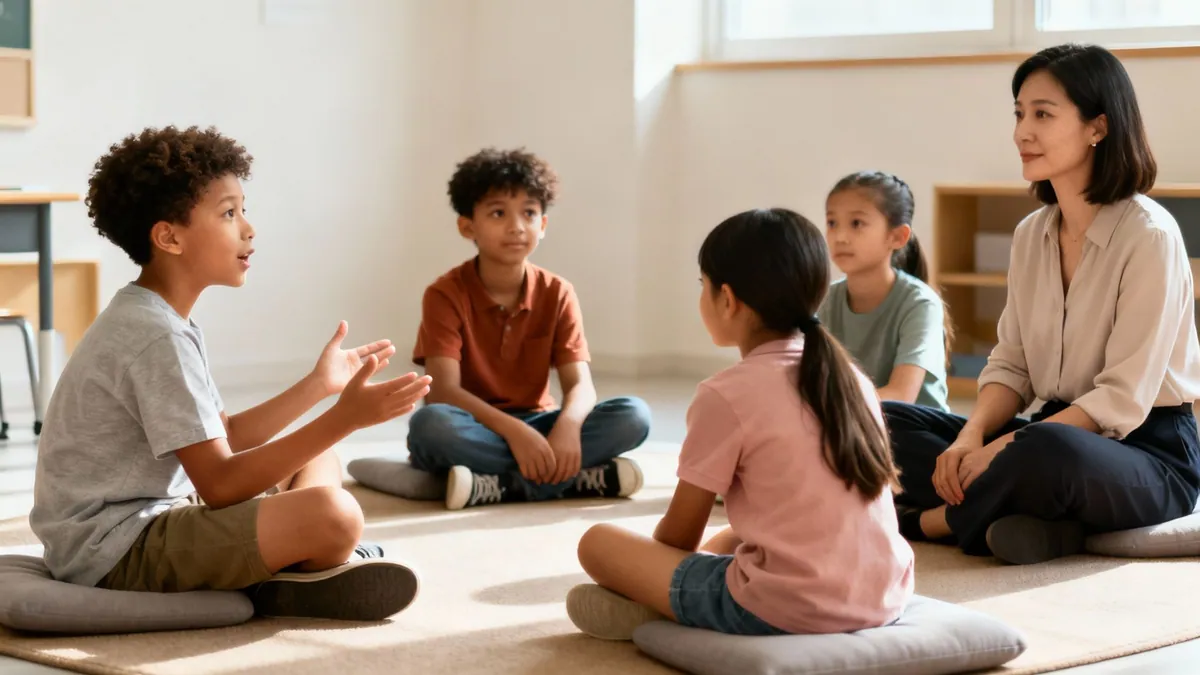
This foundational technique is remarkably versatile. It can be used for morning meetings in a kindergarten class to share weekend news, or as a framework for restorative justice conversations to address peer conflicts in middle school. The focus is not on debate but on understanding, making it an essential tool for building a strong classroom community. A practical example is using a circle to discuss a book character’s choice. A teacher could pass a “talking stone” and ask, “How do you think the character felt when they made that decision?” Each student shares their idea while others listen, building a collective understanding of the character’s motivations without debating who is “right.”
Facilitation Tips & Implementation
To ensure a successful listening circle, facilitators should establish clear guidelines and model the desired behaviors.
- Establish Clear Agreements: Co-create rules with the group, such as “Listen with your heart,” “Speak your truth,” and “What’s said in the circle stays in the circle.”
- Use a Talking Piece: This can be any object, like a decorative stone, a small stuffed animal, or a ball. The talking piece visually designates the speaker and reinforces the “one voice at a time” rule.
- Teach Non-Verbal Cues: Explicitly teach and practice non-verbal active listening skills like making eye contact, nodding, and maintaining an open posture.
- Offer a ‘Pass’ Option: Always give students the option to pass their turn without penalty. This respects their comfort level and builds trust.
- Start with Low-Stakes Topics: Begin with simple prompts like, “Share one good thing that happened this week,” before moving to more sensitive subjects. This builds psychological safety within the group.
By creating a predictable and safe structure, this communication skills activity helps students practice the core components of effective dialogue: speaking honestly and listening with compassion. Explore more in-depth strategies for Active Listening Circles to enhance this practice in your classroom. You can find more listening skills activities on soulshoppe.org.
2. Non-Violent Communication (NVC) Practice
Non-Violent Communication (NVC) is a structured framework that guides individuals to express themselves with clarity and compassion. Developed by psychologist Marshall Rosenberg, this communication skills activity teaches a four-step model: observations, feelings, needs, and requests. By separating objective observations from subjective judgments, NVC helps de-escalate conflict, reduce defensiveness, and foster genuine understanding between speakers.
This powerful approach transforms potentially adversarial conversations into opportunities for connection. It is highly effective in various school settings, from facilitating peer mediations where students resolve their own conflicts to structuring teacher-student conversations during disciplinary moments. Instead of saying, “You’re always interrupting,” a student learns to say, “When I see you talking while I’m sharing (observation), I feel frustrated (feeling) because I need to feel respected (need). Would you be willing to wait until I’m finished before you speak (request)?”.
Facilitation Tips & Implementation
To effectively introduce NVC, break down the four components and allow for ample practice in a safe environment.
- Teach Each Step Separately: Dedicate a mini-lesson to each of the four components: Observations, Feelings, Needs, and Requests. Use sorting activities and real-life scenarios to help students distinguish between them.
- Create Anchor Charts: Display the NVC framework on a classroom anchor chart. Include “feeling words” and “needs” lists to provide students with the vocabulary they need to express themselves accurately.
- Use Role-Playing Scenarios: Practice with low-stakes, relatable scenarios before tackling real conflicts. For example: “Your friend borrowed your favorite pen and didn’t return it.” A student would practice saying, “I see my pen is not on my desk (observation). I feel worried (feeling) because I need to have my things with me (need). Would you be willing to help me look for it? (request).”
- Celebrate the Attempt: Praise students for trying to use the NVC model, even if their phrasing isn’t perfect. The goal is to build the habit of communicating with intention and empathy.
- Connect to Mindfulness: Link NVC to emotional regulation by teaching students to take a calming breath before responding. This pause creates the space needed to choose a compassionate response over a reactive one.
By equipping students with this structured communication skills activity, educators empower them to navigate disagreements constructively and build healthier relationships. You can learn more about the NVC model at The Center for Nonviolent Communication.
3. Perspective-Taking Through Role-Play
Perspective-Taking Through Role-Play is an experiential communication skills activity where participants act out scenarios from different viewpoints to build empathy and understanding. By stepping into someone else’s shoes, students can physically and emotionally experience a situation differently. This powerful exercise helps develop compassion, improve conflict resolution skills, and reduce bullying behaviors.
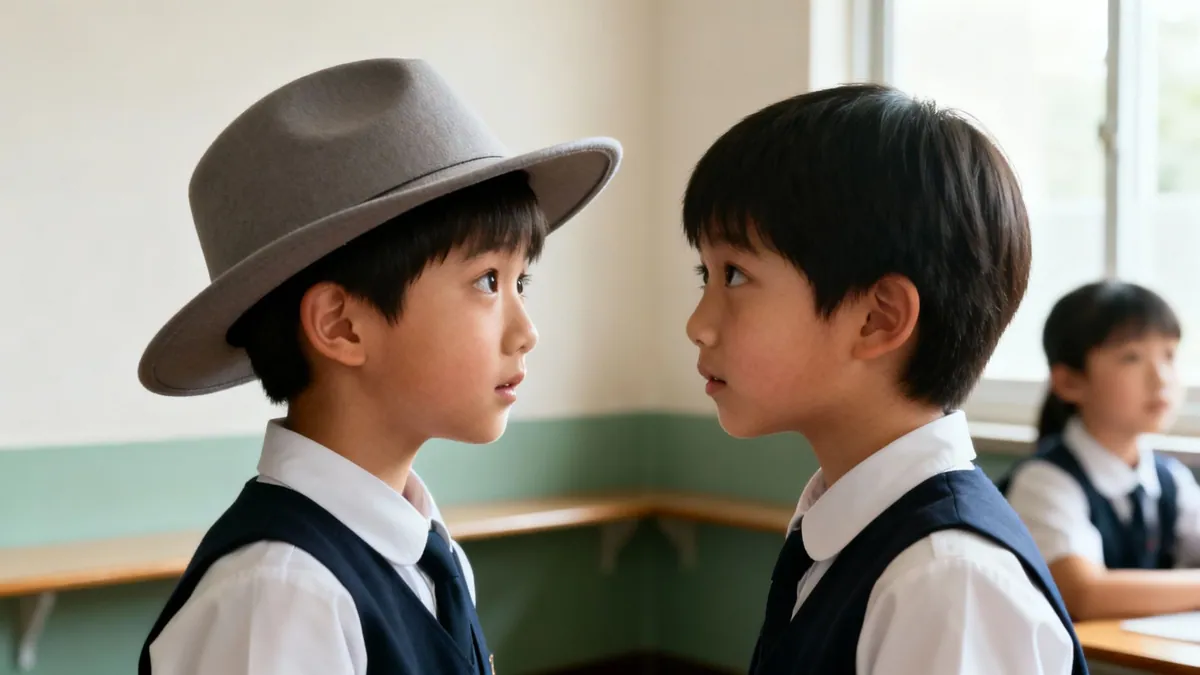
This method is incredibly effective for exploring complex social dynamics. For example, in a middle school classroom, students could role-play a lunch table exclusion scenario from the perspective of the person being excluded, a student doing the excluding, and a bystander. This helps participants understand the internal thoughts and feelings that drive behavior, fostering a more inclusive school climate. To further develop the ability to understand and share the feelings of others, consider exploring resources like ‘Let’s Talk About Empathy’.
Facilitation Tips & Implementation
The success of this communication skills activity depends heavily on creating a safe environment and conducting a thoughtful debrief.
- Establish Psychological Safety: Begin by setting clear expectations for respect and confidentiality. Reassure students that this is a learning exercise, not a performance.
- Brief Participants Privately: Give students their roles and a brief description of their character’s perspective in private. This prevents them from pre-judging other roles.
- Use a ‘Fishbowl’ Format: Have a small group act out the scenario in the center while the rest of the class observes. This can feel safer for participants and provides learning opportunities for the audience.
- Debrief Thoroughly: The post-activity discussion is crucial. Start with observational questions like, “What did you notice?” before moving to emotional reflections like, “How did that feel?”
- Offer an Opt-Out: Always allow students to decline participation or take on an observer role without shame. This respects their boundaries and builds trust.
- Follow Up with Reflection: Encourage students to process the experience through a private journal entry or a written reflection, solidifying their learning.
By embodying different perspectives, students gain a profound understanding of empathy that goes beyond simple definition. Learn more about how to build empathy in the classroom with these targeted strategies.