A child is melting down over the wrong color cup. A class is coming in from recess loud, wiggly, and half ready to learn. A student who knows the math freezes the second the test lands on the desk.
Most adults don't need a definition of stress in kids. They see it every day.
What many of us do need is a simple answer to a practical question. What is mindfulness for kids, really? Not the fancy version. Not the version that sounds like a spa brochure. The version that helps a five-year-old settle their body, a nine-year-old notice frustration before it turns into an argument, or a middle schooler get through a hard moment without shutting down.
Mindfulness is one of those ideas that can sound abstract until you see it in action. Then it looks surprisingly ordinary. A child notices their shoulders are tight. A teacher leads three slow breaths before a quiz. A parent says, “Let's pause and feel our feet on the floor,” instead of “Calm down” for the fifth time.
That's the heart of it. Mindfulness gives kids a way to notice what's happening inside them, so they have a better chance of choosing what to do next.
Families are already moving in this direction. Meditation use among U.S. children grew over 400% between 2012 and 2017, reaching about 4.3 million children according to this pediatric meditation study. That doesn't mean every child is sitting cross-legged in silence. It does mean more adults are looking for tools that support attention, calm, and emotional regulation.
Your Guide to Childhood Mindfulness
If you work with children, you've probably had a moment when you thought, “This kid isn't giving me a hard time. They're having a hard time.”
That shift matters. It changes the job from stopping behavior to building skills.
Mindfulness is one of those skills. I think of it as a child-sized inner toolkit. It helps kids notice body signals, emotions, thoughts, and sensory input before those things take over the whole moment. For teachers, that can mean smoother transitions and fewer reactive moments. For parents, it can mean less power struggle and more connection.
What kids are really learning
Children aren't learning to be perfectly calm. They're learning to recognize what's going on.
That can sound like:
Body awareness: “My tummy feels tight.”
Emotion awareness: “I think I'm getting mad.”
Attention control: “My brain keeps leaving the page.”
Pause skills: “I can stop for one breath before I yell.”
These are small skills, but they add up. A child who can notice is a child who has more room to respond.
Practical rule: Mindfulness isn't about making children quieter for adult comfort. It's about helping children feel safer and more capable inside their own minds and bodies.
You don't need to be an expert
A lot of adults hesitate because they think they need special training, a perfect voice, or a totally peaceful classroom. You don't.
You need a few simple practices, a calm tone, and realistic expectations. Some days a mindful moment will feel beautiful. Some days it will feel clunky. Both still count as practice.
Try this mindset shift:
Start tiny. One breath, one sound, one sensation.
Stay concrete. Kids understand “notice your feet” better than “center yourself.”
Make it normal. Use mindfulness before hard moments, not only after problems.
Be curious, not controlling. Invite noticing instead of demanding stillness.
That's where mindfulness becomes useful. It stops being a concept and starts becoming something children can do.
What Mindfulness for Kids Actually Means
Mindfulness for kids means paying attention on purpose to what's happening right now, with kindness instead of judgment.
That's the clear version.
Mindfulness is a noticing skill. Kids notice their breath, body, thoughts, feelings, or surroundings without needing to fix everything immediately.
The easiest way to explain it to a child
Children usually understand mindfulness faster through analogy than definition.
You might say:
It's a pause button. When feelings get big, mindfulness helps us slow down before we act.
It's an anchor. When the day feels stormy, attention to breath or body gives us something steady.
It's a noticing superpower. We practice seeing what our body, brain, and heart are telling us.
If you're teaching younger children, try this sentence: “Mindfulness means we pay close attention to what's happening right now.”
If you're talking with older kids, try: “Mindfulness helps you notice what's going on inside you, so your feelings don't boss you around.”
What mindfulness is not
Adults often get stuck at this point. They hear “mindfulness” and picture a child sitting for a long time with an empty mind. That's not the goal.
Mindfulness for kids is not:
Emptying the mind: Thoughts will keep showing up.
Perfect stillness: Some children focus better while doodling, walking, or squeezing a pillow.
Forced relaxation: A child may still feel upset while practicing.
A reward for calm kids only: It's often most useful for kids who struggle with attention, worry, or impulsive reactions.
A helpful way to say it is, “We're not trying to stop thoughts. We're practicing noticing them.”
Why the simple version works
Structured practice can support focus in very practical ways. An 8-week mindfulness program for children ages 8 to 10, using 5- to 20-minute sessions, led to significant reductions in inattention (d=0.45) and ADHD symptoms (d=0.52) in a study reported in this research review on mindfulness-oriented meditation for children.
For everyday adults, the takeaway is simple. Children don't need complicated theory. They need repeatable practice.
A few minutes of guided noticing, done regularly, can help a child strengthen the skill of coming back. Back to breath. Back to body. Back to the moment they're in.
The Science-Backed Benefits for Learning and Well-being
Teachers and parents often ask a fair question. Is mindfulness helping kids, or is it just another nice-sounding routine?
The strongest answer is that mindfulness supports skills children use all day long. Focus. Emotional regulation. Recovery after stress. Those are core parts of social-emotional learning, and they also affect academics, relationships, and behavior.
What changes for students
In school, mindfulness often looks small on the surface. A slower entrance after recess. Less snapping at peers. More ability to return to work after frustration.
Underneath those moments, children are practicing a few important capacities:
Skill area
What it can look like in real life
Attention
Returning to the task after distraction
Emotional regulation
Feeling upset without immediate outburst
Self-awareness
Naming body clues before behavior escalates
Response flexibility
Pausing before blurting, pushing, or quitting
That's why mindfulness fits naturally alongside other SEL resources for teachers. It doesn't replace strong routines, relationship-building, or behavior support. It strengthens the internal skills that help those systems work.
What the brain research suggests
One of the most compelling findings comes from middle school students. A study at MIT found that 8 weeks of daily mindfulness training reduced stress and suspensions for sixth graders, and brain imaging showed reduced activation in the amygdala when students viewed stressful images, according to MIT's summary of the research.
You don't need to explain the amygdala to a second grader. But adults can think of it this way: mindfulness helps students get less hijacked by stress.
A mindful child still has big feelings. The difference is that the feeling is less likely to take the steering wheel immediately.
Why this matters in classrooms and homes
Kids learn best when they feel safe enough to think. They connect better when they can slow down enough to listen. They solve problems better when their bodies aren't in full alarm mode.
That's why mindfulness matters beyond “calm.” It supports readiness.
When adults use it well, mindfulness becomes less about compliance and more about capacity. A child gains a way to settle, notice, and re-enter the moment with a bit more choice.
Simple Mindfulness Practices for Different Age Groups
A practice that helps a four-year-old settle can make a seventh grader roll their eyes. Age matters, but so does context. Teachers need something they can lead in under two minutes. Parents need language that works in the car, at bedtime, or right after a hard moment.
A helpful rule is simple. The younger the child, the more mindfulness should feel like play. As children grow, you can add reflection, choice, and more private forms of practice.
Ages 3 to 5
Preschool mindfulness works best when children can see it, hear it, or touch it. Long explanations usually miss the mark. A short sensory game often works better than asking a child to “relax.”
Try these:
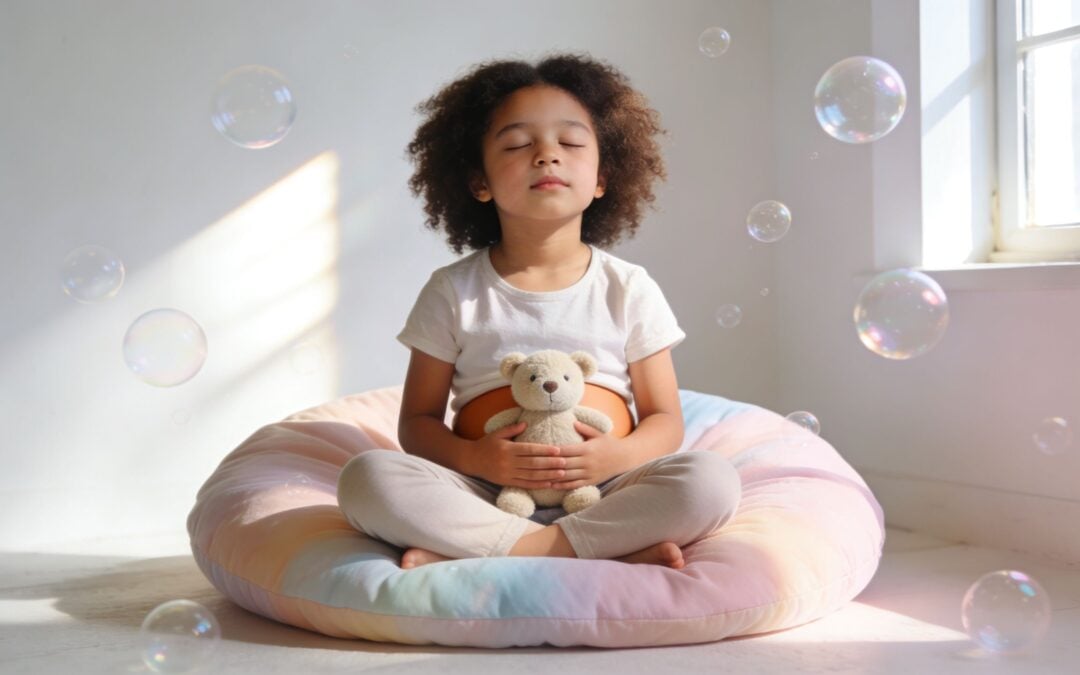
Belly Buddy Breathing Have the child lie down with a stuffed animal on their belly. Say, “Let's help your bear rise up and float back down.” Keep it to a few breaths. If you want more playful examples, this guide to belly breathing for kids gives simple ways to teach it at school or at home.
Listening Freeze Ring a bell or tap a chime. Say, “Raise your hand when the sound is gone.” This gives children a concrete target. They are practicing attention even if they cannot describe the skill yet.
Glitter Jar Watching Shake a glitter jar and say, “Our feelings can get swirly. Let's watch what happens when we stay still for a moment.” The visual does the teaching for you.
A good classroom version is one minute on the carpet before story time. A good home version is one round before nap or bedtime.
Grades K to 2
Children in early elementary can follow a few steps, especially if their hands are busy. They still do better with concrete directions than abstract language.
Good options include:
Box Breathing with Fingers Trace one side of a square or one finger at a time while breathing in, pausing, breathing out, and pausing again. Keep the pace gentle. If “hold your breath” creates tension, say “pause” instead.
Mindful Coloring Invite children to notice colors, pencil pressure, and how their body feels as they color. This fits well after recess, after lunch, or during a reset corner.
Five Senses Check-In Ask, “What is one thing you see, one thing you hear, and one thing you feel in your body?” Keep it brief and matter-of-fact.
Adults sometimes worry that this is too soft or too vague. In practice, these short exercises work like attentional warm-ups. For children who process sensory input differently, some adults also find guided supports helpful when supporting neurodivergent children's well-being through sensory-aware mindfulness routines.
Grades 3 to 5
Older elementary students are usually ready to notice thoughts, feelings, and body signals with more detail. They still need the practice to stay concrete. “Notice what your shoulders feel like” works better than “observe your internal state.”
Try:
Body Scan Guide attention from head to toes. Ask students to notice places that feel tight, warm, heavy, or buzzy.
Thought Clouds Say, “A thought can show up and pass by, like a cloud. You do not have to grab every one.” This helps children separate noticing from reacting.
Three Good Things Journal Ask students to write or draw three things that went well today, even small ones. Researchers at Greater Good in Education describe gratitude and mindful reflection practices for school-age children as one way to build emotional awareness and positive attention in daily routines, in their collection of mindfulness activities for children.
In class, this can be a two-minute notebook routine after lunch or before dismissal. At home, it works well at dinner or bedtime.
Grades 6 to 8
Middle schoolers usually want dignity, choice, and privacy. If a practice sounds babyish, many will reject it before they try it. The framing matters almost as much as the activity.
A few practices tend to land better:
One-Minute Reset Before Class “Feel your feet on the floor. Loosen your jaw. Take one slower breath. Pick one thing you want to focus on next.”
Mindful Walking Invite students to notice pressure in their feet, the pace of their steps, and two sounds around them. This can work well in hallways, on the way to lunch, or during PE cooldowns.
Private Journaling Prompt “What am I feeling right now?” “What might help for the next ten minutes?” Short prompts lower resistance.
If students resist the word mindfulness, use language like reset, focus practice, or stress skill. Skepticism is common, especially with older kids. Consistency usually matters more than enthusiasm at the start.
Mindful Activities for the Classroom and at Home
The most effective mindfulness habits usually live inside ordinary routines. They don't need a yoga mat, a candle, or a perfect mood. They need repetition and a moment that already exists.
In the classroom
A third-grade class comes in buzzing after recess. Instead of launching straight into directions, the teacher says, “Hands on desks. Feel your feet. Take one slow breath in, and one long breath out.” The room doesn't become silent. It does become more reachable.
These kinds of resets work best at predictable times:
At the doorway: “Notice your feet crossing into the room.”
Before a test: “Relax your jaw. Drop your shoulders. Take two slower breaths.”
After conflict: “Let's notice what our body feels like before we talk it through.”
During transitions: “Listen for three sounds before you move.”
Teachers who want broader routines for regulation and transitions may also find The Kingdom of English teaching resources useful, especially when pairing mindfulness with clear classroom management habits.
Another easy option is to choose one routine and keep it for a week. A daily mindful minute before writing workshop often works better than five different activities introduced all at once. If you want a larger menu, this collection of mindfulness activities for kids includes ideas that fit school and home settings.
This short video can help adults picture how a guided mindful moment sounds in practice.
A leadership question worth asking
If students are struggling socially, ask this: Are we only telling them to be kind, or are we teaching them how to interpret each other more accurately?
Kindness matters. Skills make kindness usable.
Leadership move: Put perspective-taking into staff norms, classroom routines, and family communication so students hear the same language everywhere.
That’s how school wellbeing becomes more than a slogan. It becomes a pattern.
Classroom Activities to Cultivate Perspective
Teachers usually don’t need more theory. They need tomorrow’s lesson.
The activities below are designed for regular classrooms, advisory periods, counseling groups, or family workshops. Each one turns the phrase life is perspective into something students can practice with their bodies, voices, and choices.
Perspective-taking activities by grade level
Grade Level
Activity Name
Brief Description
K-2
Storybook Switch
Students retell a familiar story from the perspective of a side character or object.
K-2
Feelings Detective
Children look at a picture or short scenario and guess what different people might feel.
3-5
Two-View Replay
Students describe one playground or classroom moment from two different viewpoints.
3-5
Problem-Solving Circle
A class discusses a conflict and generates multiple interpretations before solutions.
6-8
Role-Play Rewind
Students act out a conflict, then replay it with each person voicing internal thoughts.
6-8
Assumption Check
Students identify the first story they told themselves and revise it using new information.
Kindergarten through grade 2
Young children learn perspective best through play, stories, and concrete prompts.
Storybook Switch works well during read-aloud time. Pause after a key event and ask, “How would the dog tell this story?” or “What does the little brother think is happening?” Students can draw their answer before sharing it aloud.
Feelings Detective is helpful during morning meeting. Show a picture of two children on a playground. Ask:
“What might this child be feeling?”
“What else could be true?”
“What clue helped you decide?”
Keep the tone light. The goal isn’t a single right answer. The goal is flexibility.
Sample teacher script:
“You noticed the face looked upset. Good observing. Now let’s stretch our thinking. Could that same face also mean worried or confused?”
Grades 3 through 5
Upper elementary students are ready to compare viewpoints more directly.
Use Two-View Replay after a mild classroom conflict. Invite two students, or two volunteers using a fictional example, to explain the same event separately. Then ask the class what each person noticed, assumed, and needed.
A Problem-Solving Circle can follow this structure:
Name the situation in one sentence.
Hear each viewpoint without interruption.
List possible feelings.
List possible misunderstandings.
Brainstorm one repair step each person can take.
This keeps the conversation from collapsing into blame. It also teaches students that perspective-taking includes listening for missing information.
Grades 6 through 8
Middle school students can handle more reflection and social nuance.
Role-Play Rewind is powerful because it makes hidden assumptions visible. Two students act out a conflict. Then they replay it, but this time each person pauses to say what they were thinking in the moment. Classmates often realize that what looked “rude” from the outside may have involved embarrassment, insecurity, or misreading tone.
Assumption Check works well in journals or advisory. Give students these prompts:
What happened?
What did I assume at first?
What else might explain it?
What would I say if I wanted clarity instead of conflict?
This routine also connects well to restorative conversations.
Making activities inclusive for neurodivergent learners
A critical gap in many SEL materials is that they don’t adapt perspective-taking instruction for students who process social information differently. Most classrooms include students with autism, ADHD, or other learning differences, so adapting perspective-taking instruction matters for inclusive practice.
Some practical adjustments help right away:
Use visual supports: Draw thought bubbles, feeling faces, or simple sequence cards.
Reduce language load: Offer sentence stems such as “I thought ___ because ___.”
Preview social scenarios: Let students rehearse before a live role-play.
Allow multiple response modes: Students can point, write, draw, or use a graphic organizer instead of speaking on the spot.
Teach explicitly: Don’t assume students will infer hidden meaning. Name it.
A student with ADHD may need shorter turns and movement built into discussion. A student with autism may do better when perspective tasks begin with concrete clues instead of abstract guessing. That’s not lowering expectations. It’s making the skill teachable.
End conflict reflection with one question: “What do you understand now that you didn’t understand before?”
That question shifts the goal from winning to learning. Over time, students start asking it for themselves.
Bringing Perspective-Taking Practices Home
School helps the skill start. Home helps the skill stick.
When families use the same language children hear in class, perspective-taking becomes part of everyday life instead of a special lesson. That matters because most of a child’s real practice happens in ordinary moments: breakfast rushes, homework frustration, sibling disputes, car rides, and bedtime conversations.
Simple routines that work
You don’t need a long family meeting. You need a few repeatable questions.
Try these at dinner or in the car:
“Was there a moment today when you and someone else saw things differently?”
“What do you think your teacher was hoping students would understand today?”
“If your pet could describe your afternoon, what would it say?”
That last question is playful, which helps children practice perspective without feeling corrected.
Reading together also creates natural openings. During a story, stop and ask, “Why do you think that character made that choice?” Then add, “Would another character describe that moment differently?” Families who want more ideas for this kind of conversation can explore these practical suggestions on how to teach empathy at home and in daily life.
What to do during sibling conflict
Parents often move too fast to a verdict. That’s understandable. Everyone is tired.
A more effective pattern is:
Hear each child briefly.
Reflect each perspective.
Name the shared problem.
Ask for one repair step from each child.
For example:
“You thought your sister took your turn on purpose.”
“You were excited and didn’t realize he thought it was still his turn.”
“The problem is that both of you want fairness.”
“What can each of you do now?”
“I can understand your perspective without agreeing with how you handled it.”
That sentence helps children separate validation from approval.
Keep the language steady
Children benefit when adults use the same few phrases repeatedly. Pick two or three and stick with them.
Good options include:
“What’s your view?”
“What might be another explanation?”
“What does the other person need right now?”
Consistency matters more than sophistication. Kids learn perspective by hearing it modeled over and over, in calm moments and messy ones.
When families and schools share this language, children get a powerful message. Their feelings matter, and so do other people’s experiences. That balance is where empathy grows.
Building a Culture of Empathy Together
If there’s one idea I want teachers and families to hold onto, it’s this: perspective-taking is teachable.
Children aren’t born knowing how to pause, question their first interpretation, and consider another person’s inner world. They learn it from repeated practice with steady adults. They learn it when a teacher slows down a conflict instead of rushing to blame. They learn it when a parent says, “Tell me your side, and then let’s think about theirs.” They learn it when classrooms treat misunderstandings as chances to build skill.
Life is perspective, but that doesn’t mean truth is meaningless or that every behavior gets excused. It means children need help understanding that each person brings feelings, history, and assumptions into the same moment. Once they grasp that, empathy becomes more reachable. So does accountability.
Schools become safer when students can interpret one another with more generosity. Homes become calmer when family members stop arguing only about facts and start naming viewpoints. Communities become stronger when young people know how to stay grounded in their own experience while making room for someone else’s.
That work belongs to all of us. Teachers, counselors, administrators, caregivers, and community partners all shape the emotional vocabulary children carry into friendships, classrooms, and eventually adulthood.
Small shifts in language create large shifts in culture.
Every time you ask a child, “What else could be true?” you are helping build a more thoughtful, connected, and humane environment. That’s not a small act. It’s culture-building.
Soul Shoppe helps school communities cultivate connection, safety, and empathy through practical social-emotional learning experiences for students and adults. If you want support bringing perspective-taking, communication, and conflict resolution into your classrooms or family partnerships, visit Soul Shoppe.
A rough morning at school rarely announces itself in a big way. It often starts with a student going silent before a quiz, a child crying over a missing pencil, or a parent hearing “I’m fine” in a voice that clearly means something else. In those moments, adults usually do not need a perfect speech. They need a few steady words that help a child pause, breathe, name the feeling, and choose what to do next.
That is where mental health quotes can help. A short, clear sentence works like a handrail on a staircase. It does not carry a child up the steps, but it gives them something steady to hold onto while they regain balance. In a classroom or at home, the right quote can reduce shame, start a conversation, and give students language for feelings that still feel confusing or too big.
For educators and caregivers, the core question is not which quote sounds nicest. The better question is how to use a quote to build self-awareness, empathy, coping skills, and connection. That shift matters. A quote on a poster may be pleasant to read once. A quote used as an SEL tool can shape a morning meeting, support a calm-down routine, prompt reflection in a journal, or help a student repair after conflict.
This list is built with that purpose in mind. Each quote is treated as something practical for K-8 students, not just something inspiring for adults. You will see ways to turn wise words into classroom prompts, calm-corner language, discussion starters, and small routines that children can use. If your school is also working on building resilience and perseverance through growth mindset in the classroom, these quotes can support that work by giving students simple language for hard moments.
If you want to turn a favorite line into a poster or calm-corner card, this client-side quote maker tool can help you make it classroom-ready.
1. It is not the mountain we conquer, but ourselves. – Edmund Hillary
This quote works well with students who think success only counts if it looks big from the outside. Many children focus on the visible result. The grade. The goal. The performance. Hillary’s words shift attention inward, where a lot of real growth happens.
A student who uses belly breathing before a math test has done something important, even if they still feel nervous. A child who raises a hand to ask for help after sitting in confusion has made a real gain in self-awareness. Those are “conquer ourselves” moments.
How to use it with students
Put this quote into plain school language: “The hardest part is often managing what’s happening inside us.” Then ask students to name a recent inner challenge. Maybe it was frustration, fear, jealousy, or the urge to quit.
In a classroom meeting, try a prompt like, “What’s one thing you handled inside yourself this week?” You’ll often hear more meaningful answers than you would from asking about accomplishments alone.
Practical rule: Praise regulation, reflection, and repair, not just performance.
A teacher might say, “I noticed you wanted to shout when the game didn’t go your way, but you stopped and took a breath. That was a victory.” A parent might say, “You were upset about homework, but you came back after a break. That matters.”
A simple SEL routine
Use the quote during a Monday advisory, counseling session, or morning meeting with a three-part reflection:
Name the mountain: “What felt hard?”
Name the self-skill: “What did you do inside yourself?”
Name the next step: “What will you try again next time?”
This pairs nicely with classroom conversations about perseverance and self-regulation. Schools already building these habits can connect the quote to a broader growth mindset in the classroom approach.
2. You are not alone. – Multiple sources
Few messages matter more to a struggling child than this one. Isolation makes problems feel bigger. A student may believe they’re the only one who feels left out, panicky, homesick, angry, or embarrassed. This quote interrupts that story.
That’s especially important in student settings where mental health needs are significant. Between 2020 and 2021, over 60% of college students met the criteria for one or more mental health issues, according to these student mental health statistics. K-8 students are younger, but school adults can still take the same lesson seriously. Students need language that reduces shame and invites support.
Make the message visible and real
A quote like this only helps if adults back it up with action. A poster that says “You are not alone” means very little if students don’t know whom they can talk to, where to go, or what happens when they ask for help.
Try a “Support Map” activity. Students write or draw trusted people at school, at home, and in the community. Younger children can use circles and simple labels like teacher, auntie, coach, counselor, or neighbor.
You are not alone should always be followed by “and here’s who can help.”
In class, a teacher might say, “Lots of people feel overwhelmed sometimes. If that happens to you, you can tell me, the counselor, or another trusted grownup.” At home, a parent can say, “You don’t have to solve every hard feeling by yourself.”
A community-building example
Create a bulletin board titled “We all need support sometimes.” Instead of asking students to share private struggles publicly, invite them to post anonymous notes finishing one sentence: “It helps me when…” Responses often build empathy fast. Children start to see that many classmates need comfort, quiet, movement, reassurance, or a friend.
3. Comparison is the thief of joy. – Theodore Roosevelt
Children compare constantly. Who finished first. Who got invited. Who reads at a higher level. Who has more likes, better shoes, a newer lunchbox, a stronger team, a closer friend group. Comparison can shift normal school life into a running self-critique.
This quote gives adults a clean way to name the problem without shaming the child. It doesn’t say ambition is bad. It says that constant measuring against other people can steal satisfaction from our own growth.
What to say when comparison shows up
Suppose a student says, “Maya’s project is way better than mine.” Instead of offering empty reassurance, try: “Let’s compare your work to your last draft, not to someone else’s final product.” That redirects attention to progress and effort.
At home, if a child says, “Everyone else is better at soccer than me,” a parent can answer, “Who are you compared to last month?” That question teaches self-reference, which is a healthier habit than social ranking.
A useful classroom activity is “My one good thing.” Each student names one strength, interest, or improvement that belongs to them. Not the best in class. Just theirs.
Help students build self-esteem instead
Comparison shrinks when students have practice noticing their own strengths. That can happen through partner compliments, identity webs, portfolio reflections, or goal-setting tied to previous personal work.
Later in the week, you can revisit the message with a media literacy conversation. Ask, “How do you feel after you scroll or watch people show only their best moments?” Even younger students understand that what we see isn’t always the whole story.
A short video can help launch that discussion:
When children need more support
Not every child can enter a circle right away. Some need regulation before conversation.
For children who are crying hard: Start with breathing or water, then return.
For children who go silent: Let them point to feeling cards or repeat after you.
For children who get stuck on blame: Keep returning to the present question, “What can help now?”
A meta-analysis on preschool social skills interventions found especially strong effects for preschool-aged children, including stronger outcomes on targeted skills like social initiation, turn-taking, and prosocial behaviors. That’s one reason direct teaching in moments like these can make such a difference.
If you want a fuller framework, these restorative circles in schools offer language and structure you can simplify for young children.
5. Empathy and Perspective-Taking Through Storytelling and Role-Play
Stories let children rehearse social life from a safe distance. A child who can’t yet talk about their own hurt feelings may readily explain why a puppet feels left out or why a story character needs help.
That’s why books, puppets, and dramatic play belong on any list of social skills activities for preschoolers. They make invisible feelings visible.
Use stories to ask better questions
Pick books with clear emotional moments. You don’t need a “social skills” label on the cover. You need characters who want something, lose something, worry, wait, or reconnect.
As you read, pause and ask:
“How do you think he feels right now?”
“What do you see that makes you think that?”
“What could a friend do?”
“Has our class ever had a moment like this?”
Children often give wonderfully concrete answers. “She’s sad because no one scooted over.” That’s empathy beginning to take shape.
Bring the story into play
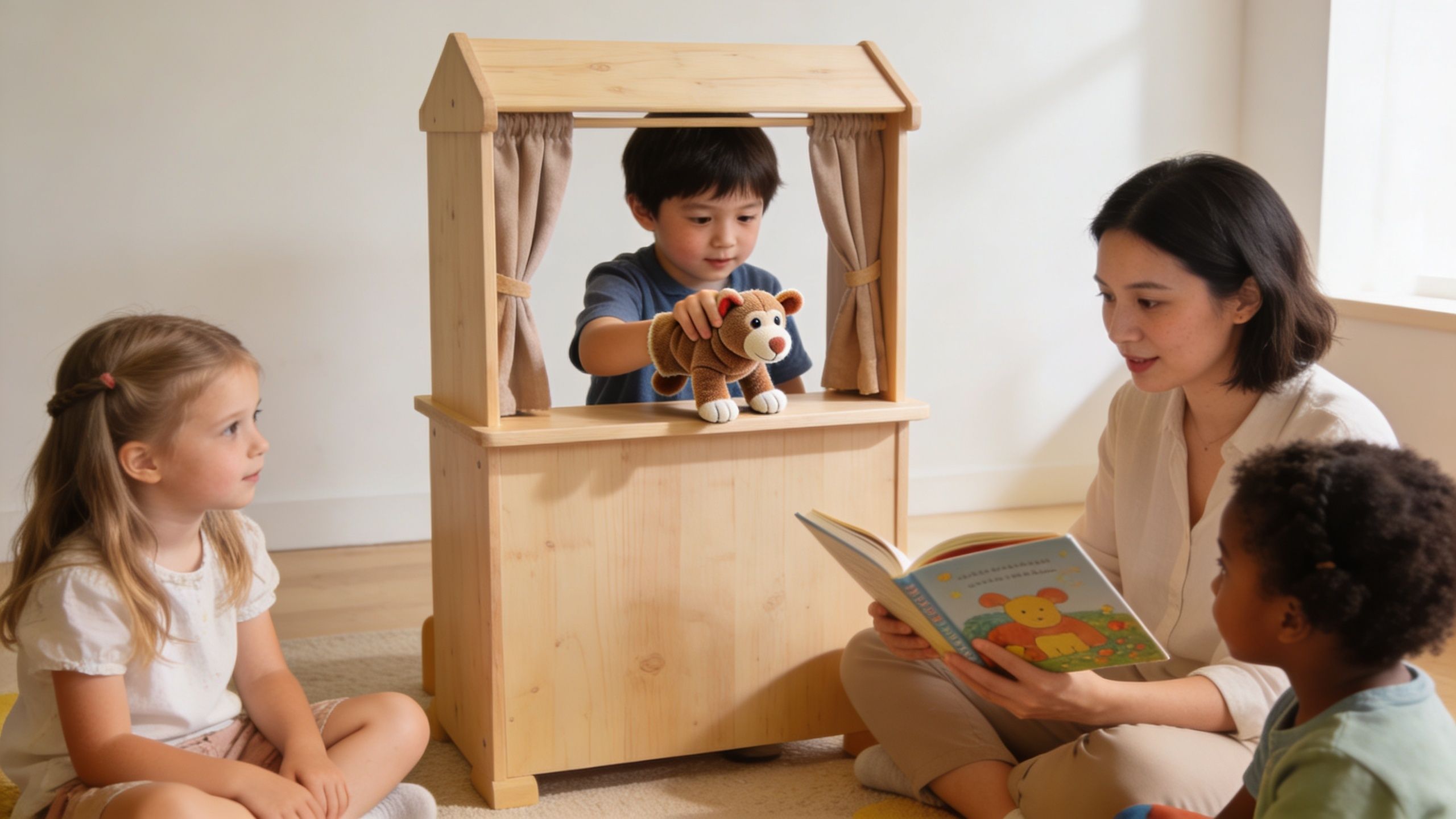
After reading, move into role-play. Use puppets, stuffed animals, or dramatic play props. One puppet can say, “Can I play?” Another can say, “We need one more builder.” Practice both sides.
Dramatic role-play is especially useful because repeated pretend play gives children chances to revisit social themes. The preschool resource discussion from Begin Learning on social skills activities highlights dramatic role-play, group art, turn-taking games, and emotion charades as useful ways to build communication, empathy, and collaboration.
Children often show more empathy in pretend play than in direct conversation. Use that doorway.
For a child who resists joining group role-play, start with one adult and one puppet. Let the child be the audience first. Then invite them to hand the puppet a prop. Participation can grow in layers.
6. Mindfulness and Breathing Exercises for Group Calm
Some children need social coaching after they’re calm. Others need calming before any coaching can work. Mindfulness and breathing support that first step.
In preschool, this should stay concrete and brief. We’re not asking children to sit still for long periods. We’re helping them notice their bodies, slow down, and return to the group safely.
A few preschool-friendly calming routines
I like to teach two or three strategies and use them often.
Belly breathing: Children place a small stuffed animal or their hands on their belly and watch it rise and fall.
Butterfly breathing: Arms crossed over chest, hands on shoulders, slow breaths with gentle taps.
Five-senses grounding: Name something you can see, hear, or feel in the room.
Use these when the group is already fairly calm, not only during meltdowns. That way the skill feels familiar instead of corrective.
A practical example: after an energetic transition, dim the lights slightly, ring a soft chime, and invite everyone to do three balloon breaths. “Smell the flower. Blow up the balloon.” Then move into story time or small groups.
Make it optional without making it invisible
Some children won’t close their eyes. Some dislike deep breathing cues. Some need movement more than stillness. That’s fine.
Offer choices such as:
hands on belly or hands on knees
sitting on the rug or standing at the back
breathing with you or observing
Soul Shoppe has spent more than 20 years delivering research-based tools for mindfulness, communication, and self-regulation in school communities. That kind of shared language matters because calming strategies work best when adults and children both know what to call them and when to use them.
Keep your tone neutral. Mindfulness isn’t a consequence. It’s a support.
7. Gratitude and Appreciation Practices
Preschoolers often notice what feels unfair before they notice what feels kind. Appreciation practices gently rebalance that attention. They teach children to look for help, kindness, effort, and connection.
This isn’t about forced politeness. It’s about helping children recognize that other people’s actions affect them in good ways.
Start with specific appreciation
General praise stays fuzzy. Specific appreciation teaches social awareness.
Instead of “Say something nice to Leo,” try:
“What did Leo do that helped today?”
“Who made space for you at the table?”
“Who helped fix a problem?”
Children’s answers become more meaningful right away. “Mila gave me the tape.” “Ethan waited for me.” “My teacher helped when I was sad.”
One easy ritual is an appreciation circle to conclude the day. Another is an “I noticed” board where children draw a picture of someone helping, sharing, or including. Nonverbal children can point to photos, choose symbols, or add a sticker to a class gratitude chart.
Keep the routine warm and balanced
Appreciation should feel steady, not performative.
Model first: Let children hear adults appreciate each other.
Spread it around: Make sure the same outgoing children don’t receive all the public recognition.
Connect it to actions: Focus on what someone did, not who is “good.”
A lovely example is after cleanup. Pause and say, “Who noticed a helper?” One child might say, “Nora put the crayons back for everybody.” Another might add, “And she helped me find the lid.” That kind of noticing builds belonging over time.
Appreciation helps children see themselves as people who affect others positively. That identity matters.
8. Inclusive Play and Belonging Activities
Every class has children who don’t slide easily into group play. Some hover nearby. Some watch. Some want connection but become overwhelmed when it arrives. Social growth won’t happen if participation always depends on a child entering the group independently.
Inclusive play means building entry points on purpose. It’s one of the most important social skills activities for preschoolers because belonging is the soil where every other skill grows.
Create easier ways to join
Don’t rely on “Just go ask if you can play.” That’s a big leap for many preschoolers.
Instead, build supports:
visual cards with phrases like “Can I build too?”
assigned play partners during centers
small interest-based groups, such as trains, sensory bins, or animal play
adult-facilitated entry, such as “Sam has an idea for the bakery. Can we make room?”
For some children, joining is easier in a small, structured activity than in free play. A group mural, a cooking project, or a teacher-led block challenge can create natural roles and reduce social guesswork.
Adapt for anxious, autistic, or reluctant children
Many children need pacing and sensory support, not pressure. If a child has social anxiety, selective mutism, sensory sensitivities, or difficulty reading social cues, start with safety.
You might:
practice the activity one-on-one first
let the child participate beside the group before inside the group
use a familiar peer as a bridge
shorten the interaction and end while it still feels successful
Positive Action’s discussion of social activities for kids notes one example of reducing eye-contact pressure for some autistic children by starting with a sticker on the forehead rather than expecting direct gaze right away. That’s the kind of thoughtful scaffold many classrooms need. You can read more in their piece on social skills activities and games for kids.
Home-school consistency also helps children generalize these skills. Little Planet Preschool emphasizes that social development takes time, practice, and coaching from caring adults. Their article on building social skills in preschool is a useful reminder to keep language and expectations aligned across settings.
Play centers, supporting diverse learners, anti-exclusion efforts
Intentionally prevents exclusion; supports vulnerable children
Weaving Social Skills into Your Daily Rhythm
The most effective social skills teaching rarely looks dramatic. It looks like a teacher pausing before stepping in. It looks like a parent helping two children find words instead of deciding the winner. It looks like a counselor giving a class the same simple script often enough that children start using it on their own.
That daily repetition matters because social development grows through lived experience. Children learn empathy when someone helps them notice another child’s face. They learn cooperation when a game is built so everyone needs each other. They learn self-regulation when adults treat calming down as a skill, not a punishment.
You don’t need to implement all eight activities at once. Start with the one your group needs most. If your class is quick to cry or grab, begin with emotion recognition. If transitions fall apart, try buddy assignments. If children are excluding one another, put your energy into inclusive play structures and appreciation routines.
Then stay with it long enough for the routine to become familiar. Preschoolers thrive on repetition. The first week may feel clunky. The third week often feels easier. Over time, children begin using the language and moves you’ve modeled: “You can have a turn after me.” “He looks sad.” “Want to be my buddy?” “Let’s fix it.”
Adults need support too. Teachers and families are more consistent when they share language, expectations, and a few go-to practices. That’s where a whole-community approach can help. Soul Shoppe’s work is built around practical, experiential SEL tools that support self-regulation, communication, conflict resolution, and belonging across both school and home. Their approach fits especially well for communities that want more than isolated lessons. They want habits, rituals, and shared language that children encounter again and again.
Keep the tone hopeful. Social mistakes are part of learning. Preschoolers aren’t “bad at friendship.” They’re learning friendship. And they learn best with calm adults, simple structures, and lots of chances to try again.
If you’re also looking for playful ideas for younger children and mixed-age family settings, these fun activities for toddlers can complement early SEL routines at home.
If you want help turning these ideas into a consistent, schoolwide or family-supported SEL practice, explore Soul Shoppe. Their programs, workshops, digital tools, and educator resources are designed to help children and the adults around them build empathy, communication, self-regulation, and real belonging.
A teen slams their bedroom door after a frustrating homework assignment. A student mutters under their breath after getting a low grade. These moments are common, but they still put adults in a tough spot. You want to help without lecturing, and you need something more concrete than “calm down.”
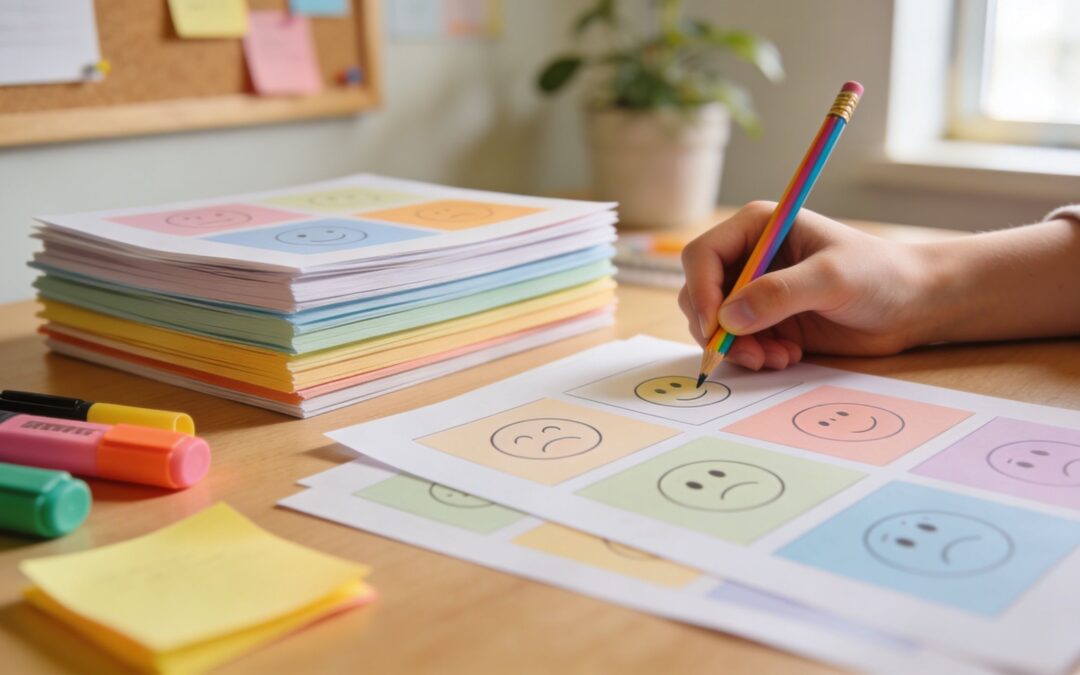
Anger management worksheets for teens can be useful in these situations. A good worksheet provides structure during a difficult moment. It helps a teen identify what happened, notice physical cues, pinpoint the actual trigger, and choose a response that avoids escalating the situation. The worksheet is not the intervention on its own. The conversation surrounding it matters just as much.
These tools also fit well inside a wider SEL approach. Structured supports for teen anger grew out of the cognitive behavioral therapy wave in the late 1980s and early 1990s, when tools like emotion thermometers and trigger sheets became standard for adolescent emotional regulation, according to Mental Health Center Kids’ overview of anger worksheets for teenagers. If you’re supporting students with overlapping stress and worry, this free anxiety education hub is also worth keeping nearby.
Below are 10 options I’d consider in a school, counseling office, or home routine. For each one, I’m not just listing features. I’m explaining when to use it, what to say, and what usually works better in practice.
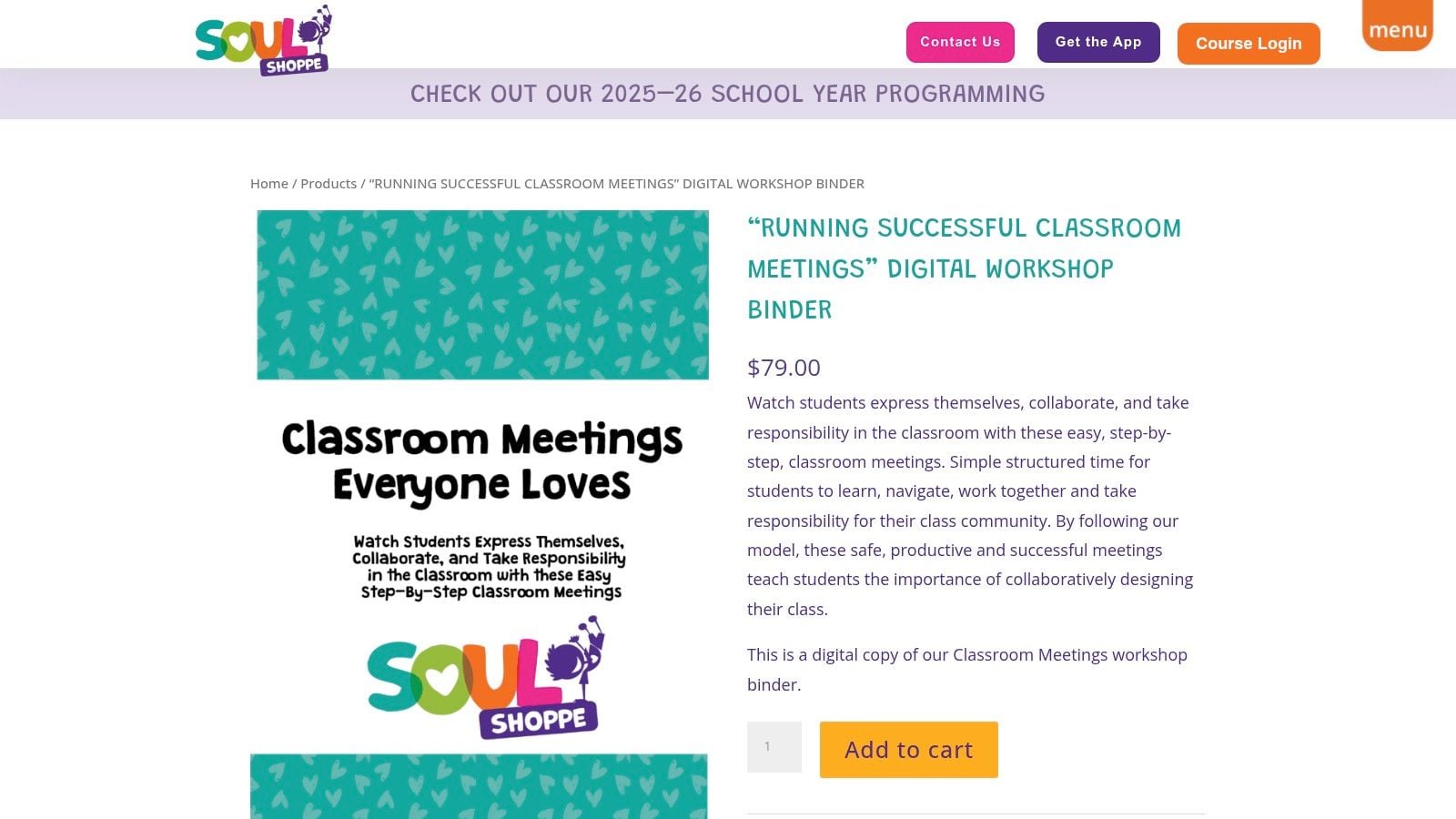
1. Running Successful Classroom Meetings Digital Workshop Binder
Soul Shoppe’s Running Successful Classroom Meetings Digital Workshop Binder isn’t a narrow anger worksheet pack. That’s exactly why it earns the featured spot. Anger management worksheets for teens work best when they live inside a predictable classroom routine, not as a one-time handout after a blowup.
This binder gives educators a structure for that routine. You get meeting agendas, facilitator notes, sample scripts, norm-setting activities, restorative prompts, short community-building exercises, and templates for tracking progress and family communication. Because it’s digital, teachers can adapt it for grade level, delivery format, and classroom tone instead of forcing one script onto every group.
Why it works in real settings
A lot of anger support fails because adults wait for an incident. Then they hand a teen a reflection sheet while everyone is still activated. This binder supports the opposite approach. It helps schools build shared language before conflict peaks.
Soul Shoppe describes its work as grounded in more than 20 years of research-based SEL practice. That whole-school consistency matters. In the verified data, Soul Shoppe’s experiential programs are described as aligning with long-running evidence-based SEL approaches that foster empathy and safety in schools through self-regulation tools akin to these worksheets, via Mission Prep Healthcare’s discussion of teen anger techniques and worksheets.
Practical rule: Don’t introduce anger worksheets only after a student has lost control. Introduce the language during calm moments, then reuse it during hard ones.
How to use it with teens
In advisory or homeroom, start with a five-minute emotional check-in. Then use one prompt connected to conflict, frustration, or repair. For example:
Teacher opening: “Think of a moment this week when your reaction got bigger than you wanted. You don’t need to share details yet. Just notice what your body did first.”
Follow-up question: “What would have helped at the level-three stage, before it became a level-eight problem?”
Repair step: “If someone was affected by your reaction, what’s one sentence you could say that repairs instead of defends?”
That sequence works because it moves from awareness to strategy to accountability.
Trade-offs to know
The upside is structure. The possible downside is that some teachers will want support with facilitation. A binder won’t replace the judgment needed to handle a tense group discussion. Also, a fully digital format can be awkward in settings with limited printing or devices.
Still, for schools that want anger management worksheets for teens to become part of culture instead of an isolated intervention, this is the strongest implementation tool in the list.
2. Therapist Aid
Therapist Aid is one of the easiest places to find clinician-style anger management worksheets for teens without building your own materials from scratch. Its library includes printables and fillable PDFs on triggers, warning signs, thinking patterns, and coping skills.
What stands out is consistency. The visual layout is usually clean, the language is direct, and the tools are easy to use in school counseling, short-term check-ins, or home practice. If you need a worksheet in ten minutes, this is a practical place to start.
Best fit and common snag
Therapist Aid works well with teens who can reflect in writing. It’s less effective for students who shut down with text-heavy pages. In those cases, I’d use one section only and turn it into a spoken conversation.
A simple introduction might sound like this:
“You don’t have to fill out the whole page. Circle the part that feels most true today, and we’ll talk from there.”
That lowers resistance fast.
Use it for counseling check-ins: Pick one worksheet on triggers or warning signs and complete it side by side.
Use it for home follow-through: Ask a parent to revisit one answer, not the whole packet.
Avoid overload: Don’t assign three worksheets after one incident. One page is usually enough.
Some resources are free, while some advanced formats require a membership. That’s a fair trade if you want reliable materials, but not every family or school needs the paid tier.
3. Mylemarks
Mylemarks feels like it was built by someone who knows what happens in counseling offices and small groups. The site offers counseling-style printables, journals, anger meters, trigger logs, and de-escalation tools that are easy to slot into a school day.
I especially like this kind of resource for students who need repetition. A one-page anger meter can become a regular routine much more easily than a long reflection packet. That makes it useful for Tier 2 support, lunch groups, and repeat office visits.
How to introduce it without making it feel punitive
If a teen hears, “Fill this out because you were disrespectful,” the worksheet becomes a consequence. If they hear, “Let’s figure out what your anger was trying to tell you,” the worksheet becomes a tool.
Try a short script like this:
Counselor prompt: “Point to where you were on the anger scale before you said anything.”
Next question: “What moved you up one level?”
Skill bridge: “What can you do at that exact level next time, before you hit the top?”
That’s concrete and easier for teens than broad processing questions.
The trade-off is cost structure. Because many items are sold individually, building a full collection can add up. Some resources also live on marketplace platforms, so the browsing experience isn’t always as efficient as a single library.
4. Between Sessions Resources
Between Sessions Resources is better for practitioners who want to assemble customized packets than for parents who just want one free printable. Its strength is workflow. You can edit PDFs, compile custom workbooks, and organize materials in a way that supports ongoing intervention.
That matters when a teen’s anger isn’t a one-sheet problem. Some students need a sequence: trigger identification first, coping scripts next, then parent communication, then repair planning. This platform supports that progression well.
Where it shines
A school counselor running a six-week group could build different packets for different students. One teen might need body-warning-sign work. Another might need assertive communication practice. Another might need family-facing handouts.
Use workbook-building tools when one worksheet keeps producing the same stuck answer. Change the task, not just the setting.
Here’s a practical way to use it:
Week one: Trigger log.
Week two: Body signals worksheet.
Week three: Coping script rehearsal.
Week four: Reflection on one real conflict.
Week five: Repair statement planning.
Week six: Personal anger plan for school and home.
The downside is that the platform is clinician-oriented. Teachers may find the navigation less intuitive, and the best value usually comes with a membership rather than one-off free access.
5. PositivePsychology.com
PositivePsychology.com is a strong option when you want psychoeducation and worksheets together. Some educators need that extra explanation to get buy-in from staff or families. A worksheet lands better when the adult understands the reasoning behind it.
This site is useful for anger management worksheets for teens because it doesn’t isolate anger from the rest of emotional regulation. You can pair anger reflection with mindfulness, cognitive restructuring, or resilience activities, which often leads to better follow-through.
How to use it in practice
A good approach is to teach one idea, then hand over one page. For example, explain how “hot thoughts” can intensify an already stressful situation. Then ask the teen to write one thought they had in a recent conflict and one alternate interpretation.
Use prompts like:
“What was the fastest thought in your head?”
“What else could be true?”
“Which thought would help you stay in control without pretending you’re fine?”
That last question usually gets better answers than “What’s a positive thought?” Teens can spot fake positivity immediately.
A practical drawback is that some worksheets are tucked inside longer articles, so grabbing the exact file can take more clicking than it should. Premium packs also require payment. Still, it’s a good fit for adults who want a bigger SEL library, not just one anger sheet.
6. KidsHealth in the Classroom
KidsHealth in the Classroom is one of the best free school-friendly options for grades 6 to 8 and up. The materials are structured as lessons with reproducible worksheets, so they work well in health, advisory, and SEL blocks.
The tone is plain, which is a strength. Some commercial materials look polished but talk over students. KidsHealth tends to use straightforward language that middle schoolers can follow.
A good choice for whole-class use
This is the tool I’d use if several students are struggling with conflict and irritability, but I don’t want to single anyone out. You can teach anger as part of a broader unit on emotions or conflict resolution, then let students practice privately.
A teacher could say:
“Everybody gets angry. We’re not deciding whether anger is good or bad today. We’re learning what happens right before our choices get worse.”
That framing reduces shame and defensiveness.
Best for advisory: Short lesson, guided worksheet, then pair-share if the class culture can handle it.
Best for families: Send one reproducible page home with a note asking caregivers to discuss coping choices, not punishments.
Watch for this limitation: anger materials may be nested inside broader emotion units, so you may need to pull out the pages that fit your goal.
The design is more utilitarian than paid curricula, but for many schools, free and usable beats flashy and complicated.
7. Centervention
Centervention is especially helpful when anger is clearly masking another feeling. Its shorter, targeted printables, including tools like an anger iceberg, help students look underneath the behavior without making the exercise feel clinical.
That’s valuable because many teens say “mad” when the fuller answer is embarrassed, excluded, overwhelmed, or hurt. If you skip that step, you can teach coping skills all day and still miss the underlying problem.
How to use the anger iceberg well
Don’t start by asking, “What deeper emotion were you feeling?” That can feel too abstract. Start with the event, then move down.
Try this sequence:
“What happened?”
“What did people see on the outside?”
“What was happening underneath that nobody could see?”
That’s often enough to get a useful answer.
The platform is easy to plug into Tier 1 and Tier 2 supports, especially with upper elementary and middle school students. Older teens may find some materials a little young unless you frame them carefully. Some downloads also require an educator account, which is a small barrier but not a major one.
8. TherapyByPro
The catalog includes concrete tools like anger thermometers, trigger sheets, coping plans, and broader emotional regulation templates.
The biggest advantage is format. If a teen already does homework, counseling follow-up, or check-ins on a device, fillable PDFs remove a lot of friction. You don’t have to print, collect, scan, or re-enter anything.
When this format helps most
This works especially well with teens who won’t carry a paper worksheet back and forth. A counselor can email or assign one sheet, then review it in the next meeting. Parents can also use it as a low-pressure check-in at home.
Try wording like this:
“Don’t write the perfect answer. Just mark the top two triggers that keep showing up, and we’ll build around those.”
That keeps the task short and doable.
The limitations are straightforward. It’s mostly a paid resource, and the site organization feels more clinician-centered than parent-centered. But if you want digital homework that teens can complete, this is one of the more practical choices on the list.
9. Teachers Pay Teachers
That can be a strength if you need something specific today. It can also be a weakness if you don’t vet what you’re buying.
You’ll find anger meters, reflection sheets, counseling group packs, Google Slides activities, and printable stations. Some are excellent. Some look nice but don’t do much beyond asking a teen to say they’ll “make better choices.”
How to shop without wasting time
Preview pages matter. Reviews matter. I’d also check whether the language sounds respectful to adolescents. If the worksheet reads like it was written for much younger kids, high schoolers will reject it instantly.
Use this simple filter when reviewing a listing:
Look for concrete prompts: “What happened right before?” is better than “Describe your anger.”
Look for skill practice: A coping plan is stronger than a coloring page alone.
Look for transfer: The best resources ask what the teen will do next time, not only what went wrong last time.
Licensing is usually per teacher, and quality varies by seller. Still, for quick classroom-ready downloads, TPT remains useful if you approach it like a careful buyer rather than assuming every top listing is strong.
10. Whole Person Associates – The Teen Anger Workbook
Whole Person Associates offers The Teen Anger Workbook, which is one of the better choices when you need a structured backbone for a multi-week counseling group. Instead of hunting for disconnected printables, you can pull from one reproducible, teen-focused workbook.
That kind of continuity matters. A teen who resists random worksheets may engage better when the material clearly builds from self-assessment to reflection to coping planning.
Best use in schools and homes
I’d use this with a small group, a repeated counseling series, or a family that wants a guided path rather than loose pages. The workbook format gives enough depth for recurring sessions while still letting you choose just the pages you need.
A counselor might open with:
“We’re not trying to prove you’re an angry person. We’re trying to understand your anger pattern so you can interrupt it earlier.”
That distinction often helps teens stay engaged.
The main drawback is time. Workbooks naturally include more than most school sessions can handle, so adults need to select pages instead of assigning whole sections. It’s also a paid resource rather than a free printable. But if you want a facilitator-ready sequence instead of a patchwork of handouts, it’s a strong option.
Top 10 Teen Anger-Management Worksheet Comparison
Resource
Core offering
Best for / Target audience
Key strengths
Limitations
Price / access
Running Successful Classroom Meetings Digital Workshop Binder (Soul Shoppe)
Digital workshop binder with agendas, scripts, norms, templates
Teachers & school leaders running classroom or schoolwide meetings
Quality varies by seller, licensing often per-teacher
Mostly low-cost paid items, some free
Whole Person Associates – The Teen Anger Workbook
Reproducible facilitator-ready teen anger workbook
Facilitators running multi-week groups, school counselors
Purpose-built teen workbook, structured multi-session design
Paid resource, book format may need adaptation for short sessions
Paid workbook / e-book via retailers
From Worksheets to Lasting Well-Being
Anger management worksheets for teens can do a lot of good, but only when adults use them with intention. A worksheet is not a punishment, and it isn’t proof that a teen has “worked on themselves” just because they filled in the blanks. It’s a prompt. It opens the door to self-awareness, skill practice, and repair.
The most effective use is usually simple. Pick one focused worksheet. Introduce it during a calm moment. Keep the conversation concrete. Revisit the same language later when a real conflict happens. That rhythm helps teens connect reflection to action.
I also encourage adults to watch for the moment when a teen is too activated to write. In that situation, a worksheet can wait. Co-regulate first. Lower the temperature. Then come back to the page when the student can think instead of just react. A beautifully designed worksheet used at the wrong time won’t help much.
There’s also a bigger lesson underneath all of this. Anger is often the visible emotion, not the only emotion. Teens may show anger when they feel embarrassed, powerless, left out, overloaded, or misunderstood. The right worksheet helps uncover that hidden layer. Once that happens, the next step becomes clearer. Maybe the teen needs a coping plan. Maybe they need a script for speaking up. Maybe they need a classroom routine that gives them more predictability and voice.
That’s why classroom systems matter as much as individual handouts. Schools and families get better results when they create shared language around emotional regulation, conflict, and repair. Teens do better when adults respond with consistency instead of surprise, and with curiosity instead of instant judgment.
Soul Shoppe’s work sits right in that space. The organization focuses on connection, safety, empathy, and practical self-regulation tools that help students and adults build healthier school communities. For educators and caregivers, that’s the long game. Not stopping every angry moment before it happens. Teaching young people what to do with big emotions when they arrive, how to recover after mistakes, and how to stay connected to others while they learn.
Used thoughtfully, these worksheets become more than paper or PDFs. They become part of a teen’s emotional vocabulary. And that’s a skill they’ll use far beyond one hard school day.
If you want support that goes beyond stand-alone worksheets, Soul Shoppe offers research-based SEL programs, workshops, and tools that help schools and families build shared language for self-regulation, empathy, communication, and conflict resolution. It’s a strong next step for teams that want practical routines, not just isolated resources.