Soul Shoppe's work is made possible by donors and partners who care deeply about the young people in their communities! We can't do this work without you. Support our work in classrooms and on playgrounds across the nation by donating here.
Young children tend to have psychological elasticity, and they can handle a lot. Believe it or not, childhood is the ideal time for kids to learn as many positive thinking exercises and coping mechanisms as possible.
With a foundation in positive thinking techniques, children will have a better chance of living more fulfilling and successful lives. Positive thinking is connected with lower rates of depression, longer life spans, less distress, and psychological and physical well-being. (Mayo Clinic) As a result, it’s important to routinely incorporate positive thinking exercises for students into the curriculum.
Positive Thinking Exercises
Positive Reframing and Evidence-Based Reappraisal
One of the more powerful lessons that students can learn at school is the different ways of processing information and experiences. The power of perspective is among the skills that students can use to cultivate positive thinking.
Reappraisal is an essential positive thinking technique. Two valuable reappraisal strategies for positive thinking techniques are positive reframing and examining evidence.
Positive Reframing
One positive thinking technique for students is positive reframing. (Harvard) When children encounter negative experiences or challenging situations, it can be a powerful way to reframe their experiences in a positive way. For instance, when a student doesn’t do as well as they’d hoped on a piece of homework, they might be inclined to think of that experience as a failure.
Positively reframing that experience creates a learning opportunity. A grade that doesn’t quite meet a child’s hopes and expectations indicates where a student needs to improve in upcoming assignments. However, it also indicates the areas where a student is doing well. Positively reframing the experience of getting a different grade than they expected could ultimately help that student figure out how to improve.
It can be challenging for students to think of something positive about a situation that seems negative. However, with some practice, children can learn how to find things to feel grateful for. Feeling gratitude is a great way to stoke the flames of positive thinking.
Examining Evidence
Another positive thinking exercise for students is examining evidence. (Harvard) Typically, reacting emotionally comes as a first instinct. This is especially true for children who haven’t had as many experiences making decisions before they react. As a result, many students will react emotionally without considering the evidence. In many cases, a perceived negative outcome is the result of complex thinking.
This positive thinking exercise for students is meant to help them pause and consider aspects of an experience that they might not instinctively take into consideration. Once they begin to develop a habit of examining the evidence produced by a perceived negative situation, then it will be possible to start teaching positive thinking techniques.
For example, suppose a student doesn’t obtain the grade on a piece of homework that they would like to achieve. It can be a discouraging experience, and a student’s first instinct might be to view it as an unfair reflection of them.
A reexamination of the evidence, however, might reveal that the student has some areas for improvement in their studying techniques, maybe, or in their decisions about where to place more energy studying in the future.
Reappraisal is a powerful positive thinking technique for students. As educators, it is of paramount importance to instill that even when they can’t control outcomes, they can always control their reactions to those outcomes.
Other Positive Thinking Exercises and Positive Thinking Activities for Students
Reappraisal is an effective strategy for students to learn the skill of positive thinking. However, reappraisal also necessitates abstract thinking and abstract conversation. Therefore, children might learn positive thinking strategies more easily from salient activities instead of abstract concepts.
Designing positive thinking activities for students will require different approaches for each and every unique classroom. Here are a few ideas to get educators started.
Finding Examples of Forgiveness
For this activity, students will find an example of forgiveness from a movie or book. In order to contribute to a classroom discussion, students will explain why they believe they have found a good example of forgiveness, and they will go on to give a brief explanation as to why their example speaks to them.
The purpose of this positive thinking activity is to provide students with an opportunity to practice slowing their anxious thoughts down to examine each situation. At the same time, it will provide children with a chance to think about the intricacies of forgiveness from more than one perspective.
Finding and Naming Benefits
In this positive thinking exercise, children are asked to think about an experience they had that they didn’t enjoy. Then through guided conversation, the children are asked to think about whether they experienced any positive effects from the experience they didn’t enjoy. Children then name specific benefits.
This positive thinking exercise encourages children to think about experiences along longer timelines. The benefit of this activity is learning to think about experiences as thoroughly as possible and to approach them with different perspectives.
Positive Reminiscences
Like any other life skill, positive thinking is something we can practice. In this exercise, students will tell a story of something they enjoyed, either as a writing exercise or verbally in a class discussion. Encourage students to reflect on things they find particularly fond of in the memory.
The benefit of this positive thinking strategy for students is the practical nature of practicing a positive thought process. If students have more opportunities to repeat positive thoughts, then they’ll be able to practice the act of thinking positively about new experiences when they encounter them.
Positive Thinking Techniques for Students
Students can learn to change their thinking by focusing on positive aspects of their experiences. If children can learn positive thinking strategies in the classroom, it will better prepare them for seeing the positive aspects of new experiences as they grow and age. The result is that children will be better prepared for life’s hurdles and more likely to appreciate the good things around them.
When educators need assistance with lessons that encourage social emotional development, Soul Shoppe helps with online SEL programs. Soul Shoppe encourages empathy and emotional awareness in children. Whether helping in the classroom or assisting parents at home, Soul Shoppe brings social skills to the forefront of the discussion. Click for more information on SEL Programs for Elementary Schools or our parent support programs.
For some kids, classrooms might be the only safe place they know. Unfortunately, some children have had traumatic experiences in their past, and some are experiencing trauma at home in the present. According to the US Department of Veterans Affairs, somewhere between 14% and 43% of all children live through traumatic experiences, and between 1% and 15% of those children develop PTSD. (USDVA) Children can suffer psychological, physical, or sexual abuse; although most traumatic experiences children live through relate to neglect. (USDVA) Trauma-informed teaching strategies will prepare educators to build classroom environments that nurture and welcome all children.
Trauma-Informed Teaching Strategie
Repairing trauma is a lengthy process, and generally, it requires attention from specialists in order to treat its effects. That being said, it is of the utmost importance for educators to create classroom environments that provide a sense of safety and security to students of all ages. (Harvard)
Creating a trauma-sensitive classroom checklist and gathering trauma-informed teaching resources will help educators to design strategies and classroom activities. These strategies will need to be adapted to the specific needs of each classroom. However, there are some trauma-informed teaching strategies that will help educators to develop trauma-informed curricula for their classrooms.
Trauma-Sensitive Classroom Checklist
It’s impossible to plan for every possible trigger that might affect a child who is coping with a traumatic experience. However, it is possible to prepare teachers and faculty to notice the signs of trauma and cultivate a classroom environment that students experience as a safe place.
One effective tool in adopting trauma-informed teaching strategies is developing a trauma-sensitive classroom checklist. Examples of these trauma-sensitive checklists vary for the practical reason that different classrooms have different needs.
Here are some approaches worth considering in developing a trauma-sensitive environment:
Communicate expectations of students in clear terms and in a positive tone. For example, saying “Please walk,” instead of “Don’t run.”
Foster an environment where individual student strengths are encouraged and rewarded.
Structure activities in a predictable and safe way.
Create positive feedback policies for good behavior.
Review lessons and ensure they account for multiple learning styles.
Design activities that provide students with opportunities to practice effective community interaction.
Design activities that provide students with opportunities to practice effective planning and see how their plans can come to fruition.
When developing trauma-informed policy at your school, here are a few things to consider:
Leadership, faculty, teachers, etc. should adopt a strategy to implement a trauma-sensitive action plan.
Include clearly communicated expectations of predictably safe environments accommodating transition and sensory needs.
Encourage educators to assess the effect of trauma as a learning obstacle and adjust curricula accordingly.
Adopt balanced discipline strategies that include trauma in measuring accountability.
Assess the support available to teachers and educators, e.g., on-staff counselors or off-campus counseling services.
Are there channels for confidential discussions about students?
Ensure the creation of protocols and procedures for cooperating with safety planning, including court orders and confidential transfer and storage of records.
There is a lot to consider when designing a trauma-sensitive plan. However, creating this kind of checklist is a strong tool in developing trauma-informed teaching strategies and programs. So, while there is a lot to take into account, it’s an important effort in fostering a safe learning environment.
Trauma-Informed Teaching Activities
Implementing classroom activities is a powerful way to reach students. Developing trauma-informed teaching activities is a great way to help students who are coping with trauma.
Here are a few suggestions to get started:
Schedule classroom circle or community discussion time to build relationships, and strengthen classroom culture.
Share affirmation statements and then engage in positive discussion. This creates a space for students to talk about themselves and about other people in a positive way. A variation on this is the compliment circle where students sit in a circle and find things to compliment each other about.
Journaling can be a powerful tool for students to develop self-awareness. Provide students with opportunities to write down their thoughts with writing prompts.
Relationship-building activities, such as playing board games and working as a team, are powerful ways to give students the opportunity to practice emotional learning.
Among the highest goals of education is preparing children for rewarding lives and success in whatever field they choose. A large part of that comes from instilling a sense of confidence and faith in their own value. Because confidence is such an important life skill, it’s a good idea to incorporate confidence-building activities for kids into classroom curriculum.
Confidence-Building Activities for Kids
When creating confidence-building activities for kids, the unique personalities within a class will inform the development of the curriculum. At the same time, there are quite a few fundamentally useful thoughts to help you get started.
How to Build Self-Confidence in a Child
Self-confidence comes from several sources. Some learn how to be confident at home, and others from external accomplishments. Additionally, some children develop confidence more easily than others. In a classroom setting, understanding confidence as a teachable skill means approaching it directly, instead of trusting that it will come as a result of other experiences. Techniques indicating how to build self-confidence in a child begin with lessons in self-sufficiency. (Harvard)
For instance, when small children are provided with opportunities to be “big kids,” it shows them how to take responsibility and achieve growth. If children have choices for how they dress or decorate their spaces, or, if they are encouraged to ask questions when shopping or on field trips, then they have the chance to practice forming their own opinions and seeing those opinions rewarded with respect. Ultimately, autonomy and a sense of accomplishment can occur through choices and opportunities. This can lead to confidence.
Another example of this is introducing a chore chart. Chore charts are valuable learning tools from the earliest ages. If children get to participate in the upkeep of their space, especially if that upkeep is part of a community effort, then it gives children the opportunity to understand that their actions affect their environments, and at the same time they can intentionally change their environments. When children understand they can improve their world with purpose, they gain confidence.
You can design activities to boost a child’s sense of self-worth and self-sufficiency. When deciding how to build self-confidence in a child, there are many possible activities that educators can implement.
Classroom Activities to Build Self-Esteem
Designing classroom activities to build self-esteem will depend on the specific needs of the students in the classroom. That being said, there are plenty of fun games to boost self-esteem that an educator can use as a template to begin planning their own classroom activities.
Here are some self-confidence activities for students:
Letter to yourself- In this activity, students will write a letter to themselves. Either to their future self or to their past self. Or, they can write a thank you note to themselves right now. The essence of this activity is to provide children with the tools to look at themselves with an encouraging eye and constructive self-critique.
Gratitude journaling- In this activity, students will make regular entries into a notebook with the sole purpose of appreciating something about themselves or the world around them at a regular interval, such as every day or every week. Part of building a child’s self-esteem includes introducing the habit of believing positive things about themselves. Additionally, when children regularly note positive things around them, it can create a habit of gratitude and positive thinking.
Goals journaling- Accomplishment in all its forms can contribute to confidence. A helpful activity is for students to regularly update a journal in which they write down the goals they would like to achieve in their lives. They should then note what kind of progress they have made in achieving those goals. As a bonus, incorporate a reward system when they achieve their personal goals.
Cooperative board games- A sense of self-worth can come from feeling like you are a valuable member of the community. Children can feel empowered when they can see how their contributions improve their team. Cooperative games can also provide valuable self-reflection opportunities when children work with each other to accomplish common goals.
Achievements collage or journal- When students can see evidence of what they’ve accomplished it can boost their self-confidence. They can create a collage of pictures or drawings. Older students can also create lists. Helping students to get into the habit of seeing the results of their achievements can help their self-confidence improve.
Building confidence is a skill that requires attention and nurturing. Children might not have the benefit of acquiring confidence elsewhere. Therefore, implementing ways to build self-confidence in the classroom gives students an advantage in academics as well as in life. People who are confident generally perform better at tasks, and they thrive in the workforce as they get older. (Chron)
School is a natural environment for children to make friends. Many children have a natural social instinct, though some do not. Putting several kids together and giving them activities in common creates an environment for children to develop friendships naturally at school. However, children won’t only make friends at school. After-school activities and sports, church, and other environments that encourage teamwork and socialization are also places where children will build their social circles.
Educators can help children improve their friendship-building skills. Providing strong social skills to all children in the classroom helps the whole classroom by leveling the playing field for both the socially awkward children and the socially outgoing children. Teaching children how to make friends at school and providing effective conversation starters will prepare them for one of the most useful and most frequently important experiences: connecting with people.
As for homeschooled children, it might not be as easy to teach children how to make friends while at home unless in a co-op. However, homeschooled children will still be able to learn how to make friends through learning social skills taught by the parent or third-party educator. Learning effective conversation starters, and strong social skills, in general, will prepare homeschooled children for successful and rewarding social lives as well.
How to Make Friends at School
According to WebMD, “Healthy friendships are also linked to better cardiovascular health, lower blood pressure, less depression, and a longer life. So it never hurts to try to make new friends.” (WebMD)
It’s a comfort to know that there are health benefits for friendships. However, children don’t need to know that there are health benefits to recognize that making friends is a good idea.
The job of educators is to create environments where children have equal opportunities to make friends, regardless of whether children are shy or outgoing.
Skills to teach children how to make friends include:
Saying yes to invitations
Taking initiative in social situations
Starting conversations (Sharing something about themselves is a good way to start.)
Showing interest in what other people are saying
Smiling and making eye contact
Share details about themself
Practicing small acts of kindness
Demonstrating persistent interest
Social skills aren’t necessarily obvious to some children. In fact, some children might find the prospect of trying to make friends both frustrating and intimidating. Even outgoing children might not have any natural instincts for how to pursue a rewarding relationship. Designing classroom activities that encourage the social skills listed above will help children start pursuing rewarding friendships.
While children learn what skills help them make friends, some children will also benefit from learning a few things not to do in a conversation to foster stronger friendships.
For instance:
Act with honesty.
Avoid bragging. While educators should try to show children they can be proud of their accomplishments, there should be some distinction made between talking about things they’re proud of themselves for and bragging about them.
Limit aggressive conversation tactics. Children might need to learn not to be too forceful with new acquaintances. They may also need to be introduced to spacial boundaries.
Learn patience. Children might need to learn that friendships can take a long time and need to be nurtured.
Another important and not necessarily intuitive skill that children need to learn about making friends is recognizing when they have successfully made a friend.
For instance:
Another child takes the initiative in the relationship
When it feels comfortable to be around a person and talk to them
When it becomes natural to share feelings with the person
The skills involved in learning how to make friends might not seem like teachable skills. However, nothing could be further from the truth. There are objective and clear indicators related to making friends, and anything objective and clear can be taught.
Conversation Starters
A fairly straightforward skill educators can create activities around is conversation starters. It’s a mystery to some children how to initiate a conversation. It may be an effective use of classroom time to design an activity where children come up with conversation starters.
For example:
What animal would you like to be and why?
What’s the longest walk you’ve ever taken?
What would you do if you didn’t have a TV?
If you could go anywhere, where would you go?
What’s your favorite story?
What’s your favorite song and why do you like it?
If you had a superpower what would it be?
Implementing this activity in the classroom allows children to think of things they would like to use in conversations without the pressure of performing on the spot.
A follow-up activity to this is roleplaying these conversation starters with other kids in the classroom. Roleplay provides the opportunity of helping children practice starting a conversation and thinking about what happens after the conversation continues.
Conversation skills are just as important as any other life skill. Activities that foster learning opportunities for children to learn how to make friends will prepare children for success in life.
For an online program on social emotional learning that includes social engagement exercises, view Tools From The Heart.
It takes more than academic skills to sufficiently prepare children for rewarding lives. It is the responsibility of parents and educators to provide learning experiences designed to foster life skills for children, including social and emotional skills. In this article, we’ll explore life skills for students and provide activities that help children develop in these essential areas.
Life Skills for Children
The classroom is a place where children learn both how to think and how to behave. Nurturing social and emotional skills helps to shape child behavior. It also helps to promote the long-term success of a child.
In academia, some “softer” life skills necessary for living a rewarding life are referred to as executive function and self-regulation. These are terms that refer to skills like focus, switching focus, and coping with distractions. They also refer to self-control, working memory, and mental flexibility.
These soft skills are important life skills children will grow up and use to function well in society, hold a job, and connect with peers.
Additionally, these core skills provide the underpinnings for other life skills like empathy and acceptance, or social skills like politeness and cooperation. All of these skills help children to thrive in group settings while building confidence in themselves. Exercises designed to encourage children to practice empathy, acceptance, politeness, cooperation, etc., create opportunities for children to develop core skills of executive function and self-regulation.
Teaching activities that promote life skills for children can be incorporated into the classroom or implemented at home. These activities can help prepare children for success.
Examples of Life Skills Activities
There are many life skills activities educators and parents can incorporate into the education of the children in their care. Educators might find it more useful to tailor life skills activities to the specific needs of the children in their particular classrooms. It’s not only possible to do this, it might prove essential in many cases. Different groups of children have different specific needs, and the principles of teaching core skills will be similar. Here are a few examples to give educators and parents a place to start thinking about designing life skills activities for primary school children:
Bake a Snack
Every aspect of baking contributes positively to a child’s development. It gives a child a sense of accomplishment and gratification that they can do something both positive and constructive for themselves. Baking provides an opportunity for children to practice patience and to practice recognizing the connection between actions and results. Bonus: make it a group activity and build in chances for children to cultivate social skills and communication.
Learn Emergency Numbers
There are a lot of things considered by adults to be common knowledge. As a result, it can be a worrying thing for a child to feel unprepared. Helping children with knowledge such as the numbers for their local police departments and fire departments can provide a sense of security.
Learn to Use Simple Tools
Understanding the use of tools, like screwdrivers and socket wrenches, fosters a broader understanding of how the world is put together. It encourages imagination in addition to providing a sense of self-reliance.
Grow Plants from Seeds
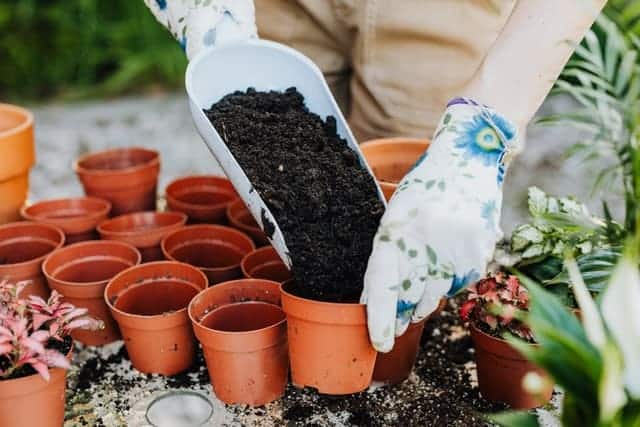
Growing plants from seeds provides children a chance to cultivate patience and sustained attention over weeks. Furthermore, growing living things provides an opportunity for children to develop nurturing instincts towards other living things. Make it a group activity and give children a chance to practice mutual accountability and working together.
Sew Buttons on Clothes
Culturally, many of us are getting further and further away from the source of our commodities. We don’t typically think about where our stuff comes from. As a result, children might develop a sense that if their stuff breaks they can’t do anything about it. Learning a skill like putting buttons back on clothes provides children with the opportunity to learn that they can take care of their things. In turn, this creates a sense of confidence and contribution.
Play Games as a Group
We know that playing is an integral part of childhood learning. Additionally, when children play in a group they learn social skills and how to cooperate with others. Pull out a board game, play charades in teams, or enhance listening skills with the game of telephone. Because social emotional skills are so important in a child’s development, interacting with peers in a cooperative setting promotes important life skills.
Teaching Life Skills in Primary School
It’s important to prepare children in multiple areas of life. The whole concept of life skills may include practical skills, social skills, and academic skills which all prepare children for success in adulthood. Here are some activities you can implement to enhance social emotional life skills:
When educators need assistance with lessons that encourage core skills like executive function and self-regulation, Soul Shoppe helps with online SEL programs. Soul Shoppe encourages empathy and emotional awareness in children. Whether helping in the classroom or assisting parents at home, Soul Shoppe brings social skills to the forefront of the discussion. Click for more information on SEL Programs for Elementary Schools or our parent support programs.