Professional development topics for teachers to elevate classroom practice
In a world where students’ needs are more complex than ever, traditional professional development often falls short. K–8 educators need more than just curriculum updates; they require practical, human-centered skills to build classrooms that are not only academically rigorous but also emotionally safe and deeply connected. This article moves beyond generic advice to offer 10 essential professional development topics for teachers, each designed for immediate and lasting impact in your school community.
School leaders, classroom teachers, and even parents will find actionable strategies and real-world examples to help students thrive. We will explore how frameworks from organizations like Soul Shoppe are transforming school cultures by prioritizing social-emotional learning (SEL), conflict resolution, and educator well-being. This guide provides a clear roadmap for creating learning environments where every student and staff member can succeed.
Each topic outlined below is presented as a comprehensive module, complete with:
- Why It Matters: The core reason this topic is critical for K-8 education.
- Sample Learning Objectives: Clear goals for what educators will be able to do.
- Suggested Activities & Formats: Practical ideas for workshops, coaching, and micro-PD.
- Measures of Success: How to know if the training is making a real difference.
This resource is structured for administrators planning their school’s learning calendar and for individual educators seeking to deepen their practice. To explore a wide array of options for ongoing professional learning, consider looking into various available professional development courses that align with these critical areas. Now, let’s explore the topics that will redefine professional learning and empower your school community.
1. Social-Emotional Learning (SEL) Framework Implementation
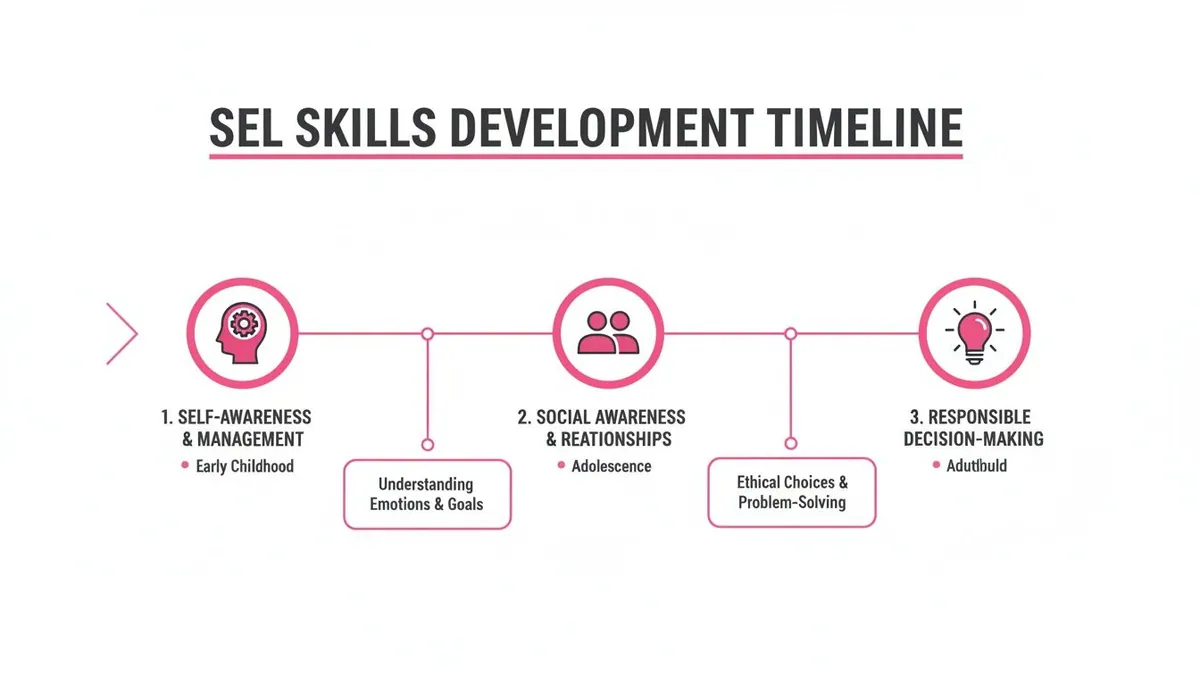
Social-Emotional Learning (SEL) provides a systematic framework for teaching students the practical skills needed to thrive both academically and personally. This approach focuses on developing core competencies: self-awareness, self-management, social awareness, relationship skills, and responsible decision-making. Professional development in SEL equips teachers to integrate these concepts directly into their daily instruction, fostering a classroom environment where emotional intelligence grows alongside academic knowledge. A robust SEL framework is the bedrock of a psychologically safe school, where students feel seen, supported, and ready to learn.
Why It’s a Top Priority
SEL is not just an add-on; it is foundational to student success. Schools that effectively implement SEL programs, like those developed by CASEL or Soul Shoppe, see tangible results. Research consistently shows an 11-percentile point gain in academic performance and significant reductions in disciplinary incidents. When students can identify their feelings, manage stress, and resolve conflicts, they are better equipped to engage in learning.
“When we teach children how to navigate their inner world, we give them the tools to navigate the outer world with compassion and resilience.”
Actionable Implementation Tips
To make SEL a core part of your school’s culture, focus on practical and consistent application.
- Start with Staff: Begin with professional development for all staff to ensure they understand the “why” behind SEL and can model the skills themselves.
- Integrate, Don’t Isolate: Weave SEL into existing routines. Practical Example: During morning meetings, use a “feelings check-in” where students can point to an emotion on a chart that best describes how they feel. This normalizes talking about emotions and helps the teacher understand the class’s mood.
- Use Consistent Language: Adopt a school-wide vocabulary for emotions and conflict resolution. Practical Example: When a student is upset, a teacher might say, “It looks like you’re feeling frustrated. Let’s use our ‘Calm-Down Corner’ to take a few deep breaths.” This creates a predictable and supportive environment.
- Engage Families: Provide parents with resources and workshops to extend SEL practices at home. Practical Example: Send home a one-page guide on “I-Statements” so parents can help their children express feelings without blaming, such as saying, “I feel sad when I’m left out,” instead of “You never play with me.”
- Track Your Progress: Monitor data on student behavior, attendance, and well-being to demonstrate the impact of your SEL initiatives and maintain momentum. For additional guidance, explore these powerful SEL resources for teachers to support your implementation journey.
2. Mindfulness and Self-Regulation Practices for Educators
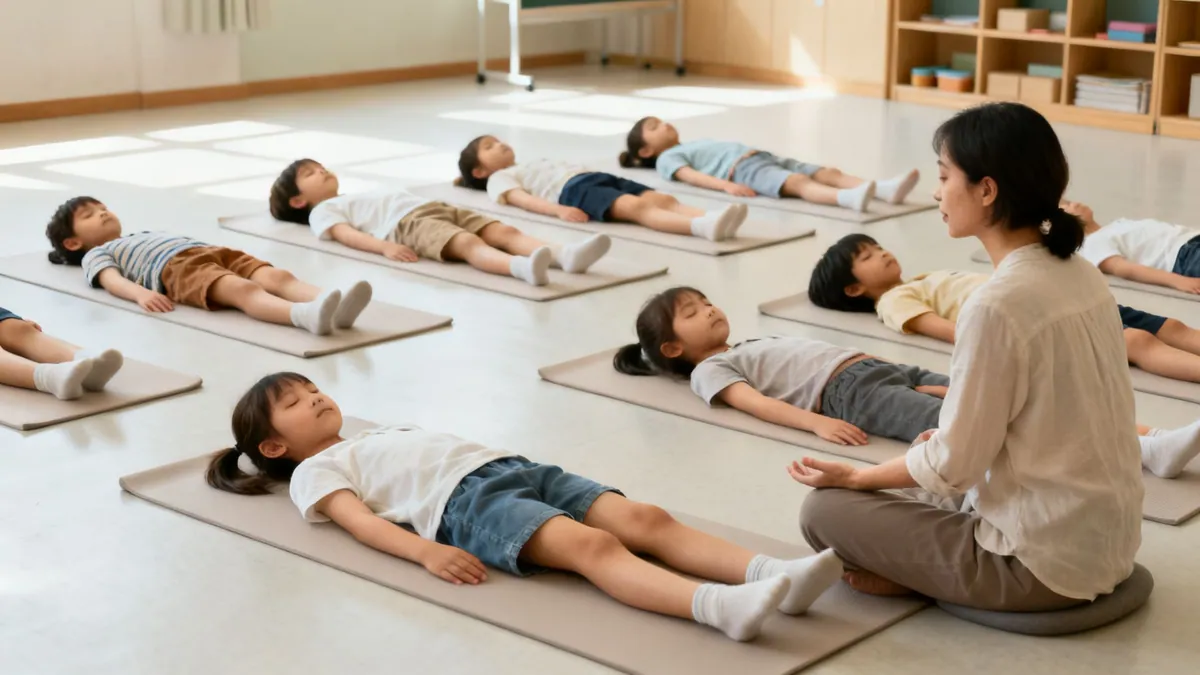
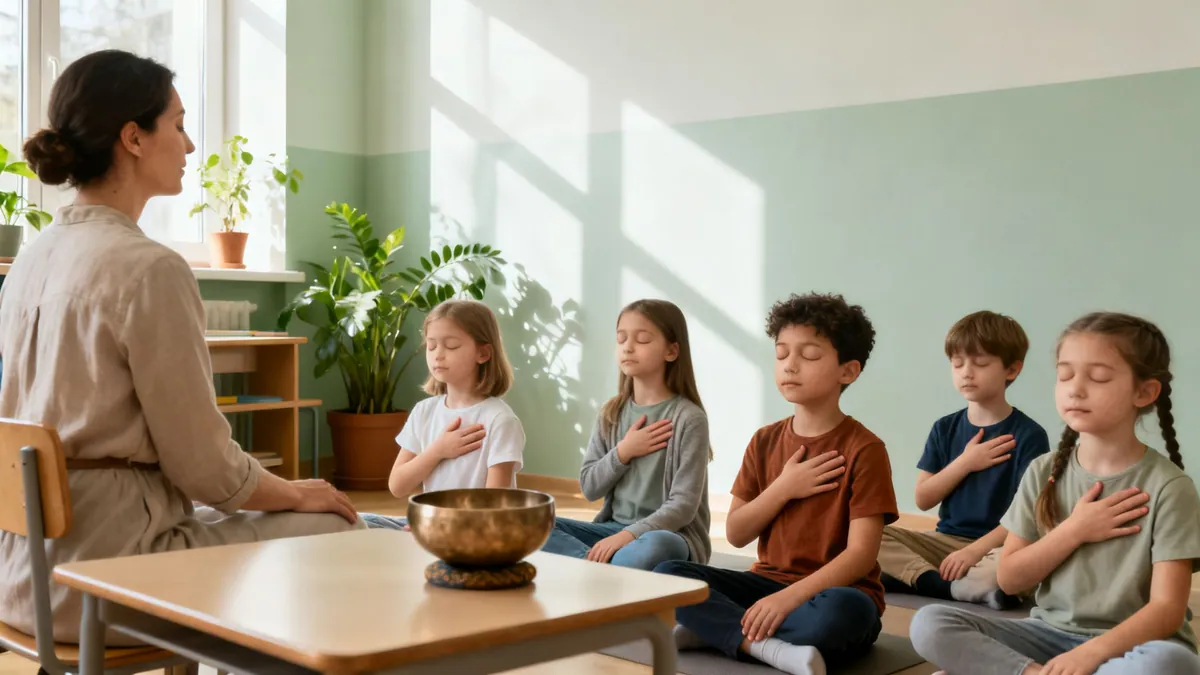
Mindfulness and self-regulation professional development provides teachers with evidence-based strategies to manage their own stress, model emotional resilience, and create calmer learning environments. This training focuses on teaching educators practical tools like mindful breathing, grounding techniques, and body awareness. By first developing their own practice, teachers can authentically guide students to use these same skills, fostering a classroom atmosphere of focus, calm, and emotional control.
Why It’s a Top Priority
An educator’s ability to remain calm and regulated directly impacts the entire classroom’s emotional climate. When teachers are grounded, they are better equipped to respond thoughtfully rather than react impulsively to student behavior. Schools using programs like the MindUp curriculum or Soul Shoppe’s mindfulness training report tangible improvements in classroom focus and reduced student anxiety. Research also supports this, with studies showing teachers who complete mindfulness training report a 40% reduction in perceived stress.
“A calm teacher is the greatest asset in a classroom. When we regulate ourselves, we create the space for our students to learn how to regulate themselves.”
Actionable Implementation Tips
To effectively embed mindfulness into your school culture, focus on making the practices accessible, consistent, and modeled by adults.
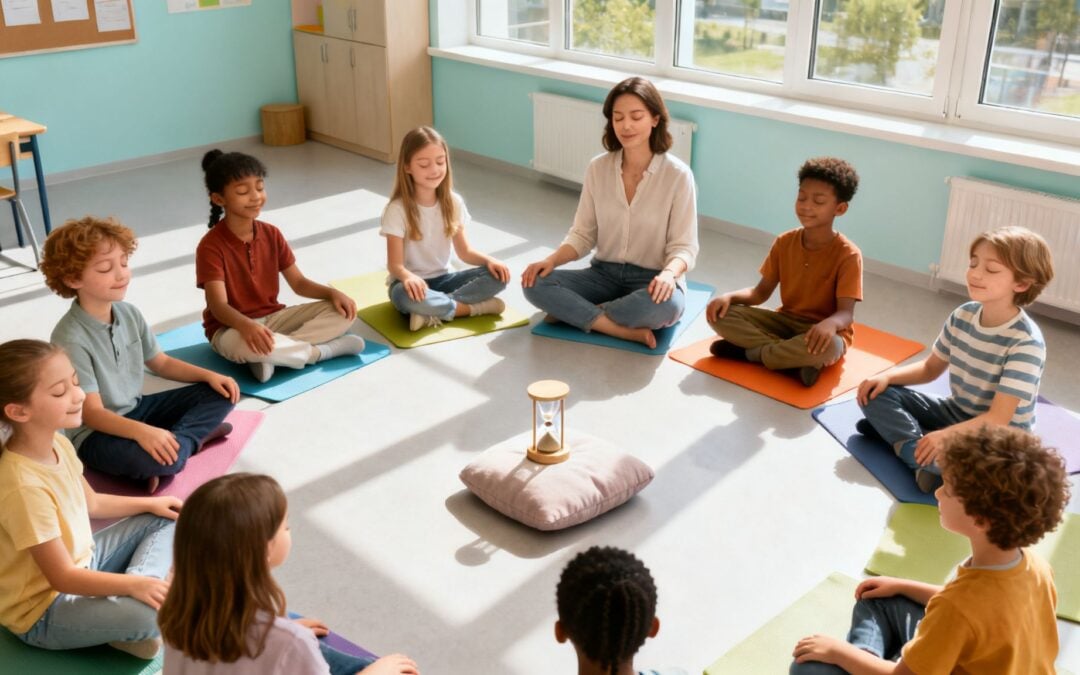
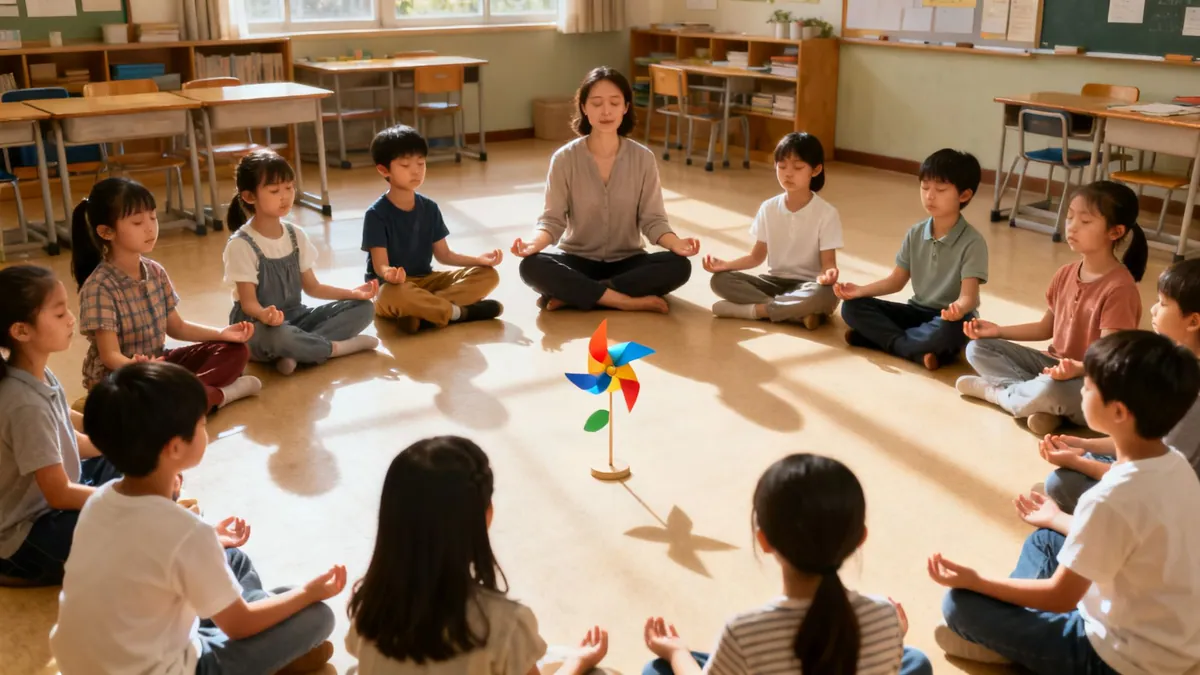
- Start Small and Consistently: Integrate brief, 2-3 minute mindfulness practices into daily routines. Practical Example: Use a chime to signal a moment of “silent breathing” after a noisy transition like coming in from recess. Students simply close their eyes and listen until the sound of the chime fades completely.
- Model First: Teachers should practice mindfulness personally before teaching it to students. This authenticity helps build student trust and demonstrates the value of the practice.
- Use Consistent Cues: Adopt school-wide language and visual or auditory cues, such as a singing bowl or a specific hand signal, to initiate mindfulness moments. This creates predictability.
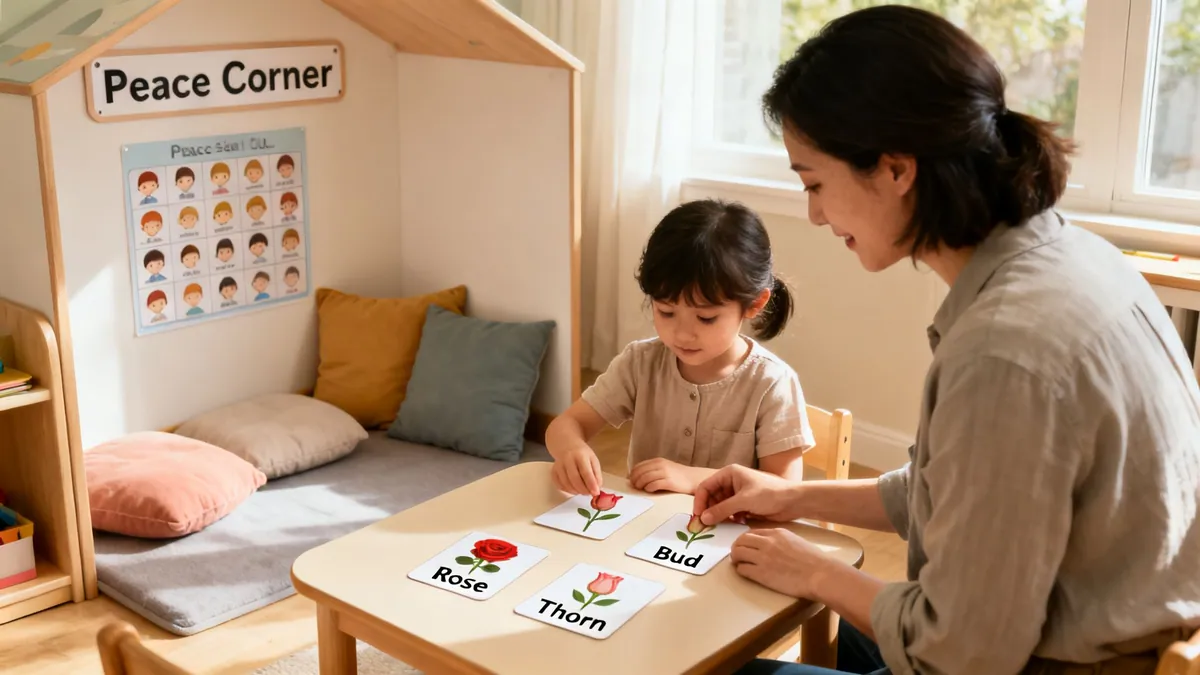
- Offer Student Choice: Not every technique works for every child. Practical Example: In a “Calm Corner,” provide options like a glitter jar to watch, a soft blanket for tactile comfort, or headphones with calming sounds. This allows students to choose what helps them self-regulate.
- Share the Why: Build staff buy-in by sharing the research behind mindfulness and its positive effects on brain development and stress reduction. Explore these calming activities for the classroom to find strategies that fit your students.
3. Conflict Resolution and Peer Mediation Training
Conflict resolution and peer mediation training provide teachers and student leaders with structured approaches to address disagreements constructively. This professional development focuses on teaching negotiation skills, facilitating difficult conversations, and establishing programs where students can mediate their own disputes. By equipping educators with these frameworks, schools can shift from punitive discipline to restorative approaches that rebuild relationships and teach essential life skills. This transforms classroom conflicts into valuable learning opportunities for emotional and social growth.
Why It’s a Top Priority
Empowering students to solve their own problems is a core component of a healthy school culture. When students learn to navigate disagreements respectfully, the entire community benefits. Schools with established peer mediation programs report dramatic decreases in disciplinary referrals, sometimes by as much as 70%. These programs build empathy, improve communication skills, and reduce the burden on teachers to act as constant referees. It is a proactive strategy that addresses the root of conflict rather than just the symptoms.
“Teaching children to resolve conflicts is teaching them to build a more peaceful world, one conversation at a time.”
Actionable Implementation Tips
To embed conflict resolution into your school, focus on creating clear systems and empowering student leaders.
- Train a Core Group: Start by training a select group of student leaders and teachers to act as peer mediators. Their success and enthusiasm will build momentum for a school-wide program.
- Establish Clear Protocols: Develop a step-by-step mediation process. Practical Example: Create a “Peace Path” on the playground with designated spots for students to stop and follow steps: 1) Cool Off, 2) Talk & Listen (using “I-statements”), 3) Brainstorm Solutions. This visual guide helps students manage conflicts independently.
- Integrate Shared Language: Use consistent terms like “I-statements” and “active listening” across all classrooms. This creates a common toolkit for students to draw upon when disagreements arise.
- Debrief and Reflect: Treat every resolved conflict as a teachable moment. Practical Example: After a mediation, ask students, “What solution did you both agree on?” and “What could you try next time this happens?” This reinforces the learning and encourages future problem-solving.
- Celebrate Successes: Publicly recognize the hard work of your peer mediators. Share success stories in newsletters or school assemblies to reinforce the value of the program. For more tools, explore these effective conflict resolution strategies for kids to support your students.
4. Creating Psychologically Safe and Inclusive Classrooms
This professional development topic guides teachers in designing classroom environments where every student feels safe, valued, and empowered to take academic and social risks. It moves beyond basic classroom management to focus on foundational elements like trauma-informed practices, culturally responsive teaching, addressing implicit bias, and fostering a deep sense of belonging. A psychologically safe classroom is a space where vulnerability is met with support, allowing students to engage fully, ask questions without fear, and build authentic connections with peers and educators.
Why It’s a Top Priority
Psychological safety is the prerequisite for all other learning. When a student’s nervous system is activated by fear, anxiety, or a feeling of not belonging, their capacity for higher-order thinking diminishes. Educators like Brené Brown and Zaretta Hammond have highlighted how safety and connection unlock cognitive potential. Schools that prioritize these environments see dramatic improvements; for example, those implementing trauma-informed practices often report up to a 30% decrease in suspensions because they address the root cause of behavior rather than just the symptoms.
“A child cannot learn if they do not feel safe. Creating a sense of belonging is not a ‘nice-to-have’-it’s a neurological requirement for academic engagement.”
Actionable Implementation Tips
Building a psychologically safe classroom is an ongoing process that requires intention and consistency.
- Assess Your Environment: Walk through your classroom and view it from a student’s perspective. Do the books, posters, and materials reflect the identities and cultures of all your students?
- Establish Community Rituals: Start the day with a community circle or a brief check-in. Practical Example: Implement a “Highs and Lows” circle where each student has an opportunity to share one good thing (a high) and one challenging thing (a low) from their day or week. This builds empathy and connection.
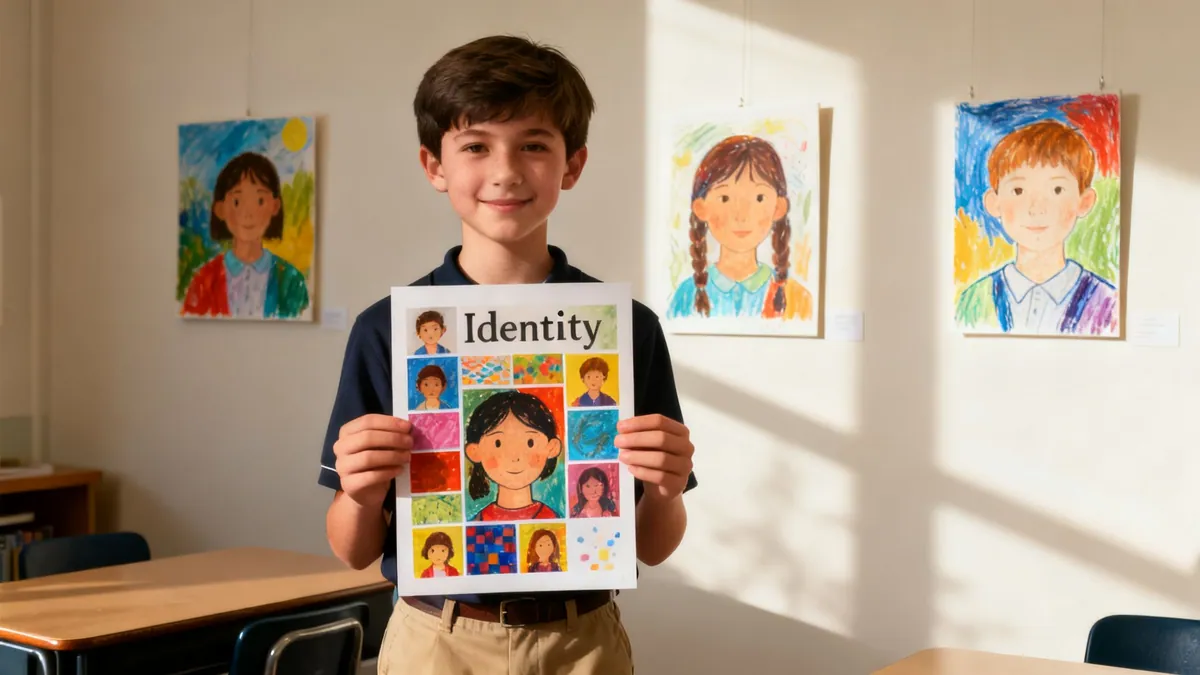
- Learn Student Identities: Go beyond names. Practical Example: Early in the year, have students create an “Identity Map” with words and drawings about their family, culture, hobbies, and strengths. Display these to celebrate the unique makeup of the classroom community.
- Respond with Curiosity: When bias or conflict arises, approach it as a teachable moment. Respond with questions like, “What makes you say that?” instead of punishment, fostering dialogue and understanding.
- Incorporate Trauma-Informed Practices: Understand how stress impacts learning and behavior. For more on this, explore these essential trauma-informed teaching strategies to create a more supportive space.
5. Bullying Prevention and Peer Support Program Development
Effective bullying prevention moves beyond zero-tolerance policies to cultivate a school culture where empathy, respect, and peer support are the norm. Professional development in this area equips educators to proactively address bullying by teaching students how to be upstanders, not just bystanders. It focuses on building a positive school climate where all students feel a sense of belonging and know how to support one another, thus reducing the conditions in which bullying can thrive. This approach addresses root causes rather than just punishing behaviors, creating a safer and more inclusive environment for everyone.
Why It’s a Top Priority
Bullying has severe and lasting effects on the mental health and academic performance of all students involved, including targets, aggressors, and witnesses. Schools that implement comprehensive, proactive prevention programs see significant positive outcomes. For example, partnerships like Soul Shoppe’s Junior Giants Strike Out Bullying program demonstrate how teaching specific social skills can empower entire communities. Research shows that effective, school-wide programs can reduce bullying incidents by up to 40-70%, making this one of the most impactful professional development topics for teachers.
“True bullying prevention is not about creating rules; it’s about building a community where kindness and courage are more powerful than cruelty.”
Actionable Implementation Tips
To embed a culture of prevention and support, focus on consistent, school-wide strategies.
- Define and Differentiate: Create and share clear, visual definitions of bullying versus conflict. Ensure all staff, students, and families understand the difference and the school’s response protocols for each.
- Train Everyone Consistently: All staff, from bus drivers to principals, must be trained to recognize the signs of bullying and respond consistently and effectively. This prevents situations from being dismissed as “just teasing.”
- Empower the Upstander: Teach all students safe and practical upstander skills. Practical Example: Role-play a scenario where one student makes fun of another’s drawing. Teach peers three safe options: 1) Distract (“Hey, want to play tag?”), 2) Speak Up (“That’s not cool, stop it.”), or 3) Get Help (Tell a trusted adult).
- Involve Student Voice: Engage students in creating prevention campaigns, peer mediation programs, or school climate committees. When students have ownership, the initiatives are far more authentic and successful.
- Implement Restorative Follow-Up: After an incident, ensure a structured follow-up process is in place. Practical Example: A teacher facilitates a restorative circle where the student who bullied listens to how their actions affected the target and then helps brainstorm ways to repair the harm, such as offering a sincere apology or inviting the target to join a game.
6. Communication Skills and Empathetic Listening Workshops
Advanced communication skills are the engine of a positive classroom culture, enabling teachers to build strong, trust-based relationships with students, families, and colleagues. This professional development topic focuses on practical techniques like active listening, empathetic responding, and non-violent communication. By mastering these skills, educators learn to de-escalate conflicts, foster mutual respect, and create an environment where every student feels heard and understood. This foundation in effective communication directly supports all other SEL competencies and is essential for a thriving school community.
Why It’s a Top Priority
Strong communication skills are not inherent; they are taught, practiced, and refined. When teachers are trained in empathetic listening, the impact is immediate and profound. Schools utilizing structured communication frameworks, such as Non-Violent Communication, often see a significant reduction in disciplinary incidents, sometimes by as much as 30-50%. Furthermore, teachers trained in these methods report improved student engagement and a greater sense of connection in the classroom, transforming challenging interactions into opportunities for growth.
“Empathetic listening is about truly hearing what is said and, more importantly, what is left unsaid. It’s the key to unlocking genuine connection and understanding.”
Actionable Implementation Tips
To embed advanced communication skills into your school’s daily practice, focus on consistent modeling and application.
- Practice with Peers: Before trying new techniques with students, hold role-playing sessions where staff can practice active listening and empathetic responses with each other in a low-stakes environment.
- Model “I” Statements: Teach and consistently use “I” statements to express feelings without placing blame. Practical Example: Instead of saying, “You never listen!” a teacher can model, “I feel frustrated when I have to repeat instructions. Can you help me understand what’s distracting you?”
- Ask, Don’t Assume: Train staff to ask clarifying questions before jumping to conclusions. Practical Example: If a student puts their head down, instead of assuming they are defiant, a teacher might quietly ask, “It looks like something is on your mind. Is there anything you want to share?”
- Use Communication Scripts: Provide teachers with scripts and visual aids for challenging conversations, such as parent-teacher conferences or student mediations, to help them stay grounded in empathetic language.
- Schedule Connection Time: Encourage teachers to build brief, regular one-on-one check-ins with students to practice listening and strengthen individual relationships.
7. Teacher Self-Care, Resilience, and Burnout Prevention
Addressing teacher well-being is not a luxury; it is a fundamental requirement for creating a sustainable and effective educational environment. This professional development topic focuses on equipping educators with the tools to manage stress, build personal resilience, and actively prevent burnout. By learning to recognize the signs of emotional exhaustion, set healthy boundaries, and prioritize self-care, teachers can protect their own mental health. This directly translates to a more positive and stable classroom, as resilient educators are better able to model emotional regulation and support their students’ needs.
Why It’s a Top Priority
Teacher burnout has reached crisis levels, leading to high turnover rates and negatively impacting student achievement. When educators are overwhelmed, their capacity for patient, empathetic, and effective instruction diminishes. Professional development focused on self-care, like mindfulness trainings or wellness programs, has been shown to reduce burnout by significant margins. Schools that invest in their staff’s well-being see improved teacher retention, a more positive school climate, and educators who are more present and engaged with their students.
“Caring for myself is not self-indulgence, it is self-preservation, and that is an act of political warfare.” – Audre Lorde
Actionable Implementation Tips
To embed a culture of well-being, schools must move beyond one-off workshops and integrate supportive practices into daily operations.
- Normalize the Conversation: Create safe spaces, like staff meetings or professional learning communities, for teachers to openly discuss stress and mental health without judgment.
- Model Healthy Boundaries: School leaders should model and encourage practices like not sending emails after work hours. Practical Example for Teachers: Use an email scheduler to write parent communications in the evening but have them sent automatically during work hours the next morning. This protects personal time.
- Build Peer Support Systems: Facilitate peer mentoring programs or “buddy systems” where teachers can check in with one another, share challenges, and celebrate successes.
- Address Systemic Stressors: While individual strategies are important, also examine and address systemic issues. Practical Example: A school administration could create a shared bank of substitute lesson plans for emergencies, reducing the stress on a teacher who needs to take an unexpected sick day.
- Provide Tangible Resources: Offer access to confidential counseling services, host on-site yoga or mindfulness sessions, and ensure break rooms are comfortable and restorative spaces.
8. Family Engagement and Home-School Partnership Building
Building authentic partnerships with families transforms the school into a collaborative community where students are supported from all angles. This approach moves beyond traditional parent-teacher conferences to create a consistent, two-way dialogue. Professional development on this topic gives teachers the tools for culturally responsive engagement, ensuring every family feels valued and empowered to participate in their child’s education. When schools and homes work together, the impact of social-emotional learning and academic instruction is magnified significantly.
Why It’s a Top Priority
Strong family engagement is a powerful lever for student achievement and well-being. Research consistently shows that when families are actively involved, students demonstrate higher academic performance, better attendance, and improved social skills. Schools with strong family partnerships have shown up to a 30% improvement in student outcomes. This collaborative approach ensures that the skills students learn in the classroom, from managing emotions to resolving conflicts, are understood and reinforced in their home environment.
“Education is a shared commitment between dedicated teachers, motivated students, and enthusiastic parents. When that partnership is strong, anything is possible.”
Actionable Implementation Tips
To build a robust home-school partnership, focus on creating accessible and authentic connection points.
- Survey Families: Begin the year by asking families about their communication preferences, potential barriers to participation (like work schedules or transportation), and what they are most interested in learning.
- Offer Flexible Engagement: Provide opportunities at various times, both in-person and virtual. Offer practical support like childcare or translation services to remove common barriers.
- Share Practical Strategies: Use newsletters or short videos to share simple, easy-to-implement SEL strategies that families can try. Practical Example for Parents: Suggest creating a “calm-down kit” at home with items like play-doh, a coloring book, and a stress ball, mirroring the tools used in the classroom’s “Calm Corner.”
- Establish Two-Way Communication: Create channels where families can easily provide input. Practical Example: Use a simple app like Remind or ClassDojo to send quick, positive updates (“Liam was a great helper today!”) and allow parents to ask questions easily, fostering a continuous, positive dialogue.
- Celebrate Family Contributions: Acknowledge and highlight the ways families support learning, whether it’s through volunteering, helping with homework, or reinforcing school values at home. This builds a culture of mutual respect and appreciation.
9. Data-Driven SEL Implementation and Measuring Social-Emotional Outcomes
Moving beyond intuitive feelings about student well-being, data-driven SEL implementation provides a structured approach to measure, track, and improve social-emotional outcomes. This professional development topic shifts the focus from simply doing SEL to proving its effectiveness through concrete evidence. Educators learn to use valid assessment tools and systematic data collection to inform instruction, identify students needing targeted support, and demonstrate the tangible impact of their SEL programs. By quantifying growth in areas like self-regulation and relationship skills, schools can ensure accountability and drive continuous improvement.
Why It’s a Top Priority
What gets measured gets managed. Without data, SEL initiatives risk being seen as “soft” or optional, making them vulnerable to budget cuts. Schools that effectively use data, such as CASEL’s assessment toolkit, can demonstrate measurable gains in student attendance, behavior, and academic performance. This evidence-based approach helps secure sustained funding and buy-in from all stakeholders. Data transforms SEL from a well-intentioned program into a core, non-negotiable component of student success.
“Data gives a voice to student needs and a roadmap for our response, turning our commitment to SEL into a demonstrable impact.”
Actionable Implementation Tips
To embed data practices into your SEL culture, focus on making the process clear, collaborative, and purposeful.
- Select Aligned Tools: Choose assessments that directly measure the competencies in your school’s SEL framework. This could include student self-reports, teacher rating scales, or direct observations.
- Combine Data Sources: Use a mix of formal assessments and informal classroom data. Practical Example: A teacher could track the number of times students use the “Peace Path” to resolve conflicts independently each week. A decrease in teacher intervention is a clear data point showing skill development.
- Empower Student Voice: Involve students in the process through self-assessment and goal-setting. Practical Example: At the start of a unit on collaboration, students can rate themselves on a simple 1-4 scale for “listening to others’ ideas.” They can then set a goal and re-assess at the end, visually tracking their own growth.
- Analyze for Equity: Disaggregate data by student subgroups to identify and address any disparities in support or outcomes, ensuring your SEL efforts are equitable.
- Hold Regular Data Meetings: Schedule time for staff to collaboratively review SEL data, celebrate successes, identify trends, and adjust instructional strategies accordingly.
10. Experiential Learning Design and Interactive Workshop Facilitation
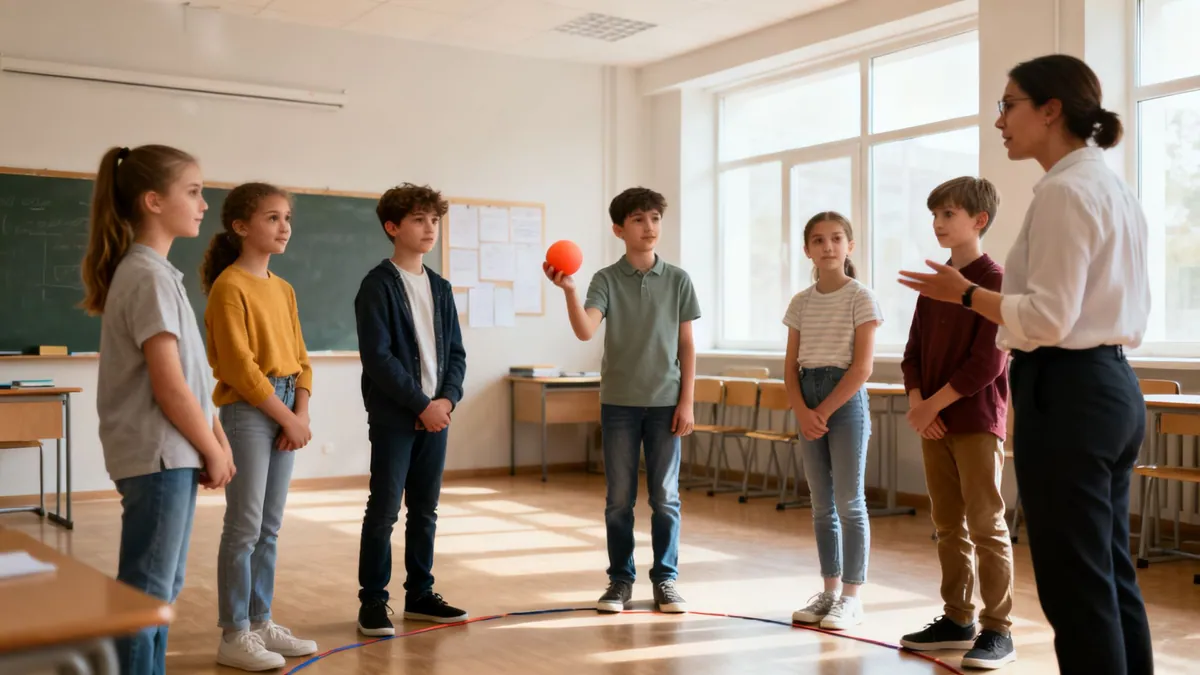
Experiential learning moves SEL instruction beyond lectures and worksheets, teaching students vital competencies through direct experience. This professional development focus trains educators to design and facilitate interactive sessions using activities, games, role-playing, and movement. By engaging students in embodied learning, teachers can create memorable, personally meaningful lessons that are more likely to be internalized and applied in real-world situations. This active, hands-on approach is foundational to creating a vibrant and effective learning environment.
Why It’s a Top Priority
Students learn best by doing. When SEL concepts are experienced rather than just explained, retention and application skyrocket. Schools that use interactive methods, like those pioneered by Soul Shoppe for over 20 years, report significantly higher student engagement and buy-in for school-wide initiatives. Shifting from passive to active learning transforms the classroom into a dynamic space where students practice empathy, communication, and problem-solving in the moment, building muscle memory for these crucial skills.
“Tell me, and I forget. Teach me, and I may remember. Involve me, and I learn.”
Key Insight: Restorative practices teach that conflict is an opportunity for growth. By focusing on repairing harm, we build accountability and strengthen the entire community.
Tips for Implementation
- Invest in Training: Thoroughly train both staff facilitators and student peer mediators. This training should cover restorative philosophy, active listening, and managing difficult conversations.
- Use Proactively: Don’t wait for harm to occur. Use community-building circles regularly to build relationships and establish a culture of trust and open communication. Practical Example: A teacher can start each week with a “check-in” circle, asking students to share one success and one challenge from their weekend. This builds trust so that when a conflict arises, the circle format is already familiar and safe.
- Establish Clear Protocols: Define when to use peer mediation versus a staff-led restorative conference. More serious incidents may require adult intervention.
- Follow Up: Always check in with the involved parties after an agreement is made to ensure it is being honored and to offer further support if needed.
For a deeper dive into this transformative approach, you can explore what restorative practices in education look like in more detail and learn how to implement them in your school.
5. Mindfulness and Breathing Pause Exercises
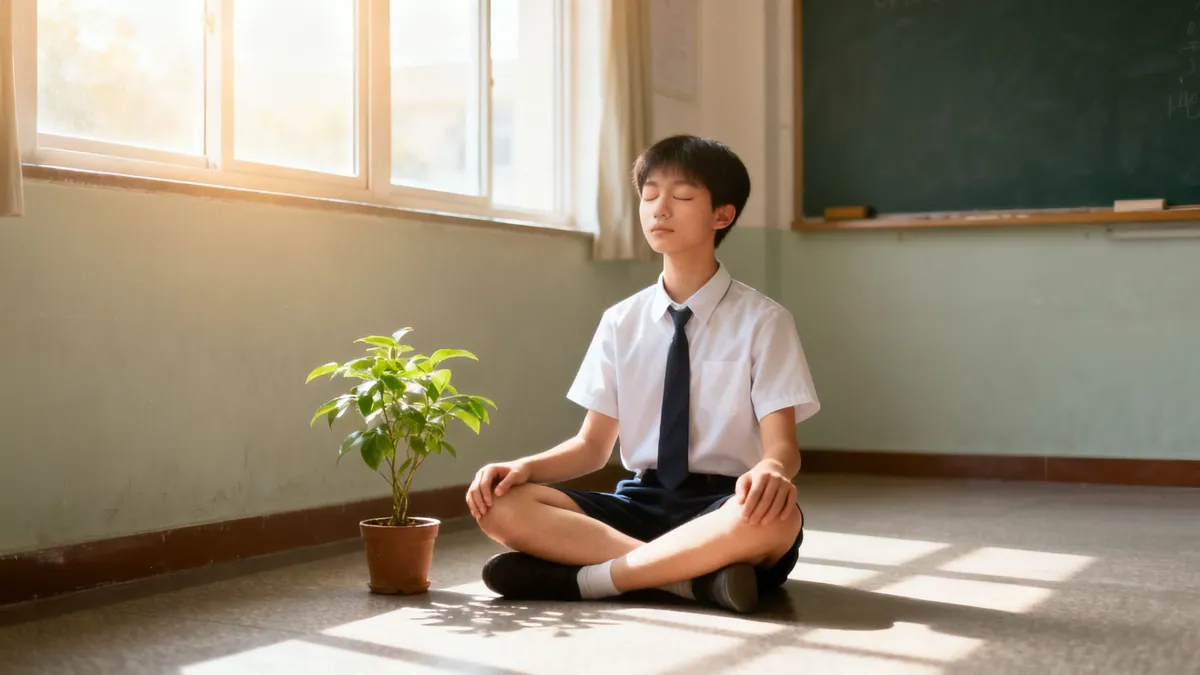
Mindfulness and Breathing Pause Exercises are structured practices that teach students to pause, notice their thoughts and emotions, and respond intentionally rather than react impulsively. These techniques create the mental space needed for effective problem-solving by supporting self-regulation and reducing reactive conflict. This problem solving activity is foundational, as it equips students with the internal tools to manage stress before tackling external challenges.
This approach transforms classroom management by empowering students to become active participants in their own emotional regulation. Instead of teachers managing behavior, students learn to manage themselves, which is a critical life skill.
How It Works: A Classroom Example
Consider a common scenario: two students, Maria and Leo, are arguing over a shared tablet. Emotions are escalating, and the argument is about to become a disruptive conflict. Instead of intervening immediately, the teacher initiates a pre-taught “Pause and Breathe” protocol.
- The Trigger: The students begin raising their voices.
- The Pause: The teacher calmly says, “Let’s take a Pause and Breathe.” Both students know this signal. They stop talking, place a hand on their belly, and take three slow, deep breaths.
- Noticing: During these breaths, they shift their focus from the conflict to their physical sensations. They notice their fast heartbeat and tense shoulders. This brief moment of awareness interrupts the reactive emotional spiral.
- Responding: After the pause, the teacher asks, “What do you both need right now?” Having calmed down, Maria can articulate, “I need to finish my turn,” and Leo can say, “I’m worried I won’t get a chance.”
- The Solution: The problem is now reframed from a fight to a scheduling issue. The students can now work with the teacher to create a fair plan for sharing the tablet.
The breathing pause didn’t solve the problem directly, but it created the necessary calm and clarity for the students to engage in a constructive problem solving activity.
Key Insight: A regulated brain is a problem-solving brain. Mindfulness provides the essential first step of calming the nervous system so higher-order thinking can occur.
Tips for Implementation
- Model and Co-Regulate: Practice these exercises with your students daily. Your calm presence is a powerful teaching tool. Never use a breathing exercise as a punishment.
- Start Small: Begin with just one minute of “belly breathing” or a “listening walk” to notice sounds. Gradually build up duration and complexity as students become more comfortable.
- Create a Ritual: Integrate a brief breathing exercise into daily routines, like after recess or before a test, to make it a normal and expected part of the day.
- Connect to Emotions: Explicitly link the practice to real-life situations. Say, “When you feel that big wave of frustration, remember how we do our box breathing. That’s a tool you can use.” Practical Example: Before a math test, a teacher can lead the class in “4×4 Box Breathing”: breathe in for a count of 4, hold for 4, breathe out for 4, and hold for 4. This helps calm test anxiety and improve focus.
For more ideas on integrating these practices, explore our guide on mindfulness exercises for students.
6. The Ladder of Inference (Assumption Analysis)
The Ladder of Inference is a thinking tool that helps students understand how they jump to conclusions. It illustrates the mental process of using selected data, interpreting it through personal beliefs, and forming assumptions that feel like facts. This problem solving activity is invaluable for deconstructing conflicts, misunderstandings, and hurtful situations by revealing the flawed thinking that often fuels them.
This method teaches students to slow down their reasoning and question their interpretations. Instead of reacting to a conclusion, they learn to trace their steps back down the ladder to examine the observable facts, making them more thoughtful communicators and empathetic friends.
How It Works: A Classroom Example
Imagine a student, Maya, sees her friend Chloe whisper to another student and then laugh while looking in her direction. Maya quickly climbs the ladder of inference and concludes Chloe is making fun of her, leading her to feel hurt and angry.
- The Conclusion: “Chloe is a mean person and not my friend anymore.” (An action or belief)
- The Assumption: “She must be telling a mean joke about me.” (An assumption based on the interpretation)
- The Interpretation: “Whispering and laughing means they are being secretive and unkind.” (Meaning is added based on personal beliefs)
- The Selected Data: Maya focuses only on the whisper, the laugh, and the glance in her direction. She ignores other data, like Chloe smiling at her earlier.
- The Observable Reality: Chloe whispered to another student. They both laughed. They glanced toward Maya. (Just the facts)
By working back down the ladder, Maya can see her conclusion is based on a big assumption. The solution is not to confront Chloe angrily but to get curious and gather more data, for example, by asking, “Hey, what was so funny?”
Key Insight: The Ladder of Inference reveals that our beliefs directly influence how we interpret the world. By learning to separate observation from interpretation, we can prevent minor misunderstandings from becoming major conflicts.
Tips for Implementation
- Use Visual Aids: Draw the ladder on a whiteboard or use a printable graphic. Visually mapping out the steps helps students grasp the abstract concept of their own thinking processes.
- Model the Language: Teach students phrases to challenge assumptions. Encourage them to say, “I’m making an assumption that…” or, “The story I’m telling myself is…” This separates their interpretation from objective reality.
- Practice ‘Getting Curious’: Instead of accepting conclusions, prompt students with questions like, “What did you actually see or hear?” and “What’s another possible reason that could have happened?” This builds a habit of curiosity over certainty. Practical Example: A parent sees their child’s messy room and thinks, “He’s so lazy and disrespectful.” Using the ladder, they can go back to the observable data: “I see clothes on the floor and books on the bed.” Then they can get curious: “What’s another possible reason for this?” Perhaps the child was rushing to finish homework or felt overwhelmed. The parent can then ask, “I see your room is messy. What’s getting in the way of cleaning it up?”
For more strategies on fostering mindful communication and emotional regulation, explore our conflict resolution curriculum.
7. Empathy Mapping and Perspective-Taking Exercises
Empathy Mapping is a powerful problem solving activity that guides students to step into someone else’s shoes and understand their experience from the inside out. By visually mapping what another person sees, hears, thinks, and feels, students move beyond simple sympathy to develop genuine empathy. This structured approach helps them analyze conflicts, social exclusion, and diverse viewpoints with greater compassion and insight.
This method transforms interpersonal problems from “me vs. you” into “us understanding an experience.” It builds the foundational social-emotional skills needed for collaborative problem-solving, making it an essential tool for creating a more inclusive and supportive classroom community.
How It Works: A Classroom Example
Imagine a conflict where a student, Maya, is upset because her classmate, Leo, laughed when she tripped during recess. Instead of focusing only on the action, the teacher uses an empathy map to explore both perspectives.
First, Maya maps Leo’s perspective:
- Sees: Maya falling, other kids playing.
- Hears: A loud noise, other kids laughing nearby.
- Thinks: “That looked funny,” or “I hope she’s okay.”
- Feels: Surprised, maybe amused, or a little embarrassed for her.
Then, Leo maps Maya’s perspective:
- Sees: Everyone looking at her on the ground.
- Hears: Laughter from his direction.
- Thinks: “Everyone is laughing at me. I’m so embarrassed. He did that on purpose.”
- Feels: Hurt, embarrassed, angry, and singled out.
This exercise reveals that while Leo’s reaction may have been thoughtless, Maya’s interpretation was rooted in deep feelings of embarrassment and hurt. The problem to solve is not just the laughter, but the impact it had and how to repair the trust between them.
Key Insight: Empathy mapping shows that intention and impact can be very different. Understanding this gap is the first step toward resolving conflicts and preventing future misunderstandings.
Tips for Implementation
- Use Concrete Scenarios: Ground the activity in specific, relatable situations, like a disagreement over a game or feeling left out at lunch. Avoid abstract concepts that are hard for students to connect with.
- Model Vulnerability: Share an appropriate personal example of a time you misunderstood someone’s perspective. This shows that everyone is still learning and creates a safe space for students to be honest.
- Connect Empathy to Action: After mapping, always ask, “Now that we understand this, what can we do to help or make things better?” This turns insight into positive action. Practical Example: After reading a story about a new student who feels lonely, the class can create an empathy map for that character. Then, the teacher can ask, “What could we do in our class to make a new student feel welcome?” This connects the fictional exercise to real-world classroom behavior.
For a deeper dive into fostering these skills, explore our guide to perspective-taking activities.
8. Collaborative Problem-Solving (CPS) Protocol
The Collaborative Problem-Solving (CPS) Protocol, developed by Dr. Ross Greene, is a structured dialogue method that transforms how adults address challenging behaviors in students. It operates on the core belief that “kids do well if they can,” shifting the focus from a lack of motivation to a lack of skills. This non-confrontational problem solving activity involves both the adult and student as equal partners in understanding and solving problems, making it a powerful tool for de-escalating conflicts and building competence.
This approach replaces unilateral, adult-imposed solutions with a joint effort, which reduces power struggles and turns every conflict into a valuable teaching opportunity. It is especially effective for students with social, emotional, and behavioral challenges.
How It Works: A Classroom Example
Consider a student, Maya, who frequently disrupts class during independent reading time by talking to her neighbors. Instead of assigning a consequence, a teacher uses the CPS protocol.
- Empathy Step: The teacher pulls Maya aside when she is calm. “I’ve noticed that during reading time, it seems like you have a hard time staying quiet. What’s up?” The goal is to listen and gather information without judgment. Maya explains she gets bored and the words “get jumbled” after a few minutes.
- Define the Problem Step: The teacher shares their perspective. “I understand it gets boring and difficult. My concern is that when you talk, it makes it hard for other students to concentrate, and for you to practice your reading.”
- Invitation Step: The teacher invites collaboration. “I wonder if there’s a way we can make it so you can get your reading practice done without it feeling so boring, and also make sure your classmates can focus. Do you have any ideas?”
Together, they brainstorm solutions like breaking up the reading time with short breaks, trying an audio book to follow along, or choosing a high-interest graphic novel. They agree to try a 10-minute reading timer followed by a 2-minute stretch break. This solution addresses both Maya’s lagging skill (sustained attention) and the teacher’s concern (classroom disruption).
Key Insight: CPS reframes misbehavior as a signal of an unsolved problem or a lagging skill. By working together, we teach students how to solve problems, rather than just imposing compliance.
Tips for Implementation
- Listen More Than You Talk: The Empathy step is crucial. Your primary goal is to understand the student’s perspective on what is getting in their way. Resist the urge to jump to solutions.
- Be Proactive: Use the CPS protocol when everyone is calm, not in the heat of the moment. This makes it a preventative tool rather than a reactive one.
- Focus on Realistic Solutions: Brainstorm multiple ideas and evaluate them together. A good solution is one that is realistic, mutually satisfactory, and addresses the concerns of both parties.
- Follow Up: Check in later to see if the solution is working. Be prepared to revisit the conversation and adjust the plan if needed. Practical Example for Parents: A parent notices their child always argues about bedtime. Empathy: “I’ve noticed getting ready for bed is really tough. What’s up?” The child might say, “I’m not tired and I want to finish my game.” Define Problem: “I get that. My concern is that if you don’t sleep enough, you’re really tired and grumpy for school.” Invitation: “I wonder if there’s a way for you to finish your game and also get enough rest. Any ideas?” They might co-create a solution involving a 10-minute warning before screen-off time.
To discover more ways to facilitate productive conversations, check out these conflict resolution activities for kids.
9. Brave Space Conversations and Dialogue Protocols
Brave Space Conversations and Dialogue Protocols are structured frameworks that teach students and adults how to navigate sensitive topics, express different viewpoints respectfully, and stay connected during disagreement. These protocols, inspired by works like Difficult Conversations and the Courageous Conversations framework, prioritize psychological safety and shared responsibility. This problem solving activity is essential for addressing bias, building inclusive communities, and maintaining relationships through conflict.
This approach moves beyond “safe spaces,” where comfort is the goal, to “brave spaces,” where the goal is growth through respectful, and sometimes uncomfortable, dialogue. It equips participants with the tools to talk about what matters most, even when it’s hard.
How It Works: A Classroom Example
Imagine a group of middle school students is divided over a current event involving social inequality. Tensions are high, and students are making hurtful comments. Instead of shutting down the conversation, a teacher uses a dialogue protocol.
- Establish Norms: The class co-creates agreements like “Listen to understand, not to respond,” “Assume good intent but address impact,” and “It’s okay to feel uncomfortable.”
- Introduce Sentence Starters: The teacher provides scaffolds to guide the conversation, such as “I was surprised when I heard you say…” or “Can you tell me more about what you mean by…?”
- Facilitate Dialogue: A student shares their perspective on the event. Another student, instead of reacting defensively, uses a sentence starter: “I hear that you feel…, and my perspective is different. For me, I see…”
- Focus on Impact: A student addresses a peer directly but respectfully: “When you said that, it made me feel invisible because my family has experienced this. Can we talk about that?”
- Seek Mutual Understanding: The conversation continues, with the focus shifting from winning an argument to understanding each other’s lived experiences.
This structured process prevents the conversation from devolving into personal attacks and transforms a potential conflict into a powerful learning moment about empathy, perspective-taking, and community.
Key Insight: Brave spaces normalize discomfort as a necessary part of growth. They teach that the goal of difficult conversations isn’t always agreement, but a deeper mutual understanding and respect.
Tips for Implementation
- Establish Psychological Safety First: Before diving in, clarify that the purpose is learning together. Emphasize that vulnerability is a strength and that mistakes are opportunities for growth.
- Co-Create Norms: Involve students in creating the rules for the conversation. This gives them ownership and makes them more likely to hold themselves and their peers accountable.
- Use Scaffolds and Sentence Frames: Provide language tools to help students articulate their thoughts and feelings constructively, especially when emotions are high. Practical Example: Provide a list of sentence frames on the board, such as: “Help me understand your thinking about…”, “The story I’m telling myself is…”, or “I’m curious about why you see it that way.”
- Acknowledge the Discomfort: Start by saying, “This might feel a bit uncomfortable, and that’s okay. It means we are tackling something important.” This normalization reduces anxiety.
To learn more about fostering brave and respectful classroom environments, explore Soul Shoppe’s approach to building school-wide community.
10. Solution-Focused Brief Therapy (SFBT) Questioning
Solution-Focused Brief Therapy (SFBT) Questioning is a strengths-based problem solving activity that shifts the focus from analyzing problems to envisioning solutions. Instead of dissecting what’s wrong, this approach uses targeted questions to help students identify their own strengths, resources, and past successes to build a better future. It empowers students by highlighting their capabilities and fostering a sense of agency.
This method is highly effective for interpersonal challenges and building resilience. It moves a student from a “stuck” mindset, where a problem feels overwhelming, to a proactive one focused on small, achievable steps forward.
How It Works: A Classroom Example
Consider a student who feels consistently left out during recess. A traditional approach might focus on why they are isolated, but SFBT questioning builds a path toward connection.
- The Miracle Question: “Imagine you went to sleep tonight, and while you were sleeping, a miracle happened and your recess problem was solved. When you woke up tomorrow, what would be the first thing you’d notice that tells you things are better?” The student might say, “Someone would ask me to play.”
- Identifying Exceptions: “Can you think of a time, even just for a minute, when recess felt a little bit better?” The student may recall, “Last week, I talked to Maria about a video game for a few minutes, and it was okay.” (This highlights a past success).
- Scaling the Situation: “On a scale of 1 to 10, where 1 is the worst recess ever and 10 is the miracle recess, where are you today?” The student says, “A 3.” The follow-up is key: “What would need to happen to get you to a 4?” They might suggest, “Maybe I could try talking to Maria about that game again.” (This defines a small, concrete step).
This process helps the student create their own solution based on what has already worked, building confidence and providing a clear action to take.
Key Insight: SFBT questioning assumes that students already have the tools to solve their problems. Our job is to ask the right questions to help them discover and use those tools.
Tips for Implementation
- Ask with Genuine Curiosity: Your tone should be supportive and inquisitive, not leading. Frame questions to explore possibilities, such as “What would that look like?” or “How did you do that?”
- Focus on Strengths: Actively listen for and acknowledge the student’s capabilities. When they identify a past success, validate it: “Wow, it sounds like you were really brave to do that.”
- Use Scaling Questions: These questions (e.g., “On a scale of 1-10…”) are excellent for measuring progress and identifying the next small step. The goal isn’t to get to 10 immediately but to move up just one point. Practical Example: A student is overwhelmed by a large project. The teacher asks, “On a scale of 1-10, where 1 is ‘I can’t even start’ and 10 is ‘It’s completely done,’ where are you?” The student says, “A 2, because I chose my topic.” The teacher responds, “Great! What’s one small thing you could do to get to a 3?” The student might say, “I could find one book about my topic.” This makes the task feel manageable.
To see how solution-focused language can be integrated into broader conflict resolution, explore our I-Message and conflict resolution tools.
Top 10 Problem-Solving Activities Comparison
| Method | Implementation complexity | Resource requirements | Expected outcomes | Ideal use cases | Key advantages |
|---|---|---|---|---|---|
| The Five Whys Technique | Low — simple, linear process | Minimal — facilitator and quiet space | Surface to root-cause insights; increased reflection | Quick conflict debriefs; individual reflection; classroom incidents | Simple, fast, promotes curiosity and reduced blame |
| Fishbone Diagram (Ishikawa) | Moderate — structured group analysis | Moderate — time, facilitator, visual materials | Comprehensive mapping of contributing factors; systems insight | Recurring schoolwide issues; bullying patterns; program analysis | Visualizes complexity; engages multiple stakeholders |
| Design Thinking Workshops | High — multi-stage, iterative process | High — trained facilitators, time, prototyping materials | Student-driven, tested solutions; enhanced creativity and agency | Reimagining student experience; designing new interventions | Empowers students; encourages prototyping and iteration |
| Restorative Practices & Peer Mediation | High — systemic adoption and sustained practice | High — extensive training, staff time, organizational buy-in | Repaired relationships; reduced recidivism; community accountability | Serious harm events, reintegration, community-building | Restores dignity; builds accountability and community ties |
| Mindfulness & Breathing Pause Exercises | Low — short, repeatable practices | Low — brief time, minimal materials, teacher modeling | Improved self-regulation; reduced stress and reactivity | Daily classroom routines; acute de-escalation moments | Immediate calming effects; easy to scale schoolwide |
| Ladder of Inference (Assumption Analysis) | Moderate — conceptual teaching and practice | Low — training/examples, facilitator guidance | Greater metacognition; fewer snap judgments and misunderstandings | Miscommunications; reflective lessons after conflicts | Reveals thinking patterns; promotes curiosity and verification |
| Empathy Mapping & Perspective-Taking | Moderate — guided activities and debriefs | Moderate — materials, facilitation, time | Increased empathy; shared language about needs and impact | Conflict resolution; inclusion lessons; curriculum integration | Makes empathy concrete; reduces othering and stereotyping |
| Collaborative Problem-Solving (CPS) Protocol | Moderate–High — structured dialogue, stepwise | Moderate — trained staff, time per conversation | Reduced power struggles; improved problem-solving skills | Chronic behavioral challenges; individualized supports | Non-punitive, skill-focused, builds trust between adults and students |
| Brave Space Conversations & Dialogue Protocols | Moderate–High — careful prep and facilitation | Moderate — skilled facilitators, norms, prep time | Improved capacity to handle sensitive topics; stronger norms | Equity discussions; identity-based conflicts; staff dialogues | Enables honest, structured difficult conversations; builds psychological safety |
| Solution-Focused Brief Therapy (SFBT) Questioning | Low–Moderate — focused questioning skills | Low — skilled questioning, brief sessions | Increased agency; small actionable steps; faster shifts in outlook | Individual counseling; resistant or low-engagement students | Strengths-based, efficient, fosters hope and concrete progress |
Putting Problem-Solving into Practice
The journey from a reactive classroom to a responsive and collaborative community is built one problem solving activity at a time. The ten strategies detailed in this guide, from the analytical Five Whys technique to the empathetic practice of restorative circles, are more than just isolated exercises. They are foundational building blocks for creating a culture where challenges are seen as opportunities for growth, connection, and deeper understanding. Integrating these tools empowers students with a versatile toolkit, preparing them not only for academic hurdles but for the complex social dynamics they navigate daily.
The true power of these activities lies in their consistency and thoughtful application. A one-time Fishbone Diagram workshop can illuminate a specific issue, but embedding this thinking into regular classroom discussions transforms how students analyze cause and effect. Similarly, a single breathing pause can de-escalate a tense moment, but making it a routine transition practice cultivates emotional regulation as a lifelong skill. The goal is to move these strategies from a special event to an everyday habit.
Key Takeaways for Immediate Implementation
To make this transition feel manageable, focus on a few core principles that unite every problem solving activity we’ve explored:
- Make Thinking Visible: Activities like the Ladder of Inference and Empathy Mapping help students externalize their internal thought processes. This visibility allows them to question their assumptions and see situations from multiple viewpoints, reducing misunderstandings that often fuel conflict.
- Prioritize Psychological Safety: For any problem-solving to be effective, students must feel safe to be vulnerable. Brave Space Conversations and Restorative Practices are designed to build this foundation of trust, ensuring every voice is heard and valued without fear of judgment.
- Shift from Blame to Contribution: The core of effective problem-solving is moving away from finding a person to blame and toward understanding the various factors that contributed to a problem. The Fishbone Diagram and Collaborative Problem-Solving (CPS) Protocol are excellent frameworks for this, encouraging shared ownership of both the problem and the solution.
- Empower Student Agency: True mastery comes when students can independently select and use the right tool for the right situation. By introducing a variety of methods, you give them the agency to choose whether a situation calls for deep analysis (Five Whys), creative innovation (Design Thinking), or emotional connection (Peer Mediation).
Actionable Next Steps for Educators and Parents
The path to embedding these skills begins with small, intentional steps. You don’t need to implement all ten strategies at once. Instead, consider this a menu of options to be introduced thoughtfully over time.
- Start with Yourself: Before introducing a new problem solving activity to students, practice it yourself. Try using the Five Whys to understand a recurring personal challenge or the Ladder of Inference to check your assumptions before a difficult conversation with a colleague or family member. Modeling is the most powerful form of teaching.
- Choose a Low-Stakes Entry Point: Begin with an activity that feels accessible and addresses a current need. If classroom transitions are chaotic, introduce Mindfulness and Breathing Pauses. If group projects frequently result in friction, try an Empathy Mapping exercise as a kickoff to build mutual understanding.
- Integrate, Don’t Add: Look for opportunities to weave these activities into your existing curriculum and routines. Use SFBT questioning during student check-ins (“What’s one small thing that’s going a little better today?”). Apply Design Thinking principles to a social studies project where students must solve a community issue. When problem-solving becomes part of the “how” of learning, it ceases to be just another thing “to do.”
By consistently applying these frameworks, you are doing far more than just teaching students how to solve problems. You are cultivating a generation of empathetic communicators, resilient thinkers, and collaborative leaders who can navigate a complex world with confidence and compassion. Each problem solving activity is a step toward building a school and home environment where every individual feels seen, heard, and capable of contributing to a positive solution.
Ready to build a comprehensive, school-wide culture of peace and problem-solving? Soul Shoppe provides dynamic programs, professional development, and hands-on tools that bring these activities to life, fostering empathy and resilience in your entire school community. Visit Soul Shoppe to learn how we can partner with you to create a safer, more connected learning environment.