

Top 10 Emotional Intelligence Activities for Kids (K–8) in 2026
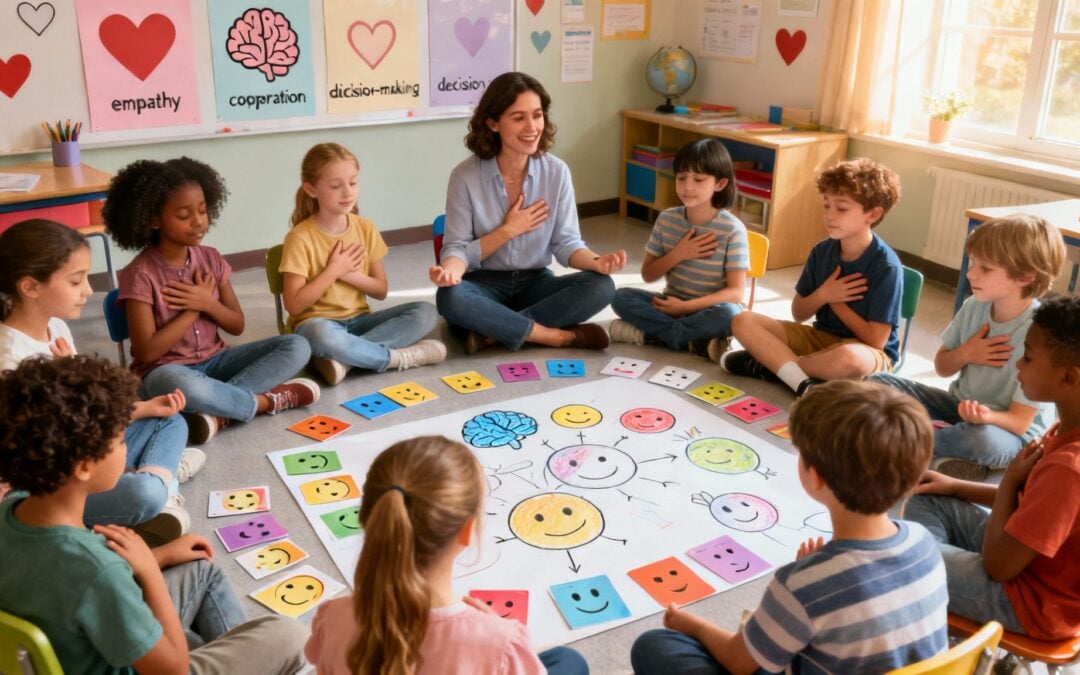
Welcome, parents and educators! In a world where academic achievement often takes center stage, we know a child’s ability to understand and manage their emotions is just as critical for a happy, successful life. This ability, known as emotional intelligence (EI), is the bedrock of resilience, empathy, and strong relationships. It’s the difference between a child who shuts down when frustrated and one who can say, “I’m feeling overwhelmed and need a moment.”
But how do we move beyond theory and actively build these essential skills? This guide provides a comprehensive collection of powerful, practical, and engaging emotional intelligence activities for kids from kindergarten through 8th grade. We believe in an experiential learning approach where children learn best by doing, so each activity is designed to be hands-on and memorable.
Inside, you will find a curated list of activities organized by core social-emotional learning (SEL) competencies. For each one, we provide:
- Clear learning goals to target specific skills.
- Step-by-step instructions for easy implementation.
- Practical examples for both home and classroom settings.
- Adaptations for different age groups and needs.
This isn’t just a list; it’s a toolkit. Our goal is to equip you with actionable strategies to foster emotionally intelligent children who can thrive in the classroom, on the playground, and in life. Let’s dive in and empower our kids with the tools they need to understand their inner world and connect meaningfully with the world around them.
1. Emotion Charades
Emotion Charades is a classic, interactive game that transforms the abstract concept of feelings into a physical, engaging activity. In this game, children act out different emotions using only facial expressions, gestures, and body language while their peers try to guess the feeling. This simple yet powerful exercise is one of the most effective emotional intelligence activities for kids because it directly targets the foundational skill of identifying and interpreting nonverbal emotional cues.

The game builds a child’s emotional vocabulary and enhances their ability to recognize feelings in themselves and others, a cornerstone of self-awareness and social awareness.
Learning Goals & Core Skills
- Primary Goal: To improve the ability to identify and label a wide range of emotions.
- Core SEL Skills: Self-Awareness (recognizing one’s own feelings), Social Awareness (interpreting others’ nonverbal cues).
- Additional Benefits: Enhances empathy, develops nonverbal communication skills, and builds a shared emotional language within a group.
How to Play: Step-by-Step Instructions
- Prepare Emotion Cards: Create a set of cards with different emotions written or drawn on them. Start with basic feelings like happy, sad, angry, and scared for younger children (K-2). For older students (Grades 3-8), introduce more complex emotions like frustrated, jealous, proud, anxious, or relieved.
- Explain the Rules: The rules are simple. One player draws a card and acts out the emotion without using words or sounds. The other players guess the emotion.
- Model the Activity: The facilitator (teacher, counselor, or parent) should go first to model how to use their face and body to express an emotion. For example, to model ‘frustrated,’ you could furrow your brow, cross your arms tightly, and make a few huffing breaths.
- Take Turns: Have students take turns drawing a card and acting. Encourage the audience to pay close attention to the actor’s facial expressions and body posture.
- Debrief and Discuss: After each round or at the end of the game, hold a brief discussion. Ask questions like, “What clues helped you guess that feeling?” or “When have you felt that way before?” For example, after someone acts out ‘disappointed,’ you could ask, “What might make someone feel disappointed at school?”
Pro-Tip: For a successful session, create a safe and supportive environment. Remind children that there are no “wrong” ways to express an emotion and that all feelings are valid.
Classroom and Home Adaptations
- Morning Meetings: Use Emotion Charades as a quick, 5-minute icebreaker to start the day on a positive, connected note.
- Small Group Counseling: School counselors can use this activity in small groups to help students who struggle with emotional expression or identification in a more focused setting.
- Family Game Night: Parents can easily adapt this at home with homemade cards. It’s a fun way to open up family conversations about feelings. For instance, after a child guesses “frustrated,” a parent could share, “I feel frustrated sometimes when I’m stuck in traffic. What makes you feel frustrated?”
For more structured social-emotional learning, Soul Shoppe’s programs often integrate dynamic activities like this to create a common language around emotions in the school environment. This simple game serves as a powerful building block for more advanced emotional intelligence.
2. Feelings Journal with Visual Prompts
A Feelings Journal is a reflective practice where children regularly record and explore their emotions using writing, drawing, or a combination of both. By using visual prompts like emotion wheels or feeling faces charts, this activity helps students identify and name their feelings, making it one of the most effective personal emotional intelligence activities for kids. This consistent practice builds a strong foundation for self-awareness and self-management by creating a private space for introspection.

The journal acts as a tangible tool for children to track their emotional patterns over time. This process helps them understand the connection between events, thoughts, and feelings, which is a critical step toward developing healthy coping strategies.
Learning Goals & Core Skills
- Primary Goal: To build the habit of self-reflection and improve the ability to label and understand one’s own emotions.
- Core SEL Skills: Self-Awareness (identifying emotions), Self-Management (managing emotions, self-motivation).
- Additional Benefits: Enhances writing and drawing skills, fosters introspection, provides a healthy emotional outlet, and helps identify students who may need extra support.
How to Play: Step-by-Step Instructions
- Introduce the Journal: Provide each child with a notebook or journal. Explain that it is a safe space to explore their feelings. Establish clear privacy expectations from the start.
- Provide Visual Aids: Offer visual prompts like an emotion wheel, a chart of feeling faces, or a color-to-emotion key. For younger students (K-2), they can simply circle or draw the face that matches their feeling.
- Use Sentence Starters: Guide the journaling process with simple, open-ended prompts. Practical examples include: “Today I felt… because…”, “Something that made me feel proud was…”, “I felt worried when…”, or “My body felt… when…”.
- Establish a Routine: Dedicate a consistent time for journaling, such as the first 10 minutes of class (a “feelings check-in”) or before dismissal. Routine helps make emotional reflection a natural habit.
- Model and Share (Optional): The facilitator can model vulnerability by sharing an appropriate, age-relevant feeling. For example, “Today, I felt a little nervous before our assembly, so in my journal, I wrote about what made me nervous and took a few deep breaths.” This normalizes expressing emotions.
Pro-Tip: Emphasize that there are no “right” or “wrong” feelings. The goal is simply to notice and name them. A judgment-free environment is essential for honest self-reflection.
Classroom and Home Adaptations
- Daily Emotion Check-ins: Teachers can use journals as a morning bell-ringer activity. A quick review can give a valuable snapshot of the classroom’s overall emotional climate.
- Small Group SEL Coaching: School counselors can use journals in small groups to track progress and guide conversations about specific emotional challenges, like managing anger or anxiety.
- Bedtime Routine at Home: Parents can incorporate a feelings journal into a child’s bedtime routine. Asking “What was the best part of your day and how did it make you feel?” opens up communication and helps children process their day before sleep.
Tools like the Soul Shoppe digital app offer guided emotional reflection features that can supplement a physical journal. By making time for this quiet, personal activity, educators and parents empower children to become experts on their own emotional worlds.
3. Restorative Circles and Talking Piece Practices
Restorative Circles are a structured practice where students sit in a circle to communicate, build community, and repair harm. Rooted in indigenous traditions, this process uses a “talking piece” (a special object) to ensure that one person speaks at a time while others listen actively and respectfully. This is one of the most profound emotional intelligence activities for kids as it shifts the focus from punishment to understanding, accountability, and connection.
This practice directly teaches children how to express their feelings, listen with empathy, and collaboratively solve problems, which are crucial skills for managing relationships and making responsible decisions.
Learning Goals & Core Skills
- Primary Goal: To build a safe community for open communication and to repair relationships after conflict.
- Core SEL Skills: Social Awareness (empathy, perspective-taking), Relationship Skills (communication, conflict resolution), Responsible Decision-Making (analyzing situations, ethical responsibility).
- Additional Benefits: Fosters a sense of belonging, promotes accountability, reduces disciplinary issues, and teaches active listening.
How to Play: Step-by-Step Instructions
- Arrange the Circle: Have participants sit in a circle where everyone can see each other. There should be no tables or desks in the middle.
- Establish Agreements: The facilitator (teacher or counselor) co-creates guidelines with the group. These often include: respect the talking piece, listen from the heart, speak from the heart, and what’s said in the circle stays in the circle.
- Introduce the Talking Piece: Explain that only the person holding the talking piece may speak. This could be a smooth stone, a small stuffed animal, or a decorated stick.
- Pose a Prompt: The facilitator starts with a question or prompt. Practical examples: For community-building, use prompts like, “Share one high and one low from your weekend,” or “Share a time someone was kind to you this week.” For conflict resolution, it could be, “What happened, and how did it affect you?”
- Pass the Piece: The facilitator starts and then passes the talking piece around the circle. Students can choose to speak or pass. The circle continues until everyone who wishes to speak has had a turn.
- Close the Circle: End with a closing sentiment or a summary of what was shared, reinforcing the sense of community.
Pro-Tip: Always allow students the option to “pass.” Forcing participation can undermine the psychological safety that is essential for a successful circle. The right to be silent is just as important as the right to speak.
Classroom and Home Adaptations
- Daily Check-Ins: Use a quick circle for morning meetings. A simple prompt like, “Share one word describing how you feel today,” can help students practice self-awareness and build empathy.
- Conflict Resolution: When a conflict arises between students, a restorative circle can be used to repair harm. The facilitator guides them through questions like, “What were you thinking at the time?” and “What do you need to move forward?”
- Family Meetings: At home, families can use a talking piece to discuss household chores, plan a vacation, or work through a disagreement. This ensures everyone, even the youngest child, has a voice.
Restorative practices are a cornerstone of Soul Shoppe’s programs, creating classroom environments where every child feels heard and valued. To dig deeper into this transformative approach, you can learn more about what restorative practices in education look like and how they build safer schools.
4. The Feelings Temperature Check (Mood Meter)
The Feelings Temperature Check, often called a Mood Meter, is a quick assessment tool where children rate their current emotional state on a visual scale. Instead of a simple “good” or “bad,” this activity encourages kids to identify the intensity and nuance of their feelings using a thermometer, color scale, or numbered range. This is one of the most practical emotional intelligence activities for kids because it builds emotional granularity, which is the ability to put feelings into specific words.
This daily practice helps children become more aware of their internal state, which is the first step toward learning how to manage their emotions effectively.
Learning Goals & Core Skills
- Primary Goal: To develop emotional granularity and self-awareness by regularly identifying and rating the intensity of feelings.
- Core SEL Skills: Self-Awareness (identifying emotions), Self-Management (recognizing the need for regulation strategies).
- Additional Benefits: Normalizes conversations about feelings, helps teachers identify students needing support, and provides a starting point for emotional regulation discussions.
How to Play: Step-by-Step Instructions
- Create a Visual Scale: Design a visual tool. For younger children (K-2), a color-coded chart (blue for low energy, green for calm, yellow for energetic, red for high-alert) or a simple 1-3 thermometer works well. For older students (Grades 3-8), use a numbered scale from 1-10 or a quadrant-style mood meter with more complex emotions.
- Introduce the Concept: Explain that feelings have different energy levels or “temperatures.” Model how to use the scale. For example, a teacher might say, “This morning, I’m feeling calm and focused, so I’m in the green zone. Yesterday, I was a little stressed about traffic, so I was in the yellow zone.”
- Incorporate into Routines: Make this a regular check-in. Students can point to their “temperature” on a classroom chart, hold up fingers (1-5), or write their number on a sticky note.
- Invite (Don’t Force) Sharing: After the check-in, ask if anyone would like to share why they chose that number or color. Keep it optional to create a low-pressure environment.
- Connect to Strategies: Use the check-in to discuss self-regulation. Ask, “If you’re feeling at an 8, what is a tool you could use to get back to a 5 or 6?”
Pro-Tip: Track responses over time (privately for individual students) to notice patterns. A student who is consistently in the “red zone” may need additional, targeted support from a teacher or counselor.
Classroom and Home Adaptations
- Morning Meetings: Start the day with a “show me your number” check-in where students use their fingers to indicate their emotional state. It gives the teacher a quick read of the room.
- School Counselor Check-ins: Counselors can use a mood meter at the beginning of each session to track a student’s emotional progress and open a conversation about their week.
- Family Dinner Conversation: Parents can use a simple 1-5 scale at the dinner table. “Let’s go around and share our number for the day.” This opens the door to family discussions about everyone’s highs and lows.
Activities like the Feelings Temperature Check are fundamental to the work we do at Soul Shoppe. By giving students a simple tool to check in with themselves, we empower them to take the first and most critical step in managing their emotional lives.
5. Empathy Interviews and Pair Shares
Empathy Interviews and Pair Shares is a structured dialogue activity where students interview each other to deepen understanding and connection. This exercise moves beyond casual conversation by using guided, open-ended questions about experiences, feelings, and values. By creating a dedicated space for one student to speak and another to listen actively, it powerfully cultivates empathy and perspective-taking.
This practice is one of the most effective emotional intelligence activities for kids as it teaches them to become genuinely curious about another person’s inner world. It directly builds the skills needed for strong, supportive relationships and effective communication, making it a cornerstone for a positive classroom or home environment.
Learning Goals & Core Skills
- Primary Goal: To develop empathy and active listening skills by understanding another person’s perspective.
- Core SEL Skills: Social Awareness (understanding others’ perspectives), Relationship Skills (communicating effectively and building positive connections).
- Additional Benefits: Fosters a sense of community, builds trust and psychological safety, and enhances conflict resolution skills.
How to Play: Step-by-Step Instructions
- Prepare Interview Questions: Create a list of thoughtful, open-ended questions. Practical examples: For younger children (K-2), use simple prompts like, “Tell me about a time you felt really happy,” or “What is your favorite thing to do with your family?” For older students (Grades 3-8), ask deeper questions such as, “Describe a challenge you overcame and how it made you feel,” or “What is something you are proud of?”
- Explain the Roles: Pair students up. Designate one as the “Interviewer” and the other as the “Storyteller.” The Interviewer’s job is to listen carefully without interrupting. The Storyteller’s job is to share openly.
- Model Active Listening: Demonstrate what active listening looks like: maintaining eye contact, nodding, and asking curious follow-up questions. Emphasize that the goal is not to talk about yourself but to learn about your partner.
- Set a Timer: Give each student 5-10 minutes to interview their partner. Announce when it’s time to switch roles so both have a chance to share and listen.
- Debrief as a Group: After both partners have shared, bring the group back together. Ask reflection questions like, “What is one new thing you learned about your partner?” or “How did it feel to be listened to so carefully?”
Pro-Tip: Emphasize confidentiality within each pair to build trust. Remind students that the stories shared are to be respected and not repeated outside of their conversation unless permission is given.
Classroom and Home Adaptations
- New Student Icebreaker: Pair a new student with a classmate for an empathy interview to help them feel seen and integrated into the classroom community.
- Conflict Resolution: After a disagreement, guide the involved students through an empathy interview to help them understand each other’s feelings and perspectives. This is a foundational practice to help teach empathy in a practical way.
- Family Dinner Connection: Parents can use prompt cards at the dinner table with questions like, “What was the best part of your day and why?” Everyone takes a turn being the “storyteller” while the rest of the family practices active listening.
Soul Shoppe programs often use pair-share exercises like this to break down social barriers and build a cohesive, empathetic school culture where every student feels heard and valued.
6. Emotion Regulation Strategy Toolbox
An Emotion Regulation Strategy Toolbox is a personalized collection of evidence-based techniques that children can use to manage big emotions and calm their nervous systems. Instead of a single “one-size-fits-all” approach, this activity empowers children to learn, practice, and choose from a menu of strategies like deep breathing, sensory tools, or cognitive reframing. This customized approach makes it one of the most effective emotional intelligence activities for kids, as it teaches them to become active participants in their own emotional well-being.
The goal is to build a child’s capacity for self-management by equipping them with practical, accessible tools they can turn to in moments of stress, anger, or anxiety. This fosters independence and resilience.
Learning Goals & Core Skills
- Primary Goal: To build a repertoire of effective, personalized coping strategies for managing difficult emotions.
- Core SEL Skills: Self-Management (regulating one’s emotions and behaviors), Responsible Decision-Making (choosing appropriate responses to feelings).
- Additional Benefits: Increases self-awareness, builds confidence, reduces reactive behaviors, and promotes problem-solving skills.
How to Play: Step-by-Step Instructions
- Introduce One Strategy at a Time: Start by introducing a simple technique, like “Box Breathing” (inhale for 4 counts, hold for 4, exhale for 4, hold for 4). Don’t overwhelm children with too many options at once.
- Model and Practice During Calm Times: Practice new strategies when children are calm and regulated. This helps encode the skill so it’s accessible during a stressful moment. For example, practice a grounding technique during a morning meeting by saying, “Let’s all practice our ‘5 Senses’ tool. Name five things you can see, four you can feel…”
- Create a Physical or Visual Toolbox: Make tangible cards for each strategy. You can use a real box, a binder, or a chart on the wall. Visual aids should include a picture and simple text (e.g., a picture of a child squeezing a stress ball with the words “Squeeze Tool”).
- Explore Different Categories: Introduce a variety of strategies over time, including:
- Breathing: 5-finger breathing, belly breaths.
- Movement: Wall pushes, jumping jacks, stretching.
- Sensory: Using putty, a weighted lap pad, listening to calming music.
- Cognitive: Positive self-talk (“I can handle this”), thinking of a happy place.
- Personalize and Debrief: Regularly ask children which strategies feel best for their bodies. Discuss why one tool might work for anger while another works better for worry.