

8 Essential Mindfulness Group Exercises for Thriving K-8 Classrooms in 2026
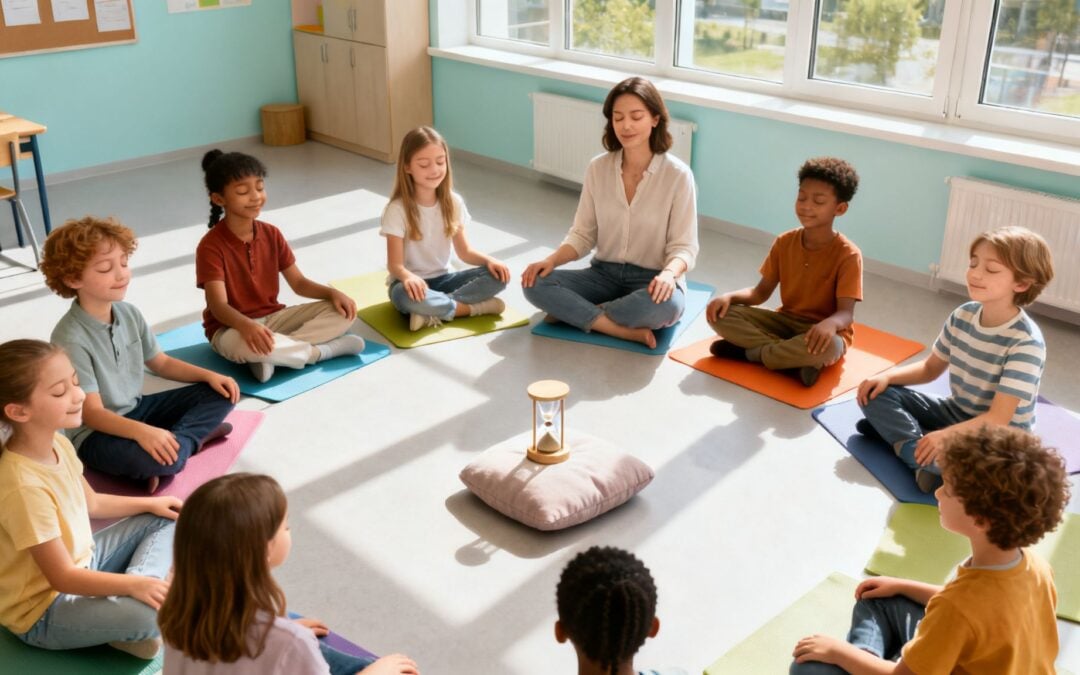
In today’s dynamic K-8 classrooms, fostering focus, empathy, and emotional regulation is more critical than ever. Teachers and parents are constantly seeking practical, engaging tools to help students navigate their inner and outer worlds. Mindfulness group exercises offer a powerful solution, moving beyond individual practice to create a shared culture of calm and connection within a learning community.
These activities are not just about quiet time; they are structured social-emotional learning (SEL) experiences designed to build tangible skills. By participating together, students learn to manage stress, improve their attention, and develop compassion for themselves and their peers. The shared nature of these exercises helps reduce feelings of isolation and builds a foundation of psychological safety, making the classroom a more inclusive and supportive environment for everyone. These practices directly equip students with lifelong tools for self-awareness, effective communication, and resilience in the face of challenges.
This article provides a comprehensive roundup of eight essential mindfulness group exercises, specifically designed and adapted for school settings. Each entry includes detailed step-by-step instructions, grade-level modifications, and classroom management tips. You’ll find practical examples, such as how to guide a second-grader through a body scan versus an eighth-grader, ensuring you can implement these transformative practices immediately and effectively. Whether you’re a teacher aiming to build a more peaceful classroom, a counselor leading SEL initiatives, or a parent supporting your child’s well-being, these exercises provide a clear roadmap to cultivate a community where every student can learn, connect, and thrive.
1. Guided Group Body Scan Meditation
The Guided Group Body Scan is a foundational mindfulness practice where a facilitator guides students to bring gentle, non-judgmental attention to different parts of their body. Participants typically lie down or sit comfortably with their eyes closed as the guide uses a calm, soothing voice to direct their focus, moving systematically from their toes up to their head. The core purpose isn’t to change or relax sensations, but simply to notice them as they are, cultivating a powerful connection between mind and body. This practice is one of the most effective mindfulness group exercises for building interoception, the awareness of internal bodily states.
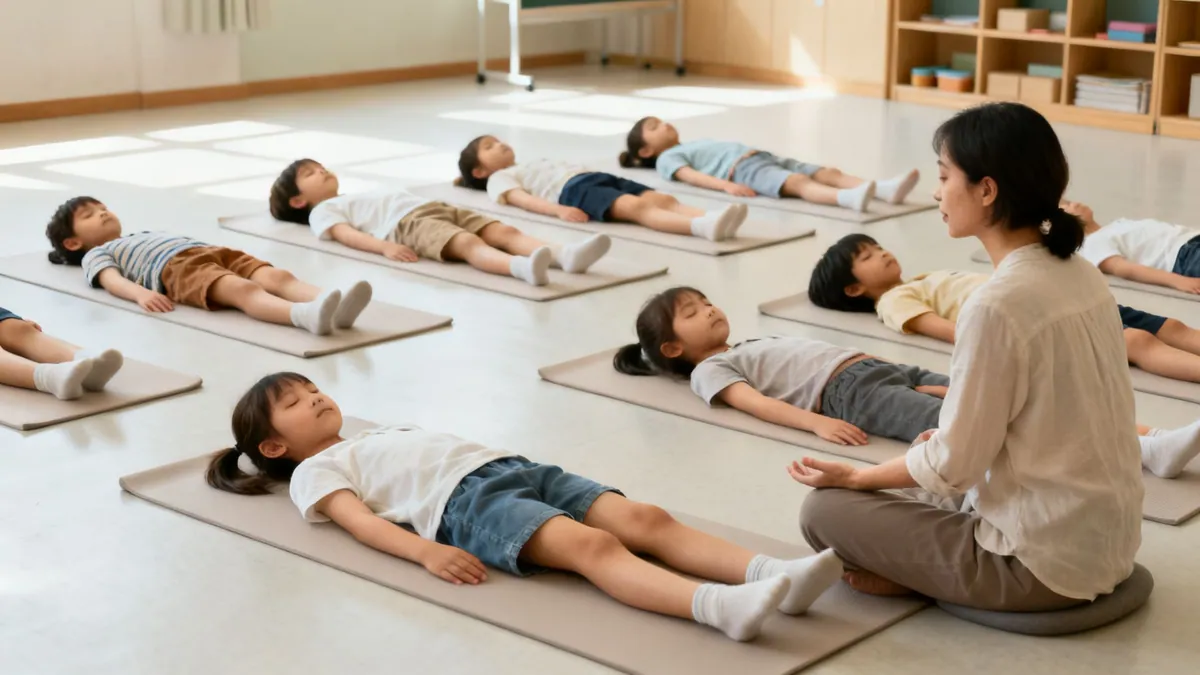
This exercise helps students recognize physical signals of stress, anxiety, or excitement before they escalate into overwhelming emotions, providing a crucial first step toward self-regulation. By practicing the body scan, students learn to inhabit their bodies with a sense of curiosity and kindness, which is essential for developing emotional intelligence.
Implementation and Classroom Tips
- Create a Safe Space: Dim the lights and minimize distractions. Allow students to choose their position: lying on a mat, resting their head on their desk, or sitting comfortably in a chair. Emphasize that there is no right or wrong way to feel.
- Use Invitational Language: Instead of commanding relaxation (“relax your feet”), use gentle invitations like, “See if you can bring your attention to your feet” or “Notice any sensations you feel in your toes, perhaps warmth, coolness, or tingling.”
- Start Small: For younger students (K-2), begin with very short, 3-5 minute sessions focusing on just a few body parts (e.g., “Wiggle Your Toes,” “Feel Your Hands,” “Notice Your Belly Breathing”). Gradually increase the duration and complexity for older students.
- Follow with Reflection: After the scan, provide a few moments for quiet reflection. You might ask students to privately notice how they feel or offer an optional journal prompt, such as, “What did you notice in your body today?”
Practical Examples for K-8 Settings
- For K-2 (“Sleeping Statues”): A kindergarten teacher makes it a game. “Let’s pretend we are statues lying down. Can your statue feel its toes? Can it feel its knees? What about its nose?” This playful approach keeps young children engaged.
- For 3-5 (Pre-Test Grounding): A 4th-grade teacher leads a 7-minute body scan before a math test. They say, “Notice if you feel any butterflies in your stomach. Just notice them, and then see if you can feel your feet on the floor. Your feet are steady, even if your tummy is busy.” This validates their anxiety while giving them a tool to ground themselves.
- For 6-8 (Post-Conflict Cooldown): After a heated debate in a social studies class, a 7th-grade teacher guides students through a 10-minute body scan. The focus is on noticing areas of tension. “Bring your attention to your jaw. Is it tight? See if you can soften it just a little. Now, what about your shoulders? Are they up by your ears?” This helps students physically release the stress of the conflict.
The body scan is a versatile tool that enhances students’ self-awareness and provides them with a tangible method for managing their internal states. For more ideas on developing these skills, explore these other powerful mindfulness exercises for students.
2. Mindful Breathing Circle (Structured Breath Work)
The Mindful Breathing Circle is a powerful and accessible practice where students sit together, often in a circle, and are guided by a facilitator to synchronize their breathing. Using structured techniques like box breathing (inhaling for 4 counts, holding for 4, exhaling for 4, and holding for 4) or belly breathing, participants learn to consciously regulate their breath. The facilitator’s role is to provide a steady rhythm and gentle guidance, helping students anchor their attention to the physical sensation of their breath. This exercise makes the abstract concept of self-regulation tangible, transforming the breath into a reliable tool for calming the nervous system. As a result, it is one of the most foundational and effective mindfulness group exercises for building emotional regulation.
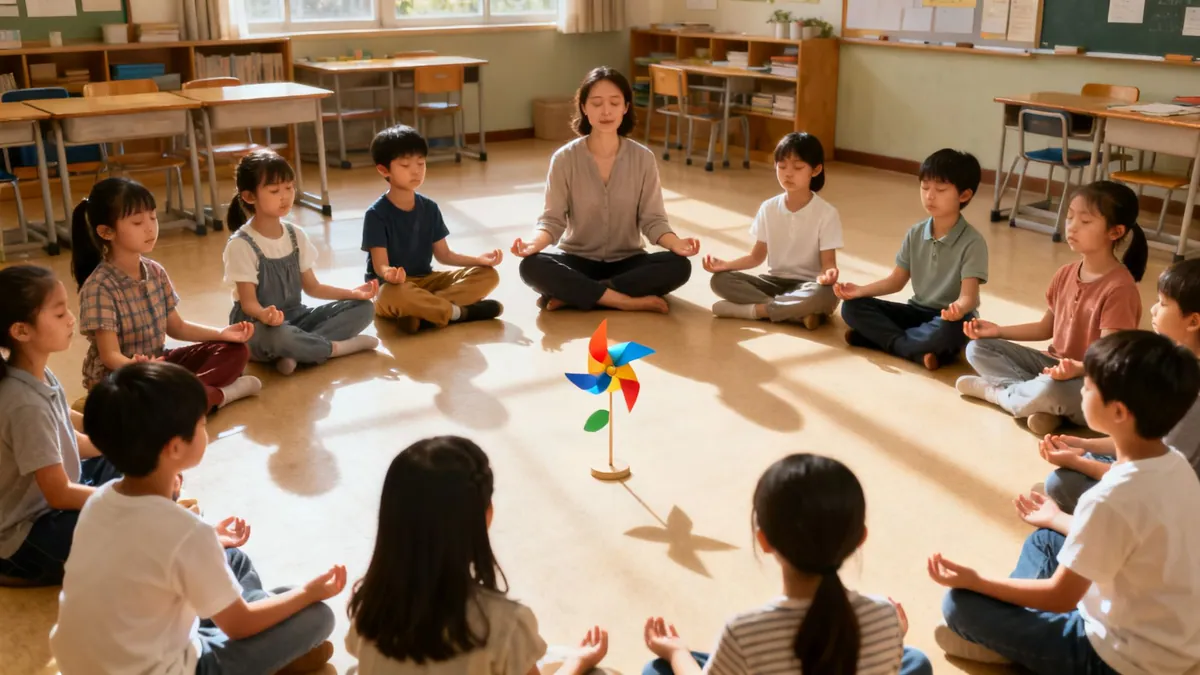
This practice directly teaches students how to activate their parasympathetic nervous system, responsible for the “rest and digest” response. By learning to slow their breathing, they can intentionally shift out of a “fight or flight” state, which is crucial for managing big emotions, reducing anxiety, and improving focus before academic tasks. Practicing together in a circle also fosters a sense of community and shared experience, reducing feelings of isolation.
Implementation and Classroom Tips
- Model and Participate: Demonstrate the breathing technique clearly before starting. It is essential to practice with the students rather than just instructing them. This modeling shows vulnerability and reinforces that it is a shared, supportive activity.
- Use Visual and Auditory Cues: For younger students, visual aids are key. Use a pinwheel that spins with the exhale, a Hoberman Sphere that expands and contracts, or an animated breathing guide on a screen. Soft background sounds like rain or waves can also help mask self-consciousness about audible breathing.
- Frame it as ‘Brain Training’: Present the exercise as a way to strengthen their brain’s “focus muscle” or “calm-down power.” This framing makes the practice feel empowering and purposeful, rather than like a chore or a punishment.
- Offer Opt-Outs: Always provide a choice. Students who are not ready to participate can sit quietly and observe, place a hand on their chest to feel their breath, or simply rest. This maintains a sense of safety and autonomy.
Practical Examples for K-8 Settings
- For K-2 (“Belly Buddies”): A 1st-grade teacher has students lie on their backs and place a small stuffed animal (“belly buddy”) on their stomachs. They instruct, “Let’s give our buddies a slow ride. Breathe in and watch your buddy rise, then breathe out and watch your buddy go down.”
- For 3-5 (Recess Reset): A 3rd-grade teacher gathers students for “square breathing” after they come in from recess. They draw a square in the air with their finger: “Breathe in as we go up, hold as we go across, breathe out as we go down, and hold at the bottom.” This helps them transition from a high-energy state to a calm, ready-to-learn mindset.
- For 6-8 (Managing Big Emotions): In a 7th-grade health class discussing peer pressure, the teacher anticipates the topic might be stressful. They pause and say, “This is a tough subject. Let’s all try a 4-7-8 breath. Breathe in for 4, hold for 7, and a long, slow exhale for 8. This tells our brain we are safe.”
3. Walking Meditation (Mindful Walking in Groups)
Walking Meditation is a dynamic mindfulness practice where students walk slowly and intentionally, paying close attention to the physical experience of movement. Instead of focusing on a destination, the group’s awareness is guided to the sensations of their feet connecting with the ground, the rhythm of their breath, and the motion of their bodies. This exercise, often practiced in a line or circle, brilliantly merges mindfulness with physical activity, making it one of the most accessible mindfulness group exercises for kinesthetic learners and students who struggle with sitting still.
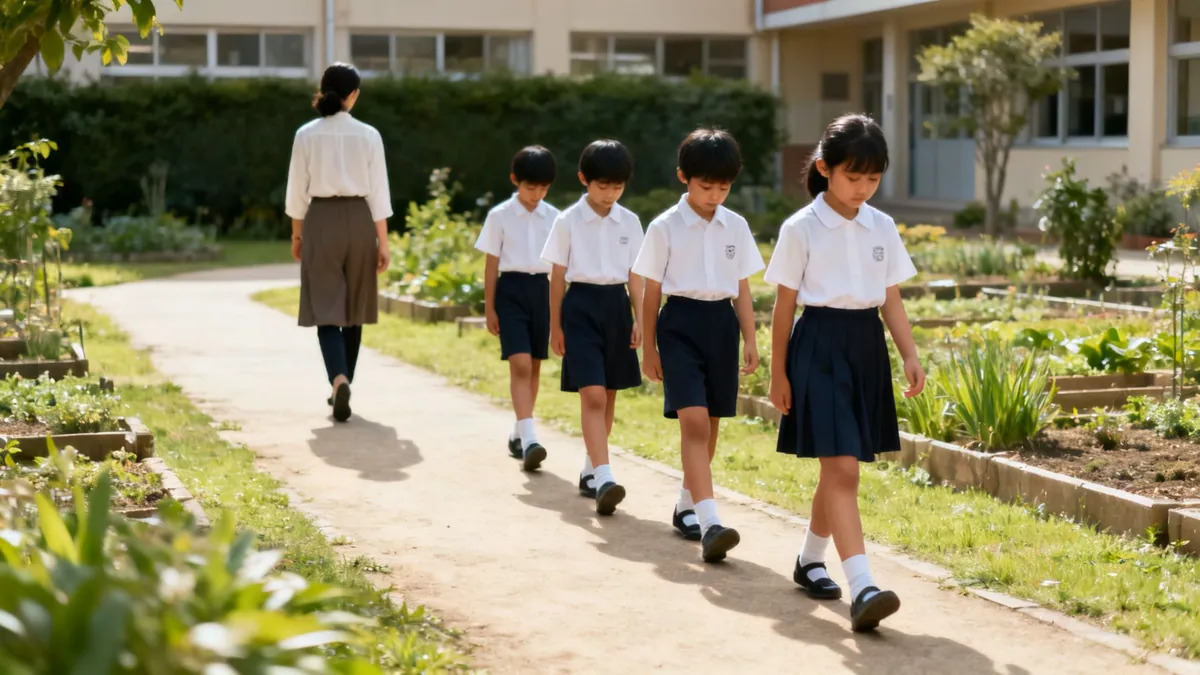
The practice teaches students how to find stillness and presence even while in motion, a crucial skill for managing restlessness and impulsivity. By grounding their attention in the simple, repetitive act of walking, students can calm an overactive mind and transition from high-energy states to a more focused and settled mindset. This exercise is especially effective for improving focus, body awareness, and emotional regulation.
Implementation and Classroom Tips
- Set the Pace and Intention: Explain that this walk is different. It’s about “walking just to walk,” not to get somewhere. Model an exaggeratedly slow pace so students understand the goal is deliberate movement, not speed.
- Use Gentle Verbal Cues: Guide students’ attention with simple, repetitive prompts. Phrases like, “Lifting… moving… placing,” or “Notice your feet touching the floor,” help anchor their focus on the physical sensations.
- Create a Clear Path: Whether indoors or outdoors, ensure the walking path is clear and safe. In a classroom, students can walk in a large circle around the desks. Outdoors, a designated loop in a garden or on a playground works well.
- End with Stillness: Conclude the walk with one or two minutes of standing or sitting in silence. This allows students to integrate the experience and notice the shift in their internal state before transitioning to the next activity.