

Mindfulness activities for students: 8 Quick Practices to Boost Focus
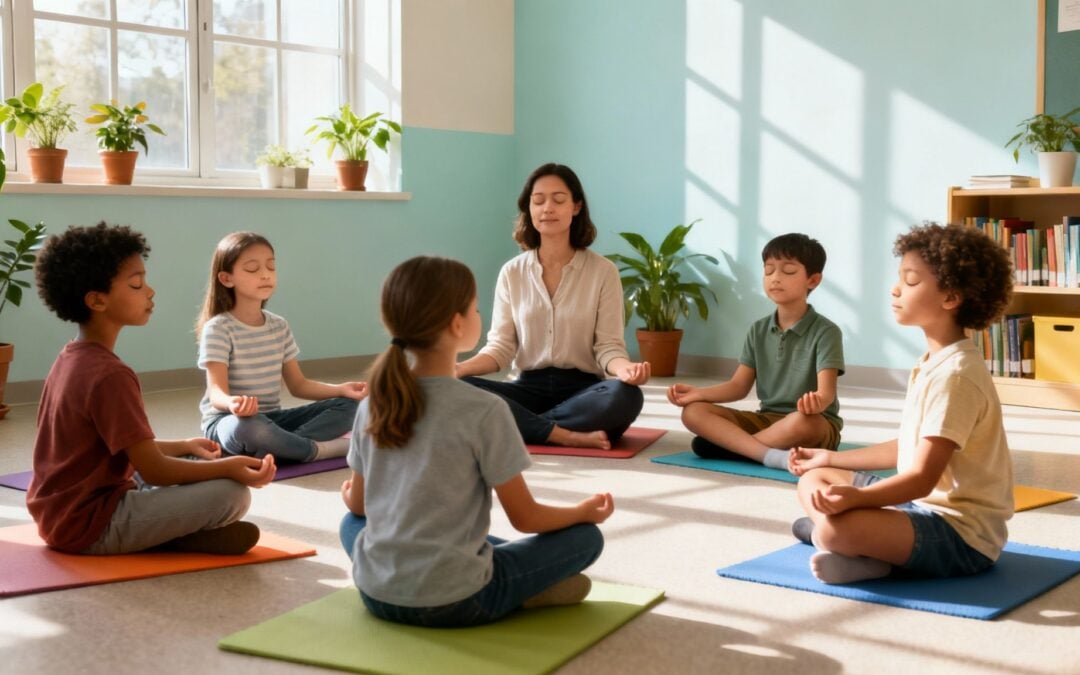
In today’s fast-paced world, students face unprecedented levels of stress and distraction. The ability to pause, self-regulate, and connect with the present moment is no longer a soft skill; it is an essential tool for academic success and lifelong well-being. This article moves beyond theory to provide a practical, actionable roundup of 10 mindfulness activities for students, designed for easy implementation in any K–8 classroom or home. We’ll explore how these simple, research-backed practices can transform a chaotic classroom into a focused, empathetic community.
This resource is crafted for educators, administrators, and parents seeking concrete strategies to foster attention, emotional balance, and kindness. Rather than just discussing concepts, we provide a detailed toolkit. For those new to the core principles, exploring the essence of mindfulness meditation can provide a helpful foundational understanding before you dive into the activities.
Each of the following mindfulness activities for students includes:
- Step-by-step instructions for easy facilitation.
- Age-appropriate adaptations for grades K–8.
- Practical examples for classroom and home settings.
- Key learning goals, such as improving self-regulation and focus.
Get ready to discover how these powerful yet simple exercises can help you cultivate a more peaceful and resilient learning environment.
1. Body Scan Meditation
Body Scan Meditation is a foundational practice where students bring gentle, non-judgmental attention to different parts of their body, one at a time. This guided exercise helps anchor students in the present moment by connecting them with physical sensations like warmth, tingling, or pressure, fostering a stronger mind-body connection. It serves as an excellent introduction to mindfulness for students of all ages.
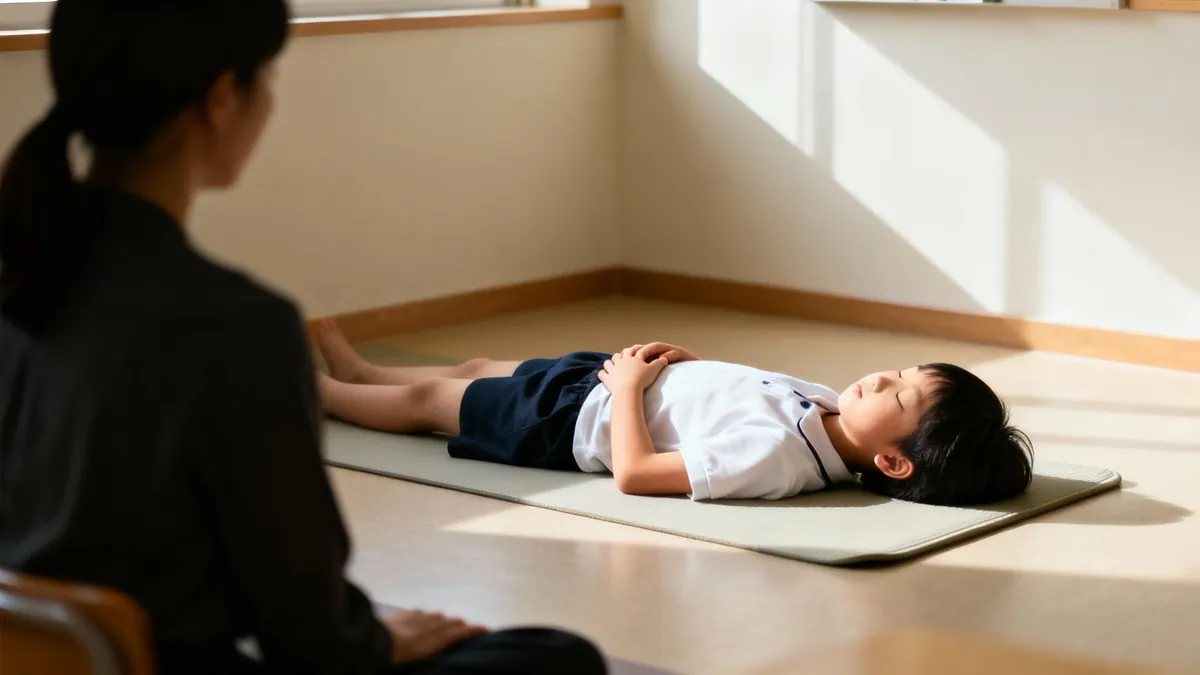
This simple yet powerful tool is used by organizations like Soul Shoppe to teach students how to identify physical cues tied to emotions, which is a key component of self-regulation.
When to Use a Body Scan
This activity is particularly effective for calming the nervous system and resetting focus. It’s a perfect tool to use:
- After recess: To help students transition from high-energy play to quiet classroom work.
- Before tests: To ease anxiety and help students center themselves.
- During morning meetings: To start the day with a calm, focused mindset.
How to Implement Body Scan Meditation
To begin, have students find a comfortable position, either sitting upright or lying down. Guide them with a calm voice, prompting them to notice sensations in their feet, then legs, stomach, arms, and so on, up to their head.
Practical Example Script:
“Let’s get comfortable in our chairs. You can close your eyes if you like. Now, bring all your attention down to your feet. Can you feel your shoes on your feet? Wiggle your toes inside. Now, let’s move up to your legs. Feel your legs resting on the chair. Are they warm? Are they cool? Just notice. Now bring your attention to your tummy, feeling it get a little bigger as you breathe in and a little smaller as you breathe out.”
Implementation Tips:
- Start Small: For younger students (K-2), keep the scan brief, around 3-5 minutes, focusing on major body parts like “your wiggly toes” or “your strong legs.”
- Use Descriptive Language: Use gentle, invitational language such as, “Notice any feelings of warmth in your hands,” or “Can you feel your back resting against the chair?”
- Model First: Practice the body scan yourself so students see it as a normal and valuable activity.
- Trauma-Informed Approach: Emphasize that there is no right or wrong way to feel. If a student feels discomfort, they can gently shift their focus to their breath or a part of the body that feels neutral or pleasant.
2. Mindful Breathing Exercises
Mindful Breathing Exercises are simple, focused techniques that guide students to control their breath, which directly influences their nervous system. Practices like “Belly Breathing” or “Box Breathing” help students anchor their attention, slow their heart rate, and manage the body’s fight-or-flight response. This makes breathing one of the most accessible and effective mindfulness activities for students to use anywhere, anytime.
This foundational tool helps students learn what to do when big emotions take over, transforming breath into a portable self-regulation anchor. It’s a core skill for managing impulses and navigating difficult feelings.
When to Use Mindful Breathing
Breathing exercises are a powerful intervention for both proactive regulation and in-the-moment de-escalation. They are ideal to use:
- During transitions: To reset the energy between different subjects or activities.
- Before public speaking: To calm nerves and focus the mind before a presentation.
- For conflict resolution: To help students pause and cool down before discussing a problem.
How to Implement Mindful Breathing
Introduce various breathing patterns and encourage students to find one that feels right for them. For example, guide them through “Box Breathing”: inhale for 4 counts, hold for 4, exhale for 4, and hold for 4, tracing a square in the air with a finger.
Practical Example: “Belly Breathing”
Have students place one hand on their chest and the other on their belly. Instruct them: “Breathe in slowly through your nose, and feel your belly puff up like a balloon. The hand on your chest should stay still. Now, breathe out slowly through your mouth and feel the balloon deflate.” You can place a small stuffed animal on their belly if they are lying down to make it more visual.
Implementation Tips:
- Make It Visual: Use pinwheels, bubbles, or Hoberman spheres to give students a tangible visual for their breath. Tracing shapes with a finger is also effective.
- Practice When Calm: Introduce and practice these techniques when students are calm and regulated. This builds the skill so it is available during moments of stress.
- Normalize the Practice: Frame breathing breaks as a tool for everyone, not just for students who are upset. Say, “Let’s all take three ‘lion breaths’ to get our wiggles out.”
- Offer Variety: Teach different methods like “Bumblebee Breath” (humming on the exhale) or “Rainbow Breathing” (tracing an arc in the air) so students can choose their favorite.
3. Guided Mindful Movement & Yoga for Children
Guided Mindful Movement combines physical poses, stretching, and breath awareness in a playful format. These practices, often incorporating yoga, help students develop body awareness, physical strength, and emotional regulation by connecting intentional movement with their breath. It’s an active, engaging way to introduce mindfulness activities for students who may struggle with sitting still.