

10 Transformative SEL Activities for Middle School You Can Use in 2026
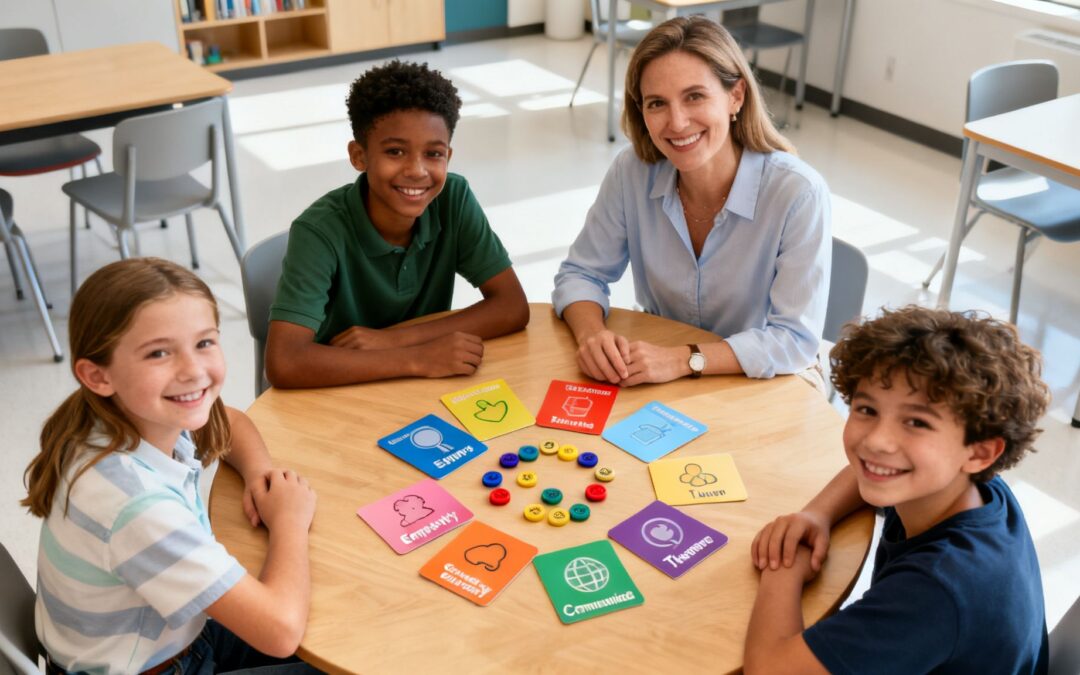
Middle school is a period of immense change, both socially and emotionally. Students are navigating complex peer dynamics, forming their identities, and facing new academic pressures. This makes it a critical time to intentionally build social-emotional learning (SEL) skills. Effective SEL is not just another item on a long to-do list; it is the foundation for a positive school culture, improved academic outcomes, and lifelong well-being.
By equipping students with practical tools for self-awareness, empathy, and conflict resolution, we empower them to thrive during these pivotal years and beyond. The right sel activities for middle school can transform a classroom environment, reduce bullying, and help adolescents manage the intense emotions that define this stage of development. This is about giving them a vocabulary for their feelings and strategies for their challenges.
This article moves beyond theory to provide a curated roundup of 10 practical, classroom-ready SEL activities. Each entry is designed for immediate implementation by teachers, counselors, and even parents. You will find:
- Step-by-step instructions for easy facilitation.
- Clear objectives and time estimates for planning.
- Practical examples and differentiation tips to meet diverse needs.
- Adaptations for virtual or at-home settings.
This guide provides the actionable strategies needed to integrate meaningful social-emotional learning into daily routines, helping students build the resilience and interpersonal skills necessary for success in school and in life.
1. Emotion Check-In Circles
Emotion Check-In Circles are a structured, routine practice where students gather to share their current emotional state. This powerful yet simple activity helps build emotional awareness, fosters psychological safety, and gives educators a real-time understanding of the classroom’s emotional climate. By creating a dedicated space for feelings, these circles validate students’ experiences and normalize conversations around mental well-being, making it one of the most foundational sel activities for middle school.
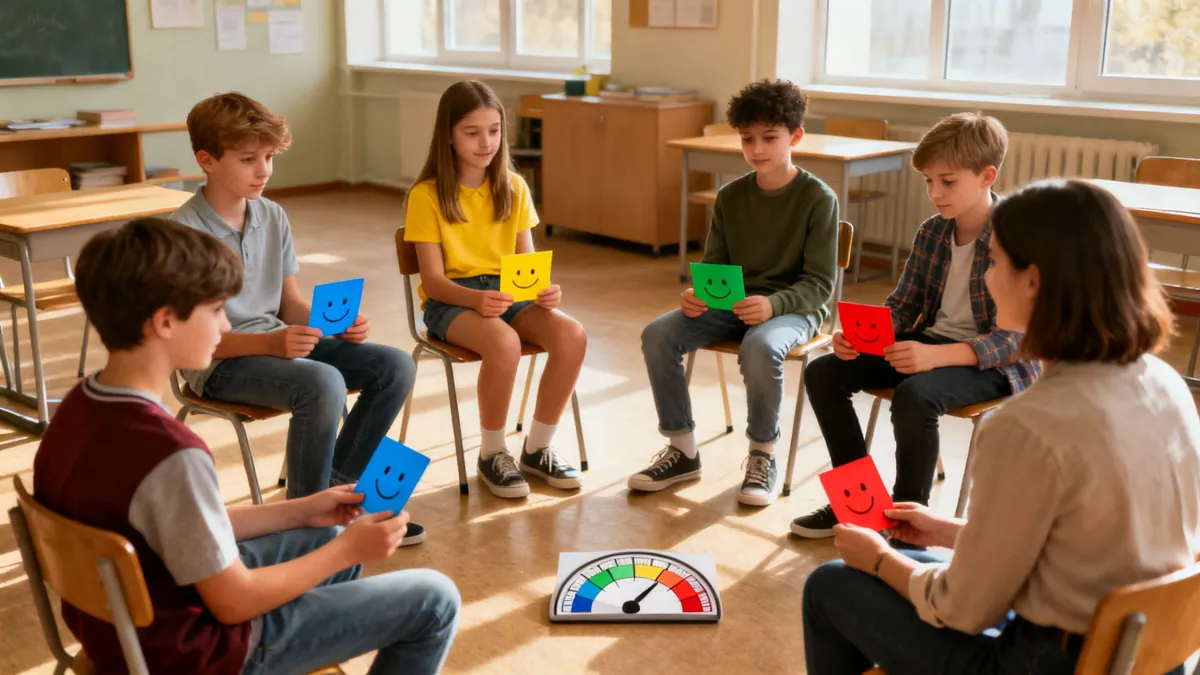
This practice involves students indicating their mood using a consistent framework, such as a color-coded “mood meter,” a set of emoji cards, or a shared emotional vocabulary. For example, a student might hold up a blue card to signify feeling calm, a yellow card for feeling energetic, or a red card for feeling angry or overwhelmed. This shared language removes the pressure of finding the “right” words and creates an accessible entry point for all learners.
How to Implement Emotion Check-In Circles
Implementing this activity is straightforward. At the beginning of class or during a transition, gather students in a circle. The facilitator (teacher) should model the process first by sharing their own emotional state: “Today, I’m feeling green, which for me means I’m calm and ready to learn. How is everyone else feeling?” Students then take turns sharing, with the explicit option to “pass” if they don’t feel comfortable. A practical example could be a student saying, “I’m in the yellow zone today because I’m excited about the basketball game after school,” or “I’m a little blue because I didn’t get much sleep.”
Practical Tips for Success
- Start Simple: Begin with non-verbal cues like thumbs up/down/sideways or holding up a colored card before moving to verbal sharing.
- Establish a Routine: Conduct circles at the same time each day (e.g., first five minutes of first period) to build the habit.
- Honor Privacy: Always provide an option to pass without requiring an explanation. This builds trust and respects student autonomy.
- Use Consistent Language: Adopt a school-wide emotional vocabulary, like the frameworks from Soul Shoppe, to ensure clarity and reinforcement across classes. For more ideas on how to implement this, you can explore various daily check-in tools that boost student confidence.
2. Mindfulness Breathing Breaks
Mindfulness Breathing Breaks are short, structured exercises integrated throughout the school day to help students self-regulate and improve focus. These brief, guided practices (typically 2-5 minutes) teach tangible techniques like box breathing or belly breathing that students can use independently to manage stress, anxiety, and overwhelming emotions. By equipping students with these tools, educators can proactively support their well-being and create a more centered learning environment, making this one of the most practical sel activities for middle school.
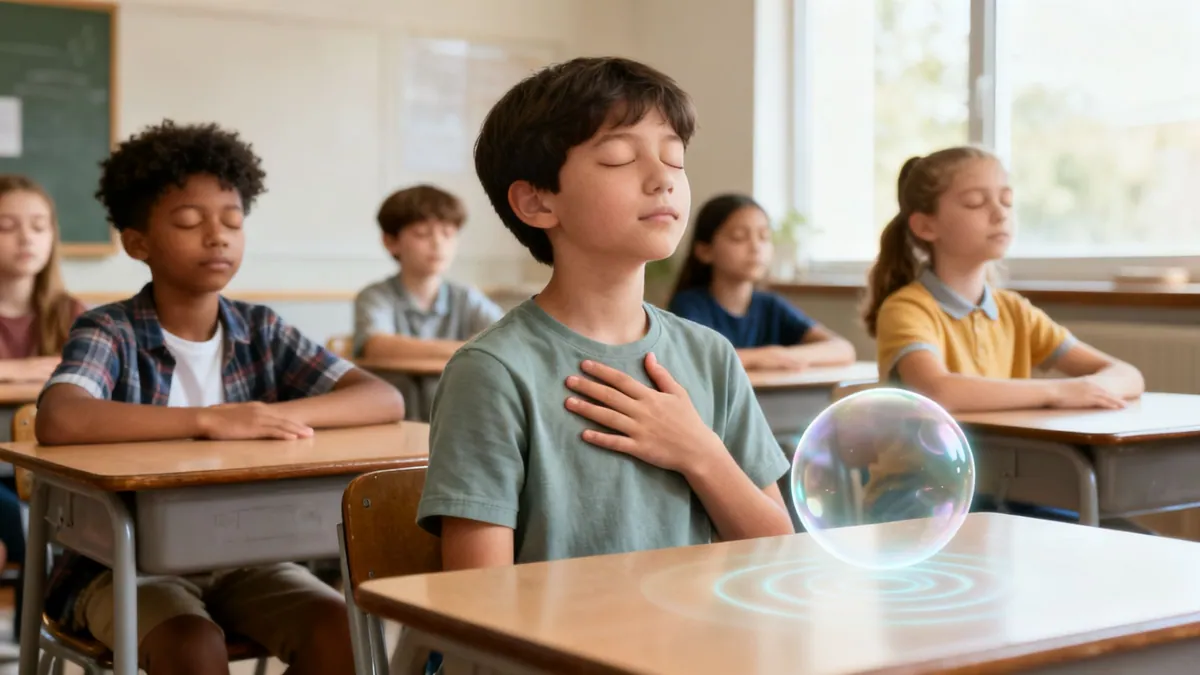
This practice involves leading students through a specific breathing pattern, often with visual or auditory cues. For instance, a teacher might guide students through “box breathing” by instructing them to inhale for four counts, hold for four, exhale for four, and hold again for four, tracing a square in the air or on a worksheet. A practical example for parents is to use this before homework time: “Let’s do our ‘pizza breath’ before we start math. Breathe in like you’re smelling a hot pizza, then blow out slowly to cool it down.” This simple, repetitive action gives students a concrete anchor, helping them calm their nervous system.
How to Implement Mindfulness Breathing Breaks
Integrating these breaks is simple and requires no special equipment. Start during a calm moment, like the beginning of class or after lunch, to introduce the concept. Model the technique yourself: “We’re going to try a 3-minute ‘belly breath’ to help our minds settle. Place one hand on your belly. As you breathe in, feel your belly expand like a balloon. As you breathe out, feel it gently deflate.” Consistency is key to making these practices automatic for students when they feel anxious before a test or overwhelmed by a social situation.
Practical Tips for Success
- Introduce During Calm Times: Teach and practice breathing techniques when students are regulated, not just during a crisis. This builds muscle memory for when they actually need the skill.
- Use Visual Anchors: Provide visual aids like a “breathing ball” that expands and contracts, a feather to blow gently, or an animated GIF of a pulsing shape to make the abstract concept of breath more concrete.
- Practice for Automaticity: Stick with one or two techniques until students have mastered them. Repetition helps the skill become an automatic response to stress.
- Connect to Their Goals: Frame the practice around things middle schoolers care about, like improving focus for a big game, staying calm during a presentation, or managing test anxiety.
- Offer Alternatives: Be sensitive to trauma-informed practices. For some students, closing their eyes or focusing on breath can be triggering. Offer alternatives like focusing on a visual object or noticing the feeling of their feet on the floor.
3. Peer Compliment and Gratitude Exchanges
Peer Compliment and Gratitude Exchanges are structured activities where students intentionally give and receive specific, genuine affirmations. This practice moves beyond generic praise to focus on character, effort, and specific actions, helping to build authentic connections and combat the social isolation common in middle school. By creating a routine for expressing appreciation, these exchanges strengthen peer relationships and foster a positive classroom culture, making them one of the most impactful sel activities for middle school.
These exchanges can take many forms, from written gratitude notes passed between classmates to verbal “appreciation circles” held weekly. For instance, a student might write, “I appreciate that you included me in your group when you saw I was working alone.” Another practical example is a “Shout-Out Wall” where anyone can post a sticky note praising a peer, like, “Shout-out to Jamal for helping me pick up my books when I dropped them.” This specificity teaches students to observe and value the positive behaviors of others, building empathy and social awareness in a tangible way.
How to Implement Peer Compliment and Gratitude Exchanges
To begin, dedicate a specific time for the activity, such as during morning meetings or at the end of the week. The teacher should model how to give a meaningful compliment first: “I’d like to thank Sarah for helping a new student find their way to the library. That was a very kind and welcoming action.” Students can then share compliments verbally in a circle or write them on pre-made cards. A “compliment box” can also be used for students who prefer to share anonymously.
Practical Tips for Success
- Model Specificity: Always model behavior-focused compliments, not appearance-based ones. Instead of “I like your shirt,” model, “I admire your patience when you were explaining that math problem to me.”
- Provide Sentence Starters: Offer prompts like “I appreciate you because…” or “I noticed you were a good friend when you…” to help students formulate their thoughts.
- Ensure Equity: Use a structured system, like pulling names from a jar, to ensure every student has a chance to be recognized over time.
- Make it a Routine: Consistency is key. A weekly “Gratitude Friday” makes the practice a predictable and valued part of the classroom culture. To find more ways to incorporate this practice, explore these gratitude activities for kids.
- Celebrate Both Roles: Acknowledge the courage it takes to give a compliment and the grace required to receive one. This reinforces the value of both giving and receiving kindness.
4. Conflict Resolution and Restorative Practices Circles
Conflict Resolution Circles are a structured dialogue process rooted in restorative practices where students involved in a dispute come together to understand, take accountability, and repair harm. This approach shifts the focus from punishment to healing and relationship-building, providing a safe space for each person’s perspective to be heard. Unlike punitive measures that can isolate students, these circles rebuild community and address the root causes of conflict, making them one of the most transformative sel activities for middle school.
The practice involves a trained facilitator guiding participants through a series of questions designed to foster empathy and generate a collective solution. A practical example: after a disagreement in the hallway where one student pushed another, the students involved might be asked, “What happened?”, “Who has been affected by what you did and how?”, and “What do you need to do to make things right?”. The student who pushed might realize their action embarrassed the other student in front of friends, and the group could decide that a genuine apology and a plan for giving each other space is the best way to move forward. This framework moves beyond blame to focus on impact and restoration.
How to Implement Conflict Resolution Circles
To implement a circle, a facilitator (a trained teacher, counselor, or administrator) gathers the affected students in a private, neutral space. The facilitator sets ground rules for respectful communication, often using a talking piece to ensure only one person speaks at a time. They guide the dialogue through the restorative questions, ensuring each participant has a chance to share their experience and perspective without interruption. The ultimate goal is for the students to co-create a mutually agreeable plan to repair the harm and move forward.
Practical Tips for Success
- Invest in Training: Before implementing, ensure staff receive comprehensive training from organizations like the International Institute for Restorative Practices (IIRP) to facilitate effectively.
- Start with Low Stakes: Build skill and comfort by using circles for minor disagreements, like a dispute over a seat at the lunch table, before addressing more significant conflicts.
- Establish Clear Protocols: Use a consistent script and guidelines for every circle to create predictability and safety for all participants.
- Follow Up on Agreements: Check in with students after the circle to ensure they are upholding their agreed-upon solutions, which reinforces accountability.
5. Empathy and Perspective-Taking Role Plays
Empathy and Perspective-Taking Role Plays are structured, interactive scenarios where students step into another person’s shoes to understand different viewpoints and emotional experiences. This activity moves beyond simply talking about empathy and allows students to feel and react from a new perspective, making it one of the most impactful sel activities for middle school. By enacting real-world conflicts or diverse experiences, students build crucial social awareness and relationship skills in a controlled, supportive environment.
These dramatic activities involve presenting students with a scenario, such as a misunderstanding between friends, witnessing someone being excluded, or navigating a group project with conflicting ideas. For a practical example, the teacher could set up this scenario: “Student A saw a mean comment about them online posted by Student B, who is their friend.” One student plays A, another plays B, and a third plays a bystander. The true learning happens during the post-activity debrief, where they reflect on the thoughts and feelings of their assigned character and connect the experience back to their own lives.
How to Implement Empathy Role Plays
Begin by establishing clear ground rules to ensure the space feels safe and respectful, emphasizing that this is for learning, not entertainment. Present a simple, low-stakes scenario, for example: “One student wants to play basketball at recess, but their friend wants to sit and talk. How do they resolve this?” Assign roles and give students a few minutes to act out the scene. Afterward, facilitate a discussion with questions like, “How did it feel to be in your character’s position?” and “What might your character have done differently?”
Practical Tips for Success
- Assign Roles: Instead of letting students choose, assign roles to gently push them out of their comfort zones and challenge them to consider unfamiliar perspectives.
- Start with Low Stakes: Begin with common, everyday scenarios before moving on to more complex topics like bullying or social exclusion.
- Establish Opt-Outs: Always provide a way for a student to opt-out or take on a non-acting role, like an observer or time-keeper, to respect their comfort level.
- Make Debrief Meaningful: The reflection is the most critical part. Connect the role-play back to school values and SEL competencies, ensuring students understand the purpose of the activity. Programs like Soul Shoppe excel at using experiential activities to make these connections clear.
- Process Emotions: Acknowledge and validate any genuine emotions that arise during the role play, reinforcing that it is a safe space to explore difficult feelings.
6. Personal Strengths and Growth Mindset Exploration Activities
Personal Strengths and Growth Mindset Exploration Activities are structured exercises that guide students in identifying their unique talents, passions, and learning styles. These powerful sel activities for middle school help shift their perspective from a “fixed mindset” (believing abilities are static) to a “growth mindset,” where they see challenges as opportunities to learn and develop. This process empowers students by focusing on what they do well and reframing areas for development as possibilities for growth, not failures.
This approach involves using tools like strength inventories or learning style assessments to give students concrete language for their abilities. Instead of a student thinking, “I’m bad at math,” they learn to say, “I’m working on building my math skills, and I can use my strength in creativity to find new ways to solve problems.” A practical example is the “Famous Failures” activity, where students research successful people like Michael Jordan or J.K. Rowling who overcame major setbacks, reinforcing that failure is a part of growth.
How to Implement Personal Strengths and Growth Mindset Activities
To implement this, begin by introducing the concept of a growth mindset, popularized by Carol Dweck’s research. Use a simple activity like having students complete a “Strengths Inventory” worksheet to identify their top five academic, social, or creative strengths. The teacher can model this by sharing their own strengths and a skill they are currently working on: “One of my strengths is organization, but I am still learning how to be a better public speaker. I practice by…” This creates a classroom culture where effort is celebrated.
Practical Tips for Success
- Use Consistent Language: Regularly use phrases like “not yet,” “effort grows your brain,” and “let’s learn from that mistake” to reinforce growth mindset principles.
- Create Strength Profiles: Have students create a visual “Strength Profile” that they can refer to when facing academic or social challenges.
- Practice “Strength Spotting”: Encourage students to identify and acknowledge strengths in their peers. For example, “I noticed you used your strength of perseverance on that tough assignment.”
- Model Your Own Growth: Share your own learning journey, including mistakes and areas where you are still growing. For a deeper dive, you can explore strategies for building resilience and perseverance in students.
7. Social-Emotional Literacy Through Literature and Story Circles
Social-Emotional Literacy Through Literature and Story Circles uses narratives as a powerful tool for exploring complex emotions and social dynamics. This approach leverages books, graphic novels, and personal stories as mirrors for students to see themselves and as windows to understand others. By discussing characters who navigate challenges like peer conflict, identity, and resilience, students develop empathy, emotional vocabulary, and problem-solving skills in a relatable context.
This method transforms reading from a passive activity into an interactive exploration of the human experience. A practical example: a class might read a graphic novel like New Kid by Jerry Craft and discuss a specific scene where the main character, Jordan, feels torn between two different groups of friends. The teacher could ask, “What emotions do you think Jordan is feeling? Have you ever been in a situation where you felt like you had to choose between friends? What did you do?” These discussions make abstract SEL concepts tangible and are a highly effective addition to any collection of sel activities for middle school.
How to Implement Literature and Story Circles
Begin by selecting a text that features relatable characters and relevant social-emotional themes. After reading a chapter or section, gather students in a “story circle” for a facilitated discussion. The teacher can start with open-ended questions like, “How do you think the main character was feeling in this chapter?” or “Have you ever felt like a character in this story?” The goal is to connect the narrative to students’ own lives, fostering self-awareness and social understanding.
Practical Tips for Success
- Select Diverse Texts: Choose books with a wide range of characters and experiences. Graphic novels like Smile by Raina Telgemeier or novels like Wonder by R.J. Palacio are excellent for middle schoolers.
- Prepare Thoughtful Questions: Develop discussion prompts that link character choices and emotions directly to SEL competencies like responsible decision-making and relationship skills.
- Offer Multiple Response Options: Allow students to process the story through writing, drawing, or drama. A student might create a comic strip showing an alternate ending or write a journal entry from a character’s perspective.
- Model Vulnerability: Share your own connections to the story’s themes. This helps create a safe environment where students feel comfortable sharing their own perspectives and experiences.
- Involve Students in Selection: Ask students to recommend books or stories that resonate with them. This empowers them and ensures the material is relevant to their lives.
8. Service Learning and Community Contribution Projects
Service Learning and Community Contribution Projects are structured initiatives where students identify real-world community needs and engage in meaningful, sustained service to address them. More than just a one-time volunteer event, these projects empower students to develop empathy, agency, and a strong sense of civic responsibility. By connecting classroom learning to community action, this approach makes social-emotional development tangible and impactful, solidifying its place among the most powerful sel activities for middle school.
This practice involves a complete cycle of investigation, planning, action, and reflection. For example, a group of students might notice that younger students at a neighboring elementary school have trouble reading. Their service learning project could involve partnering with a first-grade class to become “reading buddies,” meeting weekly to read stories aloud and help the younger students practice their literacy skills. The focus is on genuine partnership and ensuring student voice is central to creating solutions.
How to Implement Service Learning Projects
Begin by facilitating a brainstorming session where students identify issues they care about in their school or local community. Once a need is chosen, guide them through researching the issue, connecting with community partners, and creating an actionable project plan. For example, a project to support a local animal shelter could involve students organizing a supply drive, creating informational posters about pet adoption, and volunteering to walk dogs. The teacher’s role is to facilitate, connect students with resources, and structure consistent reflection.
Practical Tips for Success
- Start with Student Voice: Use interest surveys and community mapping activities to help students identify issues that genuinely resonate with them.
- Forge Real Partnerships: Collaborate with established community organizations to ensure the project addresses a genuine need identified by the community itself.
- Integrate Reflection: Schedule time for students to reflect before, during, and after the project to process their experiences, challenges, and growth.
- Connect to Curriculum: Link the project to academic subjects like science (environmental projects), language arts (advocacy campaigns), or math (budgeting for a supply drive).
- Define Meaningful Roles: Ensure every student has a significant role beyond simple tasks. Designate project managers, communication leaders, or research specialists. When designing service learning projects, consider various transformative ways to give back to the community that align with student interests and needs.
9. Mindful Movement and Yoga Practices
Mindful Movement and Yoga Practices are structured physical activities designed to help middle schoolers build body awareness, self-regulation, and stress management skills. Moving beyond traditional yoga, this approach uses stretching, strength-building poses, and breathwork to connect physical sensations with emotional states. It offers a tangible way for students to release tension, improve focus, and develop a positive relationship with their bodies, making it one of the most effective sel activities for middle school for holistic well-being.