A lot of principals are trying to solve two problems at once right now. A student won't ask for help because they don't want to look foolish. A teacher sees a problem with a new initiative but stays quiet because speaking up feels risky. The rooms may look calm, but underneath that calm is caution.
That is the test of school climate. Not whether people are polite, but whether they feel safe enough to be honest.
In K-8 schools, psychological safety shapes everything you care about. It affects whether a kindergartener says, “I don't get it,” whether a middle schooler admits they hurt a friend, whether a teacher asks for support before burnout sets in, and whether a staff team can challenge a weak plan before it harms students. If you want engagement, belonging, and healthy accountability, you need a daily practice for how to build psychological safety.
What Is Psychological Safety in a School
A common scene in schools looks harmless at first. A student has a question but keeps their hand down. A newer teacher disagrees with a building decision but says nothing in the meeting. A parent has concerns but only shares them after frustration has built up. Silence can look like compliance when it is self-protection.
Psychological safety means people can take interpersonal risks without expecting embarrassment, humiliation, or punishment. The American Psychological Association's 2024 Work in America report defines it as a climate where workers feel comfortable sharing concerns and mistakes without fear of embarrassment or retribution, and links higher safety to practices like feedback opportunities, employee involvement in decisions, and well-trained managers. In a school, that same principle applies to both adults and students. People need to know they can ask questions, admit mistakes, offer ideas, and disagree respectfully.
If you want a deeper grounding in the concept itself, this overview of psychological safety in schools gives useful language for staff conversations.
What safety looks like in real school life
Psychological safety is not a soft layer on top of instruction. It's part of instruction.
When safety is present, you'll hear things like:
Student voice: “Can you explain that again?”
Teacher honesty: “This lesson flopped. I need another way to reach this group.”
Team candor: “I'm worried this schedule will create problems for students who need more transition support.”
Repair language: “I hurt someone. I want to make it right.”
When safety is missing, people hide. They mask confusion, avoid feedback, and protect themselves from blame.
Schools don't become safer because people are told to “be respectful.” They become safer when adults repeatedly prove that honesty won't be punished.
What psychological safety is not
Principals sometimes worry that focusing on safety will lower standards. It won't, if you define it correctly.
What it is
What it is not
Speaking honestly with care
Saying whatever you want without accountability
Admitting mistakes
Avoiding responsibility
Asking for help
Lowering expectations
Respectful disagreement
Public undermining
In practice, psychological safety supports rigor because students and adults can stay in the learning process instead of shifting into defense. That's when real participation starts.
The Foundation Leadership Commitments
If the principal stays guarded, the building stays guarded. Staff watch leadership closely, especially when pressure is high, a district rollout is messy, or a family complaint lands hard. The tone of psychological safety starts with what leaders do in those moments.
A useful school-based model comes from a study of 42 U.S. schools, where a four-phase methodology of explicit norm-setting, leadership modeling, structured listening, and anonymous measurement led to a 34% increase in Staff Trust Index scores and a 27% reduction in reported bullying incidents within one year according to this multi-site school study.
Start with explicit norms
Don't assume staff share the same picture of safe collaboration. Name it.
At the start of a semester, a principal can co-create a short staff charter with agreements such as:
Assume positive intent: We start from the belief that colleagues care about students.
Name concerns early: We raise problems while they're still workable.
Disagree with ideas, not people: We challenge thinking without shaming the person.
Repair when needed: If trust gets strained, we come back and address it.
This works better than a poster full of values words because it tells adults how to act when tension appears.
Model vulnerability without losing authority
Some leaders avoid vulnerability because they think it weakens confidence. In schools, the opposite is usually true. Staff trust principals who can say, “I got that wrong,” and then move into problem-solving.
A principal might open a meeting this way:
Practical rule: “I was wrong about the new dismissal procedure. It's creating confusion for families and staff. I want to hear what's not working and fix it.”
That statement doesn't erase authority. It shows steadiness. It tells staff that truth matters more than image.
Useful phrases for principals include:
“What am I missing?”
“Who sees a risk I may not be seeing?”
“What's the impact on students who need the most support?”
“I'm not asking for agreement. I'm asking for your best thinking.”
Build listening structures, not just open doors
Most principals say, “My door is open.” That's not enough. In schools, the people who most need to speak up are often the least likely to walk through that door.
Use structures:
Listening rounds in meetings so every grade level or role speaks before discussion closes.
Pause and paraphrase protocols where staff reflect back what they heard before responding.
Anonymous pulse checks after major decisions, using tools as simple as Google Forms.
Follow-up loops where leadership reports back what was heard and what will change.
What doesn't work is asking for honesty and then defending every decision in real time. Staff notice that quickly.
Measure what people actually feel
You can't read psychological safety from hallway friendliness. Ask directly.
Good anonymous prompts include:
Staff voice: “I feel safe raising a concern about a school decision.”
Learning climate: “Mistakes are treated as opportunities to learn.”
Follow-through: “When staff give feedback, leadership responds clearly.”
The most important part isn't the survey. It's the response. If people take a risk to tell the truth and nothing happens, trust drops fast.
Cultivating Safety in the Classroom Day by Day
Classroom psychological safety is built in tiny moments. A teacher responds to a wrong answer. A student laughs at a peer. Someone spills paint, forgets homework, or starts to cry during writing. Those moments teach children whether school is a place where they can recover and keep participating.
Here's a visual teachers can use as a quick reset for daily practice.
A strong classroom doesn't need complicated systems. It needs predictable routines that make risk feel manageable.
Normalize mistakes in visible ways
One of the fastest ways to build classroom safety is to stop treating mistakes like interruptions.
A primary teacher might begin Monday morning with “something I got wrong this weekend.” She says, “I burned the pancakes because I stopped paying attention. Next time I'll set a timer.” Then students share their own small mistakes and what they learned. Nobody has to go deep. The point is repetition. Mistakes become discussable.
In upper elementary or middle school, a teacher might use a “revision spotlight.” Instead of only showing polished work, the teacher briefly displays a rough draft, names what changed, and explains why. That tells students that growth is the expectation.
Create low-risk ways to ask questions
Not every child will raise a hand. Some students need distance before they'll use their voice.
Try options like these:
Parking Lot notes: Students write anonymous questions on sticky notes during or after a lesson.
Turn-and-check: Before whole-group discussion, students first test an idea with a partner.
Private rating tools: Students show understanding with fingers on their chest, mini whiteboards, or a Google Form.
Re-entry scripts: “I'm confused about step two” or “Can you say that in another way?”
If a student regularly freezes in groups, it helps to understand that some children experience social evaluation as a threat response. For families and staff who want a plain-language explanation of that pattern, this article on why social situations trigger anxiety can be helpful background.
After a few weeks of using these routines consistently, more students start testing their voice. That's often the first visible sign that safety is taking root.
Use role-plays that sound like real school life
Avoid dramatic scenarios that feel fake. Use situations students recognize.
Sample role-play for training
Student A says Student B did none of the work on a science poster but still wants equal credit.
Student B says Student A took over the whole project and wouldn't listen.
Both students are annoyed and have started talking about each other to friends.
Mediator prompts:
“Let's start with what happened from your point of view.”
“What bothered you most about that?”
“What do you need going forward in class?”
“Let's list possible solutions first. We won't judge them yet.”
That kind of role-play does two things. It prepares mediators for the wording they'll hear, and it teaches them to slow conflict down enough for students to move from accusation to problem-solving.
Putting Peer Mediation into Practice Day to Day
The true test of peer mediation in schools isn't the training day. It's whether the system works during lunch duty, after recess, between classes, and on the day your coordinator is out sick.
A smooth daily workflow feels boring in the best way. Staff know where the forms are. Students know whom to ask. Mediators know when they're on duty. The supervising adult knows which cases to approve and which ones to redirect.
A day in the life of a workable system
A third grader comes in from recess upset because two classmates excluded her from a game and then argued over what happened. The teacher does a quick regulation check. Nobody is unsafe. Nobody is being threatened. It appears to be a conflict, not bullying. The teacher submits a referral before lunch.
The mediation coordinator reviews the referral, confirms the case is appropriate, and schedules a short session in a quiet room near the counseling office. Two trained fifth grade mediators are assigned, with an adult nearby but not seated in the circle unless needed.
By the end of the session, the students have a simple agreement. They'll use one agreed set of game rules, ask before changing teams, and check in with the yard supervisor if the conflict starts up again. The teacher gets a brief note that mediation occurred and whether an agreement was reached. Private details stay in the room unless a safety issue emerges.
Keep access simple
The referral form should be so short that a busy teacher can fill it out in under a minute.
A student-friendly referral slip might include:
Names involved: Who needs support?
What happened: One or two sentences only.
Where it happened: Classroom, playground, lunch area, hallway
What you need: Talk it out, solve a problem, clear up a misunderstanding
Urgency check: Is anyone feeling unsafe right now?
If the form gets long, staff stop using it.
For elementary campuses, I like having three access points only. Teacher referral, self-referral, and counselor or yard-duty referral. More than that, and the system becomes fuzzy.
Give mediators a script
Scripts aren't a crutch. They are scaffolds. Students do better when they know exactly how to open, what to say when emotions rise, and how to move toward an agreement.
Sample opening script for student mediators
Welcome “Thanks for coming. We're here to help both of you talk and find a solution.”
Ground rules “We'll take turns speaking, no interrupting, no name-calling, and we'll be respectful.”
Confidentiality with limits “We keep this private unless someone talks about safety or getting hurt. Then we need adult help.”
Storytelling “Who would like to go first and say what happened?”
Clarifying “What did you hear the other person say?” “What was the hardest part for you?”
Needs and solutions “What do you need now?” “Let's think of ideas that could work for both of you.”
Agreement “What are you each agreeing to do next time?”
A simple “Mediation in Session” door hanger helps protect privacy and reduces interruptions. A neutral room also matters. Use soft seating if possible, clipboards for agreement forms, feeling-word cards for younger students, and a visible timer so sessions stay focused.
The benchmark for success is encouraging. In national research on peer mediation programs, approximately 85% of disputes reviewed by peer mediators are successfully resolved, according to the New Jersey State Bar Foundation elementary peer mediation workbook. That doesn't mean every case ends in friendship. It means most appropriate conflicts can move toward a workable agreement without taking more adult instructional time.
How to Measure Impact and Sustain Your Program
If you can't show what the program is doing, it will eventually be treated like a feel-good extra. Sustainable peer mediation needs evidence, routines, and visible ownership.
The good news is that schools don't need a complicated data system to start. A shared spreadsheet, a basic reflection form, and one staff owner can provide enough information to make decisions and protect the program during budget or staffing changes.
Track a few things consistently
Don't track everything. Track what helps you improve and what helps you explain value to staff and families.
Start with:
Volume: How many referrals came in each month?
Case type: Friendship issue, game dispute, rumor, classroom disagreement, property issue
Outcome: Agreement reached, partial agreement, referred back to staff
Participation: Which grades use the service most often?
Follow-up: Did the agreement hold after a short check-in?
Then gather light-touch perception data.
A post-mediation student survey can ask:
Question
Response options
I felt heard during mediation
Yes / Somewhat / No
The process felt fair
Yes / Somewhat / No
I understand the agreement
Yes / Somewhat / No
I would use mediation again for a minor conflict
Yes / Maybe / No
For staff, ask a few practical questions once each term. Is referral easy? Are the right cases being sent? Has mediation reduced classroom disruption in manageable conflicts?
Use schoolwide data carefully
The strongest long-term case for continuation is made when mediation data sits next to school climate and discipline data. That doesn't mean claiming mediation caused every positive shift. It means looking for patterns over time.
The larger body of evidence is compelling. Schools with peer mediation programs saw a 73% drop in expulsions, a 90% drop in assaults, and a 58% reduction in discipline referrals according to OMC research discussed by Mediate.com. Those results set a strong benchmark for what a well-run program can contribute to school safety and climate.
For internal school reporting, compare your own data semester by semester. If referrals are low, ask whether the problem is lack of conflict or lack of awareness. If agreements are high but repeat cases keep returning, look at whether the right students are being referred or whether some conflicts need counseling, family support, or a behavior plan instead.
If your team wants a more disciplined approach to tracking outcomes, this guide to outcome measurement can help shape simple school-based metrics.
Build for next year, not just this semester
Programs last when leadership plans for turnover. Student mediators graduate. Coordinators change roles. New teachers arrive without context.
A sustainable model usually includes:
A junior pipeline: Invite younger students to observe role-plays or serve in apprentice roles before formal training.
Public recognition: Acknowledge mediators at assemblies, in newsletters, or on leadership boards.
Embedded language: Teach sentence stems like “What did you hear?” and “What do you need?” in classrooms, not only in the mediation room.
Regular debriefs: Meet with mediators to reflect on what's working and where they need help.
A mediation program survives because adults keep tending it, not because the launch was strong.
That's the difference between an initiative and a culture.
Troubleshooting Common Peer Mediation Program Hurdles
Every peer mediation program hits friction. Teachers forget to refer. Student mediators get nervous. Families misunderstand the purpose. The same names show up repeatedly. None of that means the model is broken. It means the program needs active maintenance.
The biggest threat isn't one dramatic failure. It's drift. Implementation failures often stem from a lack of structured evaluation, leading to a 30–40% drop in long-term engagement. The greatest vulnerability is the absence of continuous monitoring and feedback collection from students, teachers, and mediators according to this analysis of peer mediation implementation challenges.
When teachers aren't referring students
Usually this means one of three things. They don't remember the process, they aren't sure which cases qualify, or they think referral will take too long.
Try these responses:
Re-teach the lane: Bring two sample scenarios to a staff meeting and ask, “Mediation, counseling, or admin?”
Shorten the form: If teachers need more than a minute, they'll postpone it.
Use student voice: Have mediators explain the service briefly at a faculty meeting or in a staff email update.
A useful staff message sounds like this: “Please refer minor peer conflict before it turns into a pattern of disruption. If you're debating whether it fits, send it to the coordinator for screening.”
When mediators break confidentiality
This needs a direct response, not hand-wringing. Student trust is fragile.
Do three things immediately:
Meet with the mediator and review exactly what was shared.
Re-teach confidentiality and its limits.
Pause that student from active sessions until an adult is confident they understand the responsibility.
For many schools, a written mediator agreement helps. It gives adults something concrete to point back to instead of relying on memory.
“Confidentiality is not a suggestion. It's part of the job.”
When the same students keep coming back
Repeat mediation cases are data. They often signal that the conflict is no longer a simple disagreement. It may involve social status dynamics, exclusion patterns, unaddressed skill gaps, or something that belongs with counseling, family communication, or an adult-led intervention.
Use a triage lens:
Pattern
Better response
Same pair, same issue
Review whether the agreement was realistic and specific
Same student, multiple peers
Look for broader social skill or regulation support needs
One student repeatedly feels unsafe
Stop mediation and move to staff-led assessment
Group conflict keeps spreading
Use classroom community repair, not just one-to-one mediation
When the program starts losing energy
This often happens midyear. The original excitement fades, schedules get crowded, and mediators stop feeling special or supported.
Refresh the system with small moves:
Run booster practice: Use one lunch period for new role-plays.
Share one success story: Keep it anonymous and specific.
Rotate responsibilities: Let experienced mediators mentor newer ones.
Ask for feedback: Students usually know exactly where the bottleneck is.
If your program feels stuck, don't jump straight to a full redesign. First ask where the friction is. Referral. Scheduling. Training. Adult ownership. Most struggling programs don't need a new philosophy. They need tighter routines.
When adults expect mediation to solve everything
This is the most important mindset correction. Peer mediation is a strong response to many everyday interpersonal conflicts. It is not a replacement for bullying prevention, threat assessment, special education supports, counseling, or discipline systems.
Schools get the best results when they say yes to mediation's strengths and no to using it outside its lane. A clear process builds trust. Overpromising breaks it.
Schools don't need another disconnected initiative. They need practical systems that help students build empathy, repair conflict, and stay ready to learn. Soul Shoppe supports school communities with experiential SEL programs, including peer mediation training and conflict resolution tools that help students practice these skills in real situations. If your campus is ready to build a sustainable mediation culture instead of a one-time launch, it's worth exploring what that kind of support could look like for your staff, students, and families.
Monday morning starts with a teacher holding back tears after a rough class meeting, a principal trying to cover two absences, and a counselor hearing that another student “just shut down” during reading. In many K-8 schools, the pressure isn't only academic. It's emotional, relational, and constant. Teachers aren't asking for one more binder of strategies. They're asking for support they can use with real students in real classrooms.
That's where strong teacher coaching strategies matter. Good coaching doesn't sit on the sidelines. It helps a teacher respond when a child melts down during math, when a class can't handle partner talk, or when a staff team feels stretched thin and discouraged. It also helps adults build the kind of calm, connected classrooms that make learning possible.
The strongest coaching work is sustained, not one-and-done. A 2018 instructional coaching meta-analysis found effects on student achievement equivalent to roughly half a year to a full year of learning, and it described coaching as an ongoing partnership with support that evolves over time. That matters for SEL because emotional safety, trust, and relational skill-building also grow through repetition, reflection, and practice.
Schools are also investing more in this kind of support.1% as schools adopt more embedded professional learning tools. The opportunity isn't to chase trends. It's to build a coaching culture where teachers feel safe enough to grow and students feel safe enough to learn.
Here are 10 practical coaching approaches that can help K-8 schools move from surviving to thriving, with SEL woven through every one.
1. Cognitive Coaching
Cognitive coaching works best when a teacher doesn't need a speech. They need space to think. Instead of jumping in with fixes, the coach asks questions that help the teacher notice patterns, name concerns, and generate next steps that fit their students.
That matters in SEL work because teachers already make hundreds of emotional decisions each day. They decide whether to pause a lesson, whether to address a student's tone publicly, and whether to push through discomfort or slow down for connection. Cognitive coaching helps them examine those decisions without shame.
A strong example is a fourth-grade teacher who says, “My math block falls apart after the mini-lesson.” Instead of prescribing a brain break, the coach asks, “What did you notice about students' energy right before they drifted?” and “Which students stayed engaged longest?” The teacher realizes that participation drops when students don't get a turn to process with a partner. Together, they build in a quick feeling check and structured turn-and-talk before independent work.
Questions that open thinking
In SEL-focused coaching, the questions should stay grounded in what students did and felt. A coach might ask, “When the conflict started, what did you hope students would learn from your response?” or “Which part of the morning meeting helped students feel safest to contribute?”
Practical rule: Ask about evidence before interpretation. “What did you see and hear?” usually leads to better reflection than “Why do you think they were disrespectful?”
This works well in lesson planning too. A teacher preparing an empathy lesson may say, “I want students to understand different perspectives, but they freeze when I ask them to share.” The coach can guide reflection on scaffolds, such as sentence stems, partner rehearsal, or drawing before discussion.
A few habits make cognitive coaching stronger:
Start broad: Open with questions that invite reflection, not defense.
Use wait time: Teachers need thinking time just like students do.
Name the non-evaluative stance: Say clearly that coaching is for growth, not rating.
Capture growth over time: Keep short notes so teachers can see progress across cycles.
Instructional rounds help a school stop treating great teaching as private property. Instead of one coach carrying all the expertise, teams visit classrooms around a shared problem of practice and look for patterns together.
In an SEL-centered school, that shared focus might be “How do teachers create emotional safety during class discussions?” Observers might visit several classrooms and collect simple evidence: how teachers greet students, how they respond to mistakes, whether students get think time, and how conflict or discomfort is handled.
One elementary team might notice that in stronger classrooms, teachers normalize feelings without letting feelings take over the lesson. A teacher says, “You seem frustrated. Take a breath, and then tell us what's confusing,” and students stay engaged. In another room, the team may notice that students only volunteer when the teacher calls on the same few confident voices.
What to look for during rounds
Rounds become useful when the observation tool is tight and concrete. Keep the focus on visible practices, especially those that influence belonging and trust.
Track teacher language: Write down exact phrases that build or reduce safety.
Watch student access: Note who participates, who hesitates, and who gets invited in.
Notice routines: Pay attention to transitions, partner talk, and repair after mistakes.
Debrief by pattern: Discuss trends across rooms, not personalities.
A middle-grades team, for example, might observe several classrooms to study conflict resolution instruction. During the debrief, they may realize that students engage more when teachers ask them to generate repair options instead of handing them a script. That insight then shapes the next round of planning across the school.
The purpose of rounds isn't to find the best teacher in the building. It's to help the building learn what works.
Keep participation voluntary at first if trust is fragile. That often leads to better buy-in than launching rounds as a top-down initiative. Over time, teachers usually become more willing when they see that the process is descriptive, not evaluative.
3. Peer Coaching Partnerships
Some of the most useful teacher coaching strategies are also the most human. Peer coaching works because teachers often listen differently when the person beside them understands the daily rhythm of their grade level, curriculum, and students.
A strong partnership might pair two third-grade teachers who want to improve emotion-regulation routines. One teacher watches the other lead a morning reset after recess. She notes the exact script: “Feet on the floor, eyes soft, breathe in, breathe out, notice one feeling.” During the debrief, they discuss tone, pacing, and why the teacher didn't rush to quiet every fidgeting child.
Another useful pairing is a veteran teacher and a newer teacher working on restorative circles. The veteran models how to open the circle, how to invite quieter students in, and how to hold a boundary when one child turns the conversation into blame. The newer teacher then tries the routine while the partner collects notes on student responses.
What makes peer coaching feel safe
Peer coaching can turn sour if it becomes vague or personal. It gets better when the structure is simple and the focus is narrow.
Set one clear focus: For example, “student voice during partner talk” or “repair after conflict.”
Use a short note form: Track what students said, did, and how the teacher responded.
Keep debriefs reciprocal: Both teachers should reflect and learn, even if only one taught.
Protect confidentiality: What happens in the partnership stays there unless both agree to share.
A four-teacher group can work well too. One month, a teacher tries a cooperative structure for discussing a playground conflict scenario. The observers record who spoke first, who stayed silent, and which prompts helped students move from blame to problem-solving. The next month, another teacher tries a revised version.
Parents can use a similar idea at home. Two caregivers might compare how they guide sibling problem-solving, then talk about which phrases lower defensiveness and which ones escalate it. The principle is the same. Adults learn faster when they can observe, try, reflect, and try again together.
4. Data-Driven Coaching
Data-driven coaching sounds technical, but in practice it should feel clarifying. It helps a coach and teacher stop guessing. In SEL-rich classrooms, that means looking beyond test scores to the daily evidence of safety, belonging, participation, and regulation.
A coach might sit with a teacher and review notes from class meetings, observation records, student reflection sheets, or behavior patterns across the week. The question isn't “What's wrong with this class?” It's “What are students telling us through their behavior, participation, and responses?”
One especially useful angle comes from SEL-focused coaching research. In a study of coaching groups, teachers in SEL plus Equity groups received 9.86 coaching contacts compared with 3.53 in SEL-only groups. That finding points to a practical lesson for schools: when coaching explicitly addresses emotional safety and equity, teachers may engage more thoroughly with the process.
Use data that teachers trust
A teacher is more likely to lean in when the evidence feels close to daily practice. For example, a fifth-grade teacher may notice that one group of students rarely speaks during community circles. The coach can help gather specific evidence across several sessions: who volunteers, who needs prompting, and what kinds of prompts produce fuller responses.
Then the pair can test small changes. They might add silent reflection before sharing, offer drawing as a first step, or teach sentence frames such as “I felt ___ when ___ because ___.” In a later cycle, they compare participation patterns and student comfort.
Good coaching data should reduce blame, not increase it.
Data-driven coaching also helps schools tackle belonging gaps. If one group of students seems less connected, the coach can help teachers examine whose stories show up in lessons, who gets leadership opportunities, and whether routines allow different communication styles. Keep the data private, specific, and tied to action.
When schools use data this way, they move coaching away from opinion and toward shared inquiry. That's especially important in SEL work, where adults can slip into assumptions about motivation, attitude, or “buy-in” unless they anchor conversations in what students and teachers experience.
5. Strengths-Based Coaching
Teachers don't grow best by hearing a long list of what's missing. They grow when someone sees what's already working and helps them extend it. Strengths-based coaching does exactly that.
Consider a teacher who struggles with transitions but has warm, steady relationships with students. A deficit lens says, “You need stronger management.” A strengths lens says, “Your students respond to your one-on-one connection. Let's use that during transitions.” The coach helps the teacher build brief relational cues, greeting students by name before a shift, using a predictable check-in prompt, or assigning calming leadership roles to students who need movement.
That approach fits SEL because students feel the difference between control and connection. A teacher who already knows how to validate emotion has a strong foundation for restorative language, conflict repair, and classroom belonging.
Build from what the teacher already does well
One teacher may say she feels nervous about teaching empathy lessons because she doesn't want to “say the wrong thing.” But the coach notices that she naturally kneels beside upset students, names feelings without judgment, and asks gentle follow-up questions. Those are not small skills. They're core SEL practices.
A coach can say, “You already help students feel seen in unplanned moments. Let's bring that same instinct into your planned lesson.” Then they rehearse a few lines for read-aloud discussion, such as, “What might this character be carrying that we can't see?” or “Has anyone ever misunderstood your feelings?”
A practical feedback move comes from Instruction Partners' guidance on coaching conversations. Effective feedback begins by naming specific “glows” or strengths and then using evidence-based questions to help the teacher identify next steps in their own words, as described in this coaching reflection article.
For administrators, strengths-based coaching can improve morale without lowering expectations. For teachers, it often rebuilds confidence. For parents, the same idea works at home. If a child is kind with siblings but struggles with homework frustration, start by naming the existing strength: “You already know how to be patient with your sister. Let's use that same patience with yourself.”
This kind of coaching also supports self-efficacy in teaching, which matters when staff need to believe growth is possible before they'll risk trying something new.
6. Model Teaching and Demonstration Lessons
Sometimes a teacher doesn't need more explanation. They need to see the move. Demonstration lessons make invisible teaching decisions visible, especially in SEL work where tone, timing, and body language matter as much as the words.
A coach might model a restorative circle for a teacher who feels anxious after a conflict between students. The observing teacher can watch how the coach sets the room, opens with calm expectations, validates emotion without taking sides, and guides students toward listening before solution-making. Those details are hard to capture in a handout.
Modeling also helps with preventive SEL routines. If teachers want to start a daily grounding practice, the coach can demonstrate how to invite students into stillness without demanding perfection. The coach may use soft prompts, gentle pacing, and non-shaming redirection for students who giggle or fidget.
What to notice during a demo
Teachers often focus on the most visible part of the lesson, but the gold is in the micro-decisions.
Watch the setup: Notice how the coach frames the purpose and lowers anxiety.
Track language: Write down the exact phrases used to guide reflection or repair.
Observe regulation: Pay attention to voice, pace, facial expression, and silence.
Study student response: Look for who leans in, who resists, and what shifts participation.
A demonstration lesson works even better when it's followed quickly by teacher practice. The observing teacher might then lead a similar class meeting while the coach watches for one target, such as how the teacher invites multiple perspectives.
The broader evidence base supports this kind of sustained instructional support. A Brookings summary of meta-analytic evidence across 60 instructional coaching evaluations reported large positive effects on instructional practice at 0.49 standard deviations and smaller effects on student achievement at 0.18 standard deviations. That's one reason demonstration lessons should be part of an ongoing cycle, not treated as a one-time event.
Here's a short example in action:
Outside schools, peer support has also shown strong results in behavioral health systems. A meta-analysis found statistically significant improvement in self-efficacy for individuals with severe mental illness, with one intervention group showing a 2.9-point increase from baseline to 6-month follow-up compared with a 1.6-point improvement in the control group in this peer support meta-analysis. K to 8 schools shouldn't copy clinical models directly, but the broader lesson is useful: when people receive support from peers in a structured setting, confidence and self-management can improve.
Choosing the Right Peer Support Model for Your School
The right model depends on your students, your staffing, and your biggest pain points. A school dealing with frequent playground conflicts needs a different setup than a school focused on helping new students settle in. Start with the problem you're trying to solve, not the program name.
Four common models in K to 8 schools
Peer mentoring works well when students need guidance, confidence, or a sense of belonging over time. Older or more experienced students support younger students through regular check-ins.
Example: A fifth grader meets weekly with a second grader during reading time. They read together, talk about recess, and practice how to join group activities. This model is strong for transition years and for students who need a steady relationship.
Peer mediation fits schools where low-level conflict keeps interrupting the day. Students are trained as neutral helpers who guide peers through a simple resolution process.
Example: Two seventh graders disagree over a group project and stop cooperating. A trained eighth-grade mediator helps each student explain what happened, identify what they need, and agree on a next step. If your campus wants a deeper look at this structure, this article on what is peer mediation gives a school-centered overview.
Peer counseling is more delicate. In K to 8 schools, this should usually mean supervised listening and support, not anything resembling independent counseling. Students can learn to offer empathy, ask good questions, and connect peers with adults.
Example: A middle school student volunteer staffs a supervised lunch table where classmates can talk about friendship stress or worries about school. The student listener knows the script, the limits of confidentiality, and exactly when to involve an adult.
Buddy systems are the simplest entry point. They pair students so nobody has to find their way in a new environment alone.
Example: A new third grader gets a buddy for the first two weeks. The buddy walks them to specials, sits with them at lunch, and introduces them to game options at recess.
Comparison of Peer Support Models
Model
Primary Goal
Example Activity
Best For
Peer Mentoring
Build belonging and guidance over time
Older student checks in weekly with younger student
Grade transitions, confidence, school connection
Peer Mediation
Resolve low-level disputes
Student mediator helps peers talk through a conflict
New student partner for arrival, lunch, and recess
New enrollments, shy students, classroom transitions
How to choose without overcomplicating it
A principal can usually narrow the choice by asking three questions:
Where are problems showing up most often: Recess, transitions, arrival, lunch, or classrooms?
What age group needs the most support: Primary grades, upper elementary, or middle school?
How much adult supervision can you provide: Daily, weekly, or only during specific blocks?
If a school has limited staffing, start with a buddy system or mentoring model. If staff can supervise consistent protocols, mediation can be highly useful. If students are carrying a lot of emotional stress, build a referral-rich mentoring model before attempting anything that looks like counseling.
Pick the smallest model that solves a real problem well. Expansion is easier than repair.
A Roadmap to Implement Your Peer Support Program
Most peer support programs don't fail because the idea is weak. They fail because the rollout is loose. Schools pick students before defining roles, announce the program before training adults, or assume student goodwill can substitute for supervision.
A workable rollout needs phases.
Phase 1 Planning and design
Start with a small design team. Include an administrator, counselor or mental health lead, at least one classroom teacher, and a parent or caregiver voice if possible. In a K to 8 school, include representatives from both lower and upper grades because needs differ.
Then identify the actual student need. Don't guess. Look at discipline patterns, counselor referrals, attendance concerns, transition stress, recess conflict, and teacher observations. A school might learn that the biggest issue isn't bullying language in general. It's repeated fallout during unstructured times.
A practical example: If lunch recess is where most social breakdowns happen, design for that environment first. You might build a recess buddy and mediation hybrid rather than a broad campuswide initiative.
Use this phase to write simple boundaries:
What students can help with: Inclusion, listening, minor conflict, orientation, guided check-ins.
What always goes to adults: Safety concerns, harassment, threats, self-harm disclosures, abuse, repeated targeting.
Where support happens: Playground bench, buddy table, advisory room, welcome walk, lunch circle.
Who supervises: Named adults, not “staff in general.”
Phase 2 Recruitment and training
Don't recruit only the students who already shine in public. Some of the most effective peer supporters are calm, observant, and steady rather than charismatic. Look for empathy, reliability, follow-through, and diversity across grade, identity, language, and social groups.
Training should be explicit and repetitive. Younger students need simple scripts and modeling. Older students can handle role-play, reflection, and scenario analysis.
A useful training sequence includes:
Listening basics: Face the speaker, stay calm, don't interrupt, reflect back what you heard.
Boundary language: “I want to help, and I need to get an adult for this part.”
Problem-solving steps: What happened, how do you feel, what do you need, what's one next step?
Referral practice: Students rehearse how to bring in a teacher, counselor, or recess supervisor.
For a fourth-grade cohort, role-play a lunch exclusion. For middle schoolers, practice a rumor scenario where the correct move is referral, not mediation.
If your program involves volunteers beyond school staff, protect the process early. Schools often need a clear intake and vetting system for family or community helpers. A practical resource on a criminal background check for volunteers can help teams think through that part of implementation.
Phase 3 Launch and supervision
Launch on a small scale before you launch loudly. Test the routines with one grade level, one recess block, or one student group. Fix the weak spots before rolling the program out schoolwide.
The most important protection here is adult oversight. The critical supervision gap in peer support programs is a primary barrier to efficacy; research indicates that without strong clinical oversight and structured supervision, peer mentors risk burnout and programs fail to deliver meaningful mental health improvements, as noted in this report on peer counseling access gaps for youth.
That finding matches what schools experience. Students need regular debriefs. They need adults to review patterns, catch overload early, and reinforce boundaries. A fifth grader who helps peers every day without check-ins can start carrying worries they don't know how to process.
Adult supervision isn't a side task. It's the structure that keeps the program safe.
Set a check-in schedule before launch. Weekly is a good starting point for active student supporters. The meeting can be brief. Review what came up, what felt hard, where an adult stepped in, and whether any student needs a break from the role.
This is also the right place to connect peer support to the broader leadership life of the school. Student service, welcoming roles, conflict helpers, and recess leaders shouldn't operate in separate silos if they're all teaching the same habits. Schools looking for simple structures can pull ideas from student leadership activities.
Phase 4 Evaluation and refinement
Evaluation doesn't need to be complicated to be useful. The point is to learn whether the system is being used, whether it feels safe, and whether adults see a difference in the target area.
Use a mix of quick tools:
Student feedback forms: Did they feel heard, welcomed, or supported?
Teacher observations: Are certain conflicts resolving faster?
Supervisor notes: What types of issues are peers handling well, and what keeps getting referred?
Family input: Has a child talked about feeling more connected or more comfortable at school?
A home example matters here too. Parents can ask concrete questions after launch: “Who do kids go to if they're upset at recess?” or “What are you supposed to do if a friend tells you something big?” If children can answer clearly, training is landing.
If the system feels fuzzy after the first month, simplify. Reduce the role, narrow the setting, retrain the students, and tighten adult check-ins. A smaller program with real boundaries beats a larger one that drifts.
Troubleshooting and Sustaining Your Program
The schools that keep peer support programs alive treat them as part of culture, not a short campaign. Problems will show up. That doesn't mean the model is wrong. It usually means the structure needs attention.
When student leaders start to tire
Burnout is predictable when students absorb emotion without enough adult support. Watch for students who start avoiding meetings, acting overly responsible, or trying to solve issues that aren't theirs.
Use a simple response plan:
Require check-ins: Every peer supporter should meet with a supervising adult on a regular schedule.
Rotate responsibilities: Don't keep the same students on high-intensity roles all year.
Normalize pause requests: A student should be able to step back without shame.
Build decompression in: End meetings with reflection, breathing, or a short reset activity.
When students don't use the program
Low use often means low visibility, not low need. Students need to know who peer supporters are, where to find them, and what kinds of help they can ask for.
Try practical visibility moves:
Classroom introductions: Peer supporters visit homerooms and explain their role in plain language.
Predictable locations: A buddy bench, welcome table, or mediation corner makes access concrete.
Teacher prompts: Teachers can remind students, “This is the kind of problem a peer mediator can help with.”
Family communication: Send home a simple one-page overview so caregivers can reinforce the language.
A sustainable program also needs shared tools across the campus. One example is Soul Shoppe, which offers school-based workshops, assemblies, and coaching focused on conflict resolution, self-regulation, communication, and peer connection. In practice, that kind of support can help schools keep common language in place as student cohorts change.
The long-term goal isn't just to maintain a student team. It's to create a school where students routinely notice one another, use respectful language during conflict, and trust adults enough to loop them in when something is too big to hold alone.
If a child or teen may be at risk right now: in the U.S., call or text 988 to reach the Suicide & Crisis Lifeline, free and available 24/7. If someone is in immediate danger, call 911. The activities on this page support connection and coping; they are not a substitute for care from a qualified mental health professional.
Schools that want stronger peer support systems often need more than a launch plan. They need shared language, student practice, and adult guidance that lasts. Soul Shoppe provides SEL workshops, assemblies, and coaching that help school communities teach conflict resolution, empathy, self-regulation, and peer connection in practical ways for K to 8 settings.
Verbal bullying often flies under the radar, dismissed as 'just words' or 'joking.' However, its impact on a student's self-esteem, mental health, and ability to learn can be devastating. While a common childhood rhyme suggests words can't hurt, the reality is that the invisible wounds they leave can be deeply damaging. For parents and teachers, the first step in stopping this behavior is learning to recognize it in all its forms, from subtle sarcasm to overt threats. While its legal definition in professional settings is complex, its emotional toll in schools is clear.
This guide provides concrete verbal bullying examples categorized by type, offering a clear framework for understanding what this behavior sounds like in school hallways, on playgrounds, and online. Each section breaks down the specific tactic, its impact, and provides practical, script-based responses for adults and peers. By equipping ourselves with this knowledge, we can move from being passive bystanders to active allies, creating safer and more empathetic school communities where all students can thrive. We will explore eight distinct categories of verbal bullying, providing the tools you need to intervene effectively.
1. Appearance-Based Insults and Body Shaming
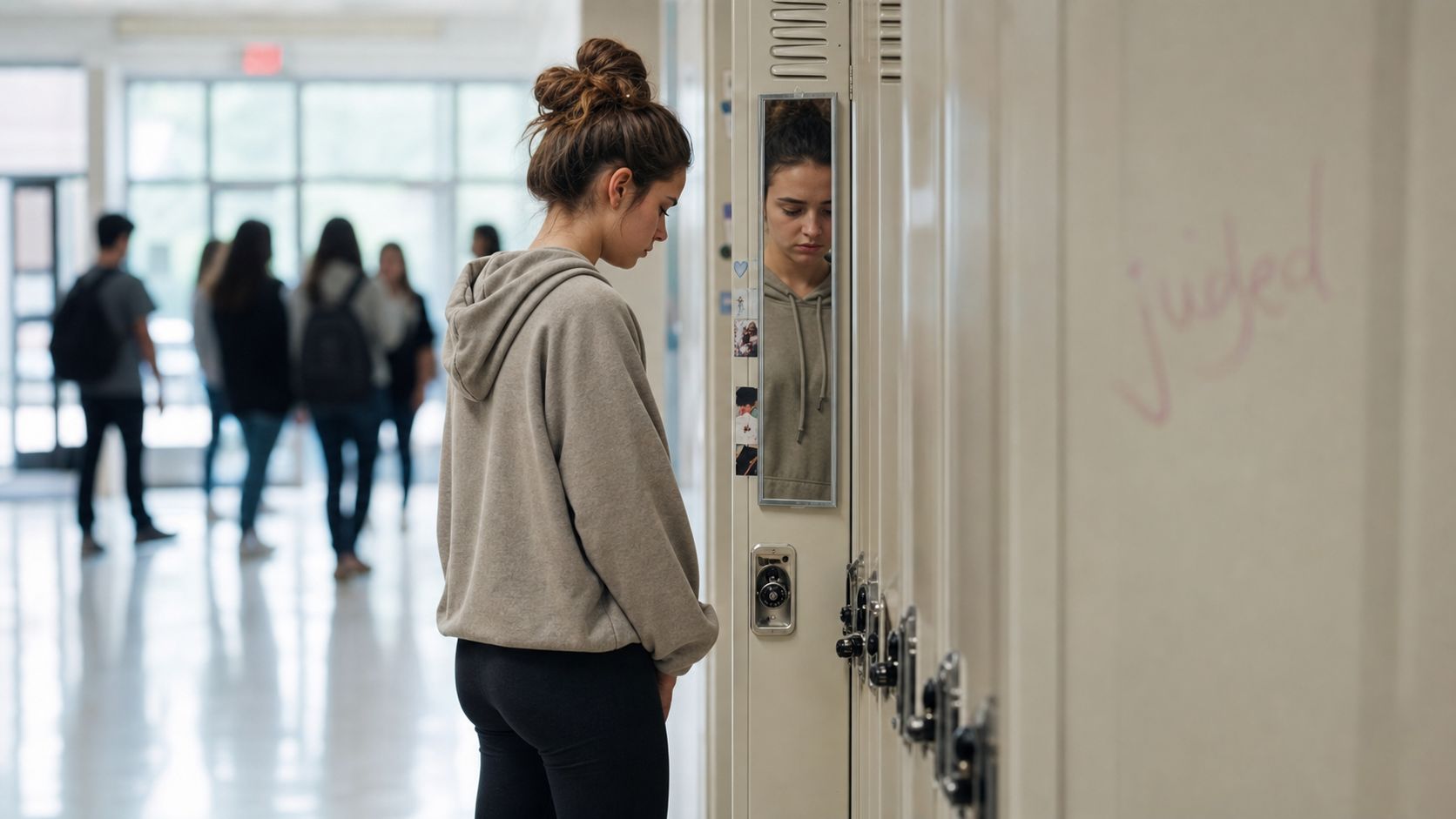
Appearance-based insults are a particularly damaging form of verbal bullying, where perpetrators target a person's physical characteristics, clothing, or body type. The goal is to induce feelings of shame, self-consciousness, and inferiority. These attacks are especially harmful during adolescence when young people are developing their sense of self and are often more vulnerable to body image concerns.
This type of bullying strips away a person's confidence by attacking attributes they often cannot easily change. For students struggling with the long-term impact of these comments, finding professional support can be a critical step toward healing.
Practical Examples & Impact
About Weight & Size: "You're so fat, you need two chairs to sit down." or "Eat a burger, you're a walking skeleton." These comments tie a student's worth directly to their body size, creating intense anxiety around eating and physical development.
About Clothing & Style: "Those clothes look terrible on you. Are you poor?" or "Only poor kids wear shoes like that." This links a student's appearance to their family's socioeconomic status, causing social embarrassment.
About Physical Features: "Your nose is huge, it's the first thing everyone sees." or "Did you even wash your hair? It looks so greasy." These insults pinpoint specific features to make the target feel unattractive and flawed.
Actionable Strategies for Adults
Educators and parents can actively counter this behavior. One effective strategy is to normalize physical diversity by teaching that bodies come in all shapes and sizes, none of which are inherently "good" or "bad."
Educator Tip: Use media literacy lessons to discuss how advertisements and social media create unrealistic beauty standards. Facilitate conversations about how to be critical consumers of media and how to appreciate real, diverse bodies.
In the classroom or at home, establish a firm rule: we do not comment on other people’s bodies. This includes avoiding even seemingly positive comments, which can still reinforce the idea that it's acceptable to scrutinize appearances.
2. Name-Calling and Derogatory Labels
Name-calling is a direct and repetitive form of verbal bullying where aggressors use insulting names, slurs, or negative labels to demean another person. This tactic is often used to establish social hierarchies, making the target feel isolated, powerless, and inferior based on perceived intelligence, interests, or social standing.
This behavior aims to strip away a person's identity and replace it with a hurtful label. Over time, the target may internalize these labels, which can severely damage their self-worth. For those affected, focusing on building self-esteem can be an important part of the healing process.
Practical Examples & Impact
About Intelligence & Interests: "You're so stupid. How did you even pass that test?" or "Look at the nerd reading again. You have no friends." These comments attack a student's academic abilities or personal passions, causing shame and discouraging them from participating in class.
About Social Status: "You're such a loser. Nobody wants to sit with you." This directly attacks a child’s sense of belonging and can lead to severe social anxiety and withdrawal.
About Emotional Expression: "Don't be such a wimp for crying." or "You're a baby if you get upset about that." These phrases punish emotional vulnerability, teaching children that showing feelings is a sign of weakness.
Actionable Strategies for Adults
Parents and educators can create environments where name-calling is not tolerated. A key first step is to establish clear classroom agreements about respectful language from the very beginning of the school year. Address the underlying reasons for the behavior, as bullying can be a way for a child to feel powerful or included.
Educator Tip: Use restorative practices where the student who used hurtful language has a structured opportunity to understand its impact on the other person and make amends. This teaches empathy and accountability rather than just punishing the behavior.
Coach the targeted student in assertive but simple responses, such as a firm "Stop talking to me that way" before walking away. This empowers the child by giving them a tool to reclaim their personal space and dignity.
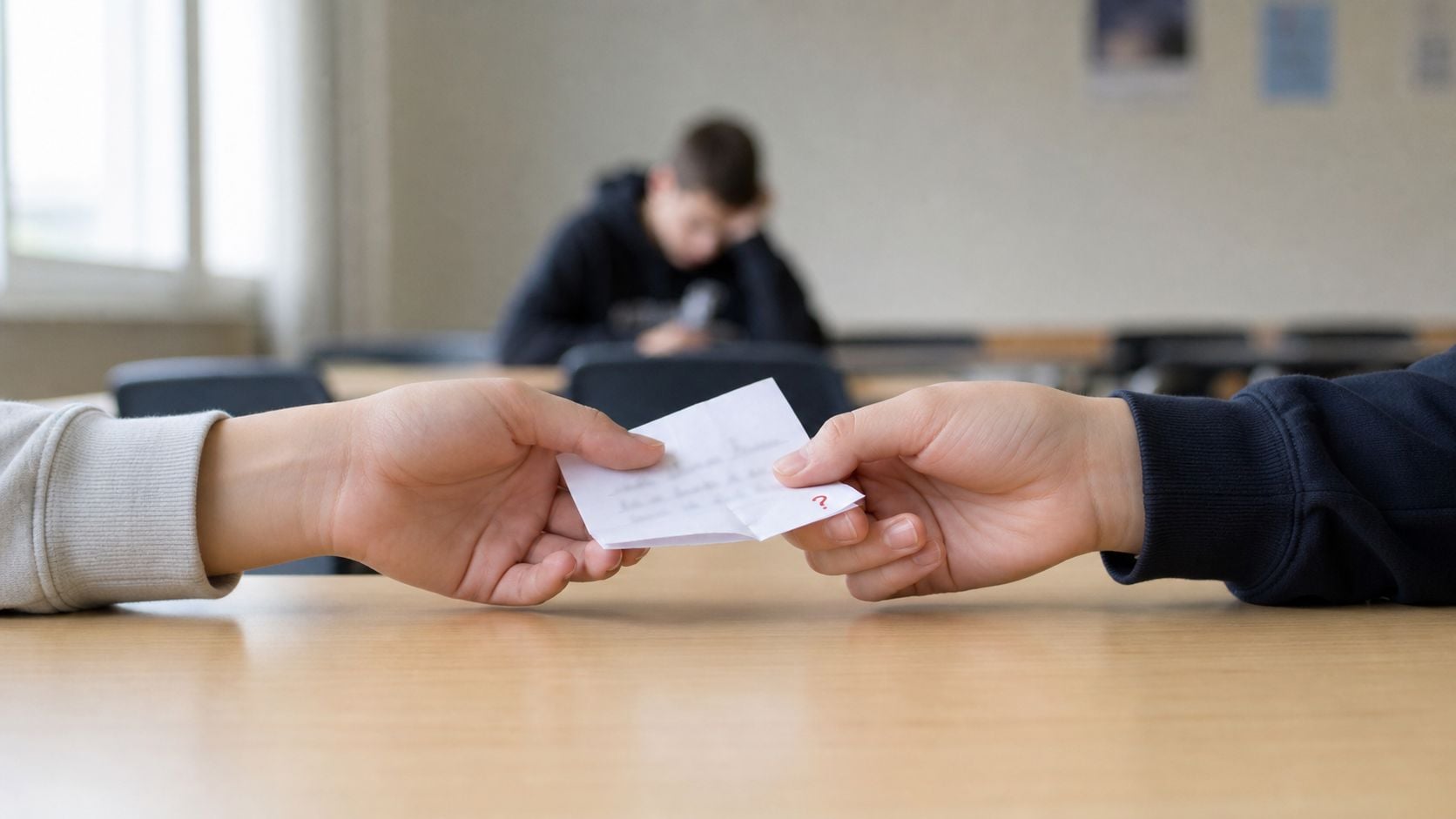
3. Spreading Rumors and Social Exclusion Comments
Spreading rumors is a covert but powerful form of verbal bullying that attacks a person's reputation and sense of belonging. Perpetrators intentionally share false or private information to isolate a target from their peers. This tactic is often paired with direct comments designed to socially exclude the victim, making them feel worthless and alone.
This behavior, also known as relational aggression, manipulates social relationships to cause emotional harm. Because it often happens behind the target's back, it can be difficult to identify and address.
Practical Examples & Impact
Spreading Lies: "Did you hear that Sarah cheated on the exam? I saw her do it." (when it's not true) This poisons the target's social standing with lies, turning peers against them.
Direct Exclusion: "Nobody likes Alex. Let's all agree to just ignore them." This statement openly directs a group to ostracize an individual, causing immediate social pain.
Forcing Peer Pressure: "If you're still friends with Maria, you can't sit with us at lunch anymore." This forces peers to choose sides, weaponizing friendship and creating intense social pressure.