

Peer Support Programs: A Guide for K–8 Schools
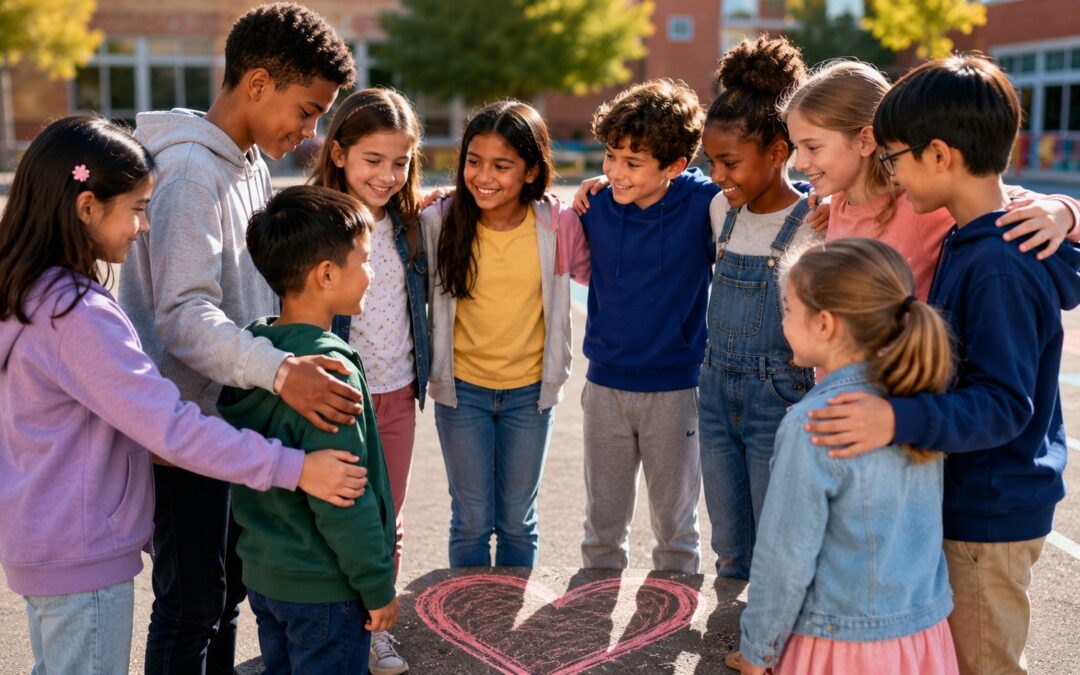
A recess soccer game falls apart in under two minutes. One student insists the ball crossed the line. Another says it didn't. A third storms off because nobody listened. By the time the teacher gets there, the argument isn't about the goal anymore. It's about loyalty, fairness, embarrassment, and who gets blamed in front of peers.
That scene is ordinary in K to 8 schools. So is the hallway misunderstanding, the lunch table exclusion, the new student who doesn't know where to sit, and the child who says “I'm fine” while clearly not being fine. Adults can't catch every moment at the exact second it starts. Students are often the first people to notice when something is going sideways.
That's where peer support programs matter. When schools teach students how to listen, include, de-escalate, and bring in adults at the right moment, everyday friction stops turning into culture-wide distrust. Students learn that helping a classmate isn't a popularity move. It's part of how the community works.
In strong schools, this doesn't happen by accident. It happens because adults build structures that make empathy visible, safe, and consistent.
From Conflict to Connection An Introduction
A second grader is crying near the blacktop. Two classmates hover nearby, unsure whether to help or back away. In many schools, that moment ends with an adult stepping in after the child has already felt alone for several minutes. In a school with a thoughtful peer support structure, one student sits beside the child, another goes to get a recess supervisor, and the interaction stays calm because everyone knows their role.
That's the shift. Peer support programs turn scattered acts of kindness into a practiced school skill.
In K to 8 settings, the need is constant. Younger students are learning how to share space, words, and feelings. Older elementary students start managing friendship groups and exclusion. Middle school students are sorting through identity, status, and social pressure. The conflicts change shape by grade level, but the underlying need stays the same. Students need tools for connection.
Students usually reach one another before adults do. A good program teaches them what to do with that access.
The schools that do this well don't treat peer support as a vague kindness campaign. They build a routine. Students learn how to notice distress, invite someone in, solve small problems, and involve adults when a situation is too big for peers to handle.
A practical example helps. A fourth-grade teacher might assign rotating welcome partners for new students, then teach those partners three simple tasks: greet the student at arrival, sit with them at lunch, and walk them through recess expectations. A parent can mirror the same idea at home by helping their child practice simple phrases like, “Do you want to play with us?” or “Want me to come with you to ask the teacher?”
When children rehearse support, they use it.
Schools also need honesty about what can go wrong. Programs fail when they're launched with enthusiasm and no supervision, when only the most polished students are chosen, or when students are expected to handle emotional situations beyond their training. The strongest programs are warm, visible, and adult-backed.
What Are Peer Support Programs in Schools
At school, peer support isn't therapy. It isn't informal counseling with no guardrails. It isn't asking children to carry adult-sized emotional weight.
It's a structured system where students are trained to support other students in age-appropriate ways. That support might look like welcoming a new classmate, helping mediate a minor conflict, noticing when someone seems isolated, or guiding a peer toward a trusted adult.
The simplest way to think about it
Think of peer supporters as social-emotional first responders. They don't diagnose. They don't keep risky secrets. They don't solve every problem. They help slow things down, make connection possible, and bring in adult support when needed.
That works because peer relationships carry real influence in school. Students often test ideas, emotions, and belonging with one another before they ever speak to an adult. If a school wants a healthier climate, it helps to teach students how to use that influence responsibly.
A widely used definition captures the heart of it. Peer support is voluntary, mutual, and reciprocal support with equally shared power, focusing on strengths, transparency, and person-driven action, where peer supporters are open-minded, empathetic, honest, and direct, facilitating change through shared experience and trusted communication in the Peer Support Program Toolkit.
What peer support is and what it is not
A lot of implementation problems begin with fuzzy boundaries. Clear programs teach those boundaries from day one.
- It is relationship-based: Students use listening, inclusion, and guided problem-solving.
- It is supervised: Adults train students, monitor patterns, and step in when needed.
- It is skill-driven: Students learn scripts, protocols, and referral rules.
- It is not therapy: Peer supporters should never be positioned as mental health providers.
- It is not secret-keeping: If safety is involved, students must tell an adult.
- It is not a status club: The work belongs to a diverse group of students, not only the most outspoken leaders.
For a third-grade class, this may look like “kindness partners” who practice noticing who is left out. For a middle school campus, it may involve trained student mediators who help classmates talk through lunchroom or group-project disputes.
Practical rule: If a student peer supporter hears something involving self-harm, abuse, threats, or ongoing bullying, their next move is adult referral, not independent problem-solving.
Peer-to-peer approaches also help schools build mental health literacy. Programs can teach students how to recognize signs of distress in friends, reduce stigma, and connect classmates to support services through shared experiences and school-based guidance, as described in this overview of social-emotional learning programs for schools.
For parents, the home version is simple and useful. Practice one script a week. “You look upset. Want to talk or want me to sit with you?” gives children a concrete way to offer support without taking over.
The Evidence-Based Benefits for Your School Community
The benefits of peer support show up differently depending on who you're looking at. The student receiving help often feels immediate relief. The student offering support builds maturity and leadership. The school gains a more stable and connected climate.
A helpful visual can make that easier to see.

For students receiving support
The first win is often belonging. Students who feel confused, excluded, or overwhelmed usually respond well when another student meets them with calm attention. That doesn't replace adult care. It lowers the barrier to receiving it.
Research also points to meaningful shorter-term outcomes in education settings. Peer mentoring programs in education have been proven to improve shorter-term well-being outcomes, specifically increasing academic retention because peer mentors provide emotional support, connect students to resources, and address concerns about belonging, according to this ASPE review on promoting employment and well-being.
In practice, a fifth grader who checks in with a fourth grader during morning arrival may help that student get settled faster, ask for help sooner, and avoid the slow withdrawal that often shows up before attendance or engagement problems.
Peer support groups also help students build stronger informal networks and better relationships. That matters in schools because many children don't need a dramatic intervention. They need more chances to feel understood and connected. A weekly lunch group for students dealing with friendship stress or anxiety can give them a place to practice naming feelings, hearing similar experiences, and trying coping routines.
For peer leaders
Students who serve as supporters grow too. They learn how to listen without dominating, how to hold boundaries, and how to recognize the difference between helping and rescuing.
A concrete school example is a sixth grader trained to welcome incoming students from another campus. That student learns to greet, explain routines, notice signs of discomfort, and check in with an advisor. A parent might see the same growth at home when that child starts using more patient language with younger siblings.
Later, when teachers want to strengthen regulation and empathy skills in the classroom, simple tools can support that work. Classroom calming bins, role-play cards, or tactile resources can help younger students practice turn-taking and emotional language. If teachers or families want examples, this roundup of social emotional toys for kids offers age-appropriate ideas that fit many elementary settings.
For the school community
A school-level benefit is cultural consistency. Students start hearing and using the same language around conflict, inclusion, and repair. Adults spend less time reacting to preventable social breakdowns and more time coaching.
Here's a useful companion resource for schools working on that larger culture shift. Conflict resolution for schools becomes much easier when students already know how to listen, restate, and seek fair next steps.
This short video is also a practical discussion starter for staff teams considering a student support model.