

8 Essential I Statement Examples for Parents and Teachers in 2026

Imagine a classroom with less conflict and more connection, or a home where disagreements are handled with respect instead of blame. This isn't a fantasy; it's the power of mastering the 'I-statement.' While many of us have heard the basic "I feel…" formula, its true potential lies in its versatility and nuance. This guide moves beyond the basics to provide a deep dive into specific I statement examples that give teachers, parents, and school leaders the exact words and strategies needed to teach self-regulation, boundary-setting, empathy, and conflict resolution.
This article delivers a classroom- and home-ready collection of scripts and tactics for K-8 students. We will explore practical, age-appropriate examples for eight distinct situations, including expressing emotions without blame, setting needs, and even offering appreciation. By structuring communication this way, I-statements become a powerful tool for giving and receiving clear messages. This skill is foundational for delivering effective constructive feedback, a crucial component of personal and academic growth for both children and adults.
You will find actionable tips, do's and don'ts, and coaching strategies to help you implement these tools immediately. By understanding these different applications, you'll equip children with a shared language to build healthier relationships, advocate for their needs, and navigate their social world with confidence and kindness. Let's explore the specific I statement examples that can create a more positive and communicative environment.
1. I-Statement for Expressing Emotions Without Blame
The most fundamental tool in social-emotional learning is the classic I-statement, designed to express feelings and needs without resorting to blame. It pivots communication away from accusatory "you" statements, which often trigger defensiveness, and toward a clear expression of a personal emotional experience. This structure is a cornerstone of conflict resolution, popularized by pioneers like Marshall Rosenberg and foundational to SEL programs like Soul Shoppe.
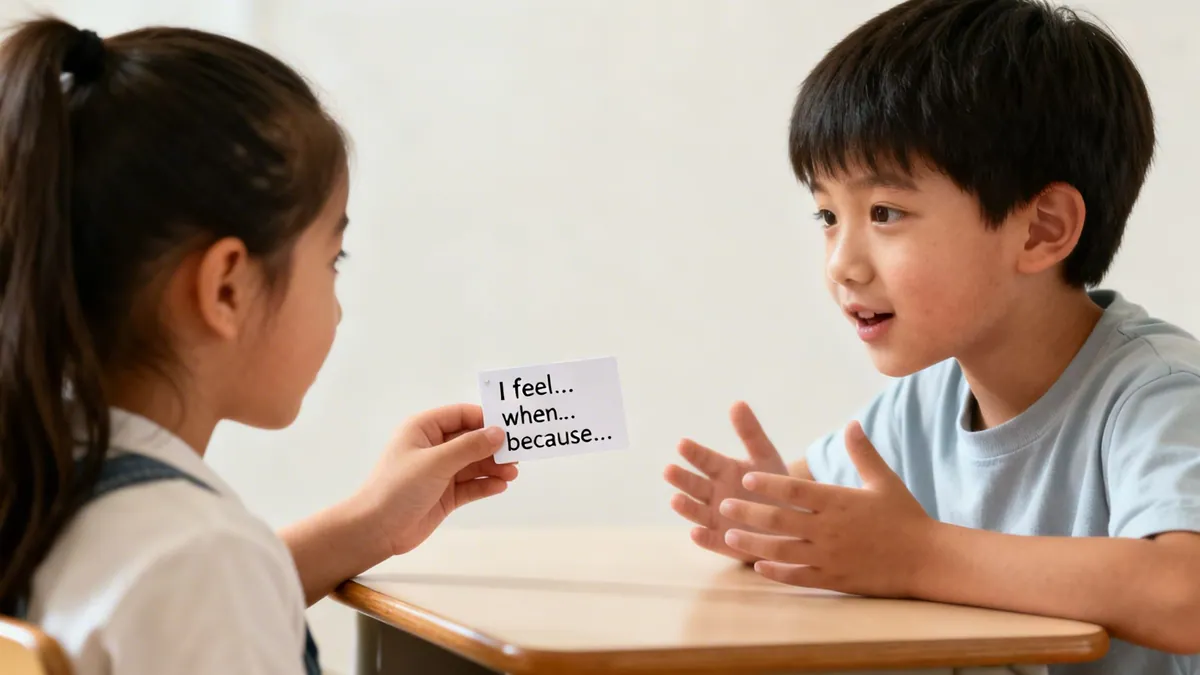
The power of this approach lies in its simple, three-part formula: "I feel [emotion] when [specific, non-judgmental observation] because [the impact it has on me]." This framework provides a concrete, teachable script that helps both children and adults articulate complex feelings constructively. For a person to use this tool effectively, they must first identify their feelings, which is a skill in itself. For support with this, you can explore resources for helping kids find the words they need.
From Blame to Personal Truth
Let's break down the strategic shift. A "you" statement points a finger, while an I-statement offers a window into one's own experience.
- Instead of: "You're so mean for leaving me out."
- Say: "I feel hurt when I'm not included in the game at recess because it makes me feel lonely."
- Instead of: "You never listen to me!"
- Say: "I feel frustrated when I'm interrupted because I lose my train of thought."
- Practical Example for a Teacher: Instead of "Stop shouting out answers," a teacher might say, "I feel concerned when answers are shouted out, because it means not everyone gets a chance to think."
Key Insight: The I-statement is non-negotiable because it is a statement of personal feeling, not an accusation of fact. No one can argue with how you feel; they can only listen and respond to your stated experience.
How to Implement This in Your Classroom or Home
Integrating I-statements requires intentional practice.
- Teach the Formula: Explicitly teach the "I feel… when… because…" structure. Use anchor charts with sentence stems as visual reminders.
- Start Small: Practice with low-stakes scenarios, like sharing preferences ("I feel happy when we read this book because the characters are funny") before tackling conflicts.
- Model Consistently: Adults must model this behavior. Use I-statements in staff meetings, during classroom instruction, and at home. When students hear it used regularly, it becomes a normal part of their communication toolkit.
- Role-Play: Dedicate time to role-playing common conflicts, allowing students to practice forming their own i statement examples in a safe, guided environment. For instance, have two students role-play a scenario where one cuts in line.
2. I-Statement for Setting Boundaries and Needs
Beyond simply expressing feelings, a more advanced I-statement helps children and adults clearly articulate personal boundaries and needs. This structure moves from expressing an emotional reaction to proactively stating what is needed to feel safe, respected, and supported. It is a critical skill for building healthy relationships and self-advocacy, influenced by the work of researchers like Brené Brown on vulnerability and boundaries and integrated into school counseling best practices.
The formula empowers individuals to make a request without making a demand: "I need [specific, concrete need] because [reason/impact], and I would appreciate [a specific, actionable request]." This framework teaches students that having needs is normal and helps peers understand the 'why' behind a request, making them more likely to respond with empathy. It's a foundational tool for preventing misunderstandings that can lead to conflict or bullying.
From Vague Wants to Clear Requests
This I-statement variation helps students move from feeling helpless or resentful to taking constructive action. It gives the other person a clear pathway to help meet the need.
- Instead of: "Stop bothering me after school!"
- Say: "I need some alone time after school because my social battery is drained, and I would appreciate it if you'd text before coming over."
- Instead of: "You always decide what we do. It's not fair."
- Say: "I need to feel included in decisions that affect our group because I feel disrespected otherwise, and I'd appreciate you asking for my opinion before we start."
- Practical Example for a Parent: Instead of "Clean your room now!", a parent could say, "I need the living room floor to be clear because it helps me feel calm, and I'd appreciate you putting your toys in the bin before bedtime."
Key Insight: Stating a need and a specific, appreciated action is empowering. It shifts the dynamic from complaint to collaboration, inviting the other person to be a part of the solution rather than the source of the problem.
How to Implement This in Your Classroom or Home
Teaching boundary-setting requires creating a culture where needs are seen as valid.
- Teach the Formula: Introduce the "I need… because… and I would appreciate…" structure. Post it alongside the basic "I feel" formula.
- Normalize Needs: Regularly discuss that everyone has needs (for space, for quiet, for help, for inclusion) and that it is strong, not weak, to state them.
- Use Relevant Scenarios: Role-play situations that K-8 students actually face: a friend who copies homework, a sibling who barges into their room, or a group that doesn't share the ball. This makes practicing these i statement examples feel authentic.
- Coach Tone and Body Language: Remind students that how they say something matters. Practice delivering boundary statements with a calm, firm tone and confident posture, not an aggressive or pleading one.
3. I-Statement for Appreciation and Positive Reinforcement
Beyond conflict, I-statements are a powerful tool for building belonging and psychological safety by expressing appreciation. This positive application inverts the typical conflict-resolution formula to focus on what is working, creating a culture of recognition and connection. This approach, central to restorative practices in schools and positive psychology, helps students see and name the good in others, strengthening peer relationships and reducing feelings of isolation.
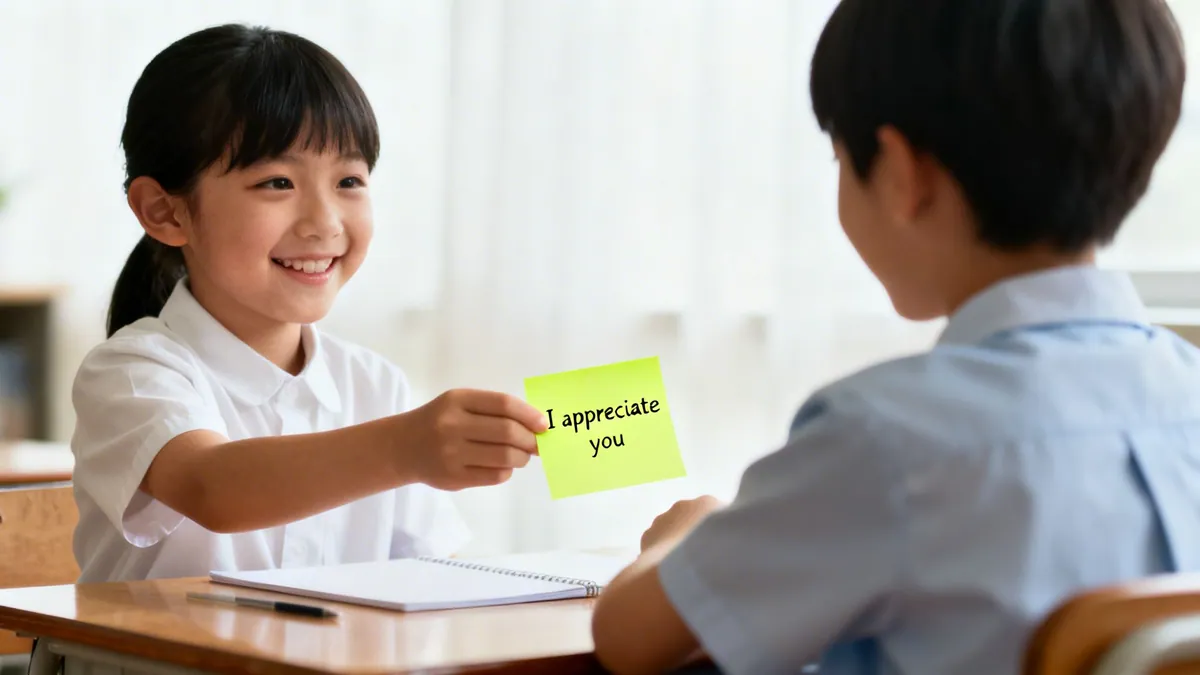
The structure shifts to highlight positive impact: "I appreciate [specific action or quality] about you because [the positive impact it had on me or others]." This framework moves beyond a simple "thank you" to articulate why an action mattered, making the appreciation more meaningful and reinforcing prosocial behaviors. Programs like Soul Shoppe emphasize this form of communication to build authentic connection and empathy.
From Vague Praise to Specific Recognition
This method transforms generic compliments into impactful statements of value. It teaches students to be specific and authentic in their praise.
- Instead of: "You're a good friend."
- Say: "I appreciate how you included Maya in our group project because it showed kindness and made her feel valued."
- Instead of: "You're funny."
- Say: "I appreciate your sense of humor because it makes our class feel more relaxed and fun."
- Practical Example for a Teacher: Instead of "Good job," say to a student, "I appreciate how you helped Sam pick up his crayons because it showed teamwork and saved us time."
Key Insight: Specific appreciation reinforces character and action, not just personality. It tells a person that what they do matters, encouraging them to repeat those positive behaviors.
How to Implement This in Your Classroom or Home
Building a culture of appreciation requires creating intentional routines.
- Teach the Formula: Introduce the "I appreciate… because…" sentence stem. Brainstorm words related to positive actions and qualities (e.g., patient, inclusive, helpful, creative).
- Create Appreciation Rituals: Establish regular structures like a weekly appreciation circle where students share statements with one another. A peer recognition board or a gratitude journal can also make this a consistent practice.
- Model Authenticity: Adults should model specific and sincere appreciation regularly. When you see a student help another, use this I-statement format to praise them publicly.
- Focus on Peer-to-Peer: The goal is for students to give and receive appreciation from each other, not just from the teacher. Encourage them to notice the positive actions of their classmates, building a stronger and more supportive community from within.
4. I-Statement for Perspective-Taking and Empathy
Building on the basic I-statement, this more developed structure fosters empathy by combining self-expression with an attempt to understand the other person's point of view. It encourages speakers to move beyond their own emotional world and consider the feelings and experiences of others. This advanced form is a key component in restorative practices and peer mediation programs, which focus on repairing harm and building community.
This approach uses a multi-part formula: "I feel [emotion] when [situation], and I imagine you might feel [possible emotion] because [reasoning]." It teaches students to articulate their feelings while also making an educated guess about the other person's perspective. The inclusion of phrases like "I imagine" or "I wonder if" is critical, as it signals an attempt to understand rather than a claim to know exactly what the other person is feeling.
From Self-Awareness to Mutual Understanding
This I-statement model shifts the goal from simply stating one's own feelings to opening a dialogue about mutual experiences. It validates one's own emotions while creating a bridge to the other person's reality.
- Instead of: "You're being so unfair and not listening."
- Say: "I feel frustrated when we argue about the rules, and I imagine you might feel like I'm not listening because you want to be heard, too."
- Instead of: "Why are you sitting all by yourself? That's weird."
- Say: "I feel concerned when I see you sitting alone at lunch, and I imagine you might feel lonely because having friends to eat with is important."
- Practical Example for a Parent: A parent mediating a sibling fight might say, "I see you're angry that your tower was knocked down, and I wonder if your brother feels left out because he wanted to play, too."
Key Insight: This statement de-escalates conflict by showing you are trying to understand the other person's perspective. It communicates, "Your feelings matter to me, and I'm trying to see this from your side," which can disarm defensiveness and encourage collaboration.
How to Implement This in Your Classroom or Home
Teaching this empathetic I-statement requires building foundational skills first.
- Teach Perspective-Taking: Before introducing this formula, focus on empathy. Use literature, role-playing, and other perspective-taking activities to help children practice seeing situations from multiple viewpoints.
- Introduce Sentence Stems: Provide clear sentence starters like, "I feel… when… and I wonder if you feel…" or "I feel… when… and I imagine you might feel… because…" on anchor charts.
- Model and Validate: Regularly model this in your own communication. When a child uses this structure, validate their effort: "Thank you for trying to understand how they might be feeling. That shows a lot of care."
- Practice in Low-Stakes Scenarios: Start with hypothetical situations or storybook characters. For instance, "I feel sad for the wolf in the story, and I imagine he might feel misunderstood because everyone thinks he's bad." This helps build the cognitive habit before applying it to real conflicts. These i statement examples show that the tool can be used for more than just disagreements.
5. I-Statement for Peer Support and Advocacy
Beyond personal expression, I-statements can be adapted to empower students as empathetic and supportive peers. This variation moves from expressing one's own needs to noticing and responding to the needs of others. It provides a structured way for students to act as upstanders, offering help without overstepping boundaries or making assumptions. This approach is central to effective peer support programs, bystander intervention training, and Soul Shoppe's model of creating a school culture where students actively support each other.
The formula for this type of statement is: "I notice [specific, non-judgmental observation], and I care about you. I want to [offer of support], so can I [specific action]?" This framework equips students to translate their concern into concrete, respectful action, reinforcing a community of care.
From Bystander to Upstander
This I-statement shifts a student's role from a passive observer to an active, caring advocate. It gives them the words to intervene kindly and safely.
- Instead of: Watching a friend struggle in silence.
- Say: "I notice you seem really upset lately, and I care about you. Can I listen, or would it help if I told a counselor with you?"
- Instead of: Ignoring a peer who is being excluded.
- Say: "I see someone treating you badly, and I care about you. I want to sit with you at lunch. Would that be okay?"
- Practical Example for a Teacher to Coach: A teacher can coach a student by saying, "It looks like Maria is having a tough time. Maybe you could go over and say, 'I notice you're sitting by yourself. Can I join you?'"
Key Insight: This I-statement model puts the person being supported in the driver's seat. The offer of help respects their agency by asking for permission ("Can I…?"), ensuring the support is wanted and appropriate.
How to Implement This in Your Classroom or Home
Building a culture of peer advocacy requires clear guidance and structure.
- Teach the Formula: Introduce the "I notice… I care… Can I…?" structure. Discuss why each part is important, especially the "ask" at the end.
- Define Boundaries: Clearly teach the difference between peer support (listening, offering company, getting an adult) and peer counseling (trying to solve big problems). Establish clear rules for when students must tell a trusted adult, particularly for safety concerns.
- Role-Play Scenarios: Use realistic situations common in K-8 settings for role-playing. Practice scenarios like seeing someone left out, noticing a friend is sad, or seeing someone get teased online. This builds muscle memory for these specific i statement examples.
- Create Support Structures: Formalize opportunities for peer support through buddy systems, peer mentoring programs, or designated "support circles" where students can practice and get feedback.
6. I-Statement for Self-Regulation and Mindfulness
This internally-focused I-statement shifts the tool from interpersonal communication to personal emotional regulation. It's a structure that helps students build self-awareness by connecting an internal feeling or physiological state to a specific, actionable coping strategy. This approach is central to trauma-informed care and modern mindfulness programs, empowering students to recognize their own needs and take ownership of their emotional well-being.
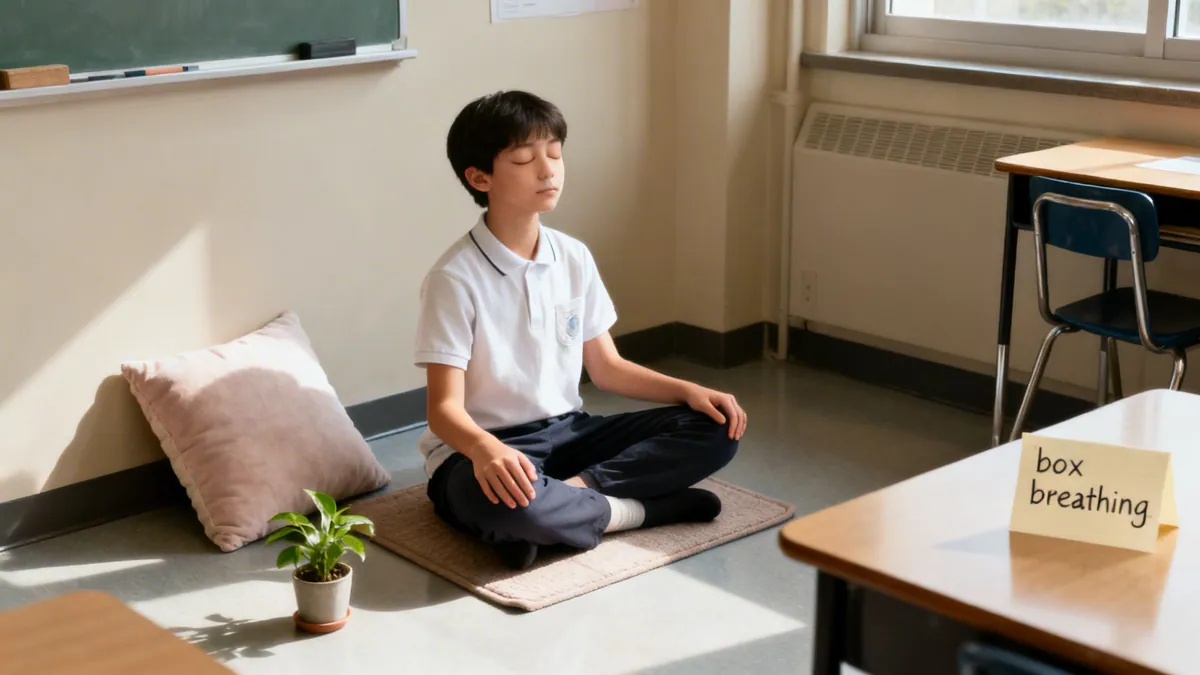
The framework empowers students to become detectives of their own inner worlds with a clear script: "I notice I'm feeling [emotion/physical sensation], so I'm going to [specific coping strategy] to help myself feel [desired state]." This model moves beyond simply naming a feeling; it prompts an immediate, positive action. The goal is to build an internal habit of recognizing dysregulation and activating a tool to return to a calm, focused state.
From Reaction to Regulation
Instead of acting out on an impulse, this I-statement creates a mindful pause. It bridges the gap between a feeling and a constructive response, building a foundation for emotional resilience.
- Instead of: An outburst or putting their head down in frustration.
- Say: "I notice I'm feeling frustrated with this math problem, so I'm going to take a movement break before I say something I regret."
- Instead of: Appearing disengaged or distracted.
- Say: "I notice my mind is wandering and I'm struggling to focus, so I'm going to do a body scan meditation to recenter myself."
- Practical Example for a Parent to Model: A parent might say aloud, "I notice I'm feeling really stressed by all this noise, so I'm going to put on my headphones and listen to quiet music for five minutes to help myself feel calm."
Key Insight: This internal I-statement makes self-regulation a visible and teachable skill. It normalizes the process of having big feelings and demonstrates that everyone has the power to manage them with practice.
How to Implement This in Your Classroom or Home
Integrating this practice helps students build a toolkit for lifelong emotional health.
- Teach Regulation Zones: Introduce a framework like the "window of tolerance" to help students understand the concepts of being regulated (calm, focused), hyper-aroused (anxious, angry), and hypo-aroused (zoned out, tired).
- Build a Strategy Menu: Co-create a visual menu of coping strategies. Categorize them by type (movement, breathing, sensory, cognitive) so students can choose what works best for them. For more ideas, explore these self-regulation strategies for students.
- Practice When Calm: Dedicate time to practicing regulation skills like box breathing or mindful listening when students are not dysregulated. This builds muscle memory, making the skills accessible during moments of stress.
- Create a Calm Space: Designate a corner of the classroom or home where students can go to use their strategies without judgment. Stock it with sensory tools, cushions, or other calming items.