

Peer Mediation in Schools: Launch Your K-8 Program
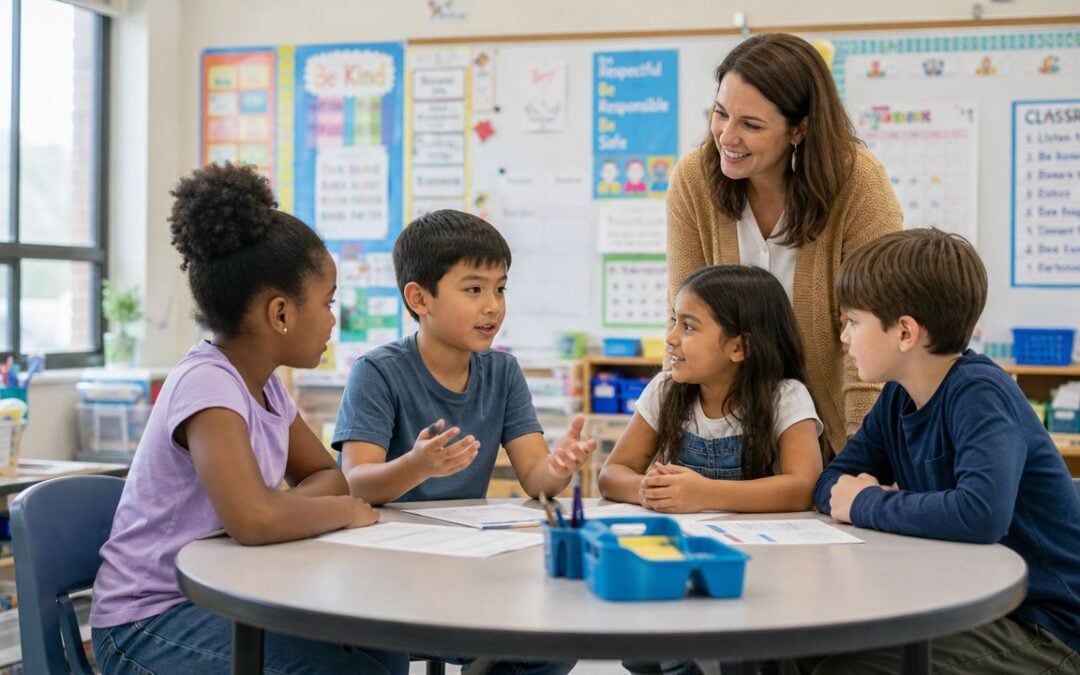
It's 10:40 a.m. Recess just ended. Two fourth graders are still crying about a kickball argument, a teacher is trying to restart math, the counselor already has a full schedule, and the assistant principal is deciding whether this is “just friendship drama” or something that now needs documentation. In many K-8 schools, that scene plays out several times a day.
Most of these conflicts aren't dangerous. But they are disruptive, emotionally loaded, and expensive in staff attention. When adults handle every small conflict themselves, students learn to outsource problem-solving. The result is a school where kids wait for a grownup to interpret every hurt feeling, rumor, line-cutting dispute, and group project blowup.
Peer mediation in schools changes that pattern. Done well, it gives students a structured way to repair everyday conflict, practice empathy, and take responsibility for solutions. Done poorly, it becomes a binder on a shelf, a one-day training no one remembers, or a vague “student leadership” idea with no referral pathway and no adult follow-through.
After more than two decades helping schools build SEL systems, the programs that last all have the same foundation. They treat peer mediation as part of school culture, not an add-on. They define what counts as a mediation case and what doesn't. They train students with repetition, scripts, and supervised practice. And they build routines that work on an ordinary Tuesday, not just during launch week.
Why Peer Mediation Transforms School Culture
A playground disagreement usually starts small. Someone says, “She changed the rules.” Someone else says, “He pushed in line.” By lunch, three friends have chosen sides, a classroom teacher has lost prep time, and an administrator is trying to piece together a story from six emotional versions of the same event.
Traditional discipline can stop the noise. It rarely teaches the skill.

Peer mediation in schools works because it shifts the job of conflict resolution back toward students, with adult structure around it. Instead of asking, “Who's in trouble?” the process asks, “What happened, what does each person need, and what agreement can both people live with?” That's a different culture. Students stop seeing conflict as an automatic ticket to punishment and start seeing it as something they can learn to handle.
That matters for SEL. Mediation asks students to listen without interrupting, name feelings, identify needs, consider another perspective, and generate solutions they commit to following. Those are not abstract character traits. They are daily school survival skills.
The strongest validation comes from national evaluation data. The 2025 national evaluation of peer mediation in schools found that 96% of schools would recommend introducing a program and 89% of young people trained as mediators reported being better able to understand others' feelings according to the 2025 national peer mediation report. That's why schools often experience mediation as more than a behavior tool. It builds empathy capacity in the students leading it.
What changes for adults
When schools move from adult-only conflict handling to a mediation culture, teachers don't lose authority. They gain a more precise response system.
A teacher can still step in, regulate the room, and set limits. But instead of spending twenty minutes investigating a recess insult during reading block, the teacher can refer an appropriate case to a process that teaches repair. For schools already working on climate, belonging, and relationship-centered discipline, this fits naturally with broader efforts to improve school culture.
Practical rule: Peer mediation should reduce unnecessary adult refereeing, not remove adult responsibility.
Families often ask a related question. “What about students who get angry fast?” That's a fair concern. Mediation is not emotional suppression. Students still need tools for co-regulation, body awareness, and calming before they can talk productively.
What changes for students
Students begin to internalize a few powerful messages:
- My voice matters: I get to tell my side without being cut off.
- The other person has a story too: Conflict looks different from different positions.
- Repair is possible: Not every mistake becomes a label or a punishment.
- Leadership isn't only academic: Quiet, observant, empathic students often shine as mediators.
In K-8 settings, that last point is especially important. The students who make excellent mediators aren't always class presidents or straight-A students. Many are the children who notice tension early, can stay steady when peers are upset, and know how to speak in language younger students can hear.
That's why peer mediation transforms school culture. It doesn't just solve disputes. It teaches the community how to respond to tension with structure, dignity, and skill.
Designing Your School's Peer Mediation Framework
A sustainable program starts long before the first student mediation session. Most failures happen in planning. The school launches with enthusiasm, but nobody has defined scope, documented procedures, or assigned ownership.
The first design choice is simple. Decide whether peer mediation will be a “nice opportunity” or an actual school system. If it's a system, students know how to access it, teachers know when to refer, families know what it is, and staff know what cases are off-limits.
Define the lane clearly
Not every conflict belongs in mediation. Minor interpersonal disputes often do. Bullying, threats, harassment, coercion, and physical aggression do not. The distinction matters because mediation depends on voluntary participation and enough balance between students to speak openly.
A practical scope statement for a K-8 handbook might read like this:
Peer mediation is available for student conflicts such as friendship disagreements, rumors, recess disputes, line-cutting, misunderstandings, and disagreements over shared materials or group work. Peer mediation is not used for bullying, physical fights, threats, harassment, discrimination, or any situation involving safety concerns. Those matters are handled directly by school staff.
That language protects students and gives adults confidence in referral decisions. If your team needs shared vocabulary around appropriate student conflict resolution pathways, this overview of conflict resolution for schools can help anchor the conversation.
Build the structure before the launch
A workable framework usually includes these pieces:
- A small steering team: Include an administrator, counselor or SEL lead, one classroom teacher from lower grades, one from upper grades, and a staff member who can manage logistics.
- A written referral process: Keep it short enough that teachers will use it.
- A supervision plan: One adult needs clear responsibility for training support, scheduling, and follow-up.
- A family communication plan: Parents shouldn't first hear about mediation after their child participates.
- A space plan: Students need a neutral, predictable place to meet.
Here's a useful planning table for K-8 campuses:
| Decision area | What to decide |
|---|---|
| Case type | Which conflicts are appropriate for mediation |
| Referral source | Teacher referral, self-referral, counselor referral, playground staff referral |
| Student age range | Which grades can serve as mediators and which grades can be referred |
| Supervision | Which adult oversees scheduling, records, and coaching |
| Documentation | What gets recorded and what stays confidential |
| Family notice | Whether consent is passive, active, or case-specific |
Adapt for younger students
Schools often assume mediation is only for middle school, but that's too narrow. Most research and implementation focus on middle and high school students, but peer mediation has been proven effective in upper elementary (4th–5th) grades. Successful programs for younger students require age-appropriate modifications to training and the mediation process according to this overview of peer mediation models in schools.
For K-5 students, age-appropriate usually means shorter sessions, more visual prompts, concrete feeling words, and simpler agreement forms. A fifth grader mediating between two third graders may use sentence stems like “What happened first?” and “What would make recess feel okay tomorrow?” A middle school mediator can handle more nuance.
Use ready-to-send language
A parent newsletter paragraph can be plain and reassuring:
This semester, our school is launching a peer mediation program for everyday student conflicts. Trained student mediators will help classmates talk through minor disagreements in a structured, supervised setting. The goal is to build communication, empathy, and problem-solving skills while reducing conflict escalation. Peer mediation will not be used for bullying, safety concerns, or serious discipline matters, which will continue to be handled by staff.
A consent form snippet can be just as clear:
- Voluntary participation: My child may choose whether to participate in a peer mediation session.
- Supervised process: Peer mediation sessions are overseen by trained school staff.
- Confidentiality limits: Students are expected to respect privacy, but school staff must act on any information related to safety concerns.
- Appropriate use: Peer mediation is for minor interpersonal conflicts, not bullying or dangerous behavior.
Schools that get this framework right avoid the most common launch mistake. They don't confuse enthusiasm with readiness.
How to Select and Train Effective Student Mediators
Many schools begin by asking teachers for “responsible kids.” That's too shallow. Responsibility matters, but it isn't the top criterion. The best mediators are students who can stay neutral, listen well, avoid gossip, and treat peers with respect even when they disagree.
Some of the strongest mediators are not the loudest leaders in the room. They are often the students who notice who's left out, paraphrase naturally, and don't need to win every conversation.

What to look for in student mediators
Use nomination forms that ask for behaviors, not labels. “Kind” is too vague. “Stays calm when classmates disagree” is more useful.
A strong nomination form might ask teachers:
- Listening habits: Does this student let others finish speaking before responding?
- Peer trust: Do classmates seek this student out when they need support?
- Discretion: Can this student keep sensitive information private?
- Flexibility: Can this student consider more than one side of an issue?
- Reliability: Does this student show up and follow through?
For a short student interview, ask questions that reveal judgment:
- Tell me about a time two classmates disagreed. What did you notice?
- What would you do if one friend wanted you to take their side during mediation?
- Why might confidentiality matter in this role?
- What would you do if a student became too upset to keep talking?
Choose for empathy and steadiness first. Public speaking can be taught. Neutrality is harder.
If your school already runs student service roles, it helps to borrow from proven essential volunteer management tips such as clear expectations, defined responsibilities, and regular check-ins. Peer mediators may be students, but they still need adult structures that every successful volunteer program requires.
Train through repetition, not inspiration
One assembly is not training. Students need practice with the actual mediation sequence. The core process is well established. The peer mediation process follows a structured six-step protocol: agreeing to rules, storytelling, identifying interests, brainstorming options, evaluating solutions, and writing the agreement. Training that masters this process is key to the program's 93% success rate in reaching formal agreements according to this evaluation of peer mediation outcomes in education.
A practical K-8 training arc can run over several weeks with short, active sessions:
| Session | Focus | Practice task |
|---|---|---|
| Week 1 | Role of a mediator | Notice advice-giving vs neutral facilitation |
| Week 2 | Active listening | Paraphrase a partner's story without judgment |
| Week 3 | Feelings and needs | Match conflict statements to underlying needs |
| Week 4 | Ground rules and confidentiality | Practice opening scripts |
| Week 5 | Brainstorming solutions | Generate options without evaluating too early |
| Week 6 | Full role-play and agreement writing | Run start-to-finish mock mediations |
One option schools use for structured support is conflict resolution skills training, especially when staff want a repeatable sequence of listening, repair, and solution-building tools.
A short video can also help students visualize tone and posture before role-play practice: