A Practical Guide on How to Stop Bullying in Schools

A Practical Guide on How to Stop Bullying in Schools

If we want to truly stop bullying, we have to move beyond reactive punishments and start building a proactive culture of safety and respect from the ground up. The most durable solution isn't a single program but a unified strategy that weaves together school-wide policies, classroom-level social-emotional learning (SEL), and active family partnerships. This guide offers a clear roadmap for creating an environment where every child feels secure enough to thrive.

Building a Foundation of Safety to Stop Bullying

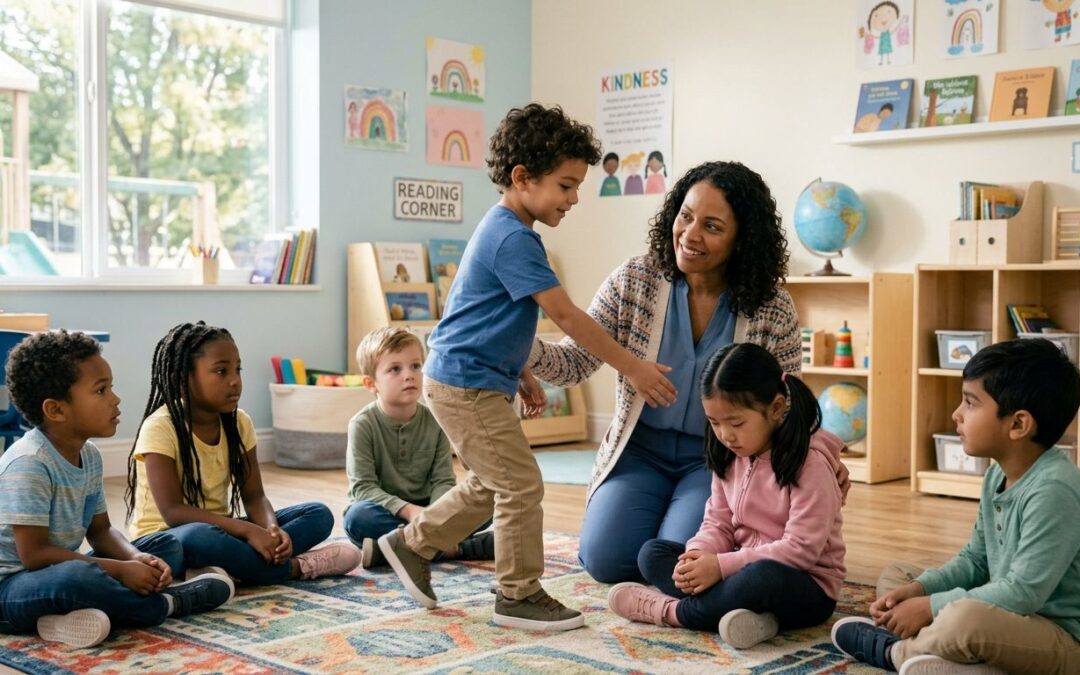
A group of smiling teachers and diverse elementary school children sitting in a circle in a classroom.

When we ask how to stop bullying, the real answer isn't a one-time assembly or a catchy slogan. It’s about creating a fundamental shift in the school's ecosystem. It means building a place where empathy is taught as intentionally as mathematics and where kindness is woven into the daily fabric of school life. This approach moves beyond just telling students "don't bully" and instead gives them the skills to understand one another.

Why a Unified Strategy Matters

A disconnected approach almost always falls flat. A school might have a strong anti-bullying policy on the books, but if teachers aren't equipped with classroom strategies and parents aren't involved, the policy remains just words on paper. A plan that actually works requires everyone to be on the same page, speaking the same language of respect and support.

This is where the three pillars come into play. Creating a protective net around students requires a team effort, with each group playing a vital role. This shared responsibility is key to building a strong foundation of safety.

Three Pillars of Bullying Prevention

Stakeholder Group Key Responsibility Example Action
School Leadership Establishes clear, consistent policies and expectations for behavior. Implementing a school-wide reporting system and restorative justice protocols.
Teachers & Staff Implements daily practices that foster empathy, communication, and conflict resolution. Leading daily morning meetings focused on SEL skills like perspective-taking.
Parents & Caregivers Reinforces these values at home and maintains open lines of communication with the school. Discussing the school's "kindness" theme at home and practicing empathy with their child.

When these three groups work in concert, they create a powerful, protective net around students. A huge part of this foundation is fostering a strong sense of psychological safety. You can learn more about the importance of psychological safety and see why it's so critical for every community.

The Power of Social-Emotional Learning

The statistics on bullying are staggering. A massive global analysis found that 25% of students are victims, while another 16% are stuck in the cycle as both bullies and victims. This isn't just a behavior issue; it's a public health crisis tied to severe emotional distress.

But the research also points to a powerful solution. Schools that implement comprehensive SEL programs see bullying incidents drop by as much as 30%. Why? Because they teach core skills like empathy, self-awareness, and self-regulation. These are the building blocks of a kind and respectful community.

A truly safe school isn't just free from physical harm—it's a place where every child feels seen, heard, and valued. This sense of belonging is the ultimate antidote to bullying.

By focusing on these proactive strategies, we do more than just stop negative behaviors—we actively build a positive culture. A key step in this process is learning how to create a safe space where students feel comfortable enough to be themselves and ask for help when they need it. This playbook provides the practical, actionable methods to make that vision a reality.

Designing Your Whole-School Prevention Plan

To truly stop bullying, we have to shift from just reacting to incidents to proactively building a campus-wide culture of respect. That big-picture work starts with a solid, whole-school prevention plan. Think of it as a blueprint that gives everyone—administrators, students, parents, and staff—a shared language and a clear set of expectations for how we treat each other.

An effective plan isn't a document that gathers dust on a shelf; it's a living guide shaping daily interactions on campus. It takes abstract ideas like "kindness" and turns them into real, observable behaviors. This whole process kicks off when school leadership lands on a clear, simple, and unified definition of what bullying is—and what it isn't.

Establish a Clear Definition of Bullying

Your first job is to define bullying in a way that’s simple enough for a first-grader to grasp but still holds weight with a high school senior. This definition has to be communicated over and over, consistently, across the entire school.

The key is to distinguish bullying from everyday conflict by highlighting its three core ingredients: an imbalance of power, repetition, and an intent to harm.

For example, a teacher could put it this way: "Conflict is when two friends disagree over a game. Bullying is when one person repeatedly uses their power—whether that's being bigger, more popular, or something else—to hurt someone else on purpose."

This clarity is everything. It empowers both students and staff to recognize bullying when it happens, which is the essential first step to stopping it. When everyone's on the same page, reporting becomes far more accurate and effective.

Assemble a Dedicated Safety Committee

This isn't a one-person job. You need a dedicated safety committee made up of administrators, teachers, counselors, parents, and, yes, even students. This team becomes the champion for your anti-bullying efforts, digging into the data and making sure the plan stays on course. Their different viewpoints are invaluable for creating strategies that are actually practical for your specific school community.

This committee is tasked with a few critical actions:

  • Assess the current climate: Use surveys to get a real baseline. Where and when is bullying actually happening?
  • Set specific, measurable goals: Don't just aim to "reduce bullying." Aim for something concrete, like a 20% reduction in reported incidents on the playground within six months.
  • Communicate the plan: Make sure every single person knows the policies, the procedures, and their specific role in making the school a safer place.

Gather Honest Feedback and Data

To fix the real problems, you need real feedback. As you design your plan, it's crucial to set up reporting systems that feel safe. Well-designed anonymous feedback forms can be a game-changer, allowing students and staff to report what they see without fearing retaliation. This data is pure gold for pinpointing "hot spots" where bullying is most common, like the bus line or that one unsupervised hallway.

A school climate survey can reveal surprising truths. You might discover that what adults perceive as harmless teasing is experienced by students as relentless social bullying. Acting on this data is what makes a prevention plan effective.

This information lets you target your efforts with precision. If the surveys show cyberbullying is a major issue, you can pour resources into digital citizenship lessons. This data-driven approach moves you beyond guesswork and toward solutions that work.

Implement Proactive and Engaging Programs

A strong plan is always more about prevention than punishment. Instead of just waiting for fires to start, you have to actively build a culture of kindness and respect through programs that get students engaged. This is the work that makes bullying socially unacceptable.

Consider kicking off initiatives like these:

  • Peer Mediation: Train older students to help younger ones resolve conflicts peacefully. It empowers the student leaders and teaches everyone valuable life skills.
  • Kindness Campaigns: Organize a school-wide "Kindness Week" with daily challenges, like writing thank-you notes to cafeteria staff or creating a "wall of compliments."
  • Upstander Training: Don't just hope students will intervene—explicitly teach them how to do it safely. Role-playing different scenarios helps them build the confidence to actually speak up.

These activities aren't just fluffy add-ons; they are fundamental to shifting the entire school culture. For more structured approaches, you can explore various bullying prevention programs for schools that offer proven frameworks for building empathy and respect. When kindness and inclusion become the norm, you create an environment where bullying simply can't thrive.

Classroom Scripts and Strategies for Teachers

Teachers are on the front lines, turning school-wide policies into the everyday reality of the classroom. To really make a difference, you need more than just theory; you need practical, in-the-moment tools to build an anti-bullying culture from the ground up. This is about weaving social-emotional learning (SEL) into the very fabric of your lessons, morning meetings, and even the way you handle small conflicts.

These consistent, small actions are what truly create a psychologically safe classroom. When students feel seen, heard, and have the words to express their feelings without attacking others, the environment that lets bullying take root starts to fade away.

Start the Day with Connection

Those first few minutes of the day are everything—they set the tone for all the hours that follow. A structured morning meeting is a perfect routine for building community and explicitly teaching the communication skills that stop bullying before it starts.

One of the most powerful tools you can give students is the "I feel" statement. It's a simple language shift, but it’s a game-changer. It turns accusations into conversations, helping kids share their hurt feelings without putting the other person on the defensive.

Morning Meeting Script Example

Imagine a student, Alex, seems down after a disagreement during recess.

  • Teacher: "Good morning, everyone. Before we start our day, let's do a quick check-in using our 'I feel' statements. Remember how this works? It helps us share what’s going on inside without placing blame. We start with 'I feel…', then 'when you…', and finish with 'because…'"
  • Teacher (to Alex): "Alex, it looks like something might be on your mind. Would you feel comfortable sharing with an 'I feel' statement?"
  • Alex: "I feel sad when Maya says I can't play with the group because it makes me feel left out."
  • Teacher: "Thank you for sharing that, Alex. That took a lot of courage. Maya, can you tell me what you heard Alex say?"
  • Maya: "He feels sad because I told him he couldn't play."
  • Teacher: "Exactly. Thank you for listening. Now, how can we solve this problem together so that everyone feels included?"

This kind of structured dialogue doesn't just resolve one issue; it models empathy and collaborative problem-solving for the whole class, creating a foundation of respect that lasts all day.

Weave Empathy into Daily Lessons

You don't need a separate, time-consuming curriculum to teach SEL. You can bake it right into the subjects you're already teaching. Literature, history, and even science are full of opportunities for students to step into someone else's shoes and build their empathy muscles.

  • During Reading: When you're discussing a story, go deeper than just plot points. Ask questions that invite emotional reflection: "How do you think the main character felt when that happened? Why do you think the antagonist acted that way? Have you ever felt something similar?"
  • In Social Studies: As you learn about historical events, make a point to discuss the perspectives of all the different groups involved. This helps students see that every story has multiple sides and that people's experiences and feelings shape their actions.
  • For Group Projects: Before they dive in, have students create a simple "team contract." They can agree on how they'll communicate respectfully, listen to everyone's ideas, and handle disagreements if they come up.

These small, consistent practices help students get in the habit of considering how others feel—a cornerstone of bullying prevention. For more ideas, check out our guide to classroom management strategies for teachers that foster a positive learning environment.

Intervene with a Clear Protocol

When you see a bullying incident happen, knowing exactly what to do and say is critical. A calm, consistent, and structured response de-escalates the tension and helps every student feel safe. The goal is to stop the immediate behavior, support the student who was targeted, and address the aggressor's actions without shaming them in front of their peers.

Just follow this simple, three-part process:

  1. Stop the Behavior Immediately: Use a firm but calm voice. "Stop. That is not okay in our classroom."
  2. Support the Targeted Student: Immediately turn your attention to the student who was hurt. "Are you alright? Come with me, let's talk over here for a second."
  3. Address the Behavior Privately: Talk to the student who did the bullying later, away from an audience. "Tell me what was happening there. Let's talk about that choice. In this school, we are kind to each other."

The immediate priority is always the safety and well-being of the targeted child. By addressing the other student's behavior in private, you lower their defensiveness and open the door for a real conversation about their actions and the impact they had.

This protocol ensures you act decisively to stop the harm while preserving the dignity of everyone involved. It sends a clear message: the behavior is the problem, not the child.

Globally, the scale of this issue is huge; one-third of youth (30.5%) report being bullied. Whole-school SEL strategies that build connection and empathy are the most powerful antidote, reducing bullying incidents by 20-50%. Programs that teach skills like self-regulation and conflict resolution have a proven track record of creating safer school communities. You can discover more insights about the worldwide impact of bullying and effective solutions.

How to Respond to Bullying Incidents

When a bullying incident happens, the way adults respond is a powerful moment. It can either make things worse or start the healing process. A clear, compassionate, and consistent workflow is the key to making sure the targeted student feels supported, the behavior is addressed, and the whole community learns from what happened.

The first move is always to stop the behavior and make sure everyone is safe. But the long game isn't just about punishment—it's about repairing the harm and teaching crucial life skills. This mindset shifts the focus away from simple punishment and toward accountability and restoration.

Initial Steps for Immediate Intervention

When an incident is happening right in front of you, a swift and calm response makes all the difference. Your priority is to de-escalate the situation and check in on the well-being of the student who was targeted. Research shows that when a bystander steps in, bullying stops within 10 seconds most of the time. As an adult, your intervention carries even more weight.

This three-step process is a great mental model for teachers and staff to follow in the heat of the moment.

A three-step process flow for teacher bullying intervention: De-escalate, Support, and Address, with icons.

This visual reminds us that safety and support always come first. Addressing the behavior can wait until the immediate situation has calmed down.

Conducting a Fair and Unbiased Investigation

Once things are stable, it's time to figure out what happened. This isn't about taking sides; it’s about gathering the facts from a neutral place. A fair process shows every student involved that their voice matters and that the goal is to find a truthful, helpful resolution.

  • Separate and Listen: Talk with each student involved one-on-one and in private. This keeps them from being influenced by each other and gives them a safe space to share their side of the story.
  • Use Open-Ended Questions: Instead of asking, "Did you push him?" try something like, "Can you tell me what happened at recess today?" This encourages a more detailed and honest account.
  • Talk to Witnesses: If other students saw what happened, their perspective is valuable. Remind them that the goal is to help everyone, not to get anyone in trouble.
  • Document Everything: Use a simple incident report form to note who was involved, what happened, where and when it took place, and who saw it. This paper trail is vital for spotting patterns and making sure you follow up consistently.

Shifting from Punishment to Restorative Practices

While consequences are necessary, a purely punitive approach like an automatic suspension often fails to teach new behaviors. It can make a student feel even more isolated and resentful without getting to the root of why they acted out in the first place.

A much more effective approach is using restorative practices. This framework focuses on helping the student who caused harm understand its real-world impact and then giving them a chance to actively repair it.

Instead of asking, "What rule was broken and what is the punishment?" a restorative approach asks, "Who was harmed, what are their needs, and whose obligation is it to repair that harm?"

This is a fundamental shift that helps build a culture of accountability and empathy. By focusing on mending relationships, you not only stop the immediate behavior but also teach students critical skills in communication and conflict resolution. If you're new to this concept, you can learn more about what restorative practices in education look like in our detailed guide.

Facilitating Restorative Conversations

A key tool here is the restorative conversation or circle. This is a mediated meeting where the students involved can speak and listen to one another in a safe, structured environment. An adult facilitator guides the conversation, making sure it stays respectful and productive.

Here’s a simple script you can adapt to guide a restorative conversation:

Facilitator Script Example

  1. To the student who caused harm: "Can you tell me what happened from your perspective? What were you thinking at the time?"
  2. To the student who was harmed: "What was the impact of that on you? What was the hardest part for you?"
  3. To the student who caused harm: "Now that you've heard how [student's name] felt, what are your thoughts?"
  4. To both students: "What needs to happen to make things right? What can we do to make sure this doesn't happen again?"

This process doesn't just tell students what to do; it guides them toward genuine understanding and shared solutions. The outcome isn't dictated by an adult but co-created by the students themselves, which makes it far more meaningful and likely to stick.

Partnering with Parents for Prevention

Two adults comfort a sad young girl in a classroom, placing hands on her shoulders.

A strong home-school partnership is one of the most powerful defenses we have against bullying. When schools and families are on the same page, speaking the same language of empathy and respect, we create a consistent, supportive world for our kids. It means the lessons of kindness learned in the classroom get reinforced at home, and vice versa.

This alliance is so important because it closes the gaps where bullying can take root. When a child knows their parents and teachers are a united team, they feel safer. They’re also far more willing to speak up about problems they’re facing or witnessing.

Opening Lines of Communication

For schools, a real partnership starts with proactive communication. The key is not to wait for an incident to happen before reaching out. Instead, build a steady rhythm of sharing resources and creating opportunities for parents to engage with the school's anti-bullying mission.

These efforts don't have to be complicated to be effective:

  • Monthly Newsletter Templates: Dedicate a small section to conversation starters for families. It could be as simple as, "This month, ask your child about a time they saw someone being an 'upstander' and what that looked like."
  • Parent Workshop Agendas: Host a workshop—in-person or virtual—on a relevant topic like digital citizenship or understanding social bullying. Give parents practical takeaways they can use that same night.
  • Resource Hub: Create a simple page on the school website with curated articles, book recommendations, and links to support services for families.

This kind of consistent outreach builds trust and gives parents the tools they need to be active partners.

Guidance for When Your Child Is Being Bullied

For parents, hearing that your child is being bullied is heartbreaking and can make you see red. Your first response is absolutely critical in helping your child feel safe and heard. The goal is to listen without judgment and then move into calm, strategic action.

Here’s a practical way to respond:

  1. Listen and Validate: Try to set your own emotions aside for a moment and create a truly safe space for your child to share. Say things like, "Thank you for trusting me with this. That sounds really hard," or "I'm so sorry that happened. We will figure this out together."
  2. Document Everything: Keep a simple, factual log of incidents. Just note the date, time, location, what happened, and who was involved. This information is invaluable when you talk to the school.
  3. Contact the School Calmly: Schedule a meeting with your child's teacher or a school counselor. Bring your log and approach the conversation as a collaborative partner. A good starting line is, "I'm concerned about something and I'd like your help."

Your child's emotional safety is the top priority. Reassure them that it is not their fault and that you are on their team. This validation is a powerful antidote to the shame and isolation that bullying can cause.

When Your Child Is the One Bullying

Discovering that your child is the one causing harm can be confusing and deeply upsetting. It's so important to address the behavior directly while also making it clear that you love and support them. This isn't about shame; it's about helping them understand the impact of their actions and learn better ways to interact with others.

Start with a calm, private conversation. Try to understand the "why" behind their behavior—are they feeling insecure, struggling to fit in, or mimicking something they've seen? Set firm, clear boundaries that the behavior is unacceptable and establish consequences that are logical and restorative, like writing a sincere letter of apology or helping a younger student with a task.

Tackling Cyberbullying Head-On

The digital world adds a whole new layer of complexity. The fight has moved online, where harassment can feel inescapable 24/7. Recent data shows an alarming trend: lifetime cyberbullying victimization is projected to skyrocket from 33.6% in 2016 to 58.2% by 2025. This digital nightmare is most common on platforms like Instagram and YouTube, making digital citizenship a non-negotiable life skill. You can learn more about the stark realities of cyberbullying statistics to get the full picture.

Parents and schools have to work together on this. It means:

  • Setting Tech Boundaries: Establish clear family rules about screen time, what can be shared online, and which apps are appropriate.
  • Promoting Digital Empathy: Talk regularly about how words and images shared online have a real-world impact on people's feelings. It's not just pixels on a screen.
  • Recognizing Warning Signs: Be aware of changes in your child's behavior, like becoming secretive about their device, seeming anxious after being online, or suddenly withdrawing from friends.

By fostering open dialogue about our digital lives and modeling responsible online behavior, we can help kids navigate their online worlds safely and kindly. This partnership between home and school is our best strategy for how to stop bullying in all its forms.

Your Top Questions About Bullying, Answered

Even with the best school-wide plan, bullying situations can feel complex and emotionally charged. When you're in the thick of it, whether you're a parent or an educator, tough questions come up. These moments are nuanced and require direct, thoughtful advice.

Knowing how to respond isn't just about big programs; it's about confidently handling these specific, real-world moments. The right response can make all the difference for a child who is struggling. Here, we tackle some of the most common challenges you might face.

How Can I Spot the Sneakier Forms of Bullying?

Physical aggression is usually obvious, but social bullying—what experts often call relational aggression—is much harder to see. It’s subtle, insidious, and can be just as damaging, leaving a child feeling worthless and completely alone. This is the kind of harm that often flies right under the adult radar.

Keep an eye out for these more hidden behaviors:

  • Intentional Exclusion: This isn't just a one-off disagreement. It’s a consistent, deliberate pattern of leaving a child out of games, friend groups, or conversations to isolate them.
  • Spreading Rumors: This classic tactic now happens in whispers down the hallway and in blasts across social media. The goal is always the same: to ruin a child's reputation and social standing.
  • The Silent Treatment: A group might suddenly stop talking to one child, ignoring them completely. It's a powerful and painful way to exert social control.
  • Public Humiliation: This includes making a child the butt of a joke in front of everyone, mimicking how they talk or walk, or doing something to deliberately embarrass them.

A real-world example? You might notice a student who used to be inseparable from their group is now eating lunch alone every day. When you ask, they might just shrug and say, "They don't like me anymore." A gentle, probing conversation, however, might uncover a clear pattern of intentional exclusion.

What Are a School's Legal Responsibilities?

Every school has a legal and ethical duty to provide a safe learning environment. While the specifics can vary, all 50 states have anti-bullying laws on the books. These laws typically require schools to have a clear anti-bullying policy, a process for reporting and investigating incidents, and a prevention plan.

Things get even more serious when federal civil rights laws come into play. If the bullying is based on a student's race, color, national origin, sex, disability, or religion, the school’s responsibility escalates. They must take immediate and effective steps to end the harassment, stop it from happening again, and address its impact.

A school's legal duty isn't just about having a policy tucked away in a binder. It’s about actively implementing and enforcing it. If a school knows about severe or persistent bullying and doesn't respond adequately, they could be held liable.

For parents, this is key. Get familiar with your school's and district's specific anti-bullying policy. If you feel like your concerns aren't being taken seriously, putting your complaint in writing—and directly referencing their own policy—can be an incredibly powerful next step.

When Is It Time to Seek Professional Help?

Being bullied is a deeply painful experience, and the emotional scars can last long after the behavior stops. Many kids are resilient, of course, but some need extra support to process the trauma and rebuild their sense of self. Knowing when to call in a professional is a crucial part of helping a child who has been deeply hurt.

Consider finding a therapist or counselor if you notice these signs persisting over time:

  • Major shifts in behavior: Your child becomes unusually withdrawn, anxious, or depressed.
  • School avoidance: They constantly complain of stomachaches or headaches, especially on school mornings, or flat-out refuse to go.
  • Losing interest in things they once loved: They suddenly quit the soccer team or stop drawing, with no new interest to replace the old one.
  • Changes in sleeping or eating: This could look like nightmares, trouble falling asleep, or a sudden loss of appetite.
  • Any talk of self-harm: Any mention of feeling hopeless or wanting to hurt themselves should be taken seriously and addressed immediately.

For instance, if a child who lived for soccer suddenly refuses to go to practice because the kids who tease them are on the team, and that withdrawal starts creeping into other areas of their life, it's a clear signal. The emotional impact is significant. A good therapist can offer a safe space to work through those feelings and develop healthy coping skills.


At Soul Shoppe, we believe that creating a safe and empathetic school community is the most powerful way to prevent bullying. Our programs equip students, teachers, and parents with the social-emotional tools needed to build a culture of kindness and respect from the ground up. Learn how we can help your school at https://www.soulshoppe.org.

How to Improve School Culture: Practical Tips for Every Educator

How to Improve School Culture: Practical Tips for Every Educator

Improving school culture isn't just about adding another program to an already long list. It’s about being intentional in building an environment where everyone—from students to staff—feels safe, connected, and valued.

The most direct path to this is by weaving three core pillars into the fabric of each day: psychological safety, strong relationships, and a shared purpose. This isn't about buzzwords; it's about making tangible, positive changes that people can actually feel.

What a Positive School Culture Really Looks Like

A teacher and diverse students sit in a circle on the grass outside a school, having a discussion.

Forget the abstract for a moment and picture what a thriving school culture feels like on a random Tuesday morning. It's the energy you notice in the hallways. It's the way kids and adults interact in the cafeteria. It’s the tone of the conversations in the staff lounge.

A genuinely positive culture has less to do with the posters on the wall and everything to do with the daily, lived experiences of every single person who walks through the doors.

At its heart, this kind of culture is built on a foundation of psychological safety. This means students feel secure enough to ask a question without worrying about being ridiculed. It means teachers feel empowered to try a new lesson plan without the fear of failure hanging over their heads.

It's the crucial difference between a student raising their hand to say, "I don't get it," and one who stays silent to avoid looking foolish.

The Power of Strong Relationships

Beyond feeling safe, strong relationships are the connective tissue holding a healthy school together. This is so much more than students simply having friends. It's about teachers who know their students' interests, administrators who greet kids by name, and staff who feel genuinely supported by their colleagues.

Think about how two different schools might handle a conflict between students:

  • School A (Punitive Culture): The students involved get sent to the office, are handed a detention slip, and told to stay away from each other. The root of the problem is never addressed, and resentment is left to simmer.
  • School B (Relational Culture): The students sit down for a restorative circle, guided by a trained staff member. They each get to share their side, listen to one another, and work together to figure out how to repair the harm. This process builds empathy and gives them real-world conflict-resolution skills.

The second approach doesn't just punish behavior—it actively mends relationships and strengthens the community. It sends a clear message that connection and understanding are what truly matter.

A Clear and Shared Purpose

Finally, a positive culture is united by a shared purpose that everyone understands and believes in. This has to go deeper than a generic mission statement plaque hanging in the main office. It’s a collective agreement that the school is a place for everyone to grow—academically, socially, and emotionally.

When a school’s purpose is clear, big and small decisions get filtered through a simple question: "Does this help our students and staff thrive?" This clarity aligns everyone's efforts, from the principal's budget priorities to a teacher's classroom management strategy.

This shared mission is what transforms a school from a collection of individual classrooms into a cohesive community working toward the same goals. You can see it in action when older students mentor younger ones or when teachers collaborate on exciting cross-curricular projects. To see this come alive at the classroom level, it helps to understand what makes a peaceful and welcoming classroom culture.

Let's break down these core components and what they mean for your school.

The Three Pillars of a Positive School Culture

Pillar What It Looks Like in Practice Impact on Students and Staff
Psychological Safety Students ask questions freely. Staff try new ideas without fear of failure. Mistakes are treated as learning opportunities, not punishments. Fosters curiosity and innovation. Reduces anxiety and boosts participation. Staff feel empowered and are more likely to stay.
Strong Relationships Teachers greet students by name. Staff collaborate and support one another. Restorative practices are used to resolve conflicts. Creates a strong sense of belonging. Students feel seen and supported. Behavior issues decrease as connections deepen.
Shared Purpose Decisions are aligned with the school's core values. Everyone can articulate "why we do what we do." There's a collective focus on student and staff well-being. Aligns efforts and reduces friction. Motivates everyone to work toward common goals. Boosts morale and school pride.

The impact of focusing on these pillars is profound. Schools with strong, positive cultures see better academic outcomes, a significant drop in behavioral issues, and higher teacher retention rates. When staff feel respected and students feel they belong, the entire educational experience is elevated. Knowing how to improve school culture is really about knowing how to intentionally build these pillars, day in and day out.

Conducting a Meaningful School Culture Audit

Smiling school staff and a student walk through a bright hallway lined with lockers.

Before you can improve your school’s culture, you first have to get an honest picture of what it’s actually like right now. It's tempting to jump right into new initiatives, but starting without understanding the real experiences of your students and staff is like trying to navigate without a map.

A truly meaningful culture audit goes way beyond generic surveys. It’s about uncovering the unspoken rules, the hidden challenges, and the authentic bright spots that define daily life on your campus. This isn't about finding blame; it's about spotting specific opportunities to make things better.

The need for this deep listening is more urgent than ever. The Pearson School Report 2023 revealed some concerning trends post-COVID. For instance, only 27% of schools increased collaboration with parents on student issues, a sharp decline from 43% the year before. At the same time, just 36% offered mental health training for staff, down from 47%, even with staff wellbeing and student behavior as top concerns.

Moving Beyond Standard Surveys

Climate surveys can be a decent starting point, but they often miss the subtle, human details of a school's culture. To get a richer, more complete picture, you need to get creative and give a real voice to the people who live that culture every single day.

Here are a couple of powerful ways to do that:

  • Shadow a student for a day. This is a game-changer. When an administrator follows a student from the first bell to the last, they get an unfiltered view of everything—the chaos in the hallways between classes, the social dynamics in the cafeteria, and the emotional energy of different classrooms. It reveals pain points and successes that numbers on a spreadsheet could never show.
  • Create safe, anonymous feedback channels. A simple staff feedback wall in the lounge with a stack of sticky notes can generate far more honest input than a formal meeting. It gives staff a low-pressure way to share what’s working, what’s not, and what they really need to feel supported.

Listening Directly to Students

Your students are the ultimate experts on your school’s culture, and creating structured ways for them to share their truth is non-negotiable. Student-led focus groups, for example, often create a more comfortable space for them to speak openly with their peers.

The questions you ask make all the difference. Move past the generic and ask things that get to the heart of their social and emotional reality:

  • "Where on campus do you feel like you truly belong?"
  • "When do you feel most invisible or unheard here?"
  • "Tell me about a time you felt really proud to be a student at this school. What was happening?"
  • "If you could change one 'unwritten rule' here, what would it be and why?"

These kinds of questions dig deep, helping you pinpoint specific areas that need attention, whether it's a lack of inclusive spaces or a communication breakdown between students and adults.

By actively listening to these voices, you're not just collecting data; you're sending a powerful message that everyone's experience matters. This act of listening is, in itself, the first step toward building a more positive and connected culture.

An audit will almost always surface important insights about psychological and physical safety on campus. To explore this specific area, targeted tools can be incredibly helpful. Our School Safety Quiz is a great resource for assessing key safety indicators, giving you a clear baseline to build from.

Strategies for Building Safety, Connection, and Empathy

Bright play corner with wooden toys, children's books, soft cushions, and a rug on a wooden floor.

So, you've taken a good, honest look at your school's culture. Now it’s time to roll up our sleeves and put that knowledge to work.

Real change in school culture doesn’t come from a single assembly or a poster in the hallway. It’s built through small, consistent, and intentional actions that weave safety, connection, and empathy into the very fabric of the school day. Think of these as the foundational building blocks for a thriving community.

When students feel physically and emotionally safe, they can open themselves up to connection. And it's from that foundation of connection that true empathy begins to grow.

Fostering a Foundational Sense of Safety

Psychological safety is the bedrock. It's the unspoken permission a student feels to ask a "silly" question or for a teacher to try a new lesson that might not be perfect. Without it, real learning and connection are nearly impossible.

One of the most powerful ways to build this safety is by creating predictable routines for handling big emotions. When a child is spiraling—whether from anger, anxiety, or frustration—they need a clear, safe process to find their way back to calm.

Practical Example: The 'Cool-Down Corner'

A "cool-down corner" or "peace corner" offers a physical space for emotional regulation. This isn't a timeout or a punishment; it's a tool students learn to use for themselves.

  • For Teachers: Stock the corner with soft cushions, fidgets, calming picture books, or visual guides for deep breathing. Explicitly teach all students how and when to use it, framing it as a strong choice for self-care.
  • For Parents: You can easily create a similar space at home. When your child is upset, guide them to their calm-down spot and practice breathing with them. This reinforces the message that big feelings are okay and we have healthy ways to manage them.

Another key to safety is developing a shared, school-wide language for conflict resolution. When everyone from the principal to the playground aide uses the same approach, students get a consistent message about how to work through problems respectfully.

Using a common language, such as 'I-statements,' transforms conflict from a disruptive event into a valuable learning opportunity. It shifts the focus from blame to understanding and empowers students with tools they can use for the rest of their lives.

For instance, instead of a student shouting, "You always cut in line!" they are guided to say, "I feel frustrated when you cut in front of me because it feels unfair." This simple shift teaches them to express their needs without attacking the other person, which immediately de-escalates the situation.

Nurturing Genuine Student Connection

Loneliness is a huge barrier to learning. To combat it, we have to intentionally create opportunities for students to build positive relationships—not just with their friends, but with all of their peers and the adults in the building.

These moments don't need to be complicated. In fact, the most effective strategies are often simple, daily rituals that build a sense of belonging over time.

Practical Example: The Morning Meeting

Kicking off the day with a structured 15-minute morning meeting can set a positive and inclusive tone. This ritual might include a greeting, a brief sharing activity, and a quick group game. The goal is to make sure every single child feels seen and heard from the moment they arrive.

  • Teacher Tip: During the sharing portion, try a prompt like, "Share one thing you're looking forward to today." It keeps the focus on positivity and gives you a peek into what motivates your students.
  • Parent Tip: Try this at home! At breakfast or dinner, ask everyone to share one "rose" (something good) and one "thorn" (a challenge). It opens up communication and makes it normal to talk about the tough stuff, too.

Even the physical environment can help. A "buddy bench" on the playground is a brilliant, kid-friendly tool for inclusion. The rule is simple: if you’re feeling lonely, go sit on the bench. This acts as a quiet signal to others that you’d like someone to play with, giving classmates a clear, kind way to be an "upstander" and invite someone in.

Integrating Empathy into Daily Learning

Empathy—the ability to understand and share someone else's feelings—isn't just a "soft skill." It's essential for collaboration, problem-solving, and creating an inclusive community. The best way to teach it is to embed it directly into the learning you’re already doing.

You can practice perspective-taking in almost any subject. During literacy, for example, go beyond basic comprehension and dig into the characters' emotional worlds. We have more targeted ideas in our guide on how to build empathy in the classroom.

Practical Example: Character Discussions

When reading a story, pause and ask questions that encourage students to step into someone else's shoes:

  • "How do you think the main character felt when that happened? What clues in the story tell you that?"
  • "If you were that character, what might you have done differently?"
  • "Has anyone ever felt a similar way? What was that like for you?"

This simple practice helps students connect what they're reading to their own lives, building the neural pathways for empathy. Filling your classroom library with books that teach empathy can also provide rich, natural opportunities for these conversations.

By weaving these practical strategies into your daily routines, you start to systematically shift your school’s culture. You create an environment where safety is the norm, connection is natural, and empathy is a skill everyone is actively practicing.

How Leaders and Staff Can Drive Lasting Change

While strategies like cool-down corners and buddy benches are essential, they really only work when the adults in the building champion them. Let's be honest: improving school culture isn't a top-down mandate or a bottom-up wish. It’s a shared mission, actively driven by both leaders and staff working together.

Real, lasting change happens when the entire team commits to modeling the very behaviors they want to see in their students. This shared ownership is what turns a set of good ideas into the school’s cultural DNA. When a principal shows vulnerability or a teacher spearheads a new kindness initiative, they create ripples of positive influence. This collective effort is the engine that moves a school from simply having a mission statement to truly living it.

Leaders Must Model the Way

School leaders, especially principals, set the emotional tone for the entire campus. If a leader is stressed, isolated, and focused only on compliance, that anxiety will inevitably trickle down. On the flip side, when a leader models emotional intelligence and trust, they create a foundation of psychological safety for everyone.

This often starts with vulnerability. A principal who openly admits to not having all the answers or shares a personal challenge makes it safe for teachers to do the same. This simple act builds a culture where staff feel secure enough to take risks, ask for help, and connect on a human level.

Practical Example for Leaders

Instead of a staff meeting focused purely on logistics, try starting with a brief, structured check-in. A principal might model this by saying, "This week was a tough one for me because of X, but I’m feeling hopeful about Y. How is everyone else doing?" This small shift normalizes open communication and puts well-being front and center.

The impact of strong leadership is undeniable. When leaders are intentionally developed, the effects cascade through the entire school community, fostering a culture that directly supports student learning.

Empowering Staff as Culture Champions

The most powerful culture shifts aren't dictated from the principal’s office. They're nurtured in classrooms and teacher teams. When you empower staff to become leaders in this work, you ensure that new initiatives are relevant, authentic, and actually stick around.

Forget those one-off, "sit-and-get" workshops. The key is sustained professional development that is collaborative and practical. When teachers have ongoing opportunities to learn from each other, they build collective capacity and ownership over the school’s climate. Investing in a robust professional development program for educators is one of the most direct ways to build this internal expertise.

Here are a couple of ways to empower your team:

  • Peer Observation Cycles: Instead of formal evaluations, teachers can observe each other with a specific focus, like "How are I-statements being used to resolve conflict?" Afterward, they offer supportive feedback, creating a collaborative and non-judgmental learning loop.
  • Teacher-Led Initiatives: Look for teachers who are passionate about social-emotional learning and empower them to lead a small initiative on their grade level. This could be anything from piloting a new morning meeting structure to organizing a school-wide kindness challenge.

The Ripple Effect of Investing in People

Investing in your people isn't just a "nice-to-have"—it has a measurable impact on the entire school. This was demonstrated powerfully in 2023 when the Global School Leaders organization partnered with 10 organizations to reach 4,271 school leaders and 68,293 teachers, impacting over a million students. You can discover more about their global impact and see how targeted training boosts learning outcomes.

When school leaders and staff feel equipped and supported, a powerful chain reaction kicks off. Teacher morale improves, which reduces burnout and turnover. In turn, students benefit from more stable, positive relationships with their educators. This supportive environment ultimately leads to fewer behavioral issues and stronger academic achievement—creating a thriving culture where everyone can succeed.

Engaging Families as Authentic Community Partners

A positive school culture doesn’t stop at the dismissal bell. It spills out into the parking lot, follows kids home, and weaves itself into the fabric of the community. To make that happen, we have to move beyond the once-a-year open house or the standard PTA meeting and start building real, authentic partnerships with families.

The goal is to create a genuine two-way street. It's about shifting from simply informing parents to truly involving them. When families understand the social-emotional language their kids are learning—the same tools for handling big feelings or resolving conflicts—they can reinforce those skills at home. That alignment is where the real magic happens for a child’s development.

Moving Beyond the Bake Sale

Building these partnerships means creating opportunities that are meaningful and, just as importantly, accessible. Let’s be real: many parents are juggling inflexible work schedules, language barriers, or maybe just feel a little intimidated by the school environment. The key is to meet them where they are.

Here are a few ideas that work:

  • Host Family SEL Nights. These aren't lectures; they're hands-on workshops. A teacher might model how to use "I-statements," then have parents and kids practice together with a common scenario, like how to share a new toy. It’s practical, it’s engaging, and it connects home and school.
  • Create a Parent-Led Welcome Committee. There’s nothing more isolating than being the new family. A small committee of current parents can make all the difference by reaching out, answering those little questions everyone has, and inviting newcomers to a casual coffee. It instantly makes a big school feel like a village.
  • Share the Good Stuff. Keep it simple. Use an app like ClassDojo or Remind to send a quick, positive note or a photo. A picture of a student beaming with pride over their art project does more to build a positive connection than a dozen newsletters.

Making Every Interaction Inclusive

True partnership is built on a foundation of inclusivity. Every single family, no matter their background, language, or life situation, needs to feel seen and respected. Often, this comes down to small, intentional gestures that send a big message.

When families feel genuinely welcomed and respected, they are far more likely to become active partners in their child's education. This partnership is a cornerstone of a healthy and vibrant school culture.

To build that sense of belonging, try this:

  • Vary Your Meeting Times. Not everyone can make a 9 AM meeting on a Tuesday. Mix it up with morning, afternoon, and evening options to show you respect everyone's schedule.
  • Provide Translation Services. Having translators at key events or sending home important documents in multiple languages is a powerful way to say, "You belong here. We want to hear from you."
  • Ask for Their Input. Before you plan that big family event, send out a quick survey. Ask what activities they’d actually enjoy and what times work best for them. When you co-create events with your community, you get so much more buy-in.

By taking these small but powerful steps, you can start breaking down those invisible walls. You can transform your relationship with families from a simple mailing list into a dynamic, supportive partnership—and that’s essential for a positive school culture that truly lasts.

Measuring Progress and Sustaining a Thriving Culture

Improving school culture isn't a destination; it's a journey. Once you’ve put new strategies into motion, the real work begins: figuring out what’s actually working and creating a durable cycle of improvement. Without this piece, even the most brilliant initiatives can fizzle out over time.

This isn't just about proving that your plan worked. It's about learning, adapting, and getting better. By building a rhythm of data collection, honest reflection, and smart adjustments, you ensure those positive changes stick around and become a core part of who you are as a school.

Look Beyond the Obvious Metrics

When we hear the word "data," it's easy to jump right to the hard numbers. And yes, quantitative metrics are definitely important—they give us a clear, objective snapshot of certain behaviors. But they only tell part of the story.

To really get a feel for the impact of your efforts, you have to blend those hard numbers with the human experience. It's about pairing the "what" with the "why."

Key Metrics to Track:

  • Quantitative Data (The What): This is your measurable evidence. Look for shifts in things like attendance rates, disciplinary referrals, and participation in after-school activities. A noticeable drop in office visits for conflict is a fantastic sign that new resolution skills are taking root.
  • Qualitative Data (The Why): This is where you capture the feelings and perceptions that truly define a culture. Use short, anonymous climate surveys for both students and staff. Ask pointed questions like, "On a scale of 1-5, how connected do you feel to at least one adult in this building?"

Create a Sustainable Cycle of Improvement

A thriving culture doesn't happen by accident. It requires a deliberate and predictable process—not a one-time project, but an ongoing commitment to listening, reflecting, and acting. This is how your school stays responsive to the real needs of its community.

The path to a better school culture involves intentionally welcoming, partnering with, and supporting families every step of the way.

A three-step diagram illustrates the Family Engagement Journey: Welcome, Partner, and Support, emphasizing building strong connections.

This visual shows how each step builds on the last, creating a stronger, more collaborative community over time.

This isn't just a local effort; it's a global one. Take Estonia's Future School programme, launched in 2017, which has successfully transformed school culture by focusing on co-creation and evidence-driven decisions. By constantly monitoring and reflecting, they've been able to foster truly meaningful change. You can learn more about their framework for sustainable improvement and its impressive results.

An Action Plan in Motion

Let's make this real. Imagine a middle school wants to boost the sense of belonging among its 6th graders. Their initial culture audit revealed that many new students felt isolated and adrift, especially during lunch.

Here’s what their action plan for one semester could look like:

  • The Goal: Increase the percentage of 6th graders who report "feeling a sense of belonging" from 45% to 65% by the end of the semester.
  • The Strategies:
    • Place "Conversation Starter" cards on all 6th-grade lunch tables.
    • Train 8th-grade student leaders to act as "Lunch Buddies" twice a week.
    • Launch a weekly "6th Grade Connect" club focused on non-athletic games and activities.
  • The Measurement:
    • Monthly: Use a quick, one-question pulse survey: "Did you have a positive conversation with a peer at lunch today?"
    • Quarterly: Hold short focus groups with 6th graders to hear their stories and get direct feedback.
    • End of Semester: Re-administer the original climate survey to measure the change in belonging.

By breaking down a huge goal into smaller, measurable steps, the school can see exactly what’s working and what isn't. If the survey data isn't moving, they can adjust—maybe the club needs a different focus, or the Lunch Buddy strategy needs a tweak.

This cycle of action and reflection is what builds momentum. It transforms the abstract goal of improving school culture into a series of achievable, data-informed steps that lead to real, lasting change.

Your Questions About School Culture, Answered

As you start the work of improving your school's culture, it's completely normal for practical questions to pop up. Navigating the real-world hurdles of time, resources, and getting everyone on the same page is just part of the process.

Here are some straightforward answers to the questions we hear most often. The goal is to give you the confidence to move from idea to action and create lasting, positive change for your students and staff.

How Long Does It Take to See Real Change?

This is the big one, and the honest answer is: it depends. You'll often feel small, positive shifts within just a few months of putting consistent practices into place, like morning meetings or a shared way of handling conflicts. You might overhear students using "I-statements" on their own or notice fewer arguments on the playground. These are huge wins!

However, deep, lasting cultural change—where these new mindsets and behaviors become the default for everyone—is a longer journey. Meaningful transformation typically takes 1 to 3 years of sustained effort. It's a marathon, not a sprint, built on the back of consistent daily actions, not a few big, flashy events.

The key is to celebrate the small wins. When you acknowledge the incremental progress—like a quieter hallway or more hands in the air during discussions—it keeps the momentum going and shows everyone their hard work is making a real difference.

What If We Have Limited Time and Resources?

We get it. The idea of piling on another initiative can feel completely overwhelming. The good news is that many of the most powerful school culture strategies don’t require a big budget or extra hours. They’re about refining what you’re already doing.

  • Integrate, Don’t Add: Weave social-emotional learning into your existing lessons. A 10-minute morning meeting can easily replace a standard roll call. Use reading time to talk about a character's feelings and choices, instantly turning a literacy lesson into an empathy lesson.
  • Focus on High-Impact, Low-Effort Strategies: A "buddy bench" on the playground costs next to nothing but can have a massive impact on students' sense of belonging. A simple, school-wide greeting—like a fist bump at the classroom door—takes just seconds but builds powerful connections day after day.

For more ideas tailored to the K-12 environment, exploring the broader landscape of elementary and secondary education can offer great context on making the most of the resources you have.

How Do We Get Skeptical Staff on Board?

It’s a given that not everyone will be an immediate champion of a new idea, and that’s perfectly okay. The best way to build buy-in with hesitant staff isn’t with a top-down mandate, which often just creates resistance.

Instead, start small, show results, and empower your teacher leaders. Find a few passionate teachers—your "early adopters"—and give them the support to pilot a new strategy in their classrooms. When their colleagues start seeing it work and hearing positive stories from students, that's when the magic happens.

Here's What That Looks Like in Practice

Imagine a couple of teachers start using restorative circles to handle classroom conflicts. In the next staff meeting, they share a story about how a circle helped two students mend a friendship and get back to learning. Suddenly, it’s not just an abstract idea anymore. Their peers see the real-world benefit firsthand. That kind of peer-to-peer evidence is far more persuasive than any directive from leadership ever could be.


At Soul Shoppe, we believe every school deserves a culture where both students and adults feel safe, connected, and ready to thrive. Our programs provide the practical tools and shared language your community needs to build that positive change from the inside out.

Explore our social-emotional learning programs and bring Soul Shoppe to your school.

Bullying Prevention Programs for Schools: Practical Ways to Protect Students

Bullying Prevention Programs for Schools: Practical Ways to Protect Students

Bullying prevention programs are far more than just a set of rules; they are frameworks designed to build a school community that is safe, respectful, and genuinely connected. Instead of simply reacting after the fact, these programs proactively teach kids essential skills like empathy, conflict resolution, and what it means to be a responsible bystander. They work to stop bullying before it ever gets a chance to start.

The most effective programs pull the entire school community into the effort—students, staff, and families—to build a lasting culture of kindness.

Moving Beyond Discipline to Build a Safer School

From playground scuffles to tension in the classroom, it's clear that old-school discipline models just aren't cutting it anymore. School leaders are shifting their focus from reacting to incidents to proactively building a culture where every single student feels safe, seen, and supported. This guide is your practical roadmap for choosing and implementing bullying prevention programs for schools that truly work to foster empathy, conflict resolution, and self-regulation.

The stakes couldn't be higher. Globally, the numbers are staggering: nearly one in three students—that's 33%—report being physically attacked at school at least once a year. Bullying touches another third of students every single month, and now, cyberbullying affects one in ten kids. These aren't just statistics; they represent young people who are twice as likely to struggle with severe loneliness, insomnia, and even suicidal thoughts, derailing both their learning and their mental health. You can find more details in the full UNESCO report on these findings.

A successful prevention strategy isn't a one-and-done event. It's a continuous cycle.

A three-step bullying prevention process diagram, illustrating assessment, implementation, and support for a safe environment.

As you can see, the process flows from assessing your school's unique needs, to implementing thoughtful strategies, and finally, to providing the ongoing support that makes a safe environment sustainable.

The Shift to a Whole-School Approach

A real solution takes more than an anti-bullying assembly or a few posters in the hallway. The programs that create lasting change adopt a whole-school approach, weaving prevention into the very fabric of the campus culture. This means everyone—and I mean everyone—has a part to play.

Here are the core components of this approach:

  • Social-Emotional Learning (SEL): This is where we explicitly teach students how to manage their emotions, show empathy for others, and build healthy relationships. A practical example is a teacher using "I-statements" to help students express their feelings without blaming others (e.g., "I feel upset when I'm interrupted," instead of "You always interrupt me.").
  • Consistent Staff Training: Every adult on campus, from teachers to bus drivers to cafeteria staff, needs to be equipped with the same language and tools to identify and de-escalate bullying. For example, all staff could be trained to use the same three-step response: 1. Stop the behavior. 2. Support the students involved. 3. Report the incident. This ensures a student gets a consistent, supportive response no matter who they talk to.
  • Family and Community Engagement: Parents and caregivers need to be partners in this work. You can bring them on board by providing resources and workshops that reinforce the skills being taught at school. For example, send home a handout explaining the "Peace Path" conflict resolution model students are learning, so parents can use the same steps to resolve sibling squabbles at home.

The core idea is simple but powerful: instead of just punishing bad behavior, we must actively teach and model the good behavior we want to see. This transforms the school environment from a place of rules to a community of shared values.

This proactive stance aligns perfectly with restorative practices, which focus on repairing harm and rebuilding relationships rather than just assigning blame. You can learn more by exploring our detailed guide on what restorative practices in education look like. By embracing this mindset, you equip your entire school with the tools to cultivate a supportive community where learning and kindness can truly thrive.

Assessing Your School's Unique Climate and Needs

Choosing the right bullying prevention program doesn't start with a catalog or a sales pitch. It starts with holding up a mirror to your own school. Before you can find a solution that sticks, you have to get a clear, honest picture of the social and emotional landscape on your campus. Relying on assumptions is a recipe for a failed initiative; gathering real data is the only way to make sure you’re solving the problems you actually have.

This whole process has to begin with listening to your students. They are the undisputed experts on their own social world—they know where they feel unsafe, what kinds of conflicts pop up most often, and what keeps them from speaking up. A well-designed, anonymous survey is one of the best tools for uncovering these truths.

A diverse group of children and their teacher meditate peacefully in a circle on a sunny schoolyard.

Gathering Actionable Data From Students

A truly effective survey goes way beyond a simple "Are you being bullied?" checkbox. It digs deeper to uncover the context and patterns behind what your students are experiencing every day.

Think about including questions that pinpoint specific challenges:

  • Where is it happening? "Where do you feel the least safe on campus? (e.g., hallways between classes, the back of the school bus, the cafeteria)."
  • When is it happening? "During which part of the school day do you see the most pushing, shoving, or mean words?"
  • Why isn't it being reported? "What's the main reason you might not tell an adult if you or a friend were being bothered? (e.g., 'I'm worried it will make things worse,' 'I don't know who to tell,' 'The adults don't do anything about it')."

This kind of data can lead to some surprising revelations. I once worked with a middle school principal who discovered that the vast majority of conflicts were erupting in the chaotic three minutes between classes. That single insight led to a simple yet powerful change: adding more adult supervision in the hallways and training peer mediators to de-escalate tension during those transitions. The problem wasn't a lack of rules; it was a lack of structure in a very specific time and place.

Uncovering Hidden Patterns in Existing Reports

Your school already has a goldmine of data sitting in filing cabinets: incident reports. Instead of letting them collect dust, start treating them like a dataset. When you analyze them together, you can spot patterns that a single write-up would never reveal.

Look for trends. For example, a teacher might notice that a specific group of students is frequently involved in conflicts during recess. By analyzing the reports, they realize these incidents almost always happen near the basketball court over rule disputes. The solution could be as simple as teaching a mini-lesson on sportsmanship and providing a clear set of rules for the game. This kind of analysis helps you shift from a reactive, disciplinary mindset to a proactive, preventative one. As you develop your strategies, it's also smart to consider inclusive design principles to ensure your solutions work for every student.

By treating incident reports as data points rather than just records of misconduct, you can identify the root causes of conflict and design targeted interventions that address the underlying issues.

Facilitating Honest Conversations With Focus Groups

While surveys give you the "what," focus groups give you the "why." These small, structured conversations are a powerful way to hear the real stories behind the numbers from students, teachers, and parents. The goal is simply to create a safe space for honest dialogue.

For students, this might mean separating groups by grade and having a trusted, neutral facilitator lead the chat. For teachers, it’s a chance to share what they see firsthand in the classroom and on the playground. And for parents, focus groups can uncover concerns about communication and reveal how school conflicts are spilling over into life at home.

To get the ball rolling, try some open-ended prompts:

  • For Students: "Describe a time you saw someone being a really good friend to another student. What did that look like? What happened that made it a positive moment?"
  • For Teachers: "What's the biggest social challenge your students are facing this year that we might not see on paper? Can you share a specific (anonymous) example?"
  • For Parents: "What kind of support would help you feel more confident talking to your child about kindness and respect? For example, would a list of conversation starters or a workshop on social media be helpful?"

Pulling together this comprehensive data—from surveys, reports, and real conversations—builds the foundation for your entire prevention strategy. It’s what ensures the program you ultimately choose is a perfect fit for your school's unique needs. If you want a quick pulse-check on where your school stands right now, taking a brief online school safety quiz can be a great place to start.

Evaluating Evidence-Based Bullying Prevention Programs

An adult male school administrator kneels to speak with two young students in a school hallway near lockers.

Once you've pinpointed your school's unique needs, the next step is sorting through the sea of bullying prevention programs for schools. It's a crowded market out there, and it can be tough to tell the difference between a program with a flashy brochure and one that actually creates lasting change.

The secret is to cut through the noise and focus on strategies backed by solid evidence. Effective programs aren't just about discipline; they’re about proactively building skills and shaping your school's entire culture.

What to Look For in an Effective Program

The best programs I've seen all share a few non-negotiable features. They go way beyond a one-off assembly or a few posters in the hallway and instead weave prevention into the very fabric of the school day. This isn't a small task—it requires a multi-layered approach that gets everyone on campus involved.

As you evaluate your options, keep an eye out for these key elements:

  • A Whole-School Approach: This is a big one. It means every single adult, from the principal to the bus driver, gets trained and uses the same language to talk about and address bullying. A practical example is having everyone on staff use the same definition for bullying (e.g., "It's intentionally hurtful, it's repeated, and there's a power imbalance.") so there's no confusion.
  • Explicit Skill-Building: The program should actively teach skills like empathy, self-regulation, and how to resolve conflicts peacefully. This often falls under the Social-Emotional Learning (SEL) umbrella. For instance, a program might include a lesson where students practice identifying emotions on flashcards and then discuss a time they felt that way.
  • Clear and Safe Reporting Procedures: Students absolutely must know how to report bullying and feel confident that their concerns will be taken seriously and handled with care. A practical example is a school creating a simple online form or a designated "reporting box" in the library, giving students multiple, low-pressure ways to speak up.

A program's true strength lies in its consistency. A one-off event might create a temporary buzz, but a long-term, integrated strategy is what transforms a school's climate for good.

The Power of Consistent Implementation

Long-term commitment is where the real magic happens. Take the Olweus Bullying Prevention Program (OBPP), which has been studied for over 40 years. Schools using OBPP saw significant drops in students bullying others after just one year. But the longer they stuck with it, the better the results.

In fact, students in schools without the program were nearly 40% more likely to be bullied. The data also showed that when schools stopped using the program, bullying rates crept back up. It’s powerful proof that consistency is the secret sauce. You can read more about the long-term effectiveness of the Olweus program and its impact.

This really drives home how important it is to pick a program your school can stick with not just for one year, but for many. It's about making prevention a core part of your school's identity.

To help you sift through your options, I’ve put together a checklist of what to look for. Think of this as your guide to evaluating and comparing different programs based on what we know works.

Key Features of Effective Bullying Prevention Programs

Essential Feature Why It Matters What to Look For in a Program
Whole-School Buy-In Ensures consistent messaging and responses from all staff, creating a united front against bullying. Training modules for teachers, administrators, support staff (e.g., cafeteria workers, bus drivers), and parents.
Data-Driven Approach Uses school-specific data (surveys, incident reports) to identify problems and measure progress. Tools for conducting anonymous student climate surveys before and after implementation.
Social-Emotional Skill Building Teaches core competencies like empathy, impulse control, and conflict resolution that reduce aggressive behavior. Dedicated lessons or integrated activities focused on recognizing emotions, perspective-taking, and problem-solving.
Positive School Climate Focus Aims to build a supportive, inclusive community where bullying is less likely to take root. Activities that promote positive peer relationships, inclusivity, and a sense of belonging.
Clear Policies & Reporting Establishes transparent, well-communicated rules and procedures for addressing bullying. Clear, accessible reporting systems for students and defined protocols for staff investigation and response.
Bystander Empowerment Trains students who witness bullying to intervene safely and effectively. Teaches specific, actionable strategies for bystanders, such as speaking up, distracting, or getting an adult.
Family & Community Engagement Involves parents and caregivers as partners in reinforcing anti-bullying messages at home. Parent workshops, newsletters, and resources that explain the school's approach and how they can support it.

Using a framework like this helps ensure you’re choosing a program with the right DNA—one that’s built for sustainable, positive change.

Comparing Different Program Models

Bullying prevention programs aren't one-size-fits-all. They often fall into a few different categories, each with its own focus. Knowing these models will help you find the best fit for the needs you uncovered in your assessment. To really dig into a program's potential impact, it helps to have a structured way to think about it; a practical guide to using a logic model for program evaluation can be an excellent tool for this.

Here’s a quick breakdown of the common types:

  • Curriculum-Based: These programs focus on explicitly teaching social skills and anti-bullying lessons right in the classroom. Think of a 4th-grade class doing a weekly lesson on identifying feelings, followed by role-playing how to handle a disagreement without yelling or pushing.
  • Bystander Intervention: The goal here is to empower students who witness bullying to step in safely or get help. For example, a middle school program might teach students to create a group chat to support a classmate who is being excluded online, or to privately tell the targeted student, "That wasn't okay, and I'm here for you."
  • Restorative Practices: This approach is about repairing harm and rebuilding relationships after a conflict. Instead of just giving a suspension, students involved might participate in a "restorative circle" with a trained facilitator to talk about what happened, how it affected everyone, and what needs to be done to make things right.

One common thread you'll see in the strongest models is the integration of SEL. When students learn to manage their emotions and understand others, you’re building the foundation for a kinder school from the ground up. For more on this, check out our guide on powerful social-emotional learning programs for schools.

By carefully weighing these approaches against your school's unique climate, you can find a program that does more than just fix today's problems—it builds a safer, more connected community for years to come.

Gaining School-Wide Buy-In for Your New Program

You can have the most amazing program on paper, but it’s doomed to fail if it doesn't have genuine support from the people who will live with it every day. The real success of bullying prevention programs for schools comes down to building momentum and commitment from your staff, students, and families.

This isn’t just about sending a memo. It's about making everyone feel like a valued partner in creating a safer, kinder school community. The launch is a critical moment that sets the tone for everything to follow. Without that school-wide buy-in, even the best-designed program feels like just another top-down mandate.

Earning Teacher and Staff Support

Your teachers and support staff are on the front lines. Their enthusiasm is non-negotiable.

The best way to get them on board? Involve them from the very beginning. When staff feel they have a voice in choosing the program, they develop a sense of ownership that you just can't manufacture after the fact.

Then, ditch the dry, lecture-style training. Make professional development interactive and immediately useful by focusing on practical tools they can implement the next day.

  • Host a role-playing session where teachers practice using specific, calm language to intervene when they see teasing. For example, they could practice saying, "I'm hearing words that could be hurtful. Let's talk about this a different way."
  • Share simple, 5-minute activities like a "compliment circle" that can be woven into morning meetings to build community and positive peer relationships.
  • Provide clear, concise guides on how to respond to and report incidents. A flowchart showing the exact steps to take—from the initial conversation to filling out a report—can remove ambiguity and empower staff to act confidently.

When training is hands-on and relevant, teachers see the program as a support system, not another box to check. Investing in high-quality training is essential, and a well-structured professional development program for teachers makes all the difference.

Empowering Students as Leaders

Students are more than just recipients of a bullying prevention program—they are its most powerful champions. When they take an active role, the entire school culture can shift. The goal is to move from a program that is done to them to one that is done with them.

Think about creating opportunities for students to lead the charge. This not only builds their own skills but also ensures the program's message resonates authentically with their peers.

Key Takeaway: Student-led initiatives create a powerful ripple effect. Peer-to-peer influence is often more impactful than adult directives, making students essential partners in building a positive school climate.

Here are a few practical ways to get students involved:

  • Create a Peer Leadership Team: Train a group of students to act as "upstanders" and mediators. A practical example is teaching them to spot a classmate who is eating alone and inviting that student to join their table.
  • Plan Student-Led Assemblies: Let students design and run an assembly to kick off the program. They can create skits showing real-life scenarios, like how to respond when a friend starts a mean rumor, and present the core ideas in a way that truly connects.
  • Establish a Student Advisory Council: Form a group that meets regularly with school leaders to give feedback. For instance, they could identify "hotspots" on campus where they feel unsafe and brainstorm solutions with the principal, like adding a new game to the recess area to reduce conflict.

Turning Families into Active Partners

Parents and caregivers are your most important allies for extending the program's values beyond school hours. Engaging them means turning them into genuine partners who understand the goals and can reinforce the same lessons at home.

A deep NIH review of interventions found that programs with strong parent involvement were significantly more successful in reducing bullying. It's clear that a comprehensive strategy that includes families is a key component of what works.

Host parent workshops that are practical and engaging. Instead of just presenting information, share a common language for discussing empathy and respect. Give them simple tools they can use right away. For example, a workshop could focus on teaching parents how to ask open-ended questions like, "What was something kind you did for someone today?" instead of "How was school?"

When parents feel equipped and included, they become powerful advocates for the school's efforts.

Measuring Success and Sustaining Long-Term Impact

A female teacher engages two students in a sunny classroom, discussing topics at their desks.

Launching a new program is a huge accomplishment, but the real work starts after the rollout. How do you know if your efforts are actually making a difference? And how do you keep the momentum going year after year?

Measuring success isn’t just about hoping for the best; it’s about tracking real progress. This means moving beyond a one-and-done initiative and building an ongoing cultural commitment. To get the full picture of your school's climate, you'll need a mix of hard data and human stories. This continuous feedback loop is what makes bullying prevention programs for schools truly stick.

Blending Quantitative and Qualitative Data

The most effective way to see your impact is to use two kinds of information. Quantitative data gives you the numbers—the measurable shifts in behavior and perception. This is the evidence that often speaks loudest to stakeholders and school boards.

But numbers alone don't tell the whole story. That’s where qualitative feedback comes in. These are the stories, observations, and personal experiences that provide context. They help you understand the why behind a trend, offering rich insights into how students and staff are really feeling.

Here’s how you can gather both:

  • For Quantitative Metrics (The "What"):

    • Incident Reports: Are disciplinary referrals for pushing on the playground down by 20% compared to last semester? Tracking this over several months is a powerful indicator.
    • School Climate Surveys: Run an anonymous survey before the program starts and again at the end of the year. Look for a measurable increase in the percentage of students who answer "Agree" to the statement, "There is at least one adult at school I can talk to if I have a problem."
    • Attendance Records: Bullying is a common reason for absenteeism. If you see an uptick in overall attendance, it can be a sign that students feel safer coming to school.
  • For Qualitative Feedback (The "Why"):

    • Student Focus Groups: Get a small, diverse group of students together for an informal chat. Ask open-ended questions like, "Can you tell me about a time you used one of the 'peace tools' we learned this year to solve a problem with a friend?"
    • Teacher Observation Notes: Encourage staff to jot down specific examples of students using the program’s skills—like a third-grader who uses an "I-statement" to tell a classmate they feel left out of a game.
    • Parent-Teacher Conference Comments: Listen for anecdotal feedback from families. A parent mentioning their child seems happier or is using new emotional vocabulary at home is a huge win. For example, "He told his little sister he needed some 'cool-down time' instead of yelling at her. I've never heard him say that before!"

Creating a Cycle of Continuous Improvement

A program can't be set in stone; it has to evolve with your school. The data you collect is only useful if you act on it. This is how you create a powerful cycle of continuous improvement.

For example, imagine your surveys show that while physical bullying has decreased, online incidents are ticking up. That data gives you a clear road map. The practical response might be to work with the student advisory council to create a student-led campaign on responsible social media use or add a new lesson on cyberbullying for your middle schoolers.

This process isn't about finding flaws. It’s about staying responsive to what your community needs right now.

By scheduling regular check-ins to review your data, you transform your bullying prevention program from a static curriculum into a living, breathing strategy that grows with your school.

Practical Steps for Long-Term Sustainability

Keeping the energy alive requires a clear plan. Without ongoing attention, even the most amazing programs can lose steam.

Here are a few simple, actionable steps to keep your program strong for the long haul:

  • Schedule Annual Refresher Trainings: Staff turnover is a reality in any school. Start each year with a brief but engaging refresher. For example, dedicate 30 minutes of the first staff meeting to role-playing how to respond to common bystander scenarios.
  • Integrate It Into Onboarding: Make program training a non-negotiable part of the onboarding process for every new hire. Give them a "buddy" who is an experienced staff member they can ask questions about the school's culture of respect.
  • Celebrate Successes Publicly: Share positive data points and success stories in the school newsletter, at assemblies, or on social media. When the community sees the program is working, their buy-in deepens. For example, you could feature a "Kindness Corner" in the newsletter with shout-outs to students who have been caught being exceptionally helpful or inclusive.

By measuring what matters and adapting based on what you learn, your bullying prevention efforts can build a kinder, more supportive school community that truly lasts.

Common Questions About Bulking Prevention Programs

Even with the best roadmap, launching a new school-wide initiative is going to bring up questions. Practical hurdles are just part of the process. Getting ahead of them is much easier when you have clear, honest answers ready to go.

Think of this as your field guide to troubleshooting the most common concerns we hear from administrators, teachers, and parents when they’re getting a bullying prevention program off the ground.

How Do We Get Funding for a Bullying Prevention Program?

Let's be honest: the budget is often the first and biggest hurdle. The trick is to frame the program not as another expense, but as a critical investment in your school's academic success and emotional health.

Start by looking for federal and state grants that are focused on school safety, mental health, or creating positive school climates. You’d be surprised how many are designed specifically to support this kind of work. Your local community is another powerful resource.

  • Partner with your PTA or PTO. They can run dedicated fundraising drives, like a "Fun Run for Friendship," where proceeds go directly to funding the program's materials and training.
  • Look into local community foundations. Many businesses and corporate sponsors want to invest in their local schools. A local real estate agency, for example, might be willing to sponsor a "Kindness Week" in exchange for being recognized as a community partner.
  • Let your data do the talking. This is where your needs assessment becomes your most powerful tool. Show them the numbers—the survey results, the incident reports. This isn't just an abstract idea; you're showing them a tangible problem and exactly how this program will create a better, safer learning environment for every single student.

How Should We Handle Parent Pushback on a New Program?

Hesitation from parents almost always comes from a place of uncertainty. They don't have enough information, or they're worried about what a new program really means. The best way to get them on board is with proactive, transparent communication that positions them as partners from day one.

Don't wait for resistance to build. Before you even think about launching, host an info night—offer both in-person and online options—to walk families through the "why" and "how." Share the key findings from your needs assessment so they see the specific challenges you’re trying to solve.

When parents see that a program is about teaching life skills like empathy and conflict resolution—not just punishment—they are far more likely to become your biggest advocates.

Give them simple, practical tools that connect what's happening at school to what happens at home. A one-page handout with a few conversation starters or calming techniques taught in the program can make all the difference. For example, provide a magnet for the fridge that shows the "Stop, Walk, and Talk" strategy for handling conflicts, so parents can use the exact same language their kids are learning in class.

Our Staff Is Already Overwhelmed. How Do We Add This Without Causing Burnout?

This is the big one. If you ignore this concern, the program is doomed before it starts. The only way this works is if the program you choose integrates into the school day, not feel like one more thing piled onto a teacher's already-full plate.

The secret is to pick a program that actually makes a teacher's job easier. Look for curriculum with flexible, short "teachable moments" that can be woven into a morning meeting or advisory period. A five-minute breathing exercise to start the day or a quick de-escalation phrase can save a teacher 30 minutes of classroom management later.

Here’s how you make sure the program supports your staff instead of straining them:

  • Focus on practical training. Professional development shouldn't be theoretical. It needs to give teachers tools that save time and reduce friction in the classroom. When a teacher learns a simple technique like the "two-minute reset" that peacefully resolves a dispute in seconds, they'll see the program as a win, not a burden.
  • Give them a voice in the selection process. When teachers help choose the program, they can advocate for one that feels manageable and relevant to their classroom. This creates a sense of ownership right from the start.
  • Start small. You don't have to roll out every single component at once. Phase the implementation. For example, in the first semester, focus only on implementing morning meetings. Once that becomes a comfortable routine, you can introduce peer mediation in the second semester.

By tackling these common hurdles with thoughtful planning and clear communication, you can build the broad support your program needs to create real, lasting change in your school.


At Soul Shoppe, we provide schools with the tools, training, and support needed to build a culture of kindness and safety from the ground up. Explore our programs and see how we can help your school thrive at https://www.soulshoppe.org.

12 Best SEL Resources for Teachers in 2026: A Practical Guide

12 Best SEL Resources for Teachers in 2026: A Practical Guide

Social-Emotional Learning (SEL) has moved from a classroom buzzword to a fundamental component of K-8 education. Yet, with a flood of programs and platforms available, educators often face the overwhelming task of sifting through options to find what truly fits their students' needs. The challenge isn't just finding resources; it's finding the right SEL resources for teachers that offer practical, easy-to-implement strategies that make a tangible impact on classroom culture and student well-being.

This guide is designed to be your definitive roadmap. We've compiled and analyzed 12 of the most effective SEL programs and platforms, moving beyond marketing claims to provide the insights you need. For each resource, you'll find a clear breakdown of its core focus, ideal grade levels, and whether it's free or paid. We provide direct links and screenshots to give you a clear view of the user experience before you commit.

More importantly, we dive into practical applications. You'll see real-world examples of how to use a specific tool to de-escalate a conflict between third-graders or how a digital platform can help a middle schooler track their personal growth goals. We’ll also highlight how comprehensive programs like Soul Shoppe can integrate with and enhance these tools, creating a cohesive, school-wide approach. Whether you're a classroom teacher seeking a specific lesson, a counselor building a tiered support system, or an administrator evaluating district-wide solutions, this list provides the clarity needed to choose resources that foster empathy, build resilience, and create a truly supportive learning environment.

1. Soul Shoppe

As a comprehensive, whole-school social-emotional learning provider, Soul Shoppe stands out for its deep expertise and integrated approach. For over two decades, it has partnered with schools to build cultures of belonging and psychological safety. Rather than offering standalone lesson plans, Soul Shoppe provides a robust ecosystem of experiential programs designed to equip students, staff, and families with practical, transferable SEL skills. This makes it a powerful choice for leaders seeking systemic, lasting change rather than a temporary fix.

A teacher leading a group of young students in a classroom activity, highlighting SEL resources for teachers in action.

Soul Shoppe's methodology is rooted in research-based early childhood development principles, ensuring that the tools taught are both age-appropriate and effective. The programs focus on teaching a shared vocabulary and hands-on techniques for self-regulation, communication, and conflict resolution, which are essential components of SEL. You can learn more about the core SEL competencies on soulshoppe.org to see how their framework aligns with established standards.

Why It's Our Top Choice

The platform’s strength lies in its flexible, multi-layered delivery model. It’s not just a digital resource; it’s a partnership.

  • Practical Use Case: A school struggling with playground conflicts implements Soul Shoppe's "Peacemaker Program." Two students, trained as Peacemakers, see a disagreement over a four-square game. They approach the students and guide them through using "I-statements" (e.g., "I feel frustrated when you say I'm out") and active listening to resolve the dispute on their own, reducing teacher intervention.
  • Implementation: The process begins with on-site interactive assemblies to introduce core concepts campus-wide. This is followed by classroom workshops, staff professional development to ensure consistent language, and parent workshops to extend learning into the home. For example, a parent workshop might teach the same "I-statement" format so a child can use it to express their feelings about bedtime, creating consistency between school and home.

The emphasis on whole-community engagement, including signature events like the Peaceful Warriors Summit and partnerships with organizations like Junior Giants, provides strong social proof of its impact and credibility.

Key Considerations

Feature Analysis
Best For K-8 schools and districts committed to a comprehensive, culture-shifting SEL implementation.
Pricing Custom. Schools and districts must contact Soul Shoppe directly to discuss programming needs and receive a quote for the 2025–26 school year.
Pros Evidence-based, experiential curriculum; flexible delivery (in-person, digital, coaching); whole-community focus; 20+ years of proven impact.
Cons Lack of public pricing can complicate initial budget planning. Some website navigation emphasizes K-6, so middle schools should verify program customization.

Website: https://www.soulshoppe.org

2. Second Step (Committee for FChildren)

Second Step is one of the most established and widely implemented SEL resources for teachers, offering a comprehensive, research-based curriculum for grades K-8. It stands out for its robust, sequential structure, making it ideal for schools seeking a Tier 1, schoolwide social-emotional learning framework. The program provides both print-based classroom kits and a flexible digital format, ensuring it can adapt to various technology access levels.

Second Step (Committee for Children)

The curriculum is divided into units that build upon each other year after year, covering core competencies like empathy, emotion management, and problem-solving. A key advantage is its district-level support, with options for multi-year licenses, professional development, and add-on modules for Bullying Prevention and Child Protection. While the cost can be a significant investment requiring a formal quote for school or district-wide adoption, its long track record and extensive evidence base provide a high degree of confidence in its effectiveness.

Quick Facts: Second Step

Feature Details
Best For Schoolwide Tier 1 SEL implementation, districts seeking a structured K-8 scope and sequence.
Grade Levels K–8
Pricing Paid; requires quote for school/district licenses.
Alignment Aligns with CASEL 5 and other state/national SEL standards.

Practical Implementation

Classroom Scenario: A third-grade teacher uses a Second Step lesson on empathy. Students watch a short video about a character being left out of a game. The teacher then uses a provided discussion prompt to ask, "How do you think Maria felt when she wasn't picked?" and "What could the other kids have done differently?" This structured activity provides a safe, common language for discussing complex emotions.

Integration with Soul Shoppe: After a Soul Shoppe assembly on conflict resolution, teachers can use Second Step's problem-solving lessons to reinforce the "I-statements" and peaceful problem-solving steps students learned. This combination provides both a high-energy, memorable experience and structured classroom follow-up.

Website: https://store.secondstep.org

3. Fly Five (Center for Responsive Schools)

Fly Five is a comprehensive K–8 SEL curriculum developed by the Center for Responsive Schools, the organization behind the well-regarded Responsive Classroom approach. This resource is designed for educators who want to weave social-emotional learning directly into the fabric of daily classroom routines and academic instruction. The program provides grade-level curricula, teacher licenses, hands-on materials, and student journals, making it a complete package for intentional SEL practice.

Fly Five (Center for Responsive Schools)

What makes Fly Five stand out is its deep integration with established classroom management practices. Its pricing model, which involves a one-time teacher license fee followed by recurring annual student journal purchases, provides a predictable long-term cost. While this structure requires planning and coordination with the sales team rather than an instant online checkout, it supports sustainable, multi-year implementation. This program is one of the more structured SEL resources for teachers aiming for deep, consistent integration.

Quick Facts: Fly Five

Feature Details
Best For Schools already using or aligned with the Responsive Classroom approach; integrating SEL into daily routines.
Grade Levels K–8
Pricing Paid; requires quote for multi-year plans. Involves teacher license plus annual student journal costs.
Alignment Aligns with CASEL 5 and is rooted in the Responsive Classroom philosophy.

Practical Implementation

Classroom Scenario: A fifth-grade teacher uses a Fly Five lesson on cooperation during their morning meeting. Students use their journals to respond to the prompt, "Describe a time you worked well in a group. What made it successful?" They then discuss their answers in pairs before the teacher introduces a collaborative science project, explicitly linking their past successes to the upcoming task.

Integration with Soul Shoppe: Following a Soul Shoppe workshop focused on building a peaceful school culture, teachers can use Fly Five’s lessons on empathy and perspective-taking. The curriculum's routines provide the daily reinforcement needed to turn the concepts from the high-energy assembly into lasting student habits.

Website: https://www.flyfivesel.org

4. Harmony Academy (formerly Harmony SEL by National University)

Harmony Academy offers a comprehensive, no-cost digital SEL program for Pre-K–6 that is both high-quality and exceptionally accessible. Its strength lies in providing a full curriculum, including Everyday Practices, lessons, and games, completely free of charge, making it one of the most powerful SEL resources for teachers in budget-constrained schools. The program is designed to build healthy relationships and create inclusive classroom communities through peer-to-peer activities.

Harmony Academy (formerly Harmony SEL by National University)

The digital portal is user-friendly and provides access to professional learning webinars and a robust resource hub. While the core digital curriculum is free, schools have the option to purchase physical classroom kits and more intensive paid training. This flexible model allows schools to pilot the program without any financial commitment and scale up as needed. Its ease of use and large national footprint make it a trusted choice for educators looking for an immediate and effective SEL solution.

Quick Facts: Harmony Academy

Feature Details
Best For Schools and districts seeking a high-quality, no-cost core SEL curriculum; teachers new to SEL.
Grade Levels Pre-K–6
Pricing Free for the core digital curriculum and online training; physical kits and in-person training available for purchase.
Alignment Aligns with CASEL 5 and is recognized as a CASEL-designated program.

Practical Implementation

Classroom Scenario: During a morning meeting, a first-grade teacher uses a Harmony Quick Connection Card. The card prompts students to turn to a "buddy" and share one thing that makes them a good friend. This simple, five-minute activity builds positive relationships and sets a collaborative tone for the day.

Integration with Soul Shoppe: After a Soul Shoppe workshop focused on celebrating differences, a teacher can use Harmony’s "Diversity and Inclusion" unit lessons. For example, a lesson might involve students drawing a self-portrait and then sharing one unique thing about themselves with the class, connecting the assembly experience with structured classroom reflection.

Website: https://harmony-academy.org

5. Teachers Pay Teachers (TPT) – SEL Marketplace

Teachers Pay Teachers (TPT) is the largest online marketplace for educator-created content, offering a vast and diverse collection of SEL resources for teachers. Instead of a single curriculum, TPT provides instant access to thousands of individual lessons, activities, printables, and digital files, making it perfect for supplementing a core program or finding a specific resource on short notice. The platform empowers teachers to find materials that fit their unique classroom needs, from calm-down corner kits to morning meeting slides.

Teachers Pay Teachers (TPT) – SEL Marketplace

The primary strength of TPT is its sheer volume and variety, with materials covering nearly every SEL topic, grade level, and format imaginable. Because quality and alignment can vary significantly from one seller to another, it is crucial to use the platform's review and rating system to vet resources before purchasing. Many educators also create and sell their own successful materials on the platform. For teachers interested in becoming digital creators and selling their own SEL resources, TPT serves as an accessible entry point into the world of educational content creation.

Quick Facts: TPT – SEL Marketplace

Feature Details
Best For Finding targeted, supplemental SEL activities; teachers needing immediate, classroom-ready materials.
Grade Levels Pre-K–12
Pricing Varies; offers a mix of free and paid resources, often with individual pricing from $1–$20.
Alignment Varies by resource; alignment to standards like CASEL 5 is the responsibility of the buyer to verify.

Practical Implementation

Classroom Scenario: A second-grade teacher notices her students are struggling with growth mindset. She searches TPT for "growth mindset activities for 2nd grade" and finds a best-selling bundle with read-aloud companion activities, writing prompts, and bulletin board materials. She can download and print a worksheet about "The Power of Yet" for that afternoon's lesson in just minutes.

Integration with Soul Shoppe: Following a Soul Shoppe program on managing big emotions, a teacher can search TPT for "emotion regulation worksheets" or "feelings check-in charts" to provide students with daily practice. These diverse social-emotional learning activities reinforce the core concepts from the assembly in a tangible way.

Website: https://www.teacherspayteachers.com

6. Nearpod

Nearpod is a versatile instructional platform that has become a staple in many classrooms, making it a powerful vehicle for delivering social-emotional learning content. For schools already using the platform, its extensive library of pre-made SEL lessons, videos, and interactive activities offers a seamless way to integrate these crucial skills into daily instruction. The platform excels at engaging students through embedded formative assessments and flexible pacing.

Nearpod

What makes Nearpod stand out among other SEL resources for teachers is its ability to blend direct instruction with real-time student feedback. A teacher can lead a live lesson, pausing to poll students on their understanding of an emotional concept or having them draw their response to a scenario. This interactive approach transforms passive learning into an active, reflective experience. While a free version is available, the most robust features and content library are part of the paid school and district licenses.

Quick Facts: Nearpod

Feature Details
Best For Schools already using the platform; integrating interactive SEL activities into existing tech workflows.
Grade Levels K–12
Pricing Freemium; paid plans for individuals, schools, and districts offer more features and storage.
Alignment Lessons often align with CASEL 5 competencies.

Practical Implementation

Classroom Scenario: A fifth-grade teacher uses a student-paced Nearpod lesson on responsible decision-making. The lesson presents a scenario: "Your friend wants you to join them in making fun of a new student. What do you do?" Students then post their ideas anonymously on a collaborative board, and the lesson concludes with a poll to gauge which solution is the most respectful. This gives every student a safe way to voice their thoughts.

Integration with Soul Shoppe: Following a Soul Shoppe program on empathy and perspective-taking, a teacher can assign a Nearpod lesson that includes a "Draw It" activity. Students are asked to draw a picture from the perspective of a character in a story, reinforcing the concepts of seeing a situation through someone else's eyes in a creative, digital format.

Website: https://nearpod.com

7. EVERFI (K–12 Health & Wellness, including The Compassion Project)

EVERFI provides educators with a catalog of standards-aligned, digital SEL resources for teachers at no cost, thanks to its unique sponsor-funded model. This makes it an exceptional choice for schools and districts wanting to integrate turnkey, tech-friendly modules without budget constraints. Its standout offering for younger students is The Compassion Project, a ready-to-use curriculum designed to build foundational empathy and emotional awareness skills through interactive lessons.

EVERFI (K–12 Health & Wellness, including The Compassion Project)

The platform’s strength lies in its accessibility and ease of use. Teachers can create free accounts, access a dashboard to assign lessons, and monitor student progress with minimal setup. While the depth of the SEL catalog can vary based on available sponsorships, the quality of the core offerings is high. EVERFI effectively lowers the barrier to entry for schools looking to supplement their existing SEL initiatives with high-quality, engaging digital content.

Quick Facts: EVERFI

Feature Details
Best For Schools needing no-cost, turnkey digital SEL modules; supplementing existing curricula with tech-based lessons.
Grade Levels K–12 (The Compassion Project is for grades 2–4).
Pricing Free; registration is required for teachers, schools, and districts.
Alignment Aligns with CASEL 5 and national health education standards.

Practical Implementation

Classroom Scenario: A second-grade teacher assigns a module from The Compassion Project where students learn to identify different emotions by watching animated scenarios. In one scene, a character slumps their shoulders and frowns after dropping their ice cream. Students must click on the word "sad" to advance. Afterward, the teacher uses a provided discussion guide to talk about times students have felt a similar emotion.

Integration with Soul Shoppe: Following a Soul Shoppe workshop on understanding others' perspectives, a teacher can assign an EVERFI lesson about empathy. This reinforces the workshop's core message by allowing students to independently practice recognizing and responding to the feelings of others in a structured digital environment.

Website: https://everfi.com/k-12/health-wellness/

8. CharacterStrong

CharacterStrong offers a comprehensive Pre-K–12 curriculum that integrates social-emotional learning with character development. It is designed for schools looking for a whole-child approach that extends beyond simple lessons, providing resources for Tier 1 universal instruction, Tier 2 targeted supports, and extensive professional development for staff. The platform's strength lies in its dual focus on student skills and adult SEL, recognizing that a positive school culture starts with equipped educators.

CharacterStrong

The curriculum is divided into programs like "PurposeFull People" for elementary grades and separate curricula for middle and high school. A key feature is the robust support system, including on-demand training, leadership coaching, and a Tier 2 dashboard to help educators identify and support students needing more intensive intervention. While pricing is based on a per-building license and requires a quote, the investment covers a multi-tiered system designed to foster a more connected and empathetic school community. For more guidance on this topic, learn how to teach empathy effectively.

Quick Facts: CharacterStrong

Feature Details
Best For Districts seeking a comprehensive Pre-K-12 SEL and character curriculum with multi-tiered supports.
Grade Levels Pre-K–12
Pricing Paid; requires a quote for a per-building license.
Alignment Aligns with CASEL 5 competencies and various state standards.

Practical Implementation

Classroom Scenario: A fifth-grade teacher uses a CharacterStrong lesson on courage. Students read a story about standing up for a peer who is being teased. They then engage in a "Chalk Talk" activity, silently walking around the room and writing their thoughts on posters with prompts like "What does courage look like?" and "What does courage sound like?" This creates a reflective, low-pressure space for all students to contribute.

Integration with Soul Shoppe: Following a Soul Shoppe assembly that empowers students to be "upstanders," teachers can use CharacterStrong's lessons on courage and integrity. This reinforces the assembly's message with structured classroom activities, helping students connect the big-picture concepts to their daily interactions and choices.

Website: https://www.characterstrong.com

9. Panorama Education (Playbook + SEL Measurement)

Panorama Education is a leading platform designed for districts committed to a data-driven approach to social-emotional learning. It uniquely connects SEL measurement with actionable strategies, helping educators move from understanding student needs to actively addressing them. The platform combines student, staff, and family surveys with the "Panorama Playbook," a curated library of interventions and lesson ideas, making it a powerful tool for a Multi-Tiered System of Supports (MTSS) framework.

Panorama Education (Playbook + SEL Measurement)

The core strength of Panorama is its ability to translate data into practice. After administering surveys on topics like growth mindset or self-management, the platform suggests targeted activities from the Playbook. This closed-loop system ensures that interventions are directly tied to identified areas of need. While its most powerful features are part of a comprehensive district-level package, it represents a gold standard for schools wanting to integrate SEL measurement and support systematically.

Quick Facts: Panorama Education

Feature Details
Best For Districts implementing a data-driven MTSS framework for SEL and seeking to connect assessment to intervention.
Grade Levels K–12
Pricing Paid; requires a quote for school/district licenses.
Alignment Aligns with CASEL 5, offering measurement tools for each competency.

Practical Implementation

Classroom Scenario: A middle school team reviews Panorama survey data and finds that 7th-grade students are reporting low self-efficacy. Using the Playbook, they find a "Goal Setting and Reflection" activity. Teachers then lead a 20-minute advisory lesson where students set a small, achievable academic goal for the week (e.g., "I will complete my math homework every night before dinner") and track their progress in a journal.

Integration with Soul Shoppe: A school uses a Soul Shoppe program to build a positive peer culture. To measure the impact, they can use Panorama's "Sense of Belonging" survey before and after the program. If the data still shows a need for better conflict resolution skills, teachers can use Playbook strategies to reinforce the specific "I-statement" techniques the students learned during the Soul Shoppe assembly.

Website: https://www.panoramaed.com

10. Aperture Education (DESSA System)

Aperture Education's DESSA System is a data-centric powerhouse among SEL resources for teachers, designed to measure, strengthen, and support students' social-emotional skills. Rather than a standalone curriculum, it offers a suite of evidence-based assessments and screeners that provide schools with a clear picture of student needs. This data-driven approach is ideal for powering Multi-Tiered System of Supports (MTSS) or Response to Intervention (RTI) frameworks, allowing educators to identify which students require targeted support and track their growth over time.

Aperture Education (DESSA System)

The platform includes the DESSA-mini, a rapid universal screener, and the full DESSA assessment for a deeper dive into specific competencies like self-awareness, relationship skills, and responsible decision-making. A key strength is its library of aligned strategies and interventions, which gives teachers actionable next steps based directly on assessment results. While the system is designed for school- or district-wide adoption and requires a demo for pricing, its scientific rigor makes it a top choice for leaders committed to an evidence-based SEL initiative.

Quick Facts: Aperture Education

Feature Details
Best For Districts implementing MTSS/RTI, data-driven SEL initiatives, and measuring SEL skill growth.
Grade Levels K–12
Pricing Paid; requires a demo and quote for school/district licenses. Not available for individual teacher purchase.
Alignment Aligns with CASEL 5 and is grounded in resilience theory and positive psychology.

Practical Implementation

Classroom Scenario: A school uses the DESSA-mini screener and finds that 15% of fourth graders show a need in the "Relationship Skills" domain. Using this data, the school counselor forms a small "lunch bunch" group that meets weekly. They use Aperture's recommended strategies to practice cooperation and conflict resolution through role-playing scenarios, like how to share playground equipment fairly.

Integration with Soul Shoppe: After a Soul Shoppe Peacemaker Program teaches students foundational conflict resolution skills, a school can use the DESSA to measure growth in the "Relationship Skills" and "Responsible Decision-Making" competencies. This provides concrete data to demonstrate the program's impact on student behavior and skill development.

Website: https://apertureed.com

11. Move This World

Move This World provides a dynamic, video-based SEL curriculum designed for Pre-K through 12th grade, making it one of the most accessible SEL resources for teachers seeking daily, low-prep routines. Its core strength lies in a vast library of short, engaging videos that guide students through evidence-based emotional regulation exercises. This video-first approach ensures consistency across classrooms and requires minimal teacher preparation, making it easy to integrate into a morning meeting or advisory period.

Move This World

The platform is structured to support a multi-tiered system of support (MTSS), offering Tier 1 universal content and more targeted Tier 2 interventions for students needing extra skill development. Implementation support and professional coaching help schools embed the practices deeply into their culture. While the full curriculum requires a school or district-wide partnership with custom pricing, the model is built for scalability and consistent daily practice, helping to build a positive and predictable classroom environment.

Quick Facts: Move This World

Feature Details
Best For Schools wanting a low-prep, video-based daily SEL routine; implementing an MTSS framework.
Grade Levels Pre-K–12
Pricing Paid; requires a custom quote for school/district partnership.
Alignment Aligns with CASEL 5 core competencies and is evidence-based.

Practical Implementation

Classroom Scenario: A fifth-grade teacher starts the day by playing a three-minute Move This World video on identifying anxiety triggers. The video guides students through a breathing exercise. Afterward, students are prompted to privately jot down one thing that makes them feel nervous before a test. This quick, guided exercise normalizes the feeling and gives students a moment for self-reflection before academics begin.

Integration with Soul Shoppe: After a Soul Shoppe program focused on building empathy and understanding differences, teachers can use Move This World videos about perspective-taking to reinforce the core message. This pairing of a live, interactive experience with daily video-based practice helps solidify these critical classroom community-building activities.

Website: https://www.movethisworld.com

12. Really Good Stuff – SEL Materials

While not a curriculum, Really Good Stuff is a vital resource for teachers looking to bring social-emotional learning concepts to life with tangible tools. As a national classroom supply retailer, its dedicated SEL category offers everything from emotion-tracking charts and feeling cards to complete calm-down corner kits and sensory path decals. This makes it an ideal one-stop shop for purchasing the physical materials needed to supplement and reinforce any SEL program.

Really Good Stuff – SEL Materials

The platform stands out by providing affordable, classroom-ready items that support daily SEL routines. Instead of teachers having to create their own materials, they can find professionally designed posters, games, and sensory tools that are ready to use. A key advantage is the sheer variety and accessibility, with many items under $50 and frequent sales, allowing educators to build out their SEL toolkit without a major budget allocation. It's one of the most practical sel resources for teachers seeking to equip their learning spaces.

Quick Facts: Really Good Stuff

Feature Details
Best For Stocking a classroom calm-down corner, purchasing supplemental hands-on SEL materials.
Grade Levels Pre-K–8
Pricing Paid; items are priced individually, with frequent sales and bundles available.
Alignment Products support general SEL concepts but are not aligned with a specific curriculum.

Practical Implementation

Classroom Scenario: A first-grade teacher orders a "Social Skills Board Game" and "Emotion Fidget Poppers" to use during center time. When playing the board game, a student lands on a square that says, "You see someone sitting alone at recess. What do you do?" This gives students a playful, low-stakes way to practice prosocial behaviors and discuss appropriate social responses.

Integration with Soul Shoppe: After a Soul Shoppe program on managing big emotions, a school counselor can use their budget on Really Good Stuff to purchase a "Calm Down Corner Kit" for every K-2 classroom. These kits, filled with sensory items and breathing exercise cards, provide a designated space for students to practice the self-regulation strategies they learned.

Website: https://www.reallygoodstuff.com

12 SEL Resources for Teachers — Side-by-Side Comparison

Provider Core features Delivery & UX Value / USP Best for Pricing / Purchase
Soul Shoppe (Recommended) Research-based, experiential SEL curriculum; shared language for self-regulation, mindfulness, communication, conflict resolution; app & family resources Flexible on-site & digital workshops, assemblies, staff coaching; whole-school climate focus; multimedia supports 20+ years, community events (Peaceful Warriors), partnerships & thought leadership for credibility K–8 schools, campuses seeking scalable whole-school culture change Custom quotes; pricing not public — contact for 2025–26 programming
Second Step (Committee for Children) Complete K–8 scope & sequence; Bullying Prevention & Child Protection units Print kits + digital curriculum; online training and implementation supports Wide evidence base and long U.S. track record District-wide Tier 1 implementation Multi-year licenses and bundles; quotes often required
Fly Five (Center for Responsive Schools) Grade-level curricula with lessons, routines, student journals One-time teacher license; recurring student journals; samples on request Strong classroom-practice integration (Responsive Classroom lineage) Educators integrating SEL into daily routines Teacher license + recurring journal purchases; sales/quotes
Harmony Academy (National University) Free digital curriculum Pre-K–6; Everyday Practices, Quick Connection Cards No-cost webinars & resource hub; optional paid physical kits and training Truly no-cost core resources for easy piloting and scale Budget-constrained schools and pilots Core digital free; kits and paid PD available
Teachers Pay Teachers – SEL Marketplace Thousands of downloadable SEL lessons, printables, slides, centers Instant downloads, previews, seller ratings; frequent sales Fast access to classroom-ready, customizable materials Teachers needing quick, ready-to-use supplements Item-level pricing varies; many low-cost options
Nearpod SEL lesson library, interactive activities, embedded formative tools Live and student-paced modes; admin dashboards and integrations Plug-and-play for schools already using Nearpod; strong formative assessment Teachers using Nearpod who want interactive SEL Paid tiers for full access; district licenses available by quote
EVERFI (K–12 Health & Wellness) Sponsor-funded, standards-aligned digital courses (e.g., Compassion Project) Turnkey digital modules with teacher dashboards; quick implementation No-cost access reduces adoption barriers Schools wanting free, tech-friendly SEL modules Free registration; availability depends on sponsorships
CharacterStrong Pre-K–12 digital SEL & character curriculum; Tier 2 small-group supports Curriculum + Tier 2 dashboard; PD and coaching options Clear Tier 1 + Tier 2 structure with robust PD/coaching Schools seeking whole-child SEL with targeted supports Pricing per building; quotes required
Panorama Education (Playbook + SEL Measurement) SEL surveys + Panorama Playbook of strategies and lessons Data dashboards, aligned strategies, professional learning Moves districts from data to action; strong MTSS alignment Districts needing measurement-driven SEL workflows District licenses; bundled access by quote
Aperture Education (DESSA System) Evidence-based SEL screeners (DESSA) and strategy libraries Rapid screening tools, implementation services, platform updates Strong assessment-driven fit for MTSS/RTI decisions Districts tracking SEL growth and interventions Demo/quote required; designed for district purchases
Move This World Short teacher-led videos, weekly Tier 1 units, Tier 2 interventions Video-first, low-prep lessons with facilitation guides; coaching support Easy onboarding and consistent classroom delivery via videos Classrooms wanting low-prep, engaging SEL routines School/district licenses; custom pricing by building
Really Good Stuff – SEL Materials Physical SEL supplies: calm-down tools, emotion cards, kits, posters Simple ordering, teacher-friendly bundles, quick U.S. shipping One-stop shop for physical classroom materials to supplement curricula Teachers/administrators outfitting calm corners and SEL stations Individual item pricing; generally low-cost, varies by inventory

Choosing the Right Tools for a Thriving Classroom Community

Navigating the vast landscape of social-emotional learning tools can feel overwhelming, but this extensive list of SEL resources for teachers demonstrates a powerful truth: there is no single "best" program, only the best fit for your unique classroom. From comprehensive, school-wide curricula like Soul Shoppe and Second Step to flexible digital platforms like Nearpod and targeted measurements from Panorama, the right tools are waiting to help you build a more connected and empathetic learning environment. The journey isn't about adopting one perfect solution, but about weaving together a tapestry of resources that meets your students where they are.

The most effective SEL implementation often involves a strategic blend. A core curriculum might provide the foundational structure, while supplemental resources fill in the gaps. For example, you might use a program like Fly Five for your daily SEL lessons but pull specific, timely activities from Teachers Pay Teachers to address a conflict that arose on the playground. Similarly, using a tool like the DESSA from Aperture Education can provide invaluable data to help you tailor those TPT activities to the specific competency needs of your students, such as relationship skills or self-awareness.

From Selection to Successful Implementation

Choosing a resource is just the first step; successful integration is what truly creates impact. As you move forward, consider these critical implementation factors:

  • Start Small and Build Momentum: Don't try to implement everything at once. Begin with a single, manageable practice, like a daily morning meeting or a weekly "feelings check-in." For instance, you could start by using a short video from Move This World to kick off your Mondays. Once that becomes a comfortable routine, you can introduce another element, like a collaborative problem-solving activity.
  • Prioritize Teacher and Staff Buy-In: For a resource to be effective, educators must feel confident and supported in using it. If your school adopts a program like CharacterStrong, ensure that there is dedicated time for professional development, collaborative planning, and sharing successes and challenges. When teachers feel equipped, their enthusiasm becomes contagious.
  • Adapt and Customize for Your Students: The best SEL resources for teachers are adaptable. A pre-made lesson might be a great starting point, but don't hesitate to modify it. If a video lesson feels too abstract for your second graders, pause it and use puppets to act out the scenario. For older students, replace a generic example with a real-world issue they care about. Accessibility is also key; to ensure all students can access video-based SEL content, especially those with diverse learning needs or hearing impairments, tools like video subtitle generators can be invaluable for creating accessible materials.

The Heart of the Matter: Fostering Genuine Connection

Ultimately, the goal of any SEL tool is to foster genuine human connection and build a foundation of emotional intelligence that will serve students for a lifetime. These resources are not just another item on your teaching checklist; they are catalysts for creating a classroom where students feel seen, heard, and valued. When a student learns to identify their own emotions, listen with empathy to a peer, or resolve a conflict peacefully, the benefits extend far beyond the classroom walls.

By thoughtfully selecting and integrating the right SEL resources, you are investing in your students' academic success, their long-term well-being, and the health of your entire school community. You are empowering the next generation with the skills they need to navigate a complex world with compassion, resilience, and a strong sense of self.


Ready to bring a transformative, hands-on SEL experience to your school? Explore how Soul Shoppe’s dynamic programs and assemblies can complement your existing curriculum and create a campus-wide culture of respect and empathy. Discover the tools to build a truly thriving community at Soul Shoppe.

Top 10 Emotional Intelligence Activities for Kids (K–8) in 2026

Top 10 Emotional Intelligence Activities for Kids (K–8) in 2026

Welcome, parents and educators! In a world where academic achievement often takes center stage, we know a child's ability to understand and manage their emotions is just as critical for a happy, successful life. This ability, known as emotional intelligence (EI), is the bedrock of resilience, empathy, and strong relationships. It's the difference between a child who shuts down when frustrated and one who can say, "I'm feeling overwhelmed and need a moment."

But how do we move beyond theory and actively build these essential skills? This guide provides a comprehensive collection of powerful, practical, and engaging emotional intelligence activities for kids from kindergarten through 8th grade. We believe in an experiential learning approach where children learn best by doing, so each activity is designed to be hands-on and memorable.

Inside, you will find a curated list of activities organized by core social-emotional learning (SEL) competencies. For each one, we provide:

  • Clear learning goals to target specific skills.
  • Step-by-step instructions for easy implementation.
  • Practical examples for both home and classroom settings.
  • Adaptations for different age groups and needs.

This isn’t just a list; it’s a toolkit. Our goal is to equip you with actionable strategies to foster emotionally intelligent children who can thrive in the classroom, on the playground, and in life. Let’s dive in and empower our kids with the tools they need to understand their inner world and connect meaningfully with the world around them.

1. Emotion Charades

Emotion Charades is a classic, interactive game that transforms the abstract concept of feelings into a physical, engaging activity. In this game, children act out different emotions using only facial expressions, gestures, and body language while their peers try to guess the feeling. This simple yet powerful exercise is one of the most effective emotional intelligence activities for kids because it directly targets the foundational skill of identifying and interpreting nonverbal emotional cues.

Diverse group of elementary school children reacting with surprise and joy in a classroom.

The game builds a child's emotional vocabulary and enhances their ability to recognize feelings in themselves and others, a cornerstone of self-awareness and social awareness.

Learning Goals & Core Skills

  • Primary Goal: To improve the ability to identify and label a wide range of emotions.
  • Core SEL Skills: Self-Awareness (recognizing one's own feelings), Social Awareness (interpreting others' nonverbal cues).
  • Additional Benefits: Enhances empathy, develops nonverbal communication skills, and builds a shared emotional language within a group.

How to Play: Step-by-Step Instructions

  1. Prepare Emotion Cards: Create a set of cards with different emotions written or drawn on them. Start with basic feelings like happy, sad, angry, and scared for younger children (K-2). For older students (Grades 3-8), introduce more complex emotions like frustrated, jealous, proud, anxious, or relieved.
  2. Explain the Rules: The rules are simple. One player draws a card and acts out the emotion without using words or sounds. The other players guess the emotion.
  3. Model the Activity: The facilitator (teacher, counselor, or parent) should go first to model how to use their face and body to express an emotion. For example, to model 'frustrated,' you could furrow your brow, cross your arms tightly, and make a few huffing breaths.
  4. Take Turns: Have students take turns drawing a card and acting. Encourage the audience to pay close attention to the actor's facial expressions and body posture.
  5. Debrief and Discuss: After each round or at the end of the game, hold a brief discussion. Ask questions like, "What clues helped you guess that feeling?" or "When have you felt that way before?" For example, after someone acts out 'disappointed,' you could ask, "What might make someone feel disappointed at school?"

Pro-Tip: For a successful session, create a safe and supportive environment. Remind children that there are no "wrong" ways to express an emotion and that all feelings are valid.

Classroom and Home Adaptations

  • Morning Meetings: Use Emotion Charades as a quick, 5-minute icebreaker to start the day on a positive, connected note.
  • Small Group Counseling: School counselors can use this activity in small groups to help students who struggle with emotional expression or identification in a more focused setting.
  • Family Game Night: Parents can easily adapt this at home with homemade cards. It's a fun way to open up family conversations about feelings. For instance, after a child guesses "frustrated," a parent could share, "I feel frustrated sometimes when I'm stuck in traffic. What makes you feel frustrated?"

For more structured social-emotional learning, Soul Shoppe’s programs often integrate dynamic activities like this to create a common language around emotions in the school environment. This simple game serves as a powerful building block for more advanced emotional intelligence.

2. Feelings Journal with Visual Prompts

A Feelings Journal is a reflective practice where children regularly record and explore their emotions using writing, drawing, or a combination of both. By using visual prompts like emotion wheels or feeling faces charts, this activity helps students identify and name their feelings, making it one of the most effective personal emotional intelligence activities for kids. This consistent practice builds a strong foundation for self-awareness and self-management by creating a private space for introspection.

A child's hand draws sad faces in a notebook, next to an emotion wheel and happy faces.

The journal acts as a tangible tool for children to track their emotional patterns over time. This process helps them understand the connection between events, thoughts, and feelings, which is a critical step toward developing healthy coping strategies.

Learning Goals & Core Skills

  • Primary Goal: To build the habit of self-reflection and improve the ability to label and understand one's own emotions.
  • Core SEL Skills: Self-Awareness (identifying emotions), Self-Management (managing emotions, self-motivation).
  • Additional Benefits: Enhances writing and drawing skills, fosters introspection, provides a healthy emotional outlet, and helps identify students who may need extra support.

How to Play: Step-by-Step Instructions

  1. Introduce the Journal: Provide each child with a notebook or journal. Explain that it is a safe space to explore their feelings. Establish clear privacy expectations from the start.
  2. Provide Visual Aids: Offer visual prompts like an emotion wheel, a chart of feeling faces, or a color-to-emotion key. For younger students (K-2), they can simply circle or draw the face that matches their feeling.
  3. Use Sentence Starters: Guide the journaling process with simple, open-ended prompts. Practical examples include: “Today I felt… because…”, “Something that made me feel proud was…”, “I felt worried when…”, or "My body felt… when…".
  4. Establish a Routine: Dedicate a consistent time for journaling, such as the first 10 minutes of class (a “feelings check-in”) or before dismissal. Routine helps make emotional reflection a natural habit.
  5. Model and Share (Optional): The facilitator can model vulnerability by sharing an appropriate, age-relevant feeling. For example, "Today, I felt a little nervous before our assembly, so in my journal, I wrote about what made me nervous and took a few deep breaths." This normalizes expressing emotions.

Pro-Tip: Emphasize that there are no "right" or "wrong" feelings. The goal is simply to notice and name them. A judgment-free environment is essential for honest self-reflection.

Classroom and Home Adaptations

  • Daily Emotion Check-ins: Teachers can use journals as a morning bell-ringer activity. A quick review can give a valuable snapshot of the classroom's overall emotional climate.
  • Small Group SEL Coaching: School counselors can use journals in small groups to track progress and guide conversations about specific emotional challenges, like managing anger or anxiety.
  • Bedtime Routine at Home: Parents can incorporate a feelings journal into a child's bedtime routine. Asking "What was the best part of your day and how did it make you feel?" opens up communication and helps children process their day before sleep.

Tools like the Soul Shoppe digital app offer guided emotional reflection features that can supplement a physical journal. By making time for this quiet, personal activity, educators and parents empower children to become experts on their own emotional worlds.

3. Restorative Circles and Talking Piece Practices

Restorative Circles are a structured practice where students sit in a circle to communicate, build community, and repair harm. Rooted in indigenous traditions, this process uses a "talking piece" (a special object) to ensure that one person speaks at a time while others listen actively and respectfully. This is one of the most profound emotional intelligence activities for kids as it shifts the focus from punishment to understanding, accountability, and connection.

This practice directly teaches children how to express their feelings, listen with empathy, and collaboratively solve problems, which are crucial skills for managing relationships and making responsible decisions.

Learning Goals & Core Skills

  • Primary Goal: To build a safe community for open communication and to repair relationships after conflict.
  • Core SEL Skills: Social Awareness (empathy, perspective-taking), Relationship Skills (communication, conflict resolution), Responsible Decision-Making (analyzing situations, ethical responsibility).
  • Additional Benefits: Fosters a sense of belonging, promotes accountability, reduces disciplinary issues, and teaches active listening.

How to Play: Step-by-Step Instructions

  1. Arrange the Circle: Have participants sit in a circle where everyone can see each other. There should be no tables or desks in the middle.
  2. Establish Agreements: The facilitator (teacher or counselor) co-creates guidelines with the group. These often include: respect the talking piece, listen from the heart, speak from the heart, and what's said in the circle stays in the circle.
  3. Introduce the Talking Piece: Explain that only the person holding the talking piece may speak. This could be a smooth stone, a small stuffed animal, or a decorated stick.
  4. Pose a Prompt: The facilitator starts with a question or prompt. Practical examples: For community-building, use prompts like, "Share one high and one low from your weekend," or "Share a time someone was kind to you this week." For conflict resolution, it could be, "What happened, and how did it affect you?"
  5. Pass the Piece: The facilitator starts and then passes the talking piece around the circle. Students can choose to speak or pass. The circle continues until everyone who wishes to speak has had a turn.
  6. Close the Circle: End with a closing sentiment or a summary of what was shared, reinforcing the sense of community.

Pro-Tip: Always allow students the option to "pass." Forcing participation can undermine the psychological safety that is essential for a successful circle. The right to be silent is just as important as the right to speak.

Classroom and Home Adaptations

  • Daily Check-Ins: Use a quick circle for morning meetings. A simple prompt like, "Share one word describing how you feel today," can help students practice self-awareness and build empathy.
  • Conflict Resolution: When a conflict arises between students, a restorative circle can be used to repair harm. The facilitator guides them through questions like, "What were you thinking at the time?" and "What do you need to move forward?"
  • Family Meetings: At home, families can use a talking piece to discuss household chores, plan a vacation, or work through a disagreement. This ensures everyone, even the youngest child, has a voice.

Restorative practices are a cornerstone of Soul Shoppe’s programs, creating classroom environments where every child feels heard and valued. To dig deeper into this transformative approach, you can learn more about what restorative practices in education look like and how they build safer schools.

4. The Feelings Temperature Check (Mood Meter)

The Feelings Temperature Check, often called a Mood Meter, is a quick assessment tool where children rate their current emotional state on a visual scale. Instead of a simple "good" or "bad," this activity encourages kids to identify the intensity and nuance of their feelings using a thermometer, color scale, or numbered range. This is one of the most practical emotional intelligence activities for kids because it builds emotional granularity, which is the ability to put feelings into specific words.

This daily practice helps children become more aware of their internal state, which is the first step toward learning how to manage their emotions effectively.

Learning Goals & Core Skills

  • Primary Goal: To develop emotional granularity and self-awareness by regularly identifying and rating the intensity of feelings.
  • Core SEL Skills: Self-Awareness (identifying emotions), Self-Management (recognizing the need for regulation strategies).
  • Additional Benefits: Normalizes conversations about feelings, helps teachers identify students needing support, and provides a starting point for emotional regulation discussions.

How to Play: Step-by-Step Instructions

  1. Create a Visual Scale: Design a visual tool. For younger children (K-2), a color-coded chart (blue for low energy, green for calm, yellow for energetic, red for high-alert) or a simple 1-3 thermometer works well. For older students (Grades 3-8), use a numbered scale from 1-10 or a quadrant-style mood meter with more complex emotions.
  2. Introduce the Concept: Explain that feelings have different energy levels or "temperatures." Model how to use the scale. For example, a teacher might say, "This morning, I'm feeling calm and focused, so I'm in the green zone. Yesterday, I was a little stressed about traffic, so I was in the yellow zone."
  3. Incorporate into Routines: Make this a regular check-in. Students can point to their "temperature" on a classroom chart, hold up fingers (1-5), or write their number on a sticky note.
  4. Invite (Don't Force) Sharing: After the check-in, ask if anyone would like to share why they chose that number or color. Keep it optional to create a low-pressure environment.
  5. Connect to Strategies: Use the check-in to discuss self-regulation. Ask, "If you're feeling at an 8, what is a tool you could use to get back to a 5 or 6?"

Pro-Tip: Track responses over time (privately for individual students) to notice patterns. A student who is consistently in the "red zone" may need additional, targeted support from a teacher or counselor.

Classroom and Home Adaptations

  • Morning Meetings: Start the day with a "show me your number" check-in where students use their fingers to indicate their emotional state. It gives the teacher a quick read of the room.
  • School Counselor Check-ins: Counselors can use a mood meter at the beginning of each session to track a student's emotional progress and open a conversation about their week.
  • Family Dinner Conversation: Parents can use a simple 1-5 scale at the dinner table. "Let's go around and share our number for the day." This opens the door to family discussions about everyone's highs and lows.

Activities like the Feelings Temperature Check are fundamental to the work we do at Soul Shoppe. By giving students a simple tool to check in with themselves, we empower them to take the first and most critical step in managing their emotional lives.

5. Empathy Interviews and Pair Shares

Empathy Interviews and Pair Shares is a structured dialogue activity where students interview each other to deepen understanding and connection. This exercise moves beyond casual conversation by using guided, open-ended questions about experiences, feelings, and values. By creating a dedicated space for one student to speak and another to listen actively, it powerfully cultivates empathy and perspective-taking.

This practice is one of the most effective emotional intelligence activities for kids as it teaches them to become genuinely curious about another person's inner world. It directly builds the skills needed for strong, supportive relationships and effective communication, making it a cornerstone for a positive classroom or home environment.

Learning Goals & Core Skills

  • Primary Goal: To develop empathy and active listening skills by understanding another person's perspective.
  • Core SEL Skills: Social Awareness (understanding others' perspectives), Relationship Skills (communicating effectively and building positive connections).
  • Additional Benefits: Fosters a sense of community, builds trust and psychological safety, and enhances conflict resolution skills.

How to Play: Step-by-Step Instructions

  1. Prepare Interview Questions: Create a list of thoughtful, open-ended questions. Practical examples: For younger children (K-2), use simple prompts like, "Tell me about a time you felt really happy," or "What is your favorite thing to do with your family?" For older students (Grades 3-8), ask deeper questions such as, "Describe a challenge you overcame and how it made you feel," or "What is something you are proud of?"
  2. Explain the Roles: Pair students up. Designate one as the "Interviewer" and the other as the "Storyteller." The Interviewer's job is to listen carefully without interrupting. The Storyteller's job is to share openly.
  3. Model Active Listening: Demonstrate what active listening looks like: maintaining eye contact, nodding, and asking curious follow-up questions. Emphasize that the goal is not to talk about yourself but to learn about your partner.
  4. Set a Timer: Give each student 5-10 minutes to interview their partner. Announce when it's time to switch roles so both have a chance to share and listen.
  5. Debrief as a Group: After both partners have shared, bring the group back together. Ask reflection questions like, "What is one new thing you learned about your partner?" or "How did it feel to be listened to so carefully?"

Pro-Tip: Emphasize confidentiality within each pair to build trust. Remind students that the stories shared are to be respected and not repeated outside of their conversation unless permission is given.

Classroom and Home Adaptations

  • New Student Icebreaker: Pair a new student with a classmate for an empathy interview to help them feel seen and integrated into the classroom community.
  • Conflict Resolution: After a disagreement, guide the involved students through an empathy interview to help them understand each other's feelings and perspectives. This is a foundational practice to help teach empathy in a practical way.
  • Family Dinner Connection: Parents can use prompt cards at the dinner table with questions like, "What was the best part of your day and why?" Everyone takes a turn being the "storyteller" while the rest of the family practices active listening.

Soul Shoppe programs often use pair-share exercises like this to break down social barriers and build a cohesive, empathetic school culture where every student feels heard and valued.

6. Emotion Regulation Strategy Toolbox

An Emotion Regulation Strategy Toolbox is a personalized collection of evidence-based techniques that children can use to manage big emotions and calm their nervous systems. Instead of a single "one-size-fits-all" approach, this activity empowers children to learn, practice, and choose from a menu of strategies like deep breathing, sensory tools, or cognitive reframing. This customized approach makes it one of the most effective emotional intelligence activities for kids, as it teaches them to become active participants in their own emotional well-being.

The goal is to build a child's capacity for self-management by equipping them with practical, accessible tools they can turn to in moments of stress, anger, or anxiety. This fosters independence and resilience.

Learning Goals & Core Skills

  • Primary Goal: To build a repertoire of effective, personalized coping strategies for managing difficult emotions.
  • Core SEL Skills: Self-Management (regulating one's emotions and behaviors), Responsible Decision-Making (choosing appropriate responses to feelings).
  • Additional Benefits: Increases self-awareness, builds confidence, reduces reactive behaviors, and promotes problem-solving skills.

How to Play: Step-by-Step Instructions

  1. Introduce One Strategy at a Time: Start by introducing a simple technique, like "Box Breathing" (inhale for 4 counts, hold for 4, exhale for 4, hold for 4). Don’t overwhelm children with too many options at once.
  2. Model and Practice During Calm Times: Practice new strategies when children are calm and regulated. This helps encode the skill so it's accessible during a stressful moment. For example, practice a grounding technique during a morning meeting by saying, "Let's all practice our '5 Senses' tool. Name five things you can see, four you can feel…"
  3. Create a Physical or Visual Toolbox: Make tangible cards for each strategy. You can use a real box, a binder, or a chart on the wall. Visual aids should include a picture and simple text (e.g., a picture of a child squeezing a stress ball with the words "Squeeze Tool").
  4. Explore Different Categories: Introduce a variety of strategies over time, including:
    • Breathing: 5-finger breathing, belly breaths.
    • Movement: Wall pushes, jumping jacks, stretching.
    • Sensory: Using putty, a weighted lap pad, listening to calming music.
    • Cognitive: Positive self-talk ("I can handle this"), thinking of a happy place.
  5. Personalize and Debrief: Regularly ask children which strategies feel best for their bodies. Discuss why one tool might work for anger while another works better for worry.

Pro-Tip: Connect the strategies to a shared vocabulary like the "Zones of Regulation." For example, "When you feel like you're in the yellow zone, which tool from our toolbox could help you get back to green?"

Classroom and Home Adaptations

  • Classroom Calm-Down Corner: Create a designated quiet space in the classroom stocked with visual cards and sensory tools from the toolbox. Students can independently visit this corner to self-regulate.
  • Individual Student Toolkits: For students who need more support, create a small, portable toolkit with a few of their favorite strategy cards and sensory items that they can keep at their desk.
  • Family "Feelings First-Aid Kit": At home, families can create a special box decorated together. When a family member feels overwhelmed, they can go to the kit and choose a tool, normalizing the act of self-regulation for everyone.

To create a robust system of support, Soul Shoppe’s programs focus on teaching students these practical self-regulation tools, helping to establish a consistent, school-wide language for emotional management. You can explore more detailed options in this guide to self-regulation strategies for students.

7. Collaborative Conflict Resolution Role-Play

Collaborative Conflict Resolution Role-Play provides a structured and safe environment for children to practice navigating disagreements. In these scenarios, students step into different roles within a conflict, act out the situation, and then work together to find peaceful solutions. This hands-on method is one of the most practical emotional intelligence activities for kids because it moves beyond theory and allows them to build real-world problem-solving and communication skills.

This activity directly develops empathy, perspective-taking, and negotiation, which are essential competencies for building and maintaining healthy relationships. It transforms conflict from something to be feared into a manageable and even productive experience.

Learning Goals & Core Skills

  • Primary Goal: To develop practical conflict resolution skills and the ability to find mutually respectful solutions.
  • Core SEL Skills: Relationship Skills (communication, cooperation, conflict resolution), Social Awareness (empathy, perspective-taking).
  • Additional Benefits: Enhances responsible decision-making, improves active listening, and reduces peer conflicts by equipping students with proactive strategies.

How to Play: Step-by-Step Instructions

  1. Choose a Relevant Scenario: Select a conflict that is common for your students. Practical examples: For younger kids (K-2), this could be a disagreement over sharing a toy ("It's my turn!"). For older students (Grades 3-8), it might involve exclusion from a group ("Why wasn't I invited to the party?") or a misunderstanding on social media.
  2. Establish a Safe Space: Clearly state that this is a practice session. The goal is to learn, not to blame or judge. Make participation optional and create a supportive atmosphere.
  3. Assign Roles: Assign students roles in the scenario, such as the two people in conflict and an observer or bystander. Briefly explain each character's perspective and what they want.
  4. Begin the Role-Play: Have students act out the conflict. Allow it to unfold for a minute or two, then pause the scene.
  5. Debrief and Brainstorm Solutions: Lead a discussion with the entire group. Ask questions like, "How did each person feel?" "What did the observer notice?" and "What is a different way this could have been handled?" Brainstorm and then role-play a more positive resolution, perhaps using "I-statements."

Pro-Tip: Always debrief after a role-play. This is where the most critical learning happens. Focus the conversation on feelings, different viewpoints, and the impact of various actions and words.

Classroom and Home Adaptations

  • Restorative Circles: Use role-play within a restorative circle to explore a real classroom conflict. This allows students to understand different perspectives and co-create a solution to repair harm.
  • Peer Mediation Training: Role-playing is a cornerstone of peer mediation programs. It gives student mediators the chance to practice active listening, impartiality, and guiding peers toward a resolution.
  • Family Problem-Solving: At home, parents can use this to address sibling squabbles. For example, if two children are fighting over the TV remote, pause and say, "Let's role-play this. You can be your brother, and he can be you. How does it feel?"

Activities like these are central to Soul Shoppe’s programs, which focus on giving students the tools to resolve conflicts peacefully. By practicing these skills in a controlled setting, children build the confidence to apply them in their daily lives.

8. Acts of Kindness Challenge and Gratitude Practice

The Acts of Kindness Challenge and Gratitude Practice is a sustained activity that builds prosocial behavior by encouraging children to intentionally perform kind acts and consciously recognize things they are thankful for. This dual focus nurtures empathy and strengthens community bonds, making it one of the most impactful emotional intelligence activities for kids. By engaging in these practices, children shift their focus outward to the needs of others and inward to appreciate the positive aspects of their own lives.

This practice directly develops relationship skills and social awareness while fostering a positive, strengths-based mindset that can improve overall well-being and school climate.

Learning Goals & Core Skills

  • Primary Goal: To cultivate prosocial behaviors (kindness, helping) and a mindset of gratitude.
  • Core SEL Skills: Social Awareness (empathy, perspective-taking), Relationship Skills (building positive relationships, social engagement).
  • Additional Benefits: Increases positive emotions, reduces feelings of isolation, builds a supportive peer culture, and enhances self-compassion.

How to Play: Step-by-Step Instructions

  1. Introduce the Concepts: Explain what "kindness" (doing something to help or make someone happy) and "gratitude" (feeling thankful) mean. Use age-appropriate examples.
  2. Set Up a Challenge or Routine: Create a system to track progress. This could be a classroom "Kindness Tree" where students add a leaf for each kind act, or a personal "Gratitude Journal" for daily entries.
  3. Model the Behavior: The adult must actively model both kindness and gratitude. Say things like, "I am so grateful for how you all helped clean up just now," or perform a kind act for a student.
  4. Prompt for Action: Provide daily or weekly prompts. Practical examples: For kindness, suggest "give someone a genuine compliment" or "help a classmate with their work without being asked." For gratitude, ask, "What is one small thing that made you smile today?" or "Name one person you are thankful for and why."
  5. Share and Reflect: Create regular opportunities for sharing. This can be done through a morning meeting circle where students share an act of kindness they witnessed or something they wrote in their gratitude journal.

Pro-Tip: Emphasize that kindness is about the intention, not the size of the act. A small, sincere compliment can be just as powerful as a large gesture. Celebrate effort and intention to build momentum.

Classroom and Home Adaptations

  • Kindness Tracker: Create a large bulletin board where the class tracks its collective acts of kindness, aiming for a shared goal (e.g., 100 acts for a class party).
  • Gratitude Jar: Keep a jar in the classroom or at home. Family members or students can write down things they are thankful for on small slips of paper and read them aloud once a week.
  • Family Dinner Topic: Make gratitude a regular topic at the dinner table. Each person shares one thing they were grateful for that day, fostering connection and positive reflection.

Soul Shoppe programs often integrate gratitude and connection practices to build a school culture where kindness is the norm. Sustained activities like this challenge are fundamental to creating empathetic and responsible communities.

9. Mindfulness and Body Awareness Practices

Mindfulness and body awareness practices teach children to tune into the present moment, noticing their thoughts, feelings, and bodily sensations without judgment. Activities like guided breathing, body scans, and mindful movement build the crucial skill of interoception, the ability to understand internal signals from the body. These practices are powerful emotional intelligence activities for kids because they create a vital pause between a feeling and a reaction, laying the foundation for self-regulation and thoughtful responses.

A young child with dark hair meditates peacefully on a round cushion in a sunlit room.

By learning to observe their inner world calmly, children develop a stronger sense of self-awareness and gain tools to manage stress, anxiety, and overwhelming emotions.

Learning Goals & Core Skills

  • Primary Goal: To develop the ability to notice internal thoughts and physical sensations without immediate reaction.
  • Core SEL Skills: Self-Awareness (recognizing internal states), Self-Management (regulating emotions and impulses).
  • Additional Benefits: Improves focus and attention, reduces anxiety, enhances emotional regulation, and promotes a sense of calm.

How to Play: Step-by-Step Instructions

  1. Choose a Simple Practice: Start with a brief, accessible activity. A great one is "Belly Breathing." Have children place a hand on their belly and feel it rise and fall as they breathe in and out slowly.
  2. Find a Quiet Space: Minimize distractions by dimming lights or finding a calm corner. Students can sit comfortably in a chair or on the floor.
  3. Guide the Practice: Use a calm, gentle voice to lead the activity. For example, to guide Belly Breathing, you could say, "Breathe in slowly through your nose, letting your belly fill up like a balloon. Now breathe out slowly, letting all the air hiss out of the balloon."
  4. Keep it Short: Begin with sessions of just 1-3 minutes, especially for younger children (K-2). Gradually increase the duration as they become more comfortable.
  5. Debrief and Normalize: After the practice, ask students what they noticed. Reassure them that it's normal for their minds to wander. The goal isn't to have an empty mind but to gently bring focus back to the breath or body.

Pro-Tip: Consistency is more important than duration. A daily 2-minute practice is more effective than a weekly 15-minute session. Weave it into existing routines, like the start of the day or after recess.

Classroom and Home Adaptations

  • Mindful Transitions: Use a chime or a moment of silent breathing to transition between subjects. This helps students reset their focus and calm their nervous systems.
  • Counseling Groups: School counselors can use guided body scans to help students with anxiety identify where they feel stress in their bodies, building a key mind-body connection.
  • Bedtime Routine: At home, parents can guide their children through a simple body scan, helping them relax before sleep. Ask them to notice how their toes feel, then their feet, then their legs, and so on.

For more ideas on integrating these practices, discover additional mindfulness activities for students. Soul Shoppe programs often incorporate these foundational skills to help students build the self-awareness needed for healthy emotional regulation.

10. Social Stories and Emotion Scenario Discussions

Social Stories and Emotion Scenario Discussions use narrative as a powerful tool to explore complex social and emotional landscapes. This method involves structured conversations around stories, videos, or real-life scenarios where children analyze characters' feelings, motivations, and choices. It is one of the most effective emotional intelligence activities for kids because it provides a safe, indirect way to practice empathy, perspective-taking, and problem-solving.

By examining a character's journey, children can build their emotional vocabulary and understand cause-and-effect in social situations without the pressure of personal disclosure. This approach bridges the gap between abstract emotional concepts and real-world application.

Learning Goals & Core Skills

  • Primary Goal: To develop empathy and perspective-taking by analyzing characters' emotional experiences and decisions.
  • Core SEL Skills: Social Awareness (understanding others' perspectives), Responsible Decision-Making (analyzing situations, considering consequences).
  • Additional Benefits: Builds emotional vocabulary, enhances critical thinking, and strengthens communication skills.

How to Play: Step-by-Step Instructions

  1. Select a Relevant Story: Choose a book, a short video clip, or a prepared scenario that features a relatable emotional conflict. For younger students (K-2), use simple picture books about sharing or feeling left out. For older students (Grades 3-8), use chapter books or real-world scenarios about peer pressure, gossip, or standing up for others.
  2. Read or Present the Scenario: Share the story with the group, pausing at key emotional moments.
  3. Facilitate a Guided Discussion: Use open-ended questions to prompt reflection. Avoid questions with simple "yes" or "no" answers.
  4. Ask Probing Questions: Guide the conversation with questions like, "How do you think that character was feeling in that moment? What clues tell you that?" or "What might have happened right before this to make them feel that way?" and "What could they have done differently?"
  5. Connect to Personal Experience: Gently invite students to connect the story to their own lives by asking, "Has anyone ever felt a little bit like that character?" This step makes the learning personal and meaningful.

Pro-Tip: Focus on validating all interpretations. Emphasize that different people can feel differently in the same situation, and there is no single "right" emotional response.

Classroom and Home Adaptations

  • Daily Read-Alouds: Teachers can integrate emotion-focused questions into any classroom read-aloud, turning standard literacy time into a powerful SEL lesson. For example, while reading The Giving Tree, a teacher could pause and ask, "How do you think the tree feels when the boy takes its apples? How does the boy feel?"
  • Conflict Resolution Practice: Use scenarios drawn from real (but anonymized) classroom conflicts. For instance, "Let's talk about a situation where two friends both want to use the same swing at recess. How might they both be feeling?"
  • Dinner Table Conversations: Parents can discuss characters from TV shows, movies, or books the family enjoys together. Asking "Why do you think the villain was so angry?" can spark deep conversations about motivation and empathy.

To further explore the pedagogical benefits of narrative engagement, especially in fostering emotional growth, you might find valuable insights into how interactive stories can enhance empathy and critical thinking. This approach, central to many Soul Shoppe programs, uses scenarios to build a foundation for empathy and responsible choices.

10 Emotional Intelligence Activities for Kids: Side-by-Side Comparison

Activity Implementation complexity Resource requirements Expected outcomes Ideal use cases Key advantages
Emotion Charades Low — simple rules, needs psychological safety Minimal — open space, optional emotion cards Better emotion recognition and expressive skills Morning meetings, assemblies, SEL icebreakers Highly engaging, low-cost, adaptable to ages
Feelings Journal with Visual Prompts Moderate — requires routine and privacy norms Low — notebooks, visual prompts, storage Increased self-awareness, written/drawn expression, pattern tracking Daily classroom practice, counseling, home reflection Private reflection, adaptable for non-readers, documents growth
Restorative Circles & Talking Piece High — needs trained facilitator and clear norms Moderate — circle space, talking piece, facilitator time Improved communication, accountability, repaired relationships Conflict resolution, community building, restorative justice Equitable participation, deep listening, culture change
Feelings Temperature Check (Mood Meter) Low — quick routine, easy to scale Low — posters, cards, or digital tool Real-time emotional data, greater emotional granularity Morning check-ins, transitions, brief screenings Fast, scalable, informs teacher responses promptly
Empathy Interviews & Pair Shares Moderate — requires prompts and trust-building Low — question sets, pairing structure, time block Stronger empathy, listening skills, peer connections New-student integration, mentoring, conflict repair Structured, low-pressure, builds genuine connection
Emotion Regulation Strategy Toolbox Moderate — teaches multiple skills, needs practice Moderate — visual cards, sensory tools, practice time Greater self-regulation, independent coping options Calm corners, SEL lessons, individual coaching Evidence-based, flexible, empowers student agency
Collaborative Conflict Resolution Role-Play Moderate — needs facilitation and safety measures Low–Moderate — scenarios, facilitator time, safe space Improved problem-solving, perspective-taking, empathy Peer mediation training, anti-bullying lessons, counseling Low-stakes practice, kinesthetic engagement, transferable skills
Acts of Kindness Challenge & Gratitude Practice Low — easy to launch, needs ongoing reinforcement Low — trackers, journals, recognition systems Increased prosocial behavior, belonging, positive climate Whole-school initiatives, class culture building, home routines Boosts morale, scalable, fosters sustained positive norms
Mindfulness & Body Awareness Practices Moderate — requires consistency and quality guidance Low — quiet space, scripts/audio, optional props Reduced stress, improved attention, interoception Daily transitions, anxiety support, classroom focus Evidence-backed, accessible, strengthens regulation over time
Social Stories & Emotion Scenario Discussions Moderate — depends on facilitation and story quality Low — books, videos, discussion prompts Enhanced emotional vocabulary, perspective-taking, problem-solving Curriculum lessons, counseling groups, anti-bullying work Safe, relatable way to explore emotions, connects to literacy

Putting It All Together: From Activities to Everyday Habits

We have explored a robust collection of ten dynamic emotional intelligence activities for kids, from the lively engagement of Emotion Charades to the quiet introspection of a Feelings Journal. Each activity, whether it's an Empathy Interview or a Collaborative Conflict Resolution Role-Play, serves as a powerful building block for developing the five core competencies of social-emotional learning: self-awareness, self-management, social awareness, relationship skills, and responsible decision-making.

The true magic, however, lies not in completing these activities once, but in transforming them from isolated lessons into ingrained daily habits. The ultimate goal is to create an environment where emotional intelligence is not just taught, but lived. This transition from activity to habit is where lasting change takes root, shaping how children interact with their world long after the lesson is over.

From One-Time Lessons to Lasting Habits

The key to fostering genuine emotional intelligence is consistency and integration. A single session of Restorative Circles can be powerful, but when it becomes the standard way your classroom addresses conflict, it fundamentally shifts the culture from punitive to restorative. Likewise, an Emotion Regulation Strategy Toolbox is most effective when it's a living resource, not just a one-day craft project.

Consider these practical steps to bridge the gap:

  • Routine Integration: Start each day or class period with a quick Feelings Temperature Check. This simple, two-minute practice normalizes conversations about emotions and gives you valuable insight into your students' readiness to learn. Instead of asking "How are you?", try "Where are you on the mood meter today?"
  • Language Reinforcement: Consistently use the vocabulary of emotions introduced in activities. When a student is visibly upset, you might say, "It looks like you're feeling frustrated. What tool from our toolbox could help you manage that big feeling right now?" This connects the abstract concept to a real-time, actionable strategy.
  • Connecting Activities: Link different SEL practices together. After a difficult group project, you could use a Talking Piece Practice to have students share one thing they appreciated about a partner's contribution. This weaves relationship skills and gratitude into academic work.

The Ripple Effect of Emotional Intelligence

Investing in these emotional intelligence activities for kids does more than just create a calmer classroom or a more peaceful home. You are equipping children with the essential skills they need to navigate the complexities of life with resilience, empathy, and confidence. A child who can identify their own feelings (self-awareness) is less likely to have an outburst. A child who can understand a friend's perspective (social awareness) is more likely to be a supportive and inclusive peer.

By committing to these practices, we're not just helping kids manage their feelings in the moment; we're empowering them to build healthier relationships, navigate future challenges with resilience, and become the compassionate, self-aware leaders of tomorrow.

The impact extends far beyond the individual child. When a school community embraces SEL, it sees reductions in bullying, improved academic engagement, and a stronger sense of belonging for everyone. You are laying the groundwork for a generation that can solve problems collaboratively, communicate with kindness, and contribute positively to society. The daily practice of an Acts of Kindness Challenge or discussing a social scenario isn't just a lesson for today; it's an investment in a more empathetic and connected future.


Ready to take the next step in building a positive and emotionally intelligent school culture? The Soul Shoppe offers comprehensive, evidence-based programs and workshops that bring these concepts to life, providing the tools and training to create safe, connected, and empathetic communities. Explore our school-wide solutions at Soul Shoppe and empower your students with the skills they need to thrive.

What Is Restorative Practices in Education and How Does It Work

What Is Restorative Practices in Education and How Does It Work

Restorative practices in education are about making a fundamental shift in how we think about student behavior. Instead of just punishing kids for breaking rules, the focus is on repairing harm and strengthening relationships. It’s an approach that moves past traditional consequences to get to the root of what’s happening and understand its impact on the whole community.

Shifting from Punishment to Connection

For decades, the go-to disciplinary model in many schools has been punitive. The main questions were always, "What rule was broken?" and "What's the punishment?" This is kind of like yanking weeds out of a garden without ever checking the health of the soil. You might get rid of the visible problem for a moment, but you haven't done anything to fix the conditions that let the weed grow in the first place. Often, a student's behavior is just a form of communication—a signal that a need isn't being met or that they feel disconnected.

Restorative practices, on the other hand, are all about nurturing that soil. This mindset flips the script and asks a totally different set of questions:

  • Who was harmed by this action?
  • What do they need to feel whole again?
  • Whose job is it to meet those needs and make things right?

This shift acknowledges a simple truth: when a student acts out, the harm doesn't just stop with them. It ripples outward, affecting other students, teachers, and the entire feeling of the classroom. The goal is no longer just to punish one person but to mend those relationships and bring the student back into the community in a way that helps everyone learn and grow.

To give you a clearer picture, let's look at how these two mindsets stack up side-by-side.

Punitive vs. Restorative Approaches at a Glance

Aspect Traditional Punitive Approach Restorative Practices Approach
Core Philosophy Rule-breaking requires punishment and exclusion. Harm to relationships requires repair and inclusion.
Guiding Questions What rule was broken? Who is to blame? What punishment is deserved? Who was harmed? What are their needs? How can we make things right?
Primary Goal Deter future misbehavior through negative consequences. Repair harm, restore relationships, and build community.
Focus On the rule-breaker's actions and assigning blame. On the needs of everyone affected (the person harmed, the person who caused harm, and the community).
Typical Actions Detention, suspension, expulsion, loss of privileges. Restorative chats, circles, peer mediation, conferences, community service.
Outcomes Can lead to resentment, shame, and disconnection. Fosters empathy, accountability, and a stronger sense of belonging.

Seeing them laid out like this makes the difference pretty stark, doesn't it? One is about enforcing rules, while the other is about nurturing people.

Moving Beyond Zero Tolerance

This isn't a new idea that just popped up out of nowhere. It's a direct response to a long history of exclusionary discipline in our schools. For years, research has shown how zero-tolerance policies—like automatic suspensions for relatively minor issues—are tied to lower achievement and higher dropout rates, especially for students of color. Restorative practices offer a powerful, more effective alternative. The real magic happens when you focus on building community in the classroom before conflict ever starts, using tools like classroom circles and shared agreements to create a genuine sense of belonging.

The central idea is that human beings are happier, more cooperative and productive, and more likely to make positive changes in their behavior when those in positions of authority do things with them, rather than to them or for them.

Fostering a Culture of Belonging

At its heart, this approach is about creating safer, more supportive schools where every single student feels seen, heard, and valued. When we teach kids how to communicate their feelings, listen with empathy, and solve problems together, we're giving them skills they'll use for the rest of their lives. A core part of guiding these important dialogues involves mastering the art of asking questions that open up conversation instead of shutting it down. When a strong community becomes the foundation, academic and social success naturally follow.

The Three Pillars of a Restorative School

To really get what restorative practices are all about in a school setting, it helps to think of them as having three core pillars. These aren’t separate concepts; they’re interconnected stages that build on each other to create a resilient, supportive school culture. You can picture them as the foundation, the framework, and the open door of a restorative building.

The whole system works on a simple but powerful idea: the relationship bank account. Every positive chat, shared laugh, and moment of understanding is a deposit. When conflict comes up—and it always does—the community has this deep well of trust and connection to draw from to make things right.

Pillar 1: Building Community

This is the proactive, foundational pillar, and honestly, it’s where most of the real work happens. Building community is all about intentionally making those daily deposits into the relationship bank account. It’s about creating a genuine sense of belonging and psychological safety for every single student and staff member.

This is the essential groundwork that has to be in place before any harm occurs. Without a strong community, trying to respond to conflict is like trying to build on sand—there’s no shared trust to fall back on. This pillar is all about creating the shared experiences and norms that bind everyone together.

How This Looks in Practice:

  • Teacher Example: A teacher can kick off each day with a simple morning circle where every student shares how they're feeling, perhaps using a "weather report" metaphor. A student might say, "I'm feeling sunny today because I have art class," or "I'm a little cloudy because I didn't sleep well." This simple act normalizes talking about feelings and builds empathy from the first bell.
  • Parent Example: At home, a parent can create a similar ritual during dinner. Each family member could share one "rose" (something good that happened) and one "thorn" (a challenge they faced) from their day. This builds the habit of open communication.
  • Classroom Example: Instead of the teacher just handing down a list of rules, the class works together to create agreements for how they want to treat each other. A teacher might ask, "What does respect actually look like and sound like in our room?" The students' own answers become their shared commitments.

A core belief of restorative practices is that it’s far better to build a strong community than to constantly have to repair a broken one. This proactive work of building social capital is the most critical piece of the puzzle.

Pillar 2: Responding to Harm

The second pillar is responsive—it kicks in when something goes wrong. When a conflict happens or someone is hurt, the focus immediately shifts away from blame, rules, and punishment. The key questions are no longer about who broke what rule, but about repairing the relationships that were damaged.

The goal is to understand the real impact of an action and give everyone involved a voice in figuring out the solution. This is where the school draws on all that trust built in the first pillar to navigate tough conversations. It turns moments of conflict into powerful opportunities for learning and growth.

How This Looks in Practice:

  • Parent Example: A parent finds out their child took a toy from a sibling. Instead of an immediate timeout, they might ask, "What happened? How do you think your brother felt when he couldn't find his favorite toy? What do you think you can do to make it right?" This encourages accountability and empathy, not just compliance.
  • Teacher Example: A teacher sees two students arguing over a ball during recess. They pull them aside for a quick restorative chat: "I can see you're both upset. Can each of you tell me your side of the story? What do you need to happen so you can both feel okay and get back to playing?"

Pillar 3: Reintegrating Individuals

This final pillar is maybe the most overlooked, but it's absolutely vital. After the harm has been addressed and a plan for repair is in place, the community has to consciously and actively welcome the student back into the fold. This step is what prevents the shame and isolation that so often follow traditional punishment.

Reintegration makes sure that a student’s mistake doesn’t become their permanent identity. It sends a powerful message: "We are not throwing you away. You are still part of this community, and we will support you as you move forward." This final step closes the loop, reinforcing the strength and resilience of the entire community.

How This Looks in Practice:

  • Teacher Example: After a student returns from an in-school suspension, their homeroom might hold a brief circle. The student could share what they learned, and their classmates can offer words of support, making it clear they are glad to have them back.
  • Parent Example: After a teenager breaks a family rule and has a consequence (like losing phone privileges), a parent can make a point to connect the next day. They might say, "I know yesterday was tough. I want you to know we love you, and we're a team. Let’s talk about how we can make tomorrow better." This separates the behavior from the person.

Putting Restorative Practices Into Action

Knowing the philosophy is one thing, but making it real in the hallways and classrooms? That’s where the magic happens. Shifting to a restorative model isn't about one single program; it’s about having a toolbox of strategies ready to go. Think of it in three tiers, moving from proactive community-building for everyone to more intensive support when serious conflicts pop up.

And schools are catching on. According to recent federal school safety data, a whopping 59% of U.S. public schools reported using restorative practices in the 2021–22 school year. That's a huge jump from just 42% in 2017–18, showing a clear move toward building connection over just handing out punishment.

Tier 1: Proactive Strategies for Everyone

The foundation of it all is Tier 1. These are the everyday, universal things you do to build a strong sense of community and stop conflicts before they even start. This is where you make daily deposits into the "relationship bank account." The most powerful tool here? The community-building circle.

Circles are beautifully simple. They create a dedicated space where every single student has a voice and feels like they truly belong.

How to Run a Morning Check-In Circle

  1. Set the Space: Get everyone in a circle where they can see each other. No desks or tables in the way—just open space.
  2. Use a Talking Piece: This is key. Pick a special object (a smooth stone, a small stuffed animal) that gets passed around. Only the person holding it can speak.
  3. Establish the Tone: The facilitator, usually the teacher, explains the circle's purpose and shares a simple agreement, like "Respect the talking piece" or "Listen from the heart."
  4. Offer a Prompt: Ask a simple, low-stakes question to get the conversation flowing.
  5. Pass the Piece: The facilitator goes first to model, then passes the talking piece around the circle. It's always okay for a student to pass if they don't feel like sharing.

Practical Examples: Circle Prompts for Different Ages

  • For Teachers (Grades K-2): "What's one thing that made you smile this morning?" or "If you could be any animal, what would you be and why?"
  • For Teachers (Grades 3-5): "Share a time you felt proud of yourself this week," or "What's one thing you're excited to learn?"
  • For Parents (at the dinner table): "What was the best part of your day?" or "What's one thing you're looking forward to this weekend?"
  • For Teachers (Grades 6-8): "What's one challenge you're navigating right now?" or "Who is someone you can count on for support, and why?"

This whole process is captured perfectly in the Restorative Pillars Process flow.

A diagram illustrating the three steps of the Restorative Pillars Process: Community, Respond, Reintegrate.

As the visual shows, you have to build that strong community first. It's the bedrock that allows you to effectively respond to harm and, eventually, bring everyone back together.

Tier 2: Responsive Strategies for Minor Conflicts

Tier 2 kicks in when those smaller, everyday conflicts happen—think arguments on the playground or disagreements between friends. The go-to tool here is the restorative chat. It's a quick, informal conversation that turns a moment of discipline into a moment of learning.

The goal of a restorative chat isn't to figure out who's right and who's wrong. It’s to help students see each other's point of view and work together to find a way forward.

Imagine two kids arguing over a ball. Instead of a time-out, a teacher can pull them aside for a quick restorative chat. It only takes a minute or two.

Having some go-to questions makes these conversations feel natural instead of forced.

Practical Scripts for Restorative Conversations

This table offers some simple, powerful questions you can use in restorative chats or circles. The idea is to move from blame to understanding and repair.

Situation Key Restorative Questions to Ask Goal of the Conversation
Two students argue over a game. 1. "What happened?" (Listen to each person.)
2. "What were you thinking at the time?"
3. "How has this affected you? How do you think it affected the other person?"
4. "What do you need to move forward?"
Help students understand the impact of their words/actions and collaboratively find a solution.
A student is disruptive in class. 1. "I noticed you were [describe behavior]. What was going on for you then?"
2. "Who do you think was affected by that?"
3. "What can we do to make things right and get back to learning?"
Connect behavior to impact on the community and empower the student to take responsibility for repair.
A student feels left out. 1. "What happened from your perspective?"
2. "What was it like for you when that happened?"
3. "What would have made it better?"
4. "What do you need from your classmates to feel included?"
Validate the student's feelings, build empathy in others, and create a plan for inclusion.

These simple scripts are powerful because they teach kids how to solve their own problems. They are a core part of our guide to conflict resolution strategies for students.

Tier 3: Intensive Strategies for Significant Harm

For bigger issues—bullying, theft, or physical fights—you need a more formal and intensive approach. This is Tier 3, which often involves a formal restorative conference. It’s a structured meeting that brings together everyone impacted by an incident to collectively figure out how to repair the harm.

This isn't a quick fix. A conference requires careful preparation and a trained facilitator to guide the process.

Practical Example: A Formal Conference
Imagine a student vandalized a school bathroom. A punitive response would be suspension. A restorative conference, however, would involve a meeting with the student, their parents, the principal, and the janitor who had to clean up the mess. The janitor would share how the act impacted their workload and morale. The student would have to face this direct impact, and the group would work together on a repair plan, which might include the student helping the janitor with after-school cleanup for a week.

Key Elements of a Formal Conference:

  • Participants: The meeting includes the person who caused the harm, the person who was harmed, and supporters for each (like parents, friends, or trusted staff members). A neutral facilitator is essential.
  • Voluntary Participation: Everyone has to agree to be there. You can't force restoration.
  • Structured Process: The facilitator uses a script of restorative questions to keep the conversation safe, focused, and productive for everyone.
  • The Outcome: The group works together to create a written agreement. It clearly states what the person who caused harm will do to make things right, whether that’s an apology, replacing a broken item, or doing something for the community.

As schools continue to weave restorative practices into their culture, exploring effective online teaching strategies can also help deepen that sense of connection and engagement, making the classroom feel like a supportive community, whether it's in-person or online.

How Restorative Practices Fuel Social-Emotional Learning

Restorative practices and Social-Emotional Learning (SEL) aren't two separate initiatives you have to cram into a packed school day. It’s better to think of them as deeply intertwined partners.

If SEL is the “what”—the core skills like empathy, self-control, and good decision-making we want students to have—then restorative practices are the “how.” They provide the active, real-world moments where those skills come alive.

When a school truly commits to a restorative approach, it becomes a living laboratory for social-emotional growth. Students aren’t just learning about empathy in a worksheet; they're practicing it in every circle and restorative chat. This is the magic that shifts SEL from a subject you teach to a culture you live.

Mapping Restorative Actions to SEL Competencies

The connection becomes undeniable when you map restorative actions directly to the five core SEL competencies. Restorative practices give students the perfect framework to build these essential life skills in authentic, meaningful ways—not just in theory, but in practice.

  • Self-Awareness: In a restorative circle, asking a student, "What were you thinking at the time?" isn't an accusation. It's an invitation for them to look inward and connect their feelings and motivations to their actions. That internal check-in is a powerful exercise in self-awareness.

  • Self-Management: Think about a student who has caused harm. Their first impulse might be to get defensive or shut down. By participating in a restorative conference, they have to learn to manage those emotions, take responsibility, and follow through on a plan to make things right. That’s a huge lesson in self-management.

Restorative practices give students the chance to practice SEL skills when the stakes are real. They learn to navigate tough emotions and tricky social situations with guidance and support, building resilience and emotional intelligence that will last a lifetime.

Building Relationships and Making Responsible Choices

Beyond individual skills, restorative practices are all about how we connect with others. This is where the final three SEL competencies really get to shine, transforming classroom dynamics and building a true foundation of mutual respect.

Social Awareness
Simply participating in a circle and listening as a talking piece makes its way around the room is an exercise in empathy. Students hear perspectives they've never considered, learning to understand and appreciate the feelings of their classmates. A child might realize for the first time that a joke they thought was harmless actually hurt someone's feelings, which is a direct deposit into their social awareness bank.

Relationship Skills
Every restorative chat is basically a masterclass in relationship skills. Students learn how to communicate clearly, listen without interrupting, cooperate on finding a solution, and handle conflict without making it worse. Instead of a teacher swooping in to solve the problem for them, students are empowered to repair their own relationships—a skill they'll use forever.

Responsible Decision-Making
The whole point of a restorative process is to answer one big question: "What can we do to make things right?" Answering this forces students to look at the situation from all sides, evaluate how their actions impacted others, and help create a solution that works for everyone involved. It’s the very definition of responsible decision-making in action.

By weaving these practices into the fabric of the school day, educators create a culture where social-emotional growth isn't just an add-on; it's central to the entire learning experience. To see how this fits into a bigger picture, it helps to explore different social-emotional learning programs for schools and see how they can support this work.

Ultimately, this integrated approach ensures students don’t just know what empathy is—they know what it feels like to both give and receive it.

Overcoming Common Implementation Challenges

Making the switch to a restorative model is a big cultural shift, and let’s be honest—it rarely happens without a few bumps in the road. Even with the best intentions, schools often run into predictable hurdles that can slow things down. Knowing what these challenges are ahead of time and having a plan to navigate them is the key to making restorative practices stick for the long haul.

The journey takes patience and persistence, but getting past these common obstacles is completely doable with a smart and empathetic approach.

Challenge 1: The "Soft on Discipline" Myth

One of the first things you’ll probably hear is that restorative practices are "soft" and let students off the hook. Staff, parents, and even some students might worry that without detentions or suspensions, there's no real accountability for misbehavior.

This idea usually comes from a misunderstanding of what accountability actually means.

Restorative accountability isn’t about making a student suffer. It’s about making them understand the real impact of their actions and take responsibility for repairing the harm. This is often much harder—and far more meaningful—than just sitting in a room for an hour.

To tackle this myth, you have to reframe the conversation. Make it clear that restorative practices actually increase accountability. They require students to face the people they’ve harmed and actively work to make things right.

Challenge 2: Securing Staff Buy-In

Here’s a hard truth: you can’t mandate a change of heart. If teachers feel like this is just another top-down initiative being piled onto their already-full plates, they’ll resist. A lack of genuine buy-in is one of the fastest ways for implementation to fizzle out, leading to inconsistent use from one classroom to the next.

The secret to building support is to start small and show people that it works.

  • Start with a Pilot Group: Find a small group of enthusiastic, respected teachers who are willing to give it a try. Give them great training and lots of support.
  • Celebrate and Share Successes: When this group starts seeing positive changes—fewer disruptions, stronger relationships with students—get them to share their stories and data with the rest of the staff.
  • Provide Ongoing Training: Real buy-in comes from confidence. Offer continuous, practical training that gives teachers the scripts, tools, and coaching they need to feel like they can actually do this successfully.

Peer-to-peer influence is so much more powerful than any directive from the administration. When teachers see their colleagues succeeding and finding that this approach actually makes their jobs easier, organic buy-in will start to grow on its own.

Challenge 3: "I Don't Have Time for This"

This is probably the most practical and valid concern teachers bring up. When you’re under pressure to get through the curriculum, finding time for a 10-minute restorative chat can feel impossible. It seems so much faster to just send a student to the office.

The solution is to shift the perspective from a short-term fix to a long-term investment.

Sure, a traditional punishment might be faster in the moment, but it rarely solves the underlying problem. That means the same issues are just going to pop up again and again, costing you more instructional time down the line. A restorative chat, on the other hand, gets to the root of the issue.

Think of it this way: Spending 10 minutes on a restorative conversation that stops a behavior from happening again saves you countless hours of classroom management and reteaching over the school year. It’s an upfront investment that pays huge dividends in reclaimed teaching time and a more peaceful classroom.

Building the Foundation for a Restorative Culture

Successful restorative practices don't just happen because you adopt a few new scripts or meeting formats. They grow from something much deeper: a school culture rooted in psychological safety, genuine empathy, and real communication skills. Without this groundwork, even the best-structured restorative circle can feel hollow or just plain ineffective.

Think of it this way: restorative practices are like the frame of a house. For that frame to be strong and stable, it needs a solid concrete foundation. In a school, that foundation is built through dedicated social-emotional learning (SEL).

Students sit in a circle in a bright classroom, engaged in a group discussion or restorative practice.

Equipping Students with the 'How'

Restorative conversations ask a lot from students. We expect them to share their feelings, listen to others, and work together to find solutions. These are complex skills that don't just appear overnight; they have to be intentionally taught and practiced. This is where SEL workshops and programs are essential.

They provide the "how" behind the restorative "what":

  • How to accurately identify and name their own feelings.
  • How to listen with empathy to truly understand another person’s side of the story.
  • How to communicate their needs and boundaries respectfully.
  • How to calmly work through disagreements and find a peaceful way forward.

When students have these tools in their toolbox, they can actually engage in restorative conversations in a meaningful way. They can move past being defensive and start to hear how their actions impacted someone else, which is the whole point.

Building a restorative school isn't just about responding to harm; it's about proactively creating a community where every member feels seen, heard, and valued before conflict arises. This is the ultimate goal.

Investing in these foundational skills is the most critical first step you can take. It shifts the entire school environment from a place where kids are just held accountable to one where they're also given the emotional and social tools they need to repair relationships and make their community stronger. A strong classroom culture that is peaceful and welcoming is the fertile ground from which all successful restorative work grows.

Still Have Questions? We’ve Got Answers.

As schools and parents get to know restorative practices, a few questions always seem to pop up. It makes sense—this is a big shift from the way many of us experienced school discipline. Let's clear up some of the most common questions with straightforward, practical answers.

Is Restorative Justice the Same as Restorative Practices?

While they're definitely related, they aren’t the same thing. Think of it like this: restorative practices is the big, overarching umbrella.

It covers everything from proactive community-building circles and quick, informal chats to the more structured conferences used after a serious incident. The goal is to build a strong community first, preventing harm before it happens.

Restorative justice, on the other hand, is a smaller, more specific tool under that umbrella. It typically refers to the formal processes used to repair significant harm, something you might see in the legal system. So, while all restorative justice is a type of restorative practice, most of the day-to-day work in schools is focused on building relationships, not just responding to conflict.

How Long Does It Take to See Results?

Shifting to a restorative culture is a marathon, not a sprint. This isn't a quick fix you can install over a weekend; it's a deep investment in your school community.

You might notice small, powerful changes pretty quickly—like more empathetic conversations in a classroom that starts using daily circles. But the bigger, measurable shifts take time.

A noticeable drop in suspensions and disciplinary referrals, along with a real improvement in school climate, typically takes one to three years of consistent, school-wide effort.

Real success depends on ongoing staff training, solid leadership support, and a genuine commitment to the process. It's about planting a tree, not just a flower.

Can Parents Use Restorative Practices at Home?

Absolutely! The core ideas are incredibly powerful for strengthening family bonds and teaching kids essential life skills. Parents can easily bring the restorative mindset home to guide behavior in a more connected way.

Instead of jumping straight to a consequence like a time-out, a parent can use restorative questions to turn a sibling squabble into a moment of learning.

Here's a practical example:
Imagine one child snatches a toy from another, and tears erupt. A restorative approach sounds less like a lecture and more like a conversation:

  • Step 1 (What happened?): "Okay, let's take a breath. Tell me what just happened from your side." (Make sure to listen to both kids.)
  • Step 2 (Who was affected?): "How do you think your brother felt when his favorite car was suddenly gone? And how did it feel for you when he started crying?"
  • Step 3 (How can we make it right?): "What's one thing you could do to help make things right with your brother?"

Even simple shifts, like using "I-statements" ("I feel frustrated when there's yelling") instead of blame ("You're always yelling!"), can model the empathy that’s at the very heart of restorative practices.


At Soul Shoppe, we know that a restorative culture is built on a foundation of empathy, communication, and conflict resolution. Our hands-on social-emotional learning programs give every child and adult the foundational skills needed for restorative practices to truly flourish, creating safer and more connected schools for everyone.

Find out how our workshops and assemblies can support your school's journey at https://www.soulshoppe.org.