Self Esteem Building Activities for Kids: Self-Esteem

Self Esteem Building Activities for Kids: Self-Esteem

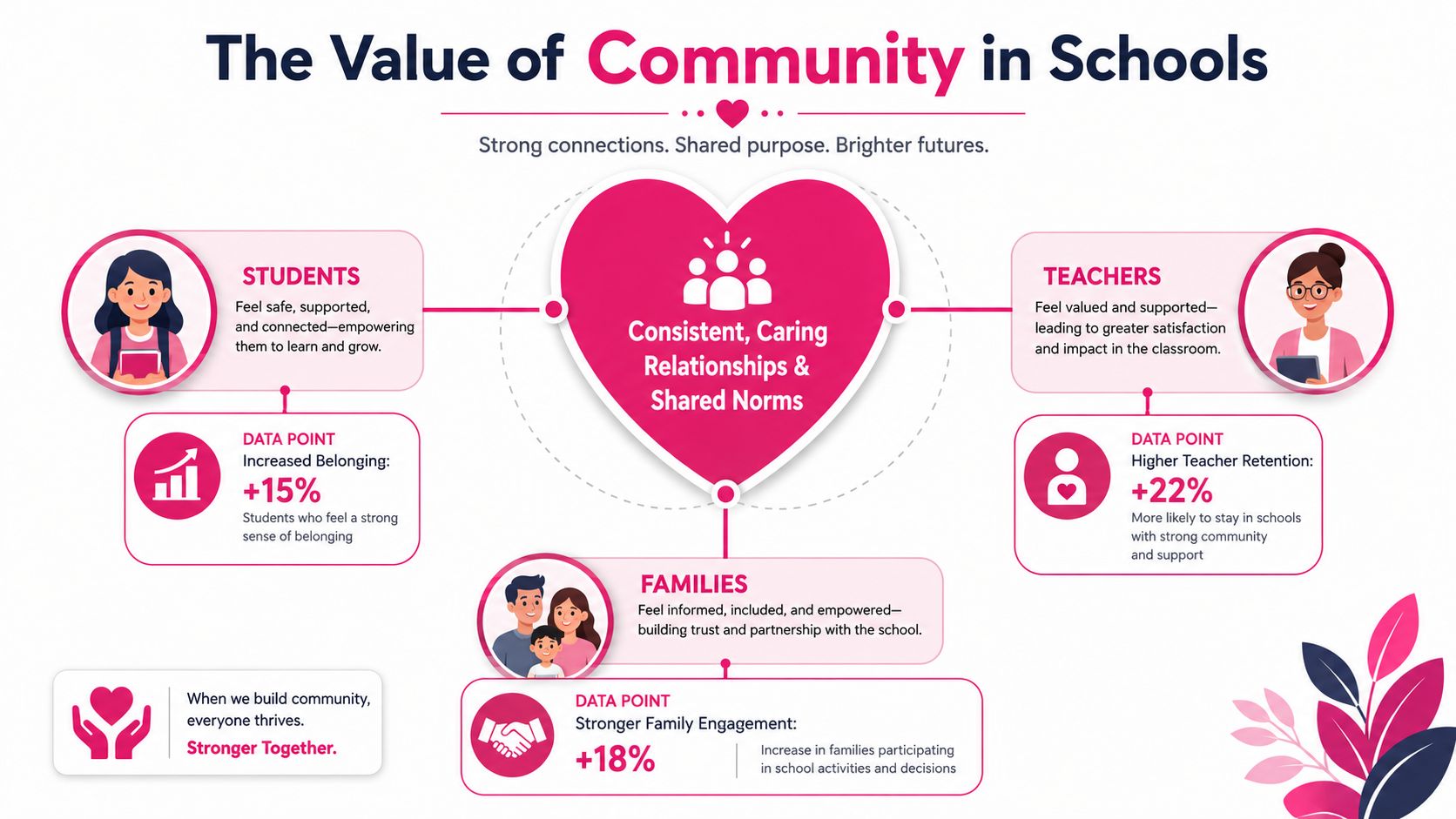
You’re probably here because you’ve seen the same pattern many adults see. A child shuts down after one mistake. Another brushes off every compliment. One student dominates group work to hide insecurity, while another stays quiet because they’ve already decided they’re “not good at it.” In those moments, kids don’t just need encouragement. They need repeated experiences that help them feel capable, valued, and connected.

That’s why self esteem building activities for kids work best when they’re concrete and predictable. Empty praise fades fast. Specific feedback, meaningful roles, and structured reflection stick. They give children evidence they can use the next time they face a challenge, conflict, or disappointment.

This matters for more than feelings. A large Millennium Cohort Study analysis of 6,209 children found that frequent engagement in arts activities such as music, drawing, painting, making things, and reading for enjoyment was positively associated with higher self-esteem at age 11. For teachers and parents, that’s a useful reminder that confidence grows through everyday practice, not a single big talk.

If you’re also thinking about movement-based confidence builders, some families pair SEL routines with activities like martial arts for kids because consistent practice, self-control, and skill mastery can reinforce the same message: “I can learn hard things.”

The ideas below are built as grab-and-go mini lesson plans. Each one includes a simple objective, materials, steps, and ways to adapt for different ages or learning needs. You can use them in a classroom morning meeting, counseling group, after-school program, or at the kitchen table tonight.

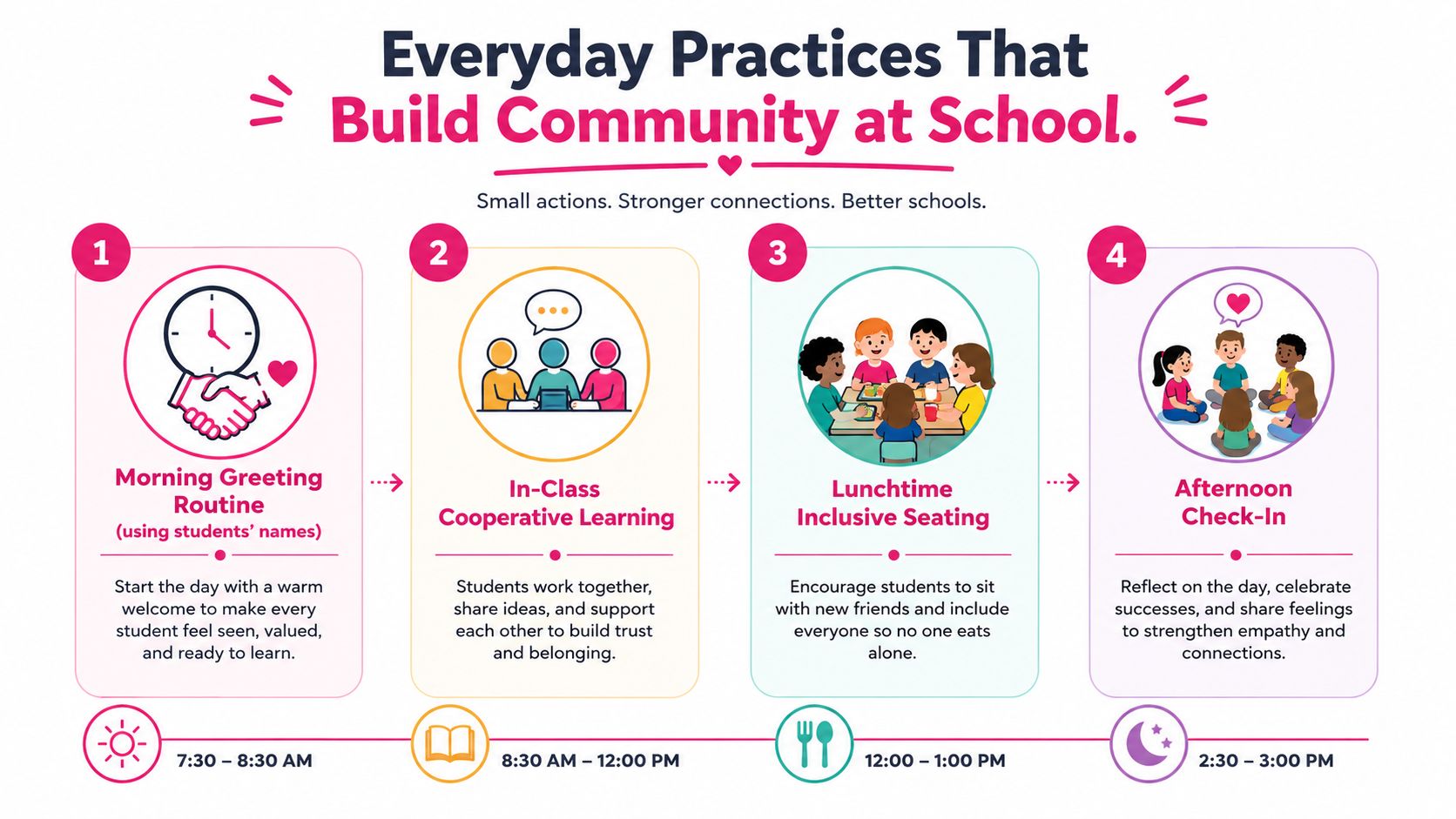
1. Strength-Based Recognition & Positive Behavior Systems

Some children rarely hear what they do well in language that feels believable. “Good job” is kind, but it’s too vague to build sturdy self-esteem. A stronger approach is to name the exact action, habit, or character strength a child showed.

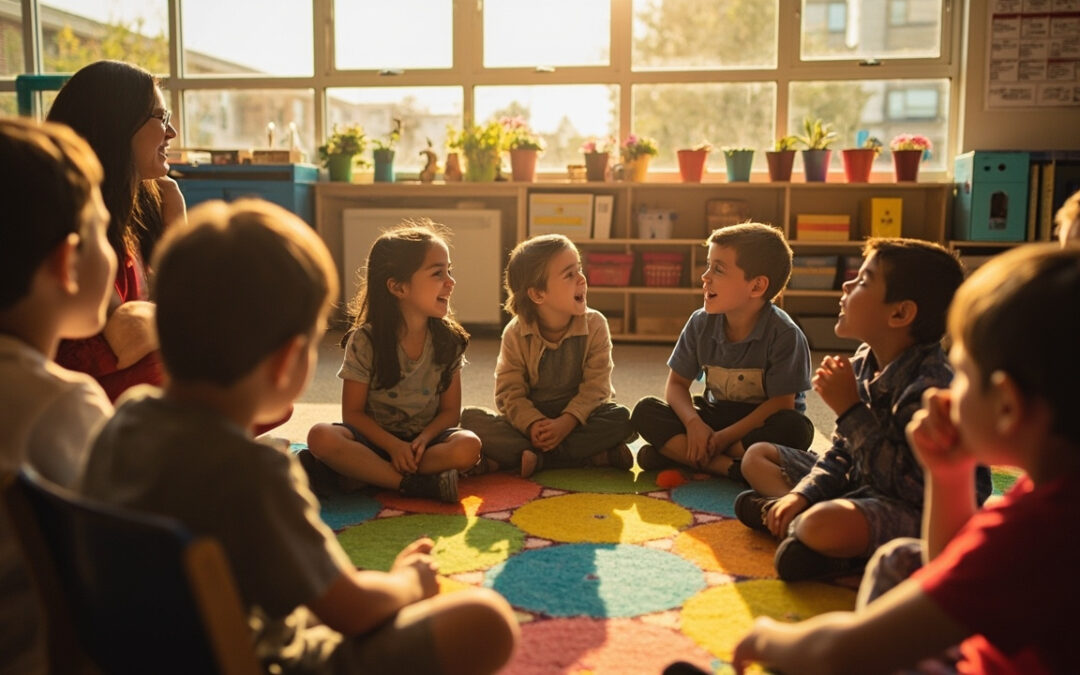
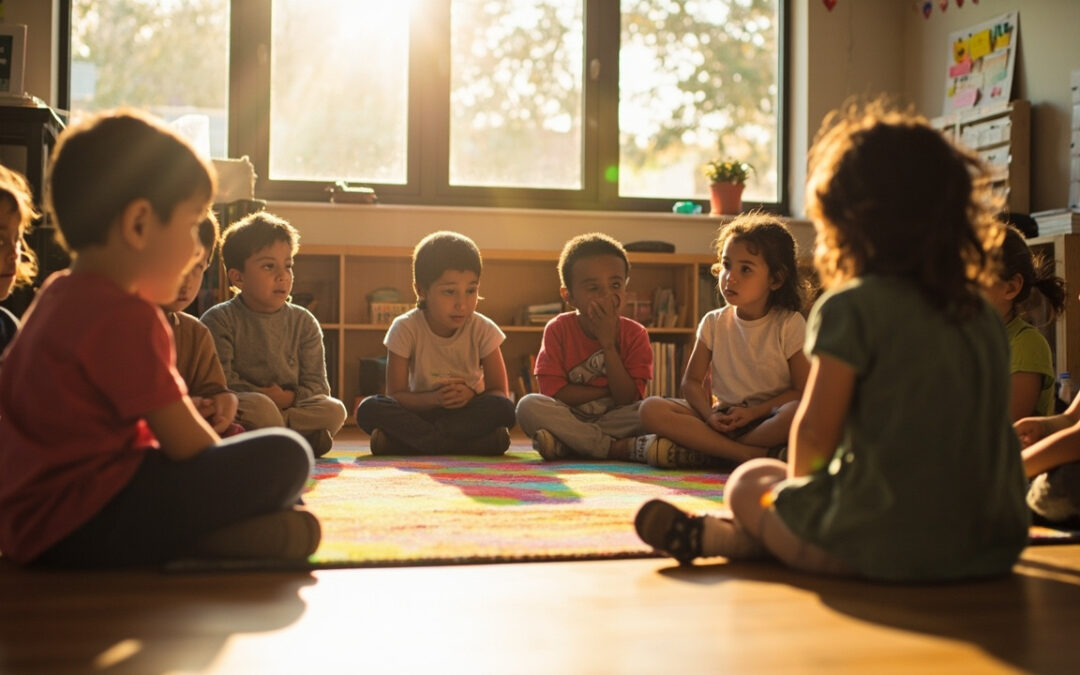
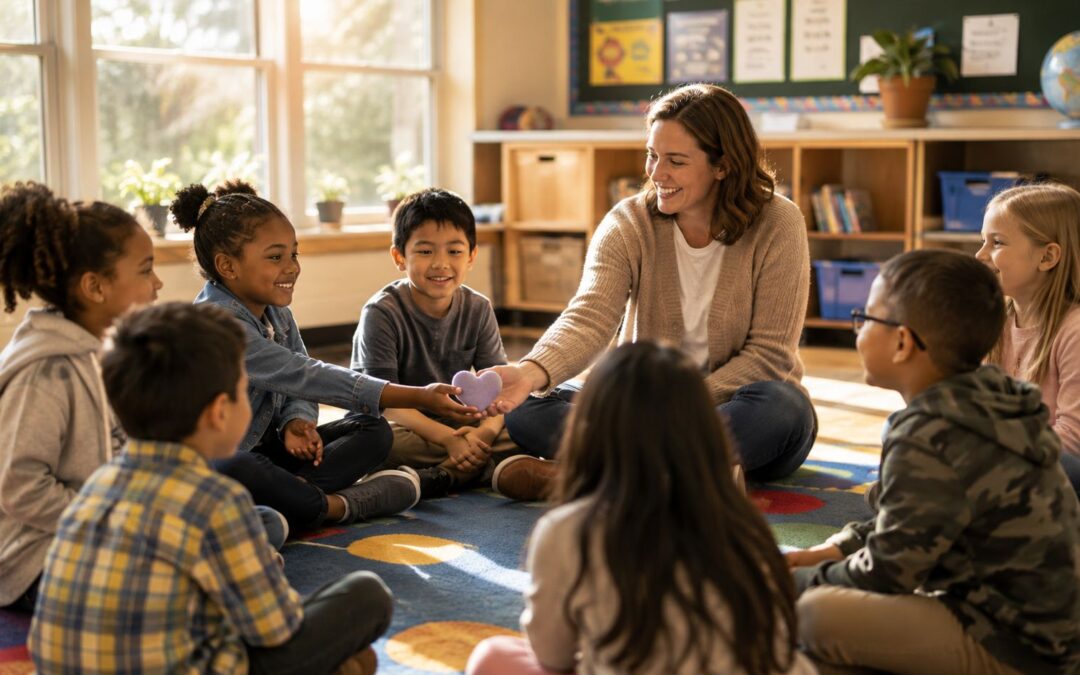
A diverse group of children sitting in a circle during a classroom self-esteem building activity.

A simple recognition circle can do this in ten minutes. Students sit in a circle, and each child names one classmate’s observable strength using a sentence stem like, “I noticed you helped clean up without being asked. That shows responsibility.” Over time, children start to internalize a more accurate picture of themselves.

Mini lesson plan

Objective: Help children connect positive identity with specific actions.

Materials:

  • Sentence stems on chart paper or index cards
  • Sticky notes or small slips of paper
  • A wall space, bulletin board, or digital board for recognition notes
  • Optional token system for classroomwide positive behaviors

Steps:

  • Model first: Give two or three examples aloud. Keep them concrete, such as “I noticed Maya waited for her turn during the game. That shows patience.”
  • Practice together: Invite students to help improve vague praise. Turn “He’s nice” into “He invited me to join the group at recess.”
  • Run the circle: Let each child recognize one peer. Younger children can draw a picture instead of speaking.
  • Save the evidence: Post notes on an appreciation wall or place them in personal folders children can revisit.
  • Close with reflection: Ask, “Which strength was easiest for you to notice today?” and “Which strength do you want to practice tomorrow?”

Real example in school and at home

In a third-grade classroom, a teacher might use this after morning meeting every Friday. In a family setting, one adult can run a mini version at dinner by asking each child to name one helpful thing a sibling did that day.

Recognition systems work best when they’re steady, not flashy. A “caught being kind” card, ClassDojo point for collaboration, or a simple classroom appreciation wall can all support the same habit if adults use specific language consistently. If you want more structure around praise and feedback, Soul Shoppe’s post on positive reinforcement in the classroom offers practical language choices that fit this approach.

Practical rule: Praise the behavior, connect it to a strength, and keep it believable.

Differentiation

  • For younger children: Use pictures for strengths like kindness, courage, and teamwork.
  • For multilingual learners: Offer sentence frames and allow home-language responses.
  • For neurodiverse learners: Provide options for private recognition instead of public speaking.
  • For equity: Track who receives recognition so the same confident children don’t get all the attention.

This is one of the most effective self esteem building activities for kids because it helps children feel seen by a community, not just corrected by it.

2. Growth Mindset Goal-Setting & Progress Tracking

Self-esteem gets stronger when kids can point to progress. That’s especially true for children who think ability is fixed. They need visible proof that effort, strategy, and support move them forward.

A goal wall, reflection journal, or digital portfolio makes growth visible. Instead of asking, “Did I win?” children start asking, “What did I improve?” That shift lowers shame and builds resilience.

Mini lesson plan

Objective: Help children build confidence by tracking effort, strategy, and growth over time.

Materials:

  • Goal sheet or journal page
  • Markers or pencils
  • Sticky dots, mini charts, or portfolio folders
  • Optional Seesaw or Google Classroom portfolio

Steps:

  • Choose one small goal: Keep it narrow. A student might choose “I will read aloud with a clear voice” or “I will solve word problems by underlining key information.”
  • Name the plan: Ask the child to list one strategy they’ll try, one obstacle they might hit, and one person who can help.
  • Track often: Use quick check-ins two or three times a week. Students can color a chart, record a voice note, or write one sentence.
  • Reflect on setbacks: If the plan isn’t working, ask, “What can you try next?” instead of “Why didn’t you do it?”
  • Share evidence: At the end of the cycle, students present one piece of proof that they grew.

Classroom example

A fifth-grade teacher might ask students to set a speaking goal before presentations. One child writes, “I want to look up at the audience three times.” After each practice, the student marks a simple tracker. By presentation day, the child doesn’t need inflated praise. They have evidence.

At home, parents can use the same structure for routines like tying shoes, learning multiplication facts, or entering soccer practice with a calm body. A refrigerator chart works fine. What matters is that children notice change over time.

Language that builds confidence

  • Try this: “You haven’t mastered it yet.”
  • Try this: “What strategy helped most?”
  • Try this: “What did you do differently this time?”
  • Avoid this: “You’re so smart.”
  • Avoid this: “You’re just not a math person.”

Soul Shoppe’s piece on growth mindset in the classroom gives useful language for helping students stay with hard tasks without tying their worth to perfect performance.

Some children need confidence before they’ll try. Others need a successful try before confidence appears. Progress tracking helps both.

Differentiation

  • For K-2: Use picture goals and sticker progress charts.
  • For older students: Add a short reflection prompt such as “What did I learn about myself?”
  • For children who get overwhelmed: Limit goals to one habit for one week.
  • For perfectionists: Celebrate strategy changes, not just results.

This activity teaches a powerful truth. Confidence doesn’t always arrive first. Sometimes it follows repeated effort.

3. Collaborative Community Service Projects

Kids often feel better about themselves when they experience themselves as helpful. Service gives children a direct answer to the question, “Do I matter here?” When they can see that their actions improve something for someone else, self-esteem becomes grounded in contribution.

This is one reason service projects work so well in schools and youth programs. They combine teamwork, responsibility, and visible impact. Even small projects can change how a child sees their role in a community.

Mini lesson plan

Objective: Build self-worth through shared responsibility and meaningful contribution.

Materials:

  • Chart paper for brainstorming
  • Basic project supplies based on the service idea
  • Reflection sheets or journals
  • Camera or display board for documenting the project

Steps:

  • Start with need-finding: Ask, “What does our school or neighborhood need more of?” Let students brainstorm real problems.
  • Choose one manageable project: Options include a school garden, campus cleanup, peer reading buddies, thank-you cards for support staff, or a donation drive.
  • Assign roles: Give every child a specific job. Photographer, organizer, greeter, sorter, waterer, announcer, and recorder all count.
  • Do the work: Keep sessions short and regular so the project feels doable.
  • Reflect after each session: Ask, “How did we help?” and “What did you contribute today?”

Real examples

A kindergarten class can maintain one raised garden bed and take turns watering, weeding, and observing growth. A middle school advisory can partner with a younger grade for buddy reading once a week. A family can organize a neighborhood litter walk and let children create the route and supply list.

Research on the Boys & Girls Clubs of America’s “True to Me” program reported lasting benefits for participants. Three years after participation, 60% of girls showed significantly improved body confidence, 78% felt more confident and capable at school, 71% reported better peer relationships, and 53% had improved family relationships. That reinforces an important point for adults. Structured experiences that help kids see themselves positively can support both confidence and relationships over time.

Differentiation

  • For younger children: Keep projects concrete and visible, like planting flowers or making welcome cards.
  • For older children: Add student leadership in planning and communication.
  • For children with language or processing differences: Offer visual job cards and hands-on roles.
  • For hesitant children: Pair them with a buddy and assign one clear task first.

Contribution is often more stabilizing than praise. A child who thinks, “I helped,” is building a stronger identity than a child who only hears, “You’re great.”

Service belongs on any strong list of self esteem building activities for kids because it moves confidence out of the abstract and into action.

4. Mindfulness & Self-Regulation Practice

A child spills paint, freezes, and then whispers, “I’m bad at everything.” That moment is not just about paint. It is about what the child believes the mistake means.

Mindfulness and self-regulation practice help children separate a hard moment from their identity. When a child learns how to slow breathing, notice body signals, or reset after frustration, they get evidence that they can handle discomfort. Self-esteem grows from that evidence. It grows when a child can say, “I got upset, and I knew what to do next.”

A young child practicing mindfulness with a plush toy while lying on a mat with an adult.

Regulation works like a reset button for the nervous system. The goal is not a perfectly calm child. The goal is a child who starts to recognize, “My heart is racing. My shoulders are tight. I can use a strategy.” That shift matters because children often mistake dysregulation for failure. A simple routine teaches them to read it as a skill-building moment instead.

Mini lesson plan

Objective: Help children build confidence by practicing one calm-body strategy they can use during everyday stress.

Materials:

  • Stuffed animal or beanbag for breathing-buddy practice
  • Soft mat or carpet spot
  • Visual breathing card or calm-down poster
  • Optional timer or guided audio

Steps:

  • Name the skill clearly: Say, “Today we are practicing how to help our bodies settle.” Keep the focus on skill, not behavior control.
  • Teach one strategy only: Start with belly breathing, hand tracing, or a 5-4-3-2-1 grounding routine. One tool at a time helps children remember what to do.
  • Model it where children can see it: Breathe slowly, relax your shoulders, and narrate what you notice. For example, “My breath is getting slower now.”
  • Practice during neutral moments: Introduce the routine at morning meeting, after lunch, or before independent work. Children learn best before they are overwhelmed.
  • Use it in predictable stress points: Repeat the same strategy before tests, transitions, presentations, or re-entry after recess. Repetition turns the strategy into a habit.
  • Reflect in one minute or less: Ask, “What did you notice in your body?” or “When might this help you later today?”

Two easy examples

For early elementary, give each child a stuffed animal to place on their belly while they lie on the floor. Ask them to watch it rise and fall for five slow breaths. That visual cue makes an invisible skill easier to understand.

For older students, teach a 30-second grounding routine before presentations. Feet on floor. One slow inhale. One long exhale. Then ask them to notice five things they can see. Quick routines often work better with older children because they feel private and practical.

If you want a larger bank of classroom-ready tools, Soul Shoppe’s guide to self-regulation strategies for students fits well with this kind of daily practice.

What to say when a child struggles

The language adults use matters. A child in distress often borrows the adult’s words before they can form their own.

  • Say: “Your body is having a hard time. Let’s help it.”
  • Say: “You’re learning a skill.”
  • Say: “Wandering thoughts are normal. Come back to your breath.”
  • Avoid: “Calm down.”
  • Avoid: “You know better.”

A short guided example can help adults picture the pace and tone children usually respond to best:

Differentiation

  • For movement-seeking children: Use wall pushes, chair yoga, marching in place, or stretching instead of stillness alone.
  • For sensory-sensitive children: Offer quiet choices and let them keep eyes open or sit farther from the group.
  • For multilingual learners: Pair spoken prompts with gestures, picture cues, and repeated routine language.
  • For children affected by stress or unpredictability: Keep the sequence simple and consistent. Gentle invitations work better than pressure.

Children do not build self-esteem by staying regulated all day. They build it by learning that they can return to steady, one practice at a time.

5. Student Leadership & Peer Mentoring Programs

One of the fastest ways to change a child’s self-image is to give them a real job that matters to other people. Leadership roles tell students, “We trust you.” Peer mentoring adds another powerful message: “You have something to offer.”

These roles don’t need to be big or formal. A buddy reader, recess game leader, new-student ambassador, or classroom tech helper can all strengthen confidence when the role is clear and supported.

Mini lesson plan

Objective: Build self-esteem through responsibility, service, and trusted leadership.

Materials:

  • Role cards or job descriptions
  • Simple scripts for mentors or helpers
  • Reflection sheet
  • Badge, clipboard, or other role marker if helpful

Steps:

  • Choose roles intentionally: Match students to roles based on strengths and readiness, not popularity.
  • Teach the role: Show exactly what the job looks like. Practice with scripts and role-play.
  • Start small: Keep leadership windows short at first so students experience success.
  • Provide support: Check in after each session and troubleshoot without shame.
  • Reflect on impact: Ask, “How did your role help someone today?”

Examples that work

A fourth grader can greet a new student each morning for the first week and walk them through lunch and recess routines. A middle school student can serve on a peer mediation team with adult coaching. A first grader can be the line leader who checks that everyone has a partner before leaving the room.

Leadership also helps adults notice strengths that traditional academics don’t always reveal. The quiet child may be an excellent welcome buddy. The energetic child may shine when leading movement breaks. The student who struggles with written work may be wonderful at helping younger children organize materials.

Give children roles that let them be useful, not just visible.

Differentiation

  • For younger students: Use concrete classroom jobs with visual reminders.
  • For older students: Add peer mentoring, conflict support, or event planning.
  • For shy students: Offer leadership that happens in pairs or behind the scenes.
  • For students who’ve struggled behaviorally: Start with one highly supported responsibility that lets them rebuild trust.

This category of self esteem building activities for kids is especially powerful for children who’ve been defined by what they do wrong. A meaningful role gives them a different story to live into.

6. Strengths-Finder Activities & Personal Brand Exploration

Some children can list their mistakes in seconds but freeze when asked what they’re good at. Strengths work helps them build a vocabulary for who they are at their best. That kind of language supports more authentic self-esteem than generic compliments ever could.

You don’t need a formal assessment to do this well. Tools like CliftonStrengths or VIA Character Strengths can be useful with older students, but an informal inventory works too. Ask children what feels easy, what others come to them for, and when they feel proud of how they handled something.

Mini lesson plan

Objective: Help children identify personal strengths and use them in real settings.

Materials:

  • Strengths list with child-friendly language
  • Reflection sheet or “strengths shield” template
  • Markers, magazines, or collage materials
  • Optional student conference folder

Steps:

  • Introduce strengths language: Offer words like brave, curious, organized, caring, creative, fair, persistent, and thoughtful.
  • Invite self-reflection: Ask children to choose three strengths that fit them and write or draw examples.
  • Add outside feedback: Peers, teachers, or family members contribute one strength they see.
  • Apply the strengths: Ask, “Where can you use this in school, at home, or with friends?”
  • Create a strengths product: Students make a shield, poster, slide, or short speech about their strengths.

Real examples

A second grader might identify “helpful,” “creative,” and “careful,” then show those through helping a classmate zip a coat, inventing a game at recess, and checking plant pots in the class garden. A seventh grader might choose “fair,” “determined,” and “good listener,” then connect those to student council, sports practice, or sibling conflicts at home.

This works best when adults revisit strengths during ordinary moments. If a child says, “I’m bad at school,” you can answer with something more grounded: “You stayed with that problem even when it got frustrating. Persistence is one of your strengths.”

Differentiation

  • For K-2: Use picture cards and role-play examples of each strength.
  • For grades 3-8: Add written reflection and application to group roles.
  • For children with expressive language challenges: Let them sort cards, point, or use photos.
  • For families: Create a “family strengths board” where each person adds examples over time.

The reason this belongs on a practical list is simple. Children need language for their identity, not just language for their mistakes.

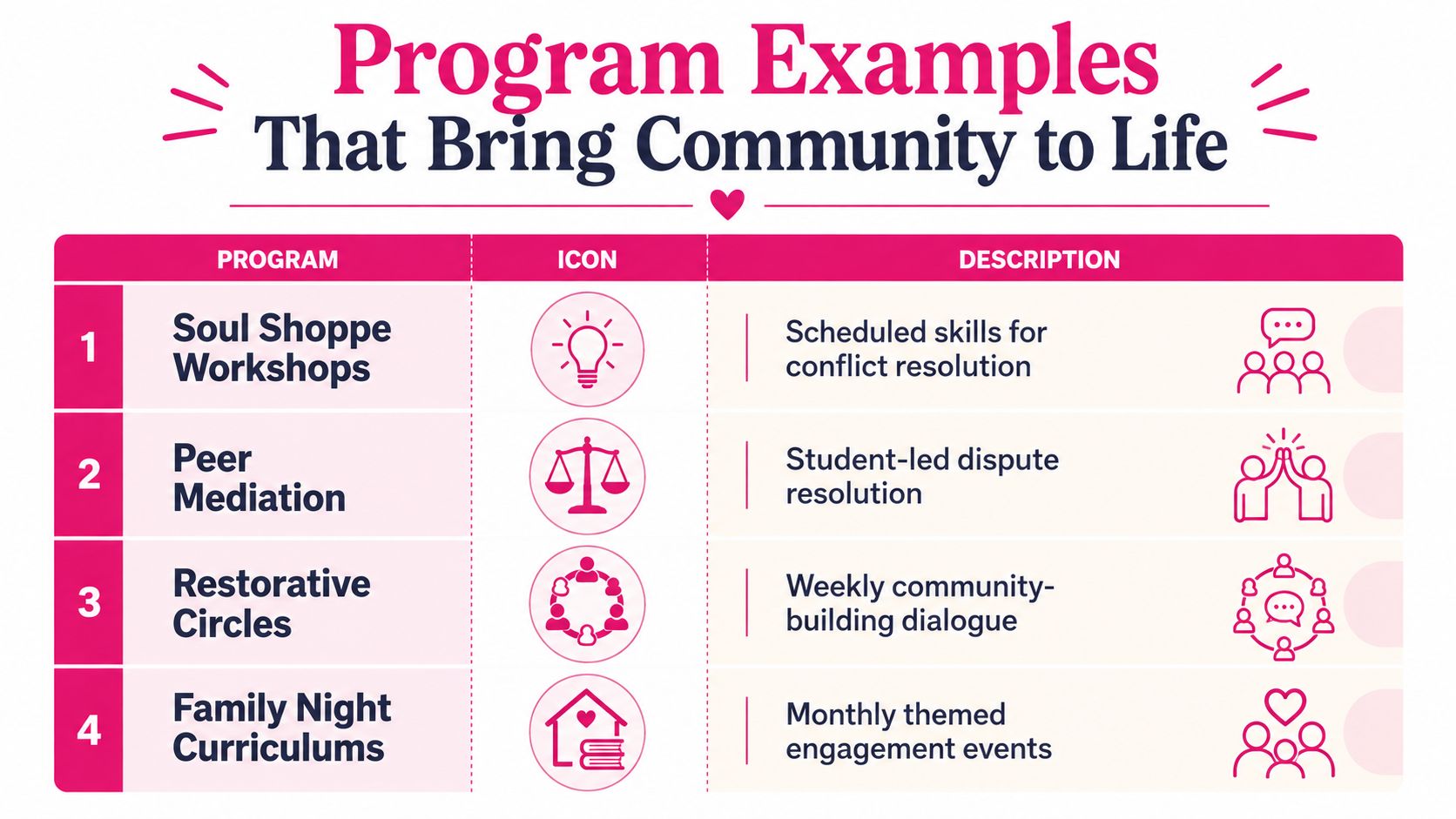
7. Restorative Practices & Accountability-Through-Connection Models

A child’s self-esteem can drop quickly when discipline focuses only on what they did wrong. That doesn’t mean children shouldn’t be held accountable. It means accountability should preserve dignity while helping them repair harm.

Restorative practices do that by asking students to face impact, hear others, and make things right. Instead of a shame-based message of “You are the problem,” the child hears, “Your choices had an impact, and you can help repair it.”

Mini lesson plan

Objective: Build self-respect and empathy by teaching children how to repair harm without losing belonging.

Materials:

  • Restorative question cards
  • Talking piece for circles
  • Reflection sheet
  • Repair plan template

Steps:

  • Teach in calm moments: Introduce restorative questions before conflicts happen.
  • Use a simple script: Ask, “What happened?” “Who was affected?” “What do you need now?” and “How can we repair this?”
  • Hold a brief circle or conference: Keep the tone calm, specific, and forward-looking.
  • Make a repair plan: Include one action, one timeline, and one follow-up check.
  • Reconnect the student: End with a clear message that they still belong in the community.

Example scenario

Two students argue during group work. One grabs materials and calls the other “useless.” A punitive response might remove the student from class and stop there. A restorative response still addresses the harm, but it also guides the student to hear the impact, apologize in a meaningful way, and help rebuild trust in the group.

Soul Shoppe’s article on restorative practices in education offers a useful foundation for adults who want sentence stems and routines they can use consistently.

The broader context matters too. Interest in structured social-emotional learning has grown quickly. According to Fortune Business Insights, the global social and emotional learning market reached USD 2.71 billion in 2026 and is projected to reach USD 15.67 billion by 2034, with a CAGR of 24.50%. Schools are looking for approaches that can be used consistently across classrooms, not just in isolated lessons. Restorative routines fit that need because they can become part of daily school culture.

Repair builds stronger self-esteem than punishment alone because it teaches, “I can make this right.”

Differentiation

  • For younger children: Use puppets, visuals, and one-sentence repair plans.
  • For older students: Add written reflection before the conference.
  • For students who shut down: Offer drawing, private writing, or a shorter one-on-one conversation first.
  • For classrooms: Use proactive circles regularly so the process feels familiar before conflict happens.

Restorative practice belongs on any serious list of self esteem building activities for kids because children need to know they can make mistakes, take responsibility, and still remain worthy of connection.

7-Point Comparison: Self-Esteem Activities for Kids

Program Implementation complexity Resource requirements Expected outcomes Ideal use cases Key advantages
Strength-Based Recognition & Positive Behavior Systems Low–moderate: set routines and facilitation skills required Minimal cost; simple tracking tools and staff training Greater belonging, confidence, and documented positive feedback Whole-school culture building; daily classroom routines Scalable, peer-and-adult recognition, visible reinforcement
Growth Mindset Goal-Setting & Progress Tracking Moderate: ongoing coaching, reflection cycles Time for goal-setting, visual trackers or digital portfolios Increased self-efficacy, resilience, intrinsic motivation Academic growth, student-led learning, conferences Builds metacognition, ownership, long-term mindset shifts
Collaborative Community Service Projects Moderate–high: planning, coordination, logistics Staff time, community partnerships, possible transportation/materials Sense of purpose, leadership, civic responsibility, visible impact Service-learning, cross-grade projects, real-world impact Tangible contributions, teamwork, alternative success pathways
Mindfulness & Self-Regulation Practice Low: short, repeatable routines integrated into day Minimal materials; facilitator training for fidelity Improved emotional regulation, focus, and coping skills Managing transitions, anxiety reduction, classroom readiness Low-cost, immediate in-the-moment tools, adaptable modalities
Student Leadership & Peer Mentoring Programs Moderate: structured training and ongoing supervision Adult supervision, training time, clear role descriptions Increased confidence, communication skills, peer support Peer support systems, leadership development, transition support Meaningful responsibility, skill development, peer-led support
Strengths-Finder Activities & Personal Brand Exploration Moderate: assessment administration plus facilitated application Assessment tools (some paid), facilitator time for debriefs Greater self-awareness, durable self-esteem, better role fit Career exploration, student-led conferences, role matching Asset-based identity building, strengths language, future planning
Restorative Practices & Accountability-Through-Connection Models High: cultural shift, skilled facilitation, time-intensive Significant training, facilitator expertise, time for circles Restored relationships, reduced exclusions, stronger school climate Conflict repair, discipline reform, community healing Preserves dignity, builds empathy, lowers repeat incidents

Creating a Culture of Worth and Belonging

A child walks into class after a rough morning, misses two problems, snaps at a classmate, and decides, “I’m bad at this.” Another child has the same kind of morning but hears, “You’re having a hard moment. Let’s use your plan, repair the problem, and keep going.” The difference is not luck. It is the culture around the child.

That culture teaches self-esteem every day. Children build a steady sense of worth when adults notice specific strengths, make growth visible, give them meaningful ways to contribute, teach calming routines, offer real responsibility, and treat mistakes as something to repair rather than an identity label. Self-esteem works like a house frame. Single activities can help, but daily routines are what hold everything up.

Consistency matters more than intensity. One compliment poster or one confidence lesson may feel nice in the moment, but it rarely changes a child’s self-story by itself. What helps is a pattern the child can count on. A Monday goal check-in, a two-minute breathing reset before a test, a Friday recognition circle, or a familiar repair conversation after conflict gives children repeated proof that they are capable, valued, and still included when things go wrong.

For educators, the most useful question is simple: where can belonging live inside the schedule you already have? That shift matters. Busy teachers do not need seven more things to plan from scratch. They need grab-and-go structures they can place into morning meeting, independent work, transitions, recess, advisory, or closing circle.

Each activity in this list works best as a mini-lesson plan. Start with a clear objective. Choose a few basic materials. Teach the steps. Then adjust for the children in front of you. For example, recognition can happen with sentence stems for younger students and peer nominations for older ones. Goal tracking can use stickers, checklists, or reflection journals. Restorative questions can be spoken aloud, drawn, or practiced with role-play cards.

Parents can use the same approach at home on a smaller scale. You do not need to recreate a classroom. Pick one routine that matches your child’s current need and repeat it long enough for it to feel familiar. A weekly family appreciation round, a homework calm-down plan, a simple progress chart on the fridge, or a short sibling repair script after conflict can do a great deal because children learn from what happens again and again.

Keep expectations realistic.

Healthy self-esteem does not mean a child feels confident all the time. It means the child begins to believe, “I can handle hard feelings. I can improve. I can ask for help. I can make things right.” That belief is quieter than constant confidence, but it lasts longer.

For this reason, experiential activities matter so much. Children usually do not build self-worth from speeches. They build it from lived evidence. They breathe through frustration and notice their body settle. They help a younger peer and see that they have something to offer. They hear a classmate name a strength and realize others notice their effort. They track progress across days or weeks and learn that change is possible.

If you are deciding where to begin, match the activity to the problem you see most often. If children compare themselves harshly, start with strength-based recognition. If they give up quickly, use growth mindset goals and visible progress tracking. If the room feels disconnected, try service projects or peer leadership. If conflict keeps damaging relationships, start with restorative routines that teach accountability and return.

The goal is bigger than a single lesson. You are building a place where children feel seen clearly, challenged kindly, and welcomed back after mistakes. Once that happens, the activities above stop feeling like extras. They become part of how children learn who they are.

Essential Social Emotional Learning Tools for K-8

Essential Social Emotional Learning Tools for K-8

It’s 9:12 a.m. A third grader is under a table because recess ended badly. Two students are arguing over who “started it.” One child is staring at a math page and hasn’t written a thing. The teacher is trying to move the lesson forward while also protecting the room’s emotional temperature.

Most K-8 educators know this moment. So do principals. So do parents at 6:30 p.m. when homework ends in tears over something that looks small on the surface but isn’t small to the child living it.

That’s where social emotional learning tools matter. Not as an extra program you squeeze in if time allows, but as the practical supports that help kids name feelings, manage impulses, repair harm, ask for help, and stay connected enough to learn. If you want calmer classrooms, fewer repeat conflicts, stronger student relationships, and better carryover between school and home, the tools you choose matter.

Why Social Emotional Learning Tools Are No Longer Optional

A lot of schools are trying to solve behavior, engagement, attendance, and belonging as if they’re separate problems. In practice, they overlap all day long.

A student who can’t identify frustration may shut down during writing. A child who doesn’t know how to re-enter play after conflict may spend the rest of recess isolated. A class with no shared language for feelings often swings between disruption and silence. Teachers then spend huge amounts of energy reacting instead of teaching.

That’s why social emotional learning tools are no longer nice-to-have materials. They’re the routines, prompts, assessments, discussion structures, visual supports, and family practices that help adults respond early, consistently, and with less guesswork.

Schools are treating SEL as core infrastructure

This isn’t a passing trend. The global SEL market was valued at approximately USD 5.3 billion in 2025 and is projected to reach USD 47.1 billion by 2035, a projected 24.3% CAGR, according to Future Market Insights’ SEL market report. That growth signals something educators already feel on the ground. Schools are investing because they need systems that support the whole child.

The important shift is this. SEL isn’t only about a weekly lesson on kindness. It’s about building a school ecosystem where students practice self-awareness before conflict escalates, use communication tools during conflict, and reflect afterward in a way that teaches a new skill.

Practical rule: If a tool only works during a scripted lesson but disappears during transitions, lunch, recess, or homework, it isn’t enough.

What leaders and teachers need now

New principals often ask, “Where do we even start?” Teachers ask, “Do I need a curriculum, an app, or just better routines?” Parents ask, “How do I support this at home without turning dinner into therapy?”

Those are the right questions.

A useful starting point is understanding the broader benefits of social emotional learning, then getting very concrete about which tools belong in classrooms, which belong in leadership systems, and which belong in family routines.

The schools that make progress usually do three things well:

  • Choose tools on purpose that match student needs and staff capacity.
  • Implement them consistently across classrooms and home communication.
  • Measure what changes so SEL stays tied to real outcomes, not wishful thinking.

Understanding Your SEL Toolkit

Think of SEL like a carpenter’s toolbox. You wouldn’t use one screwdriver for every repair in a building. In the same way, schools shouldn’t expect one app or one lesson series to carry the full emotional life of a campus.

A strong SEL toolkit includes different kinds of supports for different jobs. Some tools help students identify feelings. Others help them calm their bodies, repair peer conflict, or bring families into the same language.

Research on evidence-based elementary SEL programs gives us a helpful blueprint. Analysis found that components like identifying others’ feelings (100% of programs), identifying one’s own feelings (92.3%), and behavioral coping skills (91.7%) are foundational, as described in this systematic analysis of elementary SEL programs. That matters because it tells us what effective social emotional learning tools should teach.

A diagram illustrating Social Emotional Learning tools categorized into awareness, management, relationship, and decision-making toolsets.

Four kinds of tools most schools need

Some educators hear “SEL tools” and think only of digital platforms. That’s too narrow. The toolkit is broader.

Digital apps and platforms

These tools help with check-ins, reflection, student self-assessment, mood tracking, or guided regulation.

A classroom example: a fifth grade teacher starts the day with a digital feelings check-in. Students select a feeling word and a readiness level before math. The teacher notices three students flagging frustration and pulls them for a quick preview before independent work starts.

At home, a parent might use a simple app-based mood check after school and ask, “Was that feeling about work, friendship, or energy?”

Digital tools are useful when you need:

  • Quick visibility into how students are doing
  • Consistent data collection across classrooms
  • Easy access for students, staff, and sometimes families

They’re less useful when staff haven’t built routines around what happens after the data comes in.

Formal curricula and programs

These are structured lesson sequences, often aligned to CASEL competencies, that teach skills such as empathy, self-regulation, listening, conflict resolution, and decision-making.

Example: a second grade class practices role-play around joining a game at recess. Students rehearse language like, “Can I join?” and “What role can I take?” That sounds simple, but for many children, direct practice changes what happens outside.

Programs work well when schools need:

  • A common scope and sequence
  • Shared staff language
  • Consistent instruction across grade levels

If your team is comparing options, these social emotional learning resources can help clarify what belongs in a complete support system.

Classroom routines and practices

This category gets overlooked, even though it’s where SEL often becomes real. Morning meetings, calm corners, partner shares, repair circles, breathing routines, and transition scripts all count.

A kindergarten peace corner might include:

  • Feelings visuals so students can point before they have the words
  • Breathing prompts for body regulation
  • A reflection card with “What happened?” and “What do I need?”

A middle school advisory routine might open with, “What’s one challenge you handled well this week?” That builds reflection without forcing disclosure.

A tool becomes powerful when students can use it independently, not only when an adult prompts it.

Family engagement practices

If school and home use completely different language, students often don’t transfer skills well. Family engagement tools close that gap.

Examples include:

  • Dinner table prompts like “When did you feel included today?”
  • Take-home conflict scripts such as “I felt __ when __. Next time I need __.”
  • Brief family workshops where caregivers try the same calming routine students use at school

A fourth grader who learns “pause, breathe, say what you need” in class can use the same sequence before a sibling conflict at home if adults reinforce it.

Comparing Categories of Social Emotional Learning Tools

Tool Type Primary Use Case Pros Cons
Digital Apps and Platforms Check-ins, tracking, reflection, screening Easy to scale, fast data access, useful across classrooms Can become passive if staff don’t respond to results
Formal Curricula and Programs Direct skill instruction Clear sequence, shared language, supports staff consistency Takes planning time and staff training
Classroom Routines and Practices Daily regulation and relationship support Low cost, immediate impact, easy to embed into the day Quality depends on adult consistency
Family Engagement Practices Home-school carryover Extends SEL beyond campus, helps parents reinforce skills Needs simple communication and family-friendly design

A simple way to think about fit

If your biggest issue is constant peer conflict, don’t buy only a dashboard. If your staff lacks shared language, routines alone may not be enough. If families feel disconnected, a strong classroom plan still won’t travel home by itself.

Most schools need a mix. The goal isn’t to collect tools. It’s to build a system where each tool has a job.

How to Choose the Right SEL Tools for Your School

The wrong way to choose SEL tools is to start with the flashiest demo.

The better way is to start with your school’s friction points. Where are students getting stuck? Where are adults losing time? Which moments feel predictable in the worst way?

A principal might say, “Our classrooms are calm during lessons, but lunch and recess keep unraveling the day.” That school may need conflict-resolution routines, adult supervision scripts, and student practice with peer repair. Another school may say, “Our students can talk about feelings, but they fall apart during academic frustration.” That points more toward self-management tools and coping routines.

Match the tool to the problem

Before you purchase anything, name the problem in plain language.

Try prompts like these with your team:

  • Where do students struggle most? During transitions, partner work, unstructured time, or independent tasks?
  • What do students need more of? Emotion vocabulary, impulse control, empathy, conflict repair, or help-seeking?
  • What do adults need more of? Shared language, usable routines, clearer data, or family communication supports?

A practical example: if fourth graders keep escalating minor social misunderstandings into office referrals, a weekly empathy lesson alone probably won’t solve it. They may need sentence stems for disagreement, brief restorative routines after conflict, and adult coaching in the moment.

Developmental fit matters

Not every tool works for every age. A first grader needs concrete language, visuals, and repeated modeling. An eighth grader usually needs more privacy, more autonomy, and less “performing feelings” in front of peers.

Look for signs of developmental fit:

  • K-2 tools should be visual, repetitive, embodied, and brief.
  • Grades 3-5 tools should blend direct teaching with reflection and practice.
  • Grades 6-8 tools should respect dignity, choice, and social complexity.

For instance, a feelings chart works in first grade because it helps children locate emotion quickly. In middle school, a private reflection form or advisory prompt may work better because students don’t want to announce vulnerability publicly.

Capacity beats ambition

A school can buy a strong program and still fail if staff can’t use it consistently.

Ask hard questions early:

  • How much training does this require?
  • Can teachers use it inside a normal school day?
  • Will counselors, recess staff, and classroom teachers all understand it the same way?
  • Does it create one more initiative, or does it simplify what adults already do?

If your staff is stretched thin, low-burden options may be wiser. The Wallace Foundation has highlighted low-cost, low-burden SEL “kernels” as flexible strategies for specific behaviors, which is why schools under pressure should consider routines and short practices, not just full programs.

Equity cannot be an afterthought

Many schools make a costly mistake by choosing tools that appear neutral but don’t reflect students’ lived experience, community context, or the ways bias shapes behavior interpretation.

Black SEL raises an important challenge to standard programs. It argues that many mainstream approaches overlook systemic issues and cultural context, making culturally affirming approaches necessary for Black and marginalized students. That perspective is described on the Black SEL about page.

What does that mean in practice?

It means asking:

  • Whose communication style does this tool assume is “appropriate”?
  • Do examples, stories, and role-plays reflect our students and families?
  • Does the tool build belonging, or does it reward compliance without context?

A school serving diverse communities might adapt scenarios so students discuss real peer dynamics they recognize, not generic workbook conflicts. Family nights might include multilingual materials and examples that reflect actual home routines.

If students don’t see themselves in the tool, adults often misread resistance as lack of skill.

Don’t ignore low-cost options

A tight budget doesn’t mean you can’t do strong SEL work. Many high-impact practices are routines, scripts, and habits.

A school with limited funds might start with:

  • Daily check-in circles
  • Calm-down menus in every room
  • Peer conflict scripts posted at student eye level
  • Weekly family conversation prompts
  • Brief advisory lessons using existing staff

If you want classroom-ready ideas to pair with a broader plan, Kuraplan’s roundup of social emotional learning activities offers practical examples educators can adapt.

One example from the field: some schools use a conflict pathway tool so students can talk through what happened, how each person feels, and what repair looks like. Soul Shoppe offers a Peace Path with Tutorial that fits that kind of practical, skill-based conflict resolution approach.

A procurement checklist leaders can actually use

Bring this checklist into vendor meetings or planning sessions.

  • Problem fit
    Does this tool solve a problem we’ve clearly named?

  • Age fit
    Will our students use it, from primary grades through middle school where applicable?

  • Cultural fit
    Does it reflect our students’ identities, experiences, and community realities?

  • Staff fit
    Can teachers, counselors, and support staff use it without heavy overload?

  • Family fit
    Is there a simple way for caregivers to reinforce the same language at home?

  • Measurement fit
    Can we tell whether it’s helping through observations, assessments, or behavior patterns?

  • Sustainability
    Will this still work after the launch excitement fades?

Schools rarely need the most complicated option. They need the clearest one.

If your team is choosing among full-school approaches, this guide to SEL programs for schools can help frame the decision around implementation reality, not just features.

A Guide to Implementing SEL Tools School-Wide

The best SEL tool can still fail in a school that launches too fast, trains too little, or treats implementation like a one-time event.

School-wide SEL works when adults share a common approach, students experience it in predictable ways, and families hear language that matches what happens in classrooms.

A professional team of educators sitting around a conference table discussing a social emotional learning implementation plan.

Research gives leaders one more reason to stay committed. A thorough synthesis of SEL research found that students participating in SEL programs achieved an average 11 percentage point gain in academic performance compared with peers, as summarized in this SEL research synthesis article. For principals trying to balance behavior support with instructional goals, that matters.

Start with a small leadership team

Don’t put implementation on one counselor and hope for the best.

Build a team that includes:

  • An administrator who can align decisions and remove barriers
  • Classroom teachers from different grade bands
  • Student support staff such as counselors or psychologists
  • A family-facing voice such as a parent liaison or community coordinator

This group should answer practical questions. Where will SEL happen daily? Which routines are essential? What language will adults use during conflict? How will families hear about it?

A good launch feels organized, not crowded.

Train adults on use, not just philosophy

Teachers don’t need another abstract lecture on why emotions matter. They need language, modeling, and repetition.

Useful staff training sounds like this:

  • What do I say when two students interrupt each other in conflict?
  • How do I run a two-minute reset without losing the lesson?
  • What should a calm corner include?
  • How do I respond when a student refuses the SEL routine?

Practice the routine exactly as students will experience it. If the tool is a check-in, teachers should do the check-in. If the tool is a repair conversation, staff should role-play the script.

Adults need the same thing students need. Clear language, repeated practice, and a low-stakes chance to get it wrong before the real moment arrives.

Pilot before going school-wide

A pilot gives your school room to learn. Choose a grade span, a few classrooms, or one common setting like advisory or morning meeting.

During the pilot, watch for:

  • What students use independently
  • Which routines teachers can sustain
  • Where confusion shows up
  • What families understand right away and what needs translation into simpler language

For example, a pilot in grades 2 and 5 might reveal that younger students use feelings visuals easily, while older students respond better to journal prompts and partner processing.

That kind of feedback saves schools from rolling out something polished on paper but clumsy in real life.

Build SEL into the existing day

SEL works best when it’s embedded where students already are.

Try structures like these:

In classrooms

A teacher opens class with a one-minute emotional weather report. Students show “sunny,” “cloudy,” or “stormy” with fingers or cards. The teacher doesn’t turn it into a full discussion every time. The point is awareness.

During reading, students pause and ask, “What might this character be feeling, and what clues tell us that?” That turns literacy into empathy practice.

During conflict

A recess aide uses a short script:

  1. What happened?
  2. What were you feeling?
  3. What do you need now?
  4. What can repair look like?

The script matters because adults often improvise differently under stress. Students benefit when the process is predictable.

During transitions

A fourth grade class practices one shared reset. Feet still. One breath in. Long breath out. Eyes on the next task. The routine takes less time than repeated redirection.

If school climate is part of the larger goal, this article on how to improve school culture pairs well with implementation planning.

Bring families in early and simply

Parents and caregivers don’t need a stack of theory. They need a few doable ways to reinforce the same skills.

Good family implementation often includes:

  • A one-page SEL language guide with terms students are using
  • Take-home prompts for dinner or bedtime
  • Short workshops where caregivers try the routines themselves
  • Teacher messages that describe the tool in plain language

Example take-home prompt for K-2:
“What was one feeling you had today? What helped you?”

Example for grades 4-8:
“When did you disagree with someone today? How did you handle it?”

Later in the rollout, it helps to give families something concrete to watch and discuss.

A strong school-to-home connection creates shared language. When a child hears “pause, name it, choose your next step” at school and then hears a similar prompt at home, the skill sticks faster.

Keep the rollout calm

Not every classroom will look identical, and that’s fine. The goal is consistency in essentials, not robotic sameness.

Pick a few school-wide anchors:

  • One common check-in approach
  • One shared conflict repair process
  • One or two family-facing routines
  • A regular way for staff to reflect on what’s working

That creates enough structure for coherence and enough flexibility for teachers to sound like themselves.

Measuring the Impact of Your SEL Investment

Schools often measure SEL in one of two weak ways. They either rely only on anecdotes, or they chase numbers that don’t tell the story.

Better measurement combines both. You want to know what adults and students are experiencing, and you want to know whether patterns are shifting over time.

Start with what people notice

Qualitative data matters because SEL often shows up first in daily interactions.

Look for evidence in:

  • Teacher observation notes about student regulation, peer interaction, and participation
  • Student reflections or focus groups that reveal whether tools feel useful
  • Family feedback on home carryover
  • School climate surveys that surface belonging, safety, and connection

A teacher might report, “Students are using the conflict script without waiting for me.” A parent might say, “My child now tells me she needs a break instead of slamming the door.” Those aren’t soft signals. They’re signs that the skill is generalizing.

A teacher holds a tablet showing a social emotional learning analytics dashboard to young students in class.

Pair stories with trackable indicators

Quantitative indicators help leaders see whether change is broad enough to matter across a school.

Common school indicators include:

  • Discipline referrals
  • Attendance patterns
  • Bullying or conflict reports
  • Classroom removal patterns
  • Participation trends

You don’t need to claim that every shift comes only from SEL. School life is more complex than that. But you can look for movement that aligns with your implementation. If a grade level uses a shared reset and conflict script consistently, do adults report fewer repeated escalations? Are students returning to learning more quickly?

Use assessment tools carefully

Some schools also need direct measures of student competency growth. That’s where structured SEL assessments can help.

ERB’s SelfWise Inventory is one example of a web-based self-assessment aligned to CASEL competencies. According to ERB’s overview of measuring and analyzing social-emotional skills, tools like SelfWise provide actionable data by measuring student self-perception on competencies and helping schools track progress and identify where interventions are needed.

That kind of tool is helpful when you want to answer questions like:

  • Are students reporting stronger self-awareness over time?
  • Which grade levels need more support with relationship skills?
  • Are classroom practices connecting to what students say about themselves?

Build a usable data routine

The mistake isn’t collecting too little data. It’s collecting too much and doing nothing with it.

A practical school routine might look like this:

Data Type What to Review What to Ask
Teacher observations Use of calming and conflict tools Are students using the skill independently or only with prompting?
Student self-assessments Self-awareness, social awareness, relationship indicators Which skills appear strongest, and where are gaps?
Behavior patterns Referrals, repeated conflicts, removals Are problem moments changing in frequency or intensity?
Family feedback Carryover at home Do caregivers understand and use the language?

Turn results into a story stakeholders understand

Boards, families, and staff need a simple narrative.

It might sound like this: “We introduced common check-in and repair routines, trained staff, and gave families matching language. Teachers report more student independence in problem-solving. Student self-assessment data points us to a continued need in relationship skills. Behavior incidents during unstructured time are where we’re watching next.”

Measure whether students can do something new, not just whether adults delivered the lesson.

That’s the essential return on investment. Better SEL measurement helps schools improve supports, protect time, and make future decisions with more confidence.

Real-World Examples from Thriving Schools

The schools below are fictional, but the situations are familiar. They reflect what many K-8 teams see when they put social emotional learning tools into daily use.

Jefferson Elementary and the reset that changed mornings

Jefferson’s primary classrooms started each day with scattered energy. Students came in carrying bus drama, family stress, and the rough edge of rushed mornings. Teachers spent the first block redirecting, soothing, and trying to get everyone ready to learn.

The school didn’t begin with a full new program. They started with two routines. A morning feelings check-in and a short class circle where students practiced naming one need for the day.

Within weeks, teachers noticed a shift in tone. Students who used to act out early were more likely to say, “I’m upset,” or “I need a minute.” The morning wasn’t perfect, but it became more predictable. Adults spent less time guessing what was wrong.

A teacher watches a young girl and boy working together on an art project in a classroom.

Oakwood Middle School and private stress tools

Oakwood had a different issue. Students didn’t want to talk publicly about feelings, especially before tests or presentations. Teachers knew anxiety was showing up, but whole-group discussions fell flat.

The school added a digital self-reflection routine during advisory. Students completed a quick private check-in and selected a coping option before high-stress academic moments. Advisors then knew which students needed a quiet nudge, a breathing prompt, or a quick one-on-one.

The key wasn’t the technology by itself. It was privacy plus follow-through. Students felt less put on the spot, and teachers had a clearer path to support.

Willow Creek and the family language bridge

Willow Creek’s staff felt good about classroom SEL, but parents said they weren’t sure how to continue it at home. Students used school language during the day, then lost it by evening when sibling conflict or homework stress hit.

So the school began sending home one family prompt each week. Nothing fancy. One question for the dinner table, one calming strategy, and one sentence stem for conflict.

A third grade parent later shared that “What do you need right now?” had replaced “What is your problem?” in their home. That one language shift changed the feel of hard moments.

What these examples have in common

None of these schools tried to fix everything at once.

They chose tools that matched the problem in front of them. They kept routines simple enough for adults to use under pressure. And they made sure students could practice the same skills in more than one setting.

That’s what thriving schools usually do. They make SEL visible in ordinary moments.

Your Next Steps in Building an SEL-Powered School

Strong SEL work follows a simple cycle. Choose carefully. Implement steadily. Measure accurately.

That sounds straightforward, but it requires discipline. Schools need tools that match real student needs, adults who can use them consistently, and a way to tell whether the work is changing daily life for kids.

For some schools, the next step is an audit. What tools are already in place, and where are the gaps? For others, it’s a pilot with one grade band, one shared conflict routine, or one family engagement practice. For others still, it’s getting clearer on measurement so SEL doesn’t stay stuck in the category of “good intentions.”

The most effective school leaders I’ve seen don’t ask, “Which tool will solve everything?” They ask, “Which tools will help our adults and students respond better in the moments that matter most?”

That’s where outside partnership can help. Organizations that focus on experiential SEL, educator coaching, and practical student tools can support schools that want to move from isolated lessons to a more connected school-wide approach.

If your team is serious about building a calmer, more connected, more teachable school environment, start small but start clearly. Pick one tool, one routine, and one measure of success. Then build from there.


If you want support turning these ideas into a school-wide plan, Soul Shoppe offers experiential SEL programs, educator coaching, and practical tools that help schools and families build shared language for self-regulation, communication, empathy, and conflict resolution.

Mastering Positive Reinforcement in the Classroom

Mastering Positive Reinforcement in the Classroom

By 10:15 a.m., the lesson hasn’t really failed, but it has started to fray. Two students are whispering. One keeps tapping a pencil. Another calls out without raising a hand. You redirect, then redirect again. By lunch, you’ve spent more energy stopping small problems than teaching.

Most K-8 educators know this feeling. The class isn’t “out of control,” but the steady drip of interruptions wears everyone down, including you. Students get more correction than connection. You leave school wondering why you talked so much about what not to do.

Positive reinforcement in the classroom offers a different path. It doesn’t mean ignoring behavior problems. It means teaching yourself to notice, name, and strengthen the behaviors you want to see more often.

At its simplest, positive reinforcement means this: when a student shows a helpful behavior, the adult responds in a way that makes that behavior more likely to happen again. That response might be praise, attention, a classroom privilege, a note home, or a simple nod at the right moment.

Punishment asks, “How do I stop this?” Positive reinforcement asks, “How do I grow this?”

That shift matters. It changes the emotional tone of the room. It also changes what students learn about themselves. Instead of hearing only what’s wrong, they begin hearing what’s working, what they’re capable of, and how they belong.

From Surviving to Thriving in the Classroom

Ms. Alvarez teaches fourth grade. Her students are bright, funny, and full of opinions. They also blurt, drift, poke at each other’s attention, and turn every transition into a negotiation. Nothing is dramatic enough for an office referral, but the room never settles for long.

She starts the day with reminders.

“Eyes up.”

“Stop talking.”

“Not now.”

“Please get started.”

By the end of the week, she’s exhausted. Her students are hearing her voice all day, but they aren’t absorbing the message she wants to send.

A concerned female teacher stands in front of her elementary school students while they work at desks.

Then she makes one small change. Instead of opening independent work time with another warning, she starts narrating what’s already going well.

“I see Jayden opened his notebook right away.”

“Thank you, Mina, for getting your materials ready.”

“Table 3 is using quiet voices so everyone can think.”

Three minutes later, more students are working. Not because she offered a prize. Not because she became permissive. She changed where the spotlight went.

What positive reinforcement looks like in real life

In schools, positive reinforcement often gets reduced to sticker charts. Those can help, but the heart of the practice is bigger than stickers. It’s about building a classroom where students know adults are paying attention to effort, regulation, kindness, and repair.

That can sound like:

  • Naming effort: “You stuck with that tricky paragraph even when it felt frustrating.”
  • Highlighting routines: “You came in, hung up your backpack, and got started without a reminder.”
  • Reinforcing social skill: “I noticed you made space for your partner to share.”

Positive reinforcement works best when students feel seen, not managed.

This approach also supports the larger work of climate and belonging. A classroom gets calmer when students trust that adults will notice progress, not just mistakes. That same principle matters schoolwide, too, especially if you're thinking about how to improve school culture.

What it is not

Teachers sometimes hesitate because they worry this sounds like bribery. It isn’t. Bribery happens before a behavior in an attempt to stop a problem. Positive reinforcement happens after a desired behavior, so students can connect their action with a meaningful response.

It also isn’t fake cheerfulness. Students can tell when praise is inflated or generic. “Good job” repeated all day won’t carry much weight. Specific, grounded feedback will.

The Science of Encouragement and Student Engagement

Students repeat behaviors that bring connection, clarity, or success. That’s one reason positive reinforcement in the classroom works so well. It gives students a clear map: “This action helped. I can do it again.”

The idea comes from behavioral psychology, but you don’t need a textbook to use it. Imagine tending a garden. Whatever gets watered grows stronger. In classrooms, attention is water. If students get the most adult attention for disruption, disruption can spread. If they get meaningful attention for effort, regulation, and cooperation, those behaviors become easier to repeat.

What research tells us

A landmark study by Brigham Young University researchers observed 2,536 students and found that teachers’ use of positive reinforcement, such as praise, rewards, and attention, resulted in students focusing on tasks up to 30% more compared to control conditions without such strategies (Veracross summary of the study).

That finding matters because focus is not a small outcome. On-task behavior affects everything else. Students can’t practice reading strategies, solve math problems, or participate in discussion if they’re disconnected from the task.

Positive reinforcement also fits naturally with the kind of classrooms many educators already want to build. If you're using discussion, movement, partner work, and reflection, this overview of active learning in education is useful because active classrooms need more than compliance. They need students who can engage, recover, and contribute.

Why this connects to SEL

When reinforcement is done well, it does more than increase compliance. It helps students build internal skills.

A student hears, “You took a breath and asked for help instead of shutting down.” That message teaches self-awareness. Another hears, “You disagreed respectfully and explained your thinking.” That builds communication and emotional control.

Those are social-emotional competencies, not just behavior goals. They’re also part of what makes classrooms feel safe. Students learn that mistakes don’t erase their value. They learn they can repair, try again, and still belong.

Practical rule: Reinforce the behavior you want to become part of the student’s identity.

That might be persistence, honesty, turn-taking, flexible thinking, or courage. Over time, students stop hearing praise as random approval and start hearing it as information about who they’re becoming.

If your school is working to connect behavior supports with emotional growth, this piece on the benefits of social-emotional learning offers a helpful lens. The strongest reinforcement systems don’t just quiet a room. They build confidence, belonging, and trust.

Building a Reinforcement-Rich Classroom Routine

A good reinforcement system should reduce your mental load, not add a second job. The goal isn’t to praise every breath students take. The goal is to make positive feedback more intentional, more specific, and more consistent than it is on your hardest days.

Start with one behavior at a time

Pick one or two behaviors that would make the biggest difference if more students did them regularly.

For example:

  • During instruction: eyes on speaker, materials out, hand raised
  • During independent work: starting promptly, asking for help appropriately, staying with the task
  • During transitions: moving safely, cleaning up, following the first direction

Name the behavior in positive language. “Walk to the carpet” works better than “Don’t run.” “Use one voice at a time” works better than “Stop shouting.”

A checklist infographic titled Building a Reinforcement-Rich Classroom Routine for teachers to implement positive behavior strategies.

Use praise that teaches

Specific praise tells students exactly what worked. Generic praise tells them very little.

Here’s the difference:

Less helpful More useful
Good job You got your notebook open and started the warm-up right away
Nice work You checked your answer and fixed your mistake without giving up
I’m proud of you You included your quieter partner in the conversation

A simple sentence frame helps:

“I noticed you ___, and that helped ___.”

Examples:

  • “I noticed you waited until your partner finished, and that helped your group stay respectful.”
  • “I noticed you went back to the text for evidence, and that helped strengthen your answer.”
  • “I noticed you took a breath before responding, and that helped you stay in control.”

Keep a few low-lift reinforcers ready

Not every student responds to the same thing. Build a small menu.

  • Social reinforcement: specific praise, a smile, a thumbs-up, brief check-in, positive note home
  • Tangible reinforcement: sticker, token, punch card, bookmark, classroom coupon
  • Activity-based reinforcement: line leader, choice time, read-aloud seat choice, helping job, partner pick
  • Natural reinforcement: extra trust, leadership, more independence, sharing work with the class

The most sustainable systems often rely on social and activity-based reinforcement more than prizes.

A structured option can help if your class needs more visible support. You might use:

  1. A simple point chart for table groups.
  2. Individual punch cards for one target behavior.
  3. A class marble jar tied to a shared celebration like extra game time or outdoor reading.

If you use tokens, connect them to effort and growth. Don’t reserve them only for perfect behavior.

Watch your praise-to-reprimand pattern

Many teachers have heard of a 3:1 or 4:1 praise-to-correction goal. The exact number matters less than building the habit of giving more positive feedback than you currently do. Research shows that when teachers maintain praise rates at least equal to reprimand rates, class performance can increase by 60-70%, and the key is intentional consistency in increasing positive feedback (Whole Child Counseling summary).

That doesn’t mean you count every sentence all day. Try a lighter version:

  • Morning check: Choose one period to track.
  • Tally marks: Put a small sticky note on your clipboard and mark praise and correction.
  • Reflection question: “Did I notice as much good as I corrected today?”

If your ratio is low, don’t chase perfection. Increase by a little and keep going.

A short video can help if you want to hear examples and see the tone in action.

Build it into your routine, not your mood

The strongest reinforcement systems are planned. They don’t depend on whether you remembered in the moment.

Try anchoring reinforcement to parts of the day:

  • Arrival: greet and notice one successful routine behavior
  • Mini-lesson: praise attention and participation
  • Work time: circulate and name effort, stamina, or collaboration
  • Transition: reinforce speed, safety, and teamwork
  • Closing circle: highlight one classwide strength

“Catch students early. The first two minutes of a task often decide the tone for the next ten.”

Some teams also use schoolwide supports or SEL tools to keep language consistent. For example, Soul Shoppe offers programs that teach shared language for self-regulation, communication, and conflict resolution, which can give adults common behaviors to reinforce in everyday moments.

If you’re trying to align reinforcement with your broader behavior plan, these classroom management strategies for teachers can help you connect the dots.

Reinforcement Examples for Every Age and Situation

The most common question I hear is, “What do I say?” That’s the right question. Positive reinforcement becomes powerful when it sounds natural, specific, and age-appropriate.

In a four-week study in a first-grade classroom, researchers found a clear inverse relationship between teacher praise rates and disruptive behavior, which declined as praise frequency rose. Math test scores also increased during the intervention (USF abstract). That lines up with what many teachers notice. The language we use changes the emotional current of the room.

Positive Reinforcement Scripts for K-8 Classrooms

Grade Level Target Behavior Example Scenario & Reinforcement Script
K-2 Academic persistence A student gets frustrated during handwriting and wants to quit. Teacher says, “You kept trying even when that letter felt hard. That’s how writers grow.”
K-2 Following routines Students come in from recess loudly. One student hangs up their backpack and sits on the rug. Teacher says, “You came in, put your things away, and joined us quickly. That helps our class get ready to learn.”
K-2 Emotional regulation A child starts to cry after losing a game but takes a breath and asks for help. Teacher says, “You were upset and you used your words. That was a strong choice.”
K-2 Peer kindness A student shares crayons with a classmate. Teacher says, “You noticed your friend needed help and you shared right away. That was caring.”
3-5 Task initiation Students begin independent reading. One student starts immediately instead of chatting. Teacher says, “You opened your book and got started without a reminder. That shows responsibility.”
3-5 Productive struggle A student erases, tries again, and solves a multi-step problem. Teacher says, “You didn’t rush to the answer. You checked your thinking and kept going.”
3-5 Group collaboration During science, a student invites a quieter peer to speak. Teacher says, “You made sure everyone had a voice. That helped your group work better together.”
3-5 Repair after conflict A student interrupts, then later apologizes and restarts respectfully. Teacher says, “You went back and fixed it. Repairing a mistake takes maturity.”
6-8 Respectful disagreement In discussion, a student says, “I see it differently because…” Teacher says, “You challenged the idea without attacking the person. That’s strong discussion.”
6-8 Organization A student has materials ready and uses class time well. Teacher says, “You planned ahead, and now you’re ready to work instead of scrambling.”
6-8 Self-advocacy A student quietly asks for clarification instead of shutting down. Teacher says, “You spoke up when you needed support. That’s a skill strong learners use.”
6-8 Leadership A student redirects peers during cleanup without bossing. Teacher says, “You helped your group get focused in a respectful way. That’s leadership.”

When students don’t want public praise

Some students light up when you notice them. Others shrink. Older students, especially, may not want attention in front of peers.

Try quieter reinforcement:

  • A sticky note on the desk: “You came prepared today. I noticed.”
  • A brief private comment: “You handled that frustration differently today.”
  • A nonverbal signal: nod, thumbs-up, hand on heart, check mark on a clipboard

The point is still the same. You’re naming a behavior worth repeating. You’re just matching the delivery to the student.

Scripts for moments teachers often miss

Here are a few high-value opportunities:

  • After a rough start: “You reset after that moment and joined us. That matters.”
  • For a student who rarely participates: “You shared your thinking even though you seemed unsure. That took courage.”
  • For cleanup time: “This side of the room finished quickly and helped others without being asked.”
  • For recess conflict recovery: “You both came back ready to try again. That shows self-control.”

Students don’t need endless praise. They need clear feedback about the choices that help them succeed.

Parents can use the same language at home. Instead of “Good job getting ready,” try “You packed your folder and shoes without a reminder.” That kind of feedback travels well between school and home.

Ensuring Equity and Avoiding Common Pitfalls

Positive reinforcement can help every student feel more successful. It can also go sideways if we use it carelessly.

The biggest mistake is rewarding only the students who already know how to “do school.” If the same quiet, organized, compliant students get most of the positive feedback, other children learn that reinforcement isn’t for them. They may stop trying, or they may seek attention in less helpful ways.

A teacher smiling at her diverse elementary school classroom as students listen attentively at their desks.

Reinforce growth, not just ease

Look for progress that might be invisible to others.

A student with ADHD who starts work within two minutes may deserve reinforcement even if another child starts in ten seconds. A student with a trauma history who asks for a break instead of flipping a desk is making a major positive move. A student learning English may be taking a social risk just by joining a partner conversation.

Equity doesn’t mean using the same response for every child. It means each student gets meaningful support toward shared expectations.

Be careful with generic praise

For high-need students, research from Incredible Years shows that specific, immediate feedback on effort is essential. The same research warns that over-reliance on verbal praise alone can backfire if it isn’t paired with relationship-building activities, because at-risk kids often respond better to guided connection than generic “good job” comments (Incredible Years).

That’s a critical nuance. Some students don’t trust praise yet. Some hear it as pressure. Some have learned that adult attention comes and goes.

For those students, relationship comes first.

Try:

  • Shared activity: brief game, drawing moment, classroom helper role
  • Predictable check-ins: greeting at the door, end-of-day recap
  • Specific acknowledgment: “You kept your body safe during a hard moment”
  • Choice and agency: “Would you like me to say that privately or write it down?”

Watch for these common traps

  • Only praising compliance: Reinforce curiosity, honesty, repair, creativity, and kindness too.
  • Praising one group more than others: Reflect on who you notice first. Gender, race, disability, language, and behavior history can all shape adult attention.
  • Giving delayed feedback: Younger students especially need quick connection between action and response.
  • Over-talking: Too many words can weaken the moment. A short, clear statement lands better.
  • Forcing public recognition: Some students prefer privacy. Respect that.

A fair system doesn’t ask every child to respond to the same reinforcer. It helps each child access success with dignity.

If you’re supporting students with different sensory, communication, or regulation needs, this piece on how SEL supports neurodiverse students offers a useful perspective.

A Lasting Impact Beyond the Classroom

Positive reinforcement in the classroom isn’t about creating reward-dependent kids. It’s about helping children connect their actions to competence, belonging, and trust.

Used thoughtfully, it changes more than behavior. It changes identity. Students start to see themselves as capable of persisting, calming down, solving problems, including others, and repairing mistakes. Those are life skills, not just classroom skills.

Research also suggests that positive reinforcement, when applied as a structured intervention, can increase student focus by up to 30% and foster self-regulation skills like time management and goal-setting that contribute to long-term academic success and increased attendance (Minnesota State University Moorhead thesis).

That’s why this practice belongs in conversations about SEL, school climate, and equity. A calm classroom is good. A connected classroom is better. When students feel noticed for what they’re building, not only corrected for what they’re breaking, they’re more likely to take healthy risks and stay engaged.

For teachers and parents, the work starts small. One specific comment. One quieter redirection. One decision to notice effort before error. Repeated over time, those moments shape a classroom where students feel safe enough to learn and strong enough to grow.


If you want more practical SEL tools for building connection, empathy, and psychological safety in schools and at home, explore Soul Shoppe. Their resources, programs, and training support the everyday adult moves that help kids feel seen, regulated, and ready to learn.

8 Essential Self Esteem Journal Prompts for Kids

8 Essential Self Esteem Journal Prompts for Kids

More than words. That’s what you’re dealing with when a student erases a drawing until the paper tears, or when a child knows an answer but won’t risk saying it out loud. Those moments often get labeled as perfectionism, shyness, or sensitivity. In practice, they’re often early signs of shaky self-worth.

That matters because self-esteem in girls can decline sharply in early adolescence. One summary of the research notes that girls’ self-esteem peaks around age 9, and body image satisfaction drops from 75 percent at ages 8 and 9 to 56 percent at ages 12 and 13, according to findings cited by Journal Buddies. By the teen years, body concerns and outside pressures can become even louder.

Praise helps, but praise alone is flimsy. Kids can become dependent on hearing “good job” and still crumble the moment something feels hard, awkward, or imperfect. Strong self-esteem grows from the inside out. It’s built through self-awareness, honest reflection, problem-solving, and the ability to recover after disappointment.

That’s where journaling earns its place. Structured prompts can support stress reduction, self-awareness, confidence, and perspective-taking, with benefits described in therapeutic writing research summarized by PositivePsychology’s journaling prompts guide. For teachers and parents, journaling also works because it’s flexible. You can use it in a morning meeting, after recess conflict, at counseling check-in, or as part of a bedtime routine.

The most effective self esteem journal prompts don’t ask kids to repeat empty positive phrases. They help children notice strengths, name values, process setbacks, and see proof of their own growth.

Below are eight journaling methods I’d use with K to 8 students. Each one serves a different psychological purpose, includes concrete examples, and works best when adults keep the tone steady, warm, and specific.

1. Daily Affirmations and Strengths Recognition

This is the simplest place to start, and it’s also the easiest place to get it wrong.

A lot of adults hand kids an affirmation like “I am amazing” and hope repetition will do the rest. Usually it doesn’t. Children trust evidence more than slogans. If the writing feels fake, they disengage fast.

An open notebook with the words I am capable written at the top on a wooden desk.

Make affirmations concrete

The strongest affirmations are tied to real behavior.

A kindergartner who shared crayons can write, “I am a helpful friend because I shared my crayons today.” A 3rd grader might write, “My strength is persistence. I kept trying on my math page even when I felt stuck.” A middle school student can go further: “I handled a hard social moment calmly. I listened to my friend before giving advice.”

That shift matters. The child isn’t just claiming a trait. They’re identifying proof.

Practical rule: Never ask kids to write an affirmation without also asking, “What happened today that makes this true?”

In classrooms, I like sentence stems for younger or hesitant writers:

  • I am good at: helping, drawing, listening, building, noticing, trying again
  • I showed strength when: I kept going, told the truth, asked for help, included someone
  • Today I’m proud of: one action, not a whole identity

What works and what doesn’t

What works is specificity, repetition, and adult modeling. A teacher can write on the board, “I am patient because I explained the directions again without rushing.” That gives students a believable model.

What doesn’t work is forcing intensity. Kids don’t need to declare that they love everything about themselves. They need language for noticing what’s sturdy in them.

A few practical supports help:

  • Build a strengths bank: Post words like brave, thoughtful, persistent, creative, fair, calm, curious.
  • Pair self and peer noticing: Let students write one strength they saw in themselves and one they saw in a classmate.
  • Keep it short: Two sentences is enough if they’re honest.

If you want language students can borrow and adapt, Soul Shoppe’s post on positive affirmations for students is a useful companion.

2. Challenge Reflection and Problem-Solving Journal

Students build self-esteem faster from “I got through something hard” than from “I’m good at everything.”

That’s why challenge reflection is one of the most practical self esteem journal prompts you can use. It turns failure, conflict, and frustration into usable information.

Turn setbacks into evidence of capability

Younger students do well with an “Oops to Aha” format.

A 1st grader might write:
“Oops: My block tower kept falling.
Aha: I made the bottom wider.
Now I know: I can try a different plan.”

A 4th grader can handle more emotional detail:
“My challenge was working with a partner I didn’t know. I felt nervous and quiet. I asked what idea they wanted to start with. That helped us begin.”

A 7th grader can reflect on choices:
“I got a low quiz grade and blamed the teacher at first. If I’m honest, I didn’t review until the night before. Next time I’ll make a study plan and use my organization skills.”

That last sentence is the key. Reflection without a next step can become rumination.

A structure kids can repeat

Use the same few prompts each time:

  • What happened: Name the challenge clearly.
  • How I felt: Frustrated, embarrassed, left out, confused, angry, disappointed.
  • What I did: The action taken, even if it was imperfect.
  • What I learned: One takeaway.
  • What I’ll try next: One concrete step.

Struggle is not a sign that a prompt failed. It’s often the exact material the child needs to work with.

What works here is normalizing challenge before asking students to reflect. Teachers can briefly share age-appropriate examples: “I mixed up our schedule this morning and had to regroup.” That lowers defensiveness.

What doesn’t work is turning journaling into a post-mistake punishment. If a child only writes after conflict or failure, they’ll start associating journaling with shame. Use it after challenges, yes, but also after recovery and repair.

For classrooms, anonymous “challenge examples” can help. A counselor or teacher can keep a folder of composite entries like “I felt left out at recess” or “I froze during a presentation” so students see that hard moments are common, not proof that something is wrong with them.

3. Values and Identity Exploration Journal

A student bombs a test, gets left out at lunch, or sees a friend get more attention online. By the end of the day, one quiet belief can take over: maybe I only matter when I perform, fit in, or look right.

Identity journaling interrupts that pattern. In this method, the goal is not just expression. It is helping kids build self-respect around values, roles, culture, character, and choice. That makes it a different tool from challenge reflection or affirmations. It helps children answer a steadier question: Who am I, even on an off day?

Help students define themselves beyond outcomes

For younger students, keep identity work concrete and visible. A 2nd grader might make a “Me Shield” with four sections:

  • people who matter to me
  • things I enjoy
  • strengths I use
  • one rule or belief I try to live by

That last section often tells you the most. A child who writes “Include others” or “Tell the truth” is starting to root identity in values.

Upper elementary students can connect values to behavior. A 5th grader might write, “I value honesty. I told my mom I broke the vase. I felt nervous, but I did what matches who I want to be.” That is fundamental work. The student is linking action, discomfort, and identity.

Middle school students are usually ready for contradiction and context. An 8th grader might write, “At home I’m funny and creative, but at school I stay quiet. I think I’m worried people will judge me.” That kind of entry gives adults something useful to respond to. It points to belonging pressure, not a lack of personality.

Use prompts that build identity language

Children often need words before they can reflect clearly. Give them a values menu and let them choose a few that feel true or aspirational: kindness, courage, creativity, fairness, loyalty, curiosity, responsibility, humor, faith, family, service, justice.

Then use prompts like these:

  • Which value mattered most to you today?
  • Where did your actions match that value?
  • Where did they drift away from it?
  • What part of yourself feels easy to show?
  • What part do you keep private?
  • Who are you with different people?
  • What do you want to be known for?

This works especially well in grades 4 through 8, when students are trying on identities quickly and often publicly. Some children answer too fast with labels they think adults want to hear. Slow them down. Ask for a moment, not a slogan.

How to implement it well at home or in class

Use identity journaling once or twice a week, not every day. Daily use can make the writing feel forced, especially for students who are still figuring themselves out.

In classrooms, I recommend giving students choice in format. Some write paragraphs. Some sort value cards first. Some draw identity maps with circles for family, friends, school, interests, culture, and beliefs. If you want a related way to help students notice what matters in their lives, these gratitude activities for kids pair well with values work because they move children from vague feelings to specific meaning.

At home, parents can keep the conversation light but honest. “What felt most like you today?” usually gets a better response than “What are your values?” The trade-off is speed versus depth. Simpler questions get more participation. Richer questions produce better insight, but only when trust is already there.

What helps and what gets in the way

What helps is making room for layered identity. A child can be shy in class and loud with cousins. Athletic and artistic. Caring and still learning how to handle anger. Kids need to see that complexity is normal.

What gets in the way is turning identity work into branding. If adults push children to pick one neat answer to “who am I,” journaling starts to shrink them instead of helping them grow. Identity develops through repetition, testing, and revision.

As noted earlier in the article, concerns about appearance and outside approval can distort self-worth, especially for older students. That is why this journaling method matters. It gives kids another place to stand.

4. Gratitude and Appreciation Journaling

A 3rd grader has a hard recess, comes back upset, and writes, “Nothing good happened today.” That is the moment this journaling method earns its place. Gratitude and appreciation journaling helps children widen the frame enough to notice support, relief, effort, and small wins without denying what hurt.

A person writing in a journal with the words I'm grateful for written on a lined page.

Used as a self-esteem tool, gratitude is not a feel-good list. It trains attention. Children who regularly fixate on mistakes, exclusion, or comparison need practice spotting what supported them, what mattered, and what they contributed themselves. That shift can build steadier self-worth because the child starts to see, “My day was hard, and I still noticed care, choice, and strength.”

Specificity matters. “I’m grateful for my family” is a start, but “I’m grateful my dad waited with me before school because I was nervous” gives the brain something real to hold onto. The same is true at school. “I’m grateful my friend shared a swing at recess because I felt left out” is stronger than a vague list item. So is self-appreciation: “I’m grateful I took three breaths instead of yelling.”

That last category is easy to skip. I do not recommend skipping it. If gratitude only points outward, some children learn to appreciate everyone except themselves.

For younger students, keep the method concrete and brief. A kindergarten or 1st grade journal can use “Three Good Things” with pictures and a few dictated words. A 3rd or 4th grader can finish the stem “I appreciated ___ because ___.” Middle school students usually benefit from a two-part entry: one thing they received, one thing they did.

A better prompt set than “What are you grateful for?”

The prompt shapes the depth of the answer. Rotate the lens so the practice stays active:

  • Support: Who helped you today, and what did they do?
  • Moment: What felt calm, fun, or meaningful?
  • Self: What did you handle well, even if it was small?
  • Body and senses: What did you notice that made the day easier or better?
  • Repair: What got better after a hard moment?

The word “because” often does the heavy lifting. Without it, many entries stay shallow.

There is also a real trade-off here. Daily gratitude can become performative if adults push it too hard or use it to shut down disappointment. A child who says, “I’m still mad,” should not be corrected into gratitude on command. The practice works better after the feeling is acknowledged. Then journaling can help the child add complexity: “I was angry after lunch, and I was also grateful my teacher checked on me.”

For classroom use, this method works well in advisory, morning meeting follow-up, calm-down corners, or Friday reflection. For home use, a shared notebook by the dinner table or bedside usually gets better follow-through than a formal workbook. Families and teachers who want more hands-on extensions can pair this section with these gratitude activities for kids that help children notice specific moments of care and joy.

Used consistently, gratitude and appreciation journaling becomes a resilience tool. It helps children record evidence that good experiences, caring relationships, and personal effort are still present, even on days that do not feel easy.

5. Growth Mindset and Learning Journey Journal

Monday morning, a student stares at a page and says, “I’m just bad at this.” By Friday, that same student may still find the work hard, but the journal can help them say something more accurate: “I used a different strategy, and part of it worked.”

That shift matters. This method builds self-esteem by helping children separate identity from current performance. In this toolkit of eight journaling approaches, the growth mindset journal is the tool for resilience under challenge. It teaches students to track progress, strategy, and recovery after mistakes.

An open notebook showing a Growth Journey chart with a Not Yet sticky note and pencil.

Help students record change they can actually see

Children rarely build confidence from praise alone. They build it from evidence.

A 1st grader can tape in two handwriting samples and finish the sentence, “In September I needed help with ____. Now I can ____ on my own.” A 5th grader might write, “Flashcards were not enough for multiplication facts. Skip-counting and a partner game helped more.” In middle school, the reflection can get more precise: “I still get nervous in science, but asking one question before labs helped me understand the directions.”

Those examples do more than sound positive. They document process. That is the difference between empty encouragement and useful self-belief.

Use prompts that connect effort to strategy

Students need language they can use during hard moments, not just after success. Prompts like these work well:

  • What felt hard today, specifically?
  • What strategy did I try first?
  • What changed after I got stuck?
  • What mistake showed me what to practice next?
  • What can I say instead of “I’m bad at this”?
  • What is one sign I know more today than I did last week?

For younger students, keep it concrete and brief. “One thing I can do now is…” works better than abstract reflection. For grades 4 through 8, add comparison prompts and revision notes so students can examine how learning changed over time.

I usually recommend a weekly “learning journey” page with three parts: what improved, what still feels shaky, and what strategy to try next. That structure is simple enough for follow-through and strong enough to show patterns across a month or grading period.

Protect the journal from becoming fake positivity

There is a real trade-off here. Growth mindset language helps, but it can also irritate students if adults use it as a script instead of support.

A child who hears “just keep trying” after repeated frustration often feels misunderstood. The journal works better when adults acknowledge the barrier and then guide reflection: “What part is confusing?” “What have you already tried?” “What support would help?” Self-esteem grows when students feel competent and honest, not when they are pushed to sound optimistic.

That is why “yet” needs a companion. “I can’t do this yet” should lead to “My next step is…” Without that second part, the phrase becomes classroom wallpaper.

Match the method to age and setting

In K to 2, use drawings, stickers, sentence stems, and before-and-after work samples. In grades 3 to 5, students can track strategies across subjects and notice which ones help. In grades 6 to 8, the journal can include revision reflections, test corrections, project checkpoints, and short entries about persistence, planning, and asking for help.

For teachers, this aligns well with SEL goals around self-awareness, self-management, and responsible decision-making. For parents, it works best after homework, music practice, sports, or any moment where frustration tends to show up quickly. A short entry is enough if it captures one challenge, one action, and one next step.

Visible artifacts strengthen the practice. Keep drafts, corrected work, reading logs, and goal check-ins together so students can review their own evidence. If you want ready-to-use classroom extensions, Soul Shoppe’s growth mindset activities for kids that stick pair well with this journal routine.

Used consistently, this journal helps children build a more durable kind of confidence. They stop asking, “Am I smart at this?” and start asking, “What helps me learn this?”

6. Peer Feedback and Compliment Collection Journal

Some students cannot name a single strength in themselves, even when everyone around them can see several.

A compliment journal helps bridge that gap. It gives children a place to collect evidence from real relationships. Not flattery. Observations.

Teach students to gather useful feedback

For younger students, this can be very simple. A kind note gets taped into a journal with a quick drawing of how it felt to receive it.

In 4th grade, I’d use structured sentence frames during class meeting:
“I noticed you…”
“You helped me by…”
“I appreciate your…”

Then students reflect in writing:
“Maria said I was a good leader because I made sure everyone had a job in our group.”

In 7th grade, a monthly review works well:
“I noticed people often say I’m funny and easy to talk to. I don’t usually think of that as a strength, but maybe it is.”

That reflection step is where the confidence grows. Otherwise students just collect compliments without integrating them.

Protect the process from becoming performative

This method can backfire if it turns into a popularity contest. The fix is structure.

Use brief routines like:

  • Compliment circles: Every student both gives and receives.
  • Specific praise only: No “you’re nice.” Ask for actions.
  • Private collection options: Some kids don’t want public attention.
  • Home-school connection: Invite one note a week from a caregiver or sibling.

A 2020 Journal of Consumer Research study found that low self-esteem can shape choices in self-verifying ways, including a tendency to choose options that align with negative self-views, as discussed in the study abstract and article page. In school terms, students sometimes reject positive evidence because it clashes with the story they already believe about themselves. That’s why compliment journaling needs repetition. One kind note won’t usually override a negative self-concept.

“I notice you waited for me when I was behind” is stronger than “You’re a good friend.”

What works is helping students ask, “What strength does this feedback reveal?” Leadership, humor, patience, courage, fairness, creativity, reliability. Give them words for what they’re collecting.

What doesn’t work is vague praise, public pressure, or sarcasm disguised as humor. Adults need to teach feedback carefully and monitor the tone.

7. Self-Compassion and Inner Friend Journal

Many students talk to themselves in ways they would never use with another human being.

“I’m so stupid.”
“No one likes me.”
“I ruin everything.”

If those thoughts go unchallenged, journaling can accidentally become a place where self-criticism gets rehearsed instead of softened. That’s why self-compassion prompts matter.

A useful video can help introduce the idea before writing:

Teach the inner friend voice

For younger children, separate “worry thoughts” from “kind thoughts.”

If a child spills paint:
Worry thought: “I’m so clumsy.”
Kind thought: “Accidents happen. I can clean this up.”

A 5th grader can use the friend test:
“My inner critic said I’m the worst at kickball. What would I tell a friend? I’d say it was one turn and they’ll get another chance.”

An 8th grader can write more fully:
“My inner critic shows up after bad grades and tells me I’m not smart enough. My inner friend says this is disappointing, but one grade doesn’t define me.”

Children begin to learn that painful feelings don’t need to become identity statements.

Three elements to build into prompts

The self-compassion approach often works best when students practice three moves:

  • Self-kindness: Can I speak to myself gently
  • Common humanity: Do other people struggle with this too
  • Mindfulness: Can I notice the feeling without becoming the feeling

Try prompts like:

  • What is my inner critic saying
  • What would I say to a good friend
  • What do I need right now
  • What is true, even though this is hard

A 2023 study on young adults found that higher self-esteem reduced depression risk, while more daily social media time increased the odds of depressive symptoms and weakened the protective link between self-esteem and depression, according to the Mobile Screen Time Project article in PMC. For older students especially, that means journaling may work better when adults also help them notice digital triggers. Middle schoolers can add prompts like, “What app or post made me feel smaller today?” and “What helped me come back to myself?”

What works is modeling self-compassion out loud. Teachers can say, “I forgot that stack of papers. That’s okay. I’ll fix it.” Parents can do the same.

What doesn’t work is asking kids to “be positive” when they’re upset. Self-compassion isn’t denial. It’s honesty without cruelty.

8. Goal-Setting and Personal Agency Journal

A student says, “I want to do better,” but cannot tell you what “better” means by Friday. That is usually a confidence problem on the surface and a planning problem underneath.

A goal-setting journal helps children connect effort, choices, and results. That matters for self-esteem because kids start to see themselves as people who can act on their world, not just react to it. Of the eight journaling methods in this guide, this one is the clearest tool for building agency.

Start with a goal the child can own

Self-esteem grows faster when the goal feels personal and reachable.

A kindergartner’s goal might be, “Zip my coat by myself.” The journal entry can be a simple drawing with boxes for practice days. A 4th grader might write, “I want to finish a long book. I will read 10 pages each night.” A 7th grader may choose a social goal, such as, “I want to make one new friend this semester. This week I will say hi to someone in science and ask a classmate to work together.”

The trade-off is real. Adult-chosen goals are often easier to manage, but student-chosen goals create stronger follow-through. Teachers and parents still need guardrails. Help the child narrow the target, set a timeline, and choose a first step that can happen soon.

Use prompts that lead to action

Open-ended reflection is useful, but agency journals work best when prompts push toward a decision. I usually look for five parts:

  • What do I want to get better at
  • Why does this matter to me
  • What is my first step
  • What might get in the way
  • What will I do if I get stuck

Those questions turn a wish into a plan. They also give adults something concrete to coach. Instead of saying, “Try harder,” you can ask, “Which step felt too big?” or “What support would help next time?”

Make progress visible

Children often miss their own growth because it happens gradually. A journal solves that if the format is simple enough to maintain.

Goal ladders, checkboxes, short weekly reflections, and quick teacher or parent notes all work. Younger students usually do better with visuals. Older students can handle written reflections about effort, obstacles, and adjustment. The point is not to fill pages. The point is to create a record that says, “I made a plan, I followed part of it, I changed what was not working, and I kept going.”

That pattern builds durable self-belief.

Keep the routine small enough to last

This method breaks down when adults make it too ambitious. A detailed journal used for four days does less good than a five-minute routine that lasts six weeks.

Use what already exists in the day. Try a two-minute homeroom check-in, a Friday advisory reflection, or a brief bedtime entry at home. As noted earlier in this article, schools often run into the same practical barriers with journaling: limited time, uneven buy-in, and difficulty tracking growth in ways that go beyond mood in the moment. A lean routine solves more of that than a perfect template.

For families or educators who want a clearer structure for student-owned targets, Soul Shoppe’s guide to goal setting for kids fits well with this journal practice.

One caution matters here. Do not use the journal only to record whether the child succeeded. Record strategy use too. A student who changed plans, asked for help, or started again after a setback is building agency, even before the final goal is complete.

8-Point Comparison of Self-Esteem Journal Prompts

Practice Implementation Complexity Resource Requirements Expected Outcomes Ideal Use Cases Key Advantages
Daily Affirmations and Strengths Recognition Low, simple daily prompt, easy to scale Minimal, journals, 5–10 min, teacher modeling Stronger positive self-narrative; gradual confidence gains Morning routines; universal K–12 SEL Quick, scalable; documents progress; builds positive framing
Challenge Reflection and Problem-Solving Journal Moderate, structured prompts and debriefing needed Moderate, safe space, facilitator time, guided templates Increased resilience, problem-solving, learning from setbacks After failures, resilience lessons, middle grades Teaches coping strategies; reframes setbacks as learning
Values and Identity Exploration Journal Moderate–High, requires sensitive facilitation and scaffolds Higher, facilitator skill, visual tools, longer sessions Deeper identity clarity; authentic self-esteem; better choices Transitional grades, multicultural contexts, identity work Builds internalized self-worth; reduces dependence on external approval
Gratitude and Appreciation Journaling Low, simple daily/weekly practice Minimal, journals, prompts; occasional sharing Increased well‑being, positive affect, improved relationships Universal SEL, mood regulation, building positive class culture Evidence‑based; boosts mood and appreciation for self/others
Growth Mindset and Learning Journey Journal Moderate, needs modeling and consistent framing Moderate, portfolios, tracking tools, teacher coaching Greater self‑efficacy, reduced perfectionism, improved learning strategies Academic interventions, skill development, long-term growth tracking Links effort to progress; reduces performance anxiety
Peer Feedback and Compliment Collection Journal Moderate, depends on strong classroom culture Moderate, peer feedback systems, templates, circle time Enhanced belonging, external validation, social evidence of worth Community-building, advisory, students lacking self-recognition Leverages social proof; strengthens relationships and belonging
Self-Compassion and Inner Friend Journal Moderate–High, needs emotional maturity and skilled facilitation Higher, trained facilitator, mindfulness integration, careful prompts Reduced shame/anxiety, improved emotion regulation, sustainable well‑being Perfectionism interventions, older elementary and secondary students Promotes sustainable resilience; normalizes imperfection
Goal-Setting and Personal Agency Journal Moderate, requires scaffolding, monitoring, accountability Moderate, goal trackers, regular check-ins, adult support Increased agency, planning skills, documented competence Motivation building, executive function support, individualized plans Builds agency via measurable progress; fosters intrinsic motivation

Putting Prompts into Practice Making Self-Esteem a Daily Habit

A Monday morning journal routine can fall apart fast. One student says they have nothing to write, another rushes through two words, and an adult starts wondering whether the whole idea is too much effort for too little return.

That moment usually does not mean the method is wrong. It means the routine is still new.

These eight journaling methods work when they become part of ordinary life, not a one-time reset after a hard day. Self-esteem grows through repeated practice. Students need steady chances to notice strengths, recover from mistakes, name what matters to them, accept care, and make small decisions that build agency.

Start with one method, not all eight. Use it for two weeks before you switch. In a classroom, that might mean three minutes during morning meeting, after recess, or as an exit routine. At home, it may work better after dinner or before bed. In counseling groups, one shared format across several sessions usually gives better results than introducing a new prompt set every time.

Repetition matters because depth comes later. Early entries are often brief, flat, or performative. Younger children may copy what they think adults want to hear. Older students may test whether the journal is private. Give the routine time to become safe and familiar before you decide it is not working.

Match the journal type to the problem you are seeing. A child who shuts down after mistakes usually benefits more from challenge reflection, growth mindset prompts, or self-compassion than from generic affirmations. A child who depends on constant praise often needs identity and values work. A discouraged learner may need a journal that tracks effort, strategy, and progress. A child who cannot name a single positive trait may need strengths recognition or a compliment collection journal first because those formats lower the demand.

Modeling changes the tone. When adults write too, journaling feels less like a task and more like a tool. A teacher might say, “I’m writing about a time I got frustrated and tried again.” A parent might share one gratitude sentence or one goal for the day. Students do not need a long speech. They need to see that reflection is something real people use.

Choice also keeps the habit going. Some children need sentence stems. Some do better with drawing plus one line of writing. Some older students will write more openly in a private notebook with little discussion. The goal is not one perfect format. The goal is a repeatable practice of noticing, naming, and responding to inner experience.

If you are building the habit into the start of the day, attach it to a cue that already happens. A sharpened pencil on each desk, a journal basket by the door, a calm song after breakfast, or the same chair by the bed can do more than a motivational talk. This piece on how to create a morning routine that sticks offers a useful reminder that consistency is usually built through simple cues, not willpower.

For schools and families that want wider SEL support around belonging, empathy, and emotional skills, Soul Shoppe is one relevant option. Their work focuses on helping school communities build connection, safety, and shared language that students can use every day. That context matters. Self-esteem is easier to build in environments where children feel known and respected.

The journal itself is only part of the work. The stronger influence is the relationship around it. When a child learns, over time, “I can tell the truth about what I feel. I can notice what is good in me. I can keep going after a hard moment,” that is the kind of self-esteem that holds up outside the page.

If you want support building these habits across a classroom, counseling program, or school community, explore Soul Shoppe. Their SEL programs, workshops, and resources can help students practice reflection, empathy, self-regulation, and healthy connection in ways that fit everyday school life.

Teaching About Respect in K–8 Classrooms and Homes

Teaching About Respect in K–8 Classrooms and Homes

The class is only ten minutes in, and two students are already talking over each other. One child grabs a marker without asking. Another rolls their eyes when a partner shares an idea. You stop the lesson to remind everyone about listening, but the same patterns return by lunch.

At home, it can look just as familiar. A sibling interrupts at the table. A child snaps, “That’s mine,” instead of asking for space. A caregiver repeats the same correction three times and wonders why nothing sticks.

This is why teaching about respect can’t stay at the level of “be nice.” Students need clear language, repeated practice, and adults who respond the same way at school and at home. Respect is a daily skill. It shows up in tone, body language, turn-taking, conflict, and follow-through.

Introduction to Respect and Its Impact

Respect often gets mistaken for simple politeness. Manners matter, but respect goes deeper than saying “please” and “thank you.” It means recognizing another person’s dignity, boundaries, feelings, ideas, and right to belong.

In schools, that affects more than behavior. Research from the Rutgers Social-Emotional Learning Research Lab found that respectful school climates were directly linked to higher academic achievement across 48,000 students in 115 schools and 48 districts over two years, with stronger teacher-student relationships at the center of those outcomes, as described in this Education Week analysis of the Rutgers findings.

At home, respect affects whether routines feel safe or tense. Families notice it in how children ask for help, handle disappointment, and respond when someone says no. Teachers notice it in how students collaborate, recover after conflict, and trust adults enough to learn.

Practical rule: If adults can’t point to what respect looks and sounds like, children can’t practice it consistently.

A workable respect plan has to answer four questions:

  • What does respect look like? Observable actions, not vague values.
  • How do we teach it? Direct lessons, modeling, and repeated rehearsal.
  • How do families reinforce it? Shared scripts and simple home routines.
  • How do we know it’s growing? Rubrics, observations, and reflection.

When those pieces line up, respect stops being a poster on the wall and becomes part of the culture.

Defining Respect and Setting Inclusive Learning Objectives

Respect needs a definition children can use. I teach it as showing care for people, space, feelings, and differences through your words, actions, and choices.

That definition works because it’s concrete. A kind thought is helpful, but students need behavior they can practice. If a child asks, “Was that respectful?” they should be able to look at what happened and decide.

A teacher leads a respectful circle discussion with diverse elementary students in a bright classroom setting.

What respect looks like in real life

In a K to 8 setting, respect usually shows up in a few observable ways:

  • Listening with your body and words. Waiting, facing the speaker, and not cutting people off.
  • Using safe boundaries. Asking before touching, noticing personal space, and handling materials carefully.
  • Acknowledging differences. Not mocking accents, abilities, identities, preferences, or learning styles.
  • Responding to conflict without harm. Using calm language, asking for help, and repairing after mistakes.
  • Treating shared spaces responsibly. Cleaning up, returning materials, and noticing community needs.

Those behaviors also help adults teach related skills like empathy, problem-solving, and self-regulation. If you want support connecting those ideas, this piece on how to teach empathy pairs well with respect lessons.

Grade-band objectives that stay clear

Children don’t all show respect in the same way at the same age. The objective has to match their development.

Grade band Learning objective Example of success
K to 2 Students can name respectful and disrespectful choices in common classroom situations. A student says, “I can wait my turn,” or “I need space.”
3 to 5 Students can explain how respect affects group work, friendships, and conflict. A student disagrees without insults and can restate a peer’s idea.
6 to 8 Students can apply respect during disagreement, online communication, and peer pressure. A student uses a calm response, sets a boundary, or repairs harm after conflict.

Keep the wording simple. “Students will demonstrate mutual regard in collaborative interactions” sounds formal, but it’s harder for children and families to use. “Listen, wait, use kind words, respect space, repair harm” is easier to remember.

Inclusive objectives for neurodiverse learners

Some students understand respect but struggle to show it in expected ways. That’s especially important for neurodiverse learners who may need direct support with social cues, transitions, sensory needs, or flexible language.

Avoid assuming intent. A child who looks away may still be listening. A student who blurts out may need support with turn-taking, not a lecture about caring.

Use objectives that allow more than one respectful response:

  • Offer visual choices. “Listening can look like eyes on speaker, hands still, or quiet drawing while listening.”
  • Use social scripts. “Can I have a turn when you’re done?” or “I need a quieter space.”
  • Pre-teach routines. Show what respectful disagreement sounds like before group work begins.
  • Give sensory supports. A calmer body often leads to more respectful interaction.
  • Practice with real contexts. Hallways, lunch lines, group projects, and recess matter more than abstract discussion.

Respect isn’t sameness. It’s helping each student meet community expectations in a way that preserves dignity.

A shared definition for school and home

The strongest respect goals travel across settings. I like sending home a one-sentence version families can use at dinner, during homework, or while managing sibling conflict:

Respect means I notice that other people matter too.

That line helps adults redirect behavior without long lectures. If a child interrupts, grabs, mocks, or refuses to listen, you can return to the same anchor. It keeps expectations steady, even when the setting changes.

Crafting Multi-Day Lesson Plans with Interactive Activities

Children don’t learn respect from one assembly, one read-aloud, or one hard conversation after a conflict. They learn it through repetition. A short, structured week gives you enough time to introduce the skill, practice it, reflect on it, and try again.

Research on the multilevel anti-bullying intervention Steps to Respect found significant declines in bullying and bystander aggression within six months when teachers delivered 10 to 12 structured SEL lessons that emphasized respect and problem-solving, as summarized in this George Fox University paper on the program.

A five-day lesson plan framework for teaching respect to kindergarten, third, and sixth-grade students.

A five-day rhythm that works

You don’t need a perfect script. You do need a predictable pattern. This weekly flow works in kindergarten, third grade, and sixth grade with small adjustments.

Day 1 understanding respect

Start with a warm-up. Ask, “What does respect sound like?” Give students think time, then collect examples.

Suggested flow

  • Warm-up. Circle share or turn-and-talk.
  • Mini-lesson. Define respect using classroom examples.
  • Modeling. Act out one respectful and one disrespectful version of the same scenario.
  • Reflection. Students finish the sentence, “Respect matters because…”

Kindergarten example

Read a short story about sharing space or waiting for a turn. Then ask, “Which choice helped everyone feel safe?”

Third grade example

Use a partner scenario. One student interrupts, one waits and repeats what they heard. Have the class compare both.

Sixth grade example

Discuss group chats, class discussions, and disagreement. Ask, “Can you disagree respectfully? What would that sound like?”

Day 2 practicing respect

Now move from naming to doing.

Set up role-plays based on common moments from your own environment:

  • Lining up
  • Choosing partners
  • Borrowing supplies
  • Joining a game
  • Disagreeing in a group
  • Responding to a mistake

Give students sentence stems, not just directions.

Sample stems

  • “I’m still talking.”
  • “Can I use that when you’re done?”
  • “I disagree, but I want to hear your idea.”
  • “I need space.”
  • “Let’s try that again respectfully.”

For younger children, keep scenarios short. For older students, add complexity. Ask what respect looks like when both people are upset.

If you teach younger children, a few playful social skills activities for preschoolers can help build the turn-taking and perspective-taking that support respect lessons later.

Three versions of the same activity

One activity can span multiple grades if you scale the language and demand.

Activity Kindergarten Third grade Sixth grade
Respect Relay Students sort picture cards into respectful and not respectful choices. Teams act out short situations and identify a better response. Groups solve a conflict scenario and justify their response.
Partner listening One child shares a favorite color, partner repeats it. Students summarize a partner’s idea before giving their own. Students paraphrase, ask a clarifying question, then respond.
Space and boundaries Practice asking before hugging or borrowing. Notice personal space in desk groups and games. Discuss consent, digital boundaries, and sarcasm.

Day 3 building empathy through perspective-taking

Respect gets stronger when students can imagine another person’s experience. This is the day to slow down and ask, “How might that feel?”

Use one story, one photo prompt, or one teacher-created scenario. Keep the discussion grounded:

  • What happened?
  • How might each person feel?
  • Which action showed respect?
  • What could someone do to repair harm?

A simple option is a “step in, step back” discussion. Students speak only after they restate one idea they heard from someone else.

“Before you answer, tell me one thing your classmate just said.”

That one sentence can transform discussions. It teaches listening and lowers reactive responses.

Day 4 resolving conflict respectfully

Many lessons falter without practical application. Adults talk about respect in calm moments, but children need it most during stress.

Teach a short conflict routine. Don’t make it too wordy.

Example classroom routine

  1. Stop and take a breath.
  2. Say what happened without blame.
  3. Say what you need.
  4. Listen to the other person.
  5. Choose a next step or ask an adult for help.

Use quick scripts:

  • “I felt frustrated when you took my pencil.”
  • “I need you to ask first.”
  • “I hear that you were in a hurry.”
  • “Next time, let’s trade.”

For sixth grade, include digital conflict and group project tension. For kindergarten, use puppets or visuals. For third grade, add peer mediation practice.

A strong bank of ready-to-use teaching respect activities can make this day easier because the most difficult part is often choosing scenarios students recognize.

Day 5 reflecting and celebrating

The week shouldn’t end with a test. It should end with noticing growth.

Try one of these:

  • Respect journal. “One respectful choice I made this week was…”
  • Partner feedback. “I felt respected when you…”
  • Class celebration. Name specific actions, not general praise.
  • Commitment card. “Next week I will work on…”

Avoid broad comments like “You were all great.” Be precise instead.

Examples of specific feedback

  • “You waited for Maya to finish before you responded.”
  • “You asked for space without yelling.”
  • “You returned the marker and apologized.”
  • “You changed your tone after the reminder.”

Timing and materials without overcomplicating it

A full lesson doesn’t need to take an hour.

Simple planning guide

  • Warm-up. Short and predictable.
  • Mini-lesson or modeling
  • Practice activity
  • Debrief
  • Closing reflection

Useful materials

  • Scenario cards
  • Visual sentence stems
  • Chart paper
  • Sticky notes
  • Emotion cards
  • Reflection journals
  • Timer
  • Puppets for younger grades

Common confusion points and easy fixes

Teachers and caregivers often hit the same snags.

“My students can define respect, but they don’t do it.”
That usually means they need more rehearsal in real situations. Add role-play and immediate feedback.

“Some students laugh during role-plays.”
Assign clear roles. Observer, speaker, responder. Then ask observers to name one respectful move they noticed.

“One child dominates every discussion.”
Use turn tokens, partner-first sharing, or a rule that each student must paraphrase before adding new ideas.

“A student knows the script but melts down when upset.”
Practice the routine in calm moments. Keep language short. Add visual supports and co-regulation.

The goal isn’t a flawless week. The goal is enough repeated experience that respectful behavior becomes more available when students need it.

Engaging Families with Practical Home Strategies and Scripts

Families often agree that respect matters, but many don’t know what to say in the moment. A child interrupts, argues, mocks a sibling, or storms away, and the adult has about five seconds to respond. That’s why home strategies work best when they’re short, repeatable, and connected to classroom language.

A happy multi-generational family sitting around a dining table during a gratitude circle moment together at home.

Gallup reported that only 37% of U.S. employees strongly agree they are treated with respect at work, which is one reason early respect habits matter far beyond childhood, as noted in Gallup’s workplace respect findings.

Home routines that actually stick

The most effective home plan is small. Pick one or two rituals and use them consistently.

Dinner table listening round

Each person answers one prompt without interruption. The next speaker first says one thing they heard.

Prompts can be simple:

  • “Something that felt hard today.”
  • “One way someone showed respect.”
  • “One way I want to try again tomorrow.”

Sibling reset routine

When conflict starts, pause and walk through this script:

  1. “Say what happened.”
  2. “Say how you feel.”
  3. “Say what you need next.”
  4. “Listen to the other person.”
  5. “Choose a repair.”

Object ownership cues

Many respect struggles start with shared materials. For younger children, visible ownership helps. Families who want practical ways to reinforce responsibility may find this article on teaching kids ownership through name labels useful for creating calmer routines around personal items, school supplies, and family spaces.

Sample scripts for tense moments

Parents often ask for exact wording. Here are scripts that keep dignity intact.

When a child is disrespectful, correct the behavior without attacking the child.

If a child interrupts

“Pause. I want to hear you. Show respect by waiting until I finish, then you can speak.”

If siblings are arguing over an item

“Hands off for a moment. Use words first. Tell your brother what you need without blame.”

If a child uses a rude tone

“Try that again with a respectful voice. I’m listening.”

If a child refuses a boundary

“You don’t have to like the limit. You do need to speak respectfully.”

For children who need help expressing frustration, teaching families to use I-statements for kids gives them a structure that sounds like, “I feel upset when my things are taken. I need you to ask first.”

A weekly family challenge

Try a one-week “respect at home” challenge. Keep it simple enough that busy families can do it.

Monday
Notice one respectful action from each family member.

Tuesday
Practice asking before borrowing.

Wednesday
Use one repair phrase after a conflict. “I’m sorry,” “Can I try that again?” or “How can I fix it?”

Thursday
Do a gratitude circle. Each person thanks someone for a specific action.

Friday
Reflect together. Ask, “What got easier? What still feels hard?”

A short video can help caregivers hear this language in a relatable way.

A teacher email families can actually use

You don’t need a long newsletter. A short note works better.

Sample family message

Hello families,
This week our class is practicing respect. Students are learning that respect means using words and actions that show care for people, space, and differences. You can support this at home by trying one simple routine: during dinner or bedtime, ask your child, “What did respect look like today?” If conflict comes up, encourage this script: “What happened, how do you feel, and what do you need?” Thank you for using the same language with us.

That kind of message helps families mirror school expectations without feeling judged.

What families often misunderstand

Some adults hear “respect” and think it means instant obedience. Others hear it and think it only means being nice. Children need a more balanced message.

Respect includes:

  • listening
  • boundaries
  • tone
  • honesty
  • repair
  • care for shared space
  • room for disagreement without cruelty

It also includes adult modeling. If grownups interrupt, shame, or mock, children absorb that pattern faster than any lesson.

Practical Tips for Differentiation and Assessment of Respect Skills

Respect is observable, but only if adults agree on what they’re looking for. Many programs struggle here. A source summarizing CASEL-related findings reported that 68% of K to 8 programs lack assessment tools, while schools using respect rubrics saw 28% better conflict resolution outcomes in classroom observations, according to this summary discussing respect rubrics and SEL assessment.

Different learners need different access points

A student may understand the idea of respect but need another path to show it.

For students who need visual support

Use picture cards, sentence stems, and first-then charts. During role-play, place the script where everyone can see it.

For students with language delays

Reduce the verbal load. Let them point to feeling cards, choose from two response options, or rehearse one key phrase such as “Stop” or “My turn next.”

For students who need movement or sensory regulation

Build in short resets before partner work. A more regulated body makes respectful interaction more likely.

For advanced learners

Add complexity. Ask them to compare respectful disagreement in person and online, or to lead peer mediation with adult support.

How to assess without making it awkward

Use quick, low-pressure checks during normal routines.

  • Exit tickets. “One respectful action I used today.”
  • Peer observations. Partners note one listening move they saw.
  • Teacher tally. Track interruptions, repair attempts, and respectful requests.
  • Respect journals. Students reflect on progress and setbacks.
  • Family check-ins. A short note home asks what respectful behavior looked like outside school.

Assessment works best when it notices patterns, not isolated mistakes.

Sample Respect Assessment Rubric

Skill Level Indicator Evidence Source
Beginning Needs frequent adult prompting to wait, listen, or use respectful language Teacher observation during class routines
Developing Shows respectful behavior in structured activities but struggles during conflict or transitions Role-play notes, peer feedback, small-group observation
Consistent Uses respectful words, boundaries, and listening skills independently in common situations Classroom observation, journals, family reports
Extending Repairs harm, supports peers, and models respectful disagreement for others Student reflection, peer nominations, teacher conference notes

One mistake to avoid

Don’t rely only on self-report. Children often know the “right” answer before they can apply it under stress. Pair student reflection with observation from adults and peers. That gives you a fuller picture and helps you adjust instruction instead of guessing.

Integrating Respect into Schoolwide SEL and Soul Shoppe Programs

A respect lesson works better when the whole campus uses the same language. If the classroom teaches calm repair, but the hallway runs on public shaming or inconsistent discipline, students get mixed messages fast.

A teacher-focused aggression prevention workshop described proactive modeling of respect and structured routines as part of a dignity-centered approach, and reported a 30% increase in on-task behavior along with sustained reductions in classroom aggression, according to this ERIC-hosted article on the workshop.

A schoolwide rollout that feels manageable

A full-campus plan doesn’t need to start huge. It needs to be coordinated.

Month one

  • Staff agree on a shared definition of respect.
  • Teachers identify three observable behaviors all classrooms will reinforce.
  • Counselors create common repair scripts for conflict moments.

Month two

  • Classrooms teach the same core routines.
  • Families receive one-page language guides.
  • Admin teams look for consistency during walk-throughs.

Month three

  • Students practice peer support and repair in real settings like recess, lunch, and transitions.
  • Staff review patterns and adjust supports for classes or groups that need more structure.

What shared language should sound like

Adults need phrases they can use under pressure. Long lectures usually fail in the moment.

Useful schoolwide phrases include:

  • “Pause and listen.”
  • “Try that again respectfully.”
  • “What happened?”
  • “What do you need now?”
  • “How will you repair the harm?”

If your staff is exploring relationship-centered discipline, this overview of what is restorative practices in education can help connect respect instruction with repair and accountability.

Roles across the campus

Respect culture doesn’t belong only to counselors or classroom teachers.

Role Practical responsibility
Teachers Teach, model, and reinforce respectful routines daily
Counselors Support small groups, coach repair conversations, help interpret behavior patterns
Administrators Align discipline responses, protect staff consistency, and keep respect visible in school priorities
Support staff Use the same language in cafeterias, buses, hallways, and playgrounds
Families Reinforce the same scripts and expectations at home

One structured option among many

Some schools choose to build this work through assemblies, classroom follow-up, coaching, and digital tools. Soul Shoppe offers research-based SEL programs, workshops, and app-supported tools focused on self-regulation, communication, mindfulness, and conflict resolution, which can give schools a common set of routines and language across settings.

That kind of alignment matters most when students move between classrooms, specialists, recess, aftercare, and home. Consistency lowers confusion. It also makes respect feel like a lived norm instead of a lesson adults mention only after someone gets hurt.

A respectful culture grows when adults respond predictably, not perfectly.

Sustaining a Respectful Culture at School and Home

Respect fades when adults treat it like a one-week theme. It grows when it becomes part of routines, language, and repair.

Schools can keep momentum by revisiting a few basics each month. Morning meetings can include one respect prompt. Staff meetings can review common language. Family newsletters can share one script and one reflection question. Student recognition can name specific actions like listening, boundary-setting, or repairing harm.

At home, the same idea applies. Keep the dinner prompt. Keep the sibling reset routine. Keep asking children to try again respectfully instead of turning every mistake into a power struggle.

Leadership matters too. When administrators, teachers, and caregivers review rubric notes, behavior patterns, and family feedback together, they can see what’s improving and where students still need support. Respect becomes more durable when adults commit to steady practice, not occasional reminders.

Teaching about respect is long-term work. It asks adults to be clear, calm, and consistent. The payoff is worth it. Students feel safer, families get stronger tools, and classrooms become better places to learn.


If your school wants structured support for building connection, safety, empathy, and respectful conflict resolution, explore Soul Shoppe. Their programs, workshops, and family-facing resources can help educators and caregivers use shared SEL language across classrooms and homes.

Glitter Sensory Bottle: A Guide to Calm and Focus

Glitter Sensory Bottle: A Guide to Calm and Focus

A child is under the table. Another is crying because the math page feels impossible. At home, your own child is yelling that their socks feel wrong, their brother touched their stuff, and now everything is too much.

Those moments don't need a lecture first. They need a bridge back to calm.

One of my favorite tools for that bridge is a glitter sensory bottle. It looks simple, and that’s part of its power. A sealed bottle with water, glue, and glitter gives a child something concrete to hold when their feelings are anything but. Their eyes track the swirling sparkle. Their hands stay busy. Their breathing often begins to slow without anyone demanding, “Calm down.”

That’s why this tool has stayed in classrooms, counseling spaces, and family homes for years. It isn’t just a cute craft. It’s a practical support for self-regulation, transitions, mindfulness, and emotional language.

More Than a Craft The Power of a Simple Glitter Bottle

I remember offering a glitter bottle to a student during a rough transition after recess. He wasn't ready to talk. He wasn't ready to problem-solve. He was only ready to say, “Everyone is too loud.”

So we didn’t start with words. I handed him the bottle, sat nearby, and said, “Watch until the glitter settles. I’ll stay with you.”

That was enough to interrupt the spiral.

A glitter sensory bottle works because it gives children an outside object that matches their inside experience. When feelings are scattered, the glitter is scattered too. When the motion slows, children can see what settling looks like.

Why this simple tool matters

Glitter sensory bottles became popular in early childhood education and therapy in the early 2010s, with tutorials appearing on educational websites by 2015. That growth lined up with wider school interest in social-emotional learning. According to Children's Learning Centers of Fairfield County, citing CASEL, SEL programs reached 27% of U.S. students by 2017, up from 3% in 2011.

That rise matters in everyday practice. Schools needed tools that were easy to introduce, easy to repeat, and simple enough for children to understand.

A bottle like this can support:

  • Big feelings: anger, frustration, disappointment, or sensory overload
  • Transitions: entering class, leaving recess, moving to homework, bedtime, or car rides
  • Quiet reset routines: calm corners, counselor offices, reading nooks, and family reset spaces
  • Mindfulness lessons: making breathing visible and concrete for children who don't connect with abstract instructions

A child doesn't need to explain everything before they can start regulating.

Where families and teachers often get stuck

Many adults dismiss this tool because it seems too small. They think, “It’s just glitter in a bottle.” I understand that reaction.

But children often need regulation strategies that are visible, repeatable, and low-pressure. A glitter bottle checks all three boxes. It gives the nervous system something predictable to follow.

If you're building a calm corner or looking for other engaging craft activities for kids, this kind of hands-on project fits beautifully because it isn't only about making something. It's about creating a tool children can use later, when emotions rise and words disappear.

The Science of Calm Developmental and SEL Objectives

When a child watches glitter drift downward, a few helpful things happen at once. Their eyes focus on one moving target. Their body gets a cue to pause. Their brain shifts from reacting outward to noticing inward.

That’s why this tool can work even when a child isn’t ready to talk.

A curious young girl holding and watching a sparkling glitter sensory bottle with intense focus and fascination.

A visual anchor for a busy nervous system

Children in distress are often dealing with too much input at once. A glitter sensory bottle narrows attention. Instead of tracking every sound, face, and demand in the room, they track one slow visual event.

That matters in both classrooms and homes. Predictable movement can reduce the pressure to respond right away. It offers a nonverbal path toward regulation.

In therapeutic contexts, the effect has been measured. A 2022 study referenced by the National Autism Center included sensory tools like these in 40% of effective behavior plans, with a 45% decrease in agitation episodes when used as a 2 to 3 minute visual timer. The same source explains that the settling time can mirror calming deep breathing cycles. That finding is summarized by Cultivate BHE’s overview of glitter sensory bottles for autism support.

How this connects to SEL skills

A glitter bottle isn't the lesson by itself. It's a support for the lesson.

When adults pair the bottle with simple reflection, children begin to build core SEL capacities:

  • Self-awareness: “My body feels tight.” “My thoughts are racing.”
  • Self-management: “I can pause before I yell.”
  • Attention control: “I can stay with one thing until I feel steadier.”
  • Emotional language: “My feelings were stormy. Now they’re quieter.”

For educators who want shared language around development, social-emotional development in children gives a helpful frame for understanding how these skills grow over time.

Why neurodivergent children often respond well

For many children with ADHD, autism, sensory processing differences, or high anxiety, verbal directions can add pressure during a hard moment. “Use your words” may be too much too soon.

A glitter sensory bottle can help because it asks very little at first. Watch. Hold. Breathe. Wait.

That simplicity makes it useful as a co-regulation tool. The adult doesn’t have to fix everything immediately. They can sit nearby and offer a calm rhythm.

Practical rule: Use the bottle before the child is fully escalated whenever possible. Early support works better than emergency support.

The metaphor children understand quickly

One reason this works so well in SEL lessons is that the metaphor is easy to grasp.

You can say:

  • “When we shake the bottle, it looks like our thoughts when we’re upset.”
  • “The glitter isn’t bad. It’s just moving fast.”
  • “Your feelings can be big and still settle.”

That kind of language is respectful. It doesn't shame the child for being dysregulated. It normalizes the experience and gives them a picture for what regulation feels like.

For older elementary and middle school students, I often add one sentence: “Calm doesn’t mean no feelings. It means your body is ready to think again.”

How to Make a Perfectly Mesmerizing Glitter Bottle

A good glitter bottle should do one thing well. It should move slowly enough to hold attention, but not so slowly that it turns into murky sludge.

Most first attempts go wrong for a simple reason. People guess the ratios.

The best results come from understanding what each ingredient does.

A five-step infographic guide titled Crafting Calm showing how to make a glitter sensory bottle.

The master recipe

Experiments with sensory bottle recipes show that the glue-to-water ratio shapes the settling speed. According to The Craft-at-Home Family’s clear-glue sensory bottle experiment, a 3:1 water-to-clear-glue ratio yields a benchmark 3-minute settling time, and using clear school glue instead of pre-mixed glitter glue can create up to 4 times longer glitter suspension.

That means clear glue gives you more control over the calming effect.

Here’s the setup I recommend most often.

What to gather

  • A clear plastic bottle: Choose a sturdy bottle that feels solid in small hands. Smooth-sided plastic bottles work well in classrooms.
  • Warm water: Warm water helps the glue dissolve more smoothly.
  • Clear school glue: Clear glue usually gives a cleaner, slower visual effect than glitter glue.
  • Fine glitter: Fine glitter stays in motion longer. A little chunky glitter can add visual interest.
  • Optional food coloring: One or two drops are enough if you want tint.
  • A funnel and spoon: These cut down on frustration and spills.
  • Strong adhesive for the lid: Super glue is a common choice for the threads.

If you're working on a sensory unit, 5 senses activities for kids can pair nicely with the bottle-making process because children can talk about what they see, hear, and feel as they create.

How to build it

  1. Fill the bottle with warm water first.
    Don’t fill it all the way. Leave room for the glue and the glitter to move.

  2. Add clear glue.
    Aim for that 3:1 water-to-clear-glue ratio if you want a slower, calming descent.

  3. Pour in glitter.
    Start modestly. You can always add more. Too much glitter can make the bottle visually crowded.

  4. Add color if you want it.
    A drop or two of food coloring is plenty.

  5. Close the lid temporarily and shake.
    Watch the movement before you seal it for good.

  6. Adjust if needed.
    If the glitter drops too fast, add more clear glue. If it barely moves, add a little more water.

A short demonstration can help if you want to see the process in action.

What each ingredient is doing

Children love making these, but adults need to know why the recipe works.

Ingredient Job in the bottle What happens if you use too much
Warm water Helps mix the contents smoothly Bottle may settle too fast if there’s too much water
Clear glue Slows the glitter and creates that floating effect Bottle can become thick and cloudy
Fine glitter Gives the visual tracking effect Can become dense if overloaded
Food coloring Adds theme and visual appeal Can darken the bottle too much
Adhesive on lid Keeps the bottle classroom-safe Without it, leaks are much more likely

The step people skip

The lid has to be sealed as if a determined child will test it. Because they will.

I apply adhesive on the lid threads, screw the lid on tightly, wipe the rim, and let it cure fully before the bottle goes into a calm corner. If I’m making a class set, I test each bottle by turning it upside down over a sink first.

If the bottle is meant for school use, don't send it into circulation until you've tested for leaks.

A few first-try fixes

  • The glitter falls too fast: Add more clear glue, shake again, and retest.
  • It looks muddy: Use less coloring and less filler next time.
  • It feels boring: Mix fine glitter with a small amount of chunky glitter for contrast.
  • The bottle is too full: Pour out a little liquid. Motion needs space.

A successful glitter sensory bottle should feel soothing, not chaotic. When you shake it, the movement should invite watching. If it makes your eyes jump around or if everything drops immediately, keep adjusting.

Creative Variations for Different Ages and Goals

Once you’ve made one reliable bottle, you can start matching the design to the child and the moment. That’s when this tool becomes much more than a generic calm-down jar.

Different fillers create different experiences. Some bottles are best for quiet recovery. Others work better for short transitions, focus resets, or sensory curiosity.

How movement changes the goal

Advanced recipes can be tuned by changing the liquid base. A Day in Our Shoes explains that adding 25% baby oil or mineral oil creates layered movement, while 10% to 20% glycerin can slow glitter descent by 2 to 4 times. The same source notes that a drop of dish soap can reduce glitter clumping by over 90%.

Those adjustments give you options.

A faster bottle can support a child who needs a brief reset and then wants to get back to work. A slower bottle can support a child who needs more help staying with one calm activity.

Sensory Bottle Recipes and Their SEL Purpose

Bottle Type Key Ingredients & Adjustments SEL Objective Ideal for Ages
Classic Calm Bottle Water, clear glue, fine glitter Self-regulation during upset moments K-5
Deep Breathing Bottle Add glycerin for slower drift Pacing breaths and extending calm K-8
Ocean Bottle Blue tint, baby oil or mineral oil for layered flow, ocean-themed fillers Transition support and sensory soothing K-5
Focus Reset Bottle Slightly lighter mixture so objects settle sooner Brief visual break before returning to task 3-8
Feelings Theme Bottle Color tied to a feeling, simple symbolic fillers Emotion naming and reflection K-4
Galaxy Bottle Darker tint, silver glitter, star confetti Quiet observation, mindfulness, creative writing prompts 2-8
Peace Corner Bottle Classic formula with uncluttered colors Independent use in calm-down spaces K-8

Matching bottles to developmental stages

Younger children usually do best with a cleaner visual field. Too many sequins, beads, and novelty items can make the bottle feel busy instead of soothing.

Older children often enjoy a bottle that feels less “babyish.” I’ve had good success with:

  • Ocean themes: especially when tied to science or habitats
  • Galaxy themes: great for writing, art, or quiet reflection
  • School-color bottles: useful when students help make a shared set for the classroom calm corner

Simple examples from real use

A kindergarten teacher might keep an ocean bottle near the rug area and say, “Take one minute to watch the waves settle before we start.”

A fourth-grade teacher might use a darker galaxy bottle before a test and say, “Eyes on the glitter. Shoulders down. Slow breath in, slow breath out.”

At home, a parent might hand a child a feelings-themed bottle during sibling conflict and ask, “What color matches your body right now?”

The best variation isn't the prettiest one. It's the one a child will use.

Keep the design purposeful

When adults get excited, bottles can become overdecorated. I say that with love because I’ve made those bottles too.

If your goal is calm, keep these design choices in mind:

  • Choose one visual focus: Too many fillers compete for attention.
  • Use color intentionally: Softer or cooler tones often feel less activating.
  • Test movement before sealing: A beautiful bottle that settles poorly won’t get used.
  • Label the purpose: “Breathing Bottle,” “Transition Bottle,” or “Peace Corner Bottle” helps adults stay consistent.

The strongest classroom sets usually include a few different styles, not one bottle for every situation.

Integrating Sensory Bottles into Your Classroom and Home

A glitter bottle helps most when adults introduce it before a child is in full distress. If the first time a child sees it is during a meltdown, it can feel like one more demand.

Treat it like any other SEL tool. Teach it when everyone is calm. Practice it when no one urgently needs it. Then it’s available when emotions spike.

A young girl and her teacher interact with a glowing glitter sensory bottle on a small table.

In the classroom

A glitter sensory bottle belongs best in a defined space. That might be a peace corner, a calm-down spot, a counselor table, or a quiet chair near the library area.

The key is this. The bottle should feel like a support, not a consequence.

I introduce it with language like:

“This is a tool for helping your brain and body get steady. It is not a punishment spot. It is one choice you can make when you need a reset.”

That script matters. Children quickly notice whether a regulation space is respectful or controlling.

A simple routine that works

Many teachers overcomplicate calm-down procedures. Keep it short.

  1. Notice the early sign.
    “I see your hands are tight.”

  2. Offer the tool.
    “Do you want the glitter bottle or a quiet seat first?”

  3. Stay nearby if needed.
    Some children regulate better when an adult remains physically present.

  4. Reflect after the settle.
    “What does your body need next?”

That last step is where the SEL learning happens. A physical tool is useful, but reflection helps the child build transfer.

Research supports that pairing. A 2025 study in the Journal of School Psychology found that when sensory tools were used within SEL programs with guided reflection, they reduced student dysregulation by 28%. That finding is summarized in this discussion of sensory tools and guided reflection.

If you're building out a broader practice around regulation, teaching mindfulness to children offers a useful companion approach.

A glitter bottle meditation

Here’s a script I’ve used with students from early elementary through middle school:

  • “Shake the bottle once.”
  • “Watch the glitter move.”
  • “Let your eyes stay with one part of the bottle.”
  • “Breathe in slowly.”
  • “Breathe out slowly.”
  • “When the glitter settles, notice if your body changed at all.”

For younger children, I shorten it even more. “Shake. Watch. Breathe. Wait.”

For older students, I add, “You don’t have to force calm. Just observe.”

In morning meetings, circles, and group spaces

A glitter bottle can also support shared emotional language.

Try these uses:

  • Feeling check-in: Pass the bottle around. Each student names one feeling word.
  • Transition to listening: One shake, then everyone gets quiet before instructions.
  • Conflict repair pause: Use it as a settling object before peers talk through a disagreement.
  • Writing prompt: “If your mind looked like this bottle today, what would it show?”

These routines help students see regulation as normal and teachable.

At home

Families often need practical uses, not theory.

A glitter sensory bottle can help during:

  • Before homework: a short reset after school
  • Sibling conflict: a pause before discussing what happened
  • Bedtime: a steady visual cue for slowing down
  • Leaving the house: a transition ritual when mornings are rough

Here’s a parent script that works well: “Your body looks overwhelmed. Let’s watch the bottle first, then we’ll talk.”

That sequence respects timing. Children can’t always process conversation and regulate at the same moment.

What not to do

A good tool can lose its value if adults misuse it.

Avoid these common mistakes:

  • Don’t force it: An offered tool works better than a demanded one.
  • Don’t use it as exile: “Go sit over there with the bottle” can feel shaming.
  • Don’t expect magic: It supports regulation. It doesn't replace relationship.
  • Don’t skip repair: After calm returns, children still need help naming what happened and what comes next.

Troubleshooting Common Glitter Bottle Problems

Even experienced teachers make a bottle that flops sometimes. Usually the issue is easy to fix once you know what you’re looking at.

The glitter sinks too fast

This is the most common problem. The liquid is usually too thin.

Add a little more clear glue, shake again, and retest. If you want the bottle to become part of a child’s regular calming routine, it can also help to pair the visual pause with other self-soothing strategies for kids.

The glitter clumps together

Clumping usually means the fillers are sticking or the mixture needs a small adjustment.

Try adding a drop of dish soap if the bottle hasn’t been permanently sealed yet. Swirl gently and watch whether the glitter begins to spread more evenly.

Sometimes the fix is tiny. One small adjustment can change the whole feel of the bottle.

The bottle looks cloudy

Cloudiness often comes from overmixing, too much color, or ingredients that don’t blend cleanly.

Let the bottle sit for a while before deciding it failed. If it still looks muddy, rebuild with less food coloring and fewer fillers.

The bottle leaks

If the lid leaks, retire the bottle until you can fix it properly.

Dry the lid and threads completely, reapply strong adhesive, close it firmly, and let it cure fully. I always test repaired bottles upside down over a sink before handing them back to children.

The bottle is too busy to feel calming

A glitter sensory bottle should draw the eye, not overwhelm it.

If there are too many sequins, beads, or competing colors, start over with a simpler recipe. In regulation tools, less is often more.

Frequently Asked Questions About Glitter Sensory Bottles

Are glitter sensory bottles safe for toddlers?

They can be, if adults use a sturdy plastic bottle, seal the lid securely, and supervise use. For very young children, avoid sharp fillers or anything that could become unsafe if the bottle opened.

Do I have to use glitter?

No. Some children prefer beads, sequins, pom-poms, or themed confetti. If you're trying to reduce mess or avoid traditional glitter, you can still create a visually engaging bottle with other fillers.

How do I clean the outside?

Wipe the outside with a damp cloth and dry it well. If little hands have made it sticky, a mild soap on the cloth usually does the job. Keep water away from the lid seam if the seal is aging.

How long does a glitter sensory bottle last?

A well-made bottle can last a long time if it stays sealed and is handled with care. In classrooms, I check bottles regularly for cloudiness, leaks, or cracked plastic. If the contents stop moving well, I rebuild rather than trying to save a bottle that no longer works.

What age is best for a glitter sensory bottle?

They can work across a wide age range. Younger children often use them for sensory soothing and transition support. Older students may use them more intentionally for mindfulness, focus, and emotional reset.

Should I make one bottle or several?

Start with one strong, reliable bottle. Use it. Observe who responds to it and when. Then make additional versions for different needs, such as a slower breathing bottle or a simpler transition bottle.


If you want more practical tools for helping children build empathy, self-regulation, communication, and psychological safety, explore Soul Shoppe. Their work supports schools, families, and communities with experiential social-emotional learning that children can apply in real life.