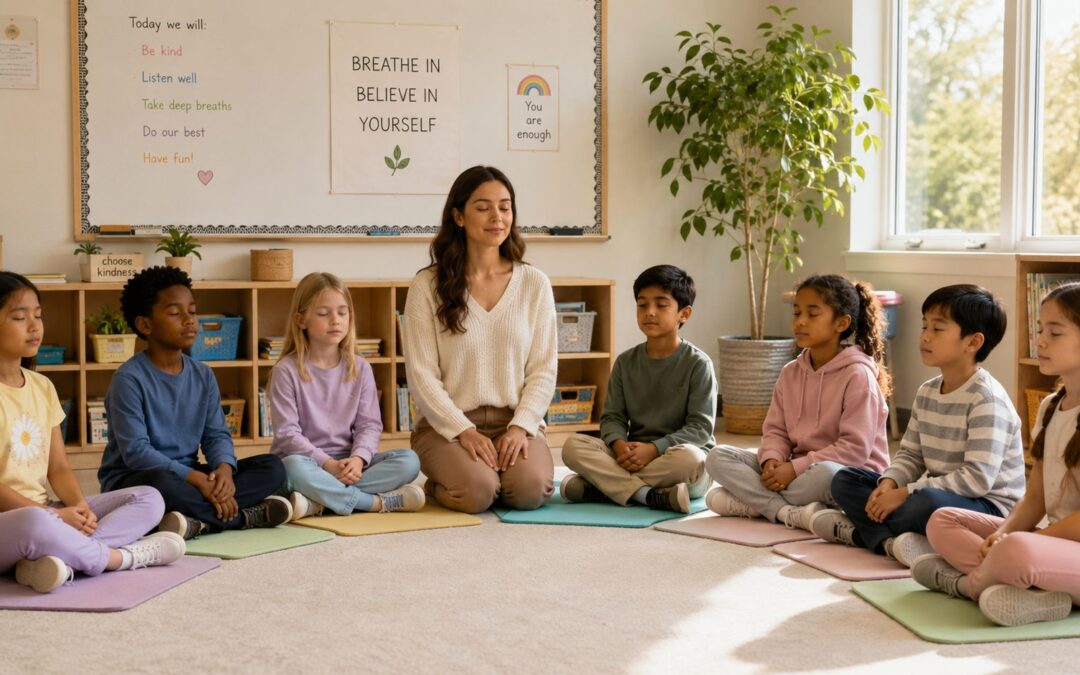
It's the middle of the afternoon. Pencils are tapping, chairs are scraping, and the room feels one comment away from unraveling. You don't need a complicated reset, you need a short, calm pause that helps students regulate, refocus, and return ready to learn. That's exactly where mindfulness brain breaks earn their place in K-8 classrooms and at home.
The strongest research on active breaks and mindfulness points in the same direction. Brief, scheduled pauses can improve attention and concentration, and mindfulness-based interventions have been associated with gains in global cognition and attention-related skills in learning settings, including executive attention, working memory, and sustained attention (systematic review and meta-analysis). In other words, these are not filler activities. They're short, structured tools for helping students reset before fatigue turns into behavior problems. For a quick timing model that fits busy classrooms, see this practical Pomodoro and ADHD-friendly tips resource.
1. Box Breathing for Emotional Regulation
Box breathing gives students a clear rhythm when feelings are running hot. The pattern is simple, inhale for four counts, hold for four, exhale for four, hold for four. That structure matters because predictable pacing helps a nervous system settle, and it gives children a concrete action to repeat when they feel overwhelmed.
A 3rd-grade teacher might use it every morning during the transition from arrival to morning work. Students can hold up four fingers as they count, which adds visual support and keeps the whole class synced. At home, parents often use the same routine before bed or after conflict so children hear the same cue in both settings. For younger students, the language can be even simpler, “smell the flowers, hold, blow bubbles.”
Practical rule: Teach box breathing when the room is calm, not during a meltdown. Once students have practiced it successfully, they're far more likely to use it when they're anxious before a quiz, upset after recess, or stuck in the middle of a hard conversation.
A visual aid helps a lot. Draw a square on the board, trace it with a finger, or use an animated breathing tool so students can follow the shape with their eyes and breath. A discreet hand signal also helps, especially for older students who don't want to interrupt instruction to ask for help.
A breathing break works best when students can request it without embarrassment.
Teachers who want a step-by-step family-friendly version can pair this with Soul Shoppe's belly breathing technique. Used consistently, box breathing becomes less of a “calm down” trick and more of a self-regulation habit students can carry into tests, friendships, and home routines.
2. Body Scan Meditation for Awareness and Tension Release
A body scan works well when students seem distracted but can't explain why. Instead of asking them to “relax,” you guide them to notice sensations from head to toe, including tension, warmth, pressure, or stillness. That awareness helps students recognize stress earlier, which is a key SEL skill, because children can't use coping tools they haven't learned to notice.
A 4th-grade teacher might guide a body scan after lunch, when the class has energy to burn but still needs to settle for reading or writing. A 2nd-grade class can use a shorter “sleepy scan” before dismissal, with simple prompts like, “Notice your feet. Notice your legs. Notice your belly.” At bedtime, parents often use the same pattern to help children wind down in a familiar voice.
Keep the language gentle and observational
Familiar voices matter. If you record the script in your own voice, students usually settle more quickly because the rhythm feels safe and recognizable. Start short, around five to seven minutes for younger children, and give permission for small wiggles or posture shifts. The goal is noticing, not perfect stillness.
For trauma-informed practice, avoid telling students exactly what to relax. Say, “Notice where your body meets the chair,” or “See if anything feels tight or loose,” rather than directing a specific body part to change. Some students do better with breath paired to each region, one breath at the shoulders, one at the chest, one at the hands. If a child feels uncomfortable closing their eyes, let them keep a soft gaze or look down at their desk.
Teachers looking for a child-centered companion resource can use Soul Shoppe's mindfulness teaching guide for children. A body scan is most useful when it feels like noticing, not forcing, and when students leave the practice with more self-awareness than they had before.
3. 5-4-3-2-1 Sensory Grounding for Anxiety and Overwhelm
When a student's anxiety climbs, attention often shrinks with it. The 5-4-3-2-1 grounding routine gives students a quick way to return to the present by naming five things they see, four they can touch, three they hear, two they smell, and one they taste. It works well before presentations, during sensory overload, or any time a student looks disconnected and overwhelmed.
A 3rd grader who is about to present can use the sequence right at her desk and often settle enough to speak. In counseling, a middle schooler might name classroom objects, touch a soft chair, listen for a fountain, and notice lotion or hand soap in the room. For younger children, laminated picture cards can keep the routine concrete during fire drills or other stressful transitions, and teachers who want more hands-on sensory support can pair it with preschool sensory table ideas.
Make the senses visible and flexible
For younger students, point to the object or let them touch it as they name it. That keeps the exercise active instead of abstract, which is often easier for children who get flooded by too much verbal direction. If smell or taste is not practical, swap in other grounding prompts that still bring attention back to the room, such as “one thing you like,” “one thing you're grateful for,” or “one thing that feels safe.”
Use grounding before the anxiety rises, not only after a child is already in distress.
A visual anchor card can make this routine easier to remember. Some teachers draw simple icons for each sense and post them near the carpet or send them home for family use. Parents can turn it into a game at a restaurant or family gathering, asking, “Can you find five things we can see together?” That kind of playful repetition helps children use grounding without feeling singled out.
For more classroom-ready wording and child-friendly variations, teachers can look at Soul Shoppe's grounding techniques for kids. Sensory grounding interrupts spirals and gives students a concrete place to put attention when their minds feel noisy.
4. Loving-Kindness Meditation for Connection and Empathy
Loving-kindness meditation changes the emotional tone of a room in a quiet but noticeable way. Students repeat phrases of goodwill toward themselves and others, such as, “May I be happy. May I be safe. May you be happy. May you be healthy.” The practice can soften self-criticism, reduce social friction, and give empathy a concrete routine instead of a vague expectation.
A 5th-grade teacher might use it once a week, starting with self-kindness and then expanding outward to classmates. That sequence gives students repeated practice wishing well for the people they share space with every day, which can support a more respectful classroom climate over time. A counselor can also use it with students involved in conflict to lower shame before a repair conversation, and teachers looking to build lifelong emotional skills can use the same structure to reinforce emotional language and perspective-taking.
A 2nd-grade class may need simpler words and a drawing component. Children can draw a heart, a sun, or a safe place while repeating, “May I be kind. May you be kind. May we be safe.” Parents sometimes use the same idea at bedtime, especially after sibling conflict, because the calm repetition can help move a child out of blame and toward repair.
Start where children can succeed
Begin with self-compassion and loved ones before moving toward neutral or difficult people. That sequence matters because some students are not ready to extend goodwill to someone who hurt them. Do not push a child to send kindness toward someone they fear. Move carefully, and pair the practice with restorative conversations when a real repair is needed.
To deepen engagement, try drawing, gentle movement, or a recorded script in your own voice. Teachers who want a broader empathy lens can also explore Soul Shoppe's empathy teaching resource. Loving-kindness works best when it feels concrete, repeated, and emotionally safe, not abstract or performative.
5. Mindful Movement and Stretching for Energizing and Calming
Some students can't access stillness first. They need movement before mindfulness makes sense. Mindful movement gives them that bridge by pairing stretching, walking, or yoga poses with deliberate attention to breath, muscles, and balance.
A 3rd-grade teacher might use a short stretching sequence after reading block to help students re-enter writing with better focus. A kindergarten class can make the practice playful with animal stretches, which lowers self-consciousness and keeps the routine age-appropriate. In a 6th-grade PE class, a mindful walk before activity can settle entry energy without turning the whole period into a silent meditation.
Pace determines the effect
Slow movement tends to calm. Faster, more energetic movement can wake students up when they're sluggish. That's why a teacher should choose the pace intentionally instead of treating movement as one-size-fits-all. A classroom that's buzzy after lunch usually needs slower breathing and slower stretches, while a sleepy group before math may benefit from standing reaches or wall pushes.
Model the movements slowly and exaggerate the shape. Students follow what they can see, not what they're told.
Offer standing, seated, and wall-supported versions so every child can participate without drawing attention to differences. A 5th grader who fidgets during transitions may do better with chair yoga than with a full-group pose sequence. Use descriptive language like, “Feel your feet on the floor,” or, “Notice your shoulders releasing,” so movement stays linked to awareness.
The most useful classroom versions keep competition out of the room. This isn't about who stretches best. It's about helping students notice how their bodies feel before they return to work. For self-conscious learners, calmer music or dimmer lighting can make participation feel safer, and outdoor practice often adds a helpful layer of sensory richness.
6. Mindful Listening and Silence for Presence and Connection
Silence is hard for many children at first, especially in noisy classrooms. That's exactly why mindful listening can be so effective. It teaches students to notice sound without reacting to it, and it helps them practice presence in a way that feels more accessible than sitting still with closed eyes.
A 4th-grade class might do a short sound meditation with dimmed lights, then share what they noticed, such as the air conditioner, a hallway footstep, or the bell. In counseling, two students in conflict can practice mindful listening by taking turns speaking and listening without planning a response. A 2nd-grade class can start with just two minutes of daily silence and build gradually as students become more comfortable.
Use sound as a shared anchor
Foreground and background sounds make a useful distinction for students who get distracted easily. Ask them to identify what sounds are closest, what sounds are far away, and what sounds they can tune out. If the environment is noisy, a nature soundtrack can give the class one shared anchor without requiring perfect quiet from the whole building.
A partner-listening routine also works well in upper elementary and middle school. One student speaks, the other listens with full attention, then they switch. Sentence starters like, “I heard you say…” or, “What stood out to me was…” keep the reflection respectful and focused.
Normalize silence before you ask children to sit in it.
The benefit isn't just calm. It's respect, attention, and the ability to listen without immediately preparing a reply. That matters in classrooms, on playgrounds, and in family conversations where children need practice hearing one another all the way through.
7. Mindful Eating and Sensory Awareness for Presence and Gratitude
Mindful eating turns a snack into a short lesson in attention. Instead of rushing through a raisin, strawberry, or chocolate chip, students slow down and notice texture, aroma, flavor, and the experience of eating itself. That small pause can help children recognize hunger and fullness cues, which makes the practice useful both for mindfulness and for everyday self-awareness.
A 3rd-grade class might use mindful chocolate chip eating as a brain break before writing. A kindergarten class can do it with strawberries, using exaggerated smelling and tiny bites to keep the steps concrete. In 6th grade, a raisin can become an introduction to mindfulness before an SEL unit, especially if students are ready for a more reflective activity.
Keep the food, pacing, and language inclusive
Choose safe, sensory-rich foods and check allergies with families in advance. Have alternatives ready so every child can participate without stress. In schools where food insecurity may be part of students' reality, frame the activity as a special practice, not a reward or a test of self-control.
Use descriptive language that stays away from judgment. Say, “Notice the shape,” “Notice the scent,” or, “Take one tiny bite and see what changes.” Younger children often respond well to playful directions like, “Eat like a slow snail,” because the image keeps the pace slow without sounding punitive.
For a student who tends to overeat quickly, mindful eating can also become a discreet counseling tool. It gives them language for noticing satisfaction before they're uncomfortably full. A teacher can end by asking what students noticed, which builds metacognition and gratitude without making the moment heavy.
7 Mindfulness Brain Breaks Comparison
Technique
Implementation complexity
Resource requirements
Expected outcomes
Ideal use cases
Key advantages
Box Breathing for Emotional Regulation
Low, teachable in minutes, short practice (3–5 min)
Intro to mindfulness, sensory lessons, gratitude practices
Tangible, engaging, concrete for learners resistant to sitting meditation
Making Mindfulness a Classroom Habit, Not an Interruption
These mindfulness brain breaks work best when they become part of the day's rhythm, not an emergency measure. The research supports that timing matters, brief breaks can help students reset attention, and mindfulness-based practices can support cognition and attention-related skills in learning contexts (active breaks review, mindfulness meta-analysis). The practical lesson is simple. Keep the break short, keep the cue predictable, and keep the language warm.
Teachers and caregivers don't need to do all seven at once. One practice, used consistently, often does more for a classroom than a long list of ideas that never leave the planning stage. If a group needs regulation, start with box breathing or a body scan. If they need grounding, use 5-4-3-2-1. If they need connection, choose loving-kindness or mindful listening. The right fit depends on the moment, the age group, and what the children can tolerate calmly.
There's also a real trade-off to respect. Some students love stillness, and some don't. Some classrooms can hold silence easily, and others need movement first. That's not a failure of the practice, it's a sign that the teacher is reading the room correctly and choosing the right reset for the learners in front of them. The most effective routines are timed, predictable, and matched to student needs, especially when the goal is regulation rather than performance.
Soul Shoppe offers research-based, experiential SEL programs, workshops, coaching, and tools that help school communities build shared language for self-regulation, mindfulness, communication, and conflict resolution. For schools and families looking to make these routines more consistent, their programs can support the same kinds of connection and safety these brain breaks are designed to strengthen.
If you're ready to bring calmer transitions and more focused learning into your classroom or home, visit Soul Shoppe to explore programs, courses, and tools that support mindfulness, SEL, and conflict resolution. Their work can help you turn short reset moments into a shared language kids use.
A child comes home tense after school, and the first thing you try is the simplest thing you've got. Maybe you turn on a calm playlist during homework, or you tap a steady beat on the table while they breathe. That instinct makes sense, because music can help students settle, name feelings, and reconnect with the adults around them. The key is knowing when music is just background comfort and when it becomes a structured support that can shape student outcomes.
For K–8 educators and parents, that distinction matters. The research behind music therapy benefits points to real changes in anxiety, mood, attention, and connection, but the strongest results come from intentional, relationship-based practice, not random songs in the room. If you've ever wondered whether a short drumming circle, a lyric discussion, or a breathing routine with music can really help, the answer is yes, when it's used with purpose and consistency.
What Music Therapy Actually Is in Schools
A second grader is melting down after recess. A teacher puts the class into a short rhythm-and-breath reset, tapping a slow pattern on the desk and inviting the children to match it with their hands and shoulders. Ten minutes later, the room is quieter, but that doesn't mean the teacher has done “music therapy” in the clinical sense. It means the teacher has used a music-based regulation tool.
Music therapy is a health profession that uses music within a therapeutic relationship to address physical, emotional, cognitive, and social needs. The U.S. National Center for Complementary and Integrative Health describes it that way, and that definition matters because it separates intentional intervention from casual background listening (NCCIH overview). In practice, that looks more like guided singing, songwriting, rhythm work, or structured listening with a goal than like playing soft music during independent work.
Why the distinction matters
A person doesn't get stronger just because a gym exists nearby. Progress comes from a planned set of movements, a professional relationship, and repeated work toward a goal. Music therapy follows the same logic.
Practical rule: if the music activity has a clear purpose, a repeatable structure, and a way to observe change, you're getting closer to intervention than entertainment.
That distinction also helps schools set realistic expectations. A classroom playlist can support the mood of the day. A music-based therapeutic routine, or a counselor-led intervention, can support a student who needs help with regulation, expression, or connection. The latter is where the music therapy benefits research becomes especially useful for educators who want SEL tools they can trust.
For families and schools trying to separate hype from help, a useful starting point is a broader SEL framework. This article on social-emotional learning programs for schools pairs well with music-based support because the goal is the same, helping children practice skills they can use all day, not just during a single calming activity.
Research-Backed Music Therapy Benefits for Mental Health
A student who arrives at school already tense may not have the words to explain what is happening inside. A familiar song, a steady beat, or a guided music activity can give that feeling a shape that adults can observe and respond to. That is one reason the research on music therapy benefits matters for K–8 educators and parents who want practical SEL tools, not just comforting ideas.
The clearest evidence begins with emotional health. A 2013 Cochrane systematic review found that listening to recorded music significantly reduced anxiety in people waiting for surgery, and the review included 26 studies and 2,051 participants (NCCIH science digest). For school teams, that matters because it shows music can influence measurable stress responses in a setting where anxiety is already high.
A later depression review found music therapy was significantly more effective than controls at reducing depressive symptoms, with a standardized mean difference of -0.97 and a 95% confidence interval from -1.23 to -0.71 (systematic review and meta-review on PMC). The same review also reported that music therapy could be recommended to help control depressive symptoms and anxiety, while improving quality of life and sleep quality, even though the evidence quality was rated low. That combination of promise and caution is useful for school counselors and classroom teachers, because it helps set realistic expectations.
What the broader psychiatric evidence suggests
A transdiagnostic meta-review in BJPsych Open reported measurable benefits across psychiatric conditions, including an effect size of 0.83 for reduced overall symptom severity in 575 participants, an odds ratio of 1.60 for global improvement in 583 participants, and effect sizes of 0.43 for anxiety and 0.27 for depression across diagnoses (meta-review PDF). The same review also reported standardized mean differences of 0.57 for depression, 0.47 for anxiety, and 0.47 for quality of life in music therapy contexts.
Those findings matter because they point to more than one pathway. Music therapy may help a child settle after dysregulation, stay with a group activity, and feel more connected to others, not just feel calmer for a moment. In school settings, that makes music-based support especially relevant for students who show stress through behavior, shutdown, or avoidance.
The strongest results tend to come from structured, ongoing work guided by a trained professional. Research is still emerging for school-adjacent uses that are less formal, which is why educators should treat classroom music routines as support tools, not as a substitute for therapy. For teams building healthier daily routines, a helpful companion resource is this guide on mental health activities, since the best SEL plans often combine music, reflection, and predictable structure.
Training Curriculum and Scripts Mentors Use
A mentor's first training session should feel more like rehearsal than lecture. Kids remember what they practice. If you want them to sound calm, notice feelings, and ask good questions, they need a chance to try those moves before they ever sit down with a mentee. A schoolwide mission statement can help, but only if it stays visible in the training room and in the language adults use with students.
For a useful reminder of how mission language shapes behavior, the ideas in Synopsix's research on mission statements are a solid companion read. The point is not branding, it is consistency. Mentors do better when the school's core values and SEL words are the same words adults use during coaching.
For a closer look at the mechanics of empathetic listening, this guide helps explain what mentors are trying to do with their ears, not just their words. A sixth grader does not need polished counseling language. She needs a way to show the younger student that she was paying attention.
Listening and paraphrasing
Spend about 15 minutes here with a short model, two practice rounds, and one role-play. Give mentors a sentence stem they can remember, “What I heard you say is…” or “It sounds like…” A sixth grader does not need perfect counseling language. She needs a way to show the younger student that she was listening.
Naming feelings
Use about 10 minutes and a simple feeling chart or the school's own emotion words. A mentor can say, “You seem frustrated,” or “That looks disappointing.” Kids often act out before they can name what is wrong. When mentors borrow the same language teachers use at the calm-down corner, the student hears one consistent system instead of two different adults speaking in different codes.
Noticing boundaries
Give this module 10 minutes and a few yes-no scenarios. Mentors need to know that secret-keeping is never the goal, and physical comfort, private family issues, and unsafe disclosures belong with an adult. A simple script works, “I care about you, and I need to get help from a grown-up with that.”
Problem-solving together
Reserve about 15 minutes for a guided routine. The mentor asks, “What happened?” “What have you tried?” and “What could we try next time?” That keeps the pair from jumping straight to advice. It also teaches the younger student that solving a problem is a process, not a rescue.
Here is a first-meeting script a sixth grader could read:
“Hi, I'm Maya. I'm your mentor this year. We'll meet each week, and my job is to help you feel comfortable at school. What's one thing that makes school easier for you?”
Each line does something useful. The greeting lowers the temperature. The role statement sets the boundary. The meeting promise builds predictability. The question opens the door without demanding a big disclosure on day one.
For schools that already use empathy language, the flow should sound familiar. A mentor can say, “Let's take one breath,” “Do you want a reset spot?” or “Let's use our problem-solving steps.” If the mentor sounds like a separate program, students stop hearing the school as one connected community.
Trainer note: Teach the words before you teach the feelings. Kids cannot use a script they have not practiced out loud.
A facilitator guide should fit on one page. Include the training objective, the sample phrases, and the one thing adults should watch for during practice, usually whether the mentor talks too much or rushes to fix. If a trusted teacher or counselor can pick up the guide and run the session without rewriting it, the curriculum is ready.
Supervision Loops and Safety Protocols That Actually Catch Issues
The cleanest supervision system is quiet, predictable, and slightly boring, which is exactly what you want. Weekly mentor check-ins let adults hear what the pairs are noticing. Biweekly observations show whether the relationship feels balanced. Monthly case reviews catch patterns before they become problems.
A counselor at one school noticed during a monthly review that a mentor was carrying too much. The older student had started absorbing a mentee's panic attacks, thinking it was his job to keep the younger child calm every time. Because the adult had a review rhythm, she saw the strain early, re-centered the mentor's role, and got the mentee additional support.
The other side of that story is less tidy. In a poorly supervised match, a mentor tried to solve a peer's family crisis alone because no one had clearly explained confidentiality limits or when to hand concerns to an adult. The school changed its process afterward by tightening check-ins and making the escalation steps explicit for every mentor, not just the adults who ran the program.
The three questions every supervisor should ask are simple. “What is working in the match?” “What feels hard or unclear?” and “Does anything need adult follow-up?” Those questions are enough to surface confusion without making the mentor feel interrogated. They also keep the adult focused on support, not blame.
Mentors should memorize the safety line in plain language: if a child is talking about harm, unsafe home conditions, or anything that feels bigger than the mentoring relationship, they tell an adult right away. Confidentiality has limits, and those limits need to be said out loud before the first match starts. A log sheet can stay short, too, just date, students involved, concern, action taken, and follow-up needed.
If you're building the supervision piece from scratch, don't overload staff with paperwork. The goal is not a perfect archive. The goal is a system that catches trouble early enough to matter. One adult who knows the pairs, scans the notes, and follows through is worth more than five folders of unused forms.
Measuring What Changes First and Reporting It Clearly
Peer mentoring gets stronger when schools measure the right things first. Belonging, mattering, self-efficacy, and observable SEL skills usually move before report card grades do, and that is not a flaw. It is how relational change often shows up in schools, first in how students feel, then in how they participate, then sometimes in academics.
A mixed-methods study with 4,174 participants found that average GPA rose from 2.41 to 2.83, and about 65% of mentees reported a positive impact from the mentoring scheme study summary. The same body of evidence also points to a pattern school teams should expect, psychosocial gains do not automatically turn into GPA gains right away. In another study, higher engagement with peer mentors significantly predicted greater belonging, mattering, and academic self-efficacy, with effects in the medium range, but it did not significantly improve GPA or social self-efficacy.
That is the kind of report principals and families can use. If you promise grades first, you will lose trust. If you report on the right early indicators, people can see the program breathing before they see the transcript change.
A simple monthly dashboard can stay light enough for real life:
Mentor attendance: Who showed up and who did not.
Mentee attendance: Whether the pair is stable enough to matter.
Mentor self-rating: One quick score on confidence, listening, or follow-through.
Teacher observation notes: One sentence on how the student looks in class.
Two mentee pulse-check questions: “Do you feel more connected at school?” and “Do you know who to ask for help?”
For a broader frame on schoolwide reporting and the value of staying honest with stakeholders, this outcome measurement guide is a useful companion. Keep the year-end report plain. Say what changed, what did not, and what you will adjust next year.
Stakeholder rule: If the first review shows mixed results, that does not mean the program failed. It means the school learned where the structure needs work.
The story you want to tell is not “everything improved.” It is “students felt safer, more connected, and more capable, and we tracked that carefully enough to make the next year better.”
Sample Timeline, Family Engagement, and Troubleshooting
A workable rollout follows the school calendar, not a fantasy calendar. August is for teacher briefings and mentor recruitment, September for training and matching, October through January for steady meetings, February for a reset because energy usually dips, March and April for adjustment and family touchpoints, and May for celebration and review. If testing windows or holidays interrupt the rhythm, build that into the plan from the start instead of pretending the schedule will stay clean.
Family engagement gets stronger when it feels useful, not ceremonial. Parents can read mentor-led story times in classrooms, and community partners can join as guest mentors for a short visit that reinforces the same language students hear in school. Local high schoolers can also be excellent guests when the school wants near-peer energy without creating a permanent staffing lift.
The four common problems usually sound predictable. When mentors skip check-ins, tighten reminders and pair every meeting with a supervisor note. When mentees outgrow the match, reframe the ending as a graduation and make the transition visible. When parents worry about older-kid influence, show them the training, the boundaries, and the adult supervision. When a teacher sees the program as extra work, connect the mentoring role to an existing need in the classroom, like arrival routines or lunch transitions.
By the end of year one, success should look calm. Students know where to go, mentors know what to say, adults know when to step in, and families can describe the program without confusion. If the campus feels a little more settled and a little less lonely, the structure is doing its job.
A CTA for Soul Shoppe. If you're ready to build peer mentoring programs that strengthen belonging without adding chaos to the school day, connect with Soul Shoppe to explore practical SEL coaching, community-building tools, and schoolwide support that help your mentors, staff, and students stay aligned.
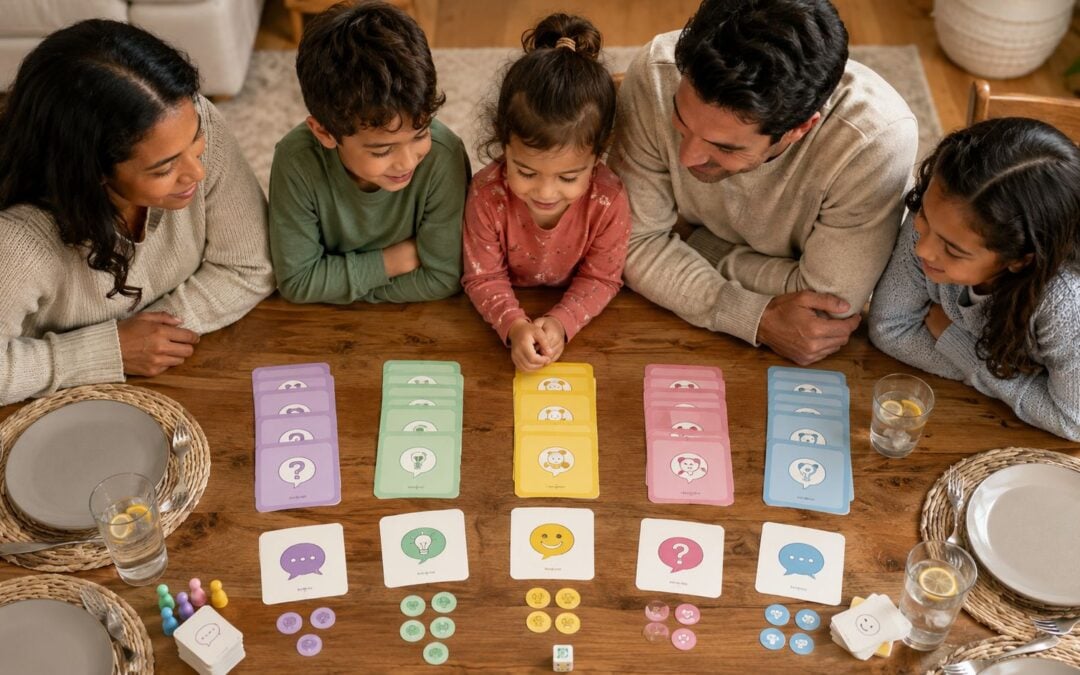
Dinner often gets reduced to logistics. Plates are cleared, homework is half-finished, someone's already thinking about tomorrow, and the room goes quiet except for chewing. That silence is exactly where dinner time conversation starters can change the mood. They give families and classrooms a simple way to move from “How was your day?” to something more honest, more specific, and easier for kids to answer.
The best prompts don't force a big talk. They create a small opening, then let children step through it in their own way. That's why university and parenting guidance has treated mealtime as a repeatable communication ritual for years, with one public-university extension even compiling a 50-question dinner toolkit that includes prompts about gratitude, worries, goals, and reflection, all designed for low-pressure sharing and connection (University of Tennessee extension conversation starters). The strongest family routines work the same way at home and in class. They are brief, predictable, and emotionally safe.
For Soul Shoppe families, teachers, and counselors, these prompts also fit SEL in a natural way. They support belonging, self-regulation, communication, and empathy without turning the table into a lecture. For more family bonding context, see Bornbir's mother son bonding tips.
1. The Gratitude Gem
A gratitude prompt changes the tone at the table fast. Children stop scanning for the right answer and start noticing one thing that went well. That might be an accomplishment, a kind gesture, or a small comfort from the day. The goal is not forced cheerfulness. It is positive reflection that becomes easier with practice.
Start by naming your own gratitude gem first. When a parent says, “Mine was finishing that project at work,” or a teacher says, “I was grateful when one student helped another clean up,” children hear the shape of the prompt and get a model they can follow. Keep the bar low. A younger child saying, “I liked playing on the swings,” matters just as much as an older child saying, “I'm grateful my math group helped me understand fractions.”
How to make gratitude feel real
Practical rule: accept small answers without correcting them. A child does not need to name a life-changing moment. “My snack was good,” or “My friend smiled at me,” is enough to keep the ritual going.
Keep the follow-up concrete. Ask, “What made that moment special?” or “When did you know it was a good day?” If the room feels flat, change the prompt before it turns stale. Try, “When did you help someone today?” or “What made you laugh?” For a fuller set of family-friendly gratitude ideas, Soul Shoppe's gratitude resources offer a useful starting point, and the broader dinner conversation approach described earlier follows the same low-pressure pattern.
When children are tired, gratitude can sound forced if adults push too hard. Slow down, answer first, and let silence do some of the work. A child who needs a minute to think is not resisting, they are warming up.
2. The Choice Conundrum
Decision-making prompts work best when they feel close to real life. Instead of abstract moral questions, give children a situation they can picture from school, sports, the playground, or the lunch line. That turns dinner into a place to rehearse judgment safely. A child can explore what they might do before they're under pressure to do it.
Use scenarios with more than one reasonable answer. For example, “Your friend copies your homework. What would you do?” invites options like telling the friend, telling the teacher, or doing nothing. A younger child might hear, “Someone cuts in line at lunch. What would you do?” and start thinking about assertiveness, fairness, and when adult help is needed. The value is in the discussion, not in hunting for one perfect response.
Link this to real classroom life when it makes sense. A teacher might use the same prompt during a lunch bunch or advisory period, then ask students how their choice could affect trust, safety, or teamwork. Soul Shoppe's decision-making resource frames this kind of reflection as part of practical problem solving and communication (Soul Shoppe games for decision making).
A simple facilitation pattern
Offer two to four choices: This lowers the pressure to invent an answer from scratch.
Ask consequences out loud: “What would happen if you ignored it?” keeps the thinking visible.
Validate the first response: Even a messy answer can open a useful conversation.
Bring it back to real settings: A classroom example often helps children connect the dots faster.
The biggest mistake is making the prompt feel like a quiz. Kids shut down when adults already sound certain. Stay curious, because curiosity keeps the table collaborative.
3. The Challenge Champion
Challenge prompts matter because children need to hear that struggle is normal. A strong dinner routine doesn't only celebrate wins, it also gives people a place to say, “That was hard, and I kept going.” That message builds resilience without sugarcoating the day. It tells children that difficulty is information, not failure.
Lead with your own example. “I struggled with staying patient in traffic today. I took deep breaths and listened to music instead.” That kind of sharing makes room for honest answers from kids. A child might say, “I had trouble with the math test, so I asked my teacher to explain it again,” while a younger child says, “I couldn't zip my jacket, so I asked my brother to help.” Older children can talk through disappointment, like not making a team or needing to try again.
Keep the focus on effort and strategy
Ask, “What did you learn?” rather than, “Did you win?” That one shift changes the tone of the whole conversation. It helps children notice the part of their response they can control, such as asking for help, pausing, or trying a new approach. Soul Shoppe's problem-solving resource reflects this same growth-oriented mindset (Soul Shoppe problem solving activity).
Share the story of the struggle, then name the strategy that helped. Children remember the strategy longer than the complaint.
A challenge journal can help when your family or class wants a visible record of growth. Keep it simple, one line per person, and revisit it after a hard week. The point is not to produce a polished reflection. The point is to show that people can learn from setbacks and keep moving.
4. The Connection Question
This prompt helps children shift attention outward. Instead of only reporting what happened to them, they notice someone else. That grows empathy in a way children can practice. It also helps families and classrooms become places where caring is visible, not just assumed.
Ask, “Who did you notice today?” or “When did you see someone struggle?” The answers might be ordinary, and that's the point. A parent might say they noticed a coworker who looked worried and asked if they were okay. A child might say they saw someone at recess who looked lonely and invited them to play. Even younger children can name small moments, like helping pick up a dropped lunch.
Move from noticing to action
Follow up with, “What did you do?” or “What could help them?” That keeps the conversation from staying abstract. It also teaches children that empathy is not only a feeling, it's a response. Soul Shoppe's empathy resource aligns with that exact idea of teaching children to notice and respond with care (Soul Shoppe how to teach empathy).
You can also use the prompt to discuss times when someone else was struggling in a way that was hard to name. Older children often understand nuance better than adults give them credit for. A teen might say a friend was quiet because of problems at home, and that can open a thoughtful conversation about privacy, support, and when to involve an adult.
The best responses are concrete, not grand. Small acts of noticing build the family habit you want most, people paying attention to one another.
5. The Feelings Thermometer
A feelings scale gives children a simple structure for naming emotion, even when they do not have the perfect word yet. That matters because some kids know they feel “off” long before they can tell you whether they are anxious, sad, overwhelmed, or tired. A number, color, or emoji gives them a place to start. It also fits the practical side of dinner conversation, where families and classrooms need a shared language that is quick enough to use at the table and clear enough to revisit later.
A parent might say, “I'm at about a 7 today, productive at work but tired.” A child might answer, “I'm a 5, some parts of school were fun, but I was frustrated with my friend.” Younger children can use colors, like “I'm green today,” while older children may be ready for a number plus a reason, such as “I'm a 3 because I'm anxious about that test tomorrow.”
Make the scale useful, not performative
Ask, “Where are you on the feelings scale?” and then pause. If adults rush straight into advice, children often stay at the surface. Better follow-ups are, “What pushed you to a 7?” or “What would help move you to an 8?” Those questions connect emotion to coping, which is where self-regulation grows. A child who says, “I'm at a 4 because math was confusing,” can then name one small next step, like asking for help before homework starts.
Use one language consistently: numbers, colors, thermometer, or emoji faces.
Normalize the full range: a lower score is information, not failure.
Teach one strategy at a time: breathing, a quiet break, a drink of water, or a reset before homework.
Notice patterns gently: “Mondays are often lower. Did the schedule feel rushed today, or was something else weighing on you?” That kind of question helps children connect a feeling to a real cause without feeling examined.
The strongest version of this prompt stays calm and ordinary. It works because it gives children a shared language they can use again tomorrow.
6. The Strength Spotlight
Strength prompts work because children need more than correction. They need to hear what is going well, in themselves and in other people. That builds confidence without pretending everything is easy. It also teaches children to see value in classmates, siblings, and adults beyond test scores or behavior charts.
Be specific. “You were kind when you waited for your turn,” lands better than “You're nice.” A parent can model with, “I noticed I was really patient today with you.” A child might say a classmate was great at including people, or that a friend was brave speaking up in class even while nervous. Younger children can identify physical or playful strengths too, like being strong on the playground.
Keep the spotlight broad
Include non-academic strengths like kindness, creativity, persistence, and humor. Children need to learn that strength is bigger than correctness. Ask, “What strength did you see in yourself today?” and “Who do you admire and why?” Those questions help kids practice positive observation without turning the table into a competition.
Write the strengths down if your family tends to forget them under stress. A note on the fridge or a card in a classroom basket can become a helpful reminder later. The next time a child feels discouraged, you can point back to an actual example instead of giving generic reassurance.
This prompt works best when it names behavior, not identity. “You kept trying even when that was tricky” is more useful than a label. Children can repeat a behavior. Labels are harder to live up to.
7. The Mindfulness Moment
Dinner can be one of the few times children stop moving enough to notice themselves. A mindfulness prompt uses that pause well. It asks them to notice what they saw, heard, touched, tasted, or smelled, or to remember a moment when they felt calm and present. That kind of reflection makes mindfulness less abstract and more usable.
A parent might say, “During my commute, I noticed the trees were really green and it calmed me down.” A child might say, “At lunch, I really tasted my food and it felt nice to slow down.” Younger children often respond well to texture, like “I felt the soft blanket when I was reading.” Older children might describe noticing their breathing while waiting for test results.
Use the senses to slow the room down
Start with a simple question. “What did you see, hear, feel, taste, or smell today?” That keeps the prompt accessible for mixed ages. If the table is restless, teach a grounding practice like 5-4-3-2-1, where people name five things they see, four they can touch, three they hear, two they smell, and one they taste. You don't need to make it a formal lesson. One round is enough.
A slower voice helps more than a fancy explanation. Invite one mindful breath before dinner or one thoughtful bite before conversation starts. That small pause often helps children settle enough to answer openly.
The goal is not to make dinner serene every night. The goal is to give children a repeatable way to come back to themselves when the day has been loud.
8. The Boundary Builder
Boundaries deserve a place at the dinner table because children need practice naming limits before they are under social pressure. A boundary prompt helps them notice when they said no, wished they could say no, or needed help protecting their space. That builds autonomy and respect at the same time.
A parent might say, “I said no to extra work today to protect my evening.” A child might share, “I told my friend I wasn't ready to share my feelings yet.” Younger children can practice with body boundaries, such as “I didn't want to hug someone, so I waved instead.” Older children may talk about needing adult help when someone touched them in a way that felt wrong at recess.
Make the language plain
Ask, “Did anyone disrespect your boundaries today?” or “Did you need to set a boundary?” Those words may sound serious, and they are. Keep your tone steady so the child doesn't feel they're being interrogated. Say, “Your body belongs to you,” and teach phrases they can use, such as “Stop, I don't like that” or “I need space.”
Discuss how to decline hugs, touches, borrowed items, or group activities respectfully, but don't make politeness more important than safety. If a child describes a boundary violation, respond supportively and take it seriously. The dinner table is not the place to minimize it or turn it into a joke.
This prompt works best when adults model the behavior in their own lives. Children notice when parents protect their time, their bodies, and their energy. That observation matters more than any speech.
9. The Kindness Tracker
Kindness prompts give children a way to see how small actions change a day. The important lesson is not that they need applause. The important lesson is that generosity has a ripple effect, even when the act is tiny. A child who notices that can start to view themselves as part of a caring community.
A parent might say, “I held the door for someone with their hands full.” A child might say, “I helped my classmate find their lost pencil and they smiled so big.” Younger children can report sharing crayons, while older children might say they sat with someone new at lunch because that person looked lonely. Those are all useful examples because they stay close to daily life.
Make kindness visible without turning it into a prize
Ask, “Who did you help today?” and “When did you see someone help another person?” Then go one step further and ask, “How do you think that made them feel?” That keeps the focus on impact, not reward. If your family likes physical reminders, keep a kindness jar or wall where people can add notes about small good deeds.
Kindness grows faster when adults name it in real time. “I helped because I saw they needed an extra hand” teaches the motive as clearly as the act.
Avoid using kindness as a scoreboard. If children start competing for points, the sincerity disappears. The better goal is a household or classroom culture where helping is expected, noticed, and appreciated.
10. The Growth Game
A dinner table can do more than review the day. It can help children see mistakes as information they can use next time. That shift matters because many kids read a wrong answer, a messy moment, or an awkward choice as proof that they are “not good at” something. A calm conversation can interrupt that habit and show that learning often starts with confusion, frustration, or a bad first try.
A parent might say, “I sent an email before I checked it carefully, so I had to fix a typo later.” A child might say, “I missed the math step at first, then I found the pattern after I tried again.” A younger child might talk about stacking blocks that kept falling and adjusting the base. An older child might describe feedback on an essay, then explain how revision made the work clearer.
Keep the language focused on learning
Ask, “What did you try?” and “What did that mistake teach you?” Those questions point the child toward the process instead of the embarrassment. Follow with, “What will you do differently next time?” or “What clue did you notice after the mistake?” If a child starts with harsh self-talk, answer with “You have not learned it yet” or “You found a useful clue” instead of repeating the criticism back.
A simple language swap can change the tone of the whole conversation.
Common self-talk
Growth-focused swap
I can't do this.
I can't do this yet.
I messed everything up.
I made one mistake I can fix.
I'm bad at this.
I'm still learning this.
I failed.
I learned what to try next.
The value of this prompt is that adults use it too. When a parent names a mistake and explains what they changed, a child sees that competence and imperfection can sit in the same room. A family poster with examples of “mistake, lesson, next try” can keep that lesson visible in a way children can revisit.
Soul Shoppe's SEL approach supports that idea by treating setbacks as useful information for growth, reflection, and resilience. Soul Shoppe problem solving activity
The Kindness Tracker: Spreading Positivity Intentionally
Low, regular sharing with optional tracking
Kindness jar, notes, or chart (optional)
Increased prosocial behavior and intrinsic motivation
Building community values, reinforcing acts of service
Cultivates intentional generosity and ripple effects
The Growth Game: Learning from Mistakes and Setbacks
Medium, needs consistent growth-language practice
Prompts, examples, poster or journal optional
Reduced fear of failure, improved problem-solving, persistence
After mistakes, learning reviews, performance feedback
Reframes errors as learning and promotes perseverance
Keeping the Conversation Going
The best dinner time conversation starters are the ones you can repeat. A family ritual works better than a perfect one-time question, because children learn through familiarity. If the same prompt shows up every night, it becomes easier to answer openly, and easier to trust the table as a safe place. That repeatability also matters in classrooms, where students often need structure before they'll take social risks.
Printed prompt cards make the routine easier to maintain. So does a small jar with folded questions, or a mini-game where each person draws one starter before the meal begins. A rotating format keeps the table from feeling stale without adding much work for the adult. In homes with mixed ages, you can keep one set of simple prompts and one set of deeper ones, then let children choose. In classrooms, a basket of cards works well during advisory, lunch bunch, or calm-down time.
What works best is not intensity, it's consistency. A child who gives one-word answers this week may start adding details later, especially if adults keep answering first and keep the tone gentle. Celebrate that small shift. A longer answer, a more honest feeling, or a kinder observation is progress.
Adapt the prompts to the season of your family or class. Some weeks, gratitude will feel easier. Other weeks, boundaries, kindness, or growth language may be more useful. Revisit favorites often, but don't be afraid to retire prompts that have gone flat. The goal is shared language, not novelty for its own sake.
Over time, these little SEL moments become more than conversation practice. They become a pattern of noticing, naming, listening, and responding. That's the kind of dinner ritual that can shape how children relate to themselves and each other long after the plates are cleared.
Your classroom is already feeling the pull of winter. Some students are restless after recess, some are quieter than usual, and a few need a gentle way to talk about what they're feeling without turning it into a big, direct conversation. An acrostic poem for winter gives you that opening. It is simple enough for beginners, flexible enough for older writers, and strong enough to connect seasonal language with empathy, belonging, and calm.
The Poetry Foundation explains that acrostics are built by writing a word vertically and using each letter to begin a line, which gives young writers a clear scaffold Poetry Foundation. In winter-themed classrooms, the word WINTER is especially useful because it gives children a clear six-line structure and a seasonal vocabulary path filled with snow, ice, and cold-weather ideas. Teachers can turn that structure into a writing routine, a partner share, or a social-emotional learning moment that helps students notice how the season shapes mood, routines, and community. Parents can use the same format at home with a notebook, a word bank, and a few minutes after dinner.
This approach can enhance your writing creativity and also build classroom community. Like a row of small windows in a winter house, each letter gives students one place to look, one idea to name, and one feeling to share.
1. WINTER as the Classic Starting Point
Start with WINTER when you want a poem that feels welcoming, not intimidating. The six-letter word naturally creates a six-line poem, so students can focus on one idea per line instead of worrying about a long draft. That structure makes the activity a strong fit for elementary writers, and it works just as well for older students who need a quick reset between heavier lessons.
A useful classroom move is to connect each letter to both a seasonal image and a feeling. One line might describe snowflakes, while another names warmth, kindness, or courage. The result is more than a spelling pattern, it becomes a gentle reflection on how winter affects people differently.
Practical rule: give students a feeling word bank before they write. Words like cozy, peaceful, grateful, and brave help them move from obvious winter images to emotional meaning.
A simple sample can sound like this, and you can adapt it for the age group in front of you:
W, Watching snowflakes fall, we feel wonder
I, Inside we gather, building community
N, Noticing how cold teaches us compassion
T, Together we find warmth and belonging
E, Everyone deserves kindness in winter's chill
R, Resilience grows when we support each other
That kind of poem gives you a quick SEL entry point. Ask students which line feels most like their classroom, and which line they'd change if they wanted to describe the room on a hard day. For a simple extension, display the finished poems with student art on a bulletin board so the room shows both writing growth and community care.
For a classroom-friendly example of how acrostic writing is introduced with shared discussion and publishing, see the winter lesson approach from Soul Shoppe.
2. SNOWFLAKE and the Power of Being Different Together
A SNOWFLAKE poem works beautifully when you want to talk about individuality without separating students from the group. Snowflakes are unique, but they also belong to a larger winter pattern. That makes the form useful for lessons about acceptance, inclusion, and the way differences can strengthen a class rather than divide it.
You can open with a visual. Show a snowflake image or invite students to look closely at real snowflakes if the weather allows. Then ask what makes each one special. The conversation often moves naturally toward identity, friendship, and how everyone contributes something different to the community.
Here's a sample that keeps the tone warm and accessible:
S, Special in our own unique ways
N, Never needing to be like someone else
O, Our differences create beauty
W, When we accept each other, we shine
F, Friendships form across our many colors
L, Learning that different means stronger
A, All of us matter in this community
K, Kindness makes our connections crystalline
E, Everyone belongs here
This poem also works well for bullying prevention. If one student feels pushed out, the snowflake metaphor lets the class discuss how mocking differences harms the whole group. You can ask, “How would you respond if someone tried to make your snowflake feel less beautiful?” That question invites repair, not shame.
To make the activity visible, let students write their own snowflake poems on separate paper cutouts, then hang them together as a mobile or wall display. At home, parents can use the same idea to talk about sibling differences or how a family makes room for different personalities. For a related visual, use the detailed snowflake image in your slide deck or print set:
3. FROSTBITE for Emotional Harm and Repair
A student blurts out a sharp comment, and the room goes quiet. That is the moment FROSTBITE can help. The word gives students a concrete image for emotional harm, something that feels cold, stiff, and hard to move through. It also opens the door to repair, because winter feelings can thaw when students learn how hurt, responsibility, and care connect.
Use this poem after the class has settled. Students need enough safety to sort out what happened and to separate harm from accountability. A restorative lens works well here, because the poem can guide them toward awareness, responsibility, and a repair plan that feels real enough to try.
A sample version might look like this:
F, Freezing words that cut like winter wind
R, Recognizing when our actions hurt others
O, Observing the damage we can cause
S, Seeing the pain in someone's eyes
T, Time needed for hearts to warm again
B, Building awareness through grounding and mindfulness, using grounding techniques for kids when feelings feel too big
I, Intentional kindness as the remedy
T, Thawing frozen friendships with care
E, Empathy, the warmth we all deserve
Use this as a repair prompt, not a punishment prompt. Students can reflect on what happened, who was affected, and what a real apology or follow-up action might look like.
A companion poem about healing can follow this one, especially if you want students to compare the feeling of being shut out with the feeling of being welcomed back in. Pair the activity with your communication lessons, then use it in conversations about peer conflict or online teasing. If students need a steadier start before writing, the mindfulness guidance from Soul Shoppe can help frame the conversation without raising tension.
4. ICICLE and Small Actions That Build Strength
An ICICLE poem is a strong choice when you want students to notice how small, repeated actions create something lasting. Icicles form drop by drop, so the metaphor naturally fits habits like kind greetings, steady effort, and daily self-regulation. That makes the poem useful for goal-setting, morning meeting rituals, and classroom culture work.
The writing process can stay simple. Ask students to think of one positive action for each letter, then revise each line so it sounds purposeful. The strongest poems don't just name ideas, they show persistence. A student might write about kindness, another about patience, and another about showing up even when a day feels hard.
A sample version can sound like this:
I, Intentional acts of kindness, one by one
C, Courage growing with each practice moment
I, Inclusion offered repeatedly, until it's natural
C, Commitment to showing up for others
L, Layer upon layer of connection builds
E, Everyone stronger when we persist together
Here's a classroom example that students understand fast. If your class spends five minutes each morning greeting one another, naming a feeling, and setting a small goal, those routines begin to feel like the layers of an icicle. The habit is small, but the culture it creates becomes visible over time.
Good writing grows the same way. One thoughtful word choice, one revision, one stronger line, then another.
You can create an “icicle tracker” on chart paper where students mark a daily habit they want to repeat. Parents can use the same idea at home with chores, reading time, or bedtime routines. That keeps the poem from staying abstract, and it helps children see that consistency is a form of strength, not just discipline.
5. BLIZZARD and Finding Calm When Feelings Swirl
A BLIZZARD poem helps students name overwhelm without feeling judged. The image is useful because it captures the experience of too many thoughts, too much noise, or emotions that seem to blur everything at once. When students can name that state, they're more likely to use a coping tool instead of escalating.
Teach this poem during calm moments. If you wait until a child is in distress, the writing task can feel like one more demand. Instead, introduce it as a language tool for the body and mind, then pair it with specific regulation strategies students can use.
A sample poem might read:
B, Blinding emotions swirling all around
L, Lost in the storm of feelings
I, Inside, chaos and confusion
Z, Zoning out seems easiest
Z, Zero clarity in the whiteness
A, Anchor yourself with breath, grounding
R, Recognize the storm will pass
D, Profound calm returns when we pause
Then attach the poem to concrete supports. A breathing card, a five-senses grounding routine, or a body scan can sit beside the writing. Students can also build a simple “Blizzard Plan” folder or calm-down kit with tools they already know how to use. That makes the metaphor practical instead of decorative.
Before the poem goes up on the wall, talk about warning signs. Rapid heartbeat, racing thoughts, and the urge to shut down are all clues that a child may be entering a blizzard state. Giving students shared language helps adults respond earlier and with less friction. For a related classroom focus on mindfulness and regulation, pair the poem with the guidance from Soul Shoppe.
6. MITTENS and the Safety of Mutual Support
MITTENS is an easy winter poem to use when you want to talk about friendship, help-seeking, and shared responsibility. Mittens work because they're meant to keep hands warm together. That makes them an especially good metaphor for students who need help seeing that connection isn't weakness, it's protection.
This poem works well at the start of the school year, but it's just as useful in winter when the classroom needs a reset around community values. Bring real mittens to the rug, pass them around, and let students describe what they notice. The tactile object gives the poem a concrete anchor.
A sample can look like this:
M, Made for two, stronger together
I, In partnership, we're safer
T, Trust is what makes warmth possible
T, Two hands working toward one goal
E, Everyone needs connection to thrive
N, Never alone when friends are near
S, Safety found in mutual support
A helpful discussion question is simple. “Who are your mittens?” Children usually respond with names of friends, siblings, grandparents, teachers, or older buddies. That opens the door to a conversation about peer mentoring, asking for help, and noticing who makes them feel steady.
You can also create “mitten pairs” for buddy reading or partner work. Each child decorates one mitten with their name and one way they support others, then the pair hangs together on a class display. For a visual reference, use the cozy mitten image here:
7. SLEIGH and Moving Forward as a Team
A SLEIGH poem gives students a way to talk about collective progress. Unlike a solo image, the sleigh suggests movement that depends on shared effort, direction, and trust. That makes it ideal for classroom goals, schoolwide SEL launches, and staff conversations about shared culture.
This poem works best when adults name roles clearly. Who guides? Who supports? Who keeps the rhythm going? Those questions matter because students learn that community progress doesn't happen by accident. It happens when people pull together.
A sample version:
S, Sharing the load, we go further
L, Leadership guides our direction
E, Every person pulls their weight
I, In sync, we build momentum
G, Goals reached through united effort
H, Heading forward, together, stronger
One useful classroom move is to connect the poem to a current goal. If the class wants calmer transitions, better listening, or more respectful group work, the sleigh image gives everyone a shared reference point. Students can answer, “What's one way you help pull our classroom sleigh forward?”
You can also use the poem for staff reflection. Teachers, counselors, and support staff can talk about how one adult's consistency affects the entire school climate. That conversation pairs naturally with team-building work, and the Soul Shoppe article on team-building activities for youth can complement a broader community-building plan.
A sleigh display works well on a bulletin board, too. Let each child add a paper sled or snow track with one contribution they made that week. The visual reminds everyone that movement feels easier when no one is pulling alone.
8. AURORA and Hope in Darker Days
AURORA is the strongest winter poem for hope, especially when students are moving through darker, quieter months. The Northern Lights give children a vivid image of beauty that appears against darkness, not instead of it. That matters, because many students need permission to name hard feelings while still looking for bright moments.
You can begin with an image, a video clip, or a short observation prompt. Ask students what they notice about light, color, and movement. Then connect those observations to the kind of hope that helps people keep going through a difficult season.
A sample poem might read:
A, Against the darkness, light still shines
U, Underneath the frozen sky, beauty persists
R, Rare moments of wonder warm our hearts
O, Often we forget to look for light
R, Resilience means finding hope in winter
A, Aurora inside us, ready to glow
This poem works especially well as a gratitude practice. Students can name “aurora moments,” which are small sparks of joy that help them through a long day. Those moments might be a kind note, a favorite song, a quiet lunch break, or a time when someone noticed their effort.
Hope doesn't erase hard feelings. It gives students one more thing to hold onto while they work through them.
For a classroom display, create a “Lights of Our Community” board where students and adults add sources of hope, comfort, or inspiration. Parents can use the same idea during winter evenings as a family reflection ritual. If you want a visual to make the metaphor concrete, use the Northern Lights image here:
8 Winter Acrostic Themes Comparison
Title
Implementation complexity
Resource requirements
Expected outcomes
Ideal use cases
Key advantages
WINTER: Classic Seasonal Acrostic
Very low, simple 6-line structure
Minimal, paper, word bank, basic art supplies
Letter recognition, emotional awareness, sense of belonging
K–2 introduction to acrostics; classroom community building
Highly accessible, quick, supports SEL for young learners
SNOWFLAKE: Celebrating Individuality and Connection
Uplifting metaphor that acknowledges struggle while fostering hope
Putting Your Winter Poems Into Action
The best way to use an acrostic poem for winter is to treat it as a living classroom routine, not a one-time craft. A poem can open morning meeting, support a counseling conversation, or give families a low-pressure way to talk about feelings at home. When children write about snow, warmth, resilience, or belonging, they're also practicing emotional language that helps them understand themselves and one another.
Download printable templates, invite families to join the fun at home, and fold these poems into the parts of the day that already matter. A quick writing block before lunch can reset the room. A partner share after recess can help students name mood changes without turning the moment into a discipline issue. A family night activity can turn a simple winter worksheet into a shared conversation about kindness, inclusion, or asking for support.
The strongest poems often come from small prompts. Ask, “What does winter feel like in your body?” or “Which line sounds most like your classroom?” or “What helps you warm up when life feels cold?” Those questions keep the writing concrete and personal. They also make room for students who need extra support, including multilingual learners, younger children, and students who benefit from SEL-friendly entry points.
The winter season gives you a natural metaphor for community. Some days feel bright and easy, some feel quiet and heavy, and some feel like a storm. Acrostics help children name all of it, then move toward connection, reflection, and repair. That's why they work so well in elementary classrooms, middle school advisory, school counseling, and family learning time.
Print a few templates, choose one winter word, and start with the students in front of you. Let them write, read aloud, revise, and notice how their words change the room. If you want more support for building connection, safety, and empathy through practical SEL, explore Soul Shoppe's programs, resources, and school community tools today.
A teen storms off in the middle of a conversation. A chair scrapes hard across the classroom floor. A bedroom door slams before anyone can finish a sentence. Those moments feel sudden, but they rarely come out of nowhere. Most teen anger builds fast, then takes over before the teen has words for what's happening.
That's why a ready toolkit matters. In practice, the best anger management strategies for teens don't start with lectures, consequences, or long explanations. They start with regulation first, then reflection, then repair. When adults skip that order, they usually get more resistance, not more insight.
Drawing on neuroscience, CBT principles, and Soul Shoppe's more than 20 years of SEL expertise, these eight approaches focus on what parents and teachers can do in real time. Each one includes practical examples, sample language, simple activities, signs that a situation is escalating, and guidance on when extra support may be needed. Some tools work best in the moment. Others work best after the nervous system settles. A few are especially useful for school settings where there isn't much time or privacy.
What doesn't work well is trying to reason with a fully activated teen, demanding instant apologies, or treating every outburst as defiance. Anger is real information. The skill is helping teens handle it without hurting themselves, other people, or their relationships.
1. Deep Breathing and Box Breathing
When a teen is flooding with anger, the body needs a job. Structured breathing gives it one.
Box breathing works because it's simple enough to remember under stress. Inhale for 4, hold for 4, exhale for 4, hold for 4. For some teens, that clear pattern feels easier than vague advice like “take a deep breath,” which often sounds dismissive when they're upset.
When to use it
A teacher notices a student clenching their fists during a difficult math lesson. Instead of calling attention to the behavior, the teacher kneels beside the desk and says, “Let's do four square breaths together. In for 4, hold for 4, out for 4, hold for 4.” After a few rounds, the student can ask for help instead of shutting down.
At home, a parent sees anger rising during a screen-time argument and says, “I'm not ready to solve this while we're both heated. Let's do one minute of breathing together first.” That framing matters. It makes breathing a shared reset, not a control tactic.
Practical rule: Teach breathing when the teen is calm. Don't introduce it for the first time in the middle of a blowup.
Another useful version is a slower exhale pattern. Newport Academy describes 4-6 breathing as inhaling for 4 seconds and exhaling for 6, a clinically validated way to downregulate the autonomic nervous system by extending the exhale to stimulate parasympathetic activity. That makes it especially useful when a teen needs a fast, low-prep reset.
How to make it stick
Use visual supports. A breathing square on paper, a sticky note on a desk, or a guided tool can help teens stay with the count when their thinking is scattered. Soul Shoppe's guidance on belly breathing for kids and teens is useful if you want a more body-based version for home or class.
A counselor might also guide a teen through diaphragmatic breathing by having them place one hand on their stomach and use a short calm-down window before re-entering a conflict. Mastering Anger describes a pattern of inhaling for 4 counts, holding for 4, and exhaling for 6 to help slow the heart rate and reduce physical tension during those moments of activation in its piece on anger management techniques for teens.
If breathing makes a teen more irritated, don't force it. Some teens need movement, cold water, or a sensory object first. The strategy failed for that moment. The teen didn't.
A short visual can help students learn the rhythm before they need it.