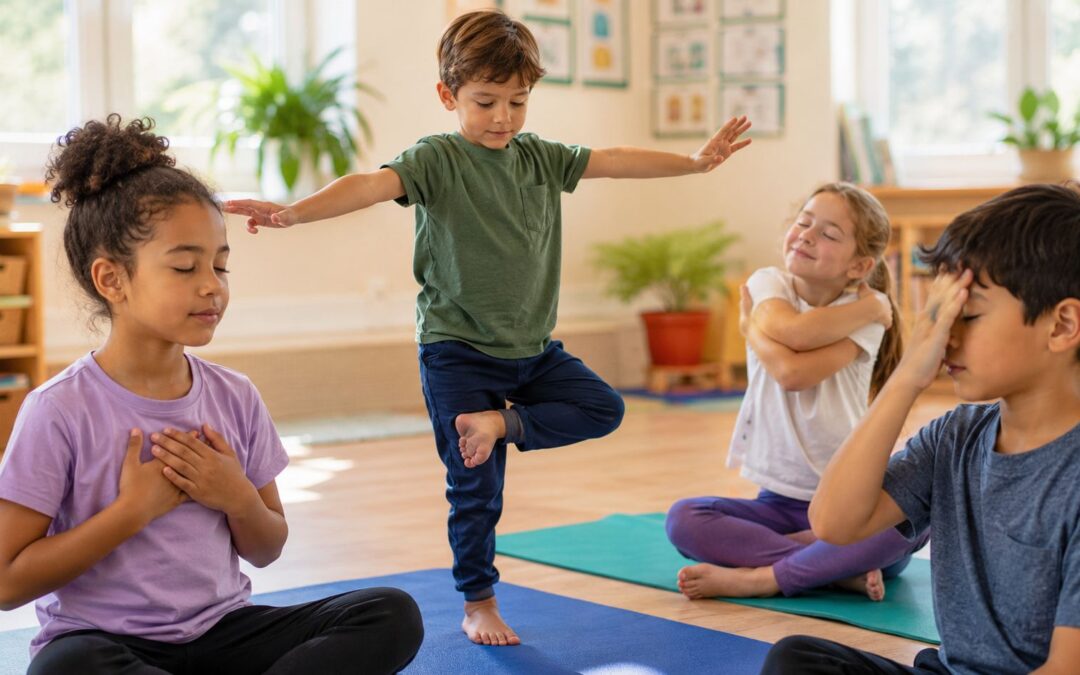
You're not dealing with a child who is “acting out” when they can't sit still, blurt answers, or melt down after a loud hallway transition. More often, you're seeing a body that hasn't yet learned how to notice itself, calm itself, or organize itself for learning. Body awareness activities help children connect what they feel inside with what they do outside, which is why they're so useful in classrooms, counseling spaces, and at home.
That connection matters because body awareness is tied to interoception, the internal sense that helps kids notice hunger, tension, breathing, and fatigue. A major meta-analysis found a small but statistically significant association between mindfulness and objective body awareness, based on 17 independent effect sizes with an effect size of g = 0.21 and a 95% CI of 0.08 to 0.34 from the Scientific Reports analysis of mindfulness and body awareness. The takeaway for educators is simple, small practices can still matter, especially when they're repeated consistently.
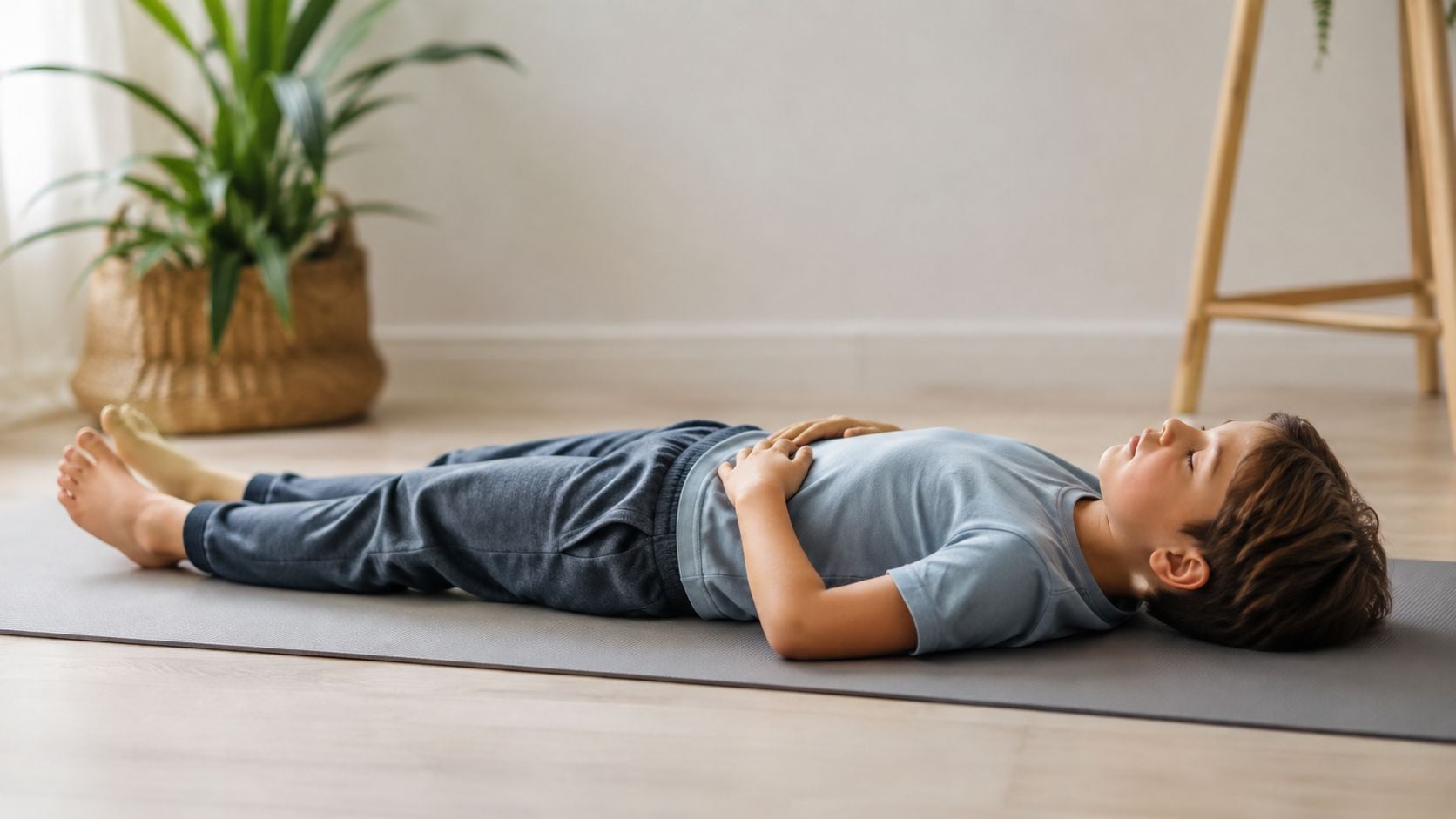
1. Body Scan Meditation
A body scan gives students a structured way to notice what's happening inside without having to fix anything right away. That matters because many children don't know how to name tension, calm, restlessness, or discomfort until those feelings spill into behavior. A short scan helps them pause, locate sensations, and build the language for self-regulation.
In practice, an elementary teacher might start the day with a 5-minute scan so students can transition from home mode to school mode. A parent might use the same routine at bedtime, pausing at each body part and asking, “What do you notice here?” A school counselor can also use this before testing, especially with anxious students who carry stress in their shoulders, stomach, or jaw.
How to guide it well
Start with a clear path, head to toe or toe to head, and keep your pacing slow. For younger students, 3 to 5 minutes is enough, while older students can usually handle a longer practice. If a child fidgets, that doesn't mean the activity failed, it usually means the child is still learning how to notice.
Practical rule: Aim for awareness, not stillness. A child can be shifting in place and still be fully engaged in a body scan.
For trauma-sensitive use, offer seated practice, open eyes, or a choice to skip any part that feels uncomfortable. After the scan, ask a simple reflection question such as, “Where did you feel tension?” or “Where did your body feel calm?” If you want a ready-made companion resource for students, the internal guide at Soul Shoppe's mindfulness exercises for students pairs well with this routine.
2. Movement Breaks with Intentional Awareness
Movement breaks work best when they're more than just a quick burst of energy. When children notice how their arms, legs, breath, and balance feel during movement, they begin to connect motion with regulation. That's important because many students need movement to reset their nervous systems, and the awareness piece turns an ordinary break into a real SEL tool.
A teacher might lead a 5-minute energy reset with arm circles, leg swings, and spinal twists, then ask what each movement felt like. A parent and child can do a feeling dance at home, then compare notes about body sensations, like “My legs felt strong” or “My heart was beating fast.” In a classroom, a brain break card deck can become more meaningful when each movement ends with a quick reflection, not just a timer.
Make movement observable
Use prompts that direct attention into the body while students move. “What do you feel in your legs right now?” is better than “Are you ready?” because it brings attention to sensation instead of compliance. Cues like “Stand tall and feel your feet on the ground” help anchor the body, especially during transitions.
A school can also build movement stations into the morning or mid-morning routine. One group might jump, one might stretch, and one might twist, then everyone checks in on energy, breath, and focus afterward. Soul Shoppe's fun brain breaks fit naturally here because they turn movement into a repeatable classroom rhythm.
Give students choices. “Big stretches or small stretches?” invites agency, and agency supports regulation.
To keep the routine effective, use the same cue language often. Students learn faster when the structure stays familiar, because they can stop thinking about what comes next and start noticing what their bodies are telling them.
3. Five Senses Grounding Exercise
The 5-4-3-2-1 practice helps students come back to the present when stress starts pulling their attention in too many directions. It works because the senses give the brain concrete information, which can interrupt spiraling thoughts and help a child settle enough to learn. For anxious students, this is often one of the most practical body awareness activities because it's simple, discreet, and easy to repeat.
A teacher can use it in the middle of a stressful announcement and ask the whole class to name something they see, touch, hear, smell, and taste. A parent can guide a child through it in a waiting room before a doctor's appointment. A school counselor can teach it to a student who feels uneasy in the hallway, then post a small reminder card near the classroom door so the student can use it independently.
Keep it teachable before it's needed
Introduce the sequence during a calm moment, not in the middle of a meltdown. That way, students can practice when their brains are open to learning and use the same pattern later when they're dysregulated. For K-1 students, simplify it to 3-2-1, such as three things they see, two they can touch, and one they hear.
Some students are sensory-sensitive, so don't force every sense in every situation. You can skip taste, use gentle movement sensations instead, or ask the child to stay with preferred senses first. Soul Shoppe's 5 senses activity supports this kind of grounding practice well because it reinforces the same sequence in a kid-friendly way.
The best grounding tools don't demand perfect answers. They help a child notice what's there without judgment.
Follow the exercise with a quick body check-in. Ask, “What changed in your body after that?” That question helps students connect an outside-sense exercise with an inside-body shift, which is the learning.
4. Proprioceptive Awareness Activities with Wall Pushes and Weighted Tasks
Some children need stronger physical input before they can settle into learning. Proprioceptive activities, like wall pushes, chair pushes, carrying books, or moving furniture, give the brain clear information about where the body is in space and how much force it's using. That's why these tasks can feel grounding for dysregulated students, especially when their bodies are seeking heavy input or resistance.
A classroom teacher might have students do 10 to 15 wall pushes before independent work, then ask how their bodies feel afterward. At home, a parent can turn routine chores into a body-awareness moment by asking a child to carry the laundry basket, push chairs into place, or squeeze therapy putty while talking about muscle effort. A child who's overwhelmed can also take a heavy-work break by moving books or pushing a rolling cart under adult supervision.
Use force on purpose
Form matters here. Hands should be flat on the wall, the body slightly angled, and the push should come from the shoulders and core, not just the arms. That keeps the activity intentional and safer, and it also makes the body feedback clearer.
You can pair the work with simple counting or breathing, such as “push for 4 counts, rest for 4 counts.” That combination helps students feel the input in their muscles while staying connected to a calm rhythm. The Soul Shoppe embodiment practices resource aligns well with this approach because it treats body input as a regulation skill, not just a movement break.
Use these activities before hard moments, not only after problems happen. Transitions, tests, and busy hallway times are often the best moments for preventive heavy work.
If you're building a wider motor toolkit, a relevant companion resource is motor skills activities for preschoolers, especially for younger children who need more hands-on movement variety.
5. Breathing Awareness Exercises with Hand Placement
Breathing becomes a body-awareness skill when children can feel it, not just hear about it. Hand placement helps with that because a hand on the belly or chest gives direct tactile feedback about expansion, rhythm, and pace. When students notice the breath moving the body, they start to connect calm breathing with a calmer internal state.
A kindergarten teacher might lead “bubble breath,” asking children to breathe in like they're smelling a flower and out like they're blowing bubbles. A parent can help a child at bedtime place a hand on the heart and notice what changes after three slow breaths. A counselor might teach box breathing for test anxiety, helping a student feel the belly rise and fall through each phase.
Make the breath visible and concrete
Model the breathing yourself so children can see what slow, steady breaths look and sound like. Young children usually do better with imagery than technical language, so “smell the flower, blow the candle” often lands better than “regulate your respiratory pattern.” For older children, counting can help, especially if they're already familiar with patterns like inhale, hold, exhale, hold.
Offer options for hand placement, too. Some children like a hand on the belly, some prefer the chest, and some don't want touch on the body at all. That choice matters, because the goal is awareness and safety, not forcing a pose.
A breathing bell or timer can make this a shared classroom habit. When it chimes, everyone stops for three conscious breaths, then checks in with the body before returning to work. This kind of routine gives students a predictable moment to notice what's happening inside them, which helps build trust in the practice.
6. Yoga and Mindful Stretching
Yoga works well for body awareness because it combines pose, breath, and attention all at once. A child isn't just reaching for a shape, they're learning how the shape feels, where balance lives, and how emotions shift inside the body. That makes yoga especially useful for students who need a safe, playful way to inhabit their bodies with more confidence.
An elementary class might move through an animal flow sequence, starting with mountain pose, then moving into downward dog, then resting in child's pose. A parent and child might do bedtime yoga in pajamas, using gentle stretches to release the day before sleep. A teacher can also keep yoga cards in the classroom so children can pick a pose when they need a regulation tool.
Keep the practice child-friendly
Start with familiar poses such as mountain, child's pose, and downward dog. The simpler the pose, the easier it is for students to focus on sensation instead of performance. Use storytelling when you can, because a forest, a strong tree, or a steady mountain gives children something concrete to inhabit.
Remind students that it's “your yoga,” not a test of perfect form. Some children will need wall support, some will prefer kneeling, and others may want a chair-based version. Keep child's pose available as a resting option throughout the sequence so children learn that pause is part of practice, not a sign of failure.
Pair each pose with a quick body question. “In warrior pose, I feel…” or “What do you notice in your shoulders now?” helps children connect posture with emotion and physical sensation. Over time, they start recognizing which shapes help them feel strong, which help them feel calm, and which ones they can use on their own.
The most useful yoga routines in schools are the ones children can remember without adult prompting.
7. Body Mapping and Emotional Awareness
Body mapping helps children see feelings instead of only talking about them. That's powerful because emotions often show up physically before a child has words for them, tight fists, a heavy chest, a hot face, or a stomach that feels strange. When students draw or color where feelings live in the body, they build a bridge between emotional literacy and body awareness.
A teacher can hand out a simple body outline and ask students to color where they feel anger, sadness, happiness, or worry. A parent can sit with a child and make a feeling map together, talking about where calm or concern shows up during the day. A counselor can use body maps to help a student describe worry as chest tightness, then return to that map later when it's time to choose a regulation strategy.
Make the map safe and usable
Keep the language neutral. Ask, “Where do you notice calm?” instead of “What's wrong with your body?” because the point is understanding, not judgment. Offer options for children who don't want to draw, such as stickers, symbols, or words written directly on the outline.
If the activity happens in a group, display it carefully and remove identifying details when needed. That helps normalize the idea that many children feel emotions in similar places. Revisit the maps after teaching coping tools so students can see whether something shifted.
This is also a strong place to connect action to sensation. If a child says anger lives in the hands, hand squeezes or wall pushes may help. If worry lives in the chest, breathing practices may be the right next step. The value of body mapping is that it makes regulation feel specific instead of abstract.
Real-life interoception training; engages all senses and gratitude
8. Mindful Eating and Sensory Food Exploration
Mindful eating slows children down enough to notice hunger, fullness, texture, and taste before those cues get buried by speed or distraction. It's one of the clearest ways to connect body awareness with everyday life, because meals and snacks already happen in homes and schools. When a child pauses to notice food with all the senses, the body becomes part of the learning process.
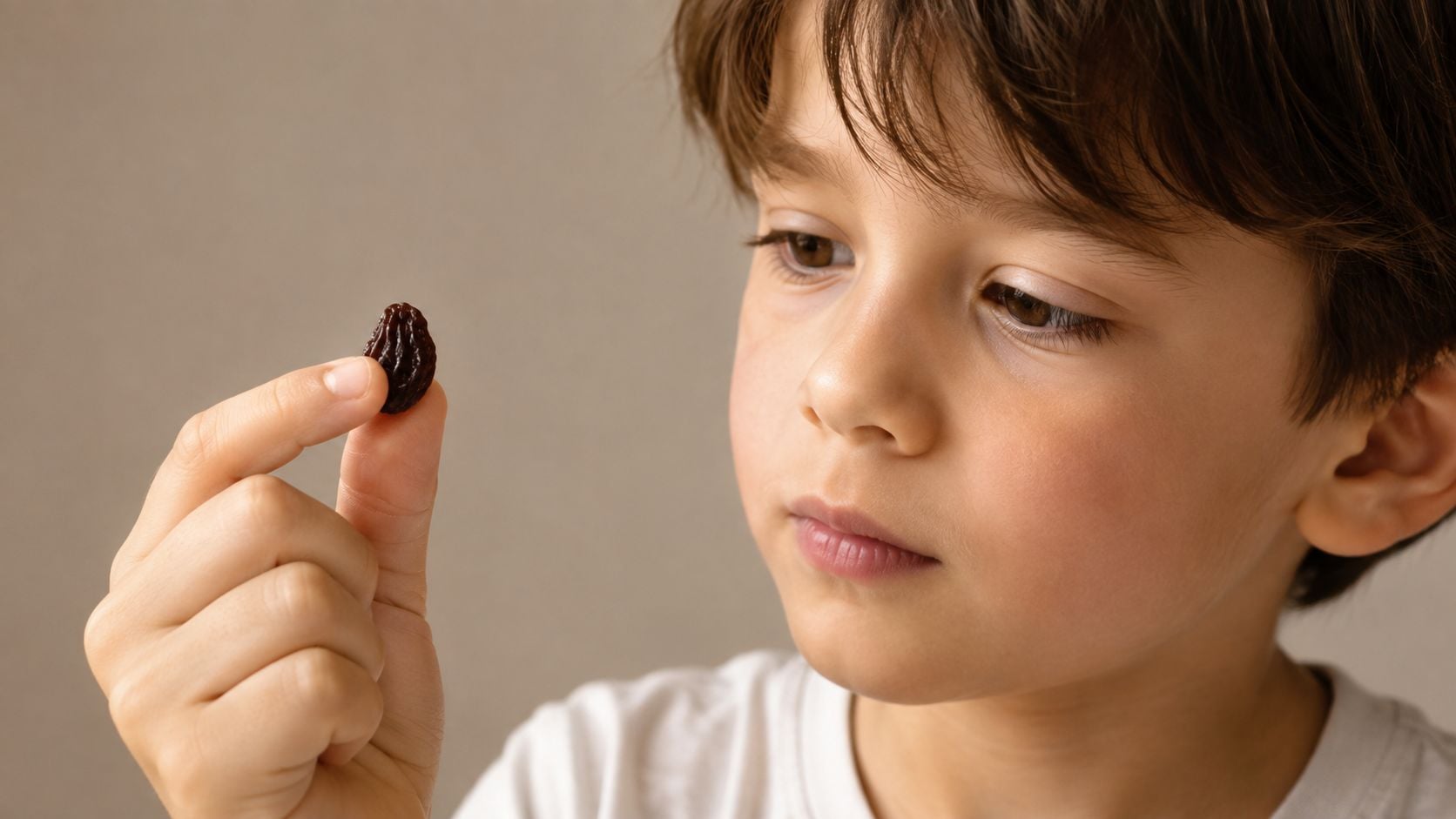
An elementary classroom might do a mindful raisin tasting with one small raisin, asking students to notice color, wrinkles, smell, texture, and flavor changes. A parent and child can share a slow snack at home and compare what they each notice in the first bite and the last bite. A school lunch routine can begin with a simple pause to smell the food and check in with hunger before eating.
Keep the experience small and pressure-free
Use tiny amounts of food so the task stays focused and doesn't turn into a full snack time challenge. One raisin, one strawberry slice, or one piece of chocolate is enough for the first practice. Start with neutral or preferred foods, and don't frame foods as good or bad.
For children with sensory sensitivities, ask what they notice rather than assuming they'll enjoy the texture or taste. Some kids will be curious, some will be cautious, and some will need repeated tries before the practice feels safe. That's normal.
A simple script works well here. “Notice the color. Notice the smell. Notice the texture on your tongue. Notice how the taste changes as you chew.” Afterward, ask how the body feels, and whether fullness or satisfaction showed up differently. That reflection helps children connect eating with body signals instead of autopilot.
Weaving Awareness into Everyday Life
Body awareness becomes most useful when it shows up in ordinary moments, not only in special lessons. A morning body scan can help a class settle in. A wall-push reset can help a student move from transition chaos into focused work. A five-senses pause can turn a stressful hallway, announcement, or doctor's office wait into a chance to regulate instead of react.
The strongest routines are the ones adults repeat with calm consistency. When a teacher uses the same cue language, the same breathing pattern, or the same reflection question, students begin to trust the process. That trust matters because body awareness is personal, and some children need many low-pressure repetitions before they can use a tool on their own.
These activities also support social-emotional learning in a very practical way. Children who can notice body signals are better positioned to name emotions, ask for help, and choose a strategy before escalation takes over. That's especially important in K-8 settings, where students are growing fast, managing more complex social situations, and learning how school expectations feel in their bodies.
Parents and teachers don't need a perfect program to start. A short scan before the bell, a movement break after recess, a hand-on-belly breath before bedtime, or a sensory check-in during snack time can make a real difference when it's repeated over time. Small moments of awareness help children understand that their bodies are not obstacles to learning, they're part of how learning works.
At Soul Shoppe, we believe safe, connected communities are built through practice, language, and care. When adults model body awareness, they give children a reliable way to reset, reflect, and return to learning with more confidence and compassion.
Soul Shoppe helps schools and families build the shared language kids need for self-regulation, mindfulness, and connection. If you want practical support that turns body awareness activities into everyday SEL habits, visit Soul Shoppe and explore programs that help children thrive at school and at home.
You've seen it. A child in the backseat melts down because the snack wrapper tore the wrong way. A preschooler says, “I'm mad,” then hits anyway. A kindergartner suddenly cries when a friend won't share, and the adult nearby wonders whether this is ordinary growing up or a sign the child needs more support. Emotional development in early childhood lives in those moments, not in a neat chart.
The early years are a sensitive period for building emotional competence, the capacity to identify, understand, express, and regulate emotion. Research synthesized in early-childhood literature shows that infants begin with basic emotions in the first year of life, more complex self-referential emotions emerge toward the end of the second year, and by ages 4 to 5 children can perceive and describe multiple or ambivalent emotions, a major milestone in emotional understanding PMC review on early emotional development. That timing matters at home and in school because it overlaps with the years when children are learning how to belong, listen, wait, and recover.
What Emotional Development Really Looks Like in the Early Years
A child who says, “I'm frustrated,” and then throws a block has still made progress in emotional development. The feeling has been named, and the next skill, calming the body and choosing what to do, is still under construction. Adults often fold emotional competence, emotional regulation, and behavior into one bucket, then respond as if a child is either “good” or “defiant.” That shortcut skips the different layers children are building.
The four pieces adults can observe
Recognizing emotions shows up when a child notices a face, a tone, or a change in their own body. Expressing emotions shows up in words, tears, laughter, turning away, or clinging. Understanding emotions is the child beginning to connect feeling to cause, like realizing a friend left because it was time for pickup. Regulating emotions is the harder part, slowing the feeling down, keeping the body safe, and choosing a response that fits the moment.
Practical rule: if a child can name a feeling but cannot yet stop their body, you are seeing development, not dishonesty.
The mistake many adults make is treating a feeling word as proof of self-control. A child can say “angry” and still need co-regulation, structure, and repetition before self-regulation starts to stick. Harvard's Center on the Developing Child describes emotional development as part of brain architecture from birth, and by the end of the preschool years children should be able to identify and understand feelings, read emotions in others, manage strong emotions constructively, regulate behavior, develop empathy, and sustain relationships Harvard Center on the Developing Child.
That is how the emotional ladder is built rung by rung. Emotional growth is not a personality label. It is a set of skills children use to learn, play, solve conflicts, and stay connected to the adults who keep them safe.
Age-by-Age Milestones from Infant to Early Elementary
A child may light up at a familiar voice and still melt down when a turn is delayed. Another child may use careful feeling words and still need an adult close by when frustration hits. Those uneven patterns are part of normal emotional growth in the early years.
Infants and toddlers start with co-regulation
In the first years, infants are working with basic emotions such as joy, fear, anger, sadness, surprise, and interest, and more complex self-referential emotions emerge later in toddlerhood PMC review on early emotional development. A baby's emotions show up through crying, gaze, movement, and changes in body tension, and they are usually settled by an adult who notices quickly. A toddler begins to point, protest, hide, cling, or use a few words, but still borrows the adult's calm.
A simple example helps. A 15-month-old reaches for a cup, misses, and bursts into tears. An adult says, “You're upset. I've got it,” then hands over the cup and stays close. That response does not spoil the child. It gives the child repeated experience with being soothed, and that is how the earliest emotional skills start to take shape.
Preschoolers begin to talk about feelings and causes
Emotion understanding rises sharply through the preschool years. In a longitudinal cohort study of 231 children followed from ages 1 to 5, researchers found that children acquired about two additional emotion-understanding components per year starting at age 2. In everyday terms, a 3-year-old may identify “sad” or “mad,” while a 4- or 5-year-old starts to understand mixed feelings, false-belief emotions, and why one event can trigger two reactions.
Pretend play matters here. A child feeding a stuffed bear, acting out a doctor visit, or playing “teacher” is rehearsing perspective-taking in a low-stakes way. If a child says the doll is “scared” before the doctor visit, they are practicing emotion language for a real-life experience they do not fully control yet.
That same skill shows up at home and in class in small, practical ways. A preschooler who can say, “He's mad because I took the block,” is beginning to link feeling to cause, which helps adults coach the next step instead of guessing at the behavior.
Early elementary children begin carrying skills into groups
Children in early elementary settings can usually reflect more, but they still need support to use those skills consistently. In one study of 749 early school-age children, the first year of schooling, typically ages 4 to 5, showed stronger emotional competence than Year 2, typically ages 5 to 6, with mean scores of 38.17 versus 34.54, a statistically significant difference, p < .001, Cohen's d = .31 early school-age study. Older children have not regressed. Context, demands, and self-control expectations shift fast once school routines get harder.
By this stage, emotional growth starts to look more public. A child may use words after a conflict, recover after being corrected, or ask for help instead of shutting down. The same skill can look different from one setting to another, which is why adults often see better regulation at one moment and a bigger reaction the next.
Tells a story about why a character feels left out
Early elementary, 5 to 8 years
Better language for feelings, growing regulation in groups, repair after conflict
Tries to use words after an argument, but still needs reminders
For adults who want a simple bridge into practice, emotional growth also connects closely with daily social routines. A child who can label, calm, and consider someone else's view is easier to support in play, cleanup, group time, and family transitions. For a closer look at how those skills fit together, this explanation of social-emotional development is a useful companion, and teachers who want concrete classroom ideas can browse these learning examples.
How Emotional Growth Connects to Social-Emotional Learning
A child who melts down at cleanup time, avoids a peer after being corrected, or shuts down when asked to join a group is showing emotional growth in action. Those moments are the day-to-day place where social-emotional learning, or SEL, meets real life.
Weather, umbrella, and the child in the middle
Emotions work like weather. Some days are clear, some are stormy, and some are mixed. Regulation works like an umbrella. It does not stop the feeling, but it helps a child keep moving without getting knocked over by the moment.
That is why the five SEL competencies fit so naturally with emotional growth. Self-awareness helps a child notice the feeling rising. Self-management helps the child steady the body enough to respond. Social awareness helps the child read a classmate's face or tone. Relationship skills help with repair, sharing, and asking for help. Responsible decision-making helps a child choose what to do next when the feeling is loud.
The common mistake is to treat emotion learning as if naming a feeling is the finish line. A child who says “I'm angry” still needs practice with what to do while angry. A simple routine, repeated in the classroom and at home, gives children one path to try instead of asking them to invent a new plan in the middle of conflict. For teachers who want concrete examples they can adapt, browse these learning examples.
Children learn emotion skills most quickly in relationships, because that is where feelings show up.
Developmental research points in the same direction. From birth through age 8, socioemotional competence includes understanding and managing emotions and behavior, making decisions and working toward goals, and keeping positive relationships NIH book chapter. As noted earlier, the Harvard Center on the Developing Child describes emotional development as part of brain development, and by the end of the preschool years children should be growing in empathy, regulation, and sustained relationships Harvard Center on the Developing Child.
A useful way to see this is to match the same skill to different ages. An infant depends on an adult to calm a flooded body. A toddler needs help naming the feeling and tolerating a limit. A preschooler starts to understand another child's point of view. An early elementary child begins using language and repair after conflict, even if reminders are still needed. For a plain-language overview of how these pieces fit together in everyday settings, what social-emotional development looks like in everyday settings is a helpful companion.
The classroom version and the home version are not identical, but they are built from the same parts. A child who can pause, name a feeling, and consider someone else's view has a better chance of joining play, handling correction, and recovering after disappointment.
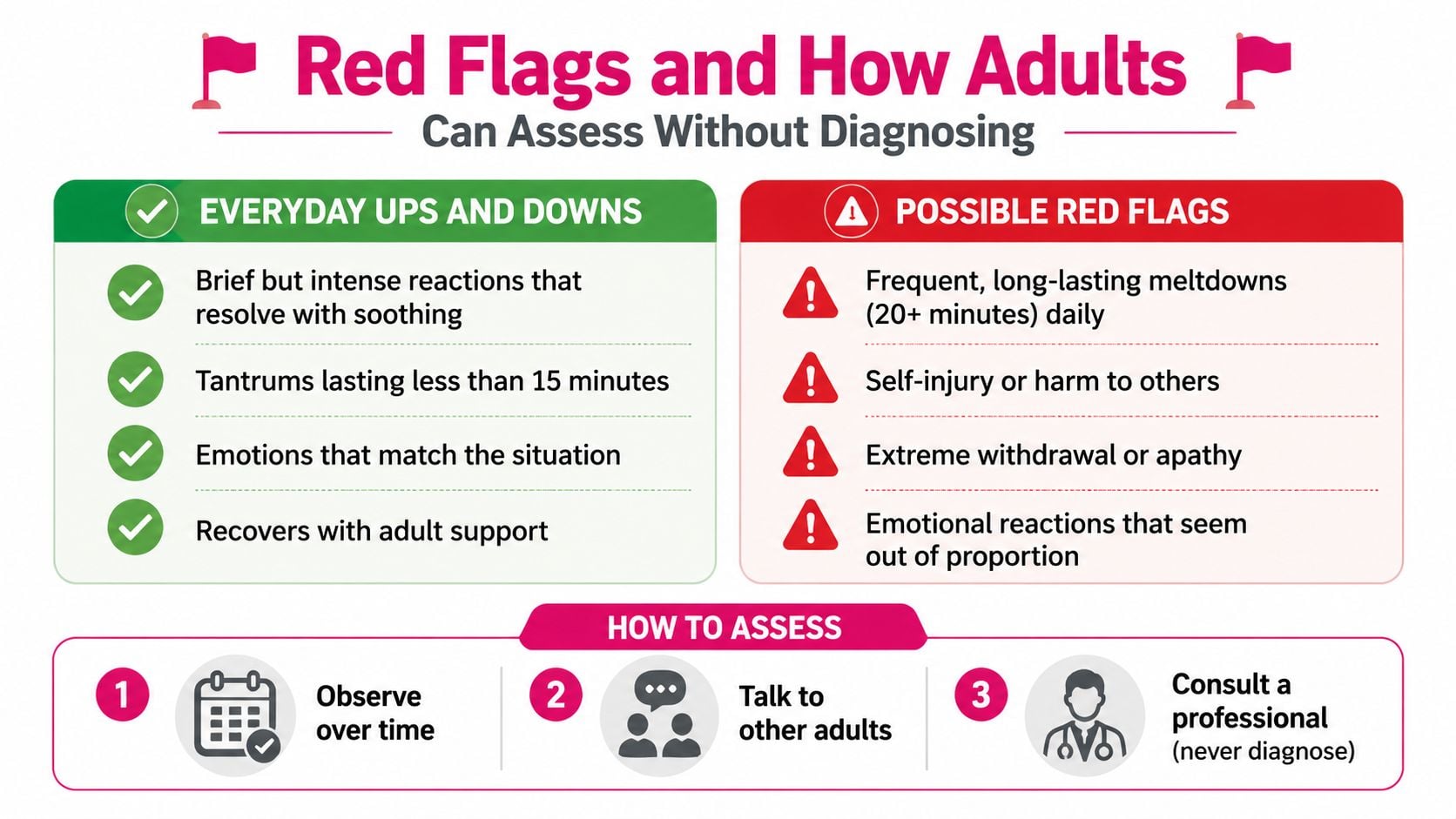
Red Flags and How Adults Can Assess Without Diagnosing
Most children have rough patches. They cry, cling, refuse, or explode when tired, hungry, overstimulated, or disappointed. The question isn't whether a child ever struggles, it's whether the pattern is becoming more frequent, more intense, or harder to recover from over time.
What to watch and what to write down
Look first for change in pattern, not one hard day. A child who usually settles with support but suddenly stops recovering, withdraws from peers, or shows emotional reactions that seem out of proportion across many settings deserves closer attention. If the behavior is frequent, persistent, or starting to affect learning and relationships, it's time to loop in a counselor, pediatrician, or other professional for screening, not self-diagnosis.
Child Trends reviewed 72 distinct measures for children ages 0 to 5 to support federal-level reporting, which is a reminder that assessment is not one thingChild Trends measure review. Observation is what adults do every day. Screening is a brief look using a tool. Full assessment is more detailed and belongs with trained professionals.
For families and schools, practical tools often include DECA, ASQ:SE, and teacher rating scales. Use them as conversation starters, not labels. A weekly two-minute check-in can be as simple as: “What happened before the big reaction? What helped? Did the child recover the same day?” That note can reveal slow drifts that are easy to miss in the rush of the week.
The Guiding Growth resource on visual tools for emotional learning can help adults who need a clearer way to track what they're seeing without turning every hard moment into a crisis.
Practical rule: if you're worried, document behavior across time, across adults, and across settings before you jump to conclusions.
A good internal companion is signs of stress in children, because stress often shows up first as emotion and behavior shifts, not as a neat explanation.
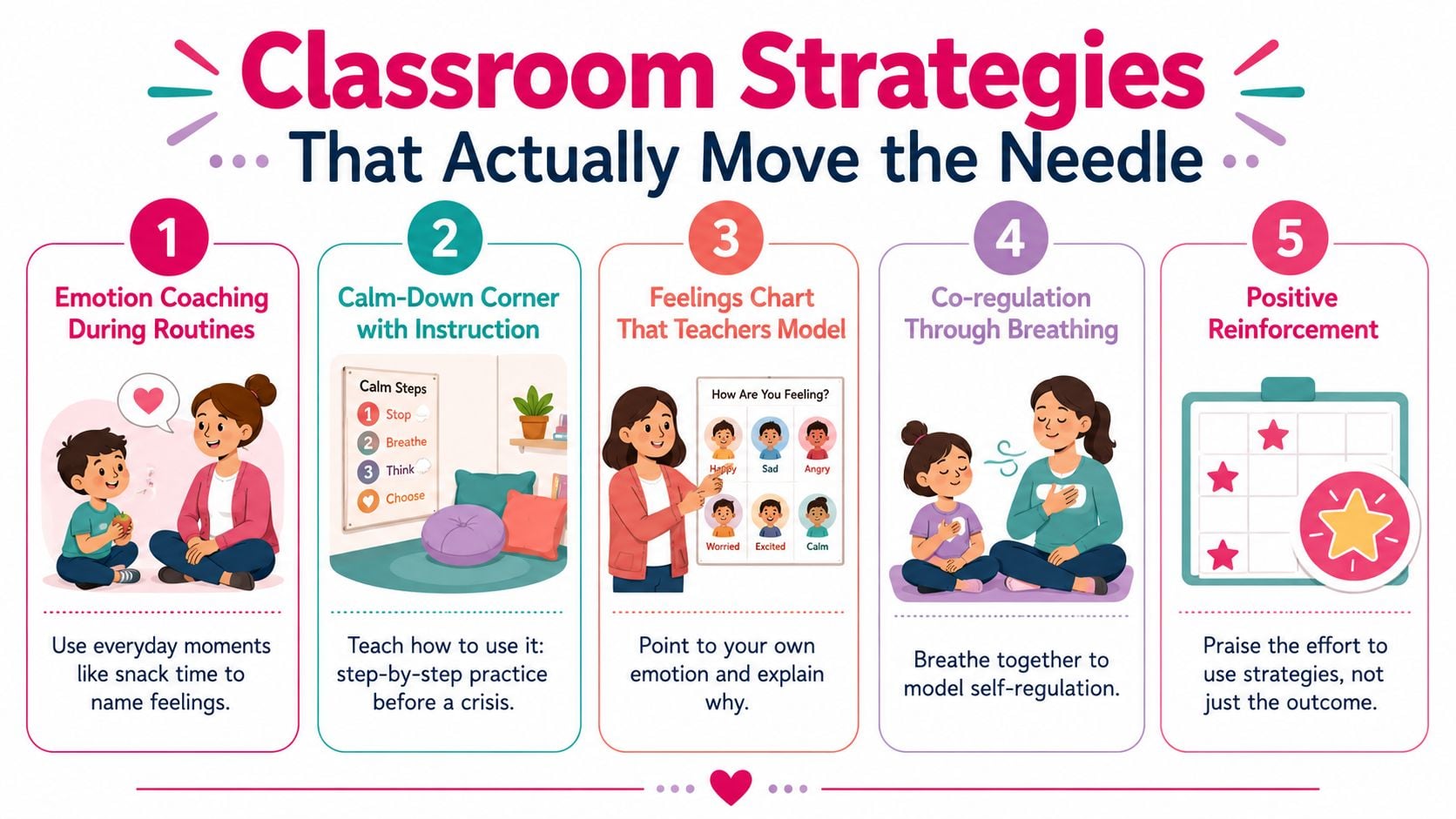
Classroom Strategies That Move the Needle
A calm-down corner will not help if children have never practiced using it. A feelings chart will not help if adults only point to it when everything is already falling apart. The strategies that stick are the ones built into ordinary routines, because ordinary routines are where children have emotions, test limits, and learn what to do next.
Start with language the whole class can share
Use the same few words across the day. “You look frustrated.” “Your body needs a break.” “Breathe, name it, choose it.” Shared language gives children a steady script they can hear at snack, during cleanup, or after a hard turn in play. Research on early-childhood social-emotional learning supports classroom-wide routines because children learn best when adults respond the same way in repeated moments, not only after behavior has already escalated.
One simple model is for adults to use the language themselves first. A teacher might say during snack, “I'm feeling rushed because we need to clean up soon. I'm taking one breath.” That sentence does more than teach vocabulary. It shows children what regulation sounds like in real life.
Put emotion coaching inside routines, not beside them
Circle time, transitions, centers, lunch, and pickup all give children chances to practice the same skill in different ways. A preschooler may need help saying, “I'm disappointed,” while an early-elementary child may need help slowing down enough to explain why a choice felt unfair. The skill is similar, but the support has to match the age and the moment.
At circle time, a child mutters, “I hate this.” The teacher responds, “You're disappointed. We'll stay for two more songs, then you can choose the next job.” The adult has named the feeling, held the limit, and shown that feelings and boundaries can live together.
Here are five practices that tend to change what children do because they teach the next move, not just the feeling:
Emotion coaching during routines. Use snack, cleanup, arrival, and line-up to label feelings in real time.
Predictable transitions. Warn before change, then repeat the same transition language so children know what comes next.
Structured peer play. Put the language of turn-taking, repair, and asking into games, not only into conflict moments.
Restorative responses after conflict. Focus on what happened, who was hurt, and how to make it right.
Shared visual cues. Use one calm-down chart, one breath cue, one class script.
“Name it, hold the boundary, then help the child practice the next move.”
Children do not need every response to be new. They need the same skill repeated in small, ordinary moments, with language that fits their age. That is how labeling turns into regulation, and regulation turns into better choices.
For families looking for a structured play-based support option, find play therapy in Arizona can be a useful next step when a child needs more guided practice than daily routines can provide.
Adapting Breathing Exercises by Age Group
A kindergartener, a fourth grader, and an eighth grader may all need the same nervous-system reset, but they will not take it in the same way. Keep the breathing pattern familiar, then change the words, the pace, and the amount of privacy you offer. Adults usually get better results that way, because the child feels understood and the exercise stays usable.
K to 2
Younger children usually respond to imagination, movement, and very short directions. I keep the script concrete, like “fill the balloon,” “make the flower smell,” or “trace the star.” A five-year-old does not need a lecture on the nervous system. They do need to know where to put their hands and what the next breath should feel like.
The main resistance at this age is distraction, not defiance. If the child starts giggling or wandering, shorten the routine and return to a visual cue. A stuffed animal on the belly, a pinwheel, or a finger-traced star can keep the child engaged without adding more words.
When the goal is simple calm, a short, repeatable script works best. Say the same line each time, then pause long enough for the child to follow the breath instead of rush to the answer.
Grades 3 to 5
This group likes a little more structure. Counting works well, especially when the adult keeps the pace steady and predictable. They will often ask whether they are doing it “right,” so I answer with body cues, not perfection, “If your belly moves and your exhale is slower, you are on track.”
This is also the age where a child may enjoy understanding that longer exhales help the body settle. One useful explanation is simple, “Your out-breath tells your body to slow down.” That gives them a reason to buy in without turning the practice into a science lesson they did not ask for.
Some students at this age like a visual to go with the count, especially if they are already using other calming tools. A simple companion like breathing support from a mindfulness exercises for kids guide can help the routine feel familiar across settings, from classroom carpet time to a quiet corner at home.
Grades 6 to 8
Older students usually want autonomy and respect. They may reject anything that feels babyish, so I use neutral language like “reset breath,” “focus breath,” or “quiet breath.” A middle schooler might prefer tracing a square on a notebook edge or using a timed app, while a sixth grader might like a private version done with closed eyes and no commentary.
Useful cue: if the student resists the name of the exercise, change the name before you change the method.
The technique itself stays the same, but the delivery gets more discreet. A student may sit straighter, lower the voice, or turn the exercise into a quick reset before class starts. That shift in tone matters because the breathing pattern can stay familiar while the language and delivery change. Adults usually get better results when the child feels met instead of managed.
Older students often engage better when they understand that breathing gives them more control before a test, an argument, or a performance. That sense of control is usually what wins them over.
Weaving Breathing Practice into Daily Routines
A child does not need a big breathing lesson to get started. What helps is a small routine placed at the right moment, before the room gets loud or the shoulders start to tighten. In real classrooms, I have found that children learn breathing best when the practice is brief, predictable, and tied to something they already do every day.
A simple way to build that habit is to match one breath pattern to one daily transition. Morning arrival, a hard test, a conflict at recess, or the stretch between homework and dinner all give you a natural opening. The routine starts to feel normal when the child hears the same cue, sees the same steps, and knows the same ending.
Four touchpoints that usually work
Morning arrival: A quick star breath helps a child move from home mode into school mode without a long conversation.
Before tests: A square breath gives students a familiar reset before pencils hit the page.
After disagreements: A few dragon breaths help release tension before anyone tries to solve the problem.
At home before homework: Let the child choose between balloon or rainbow breath so the routine feels like a choice, not a command.
The choice matters. Children are more willing to practice when they can predict what happens next, and adults are more likely to keep using the tool when it takes less than a minute to begin. If you want a visual that fits a classroom wall or a calm corner at home, the Box Breathing Visual can support the routine without turning it into a lesson about breathing.
How to make it stick
Use the same cue every time. “Before we begin math, let's take three slow breaths” gives the child a clear start, while a different script every morning makes the routine harder to remember. After a while, the cue and the feeling of settling begin to pair together, and that connection is what turns a practiced skill into a habit.
Place breathing practice in calm moments, not only in crisis moments. If a child only practices when they are already upset, they may start to link breathing with getting in trouble. When the breathing happens during arrival, cleanup, or bedtime reading, it becomes part of normal life instead of a last resort. That is the rhythm that holds up in busy classrooms and at home.
Common Mistakes That Make Kids Reject Breathing Exercises
A child who says no to breathing practice is often reacting to the way the adult introduced it, not rejecting the skill itself. In classrooms and at home, children usually try a calming routine when it feels clear, respectful, and easy to follow. They pull back when the moment feels hurried, overly staged, or like they are being watched.
The fixes that matter most
Start by showing the breath before asking a child to copy it. Model the inhale, the exhale, and where the hands go, then let the child try. Common mistakes show up when adults cue breathing without enough setup, skip the slow exhale, or stop the practice before the child has time to feel any shift.
Language matters too. A fifth grader may enjoy “balloon breath,” while an older student may respond better to “reset breath” or another plain phrase that feels less babyish. Preserving the cutest name isn't the goal, keeping the child willing to try is.
Some children need a quieter entry point. If a child refuses to join in, let them trace the pattern with a finger, draw it on paper, or watch a pinwheel move while you breathe. That side door gives them a way to participate before they are ready to do the whole routine out loud.
Keep your tone calm and your expectations small. A short script such as, “Let's take one slow breath together,” often works better than a long explanation, because children can follow one clear step at a time. If you make the practice feel like a test, they will protect themselves by checking out.
Don't chase instant calm. Chasing it usually makes everyone feel more pressure.
Patience pays off here. A child may still look fidgety after one round, but the essential learning is the sequence, not a perfect-looking response. When adults stay low-key and consistent, children are more likely to cooperate the next time and less likely to treat breathing as something they should avoid.
Building a Four-Week Breathing Practice Plan
Week one should be small and predictable. Choose one technique, use it at one consistent time, and keep the script the same. A single round before morning meeting or before homework is enough to start.
Week two adds a second option and a little choice. You might offer balloon breath or box breathing, then let the child choose which one they want. That small decision helps them feel ownership, which usually improves follow-through.
Week three is the point to use breathing ahead of known stress. Try it before a quiz, before a sibling visit, or before a transition that usually goes badly. This is also a good time to ask students to notice, in plain language, whether their shoulders, jaw, or hands feel different after the practice.
Week four can be student-led. Ask the child to teach the routine back to you, lead a partner, or choose the cue words themselves. Keep a simple observation log if you want to track when the practice helps most, and ask the child one question like, “Did that make your body feel a little steadier?”
If you want breathing to become part of a larger SEL rhythm at school, Soul Shoppe offers programs and tools that support shared language, self-regulation, mindfulness, communication, and conflict resolution across school communities.
If you're building calmer classrooms or calmer evenings at home, start with one breath script and use it every day for a week. Then visit Soul Shoppe to explore resources that fit into the same kind of connection, safety, and shared language that help kids use these skills when they need them most.
You're in a familiar spot if you've ever watched a student go quiet during morning meeting. The prompt is friendly enough, the room is calm, and yet one child is clearly doing the math of, “This question doesn't fit my life.” That small disconnect is exactly where culturally responsive SEL starts to matter, because SEL only works when students can see themselves in the way it's taught, practiced, and repaired.
A lot of educators already teach with care. They want kids to feel safe, heard, and included. The hard part is that good intentions can still miss students when the routines, examples, discipline choices, and family communication all assume one dominant experience instead of many.
When the Morning Meeting Prompt Misses the Mark
A teacher asks, “What did you do this summer?” A few hands shoot up, and one student stares at the floor. Maybe their summer looked like caring for siblings, moving apartments, helping at a family business, or staying inside because money was tight. The question wasn't cruel, it was just narrower than the room.
That's the everyday problem culturally responsive SEL is meant to solve. SEL is strongest when the prompt, the activity, and the response options leave room for different cultures, family structures, and lived realities. When they don't, some students participate with ease while others learn that school asks them to translate themselves before they can belong.
Practical rule: If a prompt only works for one kind of childhood, it's not neutral. It's selective.
A safer circle prompt sounds more open. “What's something you learned, made, noticed, or did over the break?” That version still invites reflection, but it doesn't punish kids whose experiences don't match the most common script. It also opens space for family care, work, language brokering, community routines, and rest.
The same pattern shows up in transitions, conflict repair, and praise. A child who hears adults only celebrate one kind of communication style can start to think their home norms are wrong. The safe space guidance from Soul Shoppe fits here because psychological safety isn't just about warm language, it's about whether students can show up without editing their identities first.
In other words, the prompt is never “just a prompt.” It's a signal about who the classroom expects to be centered, who gets to speak comfortably, and who has to work harder just to enter the conversation.
What Culturally Responsive SEL Actually Means
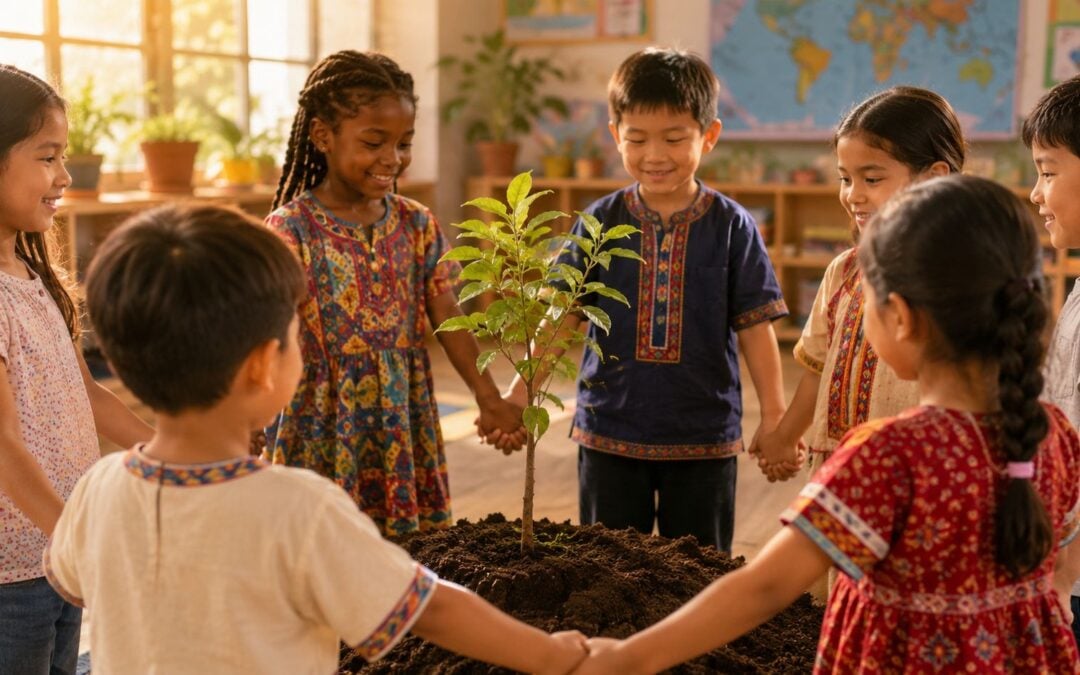
Think of students like different soils, not empty plots. Some are already rich with family language, survival skills, humor, ceremony, caregiving, and community expectations. Culturally responsive SEL works when instruction notices that richness and builds from it instead of flattening it into one school-approved version of “good behavior.”
A working definition is simple. It's SEL designed around students' cultural strengths, identities, and lived realities, while also examining power, bias, and barriers that shape school life. That means you're not only teaching self-management or empathy, you're asking whose norms are being treated as default and whose experiences are treated as exceptions.
The three layers that show up in real classrooms
First, design around cultural strengths. Teachers connect lessons to family routines, community stories, home languages, music, and local examples. Washington's SEL Culturally Responsive Practices Brief says these practices affirm students' cultural place in the world and intentionally address barriers to SEL, which is a useful way to think about the work when you're explaining it to colleagues or families (Washington OSPI brief).
Second, center student identities and lived realities. That means students are not asked to hide where they come from in order to participate. The PMC review of early childhood and elementary practice points to classroom community, family engagement, critical literacy, multicultural literature, and print-rich environments as connected dimensions of culturally responsive teaching (PMC review).
Third, examine power and bias. This is the piece many school teams skip because it feels harder, but it matters. If a lesson never names discrimination, privilege, or microaggressions, it can become a polished version of inclusion that still leaves the hardest realities untouched.
A good test is simple. If your SEL lesson could run the same way in every room without acknowledging who your students are, it's probably not culturally responsive yet.
For a plain-language explanation, you could tell a parent, “We're teaching kids how to manage emotions and solve problems in ways that respect their culture, language, and family life, while also helping them deal with unfairness at school and beyond.” That's the heart of it.
What the Research Actually Shows
The evidence base is encouraging, but it's not magic, and it's not finished. A 2024 systematic review and meta-analysis of culturally responsive SEL programs included 13 studies in the qualitative review and 7 studies in the quantitative meta-analysis, with an overall effect size of Hedges' g = 0.36 (2024 systematic review). That matters because it shows measurable promise, while also showing the field is still building.
A second meta-analysis of culturally adapted SEL programs found 0.27 overall with a 95% confidence interval of 0.13 to 0.41 (meta-analysis PDF). In the subset that met the SAFE criteria for effective SEL implementation, the effect size was 0.26 with a 95% confidence interval of 0.15 to 0.37. Programs that did not meet SAFE criteria were not statistically distinguishable from the null, which is a useful reminder that adaptation alone doesn't replace strong implementation.
What seems to matter most
The strongest programs in the review were delivered at the targeted level, led by researchers, and used multiple culturally responsive strategies rather than just one (2024 systematic review). That lines up with what many educators feel in practice. A single poster, holiday craft, or renamed activity doesn't shift student experience very much. Design choices, repeated over time, do.
The research on English learners also points to gains in self-awareness and relationship skills after cultural and linguistic adaptation (technical review). That makes sense, because those are the skills most tied to classroom participation, peer interaction, and feeling safe enough to speak.
The biggest gap is measurement. The literature still leans toward principles and implementation advice, not a widely accepted framework that cleanly separates culturally responsive SEL from generic SEL (gap review). If you're presenting this to a board or parent group, that honesty helps. The field has real evidence, and it still needs stronger tools for tracking what changes for marginalized students.
Takeaway for leaders: treat the research as a reason to start thoughtfully, not as a reason to overclaim.
Everyday Classroom Strategies That Change Practice
The fastest way to make culturally responsive SEL feel real is to change the ordinary moves. Not the one-off assembly, the ordinary moves. The morning prompt, the response format, the way a disagreement is repaired, the examples on the wall, the way an adult talks about home language, all of that teaches SEL whether you planned it or not.
Five shifts you can use tomorrow
Use asset-based identity talk. Ask, “What's a skill, tradition, or habit your family has that helps people care for each other?” That prompt lets students name pride instead of only problem-solving. The Children's Institute guidance recommends conversations that are asset-based and connected to children's lives, including home languages, music, games, and lived experiences (Children's Institute).
Make prompts inclusive by design. Swap out questions that assume one experience, like “What did you do this summer?” for “What did you learn, notice, or do over the break?” The SMART article's caution about exclusionary prompts is useful because it shows how small wording choices can widen or narrow participation (SMART article).
Offer more than one response mode. Let students draw, speak, write, record audio, or use a short video to show understanding. A counselor running a coping-skills lesson can say, “Choose the format that helps you share your thinking clearly.” That supports voice and cultural relevance at the same time.
Represent more than one kind of child in materials. Use books, photos, and class examples that reflect different family structures, neighborhoods, abilities, and languages. When students see people like them in the learning environment, they don't have to spend energy wondering whether school has room for them.
Respond to conflict with context, not just correction. If a student gets into a peer conflict, ask what happened, what the students were feeling, and what social rule or family expectation might be shaping the moment. That kind of response keeps the focus on learning and repair instead of only compliance.
If the strategy can live inside your existing meeting, lesson, or hallway response, it's probably a real practice, not an extra.
Sample Lesson Snippets You Can Use This Week
An elementary lesson can be short and still carry a lot of meaning. Start with a multicultural read-aloud, then move to a self-portrait activity, and finish with a family interview about how caregivers solve conflicts at home. The point is to connect story, identity, and home wisdom to concrete SEL language.
Elementary lesson on feelings and apology language
Open with, “Today we're looking for how families care for one another in different ways.” Read a book that includes children from an underrepresented community, then ask students to notice one problem the character faces and one way the character shows care or courage. After the read-aloud, have students draw self-portraits and label one strength they learned from family or community.
Send home a simple interview question. “How do the adults in your family solve problems when people are upset?” When students return, ask them to share one idea from home and connect it to naming feelings, using calm words, or making an apology that repairs harm. If a student brings up a difficult home experience, respond with care, thank them for trusting the room, and move the conversation toward support rather than forcing public details.
Upper-grade lesson on perspective-taking
In middle grades, use youth culture, music, or a familiar local example to open a discussion about perspective. You might say, “Different people can hear the same song, watch the same clip, or live the same moment and still walk away with different feelings. Let's practice noticing that without arguing someone out of their experience.” Then use structured dialogue norms so students know how to listen, wait, and respond.
Ask students to compare how two people might interpret the same event based on identity, friendship history, language, or community norms. Give them sentence stems such as, “I could see that differently because…” and “That makes me think about…” If a student names discrimination or an exclusionary moment, the adult's job is to slow the room down, acknowledge the harm, and keep the discussion grounded in respect.
The PMC review's connected dimensions, classroom community, family engagement, critical literacy, multicultural literature, and print-rich environments, match this kind of lesson design well (PMC review). Students aren't just talking about empathy. They're practicing it in a format that honors where they come from.
Family and Community Engagement as a Core Layer
Family partnership can't sit on the edge of this work. A 2025 study in rural TK classrooms found three CR-SEL themes, multicultural and critical perspective development, inclusive environment, and family engagement, which says a lot about what schools often miss when they treat parent involvement as a separate add-on (ACT report). Families are not an audience for SEL. They're part of the implementation.
What stronger partnership looks like
Start by asking caregivers what respect, discipline, and emotional regulation look like at home. That gives you a real baseline and keeps you from assuming the school's default language is the only workable one. It also surfaces differences you can discuss without turning them into deficits.
Offer communication in languages families use and in formats they can access. A short bilingual message, a phone call with interpretation, or a brief video message can do more than a polished flyer no one reads. Consistency matters here more than performance.
Invite families to co-design a small piece of learning. A family interview, a story about how adults in the household solve conflict, or a community partner visit can become the bridge between classroom skills and home practice. The 2025 rural TK findings matter because they show family engagement as a central theme, not a courtesy.
Trust grows when families see that school asks them for expertise, not just attendance.
Community organizations can help too. Youth programs, cultural leaders, after-school staff, and neighborhood groups can extend the same SEL language across settings so students don't have to relearn how relationships work every time they change rooms. That continuity is especially helpful when children are moving between school expectations and home expectations.
If language access, time, or previous negative school experiences make family engagement hard, start small. One honest question, one translated message, and one follow-up loop are better than a big event that doesn't change everyday communication.
Naming Power, Bias, and Identity-Based Stressors
Culturally responsive SEL gets thin fast if it only celebrates difference. Real classrooms also have to deal with power, privilege, implicit bias, institutional racism, microaggressions, discrimination, and the stress students carry when they're constantly managing how they're seen. If the work stops at kindness, it misses the moments when kindness alone isn't enough.
Here's the practical difference. A celebration-of-diversity lesson says, “We all have unique backgrounds.” A deeper CR-SEL lesson asks, “Who gets interrupted, who gets believed, who gets corrected, and who has to translate themselves in this room?” That question isn't too heavy for kids when it's handled with care and age-appropriate language.
When a student names discrimination in circle time, don't rush past it. Say, “Thank you for saying that out loud. That sounds painful, and it matters.” Then pause the group, clarify the harm, and decide whether the next step is repair, adult follow-up, or a private check-in.
If a microaggression happens between peers, the goal isn't public shaming. The goal is to make the harm visible, name the impact, and help the student understand why the comment landed the way it did. A calm script works better than a lecture: “I want us to pause. That phrase can send a message about who belongs, and that's not okay here.”
For staff learning, resources that focus on communication across difference can help. A useful example is this deaf communication etiquette guide, which reminds adults that respectful interaction starts with listening, not assumptions. That same humility applies across culturally responsive practice.
The larger point is simple. SEL should help students regulate emotions and build relationships, but it should also give them language for unfairness. That's where empathy becomes more than a feeling and turns into a skill for school life.
Measuring Impact and Taking the Next Step
Schools usually want to know whether a new approach is helping. That's fair. For culturally responsive SEL, the best indicators are practical, visible, and a mix of numbers and stories, because no single data point tells the whole story.
Sample indicators for tracking culturally responsive SEL
Indicator
What to Look For
Data Source
Student belonging
Students say they feel seen, safe, and included
Student surveys, circles, interviews
Discipline patterns
Fewer repeated exclusions for the same students
Office referrals, restorative logs
Attendance
More consistent participation over time
Attendance records
Family engagement
More two-way contact and family input
Call logs, workshop attendance, feedback forms
Student voice
More students naming their experiences and perspectives
Writing samples, discussions, reflection prompts
The field still lacks a widely accepted framework that cleanly separates culturally responsive SEL from generic SEL, so track what matters in your community and watch patterns over time (measurement gap review). If you want a broader look at thinking about outcomes in schools, the measuring program impact resource can help leaders think clearly about evidence, even when the metrics are not perfectly neat.
A 30-60-90 day starter path
In the first 30 days, audit SEL materials for representation, wording, and assumptions. In the next 30, pilot one culturally responsive move per grade level, such as inclusive prompts, family interviews, or multimodal response options. By 90 days, gather family input, review student voice, and compare what changed in belonging, participation, or conflict patterns.
Principals often ask whether this is the same as critical race theory. It isn't. This work is classroom-based, relational, and practical, with a focus on how students experience belonging, fairness, communication, and support.
Parents often ask whether language access really matters. It does, because families can't partner with a school if the school only communicates in ways some caregivers can't fully use.
If pushback shows up, stay concrete. Describe what changed in the lesson, why you changed it, and how students responded. If a program looks polished but doesn't let families, identity, and bias show up openly, keep looking.
Soul Shoppe helps school communities build shared language for connection, self-regulation, and conflict resolution, which fits this kind of work when schools want structured SEL support. If you're ready to strengthen belonging and make your routines more culturally responsive, visit Soul Shoppe and explore how its programs can support your students, staff, and families.