

8 Body Awareness Activities That Boost Focus
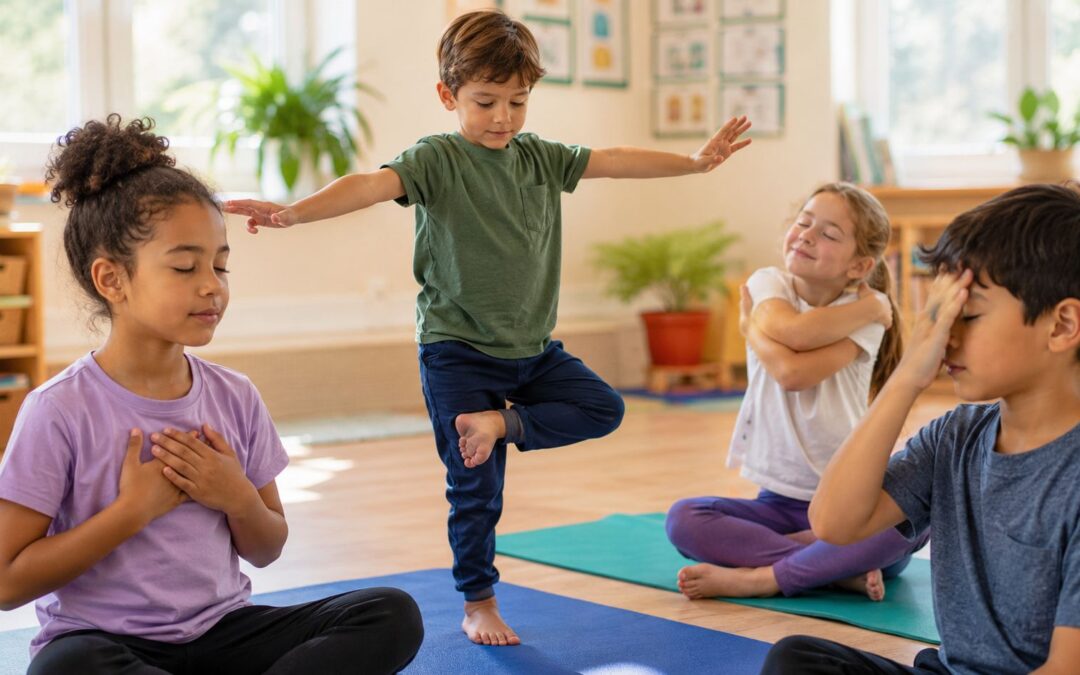
You're not dealing with a child who is “acting out” when they can't sit still, blurt answers, or melt down after a loud hallway transition. More often, you're seeing a body that hasn't yet learned how to notice itself, calm itself, or organize itself for learning. Body awareness activities help children connect what they feel inside with what they do outside, which is why they're so useful in classrooms, counseling spaces, and at home.
That connection matters because body awareness is tied to interoception, the internal sense that helps kids notice hunger, tension, breathing, and fatigue. A major meta-analysis found a small but statistically significant association between mindfulness and objective body awareness, based on 17 independent effect sizes with an effect size of g = 0.21 and a 95% CI of 0.08 to 0.34 from the Scientific Reports analysis of mindfulness and body awareness. The takeaway for educators is simple, small practices can still matter, especially when they're repeated consistently.
1. Body Scan Meditation
A body scan gives students a structured way to notice what's happening inside without having to fix anything right away. That matters because many children don't know how to name tension, calm, restlessness, or discomfort until those feelings spill into behavior. A short scan helps them pause, locate sensations, and build the language for self-regulation.
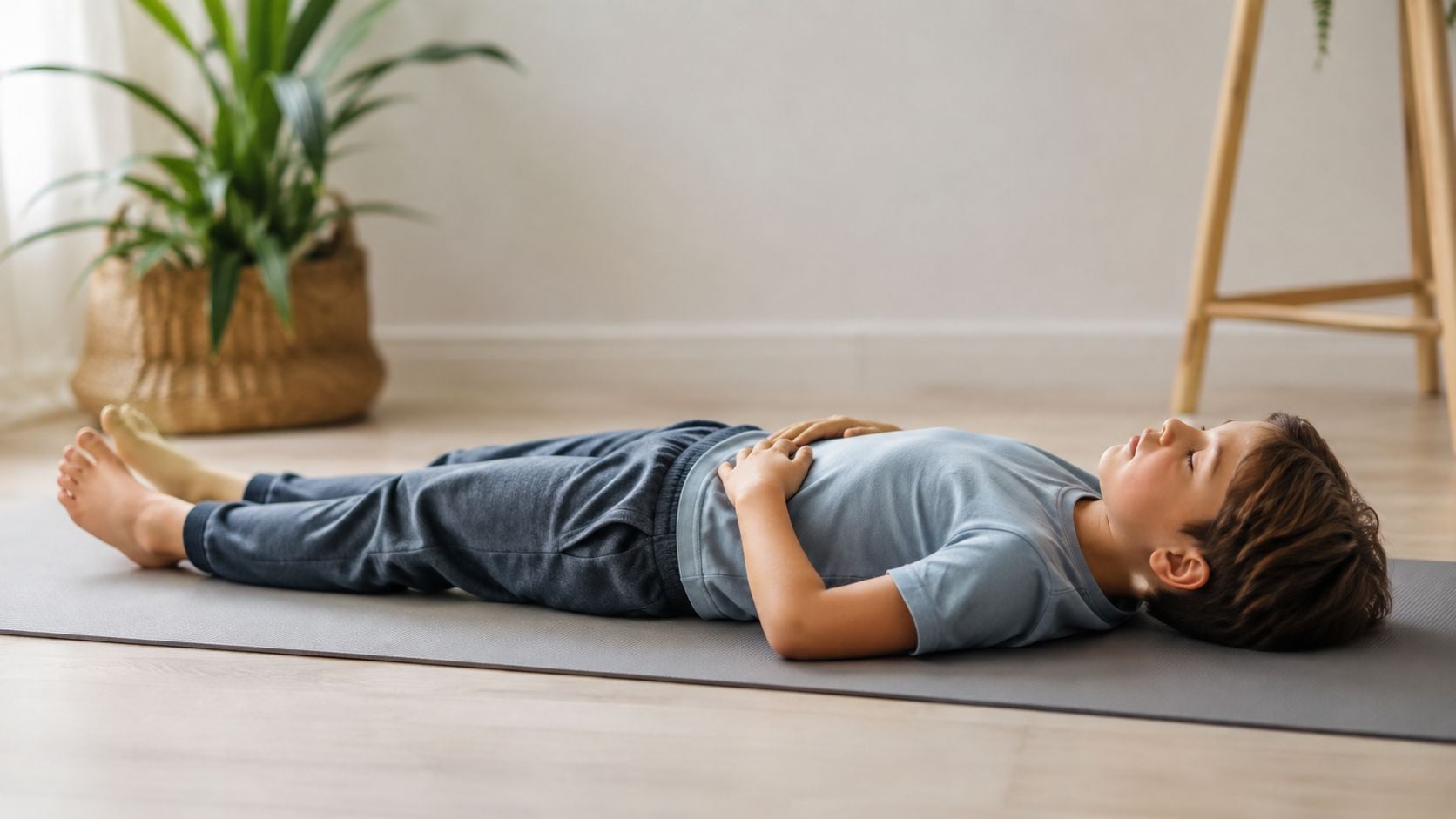
In practice, an elementary teacher might start the day with a 5-minute scan so students can transition from home mode to school mode. A parent might use the same routine at bedtime, pausing at each body part and asking, “What do you notice here?” A school counselor can also use this before testing, especially with anxious students who carry stress in their shoulders, stomach, or jaw.
How to guide it well
Start with a clear path, head to toe or toe to head, and keep your pacing slow. For younger students, 3 to 5 minutes is enough, while older students can usually handle a longer practice. If a child fidgets, that doesn't mean the activity failed, it usually means the child is still learning how to notice.
Practical rule: Aim for awareness, not stillness. A child can be shifting in place and still be fully engaged in a body scan.
For trauma-sensitive use, offer seated practice, open eyes, or a choice to skip any part that feels uncomfortable. After the scan, ask a simple reflection question such as, “Where did you feel tension?” or “Where did your body feel calm?” If you want a ready-made companion resource for students, the internal guide at Soul Shoppe's mindfulness exercises for students pairs well with this routine.
2. Movement Breaks with Intentional Awareness
Movement breaks work best when they're more than just a quick burst of energy. When children notice how their arms, legs, breath, and balance feel during movement, they begin to connect motion with regulation. That's important because many students need movement to reset their nervous systems, and the awareness piece turns an ordinary break into a real SEL tool.
A teacher might lead a 5-minute energy reset with arm circles, leg swings, and spinal twists, then ask what each movement felt like. A parent and child can do a feeling dance at home, then compare notes about body sensations, like “My legs felt strong” or “My heart was beating fast.” In a classroom, a brain break card deck can become more meaningful when each movement ends with a quick reflection, not just a timer.
Make movement observable
Use prompts that direct attention into the body while students move. “What do you feel in your legs right now?” is better than “Are you ready?” because it brings attention to sensation instead of compliance. Cues like “Stand tall and feel your feet on the ground” help anchor the body, especially during transitions.
A school can also build movement stations into the morning or mid-morning routine. One group might jump, one might stretch, and one might twist, then everyone checks in on energy, breath, and focus afterward. Soul Shoppe's fun brain breaks fit naturally here because they turn movement into a repeatable classroom rhythm.
Give students choices. “Big stretches or small stretches?” invites agency, and agency supports regulation.
To keep the routine effective, use the same cue language often. Students learn faster when the structure stays familiar, because they can stop thinking about what comes next and start noticing what their bodies are telling them.
3. Five Senses Grounding Exercise
The 5-4-3-2-1 practice helps students come back to the present when stress starts pulling their attention in too many directions. It works because the senses give the brain concrete information, which can interrupt spiraling thoughts and help a child settle enough to learn. For anxious students, this is often one of the most practical body awareness activities because it's simple, discreet, and easy to repeat.
A teacher can use it in the middle of a stressful announcement and ask the whole class to name something they see, touch, hear, smell, and taste. A parent can guide a child through it in a waiting room before a doctor's appointment. A school counselor can teach it to a student who feels uneasy in the hallway, then post a small reminder card near the classroom door so the student can use it independently.
Keep it teachable before it's needed
Introduce the sequence during a calm moment, not in the middle of a meltdown. That way, students can practice when their brains are open to learning and use the same pattern later when they're dysregulated. For K-1 students, simplify it to 3-2-1, such as three things they see, two they can touch, and one they hear.
Some students are sensory-sensitive, so don't force every sense in every situation. You can skip taste, use gentle movement sensations instead, or ask the child to stay with preferred senses first. Soul Shoppe's 5 senses activity supports this kind of grounding practice well because it reinforces the same sequence in a kid-friendly way.
The best grounding tools don't demand perfect answers. They help a child notice what's there without judgment.
Follow the exercise with a quick body check-in. Ask, “What changed in your body after that?” That question helps students connect an outside-sense exercise with an inside-body shift, which is the learning.
4. Proprioceptive Awareness Activities with Wall Pushes and Weighted Tasks
Some children need stronger physical input before they can settle into learning. Proprioceptive activities, like wall pushes, chair pushes, carrying books, or moving furniture, give the brain clear information about where the body is in space and how much force it's using. That's why these tasks can feel grounding for dysregulated students, especially when their bodies are seeking heavy input or resistance.
A classroom teacher might have students do 10 to 15 wall pushes before independent work, then ask how their bodies feel afterward. At home, a parent can turn routine chores into a body-awareness moment by asking a child to carry the laundry basket, push chairs into place, or squeeze therapy putty while talking about muscle effort. A child who's overwhelmed can also take a heavy-work break by moving books or pushing a rolling cart under adult supervision.
Use force on purpose
Form matters here. Hands should be flat on the wall, the body slightly angled, and the push should come from the shoulders and core, not just the arms. That keeps the activity intentional and safer, and it also makes the body feedback clearer.
You can pair the work with simple counting or breathing, such as “push for 4 counts, rest for 4 counts.” That combination helps students feel the input in their muscles while staying connected to a calm rhythm. The Soul Shoppe embodiment practices resource aligns well with this approach because it treats body input as a regulation skill, not just a movement break.
Use these activities before hard moments, not only after problems happen. Transitions, tests, and busy hallway times are often the best moments for preventive heavy work.
If you're building a wider motor toolkit, a relevant companion resource is motor skills activities for preschoolers, especially for younger children who need more hands-on movement variety.
5. Breathing Awareness Exercises with Hand Placement
Breathing becomes a body-awareness skill when children can feel it, not just hear about it. Hand placement helps with that because a hand on the belly or chest gives direct tactile feedback about expansion, rhythm, and pace. When students notice the breath moving the body, they start to connect calm breathing with a calmer internal state.
A kindergarten teacher might lead “bubble breath,” asking children to breathe in like they're smelling a flower and out like they're blowing bubbles. A parent can help a child at bedtime place a hand on the heart and notice what changes after three slow breaths. A counselor might teach box breathing for test anxiety, helping a student feel the belly rise and fall through each phase.
Make the breath visible and concrete
Model the breathing yourself so children can see what slow, steady breaths look and sound like. Young children usually do better with imagery than technical language, so “smell the flower, blow the candle” often lands better than “regulate your respiratory pattern.” For older children, counting can help, especially if they're already familiar with patterns like inhale, hold, exhale, hold.
Offer options for hand placement, too. Some children like a hand on the belly, some prefer the chest, and some don't want touch on the body at all. That choice matters, because the goal is awareness and safety, not forcing a pose.
A breathing bell or timer can make this a shared classroom habit. When it chimes, everyone stops for three conscious breaths, then checks in with the body before returning to work. This kind of routine gives students a predictable moment to notice what's happening inside them, which helps build trust in the practice.
6. Yoga and Mindful Stretching
Yoga works well for body awareness because it combines pose, breath, and attention all at once. A child isn't just reaching for a shape, they're learning how the shape feels, where balance lives, and how emotions shift inside the body. That makes yoga especially useful for students who need a safe, playful way to inhabit their bodies with more confidence.
An elementary class might move through an animal flow sequence, starting with mountain pose, then moving into downward dog, then resting in child's pose. A parent and child might do bedtime yoga in pajamas, using gentle stretches to release the day before sleep. A teacher can also keep yoga cards in the classroom so children can pick a pose when they need a regulation tool.
Keep the practice child-friendly
Start with familiar poses such as mountain, child's pose, and downward dog. The simpler the pose, the easier it is for students to focus on sensation instead of performance. Use storytelling when you can, because a forest, a strong tree, or a steady mountain gives children something concrete to inhabit.
Remind students that it's “your yoga,” not a test of perfect form. Some children will need wall support, some will prefer kneeling, and others may want a chair-based version. Keep child's pose available as a resting option throughout the sequence so children learn that pause is part of practice, not a sign of failure.
Pair each pose with a quick body question. “In warrior pose, I feel…” or “What do you notice in your shoulders now?” helps children connect posture with emotion and physical sensation. Over time, they start recognizing which shapes help them feel strong, which help them feel calm, and which ones they can use on their own.
The most useful yoga routines in schools are the ones children can remember without adult prompting.
7. Body Mapping and Emotional Awareness
Body mapping helps children see feelings instead of only talking about them. That's powerful because emotions often show up physically before a child has words for them, tight fists, a heavy chest, a hot face, or a stomach that feels strange. When students draw or color where feelings live in the body, they build a bridge between emotional literacy and body awareness.
A teacher can hand out a simple body outline and ask students to color where they feel anger, sadness, happiness, or worry. A parent can sit with a child and make a feeling map together, talking about where calm or concern shows up during the day. A counselor can use body maps to help a student describe worry as chest tightness, then return to that map later when it's time to choose a regulation strategy.
Make the map safe and usable
Keep the language neutral. Ask, “Where do you notice calm?” instead of “What's wrong with your body?” because the point is understanding, not judgment. Offer options for children who don't want to draw, such as stickers, symbols, or words written directly on the outline.
If the activity happens in a group, display it carefully and remove identifying details when needed. That helps normalize the idea that many children feel emotions in similar places. Revisit the maps after teaching coping tools so students can see whether something shifted.
This is also a strong place to connect action to sensation. If a child says anger lives in the hands, hand squeezes or wall pushes may help. If worry lives in the chest, breathing practices may be the right next step. The value of body mapping is that it makes regulation feel specific instead of abstract.
8-Activity Body Awareness Comparison
| Practice | Implementation complexity | Resource requirements | Expected outcomes | Ideal use cases | Key advantages |
|---|---|---|---|---|---|
| Body Scan Meditation | Low–Medium, guided script/pacing needed | Minimal, quiet space, optional audio | Increased interoceptive awareness, relaxation, improved sleep | Transitions, bedtime, pre-test calm, classroom check-ins | Accessible for all ages, no equipment, parasympathetic activation |
| Movement Breaks with Intentional Awareness | Low–Medium, sequence planning and modeling | Low, open space, optional music or cards | Boosted attention, energy regulation, reduced disruptions | Mid-morning resets, transitions, attention lapses | Raises blood flow and focus; engages active learners |
| Five Senses Grounding Exercise | Very Low, simple scripted prompts | Minimal, none required | Rapid grounding, reduced acute anxiety, present-moment focus | Moments of overwhelm, waiting rooms, quick classroom resets | Portable, fast, empowers independent self-regulation |
| Proprioceptive Awareness Activities (Wall Pushes, Weighted Tasks) | Medium, safety, correct form, supervision | Low–Medium, space, simple props/weights, supervision | Quick calming of nervous system, improved focus and body awareness | Students with sensory needs, before demanding tasks, regulation breaks | Strong calming input; effective for ADHD/sensory processing |
| Breathing Awareness Exercises (with Hand Placement) | Low, modeling and guided practice | Minimal, none; hand on body optional | Activates parasympathetic response, immediate calming | Test anxiety, bedtime, moments of stress | Immediate felt regulation, highly portable, easy to teach |
| Yoga and Mindful Stretching | Medium, instructor skill and sequencing | Medium, floor space, optional mats, props | Improved flexibility, balance, body awareness, emotional regulation | PE, weekly sessions, transition rituals, group practice | Builds strength and flexibility while fostering mindful connection |
| Body Mapping and Emotional Awareness | Medium, facilitation, reflection time | Low–Medium, paper, art supplies, private display options | Enhanced emotional vocabulary, interoceptive insight, self-advocacy | SEL lessons, counseling, reflective classroom activities | Visual, tangible tool linking emotions to bodily sensations |
| Mindful Eating and Sensory Food Exploration | Medium, planning, allergy/safety management | Medium, small food samples, time, supervision | Better hunger/fullness awareness, improved food relationships | Snack time, nutrition lessons, family mealtimes | Real-life interoception training; engages all senses and gratitude |
8. Mindful Eating and Sensory Food Exploration
Mindful eating slows children down enough to notice hunger, fullness, texture, and taste before those cues get buried by speed or distraction. It's one of the clearest ways to connect body awareness with everyday life, because meals and snacks already happen in homes and schools. When a child pauses to notice food with all the senses, the body becomes part of the learning process.
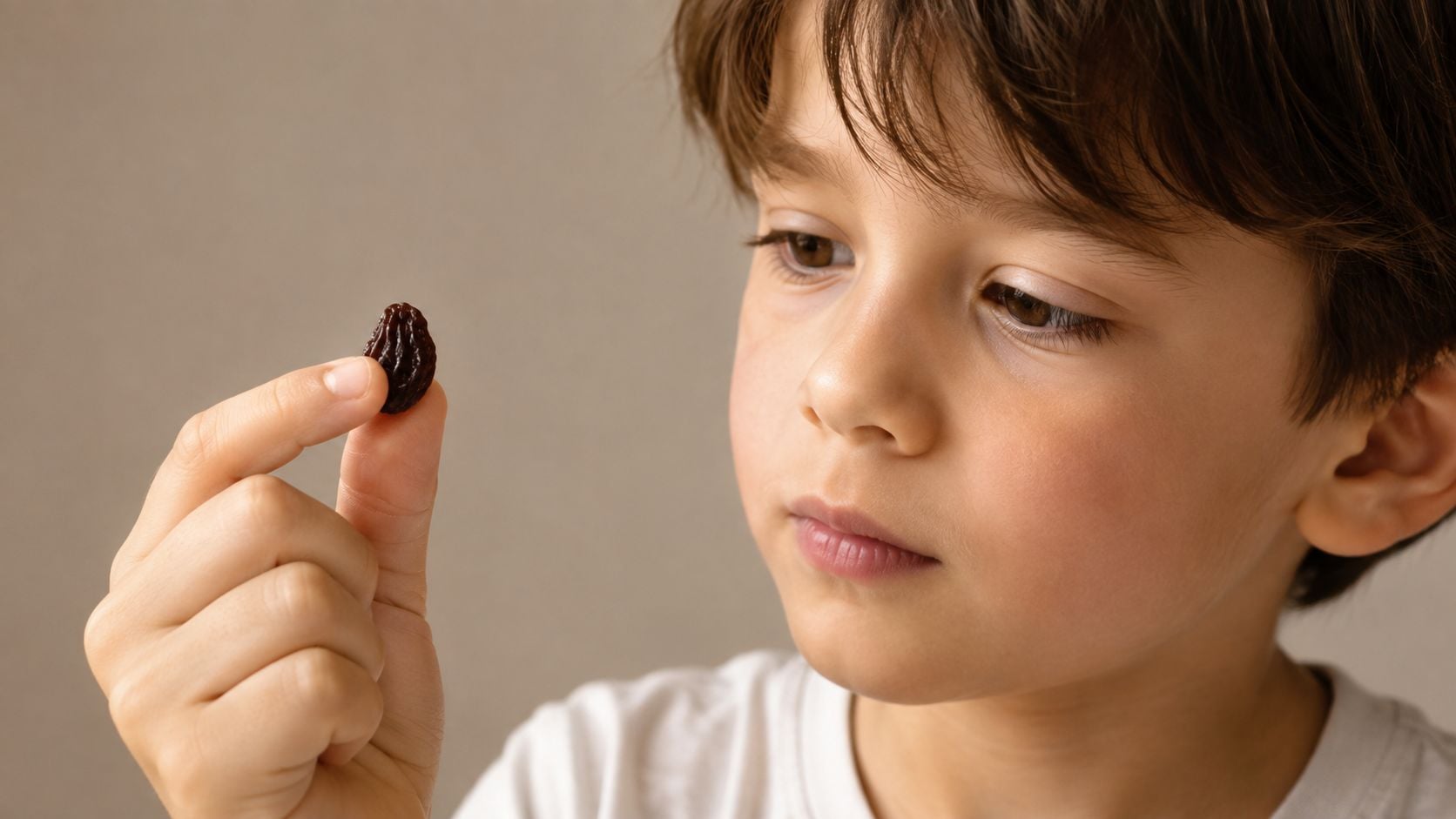
An elementary classroom might do a mindful raisin tasting with one small raisin, asking students to notice color, wrinkles, smell, texture, and flavor changes. A parent and child can share a slow snack at home and compare what they each notice in the first bite and the last bite. A school lunch routine can begin with a simple pause to smell the food and check in with hunger before eating.
Keep the experience small and pressure-free
Use tiny amounts of food so the task stays focused and doesn't turn into a full snack time challenge. One raisin, one strawberry slice, or one piece of chocolate is enough for the first practice. Start with neutral or preferred foods, and don't frame foods as good or bad.
For children with sensory sensitivities, ask what they notice rather than assuming they'll enjoy the texture or taste. Some kids will be curious, some will be cautious, and some will need repeated tries before the practice feels safe. That's normal.
A simple script works well here. “Notice the color. Notice the smell. Notice the texture on your tongue. Notice how the taste changes as you chew.” Afterward, ask how the body feels, and whether fullness or satisfaction showed up differently. That reflection helps children connect eating with body signals instead of autopilot.
Weaving Awareness into Everyday Life
Body awareness becomes most useful when it shows up in ordinary moments, not only in special lessons. A morning body scan can help a class settle in. A wall-push reset can help a student move from transition chaos into focused work. A five-senses pause can turn a stressful hallway, announcement, or doctor's office wait into a chance to regulate instead of react.
The strongest routines are the ones adults repeat with calm consistency. When a teacher uses the same cue language, the same breathing pattern, or the same reflection question, students begin to trust the process. That trust matters because body awareness is personal, and some children need many low-pressure repetitions before they can use a tool on their own.
These activities also support social-emotional learning in a very practical way. Children who can notice body signals are better positioned to name emotions, ask for help, and choose a strategy before escalation takes over. That's especially important in K-8 settings, where students are growing fast, managing more complex social situations, and learning how school expectations feel in their bodies.
Parents and teachers don't need a perfect program to start. A short scan before the bell, a movement break after recess, a hand-on-belly breath before bedtime, or a sensory check-in during snack time can make a real difference when it's repeated over time. Small moments of awareness help children understand that their bodies are not obstacles to learning, they're part of how learning works.
At Soul Shoppe, we believe safe, connected communities are built through practice, language, and care. When adults model body awareness, they give children a reliable way to reset, reflect, and return to learning with more confidence and compassion.
Soul Shoppe helps schools and families build the shared language kids need for self-regulation, mindfulness, and connection. If you want practical support that turns body awareness activities into everyday SEL habits, visit Soul Shoppe and explore programs that help children thrive at school and at home.