Soul Shoppe's work is made possible by donors and partners who care deeply about the young people in their communities! We can't do this work without you. Support our work in classrooms and on playgrounds across the nation by donating here.
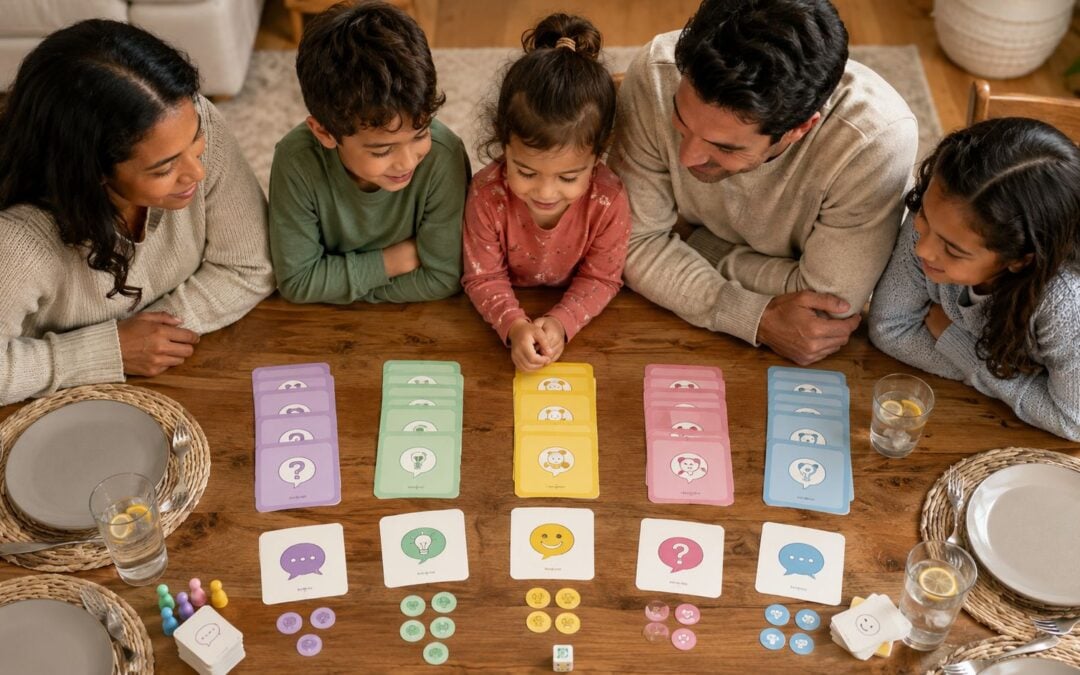
Dinner often gets reduced to logistics. Plates are cleared, homework is half-finished, someone's already thinking about tomorrow, and the room goes quiet except for chewing. That silence is exactly where dinner time conversation starters can change the mood. They give families and classrooms a simple way to move from “How was your day?” to something more honest, more specific, and easier for kids to answer.
The best prompts don't force a big talk. They create a small opening, then let children step through it in their own way. That's why university and parenting guidance has treated mealtime as a repeatable communication ritual for years, with one public-university extension even compiling a 50-question dinner toolkit that includes prompts about gratitude, worries, goals, and reflection, all designed for low-pressure sharing and connection (University of Tennessee extension conversation starters). The strongest family routines work the same way at home and in class. They are brief, predictable, and emotionally safe.
For Soul Shoppe families, teachers, and counselors, these prompts also fit SEL in a natural way. They support belonging, self-regulation, communication, and empathy without turning the table into a lecture. For more family bonding context, see Bornbir's mother son bonding tips.
1. The Gratitude Gem
A gratitude prompt changes the tone at the table fast. Children stop scanning for the right answer and start noticing one thing that went well. That might be an accomplishment, a kind gesture, or a small comfort from the day. The goal is not forced cheerfulness. It is positive reflection that becomes easier with practice.
Start by naming your own gratitude gem first. When a parent says, “Mine was finishing that project at work,” or a teacher says, “I was grateful when one student helped another clean up,” children hear the shape of the prompt and get a model they can follow. Keep the bar low. A younger child saying, “I liked playing on the swings,” matters just as much as an older child saying, “I'm grateful my math group helped me understand fractions.”
How to make gratitude feel real
Practical rule: accept small answers without correcting them. A child does not need to name a life-changing moment. “My snack was good,” or “My friend smiled at me,” is enough to keep the ritual going.
Keep the follow-up concrete. Ask, “What made that moment special?” or “When did you know it was a good day?” If the room feels flat, change the prompt before it turns stale. Try, “When did you help someone today?” or “What made you laugh?” For a fuller set of family-friendly gratitude ideas, Soul Shoppe's gratitude resources offer a useful starting point, and the broader dinner conversation approach described earlier follows the same low-pressure pattern.
When children are tired, gratitude can sound forced if adults push too hard. Slow down, answer first, and let silence do some of the work. A child who needs a minute to think is not resisting, they are warming up.
2. The Choice Conundrum
Decision-making prompts work best when they feel close to real life. Instead of abstract moral questions, give children a situation they can picture from school, sports, the playground, or the lunch line. That turns dinner into a place to rehearse judgment safely. A child can explore what they might do before they're under pressure to do it.
Use scenarios with more than one reasonable answer. For example, “Your friend copies your homework. What would you do?” invites options like telling the friend, telling the teacher, or doing nothing. A younger child might hear, “Someone cuts in line at lunch. What would you do?” and start thinking about assertiveness, fairness, and when adult help is needed. The value is in the discussion, not in hunting for one perfect response.
Link this to real classroom life when it makes sense. A teacher might use the same prompt during a lunch bunch or advisory period, then ask students how their choice could affect trust, safety, or teamwork. Soul Shoppe's decision-making resource frames this kind of reflection as part of practical problem solving and communication (Soul Shoppe games for decision making).
A simple facilitation pattern
Offer two to four choices: This lowers the pressure to invent an answer from scratch.
Ask consequences out loud: “What would happen if you ignored it?” keeps the thinking visible.
Validate the first response: Even a messy answer can open a useful conversation.
Bring it back to real settings: A classroom example often helps children connect the dots faster.
The biggest mistake is making the prompt feel like a quiz. Kids shut down when adults already sound certain. Stay curious, because curiosity keeps the table collaborative.
3. The Challenge Champion
Challenge prompts matter because children need to hear that struggle is normal. A strong dinner routine doesn't only celebrate wins, it also gives people a place to say, “That was hard, and I kept going.” That message builds resilience without sugarcoating the day. It tells children that difficulty is information, not failure.
Lead with your own example. “I struggled with staying patient in traffic today. I took deep breaths and listened to music instead.” That kind of sharing makes room for honest answers from kids. A child might say, “I had trouble with the math test, so I asked my teacher to explain it again,” while a younger child says, “I couldn't zip my jacket, so I asked my brother to help.” Older children can talk through disappointment, like not making a team or needing to try again.
Keep the focus on effort and strategy
Ask, “What did you learn?” rather than, “Did you win?” That one shift changes the tone of the whole conversation. It helps children notice the part of their response they can control, such as asking for help, pausing, or trying a new approach. Soul Shoppe's problem-solving resource reflects this same growth-oriented mindset (Soul Shoppe problem solving activity).
Share the story of the struggle, then name the strategy that helped. Children remember the strategy longer than the complaint.
A challenge journal can help when your family or class wants a visible record of growth. Keep it simple, one line per person, and revisit it after a hard week. The point is not to produce a polished reflection. The point is to show that people can learn from setbacks and keep moving.
4. The Connection Question
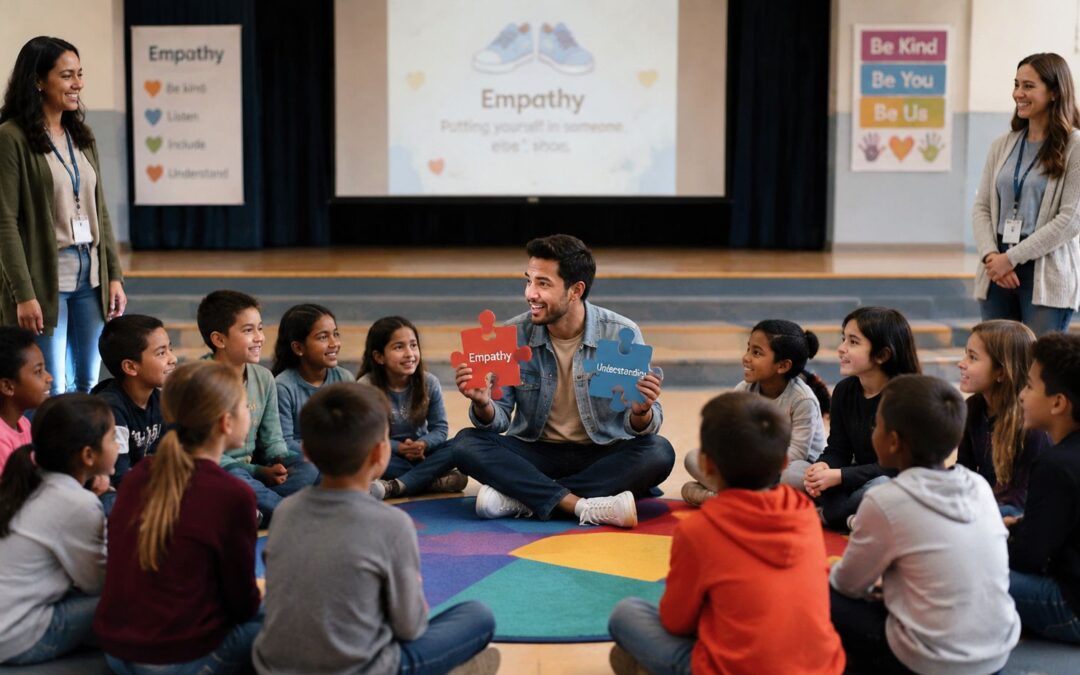
This prompt helps children shift attention outward. Instead of only reporting what happened to them, they notice someone else. That grows empathy in a way children can practice. It also helps families and classrooms become places where caring is visible, not just assumed.
Ask, “Who did you notice today?” or “When did you see someone struggle?” The answers might be ordinary, and that's the point. A parent might say they noticed a coworker who looked worried and asked if they were okay. A child might say they saw someone at recess who looked lonely and invited them to play. Even younger children can name small moments, like helping pick up a dropped lunch.
Move from noticing to action
Follow up with, “What did you do?” or “What could help them?” That keeps the conversation from staying abstract. It also teaches children that empathy is not only a feeling, it's a response. Soul Shoppe's empathy resource aligns with that exact idea of teaching children to notice and respond with care (Soul Shoppe how to teach empathy).
You can also use the prompt to discuss times when someone else was struggling in a way that was hard to name. Older children often understand nuance better than adults give them credit for. A teen might say a friend was quiet because of problems at home, and that can open a thoughtful conversation about privacy, support, and when to involve an adult.
The best responses are concrete, not grand. Small acts of noticing build the family habit you want most, people paying attention to one another.
5. The Feelings Thermometer
A feelings scale gives children a simple structure for naming emotion, even when they do not have the perfect word yet. That matters because some kids know they feel “off” long before they can tell you whether they are anxious, sad, overwhelmed, or tired. A number, color, or emoji gives them a place to start. It also fits the practical side of dinner conversation, where families and classrooms need a shared language that is quick enough to use at the table and clear enough to revisit later.
A parent might say, “I'm at about a 7 today, productive at work but tired.” A child might answer, “I'm a 5, some parts of school were fun, but I was frustrated with my friend.” Younger children can use colors, like “I'm green today,” while older children may be ready for a number plus a reason, such as “I'm a 3 because I'm anxious about that test tomorrow.”
Make the scale useful, not performative
Ask, “Where are you on the feelings scale?” and then pause. If adults rush straight into advice, children often stay at the surface. Better follow-ups are, “What pushed you to a 7?” or “What would help move you to an 8?” Those questions connect emotion to coping, which is where self-regulation grows. A child who says, “I'm at a 4 because math was confusing,” can then name one small next step, like asking for help before homework starts.
Use one language consistently: numbers, colors, thermometer, or emoji faces.
Normalize the full range: a lower score is information, not failure.
Teach one strategy at a time: breathing, a quiet break, a drink of water, or a reset before homework.
Notice patterns gently: “Mondays are often lower. Did the schedule feel rushed today, or was something else weighing on you?” That kind of question helps children connect a feeling to a real cause without feeling examined.
The strongest version of this prompt stays calm and ordinary. It works because it gives children a shared language they can use again tomorrow.
6. The Strength Spotlight
Strength prompts work because children need more than correction. They need to hear what is going well, in themselves and in other people. That builds confidence without pretending everything is easy. It also teaches children to see value in classmates, siblings, and adults beyond test scores or behavior charts.
Be specific. “You were kind when you waited for your turn,” lands better than “You're nice.” A parent can model with, “I noticed I was really patient today with you.” A child might say a classmate was great at including people, or that a friend was brave speaking up in class even while nervous. Younger children can identify physical or playful strengths too, like being strong on the playground.
Keep the spotlight broad
Include non-academic strengths like kindness, creativity, persistence, and humor. Children need to learn that strength is bigger than correctness. Ask, “What strength did you see in yourself today?” and “Who do you admire and why?” Those questions help kids practice positive observation without turning the table into a competition.
Write the strengths down if your family tends to forget them under stress. A note on the fridge or a card in a classroom basket can become a helpful reminder later. The next time a child feels discouraged, you can point back to an actual example instead of giving generic reassurance.
This prompt works best when it names behavior, not identity. “You kept trying even when that was tricky” is more useful than a label. Children can repeat a behavior. Labels are harder to live up to.
7. The Mindfulness Moment
Dinner can be one of the few times children stop moving enough to notice themselves. A mindfulness prompt uses that pause well. It asks them to notice what they saw, heard, touched, tasted, or smelled, or to remember a moment when they felt calm and present. That kind of reflection makes mindfulness less abstract and more usable.
A parent might say, “During my commute, I noticed the trees were really green and it calmed me down.” A child might say, “At lunch, I really tasted my food and it felt nice to slow down.” Younger children often respond well to texture, like “I felt the soft blanket when I was reading.” Older children might describe noticing their breathing while waiting for test results.
Use the senses to slow the room down
Start with a simple question. “What did you see, hear, feel, taste, or smell today?” That keeps the prompt accessible for mixed ages. If the table is restless, teach a grounding practice like 5-4-3-2-1, where people name five things they see, four they can touch, three they hear, two they smell, and one they taste. You don't need to make it a formal lesson. One round is enough.
A slower voice helps more than a fancy explanation. Invite one mindful breath before dinner or one thoughtful bite before conversation starts. That small pause often helps children settle enough to answer openly.
The goal is not to make dinner serene every night. The goal is to give children a repeatable way to come back to themselves when the day has been loud.
8. The Boundary Builder
Boundaries deserve a place at the dinner table because children need practice naming limits before they are under social pressure. A boundary prompt helps them notice when they said no, wished they could say no, or needed help protecting their space. That builds autonomy and respect at the same time.
A parent might say, “I said no to extra work today to protect my evening.” A child might share, “I told my friend I wasn't ready to share my feelings yet.” Younger children can practice with body boundaries, such as “I didn't want to hug someone, so I waved instead.” Older children may talk about needing adult help when someone touched them in a way that felt wrong at recess.
Make the language plain
Ask, “Did anyone disrespect your boundaries today?” or “Did you need to set a boundary?” Those words may sound serious, and they are. Keep your tone steady so the child doesn't feel they're being interrogated. Say, “Your body belongs to you,” and teach phrases they can use, such as “Stop, I don't like that” or “I need space.”
Discuss how to decline hugs, touches, borrowed items, or group activities respectfully, but don't make politeness more important than safety. If a child describes a boundary violation, respond supportively and take it seriously. The dinner table is not the place to minimize it or turn it into a joke.
This prompt works best when adults model the behavior in their own lives. Children notice when parents protect their time, their bodies, and their energy. That observation matters more than any speech.
9. The Kindness Tracker
Kindness prompts give children a way to see how small actions change a day. The important lesson is not that they need applause. The important lesson is that generosity has a ripple effect, even when the act is tiny. A child who notices that can start to view themselves as part of a caring community.
A parent might say, “I held the door for someone with their hands full.” A child might say, “I helped my classmate find their lost pencil and they smiled so big.” Younger children can report sharing crayons, while older children might say they sat with someone new at lunch because that person looked lonely. Those are all useful examples because they stay close to daily life.
Make kindness visible without turning it into a prize
Ask, “Who did you help today?” and “When did you see someone help another person?” Then go one step further and ask, “How do you think that made them feel?” That keeps the focus on impact, not reward. If your family likes physical reminders, keep a kindness jar or wall where people can add notes about small good deeds.
Kindness grows faster when adults name it in real time. “I helped because I saw they needed an extra hand” teaches the motive as clearly as the act.
Avoid using kindness as a scoreboard. If children start competing for points, the sincerity disappears. The better goal is a household or classroom culture where helping is expected, noticed, and appreciated.
10. The Growth Game
A dinner table can do more than review the day. It can help children see mistakes as information they can use next time. That shift matters because many kids read a wrong answer, a messy moment, or an awkward choice as proof that they are “not good at” something. A calm conversation can interrupt that habit and show that learning often starts with confusion, frustration, or a bad first try.
A parent might say, “I sent an email before I checked it carefully, so I had to fix a typo later.” A child might say, “I missed the math step at first, then I found the pattern after I tried again.” A younger child might talk about stacking blocks that kept falling and adjusting the base. An older child might describe feedback on an essay, then explain how revision made the work clearer.
Keep the language focused on learning
Ask, “What did you try?” and “What did that mistake teach you?” Those questions point the child toward the process instead of the embarrassment. Follow with, “What will you do differently next time?” or “What clue did you notice after the mistake?” If a child starts with harsh self-talk, answer with “You have not learned it yet” or “You found a useful clue” instead of repeating the criticism back.
A simple language swap can change the tone of the whole conversation.
Common self-talk
Growth-focused swap
I can't do this.
I can't do this yet.
I messed everything up.
I made one mistake I can fix.
I'm bad at this.
I'm still learning this.
I failed.
I learned what to try next.
The value of this prompt is that adults use it too. When a parent names a mistake and explains what they changed, a child sees that competence and imperfection can sit in the same room. A family poster with examples of “mistake, lesson, next try” can keep that lesson visible in a way children can revisit.
Soul Shoppe's SEL approach supports that idea by treating setbacks as useful information for growth, reflection, and resilience. Soul Shoppe problem solving activity
The Kindness Tracker: Spreading Positivity Intentionally
Low, regular sharing with optional tracking
Kindness jar, notes, or chart (optional)
Increased prosocial behavior and intrinsic motivation
Building community values, reinforcing acts of service
Cultivates intentional generosity and ripple effects
The Growth Game: Learning from Mistakes and Setbacks
Medium, needs consistent growth-language practice
Prompts, examples, poster or journal optional
Reduced fear of failure, improved problem-solving, persistence
After mistakes, learning reviews, performance feedback
Reframes errors as learning and promotes perseverance
Keeping the Conversation Going
The best dinner time conversation starters are the ones you can repeat. A family ritual works better than a perfect one-time question, because children learn through familiarity. If the same prompt shows up every night, it becomes easier to answer openly, and easier to trust the table as a safe place. That repeatability also matters in classrooms, where students often need structure before they'll take social risks.
Printed prompt cards make the routine easier to maintain. So does a small jar with folded questions, or a mini-game where each person draws one starter before the meal begins. A rotating format keeps the table from feeling stale without adding much work for the adult. In homes with mixed ages, you can keep one set of simple prompts and one set of deeper ones, then let children choose. In classrooms, a basket of cards works well during advisory, lunch bunch, or calm-down time.
What works best is not intensity, it's consistency. A child who gives one-word answers this week may start adding details later, especially if adults keep answering first and keep the tone gentle. Celebrate that small shift. A longer answer, a more honest feeling, or a kinder observation is progress.
Adapt the prompts to the season of your family or class. Some weeks, gratitude will feel easier. Other weeks, boundaries, kindness, or growth language may be more useful. Revisit favorites often, but don't be afraid to retire prompts that have gone flat. The goal is shared language, not novelty for its own sake.
Over time, these little SEL moments become more than conversation practice. They become a pattern of noticing, naming, listening, and responding. That's the kind of dinner ritual that can shape how children relate to themselves and each other long after the plates are cleared.
Your classroom is already feeling the pull of winter. Some students are restless after recess, some are quieter than usual, and a few need a gentle way to talk about what they're feeling without turning it into a big, direct conversation. An acrostic poem for winter gives you that opening. It is simple enough for beginners, flexible enough for older writers, and strong enough to connect seasonal language with empathy, belonging, and calm.
The Poetry Foundation explains that acrostics are built by writing a word vertically and using each letter to begin a line, which gives young writers a clear scaffold Poetry Foundation. In winter-themed classrooms, the word WINTER is especially useful because it gives children a clear six-line structure and a seasonal vocabulary path filled with snow, ice, and cold-weather ideas. Teachers can turn that structure into a writing routine, a partner share, or a social-emotional learning moment that helps students notice how the season shapes mood, routines, and community. Parents can use the same format at home with a notebook, a word bank, and a few minutes after dinner.
This approach can enhance your writing creativity and also build classroom community. Like a row of small windows in a winter house, each letter gives students one place to look, one idea to name, and one feeling to share.
1. WINTER as the Classic Starting Point
Start with WINTER when you want a poem that feels welcoming, not intimidating. The six-letter word naturally creates a six-line poem, so students can focus on one idea per line instead of worrying about a long draft. That structure makes the activity a strong fit for elementary writers, and it works just as well for older students who need a quick reset between heavier lessons.
A useful classroom move is to connect each letter to both a seasonal image and a feeling. One line might describe snowflakes, while another names warmth, kindness, or courage. The result is more than a spelling pattern, it becomes a gentle reflection on how winter affects people differently.
Practical rule: give students a feeling word bank before they write. Words like cozy, peaceful, grateful, and brave help them move from obvious winter images to emotional meaning.
A simple sample can sound like this, and you can adapt it for the age group in front of you:
W, Watching snowflakes fall, we feel wonder
I, Inside we gather, building community
N, Noticing how cold teaches us compassion
T, Together we find warmth and belonging
E, Everyone deserves kindness in winter's chill
R, Resilience grows when we support each other
That kind of poem gives you a quick SEL entry point. Ask students which line feels most like their classroom, and which line they'd change if they wanted to describe the room on a hard day. For a simple extension, display the finished poems with student art on a bulletin board so the room shows both writing growth and community care.
For a classroom-friendly example of how acrostic writing is introduced with shared discussion and publishing, see the winter lesson approach from Soul Shoppe.
2. SNOWFLAKE and the Power of Being Different Together
A SNOWFLAKE poem works beautifully when you want to talk about individuality without separating students from the group. Snowflakes are unique, but they also belong to a larger winter pattern. That makes the form useful for lessons about acceptance, inclusion, and the way differences can strengthen a class rather than divide it.
You can open with a visual. Show a snowflake image or invite students to look closely at real snowflakes if the weather allows. Then ask what makes each one special. The conversation often moves naturally toward identity, friendship, and how everyone contributes something different to the community.
Here's a sample that keeps the tone warm and accessible:
S, Special in our own unique ways
N, Never needing to be like someone else
O, Our differences create beauty
W, When we accept each other, we shine
F, Friendships form across our many colors
L, Learning that different means stronger
A, All of us matter in this community
K, Kindness makes our connections crystalline
E, Everyone belongs here
This poem also works well for bullying prevention. If one student feels pushed out, the snowflake metaphor lets the class discuss how mocking differences harms the whole group. You can ask, “How would you respond if someone tried to make your snowflake feel less beautiful?” That question invites repair, not shame.
To make the activity visible, let students write their own snowflake poems on separate paper cutouts, then hang them together as a mobile or wall display. At home, parents can use the same idea to talk about sibling differences or how a family makes room for different personalities. For a related visual, use the detailed snowflake image in your slide deck or print set:
3. FROSTBITE for Emotional Harm and Repair
A student blurts out a sharp comment, and the room goes quiet. That is the moment FROSTBITE can help. The word gives students a concrete image for emotional harm, something that feels cold, stiff, and hard to move through. It also opens the door to repair, because winter feelings can thaw when students learn how hurt, responsibility, and care connect.
Use this poem after the class has settled. Students need enough safety to sort out what happened and to separate harm from accountability. A restorative lens works well here, because the poem can guide them toward awareness, responsibility, and a repair plan that feels real enough to try.
A sample version might look like this:
F, Freezing words that cut like winter wind
R, Recognizing when our actions hurt others
O, Observing the damage we can cause
S, Seeing the pain in someone's eyes
T, Time needed for hearts to warm again
B, Building awareness through grounding and mindfulness, using grounding techniques for kids when feelings feel too big
I, Intentional kindness as the remedy
T, Thawing frozen friendships with care
E, Empathy, the warmth we all deserve
Use this as a repair prompt, not a punishment prompt. Students can reflect on what happened, who was affected, and what a real apology or follow-up action might look like.
A companion poem about healing can follow this one, especially if you want students to compare the feeling of being shut out with the feeling of being welcomed back in. Pair the activity with your communication lessons, then use it in conversations about peer conflict or online teasing. If students need a steadier start before writing, the mindfulness guidance from Soul Shoppe can help frame the conversation without raising tension.
4. ICICLE and Small Actions That Build Strength
An ICICLE poem is a strong choice when you want students to notice how small, repeated actions create something lasting. Icicles form drop by drop, so the metaphor naturally fits habits like kind greetings, steady effort, and daily self-regulation. That makes the poem useful for goal-setting, morning meeting rituals, and classroom culture work.
The writing process can stay simple. Ask students to think of one positive action for each letter, then revise each line so it sounds purposeful. The strongest poems don't just name ideas, they show persistence. A student might write about kindness, another about patience, and another about showing up even when a day feels hard.
A sample version can sound like this:
I, Intentional acts of kindness, one by one
C, Courage growing with each practice moment
I, Inclusion offered repeatedly, until it's natural
C, Commitment to showing up for others
L, Layer upon layer of connection builds
E, Everyone stronger when we persist together
Here's a classroom example that students understand fast. If your class spends five minutes each morning greeting one another, naming a feeling, and setting a small goal, those routines begin to feel like the layers of an icicle. The habit is small, but the culture it creates becomes visible over time.
Good writing grows the same way. One thoughtful word choice, one revision, one stronger line, then another.
You can create an “icicle tracker” on chart paper where students mark a daily habit they want to repeat. Parents can use the same idea at home with chores, reading time, or bedtime routines. That keeps the poem from staying abstract, and it helps children see that consistency is a form of strength, not just discipline.
5. BLIZZARD and Finding Calm When Feelings Swirl
A BLIZZARD poem helps students name overwhelm without feeling judged. The image is useful because it captures the experience of too many thoughts, too much noise, or emotions that seem to blur everything at once. When students can name that state, they're more likely to use a coping tool instead of escalating.
Teach this poem during calm moments. If you wait until a child is in distress, the writing task can feel like one more demand. Instead, introduce it as a language tool for the body and mind, then pair it with specific regulation strategies students can use.
A sample poem might read:
B, Blinding emotions swirling all around
L, Lost in the storm of feelings
I, Inside, chaos and confusion
Z, Zoning out seems easiest
Z, Zero clarity in the whiteness
A, Anchor yourself with breath, grounding
R, Recognize the storm will pass
D, Profound calm returns when we pause
Then attach the poem to concrete supports. A breathing card, a five-senses grounding routine, or a body scan can sit beside the writing. Students can also build a simple “Blizzard Plan” folder or calm-down kit with tools they already know how to use. That makes the metaphor practical instead of decorative.
Before the poem goes up on the wall, talk about warning signs. Rapid heartbeat, racing thoughts, and the urge to shut down are all clues that a child may be entering a blizzard state. Giving students shared language helps adults respond earlier and with less friction. For a related classroom focus on mindfulness and regulation, pair the poem with the guidance from Soul Shoppe.
6. MITTENS and the Safety of Mutual Support
MITTENS is an easy winter poem to use when you want to talk about friendship, help-seeking, and shared responsibility. Mittens work because they're meant to keep hands warm together. That makes them an especially good metaphor for students who need help seeing that connection isn't weakness, it's protection.
This poem works well at the start of the school year, but it's just as useful in winter when the classroom needs a reset around community values. Bring real mittens to the rug, pass them around, and let students describe what they notice. The tactile object gives the poem a concrete anchor.
A sample can look like this:
M, Made for two, stronger together
I, In partnership, we're safer
T, Trust is what makes warmth possible
T, Two hands working toward one goal
E, Everyone needs connection to thrive
N, Never alone when friends are near
S, Safety found in mutual support
A helpful discussion question is simple. “Who are your mittens?” Children usually respond with names of friends, siblings, grandparents, teachers, or older buddies. That opens the door to a conversation about peer mentoring, asking for help, and noticing who makes them feel steady.
You can also create “mitten pairs” for buddy reading or partner work. Each child decorates one mitten with their name and one way they support others, then the pair hangs together on a class display. For a visual reference, use the cozy mitten image here:
7. SLEIGH and Moving Forward as a Team
A SLEIGH poem gives students a way to talk about collective progress. Unlike a solo image, the sleigh suggests movement that depends on shared effort, direction, and trust. That makes it ideal for classroom goals, schoolwide SEL launches, and staff conversations about shared culture.
This poem works best when adults name roles clearly. Who guides? Who supports? Who keeps the rhythm going? Those questions matter because students learn that community progress doesn't happen by accident. It happens when people pull together.
A sample version:
S, Sharing the load, we go further
L, Leadership guides our direction
E, Every person pulls their weight
I, In sync, we build momentum
G, Goals reached through united effort
H, Heading forward, together, stronger
One useful classroom move is to connect the poem to a current goal. If the class wants calmer transitions, better listening, or more respectful group work, the sleigh image gives everyone a shared reference point. Students can answer, “What's one way you help pull our classroom sleigh forward?”
You can also use the poem for staff reflection. Teachers, counselors, and support staff can talk about how one adult's consistency affects the entire school climate. That conversation pairs naturally with team-building work, and the Soul Shoppe article on team-building activities for youth can complement a broader community-building plan.
A sleigh display works well on a bulletin board, too. Let each child add a paper sled or snow track with one contribution they made that week. The visual reminds everyone that movement feels easier when no one is pulling alone.
8. AURORA and Hope in Darker Days
AURORA is the strongest winter poem for hope, especially when students are moving through darker, quieter months. The Northern Lights give children a vivid image of beauty that appears against darkness, not instead of it. That matters, because many students need permission to name hard feelings while still looking for bright moments.
You can begin with an image, a video clip, or a short observation prompt. Ask students what they notice about light, color, and movement. Then connect those observations to the kind of hope that helps people keep going through a difficult season.
A sample poem might read:
A, Against the darkness, light still shines
U, Underneath the frozen sky, beauty persists
R, Rare moments of wonder warm our hearts
O, Often we forget to look for light
R, Resilience means finding hope in winter
A, Aurora inside us, ready to glow
This poem works especially well as a gratitude practice. Students can name “aurora moments,” which are small sparks of joy that help them through a long day. Those moments might be a kind note, a favorite song, a quiet lunch break, or a time when someone noticed their effort.
Hope doesn't erase hard feelings. It gives students one more thing to hold onto while they work through them.
For a classroom display, create a “Lights of Our Community” board where students and adults add sources of hope, comfort, or inspiration. Parents can use the same idea during winter evenings as a family reflection ritual. If you want a visual to make the metaphor concrete, use the Northern Lights image here:
8 Winter Acrostic Themes Comparison
Title
Implementation complexity
Resource requirements
Expected outcomes
Ideal use cases
Key advantages
WINTER: Classic Seasonal Acrostic
Very low, simple 6-line structure
Minimal, paper, word bank, basic art supplies
Letter recognition, emotional awareness, sense of belonging
K–2 introduction to acrostics; classroom community building
Highly accessible, quick, supports SEL for young learners
SNOWFLAKE: Celebrating Individuality and Connection
Uplifting metaphor that acknowledges struggle while fostering hope
Putting Your Winter Poems Into Action
The best way to use an acrostic poem for winter is to treat it as a living classroom routine, not a one-time craft. A poem can open morning meeting, support a counseling conversation, or give families a low-pressure way to talk about feelings at home. When children write about snow, warmth, resilience, or belonging, they're also practicing emotional language that helps them understand themselves and one another.
Download printable templates, invite families to join the fun at home, and fold these poems into the parts of the day that already matter. A quick writing block before lunch can reset the room. A partner share after recess can help students name mood changes without turning the moment into a discipline issue. A family night activity can turn a simple winter worksheet into a shared conversation about kindness, inclusion, or asking for support.
The strongest poems often come from small prompts. Ask, “What does winter feel like in your body?” or “Which line sounds most like your classroom?” or “What helps you warm up when life feels cold?” Those questions keep the writing concrete and personal. They also make room for students who need extra support, including multilingual learners, younger children, and students who benefit from SEL-friendly entry points.
The winter season gives you a natural metaphor for community. Some days feel bright and easy, some feel quiet and heavy, and some feel like a storm. Acrostics help children name all of it, then move toward connection, reflection, and repair. That's why they work so well in elementary classrooms, middle school advisory, school counseling, and family learning time.
Print a few templates, choose one winter word, and start with the students in front of you. Let them write, read aloud, revise, and notice how their words change the room. If you want more support for building connection, safety, and empathy through practical SEL, explore Soul Shoppe's programs, resources, and school community tools today.
A teen storms off in the middle of a conversation. A chair scrapes hard across the classroom floor. A bedroom door slams before anyone can finish a sentence. Those moments feel sudden, but they rarely come out of nowhere. Most teen anger builds fast, then takes over before the teen has words for what's happening.
That's why a ready toolkit matters. In practice, the best anger management strategies for teens don't start with lectures, consequences, or long explanations. They start with regulation first, then reflection, then repair. When adults skip that order, they usually get more resistance, not more insight.
Drawing on neuroscience, CBT principles, and Soul Shoppe's more than 20 years of SEL expertise, these eight approaches focus on what parents and teachers can do in real time. Each one includes practical examples, sample language, simple activities, signs that a situation is escalating, and guidance on when extra support may be needed. Some tools work best in the moment. Others work best after the nervous system settles. A few are especially useful for school settings where there isn't much time or privacy.
What doesn't work well is trying to reason with a fully activated teen, demanding instant apologies, or treating every outburst as defiance. Anger is real information. The skill is helping teens handle it without hurting themselves, other people, or their relationships.
1. Deep Breathing and Box Breathing
When a teen is flooding with anger, the body needs a job. Structured breathing gives it one.
Box breathing works because it's simple enough to remember under stress. Inhale for 4, hold for 4, exhale for 4, hold for 4. For some teens, that clear pattern feels easier than vague advice like “take a deep breath,” which often sounds dismissive when they're upset.
When to use it
A teacher notices a student clenching their fists during a difficult math lesson. Instead of calling attention to the behavior, the teacher kneels beside the desk and says, “Let's do four square breaths together. In for 4, hold for 4, out for 4, hold for 4.” After a few rounds, the student can ask for help instead of shutting down.
At home, a parent sees anger rising during a screen-time argument and says, “I'm not ready to solve this while we're both heated. Let's do one minute of breathing together first.” That framing matters. It makes breathing a shared reset, not a control tactic.
Practical rule: Teach breathing when the teen is calm. Don't introduce it for the first time in the middle of a blowup.
Another useful version is a slower exhale pattern. Newport Academy describes 4-6 breathing as inhaling for 4 seconds and exhaling for 6, a clinically validated way to downregulate the autonomic nervous system by extending the exhale to stimulate parasympathetic activity. That makes it especially useful when a teen needs a fast, low-prep reset.
How to make it stick
Use visual supports. A breathing square on paper, a sticky note on a desk, or a guided tool can help teens stay with the count when their thinking is scattered. Soul Shoppe's guidance on belly breathing for kids and teens is useful if you want a more body-based version for home or class.
A counselor might also guide a teen through diaphragmatic breathing by having them place one hand on their stomach and use a short calm-down window before re-entering a conflict. Mastering Anger describes a pattern of inhaling for 4 counts, holding for 4, and exhaling for 6 to help slow the heart rate and reduce physical tension during those moments of activation in its piece on anger management techniques for teens.
If breathing makes a teen more irritated, don't force it. Some teens need movement, cold water, or a sensory object first. The strategy failed for that moment. The teen didn't.
A short visual can help students learn the rhythm before they need it.
2. Cognitive Reframing and Thought Challenging
A lot of anger isn't just about what happened. It's about the meaning the teen assigned to what happened.
That's where cognitive reframing helps. A teen gets ignored in the hallway and decides, “She hates me.” A student earns a low grade and thinks, “I'm stupid.” Those thoughts don't just create sadness. They often trigger defensiveness, resentment, and explosive reactions.
A script adults can use
Start with the feeling, then test the thought. Try: “I can see why that upset you. Let's slow it down. What happened, what did you tell yourself it meant, and what else could be true?”
A teacher might say, “You're angry about the test score. I get that. Let's separate the score from the story you're telling yourself.” If the student says, “I failed because I'm dumb,” the adult can ask, “What evidence supports that, and what evidence doesn't?” That shifts the conversation from identity to problem-solving.
At home, a parent can respond to “Nobody likes me” with, “That sounds painful. Let's check the facts before we treat that thought like it's final.” Teens don't need adults to argue them out of feelings. They need adults to help them examine conclusions.
Angry teens often treat first interpretations like facts. Reframing teaches them to pause between event and meaning.
What works better than correction
Works:
Name the distortion: “That sounds like mind-reading” or “That sounds all-or-nothing.”
Ask for evidence: “What do you know for sure?”
Build a balanced thought: “I'm upset, and I may not have the full story yet.”
Doesn't work:
Instant reassurance: “No one thinks that.”
Debating while the teen is activated: It turns into a power struggle.
Overexplaining: Teens stop listening when adults start sounding like lawyers.
Written tools help here. Some students need to see their thought on paper before they can challenge it. A simple three-column prompt works well: situation, automatic thought, more balanced thought. Soul Shoppe's piece on life is perspective supports this kind of work because it turns perspective-taking into a repeatable habit, not a one-time pep talk.
Escalation signs include rigid language like “always,” “never,” and “everyone,” plus refusal to consider any alternate explanation. If a teen stays stuck in rage, hopelessness, or revenge thinking even after the situation has passed, that's a sign to involve a counselor or therapist who can do deeper CBT work.
3. Time-Out and Strategic Breaks
A strategic break is not exile. It's not “go away until you can act right.” It's a planned pause with a return path.
That distinction matters. Traditional time-out can feel shaming to teens, especially if it's delivered in front of peers or used as a threat. A reset break works better when the teen has some agency, knows where to go, and knows what happens next.
How to set it up before you need it
In a classroom, create a reset corner with a timer, paper, a stress ball, noise-reducing headphones, or a simple grounding card. In a home, that might be a chair on the porch, a bedroom beanbag, a short walk route, or a “cool-down basket” with textured objects, sketch paper, and headphones.
Then agree on the script in advance. A teacher can say, “If you feel yourself getting too angry to stay respectful, you can ask for a reset.” A parent can say, “Taking space is allowed. Slamming doors or yelling at people isn't.”
A student in group work might say, “I need a break before I say something rude.” That's success, not avoidance. The same goes for a teen who leaves the kitchen for a few minutes instead of escalating into a screaming match.
The return is part of the intervention
Without a return conversation, breaks become escape hatches. After the timer ends, come back to three questions:
What triggered you?
What were the first body signs?
What needs to happen now?
That last question keeps the break connected to accountability. Maybe the teen needs to apologize. Maybe they need a clearer instruction, a do-over, or help solving a practical problem. The break lowers the heat so repair is possible.
A good adult script sounds like this: “Take your reset. We are still going to talk about what happened.” That message protects both regulation and responsibility.
Use caution if a teen uses breaks to avoid every hard conversation, disappear for long periods, or become more dysregulated alone. In those cases, a more supported break may work better, such as sitting near a calm adult, walking with a counselor, or using a written debrief. If anger during breaks turns into property damage, threats, or self-harm language, move past self-help tools and involve mental health support immediately.
4. Physical Activity and Movement-Based Release
Some teens can't talk their way out of anger until they move some of it out first. That isn't avoidance. It's often the fastest route back to clear thinking.
Anger prepares the body for action. If adults respond only with “use your words” while the teen's body is buzzing, they're asking for a skill the teen may not have access to yet. Movement helps close that gap.
Good movement is specific and doable
In school, a pre-arranged movement pass can save a lot of conflict. A student starts to boil over during a test and asks to take a hall walk, do wall pushes, or complete a short movement routine. The key is that the plan exists before the crisis.
At home, movement works best when it's offered as support, not punishment. “Go run laps” usually lands as control. “I'm taking the dog around the block. Come with me if you want to reset” feels collaborative.
Useful options vary by teen:
Fast release: Jumping jacks, stairs, shadow boxing into the air, brisk walking
Heavy work: Carrying laundry, pushing against a wall, yard work, rearranging books
Rhythmic movement: Biking, dribbling a ball, dancing, skating, martial arts drills
Match the strategy to the teen
Some teens need intensity. Others need repetitive, steady motion. I've seen students reject breathing but settle quickly after wall pushes or a lap around the blacktop. I've also seen adults overprescribe sports to teens who calm best through stretching, yoga, or dancing alone with headphones.
Movement is especially important when verbal processing makes anger worse. The teen who says, “Stop talking to me,” may not be refusing support. They may be telling you their nervous system needs a different door in.
Watch for escalation signs such as pacing that gets sharper, body-checking peers, clenched jaw, chest-forward posture, or scanning the room for conflict. At that point, direct the teen toward safe movement and lower verbal demands.
If movement consistently becomes aggression, such as punching walls, throwing objects, or rough physical contact with others, bring in a counselor, therapist, or pediatric provider. The need for body-based release is real. It just needs stronger containment and coaching.
5. Communication and Assertive Expression
Anger often softens when a teen feels heard and gets a workable script for saying what they mean. Many teens aren't choosing between calm and aggression. They're choosing between silence and explosion.
Assertive communication gives them a middle path. It teaches them to state a feeling, name the specific behavior, describe the impact, and ask for change without attacking the other person.
Start with I statements
Using “I” statements is a concrete way to express anger without blame. The structure is simple: “I feel [emotion] when [specific action] because [impact].” Therapists in Charleston gives examples like, “I feel frustrated when you leave your dishes on the table because it makes the kitchen messy,” instead of “You're so irresponsible!” in its article on anger management for teens and practical strategies.
In class, a teacher can coach a student from “You never listen to me!” to “I feel unheard when I'm interrupted.” That tiny shift changes the temperature of the whole interaction. It also keeps the teen focused on behavior and impact rather than character attacks.
A repair script for school and home
Try this sequence:
State the feeling: “I'm frustrated.”
Name the event: “I did most of the group project.”
Explain the impact: “I felt like I carried the whole team.”
Make the ask: “Next time, can we split the tasks at the start?”
Parents can use the same pattern. A teen upset about curfew can say, “I feel frustrated about the new time because I lose time with my friends. Let's discuss what would help you trust me with a later one?” That's much more useful than “This is so unfair.”
Respectful language doesn't mean the anger disappears. It means the teen can carry anger into a conversation without turning it into damage.
Assertiveness does take rehearsal. Role-play low-stakes examples before using it in loaded situations. Practice how to ask for a retake on a conflict, how to disagree with a teacher, or how to tell a sibling to stop touching their stuff.
Refer out when a teen can't express anger without threats, intimidation, or shutdown over time, or when family communication is so reactive that every attempt at direct speech turns into a fight. In those cases, family therapy, school counseling, or coaching can help everyone learn the same language.
6. Journaling and Expressive Writing
Not every teen wants to talk while they're angry. Some need privacy first. Journaling works well because it turns swirling emotion into language, and language creates a little distance.
That distance matters. A thought that feels absolute in the moment often sounds different once it's written down and reread later. The page absorbs some of the heat.
Use prompts that don't feel like homework
A blank notebook works for some teens. Others do better with structure. Try prompts like:
What happened right before I got angry?
What did I want that I didn't get?
What am I telling myself about this?
What do I wish I could say?
What would help right now?
A parent might suggest writing a letter that won't be sent. A teacher might build a short reflection period before lunch so students can unload frustration and reset. A counselor might ask a student to track anger patterns over time, then review triggers together.
For teens who hate writing, don't force the format. Voice notes, drawing, typed notes, comic-style panels, or a private notes app can do the same job.
Know when journaling isn't enough
This strategy has a real trade-off. Journaling helps process anger, but it can also become rumination if the teen only vents and never reflects. Add one follow-up question after the vent: “What do I need, and what part is in my control?”
Soul Shoppe's anger management worksheets for teens can help when a teen needs more structure than open-ended journaling provides. Worksheets are especially useful for students who freeze with blank pages or need prompts that connect emotions to triggers and choices.
Mind has noted a significant gap for neurodivergent teens. In its guidance for young people on tips for managing anger, related 2025 research is described as indicating that 52% of neurodivergent teens abandon techniques like counting to ten or journaling because they feel too slow or emotionally abstract, and that 40% need sensory-first interventions before cognitive strategies. That's a strong reminder not to treat journaling as universal.
If a teen's writing becomes dominated by revenge fantasies, hopelessness, self-harm themes, or inability to move past a repeated grievance, involve a mental health professional. Respect privacy, but never ignore safety concerns.
7. Mindfulness and Present-Moment Awareness
Mindfulness isn't about making teens calm on command. It's about helping them notice anger earlier, when they still have choices.
That's the practical value. A teen who can identify “my jaw is tight, my chest is hot, and I'm starting to glare at people” has a much better chance of using a coping skill than a teen who only notices anger after they've already exploded.
Keep it brief and concrete
For most teens, short practices work better than long silent ones. A classroom teacher can lead a two-minute check-in: feet on the floor, notice three sounds, relax the shoulders, slow the breath. A parent can teach a body scan before bed and later remind the teen to use the first step only: “What is your body doing right now?”
Mindfulness can also be active. Some students do best with mindful walking, stretching, coloring, or listening for sounds in the room. The point is focused awareness, not a perfect meditation posture.
Here's a useful script: “Notice it. Name it. Don't act on it yet.” That sequence gives the teen just enough space to choose.
A mindful pause doesn't erase anger. It interrupts autopilot.
Signs it's helping
You'll know the practice is becoming useful when teens start saying things like, “I knew I needed a break,” or “I could tell I was getting worked up before I yelled.” That shift is subtle, but it's the hinge point for self-regulation.
What doesn't work is using mindfulness as a compliance tool. If adults say, “Go be mindful” in a sarcastic or corrective tone, teens hear it as punishment dressed up as wellness. The invitation has to stay respectful.
This strategy also needs adaptation. Some teens with trauma histories or high agitation feel worse when asked to close their eyes or focus inward for too long. In those cases, orient outward instead. Notice five blue objects, hold a cold water bottle, or walk while counting steps.
Refer for added support if a teen reports feeling overwhelmed by internal awareness, dissociates during mindfulness, or cannot access any calming strategy without adult co-regulation. Those cases often need more individualized support than a generic mindfulness routine can offer.
8. Building Empathy and Perspective-Taking
Empathy won't solve every anger problem. It also shouldn't be used to excuse harmful behavior. But it can reduce the personal hostility that keeps anger burning.
A teen who shifts from “He disrespected me on purpose” to “He was embarrassed and got defensive” doesn't suddenly approve of the behavior. They just stop feeding the story that makes retaliation feel necessary.
Questions that lower the temperature
A counselor might ask, “What else might have been going on for them?” A parent might ask, “If your sister wanted your attention but did it badly, how would that change your response?” A teacher facilitating peer conflict might ask, “What do you think your friend was feeling when that happened?”
Those questions work better than lectures. They invite curiosity without demanding agreement. That distinction keeps teens from feeling like adults are taking the other person's side.
A good school example is public correction. A student feels humiliated when a teacher points out an error in front of the class. Instead of saying, “Your teacher didn't mean it, get over it,” an adult can say, “You felt embarrassed, and that matters. It's also possible the teacher was correcting quickly, not targeting you. Both can be true.” That framing opens the door to repair.
Teach empathy with boundaries
Use books, films, role-play, and restorative conversations to practice perspective-taking before conflict gets personal. It's easier to build the skill in low-stakes settings first. Soul Shoppe's article on teaching empathy to kids and teenagers offers a helpful foundation for adults trying to make empathy concrete.
One caution from practice. Empathy should never become “understand everyone else while ignoring your own needs.” Teens still need boundaries, consequences, and self-respect. The balanced message is, “You can understand someone's feelings and still say no, ask for repair, or keep distance.”
Look for referral needs when a teen consistently interprets neutral events as hostile, can't consider any perspective besides their own, or stays fixated on revenge after repeated coaching. That pattern can signal deeper emotional, social, or mental health needs that deserve more than routine SEL support.
Preventive practice, school-wide routines, students with anxiety
Broad benefits for stress and attention; integrates with other strategies
Building Empathy and Perspective-Taking
Medium, requires facilitation and experiential exercises
Low, discussion time, stories, role-play, restorative circles
Reduced interpersonal anger; better repair and relationship resilience
Peer conflicts, restorative practices, character education
Lowers personalization of slights, fosters reconciliation, reduces bullying
Building Lasting Emotional Resilience
These anger management strategies for teens work best when adults stop treating anger as a single behavior problem and start treating it as a skill-building opportunity. A teen who yells, shuts down, lashes out, or storms off is telling you something important about overload, interpretation, communication, or unmet need. The response should match that reality.
In schools, consistency matters more than intensity. A teacher who calmly cues breathing, offers a reset, and follows up with a short repair conversation will usually get farther than a teacher who gives a long lecture after every incident. The same is true at home. Teens learn regulation from repeated experiences of co-regulation, structure, and respectful limits.
The most effective approach is layered. Use body-based tools such as breathing, movement, or sensory supports for the early surge. Use CBT tools like reframing once the teen can think clearly. Use communication and empathy work when it's time to solve the problem and repair the relationship. That sequence is practical, humane, and much closer to how real nervous systems work.
Adults also need to watch for patterns that point beyond everyday anger. Frequent aggression, threats, property damage, intimidation, shutdown that lasts long after conflict, or anger that seems tied to anxiety, depression, trauma, or neurodivergence all deserve closer attention. If a strategy repeatedly fails, don't assume the teen is resistant. Ask whether the tool matches the teen, the timing, and the trigger.
That's where partnership helps. Soul Shoppe's work with school communities centers on connection, safety, empathy, and practical SEL tools that students and adults can put to use in classrooms, counseling spaces, and homes. For schools and families, outside support can help turn scattered interventions into a shared language across the whole environment.
It's also worth remembering that some teens regulate best through disciplined physical practice. For families exploring structured movement, Brazilian Jiu-Jitsu Academy Finder's insights offer one perspective on how martial arts settings can support focus, self-control, and respectful boundaries when the teaching environment is healthy.
Lasting resilience doesn't come from one perfect talk after a bad moment. It comes from repetition. Practice the skills when things are calm. Use the same scripts across home and school. Praise the smallest signs of progress, like a teen asking for a break before exploding, revising a blaming statement into an “I” statement, or noticing body signals earlier than they used to.
That's how anger becomes workable. Not by suppressing it, but by helping teens recognize it, regulate it, express it safely, and learn from it.
If you want schoolwide or family-aligned support for anger management, communication, empathy, and self-regulation, explore Soul Shoppe. Their experiential SEL programs, workshops, and coaching give students and adults practical tools and shared language that strengthen safety, belonging, and healthier conflict resolution.
The gym is booked, the bell schedule has been adjusted, and your teachers are already asking the practical questions. Where will students sit? Who's covering recess? Will the presenter need a projector? Beneath those logistics sits a bigger question that many new principals feel right away: Will this assembly help students, or will it just fill an hour?
That question matters because students can tell the difference between a one-off event and a meaningful school experience. They know when adults are offering a catchy slogan with no follow-through. They also know when a school is building a shared language around respect, problem-solving, and belonging.
That's why I encourage school leaders to treat assembly programs for schools as part of their SEL strategy, not as a side event. When they're planned well, assemblies can reinforce the social skills you want students using in the cafeteria, on the playground, in group work, and online. Parents and teachers feel the difference too, because the message doesn't end when students leave the auditorium.
From All-School Meeting to Meaningful Movement
Most principals have seen the same scene. Students file into the multipurpose room buzzing with energy. A few are excited. A few are dysregulated from the transition. Teachers are spread around the edges, hoping the microphone works and that the message lands.
In too many schools, assemblies stop there. They become a break from the day rather than an extension of learning.
That's a missed opportunity. Nearly 80 percent of schools in the United States utilize specialized educational assembly programs to reinforce learning, and those programs are designed to build critical thinking, empathy, and social skills through interactive presentations, as noted by Academic Entertainment's overview of educational assembly providers. That matters because an SEL assembly isn't just about attention. It's about giving a whole student body one shared experience and one shared set of words.
What a stronger assembly looks like
A bullying-prevention assembly with purpose feels different from the moment students enter. Adults have already taught audience expectations. The presenter uses student participation instead of long lectures. Students practice what they might say if they see someone left out at recess. Teachers hear language they can repeat later in class.
Practical rule: If students can't use the message in a real conflict by the end of the week, the assembly was too abstract.
Here's a simple example. A school wants to reduce exclusion on the playground. Instead of booking a generic “be nice” show, the principal chooses a program that helps students identify exclusive behavior, notice its impact, and practice an action step such as inviting someone in, getting help, or using a respectful check-in phrase. The assembly then becomes the launch point for a schoolwide norm.
Why the experience needs to be visible
Students absorb culture through repeated signals. What adults praise, model, and revisit becomes what students expect from one another. That's why details that seem small can help reinforce the larger message. A spirit day, classroom posters, and even coordinated visual cues can make a schoolwide campaign feel coherent. If you're pairing an assembly with a belonging or kindness initiative, T-Shirt Envy for custom campus apparel offers practical ideas for making school messages visible without turning the event into a marketing exercise.
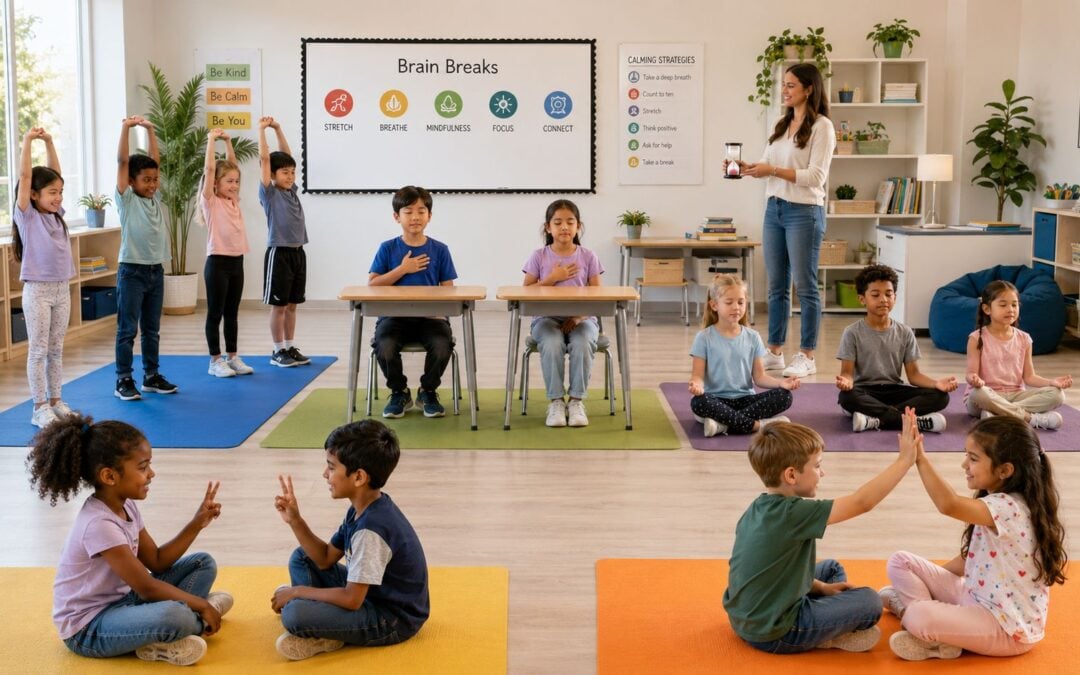
For younger students, I'd also pair the assembly with short movement resets during the following week so the emotional message doesn't compete with regulation needs. This collection of fun brain breaks for school days can help teachers bring students back to focus while keeping the tone connected to care and community.
The shift is simple but important. Don't ask, “What assembly should we book?” Ask, “What student behavior and school climate do we want to strengthen, and how can an assembly help us start that work together?”
Aligning Assembly Goals with Your School Culture
Before you compare providers, get clear on your own school. A strong assembly doesn't begin with a catalog. It begins with a campus need that adults can describe in plain language.
If your staff says, “Our students need kindness,” keep going. Kindness is a value, not yet a planning goal. You need to name where students struggle and what success would look like in daily school life.
Start with the friction points
Walk your campus mentally from arrival to dismissal. Where do students lose connection, self-control, or empathy?
Playground conflict: Students argue, but they don't know how to repair.
Classroom exclusion: Some students get left out of partner work or group games.
Transitions: The move from lunch or specials back to class is rough.
Online behavior: Older students carry digital conflict into the school day.
Once you identify the friction point, write a goal that a teacher could observe. Instead of “improve behavior,” try “students will use common language for problem-solving during recess conflict.” Instead of “promote inclusion,” try “students will practice one response when they notice someone being left out.”
Bring in the adults who know the patterns
Teachers, counselors, noon supervisors, and office staff often see different slices of student life. If you only ask the leadership team, you'll miss useful details. A recess aide might tell you that the issue isn't physical aggression. It's repeated exclusion during games. A fourth-grade teacher might notice that students can explain feelings but struggle to enter hard conversations respectfully.
A short staff prompt can help:
Where are students getting stuck socially?
What language do you wish students used more often?
What would feel different in classrooms or common spaces if this improved?
You can also ask a small student group. Their answers are often concrete. “People say rude things when they lose.” “Kids don't know how to join a game.” “Everyone watches and nobody helps.”
Match the assembly to the culture you're building
An assembly should support the climate you want every day. If your school is working on belonging, your event should give students phrases and routines that support belonging. If your staff is focused on emotional regulation, the assembly should include concrete strategies students can practice.
The clearest assembly goals sound like behavior, not branding.
A useful checkpoint is this: could your teachers continue the theme the next morning without needing to reinterpret it? If the answer is no, your goal is still too vague.
For schools doing broader climate work, this article on how to improve school culture offers a helpful companion lens. The assembly should fit into that larger effort, not sit beside it.
A practical example helps. If your school has recurring lunchroom conflict, your assembly goal might be: “Students will learn and practice respectful language for handling small peer conflicts before they escalate.” That gives your provider, your teachers, and your support staff something specific to reinforce.
Choosing the Right Program and Partner
Once your goals are defined, selection gets easier. You're no longer shopping for a fun event. You're choosing an instructional partner.
The strongest partners don't just entertain students for an hour. They help adults carry the message forward.
What to look for
Use these criteria when reviewing assembly programs for schools.
What to look for
Why it matters
Clear alignment to your SEL or bullying-prevention goal
You want a program that solves your problem, not a generic morale boost
Age-appropriate design
Kindergarten students and fifth graders need different pacing, examples, and language
Interactive participation
Students remember more when they practice, respond, move, or rehearse
Teacher follow-up materials
Staff need vocabulary, prompts, and simple next steps
Behavior support planning
Audience routines and adult roles affect whether students can engage
Evidence-informed approach
You want substance behind the delivery
One example of a more integrated approach is the Soul Shoppe Elementary Peace Program, a year-round K to 5 curriculum that provides school-wide instruction on friendships, problem-solving, and bullying prevention while creating shared language across grades, as described by the San Ramon Valley Unified resource page. That kind of model is useful because it treats the assembly as one piece of a broader system, not the whole intervention.
If you're comparing options, this overview of SEL programs for schools can help you distinguish a stand-alone event from a more connected schoolwide approach.
Questions worth asking a provider
In meetings with providers, ask direct questions. Don't settle for polished generalities.
How do you adapt for age bands? Ask what changes between K to 2 and grades 3 to 5.
What do teachers receive before the event? If the answer is “a flyer,” that's thin support.
What follow-up do you recommend in classrooms? Strong providers can answer quickly and concretely.
How do you handle student participation? You want active engagement without chaos.
What are your AV and space needs? This affects staff planning and student flow.
How do you customize for school goals? Listen for whether they ask about your climate and student needs.
Ask providers to describe what students will actually say or do differently after the assembly. Their answer will tell you whether they teach skills or just themes.
Red flags to avoid
Some warning signs show up fast.
A provider may rely on broad slogans like “be respectful” without naming teachable actions. Another may promise a powerful experience but offer no classroom materials, no staff briefing, and no process for feedback. Be cautious if the program sounds exactly the same for every school regardless of grade level or community need.
Also pay attention to whether the provider understands student regulation. An SEL assembly should never depend on students sitting still for an extended stretch while adults deliver abstract advice. Younger students especially need movement, call-and-response, stories, or guided practice.
Think about cost in the right way
Budget matters, but cheap and effective are not always the same thing. A lower-cost assembly can become expensive in staff time if adults must build all the follow-up from scratch. A more complete program may save effort because it includes planning support, teacher tools, and a schoolwide framework students can keep using.
A helpful question for your team is not “What does this event cost?” It's “What support comes with it, and what will we need to create ourselves if it doesn't?”
Your 8-Week Assembly Planning Timeline
A smooth assembly day starts long before chairs are unfolded. The planning rhythm matters because students benefit when adults are coordinated, calm, and clear.
A practical framework from Academic Entertainment's assembly best practices recommends an 8-week pre-planning timeline that starts with educational goals and budget, includes a detailed day-of plan, and ends with a structured classroom discussion within two days to reinforce retention.
Weeks 8 through 6
Start with purpose and commitment.
Week 8 Confirm your educational goal, target grade levels, and budget. Decide what problem the assembly is meant to address. This is also the time to choose a planning lead.
Week 7 Vet programs and partners. Review sample materials, ask questions, and make sure the content matches your school culture.
Week 6 Finalize booking, date, space, and contract details. Put the event on the master calendar so support staff, specialists, and front office staff can plan around it.
At this stage, I tell principals to create one working document with everything in it. Time, provider contact, tech needs, adult assignments, seating plan, arrival pattern, and classroom follow-up. When details live in one place, the day runs better.
Weeks 5 through 3
At this point, many schools either build momentum or lose it.
Build staff readiness
Teachers need more than a reminder email. They need context.
Week 5 Brief staff on the assembly goal, key themes, schedule changes, and their supervision roles. Tell them what language students will hear so they can reinforce it later.
Week 4 Communicate with families in simple terms. Let them know the theme and include one question they can ask at home, such as, “What did you learn about solving a conflict respectfully?”
Week 3 Confirm logistics. Test microphones, projection, seating flow, and accessibility needs. Assign adults to arrival, side seating, transitions, and any student support needs.
When staff know the vocabulary ahead of time, they can catch and extend teachable moments the same day.
Weeks 2 through 1
Now move from planning to rehearsal.
Timeframe
Priority action
Example
Week 2
Final confirmation with provider
Recheck arrival time, setup window, and interactive elements
Week 2
Student pre-brief
Teachers remind students how to enter, listen, and participate
Week 1
Final run-through
Front office, custodian, AV support, and admin confirm responsibilities
Assembly day
Calm execution
Adults greet classes, guide seating, and reinforce expectations consistently
A practical student pre-brief can be short. “Today's assembly is about how we handle conflict and include others. Your job is to listen for one strategy you can use today at recess.”
The two days after matter most
Many schools treat the assembly itself as the finish line. It's not. The first classroom conversation after the event is where students start turning ideas into usable skills.
Within two days, give teachers a short structure:
One recall prompt: What message do you remember?
One application prompt: Where could you use it at school?
One rehearsal: Practice a phrase, role-play a situation, or draw the steps.
A first-grade class might draw what “including someone” looks like during play. A middle elementary class might role-play how to respond when a game argument starts. That small follow-up is what helps the learning stick.
Beyond the Bell Integrating Assembly Themes in the Classroom
The assembly ends. Students stand up, chatter resumes, and the room empties fast. This is the point where strong schools pull ahead. They don't let the message evaporate in the hallway.
Schools see better results when adults prepare for follow-up. According to Hall of Fame's school assembly guidance, success rates increase by 50% when schools implement post-assembly feedback loops and pre-brief teachers on key themes, while insufficient preparation can lead to a 35% drop-off in post-assembly classroom discussion quality. That tells us something simple. The assembly is only the spark. Teachers build the fire.
What this looks like in real classrooms
A kindergarten team I worked with once followed a friendship-themed assembly by asking students to draw two pictures. In the first, they showed what it looks like when someone is left out. In the second, they drew what they could do to help. The teacher then turned those drawings into a class chart with phrases like “You can play with us” and “Do you want to join?”
That's not complicated. It is effective because it moves from message to action.
A fourth-grade teacher might use the same assembly differently. During morning meeting, students get a scenario: two classmates both want the same ball at recess and start blaming each other. Students practice “I-statements,” identify the problem, and generate two fair next steps. The teacher writes student language on chart paper so it becomes usable during the week.
Age-appropriate examples families and teachers can use
For younger students, concrete tools matter. Soul Shoppe gives useful examples of self-regulation supports by age. For ages 5 to 8, schools can create a Calm Corner or Peace Place with soft pillows, weighted blankets, and quiet fidgets. For ages 9 to 12 at home, caregivers can build a Sensory Toolkit with noise-reducing headphones, scented putty, textured seat cushions, and stress balls, as described in Soul Shoppe's self-regulation examples.
Here are practical follow-ups tied to common assembly themes:
Conflict resolution in K to 2: Practice one sentence stem such as “I didn't like that. Please stop.”
Inclusion in grades 3 to 5: Ask students to script what they can say when they notice someone being excluded.
Emotional regulation at home: Parents can teach a reset routine using a designated calm space before returning to homework or sibling play.
Carry the language into shared spaces
One of the strongest examples of assembly follow-through is the Peace Path, a restorative communication tool used on thousands of playgrounds across the United States to help students resolve conflict step by step, according to the Peace Path guide. The power of a tool like this is that it gives students a visible structure for using the skills introduced in an assembly.
A shared script in the classroom is helpful. A shared script on the playground changes school culture.
Parents can mirror that idea at home. If siblings argue over a game, an adult can slow the moment down with a simple sequence: each child says what happened, each says how they feel, and together they choose a next step. The point isn't perfect wording. It's repetition.
Keep follow-up short and repeatable
Teachers don't need a weeklong unit every time. A good follow-up can happen in ten minutes.
Monday: Recall one key phrase from the assembly.
Wednesday: Practice a role-play in pairs.
Friday: Reflect on when someone used the skill.
That rhythm helps the message become part of daily school life instead of assembly-day memory.
Measuring Real Impact and Fostering Lasting Change
School leaders often get immediate feedback after an assembly. Students seemed engaged. Teachers liked the presenter. The room had energy. Those reactions matter, but they don't answer the deeper question. Did student behavior change?
That's a real challenge for schools. As noted in Touchwall's discussion of school assembly impact, schools need ways to measure long-term behavioral outcomes, not just whether an event felt fun and memorable. For SEL assemblies, that means tracking whether messages about empathy, conflict resolution, or bullying prevention show up in student behavior over time.
Use simple metrics that match your goal
If your assembly focused on inclusion, don't try to measure everything. Track a few indicators that fit the original purpose.
Goal area
Possible school-based measure
Conflict resolution
Teacher notes on whether students attempt a taught problem-solving routine
Inclusion
Staff observations of students inviting peers into games or group work
Emotional regulation
Classroom logs of student use of calm-down strategies
Bullying prevention
Trends in repeated peer conflict reports and follow-up conversations
You don't need a complicated system to start. A shared teacher checklist can work well. Did students use the assembly language? Did they attempt a repair before seeking adult intervention? Did discussion quality improve when teachers prompted them?
Gather information from more than one source
A principal might see positive hallway behavior while recess staff see the opposite. That's why useful measurement includes multiple perspectives.
Teacher reflection forms: Short and easy to complete within a week.
Student prompts: Ask what strategy they remember and where they used it.
Counselor or support staff observations: Especially useful for recurring conflict hotspots.
Family feedback: Did students bring any language or problem-solving habits home?
For schools that want a broader framework, this resource on outcome measurement for SEL work offers useful guidance for turning observations into something more intentional.
Measure what students do after the applause ends.
Review, adjust, repeat
The best evaluation cycle is practical. Collect feedback soon after the assembly, then look again later. If teachers say students remembered the message but didn't use the strategy independently, that doesn't mean the assembly failed. It means your follow-up needs strengthening.
One school may learn that classroom conversations were strong, but playground staff never received the shared language. Another may discover that students understood the empathy message but needed more adult modeling during lunch and recess.
When you treat assembly programs for schools as part of a continuous improvement process, they become far more than an event. They become a tool for shaping how your community listens, responds, repairs, and includes.
If your school is ready to connect assemblies with a larger SEL and bullying-prevention strategy, Soul Shoppe offers programs, workshops, and schoolwide tools that help students and adults build shared language for empathy, self-regulation, communication, and conflict resolution.
In any learning environment, from the classroom to the living room, maintaining focus and engagement can be a challenge. That’s where fun brain breaks become a powerful tool. These are not just time-fillers; they are strategic mental resets designed to help students refocus, regulate their emotions, and absorb information more effectively. Research shows that short, structured breaks improve cognitive function, reduce stress, and support social-emotional learning (SEL). For example, even simple activities like social dancing offer incredible benefits for mental well-being and social connection, reinforcing why an intentional break is so important.
This guide provides 10 practical, research-backed activities ready for immediate use. You'll find step-by-step instructions, age-specific adaptations, and classroom management tips for each brain break. Whether you're a teacher, administrator, or parent, these ideas will help you create a more positive and productive learning atmosphere, complete with suggestions for integrating Soul Shoppe’s shared SEL language to build a stronger sense of community.
1. Mindful Movement & Stretching
This category of fun brain breaks combines gentle physical activity with mindfulness, helping students release tension while sharpening their focus. Instead of high-energy bursts, these activities involve slow, intentional movements paired with deep breathing. This approach calms the nervous system, builds body awareness, and supports emotional regulation, making it a perfect reset before a challenging lesson or after a period of intense concentration.
How to Implement It
Successful integration relies on consistency and clear guidance. For example, a second-grade teacher might lead a five-minute "Shoulder Rolls and Sky Reaches" routine before math to settle the class. A parent could use a "Forward Fold" stretch after homework to help their child transition calmly to dinner time.
For an effective session, consider these tips:
Set the Tone: Play soft, instrumental music to create a calm atmosphere.
Model Slowly: Demonstrate each movement clearly so students can easily follow along. Example: As you model a "Neck Roll," slowly drop your chin to your chest and then gently roll your right ear toward your right shoulder, holding for a count of three before switching sides.
Use Simple Cues: Use accessible language like, "Reach for the ceiling," or "Gently drop your chin to your chest."
Connect Breath to Movement: Guide students by saying, "Breathe in as you lift your arms, and breathe out as you lower them."
2. The 5-4-3-2-1 Sensory Grounding Technique
This category of fun brain breaks uses a powerful mindfulness tool that anchors students to the present moment by engaging their five senses. The technique involves systematically identifying five things you see, four you can touch, three you hear, two you smell, and one you taste. This process interrupts overwhelming feelings or anxiety, pulling focus away from internal distress and toward the immediate external environment. It is an effective strategy for calming the nervous system and restoring emotional balance.
How to Implement It
Implementation is most successful when the technique is practiced during calm moments first. A third-grade teacher might lead the class through it after recess to help them settle, while a parent can use it to de-escalate a meltdown in a busy store. By making it a familiar routine, students learn to use it independently when they feel stressed, such as before a test.
For an effective session, consider these tips:
Model the Process: Guide students through each sense, demonstrating how to slowly notice and name items. Example: "Okay class, let's start with five things we can see. I see the green plant on the windowsill, the blue poster, Maria's red sweater, the white clock, and the light on the ceiling. Now it's your turn."
Create Visual Aids: Use a poster or laminated desk card showing the 5-4-3-2-1 sequence as a helpful reminder.
Adapt as Needed: For "taste," suggest students think of one thing they like to eat or the last thing they ate. For "touch," they can feel their desk, their sleeve, their pencil, and their own hair.
Pair with Breathing: Encourage slow breaths between each step, saying, “Breathe in and tell me five things you can see.”
3. Dance & Movement Breaks
This high-energy category of fun brain breaks uses music and playful movement to help students burn off excess energy, boost their mood, and increase blood flow to the brain. These activities provide a joyful outlet for physical expression, helping reset focus and build a positive classroom community. Whether it's a structured dance-along or a moment of free movement, these breaks are perfect for shaking out restlessness and re-energizing the room.
How to Implement It
Successful dance breaks are about channeling energy constructively. For example, a third-grade teacher might start the day with a two-minute dance party to an upbeat song, noticing improved moods and fewer conflicts. At home, a parent could use a quick game of "freeze dance" after school to help their child transition from a long day to homework time with renewed focus.
For an effective session, consider these tips:
Use Guided Videos: Use resources like GoNoodle or Just Dance Kids to provide structured, easy-to-follow routines.
Create a Playlist: Build a class-approved playlist of upbeat, age-appropriate songs that students can request.
Manage Space: If space is limited, have some students dance freely while others march or jog in place. Example: "Group A, you can do jumping jacks at your desk. Group B, you can jog in place. Let's switch in 30 seconds!"
Practice Impulse Control: Incorporate freeze dance, where students stop moving when the music pauses, to build listening skills and self-regulation.
Plan a Calm-Down Transition: Follow a high-energy dance break with a minute of deep breathing or stretching to help students settle back into their work.
4. Breathing Exercises & Belly Breathing
This powerful category of fun brain breaks uses guided breathing to activate the body’s natural relaxation response. Simple techniques like belly breathing calm the nervous system, helping students shift from a state of stress or high energy to one of calm focus. By learning to control their breath, students gain a practical tool for managing emotions, reducing anxiety, and preparing their minds for learning.
How to Implement It
Implementation can be adapted for any age. For instance, a kindergarten teacher might use the "smell the flower, blow out the candle" cue before circle time. A parent could guide their child through "balloon breathing," imagining their belly inflating and deflating, to soothe homework frustration.
To get started, try these simple tips:
Use Concrete Imagery: Younger students connect well with visuals like flowers, candles, or waves. Example: "Pretend you are holding a cup of hot chocolate. Breathe in deeply to smell the chocolatey scent for four counts. Now, slowly blow out for four counts to cool it down."
Model Visibly: Exaggerate the movement of your own belly so students have a clear visual to imitate.
Provide Tactile Feedback: Ask students to place a hand on their belly to feel the rise and fall.
Practice Proactively: Introduce these techniques during calm moments so they become familiar and accessible during stressful times. You can explore a detailed guide on the belly breathing technique to build confidence.
5. Partner Connection Games & Pair Bonding
This type of fun brain break focuses on interactive activities designed for two students, building social connection, communication, and peer relationships. Rather than individual or large-group activities, these games require direct engagement with a partner. Activities like mirroring movements or hand-clapping games help students practice collaboration and attunement, which strengthens classroom community and provides a much-needed mental reset.
How to Implement It
Success with partner games comes from clear instructions and thoughtful pairing. A fourth-grade teacher could introduce a "Mirroring" activity where one student leads with slow movements and their partner copies them exactly, building focus and empathy. A parent at home can play "Partner Simon Says" with their child to foster connection and joyful interaction after a long school day.
For an effective session, consider these tips:
Model First: Demonstrate the activity with a student so everyone understands the expectations.
Pair Strategically: Mix up partners regularly so students connect with different classmates.
Start Simple: Begin with low-pressure games before moving to more complex or physical ones. Example: A game of "Thumb Wrestling" or a simple hand-clapping sequence like "Miss Mary Mack."
Facilitate Reflection: Ask questions like, "What did you learn about your partner today?" to deepen the social-emotional learning aspect. For more ideas, explore other relationship-building activities that build community.
6. Guided Imagery & Visualization
This type of fun brain break transports students to calm mental landscapes, using the power of imagination to achieve deep relaxation and focus. The facilitator guides students through a sensory-rich story or scene, such as a peaceful beach or a magical forest. By engaging their minds in a positive, tranquil scenario, students can quiet distracting thoughts, reduce anxiety, and return to their tasks with a renewed sense of clarity and emotional balance.
How to Implement It
Successful guided imagery depends on creating a safe, comfortable environment with a slow, soothing voice. For example, a fourth-grade teacher might lead a "Floating on a Cloud" visualization after a lively recess to help the class settle down. A parent could use a "Safe Place" visualization to help their child manage worries before a big test.
For an effective session, consider these tips:
Use a Soothing Tone: Speak slowly and softly, pausing frequently to allow students to build the images in their minds.
Include Sensory Details: Describe what students might see, hear, smell, and feel. Example Script: "Imagine you are walking on a warm, sandy beach. You can feel the soft sand between your toes. Hear the gentle sound of the waves crashing on the shore. Can you smell the salty air?"
Offer Choices: Allow students to participate in a way that feels comfortable. Say, "You can close your eyes or just look down at your desk."
Keep it Brief: Start with short, 3- to 5-minute sessions and gradually increase the time as students become more familiar with the practice.
This category of fun brain breaks shifts mental gears from logical processing to creative, intuitive thinking. Activities like free drawing, doodling, or coloring provide a low-pressure outlet for emotional expression and mental rest. By engaging the artistic side of the brain, students can quietly process feelings, reduce stress, and return to academic tasks with a refreshed and calmer mindset. It is a meditative break that values process over a perfect finished product.
How to Implement It
Successful creative breaks depend on accessibility and an emphasis on freedom. For instance, a second-grade teacher might start the day with "feelings doodles," where students draw whatever represents their current mood. A parent could use "worry drawing" after school, inviting their child to doodle their anxieties before discussing them.
For an effective session, consider these tips:
Emphasize Process: Remind students, "There is no right or wrong way to create." The goal is expression, not a masterpiece.
Offer Simple Prompts: Suggest ideas like "draw your happy place" or "doodle your favorite sound," but allow students to create freely. Example: "Let's all draw a 'scribble monster.' Just scribble on the page for 10 seconds, then turn your scribble into a monster by adding eyes and legs!"
Keep Materials Ready: Have paper, crayons, and pre-printed patterns like mandalas easily accessible for quick transitions. Exploring tools like anxiety coloring pages can provide structured yet calming options.
Create a Calm Atmosphere: Play soft, instrumental music to help students settle into a creative flow.
8. Kindness & Gratitude Circles
This category of fun brain breaks shifts the focus from physical movement to social-emotional connection. These structured group activities guide students to practice giving and receiving compliments, sharing appreciations, or identifying things they are grateful for. By creating a dedicated time for positive expression, these circles build empathy, strengthen peer relationships, and actively rewire focus toward pro-social thinking. It's an ideal reset for improving classroom climate and fostering a sense of belonging.
How to Implement It
Successful integration depends on creating a safe, predictable routine. For example, a third-grade teacher could hold a weekly “Compliment Circle” where each student receives two genuine compliments from peers, helping to reduce classroom conflicts. A parent might start a “Gratitude Dinner” where each family member shares something they appreciated about another person that day, building stronger family bonds.
For an effective session, consider these tips:
Model First: Demonstrate how to give a specific, genuine compliment to a student before asking the class to try. Example: Instead of "You're nice," model saying, "I appreciated how you helped Leo pick up his crayons when he dropped them. That was very kind."
Use Sentence Starters: Provide prompts like, “I appreciated when you…” or “I am grateful for…” to guide students.
Establish Clear Rules: Create a “no criticism” zone where only positive appreciations are shared.
Allow Passing: Normalize allowing students to pass if they don’t feel ready to share, which builds psychological safety.
9. Nature & Outdoor Observation Breaks
This category of fun brain breaks connects students with the natural world to provide a genuine sensory reset. By stepping outside or simply observing through a window, children shift their focus from academic pressures to the details of their environment-clouds, plants, weather, and wildlife. This practice reduces stress, grounds students in the present moment, and cultivates an appreciation for the world around them, making it an excellent way to calm a restless class.
How to Implement It
Successful nature breaks are built on simple, repeatable routines. For instance, a third-grade class could take a three-minute "sensory walk" around the playground, focusing on what they can hear and smell. At home, a parent might ask their child to spend a few minutes at a window on a rainy day and describe the patterns the raindrops make, helping them transition calmly from screen time to homework.
For an effective session, consider these tips:
Use Guided Prompts: Ask simple questions to direct focus, such as, "What are three different colors you can see?" or "What sounds are the loudest and quietest?" Example: "Everyone look at that tree. How many different shades of green can you find in its leaves? What direction is the wind blowing the branches?"
Create a Nature Journal: Encourage students to sketch or write down one thing they notice each time.
Visit the Same Spot: Returning to the same tree or garden area regularly helps students observe seasonal changes over time.
Engage All Senses: Prompt students to touch tree bark, smell damp earth after rain, or listen for bird calls to create a full sensory experience.
10. Sound & Music-Based Brain Resets
This category of fun brain breaks uses audio cues to shift mental states, offering a powerful tool for emotional regulation and focus. Activities range from actively singing or tapping rhythms to passively listening to calming music. Sound and music directly influence mood and energy levels, making them an efficient way to reset the classroom atmosphere, energize a sluggish group, or soothe overstimulated minds before a transition.
How to Implement It
Successful integration depends on being intentional with your audio choices. For instance, a fourth-grade teacher could play five minutes of instrumental focus music during independent writing time to help students concentrate. A parent might teach their child a simple, calming song to sing softly when they feel overwhelmed by big emotions.
For an effective session, consider these tips:
Curate Playlists: Create separate playlists for different needs: calming instrumentals for tests, upbeat tunes for energy boosts, and focus music for work periods.
Teach Simple Songs: Use repetitive, simple songs or chants that students can easily learn and sing together to signal transitions. Example: A simple call-and-response chant like, "Teacher: Macaroni and cheese! Students: Everybody freeze!"
Incorporate Rhythm: Use body percussion like clapping or desk tapping, or simple instruments like shakers, to create a shared rhythm that builds community and releases energy.
Consider Volume: Be mindful that some students are sensitive to loud sounds. Keep background music at a low, non-distracting volume.
Quick Comparison: 10 Fun Brain Breaks
Activity
Implementation complexity
Resource requirements
Expected outcomes
Ideal use cases
Key advantages
Mindful Movement & Stretching
Low–Moderate — teacher models simple sequences
Minimal space, optional soft music
Reduced tension, improved attention, body awareness
Transitions, before focused work, anxiety reduction
Inclusive, minimal setup, teaches self‑regulation
The 5-4-3-2-1 Sensory Grounding Technique
Low — scripted prompts, quick to run
None
Rapid anxiety reduction, present‑moment focus
Acute stress moments, pre‑test, quick resets
Portable, fast, works individually or whole group
Dance & Movement Breaks
Low–Moderate — manage music and timing
Music/audio and open space
Energy release, improved mood, increased focus
High‑energy periods, morning routines, before recess
Transitions, calming during work, energizing before activity
Neurologically impactful, versatile, enjoyable
Putting Fun Brain Breaks into Action
We've explored a wide range of engaging, research-backed activities designed to refresh young minds, from Mindful Movement and the 5-4-3-2-1 Sensory Grounding technique to Creative Expression and Kindness Circles. The common thread connecting them all is the power of intentional pausing. These are not just fun distractions; they are vital tools for building focus, managing emotions, and creating a positive, supportive learning environment. The true value of Fun Brain Breaks emerges when they become a consistent, predictable part of the daily rhythm.
Building a Sustainable Routine
The key is to start small and build momentum. Don't try to introduce all ten activities at once. Instead, choose one that aligns with your students' current needs. If post-recess energy is high, a guided Belly Breathing exercise might be perfect. If you notice students struggling with a complex math problem, a quick Dance & Movement Break could be the reset they need to find a new perspective.
Remember to model the activities enthusiastically and participate alongside your students. Your engagement signals that these moments are just as important as academic instruction. After each break, take thirty seconds to debrief. Ask simple questions like, "How does your body feel now?" or "What did you notice during that quiet moment?" This reflective practice connects the physical action to the internal benefit, deepening their social-emotional awareness.
From Breaks to Breakthroughs
Integrating Fun Brain Breaks consistently does more than just improve attention spans. It communicates a powerful message to students: their well-being matters. When they learn to identify their need for a break and use strategies like guided imagery or a gratitude share to reset, they are building foundational self-regulation and self-advocacy skills that will support them for a lifetime. These short, intentional pauses create the space needed for academic and emotional breakthroughs to happen, transforming your classroom into a place where students feel seen, supported, and ready to learn.
Ready to take your classroom's social-emotional learning to the next level? The strategies in this article are a great start, and Soul Shoppe provides the programs and curriculum to build a truly peaceful school culture. Explore our offerings at Soul Shoppe to discover how to integrate these practices into a comprehensive, school-wide system.