CHECK OUT OUR 2026-27 SCHOOL YEAR PROGRAMMING

You know the moment. A child is staring at a worksheet, shoulders up, eyes wet, and you can tell they're about to tip into tears, shutdown, or a burst of anger. Maybe it's before a spelling test, right after recess, or at bedtime when the day finally catches up with them. In those moments, breathing techniques for kids stop being a nice idea and become a practical way to help a child settle their body enough to think again.

The good news is that breathing can be taught in a way kids remember. A randomized Stanford study summarized by the Greater Good Science Center found that one minute of slow-paced breathing lowered children's average physiological arousal, and that even four deep breaths worked as a simple calming routine for kids in a real-world setting (Greater Good Science Center). That's why I like breathing work for classrooms and homes, because it gives adults a script that fits inside a transition, a conflict repair, or a quick reset before learning resumes. If you want a hands-on companion for a sensory corner, the idea pairs well with a simple craft like DIY calm-down jars for kids, and it also connects naturally with broader mindfulness practices like those in teaching mindfulness to children.

Why Breathing Exercises Change Everything for Kids

A child doesn't usually need a lecture when their nervous system is already on fire. They need a body-level reset that's simple enough to follow when language is hard. That's where structured breathing helps, because it turns a vague “calm down” into a repeatable action a child can do.

What changes in the room

I've watched this play out in classrooms after recess, when the room comes back loud and scattered. One student is still revved up, another is frustrated about a game, and a third can't re-enter the lesson without a meltdown. A short breathing routine gives the whole group a shared anchor, and the room often feels different because everyone has something concrete to do with their bodies.

Practical rule: if a child can copy a rhythm, you've got something usable. If the adult has to keep explaining it, the child will likely lose the thread.

That's one reason child breathing work has moved beyond “just take a deep breath” and toward more teachable routines. Major pediatric hospitals commonly use counted patterns like 4-4-4-4 box breathing, 4-6 longer exhales, and 4-7-8 styles, which makes the practice easier to remember and repeat (Children's Colorado). Those numbers matter less as a performance target and more as a shared language. Kids can hear them, count them, and eventually use them on their own.

Why short routines work better than speeches

A child in distress usually can't process a long explanation. A short, structured breath sequence is easier to enter, easier to repeat, and easier to use when an adult is standing nearby trying to help without escalating the moment. Pediatric guidance also shows that longer exhales than inhales are a useful benchmark for self-regulation, because the out-breath is where the calming emphasis belongs (Cedars-Sinai).

That shift matters at home too. When a child is spiraling at bedtime, a parent doesn't need a perfect wellness ritual, they need a two-minute path from chaos to manageable. Breathing gives you that path, and it works best when you lead it calmly yourself first.

Five Breathing Techniques Kids Enjoy

A visual guide illustrating five different fun and simple breathing techniques designed for children to follow.

The easiest way to teach breathing is to make the shape, the count, and the words match. Kids do better when they can see the pattern, hear the pattern, and feel the pattern at the same time. One helpful option for families and schools is Soul Shoppe's Belly Breathing Technique, which uses a hand-on-belly cue that younger children can follow right away.

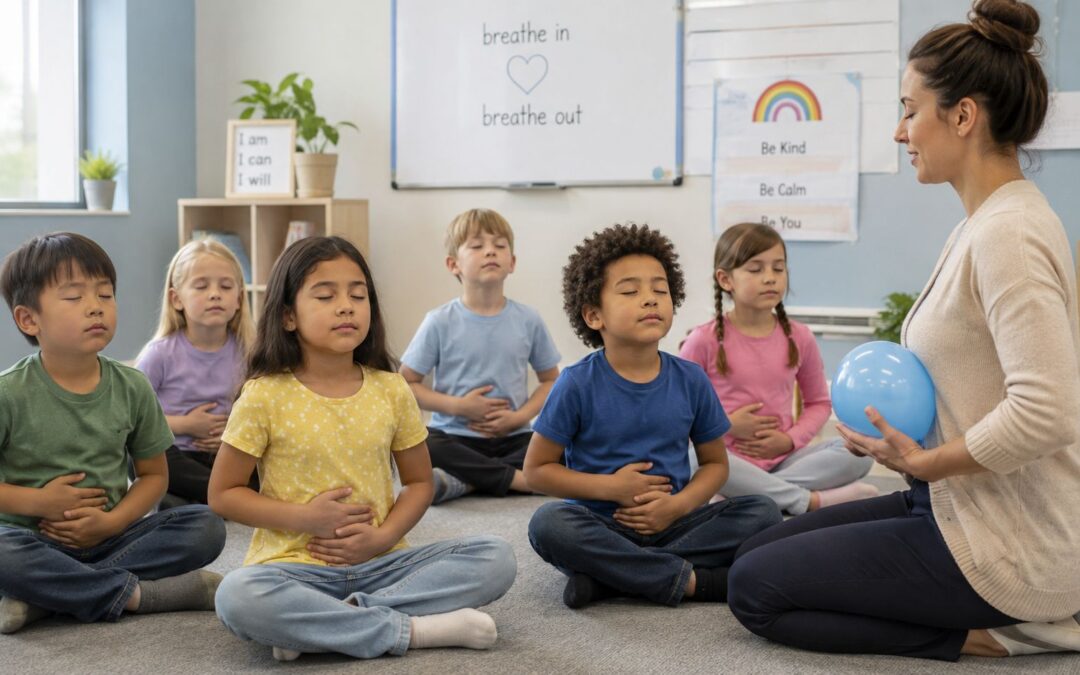
Belly breathing with a balloon

Say, “Put one hand on your belly and one hand on your chest. Breathe in through your nose and let your belly rise like you're filling a balloon. Now breathe out slowly through your mouth and let the balloon get soft.”

Keep the cycle slow. If the child rushes, say, “Slow balloon, not fast balloon.” A good starting point is 4 seconds in, then a gentle out-breath that feels longer than the inhale. If the child is very wound up, I keep it to just a few breaths and focus on the belly moving, not perfect stillness.

Box breathing with a finger trace

Say, “Trace a square with your finger. Breathe in for 4, hold for 4, breathe out for 4, hold for 4.”

This works well for students who like structure. A classroom version can be done under the desk or in the air with a fingertip. It is one of the clearest ways to teach breathing exercises because the shape holds the child's attention while the count stays predictable.

Longer exhale breathing with a candle cue

Say, “Smell the flower for 4. Now blow the candle out for 6.”

That longer out-breath is the heart of the exercise. If a child keeps puffing too hard, coach them to “make the flame wiggle, not explode.” A softer exhale gives them something to regulate without turning the exercise into a game of force.

Lion's breath for tension release

Say, “Take a big breath in through your nose. Open your mouth, stick out your tongue, and let it out with a soft roar.”

This is useful when a child is carrying anger in their jaw, shoulders, or hands. Keep it playful with younger children, but do not overdo it with older students who may feel self-conscious. One or two rounds are often enough to move stuck energy without making the room chaotic.

Five-finger breathing for discreet calm

Say, “Use one finger from the other hand and slowly trace up and down each finger. Breathe in as you go up, breathe out as you go down.”

This one is quiet, portable, and great for a desk, car line, or hallway transition. It is also a good choice for students who do not want to draw attention to themselves. Use a calm hand signal first, then model the pace once before asking the child to follow along.

Adapting Breathing Exercises by Age Group

A kindergartener, a fourth grader, and an eighth grader may all need the same nervous-system reset, but they will not take it in the same way. Keep the breathing pattern familiar, then change the words, the pace, and the amount of privacy you offer. Adults usually get better results that way, because the child feels understood and the exercise stays usable.

A chart showing different breathing technique styles and key language for students in grades K through 8.

K to 2

Younger children usually respond to imagination, movement, and very short directions. I keep the script concrete, like “fill the balloon,” “make the flower smell,” or “trace the star.” A five-year-old does not need a lecture on the nervous system. They do need to know where to put their hands and what the next breath should feel like.

The main resistance at this age is distraction, not defiance. If the child starts giggling or wandering, shorten the routine and return to a visual cue. A stuffed animal on the belly, a pinwheel, or a finger-traced star can keep the child engaged without adding more words.

When the goal is simple calm, a short, repeatable script works best. Say the same line each time, then pause long enough for the child to follow the breath instead of rush to the answer.

Grades 3 to 5

This group likes a little more structure. Counting works well, especially when the adult keeps the pace steady and predictable. They will often ask whether they are doing it “right,” so I answer with body cues, not perfection, “If your belly moves and your exhale is slower, you are on track.”

This is also the age where a child may enjoy understanding that longer exhales help the body settle. One useful explanation is simple, “Your out-breath tells your body to slow down.” That gives them a reason to buy in without turning the practice into a science lesson they did not ask for.

Some students at this age like a visual to go with the count, especially if they are already using other calming tools. A simple companion like breathing support from a mindfulness exercises for kids guide can help the routine feel familiar across settings, from classroom carpet time to a quiet corner at home.

Grades 6 to 8

Older students usually want autonomy and respect. They may reject anything that feels babyish, so I use neutral language like “reset breath,” “focus breath,” or “quiet breath.” A middle schooler might prefer tracing a square on a notebook edge or using a timed app, while a sixth grader might like a private version done with closed eyes and no commentary.

Useful cue: if the student resists the name of the exercise, change the name before you change the method.

The technique itself stays the same, but the delivery gets more discreet. A student may sit straighter, lower the voice, or turn the exercise into a quick reset before class starts. That shift in tone matters because the breathing pattern can stay familiar while the language and delivery change. Adults usually get better results when the child feels met instead of managed.

Older students often engage better when they understand that breathing gives them more control before a test, an argument, or a performance. That sense of control is usually what wins them over.

Weaving Breathing Practice into Daily Routines

A child does not need a big breathing lesson to get started. What helps is a small routine placed at the right moment, before the room gets loud or the shoulders start to tighten. In real classrooms, I have found that children learn breathing best when the practice is brief, predictable, and tied to something they already do every day.

A simple way to build that habit is to match one breath pattern to one daily transition. Morning arrival, a hard test, a conflict at recess, or the stretch between homework and dinner all give you a natural opening. The routine starts to feel normal when the child hears the same cue, sees the same steps, and knows the same ending.

Four touchpoints that usually work

  • Morning arrival: A quick star breath helps a child move from home mode into school mode without a long conversation.
  • Before tests: A square breath gives students a familiar reset before pencils hit the page.
  • After disagreements: A few dragon breaths help release tension before anyone tries to solve the problem.
  • At home before homework: Let the child choose between balloon or rainbow breath so the routine feels like a choice, not a command.

The choice matters. Children are more willing to practice when they can predict what happens next, and adults are more likely to keep using the tool when it takes less than a minute to begin. If you want a visual that fits a classroom wall or a calm corner at home, the Box Breathing Visual can support the routine without turning it into a lesson about breathing.

How to make it stick

Use the same cue every time. “Before we begin math, let's take three slow breaths” gives the child a clear start, while a different script every morning makes the routine harder to remember. After a while, the cue and the feeling of settling begin to pair together, and that connection is what turns a practiced skill into a habit.

Place breathing practice in calm moments, not only in crisis moments. If a child only practices when they are already upset, they may start to link breathing with getting in trouble. When the breathing happens during arrival, cleanup, or bedtime reading, it becomes part of normal life instead of a last resort. That is the rhythm that holds up in busy classrooms and at home.

Common Mistakes That Make Kids Reject Breathing Exercises

A child who says no to breathing practice is often reacting to the way the adult introduced it, not rejecting the skill itself. In classrooms and at home, children usually try a calming routine when it feels clear, respectful, and easy to follow. They pull back when the moment feels hurried, overly staged, or like they are being watched.

A comparison chart showing common parenting pitfalls versus better practices for helping kids with breathing techniques.

The fixes that matter most

Start by showing the breath before asking a child to copy it. Model the inhale, the exhale, and where the hands go, then let the child try. Common mistakes show up when adults cue breathing without enough setup, skip the slow exhale, or stop the practice before the child has time to feel any shift.

Language matters too. A fifth grader may enjoy “balloon breath,” while an older student may respond better to “reset breath” or another plain phrase that feels less babyish. Preserving the cutest name isn't the goal, keeping the child willing to try is.

Some children need a quieter entry point. If a child refuses to join in, let them trace the pattern with a finger, draw it on paper, or watch a pinwheel move while you breathe. That side door gives them a way to participate before they are ready to do the whole routine out loud.

Keep your tone calm and your expectations small. A short script such as, “Let's take one slow breath together,” often works better than a long explanation, because children can follow one clear step at a time. If you make the practice feel like a test, they will protect themselves by checking out.

Don't chase instant calm. Chasing it usually makes everyone feel more pressure.

Patience pays off here. A child may still look fidgety after one round, but the essential learning is the sequence, not a perfect-looking response. When adults stay low-key and consistent, children are more likely to cooperate the next time and less likely to treat breathing as something they should avoid.

Building a Four-Week Breathing Practice Plan

Week one should be small and predictable. Choose one technique, use it at one consistent time, and keep the script the same. A single round before morning meeting or before homework is enough to start.

Week two adds a second option and a little choice. You might offer balloon breath or box breathing, then let the child choose which one they want. That small decision helps them feel ownership, which usually improves follow-through.

Week three is the point to use breathing ahead of known stress. Try it before a quiz, before a sibling visit, or before a transition that usually goes badly. This is also a good time to ask students to notice, in plain language, whether their shoulders, jaw, or hands feel different after the practice.

Week four can be student-led. Ask the child to teach the routine back to you, lead a partner, or choose the cue words themselves. Keep a simple observation log if you want to track when the practice helps most, and ask the child one question like, “Did that make your body feel a little steadier?”

If you want breathing to become part of a larger SEL rhythm at school, Soul Shoppe offers programs and tools that support shared language, self-regulation, mindfulness, communication, and conflict resolution across school communities.


If you're building calmer classrooms or calmer evenings at home, start with one breath script and use it every day for a week. Then visit Soul Shoppe to explore resources that fit into the same kind of connection, safety, and shared language that help kids use these skills when they need them most.