

5 Engaging 5 Senses Activity Ideas for K–8 SEL in 2026

Engaging a child's five senses is more than just a fun classroom activity; it's a powerful gateway to social-emotional learning (SEL). When we guide students to intentionally see, hear, touch, taste, and smell, we help them build the foundational skills for self-awareness, self-regulation, and empathy. A well-designed 5 senses activity isn't just about sensory input. It's about processing that input to understand ourselves and our connections to others better.
For parents and educators, these activities are practical tools for creating moments of calm and deep learning. To fully grasp how sensory play can foster these skills, it's beneficial to first understand What Is Emotional Intelligence and its significance. This article moves beyond generic ideas to provide a curated roundup of five powerful, research-backed sensory experiences.
Each activity is designed for K-8 settings and homes, complete with step-by-step instructions, specific SEL connections, and practical tips for implementation. We'll explore how to turn simple sensory exploration into profound lessons in emotional intelligence, creating the kind of safe, connected environments where every child can thrive. You'll find actionable strategies to help students connect colors to feelings, sounds to gratitude, and textures to empathy.
1. Color Emotion Mapping (Sight)
Color Emotion Mapping is a visual sensory activity that helps individuals connect colors to their feelings. Participants choose colors that represent their current emotional state, creating a visual map of their internal world. This simple yet profound exercise makes it easier to talk about complex feelings, especially for those who struggle to find the right words. By focusing on the sense of sight, this 5 senses activity provides a concrete way to explore abstract emotions.
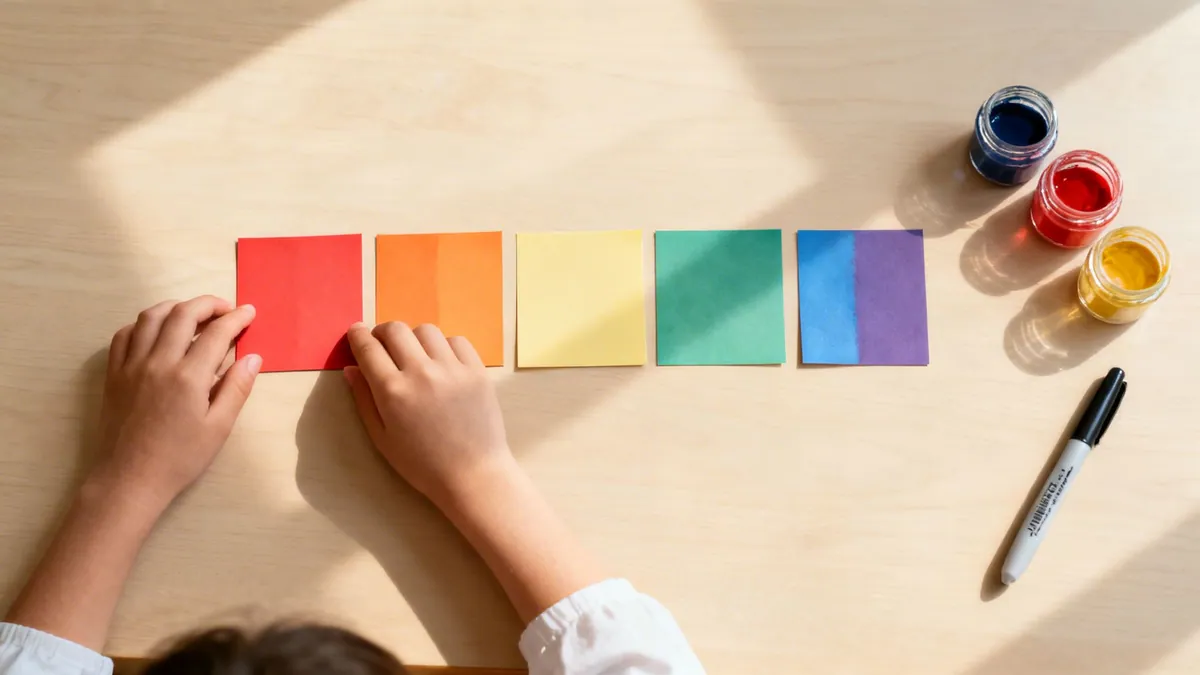
Popularized by social-emotional learning (SEL) programs like the Zones of Regulation curriculum, the activity is grounded in color psychology. It gives students and adults a shared, non-verbal language for expressing how they feel, fostering greater self-awareness and empathy within a group.
How to Implement Color Emotion Mapping
This activity requires minimal materials and can be adapted for various ages and settings.
- Suggested Time: 15-25 minutes
- Appropriate Ages: Kindergarten through 8th Grade (and beyond)
- Materials: Colored paper, markers, crayons, colored pencils, or even digital color palettes. A blank sheet of paper or a pre-drawn body outline for each participant.
Step-by-Step Directions:
- Introduce the Concept: Explain that colors can be connected to feelings. For example, a teacher could ask a K-2 class, "If your happiness was a color, what color would it be? What about feeling grumpy?" For older students (grades 6-8), you might ask, "What color represents feeling stressed? What color feels like calm?"
- Provide Materials: Give each participant a blank paper and access to a wide range of colors.
- Prompt for Reflection: Ask participants to quietly think about how they are feeling right now. They can think about their body, their thoughts, and their overall mood.
- Create the Map: Instruct them to choose colors that match their current feelings and draw or color on their paper. They can fill the whole page, draw abstract shapes, or color inside a body outline to show where they feel sensations. For example, a student might color their stomach red to show anxiety or their head blue to show sadness.
- Facilitate Sharing (Optional): Invite volunteers to share their color map. Use gentle, open-ended questions like, "Can you tell me about the colors you chose?" or "What does blue mean for you today?"
Key Insight: The goal is not to interpret the colors for the student but to create a safe space for them to assign their own meaning. Emphasize that there are no "wrong" colors for any emotion.
Actionable Tips for Educators and Parents
You can integrate Color Emotion Mapping into daily routines to build emotional literacy.
- Classroom Check-In: Use it during morning meetings. A second-grade teacher could have a "Color of the Day" chart where students place a colored sticky note next to their name to show how they are starting their day. This gives the teacher a quick visual of the classroom's emotional climate.
- Conflict Resolution: When students have a disagreement, a school counselor can use this activity to help them identify the feelings underneath the conflict. For example, two middle school friends in an argument might both use gray to represent feeling misunderstood, which can be a starting point for finding common ground.
- Journaling Prompt: After creating a color map, provide a follow-up journal prompt: "Write about a time you felt this color before." or "What could help you move from this color to a different one?"
- At-Home Temperature Check: A parent can keep a set of colored markers on the fridge. During a busy evening, they can ask their child, "Can you draw me a quick shape showing the color of your day?" This opens a low-pressure conversation about their experiences.
For a deeper look at how colors and feelings are discussed with children, this video offers a simple, engaging explanation.