

10 Best Calm Down Corner Printables for 2026
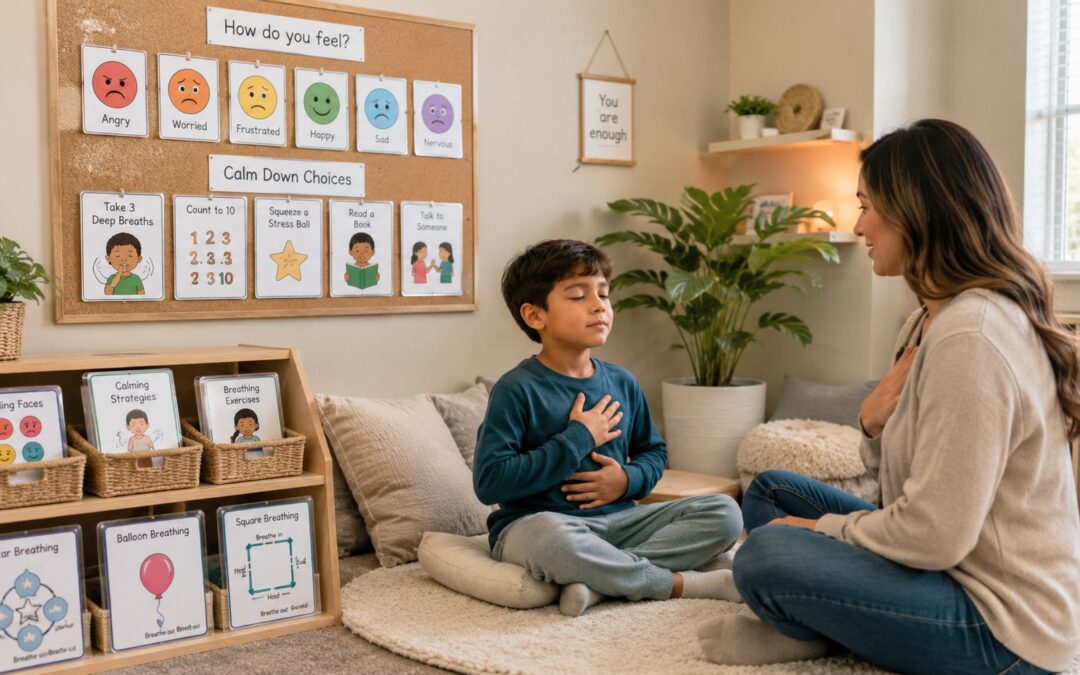
You're setting up a calm corner because the day already has enough friction, and the students in front of you need a place that helps them reset without feeling singled out. The strongest calm down corner printables do more than decorate a wall. They give children a clear, repeatable path from big feeling to calm body, which is why the best resources pair visual cues with simple routines, family language, and easy-to-use strategy cards. A good setup can be quiet, low-prep, and teachable, and that matters whether you're a classroom teacher, counselor, or parent trying to make regulation feel practical instead of mysterious.
1. Calm Down Corner Kit, Social Emotional Workshop on TPT
This is the kind of bundle many teachers reach for first because it feels complete without being random. The four-part setup gives you a sign, feelings visuals, strategies, and step-by-step process posters, so the corner doesn't become a pile of pretty paper that children ignore. The product page also shows how much support it offers for actual use, not just display, which is where a lot of calm spaces fall apart.

Why it works in a real classroom
The bundle includes 27 emotion visuals and 29 strategy cards covering breathing, mindful minutes, and affirmations, plus a teacher guide and student reflection forms. That mix matters because students usually need both the language for the feeling and a next step for what to do with it. The interactive option with Velcro also helps the corner function like a routine, not a poster wall.
Practical rule: If a student can point, choose, and return, the corner is teachable. If the setup requires adult narration every time, the child is not really using the tool independently.
Best use case
Use this kit when you want one purchase to anchor the whole calm space. It fits teachers who want structure, reflection, and enough variety for different student needs. The trade-off is prep. If you want many pieces in rotation, expect lamination and assembly time, especially if you're using the more interactive formats.
2. Calming Strategies Visual Cards and Poster, Teaching Exceptional Kinders on TPT
This set is lean, direct, and easy to launch. It works best when the goal is to get children using a calm space quickly without building a huge display first. The visuals are simple enough for students who need fast cues, which makes the set especially strong for primary classrooms and special education settings.
Small set, fast launch
The cards show actions like deep breaths, wall pushes, and think happy thoughts, and they come in both color and black-and-white with an included poster. That flexibility is useful when you want to print on different paper stocks or let students color their own versions. The ring format also supports independent selection, which keeps the student in charge of choosing a strategy instead of waiting for an adult to assign one.
The main trade-off is scope. This is not a full calm corner library. It gives you a clean, efficient starter set, but you'll probably want to add feelings visuals or a social story if the corner is new to the class.
Best use case
Use this set when you need a fast, affordable way to teach strategy use. It's strong for K–2, and it can also support students with autism or other support needs who benefit from uncluttered visuals. For older elementary students, the design may feel young, so pair it with more neutral signage if you're working beyond the primary grades.
3. Calm Down Techniques, Pocket of Preschool
A preschool calm corner works best when the adults around the child use the same language. This Pocket of Preschool resource is built with that reality in mind, so it fits early childhood classrooms that need family alignment as much as room setup. It stays grounded in Pre-K and kindergarten use, which matters because younger children rely on repetition, visual cues, and clear routines before they can use a calm space on their own. The pack also includes a teacher mini-unit, so the corner is tied to instruction instead of sitting in the room as decoration.

Early years need a simpler path
The pack includes 36 calm-down cards, deep-breath charts, yoga pose cards, multiple safe-place sign options, a read-aloud social story, teacher tips, and a take-home family letter. That mix gives children more than one entry point, which is helpful because some students calm their bodies first, while others need to name the feeling before they can use a strategy. The social story helps adults present the corner as support, not punishment, and the sign choices make it easier to match the room's setup. If you want help choosing display dimensions, the pack includes multiple safe-place sign options in standard poster sizes explained.
The family letter may be the piece teachers use least, but it can make the biggest difference. When caregivers use the same words at home, children are more likely to understand what the corner is for in class and use it without extra prompting. It also helps prevent a common problem in early childhood rooms, where a calm space becomes a novelty spot children visit only when an adult sends them there. With the letter, the routine can start to feel familiar in both settings.
Best use case
Choose this one for Pre-K and K classrooms where the calm corner needs to fit naturally into the daily schedule. It works well for teachers who already use read-alouds, morning meeting, and circle time as places to teach behavior skills. The tone and visuals are less suited to upper grades, so I would pass on it if your students need a more mature look or more independent self-regulation tools.
4. Calm Down Corner Tool Kit, Proud to Be Primary
This toolkit works well when you want a calm-down corner that also supports direct SEL teaching. The layout is broad enough for classroom routines, but not so huge that it becomes unwieldy. It gives you enough material to teach strategies in whole group and then let students use them on their own later.
Built for classroom rhythm
The kit includes Ways to Calm Down cards, multiple breathing visuals, feelings check-ins, journal pages, and a short social story. That's a strong mix because students don't all need the same entry point. Some notice their body first, some need a feeling label, and some are ready to reflect in writing once they've settled.
The journal pages add an important layer. They turn the calm corner into a place where students can think about what happened, which strategy helped, and what they might try next time. That reflective step matters in K–4 settings because many students can calm down, but still need help connecting the experience to their own behavior pattern.
The best calm corners don't just help children feel better. They help them learn what helped.
Best use case
Use this toolkit if you want one set that supports lessons, independent use, and follow-up reflection. It's a strong fit for K–4. The only real downside is overlap. Many schools already own breathing visuals, journal pages, or check-in tools, so some pieces may duplicate what's in your room.
5. Calm Down Corner Printables with Calming Coloring Pages and Visuals, Cupcakes & Curriculum
This bundle is especially strong for family engagement and student reflection. It's not just a set of posters, it's a system of visuals that moves from feeling identification to coping and then to follow-up. That makes it a good choice when you want your calm corner to connect school and home instead of sitting isolated on a wall.
A full visual ladder
The set includes 30 emotion visuals, 15 self-regulation visuals, and 11 focus strategies, plus five breathing posters and trace-the-breath visuals. It also includes an affirmation station with 40 affirmations and parent check-in and student tracking materials. Those elements make the resource especially useful for students who need repeated practice naming feelings before they can move into coping.
The different poster sizes are useful in real rooms. A tiny calming spot in a counseling office doesn't need the same layout as a larger classroom corner, and this set lets you scale the visuals to the space you have. The family tracking tools also help when a child uses the corner across settings, because adults can compare language without guessing what happened.
Best use case
This is a solid choice for primary and elementary classrooms that value home communication. It's also a good fit for counselors who want students to reflect after using the space. The trade-off is prep, since the full set can take time to organize if you want to use every part.
6. Calm Down Area Printables, Self-Regulation Calm Down Kit, Counselor Keri
A student walks into the counseling office already worked up, and the usual verbal reminders are not enough. This kit fits that moment because it gives adults a clear sequence to follow, from body cues to thoughts, feelings, and strategies. The sports theme will not suit every room, but the process-focused design is practical for counseling offices and Tier 2 supports. This step-by-step approach aligns with the self-regulation strategies for students covered in our guide.
A counseling-friendly structure
The set uses color and black-and-white formats organized by body cues, thoughts, emotions, and strategies. It also includes an emotion word wall, photo examples of setup, a no-cut binder-friendly version, a Locker Room Report reflection sheet, and quarterly prompts to support growth over time. That layout gives adults a repeatable way to coach self-regulation, instead of relying on a one-time calming activity.
The binder-friendly option is a practical win in tight spaces. Not every counselor office or hallway corner has room for posters, bins, and themed décor, so a compact version keeps the core function intact without taking over the room. The reflection sheet also helps a student leave with a concrete summary of what worked, which makes it easier to carry the same language back to class.
Best use case
Use this kit when calm-down supports need to live inside a counseling intervention or small-group routine. It works especially well when adults are tracking student progress and want a visual way to coach self-regulation. The sports theme is the main trade-off, since some teachers will prefer a more neutral look, but the underlying structure is strong for students who need guided practice rather than a decorative corner.
7. Calm Down Kit for Preschool Kids, Pre-K Pages
This one is a strong match for early learners who need choice, repetition, and take-home continuity. It's a large set, but the structure still feels approachable because the visuals are made for preschool and transitional kindergarten. That age fit matters more than people think, because young children need simple entry points before they can use self-regulation tools independently.
Anger management activities for preschoolers
Made for little learners
The kit is a 92-page package with multiple poster versions in color and black-and-white, full-page and mini calm-down books, picture cards, and choice boards. The mini books are especially helpful because children can color them, take them home, and hear the same coping language from families. That makes the calm-down corner less of a school-only routine and more of a shared skill.
Choice boards and ring-bound cards are a smart design choice for preschoolers. They reduce the amount of verbal processing required when a child is already upset. Instead of explaining the options over and over, the adult can point, and the student can choose.
Implementation note: For younger children, consistency beats variety. A few repeated visuals used well will usually outperform a crowded corner full of unused printables.
Best use case
Pick this set if you're teaching Pre-K or transitional kindergarten and want strong home-school connection. It's also useful for caregivers who want a printable calm corner at home that mirrors classroom language. The main limitation is age range. It's not built with upper elementary use in mind, and that shows in the visual style.
8. FREE Calm Down Corner Starter Kit, Confident Classroom Resources on TPT
Free resources can be weak, but this one is useful as a launch point. It gives you the basics without forcing you to build the system from scratch. That makes it ideal when you're testing a calm corner in a classroom, counseling space, or home setting and want to keep prep minimal.
Simple, usable, immediate
The kit includes a deep-breathing poster, an emotion wheel, and a My Calm Down Choices checklist. Those three visuals are enough to introduce the basic routine. A child can name a feeling, look at options, and choose a strategy without needing a larger bundle on day one.
The simplicity is the strength. It's easy to laminate, easy to display, and easy to explain to families. The cost is depth. If you want emotions, strategies, reflection, and family follow-up all in one place, you'll outgrow this quickly.
Best use case
Use this as a starter kit when the bigger question is, “Will my students use this?” It's also useful as an add-on to an existing corner that needs one or two more visuals. For PreK–3 and special education settings, the language and illustration style are friendly and practical.
9. Themed Calm Down Corner Printables, LittleYellowStar on TPT
This is the best choice when you care about matching the calm corner to the rest of the room. Some classrooms need a neutral, theme-coordinated look because the rest of the environment already carries a strong visual identity. These kits solve that problem by offering themed options without changing the function of the corner.
Looks that still work
The available themes include Boho Rainbow, Ocean, Space, and Sports, and the sets include posters plus card-size strategy, feelings, and breathing tools. That format flexibility is helpful because you can choose a larger wall display for the main area and smaller cards for a ring or pocket chart. The files are quick to print and use, which helps teachers who don't want a long setup process.
The main value here is consistency. Students notice when every part of the room looks intentional, and a calm corner that matches the rest of the classroom can feel more integrated. The downside is that the style may read as too cute for older students, especially in upper elementary or middle school spaces.
Best use case
Choose this when décor coordination matters and you still want functional SEL tools. It's especially appealing for teachers who like the corner to blend into a broader classroom theme. If you need a heavy-duty intervention tool with family communication and reflection layers, look elsewhere.
10. Calm Down Corner Printables Kit Plus Social Story, One Giggle Classroom
This set bridges classroom and home in a way many bundles don't. The inclusion of family letters and both school and home social stories tells you the designer understands that regulation skills need consistency across settings. That makes it especially helpful when a student's behavior looks different at home and at school.
Strong bridge between settings
The kit includes over 100 pages, 14 strategy cards, 21 emotion posters, multiple sizes of feelings check-ins, and a worry jar activity set. The strategy cards cover movement, breathing, and grounding, which gives children a range of ways to respond depending on what their body needs. The social story pieces are useful for introducing the corner before a child needs it, which usually makes the whole system easier to accept.
The worry jar adds a nice emotional release option. Some students need a place to put their worry before they can settle enough to use another tool. That kind of practical detail makes the kit feel ready for both classroom use and parent partnership.
Best use case
Use this if you want a complete set that still feels organized. It fits primary classrooms well, and it's especially strong when families are part of the support plan. The only downside is that it may overlap with materials you already own, so it works best when you're building from scratch or replacing a very thin setup.
Top 10 Calm-Down Corner Printables Comparison
| Product | Target audience | Core features | Unique selling point | Ease of implementation | Price / value |
|---|---|---|---|---|---|
| Calm Down Corner Kit (Social Emotional Workshop, TPT) | Elementary teachers | 4-part corner setup; 27 emotion visuals; 29 strategy cards; teacher guide; reflections | Classroom-tested, customizable + Velcro interactivity | Moderate (lamination/prep) | Mid-range, high value |
| Calming Strategies Visual Cards & Poster (Teaching Exceptional Kinders) | K–2, special education | Visual strategy cards; poster; color & B/W; ring-ready | Low-cost, fast-print, clear icons for primary/autism support | Very easy (print-and-go) | Budget-friendly |
| Calm Down Techniques (Pocket of Preschool) | Pre-K–K; families | 36 calm cards; breathing & yoga visuals; safe-place signs; social story; family letter | Family alignment and early-childhood focus | Easy (teacher mini-unit) | Mid-range (early-childhood) |
| Calm Down Corner Tool Kit (Proud to be Primary) | K–4 classrooms | Feelings check-ins; 7 breathing posters; strategy cards; journals; headers | Integrates with SEL lessons and classroom routines | Straightforward; some overlap in components | Mid-range |
| Calm Down Printables + Calming Coloring (Cupcakes & Curriculum) | Elementary with family focus | 30 emotion visuals; self-regulation & focus visuals; breathing posters; affirmation station; parent tracking | Strong family engagement & multiple poster sizes | Higher prep if using all pieces | Mid–higher (comprehensive) |
| Calm Down Area Printables (Counselor Keri) | School counselors; Tier 2; small groups | Body cues→thoughts→feelings→strategies; no-cut binder versions; reflection sheets | Counseling-focused, process-driven, space-saving options | Low–moderate (binder-ready) | Mid-range |
| Calm Down Kit for Preschool Kids (Pre-K Pages) | Pre-K / Transitional K; home-class connections | 92 pages; full & mini calm-down books; choice boards; ring cards; multiple posters | Aligned to early-learning standards; take-home books | Moderate (large pack) | Mid-range (comprehensive early-childhood) |
| FREE Calm Down Corner Starter Kit (Confident Classroom, TPT) | PreK–3; special education | 3 print-and-go visuals: breathing poster, emotion wheel, choices checklist | Free, immediate starter for quick implementation | Very easy (print & laminate) | Free |
| Themed Calm Down Corner Printables (LittleYellowStar, TPT) | Teachers wanting themed decor | Matching breathing/exercise sets; multiple themes & sizes; poster & card formats | Easy décor coordination (Boho, Ocean, Space, Sports) | Easy (ready-to-print) | Budget → mid (single kits/bundles) |
| Calm Down Corner Printables Kit + Social Story (One Giggle Classroom) | Elementary + families | 100+ pages; family letters; school/home social stories; 14 strategy cards; 21 emotion posters; worry jar | Strong home/classroom bridge; comprehensive w/ family tools | Moderate (multi-page pack) | Mid-range |
Bringing Your Calm Corner to Life
Getting the printables is step one. Success comes from how you integrate them. Start by introducing the corner as a safe, positive space, not a time-out zone. Model the language yourself, and say something simple like, “My brain feels fuzzy, I'm going to use a breathing card.” That matters because children learn the routine by watching adults treat it as normal, not punitive.
The most effective calm-down spaces stay visually sparse and predictable. A low-traffic corner with a cushion or beanbag, a feelings chart at child height, and a few laminated cards often works better than a crowded display. The setup guide from Lantern Path Books emphasizes keeping materials sparse, printing cards on card stock, laminating for repeat use, and teaching the routine together so children hear language like, “Anyone can come here when a feeling feels big” calm-corner setup guide. That approach lines up with school-based SEL that focuses on proactive regulation, not just response after escalation.
Adults also need to teach the return-to-task piece. A calm corner works best when children know how long to stay, how to check in, and how to rejoin class afterward. One classroom study documented a small shift in observed behavior, with total behaviors moving from 15 before implementation to 14 after implementation, and another body of classroom reporting noted a 21% decrease in disruptive behaviors after calm down corners were introduced classroom study summary. The point isn't to chase a perfect number. The point is that a structured routine can help students use the space for self-regulation instead of decoration.
Do not overbuild the corner on day one. Start with a feelings visual, two or three coping cards, and one clear rule card. Then extend the tools beyond the corner itself. Use a breathing card during transitions, pull a feeling visual into morning meeting, or let a child choose a strategy card before a hard task. If your school wants a larger SEL framework with shared language, Soul Shoppe's Peace Corner concept and self-soothe guidance around a quiet corner fit naturally with this kind of implementation, especially when the goal is a whole-school regulation routine rather than isolated décor.
If you want calm down corner printables that change behavior, use tools that teach language, routine, and repair together. Visit Soul Shoppe to explore SEL resources that help children and adults build a shared calm-down practice for school and home.