School pickup runs late. A child melts down over the wrong snack. A teacher email sits unopened while dinner still needs to happen. In those moments, adults do not need prettier words. They need a short phrase that helps them pause, regulate, and choose connection on purpose.
A strong being a parent quote can do that job. The right quote gives parents, caregivers, and educators language they can return to under stress. Used well, it becomes an SEL anchor: a cue for emotional awareness, listening, repair, empathy, and steady boundaries.
Parenting holds joy and strain at the same time, and many adults feel both in the same hour. That tension is normal. It is also why inspiration alone is not enough. Families and schools need tools that hold up in real life, especially on noisy mornings, tense transitions, and after hard interactions that need repair.
The quotes in this article are here to be used. Each one connects to a practical skill children learn through relationships first. That approach aligns with Soul Shoppe's focus on building emotional intelligence, resilience, and connection through everyday interactions. At home, in classrooms, in counseling spaces, or during staff reflection, a well-chosen quote can become a shared prompt that shifts behavior, not just mood.
1. "The Days Are Long, But the Years Are Short" – Gretchen Rubin
This quote works because it doesn't deny the grind. It names it. The days can feel repetitive, noisy, and draining. But it also reminds adults that childhood moves fast, which helps shift attention from managing every task to protecting small moments of connection.
In practice, this is a presence cue. When a child wants to show you a drawing while you're loading the dishwasher or finishing attendance, you don't need a perfect hour. You need one minute of full attention. Kneel down. Make eye contact. Respond to the drawing before returning to the task. That minute builds more trust than half-listening for ten.
How to use it as an SEL anchor
At home, pick one repeatable ritual. It could be a two-minute bedtime check-in, a no-phone breakfast on Fridays, or a one-question walk from the car to school: “What felt easy today, and what felt hard?”
At school, teachers can use the same principle during arrival. Greeting each student by name, noticing their face, and giving one warm sentence of acknowledgment creates emotional safety before instruction even begins.
Practical rule: Don't aim for more time first. Aim for better attention.
A few examples that work well:
Dinner reset: Put phones in another room for one meal and ask each person to share one feeling from the day.
Classroom presence: Start morning meeting with one breath and one simple prompt before announcements.
Overwhelm filter: When you're frustrated, ask, “What will matter more here, speed or connection?”
This quote is especially useful for adults who feel guilty all the time. Guilt usually pushes people toward grand gestures. Children usually respond better to consistent, ordinary presence.
2. "Parenting is the One Job Where You Know You're Going to Fail" – Jon Acuff
Many adults resist this quote at first because the word fail sounds harsh. But in real parenting and teaching, it's freeing. You will lose patience sometimes. You will misread a child's need. You will say no too sharply or step in too late. The goal isn't spotless performance. The goal is repair.
That makes this one of the most useful being a parent quote options for shame-prone adults. Shame says, “I messed up, so I'm a bad parent.” SEL says, “I messed up, so now I model how humans repair harm.”
Repair matters more than image
A parent snaps at a child for moving too slowly in the morning. The old pattern is pretending it didn't happen. The healthier pattern is circling back: “I was frustrated, and I spoke sharply. That wasn't okay. Let's try the next part again.” A teacher can do the same after misjudging a student in front of the class.
When adults handle mistakes this way, children learn that conflict doesn't have to end in distance. It can end in reconnection. That's one reason resilience grows in homes and classrooms where mistakes are named without humiliation. Soul Shoppe's article on building resilience in children offers helpful language for that process.
Try these moves:
Name the action: Say what happened without excuses.
Own the impact: Tell the child what you understand about how it landed.
Make a repair plan: Ask what would help now, or state the next better step.
A calm apology teaches more than a perfect lecture.
What doesn't work is using “I'm not perfect” as permission to stay reactive. Imperfection is normal. Avoiding accountability isn't. This quote helps when it leads to humility, not resignation.
3. "Model the Behavior You Want to See" – Often attributed to Gandhi
Children study adults more than they obey them. That's the center of this quote. If you want a child to regulate anger, they need to see what regulation looks like in a real body and voice. If you want respect, they need to hear respectful disagreement from adults first.
This applies just as much in schools as it does at home. A principal who corrects staff publicly and sharply can't expect a gentle classroom culture. A parent who demands calm while yelling instructions sends two different lessons at once.
What children actually copy
Children copy tone, pacing, and conflict habits. They notice whether adults interrupt, whether adults blame, and whether adults come back after hard moments. That means modeling isn't abstract. It's visible in a thousand tiny behaviors.
A teacher can say, “I'm getting frustrated, so I'm going to take one breath before I respond.” A parent can say, “I disagree with you, and I'm still going to speak respectfully.” Those sentences give children usable scripts. For more examples of actions children can learn from, Soul Shoppe's post on examples of prosocial behavior is a practical companion.
A few strong examples:
During sibling conflict: Instead of “Be nice,” say, “I'm going to show you how to tell someone to stop without insulting them.”
During classroom stress: Let students see you reset materials, breathe, and restart rather than spiraling.
During adult disagreement: Keep your voice steady when talking with a co-parent, colleague, or student.
Children trust what adults practice more than what adults preach.
What doesn't work is outsourcing SEL to posters, assemblies, or one weekly lesson. Children learn emotional habits from the adults who set the tone every day.
4. "You Don't Have to See the Whole Staircase, Just Take the First Step" – Martin Luther King Jr.
Parenting gets overwhelming when adults try to solve childhood all at once. You worry about screen time, sleep, friendship drama, emotional regulation, academics, sports schedules, and whether your child is “behind.” This quote cuts through that spiral. You don't need a complete master plan to improve family life. You need the next doable step.
That's also how effective school culture shifts happen. A staff team rarely changes communication, discipline, and belonging all in one sweep. It starts with one shared practice used consistently.
One step is enough for today
If mornings are chaotic, don't redesign the whole household. Start by moving backpacks and shoes to one launch spot the night before. If your child shuts down after school, don't force a deep conversation. Start with a snack and ten quiet minutes before asking questions.
Teachers can use the same approach with peer conflict. Don't try to teach every interpersonal skill in one conversation. First step: help each student state what happened without name-calling. Second step comes later.
Useful first steps include:
For connection: Add one daily check-in question.
For conflict: Teach one sentence stem such as “I didn't like it when…”
For regulation: Practice one breathing routine before homework or transitions.
The broader parenting context supports this need for practical tools. In Pinterest's 2026 Parenting Trend Report, shared via Pinterest's parenting trends video, searches for screen-free activities, “no phone summer,” and sensory play ideas all rose sharply, which points to demand for concrete, usable ideas rather than vague encouragement.
This quote works best when you use it to reduce pressure, not delay action. “Small” doesn't mean “someday.” It means “start with what can happen today.”
5. "Listen More Than You Speak" – Unknown
Some parenting quotes sound nice but stay abstract. This one becomes powerful the moment a child is upset. Most adults rush to correct, reassure, or explain. Listening slows that impulse down. It tells the child, “Your inner world matters before I try to manage your behavior.”
That's not permissiveness. It's information-gathering. A child who says, “I hate school,” may mean “I felt embarrassed in math,” “my friend ignored me,” or “I'm exhausted.” If you respond too fast, you solve the wrong problem.
Listening that helps, not hovering that smothers
Useful listening is active, brief, and grounded. You don't need a therapy voice. You need calm attention and better questions.
Try this sequence with a child or student:
Start open: “What happened?”
Clarify: “Then what?”
Reflect: “You felt left out when that happened.”
Only then problem-solve: “Do you want help thinking about what to do next?”
In classrooms, this matters during peer conflict. If a teacher jumps straight to “Say sorry,” students often perform compliance without understanding each other. If the teacher first reflects both perspectives, the apology has a better chance of meaning something.
A family example: your child melts down over a broken granola bar. Instead of “It's not a big deal,” try, “You were expecting it whole, and now it feels ruined.” The food issue may stay small, but the child feels seen. That usually reduces the intensity faster than logic does.
What doesn't work is interrogating. Too many questions can feel like pressure. Listening works when the child feels invited, not examined.
6. "Children Are a Gift, Not a Project" – Unknown
A parent rushes from work to pickup, asks about the test score in the car, corrects table manners at dinner, reminds a child to practice piano, then ends the night worried they did not do enough. That pattern is common in high-pressure homes and schools. It often comes from care. It still leaves a child feeling managed instead of fully known.
Used as an SEL anchor, this quote helps adults reset the goal. The job is not to produce a polished child. The job is to build the conditions for growth: safety, connection, clear expectations, and room for the child's actual temperament, pace, and interests. Soul Shoppe's work keeps returning to that principle because children build emotional intelligence best in relationships where they feel valued before they are evaluated.
Respect the child in front of you
Children still need coaching, limits, and accountability. They do not need to feel like every struggle is a flaw to fix.
A child who has a hard time with transitions may need visual schedules, warnings, and practice recovering after disappointment. A quiet student may need support joining a group without being pushed to perform a louder personality than they have. Good support is specific. It responds to a real need instead of forcing every child toward the same template.
Pressure changes adult behavior too. Under stress, adults often become more controlling because control feels faster than curiosity. I see this in both classrooms and families. The short-term result is usually compliance. The long-term cost can be anxiety, perfectionism, hiding mistakes, or constant approval-seeking.
A practical way to use this quote is to check whether your language treats the child as a person or as an outcome.
Name qualities that are not performance-based: “You stayed with a hard problem,” “You were honest,” “You noticed your friend was upset.”
Offer support without attaching worth to results: “Let's practice together” says something very different from “You need to do better.”
Replace fixing questions with understanding questions: “What feels hard here?” gives you more to work with than “Why are you doing this again?”
Families and schools can also pair this quote with explicit empathy practice. Children who feel accepted are more able to accept feedback, repair conflict, and care about another person's experience. Soul Shoppe offers concrete strategies for teaching empathy to kids and teenagers that fit this relationship-first approach.
This quote does not argue for low expectations. It argues for humane expectations. Guidance works better when a child experiences it as help, structure, and belief in who they are becoming.
7. "Empathy is a Learned Skill, Not a Trait" – Brené Brown
This quote is useful because it removes a common excuse. Adults sometimes treat empathy as something children either have or don't have. But empathy can be taught, practiced, and strengthened. That's good news for families and schools because it means kindness is not left to chance.
It also changes how adults respond to unkind behavior. Instead of labeling a child as mean and stopping there, you can ask which empathy skill is missing. Do they need help noticing facial cues, taking perspective, managing jealousy, or repairing after harm?
Teach empathy in plain language
A parent can build empathy at dinner by asking, “How do you think your brother felt when that happened?” A teacher can pause after recess conflict and ask, “What might the other person be telling about this same moment?” Literature discussions help too. Characters create safe distance for practicing emotional understanding.
Name feelings specifically: annoyed, embarrassed, left out, proud
Compare perspectives: “You thought it was a joke. He thought he was being targeted.”
Follow empathy with action: “What could help now?”
Empathy grows when adults teach children to notice impact, not just intent.
What doesn't work is demanding empathy in the heat of a child's own dysregulation. First regulate, then reflect. Children can't perspective-take well when they're flooded.
8. "Kids Don't Remember If You Yelled; They Remember If You Were There" – Unknown
A child melts down at bedtime after everyone has already had a long day. The adult sets the limit, the child cries harder, and the room goes tense. The moment that shapes the relationship is often what happens next. Does the adult stay regulated enough to remain available, or does the connection break and stay broken?
That is why this quote works as a strong SEL anchor for both families and schools. It points to repair, co-regulation, and consistency. Children build emotional security through repeated experiences of, “You were upset. I still stayed connected. We got through it.”
Presence also needs a practical definition. It is not constant availability, and it is not permissive parenting. It means a child can count on an adult to return, follow through, and reconnect after stress. That pattern builds trust over time. Soul Shoppe's guidance on building trust through consistent relationship repair fits closely with this work.
Presence after conflict teaches more than the conflict itself
I see adults misunderstand this quote in two common ways. Some hear it as permission to minimize yelling because “being there” matters more. Others hear it as pressure to be endlessly patient. Neither reading helps. Yelling can frighten children, especially if it is frequent or intense, and adults also will lose their footing sometimes. The skill to practice is repair.
For parents, that can sound like, “I was too loud. The limit still stands. I want to try that again with respect.” For teachers, it may mean checking in privately after a public correction so the student does not carry the whole day as shame. In both settings, the lesson is the same. Conflict does not have to end connection.
Use this quote as a reminder to protect a few repeatable behaviors:
After a hard moment: Return when everyone is calmer and name what happened in simple language.
At school or home: Keep one predictable ritual, such as a goodbye phrase, bedtime check-in, or weekly walk.
When a child withdraws: Stay available without chasing. A brief “I'm here when you're ready” often does more than another lecture.
After setting a limit: Stay emotionally present so the child experiences structure and relationship together.
This quote is most useful when adults treat presence as a practice, not a personality trait. Show up. Repair the miss. Repeat. Over time, that steady pattern helps children build resilience, trust, and the relational safety they need to learn.
9. "Parenting is the Most Important Job You'll Ever Have" – Unknown
A parent is trying to get dinner on the table, answer a work message, and help a child who is falling apart over homework. In that moment, this quote can feel heavy. Used well, though, it points adults toward skill-building. Parenting shapes a child's inner voice, stress response, and relationship habits. Teaching does too, which is why families and schools both need practical tools, not just good intentions.
I use this quote as an SEL anchor. It reminds adults to treat connection, emotional coaching, and limit-setting as skills that can be practiced and improved. In Soul Shoppe's approach, the goal is not to create perfect parents or perfect classrooms. The goal is to help children build self-awareness, empathy, and resilience through repeated everyday interactions with the adults around them.
That shift matters. Importance should lead to support, training, and realistic expectations.
Earlier in the article, we noted that many parents believe good parenting can be learned. That belief is useful because it turns guilt into action. A parent can learn to name feelings without over-talking. A teacher can learn to correct behavior without adding shame. A caregiver can learn how to stay calm long enough to hold a boundary.
At school, this quote is most helpful when it shapes systems, not slogans. Family engagement works better when schools send home specific language families can try that same week. A counselor might offer one script for conflict repair. A teacher might share the class calming routine before tests. A principal might host a short workshop on helping children handle frustration without rescuing them too quickly. Those are small moves, but they build consistency across home and school, which is where children make the strongest gains in SEL.
A useful question is, “If this role matters so much, what support belongs around it?”
Helpful examples include:
Parent education night: Teach one skill parents can practice that evening, such as naming a feeling, setting a clear limit, or repairing after a rough interaction.
Shared home-school language: Use the same simple phrases for emotions, boundaries, and problem-solving so children do not have to translate between settings.
Support-seeking: Normalize counseling, parenting groups, and co-parent communication help as ordinary forms of care, not signs of failure.
The trade-off is real. Parents and educators are already stretched. Adding one more ideal can increase shame if it is not paired with usable tools. That is why sentimental parenting advice often falls flat. It praises love but skips the daily work of staying regulated, being consistent, and trying again after a miss. Marc and Angel's article for struggling parents stands out because it speaks to that strain directly.
This quote has value when it leads adults to study the job, practice the job, and ask for help with the job. Used that way, it becomes more than inspiration. It becomes a reminder that children grow through relationships, and relationships get stronger through practice.
9 Parenting Quotes Compared
Quote
Implementation complexity
Resource requirements
Expected outcomes
Ideal use cases
Key advantages
"The Days Are Long, But the Years Are Short" – Gretchen Rubin
Low–Moderate, adopt small rituals
Low, time, brief mindfulness practice
Increased presence, stronger parent-child bonds
Daily routines, meals, classroom transitions
Encourages mindful presence and quality time
"Parenting is the One Job Where You Know You're Going to Fail" – Jon Acuff
Moderate, culture shift toward transparency
Low–Medium, modeling, discussion time, coaching
Reduced perfectionism, greater resilience and repair skills
Parent education, restorative classrooms, family conversations
Normalizes mistakes and models growth mindset
"Model the Behavior You Want to See" – Often attributed to Gandhi
High, sustained adult SEL work
Medium–High, PD, coaching, supervision
Authentic SEL uptake; improved adult-child interactions
Staff development, leadership modeling, schoolwide SEL
Aligns adult behavior with taught skills; sustainable influence
"You Don't Have to See the Whole Staircase…" – Martin Luther King Jr.
Low, stepwise implementation
Low, simple planning and small actions
Less overwhelm, increased momentum through small wins
Rolling out SEL, overwhelmed parents, pilot programs
Makes change manageable; builds confidence via small steps
"Listen More Than You Speak" – Unknown
Moderate, requires skill practice and patience
Medium, training in active listening, practice time
Validates parental role and motivates investment in learning
From Inspiration to Action: Weaving Quotes into Your Life
It is 7:45 a.m. A child cannot find a shoe, an adult is already late, and the tone in the room is starting to harden. In moments like that, a quote is useful only if it changes the next 30 seconds. It needs to cue a behavior. Pause. Lower your voice. Offer two choices. Repair after the rush.
That is the standard I use with families and schools. A strong being a parent quote is not just inspiring language. It is an SEL anchor. It gives adults a short phrase they can return to under stress, then ties that phrase to a repeatable skill such as listening, co-regulation, perspective taking, or repair. That practical use aligns with Soul Shoppe's approach. Shared language matters because it helps adults and children practice the same habits across home and school.
Choose one quote based on the pressure point you are dealing with now. A family that feels chronically rushed may use “The Days Are Long, But the Years Are Short” to protect one predictable connection ritual, such as bedtime reading or a screen-free dinner. A parent carrying guilt after snapping may use “Parenting is the One Job Where You Know You're Going to Fail” as a reminder to apologize clearly and reconnect. A classroom with frequent peer conflict may use “Model the Behavior You Want to See” to focus adults on calm tone, respectful limits, and visible repair.
Keep the application concrete:
Post one quote where stress tends to spike such as the kitchen, car, staff room, or classroom door.
Pair it with one behavior such as “listen fully before responding” or “repair within the same day.”
Use it as a reflection prompt at the end of the week with children, staff, or a co-parent.
Turn it into a short script you can say under pressure, like “First listen, then solve” or “Connection before correction.”
The trade-off is real. Visible reminders do not change family culture by themselves. Practice does. Quote My Wall's expert advice explains why visual phrases stay present in everyday routines, but the words only matter if they lead to a specific action that gets repeated often enough to become a habit.
This matters even more during high-stress seasons. A parent dealing with sleep loss, irritability, or intrusive worry may not need more inspiration. They may need targeted support, steadier routines, and postpartum anxiety strategies that reduce overload and help restore a sense of control. In practice, that can mean choosing a gentler quote, lowering expectations for the week, and focusing on one repair skill instead of trying to improve everything at once.
Schools can use quotes the same way. A counselor can build a parent workshop around one quote and one communication routine. A teacher can connect a quote to a morning meeting norm. A principal can use a quote to strengthen shared adult language around belonging, accountability, and emotional safety. Soul Shoppe is one option for schools and families that want practical SEL support focused on empathy, communication, self-regulation, and conflict resolution.
Pick one quote for this week. Attach it to one behavior. Repeat it until children can feel the difference in the room.
You're probably here because you've said some version of this already today: “Please be respectful.”
Then a child grabs a marker, interrupts a classmate, rolls their eyes, excludes someone at recess, or snaps at a sibling, and suddenly the word respect feels too vague to help. Kids often hear “be nice” or “show respect,” but those phrases don't always tell them what to do next. Adults feel that gap too. We know respect matters, yet teaching it in a concrete, repeatable way can be surprisingly hard.
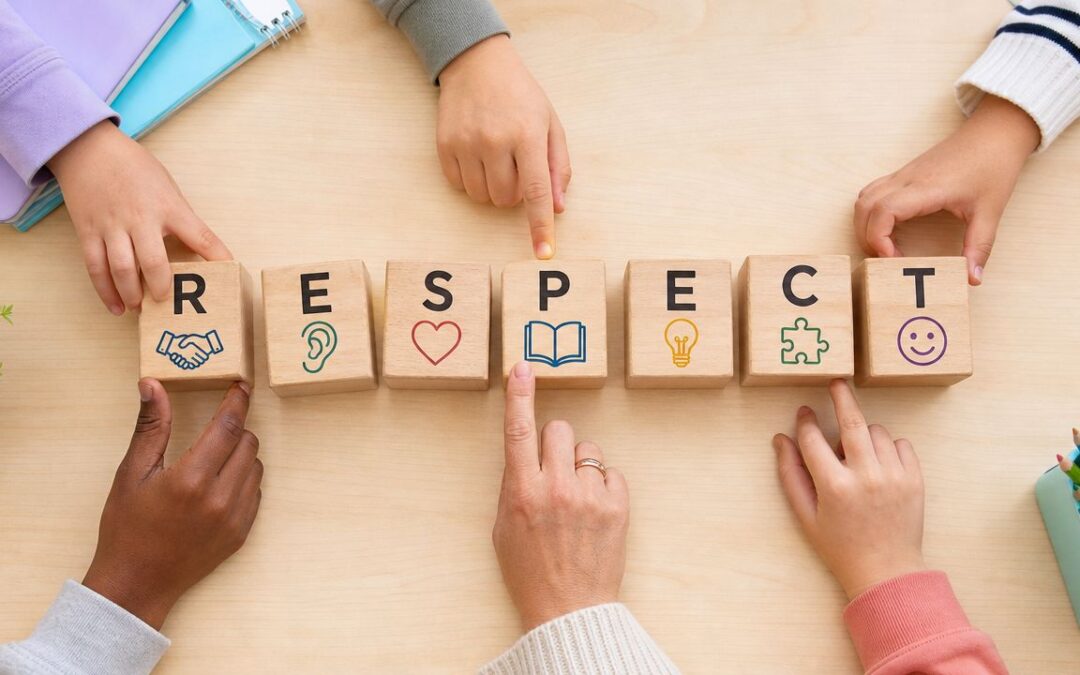
That's where a good acronym for respect can help. It turns an abstract value into small behaviors children can see, practice, and remember. It also gives adults a shared language. Instead of saying “That wasn't respectful,” you can say, “You forgot the listening part,” or “This was a moment for empathy,” or “Let's try that again with clear words.”
One important note matters from the start. There isn't one universally accepted acronym for respect. Different teaching and devotional sources use different backronyms, and one explanation even says there's no true acronym for “respect” because the word already stands on its own as a noun and a verb, as noted in this discussion of whether respect has an acronym. That's helpful for educators. It means you're free to choose the version that best fits your students, family, or school goal.
Below are eight practical options, grouped by what they help children build most: behavior, self-awareness, inclusion, self-regulation, and community.
1. R.E.S.P.E.C.T. Recognize, Empathize, Set boundaries, Practice listening, Engage authentically, Communicate clearly, Trust-build
This version works well when you want respect to mean more than obedience. It teaches kids that respect is active. They notice other people, care about how others feel, protect healthy limits, and communicate in ways that build trust.
In a classroom, “Recognize” might sound like, “I noticed Mateo was still talking, so I waited.” “Set boundaries” might sound like, “I want to play, but I don't want to be chased right now.” That matters because many children are told to be respectful without being taught that they can also speak up respectfully.
Why this one works in groups
This is a strong fit for morning meetings, peer mediation, and restorative circles because it balances kindness with clarity. Children learn that respect doesn't mean silence. It means listening, naming needs, and staying connected even when there's conflict.
Practical rule: If a child can't say what they need, they often act it out.
A teacher could spend one week on each letter. During “Practice listening,” partners retell what they heard before responding. During “Engage authentically,” students practice giving honest but kind feedback like, “I felt left out when the game started without me.”
For families, this can become dinner-table language. A parent might say, “You told your brother you needed space instead of yelling. That was respect with boundaries.”
Easy ways to use it this week
Post one letter at a time: Put the current letter on the wall and name it when you see it in action.
Use conflict scripts: “First recognize, then empathize, then communicate clearly.”
R.I.S.E. is simple, strong, and especially useful with older elementary and middle school students. It starts inside the child, not outside. Before students can show respect consistently, they need to notice their choices, own their actions, and understand their impact.
A student who blurts out in frustration may need “Self-awareness” before “Empathy.” They have to recognize, “I was embarrassed, and that's why I snapped.” That reflection creates room for repair.
What it looks like in real life
In advisory, you might ask, “Which part of R.I.S.E. felt hardest this week?” One student says responsibility was hard because they blamed a partner for a group mistake. Another says empathy was hard because they assumed a classmate was ignoring them, but later learned the classmate was upset.
That's why this acronym works. It gives students a non-shaming way to talk about growth.
Responsibility: “I made the mess. I'll clean it up.”
Integrity: “No one saw me cheat, but I still knew it was wrong.”
Self-awareness: “I was already upset before lunch, so I overreacted.”
Empathy: “She wasn't being rude. She looked overwhelmed.”
How adults can make R.I.S.E. stick
Try monthly journal prompts tied to each letter. Keep them short. Busy students do better with direct reflection than long writing tasks.
Ask, “What happened, what were you feeling, and what would respect look like next time?”
At home, parents can use R.I.S.E. after sibling conflict. Instead of “Say sorry,” try, “Let's do this in order. What was your responsibility? What would integrity look like now? What do you notice about your own feelings? What might your sibling be feeling?”
That sequence slows the moment down. It moves children from shame to accountability.
This is one of the easiest forms of acronym for respect for younger children because every part is visible. You can see taking turns. You can hear speaking kindly. You can coach paying attention in the middle of a lesson or on the playground.
For kindergarten through early elementary, that concreteness matters. Kids need respect translated into actions they can practice before they can discuss it in abstract terms.
A simple visual helps younger learners remember the behaviors.
Start with what children can do today
Suppose two children want the same swing. Instead of saying, “Be respectful,” a playground aide can coach with the acronym.
Respond thoughtfully: “Pause before grabbing.”
Expect the best: “Maybe she didn't mean to cut in.”
Speak kindly: “Can I have a turn when you're done?”
Pay attention: “Look at your friend's face. Are they upset?”
Encourage others: “You can go next.”
Cooperate: “Let's make a plan.”
Take turns: “Use the timer and switch.”
That's direct, teachable, and repeatable.
Make it visible and routine
This version works best when adults use the same words every day. Put each letter on a picture chart. Send one behavior home each week. Use role-play in morning meeting. Take photos of students demonstrating the behaviors and add them to a bulletin board.
Young children learn respect fastest when adults name the exact behavior they just saw.
Instead of “Good job,” say, “That was respectful. You were cooperating,” or “You were paying attention when your partner spoke.”
If you want a short video to reinforce the concept during a class meeting or counseling group, this can support the conversation:
What works and what doesn’t
What works is narrow scope, adult supervision, and frequent practice. What doesn’t work is handing students a mediation badge after one lesson and expecting them to manage serious social harm.
Student mediators should handle manageable peer conflict. Safety issues, harassment, threats, and repeated targeting always belong with adults.
For elementary students, use visuals, feeling words, and a short repair menu. For middle school students, add confidentiality limits, facilitation practice, and reflection after each mediation.
When schools sustain these programs, they often connect them to larger school improvement efforts. One four-year implementation window found student leadership programming was associated with positive improvements in attendance, discipline referrals, and state test performance over time (Leader in Me summary of longitudinal school outcomes).
Leadership gets real when students identify a need in the community, design a response, try it, and revise it. That process teaches ownership far better than an adult-made kindness poster campaign ever will.
A class might notice that recess conflicts spike after lunch. A student team could design a calm-start station with breathing cards, feelings check-ins, and peer greeters. Another group might realize new students don’t know playground games, then create a “join us” club with rotating hosts.
A simple planning frame
Give students a structure that keeps the work grounded:
Notice: What problem are we seeing?
Listen: Who is affected, and what do they say they need?
Design: What small action could help?
Try: When and where will we test it?
Reflect: What changed, and what should we adjust?
This approach helps adults avoid taking over. Students still need support, but the support should sound like coaching. Ask, “Who else needs to be included?” or “How will students know this is for them?” instead of “Here’s what you should do.”
Grade-level adaptations
In K-2, keep it classroom-based. Students can create a kindness routine, a welcome board, or a helper system. In grades 3-5, teams can lead schoolwide campaigns around gratitude, recess inclusion, or calm corners. In middle school, students can gather peer feedback, develop short proposals, and present them to administrators.
What usually fails is making the project too broad. “Improve school climate” is too vague. “Help students feel included during indoor recess” is workable. The tighter the focus, the stronger the student ownership.
This format is also useful for students who don’t want performative leadership. They can plan, interview, design visuals, collect feedback, and track what’s working.
5. Student Wellness and Mindfulness Leaders
Some students are natural calm-setters. They remind classmates to breathe before a presentation, help peers reset after recess, or notice when the room is getting dysregulated. A wellness leadership role gives those students language and structure.
That doesn’t mean students should lead mental health care. It means they can help normalize simple regulation practices that make classrooms feel safer and steadier.
Start with modeling, not performance
Train a small group first. Show them how to lead a breathing exercise, a body check, a gratitude pause, or a transition reset. Then have them practice in pairs before they guide a whole class or morning meeting.
If you’re building a schoolwide routine, it helps to draw from age-appropriate mindfulness activities for kids. Give student leaders a menu so they can choose from several options rather than reading one script forever.
For primary grades: Use breathing shapes, stretch cards, and feelings visuals.
For upper elementary: Add short scripts for pre-test calm-downs or post-recess resets.
For middle school: Let students co-lead advisory openings, wellness campaigns, or reflective circles.
Inclusion matters here
Many schools accidentally make wellness leadership feel like public speaking with a softer tone. It doesn’t need to be. A student can ring a chime, hand out reflection prompts, model a grounding posture, or lead by preparing the environment.
Leadership in wellness can look quiet. A student who helps peers regulate without taking over is leading.
The broader leadership development world is also moving toward hybrid and flexible formats. Schools can take the same lesson without copying corporate models. Offer more than one way to participate.
6. Student Inclusion and Belonging Task Forces
If your school wants student leadership to improve climate, create a belonging task force. This group asks a clear question: who feels left out here, and what can we change?
That sounds simple, but it requires courage and adult humility. Students often see exclusion patterns adults miss. They know which lunch tables feel closed, which routines embarrass students, and which school traditions leave some children out.
How to make the work honest
Start with listening. Use short class discussions, sticky-note prompts, or advisory circles to gather input. Questions like “When do students feel alone here?” and “Where is it hard to join in?” usually produce useful answers quickly.
Then form a mixed student team. Include social connectors, quieter students, multilingual learners, students with different support needs, and children from different grade levels if possible. A belonging task force should reflect the school, not just the most visible leaders.
Try one focused project first:
Lunch connection plan: Greeters, conversation cards, or open-seat signs.
Recess inclusion project: Student hosts who teach games and invite peers in.
Welcome routine: Student-made maps, peer tours, or first-week check-ins.
What adults need to watch
Don’t ask students to diagnose every school problem without acting on any of it. If students repeatedly name exclusion and nothing changes, trust drops fast.
Also, don’t frame belonging as fixing “those kids who struggle socially.” Strong belonging work changes systems and routines. It doesn’t shame individual students.
One of the biggest gaps in public advice on student leadership is inclusion for quieter, neurodivergent, multilingual, or anxious students. Too many leadership models still center speaking up, debating, or performing. More thoughtful approaches make room for reflection, peer dialogue, self-assessment, and individualized growth plans (inclusive student leadership perspective).
7. Student Peer Support and Mental Health Ambassador Programs
This activity requires the clearest boundaries of the whole list. Student mental health ambassadors can be helpful, but only when adults define the role tightly and supervise it closely.
Students can notice, welcome, listen briefly, and help peers connect with trusted adults. They should not carry secrets about safety, promise confidentiality they can’t keep, or become the emotional safety net for the whole campus.
The role that actually works
Train ambassadors in three things. First, how to notice signs that a peer may need support. Second, how to respond with calm, simple language. Third, how to refer quickly to a counselor, teacher, or administrator.
A middle school version might include lunchtime peer support tables, transition support for new students, or student-created campaigns that reduce stigma around asking for help. In upper elementary, the role is usually lighter. Think check-in buddies, welcome teams, or help-seeking ambassadors who can say, “Let’s go find an adult together.”
A useful script is short: “I’m glad you told me. You don’t have to handle this alone. Let’s talk to an adult now.”
Protect the student leaders too
These programs can backfire if adults focus only on the peers receiving help and forget the ambassadors themselves. Student leaders need debrief time, emotional support, and permission to step back.
A student support ambassador is a bridge, not a treatment provider.
This role is strongest when it sits inside a broader system led by counselors, social workers, or trained administrators. It’s not a replacement for services. It’s a peer-friendly entry point that can make help easier to reach.
8. Student Community Service and Social Justice Leadership
Service becomes leadership when students make decisions. If adults pick the cause, set the schedule, and assign the tasks, students may help, but they aren’t really leading.
A better model starts with what students care about. One group may want to organize a food drive. Another may focus on campus recycling. Older students may advocate for safer crossings near school, book access, or community care projects tied to local needs.
Move from charity to reflection
The strongest service projects include both action and meaning-making. Students should know who the project serves, what root issue they’re responding to, and what they learned about responsibility, fairness, or community.
For example, a 4th grade class might collect hygiene items for families in need, then write reflections about dignity and what makes receiving help feel respectful. A middle school team might plan a local awareness event, speak to community partners, and create student-made materials that explain the issue to peers.
Choose with students: Offer a few real options and let them decide.
Close the loop: Share what happened and thank the people involved.
If your students want to plan a fundraiser as part of their service work, educators can discover charity fundraising events to adapt for a school setting.
Trade-offs to expect
Not every service project needs to become activism, and not every activism project fits every age group. Younger students usually need concrete, local action. Older students can handle more analysis and advocacy.
What matters most is authenticity. Students should feel, “We saw a need, we organized around it, and our actions meant something.”
9. Student Diversity, Equity, and Belonging Committees
This committee works best when students examine everyday school life through the lens of fairness and representation. It works worst when adults form the group for appearance, then avoid the hard conversations that follow.
In elementary school, this might mean reviewing whose stories are featured in classroom libraries, what holidays are recognized, or whether all students can see themselves in school displays. In middle school, students can look at policies, student experiences, or participation patterns and make practical recommendations.
Set up brave, protected discussion
Students need clear norms before they talk about identity, bias, and belonging. Use agreements such as listening to understand, speaking from personal experience, and separating intent from impact.
Adults should also be careful not to put the burden of education on students from marginalized groups. A strong committee includes many voices, but no child should be expected to represent an entire identity group.
For schools already working on classroom belonging, Soul Shoppe’s ideas for teaching diversity in the classroom can support that broader culture work.
Practical project ideas
A diversity, equity, and belonging committee can do meaningful work without becoming abstract. Try one of these:
Representation review: Students audit posters, books, and celebration displays.
Access check: Students identify school routines that feel confusing or exclusionary.
Belonging campaign: Students create peer messages about respect, names, pronouns, culture, and inclusion.
An empirical middle-school leadership study used the Leadership Skills Inventory in a pre/post design across a two-round leadership course, which is a useful reminder that schools can measure leadership growth with formal tools instead of relying only on anecdotes (middle school leadership study using pre and post assessment). A committee like this can track growth in listening, communication, and collaborative problem-solving the same way.
10. Student Leadership Summits and Retreats
Sometimes students need concentrated time away from the usual pace of school to step into leadership more fully. A summit or retreat can do that. It creates momentum, shared language, and a stronger cross-grade network.
This can be a half-day school event, a district gathering, or a retreat format for student teams. The most useful versions mix skill-building, reflection, team challenges, and concrete planning for what students will do when they return.
What belongs in the agenda
Keep direct instruction short. Students learn leadership by doing it. Build the day around scenarios, partner tasks, problem-solving stations, and facilitated circles.
A strong summit usually includes a mix of these:
Connection-building: Cross-grade mixers, values cards, or identity maps.
Skill practice: Active listening, facilitation, conflict repair, welcome routines.
Action planning: Each team leaves with one goal, one timeline, and one adult contact.
That only helps if the summit itself has substance. Gear can reinforce belonging, but it can’t replace leadership practice.
Don’t let the energy disappear
The biggest mistake is treating the summit as the finish line. It should be a launch point. Schedule follow-up meetings, advisor check-ins, and small wins students can complete quickly after the event.
A practical example is a K-8 leadership day where upper elementary and middle school students attend workshops in the morning, then return to mixed teams to plan one school improvement action. Within the next two weeks, each team shares progress in advisory or assembly.
That follow-through is what turns inspiration into culture.
Kickoffs, district-level leadership development, intensive training
Intensive, fast-tracked learning; builds strong peer networks and accountability
Building a Lasting Culture of Student Leadership
Student leadership activities work best when they stop being special events and start becoming part of how the school runs. Students need repeated chances to contribute, reflect, repair, and try again. One leadership role won’t transform a campus on its own. A connected set of routines can.
That means starting smaller than many schools expect. You don’t need a full council, peer mediation center, wellness team, and annual summit all at once. You might begin with a buddy program for one grade band, a student-led recess inclusion team, or a rotating classroom leadership role with clear training and reflection. If the structure is real, students will feel it.
Adults set the conditions. Students do best when expectations are explicit, support is visible, and leadership roles come with actual responsibility. They also do better when schools stop equating leadership with charisma. Some students lead by facilitating a circle. Others lead by noticing who’s alone, organizing materials, translating for a peer, preparing a reflection prompt, or asking a thoughtful question that shifts the whole group.
That’s one of the most important mindset changes for K-8 schools. If leadership only belongs to the loudest students, many children will decide it isn’t for them. If leadership includes listening, empathy, reliability, and repair, far more students can grow into it.
Schools also need patience. Sustainable leadership culture usually develops over time, especially when the work is tied to school climate, conflict resolution, belonging, and student voice. Programs tend to become stronger when they are coached consistently and woven into everyday routines instead of treated as extras.
Parents can reinforce this at home, too. A child doesn’t need a title to practice leadership. They can welcome a new teammate, help solve a sibling conflict respectfully, plan a small service project, or reflect on how their actions affect others. Those habits transfer back into school.
If you’re building this work across a campus, it helps to choose common language and shared practices that students and adults can use consistently. Soul Shoppe is one relevant option for schools that want support with connection, safety, empathy, mindfulness, and conflict resolution through workshops, assemblies, coaching, and student-centered tools. Community-building beyond the classroom matters too, and schools planning staff or student culture events can also discover inspiring team activities to support shared experiences.
The goal isn’t to produce polished young executives. The goal is to help children practice being thoughtful, courageous, responsible members of a community. When schools do that well, student leadership stops being a program. It becomes part of the culture students carry with them every day.
If you want student leadership to become part of how your school runs, we can help you build it. Our Peacemaker Trainer Certification prepares staff to run the program themselves, and Peacemaker Vests make student leaders visible on the playground.
You can usually tell when a child needs social support before they say it out loud. A student hangs back during partner work. A child melts down when a game doesn't go their way. Siblings can't get through dinner without interrupting each other. At school, the problem shows up as conflict, exclusion, and constant reteaching. At home, it can look like clinginess, avoidance, or “nobody wants to play with me.”
Social skills matter because kids use them everywhere. They need them to join a group, repair a mistake, read a room, manage frustration, and stay connected when things feel hard. That's why social skills activities for kids work best when they're practical, repeatable, and tied to real situations children experience.
This isn't a matter of “just be kind.” Kids need direct teaching, guided practice, and a lot of low-stakes repetition. That need is still very real. In a 2025 Gallup survey of U.S. parents of school-age children, 45% said the COVID-19 pandemic negatively affected their child's social skills development, and 22% said those social difficulties were still ongoing.
The good news is that social growth responds to intentional practice. A 2025 meta-analysis in Frontiers in Psychology reviewed 14 studies on designed physical activities for preschoolers, screened 7,074 articles, and found a significant positive effect on social skills with a standardized mean difference of 0.63 and p < 0.0001. The same review found that interventions lasting 12 weeks showed a significant benefit. That lines up with what practitioners see every day. Structured, play-based practice works.
If you're also thinking about teamwork and belonging through movement, this piece on developing young athletes through sports connects well with the activities below.
1. Circle Discussions and Community Meetings
Circle time works because every child can see every other child. That sounds simple, but it changes behavior. Kids listen better, wait more intentionally, and start noticing that their classmates have different reactions, worries, and ideas.
A strong circle isn't a free-for-all. It's structured, predictable, and short enough that kids can succeed. If you want more ways to build that routine, these classroom community building activities pair well with circle practice.
Mini-lesson plan
Objective: Build listening, turn-taking, empathy, and perspective-taking.
Materials: Chairs or floor spots in a circle, one talking piece, one prompt card.
How to run it:
Set agreements: Review simple norms like “one person talks at a time,” “pass if needed,” and “listen to understand.”
Use a low-risk opener: Try “What's one thing that made you laugh this week?” before asking deeper questions.
Pass the talking piece: Only the student holding it speaks. That physical cue helps younger children especially.
Close with reflection: Ask, “What did you hear that helped you understand someone else better?”
Adaptations that actually help
Kindergarten students usually do better with quick prompts, visual supports, and movement built in. Middle school students often respond better when circles feel purposeful, such as discussing group conflict after a project or checking in after a tense week.
Practical rule: Start shallow, then go deeper. If adults rush kids into vulnerable sharing, the circle gets quieter, not stronger.
For assessment, don't overcomplicate it. Watch for who can wait, who responds to another child's idea, and who begins to use respectful language without being prompted.
2. Role-Playing and Scenario-Based Learning
When kids freeze in a hard moment, it's often not because they don't care. It's because they haven't rehearsed what to say. Role-play gives them a script, a safe reset, and another chance.
A common mistake is choosing scenarios that are too loaded too soon. Start with manageable moments. Joining a game. Handling an interruption. Disagreeing about the rules. Save more intense conflict for later, once the group trusts the process.
Mini-lesson plan
Objective: Practice communication, problem-solving, and perspective-taking in realistic situations.