

Teaching About Respect in K–8 Classrooms and Homes
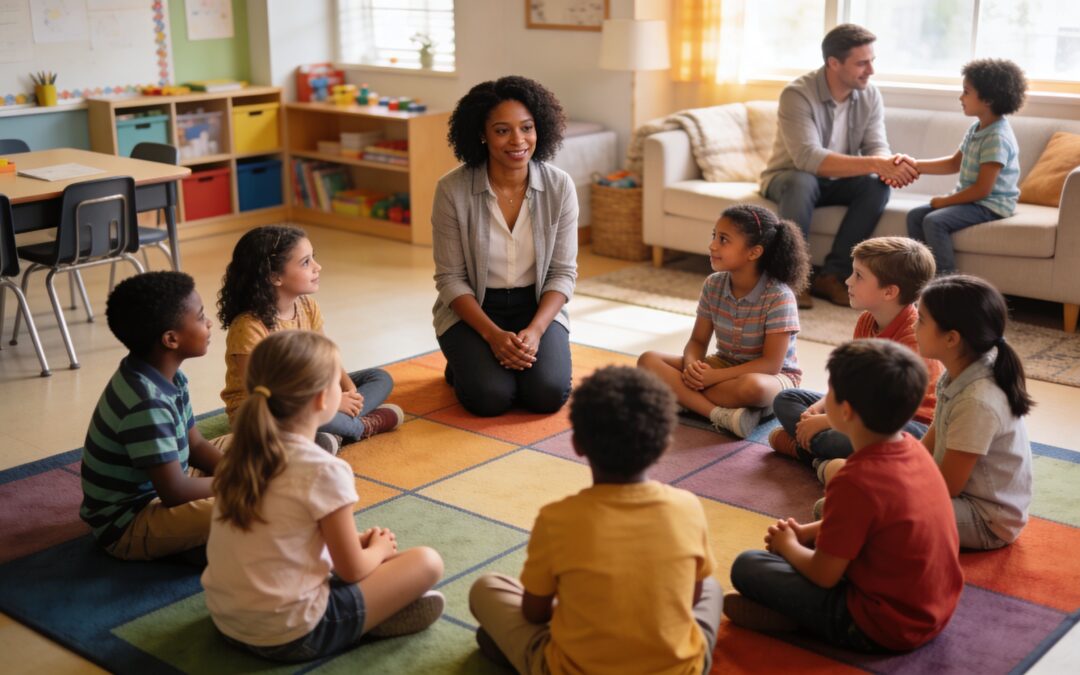
The class is only ten minutes in, and two students are already talking over each other. One child grabs a marker without asking. Another rolls their eyes when a partner shares an idea. You stop the lesson to remind everyone about listening, but the same patterns return by lunch.
At home, it can look just as familiar. A sibling interrupts at the table. A child snaps, “That’s mine,” instead of asking for space. A caregiver repeats the same correction three times and wonders why nothing sticks.
This is why teaching about respect can’t stay at the level of “be nice.” Students need clear language, repeated practice, and adults who respond the same way at school and at home. Respect is a daily skill. It shows up in tone, body language, turn-taking, conflict, and follow-through.
Introduction to Respect and Its Impact
Respect often gets mistaken for simple politeness. Manners matter, but respect goes deeper than saying “please” and “thank you.” It means recognizing another person’s dignity, boundaries, feelings, ideas, and right to belong.
In schools, that affects more than behavior. Research from the Rutgers Social-Emotional Learning Research Lab found that respectful school climates were directly linked to higher academic achievement across 48,000 students in 115 schools and 48 districts over two years, with stronger teacher-student relationships at the center of those outcomes, as described in this Education Week analysis of the Rutgers findings.
At home, respect affects whether routines feel safe or tense. Families notice it in how children ask for help, handle disappointment, and respond when someone says no. Teachers notice it in how students collaborate, recover after conflict, and trust adults enough to learn.
Practical rule: If adults can’t point to what respect looks and sounds like, children can’t practice it consistently.
A workable respect plan has to answer four questions:
- What does respect look like? Observable actions, not vague values.
- How do we teach it? Direct lessons, modeling, and repeated rehearsal.
- How do families reinforce it? Shared scripts and simple home routines.
- How do we know it’s growing? Rubrics, observations, and reflection.
When those pieces line up, respect stops being a poster on the wall and becomes part of the culture.
Defining Respect and Setting Inclusive Learning Objectives
Respect needs a definition children can use. I teach it as showing care for people, space, feelings, and differences through your words, actions, and choices.
That definition works because it’s concrete. A kind thought is helpful, but students need behavior they can practice. If a child asks, “Was that respectful?” they should be able to look at what happened and decide.

What respect looks like in real life
In a K to 8 setting, respect usually shows up in a few observable ways:
- Listening with your body and words. Waiting, facing the speaker, and not cutting people off.
- Using safe boundaries. Asking before touching, noticing personal space, and handling materials carefully.
- Acknowledging differences. Not mocking accents, abilities, identities, preferences, or learning styles.
- Responding to conflict without harm. Using calm language, asking for help, and repairing after mistakes.
- Treating shared spaces responsibly. Cleaning up, returning materials, and noticing community needs.
Those behaviors also help adults teach related skills like empathy, problem-solving, and self-regulation. If you want support connecting those ideas, this piece on how to teach empathy pairs well with respect lessons.
Grade-band objectives that stay clear
Children don’t all show respect in the same way at the same age. The objective has to match their development.
| Grade band | Learning objective | Example of success |
|---|---|---|
| K to 2 | Students can name respectful and disrespectful choices in common classroom situations. | A student says, “I can wait my turn,” or “I need space.” |
| 3 to 5 | Students can explain how respect affects group work, friendships, and conflict. | A student disagrees without insults and can restate a peer’s idea. |
| 6 to 8 | Students can apply respect during disagreement, online communication, and peer pressure. | A student uses a calm response, sets a boundary, or repairs harm after conflict. |
Keep the wording simple. “Students will demonstrate mutual regard in collaborative interactions” sounds formal, but it’s harder for children and families to use. “Listen, wait, use kind words, respect space, repair harm” is easier to remember.
Inclusive objectives for neurodiverse learners
Some students understand respect but struggle to show it in expected ways. That’s especially important for neurodiverse learners who may need direct support with social cues, transitions, sensory needs, or flexible language.
Avoid assuming intent. A child who looks away may still be listening. A student who blurts out may need support with turn-taking, not a lecture about caring.
Use objectives that allow more than one respectful response:
- Offer visual choices. “Listening can look like eyes on speaker, hands still, or quiet drawing while listening.”
- Use social scripts. “Can I have a turn when you’re done?” or “I need a quieter space.”
- Pre-teach routines. Show what respectful disagreement sounds like before group work begins.
- Give sensory supports. A calmer body often leads to more respectful interaction.
- Practice with real contexts. Hallways, lunch lines, group projects, and recess matter more than abstract discussion.
Respect isn’t sameness. It’s helping each student meet community expectations in a way that preserves dignity.
A shared definition for school and home
The strongest respect goals travel across settings. I like sending home a one-sentence version families can use at dinner, during homework, or while managing sibling conflict:
Respect means I notice that other people matter too.
That line helps adults redirect behavior without long lectures. If a child interrupts, grabs, mocks, or refuses to listen, you can return to the same anchor. It keeps expectations steady, even when the setting changes.
Crafting Multi-Day Lesson Plans with Interactive Activities
Children don’t learn respect from one assembly, one read-aloud, or one hard conversation after a conflict. They learn it through repetition. A short, structured week gives you enough time to introduce the skill, practice it, reflect on it, and try again.
Research on the multilevel anti-bullying intervention Steps to Respect found significant declines in bullying and bystander aggression within six months when teachers delivered 10 to 12 structured SEL lessons that emphasized respect and problem-solving, as summarized in this George Fox University paper on the program.

A five-day rhythm that works
You don’t need a perfect script. You do need a predictable pattern. This weekly flow works in kindergarten, third grade, and sixth grade with small adjustments.
Day 1 understanding respect
Start with a warm-up. Ask, “What does respect sound like?” Give students think time, then collect examples.
Suggested flow
- Warm-up. Circle share or turn-and-talk.
- Mini-lesson. Define respect using classroom examples.
- Modeling. Act out one respectful and one disrespectful version of the same scenario.
- Reflection. Students finish the sentence, “Respect matters because…”
Kindergarten example
Read a short story about sharing space or waiting for a turn. Then ask, “Which choice helped everyone feel safe?”
Third grade example
Use a partner scenario. One student interrupts, one waits and repeats what they heard. Have the class compare both.
Sixth grade example
Discuss group chats, class discussions, and disagreement. Ask, “Can you disagree respectfully? What would that sound like?”
Day 2 practicing respect
Now move from naming to doing.
Set up role-plays based on common moments from your own environment:
- Lining up
- Choosing partners
- Borrowing supplies
- Joining a game
- Disagreeing in a group
- Responding to a mistake
Give students sentence stems, not just directions.
Sample stems
- “I’m still talking.”
- “Can I use that when you’re done?”
- “I disagree, but I want to hear your idea.”
- “I need space.”
- “Let’s try that again respectfully.”
For younger children, keep scenarios short. For older students, add complexity. Ask what respect looks like when both people are upset.
Three versions of the same activity
One activity can span multiple grades if you scale the language and demand.
| Activity | Kindergarten | Third grade | Sixth grade |
|---|---|---|---|
| Respect Relay | Students sort picture cards into respectful and not respectful choices. | Teams act out short situations and identify a better response. | Groups solve a conflict scenario and justify their response. |
| Partner listening | One child shares a favorite color, partner repeats it. | Students summarize a partner’s idea before giving their own. | Students paraphrase, ask a clarifying question, then respond. |
| Space and boundaries | Practice asking before hugging or borrowing. | Notice personal space in desk groups and games. | Discuss consent, digital boundaries, and sarcasm. |
Day 3 building empathy through perspective-taking
Respect gets stronger when students can imagine another person’s experience. This is the day to slow down and ask, “How might that feel?”
Use one story, one photo prompt, or one teacher-created scenario. Keep the discussion grounded:
- What happened?
- How might each person feel?
- Which action showed respect?
- What could someone do to repair harm?
A simple option is a “step in, step back” discussion. Students speak only after they restate one idea they heard from someone else.
“Before you answer, tell me one thing your classmate just said.”
That one sentence can transform discussions. It teaches listening and lowers reactive responses.
Day 4 resolving conflict respectfully
Many lessons falter without practical application. Adults talk about respect in calm moments, but children need it most during stress.
Teach a short conflict routine. Don’t make it too wordy.
Example classroom routine
- Stop and take a breath.
- Say what happened without blame.
- Say what you need.
- Listen to the other person.
- Choose a next step or ask an adult for help.
Use quick scripts:
- “I felt frustrated when you took my pencil.”
- “I need you to ask first.”
- “I hear that you were in a hurry.”
- “Next time, let’s trade.”
For sixth grade, include digital conflict and group project tension. For kindergarten, use puppets or visuals. For third grade, add peer mediation practice.
A strong bank of ready-to-use teaching respect activities can make this day easier because the most difficult part is often choosing scenarios students recognize.
Day 5 reflecting and celebrating
The week shouldn’t end with a test. It should end with noticing growth.
Try one of these:
- Respect journal. “One respectful choice I made this week was…”
- Partner feedback. “I felt respected when you…”
- Class celebration. Name specific actions, not general praise.
- Commitment card. “Next week I will work on…”
Avoid broad comments like “You were all great.” Be precise instead.
Examples of specific feedback
- “You waited for Maya to finish before you responded.”
- “You asked for space without yelling.”
- “You returned the marker and apologized.”
- “You changed your tone after the reminder.”
Timing and materials without overcomplicating it
A full lesson doesn’t need to take an hour.
Simple planning guide
- Warm-up. Short and predictable.
- Mini-lesson or modeling
- Practice activity
- Debrief
- Closing reflection
Useful materials
- Scenario cards
- Visual sentence stems
- Chart paper
- Sticky notes
- Emotion cards
- Reflection journals
- Timer
- Puppets for younger grades
Common confusion points and easy fixes
Teachers and caregivers often hit the same snags.
“My students can define respect, but they don’t do it.”
That usually means they need more rehearsal in real situations. Add role-play and immediate feedback.
“Some students laugh during role-plays.”
Assign clear roles. Observer, speaker, responder. Then ask observers to name one respectful move they noticed.
“One child dominates every discussion.”
Use turn tokens, partner-first sharing, or a rule that each student must paraphrase before adding new ideas.
“A student knows the script but melts down when upset.”
Practice the routine in calm moments. Keep language short. Add visual supports and co-regulation.
The goal isn’t a flawless week. The goal is enough repeated experience that respectful behavior becomes more available when students need it.
Engaging Families with Practical Home Strategies and Scripts
Families often agree that respect matters, but many don’t know what to say in the moment. A child interrupts, argues, mocks a sibling, or storms away, and the adult has about five seconds to respond. That’s why home strategies work best when they’re short, repeatable, and connected to classroom language.

Gallup reported that only 37% of U.S. employees strongly agree they are treated with respect at work, which is one reason early respect habits matter far beyond childhood, as noted in Gallup’s workplace respect findings.
Home routines that actually stick
The most effective home plan is small. Pick one or two rituals and use them consistently.
Dinner table listening round
Each person answers one prompt without interruption. The next speaker first says one thing they heard.
Prompts can be simple:
- “Something that felt hard today.”
- “One way someone showed respect.”
- “One way I want to try again tomorrow.”
Sibling reset routine
When conflict starts, pause and walk through this script:
- “Say what happened.”
- “Say how you feel.”
- “Say what you need next.”
- “Listen to the other person.”
- “Choose a repair.”
Object ownership cues
Many respect struggles start with shared materials. For younger children, visible ownership helps. Families who want practical ways to reinforce responsibility may find this article on teaching kids ownership through name labels useful for creating calmer routines around personal items, school supplies, and family spaces.
Sample scripts for tense moments
Parents often ask for exact wording. Here are scripts that keep dignity intact.
When a child is disrespectful, correct the behavior without attacking the child.
If a child interrupts
“Pause. I want to hear you. Show respect by waiting until I finish, then you can speak.”
If siblings are arguing over an item
“Hands off for a moment. Use words first. Tell your brother what you need without blame.”
If a child uses a rude tone
“Try that again with a respectful voice. I’m listening.”
If a child refuses a boundary
“You don’t have to like the limit. You do need to speak respectfully.”
For children who need help expressing frustration, teaching families to use I-statements for kids gives them a structure that sounds like, “I feel upset when my things are taken. I need you to ask first.”
A weekly family challenge
Try a one-week “respect at home” challenge. Keep it simple enough that busy families can do it.
Monday
Notice one respectful action from each family member.
Tuesday
Practice asking before borrowing.
Wednesday
Use one repair phrase after a conflict. “I’m sorry,” “Can I try that again?” or “How can I fix it?”
Thursday
Do a gratitude circle. Each person thanks someone for a specific action.
Friday
Reflect together. Ask, “What got easier? What still feels hard?”
A short video can help caregivers hear this language in a relatable way.