You can feel when a group of young people isn't really a group yet. A few students carry every discussion. A few stay silent. Someone gets left out during partner work. A small disagreement at recess or practice somehow follows everyone back indoors. Adults often respond by adding a quick icebreaker and hoping the energy shifts.
Sometimes it helps. Often it doesn't.
The missing piece usually isn't effort. It's skill-building. Young people need repeated practice with listening, turn-taking, self-regulation, problem-solving, repair after conflict, and shared responsibility. That's why the best team building activities for youth do more than fill time. They teach social-emotional skills in a form kids can use with classmates, teammates, siblings, and friends.
That matters even more now. A peer-reviewed meta-analysis found team-building interventions in sports significantly improve team cohesion, with the strongest effects on task cohesion, and the benefits were most pronounced for participants aged 15 to 20 and for collegiate teams. In practice, that points facilitators toward shared goals, role interdependence, and repeated problem-solving instead of random novelty games (peer-reviewed meta-analysis on team-building and cohesion).
The list below is built from that lens. Each activity connects directly to SEL, includes facilitation moves that work in real settings, and offers ways to adapt for K-8 students, including virtual formats. If you're planning a field trip or off-campus bonding day, this Perth school outing planning guide can also help with logistics.
1. Circle Discussions and Talking Circles
A talking circle works because it slows the room down. Instead of rewarding the loudest student or the fastest answer, it gives each child a clear turn and a reason to listen. That builds self-awareness, respectful communication, and the sense that everyone belongs in the space.
This is one of the most reliable team building activities for youth when a class feels fragmented. It's especially useful after transitions, after conflict, or at the start of a new term when students need structure more than hype.
How to lead it well
Seat everyone in a real circle if possible. Use a visible talking piece such as a small ball, smooth stone, or classroom mascot. Only the person holding it speaks, and passing is always allowed.
Start with low-risk prompts:
K-2: “What's one thing that helps you feel ready to learn?”
3-5: “What's one way a classmate can show kindness during group work?”
6-8: “What helps you feel included in a group, and what shuts you down?”
Keep the first rounds short. In elementary settings, I'd rather end a circle while students still feel successful than stretch it until they get restless.
Practical rule: Don't begin with “share a vulnerable moment.” Begin with “share a preference, a strength, or a hope.” Safety grows before honesty deepens.
Real examples and adaptations
A morning meeting circle in a second-grade classroom might use sentence stems like “Today I can help my class by…” A middle school advisory can use circles to repair tension after group project drama. In after-school programs, circles work well before a cooperative challenge, because they create the listening culture the challenge will require.
For virtual groups, keep the circle shape symbolically. Put students in gallery view, use a digital speaking order, and invite responses with sentence stems in chat for students who aren't ready to speak out loud.
2. Cooperative Games and Low-Ropes Courses
Not every physical challenge builds teamwork. Some just expose who is fastest, strongest, or most comfortable taking over. Cooperative games work when the task requires everyone, and when the facilitator treats reflection as part of the activity, not an optional extra.
The strongest youth team-building work usually comes from structured, facilitation-led experiences rather than one-off games. That broader demand is showing up beyond schools too. The global team building service market is estimated at USD 6.99 billion in 2026 and projected to reach USD 40.35 billion by 2035, implying a 21.52% CAGR, according to Business Research Insights on the team building service market.
What builds skill instead of just excitement
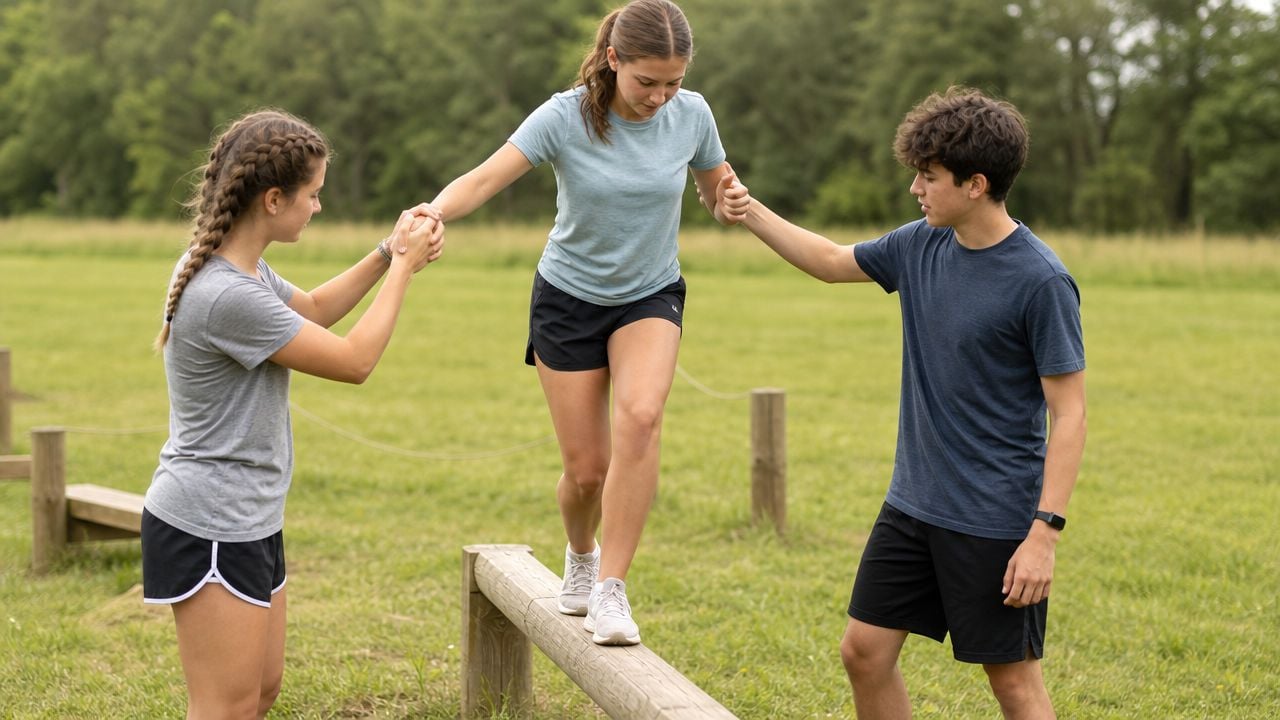
A low-ropes style challenge, cup-stacking relay, group balance task, or “cross the river” game teaches planning under pressure. Students have to assign roles, notice who hasn't spoken, and adjust when the first plan fails.
Good facilitation sounds like this:
Before: “How will you make sure everyone has a job?”
During: “Pause. Who has an idea we haven't heard yet?”
After: “What did your team do when the first strategy stopped working?”
That sequence is where the SEL learning lives. Without it, students just remember whether they won.
For indoor options, cooperative board games can do similar work with lower physical demand. Families looking for calmer formats can find teamwork board games that reward planning and shared decision-making.
A short video can help staff picture the setup before running a challenge:
Good structures for daily use
Red, yellow, green check-in: “What color am I right now? What happened?”
Emotion thermometer: “Where is my stress level this morning?”
Trigger and response frame: “What set me off? What did I do next?”
Reset reflection: “What helped me calm down, even a little?”
This format becomes much stronger when students are taught feeling words first. “Bad” and “fine” won't take them far. Build vocabulary such as disappointed, left out, tense, embarrassed, relieved, and proud. Then connect the writing to a routine. Soul Shoppe's strategies for daily check-ins for students with mood meters and reflection tools fit naturally here.
One caution matters. If you ask students to write about feelings, you need a plan for privacy and follow-up. Some prompt collections focus on emotional expression but don't address opt-in participation, alternatives, or sensitive disclosures, even though student mental health strain remains an active concern, as noted in this college journal prompt resource discussing classroom prompt gaps and student well-being concerns. In practice, that means students need options such as drawing, using a code, writing only to themselves, or choosing a less personal prompt.
3. Mindfulness and Present-Moment Awareness Journaling
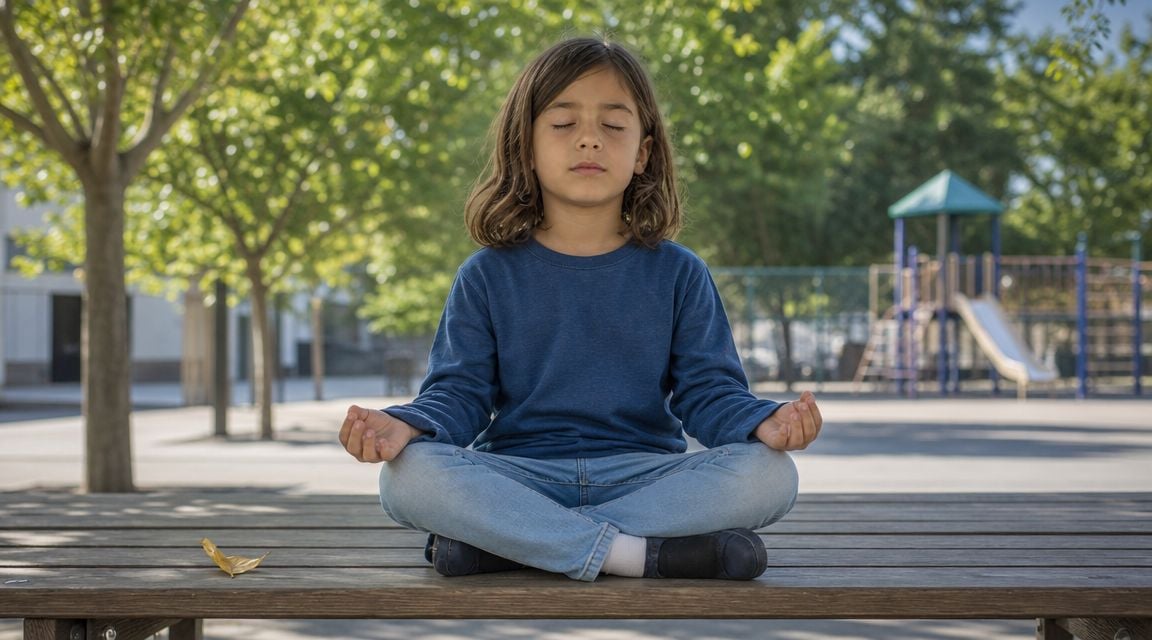
Mindfulness journaling is useful when students seem scattered, overstimulated, or rushed from one task to the next. The writing itself should come after a short experience. A breathing pause, a sensory scan, a quiet observation walk, or a body check gives students something real to notice.
For K-2, use five senses language. “I hear…” “I see…” “I feel…” works well after a calm minute by the window or on the rug. In grades 3-5, students can reflect on what distracted them and what helped them refocus. Middle school students can handle more nuanced prompts about mental noise, stress, or what it feels like to slow down.
Prompt ideas by grade band
K-2: “What are three things you noticed when the room got quiet?”
Grades 3-5: “What did your body feel like before and after breathing slowly?”
Grades 6-8: “What kept pulling your attention away today, and what helped you return to the present moment?”
Home use: “Where in your day did you feel most calm, even briefly?”
A common mistake is expecting students to become serene on command. That's not how this works. Some children will feel calmer. Some will feel restless and annoyed. Both responses are usable.
Wandering thoughts aren't a failure. They're the material students can write about.
If you want a schoolwide bridge between calm-down routines and reflection, Soul Shoppe's article on mindfulness for students offers language adults can adapt. Keep the activity short. Two or three quiet minutes followed by one solid prompt usually beats a long guided exercise that students tune out.
4. Conflict Resolution and Problem-Solving Journaling
Conflict journals work best after a real disagreement, not as an abstract character lesson. A student had an argument during group work. Someone felt excluded at recess. A sibling grabbed a game controller and the evening blew up. Those are the moments when writing can slow the story down enough for problem solving.
Instead of asking, “How did that make you feel?” and stopping there, use a sequence. What happened first? What did I think it meant? What did I do? What could I try next time? The structure matters because students often jump straight from event to blame.
A simple reflection sequence
Step 1: “What happened?”
Step 2: “What was I feeling?”
Step 3: “What might the other person have been feeling?”
Step 4: “What did I do that helped or hurt the situation?”
Step 5: “What's one better next step?”
For grades 1-3, keep it oral first, then write a sentence or draw a sequence. In grades 4-5, students can do a two-column reflection with “my view” and “their view.” Middle school students can prepare for a restorative conversation by drafting what they want to say, what they want to own, and what they need moving forward.
When families or teachers skip the perspective-taking part, these entries become complaint logs. That doesn't build much. The more useful version asks students to hold two truths at once: “I was upset” and “the other person also had a perspective.”
Soul Shoppe's guidance on conflict resolution strategies for kids pairs well with this type of journaling because students need language they can use out loud after they write. The journal is preparation. It shouldn't be the end point.
5. Growth Mindset and Learning From Mistakes Journaling
This category is where journal prompts for students can connect SEL to academics without feeling forced. Students make mistakes all day. They misread directions, bomb a quiz, forget materials, overestimate how long homework will take, and freeze when work gets hard. If journaling only celebrates strengths, it misses one of the best uses of reflection.
The trick is keeping the writing practical. “Write about a failure” can feel dramatic or vague. “Describe one mistake you made this week, what it taught you, and what you'll try next” is much more usable.
Better prompts than “What did you do wrong?”
Primary grades: “What was tricky today, and who or what helped you keep going?”
Upper elementary: “What mistake taught you something important this week?”
Middle school: “Where did you get stuck, and what strategy will you use next time?”
Academic version: “What part of this assignment showed you what you still need to practice?”
Teachers often get better results when they occasionally model their own learning frustration. A short example like, “I rushed directions and confused everyone, so next time I'll chunk them,” gives students permission to write authentically instead of pretending they always know what to do.
A youth-focused journaling guide from Waterford shows how broad student prompts have become for children and adolescents, including prompts related to emotional regulation, problem solving, identity, gratitude, and relationships, while framing journaling as something that helps people “big and small alike” feel better in its guide to journal prompts for kids. That range matters here because mistake-reflection prompts don't need to stay academic. A student can learn from blowing up at a friend just as much as from missing five spelling words.
What doesn't work is grading the vulnerability. Assess completion, stamina, or use of reflection routines if you must assess something. Don't score the student's inner life.
6. Kindness, Empathy, and Peer Connection Journaling
Some students struggle to notice kindness unless it's dramatic. Journaling can train attention toward the smaller moments that build community. A partner waited. Someone invited another student into a game. A classmate noticed a dropped pencil and picked it up. Those details matter because they make empathy visible.
With younger students, start with observation before expectation. Asking a child to perform kindness for the journal can turn it into point-scoring. Asking, “What kind thing did you notice today?” usually gets more genuine responses.
Prompts that build peer awareness
K-2: “Who helped someone today? What did they do?”
Grades 3-5: “When did you notice someone else's feelings and respond kindly?”
Grades 6-8: “Describe a time you could've ignored something but chose to include, support, or speak up.”
Family version: “How did someone in our home make life easier today?”
This theme also works well with appreciation notes, partner interviews, and brief reflection after community circles. Students who don't like long writing can still complete a strong entry by finishing sentence starters such as “I felt connected when…” or “Someone showed empathy when…”
Classroom note: Celebrate specific behaviors, not “nice kids.” Students need to see that empathy is something they do, not a trait only some people have.
A weak version of this practice stays generic. “Be kind” isn't enough. A stronger version names actions, context, and impact: “I noticed Eli was alone, asked him to join us, and then he smiled and started talking.” That kind of journaling strengthens social memory. It helps students recognize what belonging looks like.
7. Identity, Values, and Belonging Journaling
Identity prompts can be some of the most meaningful and some of the most mishandled. When adults rush them, students feel exposed. When adults make them too broad, students produce shallow answers. The safest and most useful approach is choice.
A child can write about family traditions, favorite places, names they're proud of, languages they hear at home, values they want to live by, or times they felt included. They should also be able to pass on topics that feel too personal. That's especially important in diverse classrooms where students may be grieving, newly immigrated, questioning parts of identity, or are private.
Safer ways to invite self-expression
Offer options: Let students pick from identity, values, interests, or belonging prompts.
Allow multiple formats: Writing, drawing, lists, labeled pictures, or sentence frames all count.
Avoid assumptions: Don't require students to write about “mom and dad,” holidays they may not celebrate, or cultural traditions they may not want to explain.
Keep sharing optional: Reflection can still be powerful when it stays private.
A few examples work well across grade bands. K-2 students can complete “One thing that makes me me is…” Grades 3-5 can respond to “What do you want people to understand about you?” Middle school students can write about where they feel most like themselves and what values they want others to notice in their actions.
This is also where psychological safety matters most. Prompt lists often give ideas but not enough guidance on accessibility, alternatives, or how to respond to sensitive content. In practice, adults need to think ahead. What will a multilingual student do if the prompt is emotionally rich but language-heavy? What's the alternative for a student who doesn't want to disclose? Those design choices matter as much as the prompt itself.
8. Goal-Setting and Progress Tracking Journaling
Goal journals are useful because they move reflection toward agency. Instead of only processing feelings after something happens, students begin naming what they want to work on and how they'll know they're making progress.
Keep the goal small enough to see. “Be better at math” is too vague. “Show my work on every multi-step problem this week” is clear. The same applies to SEL goals. “Be nicer” won't help much. “Invite one classmate into a game at recess” gives the student a behavior they can try.
A realistic journal routine
One education resource recommends 30-minute journaling sessions one or two days per week, with prompts selected from a jar and entry length adjusted to age and stamina. You don't have to copy that exact routine, but the underlying idea is solid. Put journaling on the calendar, give students a format, and scale the writing load to their developmental level.
Try prompts like these:
Primary grades: “What is one thing you want to get better at this week?”
Upper elementary: “What goal did you work on today, and what helped?”
Middle school: “What got in the way of your goal this week, and what will you adjust?”
Home use: “What's one habit our family is practicing together?”
The most common mistake is setting goals and never revisiting them. A goal journal without check-ins becomes a storage bin for abandoned intentions. Weekly review matters. So does flexibility. If a student chose the wrong goal, help them revise it instead of turning that into another failure story.
9. Social Skills and Communication Journaling
Students often know they had a rough interaction, but they can't yet explain why it went badly. Communication journals slow that moment down. They help students notice timing, tone, word choice, body language, and whether they listened.
This works well after partner work, class discussions, friendship problems, or difficult conversations at home. A student might write, “I interrupted because I thought my idea would be forgotten,” or “I said ‘whatever' when I felt embarrassed.” That kind of reflection creates better insight than a generic reminder to “use kind words.”
Prompts for conversation awareness
Listening prompt: “When did you really listen today? How do you know?”
Assertiveness prompt: “What did you need to say but almost didn't?”
Repair prompt: “Did you need to fix a conversation today? What happened next?”
Friendship prompt: “What helps you feel heard by other people?”
A good communication journal isn't about scripting perfect social behavior. It's about pattern recognition. Students begin to see, for example, that they shut down when they feel corrected, or that they talk over peers when they're excited, or that they avoid asking for help because they don't want to seem confused.
This is one of the strongest categories for role-play plus reflection. Let students practice a sentence stem such as “I felt left out when…” or “Can we try that again?” Then ask them to journal afterward about what felt easy, awkward, or effective. The writing becomes a bridge between social-skills instruction and real-life use.
10. Wellness, Self-Care, and Mental Health Journaling
Wellness journals can be helpful, but they need careful boundaries. A school or home journal isn't a diagnostic tool, and students shouldn't feel responsible for turning private distress into polished writing for adults. Keep the focus on awareness, routines, stress signals, coping tools, and help-seeking.
That means prompts like “What helps your body feel ready for the day?” are often more useful than broad invitations to unpack everything. Students can track sleepiness, energy, movement, overwhelm, calm-down choices, breaks, hydration, or what routines help them reset after school.
Stronger prompts for support and prevention
K-2: “What helps your body feel calm?”
Grades 3-5: “What are your clues that you need a break?”
Grades 6-8: “What coping strategy helped this week, and when didn't it work?”
Help-seeking prompt: “If you needed support, which grownup could you talk to?”
There's also an important implementation question here. Schools often want journaling to support SEL, behavior, reflection, and wellness all at once. But prompt routines work better when adults are clear about their purpose. A recent discussion of self-care prompts and school-related reflection gaps points to a real issue in journal prompts for better self-care: educators need ways to support mental health and SEL without overreaching, invading privacy, or pretending every benefit can be neatly measured from the writing itself.
If a student writes something concerning, the response should come from school or family support systems, not from deeper journaling prompts. The journal can open a door. It shouldn't be asked to carry the whole load.
Moderate, requires explicit social skills teaching
Conversation prompts, role-play supports, debrief time
Improved communication, confidence, reduced social anxiety
Social skills groups, debriefing difficult conversations
Strengthens interpersonal skills and shared language
Wellness, Self-Care, and Mental Health Journaling
Moderate–High, sensitive facilitation and protocols required
Wellness trackers, referral pathways, staff training
Normalized mental health talk, early identification of concerns
Wellness promotion, at-risk student monitoring, prevention work
Encourages self-care; connects students to supports
Putting Prompts into Practice Your Next Steps
The best journaling routines aren't the most elaborate ones. They're the ones students will do. In a busy classroom, that often means one prompt, a clear time limit, and a predictable structure. At home, it might mean a shared notebook at the dinner table, a bedtime check-in card, or a quiet weekend reflection page.
Start with the need in front of you. If your class feels dysregulated, begin with emotional check-ins or mindfulness prompts. If friendships are fraying, use kindness, empathy, or conflict-resolution writing. If a student shuts down after mistakes, try growth reflections tied to specific school tasks. Journal prompts for students work better when they respond to a real moment instead of an ideal plan.
Keep expectations realistic. Some students will write paragraphs. Some will draw and label. Some will need sentence starters for months before they can write independently. That isn't a sign the practice is failing. It's a sign that support should match readiness.
A few routines consistently help:
Model the kind of reflection you want: Short, honest examples beat polished speeches.
Protect privacy: Don't require public sharing of personal entries.
Offer choices: Give students an alternative prompt or non-writing format when needed.
Stay clear about purpose: A prompt for writing fluency is different from a prompt for emotional regulation.
Use journals to notice patterns, not control students: Reflection should build agency.
One practical question comes up often. Should journals be graded? In most SEL-centered uses, grading the content backfires. It can make students perform insight instead of practicing it. If accountability matters, grade completion, participation in the routine, or use of a structure. Leave the student's private meaning-making alone unless they choose to share.
Another question is frequency. More isn't always better. A sustainable routine is better than a burst of enthusiasm that disappears in two weeks. If you're new to journaling, choose one prompt type and repeat it long enough for students to understand the pattern. Once the habit feels normal, add another category.
For school leaders, this is also where implementation matters more than prompt quantity. Staff need a shared understanding of what journaling is for, what happens when a student discloses something serious, how privacy is handled, and how prompts are adapted for multilingual learners, neurodivergent students, and reluctant writers. The prompt list is the easy part. The adult response system is what makes the practice safe and sustainable.
If you want outside support, Soul Shoppe is one relevant option for schools and families looking to strengthen self-regulation, mindfulness, communication, and conflict resolution through SEL programming and practical tools. That kind of support can help adults connect journaling to a wider shared language, so the notebook isn't a stand-alone activity but part of daily community practice.
Choose one prompt type. Try it for a few weeks. Notice what students respond to, where they need more structure, and what kinds of reflection help them function better with themselves and with other people. That's when journaling becomes more than writing. It becomes a usable skill.
If you want help turning journal prompts into a broader SEL practice, explore Soul Shoppe for programs, tools, and resources that support connection, safety, empathy, and practical student reflection at school and at home.
You may be juggling a tense co-parenting text thread, a classroom conflict that keeps resurfacing, or a child who shuts down the moment feelings get big. In those moments, most adults don't need more theory. They need language they can use tonight at the dinner table, during morning drop-off, or after recess.
That's why books on communication in relationships can be so helpful. The strongest ones don't just tell you to “communicate better.” They give you a structure for listening, naming feelings, setting limits, repairing hurt, and staying connected when emotions run high. That matters for grownup relationships, and it matters for kids, because children learn communication by watching the adults around them.
Research adds useful context here. In a four-wave study of low-income newlywed couples, communication and relationship satisfaction were linked at the same time points, but longer-term effects were more limited. Only 7 of 36 cross-lagged effects using 9-month lags were significant for communication-to-satisfaction, and satisfaction more often predicted later communication than the reverse. For educators and caregivers, that's a good reminder. Skills matter, but people use skills best when they also feel safe, valued, and connected.
1. Nonviolent Communication: A Language of Life (3rd ed.) by Marshall B. Rosenberg, PhD
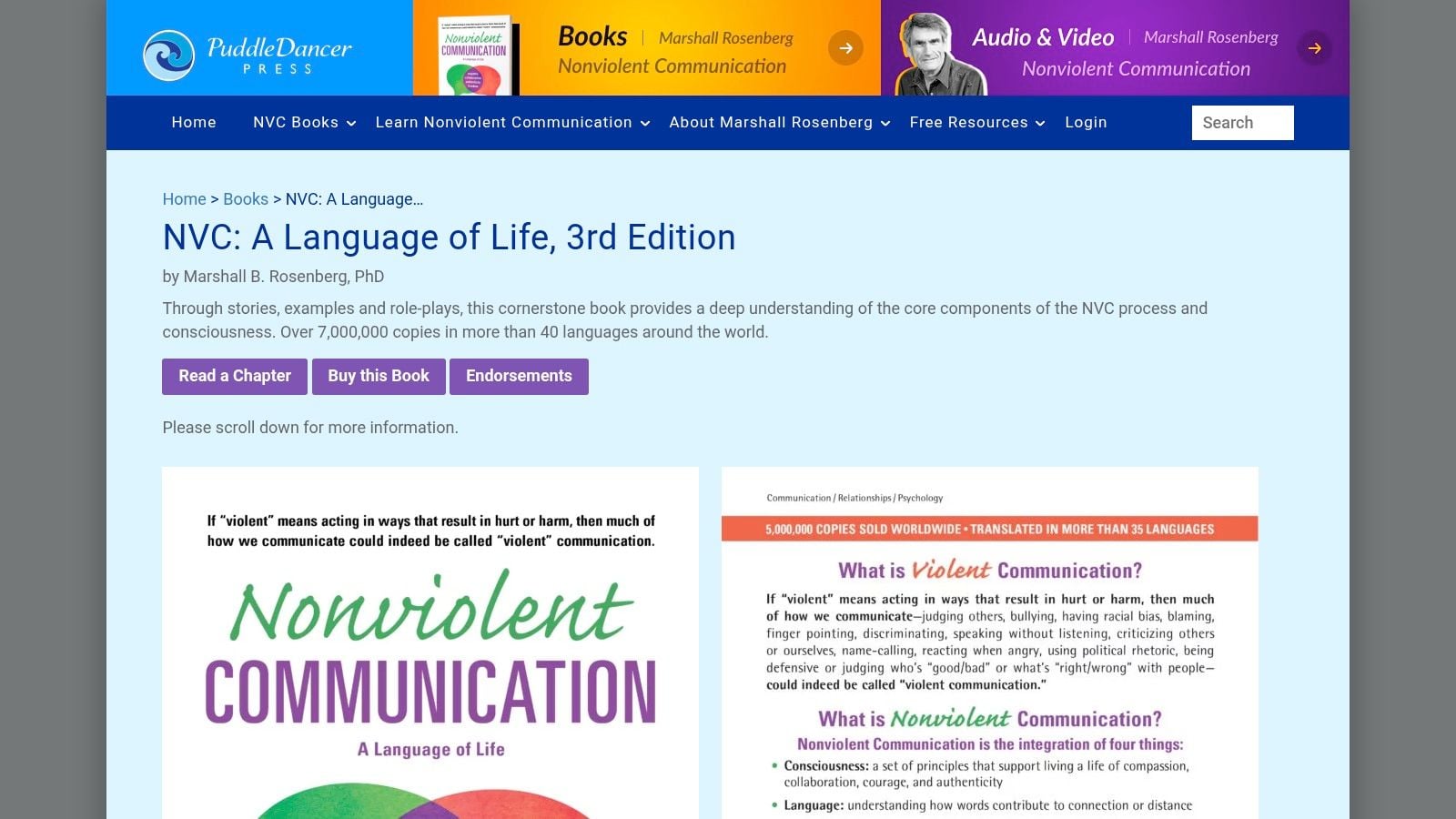
Nonviolent Communication: A Language of Life is the book I reach for when adults need a dependable script for hard moments. Rosenberg's method centers on four parts: observations, feelings, needs, and requests. That structure helps people move away from blame and toward clarity.
For parents and teachers, the biggest strength is transfer. A child can understand the difference between “You're being rude” and “When I hear interrupting, I feel frustrated because I need everyone to have a turn. Will you wait until Maya finishes?” The second version doesn't guarantee agreement, but it lowers defensiveness and models self-awareness.
Why it works well in SEL settings
This book fits naturally with family meetings, restorative chats, and classroom problem-solving circles. It gives adults shared language for needs and requests, which can make conflict feel less personal and more workable.
Practical rule: Describe what happened before you describe what it meant to you.
Try this with a student who grabbed a marker from a classmate. Instead of “That was unkind,” say, “I saw you take the marker from Eli's hand. Eli looked upset. What were you needing right then?” That question keeps accountability in the room while making reflection possible.
A few things to know before you buy it:
Best for adults who want a repeatable framework: The sentence stems are clear and easy to practice.
Especially useful for school-home consistency: Families and staff can use the same words for feelings, needs, and requests.
Less natural at first: Some readers find the wording a little stiff until they've practiced it out loud.
If you want to help children hear the difference between blame and ownership, these I-statement examples for kids and families pair especially well with Rosenberg's approach.
2. Hold Me Tight: Seven Conversations for a Lifetime of Love by Dr. Sue Johnson
Some communication books focus on what to say. Hold Me Tight focuses more on what people are reaching for underneath their words. Sue Johnson's work is grounded in attachment and emotional responsiveness, so the core question becomes, “Can I reach you, and will you respond to me?”
That matters far beyond romantic relationships. Children ask versions of that same question every day. A student who jokes after being corrected may be asking, “Am I still safe with you?” A child who melts down at pickup may be asking, “Will you notice that I had a hard day?” Johnson helps adults hear the attachment signal inside the conflict.
Everyday translation for parents and teachers
One of the most useful takeaways is to respond to vulnerability instead of just reacting to behavior. If your partner says, “You never listen,” the surface issue is criticism. The deeper issue may be fear of disconnection. If a child says, “You like my brother better,” the same principle applies.
Use a simple repair prompt:
For partners: “I think you're telling me this matters a lot. What feels scary or painful here?”
For children: “Are you needing comfort, reassurance, or help solving the problem?”
For classrooms: “What happened on the outside, and what was happening on the inside?”
When people feel emotionally safer, they usually become easier to hear and easier to teach.
This book is strongest for adults who want to slow conflict down and understand the emotional music under the lyrics. It's less of a quick-skills manual than Rosenberg's book, but it's excellent for anyone who keeps noticing the same painful pattern repeat.
The main limitation is scope. It speaks most directly to couples, so teachers and co-parents may need to translate the exercises into their own settings. Still, that translation is worth it, especially if your communication problem isn't a lack of words. It's a lack of felt safety.
3. The Seven Principles for Making Marriage Work (revised ed.) by John Gottman, PhD and Nan Silver
Breakfast is rushed. One adult is packing lunches, another is searching for a missing shoe, and a child is calling from the hallway, “Watch me hop on one foot.” That small moment can go two ways. It can be brushed off as noise, or it can be treated as a bid for connection. That distinction sits near the center of The Seven Principles for Making Marriage Work.
Gottman and Silver focus less on dramatic heart-to-heart conversations and more on the steady habits that shape trust over time. Relationship health works a lot like a classroom climate. One kind comment does not fix a tense week, but repeated moments of warmth, responsiveness, and repair change what people expect from each other. For parents and teachers, that makes this book especially useful. It gives you behaviors to notice, name, and practice.
What stands out from an SEL perspective is how concrete the guidance is. Instead of telling adults to “communicate better,” the book points to skills you can see: turning toward bids for connection, softening harsh start-ups, and repairing after conflict. Those are highly teachable moves, whether you are talking to a spouse, a co-parent, a student, or a teaching partner. They also connect closely to SEL competencies such as relationship skills, self-management, and social awareness.
Best ideas to borrow for home and school
A helpful way to read this book is to ask, “What does this look like in ordinary moments?”
Notice bids for connection: “Watch this,” “Can I tell you something?” or even silly behavior may be a request for attention, closeness, or reassurance.
Start gently: “I need help getting the toys put away before dinner” keeps the door open better than blame-filled language.
Teach repair language: Short phrases like “Can we try that again?” or “I meant that differently” help people recover before conflict hardens.
Build a culture of appreciation: Specific praise such as “You kept trying even when that was frustrating” strengthens connection more than vague approval.
For children, repair works like social glue. It helps a relationship hold together after strain.
Here is one classroom example. Two students argue during partner work. Instead of focusing only on who started it, a teacher can coach each child through a simple sequence: name what happened, name the impact, and offer one repair move. “I grabbed the marker.” “That made it hard for you to keep working.” “Next time I'll ask, and right now I can give it back.” The conflict becomes a practice field for communication, not just a discipline problem.
Parents can use the same structure at home. If siblings are fighting, ask:
What happened first?
What feeling showed up next?
What is one sentence that could help repair this?
Those prompts turn abstract advice into a routine. That is the extra value of this book in an SEL-focused list. It is not only about understanding adult relationships. It offers patterns adults can model so children learn how healthy communication sounds in real life.
One caution is that the book can feel clinical in places because it categorizes habits and conflict patterns so carefully. Some readers will like that clarity. Others may need help translating couple-centered examples into family or school settings. If that is your situation, this guide to building trust in relationships pairs well with Gottman's ideas, especially if you want more direct carryover to children and group settings.
This book is strongest for adults who want practical, repeatable habits. If your relationships suffer less from big misunderstandings and more from daily friction, missed connection, or hard-to-repair conflict, Gottman gives you a clear place to start.
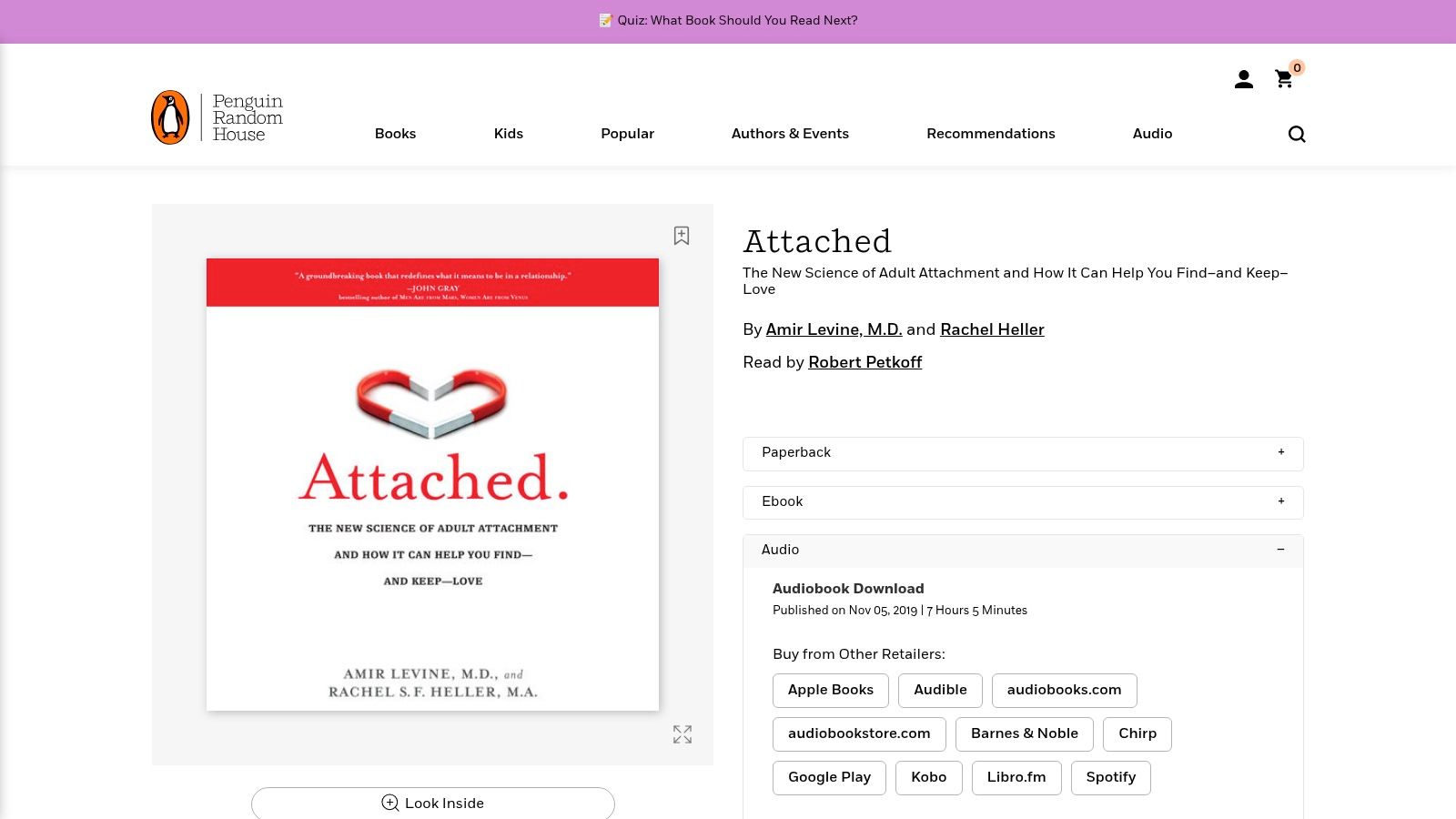
4. Attached: The New Science of Adult Attachment and How It Can Help You Find and Keep Love by Amir Levine, MD and Rachel S. F. Heller, MA
Attached is often the book that helps people say, “Oh, that's the pattern I keep falling into.” It introduces attachment styles in plain language, especially anxious, avoidant, and secure patterns.
For parents, educators, and counselors, that lens can be very useful. Not because every person fits neatly in a box, but because behavior starts to make more sense when you ask what someone does with closeness, distance, reassurance, and stress.
What adults can apply right away
A child who clings at drop-off, a co-parent who needs repeated reassurance, or a partner who goes silent during conflict may all be managing connection in different ways. This book helps adults respond with more intention and less personalization.
Here's a simple way to use the attachment lens:
When someone pursues: Offer calm reassurance before problem-solving.
When someone withdraws: Reduce pressure, then return with a clear invitation to reconnect.
When you feel activated: Ask yourself whether you're reacting to the present moment or an old fear.
This is also a strong book for staff teams. A principal who understands that one teacher needs processing time while another needs immediate dialogue can prevent a lot of accidental friction.
The caution is that popular attachment language can flatten complexity. Real people are more nuanced than a category. Still, as a starting point for self-awareness, this book is accessible and often clarifying.
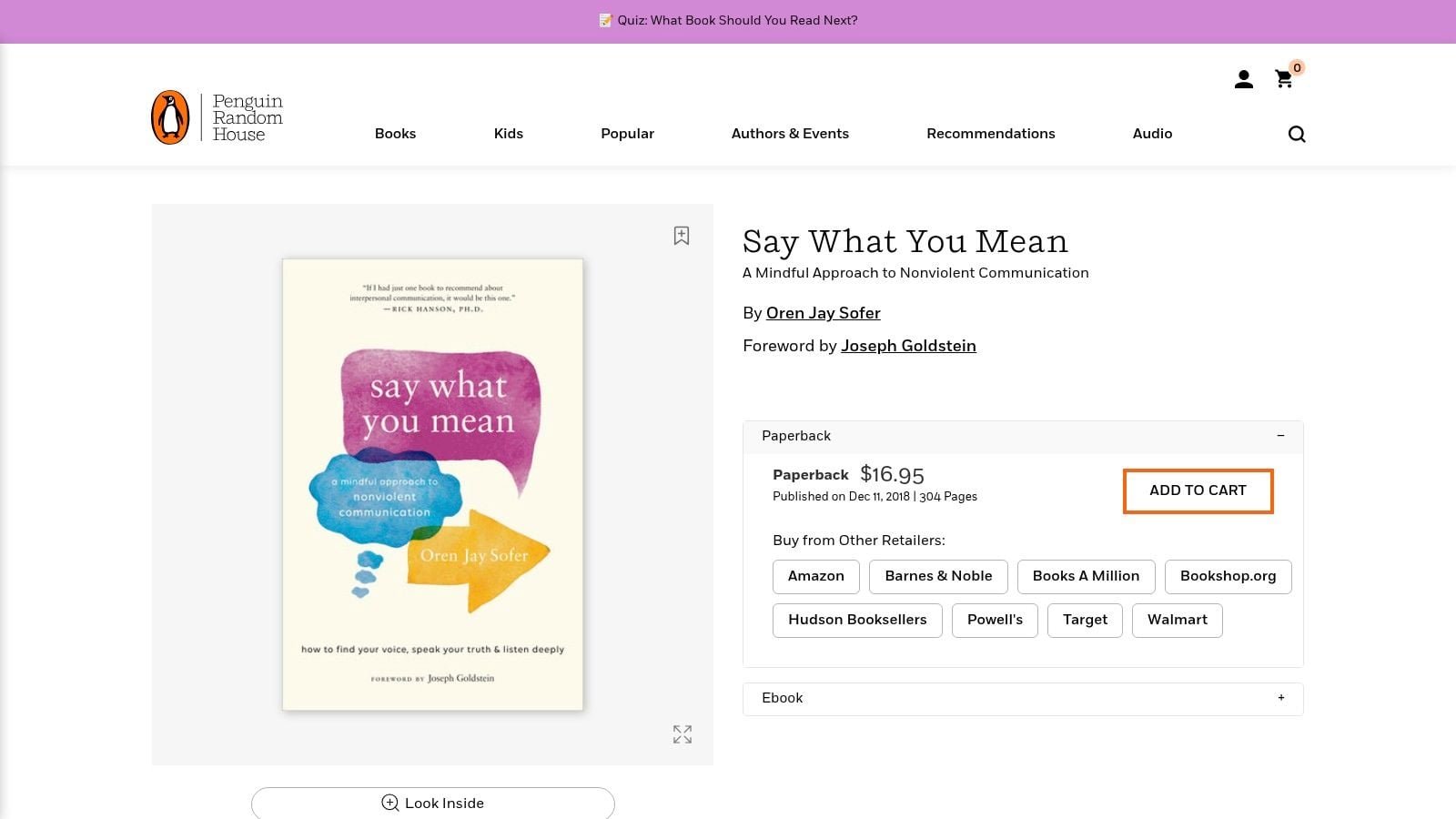
5. Say What You Mean: A Mindful Approach to Nonviolent Communication by Oren Jay Sofer
Say What You Mean is especially useful for adults who know what good communication sounds like but can't access it in the moment. If Rosenberg gives you the language, Sofer helps you regulate enough to use it.
That's a big deal in homes and schools. A calm script doesn't help much when your body is flooded and your voice is already sharp. Independent market research on this segment shows lasting interest in practical communication frameworks that act as skill-transfer tools, especially approaches built around identifying trigger states, reducing flooding, and replacing criticism with requests, as noted in Lily Manne's roundup on couples communication and conflict books.
Best fit for high-stress moments
This book blends mindfulness, body awareness, and communication practice. In plain terms, it helps adults notice the signs that they're getting pulled off center.
Try a “pause before response” routine:
Feel both feet on the floor.
Relax your jaw and shoulders.
Name what you're feeling in one word.
Choose one sentence that is honest and kind.
A school example: a student rolls their eyes after redirection. Instead of snapping back, the adult pauses, softens their tone, and says, “I'm feeling frustrated, and I want to understand what's going on. Are you upset about the instruction or something else?” That small pause can change the whole interaction.
Calm is contagious, but only when adults practice it before they need it.
This book may not be the first pick for readers who dislike mindfulness language. But if you work with dysregulation, conflict, or transitions, its micro-skills are very practical. It's one of the better books for adults who want communication tools that begin in the nervous system, not just in vocabulary.
6. Set Boundaries, Find Peace: A Guide to Reclaiming Yourself by Nedra Glover Tawwab, LCSW
Some communication problems aren't really about expression. They're about limits. Set Boundaries, Find Peace is strong because it treats boundary-setting as a communication skill, not a personality trait.
That's helpful for educators and caregivers who are used to overextending themselves. When adults feel resentful, overloaded, or constantly interrupted, communication often becomes reactive. Clear boundaries reduce that pressure and make respectful dialogue more likely.
Simple scripts that support relationships
This book is full of plainspoken language that adults can use quickly. That makes it useful for school staff, family systems, and helping professionals.
Try these kinds of boundary statements:
Time boundary: “I can talk about this after dinner, not during homework time.”
Emotional boundary: “I want to help, and I can't keep talking while we're yelling.”
Role boundary: “I can support your child at school, but I can't solve this for your family on my own.”
For children, you can model boundaries in age-appropriate ways. “I'm listening. I'm also driving, so I need quiet for two minutes and then I'm all yours.” That teaches kids that limits and care can exist together.
Boundaries aren't punishments. They tell people how to stay in relationship with you.
This title is less about joint exercises and more about individual clarity. That's the tradeoff. If two adults want a shared dialogue structure, pair it with another book on this list. If one adult needs stronger self-respect in communication, this may be the most immediately useful choice.
For older students and families, these healthy boundaries for teens can help translate the concept into daily practice.
7. Getting the Love You Want: A Guide for Couples (Third Edition) by Harville Hendrix, PhD and Helen LaKelly Hunt, PhD
Getting the Love You Want is best known for Imago Dialogue, a structured way to talk through conflict using mirroring, validation, and empathy. If conversations in your home tend to derail fast, structure can be a relief.
I often recommend this kind of conversation container to adults who interrupt, defend, or assume intent too quickly. The method slows people down enough to hear one another.
A useful listening exercise for adults and kids
The heart of the approach is simple. One person speaks. The other mirrors back what they heard before adding opinion. Then they validate the speaker's experience, even if they see things differently.
You can adapt that for children:
Speaker says, “I got mad when you took my spot.”
Listener says, “You got mad when I took your spot.”
Adult coach adds, “Can you tell them one reason that makes sense?”
This style of reflective listening works well in sibling conflict, partner repair talks, and student mediation. It doesn't erase disagreement. It helps people feel understood enough to keep going.
One caution: the early part of the book is more conceptual, so some readers may need patience before the practical tools fully click. But once you start using the dialogue structure, it gives hard conversations a predictable rhythm. For adults who need less chaos and more turn-taking, that can make all the difference.
7-Book Comparison: Communication in Relationships
Title
Implementation complexity
Resource requirements
Expected outcomes
Ideal use cases
Key advantages
Nonviolent Communication: A Language of Life, Marshall B. Rosenberg, PhD
Moderate, learning four-part framework and phrasing takes practice
Low–Moderate, book plus many free resources and optional trainer support
Highly actionable scripts and quick, practical results for personal wellbeing
Getting the Love You Want: A Guide for Couples, Harville Hendrix & Helen LaKelly Hunt
Moderate, dialogue rituals are clear but require practiced use
Moderate, book plus widely available workshops and trained facilitators
Improved reflective listening, validation, and safer hard conversations
Couples seeking structured communication rituals and coached practice
Imago Dialogue offers predictable conversation containers and workshop support
From Reading to Relating: Putting Communication Skills into Practice
A parent snaps at pickup after a long day. A teacher cuts off a student who is already upset. Ten minutes later, everyone feels worse, and no one is quite sure how the conversation went off track. That is the moment these books can help with, not as theory on a shelf, but as practice for real life.
Relationship communication works a lot like teaching reading. You do not hand a child one lesson and expect fluency. You model a skill, practice it in small doses, notice what gets hard, and return to it again. Adults build communication the same way. One repeated habit matters more than one perfect conversation.
Start with one book and one tool. Keep it small enough to use under stress. You might try a Rosenberg-style observation before a judgment, a Gottman repair phrase after tension, a Sue Johnson question that looks for the feeling under the reaction, or a Sofer pause to settle your body before you answer. If you are a parent or teacher, this approach fits SEL practice well because it turns abstract ideas into repeatable behaviors.
A simple routine helps. Pick one moment that happens often, such as morning transitions, homework frustration, sibling conflict, or a hard staff conversation. Use the same communication tool in that moment for a week. Afterward, ask: Did the other person become more open, more defensive, or more settled? That reflection is where learning happens.
This is also where the books connect to children's SEL growth. Clear requests support relationship skills. Body regulation supports self-management. Naming feelings and needs builds self-awareness and social awareness. Boundaries support responsible decision-making. The value of this list is not only what each author says. It is how each book can become a mini practice lab for families and classrooms.
For example, after reading Nonviolent Communication, a family might use sentence stems at dinner: “When I saw or heard ___, I felt ___, because I needed ___.” In a classroom, students can practice the same pattern with low-stakes topics before using it during conflict. After reading Set Boundaries, Find Peace, a teacher team might write three respectful boundary scripts for common stress points, then role-play saying them in a calm tone. The book becomes useful when it changes what people say on Tuesday afternoon.
Perfection is not the goal. Safety and repair are.
For schools and families, that is good news. Children do not need adults who always get every word right. They need adults who can pause, repair, listen, and try again. Those repeated moments build the climate that makes honest communication possible.
If you support children, it can help to pair your reading with practical family communication tools like the Family Caregiving Kit's communication guide. Soul Shoppe also offers SEL programs and resources for school communities and families that focus on empathy, self-regulation, communication, and conflict resolution. A shared vocabulary gives adults and children something concrete to use when emotions run high.
Start with one practice this week. One clearer request. One calmer response. One reflective listening turn before giving advice. Those small choices are easy to miss, but children learn from them every day.
If you want support bringing these communication skills into your school community, Soul Shoppe offers SEL programs, workshops, and resources that help students and adults build shared language for empathy, self-regulation, and conflict resolution.
A lot of adults have lived this moment. You ask a class, your child, or a small group, “What are you thankful for?” A few hands go up. Someone says “my family.” Another says “food.” A third shrugs. The room gets quiet, and the exercise starts to feel more polite than meaningful.
That's usually not a motivation problem. It's a prompt problem.
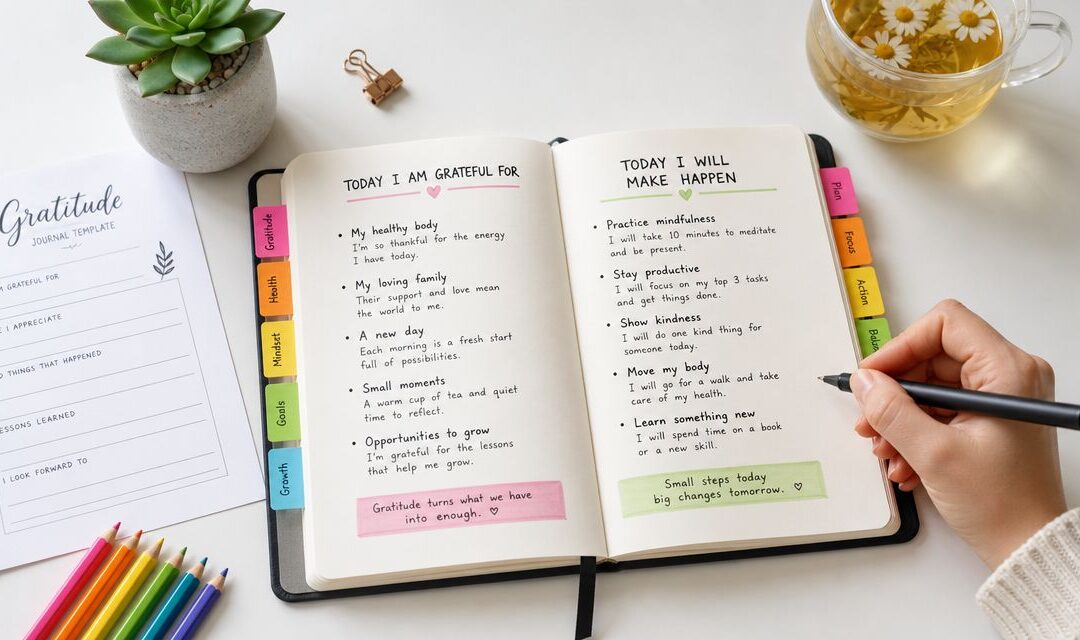
Gratitude is more than saying thank you. It's a teachable noticing skill that can help children name support, remember moments of care, and build steadiness when school or home feels hard. In social-emotional learning, that matters because students need more than positive messages. They need repeatable practices that build self-awareness, empathy, and connection. One of the most widely used institutional versions comes from Greater Good in Action at UC Berkeley, which recommends writing down or typing up to five things you feel grateful for for 15 minutes per day, at least three times per week, for at least two weeks.
This is why gratitude journal prompts work better than vague reflection. They give children structure, language, and a safe entry point.
This is often the easiest place to begin because it keeps the task small and concrete. Instead of asking children to feel grateful on demand, ask them to notice three good things from the day and write why each one mattered.
A first grader might write, “I'm grateful my friend shared crayons because I forgot mine.” A middle school student might write, “I'm grateful I solved one hard math problem because I didn't give up.” A teacher might write, “I'm grateful a student told me the breathing break helped because it showed me they felt safe enough to say it.”
How to use it in class or at home
The best version includes a reason. “I liked recess” is a start. “I liked recess because I finally got included in the game” builds more awareness.
Try these sentence frames:
Something good that happened was: “My grandma picked me up.”
Why it mattered was: “I felt relaxed in the car because she listens to me.”
What I notice about myself is: “I feel calmer when I have one-on-one time.”
That last line is where SEL becomes visible. Students start connecting events to emotions, needs, and supports.
Practical rule: Small good things count. A warm lunch, a kind look, a seat next to a friend, or finishing an assignment all belong.
What this builds
Three Good Things supports self-awareness and resilience because it trains students to scan their day for moments of support instead of only replaying stress. That doesn't mean ignoring hard feelings. It means helping children hold more than one truth at once.
For a weekly classroom ritual, ask students to write privately on Monday through Thursday, then share only one entry on Friday if they want to. That lowers pressure. At home, parents can do the same at dinner by answering first and keeping their examples specific: “I'm grateful you told me you were frustrated instead of slamming the door.”
2. Gratitude Letter or Message Exchange
Some gratitude journal prompts stay private. This one becomes relational. Students write a short letter, note, or message to someone who helped, encouraged, or steadied them.
That “someone” can be a classroom aide, crossing guard, sibling, bus driver, custodian, teammate, or parent. Children often build more empathy when they notice the people who make daily life run smoothly.
Make the appreciation specific
A useful gratitude letter names an action, not just a person.
An elementary student might write, “Thank you to our custodian for cleaning our room every day. It helps our classroom feel safe.” A middle school student might write, “I appreciate you for sitting with me at lunch when I was nervous.” A parent can join by writing, “I appreciated how you packed your backpack without being reminded. That helped our morning feel calm.”
If students struggle to start, offer sentence stems and feeling words. Soul Shoppe's guidance on how to express your feelings in words can help adults model language that is honest and clear.
Safe ways to run the activity
Not every student wants to read a message aloud or hand it directly to someone. Give choices.
Private delivery: Students place notes in envelopes for the teacher to deliver.
Anonymous appreciation: Students write kind observations without signing their names.
Whole-group gratitude: The class creates one shared letter for a school helper.
This prompt aligns closely with relationship skills. Children learn that appreciation isn't flattery. It's naming what someone did and how it affected you.
A strong gratitude message sounds like this: “You helped me when I was overwhelmed, and I felt less alone after that.”
That one sentence teaches emotional vocabulary, empathy, and connection all at once.
3. Sensory Gratitude Journaling
For students who get stuck in their heads, sensory gratitude journaling gives them something concrete to notice. Instead of searching for a big answer, they look at what they saw, heard, touched, smelled, or tasted.
That's especially helpful after transitions, conflicts, or overstimulating parts of the day. It brings attention back to the body and the present moment.
Take a simple approach like this:
I saw: sunlight on the playground
I heard: my table group laughing
I felt: the soft sleeve of my sweater
I smelled: pancakes this morning
I tasted: cold water after PE
A grounding activity before writing
Before students journal, invite them to do a short observation walk around the classroom, hallway, or yard. Ask them to notice one steady thing for each sense. If you want a child-friendly companion exercise, Soul Shoppe offers a five senses activity for grounding and awareness.
A second-grade example might be, “I'm grateful for the smell of crayons and the sound of my friend humming because it made art feel fun.” A middle school example might be, “I'm grateful for the cold air on my face after school because it helped me calm down.”
Why this works well for overwhelmed students
This kind of gratitude doesn't force a cheerful mood. It asks students to notice what is present and steady. That's a key difference.
The broader conversation around gratitude journal prompts has increasingly emphasized trauma-sensitive variations, including prompts like “What helped you get through today?” and “What is one neutral thing that felt steady?” as discussed in this reflection on psychologically safe gratitude prompting. For many students, neutral is more accessible than joyful.
You can also add a short visual reset before writing:
This short video can help frame the moment for students who respond well to guided practice.
Practical Activities and Lessons for Home and School
Good boundary talks matter. Practice matters more.
Teens usually don't learn boundaries because they heard a great explanation once. They learn them by rehearsing, reflecting, revising, and trying again in real situations. That's why hands-on routines work so well in both classrooms and families.
Activity one for families
Create a family boundary agreement
This works especially well for phone use, privacy, homework routines, rides, curfews, and sibling conflict.
What you need
Paper or a shared note
Ten quiet minutes
One topic only
How to do it
Pick one pressure point. Start with the issue that causes the most repeated stress.
Name the shared goal. Example: “We want evenings to feel calmer.”
Ask each person two questions. “What do you need?” and “What gets in the way?”
Write 1 to 2 clear agreements. Keep them observable. “Phones charge in the kitchen at night” is clearer than “Be more responsible.”
Add a repair plan. Decide what happens if the boundary gets broken.
Set a review date. Not because the rule is weak, but because teens grow.
A sample agreement might read like this:
Boundary: Phones charge outside bedrooms.
Reason: Sleep and fewer late-night conflicts.
Teen input: “I want five minutes to finish messages before charging.”
Repair plan: If I keep the phone in my room, charging happens earlier the next night.
Activity two for classrooms
Run a boundary circle role-play
This is one of the most effective ways to teach social and emotional boundaries without turning the lesson into a lecture. If you want more classroom-ready ideas, Soul Shoppe has a useful collection of teaching boundaries activities.
How it works
Students stand or sit in a circle.
You read a realistic scenario.
One student practices a boundary statement.
Another student practices a respectful response.
Use prompts like:
A friend keeps texting during class and wants an immediate reply.
A classmate jokes about something personal after being asked to stop.
A group project partner tries to do all the talking.
A friend wants you to share a screenshot of a private message.
Teacher coaching cues
Make it shorter: “Can you say that in one sentence?”
Make it clearer: “What exactly are you asking them to stop?”
Make it respectful: “Try a firm voice without sarcasm.”
Students need to practice both sides. Saying a boundary matters, and receiving one well matters too.
Two low-prep routines that build the habit
Some teens freeze in the moment. These smaller routines help build fluency.
Routine
How to use it
Example
Boundary journal
Have teens write one moment each day when they said yes, no, or maybe
“I said yes when I wanted to say no because I didn't want conflict.”
Yes no maybe cards
Present invitations, requests, or peer-pressure scenarios
“Would you lend your password?” “Would you stay on a call after lights-out?”
For schools or family support settings that want more structured SEL practice, programs like Soul Shoppe's workshops and courses focus on communication, self-regulation, and conflict resolution. Those are the exact skills boundary-setting depends on.
What to Do When Teens Test or Break Boundaries
Teens will test boundaries. That doesn't mean the boundary failed.
It usually means the teen is checking three things at once. Do you mean what you said? Can I affect the outcome? Will this relationship stay steady when there's conflict?
Pushback is information
Adults often read boundary-testing as disrespect only. Sometimes it is disrespectful. But it's also often developmental. Teens push because they want more say, more freedom, or more fairness. If we answer every challenge with more force, we miss the chance to teach problem-solving.
A steadier response sounds like this:
Acknowledge the feeling. “I can see you're frustrated.”
Restate the boundary and the reason. “The car doesn't leave until seat belts are on. Safety isn't optional.”
Follow through consistently. Calmly. Briefly. Without a second speech.
Use fixed boundaries and flexible boundaries
One of the most helpful distinctions for families is this. Not every boundary should be equally rigid.
This guidance on creating safe boundaries points out that many conversations skip an important nuance. Some boundaries should be fixed safety boundaries, while others should be flexible developmental boundaries that adjust as trust and self-regulation grow.
That difference changes the whole tone of the conversation.
Fixed safety boundaries might include:
Substance use
Unsafe rides
Sharing sexual images
Violence or threats
Private information that puts safety at risk
These are not debate topics.
Flexible developmental boundaries might include:
Bedtime timing within a range
How often a teen checks in while out
How independence is earned with technology
When a teen wants privacy after school before talking
These can be adjusted as skills improve.
Ask yourself, “Am I protecting safety here, or am I coaching a growing skill?” Your answer tells you how much flexibility belongs in the response.
When mental health or family stress changes the plan
Some teens need a more individualized approach. A teen with anxiety may need more predictability before they can handle a new limit. A teen dealing with depression may need boundaries that are simpler, smaller, and easier to follow consistently. In high-conflict homes, the first boundary may need to be about tone and timing rather than content.
That's where collaborative problem-solving helps. Soul Shoppe's article on what collaborative problem solving is is a useful starting point for adults who want to stay firm without escalating every disagreement.
A few examples:
Instead of: “You're losing all phone privileges.”
Try: “For now, we're tightening one part of the plan. Messages stop after a certain time, and we'll review it together.”
Instead of: “You never listen.”
Try: “This boundary isn't working yet. Let's figure out what keeps getting in the way.”
Shorter is usually better. Clear is always better.
Fostering Long-Term Trust and Independence
The underlying goal of boundaries for teens isn't quiet compliance in the moment. It's preparing a young person to manage freedom well when no adult is standing nearby.
That's why collaborative boundaries matter so much. They teach teens how to listen to their own discomfort, respect other people's limits, handle conflict without collapsing, and make decisions with both independence and care. Those are adult skills.
The need is real. Compass Health Center reports that 31.9% of teens are estimated to have an anxiety disorder and 22.2% report being bullied at school, as noted in its overview of teen mental health statistics. In that context, clear boundaries around digital use, peer pressure, and emotional overload aren't just nice family habits. They're part of how adults support safety and well-being.
Trust grows when limits are predictable
Teens may not like every boundary. They usually do better when the adults in their lives are steady, respectful, and predictable.
Trust grows when a teen learns:
You'll explain the why
You'll listen without giving up the limit
You won't humiliate them when they mess up
You'll adjust expectations when growth is earned
That last piece matters. Boundaries shouldn't stay frozen forever. As teens show stronger judgment, they need room to carry more responsibility. That's how dependence gradually becomes independence.
Repair matters too
Some families and schools are reading this after a rough season. Maybe trust has taken a hit. Maybe the boundary work started late. Maybe everyone is tired.
Repair is still possible. If that's where you are, Soul Shoppe offers a thoughtful read on how to earn trust back. Adults don't need to be perfect to be effective. They need to be honest, consistent, and willing to reconnect after conflict.
A teen who learns healthy boundaries doesn't become less connected. They become more capable of real connection. They know how to protect themselves, respect others, and stay grounded when pressure rises.
That's the long game. And every calm limit, every repaired conversation, and every small moment of practice helps build it.
Soul Shoppe helps schools and families teach the relationship skills that make boundaries stick, including communication, self-regulation, conflict resolution, and empathy. If you want practical SEL support for your community, explore Soul Shoppe and its programs for building safer, more connected school and home environments.