

7 Picture Books About Kindness for 2026 Classrooms
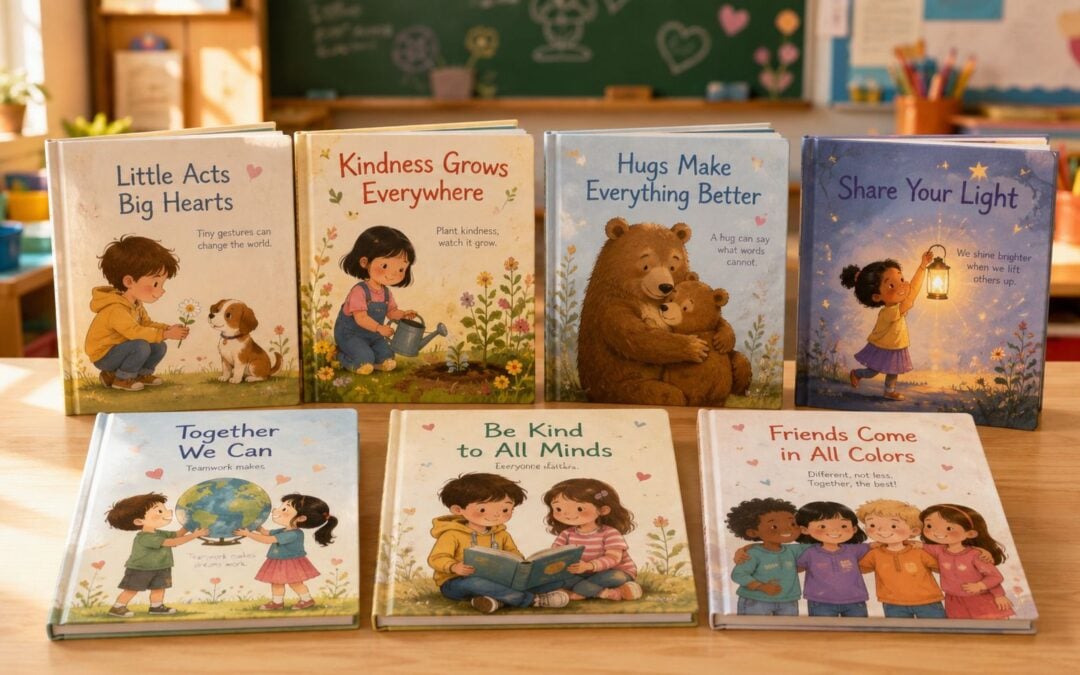
A child sits alone at lunch. Two classmates whisper as the class heads to recess. Someone snaps a crayon, and the actual issue is hurt feelings, not school supplies. In those moments, children need more than a quick reminder about being nice. They need language for what happened, a model for what they could do next, and a low-pressure way to practice.
Picture books help because they slow the moment down. Students can notice exclusion, repair, courage, and empathy in a story before they have to handle those same choices with a classmate. In classrooms, I use kindness books as SEL tools, not as filler for a soft lesson. The strongest read-alouds give adults something concrete to teach, and they give children something concrete to say and do.
That practical focus shapes this list. Each book comes with read-aloud tips, discussion questions with sample prompts, and a simple extension activity you can use the same day to help build a kinder classroom community. Several also pair well with broader conversations about classroom expectations and teaching respect through everyday interactions.
If these stories spark your own class books or student-created read-aloud projects, you can generate children's covers with BeYourCover.
1. Each Kindness

Each Kindness by Jacqueline Woodson, illustrated by E. B. Lewis is one of the strongest choices when a class needs to talk openly about exclusion. It doesn't offer a tidy ending, and that's exactly why it stays with students. Children recognize the social choices in this story because they see versions of them every week.
This is the book I'd choose for a restorative circle after repeated teasing, side comments, or quiet social freezing out. It works especially well in grades K to 5 when students are ready to think about regret, not just rules.
What works in the room
The biggest strength here is realism. Students can discuss unkind behavior without the story becoming preachy. The trade-off is that younger listeners may need extra support because the ending feels heavy.
Practical rule: Don't rush to “What's the lesson?” Let the silence sit for a moment after the ending. Students often say something more honest on the second beat than on the first.
Try discussion prompts like these:
- Notice the small choices: “What did Chloe do that looked small at the time but felt big to Maya?”
- Name the missed chance: “When could one child have changed the story?”
- Connect to repair: “If you can't redo a moment, what can you do next?”
Mini-lesson extension
Use a “Ripple Bowl” activity. Drop a pebble into a bowl of water and ask students to describe how one action travels beyond the first moment. Then have them finish one sentence stem on paper: “A small kindness at school could be…”
Pair this book with classroom work on teaching about respect. Respect gives students a practical next step when they start to understand the emotional cost of exclusion.
2. Be Kind

A child knocks over someone's crayons, another student laughs, and the room gets quiet. That is a common school moment. Be Kind by Pat Zietlow Miller, illustrated by Jen Hill helps students slow that moment down and ask the right question. What could I do next?
I use this title when a class needs practical, age-appropriate examples of kindness that go beyond sharing or saying sorry. The story starts with one relatable classroom mistake, then broadens students' thinking. Kindness can mean including, noticing, helping, listening, or choosing not to add to someone else's bad day.
What works in the room
This book is strongest in kindergarten through grade 3, especially early in the year when students are still building a shared picture of how a caring classroom looks and sounds. The examples are concrete enough for young children to apply right away.
The trade-off is that older elementary students may answer too quickly if the read-aloud stays at a surface level. They often say “just be nice” and move on. To get stronger SEL discussion, pause and ask students to explain what the character noticed, what feeling might have been underneath the moment, and what action would be helpful.
A good follow-up is to connect the story to teaching empathy in everyday classroom situations. Students need both parts. They need to recognize another child's experience, and they need a short list of actions they can take.
Read-aloud tips that increase impact
Read the opening pages without rushing to the solution. Give students a few seconds to sit with the spilled grape juice and the social discomfort around it. Then stop and ask, “What did the other kids notice? What did they do with what they noticed?”
That pause matters.
It shifts the conversation from kindness as a rule to kindness as a series of choices. For many classes, that is the difference between a pleasant read-aloud and a usable mini-lesson.
Try discussion prompts like these:
- Focus on observation: “What clues told the character that her classmate was having a hard moment?”
- Test realistic choices: “Which kind act in this story would work well in our classroom? Which one might feel harder here?”
- Apply it to common routines: “What could kindness look like during clean-up, partner work, recess, or the bus line?”
- Separate intention from impact: “Can someone mean well and still not be helpful? What would be more helpful instead?”
Mini-lesson extension
Create a “Kindness Ripple” chart with one action in the center, such as “invite someone to join your game” or “help without making a scene.” Then ask students to add the next possible effects around it. “That student feels included.” “The game goes better.” “Someone else copies the idea.” “The class feels safer.”
For a stronger close, have students complete one sentence stem on a sticky note: “One kind action I can try today is…” Post those notes around the chart and revisit them at the end of the week. This gives the book a clear classroom purpose. Students leave with language, examples, and one action they can practice the same day.
For a simple behavior bridge, connect the story to these everyday examples of prosocial behavior.
3. The Invisible Boy

Some picture books about kindness focus on obvious conflict. The Invisible Boy by Trudy Ludwig, illustrated by Patrice Barton does something more subtle. It shows what it feels like when no one is openly cruel, yet one child still feels unseen.
That makes it especially useful for lunch tables, partner work, birthday invite drama, and the quiet social patterns adults can miss. If your class has a child who rarely gets picked, rarely gets interrupted because they rarely get included, this book opens that door gently.
Read-aloud moves that matter
Pause on the illustrations. Students often notice changes in color and presence before they can explain the social dynamic. Let them talk about what Brian might be feeling without forcing him into a “sad” label too quickly.
Children usually understand exclusion before they have the vocabulary for it. This book gives them the words.
Discussion prompts that land well:
- Spot the invisible moments: “Where do you see Brian being overlooked?”
- Name the turning point: “What did Justin do that was small but important?”
- Look inward: “How can you tell when someone wants to be included but doesn't know how to ask?”
Mini-lesson extension
Try a “Who's Missing?” routine during morning meeting. Before centers or group work, ask students to scan the room and notice who doesn't yet have a partner, seat, or conversation entry point. Then practice one sentence stem: “Do you want to join us?”
This title also supports explicit work on how to teach empathy. It's a strong follow-up when students need to move from noticing feelings to responding in a useful way.
4. I Walk with Vanessa

I Walk with Vanessa by Kerascoët is the one I'd use for allyship. Because it's nearly wordless, students have to do the social reading themselves. They notice posture, distance, facial expression, and the shift from one child acting alone to a community showing up together.
That makes it excellent for multilingual classrooms, mixed-age buddy reading, and counseling groups where some students need lower language demand with high emotional depth.
Why the format helps
Wordless books slow kids down. Instead of waiting for the text to tell them what happened, they infer. That's a real SEL skill. They have to read emotion, perspective, and intent from visual cues.
The trade-off is that the adult has to facilitate more actively. If you merely flip through the pages, some students will miss the bullying context or won't connect the ending to upstander behavior.
Use prompts like these:
- Read the body language: “What tells you Vanessa doesn't feel safe or included?”
- Track courage: “What risk did the other child take?”
- Scale the idea: “What can one person do, and what can a group do?”
Mini-lesson extension
Invite students to create a “Walk With” plan for your setting. In pairs, they script what support can sound like in real school moments:
- At arrival: “Want to walk in with me?”
- At recess: “You can play with us.”
- After conflict: “Do you want me to come with you to talk to the teacher?”
If kindness work in your school overlaps with peer harm and bystander moments, connect this title to how to stop bullying. This book gives children a picture of collective support, not just private sympathy.
5. Have You Filled a Bucket Today?

A class comes in from recess tense, chatty, and a little unkind. This is one of the few books that can give you shared language fast.
Have You Filled a Bucket Today? by Carol McCloud, illustrated by David Messing is less literary than some of the stronger picture books on this list, but it works well as a schoolwide SEL tool. The bucket metaphor is concrete. Young students remember it, families can use it at home, and staff can repeat it in ordinary moments like lining up, partner work, and lunch transitions.
The trade-off matters. If adults use the metaphor too loosely, children can start labeling classmates instead of naming choices. I teach this book as behavior language, not identity language. A student is not a “bucket dipper.” A student made a hurtful choice, and that choice can be repaired.
Why it works in classrooms
This title is especially useful in kindergarten through third grade, or any setting where you want a quick routine that sticks. It helps students connect kindness to daily actions they can see and repeat.
The read-aloud needs one extra step from the adult. Stop often and tie the metaphor back to observable behavior.
Try prompts like these:
- Make it concrete: “What did this person do that would help someone feel included?”
- Shift from labels to choices: “What is a kinder choice that person could make next?”
- Connect to your classroom: “When do we have the hardest time filling buckets here. Arrival, group work, or recess?”
Mini-lesson extension
Start a “Bucket Notes” routine once a week. Students write one short note about a specific kind act they noticed.
Keep the directions tight:
- Name the action: “You helped me pick up my pencils.”
- Name the effect: “That helped me calm down.”
- Avoid identity labels: Focus on what the person did, not “You are the nicest.”
A simple follow-up helps this lesson last. Create a class anchor chart with two columns: “Bucket-Filling Actions” and “How People Feel.” As students share examples, add language such as “invited me to join,” “waited for my turn to speak,” or “helped without being asked.” That turns the metaphor into a visible behavior bank students can use all year.
This book works best when it is paired later with a title that addresses regret, missed chances, or repair. Used that way, students learn two truths at once. Kindness can be practiced every day, and unkind moments can be addressed and changed.
6. The Rabbit Listened

The Rabbit Listened by Cori Doerrfeld fits a moment every teacher knows. A child's block tower crashes, a drawing rips, or a recess argument follows the class back inside. Adults often want to fix the problem fast. This story gives students a different model of kindness. Stay close, listen, and let the upset person lead.
That makes it one of my go-to read-alouds for teaching responsive support, not just general kindness. Children hear plenty about helping. They need separate practice in recognizing when help feels intrusive and when quiet presence feels safe.
Best use case
Use this book after a hard classroom moment, during a counseling lesson on empathy, or early in the year when students are still learning how to respond to peers' feelings. The illustrations do a lot of the teaching. Students can see the difference between big, busy reactions and the rabbit's calm attention.
The trade-off is clear. Many students will say, “Be a good listener,” then immediately interrupt, problem-solve, or tell their own story. That is developmentally normal. The lesson works better when the read-aloud is paired with explicit language stems and a short practice round.
Pause to ask questions like:
- Track the impact: “How does Taylor look when each animal responds? What do you notice in the face or body?”
- Name the turning point: “What changes once the rabbit sits still?”
- Give students usable language: “If your classmate is upset, what is one sentence you could say that shows you are with them?”
- Add choice: “How can you check whether someone wants help, wants space, or wants you to listen?”
Example prompts help here. If students answer vaguely, tighten it up with, “Would you rather hear, ‘Here's what you should do,’ or ‘I can stay with you'?” That keeps the conversation grounded in real social moments.
Mini-lesson extension
Try a brief lesson called Listen First, Fix Later. Post three response stems on the board:
- Stay present: “I'm here.”
- Reflect the feeling: “That seems really disappointing.”
- Check what is needed: “Do you want help, or do you want me to listen?”
Then give pairs one low-stakes scenario, such as losing a turn in a game or spilling crayons. One student shares the problem. The other practices one listening stem and waits. Afterward, debrief with two questions: “Which response helped you feel understood?” and “Which response felt too fast?”
A good follow-up is a class chart called What Listening Looks Like. Students can help generate examples such as facing the speaker, keeping a calm body, waiting before responding, and asking what the person needs. That chart turns a gentle story into observable classroom behavior.
This book earns its place because it teaches a quieter form of kindness that many children, and adults, need spelled out. It is especially effective in classrooms where students are quick to talk, quick to advise, and still learning that empathy sometimes starts with silence.
7. Kindness Is My Superpower

Kindness Is My Superpower by Alicia Ortego is the most direct title on this list. It doesn't rely on subtle symbolism or a complex ending. It gives young children clear examples, predictable language, and a fast entry point into school and home expectations.
For preschool, kindergarten, and early first grade, that directness is helpful. For older students, it can feel a bit obvious, so I'd use it as an entry text rather than the only kindness read-aloud.
Best use case
This is a strong pick when you need a simple launch book for the beginning of the year, a family literacy night, or a classroom gift library. The rhyme supports participation, and the scenarios translate easily into practice.
What works best is reading a page, then stopping to ask students for one real-school version. If the page shows kindness generally, ask, “What would that look like in our class before math?” That keeps the book from staying abstract.
Mini-lesson extension
Try a “Superpower in Action” chart for one week. Give students three categories and let them add sticky notes as they notice examples.
- At school: sharing materials, inviting someone in, helping after a spill
- At home: including siblings, helping with cleanup, speaking kindly
- In the community: greeting neighbors, thanking helpers, being patient in line
“Kindness” only changes behavior when children can picture the action before the moment arrives.
This title isn't as nuanced as some trade picture books, but that's not always a weakness. Sometimes a class needs a clean, usable starting point.
7-Book Comparison: Picture Books About Kindness
| Title | Implementation complexity | Resource requirements | Expected outcomes | Ideal use cases | Key advantages |
|---|---|---|---|---|---|
| Each Kindness (Jacqueline Woodson) | Medium, guided discussion recommended | Book plus teacher-led restorative activities | Deep reflection on consequences, empathy development | SEL lessons K–5, restorative circles, anti-bullying units | Honest, realistic narrative that prompts rich reflection |
| Be Kind (Pat Zietlow Miller) | Low, straightforward, action-focused read | Book and simple classroom kindness projects (publisher resources available) | Concrete behavior changes and everyday kindness ideas | Primary grades, classroom "acts of kindness" projects | Accessible language and positive, actionable examples |
| The Invisible Boy (Trudy Ludwig) | Medium, benefits from guided conversation | Book with teacher guide and follow-up activities | Increased inclusion and upstander behavior | Friendship lessons, counseling, improving classroom climate | Validates quiet children; warm, approachable storytelling |
| I Walk with Vanessa (Kerascoët) | Medium, facilitator needed to elicit narration | Nearly wordless book; opportunity for student narration and cross-age use | Models allyship and collective response to bullying | Assemblies, buddy reading, multilingual classrooms | Powerful visual storytelling; flexible for all ages and languages |
| Have You Filled a Bucket Today? (Carol McCloud) | Low, easy to implement schoolwide | Book plus publisher printables, routines, and templates | Shared positive climate language; regular kind acts | Schoolwide climate initiatives, K–3 classroom routines | Memorable metaphor with ready-to-use implementation resources |
| The Rabbit Listened (Cori Doerrfeld) | Low–Medium, needs prompts to apply concept | Book and discussion prompts or counseling follow-ups | Improved supportive listening and emotional regulation | Morning meetings, counseling, lessons on grief/frustration | Clear model of presence and listening versus "fixing" |
| Kindness Is My Superpower (Alicia Ortego) | Low, simple, read-aloud friendly | Book; suitable as classroom gift or book-bin addition | Introductory kindness concepts and actionable examples | Early-primary classrooms, family read-alouds | Rhyming, predictable text with concrete how-tos and diverse cast |
Beyond the Book
It is 10:15 a.m. A student is left out during partner work, another child notices, and the room goes quiet for a beat. That is the moment these books are for. A strong read-aloud gives children language they can reach for under pressure, but true SEL growth comes from what adults do with the story afterward.
Use each title as a short, repeatable mini-lesson, not a one-time kindness event. Read aloud with a clear purpose. Stop at one illustration, one line of dialogue, or one turning point. Then ask a small set of discussion questions that lead to action: What did this character need right here? What could a classmate say? What could you do in our room, at recess, or at lunch? Example prompts help students transfer the story to real life. “Who could walk over with you?” “What words would sound kind and still feel true?” “How would you repair this if you were the character?”
The follow-up matters just as much as the conversation. After Each Kindness, students can add one action to a Kindness Ripple chart and track how one small choice affects others. After Be Kind, a class can practice apology and repair language with sentence stems. After The Invisible Boy, students can map inclusion moves they can use during centers, group projects, and free choice. I Walk with Vanessa works well for student-generated narration and role-play because children have to infer feelings from the pictures. Have You Filled a Bucket Today? gives younger students a concrete shared phrase they can use all week. The Rabbit Listened supports listening practice, especially for children who rush to fix a problem before they understand it.
Keep the routine simple enough that staff will use it. One book. Two or three discussion questions. One concrete extension activity. One chance to practice the skill later the same day.
That structure also helps families join in because children bring home the same language they hear at school. A phrase from a book can become a cue during sibling conflict, disappointment, or a rough transition before bed. Shared language lowers confusion and makes kindness easier to teach consistently across settings.
Schools get the best results when these read-alouds connect to existing SEL goals. A story about inclusion can support partner norms. A story about regret can lead into repair conversations. A story about listening can strengthen peer support and conflict coaching. Soul Shoppe is one relevant option for schools that want broader SEL support around empathy, respect, bullying prevention, and conflict resolution alongside classroom read-alouds.
Use these books across the year, especially after real classroom conflicts. Students learn more when the story becomes a practice tool instead of a theme-week activity.
If your school or family wants more practical SEL tools to build empathy, connection, and safer peer relationships, explore Soul Shoppe. Their programs, courses, and resources focus on shared language and everyday skills that pair naturally with read-alouds like these.