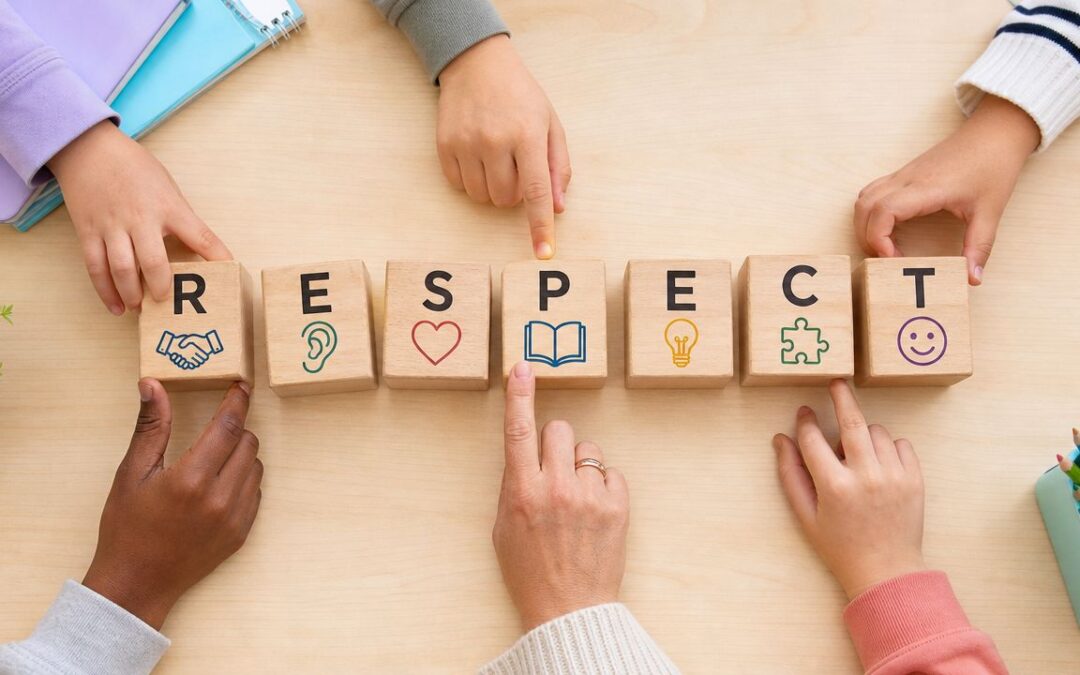
You're probably here because you've said some version of this already today: “Please be respectful.”
Then a child grabs a marker, interrupts a classmate, rolls their eyes, excludes someone at recess, or snaps at a sibling, and suddenly the word respect feels too vague to help. Kids often hear “be nice” or “show respect,” but those phrases don't always tell them what to do next. Adults feel that gap too. We know respect matters, yet teaching it in a concrete, repeatable way can be surprisingly hard.
That's where a good acronym for respect can help. It turns an abstract value into small behaviors children can see, practice, and remember. It also gives adults a shared language. Instead of saying “That wasn't respectful,” you can say, “You forgot the listening part,” or “This was a moment for empathy,” or “Let's try that again with clear words.”
One important note matters from the start. There isn't one universally accepted acronym for respect. Different teaching and devotional sources use different backronyms, and one explanation even says there's no true acronym for “respect” because the word already stands on its own as a noun and a verb, as noted in this discussion of whether respect has an acronym. That's helpful for educators. It means you're free to choose the version that best fits your students, family, or school goal.
Below are eight practical options, grouped by what they help children build most: behavior, self-awareness, inclusion, self-regulation, and community.
1. R.E.S.P.E.C.T. Recognize, Empathize, Set boundaries, Practice listening, Engage authentically, Communicate clearly, Trust-build
This version works well when you want respect to mean more than obedience. It teaches kids that respect is active. They notice other people, care about how others feel, protect healthy limits, and communicate in ways that build trust.
In a classroom, “Recognize” might sound like, “I noticed Mateo was still talking, so I waited.” “Set boundaries” might sound like, “I want to play, but I don't want to be chased right now.” That matters because many children are told to be respectful without being taught that they can also speak up respectfully.
Why this one works in groups
This is a strong fit for morning meetings, peer mediation, and restorative circles because it balances kindness with clarity. Children learn that respect doesn't mean silence. It means listening, naming needs, and staying connected even when there's conflict.
Practical rule: If a child can't say what they need, they often act it out.
A teacher could spend one week on each letter. During “Practice listening,” partners retell what they heard before responding. During “Engage authentically,” students practice giving honest but kind feedback like, “I felt left out when the game started without me.”
For families, this can become dinner-table language. A parent might say, “You told your brother you needed space instead of yelling. That was respect with boundaries.”
Easy ways to use it this week
- Post one letter at a time: Put the current letter on the wall and name it when you see it in action.
- Use conflict scripts: “First recognize, then empathize, then communicate clearly.”
- Teach listening on purpose: Try one of these active listening activities for kids during partner shares or family meetings.
- Build trust publicly: End the day by inviting students to name one respectful action they saw from a peer.
2. R.I.S.E. Responsibility, Integrity, Self-awareness, Empathy
R.I.S.E. is simple, strong, and especially useful with older elementary and middle school students. It starts inside the child, not outside. Before students can show respect consistently, they need to notice their choices, own their actions, and understand their impact.
A student who blurts out in frustration may need “Self-awareness” before “Empathy.” They have to recognize, “I was embarrassed, and that's why I snapped.” That reflection creates room for repair.
What it looks like in real life
In advisory, you might ask, “Which part of R.I.S.E. felt hardest this week?” One student says responsibility was hard because they blamed a partner for a group mistake. Another says empathy was hard because they assumed a classmate was ignoring them, but later learned the classmate was upset.
That's why this acronym works. It gives students a non-shaming way to talk about growth.
- Responsibility: “I made the mess. I'll clean it up.”
- Integrity: “No one saw me cheat, but I still knew it was wrong.”
- Self-awareness: “I was already upset before lunch, so I overreacted.”
- Empathy: “She wasn't being rude. She looked overwhelmed.”
How adults can make R.I.S.E. stick
Try monthly journal prompts tied to each letter. Keep them short. Busy students do better with direct reflection than long writing tasks.
Ask, “What happened, what were you feeling, and what would respect look like next time?”
At home, parents can use R.I.S.E. after sibling conflict. Instead of “Say sorry,” try, “Let's do this in order. What was your responsibility? What would integrity look like now? What do you notice about your own feelings? What might your sibling be feeling?”
That sequence slows the moment down. It moves children from shame to accountability.
3. R.E.S.P.E.C.T. Responding thoughtfully, Expecting the best, Speaking kindly, Paying attention, Encouraging others, Cooperating, Taking turns
This is one of the easiest forms of acronym for respect for younger children because every part is visible. You can see taking turns. You can hear speaking kindly. You can coach paying attention in the middle of a lesson or on the playground.
For kindergarten through early elementary, that concreteness matters. Kids need respect translated into actions they can practice before they can discuss it in abstract terms.
A simple visual helps younger learners remember the behaviors.
Start with what children can do today
Suppose two children want the same swing. Instead of saying, “Be respectful,” a playground aide can coach with the acronym.
- Respond thoughtfully: “Pause before grabbing.”
- Expect the best: “Maybe she didn't mean to cut in.”
- Speak kindly: “Can I have a turn when you're done?”
- Pay attention: “Look at your friend's face. Are they upset?”
- Encourage others: “You can go next.”
- Cooperate: “Let's make a plan.”
- Take turns: “Use the timer and switch.”
That's direct, teachable, and repeatable.
Make it visible and routine
This version works best when adults use the same words every day. Put each letter on a picture chart. Send one behavior home each week. Use role-play in morning meeting. Take photos of students demonstrating the behaviors and add them to a bulletin board.
Young children learn respect fastest when adults name the exact behavior they just saw.
Instead of “Good job,” say, “That was respectful. You were cooperating,” or “You were paying attention when your partner spoke.”
If you want a short video to reinforce the concept during a class meeting or counseling group, this can support the conversation:
4. R.O.C.K. Regard for others, Open-mindedness, Consideration, Kindness
R.O.C.K. is excellent for anti-bullying work because it shifts respect from rule-following to caring. It asks children not only, “Did you break a rule?” but also, “Did you show regard for another person?”
That question reaches the heart of belonging. A child can technically follow directions and still leave someone out. R.O.C.K. helps adults name that difference.
The image below can become a strong discussion prompt for a bulletin board, counseling office, or family conversation.
A strong choice for belonging work
A lunch table example shows why this framework helps. A new student sits down. No one says anything cruel, but no one makes room either. With R.O.C.K., a teacher can ask:
- Where was regard for others?
- How could open-mindedness help if the student seems different?
- What would consideration look like right now?
- What act of kindness could change this moment?
This invites action without lecturing.
How to teach it without making it feel scripted
Storytelling works especially well here. Read a picture book or describe a playground conflict, then ask students which part of R.O.C.K. appeared and which part was missing. Middle school students can also nominate peers who are “rocking respect” and explain what they noticed.
If your school is building a broader respect culture, this teaching about respect resource from Soul Shoppe can support that work with shared language and SEL practices.
A fun extension is a “kindness rocks” project. Students paint stones with the words regard, open, consider, and kind, then place them in a garden or entryway. It sounds simple because it is. Simple rituals often help school values stay visible.
5. R.E.S.P.E.C.T. Recognize differences, Embrace diversity, Show empathy, Prevent harm, Encourage inclusion, Create community, Trust each other
Some respect frameworks focus mostly on manners. This one asks a bigger question. How do we teach respect in a diverse community where students carry different identities, experiences, languages, and histories into the same room?
That's an important shift because many search results for acronym for respect stay at the level of children's mnemonics, while the more practical need is choosing the right respect framework for the setting, as noted in this discussion of multiple incompatible RESPECT frameworks across contexts. A classroom working on inclusion needs something different from a simple behavior chart.
Respect as inclusion, not just politeness
This version is powerful in schools doing equity, belonging, or anti-bias work. “Recognize differences” means students notice identity without mocking, erasing, or flattening it. “Prevent harm” means they intervene, report, or repair when exclusion or bias shows up.
A fourth-grade teacher might use this during a read-aloud with diverse characters. After the story, students reflect on which character was included, who was misunderstood, and what “create community” would look like in that setting.
At home, parents can use this language after children comment on someone's appearance, accent, religion, family structure, or ability. Instead of shutting the conversation down, they can say, “Let's stay curious and respectful. What difference did you notice? How can we respond with empathy?”
Practical ways to bring it to life
- Use identity-rich books: Pair the acronym with stories that show different cultures, abilities, and family experiences.
- Practice harm prevention: Role-play what students can say when they hear teasing, stereotypes, or exclusion.
- Build belonging jobs: Let student leaders welcome new classmates, check in on isolated peers, or help create inclusive routines.
For classroom support, Soul Shoppe's Everyone Belongs Here approach to teaching diversity in the classroom fits naturally with this version. For a broader conversation about skill-building across differences, some educators also explore martial arts and diversity as a lens for respect, humility, and learning in community.
6. R.E.S.P.E.C.T. Regulate emotions, Express needs clearly, Self-monitor, Perspective-take, Empathize, Control impulses, Think before acting
When children act disrespectfully, the visible behavior is often only the last step. Underneath it might be frustration, embarrassment, sensory overload, hunger, anxiety, or a lack of self-regulation skills. This acronym treats respect as a skill built from emotional regulation.
That's why it can be especially helpful for students who struggle with impulsivity, conflict, or repeated behavior patterns.
Focus on the root, not just the reaction
A child shouts, “Move, that's mine!” The correction often comes after the outburst. This framework helps adults teach the steps that should have happened before it.
- Regulate emotions: Take three breaths or step to the calm corner.
- Express needs clearly: “I was still using that.”
- Self-monitor: Notice body signals like clenched fists or a loud voice.
- Perspective-take: “Maybe he didn't know.”
- Empathize: “He wanted a turn too.”
- Control impulses: Pause before grabbing.
- Think before acting: Choose words or ask for help.
That sequence turns a discipline moment into a lesson.
Useful for classrooms and home routines
This works well with emotion check-ins, breathing practice, calm corners, and visual cue cards. If a student tends to move quickly from frustration to conflict, the teacher can indicate the letter they need most in that moment.
Respect often improves when regulation improves first.
For adults who want more concrete regulation tools, these self-regulation strategies for children pair well with this acronym. Parents can also use it before predictable stress points like homework, bedtime, or sibling transitions. The key is to rehearse the steps before a child is upset, not only during the blow-up.
7. R.E.S.P.E.C.T. Relationships matter, Equity for all, Safety first, Peers are valued, Empowerment through voice, Community belonging, Thrive together
This version is less about one child's behavior and more about the culture adults are building around children. It fits best for principals, counselors, SEL leads, and teams shaping school climate.
That broader view reflects an important reality. In public-sector guidance, respect is often framed as relational and systems-based, not just individual politeness. The HHS RESPECT model connects respect with cultural differences, power differentials, empathy, trust, and sociocultural context in care, as described in this HHS RESPECT model overview. Schools can learn from that idea. Respect grows through structures, routines, and relationships.
A leadership lens for school culture
If students don't feel safe, seen, or heard, reminders about manners won't fix much. “Safety first” might mean predictable routines and calm adult responses. “Giving students a voice” might mean student forums, class meetings, or feedback systems where young people can speak openly.
A principal might use this acronym during staff planning:
- Are relationships at the center of discipline?
- Do all students experience equity in access and voice?
- Do peers feel valued, especially those who are often marginalized?
- Does our community language point toward belonging?
Those questions make respect operational, not decorative.
What implementation can look like
Use the letters as a lens for school improvement planning. A counselor team might examine whether students have enough belonging rituals. A grade-level team might ask whether classroom participation structures enable quiet students as well as outspoken ones.
A family-facing version also works. Schools can send home one letter per month with examples like, “Peers are valued means we don't laugh when someone makes a mistake,” or “Thrive together means we solve problems in ways that keep everyone connected to the community.”
This version is especially useful when your goal isn't just fewer conflicts. It's a stronger, safer climate.
8. R.E.A.C.H. Recognize humanity, Empathize with experiences, Accept differences, Cultivate kindness, Hold accountability
R.E.A.C.H. is one of my favorite options for hard moments because it keeps two truths together. Every child has dignity. Every child is also responsible for their choices.
That balance matters in restorative practice. If a student has hurt someone, adults can respond in ways that are either too soft or too harsh. R.E.A.C.H. helps avoid both extremes.
Why this works in repair conversations
A restorative conversation might begin with “Recognize humanity.” The adult communicates, “You matter here, and what happened still needs repair.” That opening keeps shame from taking over.
Then the process moves outward. What happened? Who was affected? What were they experiencing? What kindness is needed now? What accountability makes things right?
A middle school example makes this clearer. One student mocks another's presentation. Instead of only assigning a consequence, the adult guides a fuller conversation.
- Recognize humanity: “Both of you deserve respect in this room.”
- Empathize with experiences: “What was it like to be laughed at?”
- Accept differences: “People present, speak, and learn differently.”
- Cultivate kindness: “What would support look like next time?”
- Hold accountability: “How will you repair the harm?”
A strong fit for restorative circles
This framework can also support family repair after yelling, teasing, or exclusion at home. Parents often need words that are warm but firm. R.E.A.C.H. gives them that language.
You can hold a child accountable without treating them like they are the problem.
That distinction changes everything. It helps children separate identity from behavior. “You made a hurtful choice” lands differently from “You are disrespectful.”
A useful historical note belongs here too. The word respect carries deep public memory in part because of Aretha Franklin's 1967 hit “Respect,” which became a defining anthem of the era, as reflected in this reflection on the cultural staying power of the word respect. That staying power is one reason the word continues to be reshaped into classroom and leadership tools. People keep returning to it because it names something both personal and communal.
8 Respect Acronyms Compared
| Model | Implementation complexity | Resource requirements | Expected outcomes | Ideal use cases | Key advantages |
|---|---|---|---|---|---|
| R.E.S.P.E.C.T. – Recognize, Empathize, Set boundaries, Practice listening, Engage authentically, Communicate clearly, Trust-build | Medium–High, sustained practice and adult modeling | Moderate, training, visuals, role-play time | Stronger empathy, clearer boundaries, shared SEL language | School-wide SEL, peer mediation, restorative circles | Comprehensive SEL integration; builds emotional intelligence |
| R.I.S.E. – Responsibility, Integrity, Self-awareness, Empathy | Low–Medium, explicit teaching of components | Low, posters, journals, mentor training | Increased personal accountability and intrinsic motivation | Character education, middle school advisories, leadership programs | Simple, memorable, supports identity and ethical behavior |
| R.E.S.P.E.C.T. – Responding thoughtfully, Expecting the best, Speaking kindly, Paying attention, Encouraging others, Cooperating, Taking turns | Low, concrete, behavior-focused implementation | Low, visuals, behavior coaching, playground oversight | Clear behavioral expectations, reduced minor conflicts | K–2 classrooms, playground management, school-wide behavior plans | Highly accessible for young children; easy to reinforce |
| R.O.C.K. – Regard for others, Open-mindedness, Consideration, Kindness | Medium, requires empathy development and culture work | Moderate, peer programs, assemblies, mentoring | Improved peer support, reduced isolation, stronger belonging | Anti-bullying initiatives, peer mentoring, assemblies | Emotionally grounded; effective for upstander culture |
| R.E.S.P.E.C.T. – Recognize differences, Embrace diversity, Show empathy, Prevent harm, Encourage inclusion, Create community, Trust each other | High, needs cultural competency and ongoing commitment | High, staff PD, curriculum changes, sustained initiatives | Greater inclusion, bias awareness, more equitable school climate | Anti-racism work, equity initiatives, curriculum integration | Directly addresses systemic equity and belonging |
| R.E.S.P.E.C.T. – Regulate emotions, Express needs clearly, Self-monitor, Perspective-take, Empathize, Control impulses, Think before acting | Medium–High, SEL knowledge and consistent practice required | Moderate, teacher training, mindfulness tools, calm spaces | Better self-regulation, fewer reactive incidents, improved resilience | SEL lessons, interventions for anxiety/ADHD, behavior plans | Targets root causes of disrespect; evidence-aligned SEL |
| R.E.S.P.E.C.T. – Relationships matter, Equity for all, Safety first, Peers are valued, Empowerment through voice, Community belonging, Thrive together | High, systems-level change and leadership buy-in | High, leadership time, strategic planning, data systems | Long-term culture shift, improved climate and academic access | District initiatives, school improvement planning, leadership training | Strategic, links respect to school improvement and outcomes |
| R.E.A.C.H. – Recognize humanity, Empathize with experiences, Accept differences, Cultivate kindness, Hold accountability | Medium–High, restorative mindset and practice change | Moderate, restorative training, circle facilitation resources | Repaired relationships, accountable repair, reduced shame-based discipline | Restorative practices, conflict resolution, behavior accountability | Balances accountability with dignity; supports healing and repair |
Putting Respect into Practice Your Next Step
The best acronym for respect is the one your community will actually use. That sounds simple, but it matters. If your kindergarten team needs visible playground behaviors, choose a concrete version. If your middle school students need reflection and ownership, use something like R.I.S.E. If your school is working on belonging, inclusion, or culture, pick a framework that names those goals directly.
You also don't need to force one acronym to do every job. Different settings call for different language. That's normal, and it matches the larger truth that there is no single standardized acronym for respect. Educators have adapted the word in many ways because respect shows up differently in a family meeting, a classroom conflict, a restorative circle, or a schoolwide equity plan.
If you want one especially practical reminder for adults, recent research on conversational receptiveness offers the H.E.A.R. acronym: hedging claims, acknowledging other perspectives, emphasizing agreement, and reframing dialogue. Harvard researchers describe it as a receptiveness recipe designed to make disagreement more productive in real-world conversations, as shared in this Harvard article on H.E.A.R. and conversational receptiveness. While H.E.A.R. isn't itself an acronym for respect, it's a useful companion for adults who want to model respectful disagreement.
For group norms, there's also a formal RESPECT communication rubric built around responsibility, empathetic listening, sensitivity to communication styles, pondering before speaking, examining assumptions, confidentiality, and trust in diversity. That framework is explicitly designed for diverse and conflicted groups, as described in this RESPECT communication guidelines article. In schools, that kind of structure can help adults align their own interactions before asking children to do the same.
Start small. Pick one acronym. Introduce one letter each week. Model it out loud. Catch students using it. Practice it in low-stress moments. Return to it during conflict. If the language feels natural, children will begin using it too.
That's when respect stops being a poster word and starts becoming a habit.
If your school or family wants extra support, Soul Shoppe is one relevant option. Soul Shoppe is a social-emotional learning organization that helps school communities cultivate connection, safety, and empathy, and its programs teach practical tools and shared language for self-regulation, mindfulness, communication, and conflict resolution. That kind of hands-on SEL support can make a respect framework easier to teach and sustain over time.
If you want support turning respect from a rule into a daily practice, Soul Shoppe offers SEL programs, workshops, and resources that help students and adults build empathy, communication, self-regulation, and conflict resolution skills together.