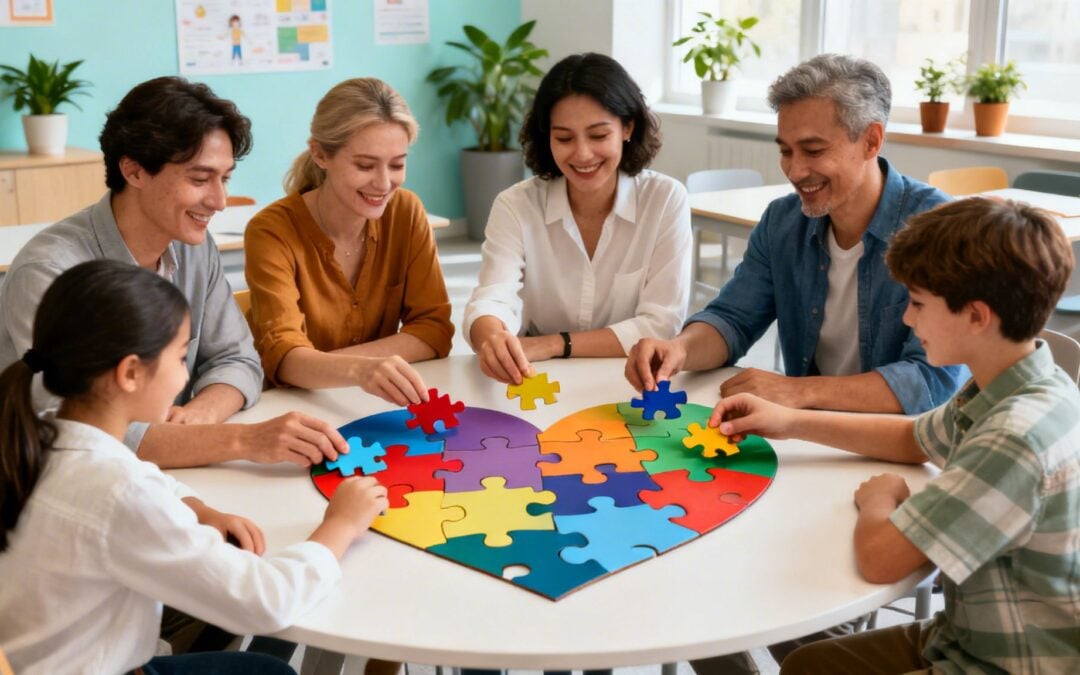
Relationship conflict resolution isn’t about stopping fights. It’s about using those tricky moments to teach kids how to build stronger, more resilient connections with each other. It turns a frustrating disagreement into a real-life lesson in empathy, communication, and bouncing back from challenges—skills they’ll need for the rest of their lives.
Shifting from Conflict to Connection in the Classroom
What if we saw every classroom disagreement not as a disruption, but as a chance for kids to grow? This one shift in perspective moves conflict resolution from something we try to stamp out to a vital part of social-emotional learning (SEL). When students learn to work through their disputes, they aren’t just solving a problem; they’re building a toolkit for life.
Think of unresolved tension in the classroom like a leaky faucet. It’s a constant, low-grade annoyance that disrupts the flow of learning and makes the room feel less safe. But a structured approach to conflict is more like a fire drill. It gives everyone a clear plan, so when a real flare-up happens, they can respond calmly and effectively, strengthening their bonds instead of breaking them.
A New Approach to Disagreements
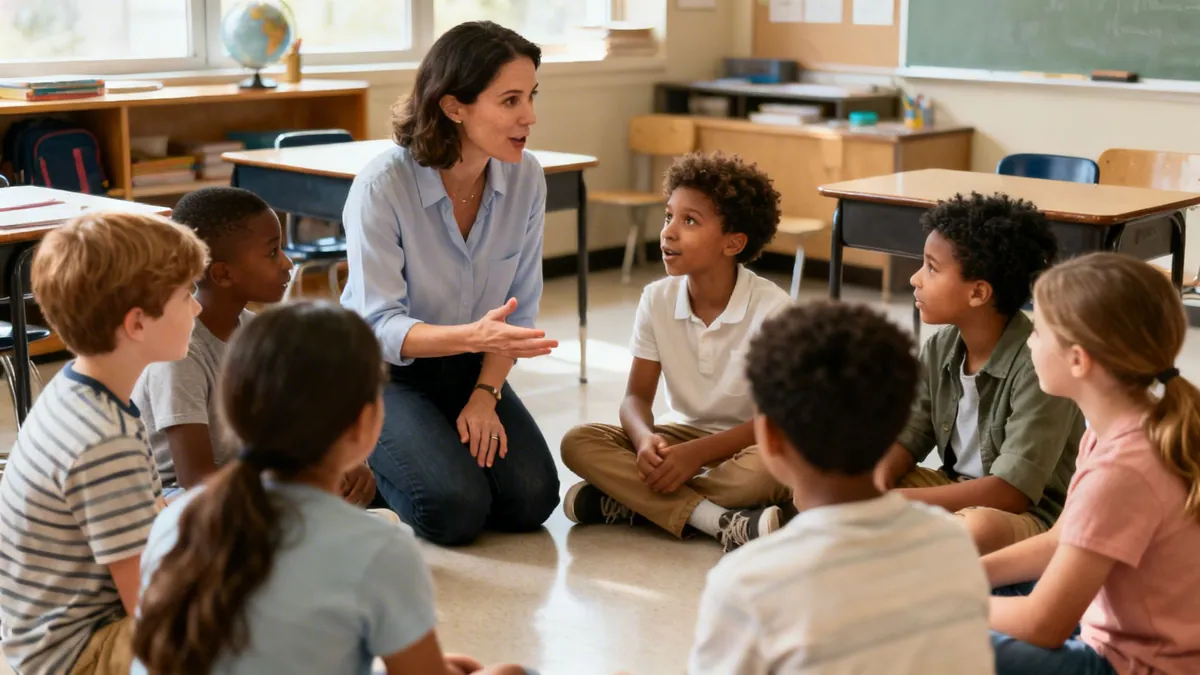
This framework empowers adults—both teachers and parents—to see arguments as teachable moments. Instead of stepping in as a judge to decide who’s right and who’s wrong, we can act as guides, helping children find their own way to mutual understanding. This process builds the psychological safety students need to share their feelings without worrying about being punished.
For example, when two students are arguing over a shared set of markers, the goal isn’t just to end the argument. It’s to help them see each other’s point of view and find a solution they can both live with. A teacher might gently say, “It looks like you both really want to use the markers. Can you each tell me what you were hoping to draw?” That simple question opens the door to real listening and problem-solving, perhaps leading them to decide to share the colors or work on a picture together.
By reframing disagreements as a tool for connection, we show kids that conflict is a normal part of life—and that working through it with respect can actually make their friendships stronger.
The Lifelong Benefits of Early Skills
The skills students pick up in these moments go far beyond the classroom. A child who learns how to navigate a disagreement with a classmate is better prepared to handle arguments with family, friends, and, one day, their own coworkers. This foundation is crucial for creating more peaceful and inclusive communities everywhere. You can see how these ideas play out by exploring what restorative practices in education look like.
Teaching conflict resolution helps build:
Empathy: The ability to imagine what someone else is feeling. For example, a student learns that when they bragged about their score, their friend felt sad not because they lost, but because they felt left out of the celebration.
Resilience: The skill of bouncing back when things get tough. Students discover that a disagreement over game rules doesn’t have to mean the end of a friendship.
Effective Communication: The art of speaking your truth clearly and listening with an open heart. Kids practice using “I-Statements” to explain their feelings without blaming others.
Ultimately, making these practices a part of your school culture creates a place where every child feels seen, heard, and valued. It turns everyday conflicts into some of the most profound opportunities for connection and growth.
The Hidden Costs of Unresolved School Conflict
What’s the real price of unchecked conflict in a school? When disagreements between students and staff are brushed aside, the fallout is much more than just hurt feelings. These unresolved issues create real, system-wide problems that affect everyone, from the quietest kid in the back row to the most dedicated teacher.
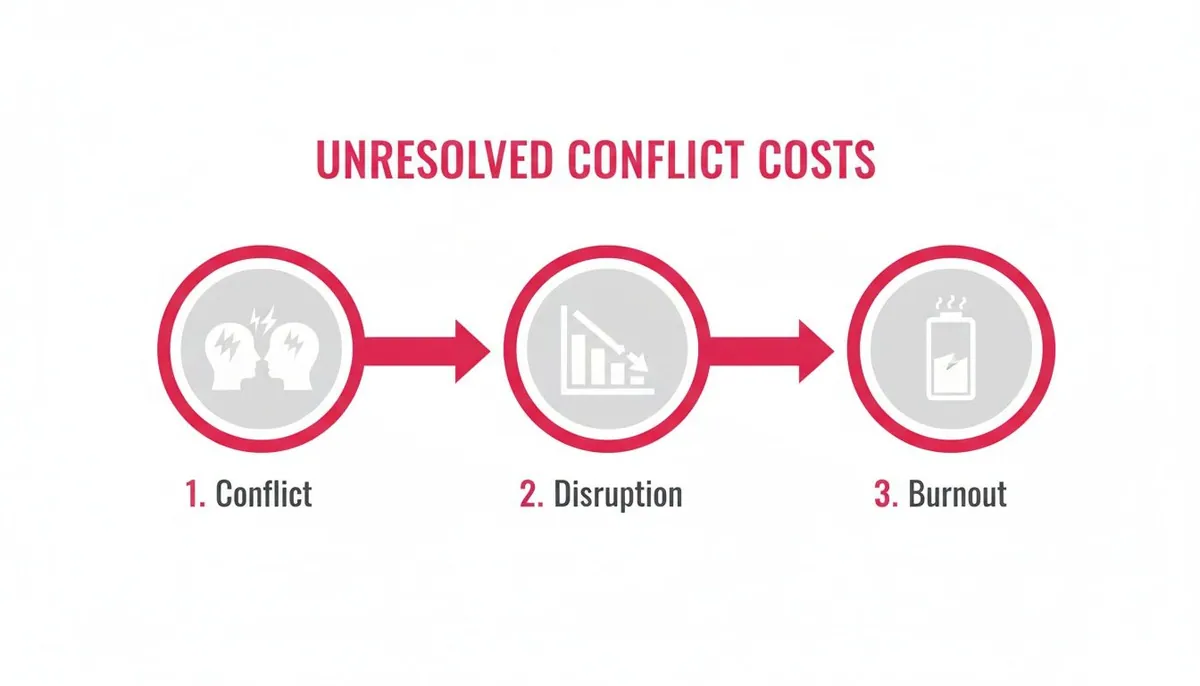
Think of persistent conflict as a hidden tax on your school’s resources. It’s a direct drain on instructional time, leading to more disciplinary referrals, sinking academic engagement, and faster teacher burnout.
Instead of teaching math or history, educators find themselves spending countless hours mediating disputes, documenting incidents, and managing disruptions. For students, the emotional toll is huge. It can lead to anxiety, isolation, and a feeling that school just isn’t a safe place to be.
The Ripple Effect on Learning and Well-Being
Conflict rarely stays between just two people. It sends ripples across the entire school community. A single argument on the playground can easily escalate, pulling in other students and creating a cloud of tension that follows them right back into the classroom.
When kids feel on edge or unsafe, their brains simply aren’t primed for learning.
Here’s what that looks like in practice:
Lowered Academic Performance: A student preoccupied with a social conflict can’t focus on their lessons. For example, a student who had a fight with their best friend that morning may spend math class worrying about who they’ll sit with at lunch instead of engaging with the curriculum.
Increased Absenteeism: For some kids, especially those who feel targeted or left out, avoiding school can feel like the only way to cope. This leads to missed instruction and a growing academic gap.
Erosion of School Climate: When conflict becomes the norm, trust disappears. Students are less likely to collaborate, and teachers feel unsupported. This can poison the entire school environment. For more on this, check out our guide on how to improve school culture.
A teacher might notice a once-enthusiastic student has become withdrawn and quiet. The cause isn’t a sudden inability to learn, but a lingering argument with a friend that has left them feeling ostracized. This is the unseen cost of unmanaged conflict.
Quantifying the Impact on Time and Resources
The time drain from unresolved conflict is a real, measurable problem. Just think about the hours spent each week addressing student disagreements, calling parents, and handling disciplinary paperwork. This is precious time that could be spent on lesson planning, one-on-one student support, or professional development.
Investing in relationship conflict resolution isn’t a luxury; it’s a strategic imperative. It’s about reclaiming lost instructional time, boosting student achievement, and creating a positive school climate where everyone can thrive.
This problem doesn’t just exist on the playground. Research shows that in the workplace, disputes and personality clashes eat up about 2.8 hours per employee every week. That lost productivity costs U.S. companies an estimated $359 billion a year.
By teaching students these skills now, we’re making a direct investment in their futures. We’re giving them tools that will save them—and their future employers—immeasurable time, money, and emotional strain. When we tackle conflict head-on, we can transform a major liability into a powerful opportunity for student growth and community well-being.
Core Skills for Healthy Conflict Resolution
Handling disagreements well isn’t magic—it’s a set of practical skills we can teach. Think of it like a toolbox. When conflicts pop up, as they always do, we want kids to have the right tools ready to go. This turns an abstract idea like “peace” into concrete actions they can actually use.
The most essential tools in this box are active listening, emotional regulation, and perspective-taking. When used together, they help a child turn a moment of pure frustration into a chance to connect and understand someone else a little better.
When we don’t give kids these tools, small disagreements can spiral. A single unresolved conflict creates ripples of disruption that can lead to frustration and burnout for students and staff alike.
This cycle drains a school’s emotional and academic energy, showing just how important it is to address conflict at the source.
Mastering I-Statements to Express Feelings
One of the most powerful tools you can give a child is the “I-Statement.” It’s a simple shift in language that helps them share their feelings without blaming or accusing anyone. This one change can immediately lower defenses and open the door for a real conversation.
For instance, a child’s first instinct might be to shout, “You always ruin the game!” That’s an attack, and it almost guarantees a defensive or angry response.
With a little guidance, we can help them rephrase it: “I feel frustrated when the rules change mid-game because I don’t know how to play anymore.” This version isn’t an attack. It’s an honest look into their feelings and why they’re there, making it so much easier for the other person to actually hear them.
An “I-Statement” acts like a bridge, not a wall. It invites the other person into your experience instead of pushing them away with blame.
A Simple Model for Peaceful Problem-Solving
Once kids can share their feelings without starting a bigger fight, they need a map to find a solution. A simple, four-step model gives them the structure to work through problems together, guiding them from that first emotional spark to a shared agreement.
The table below breaks down a simple framework you can use to walk students through this process.
Step
What It Means
Example Teacher/Parent Prompt
1. Stop and Cool Off
Taking a moment to breathe and regulate big emotions before talking.
“It looks like you’re both upset. Let’s take three deep breaths before we talk.”
2. Use I-Statements
Each person shares their feelings and perspective without blame.
“Can you tell me how you felt when that happened? Start with ‘I felt…'”
3. Listen and Restate
Each person repeats what they heard the other say to ensure they understand.
“Okay, now can you tell me what you heard your friend say they were feeling?”
4. Brainstorm Solutions
Both people suggest ideas to solve the problem and agree on one to try.
“What’s one thing you could both do differently next time? Let’s think of some ideas.”
This four-step process gives students a reliable method they can turn to again and again. Of course, effective communication is key, and if you’re looking for ways to restore family bonds after a lack of communication, these foundational skills are a great place to start.
A huge part of this process is truly hearing what the other person is saying. To help your students build this crucial skill, check out our guide with an active listening activity for your classroom.
By teaching these fundamental skills, we give kids the confidence to manage their relationships with peace and respect. These aren’t just “nice-to-have” social graces; they are essential life skills that build resilience, foster empathy, and create a more positive learning environment for everyone.
Practical Strategies for Teachers and Counselors
Knowing the theory is one thing, but putting it into practice in a busy classroom is where the real magic happens. As a teacher or counselor, you’re not a judge meant to declare a winner and a loser. You’re a guide, helping students find their own way to a solution.
This shift in your role is huge. It builds their confidence and ensures the lessons actually stick. Your goal is to create a safe, structured space where kids feel comfortable enough to be honest, share what’s really going on, and work toward understanding each other. These strategies are designed to be used tomorrow, helping you build a more peaceful classroom right away.
Facilitate Role-Playing for Common Scenarios
Role-playing is one of my favorite tools because it gives students a safe place to practice before the pressure is on. It’s like a scrimmage before the big game. They can try out new ways of communicating without the weight of big, real-time emotions, building muscle memory for peaceful responses.
Start with simple, everyday situations they’ll instantly get.
Scenario 1: The Playground Dispute. Two kids want the same swing. One has been on it forever, and the other is getting frustrated. It’s about to turn into a shouting match.
Scenario 2: The Group Project Problem. In a group, one student feels like they’re doing all the work, while another feels like they’re being bossed around and ignored.
Scenario 3: The Misunderstanding. A student tells a joke, but it accidentally hurts another’s feelings, and now they aren’t speaking.
As they act it out, hit the “pause” button. Ask questions like, “What’s another way you could say that?” or “How do you think your friend is feeling right now?” For more great scenarios, you can find a ton of ideas in our guide on conflict resolution activities for kids.
Provide Ready-to-Use Scripts and Starters
When emotions are running high, it’s hard for anyone—kids and adults alike—to find the right words. Giving students a few go-to phrases can instantly lower the tension and open the door for a real conversation. These scripts are like training wheels for using their own “I-Statements.”
Educator’s Script: “It sounds like you both have strong feelings about this. Let’s take a turn sharing your side using an I-Statement. Remember to start with ‘I feel…'”
This simple prompt does so much. It validates their feelings, gives them a clear turn-taking structure, and reinforces a core communication skill.
Here are a few more conversation starters to keep in your back pocket:
“Help me understand what happened from your point of view.”
“It looks like we have different ideas. What’s one thing we can agree on?”
“What do you need to feel better about this situation?”
These questions gently shift the focus from blaming each other to finding a solution together.
Establish a Peace Corner
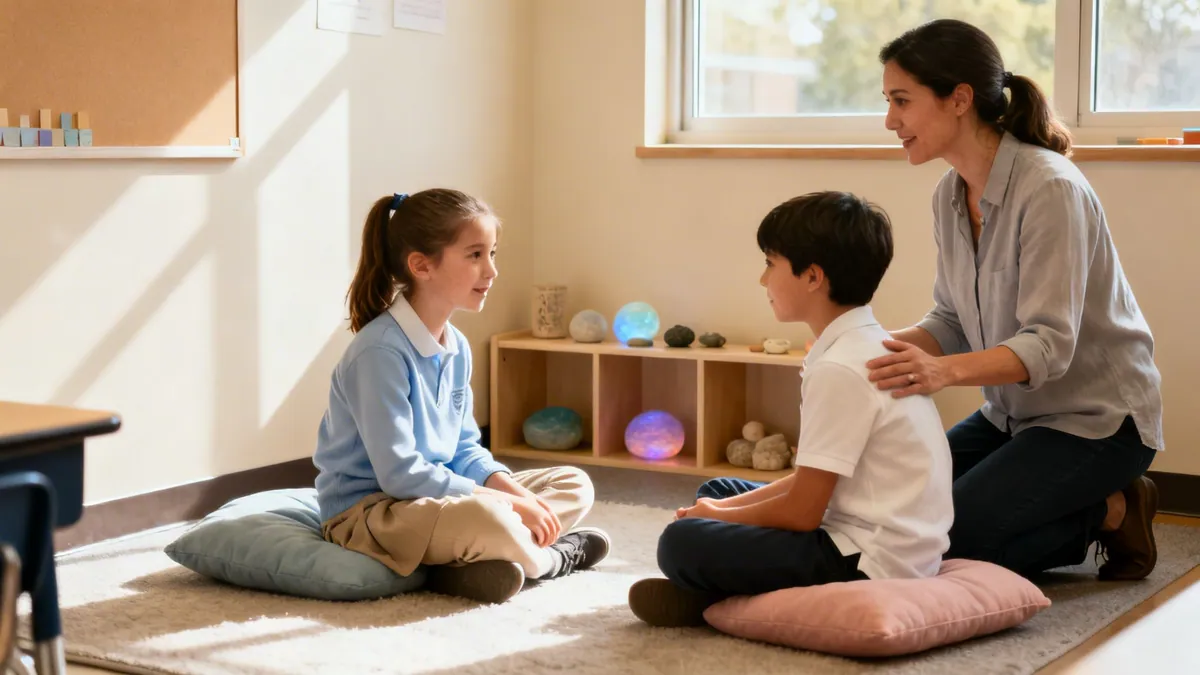
A “Peace Corner” is a specific spot in your classroom where students can go to cool down before they try to solve their problem. It’s not a punishment or a time-out chair. It’s a resource they can choose to use to regulate their emotions.
Stocking this space with the right tools empowers kids to take charge of their feelings.
Your Peace Corner might include:
A Feeling Faces Chart: A visual guide to help students put a name to their emotion.
Calming Tools: Things like stress balls, glitter jars, or a soft pillow.
Problem-Solving Steps: A simple, illustrated chart reminding them of the process.
“I-Statement” Prompt Cards: Sentence stems printed out to guide their words.
When a disagreement pops up, you can say, “It seems like you both need a minute. Why don’t you head to the Peace Corner, and when you’re ready, you can use the talking stick to share your feelings?” This teaches them to take ownership of the process.
How Parents Can Foster Resolution Skills at Home
The school bell doesn’t signal the end of learning for the day. A child’s first—and most important—classroom is the home, and parents are their most influential teachers. When you reinforce the same conflict resolution skills at home that your kids are learning at school, you create a powerful, consistent environment where these habits can truly stick.
This consistency is everything. When kids hear the same language, like “I-Statements,” and practice the same problem-solving steps in the living room and the classroom, the lessons become deeply ingrained. You’re building a bridge between school and home that gives your child a social-emotional foundation to last a lifetime.
Turn Sibling Squabbles into Teachable Moments
Sibling disagreements might feel like a headache, but they are the perfect low-stakes training ground for relationship conflict resolution. The next time a fight breaks out, try shifting your role from judge to coach. The goal isn’t just to stop the fighting, but to guide your children toward finding their own solution.
Think about the classic argument over the TV remote. Your first instinct might be to just take it away. Instead, what if you coached them through it?
Parent as a Coach Example:
Acknowledge Feelings: Start by simply noticing the emotions without placing blame. “Wow, it looks like you are both really frustrated about this remote.”
Guide I-Statements: Prompt each child to use the “I feel…” structure they’re learning. You could say, “Can you tell your sister how you feel when she grabs the remote? Try starting with, ‘I feel…'”
Encourage Listening: Make sure the other child is hearing them. “What did you hear your brother say? Can you tell me what he’s feeling right now?”
Brainstorm Solutions: Put the problem back in their hands. “Okay, this is our problem to solve together. What are a few fair ways we can decide who gets the remote next? Maybe you can use a timer, or each pick a show to watch.”
This approach gives them the power to fix their own problems. It turns a moment of frustration into a real-world lesson in empathy, communication, and collaboration.
Model Healthy Disagreements
Your kids are always watching. One of the most powerful ways to teach healthy conflict resolution is to simply let them see it in action in your own relationships. When you and your partner or another adult have a disagreement, it’s a chance to show them that conflict is normal and can be handled with respect.
You don’t need to be perfect; you just need to be real. Letting your kids see you work through a disagreement and come back together teaches them that conflict doesn’t have to break a connection—it can even make it stronger.
For example, let’s say you and your partner disagree on weekend plans. You can show them what a respectful conversation looks like. Instead of, “You never want to do what I want,” you could try, “I feel a little disappointed because I was really looking forward to the park. Can we talk about a plan that works for both of us?” This shows them how to share needs without blame.
Even seeing you apologize and reconnect after things get a little tense is a huge lesson in how to repair a relationship. You might say in front of them, “I’m sorry I got frustrated earlier. Let’s try talking about our plans again calmly.”
How Administrators Can Build a Conflict-Positive Culture
Tips for Effective Implementation
To make body language a successful active listening activity, concentrate on these intentional actions:
Position for Connection: Whenever possible, position yourself at the speaker’s eye level. This simple adjustment reduces perceived power dynamics and fosters a feeling of equality.
Mirror an Open Posture: Avoid crossing your arms, which can signal defensiveness. Instead, keep your posture open and lean in slightly to convey interest.
Use Mindful Gestures: Nodding shows you are following along, but do it naturally. Your facial expressions should reflect the emotional tone of the speaker’s message, showing empathy.
Eliminate Distractions: Put away your phone, turn away from your computer screen, and give the speaker your full physical presence. This is one of the clearest non-verbal signs that you are listening. Teaching children about reading social cues is a related skill that reinforces this practice.
6. Active Listening Circles (Talking Piece Protocol)
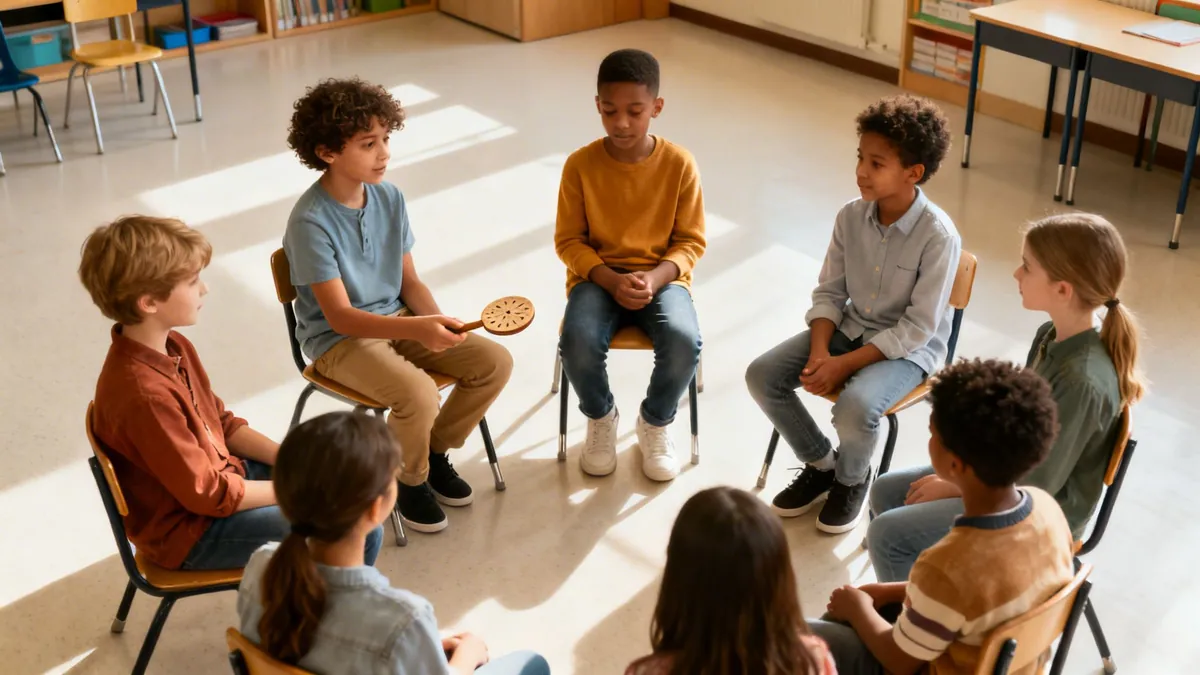
Active listening circles, also known as the talking piece protocol, are structured group activities where participants take turns speaking without interruption. While sitting in a circle, a designated object (the “talking piece”) is passed from person to person, and only the individual holding the piece is allowed to speak. This ancient practice, with roots in Indigenous peacemaking traditions, fosters equitable participation and teaches students to listen deeply to all voices, not just those they usually agree with.
This method is a powerful active listening activity because it slows down conversation and creates a safe, predictable space for sharing. By ensuring every student gets an uninterrupted turn, it helps build a strong classroom community, elevates quieter voices, and provides a structured format for addressing group challenges. It is a core component of restorative practices in schools, promoting empathy and collective problem-solving.
How to Use Active Listening Circles
Gather your group in a circle where everyone can see each other. Introduce the talking piece and explain the three core rules: only the person holding the piece may speak, everyone else listens respectfully, and you have the right to pass if you don’t wish to share.
Key Insight: The circle’s power comes from its structure. The talking piece isn’t just a tool to manage turns; it’s a symbol of respect for each person’s voice and a physical reminder for others to focus on listening.
Classroom Example:
Topic: “Share one ‘high’ and one ‘low’ from your weekend.”
Teacher: (Holding a small decorated stone) “I’ll start. My high was seeing a beautiful sunset on my walk, and my low was spilling coffee on my favorite shirt. I’ll now pass the talking piece to my left. Remember, you can pass if you’d like.” The stone is then passed to the next student, who shares while all others listen.
Home Example:
Topic: “What’s one thing our family could do to be kinder to each other this week?”
Parent: (Holding a favorite seashell) “I think we could all put our phones away during dinner so we can connect more. I’m passing this to you now. What are your thoughts?” The shell is passed to a child, who is given the floor to speak without being interrupted.
Tips for Effective Implementation
To ensure your listening circle is a successful active listening activity, pay attention to the setup and facilitation:
Start with Low Stakes: Begin with simple, fun topics like “favorite superpower” or “what made you smile today” to build comfort and familiarity with the process.
Set Time Guidelines: For larger groups, suggest a gentle time limit (e.g., 1-2 minutes per person) to ensure everyone gets a turn and the activity stays focused.
Establish the Right to Pass: Explicitly state that anyone can pass their turn without giving a reason. This creates psychological safety and removes pressure.
Debrief the Process: After the circle, ask students reflective questions: “What did you notice about your listening when you couldn’t interrupt?” or “How did it feel to share without being cut off?”
7. Empathy Mapping and Perspective-Taking
Empathy mapping is a structured exercise where listeners visualize another person’s experience by considering what they see, hear, think, feel, say, and do. This technique moves beyond surface-level listening to a deeper understanding of someone’s internal world. It makes empathy tangible by asking us to step into another person’s shoes and consider their reality from multiple angles.
Popularized by innovators like Dave Gray and supported by the empathy research of Brené Brown, this powerful active listening activity helps students and adults alike move from sympathy (“I feel sorry for you”) to empathy (“I can understand what you’re feeling”). It builds a crucial foundation for conflict resolution, peer support, and creating an inclusive community.
How to Use Empathy Mapping
The core of this activity is filling out a four-quadrant map (or six, in some versions) focused on another person’s experience. This can be done individually or in groups after listening to someone’s story or reading about a character.
Key Insight: The goal is to separate observation from inference. By mapping what someone says and does versus what they might think and feel, participants learn to look beyond outward behavior to understand underlying motivations and emotions.
Classroom Example:
Scenario: A student is withdrawn and snaps at classmates who try to talk to them. The teacher leads the class in creating an empathy map to understand the student’s perspective without judgment.
Teacher: “Let’s think about what our classmate might be experiencing. What might they be thinking when they’re alone? What could they be feeling that makes them seem angry?” This shifts the focus from blame to understanding.
Home Example:
Scenario: A child is struggling to understand why their friend is ignoring them.
Parent: “Let’s make a map for your friend. What do you think they saw or heard that might have upset them? What might they be thinking about right now, even if they aren’t saying it?”
Tips for Effective Implementation
To make empathy mapping a successful active listening activity, consider these practical steps:
Start with Fictional Characters: Begin with characters from books or historical figures. This provides a safe, low-stakes way to practice before applying the skill to real-life peer conflicts.
Use Visuals: Draw the map on a whiteboard or large paper. Using different colors for each quadrant and allowing for drawings makes the process more engaging for visual learners.
Ask Guiding Questions: Prompt deeper thought with questions like, “What challenges might they be facing that we can’t see?” or “What worries might be keeping them up at night?”
Connect to Real Listening: Combine empathy mapping with real conversations. After a student shares a problem, have the listeners create a map to check their understanding. You can find more ideas in these perspective-taking activities.
8. Peer Tutoring and Teach-Back Method
The teach-back method is an active listening activity where the listener demonstrates understanding by explaining what they heard back to the speaker or to another person. It shifts listening from a passive act to an active one, requiring the listener to process, synthesize, and articulate information. When used for peer tutoring, this technique creates a powerful learning cycle that benefits both students. The “teacher” deepens their own comprehension, while the “learner” receives confirmation that their message was accurately received.
This method, with theoretical support from Vygotsky’s work on peer learning and Spencer Kagan’s cooperative learning structures, is highly effective in K-8 settings. It turns listening into a tangible and accountable skill, strengthening both academic retention and social-emotional competencies like empathy and clear communication.
How to Use the Teach-Back Method
The core idea is simple: after one person speaks or explains something, the other person’s job is to “teach it back” in their own words. This can be done in pairs, small groups, or even as a whole-class check for understanding.
Key Insight: The focus is on demonstrating comprehension, not on perfect recitation. The goal is to prove you listened well enough to explain the main idea, which is a much higher-level skill than simply remembering words.
Classroom Example:
Context: After a mini-lesson on the water cycle, the teacher puts students in pairs.
Teacher: “Turn to your partner. Partner A, you have one minute to explain the process of evaporation. Partner B, your job is to listen carefully.”
After 1 minute: “Okay, now Partner B, teach back to Partner A what you heard them say about evaporation. Start with, ‘What I heard you say was…'”
Home Example:
Context: A child is explaining the complicated rules of a new video game they want to play.
Child: “First you have to collect three power crystals, but you can’t get the red one until you beat the mini-boss in the forest, and he’s weak to ice attacks…”
Parent: “Okay, let me see if I’ve got this. So the first step is to find three power crystals. To get the red crystal, I have to go to the forest and defeat a specific enemy using an ice attack. Did I understand that correctly?”
Tips for Effective Implementation
To make the teach-back method a successful active listening activity, consider these practical steps:
Use Sentence Stems: Provide students with sentence starters to reduce anxiety and structure their responses. Phrases like, “My partner shared that…” or “What I understood was…” are great scaffolds.
Normalize Mistakes: Frame teach-back errors as learning opportunities, not failures. If a student misinterprets something, the original speaker can clarify, strengthening both of their skills.
Start Small: Begin with paired teach-backs before asking students to share with the whole class. This builds confidence in a lower-stakes environment.
Create Strategic Pairings: Pair students thoughtfully. Sometimes pairing a stronger student with one who needs support is beneficial, while other times, pairing students of similar abilities can foster a sense of shared discovery.
Celebrate Good Listening: When you see a student effectively teach back what their partner said, praise their listening skills explicitly. Say, “That was excellent listening. You really understood what she was explaining.”
Comparison of 8 Active Listening Activities
Technique
Implementation complexity
Resource requirements
Expected outcomes
Ideal use cases
Key advantages
Reflective Listening (Paraphrasing)
Low–Moderate; practice to sound natural
Minimal; brief training and practice time
Fewer misunderstandings; increased trust and clarity
Immediate feedback, deepens learning, builds confidence and accountability
Putting It All Together: Creating a Culture of Listening
The journey from a noisy classroom to a community of engaged listeners is built one interaction at a time. The activities outlined in this article, from Reflective Listening to the Peer Tutoring and Teach-Back Method, are more than just isolated exercises. They are the essential building blocks for creating a culture where feeling heard is the norm, not the exception. Integrating even one new active listening activity per week can begin to shift the dynamic in your classroom or home, fostering deeper connections and a stronger sense of belonging.
The true power of these techniques lies in their cumulative effect. When a child learns to paraphrase a peer’s feelings in an Active Listening Circle, they are not just completing a task; they are practicing the empathy needed to resolve a future conflict on the playground. When a student uses clarifying questions during a peer tutoring session, they are developing the critical thinking skills required to understand complex academic material and diverse perspectives. These are not soft skills; they are foundational life skills that directly support academic achievement and emotional well-being.
From Individual Activities to Daily Habits
To make listening a core value, it’s crucial to move beyond scheduled activities and weave these practices into the fabric of daily life. The goal is to create a shared language and a set of common expectations around communication.
Model the Behavior: The most powerful tool you have is your own example. When a child is upset, get down on their level, use Silent Listening to give them space, and then paraphrase what you heard: “It sounds like you felt really frustrated when your tower fell down.” This demonstrates respect and shows them what empathetic listening looks like in action.
Create Visual Reminders: Post anchor charts with sentence stems for clarifying questions (“Can you tell me more about…?”) or paraphrasing (“So, what you’re saying is…”). These visual cues support students, especially younger ones, as they internalize these new habits.
Celebrate the Effort: Acknowledge and praise students when you see them actively listening. A simple comment like, “Michael, I noticed you were looking right at Sarah while she was speaking and waited for her to finish. That was great listening,” reinforces the desired behavior far more effectively than correcting poor listening.
The Long-Term Impact of True Listening
Implementing a consistent active listening activity program does more than just quiet a room. It equips children with the tools to navigate a complex world with compassion and confidence. Students who feel heard are more likely to engage in learning, take healthy risks, and see themselves as valued members of a community. They learn that their voice matters and, just as importantly, that the voices of others matter, too.
A classroom culture rooted in active listening becomes a place where curiosity thrives over judgment, and connection is valued over correctness. Children learn that understanding someone is a more powerful goal than simply winning an argument.
By prioritizing these skills, you are making a direct investment in preventing bullying, reducing classroom conflicts, and building the social-emotional resilience every child needs to succeed. You are teaching them how to build and maintain healthy relationships, a skill that will serve them throughout their academic careers and far into adulthood. The quiet confidence that comes from knowing how to truly listen and be heard is one of the greatest gifts you can give a child.
Ready to take the next step and bring a comprehensive, school-wide listening culture to your community? Soul Shoppe provides dynamic programs and proven strategies that empower students with the social-emotional tools they need to thrive, with a core focus on the power of an active listening activity. Visit Soul Shoppe to see how their on-site and virtual programs can help you build a safer, more connected school environment.
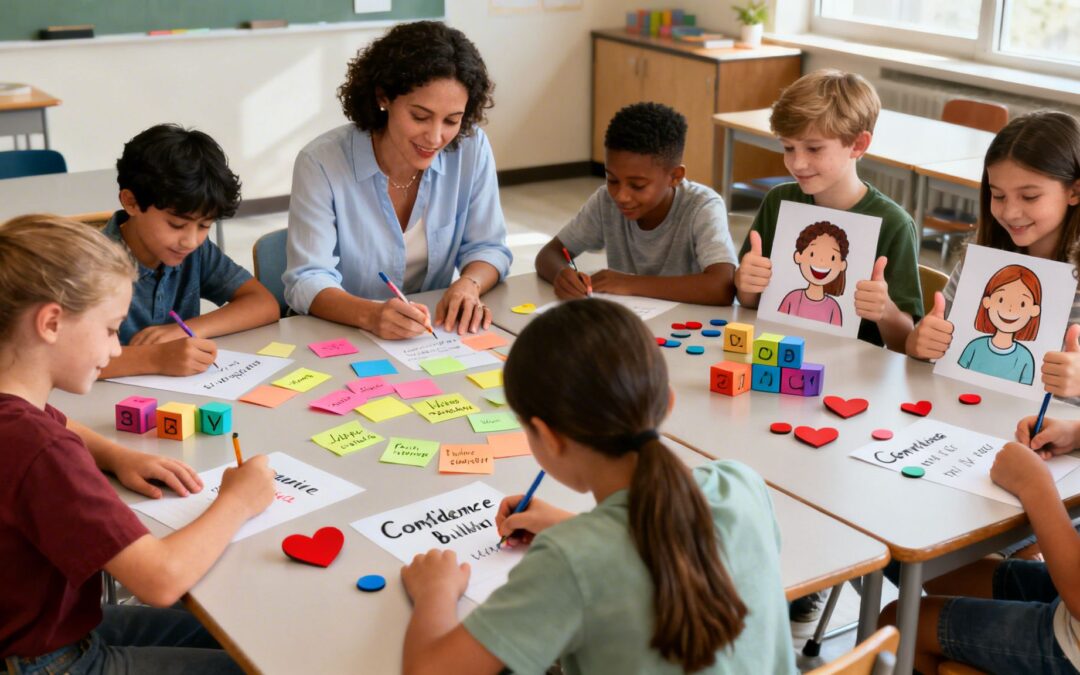
True self-esteem isn’t just about feeling good; it’s the foundation for resilience, academic risk-taking, and healthy peer relationships. In an increasingly complex world, students in kindergarten through eighth grade need more than just academic knowledge. They need a strong sense of self-worth to navigate challenges and thrive both in and out of the classroom. This article moves beyond generic praise to provide a comprehensive roundup of 10 practical, research-informed building self esteem activities that parents and teachers can implement immediately.
Drawing from key social-emotional learning (SEL) principles, we’ll explore structured exercises designed for school and home. Each item includes step-by-step instructions, materials lists, differentiation tips, and alignment to SEL competencies. This isn’t just a list; it’s a toolkit for creating environments where every child can build the confidence to succeed. For students embarking on new journeys, engaging in rewarding activities like choosing martial arts for beginners can significantly boost fitness, confidence, and self-defense skills, proving invaluable to their personal development.
From mindfulness practices and strengths identification to peer connection exercises and goal-setting frameworks, you will find actionable strategies tailored for K-8 students. Our goal is to equip educators and families with the tools to foster genuine confidence, one activity at a time. Let’s get started.
1. Mindfulness and Self-Regulation Practice
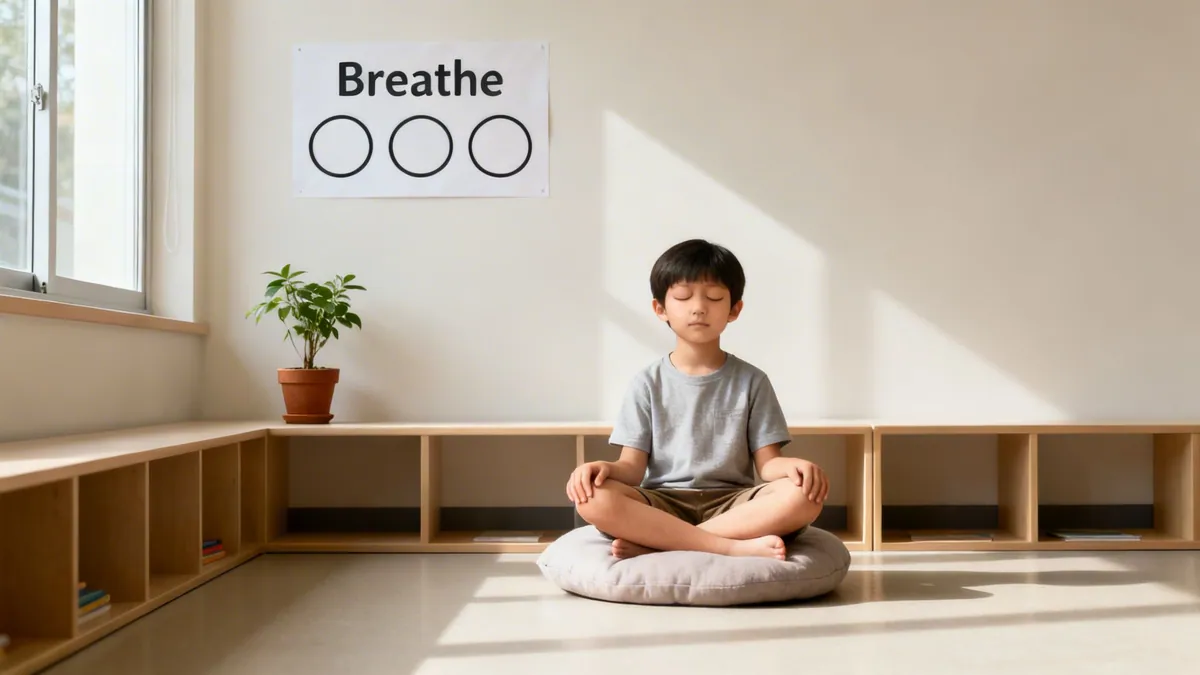
Structured mindfulness exercises offer a direct pathway to improved self-esteem by teaching students to observe their thoughts and emotions without judgment. This practice helps children and adolescents understand that feelings are temporary and do not define their worth. Through guided breathing, body scans, and focused attention, students learn to quiet external and internal noise, creating a sense of calm and control. This foundational ability to self-regulate is a critical component of building self esteem activities, as it gives students confidence in their capacity to handle stress and navigate challenges.
Implementation Examples
School-Wide: A school assembly run by a group like Soul Shoppe can introduce core mindfulness concepts to the entire student body, creating a shared language and experience.
Classroom Routine: A second-grade teacher can start each day with a 3-minute “breathing buddy” activity, where students place a small stuffed animal on their belly and watch it rise and fall with each breath. Before a test, a teacher can lead a 1-minute “squeeze and release” exercise, where students tense and relax their hands and feet to release anxiety.
Small-Group Support: A school counselor can lead weekly sessions for students with anxiety, using body scan meditations to help them identify and release physical tension. For example, guiding them to notice the feeling of their feet on the floor, the chair supporting their back, and the air on their skin.
Home Connection: A parent can create a “calm-down corner” with a comfy pillow and a jar of glitter. When a child feels overwhelmed, they can shake the glitter jar and watch the sparkles settle, mimicking how their busy thoughts can settle.
Actionable Tips for Success
To make mindfulness effective, consistency and a supportive environment are key. Start with very short sessions, especially for younger students (3-5 minutes is ideal), and gradually increase the duration. It is important for adults to model the practice themselves; teachers and parents who practice mindfulness can more authentically guide students. Create a designated calm space with minimal distractions and use consistent verbal cues.
For more detailed guidance, discover our complete guide to teaching mindfulness to children and its benefits. This practice directly supports the Self-Awareness and Self-Management competencies of Social-Emotional Learning (SEL).
Self-soothing skills are powerful tools, but they have their limits. It’s just as important to teach a child how to calm down as it is to recognize when their distress is bigger than what a coping strategy can solve.
These techniques are designed to help a child through temporary, manageable upsets. They aren’t a fix for chronic anxiety, deep-seated sadness, or overwhelming emotional pain. Knowing the difference is a critical part of supporting them effectively.
So, how can you tell when a child has moved beyond needing a calming corner and requires more specialized help? There are several clear indicators to watch for.
Red Flags to Monitor
Keep an eye out for persistent shifts in a child’s behavior, mood, or school performance. We’re not talking about a few off days, but consistent patterns that don’t get better even when they use their go-to soothing strategies.
Here are a few key signs that a higher level of care might be needed:
Significant School Changes: This could be a sudden or steady drop in grades, a consistent refusal to go to school, or frequent complaints of feeling sick without any clear physical cause. Example: A student who used to love math now complains of stomachaches every day before math class.
Extreme Emotional Outbursts: Look for meltdowns or tantrums that are far more intense or frequent than what’s typical for their age. This is especially concerning if they involve aggression, self-harm, or destroying property. Example: A ten-year-old throws a chair when asked to do their homework, a behavior that is new and extreme.
Persistent Withdrawal: You might notice them regularly pulling away from friends, family, and activities they used to love. Maybe they’re spending a lot more time alone in their room and seem disconnected. Example: A usually social teen stops answering texts from friends and quits the soccer team without explanation.
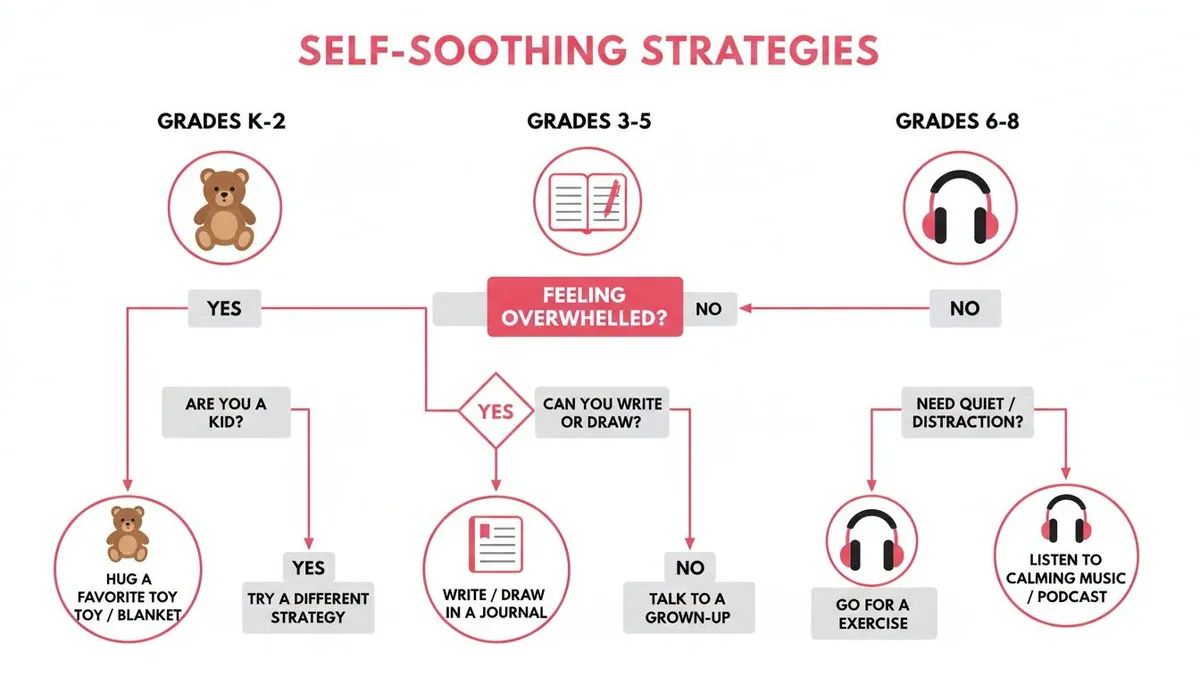
This decision tree infographic is a great starting point, outlining age-specific self-soothing strategies that can help you respond to a child’s needs.
Think of it as your first line of defense. The visual shows how to match techniques to a child’s developmental stage, but if you’ve tried these and things aren’t improving, it’s a clear signal to look further.
Reaching out for professional help is not a failure—it is a proactive and courageous act of care. It means you are expanding the child’s circle of support, bringing in partners who have specialized tools to help.
If you’re seeing these red flags, the first step is to document your observations. Make a few notes on the frequency, intensity, and context of the behavior.
Then, it’s time to start a conversation with the right people. At school, that might be the school counselor or psychologist. For parents, it’s about calmly sharing what you’ve noticed and suggesting you work together to find more support. You can also explore additional anxiety coping skills for kids to continue building out your toolkit.
Common Questions About Teaching Self-Soothing
As you start teaching and modeling self-soothing, it’s completely natural for questions to pop up. This is a nuanced skill, and every child’s journey will look a little different. Let’s walk through some of the most common questions we hear from parents and educators.
One of the first things everyone wants to know is, “How long will this take?” The honest answer is, there’s no set timeline. Self-soothing isn’t a single lesson you teach once; it’s an ongoing process. It takes a tremendous amount of patience and, more than anything, consistent modeling from the trusted adults in a child’s life.
What If My Child Resists?
Another big one we hear is, “What if my child refuses to use the calming corner?” Resistance like this is often a signal that the child needs more ownership of the space and the process.
This is a time to sidestep a power struggle. Instead, co-create the space and choose the tools with them. When a child has a hand in picking out that super-soft blanket or the perfect squishy stress ball, they’re much more likely to see it as their own helpful resource, not a time-out spot.
The goal is to build independence, not create another point of conflict. If a tool isn’t working, it’s not a failure on the child’s part. It’s simply a sign that you need to explore different strategies together.
Here are a few other common questions we get, along with some quick thoughts:
Can a middle schooler learn to self-soothe if they never have before? Absolutely. For older kids and tweens, you’ll want to focus on more mature strategies. Think about things like journaling, creating calming music playlists, or practicing positive self-talk. It is never too late to start building these essential life skills.
How do I balance letting my child self-soothe with giving them comfort? This is where co-regulation becomes your best friend. The process often starts with you soothing with them. For example, you might sit next to an upset child, rub their back, and do deep breaths with them. As you feel their body and breath start to calm, you can gradually step back a little, allowing them to take over by saying, “You’re doing a great job calming your body. Keep it up.” This teaches them they aren’t alone while building their own capacity for independence.
At Soul Shoppe, we believe that providing students with these essential emotional tools creates safer, more connected school communities. We have spent over 20 years developing research-based programs that empower children to manage their emotions and build empathy. Discover how our on-site and digital programs can support your students.
The ability to make thoughtful, responsible decisions is one of the most critical life skills we can teach our students. From simple choices like who to play with at recess to complex ethical dilemmas, decision-making muscles need regular exercise to grow strong. But how do we make this practice engaging, memorable, and effective for young learners? Traditional lectures and worksheets often fall short in creating a space for authentic practice.
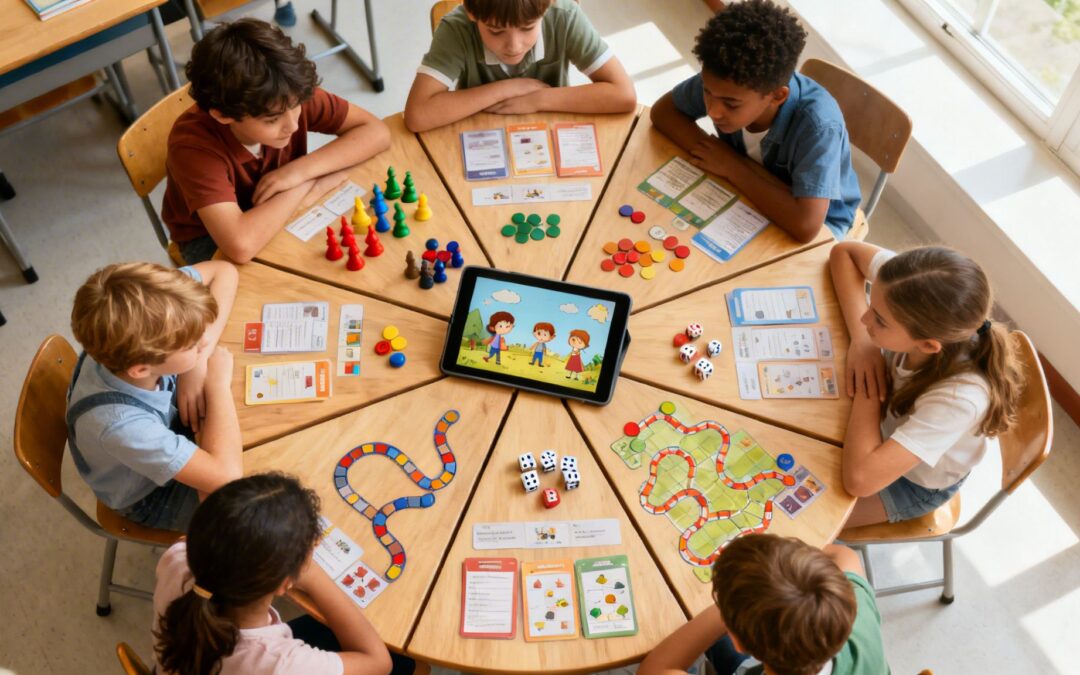
This article moves beyond those methods, offering a curated roundup of seven outstanding games for decision making designed specifically for K-8 learners. We have gathered a mix of digital simulations, cooperative board games, and interactive stories that empower students to weigh consequences, consider different perspectives, and build the confidence to choose wisely. For a deeper dive into integrating game elements into learning, explore the concept of applications like this example of successful gamification in education. The key is turning abstract concepts into tangible experiences.
For educators, parents, and program leaders looking for practical tools, this list provides everything you need to get started immediately. Each entry includes:
Step-by-step instructions and objectives
Age suitability and material lists
Targeted Social-Emotional Learning (SEL) skills
Debriefing questions to turn gameplay into lasting lessons
This guide is your direct path to finding and implementing powerful activities that help children practice making good choices in a low-stakes environment. Let’s explore how play can pave the way for creating powerful, independent decision-makers.
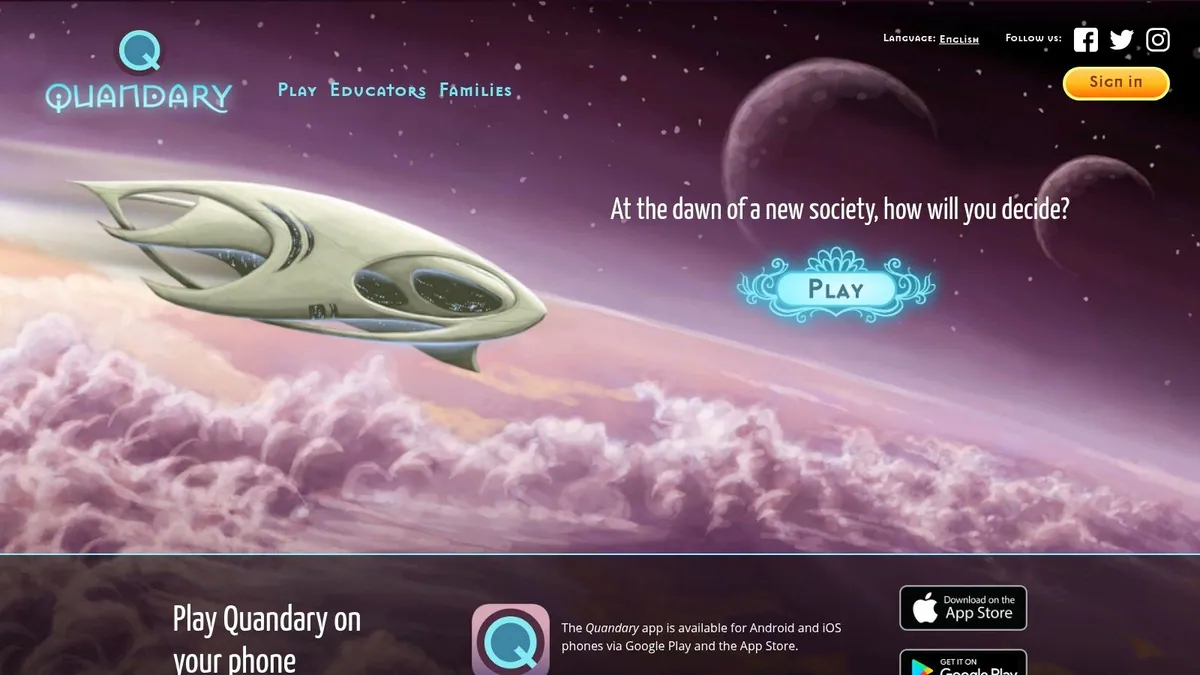
1. Quandary (Learning Games Network)
Quandary places students in the role of a colonist leader on the planet Braxos, where they must navigate complex ethical dilemmas with no clear right or wrong answers. This free, web-based game is a standout among games for decision making because it moves beyond simple “good vs. bad” choices. Instead, students are presented with conflicting needs and values from different colonists, forcing them to gather facts, listen to multiple perspectives, and justify their final decision.
The game’s strength lies in its design, which is grounded in educational research. Students show measurable gains in skills like differentiating fact from opinion and considering different viewpoints. The platform supports these learning goals with a suite of classroom materials, including lesson plans and discussion guides, making it simple for educators to integrate into their curriculum.
Key Features & Implementation
Objective: Develop ethical reasoning, perspective-taking, and problem-solving skills by analyzing complex situations and their consequences.
Time & Materials: 30-45 minutes per episode. Requires a computer or tablet with internet access.
Age/Grade Suitability: Grades 4–8 (Ages 9–14).
SEL Competencies: Responsible Decision-Making, Social Awareness.
Practical Classroom Example
A teacher can use a Quandary scenario to introduce a unit on community or resource management. In the “Water Wars” episode, colonists argue over limited water supplies. The teacher can set up small groups and instruct them to play through the episode, taking notes on the opinions of each colonist. Afterward, each group must present their final decision to the “Colony Council” (the rest of the class) and justify their choice. The teacher can then ask the class: “Which solution seems most fair? Who is helped by this decision, and who is harmed?” This transforms the game into a lesson on civic responsibility and compromise.
Differentiations & Tips
For Struggling Readers: Use the game’s text-to-speech feature or have students work in mixed-ability pairs where one student reads aloud.
For Advanced Learners: Challenge them with the “Build Your Own Quandary” tool. Students can create their own ethical dilemmas based on classroom conflicts, school-wide issues, or current events.
Tip for Engagement: Frame the activity as a “Colony Council” meeting. Assign students roles (like Fact-Checker, Empathy Officer) to encourage active participation during the discussion phase.
Why It’s a Top Pick: Quandary is completely free, nonviolent, and backed by research from institutions like MIT. Its focus on nuanced ethical challenges without a single “correct” path makes it an exceptional tool for building mature decision-making capacity.
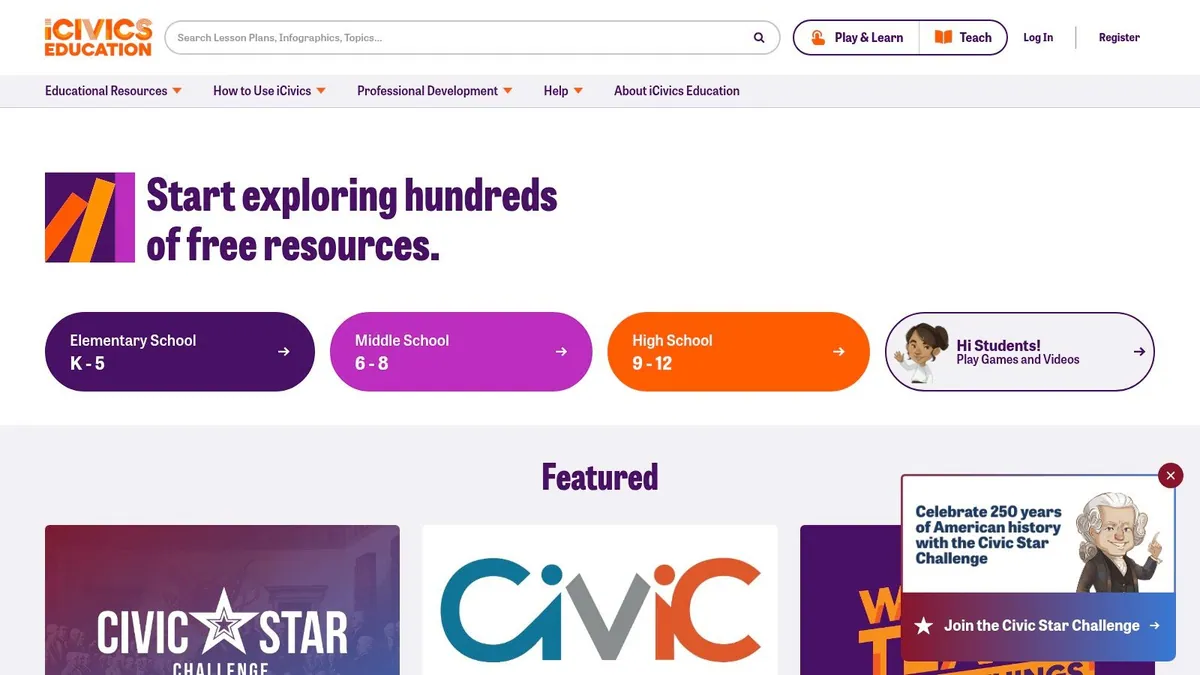
iCivics offers a free, standards-aligned library of civics games that are exceptional at building practical decision-making skills. Students step into roles like a judge, a president, or a community advocate, where they must use evidence to make choices with real consequences. These games excel because they frame decisions not as abstract ethical problems but as concrete actions within a system, teaching students to weigh trade-offs, consider different stakeholder needs, and justify their positions.
The platform’s major advantage is its direct classroom applicability. With over 20 games, each playable in 15–30 minutes, teachers can easily integrate them as warm-ups, lesson centerpieces, or assessments. Teacher accounts allow for assigning specific games and tracking student progress, while the nonpartisan content makes it a trusted resource in a wide range of school settings. This makes iCivics one of the best sources of games for decision making in social studies.
Key Features & Implementation
Objective: Develop evidence-based decision-making by analyzing information, understanding systems, and evaluating the impact of choices on different groups.
Time & Materials: 15–30 minutes per game. Requires a computer or tablet with internet access.
Age/Grade Suitability: Grades 5–8 (Ages 10–14), with some titles adaptable for grades 3–4.
SEL Competencies: Responsible Decision-Making, Social Awareness.
Practical Classroom Example
A parent wanting to discuss current events with their child could use the game Cast Your Vote. They can play together, choosing a political issue they’ve seen on the news. As they listen to the fictional candidates’ positions, the parent can ask, “Which candidate’s ideas sound more like our family’s values? Why?” After voting in the game, they can debrief: “The candidate you voted for won. What changes might we see in our community based on their platform?” This connects the abstract process of voting to tangible, real-world outcomes in a simple, engaging way.
Differentiations & Tips
For Struggling Students: Use the game’s built-in scaffolds and glossary. Start with simpler games like Cast Your Vote, which focuses on evaluating candidate platforms on a single issue.
For Advanced Learners: Challenge them with Branches of Power, where they must make laws by getting the legislative and executive branches to agree. This requires strategic thinking and compromise.
Tip for Engagement: Create a “Civic Challenge” leaderboard. Track which student groups can successfully pass a law in Branches of Power or win a case in Argument Wars, fostering a healthy sense of competition.
Why It’s a Top Pick: iCivics is a classroom-proven, completely free resource founded by Justice Sandra Day O’Connor. Its focus on systems-level thinking helps students understand that individual decisions are part of a larger interconnected structure, a critical concept for responsible citizenship.
3. Common Sense Education: Digital Passport & Digital Compass
Common Sense Education offers two powerful, game-based suites that address decision-making in the digital world: Digital Passport for younger students and Digital Compass for middle schoolers. These free, choose-your-path games are exceptional tools because they root abstract digital citizenship concepts in concrete, relatable scenarios. Students don’t just learn about cyberbullying or data privacy; they experience the consequences of their choices in a safe, simulated environment.
The platform stands out by creating age-appropriate narratives that resonate with students’ real-life online experiences. Instead of a single “right” answer, the games feature multiple pathways and endings based on student decisions, encouraging critical thinking and replay. Each module comes with scorecards and extensive educator resources, making it simple to connect gameplay to meaningful classroom discussions and SEL standards.
Key Features & Implementation
Objective: Practice safe, responsible, and ethical decision-making in digital contexts like social media, online communication, and media consumption.
Time & Materials: 15-30 minutes per module. Requires a computer or tablet with internet access.
Age/Grade Suitability: Digital Passport (Grades 3–5), Digital Compass (Grades 6–8).
SEL Competencies: Responsible Decision-Making, Relationship Skills, Self-Awareness.
Practical Classroom Example
To address online drama, a 7th-grade teacher could use the Digital Compass story “Friend-in-Law.” The main character must decide how to react when a friend posts an embarrassing photo of someone else. The teacher can have students play individually and then come together for a “think-pair-share” activity. Students first reflect on the choices they made and the outcomes. Then, in pairs, they discuss which decisions were most difficult. Finally, the teacher can ask the whole class: “What are some ways you could support a friend in this situation without making the drama worse?” This provides a direct, actionable strategy for navigating real-life online conflicts.
Differentiations & Tips
For Language Learners: Both platforms are available in Spanish. Use the provided vocabulary lists in the educator guides to pre-teach key terms.
For Advanced Learners: Challenge students to storyboard an alternate ending for a module. Have them write a script that shows a different set of decisions and consequences, reinforcing cause-and-effect reasoning.
Tip for Engagement: After completing a module, have students create “Digital Dilemma” posters for the classroom. Each poster can illustrate a key decision point from the game and offer three possible choices, serving as a constant visual reminder of good digital citizenship.
Why It’s a Top Pick: Common Sense Education provides these high-quality, standards-aligned games entirely for free. Their specific focus on digital life makes them an indispensable resource for preparing students to make sound judgments in the online spaces they inhabit every day. Note: These products are scheduled to be retired on June 30, 2026.
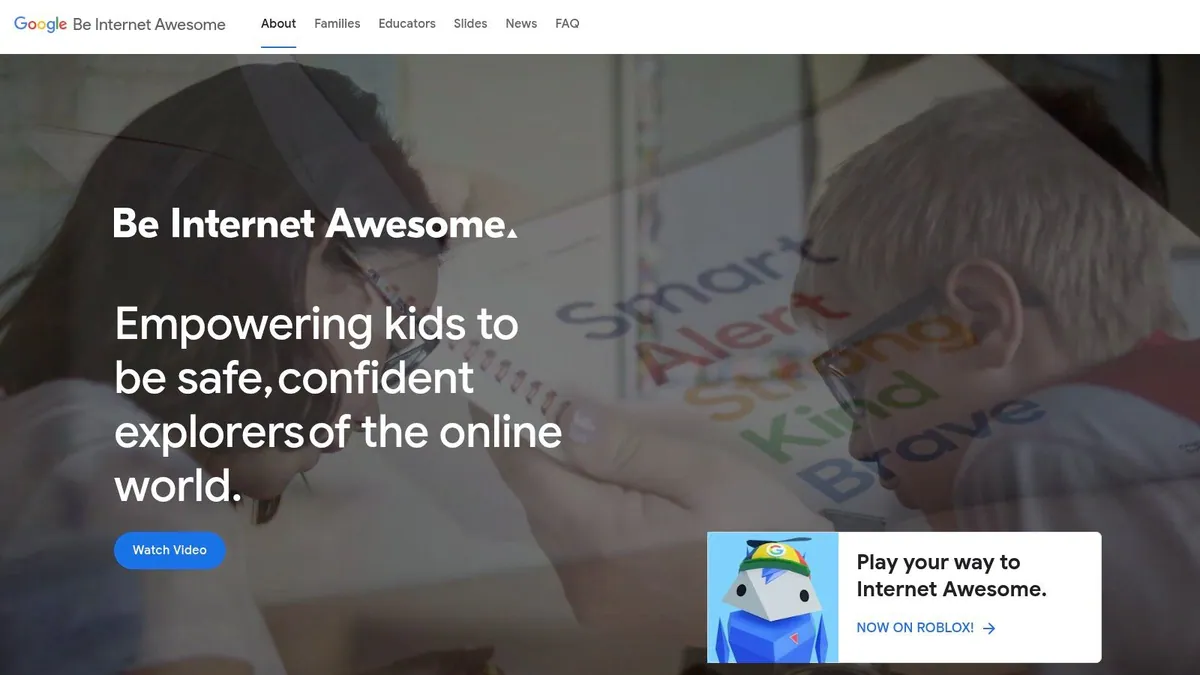
Interland, part of Google’s free Be Internet Awesome program, transforms digital citizenship into a vibrant, playable adventure. Students navigate four distinct game worlds, each designed to teach a core tenet of online safety. This platform is a powerful addition to games for decision making because it focuses on the split-second choices students face online, from identifying phishing scams to managing their digital footprint.
The game’s appeal is its simplicity and direct feedback. In “Reality River,” students must correctly answer questions to cross a river, learning to spot fake information. In “Kind Kingdom,” they spread kindness and block “bullies.” This immediate cause-and-effect gameplay makes abstract concepts like privacy and digital kindness tangible. The entire experience is supported by a full curriculum, educator toolkits, and family pledges, making it a well-rounded resource for any school.
Key Features & Implementation
Objective: Practice making safe and responsible decisions related to online privacy, cyberbullying, phishing, and password security.
Time & Materials: 15-25 minutes per mini-game. Requires a computer or tablet with internet access.
Age/Grade Suitability: Grades 3–6 (Ages 8–12).
SEL Competencies: Responsible Decision-Making, Relationship Skills.
Practical Classroom Example
A teacher in a computer lab can use Interland to teach about online scams. The teacher would direct all students to play “Reality River,” where they must decide if website links and emails are real or fake. After 10 minutes of gameplay, the teacher can pause the activity and ask students to share one “phish” they fell for. For example, a student might say, “I clicked the link for free game tokens.” The teacher can then ask the class, “What was the clue that this was a trick?” This group sharing session helps students learn from each other’s mistakes and collectively build a list of red flags to watch for online, which is a great use of guiding kids to build empathy in their digital interactions.
Differentiations & Tips
For Younger Students: Focus on one game at a time, such as “Kind Kingdom,” and have a whole-class discussion about being an “upstander” versus a “bystander” online.
For Advanced Learners: Challenge them to create their own “Internet Awesome” pledge for the classroom based on what they learned from all four games. They can present their pledges to the class.
Tip for Engagement: Host an “Interland Olympics.” Divide the class into teams and have them compete to successfully complete all four games. This adds a layer of friendly competition and encourages peer support.
Why It’s a Top Pick: Interland provides a non-threatening, game-based environment for tackling critical digital safety topics. It’s free, accessible, and backed by a comprehensive, ready-to-use curriculum that makes it easy for teachers to implement.
Mission US immerses students in major eras of American history, casting them as young people whose lives are shaped by historical events. These free, narrative-rich interactive games are exceptional tools for decision making, as they require players to navigate complex situations where choices have significant and lasting consequences. Unlike games focused on points or winning, Mission US prioritizes empathy and understanding historical context from a personal perspective.
The platform’s power comes from its deep research and extensive support materials. Each “mission” is accompanied by educator guides, primary source documents, and classroom activities that help teachers connect the game’s narrative to broader historical themes. By stepping into the shoes of characters like a young Jewish immigrant in 1907 New York or a Cheyenne boy during the Plains Wars, students gain a powerful, personal understanding of how decisions are influenced by one’s identity, community, and the world around them.
Key Features & Implementation
Objective: Develop historical empathy, critical thinking, and an understanding of cause and effect by making choices as a historical figure.
Time & Materials: 45-60 minutes per mission part (missions have multiple parts). Requires a computer with internet access.
Age/Grade Suitability: Grades 5–8 (Ages 10–14).
SEL Competencies: Social Awareness, Responsible Decision-Making, Self-Awareness.
Practical Classroom Example
During a unit on the American Revolution, a teacher can assign the mission “For Crown or Colony?” Students play as Nat, an apprentice in 1770 Boston, and must make decisions about whether to support the Loyalists or the Patriots. To bring the learning home, the teacher can pause the game after a key decision point—like whether to participate in a protest against a British merchant—and have students write a “journal entry” from Nat’s perspective. They must explain the choice they made and describe their fears and hopes about the consequences. This connects the historical event to the personal, emotional experience of making a high-stakes decision.
Differentiations & Tips
For Struggling Readers: The game includes full audio narration and a glossary of key terms. Teachers can have students play in pairs to support reading comprehension.
For Advanced Learners: Challenge them to analyze the primary source documents connected to the mission. Ask them to write a journal entry from their character’s perspective, justifying a key decision they made in the game using evidence from the documents.
Tip for Engagement: Before playing, use the “Setting the Stage” activities from the educator guide. These activities provide essential background knowledge and can include map work or vocabulary previews that make the game experience more meaningful.
Why It’s a Top Pick: Mission US is free, ad-free, and meticulously researched. Its ability to blend compelling storytelling with critical historical inquiry makes it a standout among games for decision making, offering a profound way for students to connect with the past on a personal level.
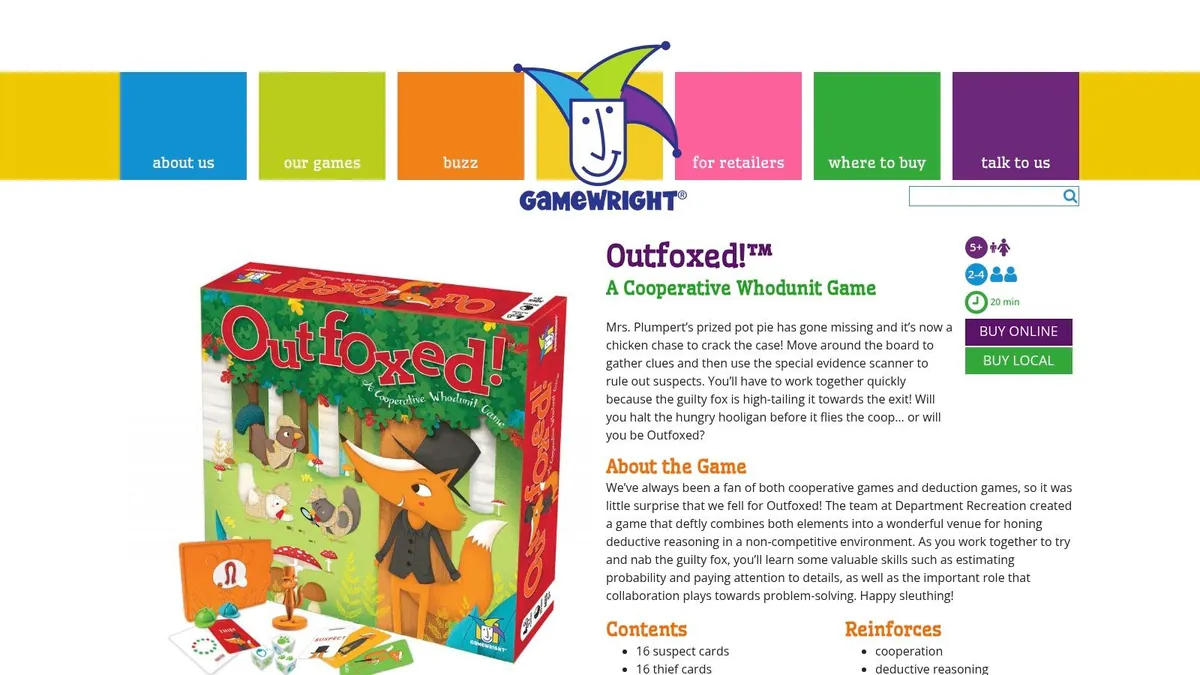
Outfoxed! is a cooperative whodunit board game where young players work together as chicken detectives to catch a wily fox who has stolen a pot pie. This game is a fantastic entry point into games for decision making, especially for early elementary students. Instead of competing, players share a common goal: gather clues and unmask the guilty fox before it escapes. The entire team wins or loses together, fostering a sense of shared responsibility.
The game’s core mechanic involves rolling dice to move around the board, searching for clues or revealing suspects. A special evidence scanner tool helps players check if a suspect is wearing the item seen in a clue (e.g., a top hat or a monocle). This process encourages logical elimination and requires players to make joint decisions about where to move next and which suspects to rule out. The visible consequences of their choices, with the fox moving closer to its escape route, create a gentle but engaging sense of urgency.
Key Features & Implementation
Objective: Develop deductive reasoning, teamwork, and collaborative problem-solving skills by gathering evidence and eliminating suspects.
Time & Materials: 15–20 minutes per game. Requires the Outfoxed! board game set.
SEL Competencies: Relationship Skills, Responsible Decision-Making.
Practical Classroom Example
A parent can use Outfoxed! for a family game night to teach collaboration. When it’s their child’s turn, instead of letting them decide alone, the parent can ask, “Okay team, we need to decide whether to look for a clue or reveal a suspect. What do you think is our best move right now and why?” If another player disagrees, the parent can guide the conversation: “That’s a different idea. Let’s talk about the pros and cons of both moves.” This models how to have a respectful discussion, weigh options as a group, and make a choice together—a skill directly applicable to sharing toys or deciding on a group activity with friends.
Differentiations & Tips
For Younger Players: Play with the suspect cards face-up to reduce the memory load and focus purely on the logic of elimination.
For Confident Players: Challenge them to explain their reasoning for each move. Ask, “Why do you think moving to that space is the best choice for our team?”
Tip for Engagement: Create a “Detective’s Log” on a small whiteboard. Each time the group eliminates a suspect, write their name down. This provides a visual record of their progress and reinforces their successful teamwork.
Why It’s a Top Pick:Outfoxed! masterfully teaches young children the fundamentals of group decision-making in a low-conflict, highly engaging format. Its cooperative nature makes it a perfect tool for building a positive classroom community where collaboration is celebrated.
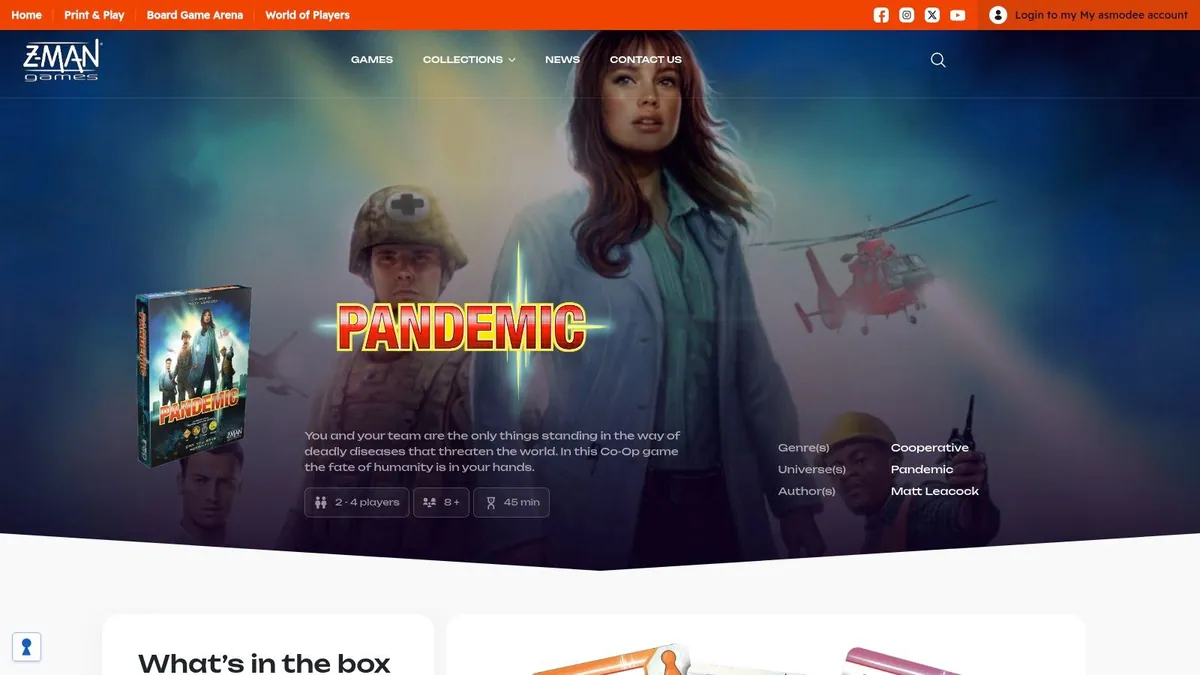
Pandemic is a cooperative board game that transforms players into a team of specialists racing against time to stop global disease outbreaks. Unlike competitive games, Pandemic requires players to work together, making it one of the most effective games for decision making in a collaborative context. Players must make strategic choices about where to go, what actions to take, and how to use their unique character abilities to manage crises and find cures before the world is overwhelmed.
The game’s core strength is its escalating tension, which forces players to communicate clearly and prioritize actions under pressure. The need to balance short-term containment with long-term research goals creates constant, meaningful trade-offs. Its high replayability and abundance of online “how-to-play” resources make it accessible for classroom clubs or family game nights, providing a tangible and exciting platform for practicing group problem-solving.
Key Features & Implementation
Objective: Develop collaborative problem-solving, strategic planning, and communication skills by making group decisions under time constraints.
Time & Materials: 45-60 minutes per game. Requires one copy of the board game per group of 2–4 players.
Age/Grade Suitability: Grades 5–8+ (Ages 10+).
SEL Competencies: Relationship Skills, Responsible Decision-Making.
Practical Classroom Example
A teacher can use Pandemic as a capstone activity for a unit on global systems or problem-solving. Divide the class into teams of four, assigning one copy of the game to each. The task is not just to win, but to document their decision-making process. The teacher can provide a simple worksheet where, on each turn, the group must write down: 1) The main problem they face, 2) The two options they considered, and 3) The reason for their final choice. For instance: “Problem: Outbreak in London. Option A: Medic flies to treat it. Option B: Scientist stays in Atlanta to trade a card. Choice: Medic flies because preventing a chain reaction is our top priority.” This makes the strategic thinking visible and serves as a basis for a post-game debrief on prioritization and teamwork.
Differentiations & Tips
For New Players: Play with fewer “Epidemic” cards in the deck to lower the initial difficulty. Keep player’s cards face-up so the group can openly discuss all possible moves.
For Advanced Learners: Encourage them to try different combinations of roles to see how it changes their strategy. Challenge them to win the game on a higher difficulty level by adding more Epidemic cards.
Tip for Engagement: Before starting, have each group create a “team name” (e.g., “The Cure Crusaders”). After the game, facilitate a debrief where teams discuss what went well, what they would do differently, and which player’s decision was a turning point.
Why It’s a Top Pick: Pandemic brilliantly simulates a high-stakes crisis where no single player can succeed alone. It provides immediate, concrete feedback on group decisions, making it an excellent tool for teaching the value of communication and coordinated strategy.
Low — simple cooperative board game with short sessions
Purchase per set, small-group play, ~20-minute setup and playtime
Deductive reasoning, teamwork, collaborative decision-making for young learners
Early elementary centers, after-school programs, family play
Cooperative, low-conflict, easy-to-learn for early elementary
Pandemic (Z-Man Games)
Moderate — rules and role strategy need orientation; time-intensive
Purchase per set, 45-minute sessions, 2–4 players per set (parallel sets for classes)
Strategic planning, role-based trade-offs, communication under time pressure
Upper elementary/middle school clubs, problem-solving lessons, longer class periods
Highly replayable, role differentiation, strong collaborative decision practice
Bringing It All Together: Turning Gameplay into Real-World Skills
Throughout this article, we’ve explored a powerful collection of games designed to build critical thinking and responsible decision-making skills in K–8 students. From the historical empathy of Mission US to the collaborative strategy required in Pandemic, each tool offers a unique avenue for learning. These are not just time-fillers; they are dynamic practice fields for life’s complex choices.
The true value of these games for decision making is unlocked when we, as educators and caregivers, guide students to connect in-game actions to their own lives. A choice made in Quandary about a new law on Planet Braxos can spark a conversation about fairness in the classroom. A misstep in Interland can lead to a meaningful discussion about online privacy and sharing information with friends.
Selecting the Right Game for Your Students
Choosing the perfect game depends entirely on your specific goals and your students’ needs. Your selection process should be as intentional as the lessons you plan to teach.
Consider these factors when deciding which game to introduce:
Learning Objective: Are you focusing on digital citizenship, ethical reasoning, or collaborative problem-solving? For digital citizenship, Digital Compass or Interland are excellent starting points. For complex ethical dilemmas, Quandary provides a rich, story-based environment.
Age and Developmental Stage: A game that challenges an eighth grader might overwhelm a third grader. Refer to the age recommendations for each game, but also use your own judgment. For younger students, a cooperative board game like Outfoxed! introduces basic deduction and teamwork in a tangible, low-stakes way.
Group Dynamics: Do you need an activity for individual practice, small group collaboration, or a whole-class experience? Digital games like iCivics can be great for individual or paired work, while board games like Pandemic are explicitly designed for small, cooperative groups.
Key Takeaway: The best game is not necessarily the most complex one. It’s the one that aligns with your specific SEL goals and meets your students where they are, providing a “just right” challenge that encourages growth without causing frustration.
From Play to Practice: The Power of Debriefing
Simply playing the game is only half the battle. The most crucial component for cementing learning is the post-game reflection. This is where you bridge the gap between the game world and the real world, helping students articulate what they learned and how they can apply it.
Without a structured debrief, the activity remains just a game. With a debrief, it becomes a powerful lesson in self-awareness, social awareness, and responsible decision-making. For example, after a session of Outfoxed!, a teacher could ask, “What clues did we miss? How can we communicate better next time to make sure we share all the information we have?” This directly ties to real-world collaboration on a group project.
Similarly, after playing a game from the iCivics library, a parent could ask their child, “The game showed how a new law affects different people. Can you think of a rule at home or at school that affects you and your friends differently?” This prompts them to see systems and consequences in their own environment. The debrief questions provided for each game in this listicle are your blueprint for these essential conversations. By consistently facilitating these discussions, you transform these games for decision making from isolated events into a foundational part of your students’ social-emotional development.
At Soul Shoppe we help schools build the environment these games need — safe, supportive, and consistent enough that students actually practise what they learn. See our K–6 programs, or try the Leadership Truth or Dare Game with your own group.