Prosocial behavior, which consists of actions intended to help others, is the bedrock of a kind, safe, and collaborative community. For parents and educators, fostering these skills is more critical than ever. It is about moving beyond simply telling children to 'be nice' and instead giving them a concrete toolkit for empathy, cooperation, and support. To begin cultivating a prosocial mindset, it is essential to understand the core principles of social responsibility and how individual actions contribute to the well-being of the group.
This guide provides a detailed look at ten powerful examples of prosocial behavior, offering practical, grade-appropriate strategies for K-8 students. We will break down not just what these behaviors are, but exactly how to teach, model, and reinforce them in various settings. You will find actionable takeaways for implementing peer support, conflict resolution, kindness campaigns, and more. The goal is to provide a clear roadmap for building connected, empathetic school cultures where children are equipped with the skills they need to thrive both socially and academically. From the classroom to the playground and into the community, these strategies are the building blocks for creating a more supportive environment for every child.
1. Active Listening and Empathetic Responding
Active listening is a foundational prosocial behavior where a person focuses entirely on what someone else is saying, rather than just waiting for their turn to speak. This practice involves paying attention to verbal and non-verbal cues, reflecting back what was heard to confirm understanding, and responding with empathy. It requires suspending judgment and validating the other person's feelings before offering solutions, creating a sense of psychological safety and belonging.
This skill is a cornerstone of positive social interaction and a powerful tool against isolation and conflict. When students learn to truly listen, they build stronger, more meaningful connections with their peers. This is one of the most powerful examples of prosocial behavior because it directly builds empathy and community.
Practical Applications and Tips
To put active listening into practice, educators and parents can model it and provide structured opportunities for children to learn.
Model the Behavior: During classroom discussions or family meetings, adults should demonstrate active listening by making eye contact, nodding, and paraphrasing what a child says. For example: "It sounds like you felt frustrated when your tower fell. Is that right?"
Use Sentence Starters: Provide scaffolding with phrases like, "What I hear you saying is…" or "It seems like you're feeling…" to help children structure their empathetic responses. For instance, have students practice this after a partner shares something about their weekend.
Practice with Role-Play: Use role-playing scenarios to give students a safe space to practice. A teacher can set up a scenario where one student pretends they lost their favorite pencil and the other student practices listening and responding with empathy. For a hands-on guide, check out this simple and effective active listening activity.
2. Peer Support and Buddy Systems
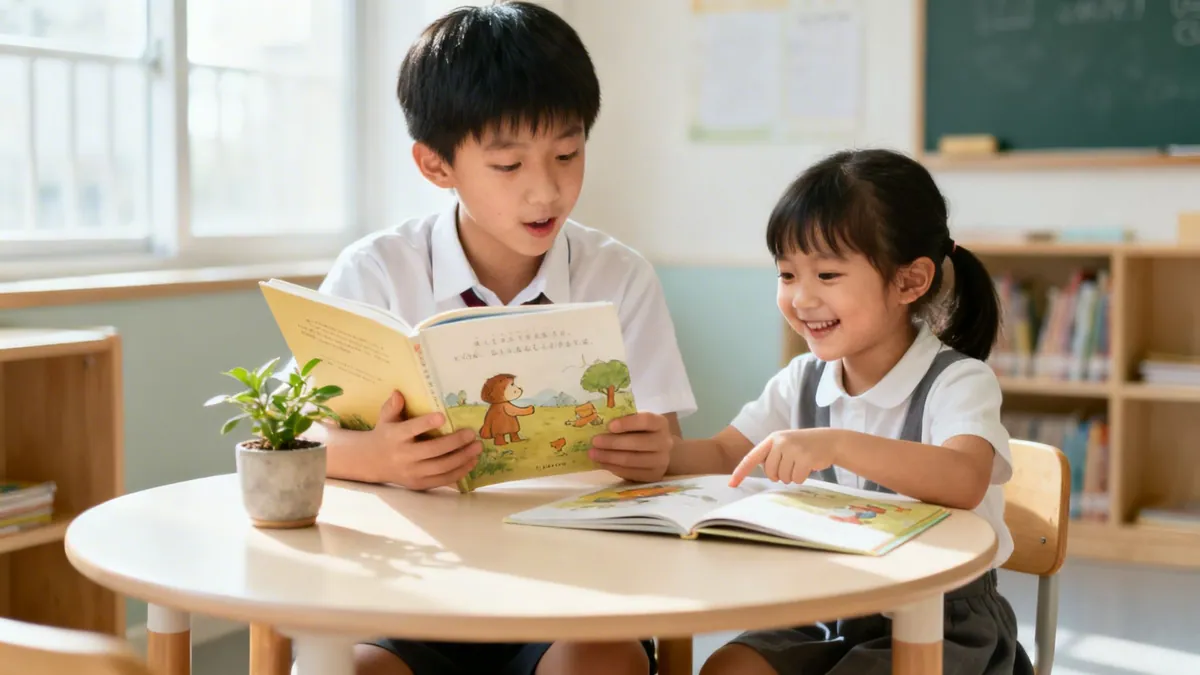
Structured peer support programs intentionally pair students to offer academic help, emotional encouragement, and social companionship. These buddy systems are a powerful way to connect isolated or struggling students with empathetic peers who can model positive behaviors and provide informal mentorship. This approach reduces student isolation, fosters a sense of belonging, and uses the strong influence of peer relationships for positive growth.
These programs formalize the act of helping one another, transforming it into a reliable school resource. By creating structured opportunities for students to connect, schools can build a more inclusive and supportive community. This is one of the most effective examples of prosocial behavior because it systematically builds social skills and a network of support for all students involved.
Practical Applications and Tips
To implement a successful buddy system, clear structure and training are essential for both students and supervising adults.
Define Clear Roles: Provide written guidelines that outline the purpose and expectations for all participants. For example, a "New Student Buddy" might be tasked with showing a new classmate around, sitting with them at lunch for the first week, and explaining classroom routines.
Train Your Buddies: Equip student volunteers with the necessary skills. Training should cover active listening, maintaining role boundaries, and knowing when to seek help from a trusted adult. For example, role-play a scenario where a buddy doesn't know the answer to a question and needs to ask a teacher for help.
Match for Success: Pair students based on compatible personalities and shared interests, not just academic standing. A good character fit is often more important for building a genuine connection than matching high-achievers with struggling students.
Schedule Regular Check-ins: A teacher can hold a 5-minute meeting with the buddy pair once a week to ask, "What's one good thing that happened this week?" and "Is there anything you need help with?" This helps address any challenges and reinforces the program's value.
3. Cooperative Learning and Collaborative Projects
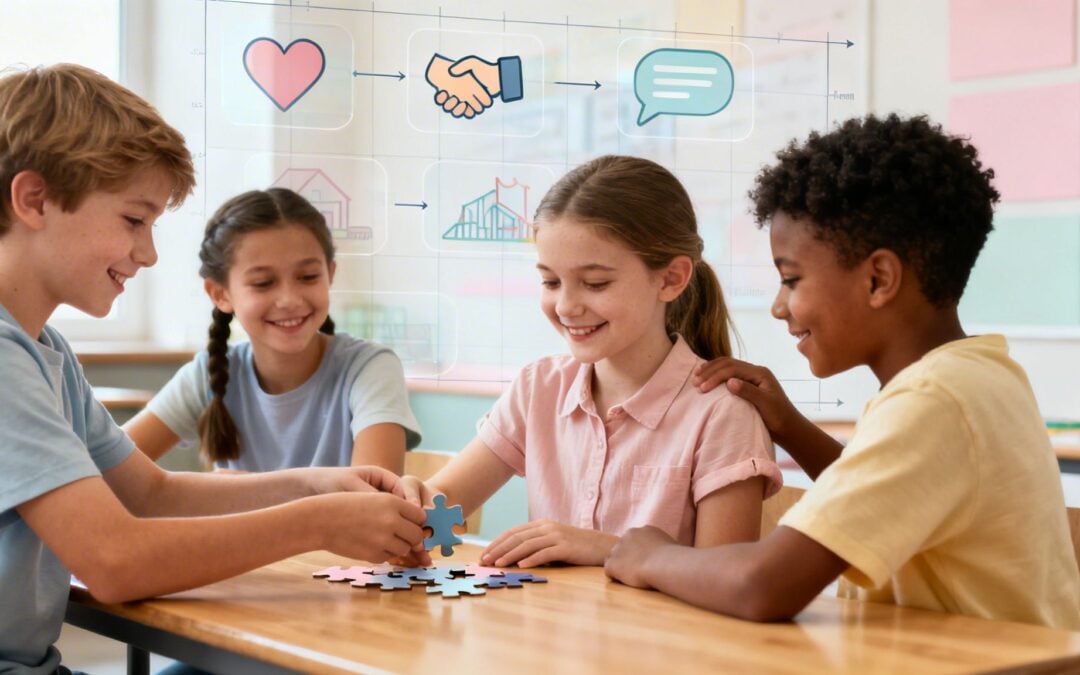
Cooperative learning moves beyond simple group work by structuring activities so students must rely on one another to succeed. This approach requires interdependence to achieve shared academic and social goals. By working together, students naturally develop empathy, perspective-taking, and mutual support as they navigate group dynamics, assign tasks based on strengths, and solve problems as a team.
This method is one of the most effective examples of prosocial behavior because it integrates social skill development directly into academic learning. When students see that their individual success is tied to the group's success, they become more motivated to help, listen to, and encourage their peers. This builds a classroom culture where collaboration is valued over competition.
Practical Applications and Tips
To successfully integrate cooperative projects, educators should intentionally teach and reinforce the necessary social skills alongside the academic content.
Assign and Rotate Roles: Structure group projects with specific roles like "Researcher," "Recorder," "Presenter," and "Materials Manager." For a history project, one student researches dates, another writes down the group's findings, a third manages the art supplies, and a fourth presents the final poster. Rotating these roles ensures every student develops different skills.
Use Structured Protocols: Implement strategies like "Jigsaw," where each student becomes an expert on one piece of information and then teaches it to their home group. For a science unit on planets, each student in a group could learn about a different planet and then teach the others, ensuring equal participation and individual accountability.
Build in Reflection Time: After a project, guide groups to discuss their collaborative process. A parent can do this at home after a family chore by asking, "What went well when we cleaned the kitchen together?" and "What could we do differently next time?"
Practice at Home: For students learning to work together, engaging in activities like playing the best cooperative board games or building a large LEGO creation together can be an excellent way to practice teamwork in a low-stakes, fun environment.
4. Kindness Campaigns and Recognition Programs
Kindness campaigns are organized school-wide initiatives that encourage, track, and celebrate acts of kindness. These programs use positive reinforcement and peer recognition to make prosocial behavior a visible and valued part of the school culture. By creating a system to highlight helpfulness, schools show students that these actions are both expected and appreciated.
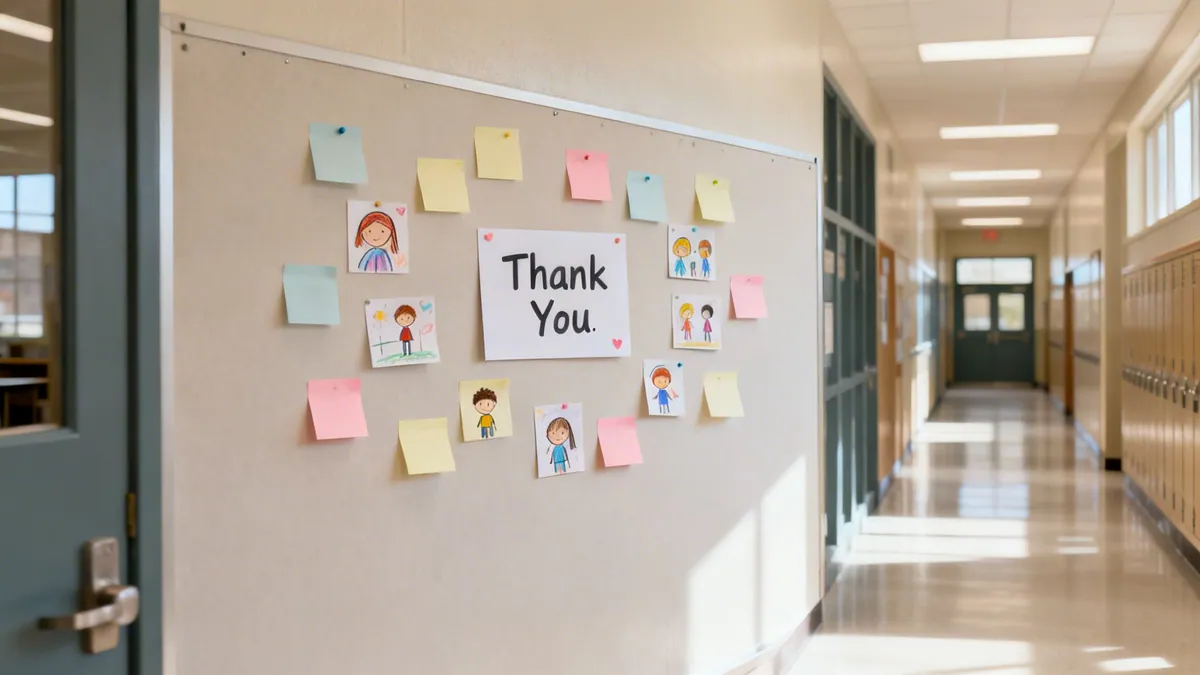
These programs make empathy and care tangible and public. Initiatives like a "kindness chain," where each link represents a kind act, or a gratitude wall for thank-you notes, provide visual proof of a caring community. These are powerful examples of prosocial behavior because they shift the school's focus toward positive actions, building a culture of mutual support and belonging.
Practical Applications and Tips
To implement a successful kindness campaign, the focus should be on accessibility, inclusion, and extending the practice beyond the school walls.
Define Kindness Broadly: Encourage students to notice quiet acts, not just grand gestures. For example, a student might be recognized for inviting someone to play at recess, offering help with a difficult math problem, or giving a genuine compliment.
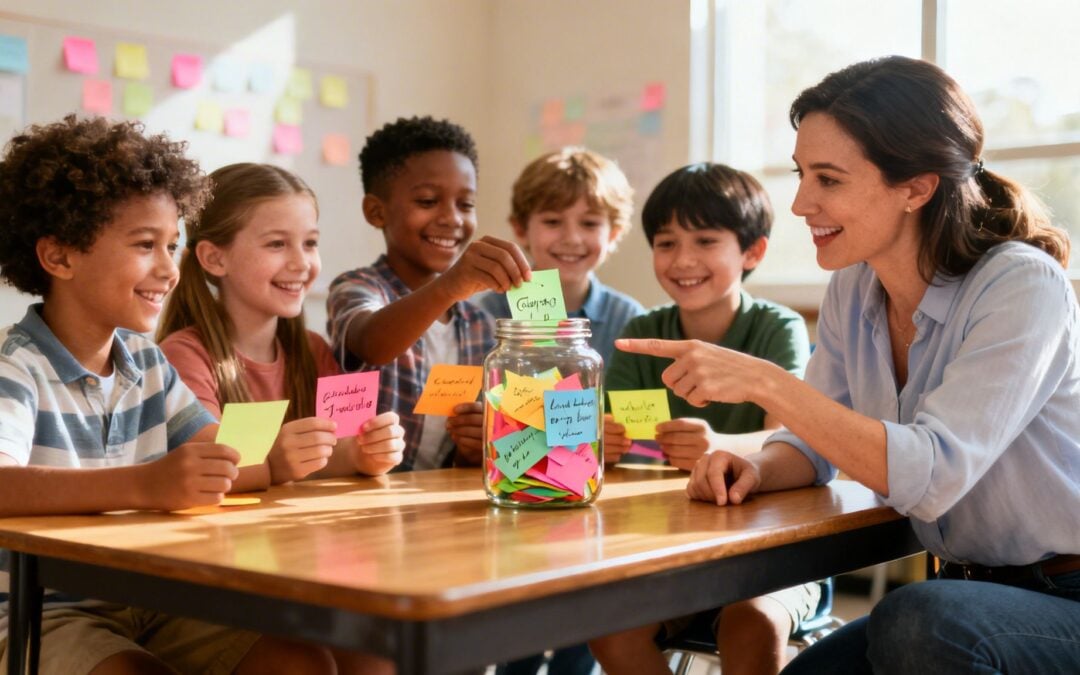
Create Simple Systems: Use low-barrier methods for recognition. A classroom "kindness jar" where students drop notes describing a kind act they witnessed is a great example. A "Kindness Rocks" project, where students paint positive messages on rocks and hide them around the playground for others to find, is another easy and engaging activity.
Connect to SEL: Tie the campaign directly to social-emotional learning competencies. For example, during a unit on social awareness, challenge students to notice and report acts of kindness they observe. At home, a parent could start a "Caught Being Kind" chart on the fridge.
5. Conflict Resolution and Restorative Practices
Conflict resolution and restorative practices shift the focus from punishment to accountability and healing. Instead of simply penalizing a student who caused harm, this approach brings together all affected parties to discuss the impact of the actions and collaboratively decide on a path to repair relationships. This structured method teaches students to understand the consequences of their behavior, take responsibility, and work together toward a positive resolution.
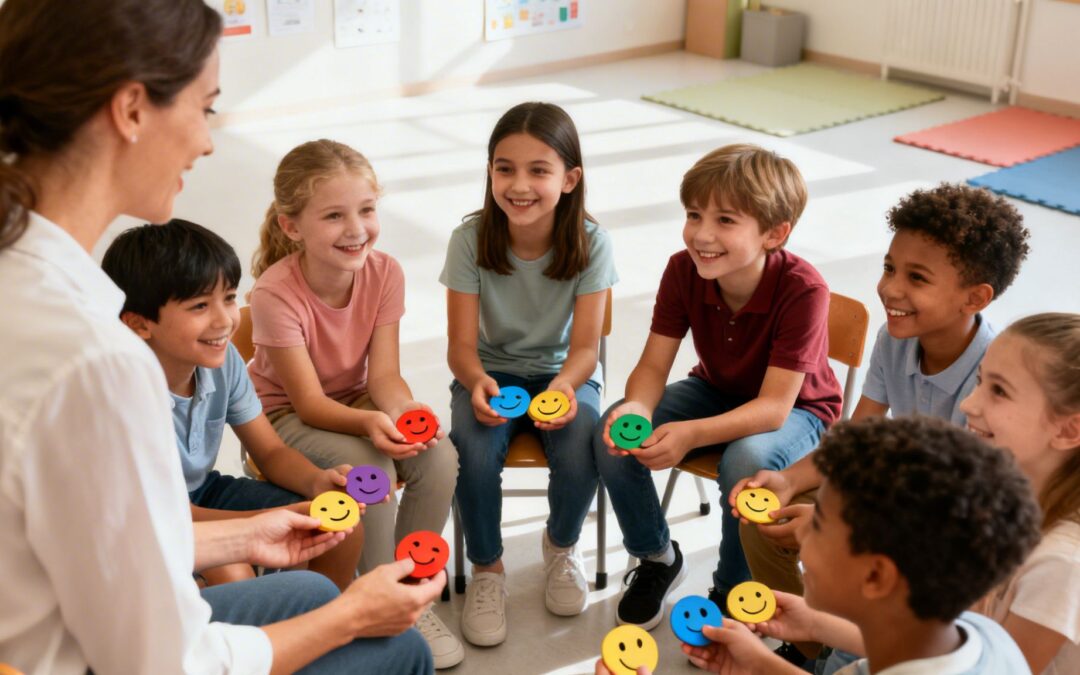
So you've introduced a feelings chart for kids, but it's not quite going as planned. Don't worry. Even with the best intentions, you might run into some resistance or see kids using it in ways you didn't expect.
These moments aren't failures—they're valuable feedback. When a child interacts with the chart in an unusual way, they're telling you something. Let's walk through some of the most common hurdles in classrooms and homes, and how to navigate them with confidence.
When a Child Always Stays on 'Happy'
It’s a classic scenario: a child who keeps their marker on "happy" day after day, even when their slumped shoulders or the situation itself tells a different story. It’s easy to get frustrated and think they aren't taking it seriously.
But often, this is a form of self-protection. For some kids, admitting to feeling sad, angry, or scared feels incredibly risky. They might worry about disappointing you, getting in trouble, or being seen as a "problem." Sticking with "happy" is the safest bet they can make.
The key here is to build trust without any pressure.
Acknowledge their choice. Start by validating what they've shared. "I see you're on 'happy' again today! It’s wonderful when we feel happy."
Create emotional safety. In a quiet, private moment, you could gently say, "I just want you to know, it’s safe to feel all your feelings here. It's okay to be sad or frustrated, too. We'll figure it out together."
Model your own vulnerability. Share your own emotional shifts. "My name is on 'calm' right now, but this morning I was feeling 'frustrated' because I couldn't find my keys anywhere."
The goal isn't to get them to pick another feeling. It's to reinforce that every emotion is okay and welcome in your space. When they truly believe that, the authentic sharing will follow.
Sometimes, a physical tool can make this process feel safer. Objects like Cuddle Kind handmade dolls can become a bridge, giving kids a way to act out and understand their feelings through play when words feel too hard.
When Older Kids Say It's 'Babyish'
As kids move into the upper elementary and middle school grades, a chart full of simple smiley faces can feel condescending. A 10-year-old wrestling with social anxiety isn't going to connect with a tool that looks like it was made for their little sister.
If you hear, "This is for babies," listen up. They're giving you crucial feedback. It's your cue to adapt the tool to meet them where they are. The idea of an emotional check-in is still vital, but the presentation needs to mature along with them.
Practical Adaptations for Older Kids:
Upgrade the Vocabulary: Swap the simple faces for a more sophisticated "Mood Meter." This can be a quadrant chart with an X-axis for "Energy" (low to high) and a Y-axis for "Pleasantness" (low to high). This opens up a world of nuanced words like serene, agitated, lethargic, or elated.
Introduce a Feelings Wheel: A detailed feelings wheel with dozens of specific emotions—from "insecure" and "betrayed" to "inspired" and "optimistic"—respects their growing intellect and emotional depth.
Go Digital: A simple Google Form or a dedicated check-in app can feel more private and age-appropriate for tech-savvy kids.
Use a Journal: Shift the focus to writing. Provide a journal with prompts like, "What was a high point and a low point of your day?" or "What's taking up the most space in your mind right now?"
The secret is to be flexible. By evolving your tools, you show older kids you respect their maturity. You're teaching them that emotional awareness isn't a lesson you outgrow—it's a skill you refine for life.
Frequently Asked Questions About Feelings Charts
As you start bringing a feelings chart for kids into your classroom or home, a few common questions always seem to pop up. It's one thing to have the tool, but it's another to use it in a way that truly clicks for your kids. Let's walk through some of those frequent questions with practical answers I've picked up over the years.
At What Age Can I Start Using a Feelings Chart?
You can start much earlier than most people realize—even with toddlers as young as two or three. The trick is to keep it super simple. A chart with just three or four basic emotions like happy, sad, and mad, shown with really clear, simple facial expressions, works perfectly.
The goal isn't deep emotional analysis; it's just about building that first layer of emotional vocabulary. You can make connections in the moment. If your toddler is giggling, you might say, “You’re laughing so much! That looks just like the ‘happy’ face on our chart.” As kids get into kindergarten and elementary school, you can slowly introduce a wider range of feelings like surprised, frustrated, and proud.
How Can a Feelings Chart Help with Hitting or Yelling?
This is a big one. A feelings chart works best as a teaching tool before and after a big behavior, not as a punishment during it. Big actions like hitting or yelling are often what happens when a child's feelings get too big for their words. The emotion spills out physically because they don't know what else to do with it.
Once everyone is calm after an incident, the chart becomes your bridge. You can use it to help them connect their action to the feeling that was underneath it all.
You could say, "When you threw the block, what was that big feeling inside you? Were you feeling angry?" Just giving the feeling a name is the first step toward helping them recognize their own triggers. Over time, you can start to intervene earlier: "I see your face looks like the 'frustrated' face. Let's take three big breaths before that feeling gets any bigger."
This doesn't excuse the behavior. It gets to the root cause and teaches the incredibly important skill of self-regulation.
What if My Child Only Ever Points to 'Happy'?
Don't panic—this is really common and it’s giving you important information. When a child always defaults to "happy," even when they clearly aren't, it’s often a sign that they don't feel completely safe expressing those "negative" emotions yet. They might be worried about getting in trouble or disappointing you.
Your job here is to build that emotional safety. First, validate what they showed you: "I see you're on 'happy' today." Then, later, in a quiet, low-pressure moment, you can open the door for more. "You know, it's always okay to feel other things here, too. It's safe to feel sad or angry with me."
How Do I Adapt a Feelings Chart for an Older Child?
It's almost a guarantee that a middle schooler will look at a chart with smiley faces and say it's "for little kids." And they're not wrong! To keep the concept useful, you have to level it up to meet them where they are. The idea of checking in on emotions is still vital, but the tool itself needs to mature.
Here are a few ways to make it work for older kids:
Use a Mood Meter: Instead of cartoon faces, try a quadrant-style "Mood Meter." It uses more sophisticated vocabulary like serene, agitated, or lethargic that respects their intelligence.
Introduce a Feelings Wheel: A detailed feelings wheel shows dozens of specific emotions, acknowledging the complex feelings they're starting to navigate.
Go Digital: A simple check-in app or even a shared private document can feel more appropriate and tech-friendly for this age group.
When you frame it as a tool for managing stress or improving focus—skills they know are important—it feels less like a kid's activity and more like a strategy for success.
At Soul Shoppe, we believe that giving children the tools to understand their emotions is foundational to building kinder, safer school communities. Our programs are designed to equip students, teachers, and parents with practical strategies for empathy and connection.
Explore our SEL programs and resources to bring these essential skills to your school or home: soulshoppe.org
In a world of constant distraction and pressure, how can we help young people build the emotional foundation for resilience, connection, and success? While academic skills are crucial, social-emotional learning (SEL) provides the bedrock for everything else. Gratitude isn't just about good manners; it's a powerful SEL practice that can reshape school culture, strengthen family bonds, and equip K-8 students with the tools to navigate life's challenges.
Research shows that consistent gratitude practices can increase happiness, improve mental health, and foster empathy. But how do we move beyond a simple 'thank you' and embed genuine appreciation into the daily lives of children? The key is to make it an active, visible, and consistent part of their world, both at school and at home. This requires more than just saying the words; it demands structured, intentional activities that make gratitude a habit. By focusing on specific ways to show gratitude, we can teach students to recognize the good in their lives and in others, which in turn builds a more positive and supportive community.
This comprehensive guide provides ten powerful and practical ways to cultivate gratitude, designed specifically for K-8 principals, teachers, and parents. Each strategy is backed by actionable steps, age-specific adaptations, and conversation starters. Drawing from over 20 years of SEL work by Soul Shoppe, these methods offer a clear roadmap to cultivate a thriving environment where every child feels seen, valued, and connected. From peer-to-peer appreciation circles to integrating gratitude into family routines, you will find concrete tools to build a lasting culture of thankfulness.
1. Gratitude Journaling in the Classroom
Gratitude journaling is a structured practice where students regularly write down things they are thankful for. This evidence-based social-emotional learning tool helps rewire the brain toward positivity, reduces anxiety, and builds emotional awareness. In a school setting, it creates a shared language around appreciation and belonging, making it particularly effective for K-8 students who are developing foundational emotional intelligence.
This practice is one of the simplest yet most powerful ways to show gratitude because it makes reflection a concrete, repeatable habit. The physical act of writing or drawing focuses a child's attention, moving appreciation from an abstract thought to a tangible expression. It gives students a private space to explore their feelings and recognize the good in their lives, from a sunny day to a friend's kind word.
How to Implement Gratitude Journaling
Make it a Ritual: Consistency is key. Dedicate a specific time, such as during morning meetings or the last five minutes of the day, for journaling. This predictability helps build a lasting habit. For example, a "Five-Minute Friday" write before dismissal allows students to end the week on a positive note.
Provide Structure and Flexibility: Offer sentence starters for younger students (K-2), such as "I'm grateful for… because…" or "Today, I felt happy when…". For older students, provide more open-ended prompts like, "Write about a challenge you're grateful for and what you learned from it." Allow students to express themselves through drawing, writing, or even creating a list of words.
Create a Shared Space (Optional): Establish a "Gratitude Wall" or a community jar where students can anonymously submit entries they wish to share. Reading these aloud can reinforce a culture of appreciation and show students they are part of a grateful community.
Practical Example: A third-grade teacher noticed her class struggled with negative self-talk. She introduced a daily gratitude journaling practice using the prompt, "What's one small thing you're grateful for today?" She observed students not only writing about big events but also small moments, like "I'm grateful for my sharp pencil because it helps me draw" or "I'm grateful Sarah shared her snack with me." This shift in focus helped them appreciate effort and everyday resources.
This practice directly supports SEL competencies like self-awareness and relationship skills. By regularly identifying positive aspects of their lives, students build resilience and empathy. To explore more gratitude activities for kids, you can find additional ideas for changing the way kids see the world.
2. Peer-to-Peer Gratitude Circles
Peer-to-peer gratitude circles are structured small-group conversations where students express appreciation for one another in a safe, facilitated setting. This practice directly addresses belonging and psychological safety by creating intentional opportunities for students to give and receive acknowledgment. In a classroom, these circles build empathy, strengthen peer relationships, and reduce feelings of isolation, making them an excellent way to show gratitude and build community.
This method is powerful because it makes gratitude a shared, verbal experience. Unlike private journaling, gratitude circles teach students the social-emotional skills of articulating appreciation and gracefully accepting it. It moves gratitude from an internal feeling to a public affirmation, which validates students and shows them their positive actions are noticed by their peers. This is especially important for building a culture where kindness is the norm.
How to Implement Gratitude Circles
Establish Norms First: Before the first circle, co-create guidelines with the students. Essential norms include one person speaking at a time, listening without judgment, and keeping what's shared in the circle confidential. This ensures a foundation of trust and respect.
Use Sentence Starters: Provide clear and simple prompts to guide students, especially when the practice is new. Use phrases like, "I appreciate you for…" or "I noticed when you… and I was grateful because…". This helps students focus on specific behaviors and actions rather than general personality traits.
Start with Consistency, Then Rotate: Initially, keep the small groups consistent to build deep trust. Once students are comfortable with the process, rotate the groups. This allows students to connect with a wider range of classmates, breaking down cliques and fostering a more inclusive classroom environment.
Practical Example: During an advisory period, a sixth-grade teacher used gratitude circles to address social friction. He had students pass a "talking stick" and use the sentence starter, "I want to thank [student's name] because…" One student shared, "I want to thank Marco because he helped me pick up my books when they fell, even though we don't usually talk." This small, specific acknowledgment helped bridge a social gap and visibly improved the classroom dynamic.
By facilitating these circles, educators can directly teach and reinforce core SEL competencies like social awareness and relationship skills. Students learn to see the good in others and communicate it constructively, which is a fundamental skill for building healthy, supportive relationships throughout their lives.
3. Teacher-to-Student Gratitude Notes
Teacher-to-student gratitude notes are personalized expressions of appreciation from educators to students, highlighting specific strengths, growth, or character qualities. This practice directly uses the powerful influence of teacher-student relationships to build a child’s confidence and sense of belonging. Research shows that when students feel seen and valued by adults in their school, their academic engagement, behavior, and mental health all improve.
This method is one of the most effective ways to show gratitude because it singles out positive actions, making appreciation specific and memorable. A simple note can shift a student’s entire perspective on their school day, especially for those who may not often receive positive affirmation. By moving beyond generic praise, teachers communicate that they are paying close attention to each child's unique contributions and character.
How to Implement Teacher-to-Student Gratitude Notes
Create a Sustainable System: Don't leave appreciation to chance. Create a system to ensure every student receives a note regularly. Use a class roster checklist or set a goal to write three to five notes each day. This prevents educators from only noticing the most outgoing or highest-achieving students.
Be Specific and Authentic: Vague praise like "You're a good student" is less impactful than a specific observation. Instead, try, "I noticed how you helped Marcus with his math problem even when you were finished," or "Your thoughtful question during our science discussion helped the whole class think differently." Specificity shows you are truly paying attention.
Integrate, Don't Isolate: Weave gratitude notes into regular communications. Send a "Friday Postcard" home celebrating a student's weekly growth or use a digital platform to quickly send a positive message to a student and their family. This separates appreciation from behavioral correction and reinforces that the student is valued as a whole person.
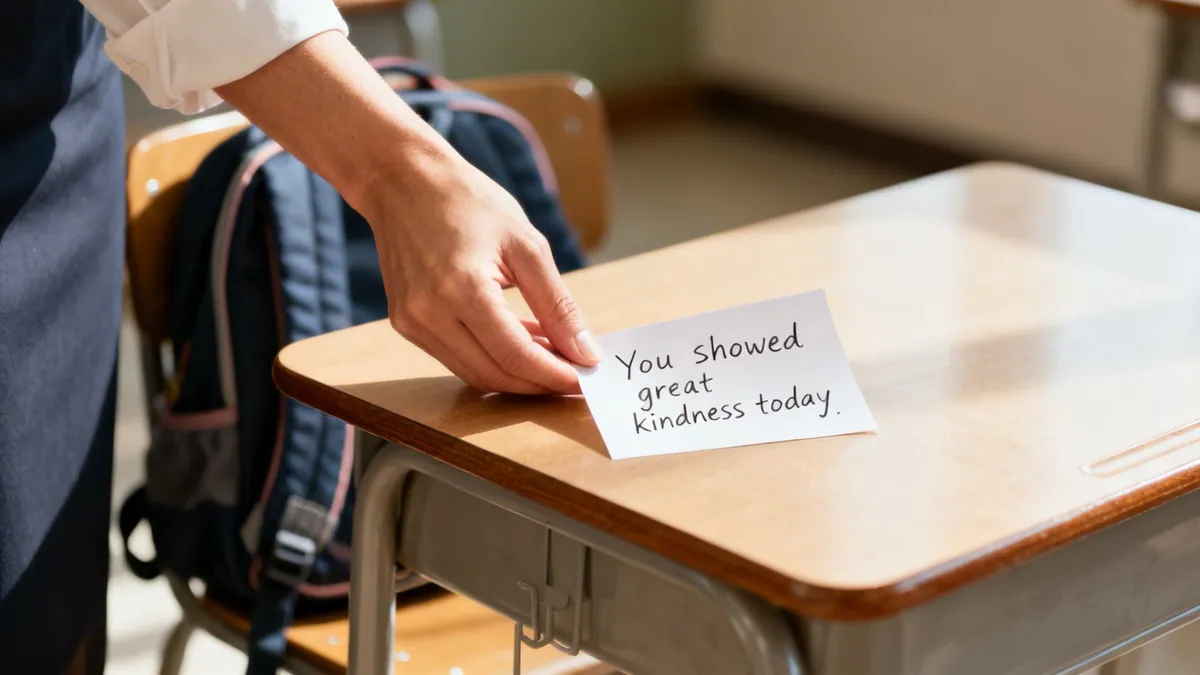
Practical Example: A middle school advisory teacher made a commitment to write one specific gratitude note on a sticky note for a different student each day, leaving it on their desk before they arrived. He noticed students would often save the notes in their binders. One student, who had been struggling with motivation, told him, "Your note said, 'I'm proud of how hard you worked on that essay, even when it was tough.' That was the first time a teacher said they were proud of me for trying, not just for my grade."
This practice builds strong connections and directly supports a student’s sense of self-worth. By modeling specific appreciation, teachers also teach students how to recognize and value positive qualities in others. You can explore more about the power of a positive teacher-student relationship and its effects on school climate.
4. Family Gratitude Rituals and Home Integration
Family gratitude rituals extend social-emotional learning beyond the classroom, creating a bridge between school and home. These are structured, repeatable practices that families adopt to reinforce appreciation as a shared value. When schools and families work together on these ways to show gratitude, the impact is multiplied, creating a consistent environment where children feel seen, heard, and valued. This approach empowers parents as essential SEL partners, ensuring gratitude becomes part of a child's core identity.
This method is powerful because it makes gratitude a lived experience rather than just a school lesson. Simple, consistent home practices, like sharing "highs and lows" at dinner or a bedtime thank-you, help children connect appreciation to their daily lives. It provides a safe space for families to communicate openly, build stronger bonds, and collectively focus on the positive, supporting the work done in the classroom.
How to Implement Family Gratitude Rituals
Start Small and Be Consistent: Encourage families to begin with a simple, five-minute activity. For example, a "Rose, Thorn, Bud" conversation at dinner where each person shares a highlight (rose), a challenge (thorn), and something they're looking forward to (bud). Consistency is more important than duration.
Create a Gratitude Jar: Provide families with instructions for a "Gratitude Jar." Each family member writes down things they are grateful for on small slips of paper throughout the week. During a weekly family meeting or Sunday dinner, they can read the notes aloud, celebrating the good things that happened.
Establish Bedtime Reflections: For younger children, a simple bedtime routine can be very effective. Parents can ask, "What was one thing that made you smile today?" or "Who helped you today, and how did it feel?" This calms the mind before sleep and ends the day on a positive note.
Practical Example: A school counselor shared a parent newsletter with a monthly gratitude challenge, including a template for a family gratitude jar. One family reported that their nightly "thankfuls" conversation helped their anxious first-grader feel more secure. Her dad would ask, "What was the best part of your day?" She started by saying, "recess," but eventually began sharing specifics like, "I'm thankful that Emily pushed me on the swing today." This helped her focus on positive social interactions at school.
Integrating gratitude into family life directly supports self-awareness and relationship skills. By creating these shared rituals, families build a common language of appreciation that strengthens their connection. For more ideas on bridging school and home, explore parent resources that offer practical gratitude activities.
5. Service-Based Gratitude and Acts of Kindness
Service-based gratitude moves appreciation from a feeling into tangible action. This approach teaches students to express thankfulness by helping others, fostering a deep understanding of interdependence and community. Service-learning, whether through small acts of kindness or organized projects, is a powerful way to show gratitude that builds empathy, reduces bullying, and gives students a sense of purpose.
This method is one of the most impactful ways to show gratitude because it connects students directly to their community. When students actively contribute, they see firsthand how their efforts make a difference, reinforcing that they have the power to create positive change. It shifts their perspective from being passive recipients of kindness to becoming active agents of appreciation.
How to Implement Service-Based Gratitude
Start Within the School: Begin with projects that serve the immediate school community. This makes the impact visible and personal. For example, older students could mentor younger ones, or a class could organize a "Staff Appreciation Day" where they write thank-you notes and perform small chores for teachers and custodians.
Connect Service to Reflection: After any act of kindness or service project, guide a reflection. Use prompts like, "How did it feel to help someone today?" or "Who benefits from our work, and who are we grateful to for this opportunity?" This step is crucial for connecting the action back to the feeling of gratitude.
Empower Student Ownership: Let students lead the way by identifying needs within their community. A class might notice the local park needs a cleanup or that a nearby animal shelter requires supplies. When students drive the project, their engagement and sense of accomplishment are much higher. Additionally, acknowledging the efforts of educators through gestures like thoughtful gifts for teachers can reinforce a culture of appreciation within the school community.
Practical Example: A fifth-grade class launched a "Kindness Campaign" that involved leaving anonymous sticky notes with positive messages on lockers. The teacher provided prompts like, "I noticed you were a good friend when…" One student, who was often quiet and withdrawn, wrote that finding a note saying "You have a great smile" was the highlight of his week. This simple act showed students how small, intentional gestures can have a big impact on their peers.
By participating in service, students develop crucial SEL competencies like social awareness and responsible decision-making. They learn to recognize the needs of others and take initiative to help, building a foundation for lifelong compassion. To explore this further, you can discover more about teaching kindness and building habits of compassion in kids.
6. Visual Gratitude Displays and Community Boards
Visual gratitude displays are physical or digital spaces where students and staff post appreciations, creating a visible culture of gratitude. These displays, like gratitude walls, thankfulness trees, or digital boards, serve as constant, public reminders of appreciation and belonging. They are one of the most effective ways to show gratitude because they make an abstract feeling concrete and communal.
This practice is powerful because it brings gratitude out of individual journals and into the shared environment. A hallway "Thankfulness Tree" with leaves displaying student appreciations or a classroom gratitude wall with daily sticky notes becomes a community touchstone. It reinforces positive school culture by making appreciation visible, accessible, and a part of the school’s daily fabric.
How to Implement Visual Gratitude Displays
Make it Visible and Accessible: Place displays in high-traffic areas like hallways, the cafeteria, or the school entrance for maximum visibility. Create low-barrier submission options so every student can participate, using written notes, drawings, or even pre-made stickers for younger children.
Keep it Fresh and Engaging: Change the prompt monthly to maintain interest. For example, one month the prompt could be, "Who are you grateful for in our school community?" and the next could be, "What part of our playground are you thankful for?" This keeps the practice dynamic and encourages students to look for new things to appreciate.
Build Student Ownership: Involve students in the installation, maintenance, and promotion of the display. Assigning a small group of students to collect, post, and organize the appreciations gives them a sense of responsibility and pride in the project. They become gratitude ambassadors for their peers.
Practical Example: At a middle school, the counselor created a "Gratitude Graffiti Wall" on a large paper roll in the main hall. Initially, posts were simple, like "pizza day." After modeling how to write specific notes— "I'm grateful for Mr. Evans because he stays after school to help with our math project"— the submissions became more meaningful. Students started writing notes like, "Thank you to the cafeteria staff for always being so friendly," strengthening staff-student connections.
By creating a public forum for thanks, visual displays directly support social awareness and relationship skills. Students learn to recognize and articulate the positive contributions of others, building empathy and a stronger sense of community. This practice turns individual feelings of gratitude into a collective celebration of the good within the school.
7. Strength-Based Feedback and Appreciation Meetings
Strength-based feedback is a structured conversation model that shifts the focus from deficit-based critiques to intentional appreciation of a student's inherent qualities. It reframes how students see themselves and how schools communicate with families. By intentionally highlighting strengths, character traits, and effort alongside growth areas, educators build confidence and resilience while maintaining high standards.
This approach is one of the most direct ways to show gratitude because it communicates, "I see you, and I value your unique contributions." Instead of starting with what’s wrong, it starts with what’s strong. This practice is especially powerful during one-on-one meetings or family-teacher conferences, as it builds a foundation of trust and respect, making it easier to discuss challenges productively.
How to Implement Strength-Based Feedback
Start with Strengths First: Begin every feedback session, whether with a student or their family, by identifying at least two or three specific strengths. For example, during a family-teacher conference, start by saying, "Before we discuss grades, I want to share how much I appreciate Maria's persistence. I saw her work through a very difficult math problem this week without giving up."
Use Specific, Actionable Language: Avoid generic praise like "You're smart." Instead, focus on observable behaviors and character strengths. Use concrete examples: "I noticed how you included a new student in your group at recess" or "Your focus during our science experiment was excellent; you followed every step carefully."
Connect Strengths to Growth: Frame challenges as opportunities to apply existing strengths. For a student who struggles with writing but is a great storyteller, you could say, "You have an amazing imagination. Let's work on using that strength to organize your fantastic ideas on paper." This empowers the student by giving them tools they already possess.
Practical Example: A middle school advisory group used this model for peer feedback on presentations. Instead of just pointing out errors, students were required to start with the "3 C's": one comment on Clarity ("I understood your main point because…"), one on Creativity ("I liked how you used…"), and one on Courage ("It was brave to…"). This protocol transformed peer review from a source of anxiety into a genuine exercise in mutual support and appreciation.
By focusing on what students do well, this practice reinforces key SEL competencies like self-awareness and social awareness. It teaches them to recognize their own value and appreciate the strengths in others, creating a more supportive and grateful school climate.
8. Gratitude-Based Conflict Resolution and Restorative Practices
Gratitude-based conflict resolution integrates appreciation into restorative processes, shifting the focus from blame to healing and connection. Instead of concentrating solely on wrongdoing, this approach encourages all parties to recognize positive qualities in one another, even amidst conflict. It provides a structured way to show gratitude as a tool for rebuilding trust, repairing relationships, and fostering empathy in a school community.
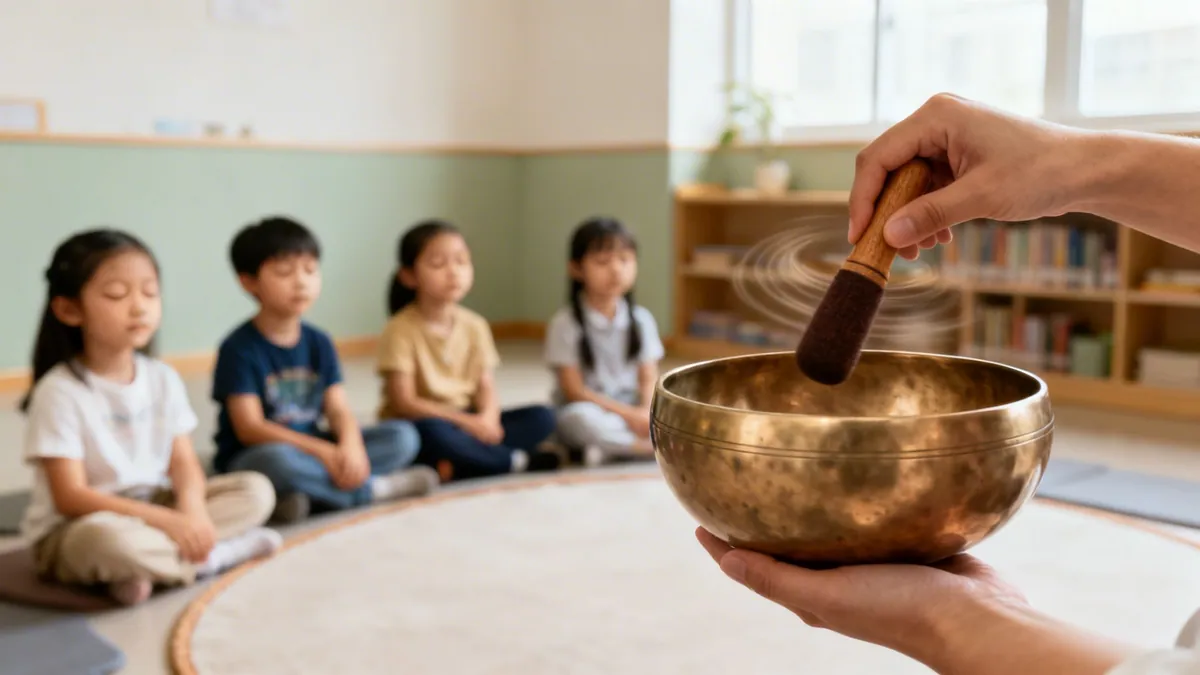
Mindful Sound Listening is a guided auditory practice where participants focus their full attention on sounds, either from their immediate environment or a specific instrument like a singing bowl. This 5 senses activity trains the brain to stay in the present moment, sharpens listening skills, and promotes a state of calm. By concentrating on the sense of hearing, it helps individuals quiet internal chatter and regulate their nervous system.
This method is central to programs like the Mindfulness in Schools Project (MiSP) and Calm Classroom, which use sound as an anchor for attention. The predictable, resonant tone of a bell or bowl can signal a transition, reset a classroom's energy, and create psychological safety. It’s a powerful tool for building foundational self-regulation and focus, especially in busy school environments.
How to Implement Mindful Sound Listening
This auditory activity is highly adaptable and requires only a single sound-making tool to start.
Suggested Time: 2-10 minutes
Appropriate Ages: Kindergarten through 8th Grade (and beyond)
Materials: A singing bowl, a small bell, chimes, or a digital recording of one of these sounds.
Step-by-Step Directions:
Introduce the Activity: Explain that you will be practicing listening with full attention. Say, "We're going to use our sense of hearing to listen to a special sound. Your only job is to listen until you can't hear the sound anymore."
Prepare for Listening: Invite participants to find a comfortable but alert posture. They can sit upright in their chairs with their feet on the floor or lie down. They might close their eyes or look softly at the floor.
Create the Sound: Ring the bell or play the singing bowl once, letting the sound resonate.
Guide the Listening: Instruct participants to raise a hand quietly when they can no longer hear the sound. This helps them maintain focus.
Facilitate Reflection (Optional): After the sound has completely faded, ask students to notice what they are feeling. You can invite them to share what the experience was like, what other subtle sounds they noticed, or what thoughts came up. For example, a student might share, "After the bell stopped, I heard the clock ticking and the fan humming."
Key Insight: The goal isn't silence of the mind but rather a gentle redirection of attention. If students report that their minds wandered, congratulate them for noticing. That act of noticing is mindfulness in action.
Actionable Tips for Educators and Parents
You can easily integrate sound-based mindfulness into daily routines to foster a calmer, more focused environment.
Signal Transitions: A first-grade teacher can ring a chime to signal the end of "center time" and the start of "clean-up time." The sound becomes a predictable, non-verbal cue that helps students switch tasks peacefully, replacing loud verbal reminders.
Start the Day: Use a gratitude bell during a morning meeting. A school counselor leading a small group could ring a bell, and each student could share one thing they are grateful for when it's their turn. This combines mindfulness with positive reflection.
Pre-Test Reset: Before a test or a challenging academic task, a fifth-grade teacher can lead a one-minute listening exercise with a singing bowl. This helps students settle their nerves and focus their minds for the work ahead.
Bedtime Routine: A parent can use a recording of a singing bowl on their phone as part of a bedtime routine. The child's task is to lie still and listen until the sound is gone, helping them wind down and prepare for sleep.
3. Texture Exploration & Tactile Empathy Building (Touch)
Texture Exploration is a hands-on activity where participants investigate various textures like smooth, rough, bumpy, and soft. By focusing on the sense of touch, this 5 senses activity builds sensory awareness and connects tactile input to emotions. The exercise helps individuals recognize that just as people have different comfort textures, they also have different emotional needs and sensitivities.
This activity is often used in occupational therapy and sensory-friendly classrooms to promote self-regulation and emotional understanding. It provides a concrete way to discuss abstract concepts like empathy and acceptance, creating a space where differences are explored with curiosity rather than judgment. For example, a student might use a 'texture bag' with a favorite soft fabric as a calming tool during a stressful test.
How to Implement Texture Exploration
This activity can be easily adapted for different age groups and requires simple, accessible materials.
Suggested Time: 20-30 minutes
Appropriate Ages: Kindergarten through 8th Grade
Materials: A collection of items with distinct textures (e.g., sandpaper, cotton balls, smooth stones, bubble wrap, corduroy, foil, sponges). Blindfolds or "mystery bags" are optional.
Step-by-Step Directions:
Introduce the Concept: Explain that you will be exploring the sense of touch. Start with an open exploration, allowing participants to see and feel the different items.
Guided Exploration: Ask participants to close their eyes or use a blindfold (if comfortable). Hand them one textured item at a time.
Prompt for Description: Ask them to describe what they feel. Use sensory-focused questions like, "Is it rough or smooth? Soft or hard? Warm or cold?" For example, when feeling sandpaper, a student might say "It feels scratchy and bumpy."
Connect to Feelings: Once they've described the texture, ask how it makes them feel. For instance, "Does this bumpy texture feel surprising? Does the soft one feel calming?" A student might say the soft cotton ball "feels like a fluffy cloud and makes me feel sleepy."
Facilitate a Discussion: After exploring several textures, lead a group conversation about their experiences. Discuss how some people loved the rough texture while others preferred the smooth one, linking this to personal preferences and needs.
Key Insight: The main goal is to build a bridge between physical sensations and emotional responses. Emphasize that there is no "right" way to feel about a texture, which teaches acceptance of diverse perspectives.
Actionable Tips for Educators and Parents
You can integrate texture-based activities into daily routines to foster empathy and self-regulation.
Create a Texture Palette: A third-grade teacher could set up a "sensory station" with a 'texture palette' where students can go to touch different materials when they feel overwhelmed or need a brain break. This gives students a tangible self-regulation strategy.
Use Texture Metaphors: During conflict resolution, a school counselor can ask students to describe the situation using textures. A student might say, "Their words felt like sandpaper," helping them articulate the emotional impact in a new way.
Design 'Comfort Kits': Help students identify a personal "comfort texture" they can keep at their desk, like a smooth stone or a small piece of faux fur. This becomes a discreet calming tool during anxious moments. A parent can help a child create a similar kit at home for homework time.
Empathy Building Exercise: In an anti-bullying lesson, a fourth-grade teacher could have students pass around a piece of rough sandpaper and a smooth stone. Then, they can discuss which texture unkind words feel like and which texture kind words feel like, making the concept of emotional impact more concrete.
4. Mindful Tasting & Gratitude for Nourishment (Taste)
Mindful Tasting is a sensory activity that uses a small piece of food to anchor attention to the present moment. Participants slowly eat an item like a raisin or apple slice, focusing intently on the taste, texture, and aroma. This foundational mindfulness exercise turns the simple act of eating into a powerful 5 senses activity, building self-awareness and regulation skills. By slowing down, students learn to notice details they usually miss and develop a sense of gratitude for their food.
This practice is a cornerstone of established mindfulness programs like Mindfulness-Based Stress Reduction (MBSR) and is widely used in social-emotional learning (SEL) curricula. It provides students with a tangible tool to calm an anxious mind, focus their attention, and connect with their bodies in a positive way.
How to Implement Mindful Tasting
This activity requires very few materials and can be a quiet, calming experience for any group. Crucially, always check for food allergies and sensitivities beforehand.
Suggested Time: 5-15 minutes
Appropriate Ages: Kindergarten through 8th Grade (and beyond)
Materials: A small food item for each participant. Good options include a single raisin, a small piece of dark chocolate, a cranberry, a thin apple slice, or a pretzel.
Step-by-Step Directions:
Introduce the Concept: Explain that you will be exploring a piece of food using all your senses, as if for the very first time. Frame it as a fun experiment to see what you can notice.
Provide Materials: Give one food item to each participant. Ask them not to eat it yet.
Guide the Sensory Exploration: Lead students through a slow, deliberate process using gentle prompts.
Sight: "Look at the item in your hand. Notice its color, its shape, and the tiny lines or wrinkles on its surface." (e.g., "Look at how the light shines on the raisin.")
Touch: "Feel its texture between your fingers. Is it rough, smooth, sticky, or hard?"
Sound: "Hold it up to your ear. Does it make a sound if you roll it between your fingers?"
Smell: "Bring it to your nose and take a slow breath in. What do you smell? Is it sweet, earthy, or something else?"
Taste: "Slowly place it in your mouth but don't chew yet. Notice the sensation on your tongue. Now, take one slow bite and notice the burst of flavor. Chew slowly and see how the taste and texture change."
Facilitate Reflection: After everyone has finished, ask open-ended questions like, "What was that like for you?" or "Did you notice anything surprising about your raisin?"
Key Insight: The goal is not to rush but to experience each moment of eating. Remind students there is no right or wrong thing to notice; the practice is simply about paying attention. Offer a "dignified opt-out" where students can choose to just observe.
Actionable Tips for Educators and Parents
You can use Mindful Tasting to create moments of calm and build gratitude in various settings.
Classroom Transition: Use this activity to help students settle down after recess or before a test. A third-grade teacher could lead a three-minute mindful tasting with a small pretzel to help the class transition from a noisy lunchroom to quiet independent reading time.
Anxiety Regulation: A school counselor can guide an anxious student through a mindful chocolate tasting. The intense sensory focus on the melting chocolate can ground the student in the present, interrupting a cycle of worried thoughts.
Dinner Time Routine: At home, a parent can start a meal by mindfully eating the first bite. For example, with spaghetti, everyone can silently taste the first forkful, noticing the texture of the pasta and the tangy flavor of the sauce before starting their conversation.
Gratitude Practice: After the tasting, extend the reflection. A teacher could ask a class after eating an apple slice, "Let's thank the tree that grew the apple, the sun that made it sweet, and the farmer who picked it." This connects the simple act of eating to a larger system of nourishment.
5. Scent Journeys & Emotional Anchoring (Smell)
Scent Journeys & Emotional Anchoring is a guided sensory activity where individuals explore different scents to build olfactory awareness and create powerful connections between smell and emotional states. Because the olfactory system links directly to the brain's memory and emotion centers, this 5 senses activity uses scent as a potent tool for emotional regulation and creating psychological safety. Participants learn to use specific scents as portable self-regulation tools, helping them manage stress or anxiety in real-world situations.
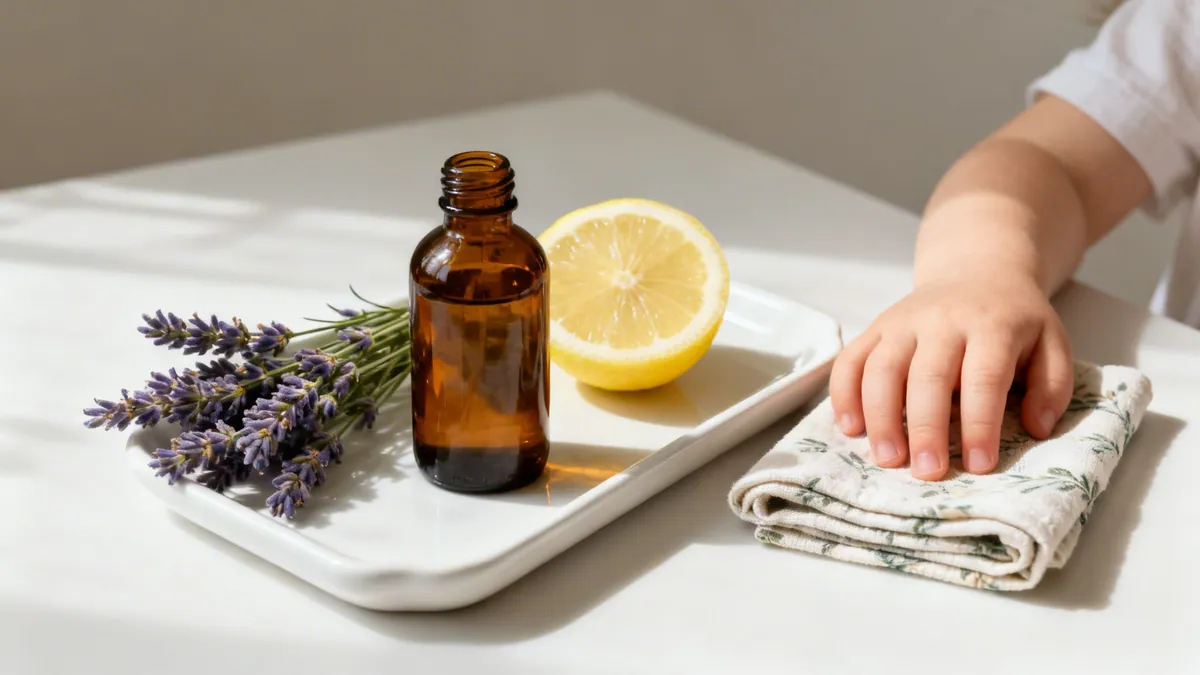
This approach is supported by neuroscience research on olfaction and emotion, as well as practices from trauma-informed care and mindfulness programs. It recognizes that scent can be an "emotional anchor," a sensory cue that helps ground a person in a feeling of calm or focus. For example, a student might learn to associate the smell of lavender with deep breathing exercises, creating a reliable shortcut to a calmer nervous system.
How to Implement Scent Journeys
This activity can be a calming group experience or a personalized tool for individual students. Always prioritize safety and be mindful of potential sensitivities.
Suggested Time: 10-20 minutes
Appropriate Ages: Kindergarten through 8th Grade
Materials: Cotton balls or fabric scraps, small containers, and a variety of mild, natural scents such as lemon peels, lavender buds, fresh mint leaves, or drops of vanilla extract.
Step-by-Step Directions:
Introduce the Concept: Explain that our sense of smell is strongly connected to our memories and feelings. Ask, "Have you ever smelled something that reminded you of a person or a place, like cookies baking at home?"
Prepare the Scents: Place a few drops of an essential oil or a small piece of the scented item (e.g., a mint leaf) onto a cotton ball and put it in a container. Prepare several different scents.
Guide the Exploration: Pass one scent around at a time. Instruct participants to close their eyes, take a gentle sniff, and notice what thoughts, feelings, or sensations come up.
Facilitate Discussion: Ask open-ended questions like, "What does this scent make you think of?" or "How does this smell make your body feel- energized, relaxed, or something else?" For example, smelling cinnamon, a student might say, "It reminds me of my grandma's house at Christmas and makes me feel warm."
Create an Anchor (Optional): Guide students to choose a scent they find particularly calming or focusing. Pair the scent with a simple breathing exercise, creating a personal "scent anchor" for future use.
Key Insight: The power of this activity comes from personal association. Respect individual preferences and aversions, as a scent that is calming for one person may be overstimulating for another. Always offer the choice to opt out.
Actionable Tips for Educators and Parents
You can integrate scent-based regulation into daily routines to support emotional well-being.
Calm-Down Corner: A school counselor can stock a calm-down corner with a few approved scents (like lavender or chamomile) on cotton balls in sealed jars. Students can choose one to smell while practicing their coping strategies.
Focus Tool: During independent work, a third-grade teacher might use a diffuser with a drop of peppermint or lemon scent for a short period to help students feel more alert and focused.
Transition Support: A parent can use a consistent, pleasant scent during a transition that is often challenging, like getting ready for school. A spritz of a calming room spray can signal it's time to get dressed, creating a predictable and soothing morning ritual.
Personal Regulation Kit: Help students create their own portable scent anchor. A student who experiences anxiety before tests could carry a small cloth with a drop of their chosen calming scent (like lavender) to smell discreetly at their desk, helping to ground them in the moment. You can also use scented products like aromatic mixer melts at home to create a consistent calming or invigorating atmosphere.
5-Senses Mindful Activities Comparison
Activity
Implementation complexity
Resource requirements
Expected outcomes
Ideal use cases
Key advantages
Color Emotion Mapping (Sight)
Low — simple setup but needs guided reflection
Low — colored paper, markers, paint
Builds emotional vocabulary, visual records of feelings, nonverbal expression
Strong neurological tie to emotion, highly personalizable, portable tools
Putting It All Together: Weaving Sensory SEL into Your Daily Routine
Throughout this guide, we've explored five distinct yet interconnected pathways for building social-emotional skills through sensory engagement. From mapping our feelings with Color Emotion Mapping to grounding ourselves with Mindful Sound Listening, each 5 senses activity offers a practical tool for K-8 students. We’ve seen how Texture Exploration can build tactile empathy, how Mindful Tasting cultivates gratitude, and how Scent Journeys can create powerful emotional anchors for self-regulation.
The true value of these practices, however, lies not in their occasional use but in their consistent integration into the fabric of your classroom or home. This isn't about adding another complex item to your already packed schedule. It’s about reframing moments you already have into powerful opportunities for connection, self-awareness, and growth.
Making Sensory SEL a Sustainable Habit
Integrating any new 5 senses activity successfully hinges on starting small and building momentum. The goal is to create a sustainable routine that becomes second nature for both you and your children or students.
Consider these practical starting points:
Transition Times: Use a gratitude bell or a brief Mindful Sound Listening exercise to signal the end of one activity and the beginning of another. This creates a moment of calm, helping students reset their focus instead of carrying chaotic energy into the next task.
Morning Meetings or Check-Ins: Begin the day with a Scent Journey. Pass around a cotton ball with a calming scent like lavender and ask students to share one word about how it makes them feel. This simple ritual starts the day with mindfulness and emotional sharing.
Snack or Lunch Time: Introduce Mindful Tasting once a week. Instead of a formal, lengthy exercise every day, choose one day to guide students through mindfully eating the first bite of their snack, noticing the texture, taste, and smell.
Art & Creative Writing: Weave Color Emotion Mapping directly into your existing art curriculum. When studying a painting, ask, "What emotions do you think the artist was feeling based on these color choices?" This connects art history to personal emotional expression.
Key Insight: The most effective implementation doesn't feel like a separate "SEL lesson." It feels like a natural part of how your group communicates, solves problems, and supports one another. A consistent, simple 5 senses activity done daily has a greater impact than a complex one done sporadically.
By embedding these sensory tools into daily routines, you create a shared language and a predictable structure for emotional exploration. Students learn that their feelings are valid and that they possess tangible strategies to manage them. This consistency builds a foundation of psychological safety, empowering them to take emotional risks, practice empathy, and build resilience. You are not just teaching them an activity; you are giving them lifelong skills for a more connected and self-aware existence.
Ready to build a more connected and compassionate school culture? For over two decades, Soul Shoppe has helped schools implement practical, student-centered tools that reduce conflict and build empathy, much like the sensory activities discussed. Explore our programs and see how we can help your students thrive at Soul Shoppe.
In an increasingly interconnected world, the ability to understand and empathize with others is not just a soft skill; it is a fundamental competency for academic and life success. Social awareness, a core component of Social-Emotional Learning (SEL), empowers students to recognize diverse perspectives, show empathy, and understand social norms. For educators and parents, fostering this skill is crucial for creating inclusive, safe, and collaborative learning environments where every child feels they belong.
This article moves beyond theory to provide a concrete collection of 10 effective, practical social awareness activities for students from kindergarten through middle school. Cultivating this awareness also builds other essential life competencies, including critical diplomacy skills for students that foster understanding and collaboration in group settings.
You will find a curated list designed for direct classroom or home implementation. We break down each activity into:
Actionable, step-by-step instructions.
Clear learning objectives and time estimates.
Practical tips for differentiation and assessment.
Remote-friendly variations to support all learning models.
These strategies, aligned with frameworks from organizations like CASEL, are designed to build a culture of connection. The goal is to turn classrooms into communities of emotionally intelligent, resilient, and compassionate individuals. Let's explore the activities that will help your students develop this essential superpower.
1. Empathy-Building Circle Discussions
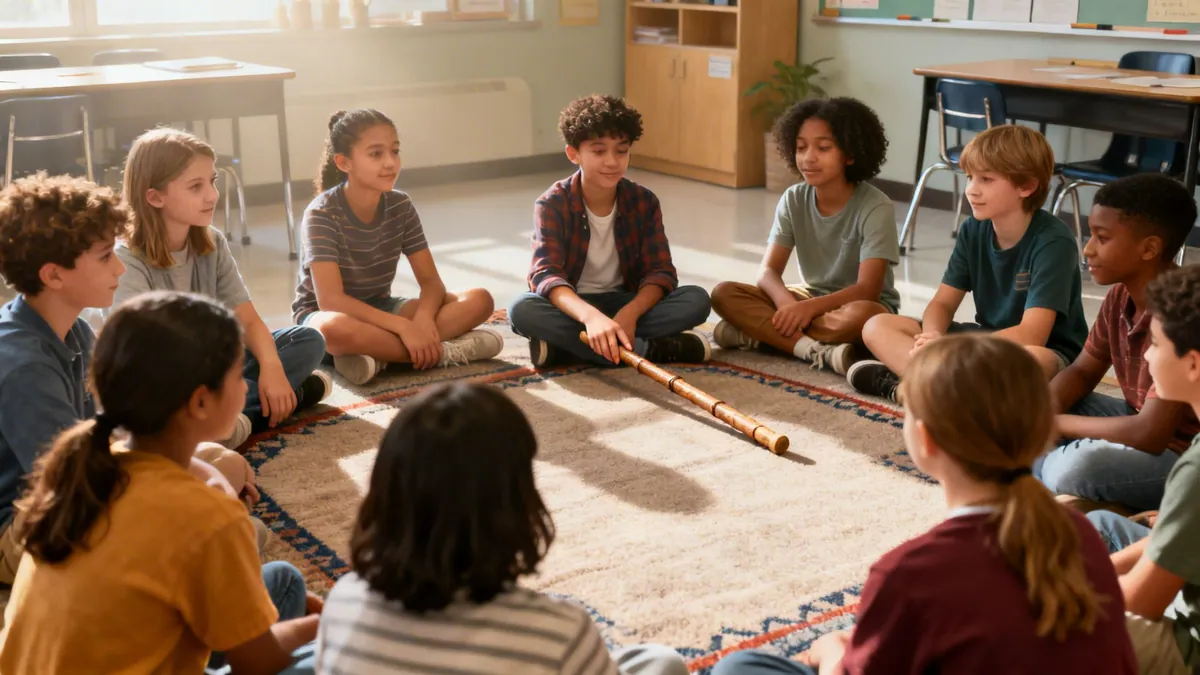
Empathy-Building Circle Discussions are structured conversations where students sit in a circle to share experiences and listen to one another without judgment. This trauma-informed practice, rooted in restorative justice principles, creates a safe, equitable space where every student has an opportunity to speak and be heard. The format itself promotes connection and is a powerful tool for developing social awareness in students by exposing them to diverse viewpoints and personal stories from their peers.
These discussions are more than just informal chats; they follow a specific structure to build community and resolve conflict. Organizations like Soul Shoppe have refined this into an experiential method for emotional literacy, while districts like Oakland Unified have used restorative circles to improve school climate.
How to Implement Circle Discussions
Establish Clear Agreements: Begin by co-creating guidelines with students. These often include rules like "Listen with respect," "Speak from the heart," "One person speaks at a time" (often using a talking piece), and "What's said in the circle stays in the circle." This step is critical for building trust.
Practical Example: A teacher might say, "Let's agree on our circle rules. One rule is 'Listen with your eyes, ears, and heart.' What does that look like?" Students might add, "Don't interrupt," or "Look at the person who is talking."
Use a Talking Piece: Pass an object around the circle. Only the person holding the object may speak. This slows the conversation and encourages thoughtful responses rather than immediate reactions.
Practical Example: Use a special stone, a small stuffed animal, or a colorful ball as the talking piece. The teacher can introduce it by saying, "This is our talking piece. It helps us remember to listen when it's not our turn to speak."
Start with a Prompt: Pose a focused question to the group.
For K-2: "Share a time someone was kind to you."
For 3-5: "Talk about a time you felt left out. What did that feel like?"
For 6-8: "Describe a time you saw something unfair happen. What made it feel unfair?"
Practice Active Listening: Before tackling deep topics, run a mini-lesson on active listening. Ask students to practice restating what the person before them said before adding their own thoughts.
Practical Example: For younger students, the teacher can model this: "I heard Maria say she felt happy when her friend shared a crayon. That reminds me of a time…" For older students, you can make it a rule: "Before you share, start by saying, 'What I heard [student's name] say was…'"
Circles are effective because they flatten classroom hierarchies. The physical act of sitting at the same level, with no desks as barriers, communicates that every person's voice and experience are equally important.
This practice is one of the most direct and effective social awareness activities for students, fostering genuine human connection and reducing feelings of isolation. To see how schools are using this method for everything from community building to conflict resolution, you can learn more about restorative circles in schools.
2. Empathy-Building Circle Discussions
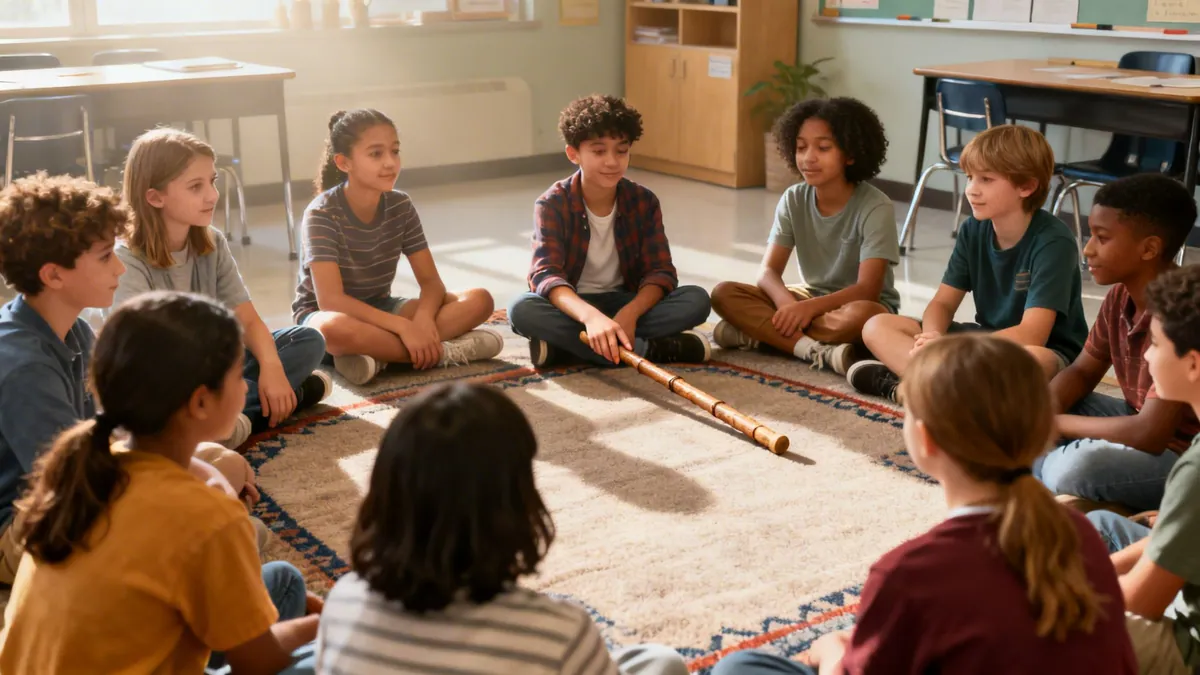
Empathy-Building Circle Discussions are structured conversations where students sit in a circle to share experiences and listen to one another without judgment. This trauma-informed practice, rooted in restorative justice principles, creates a safe, equitable space where every student has an opportunity to speak and be heard. The format itself promotes connection and is a powerful tool for developing social awareness in students by exposing them to diverse viewpoints and personal stories from their peers.
These discussions are more than just informal chats; they follow a specific structure to build community and resolve conflict. Organizations like Soul Shoppe have refined this into an experiential method for emotional literacy, while districts like Oakland Unified have used restorative circles to improve school climate.
How to Implement Circle Discussions
Establish Clear Agreements: Begin by co-creating guidelines with students. These often include rules like "Listen with respect," "Speak from the heart," "One person speaks at a time" (often using a talking piece), and "What's said in the circle stays in the circle." This step is critical for building trust.
Practical Example: A teacher might say, "Let's agree on our circle rules. One rule is 'Listen with your eyes, ears, and heart.' What does that look like?" Students might add, "Don't interrupt," or "Look at the person who is talking."
Use a Talking Piece: Pass an object around the circle. Only the person holding the object may speak. This slows the conversation and encourages thoughtful responses rather than immediate reactions.
Practical Example: Use a special stone, a small stuffed animal, or a colorful ball as the talking piece. The teacher can introduce it by saying, "This is our talking piece. It helps us remember to listen when it's not our turn to speak."
Start with a Prompt: Pose a focused question to the group.
For K-2: "Share a time someone was kind to you."
For 3-5: "Talk about a time you felt left out. What did that feel like?"
For 6-8: "Describe a time you saw something unfair happen. What made it feel unfair?"
Practice Active Listening: Before tackling deep topics, run a mini-lesson on active listening. Ask students to practice restating what the person before them said before adding their own thoughts.
Practical Example: For younger students, the teacher can model this: "I heard Maria say she felt happy when her friend shared a crayon. That reminds me of a time…" For older students, you can make it a rule: "Before you share, start by saying, 'What I heard [student's name] say was…'"
Circles are effective because they flatten classroom hierarchies. The physical act of sitting at the same level, with no desks as barriers, communicates that every person's voice and experience are equally important.
This practice is one of the most direct and effective social awareness activities for students, fostering genuine human connection and reducing feelings of isolation. To see how schools are using this method for everything from community building to conflict resolution, you can learn more about restorative circles in schools.
3. Community Service and Volunteer Projects
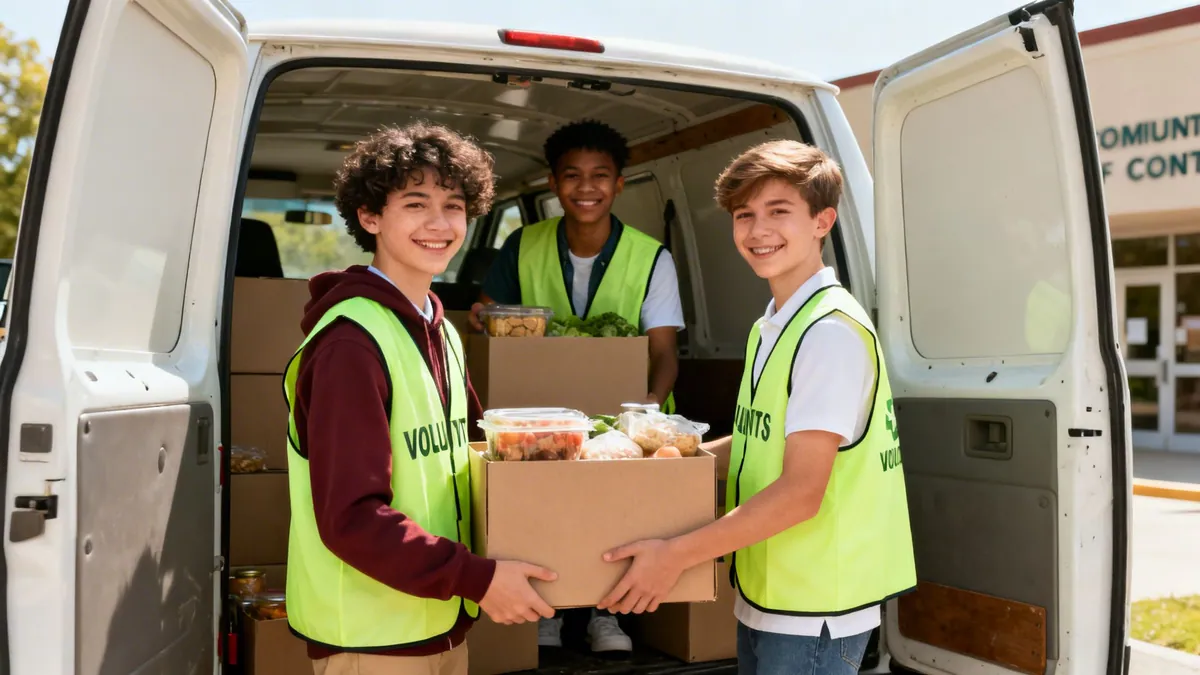
Community Service and Volunteer Projects offer students structured opportunities to contribute to meaningful causes, directly connecting them to the world beyond their classroom walls. These hands-on experiences, from working at food banks to participating in environmental cleanups, help students develop social responsibility, empathy, and a sense of self-efficacy. By engaging in service, students see firsthand how their actions can create positive change, building their understanding of interconnectedness and civic duty.
These projects move social awareness from a theoretical concept to a lived experience. Initiatives like the National Service-Learning Partnership and platforms such as Ashoka's Changemakers champion this model, integrating service with academic learning and reflection. Through community service, students can explore practical ways the community can help homeless families, understanding immediate needs and contributing to solutions.
How to Implement Service Projects
Connect to Curriculum: Align service projects with classroom learning.
Practical Example: After a science unit on ecosystems, a third-grade class could organize a "Campus Cleanup Day" to pick up litter and sort recyclables. Or, after learning about local government, a middle school class could write letters to city council about the need for a new crosswalk near the school.
Offer Choice and Voice: Provide multiple volunteer options that cater to different interests and skills. Allow students to have a say in choosing or designing the project to foster a greater sense of ownership and motivation.
Practical Example: A teacher could propose three project ideas: 1) a canned food drive, 2) making blankets for an animal shelter, or 3) writing thank-you cards to community helpers. The class then votes on which project they are most passionate about pursuing.
Start with a Guiding Question: Frame the project around an inquiry-based question to deepen its impact.
For K-2: "How can we make our school playground a friendlier place for everyone?"
For 3-5: "What does our local food bank need, and how can our class help fill that need?"
For 6-8: "How do environmental issues affect our community, and what is one step we can take to address them?"
Incorporate Reflection: Schedule time for students to discuss their experiences after the service activity. Use journal prompts or circle discussions to guide them in thinking about what they did, why it mattered, and how it made them feel.
Practical Example: Use prompts like, "What part of the project made you feel proud?" or "What was one challenge we faced, and how did we solve it together?" for a post-project class discussion.
Service learning is powerful because it answers the "Why do I need to learn this?" question with a tangible, real-world purpose. When students see their efforts make a difference, their engagement with both academics and their community grows.
This approach is one of the most effective social awareness activities for students because it builds character, reinforces academic concepts, and demonstrates the direct impact of empathy in action. To get started, consider partnering with established local nonprofits to ensure a well-structured and meaningful experience.
4. Anti-Bullying and Bystander Intervention Training
Anti-Bullying and Bystander Intervention Training provides students with the explicit skills to recognize bullying behavior and act as upstanders rather than passive bystanders. This approach reframes bullying prevention as a community responsibility, empowering students with concrete, safe strategies to intervene. It directly builds social awareness by teaching students to identify social injustice in real-time and understand their role in shaping a positive school climate.