

What Is Restorative Practices in Education and How Does It Work
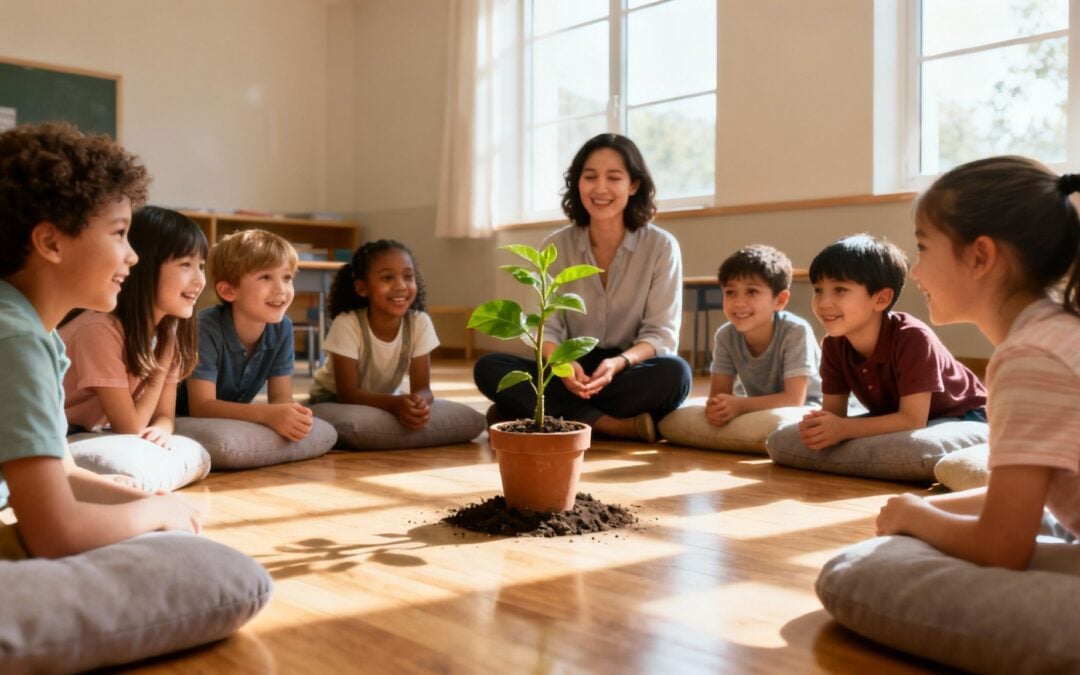
Restorative practices in education are about making a fundamental shift in how we think about student behavior. Instead of just punishing kids for breaking rules, the focus is on repairing harm and strengthening relationships. It’s an approach that moves past traditional consequences to get to the root of what’s happening and understand its impact on the whole community.
Shifting from Punishment to Connection
For decades, the go-to disciplinary model in many schools has been punitive. The main questions were always, “What rule was broken?” and “What’s the punishment?” This is kind of like yanking weeds out of a garden without ever checking the health of the soil. You might get rid of the visible problem for a moment, but you haven’t done anything to fix the conditions that let the weed grow in the first place. Often, a student’s behavior is just a form of communication—a signal that a need isn’t being met or that they feel disconnected.
Restorative practices, on the other hand, are all about nurturing that soil. This mindset flips the script and asks a totally different set of questions:
- Who was harmed by this action?
- What do they need to feel whole again?
- Whose job is it to meet those needs and make things right?
This shift acknowledges a simple truth: when a student acts out, the harm doesn’t just stop with them. It ripples outward, affecting other students, teachers, and the entire feeling of the classroom. The goal is no longer just to punish one person but to mend those relationships and bring the student back into the community in a way that helps everyone learn and grow.
To give you a clearer picture, let’s look at how these two mindsets stack up side-by-side.
Punitive vs. Restorative Approaches at a Glance
| Aspect | Traditional Punitive Approach | Restorative Practices Approach |
|---|---|---|
| Core Philosophy | Rule-breaking requires punishment and exclusion. | Harm to relationships requires repair and inclusion. |
| Guiding Questions | What rule was broken? Who is to blame? What punishment is deserved? | Who was harmed? What are their needs? How can we make things right? |
| Primary Goal | Deter future misbehavior through negative consequences. | Repair harm, restore relationships, and build community. |
| Focus | On the rule-breaker’s actions and assigning blame. | On the needs of everyone affected (the person harmed, the person who caused harm, and the community). |
| Typical Actions | Detention, suspension, expulsion, loss of privileges. | Restorative chats, circles, peer mediation, conferences, community service. |
| Outcomes | Can lead to resentment, shame, and disconnection. | Fosters empathy, accountability, and a stronger sense of belonging. |
Seeing them laid out like this makes the difference pretty stark, doesn’t it? One is about enforcing rules, while the other is about nurturing people.
Moving Beyond Zero Tolerance
This isn’t a new idea that just popped up out of nowhere. It’s a direct response to a long history of exclusionary discipline in our schools. For years, research has shown how zero-tolerance policies—like automatic suspensions for relatively minor issues—are tied to lower achievement and higher dropout rates, especially for students of color. Restorative practices offer a powerful, more effective alternative. The real magic happens when you focus on building community in the classroom before conflict ever starts, using tools like classroom circles and shared agreements to create a genuine sense of belonging.
The central idea is that human beings are happier, more cooperative and productive, and more likely to make positive changes in their behavior when those in positions of authority do things with them, rather than to them or for them.
Fostering a Culture of Belonging
At its heart, this approach is about creating safer, more supportive schools where every single student feels seen, heard, and valued. When we teach kids how to communicate their feelings, listen with empathy, and solve problems together, we’re giving them skills they’ll use for the rest of their lives. A core part of guiding these important dialogues involves mastering the art of asking questions that open up conversation instead of shutting it down. When a strong community becomes the foundation, academic and social success naturally follow.
The Three Pillars of a Restorative School
To really get what restorative practices are all about in a school setting, it helps to think of them as having three core pillars. These aren’t separate concepts; they’re interconnected stages that build on each other to create a resilient, supportive school culture. You can picture them as the foundation, the framework, and the open door of a restorative building.
The whole system works on a simple but powerful idea: the relationship bank account. Every positive chat, shared laugh, and moment of understanding is a deposit. When conflict comes up—and it always does—the community has this deep well of trust and connection to draw from to make things right.
Pillar 1: Building Community
This is the proactive, foundational pillar, and honestly, it’s where most of the real work happens. Building community is all about intentionally making those daily deposits into the relationship bank account. It’s about creating a genuine sense of belonging and psychological safety for every single student and staff member.
This is the essential groundwork that has to be in place before any harm occurs. Without a strong community, trying to respond to conflict is like trying to build on sand—there’s no shared trust to fall back on. This pillar is all about creating the shared experiences and norms that bind everyone together.
How This Looks in Practice:
- Teacher Example: A teacher can kick off each day with a simple morning circle where every student shares how they’re feeling, perhaps using a “weather report” metaphor. A student might say, “I’m feeling sunny today because I have art class,” or “I’m a little cloudy because I didn’t sleep well.” This simple act normalizes talking about feelings and builds empathy from the first bell.
- Parent Example: At home, a parent can create a similar ritual during dinner. Each family member could share one “rose” (something good that happened) and one “thorn” (a challenge they faced) from their day. This builds the habit of open communication.
- Classroom Example: Instead of the teacher just handing down a list of rules, the class works together to create agreements for how they want to treat each other. A teacher might ask, “What does respect actually look like and sound like in our room?” The students’ own answers become their shared commitments.
A core belief of restorative practices is that it’s far better to build a strong community than to constantly have to repair a broken one. This proactive work of building social capital is the most critical piece of the puzzle.
Pillar 2: Responding to Harm
The second pillar is responsive—it kicks in when something goes wrong. When a conflict happens or someone is hurt, the focus immediately shifts away from blame, rules, and punishment. The key questions are no longer about who broke what rule, but about repairing the relationships that were damaged.
The goal is to understand the real impact of an action and give everyone involved a voice in figuring out the solution. This is where the school draws on all that trust built in the first pillar to navigate tough conversations. It turns moments of conflict into powerful opportunities for learning and growth.
How This Looks in Practice:
- Parent Example: A parent finds out their child took a toy from a sibling. Instead of an immediate timeout, they might ask, “What happened? How do you think your brother felt when he couldn’t find his favorite toy? What do you think you can do to make it right?” This encourages accountability and empathy, not just compliance.
- Teacher Example: A teacher sees two students arguing over a ball during recess. They pull them aside for a quick restorative chat: “I can see you’re both upset. Can each of you tell me your side of the story? What do you need to happen so you can both feel okay and get back to playing?”
Pillar 3: Reintegrating Individuals
This final pillar is maybe the most overlooked, but it’s absolutely vital. After the harm has been addressed and a plan for repair is in place, the community has to consciously and actively welcome the student back into the fold. This step is what prevents the shame and isolation that so often follow traditional punishment.
Reintegration makes sure that a student’s mistake doesn’t become their permanent identity. It sends a powerful message: “We are not throwing you away. You are still part of this community, and we will support you as you move forward.” This final step closes the loop, reinforcing the strength and resilience of the entire community.
How This Looks in Practice:
- Teacher Example: After a student returns from an in-school suspension, their homeroom might hold a brief circle. The student could share what they learned, and their classmates can offer words of support, making it clear they are glad to have them back.
- Parent Example: After a teenager breaks a family rule and has a consequence (like losing phone privileges), a parent can make a point to connect the next day. They might say, “I know yesterday was tough. I want you to know we love you, and we’re a team. Let’s talk about how we can make tomorrow better.” This separates the behavior from the person.
Putting Restorative Practices Into Action
Knowing the philosophy is one thing, but making it real in the hallways and classrooms? That’s where the magic happens. Shifting to a restorative model isn’t about one single program; it’s about having a toolbox of strategies ready to go. Think of it in three tiers, moving from proactive community-building for everyone to more intensive support when serious conflicts pop up.
And schools are catching on. According to recent federal school safety data, a whopping 59% of U.S. public schools reported using restorative practices in the 2021–22 school year. That’s a huge jump from just 42% in 2017–18, showing a clear move toward building connection over just handing out punishment.
Tier 1: Proactive Strategies for Everyone
The foundation of it all is Tier 1. These are the everyday, universal things you do to build a strong sense of community and stop conflicts before they even start. This is where you make daily deposits into the “relationship bank account.” The most powerful tool here? The community-building circle.
Circles are beautifully simple. They create a dedicated space where every single student has a voice and feels like they truly belong.
How to Run a Morning Check-In Circle
- Set the Space: Get everyone in a circle where they can see each other. No desks or tables in the way—just open space.
- Use a Talking Piece: This is key. Pick a special object (a smooth stone, a small stuffed animal) that gets passed around. Only the person holding it can speak.
- Establish the Tone: The facilitator, usually the teacher, explains the circle’s purpose and shares a simple agreement, like “Respect the talking piece” or “Listen from the heart.”
- Offer a Prompt: Ask a simple, low-stakes question to get the conversation flowing.
- Pass the Piece: The facilitator goes first to model, then passes the talking piece around the circle. It’s always okay for a student to pass if they don’t feel like sharing.
Practical Examples: Circle Prompts for Different Ages
- For Teachers (Grades K-2): “What’s one thing that made you smile this morning?” or “If you could be any animal, what would you be and why?”
- For Teachers (Grades 3-5): “Share a time you felt proud of yourself this week,” or “What’s one thing you’re excited to learn?”
- For Parents (at the dinner table): “What was the best part of your day?” or “What’s one thing you’re looking forward to this weekend?”
- For Teachers (Grades 6-8): “What’s one challenge you’re navigating right now?” or “Who is someone you can count on for support, and why?”
This whole process is captured perfectly in the Restorative Pillars Process flow.
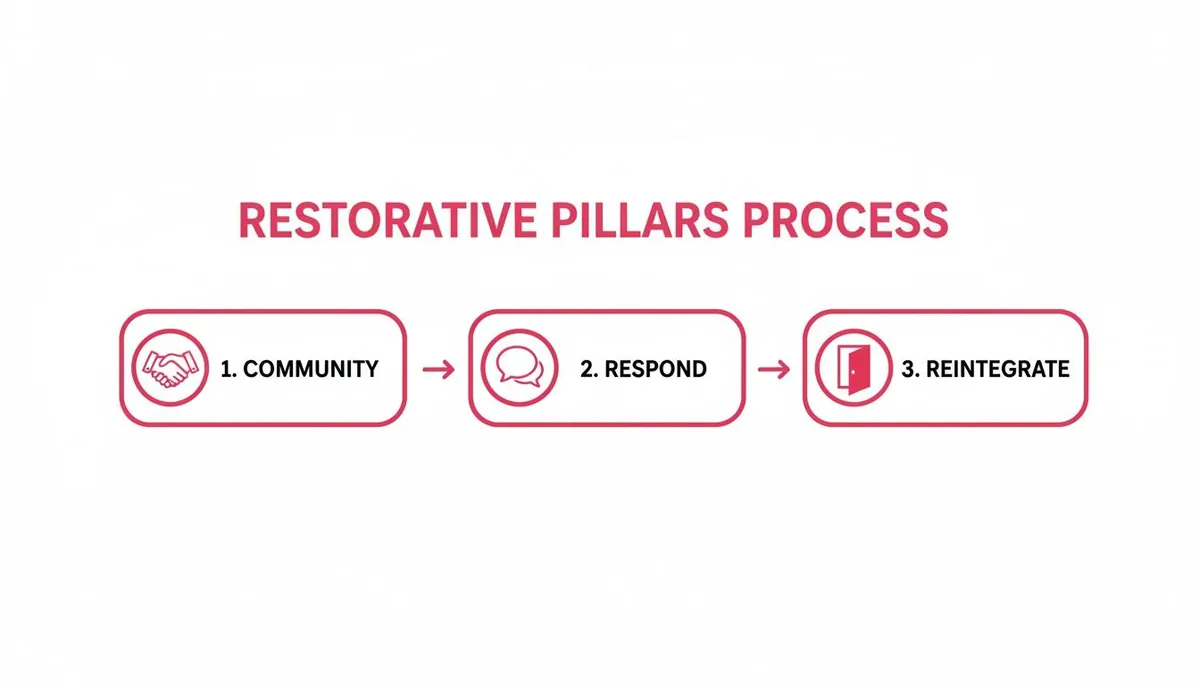
As the visual shows, you have to build that strong community first. It’s the bedrock that allows you to effectively respond to harm and, eventually, bring everyone back together.
Tier 2: Responsive Strategies for Minor Conflicts
Tier 2 kicks in when those smaller, everyday conflicts happen—think arguments on the playground or disagreements between friends. The go-to tool here is the restorative chat. It’s a quick, informal conversation that turns a moment of discipline into a moment of learning.
The goal of a restorative chat isn’t to figure out who’s right and who’s wrong. It’s to help students see each other’s point of view and work together to find a way forward.
Imagine two kids arguing over a ball. Instead of a time-out, a teacher can pull them aside for a quick restorative chat. It only takes a minute or two.
Having some go-to questions makes these conversations feel natural instead of forced.
Practical Scripts for Restorative Conversations
This table offers some simple, powerful questions you can use in restorative chats or circles. The idea is to move from blame to understanding and repair.
| Situation | Key Restorative Questions to Ask | Goal of the Conversation |
|---|---|---|
| Two students argue over a game. | 1. “What happened?” (Listen to each person.) 2. “What were you thinking at the time?” 3. “How has this affected you? How do you think it affected the other person?” 4. “What do you need to move forward?” |
Help students understand the impact of their words/actions and collaboratively find a solution. |
| A student is disruptive in class. | 1. “I noticed you were [describe behavior]. What was going on for you then?” 2. “Who do you think was affected by that?” 3. “What can we do to make things right and get back to learning?” |
Connect behavior to impact on the community and empower the student to take responsibility for repair. |
| A student feels left out. | 1. “What happened from your perspective?” 2. “What was it like for you when that happened?” 3. “What would have made it better?” 4. “What do you need from your classmates to feel included?” |
Validate the student’s feelings, build empathy in others, and create a plan for inclusion. |
These simple scripts are powerful because they teach kids how to solve their own problems. They are a core part of our guide to conflict resolution strategies for students.
Tier 3: Intensive Strategies for Significant Harm
For bigger issues—bullying, theft, or physical fights—you need a more formal and intensive approach. This is Tier 3, which often involves a formal restorative conference. It’s a structured meeting that brings together everyone impacted by an incident to collectively figure out how to repair the harm.
This isn’t a quick fix. A conference requires careful preparation and a trained facilitator to guide the process.
Practical Example: A Formal Conference
Imagine a student vandalized a school bathroom. A punitive response would be suspension. A restorative conference, however, would involve a meeting with the student, their parents, the principal, and the janitor who had to clean up the mess. The janitor would share how the act impacted their workload and morale. The student would have to face this direct impact, and the group would work together on a repair plan, which might include the student helping the janitor with after-school cleanup for a week.
Key Elements of a Formal Conference:
- Participants: The meeting includes the person who caused the harm, the person who was harmed, and supporters for each (like parents, friends, or trusted staff members). A neutral facilitator is essential.
- Voluntary Participation: Everyone has to agree to be there. You can’t force restoration.
- Structured Process: The facilitator uses a script of restorative questions to keep the conversation safe, focused, and productive for everyone.
- The Outcome: The group works together to create a written agreement. It clearly states what the person who caused harm will do to make things right, whether that’s an apology, replacing a broken item, or doing something for the community.
As schools continue to weave restorative practices into their culture, exploring effective online teaching strategies can also help deepen that sense of connection and engagement, making the classroom feel like a supportive community, whether it’s in-person or online.