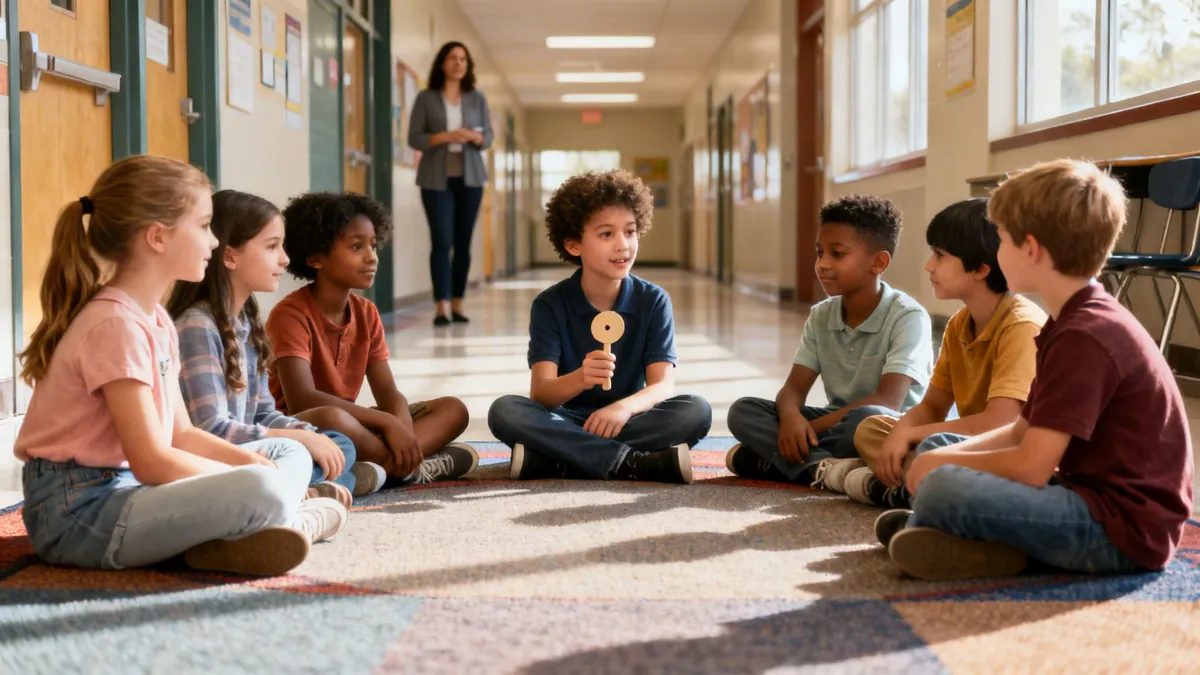
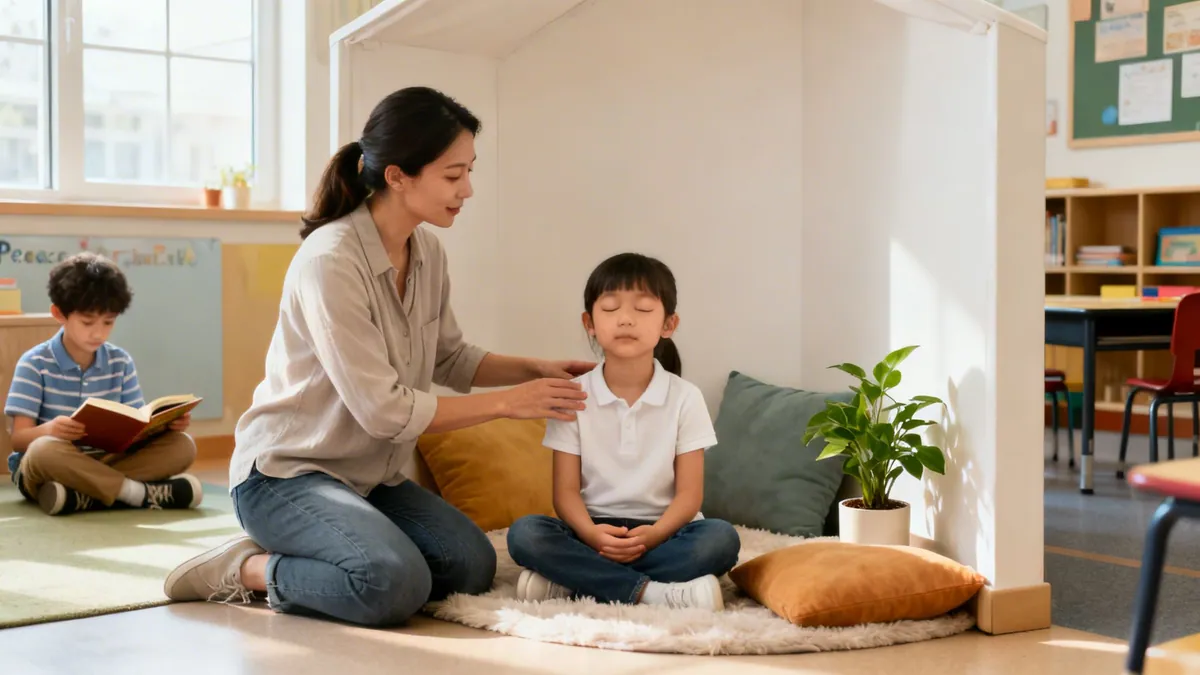
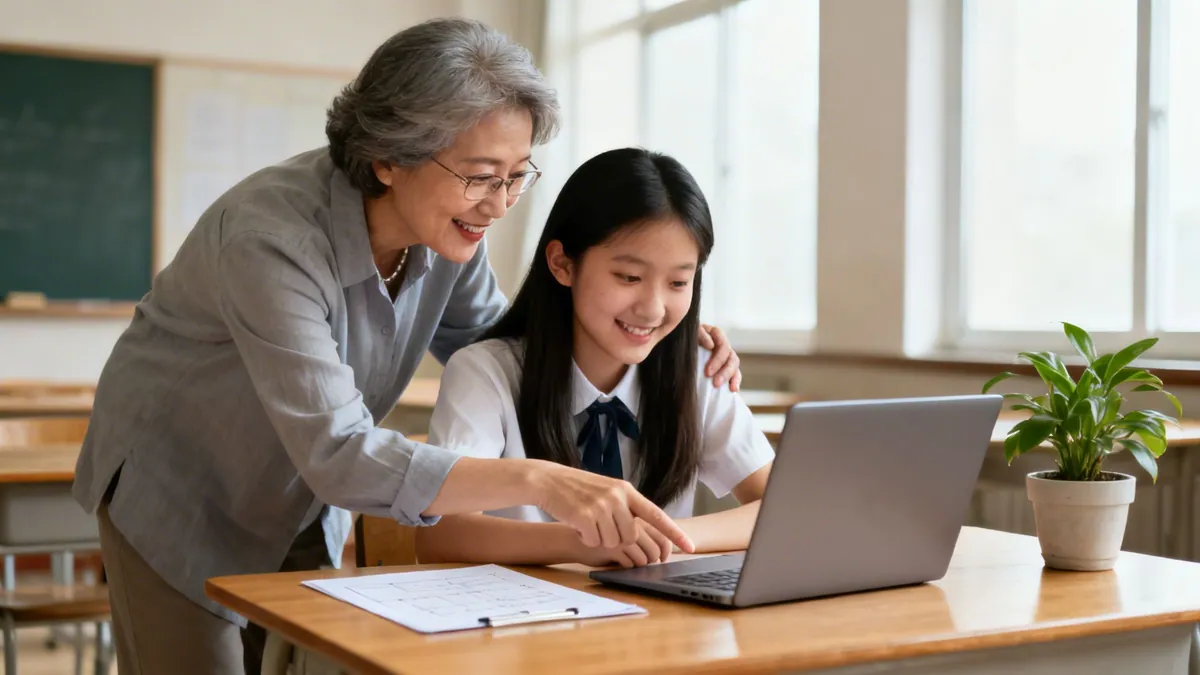
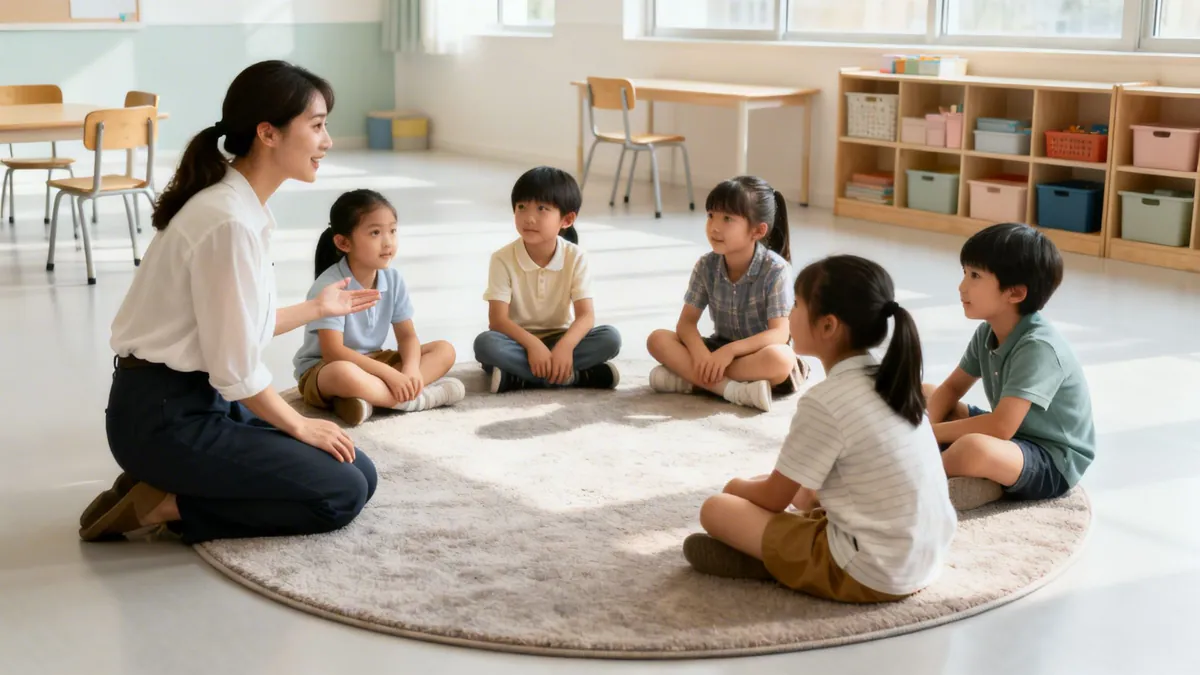
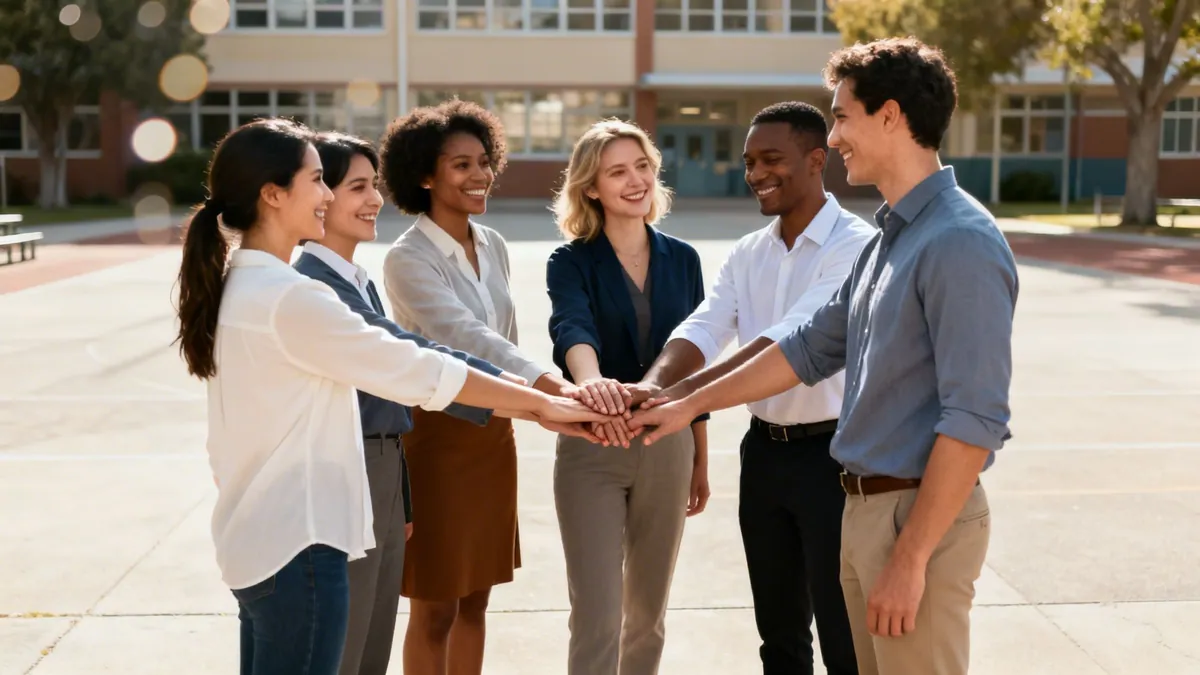
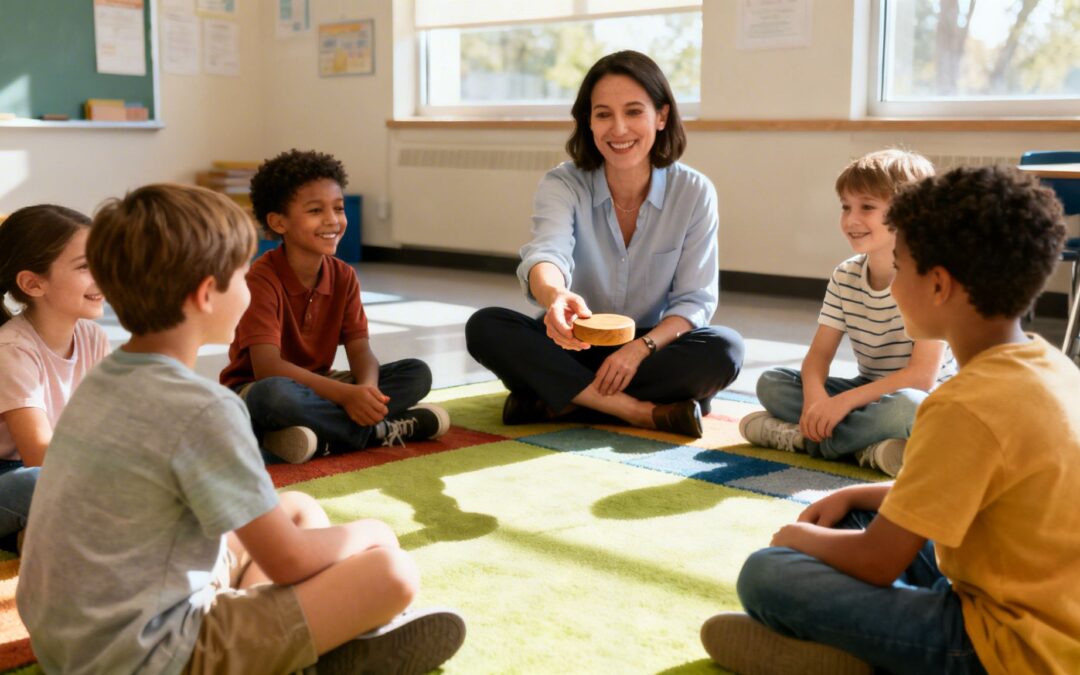
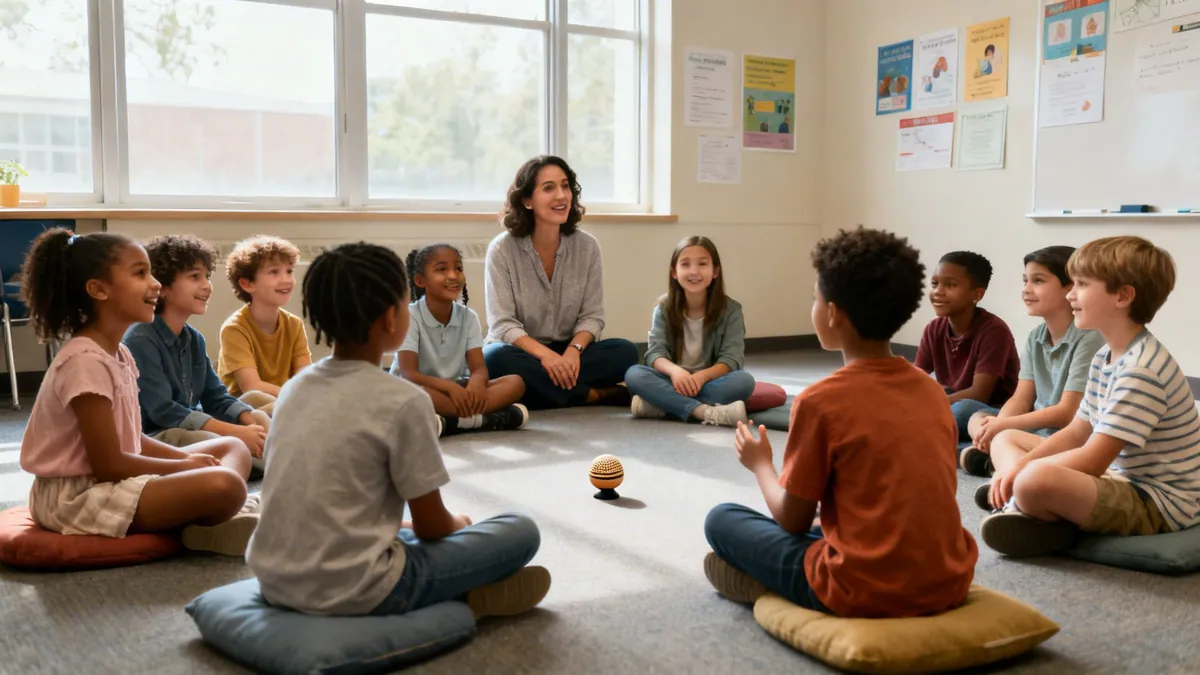
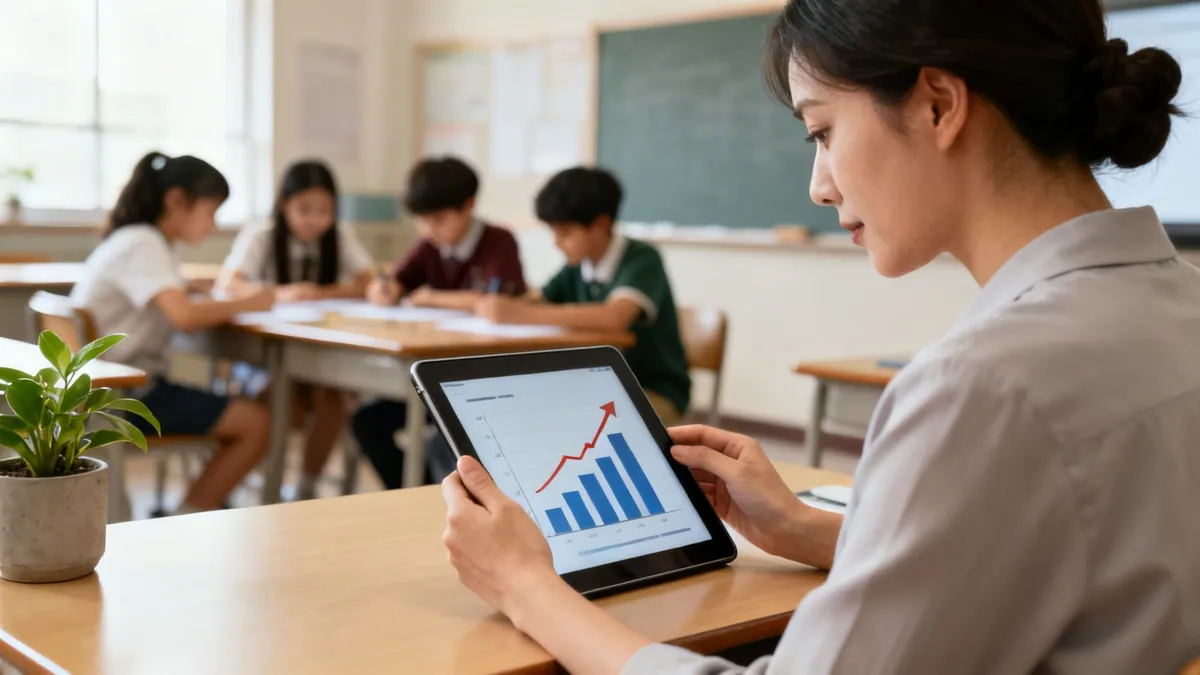
Collaborative problem solving is what happens when a group works together to get past a shared challenge. It’s a powerful blend of social skills, like communication and empathy, mixed with thinking skills, like planning and troubleshooting. It’s all about working toward one common goal.
Think of it as the magic ingredient that turns a chaotic group project into a creative, effective success.
Defining Collaborative Problem Solving
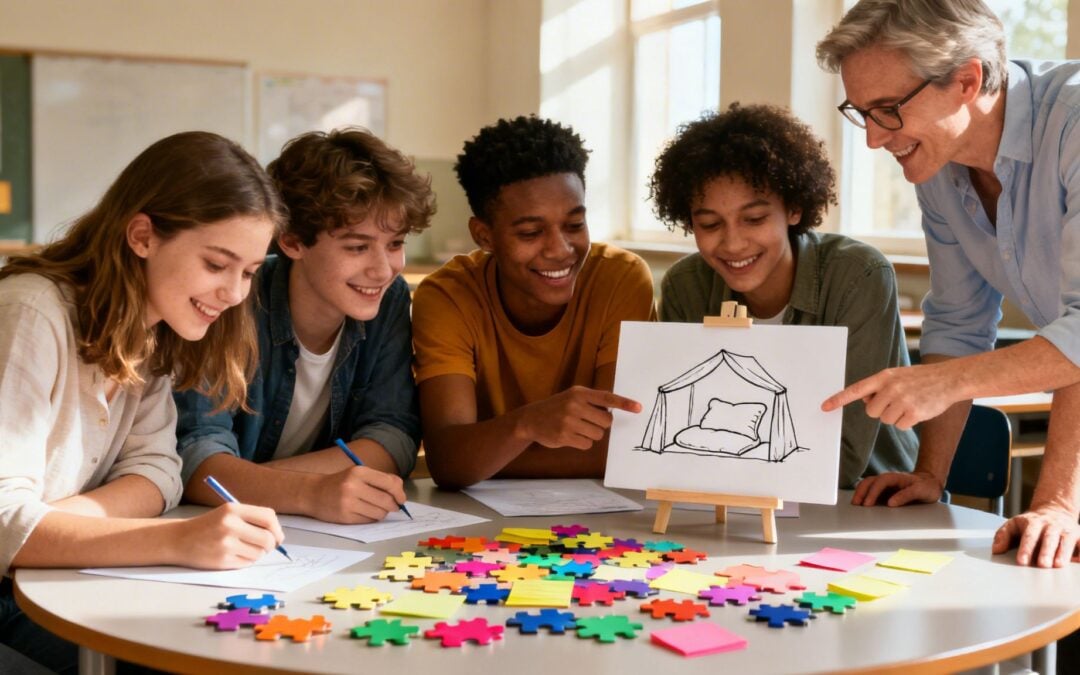
Picture a group of kids determined to build the ultimate pillow fort. They don’t just start grabbing cushions and hoping for the best. That would end in a heap on the floor.
Instead, they talk it out. They make a plan. They work together to figure out how to keep the walls from collapsing. One child might suggest using the heavy couch cushions for the base, while another has a great idea for draping a blanket to make the roof. That is collaborative problem solving (CPS) in a nutshell.
It’s the amazing thing that happens when we combine our brainpower and our social skills to tackle something tricky together. This is totally different from a lot of group work, which often turns into a “divide and conquer” mission where everyone just does their own separate part.
In collaborative problem solving, the process is just as important as the final product. The real goal is to build a shared understanding, handle disagreements in a positive way, and co-create a solution that no single person could have come up with on their own.
This approach takes more than just giving everyone a job to do. It means kids have to practice active listening, see things from another person’s point of view, and learn how to blend different ideas into one solid plan.
Beyond a Simple Definition
At its heart, collaborative problem solving is where thinking meets relating. It's a method that helps kids not only solve the problem in front of them but also build stronger relationships and communication skills along the way.
To really get good at it, kids need to develop skills in a few key areas. Think of them as the four pillars holding up any successful team effort.
The Four Pillars of Collaborative Problem Solving
This table breaks down the core skills students need to become effective collaborative problem solvers, with examples for parents and teachers.
Pillar
What It Looks Like in Action
Practical Example
Building a Shared Understanding
The group works together to define the problem. Everyone agrees on what the final goal is.
At home: Planning a family movie night. Everyone agrees the goal is to pick a movie and a snack that everyone can enjoy.
Exploring and Planning
Kids brainstorm different ideas and weigh the pros and cons. They create a step-by-step plan together.
In class: Students plan a party. They list all tasks on the board (decorations, music, games) before deciding who does what.
Communicating and Cooperating
Everyone listens to each other's ideas, shares their own thoughts clearly, and works to build consensus.
At home: Siblings decide how to share a new toy. They listen to each other's ideas for a schedule instead of grabbing.
Reflecting and Adapting
The group checks in on their progress. If something isn’t working, they adjust the plan as a team.
In class: A group project isn't working. They pause and ask, "What's not working? What's one thing we can change right now?"
When kids practice these skills, they're not just learning to be better teammates. They're developing a dynamic combination of abilities that are essential for success, both in the classroom and in the real world. In fact, this is the very foundation of how many professional fields, like design and creative services, operate.
This process directly nurtures key parts of a child's growth. You can see just how deeply these skills connect by reading our guide on what is social emotional development.
Ultimately, CPS teaches a powerful lesson: our collective brainpower is almost always stronger than our individual knowledge. It’s what transforms a simple group of kids into a true, unstoppable team.
The Three Essential Ingredients for Team Success
True collaborative problem solving isn’t something that just happens when you put kids in a group. It’s built on a specific set of skills they need to learn and practice together. When you see a group truly clicking, you'll notice three key ingredients at work.
Learning to blend these components is what turns chaotic group work into a powerful and productive learning experience. Once you can spot these three parts, you really understand what collaborative problem solving is all about.
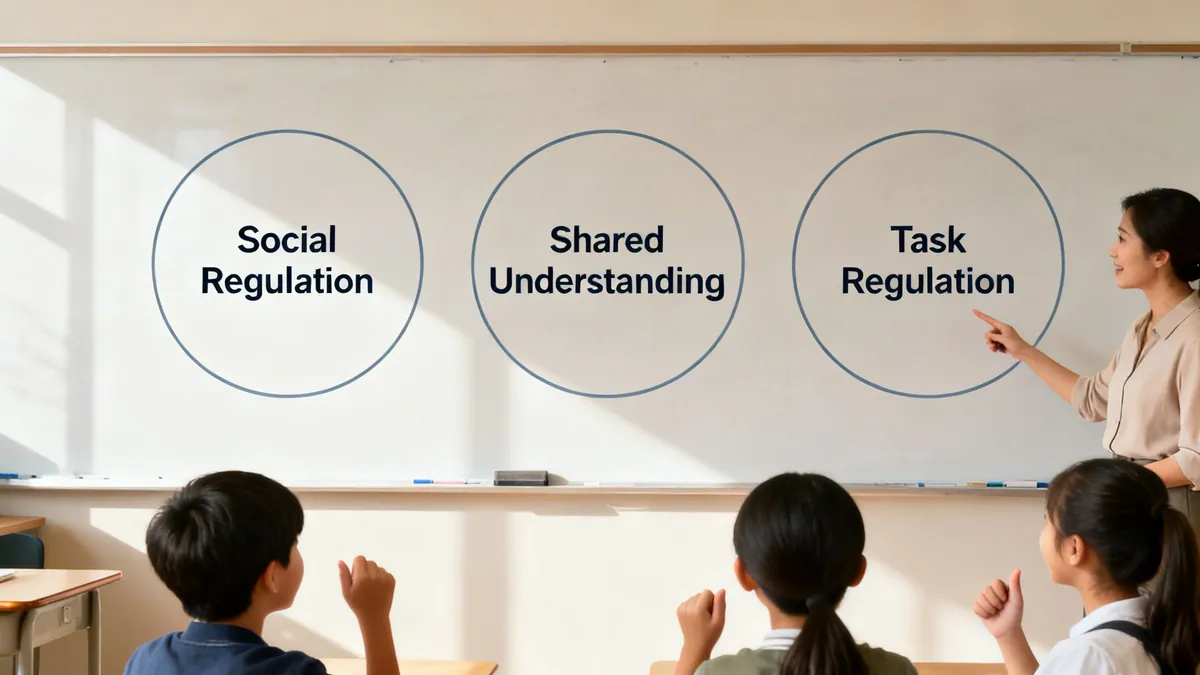
Social Regulation: The Emotional Glue
The first ingredient is social regulation, which is really about managing emotions and navigating interactions when things get a little tense. It’s the ability to stay focused and respectful, even when people disagree. Think of it as the emotional glue that holds a team together during a challenge.
For any team to find success, its members have to be able to handle frustration, genuinely listen to different points of view, and share their own feelings without causing a fight. Without social regulation, a simple conflict can derail the whole project before a solution is even close.
Practical Example for Parents and Teachers: Imagine a group of students is trying to decide on a theme for a class project. A disagreement starts. One child slams their pencil down, clearly frustrated. A teacher can step in and say, "I see this is getting frustrating. Let's all take a deep breath. Can we try using 'I-statements' to share our feelings? For example, instead of 'That's a bad idea,' try, 'I feel worried that idea won't work because…'" This small script gives them a tool to manage the tension productively.
Shared Understanding: The Team’s Compass
Next up is shared understanding. This is all about getting everyone on the same page about what the problem is and what the end goal looks like. It acts like a team’s compass, making sure everyone is moving in the same direction.
This goes beyond just reading the instructions. It’s about creating a collective mental picture of what success will be. When every single team member understands the objective, they can all contribute in a much more meaningful way.
A team that lacks a shared understanding is like a boat with people rowing in different directions. They might all be working hard, but they won't get anywhere meaningful.
Practical Example for Parents and Teachers: A family is trying to plan a Saturday outing. To build a shared understanding, a parent can grab a piece of paper and say, "Okay, let's make sure we all agree on our goal. Are we trying to find something fun and free, or is it okay if it costs a little money? Do we want to be outdoors or indoors?" By writing down the agreed-upon criteria ("free," "outdoors," "less than 20 minutes away"), the family creates a shared filter to evaluate all their ideas.
Task Regulation: The Action Plan
Finally, there's task regulation. This is the "how" of the project—it’s all about planning the work and then working the plan. This means organizing the process, keeping an eye on progress, and being willing to make adjustments along the way. It’s the team's action plan for turning ideas into reality.
This skill helps a group take a big, intimidating problem and break it down into smaller, more manageable steps. It also involves figuring out who is doing what so that everyone knows their role in reaching the finish line.
Practical Example for Parents and Teachers: A group of students needs to create a presentation. To practice task regulation, they can create a simple checklist on a shared document or whiteboard.
Task 1: Research Topic A (Assigned to: Sam and Chloe) – Due Tuesday
Task 2: Find images and videos (Assigned to: Maria) – Due Wednesday
Task 3: Create the presentation slides (Assigned to: Leo) – Due Thursday
Task 4: Practice the presentation together (Assigned to: All) – Friday morning
By creating this visible plan with roles and deadlines, the students aren't just dividing the work; they're co-creating a strategy for success and holding each other accountable.
Bringing Collaborative Problem Solving Into the Classroom
Theory is one thing, but seeing collaborative problem solving come to life in a bustling classroom is where the magic really happens. Moving from concept to practice means creating intentional, structured opportunities for students to build these skills brick by brick. The secret is to design challenges that feel real, engaging, and perfectly suited to their age.
Across all grades, the teacher’s role shifts from being the "sage on the stage" to the "guide on the side." You’re not there to hand out answers. Your job is to facilitate, ask probing questions, and help students work through the inevitable disagreements that pop up. This is how they build real capacity for teamwork and critical thinking.
Early Grades (K-2): The Classroom Tidy-Up Team
Our youngest learners do best with goals that are concrete and immediate. A simple “Classroom Tidy-Up Team” challenge can transform a mundane chore into a powerful lesson in collaborative problem solving. The mission is simple: figure out the best way to organize a messy reading nook or a chaotic art station together.
Instead of just telling them what to do, frame it as a puzzle they need to solve as a team. This prompts them to talk, plan, and delegate. You’ll see it right away—leaders emerge, organizers start sorting, and the little negotiators find ways to make things fair.
Teacher Prompts to Guide the Process:
"What should our plan be? Do we sort the books first, or should we put away the crayons?"
"I see two friends both want to stack the blocks. How can we figure this out so it feels fair for everyone?"
"What's the fastest way to get our space clean? Let's listen to everyone's idea before we start."
This small-scale activity teaches those foundational skills like taking turns, listening to others, and working toward a goal they can all see and celebrate. It’s the perfect first step into teamwork.
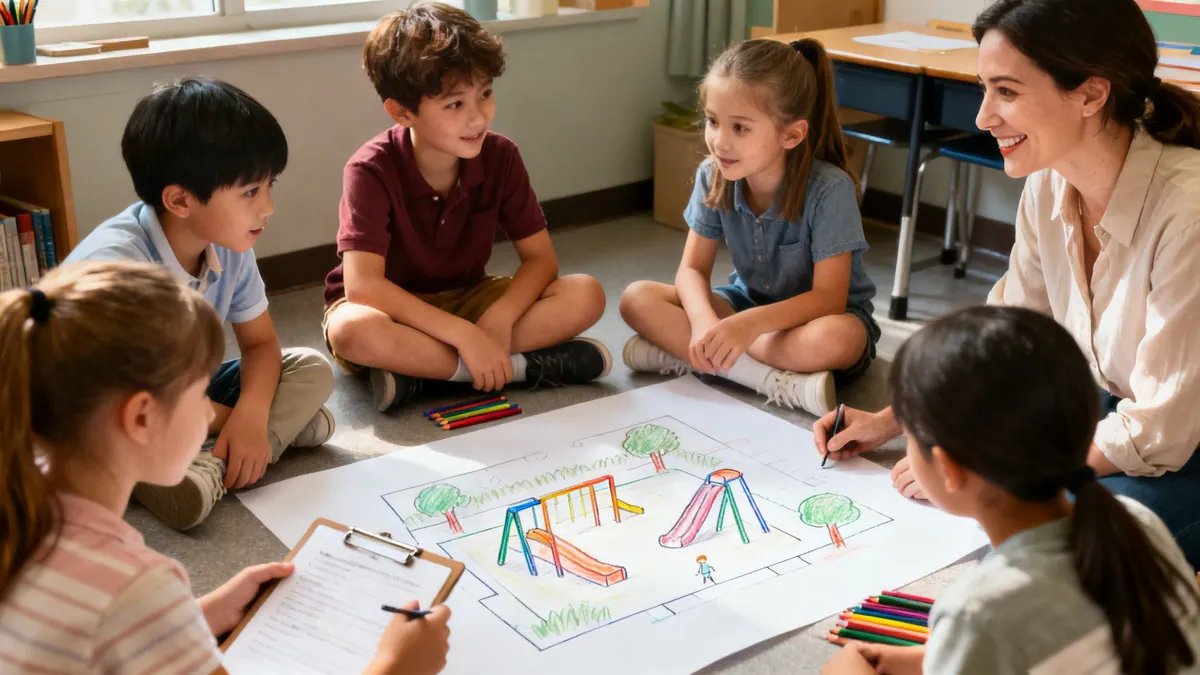
Elementary Grades (3-5): The Build a Better Recess Project
By upper elementary, students are ready for more ownership. A "Build a Better Recess" project empowers them to actively improve their own school environment. Working in small groups, students must brainstorm, develop, and propose a new recess game or activity.
This task moves beyond just sharing ideas. To succeed, groups have to interview their peers to see what’s popular, negotiate which ideas are actually doable, and then create a clear, compelling plan to present. This forces them to manage differing opinions and find a compromise everyone can get behind.
The real learning happens when students realize they can’t just push for their own idea. They have to listen, find common ground, and combine concepts to create something the whole group supports.
Teacher Prompts to Guide the Process:
"Your group has three great game ideas. How can you decide together which one to focus on for your proposal?"
"Maria's interviews show kids want more running games, but Ben's show they want something calmer. Is there a way your plan could include both?"
"What are the most important steps to explain in your presentation so your idea is easy for me to understand?"
If you're looking for more group activity ideas, you might find inspiration in these other engaging problem-solving activities for kids. Projects like these teach a vital lesson: the best solutions often come from blending different perspectives.
Middle School (6-8): The Solve a School Problem Initiative
Middle schoolers are itching to tackle more complex, real-world issues. A "Solve a School Problem" initiative channels their growing desire for justice and autonomy into something incredibly constructive. Groups can choose a genuine issue they care about, like long lunch lines, crowded hallways, or a lack of recycling bins on campus.
This project introduces more advanced problem-solving skills. Students will need to:
Gather Data: This isn't just about opinions. They might need to survey students, time the lunch line with a stopwatch, or count foot traffic in the hallways.
Develop a Solution: Using their data as evidence, they must create a practical, detailed proposal that goes beyond a simple complaint.
Pitch Their Idea: The final step is presenting their solution to school staff or administration, which requires clear communication, persuasive arguments, and a bit of courage!
Teacher Prompts to Guide the Process:
"Your data shows the hallway is most crowded at 10:15 a.m. What does that tell you about what might be causing the problem?"
"That's a fantastic solution! Now, let's think about what challenges or costs the school might face if they tried to make it happen."
"How can you present your findings to the principal in a way that convinces them your plan is worth trying?"
This kind of initiative helps students see themselves as capable agents of change. They learn to turn frustration into action and, in the process, develop skills they will carry with them for a lifetime.
How to Practice Collaborative Problem Solving at Home
While the classroom is a great, structured place to learn, home is where these skills truly come to life. Family life is brimming with little challenges and decisions—perfect, low-stakes moments to practice working together.
By reframing everyday situations as teamwork, you help your kids build stronger communication and empathy without it ever feeling like a lesson. The secret is shifting from giving orders to inviting collaboration. Instead of just assigning chores, think of it as a family mission. This simple change moves the dynamic from a top-down instruction to a team huddle, where everyone is working toward the same goal.
Turn Chores Into Challenges
That messy living room or chaotic playroom might make you want to sigh, but it's actually a golden opportunity. Try framing it as a fun challenge, like a “Weekend Reset Mission,” where the whole family teams up to conquer a space.
Instead of telling everyone what to do, get the ball rolling with questions that get them thinking like a team.
“Okay, team, take a look at this room. What's our game plan to get it looking great again?”
“Where should we start? Sorting toys, wiping down tables, or putting all the books back on the shelf?”
“What job does each person want to take on so we can get this done quickly?”
This approach gives kids ownership. When they have a say in the plan, they're far more invested in the result. They're not just following orders; they’re learning to plan, divide tasks, and see how their part contributes to the whole family's success.
Plan Family Fun Together
Even something as simple as a movie night can be a fantastic exercise in collaborative problem solving. The goal isn't just to pick a movie; it's about planning the entire experience together.
Let the kids be part of the whole process. They can help choose the film, decide on snacks that work with a set budget, and figure out how to make the living room extra cozy for everyone. For even more ways to build these skills while having a blast, check out these family game night ideas.
When siblings disagree—and they will—it’s a perfect coaching moment. Your role isn't to be the judge who declares a winner, but the facilitator who helps them find a middle ground.
Simple scripts can guide them toward a solution. For instance, if one child wants to watch a comedy and the other wants an adventure movie, you can say, “I’m hearing two really fun ideas. How can we make a choice that feels fair to both of you? Could we watch one tonight and the other next week? Or maybe find a movie that's an action-comedy?" This question steers them away from just their own wants and toward a group-focused mindset. Learning to handle these small disagreements is the foundation of empathy, a skill we explore more in our guide on how to teach empathy.
Why This Skill Matters More Than Ever
In a world that’s constantly changing, the ability to solve problems with others isn't just a nice-to-have skill for a resume. It’s becoming one of the most essential tools for a successful life. And the research backs this up in a big way.
A few years ago, researchers conducted the first-ever global assessment of collaborative problem solving, and the results were a major wake-up call for parents and educators.
The 2015 PISA study looked at the abilities of 15-year-old students across 52 different countries. What they found was startling: a tiny 8% of students could be considered highly skilled at working together to solve problems. This points to a huge gap between the skills kids are learning and the skills they actually need. You can find the full results of this historic study on the National Center for Biotechnology Information website.
Connection Is the Secret Sauce
But here’s where it gets really interesting. The study dug into what separated the successful collaborators from the rest. It turns out that just telling kids to “work as a team” didn't help. In fact, it sometimes made things worse.
The real key wasn't forcing teamwork—it was nurturing a genuine sense of connection between the students.
The study showed that students who valued interpersonal relationships performed significantly better at collaborative problem solving. In contrast, those who focused only on teamwork as a task showed worse results.
This is powerful evidence that social-emotional skills like kindness, empathy, and perspective-taking aren't just fluffy add-ons. They are the bedrock of what makes a child an effective problem-solver and a successful student.
More Than an Academic Skill
This link between social connection and problem-solving ability gets to the heart of why this matters so much. When we intentionally teach kids how to listen, how to appreciate different viewpoints, and how to navigate disagreements with respect, we're handing them the toolkit for tackling tough challenges as a team.
The takeaway is simple. When we teach kids how to connect with each other, we are teaching them a critical life skill. It’s the foundation that allows them to build the strong, empathetic, and creative teams that will define their success—in school, in their careers, and in life.
Your Step-By-Step Guide to a CPS Activity
Ready to lead your first collaborative challenge? Knowing what collaborative problem solving is and actually doing it are two very different things. This simple guide is designed to give parents and teachers the confidence to jump in, guiding a group from a shared goal all the way to a successful outcome.
Think of this less as a rigid script and more as a flexible game plan. You can adapt it for a big classroom project, a small family decision, or even a simple weekend chore. The real magic happens when you shift your role from director to facilitator, empowering kids to find their own way forward, together.
1. Frame the Challenge
First things first: set a clear and exciting goal. A vague task just leads to confusion, but a compelling mission is what really sparks creativity. The goal should be simple enough for everyone to grasp, but open-ended enough to invite all kinds of different solutions.
Practical Examples:
At Home: “Our family mission is to design a brand-new board game we can all play on Friday nights. What could it be about?”
In the Classroom: “Our challenge is to create a welcome kit for a new student. What would make someone feel included and happy on their very first day?”
2. Set the Ground Rules
Before anyone starts brainstorming, lay down a few simple norms for how the team will work together. This is all about creating psychological safety, making it a space where everyone feels comfortable sharing ideas without worrying about being judged. These rules are the true foundation of respectful teamwork.
The most important ground rule is that collaboration isn't a competition. The goal is to build the best idea together, not to prove whose idea was best from the start.
Post these rules where everyone can see them. A few simple but powerful examples include:
Listen to understand, not just to reply.
All ideas are good ideas to start.
We help each other when someone is stuck.
3. Kickstart Brainstorming
Now it's time to get those ideas flowing. Your main job here is to ask open-ended questions that encourage a wide range of thoughts. Steer clear of any question that can be answered with a simple "yes" or "no," as those can shut a conversation down before it even starts.
Practical Example: Instead of asking, "Do you want to make a poster?" ask, "In what different ways could we share our idea with the class?" This opens the door to ideas like making a video, performing a skit, or building a model.
4. Be the Guide on the Side
As the group gets to work, you're going to feel the urge to jump in with answers or solve their problems for them. Resist it. Your real power is in asking questions that nudge them to think more deeply and connect their ideas. You are the guide, not the hero of the story.
Helpful Guiding Questions:
"That's an interesting idea. What do you all think would happen if we tried that?"
"How could we combine Sarah's idea for the game board with Leo's idea for the characters?"
"What's one small step we could take right now to test out that idea?"
5. Navigate the 'Stuck' Points
Conflict is a totally natural—and necessary—part of collaborative problem solving. When disagreements pop up or the team hits a wall, don't rush in to fix it. This is a huge learning moment. Instead, help students find the words to express how they're feeling and work through the issue themselves.
Practical Example: If two students disagree on a plan, a teacher can mediate by saying, "It sounds like we have two different ideas here. Can each of you share one thing you like about the other person's idea? Let's see where we agree." This helps them find common ground.
6. Reflect on the Process
Finally, once the task is done, the learning isn’t over. The real magic happens in the reflection, where students get to internalize the skills they just practiced. Ask questions that help them think about how they worked together, not just what they made.
Reflection Prompts:
"What was the hardest part of working as a team today?"
"What was one thing someone did that really helped our group move forward?"
"What did we learn today that will make us an even better team next time?"
Common Questions About Collaborative Problem Solving
Diving into collaborative problem solving for the first time always brings up some great questions. It’s a shift in thinking, for sure. Here are a few of the most common ones we hear from teachers and parents, along with some straightforward answers.
What if One Child Dominates the Conversation?
This is such a common scenario, and it's actually a perfect coaching moment. The goal is to gently balance the scales without making anyone feel called out.
For the child who loves to lead, you can validate their enthusiasm while creating an opening for others. Try something like, "That's a fantastic idea to get us started! Let's pause for a moment and make sure everyone has a chance to share their thoughts before we move forward."
For a quieter child, a gentle, direct invitation can work wonders. "Sarah, I'd love to hear what you're thinking about that idea." You can also use a simple structure, like giving each child three “talking chips.” Once their chips are used, they have to listen. It’s a concrete way to teach the group that every voice has value.
How Is This Different from a Regular Group Project?
This is a big one. The main difference comes down to focus.
A traditional group project is almost always about the final product. This often encourages students to just "divide and conquer" the work. They might each do their part separately and staple it together at the end, without ever truly collaborating.
Collaborative problem solving, on the other hand, puts the spotlight on the process. The real goal is to explicitly teach lifelong skills like communication, taking another's perspective, and resolving disagreements. The final outcome is still part of the equation, but the rich learning that happens as the team figures out how to work together is the real prize.
A note on grading: It's best to assess collaboration based on growth, not just performance. Instead of a single grade, try a simple checklist to note behaviors like, “Shared a helpful idea” or “Helped the group solve a disagreement.” This keeps the focus on building skills, not just getting an A.
At Soul Shoppe, we believe that building these skills is the foundation for creating safer, more connected school communities. We provide schools and families with practical, research-based programs that equip students with the tools they need for empathy, effective communication, and peaceful conflict resolution.
Ready to bring more connection and less conflict to your campus? Learn more about our programs and how they can help.
When we talk about the benefits of social emotional learning (SEL), the conversation often goes straight to better grades, stronger friendships, and improved mental health. And yes, those are absolutely huge outcomes. But the real magic of SEL is that it gives students the inner toolkit they need to navigate not just school, but life itself.
What Is Social Emotional Learning And Why It Matters Now
Think of Social Emotional Learning (SEL) less as another subject to be taught, and more as a fundamental way of being. It’s the process of teaching our kids how to understand their inner world, connect with others in a healthy way, and make thoughtful decisions. It’s where the heart and the mind learn to work together.
Imagine a pilot flying through a storm. They have a whole instrument panel showing their altitude, speed, and direction, which allows them to stay calm and fly safely. SEL provides students with a similar internal dashboard. It gives them the emotional gauges to handle tough assignments, social turbulence, and personal setbacks with a lot more confidence and resilience.
The Five Core SEL Skills
At its core, SEL is built on five interconnected skills. These aren't just abstract ideas—they're practical abilities that can be taught, practiced, and strengthened over time. These skills are the building blocks of a person's overall social and emotional wellbeing.
To make this clear, let's break down each of these five areas with a quick look at what they mean and how they show up in a real classroom.
The Five Core Competencies of SEL at a Glance
Core Competency
What It Means
Practical Example
Self-Awareness
The ability to recognize your own emotions, thoughts, and how they impact your actions.
A student notices their stomach is in knots before a presentation and thinks, "I'm feeling nervous, and it's making it hard to think clearly."
Self-Management
The ability to control your emotions, thoughts, and behaviors in healthy ways.
A student feeling angry after losing a game decides to squeeze a stress ball for a minute instead of yelling at their teammate.
Social Awareness
The ability to understand and empathize with others, even those with different backgrounds.
A student notices a classmate looks sad and asks, "Are you okay?" showing they are paying attention to others' feelings.
Relationship Skills
The ability to build and keep positive, supportive relationships with others.
During a group project, students listen to each other's ideas without interrupting and work together to find a compromise.
Responsible Decision-Making
The ability to make thoughtful, constructive choices about your behavior and interactions.
A student finds a wallet on the playground and chooses to turn it in to the teacher instead of keeping it.
These competencies work together, building on one another to help students become more well-rounded individuals.
These so-called 'soft skills' are actually critical skills for educating the whole child. They create the framework for students to not only do well in school but to grow into kind, capable, and resilient people.
In a world where student anxiety is on the rise, teaching these skills is more urgent than ever. They empower kids to handle life's complexities, build resilience, and become positive forces in their communities.
It’s a common worry for educators and parents: with so much to cover, will focusing on social emotional learning take precious time away from core subjects like math and reading?
But what we've seen time and again is that the opposite is true. SEL isn't a detour from academics; it's the very road that leads to greater achievement. Instead of being a distraction, SEL builds the foundation students need to become more focused, resilient, and engaged learners.
When kids have the tools to manage their emotions, they are simply better equipped for the classroom. They can navigate the stress of a big test, stick with a tough assignment, and work well with others on group projects.
How SEL Directly Impacts Learning
Think about what a child needs to truly absorb new information. They need to feel safe, focus their attention, manage frustration when things get hard, and believe they can succeed. These aren't just personality traits—they are skills we can teach.
Here's what this looks like in a real classroom:
Improved Self-Regulation: A student overwhelmed by a long essay can use a breathing technique to calm down and break the task into smaller steps. This skill prevents them from shutting down and giving up entirely.
Enhanced Focus and Attention: A classroom that starts with a brief mindfulness exercise helps students shift from the buzz of the hallway to a state of calm readiness. This means more time is spent on learning and less on managing distractions.
Greater Perseverance: When a student learns that struggle is a normal part of the process, they're more likely to try again after a setback. SEL helps build this growth mindset, turning "I can't do it" into "Let me try this a different way."
The tools within an SEL framework are designed to build this academic foundation.
As you can see, skills like empathy and stress management aren't just for social situations. They are absolutely critical for creating a classroom where every student can thrive.
The Data Backs It Up
This connection between SEL and academics isn't just a feeling—it's backed by a huge body of research. A landmark report analyzing 424 studies with over 500,000 K-12 students across more than 50 countries confirmed it.
The findings showed that students in SEL programs outperformed their peers by an average of 4 percentage points in academic performance. When the programs ran for a full school year, that number more than doubled to 8 percentage points. Specifically, literacy scores rose by 6.3 points and math scores by 3.8 points—major gains for any classroom.
These aren't just small bumps in grades. The research also revealed that students in SEL programs had better attendance, higher self-efficacy, more optimism, and lower levels of anxiety, stress, and depression.
When students feel better, they learn better. It’s that simple. You can explore more about the powerful link between SEL and school outcomes by reviewing our curated Soul Shoppe research.
Practical Examples for Teachers and Parents
So, what does connecting SEL to academics look like day-to-day? Here are a few simple ways to get started.
In the Classroom (For Teachers):
Goal-Setting for a Big Project: Before starting a research paper, have students write one personal goal (e.g., "I will ask for help when I'm stuck") and one academic goal (e.g., "I will finish my rough draft by Friday"). This weaves self-management and responsibility into the assignment.
Using "I-Statements" in Group Work: During a collaborative science experiment, guide students to use "I-statements" if a disagreement pops up. Instead of "You're doing it wrong," a student learns to say, "I feel confused when we mix things without reading the instructions first."
At Home (For Parents):
Problem-Solving Homework Frustration: When your child is getting frustrated with their math homework, ask, "What's one small step we can take right now?" This builds perseverance and makes overwhelming tasks feel more manageable.
Reflecting on Reading: After reading a story together, ask questions that build empathy. "How do you think the main character felt when that happened? Have you ever felt that way?" This connects the dots between literacy and social awareness.
Creating Safer And More Connected School Communities
Beyond individual success stories, one of the most powerful ripple effects of social emotional learning is its ability to completely reshape a school’s atmosphere. SEL isn’t just about correcting one student’s behavior; it’s about cultivating a campus-wide culture of safety, respect, and belonging.
When an entire school community—from students to teachers and staff—begins speaking a shared language of empathy and problem-solving, the entire ecosystem shifts for the better. This happens because SEL gets to the root causes of so much of the conflict and isolation we see in schools.
Building A Culture Of Belonging
A positive school climate isn't simply about the absence of problems; it’s about the presence of connection. When students feel seen, heard, and valued for who they are, they’re far more likely to engage in learning and support their peers. SEL gives us the framework to build these connections intentionally.
For principals and school leaders, this is a game-changer. A school where kids feel physically and emotionally safe is a school where learning can truly flourish. For teachers, it means a more cooperative and manageable classroom, where precious time is spent on instruction instead of navigating social friction.
Imagine a playground where a disagreement over a game doesn't escalate into a shouting match or a physical fight. Instead, students use their SEL skills to talk it out, find a compromise, and get back to playing. This is what a strong SEL culture looks like in action—it turns conflict into a learning opportunity.
From Conflict To Connection In Practice
Let’s get practical. Think about a common school challenge: recess drama. Here’s how SEL can flip the script through something like a peer mediation program.
The Problem: Recess is constantly interrupted by arguments over kickball rules. This leads to hurt feelings, yelling, and students feeling left out. Teachers are exhausted from playing referee and putting out fires.
The SEL Solution: Older students are trained as peer mediators. They learn active listening, how to identify the feelings behind a conflict, and how to use "I-statements" to communicate without blame. They get a step-by-step process for guiding their peers toward a fair solution.
The Outcome: An argument starts. Instead of a teacher running over, the student mediators step in. They don’t take sides. They guide the kids involved to express themselves clearly ("I feel frustrated when you change the rules") and state their needs ("I just want to play a fair game"). The result? A calmer playground, empowered students who can solve their own problems, and a huge drop in recess-related discipline issues.
This is a perfect example of how SEL gives students the actual tools to build a better community for themselves. Learning how to improve school culture is a journey, and SEL provides the map.
The Lasting Impact on School Safety and Climate
This feeling of safety isn't just a nice-to-have; the research is crystal clear. A massive 2023 meta-analysis reviewing 424 rigorous studies found that SEL programs deliver incredible, widespread improvements.
Students showed significant gains in social skills, positive attitudes, and relationships. Even more telling, bullying decreased, stress levels went down, and students in SEL programs reported that their schools simply felt much safer and more respectful.
These positive effects were still present even six months after the programs ended, proving that SEL creates a durable, lasting shift in a school's climate.
Building Lifelong Resilience And Mental Wellbeing
Beyond grades and friendships, one of the most powerful gifts of social emotional learning is its deep, lasting impact on a child's mental wellbeing. Think of SEL as a proactive, preventative approach to mental health. It gives children an internal toolkit of coping skills to navigate life’s inevitable ups and downs.
These skills are absolutely essential for handling everything from everyday disappointments to the much bigger stressors that come with being a teenager and, eventually, an adult.
When children learn to name their feelings, figure out what triggers them, and practice healthy ways to respond, they are literally building the foundation for lifelong resilience. This isn’t about stopping kids from ever feeling sad or anxious. It’s about giving them the confidence and the skills to move through those feelings without getting stuck.
From Reacting To Responding
Emotional regulation is a cornerstone of mental wellbeing. It’s the ability to manage big emotions without being completely swept away by them. SEL teaches this critical skill through direct practice, creating supportive spaces where students can safely learn to self-soothe and problem-solve.
At the heart of this is the development of resiliency, which truly is the Resiliency The Hidden Hero Of Overcoming Obstacles. This is the capacity to bounce back from adversity, failure, and stress—a skill that will serve children their entire lives.
Let's see what this looks like in the real world for both educators and parents.
Practical Example for Teachers: The Peace Corner
The Scenario: Alex, a second-grader, gets super frustrated when his block tower keeps falling. His fists are clenched, and he’s about to knock the whole thing down in anger.
The SEL Practice: Instead of a timeout, his teacher gently guides him to the classroom's "Peace Corner"—a cozy spot with pillows, a feelings chart, and calming tools like squishy balls. The teacher says, "It looks like you're feeling really frustrated. Why don't you take a few minutes in the Peace Corner to help your body feel calm again?"
The Outcome: Alex goes to the corner, uses a breathing ball for a few deep breaths, and points to the "angry" face on the feelings chart. After a few minutes, he’s ready to try building again. He’s learned to recognize his frustration and use a strategy to manage it instead of letting it control him.
By providing a designated space and tools for self-regulation, the teacher empowers students to take charge of their own emotional states. This proactive strategy builds self-awareness and self-management skills that are vital for mental health.
Practical Examples For Parents And Caregivers
These skills are just as crucial at home. Parents can use SEL principles to help children process their day and build their emotional vocabulary.
Practical Example for Parents: Active Listening After a Hard Day
The Scenario: Maya, a fifth-grader, comes home, throws her backpack down, and sighs, "Today was the worst."
The SEL Practice: Instead of jumping in to fix it ("What happened? Who was mean?"), Maya's dad practices active listening. He gets down on her level, makes eye contact, and says, "It sounds like you had a really tough day. I'm here to listen if you want to tell me about it."
The Outcome: Feeling safe, Maya opens up about being picked last for a team in gym and feeling embarrassed. Her dad just listens, validating her feelings with, "That sounds really hurtful. It's okay to feel sad about that." By simply listening with empathy, he helps Maya process her feelings and reinforces that she has a safe person to talk to when things are hard.
When teachers and parents consistently use these strategies, they help children build a sturdy internal framework for mental wellbeing. This is one of the most durable benefits of social emotional learning, creating emotionally intelligent people who are simply better equipped for life.
How To Implement SEL In Your School And Home
Knowing why social emotional learning matters is one thing. Putting it into practice is where the real magic happens. So, how do we get there? Creating an environment where kids can truly thrive isn't just a school's job or a parent's job—it’s a partnership. Let's walk through how to build that bridge between school and home.
Schools that adopt established frameworks from organizations like the Collaborative for Academic, Social, and Emotional Learning (CASEL) or partner with experts like Soul Shoppe often see the most significant impact. These programs provide structured, evidence-based tools that go beyond theory. For additional ideas, you can find helpful SEL resources for teachers that support both personal wellness and classroom instruction. By focusing on the emotional health of educators, schools can build a more resilient, engaged, and stable teaching force.
2. Mentorship and Peer Support Programs
A cornerstone of effective teacher retention strategies is the implementation of structured mentorship and peer support programs. Pairing experienced educators with new or struggling teachers provides a crucial blend of professional guidance and emotional support. These relationships create accountability, build community, reduce the profound sense of isolation many new teachers face, and accelerate their professional growth.
When educators feel connected to their colleagues and believe they have a safe space to ask for help, their sense of belonging and psychological safety grows. This directly combats the high-stress environment that often leads to early-career burnout and departure.
This strategy is built on the understanding that professional development is not a one-time event but a continuous journey best navigated with a trusted guide. Mentorship moves beyond simple "buddy systems" to create deep, reflective partnerships.
How to Implement Mentorship for Staff Retention
Successful implementation requires intentional design and administrative support. Instead of leaving mentorship to chance, schools should create a formal framework that gives these relationships the time and resources needed to flourish. This demonstrates a clear investment in each teacher's long-term success.
Provide Mentor Training: Equip veteran teachers with specific coaching and active listening skills. Training from organizations like the National Mentoring Center can help mentors learn how to guide rather than just give advice. For example, a mentor might learn to ask, "What have you tried so far?" instead of immediately offering a solution.
Allocate Protected Time: Schedule regular, non-negotiable meeting times for mentors and mentees during contract hours. This prevents mentorship from becoming an after-hours burden and signals its importance.
Establish Peer Learning Communities: Create small groups of teachers who meet regularly to discuss challenges and share strategies. For example, a group of third-grade teachers could share successful techniques for teaching fractions, providing practical, student-focused lesson ideas for everyone.
Normalize Asking for Help: Leaders should model vulnerability by sharing their own professional struggles and seeking input. For instance, a principal could share that they are struggling to engage families and ask for teachers' ideas, creating a culture where asking for help is seen as a strength.
Key Insight: The most impactful mentorship programs are reciprocal. While new teachers gain invaluable guidance, veteran mentors report feeling re-energized and more reflective about their own practice, creating a school-wide culture of continuous improvement and boosting overall retention.
Many state education departments and large districts, like those in New York City and Los Angeles, have developed formal induction and mentorship programs that significantly improve retention rates for new educators. By fostering these supportive professional relationships, schools build a resilient and collaborative staff committed to staying and growing within the community.
3. Competitive Compensation and Benefits Packages
A foundational element of any effective teacher retention strategy is a commitment to competitive compensation and benefits. Offering salaries, comprehensive health coverage, and retirement plans that reflect the value of educators directly addresses their material security and sends a clear message of institutional respect. While salary alone may not guarantee retention, inadequate pay is consistently cited as a primary reason teachers leave the profession, making it a critical area for schools to address.
This strategy is built on the direct link between financial stability and professional sustainability. When teachers are not burdened by financial stress, they can dedicate more energy to their students and their craft, improving job satisfaction and long-term commitment.
How to Implement Competitive Compensation and Benefits
Moving beyond baseline offerings requires a proactive and transparent approach. Administrators must treat compensation not as a fixed cost, but as a strategic investment in their most valuable resource: their teaching staff.
Conduct Annual Salary Analysis: Regularly benchmark your district’s or school’s salary and benefits against neighboring and comparable districts. Use this data, often available through organizations like the National Education Association (NEA) or state-level departments of education, to make informed adjustments and stay competitive.
Prioritize Comprehensive Wellness Benefits: Go beyond standard health insurance. Include robust mental health support, such as access to counseling services, wellness stipends, or subscriptions to mindfulness apps. For example, a teacher using these services to manage stress is better equipped to patiently support a student with challenging behavior.
Offer Clear Pathways to Growth: Develop and transparently communicate a clear salary schedule that shows teachers how they can advance financially through experience, further education, or taking on leadership roles. This allows a teacher to plan their career and see a future at the school.
Explore Creative Financial Incentives: Consider implementing programs that address specific financial burdens. For example, a district might offer a stipend for teachers who earn a bilingual certification, which directly benefits students who are English language learners.
Key Insight: Competitive compensation isn't just about the dollar amount; it's about communicating value. When salary and benefits packages are fair, transparent, and responsive to teachers' needs, it builds trust and reinforces the idea that teaching is a respected and sustainable career.
4. Autonomy and Leadership Opportunities
Empowering teachers with genuine decision-making authority is one of the most effective teacher retention strategies available. This approach moves beyond top-down management to create a culture where educators have a real voice in school operations, curriculum design, and professional growth. When teachers feel that their expertise is respected and their contributions matter, their sense of ownership and professional investment grows, directly combating the feelings of powerlessness that often lead to burnout.
This strategy is built on the principle that the professionals closest to the students are best equipped to make many of the decisions that affect the classroom. Giving them autonomy is not just a perk; it is a recognition of their professional expertise and a critical component of a healthy school ecosystem.
How to Implement Autonomy and Leadership Opportunities
Successful implementation requires administrators to intentionally distribute leadership and create clear, reliable channels for teacher input. This builds trust and shows that leadership values collaboration over compliance. It’s about shifting from a model where teachers are simply directed to one where they are partners in the school's success.
Establish Teacher-Led Committees: Create committees for key areas like curriculum adoption, school climate, or technology integration. For example, a teacher-led committee could pilot and choose a new math curriculum, ensuring it's practical for classroom use and meets student needs.
Implement Distributed Leadership Models: Identify and train teacher leaders who can facilitate Professional Learning Communities (PLCs), mentor new educators, or lead departmental initiatives. This creates career pathways within the school, as advocated by experts like Richard Elmore.
Start with Low-Stakes Decisions: Build a foundation of trust by involving staff in smaller, tangible decisions first. For example, let a grade-level team decide how to structure their literacy block, allowing them to tailor instruction to their specific students' reading levels.
Provide Leadership Training: Offer professional development specifically for teachers interested in leadership roles. This training can cover skills like facilitating meetings, coaching peers, and analyzing school data, preparing them to take on more responsibility effectively.
Key Insight: True autonomy is not about the absence of leadership; it's about the distribution of it. When teachers are given meaningful leadership roles and a voice in decisions that affect their work, they become more invested, innovative, and motivated to stay and contribute to the school's long-term success.
5. Reduced Class Sizes and Manageable Workloads
One of the most direct and effective teacher retention strategies is a commitment to reducing class sizes and ensuring workloads are manageable. Smaller classes allow educators to move beyond crowd control and dedicate their energy to meaningful instruction, building individual relationships, and providing personalized support. When teachers have fewer students, their workload decreases, stress is reduced, and they are able to focus on the craft of teaching, which is the reason most entered the profession in the first place.
This approach acknowledges that a teacher's capacity is finite. By limiting the number of students they are responsible for, schools directly address a primary source of burnout and create an environment where high-quality instruction can flourish, boosting both teacher satisfaction and student achievement.
How to Implement Reduced Workloads and Class Sizes
Achieving smaller classes often requires strategic financial planning and advocacy, but the long-term benefits to school culture and stability are significant. Even when system-wide changes are not immediately possible, targeted actions can make a substantial difference.
Target Key Grade Levels: If district-wide reduction is not feasible, start by lowering class sizes in early grades (K-3) or in grade levels with the highest rates of behavioral challenges. For example, a class of 18 first-graders allows a teacher to conduct individual reading conferences with each student weekly.
Advocate for Funding: Use data to build a case for class size reduction. Present research, such as findings from Tennessee's Project STAR, to school boards and community stakeholders to advocate for increased state and federal funding.
Systematically Audit Workloads: Don't just assume workloads are reasonable. Regularly survey teachers about their time spent on grading, lesson planning, and administrative duties. For instance, if a survey reveals teachers spend hours on a duplicative report, leadership can eliminate it, freeing up time for student feedback.
Protect Planning Time: A smaller class is only half the solution. Ensure that reduced class sizes are paired with adequate, uninterrupted preparation time. Protect this time fiercely from meetings or other obligations.
Key Insight: Reducing class sizes is not just about logistics; it's a fundamental investment in the quality of teacher-student interactions. A manageable workload empowers teachers to be proactive educators rather than reactive managers, directly correlating with their desire to remain in the classroom and the profession.
Pioneering research from Tennessee's Project STAR provided strong evidence that smaller classes in the early grades have lasting positive effects on student success. Progressive schools often adopt this as a core principle, capping classes at 18-20 students to create a more connected and supportive learning community. By strategically addressing class size and daily workload, schools can build a more sustainable and rewarding environment for their most valuable asset: their teachers.
6. Professional Growth and Continuous Learning Opportunities
Investing in meaningful professional growth is one of the most effective teacher retention strategies because it signals that an institution values its educators as professionals who are worth developing. When teachers feel they are continuously learning and honing their craft, their engagement and commitment to their school deepen. Providing access to high-quality conferences, advanced certifications, and specialized training shows a direct investment in their careers, which boosts both competence and job satisfaction.
This approach is built on the understanding that stagnation leads to burnout. Opportunities to deepen expertise in areas like social-emotional learning, trauma-informed practices, or differentiation not only make teachers more effective but also reignite their passion for the profession, making them more likely to stay.
How to Implement Professional Growth for Staff Retention
Successful implementation requires a strategic, individualized approach rather than a one-size-fits-all model. It’s about aligning teacher aspirations with school-wide goals and creating a culture where learning is celebrated.
Create Individualized Growth Plans: Work with each teacher to create a professional development plan that aligns their personal interests with school improvement priorities. For example, a teacher passionate about STEM could be supported in attending a coding bootcamp, bringing new project-based learning to their students.
Offer Tangible Support: Show commitment by offering tuition reimbursement for graduate programs, covering costs for teacher teams to attend SEL and wellness conferences, or providing stipends for completing National Board Certification.
Build Communities of Practice: When teachers return from training, create structured time for them to share what they've learned. For instance, a teacher returning from a literacy conference could lead a session on new strategies for supporting struggling readers, benefiting the whole staff.
Celebrate and Utilize New Expertise: Publicly recognize teachers who complete certifications or training. More importantly, give them opportunities to lead, such as by facilitating a staff workshop or mentoring a peer. This validates their growth and benefits the entire school.
Key Insight: Professional development becomes a powerful retention tool when it moves beyond compliance and becomes a collaborative effort. When schools invest in a teacher's long-term career path, the teacher is more likely to invest their long-term career in the school.
Schools often see the best results when they partner with organizations that specialize in educator development, like Learning Forward or CASEL. For schools focused on building a supportive culture, professional development that strengthens adult SEL skills is crucial. You can explore relevant professional development topics for teachers that focus on these essential areas. By building a clear pathway for continuous learning, schools create an environment where teachers feel empowered, respected, and motivated to build a lasting career.
7. Positive School Culture and Psychological Safety
Creating a school environment where teachers feel respected, valued, and safe, both physically and psychologically, is foundational to effective teacher retention strategies. This involves fostering a workplace free from harassment, practicing inclusive leadership, celebrating diverse perspectives, and cultivating genuine care among staff. When teachers experience the same psychological safety and belonging that programs like Soul Shoppe teach students, they feel more connected to their work and are significantly more likely to stay. A positive culture reduces isolation and builds the human connections that sustain careers.
This strategy is built on the work of researchers like Amy Edmondson and Brené Brown, who highlight that belonging and vulnerability are prerequisites for high performance and engagement. A school cannot expect its teachers to create safe, supportive classrooms if they do not experience that safety themselves in the staff room and hallways.
How to Implement a Culture of Psychological Safety
Implementation begins when leaders intentionally model vulnerability and actively protect their team's well-being. This signals that the school is a place where it's safe to take risks, admit mistakes, and ask for help, which are all crucial for professional growth and resilience.
Model Safety from the Top: Leaders should openly share their own challenges and learning moments. An administrator who says, "I tried a new parent communication strategy and it didn't work as expected; here’s what I learned," gives teachers permission to be imperfect and try new things in their own classrooms.
Address Toxic Behaviors Swiftly: Do not allow gossip, cliques, or dismissive attitudes to fester. Use restorative practices to address staff conflicts. For example, if two teachers disagree, a trained facilitator could help them use "I-statements" to find a resolution, modeling a skill they can teach students.
Create Community-Building Rituals: Start staff meetings with a "gratitude circle" or host monthly potlucks. Simple, consistent rituals build a sense of community and turn colleagues into a support system.
Involve Teachers in Culture Initiatives: Form a volunteer "Culture Committee" of teachers to plan staff appreciation events, wellness activities, and recognition programs. This ensures initiatives are authentic and valued by staff.
Key Insight: Psychological safety is not about being "nice"; it's about creating a climate of respect, trust, and openness where candor is welcome and interpersonal risks feel safe. Teachers who feel psychologically safe are more innovative, collaborative, and committed to their school community.
By actively cultivating a positive environment, schools build a resilient and stable faculty. To dig deeper into specific actions, you can find helpful advice on how to improve school culture that directly supports these retention efforts. This focus on the human element of the school environment is a powerful investment in keeping your best teachers.
8. Recognition, Celebration, and Appreciation Programs
One of the most direct teacher retention strategies involves creating a culture where educators feel seen, valued, and appreciated. This goes far beyond a single end-of-year award to encompass regular, meaningful recognition for their daily contributions and emotional labor. While many enter the profession for mission-driven reasons, a persistent feeling of being undervalued is a primary driver of burnout and attrition. Systematic and authentic appreciation directly counteracts this, reinforcing a teacher’s sense of purpose and belonging.
This strategy is built on the understanding that acknowledgment is a powerful motivator. When teachers feel that their hard work, instructional creativity, and dedication to students are noticed and celebrated, their professional morale and commitment to the school community strengthen considerably.
How to Implement Recognition and Appreciation
Effective recognition programs are authentic, specific, and consistent. They move beyond generic praise to highlight the unique strengths and accomplishments of individual educators, creating a positive and reinforcing school environment.
Establish a Peer-to-Peer Recognition System: Use a simple digital platform like a shared Google Form or a physical "kudos board" in the staff lounge. A practical example: a teacher writes, "Kudos to Ms. Jones for sharing her amazing science experiment on volcanoes! My students loved it."
Make Appreciation Public and Specific: Instead of a generic "Teacher of the Month," create specific recognitions like "Innovator of the Month" for a teacher who successfully integrated a new technology that engaged students in a new way. Announce these in staff newsletters and on school social media.
Involve Parents and the Community: Launch a "Thank a Teacher" campaign where parents and students can submit notes. A parent might write, "Thank you, Mr. Smith, for helping my child finally understand fractions. Your patience made all the difference." Sharing these builds morale.
Celebrate Diverse Contributions: Acknowledge not just test scores but also the teacher who stayed late to comfort a student, successfully de-escalated a conflict in the hallway, or organized a field trip. This shows all aspects of a teacher's work are valued.
Key Insight: The most effective appreciation is specific, consistent, and visible. When recognition is woven into the daily fabric of the school culture, it becomes a powerful antidote to the demoralization that can lead to teacher turnover, making it a cornerstone of successful teacher retention strategies.
9. Work-Life Balance and Burnout Prevention Programs
A critical component of any effective teacher retention strategy is a direct focus on work-life balance and burnout prevention. Teacher burnout, as identified in Christina Maslach's foundational research, is a primary driver of attrition. Proactive programs that manage workload, offer mental health support, and encourage self-care acknowledge that teaching is an emotionally demanding profession that requires specific support systems for sustainability.
This strategy is built on the understanding that simply telling teachers to "take care of themselves" is not enough. Schools must create an environment where balance is not just encouraged but structurally supported, helping teachers build long, fulfilling careers.
How to Implement Burnout Prevention Programs
Implementation requires a systemic commitment from leadership to address the root causes of stress, not just the symptoms. This begins with leaders modeling healthy work-life boundaries and creating policies that protect teachers' time and well-being.
Protect Teacher Time: Institute clear policies that limit expectations for after-hours work, such as a "no emails after 5 PM or on weekends" rule. For example, an administrator modeling this behavior reinforces that teachers can and should disconnect to rest.
Provide Mental Health Resources: Partner with local providers to offer free or subsidized counseling services. Normalize seeking support by openly discussing the availability of these resources and destigmatizing mental health care.
Offer Wellness and Mindfulness Programs: Dedicate time during professional development for staff to learn and practice mindfulness. For example, teaching staff a 5-minute breathing exercise gives them a tool they can use to de-stress between classes or share with an overwhelmed student.
Regularly Assess and Respond: Use anonymous surveys to regularly check in with teachers about their burnout levels and workload concerns. Use this data to make targeted, meaningful changes. For example, if surveys show "report card comments" are a major stressor, the school can provide comment banks or dedicated time to complete them.
Key Insight: The most impactful burnout prevention programs move beyond individual self-care tips and address systemic workload issues. When school leaders actively model and enforce boundaries, they create a culture where teachers feel permitted to prioritize their own well-being, leading to greater resilience and retention.
10. Inclusive, Trauma-Informed, and Culturally Responsive Leadership
A critical factor in teacher retention strategies is leadership that actively fosters an inclusive, trauma-informed, and culturally responsive school environment. Teachers, especially those from marginalized communities, are more likely to leave when they feel unseen, unsupported, or isolated. Leadership that is explicitly anti-racist and prioritizes belonging for all staff members directly combats this by creating a psychologically safe and affirming workplace.
This approach recognizes that a school's culture is set from the top down. When leaders model inclusivity and address systemic inequities head-on, it signals to every educator that their identity and well-being are valued, which is fundamental to long-term commitment.
How to Implement Inclusive Leadership for Staff Retention
Implementation requires a deep commitment to examining and transforming school policies, practices, and norms. It begins with leaders honestly assessing the current climate and centering the voices of educators from underrepresented backgrounds in every decision.
Start with an Equity Audit: Begin with an honest assessment of current policies and curriculum to identify biases. For example, an audit might reveal that classroom libraries lack diverse authors, leading to a school-wide initiative to purchase books that reflect the student population.
Invest in Continuous Training: Provide ongoing, meaningful professional development in anti-racism and culturally sustaining pedagogy. A practical outcome is a teacher learning how to facilitate classroom conversations about different cultures respectfully and accurately.
Create Affinity and Support Groups: Establish and support affinity groups for teachers of color and other marginalized staff. These groups provide a vital sense of community, validation, and a network for peer support.
Recruit and Mentor Diverse Talent: Actively recruit teachers from diverse communities and create structured mentoring programs that pair new educators of color with experienced mentors who can help them navigate the school system and feel a sense of belonging.
Embed Restorative Practices: Move beyond punitive discipline for both students and staff. For example, instead of suspension for an argument, a teacher can use a restorative circle where students can share their perspectives and co-create a solution, a skill learned through school-supported training.
Key Insight: Inclusive leadership is not a passive stance but an active, ongoing practice. When school leaders intentionally dismantle exclusionary systems and build a culture of authentic belonging, they create an environment where every teacher feels respected, supported, and motivated to stay.
This work is grounded in the scholarship of experts like Gloria Ladson-Billings, Zaretta Hammond, and Ibram X. Kendi. Their frameworks provide clear pathways for creating equitable learning environments. For a deeper understanding of one key component, you can explore these trauma-informed teaching strategies that support both student and staff well-being. By championing equity, leaders can make their schools places where talented educators from all backgrounds choose to build their careers.
Teacher Retention — 10-Strategy Comparison
Strategy
Implementation complexity
Resource requirements
Expected outcomes
Ideal use cases
Key advantages
Social-Emotional Learning (SEL) Integration and Professional Development
High — requires system-wide training and culture change
Medium–High — ongoing PD, coaches, time, sustained funding
Increased retention of teachers of color, greater belonging, improved outcomes for marginalized students
Diverse schools, equity-focused districts, schools addressing systemic bias
Addresses systemic inequities and builds authentic belonging for marginalized staff
Building a School Where Everyone Belongs
The journey through these ten powerful teacher retention strategies reveals a central, undeniable truth: retaining great educators is not about a single program or a one-time bonus. It is the direct result of building a school culture where teachers feel seen, supported, and professionally fulfilled. The ideas we have explored, from robust mentorship programs and fair compensation to the critical work of fostering psychological safety and manageable workloads, are not isolated solutions. Instead, they are deeply connected components of a single, unified mission: creating a school where every adult, just like every student, feels a profound sense of belonging.
Mastering these approaches is essential because the alternative is unsustainable. The constant cycle of hiring, training, and then losing talented teachers drains financial resources, destabilizes school culture, and, most importantly, negatively impacts student learning. A stable, experienced, and motivated faculty is the foundation upon which academic achievement, positive behavior, and a vibrant community are built. When teachers feel secure and valued, they have the emotional and mental capacity to create the same environment for their students. This is the core of effective education.
From Ideas to Action: Your Next Steps
Reading a list of strategies is a great start, but creating lasting change requires intentional action. The goal is not to implement all ten ideas overnight. The goal is to begin. Choose one area that resonates most with your school’s current needs and commit to making a measurable difference.
Consider these actionable starting points:
If you want to focus on well-being: Start by modeling and integrating adult SEL practices into your staff meetings. Begin each meeting with a brief, structured check-in or a one-minute mindfulness exercise. This small change signals that you prioritize the emotional health of your team.
If you want to improve recognition: Don't wait for a formal awards ceremony. Create a simple "Kudos Corner" on a staff bulletin board or a dedicated channel in your school’s communication app. Encourage peer-to-peer shout-outs to build a culture of everyday appreciation.
If you want to address workload: Conduct an anonymous "time audit" survey. Ask teachers what tasks consume the most time outside of instruction and which ones feel least impactful. Use this data to identify one specific administrative burden, such as a redundant report or an inefficient duty schedule, that you can simplify or eliminate.
Key Takeaway: The most successful teacher retention strategies are not about grand, expensive gestures. They are about the consistent, daily practice of demonstrating respect, providing support, and building trust.
Ultimately, the work of retaining teachers is the work of creating a human-centered organization. It means recognizing that educators are professionals who need autonomy, opportunities for growth, and a voice in the decisions that affect their work. It requires leaders who are not just managers but also mentors, advocates, and cultivators of a positive, inclusive culture. By weaving together the threads of fair compensation, authentic recognition, and a deep commitment to well-being, you are not just improving a statistic. You are building a professional home where dedicated educators can thrive for years to come, shaping the lives of countless students along the way. Your school becomes a place where people don't just want to work; it becomes a place where they belong.
Ready to build a school culture rooted in respect, empathy, and positive communication? Soul Shoppe provides SEL-focused programs and professional development that equip both students and staff with the tools to create a supportive environment, directly contributing to the psychological safety and sense of belonging that are critical for effective teacher retention strategies. Explore how Soul Shoppe can help you build the foundation for a school where everyone thrives.
What if classroom conflict wasn’t something to be stamped out with punishment, but a chance for students to grow? That’s the idea behind restorative circles in schools. It’s a powerful shift away from focusing on consequences and toward repairing harm and rebuilding community. This simple method gives everyone a voice, turning tense moments into real opportunities for empathy and connection.
Moving from Conflict to Connection with Restorative Circles
Think about what happens when a problem pops up in a typical classroom. Maybe two students get into a heated argument. The usual response is often punitive—a trip to the office, detention, or lost privileges. This approach zeros in on punishing the behavior, but it rarely gets to the root of the problem or helps mend the relationship.
Restorative circles offer a completely different path. Instead of asking, “What rule was broken and who gets punished?” we start asking different questions:
Who was harmed by this?
What do they need to feel okay again?
Whose job is it to help make things right?
This small change in framing shifts the entire goal from punishment to accountability and healing. The focus is now on making things right, not just making someone pay for being wrong. By bringing everyone involved into a structured conversation, circles help students see and understand the real impact of what they do.
A Tale of Two Responses
Let’s look at a common scenario: a fifth-grader keeps disrupting a math lesson by making loud jokes while you’re trying to explain a new concept.
The Traditional Response: You’ve given several warnings, and your frustration is mounting. You send the student to the principal’s office. They get a detention slip and a lecture about being respectful. The disruption is over for today, but the student feels misunderstood and resentful. The rest of the class just learned that acting out gets you removed, and no one ever found out why the student was being disruptive in the first place.
The Restorative Response: The teacher finds a calm moment to pull together a quick restorative circle. It includes the student who was being disruptive and a few classmates who were affected. Using a talking piece (an object that gives the holder the exclusive right to speak) ensures everyone gets heard without interruption. The teacher might ask, “What happened?” and “What were you thinking at the time?”
The disruptive student might share that they felt anxious about the math and used humor to cover it up. The other students might share that the jokes made it hard for them to concentrate. From there, the group works together on a solution. For example, the student could apologize and the group might agree on a quiet signal they can use with the teacher next time they feel lost or overwhelmed.
The restorative approach doesn’t let misbehavior slide; it tackles it head-on by making the community part of the solution. This process builds empathy and teaches priceless conflict-resolution skills that directly support social-emotional learning (SEL).
Beyond Discipline: A Tool for Community
While circles are fantastic for responding to harm, their real power lies in being proactive. Many schools use them for daily check-ins, celebrating successes, or even discussing academic topics. For example, a teacher might hold a 10-minute circle every Monday morning with the prompt: “Share one goal you have for this week.” These routine, low-stakes circles build the trust and safety needed for the more challenging conversations to work when conflicts eventually happen.
By practicing sharing and listening when things are calm, students develop the skills to navigate difficult moments with maturity and respect. This foundation is at the heart of the entire restorative movement in schools, which you can explore further by learning about what restorative practices in education are. It all leads to a classroom where every student feels seen, heard, and valued—the essential ingredients for a truly positive learning environment.
The Real Impact of Restorative Practices on Students and Schools
When you hear “restorative practices,” it’s easy to think only of conflict resolution. But the truth is, the benefits go so much deeper, reshaping the entire school climate in ways you can see and measure. It’s not just about students feeling better; it’s about creating an environment where they can actually learn and you can actually teach.
One of the first things schools notice is a dramatic drop in punitive discipline. When students have a structured process for addressing harm and mending relationships, the need for office referrals and suspensions plummets. For any teacher or administrator, this is a game-changer.
Just think about all the time spent on discipline paperwork and the instructional hours lost when a student is sent out of the room. Restorative circles give you that time back, redirecting it toward proactive community building and positive learning experiences.
Building a Foundation for Academic Success
It turns out a more connected school community is a more academically successful one. When students feel seen, heard, and respected, they have more mental and emotional space to focus on learning. Instead of worrying about peer conflicts or feeling misunderstood, they can engage fully with their lessons.
This creates a calmer, more predictable classroom where education can finally take center stage. And the data backs this up, showing a clear link between restorative approaches and better student outcomes.
Schools that effectively use restorative circles in schools often see a powerful ripple effect. Fewer disruptions mean more time for focused instruction, which leads to stronger academic performance for everyone. It’s a positive cycle that feeds itself.
This isn’t just theory. A landmark study from the Learning Policy Institute looked at restorative practices in 485 middle schools, with data from nearly 2 million students. The research found that as students were exposed more to restorative practices, they saw measurable gains on standardized tests in both English and math.
So, what does this impact look like on a day-to-day basis? It shows up in real, observable changes that make school better for everyone.
Fewer Classroom Disruptions: Teachers can spend far more time teaching and less time managing behavior because students are gaining the skills to solve their own problems.
Reduced Administrative Burden: Principals and office staff are freed from a constant cycle of discipline and can focus on instructional leadership and school improvement.
Improved Teacher Morale: Educators feel more supported and effective when they are part of a collaborative, problem-solving culture.
Stronger Student Relationships: Students learn empathy and communication skills firsthand, which naturally reduces incidents of bullying and social isolation.
Imagine a school that used to deal with daily lunchtime conflicts. After implementing regular community-building circles, students start mediating their own disagreements. A small argument over a game no longer blows up into a major office referral. Instead, kids use the language and skills they practiced in the circle (“When you said that, it made me feel…”) to work it out right there on the spot.
This kind of shift doesn’t happen overnight, but the results are profound. By investing in relationships, schools build a resilient community where every member feels a sense of belonging and responsibility. See firsthand how our programs help schools measure these positive changes. This focus on connection is the key to unlocking not just better behavior, but a healthier and more successful school for everyone.
Laying the Groundwork for Successful School Circles
A powerful restorative circle doesn’t just happen. The real magic begins long before anyone sits down in that circle. Without thoughtful preparation, even the best intentions can fall flat, turning what could be a cultural cornerstone into just another passing initiative.
Getting this groundwork right starts with the adults in the building. Restorative practices thrive when they’re a shared mission, not a top-down mandate. For this to take root, teachers, staff, and administrators need to see and believe in its value first.
Start with a Pilot to Build Momentum
Instead of attempting a massive school-wide rollout from day one, try starting small. Launching a pilot program with a handful of enthusiastic educators is a fantastic way to build momentum.
This approach gives a few teachers the space to experiment, figure out what works, and become your school’s first restorative champions. Their genuine success stories will do more to convince skeptical colleagues than any district directive ever could.
Form an implementation team with these early adopters and an administrator to steer the process. They can plan the training, share resources, and provide that crucial peer-to-peer support. Research consistently shows that schools with a dedicated coordinator see much better results. This person becomes the go-to guide, ensuring everyone feels supported as they learn.
A common misstep is assuming a one-day training is enough. Real implementation is a journey of learning, practicing, and reflecting over multiple years. It starts with building a shared philosophy and foundational skills among the adults first.
This groundwork is what builds the safe, predictable environment students need to thrive. To learn more about this, check out our guide on how to create a safe space for students. When educators feel confident, they can lead circles that truly build community.
Co-Creating Your Circle Agreements
Once your pilot team is ready to go, one of the first and most important steps is setting your circle agreements, or norms. Here’s the key: these must be co-created with your students.
This simple act of shared ownership is a restorative practice in itself. It sends a powerful message that their voices are essential in shaping the classroom community.
A teacher might kick this off by saying, “We’re going to start having circles to get to know each other and solve problems together. What promises do we need to make so everyone feels safe enough to share their thoughts?”
Through brainstorming, students almost always land on the core tenets of a strong circle:
Listen to understand, not just to reply. This fosters deep, active listening.
What’s said in the circle stays in the circle. This builds the trust needed for honesty, with the clear exception that safety concerns are always brought to a trusted adult.
Speak from the heart. This encourages students to share what’s real for them, not what they think they should say.
You have the right to pass. No one should ever feel forced to speak. The circle is an invitation, not a demand.
Post these agreements where everyone can see them. They’ll serve as a constant reminder of the community’s shared commitments. Of course, how you introduce these ideas will change depending on your students’ ages. The table below offers some practical language and prompts you can adapt for your classroom.
Age-Appropriate Circle Prompts and Agreements
This table provides sample circle agreements and tiered talking points to introduce and facilitate restorative circles for different elementary and middle school grade levels.
Grade Level
Sample Agreement
Introductory Script Snippet
Proactive Circle Prompt (Community Building)
Responsive Circle Prompt (Addressing Harm)
K–2nd
Use kind words and listening ears.
“In our circle, we use a talking piece. When you have it, it’s your turn to talk, and everyone else has their listening ears on.”
“Share about a time this week when you felt proud of yourself.”
“What happened at recess? How did it make your heart feel?”
3rd–5th
Respect the talking piece. Listen from the heart.
“Today we’re starting something new called a circle. It’s a special time for us to share and listen so we can be a stronger team.”
“If you could have any superpower to help others, what would it be and why?”
“What were you thinking when the argument started? What do you think is needed to make things right?”
6th–8th
Speak your truth. Lean into discomfort.
“Circles are a space for us to be real with each other. We’re creating our agreements together to ensure this is a place of respect.”
“Share about a challenge you’ve overcome and what you learned from it.”
“What was the impact of your actions? Who was affected, and what do they need to move forward?”
Using these age-appropriate starting points makes it easier to introduce restorative circles in schools in a way that feels natural and effective for every student.
How to Lead a Restorative Circle with Confidence
Knowing the theory is one thing, but stepping into the center of a circle to actually lead one? That’s something else entirely. Real confidence comes from having a clear process and practical tools ready to go. This guide will walk you through the essential parts of leading a circle, giving you the language and techniques to create a space built on trust and respect.
At the very heart of every circle is the talking piece. This is just a designated object—maybe a special stone, a small stuffed animal, or even a decorated stick—that gives the person holding it the floor to speak. It’s a simple but powerful tool that slows conversations down, prevents interruptions, and ensures even the quietest voices are invited to share. How you model its use is everything.
Opening the Circle and Setting the Tone
Every restorative circle needs a clear, intentional beginning. This simple ritual signals to students that they’re shifting out of their regular classroom routine and into a special, focused space.
Your opening can be quick, but it should be consistent. You might start by welcoming everyone and briefly stating the purpose of today’s circle.
For a proactive, community-building circle: “Welcome, everyone. In our circle today, we’re going to share a little bit about what makes us feel proud. The talking piece will move around, and remember, you always have the right to pass.”
For a responsive circle addressing harm: “Thank you all for being here. We’re coming together today to talk about what happened at lunchtime so we can understand everyone’s perspective and figure out how to move forward in a good way.”
That initial moment sets the stage. It establishes safety and reminds everyone of the shared agreements you’ve already created together. A strong opening makes it clear this isn’t just another conversation.
Using the Talking Piece to Guide the Flow
The talking piece is so much more than a turn-taking tool; it’s a physical symbol of respect and listening. When a student is holding it, they have the group’s full, undivided attention. When they don’t have it, their job is to listen with an open mind.
As the facilitator, you’ll use the talking piece, too. This is crucial because it shows you’re a member of the circle, not an authority figure standing outside of it. Your first few shares are a perfect chance to model a little vulnerability and set a constructive tone.
Effectively leading these circles hinges on your ability to facilitate meaningful dialogue. Knowing some powerful topics for group discussion and how to frame your questions will make all the difference, as your prompts truly guide the entire conversation.
Proactive vs. Responsive Circle Scenarios
The way you structure your circle will change depending on its purpose. Is it a proactive circle meant to build community? Or a responsive one meant to repair it?
Scenario 1: A Proactive Morning Check-In Imagine you want to build community in your 3rd-grade class. You open with, “Good morning! As the talking piece comes to you, share one thing you’re looking forward to this week.” This is a low-stakes prompt that’s easy for everyone to answer, and it builds a positive habit of sharing.
Scenario 2: A Responsive Lunchtime Conflict Two 7th-graders, Sam and Alex, had a heated argument over a game that almost got physical. You gather them along with two other students who saw what happened.
Here, your prompts become much more focused:
“What happened?” (Each person shares their perspective, one at a time, without being interrupted.)
“What were you thinking and feeling at the time?” (This gets to the heart of the matter, uncovering the emotions that were driving the behavior.)
“Who has been affected by this, and how?” (This broadens the view from a two-person fight to its impact on the community.)
“What’s needed to make things right?” (Now the focus shifts to accountability, repair, and finding a solution together.)
This structured line of questioning keeps the circle from turning into a blame game. Instead, it guides students toward taking responsibility for the harm and fixing it.
Key Takeaway: A facilitator’s primary role is not to solve the problem for the students, but to hold the space and ask the right questions so they can solve it together. This empowers them with invaluable problem-solving skills.
The image above shows the typical journey a school takes when starting with circles. It’s a phased process that highlights just how critical training is for bridging the gap between getting buy-in and launching a successful pilot program.
Troubleshooting Common Challenges
Even with the best preparation, things will come up. Here’s how to handle a few common challenges with grace.
The Quiet or Reluctant Student: Never, ever force a student to speak. The “right to pass” is sacred. If a student passes, just say, “Thank you for listening,” and move the talking piece along. Later, you can gently invite them back in by saying, “We’ve heard from everyone else. Is there anything you’d like to add?” This low-pressure invitation often works once they’ve had time to listen and feel safe. Your patience and validation are key here—it’s all about active listening. For more ideas, check out our guide on practicing active listening with your students.
The Dominant Personality: Some students will naturally want to speak without the talking piece or go on for too long. Gently redirect them. “Thanks for your energy, Michael. Let’s make sure Maria has a chance to finish her thought.” You can also remind the group of the purpose: “Remember, the talking piece helps us make sure every single voice is heard.”
The Outcome: The goal of responsive restorative circles in schools is to reach an agreement on how to repair the harm. This isn’t about you, the facilitator, handing down a consequence. You might ask, “So, what can we agree on to make sure this doesn’t happen again?” The solution needs to feel relevant, respectful, and reasonable to everyone involved. For example, if a group of students made a mess, the agreement might be that they stay after to help the janitor, not that they lose recess for a week.
Having a dedicated person to lead this work can make a world of difference. A trial at River Ridge Elementary found that hiring a full-time restorative coordinator was a game-changer. They saw a 28% decrease in student suspensions and a 30% drop in office referrals, not to mention academic gains. You can dive into the full study on the Restorative School Communities model to learn more.
Closing the Circle
Just as you opened with intention, you need to close the same way. The closing provides a sense of finality and appreciation. It could be a simple go-around where each person shares one word about how they’re feeling, or you could offer a short, collective statement.
For example, you could say, “Thank you all for your honesty and courage today. Let’s take the feeling of respect we built in this circle with us for the rest of the day.” This seals the experience and helps students transition smoothly back into their regular activities.
How to Adapt Circles for Your School and Measure Success
Common Movement Techniques for Kids
Animal Poses: Engaging for younger students, these poses use imagination. Children can become a “downward-facing dog,” a “cat” arching its back, or a “cobra” lifting its head. This storytelling approach makes yoga feel like play rather than exercise. Practical Example: A kindergarten teacher could lead a “yoga story” about a trip to the zoo, having students become the different animals they “see.”
Mountain and Tree Pose: These simple standing poses build balance and concentration. In Mountain Pose, students stand tall and strong, feeling their feet connected to the ground. In Tree Pose, they balance on one leg, which requires complete focus in the present moment. Practical Example: Before a group project, a teacher can say, “Let’s find our strong Mountain Pose to feel confident and steady before we begin.”
Stretching Sequences: A teacher can lead a simple sequence like reaching for the sky on an inhale and folding forward toward the toes on an exhale. These can be used as quick “brain breaks” to reset the classroom’s energy. Practical Example: In the middle of a long lesson, the teacher can announce a “Stretch Break,” guiding students to “Reach for the sun, then tickle your toes.”
Implementation Tip: Connect movements to emotions to build emotional literacy. Use strong, expansive poses like Warrior II to help students feel confident before a presentation, and gentle, folded poses like Child’s Pose to create a sense of safety and calm when they feel overwhelmed.
Putting Movement into Practice
Integrating mindful movement into the school day can take many forms. A first-grade teacher might start each morning with a five-minute “yoga adventure” from a video to get wiggles out and set a positive tone. In a PE class, yoga can serve as a cool-down activity after active games, helping students transition from a high-energy state to a calm one.
These practices are excellent mindfulness activities for elementary students because they address both physical and emotional needs simultaneously. By guiding children through intentional movement, you give them a physical vocabulary for their feelings. You can discover more about how these embodiment practices support kids in school and at home. The key is to emphasize feeling over perfection, creating a non-competitive space where every child can connect with their body.
4. Gratitude and Appreciation Practices
Structured gratitude practices teach elementary students to intentionally notice and express appreciation for the positive aspects of their lives. These activities shift a child’s focus from what is lacking to what is present, building resilience, improving mood, and fostering a deep sense of connection and empathy. By actively looking for things to be thankful for, students develop a more positive and strengths-based mindset.
This practice is powerful because it retrains the brain to scan for goodness. In a busy school day filled with academic pressures and social challenges, taking a moment for gratitude can reset a child’s perspective, reduce feelings of envy, and increase overall happiness. It is one of the core mindfulness activities for elementary students that directly builds social-emotional well-being.
Common Gratitude Techniques for Kids
Gratitude Circles: During morning meetings, students take turns sharing one specific thing they are grateful for. This could be a person, an experience, or a simple object. Practical Example: A student might say, “I’m grateful for my brother because he helped me with my homework last night,” or “I’m grateful for the sunny weather at recess today.”
Thank-You Letters or Notes: Students write or draw a note to someone they appreciate, like a classmate, teacher, or family member. This tangible act reinforces the feeling of gratitude and positively impacts the recipient, strengthening social bonds. Practical Example: A teacher can set up a “Thank-You Station” with paper and crayons where students can write a quick note to a cafeteria worker or custodian.
Gratitude Journals or Jars: Students regularly write down things they are thankful for on slips of paper to put in a class “Gratitude Jar” or in a personal journal. Prompts like, “Today I appreciated…” or “A kind thing someone did for me was…” can guide their reflections. Practical Example: At the end of each week, the teacher can read a few slips from the Gratitude Jar to celebrate the good things that happened.
Implementation Tip: Model authentic gratitude yourself. When you start a lesson by saying, “I’m so grateful for how quietly everyone transitioned back to their seats,” you show students what gratitude looks like in action and set a positive, appreciative tone for the classroom.
Putting Gratitude into Practice
Integrating gratitude into the daily or weekly routine is essential for it to become a habit. A first-grade teacher could create a “Gratitude Tree” on a bulletin board where students add paper leaves with things they appreciate written or drawn on them. A fourth-grade class might engage in “Appreciation Circles” on Fridays, where students can publicly acknowledge a classmate for an act of kindness. For those interested in a deeper dive, there are various gratitude activities for kids that can change their worldview.
Beyond simple appreciation, students can learn 3 Ways To Develop An Attitude Of Gratitude that can enrich their daily lives. By providing structured opportunities to notice the good around them, you give children a tool to cultivate joy and connection, which directly counteracts stress and negativity. The key is to ask follow-up questions like, “Why are you grateful for that?” to help students connect the feeling to a specific cause, deepening their reflective practice.
5. Mindful Listening and Communication Circles
Mindful listening and communication circles are structured group activities where students practice deep listening and authentic expression in a safe, facilitated setting. These circles teach children to move beyond simply waiting for their turn to speak and instead focus on hearing and understanding their peers’ perspectives. By creating a dedicated space for sharing, these practices build community, empathy, and the psychological safety needed for a healthy classroom culture.
This practice is powerful because it directly addresses the social-emotional component of mindfulness. While breathing calms the individual, listening circles cultivate mindful awareness within a group, teaching students how to be present with others. They provide a structured format for navigating social dynamics, resolving conflict, and building strong interpersonal skills.
Common Circle Formats and Prompts
Morning Meeting Check-ins: A daily or weekly circle where students share a quick response to a low-stakes prompt. Practical Example: The teacher passes a talking piece and asks, “On a scale of 1 to 5, how are you feeling today, and why?” or “What is one thing you are looking forward to today?”
Restorative Circles: Used to repair harm after a conflict. A facilitator guides the students involved through prompts like, “What happened?” “Who was affected?” and “What needs to be done to make things right?” Practical Example: After an argument on the playground, two students and a teacher sit in a circle. Each gets to speak without interruption about their side of the story and what they need to feel better.
Thematic Circles: Focused on a specific topic relevant to the class or school, such as kindness, belonging, or resilience. Practical Example: A teacher might hold a circle about friendship and ask, “Share a time you saw someone being a good friend,” to reinforce positive behaviors.
Implementation Tip: The ‘talking piece’ is a critical tool. This can be any object-a special stone, a small ball, or a class mascot. Only the person holding the object can speak. This simple rule slows down the conversation, prevents interruptions, and ensures every voice has a chance to be heard.
Putting Circles into Practice
Establishing clear agreements is the first step. Before the circle begins, the group agrees to rules like: listen with respect, speak from the heart, maintain confidentiality, and honor the right to pass. A teacher might model this by sharing something simple and authentic about their own day, showing students that vulnerability is welcome and safe.
For younger students in kindergarten or first grade, a circle might last just five minutes and focus on a simple feelings check-in (“How is your heart today?”). For older fifth-grade students, a circle could be a 20-minute discussion used to solve a class-wide problem or explore a character’s motivations in a novel. The key is building a routine so that the circle becomes a trusted space for connection. By engaging in this mindfulness activity for elementary students, you are teaching one of the most important life skills: the ability to truly hear another person. These circles can be supported with a targeted active listening activity to strengthen the core skills needed for success.
6. Mindful Eating and Sensory Awareness Activities
Mindful eating invites students to slow down and use all their senses to explore food, transforming a routine act into a powerful lesson in present-moment awareness. This guided practice, often introduced with a single raisin or cracker, teaches children to pay close attention to sight, smell, touch, and taste without judgment. By focusing completely on the sensory experience of eating, students learn to notice subtle details, appreciate their food, and listen to their body’s hunger and fullness cues.
This practice is powerful because it connects the abstract concept of mindfulness to a concrete, universal experience: eating. It provides a structured way to practice focus and observation that can be extended to other sensory activities, helping students build a healthier and more conscious relationship with food and their own sensory world.
Common Sensory Awareness Techniques for Kids
The Mindful Raisin: This classic exercise, popularized by Jon Kabat-Zinn, guides students to explore a single raisin. They look at its wrinkles, feel its texture, smell its scent, place it in their mouth without chewing, and finally, chew it slowly, noticing the burst of flavor. Practical Example: A teacher gives each student one raisin and guides them: “First, just look at it. What do you see? Now, touch it. How does it feel? Now, listen to it near your ear.”
Sensory Anchor Stations: Create different stations around the room, each focused on one sense. One might have a bin of cool sand (touch), another a jar with cinnamon sticks (smell), a third with a rain stick (sound), and a fourth with a textured rock (sight/touch). Students rotate and spend a minute quietly exploring each. Practical Example: During a “Mindful Minute,” students can choose a station to visit, like smelling a jar of lavender or feeling a smooth stone to help them feel calm.
Mindful Snacking: Instead of eating snacks on autopilot, guide students through the first few bites mindfully. Ask open-ended questions like, “What sounds does the cracker make when you bite it?” or “What does the apple slice feel like on your tongue?” Practical Example: During snack time, a teacher can say, “Let’s take our first bite together mindfully. Close your eyes and just notice the taste of your orange slice.”
Implementation Tip: Always check for food allergies and have safe alternatives available. Use open-ended questions like “What do you notice?” instead of leading ones like “Doesn’t it taste sweet?” This encourages non-judgmental observation.
Putting Sensory Awareness into Practice
Integrating sensory awareness into the school day anchors mindfulness in tangible experiences. A science teacher could use mindful tasting during a lesson on the five senses, asking students to describe an apple slice with scientific precision. A school counselor might use sensory stations with an anxious student, helping them find a texture or scent that grounds them when they feel overwhelmed. Transforming snack time into an opportunity for sensory exploration and conscious consumption can start with choosing the right foods. Discover tips for finding deliciously fun healthy snacks that can make these activities even more engaging.
These hands-on mindfulness activities for elementary students teach them to tune into their bodies and the world around them. By practicing with food or other sensory objects, they build the ability to pause and notice, a skill that supports both academic focus and emotional self-regulation. The debrief after the activity is crucial for helping students connect the experience of “noticing” to the broader concept of mindfulness.
7. Loving-Kindness and Compassion Meditation
Loving-kindness and compassion meditations guide students to intentionally direct feelings of goodwill, kindness, and warmth toward themselves and others. This practice systematically expands a child’s circle of empathy, starting with self-compassion and extending outward to loved ones, neutral people, and eventually even those with whom they have difficulty. It is a powerful method for building emotional resilience, reducing social anxiety, and cultivating prosocial behaviors that form the bedrock of an inclusive school community.
This practice is essential because it actively counters the brain’s natural negativity bias and teaches students how to generate positive emotions on purpose. By repeating phrases of kindness, children learn to nurture their inner world, which directly impacts how they interact with their peers and handle social challenges like conflict or exclusion.
Common Compassion Practices for Kids
Self-Compassion Phrases: Students place a hand over their heart and silently repeat simple, kind phrases to themselves. The practice always begins here, as children cannot extend kindness to others if they don’t first feel it for themselves. Practical Example: The teacher guides, “Put a hand on your heart and silently say to yourself: May I be happy. May I be safe. May I be kind to myself.”
Extending Kindness Outward: After focusing on themselves, students visualize a loved one (a parent, pet, or best friend) and send them the same kind wishes: “May you be happy. May you be safe.” They then progress to a neutral person (like a school bus driver), a difficult person, and finally, the entire class or world. Practical Example: The teacher might say, “Now, think of someone in your family. Let’s send them kind wishes. In your mind, say to them: May you be happy.”
Compassion Visualization: Students can imagine a warm, glowing light in their chest that represents kindness. As they breathe in, the light grows brighter. As they breathe out, they can imagine sending beams of that light to themselves and then to others, wrapping them in warmth and care. Practical Example: “Imagine a warm, sparkly light in your heart. Breathe in and make it brighter. Now breathe out and send that light to everyone in our classroom.”
Implementation Tip: Be sensitive and provide extra support for students who struggle with self-compassion, which is common. Frame it as a practice, like learning an instrument; it’s okay if it feels awkward at first. Your consistent, non-judgmental modeling is the most important element.
Putting Compassion into Practice
Integrating loving-kindness into the school day reinforces a culture of empathy. A school counselor might lead a small group of students struggling with anger through a compassion meditation to help them understand and soften their reactions. A second-grade teacher could use a three-minute loving-kindness practice focused on classmates after recess to help reset social dynamics before an afternoon lesson.
These practices are some of the most effective mindfulness activities for elementary students when it comes to preventing bullying. By teaching children to send kind thoughts even to “difficult” people, you give them a constructive tool for managing complicated peer relationships. This builds the foundation for restorative conversations and a truly caring classroom where every student feels seen and valued.
8. Mindful Nature Connection and Outdoor Activities
Engaging students with nature through mindfulness is a powerful way to foster calm, curiosity, and a sense of connection to the world around them. These practices guide children to use their senses to observe plants, animals, and natural elements with full attention. By focusing on the texture of a leaf, the sound of the wind, or the feeling of the earth beneath their feet, students anchor themselves in the present moment, which can reduce stress and improve focus.
This approach, popularized by authors like Richard Louv who coined the term “nature-deficit disorder,” is essential because it gets students outdoors and connects them to a source of wonder and well-being. It moves mindfulness from an abstract concept into a tangible, sensory experience. Research supports that time in nature builds resilience, boosts mood, and cultivates environmental stewardship.
Common Nature Connection Activities for Kids
Sit Spot Observation: Students find a quiet, personal spot outdoors where they can sit comfortably for a few minutes. They are encouraged to simply observe what they see, hear, and feel without judgment. Returning to the same spot regularly helps them notice subtle changes through the seasons. Practical Example: A teacher takes the class outside and says, “Find your own ‘sit spot’ under a tree or near a bush. For the next three minutes, just watch and listen. What do you notice?”
Sensory Scavenger Hunt: Instead of looking for specific items, students search for sensory experiences. Prompts could include “Find something smooth,” “Find something that makes a crunching sound,” or “Find something that smells like the earth.” This hones their observational skills and present-moment awareness. Practical Example: A parent on a walk with their child could say, “Let’s go on a sound hunt! What’s the quietest sound you can hear? What’s the loudest?”
Barefoot Grounding: On a safe, clear patch of grass or soft earth, students are invited to take off their shoes and socks and simply stand or walk slowly. The goal is to notice the sensation of their feet connecting with the ground, feeling the temperature and texture of the earth. Practical Example: A teacher can lead this on a school field, saying, “Feel the grass tickling your toes. Do you feel the cool earth? Let’s walk slowly and notice every step.”
Implementation Tip: Integrate these activities into existing routines. Use the first five minutes of recess for a “Sit Spot” check-in or turn a walk to another part of the school campus into a mindful sensory exploration. Normalizing being outside in mild “bad weather,” like a light drizzle, also teaches resilience.
Putting Nature Connection into Practice
Bringing mindful nature connection into the school day can be simple and effective. A first-grade teacher might lead a “tree-hugging” exercise where students gently place their hands or give a light hug to a tree, noticing its bark texture and sturdiness. A fourth-grade class could create nature journals to sketch or write about what they observe, connecting scientific observation with personal reflection.
These outdoor mindfulness activities for elementary students offer a refreshing alternative to classroom-based practices. By guiding children to connect with the natural world, you give them a lifelong tool for finding peace, sparking curiosity, and understanding their place within the broader ecosystem. The key is to start small and build comfort, using open-ended questions like “What do you notice?” to empower students to lead their own discovery.
Three quick practices for any moment of the day
The 5-4-3-2-1 grounding exercise (grades 2–5). Guide students to notice 5 things they can see, 4 things they can feel or touch, 3 things they can hear, 2 things they can smell and 1 thing they can taste. This sensory inventory anchors children in the present moment and is especially helpful for students who are anxious or coming down from a big feeling. It needs nothing but attention, and it can be repeated throughout the day.
Weather report check-in (K–5). Ask students to describe how they feel as weather — sunny, stormy, foggy, partly cloudy. The metaphor gives children who are still building their emotional vocabulary a creative, low-stakes way to name what they’re feeling. It works out loud, with a hand signal, or with a weather card at each seat at the start of the day.
Mindful journaling or drawing (grades 3–5). Give students three minutes and one prompt: “What does calm feel like in your body?”, “Draw a place where you feel completely safe,” or “What’s one thing you noticed today that you’ve never really paid attention to before?” These invite genuine reflection without asking students to be more open than they’re ready to be.
Sit-spot routines, school gardens, outdoor lessons
Powerful mood benefits, low-cost, fosters awe and connection
From Activity to Habit: Embedding Mindfulness into Your School Community
The journey into mindfulness is not about adding more to a teacher’s already full plate. Instead, it’s about shifting the way we approach daily challenges and opportunities for connection. The collection of mindfulness activities for elementary students detailed in this article, from simple breathing exercises to mindful nature walks, are more than just classroom fillers. They are practical, accessible tools for building a foundation of emotional awareness, self-regulation, and empathy. When a student can use a “Breathing Buddy” to calm their pre-test jitters or a “Body Scan” to release frustration after a playground disagreement, they are actively practicing lifelong skills.
The true impact of these practices is realized when they move from being isolated events to becoming integrated habits. A mindful moment is good, but a mindful culture is what creates lasting change. This shift begins with small, consistent steps. Rather than attempting to introduce all eight activities at once, start by identifying one or two that feel most authentic and needed for your specific group of students. A boisterous third-grade class might benefit most from starting with Mindful Movement and Yoga to channel their energy, while a quiet, anxious kindergarten group may find immediate comfort in Gratitude Circles.
Making Mindfulness Stick: From Practice to School Culture
Building a sustainable mindfulness program hinges on consistency, modeling, and a shared community language. The goal is to make these practices as routine and predictable as taking attendance or lining up for recess.
Consistency Over Duration: A daily two-minute “Starfish Breath” exercise before a math lesson is more effective than an occasional 20-minute meditation. Consistency builds neural pathways and makes self-regulation an automatic response, not an afterthought. For instance, a teacher could establish a “Mindful Minute” as the official start to the afternoon, signaling a reset for everyone.
Authentic Modeling: Children learn best by watching the adults around them. When teachers and parents share their own simple mindfulness practices, it normalizes the experience. A teacher might say, “My thoughts are feeling a little jumbled, so I’m going to take three deep breaths before we start our reading group.” This modeling shows students that mindfulness is a tool for everyone, not just a response to misbehavior.
Create a Shared Language: When everyone in the school community uses the same terms, the concepts become embedded in the culture. Terms like “anchor breath,” “kind hands,” or “listening with our whole body” create a common ground. This shared vocabulary allows a student to move from the classroom to the lunchroom to the principal’s office and find a consistent, supportive framework for emotional expression and regulation.
Expanding the Impact Beyond the Classroom
The benefits of these mindfulness activities for elementary students extend far beyond individual self-control. They ripple outward, positively affecting peer relationships, classroom dynamics, and the overall school climate. A student who has practiced Loving-Kindness Meditation is more likely to offer a kind word to a struggling classmate. A class that regularly engages in Mindful Listening Circles learns to respect differing perspectives, reducing conflicts and fostering a sense of belonging.
A Practical Example: Imagine a conflict over a shared toy. Instead of an immediate timeout, a teacher can guide the students involved through a simple breathing exercise to calm their reactive brains. Afterward, they can use prompts from Mindful Communication to express their feelings: “I felt sad when the block was taken because I was building with it.” This approach doesn’t just solve the immediate problem; it teaches the students a process for resolving future conflicts constructively.
By committing to this work, educators and parents are not just teaching coping skills. You are empowering children with a fundamental understanding of their own minds and hearts. You are giving them the tools to manage stress, build healthy relationships, and approach life’s challenges with resilience and compassion. This is the ultimate goal: to nurture a generation of children who can thrive not just in school, but in the complex world that awaits them.
Ready to bring a structured, school-wide mindfulness and social-emotional learning program to your campus? Soul Shoppe provides research-based, experiential programs that equip your entire community with a shared language and practical tools for self-regulation and conflict resolution. Visit Soul Shoppe to learn how their on-site and virtual programs can help you systematically embed these vital skills into the fabric of your school.