We often think of communication as just talking—the words we say. But it’s so much more than that. It’s the look on a child's face when they finally solve a tough math problem, the high-five between teammates after a game, and the quiet understanding in a shared glance.
This is interpersonal communication: the complete, two-way exchange of ideas, feelings, and information between people. It's the foundation of how we build relationships, work together, and figure out disagreements.
What Is Interpersonal Communication?
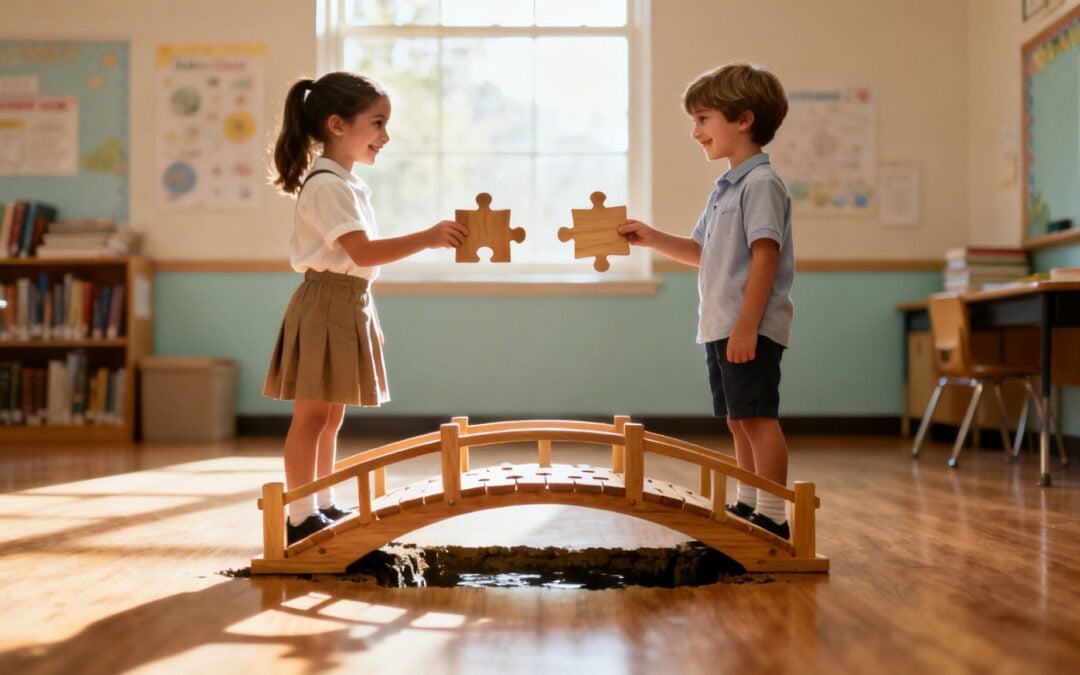
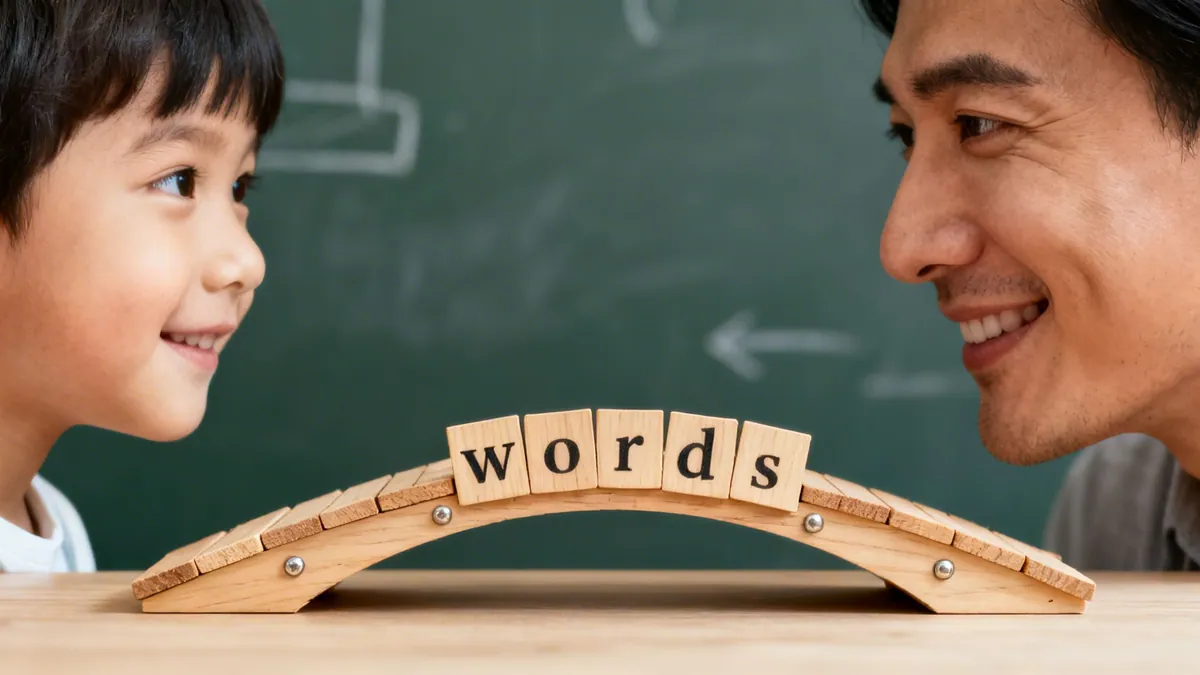
Think of every conversation as building a bridge. Each word is a plank, every gesture a nail, and every moment of listening reinforces the whole structure. When all the parts work together, you create a strong connection that allows understanding to travel back and forth.
But a single missing plank—like a joke that doesn't land—or a wobbly nail—like a misunderstood frown—can make that bridge feel unsafe. For instance, a teacher might say, "Great job," but if their arms are crossed and they aren't looking at the student, the message feels confusing.
For parents and teachers, this perspective is powerful. It shifts the focus from just correcting a child’s words to helping them see how their entire message—their tone, their body language, their listening—is received by others. It turns every interaction into a teachable moment.
The Four Pillars of a Communication Bridge
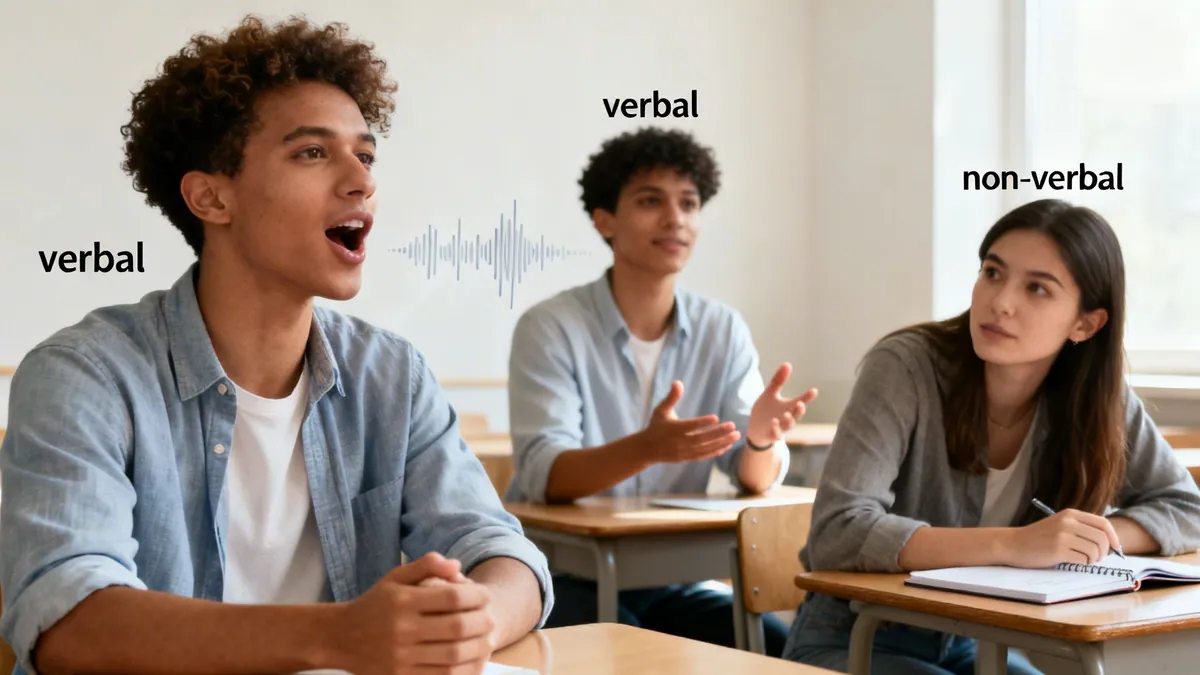
To make this idea even more concrete for kids (and adults!), we can break down any interaction into four key pillars. When students understand these parts, they can start to see why a conversation might feel strong or wobbly.
Pillar
What It Means
Example in a Classroom
Verbal
The words you choose to say.
Saying, "Can I please have a turn when you're done?" instead of "Give me that!"
Non-Verbal
Your body language, facial expressions, and gestures.
Making eye contact and smiling while listening to a friend share their weekend story.
Listening
Truly hearing and trying to understand what someone else is communicating.
A student nods along and waits for their classmate to finish explaining a math problem before asking a question.
Empathy
Trying to feel what the other person is feeling.
A child sees a classmate fall on the playground and says, "That looked like it hurt. Are you okay?"
Each pillar is crucial. A conversation with great words but poor listening still feels one-sided, just like a bridge that's missing a key support.
Why This Skill Matters Now More Than Ever
Interpersonal communication is the bedrock of a healthy school environment. It's how children learn to navigate friendships, resolve conflicts, and build a sense of belonging. But the way we all connect is changing.
While face-to-face conversations are still the top method for personal communication for about 40% of people, that number drops to just 25% for 18-24-year-olds. This shift shows just how important it is to be intentional about teaching these skills, both for in-person and digital worlds.
By teaching students how to communicate effectively, we are giving them the tools to build psychological safety, support their peers, and form healthy relationships that last a lifetime. This skill is a core component of their overall development.
Putting It All Together in the Classroom
So what does this look like on a typical school day? You're already seeing it in action.
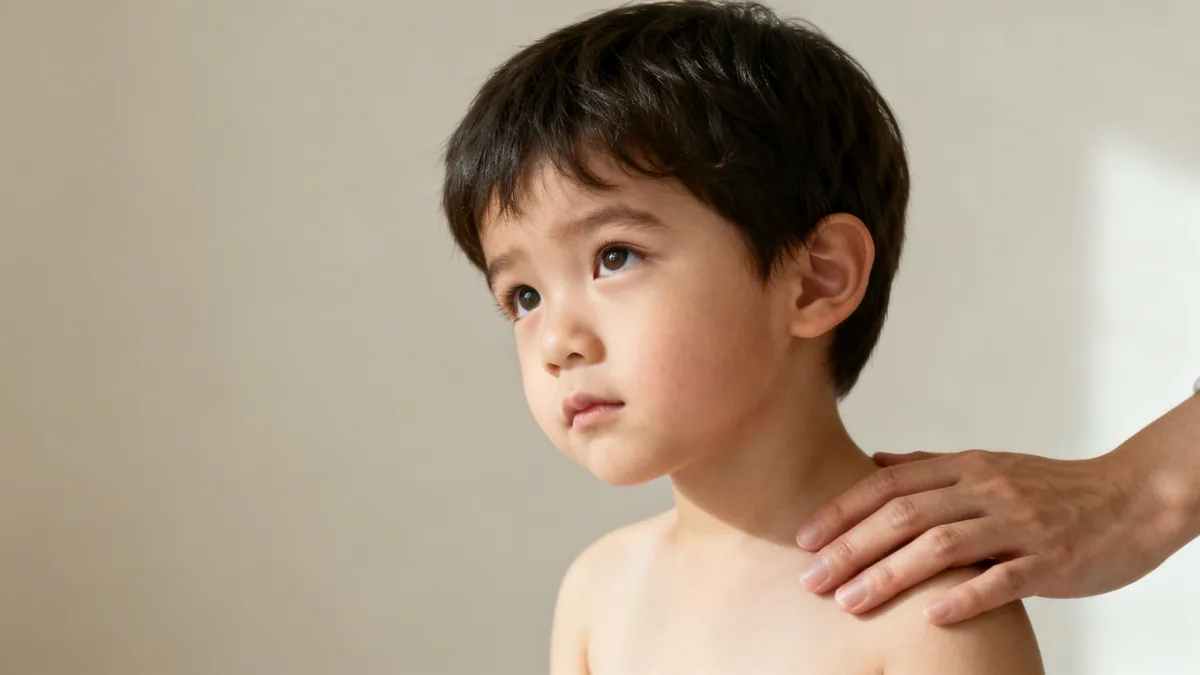
Sharing During Circle Time: A first grader who says, "I'm sad because my toy broke" while looking at the floor is using both verbal and non-verbal cues to share an emotion. A classmate who responds with, "I'm sorry that happened," and gives a gentle pat on the shoulder is completing that communication loop with empathy.
A Playground Disagreement: Two fourth graders are arguing over a kickball rule. A teacher can guide them to use "I-statements"—like, "I feel frustrated when the rules aren't clear"—instead of blaming with, "You're cheating!" This shifts the focus from attack to explanation.
Collaborating on a Project: A group of seventh graders has to assign tasks, share ideas, and give constructive feedback to build a presentation. Their success depends almost entirely on their ability to listen and express their thoughts clearly and respectfully. One student might say, "That's a good start, but what if we added more pictures to make it interesting?" instead of, "Your part is boring."
These everyday interactions are the training ground for a child’s broader growth. Strong communication skills are deeply tied to a child’s entire social and emotional journey. You can see just how connected these concepts are in our guide on what is social and emotional development.
The Three Essential Elements of Communication
Think of great communication like a three-legged stool. For it to be steady and strong, all three legs—verbal cues, non-verbal signals, and active listening—need to be in place. When we teach kids how to use all three, they don’t just get better at talking; they get better at connecting. Let’s break down what each of these elements looks like in the classroom and at home.
Verbal Communication: The Music Behind the Words
When we talk about verbal communication, it’s easy to get hung up on just the words themselves. But the real magic is in how we say them. The “music” behind our words—our tone of voice, volume, and speed—often says more than the words do.
A child who mumbles a quick "I'm sorry" isn't communicating the same thing as a child who says it clearly and sincerely. The first feels like a chore, while the second shows they actually understand their impact. Helping kids tune into this verbal music is a huge first step toward more meaningful conversations.
Practical Example: A student, Leo, is getting frustrated during a group project because he feels his ideas aren't being heard.
Ineffective Communication: He throws his hands up and yells, "You guys never listen to me!" His loud volume and sharp tone immediately make his group defensive. The conversation shuts down.
Effective Communication: His teacher pulls him aside and prompts him to try again, this time focusing on his tone. Leo takes a breath and says, "Hey, I have an idea I'm excited about. Could we talk it through for a minute?" His calm, inviting language opens the door for collaboration instead of closing it with conflict.
Non-Verbal Communication: The Silent Language
So much of what we communicate happens without a single word. Non-verbal communication is the silent language of facial expressions, gestures, posture, and eye contact. These signals are powerful because they often reveal our true feelings, sometimes even more honestly than our words.
In fact, some research suggests that body language can carry as much as 55% of a message’s total meaning.
A student slumping in their chair could be bored, sure. But they might also be exhausted, overwhelmed, or even feeling unwell. A classmate who avoids eye contact might not be disinterested—they might just be shy. Teaching kids to notice these cues in others, and to be aware of their own, is a cornerstone of social awareness.
Practical Example: A teacher notices a student, Ava, with her head down on her desk during a lesson.
Assumption: The teacher might assume Ava is being disrespectful or bored and say, "Ava, sit up and pay attention."
Reading the Cue: Instead, the teacher walks over quietly and asks, "I notice you have your head down. Is everything okay?" Ava explains she has a headache. The teacher's approach, based on reading a non-verbal cue, leads to support instead of conflict.
Active Listening: More Than Just Hearing
The final piece of the puzzle is active listening. This is worlds away from just passively hearing noise while waiting for your turn to talk. Active listening is a full-body sport—it’s the conscious effort to understand, process, and respond to what someone is really saying. It sends a clear message: "I'm with you, and you matter."
For students, this means learning to pause their own thoughts and truly absorb what a peer is sharing. The key skills involved are:
Reflecting: Paraphrasing what they heard to make sure they got it right. For example, "So, it sounds like you're feeling frustrated because the rules seem unfair?"
Asking Clarifying Questions: Digging a little deeper instead of jumping to conclusions. For instance, "When you say he 'always' takes the ball, can you tell me more about that?"
Showing Engagement: Using non-verbal cues to show they're tuned in—nodding, making eye contact, and putting away distractions.
Practical Example: A child, Maya, comes home looking defeated and says, "Nobody played with me today."
Passive Hearing: A busy parent, focused on making dinner, might reply, "Oh, that's a shame. You'll play with them tomorrow." The conversation ends there, leaving Maya feeling unheard.
Active Listening: The parent pauses what they're doing, turns to face Maya, gets down on her level, and says, "That sounds like it felt really lonely at recess today. What happened?" This response validates Maya's feelings and opens the door for a real, supportive conversation.
When we teach children to listen this way, we give them an incredible tool for building empathy and resolving conflicts on their own. To get your students practicing this skill, check out our guide with a fun and simple active listening activity.
How Communication Fuels Social-Emotional Learning
We often talk about social-emotional skills and communication skills as separate things. But in reality, they’re deeply intertwined. Think of it this way: interpersonal communication isn't just another skill to learn; it's the very current that makes social emotional learning (SEL) come to life in the classroom and on the playground.
The five core SEL competencies—self-awareness, self-management, social awareness, relationship skills, and responsible decision-making—are the building blocks. But communication is the mortar that holds them all together.
A student might feel a surge of frustration (self-awareness), but if they can't express that feeling constructively, it stays bottled up. That's when we see disruptive outbursts or silent withdrawal. Effective communication is the bridge between knowing an emotion and managing it successfully.
Connecting Communication to SEL Competencies
To see how this works in a real-world scenario, let's imagine a classic playground disagreement. Maria and Sam are in the middle of a kickball game when they hit a snag over the rules. How this little conflict plays out depends entirely on their ability to communicate.
Self-Awareness: Maria feels her face get hot. She recognizes that she's angry because she believes Sam isn't playing by the rules they agreed on.
Self-Management: Her first impulse is to yell, "That's not fair!" Instead, she takes a deep breath to calm that initial flash of anger, giving herself a moment to think.
Social Awareness: Sam looks over and sees Maria's clenched fists and tight expression. He reads her non-verbal cues and realizes she's genuinely upset, which makes him more willing to listen instead of just getting defensive.
Relationship Skills: Using an "I-statement," Maria starts the conversation. "I feel frustrated when the rules seem to change mid-game." Sam, in turn, asks a clarifying question: "What rule do you think I broke?" This simple exchange keeps the friendship intact.
Responsible Decision-Making: They talk it out and agree on a clear rule for the rest of the game that everyone can stick to. They solved a problem together instead of letting it ruin recess.
Without the ability to name a feeling, listen to a friend, and negotiate a solution, none of these SEL skills could have been put into practice. The two are fundamentally linked.
Fostering a Supportive School Environment
When schools make teaching these communication skills a priority, the ripple effect goes far beyond one playground moment. It begins to shape the entire school culture into a place where students and staff feel seen, heard, and valued.
That sense of value is a powerful thing. While the data comes from the corporate world, a Gallup study found that when people feel more valued, productivity can increase by 12% and turnover can be cut by 27%. The principle holds true in schools: a climate built on strong interpersonal skills and respect leads to less isolation and a more engaged, supportive community for everyone.
Interpersonal communication is the thread that weaves the five SEL competencies together. By teaching students how to articulate their feelings, listen with empathy, and solve problems together, we are not just teaching them to be better communicators—we are nurturing emotionally intelligent and resilient human beings.
This table breaks down exactly how specific communication skills support the development of core SEL competencies in everyday classroom life.
Connecting Communication Skills to SEL Competencies
SEL Competency
Associated Interpersonal Skill
Classroom Example
Self-Awareness
Identifying and naming emotions.
A student says, "I'm feeling nervous about the presentation," instead of just being quiet or getting a stomach ache.
Self-Management
Using a calm tone of voice.
A student takes a breath before responding to a frustrating comment from a peer, instead of yelling back.
Social Awareness
Active listening and observing non-verbal cues.
A child notices a classmate is sitting alone with their head down and asks, "Are you okay? You look sad."
Relationship Skills
Giving and receiving constructive feedback.
During a group project, one student says, "I like that idea, and what if we also added this?" instead of "That's a bad idea."
Responsible Decision-Making
Negotiating and finding a compromise.
Two students who both want the same book agree to take turns, with one reading the first chapter and then swapping.
As you can see, these aren't abstract academic concepts. They are small, teachable moments that happen every single day.
Actionable Ways to Teach Communication in the Classroom
Theory is one thing, but putting it into practice is where students really start to get what interpersonal communication is all about. For us as educators, this means weaving intentional strategies into the daily fabric of our classrooms. These simple, actionable methods make abstract concepts like empathy and active listening feel real, giving kids the tools they need to connect, collaborate, and navigate conflicts.
The goal isn't to add another subject to an already packed schedule. It's about integrating these skills into the activities you're already doing. When we do this, learning feels natural and reinforces the idea that good communication is something we practice all the time—not just during a special lesson.
Start with Safe and Structured Sharing
Morning Meetings or daily check-ins are the perfect place to build a foundation of trust and practice core communication skills. By creating a predictable and safe space for sharing, you lower the stakes for quieter students and set a positive, connected tone for the entire day.
Here are a few ways to focus these moments on communication:
Practice Compliments: Dedicate one meeting a week to giving and receiving genuine compliments. First, model how to be specific. Instead of a generic, "You're nice," try something like, "I really appreciated how you included me in the game at recess today." This teaches students to notice and name specific positive behaviors.
Ask Open-Ended Questions: Encourage students to ask questions that invite more than a "yes" or "no" answer. Prompt them with starters like, "Tell me more about…" or "What was your favorite part of…" This simple shift teaches them to show curiosity and helps deepen their conversations. For example, instead of asking, "Did you have a good weekend?" ask, "What was something fun you did this weekend?"
Teach Students to Own Their Feelings with I-Statements
One of the most powerful tools you can give a child is the "I-Statement." This simple sentence structure is a game-changer. It helps students own their feelings without placing blame, which can instantly turn a potential conflict into a productive conversation. The focus shifts from accusing someone else to simply expressing a personal feeling or need.
An I-Statement has a simple formula: "I feel [emotion] when [situation] because [reason]." This structure empowers students to articulate what's happening inside them, clearly and calmly.
Practical Example: A disagreement over supplies.
Without an I-Statement (Blaming): A student might yell, "You always take my markers without asking!" This is an accusation, and it's guaranteed to make the other child defensive.
With an I-Statement (Explaining): The student says, "I feel frustrated when my markers are gone from my desk because I can't finish my drawing." This version clearly states the emotion and the impact without attacking the other person, opening the door for a solution.
When you consistently model and encourage I-Statements, you're giving students a script for navigating those tricky moments. It's a small change in language with a massive impact. To help your students get comfortable with this, you can explore various activities for building communication skills.
Use Activities to Practice Active Listening
Active listening isn't a passive skill; it requires explicit instruction and plenty of practice. A fantastic way to do this is through structured activities that you can easily adapt for different grade levels. Below is a sample lesson outline you can tweak for your own classroom.
Sample Lesson: The "Talking Stick" and Structured Debates
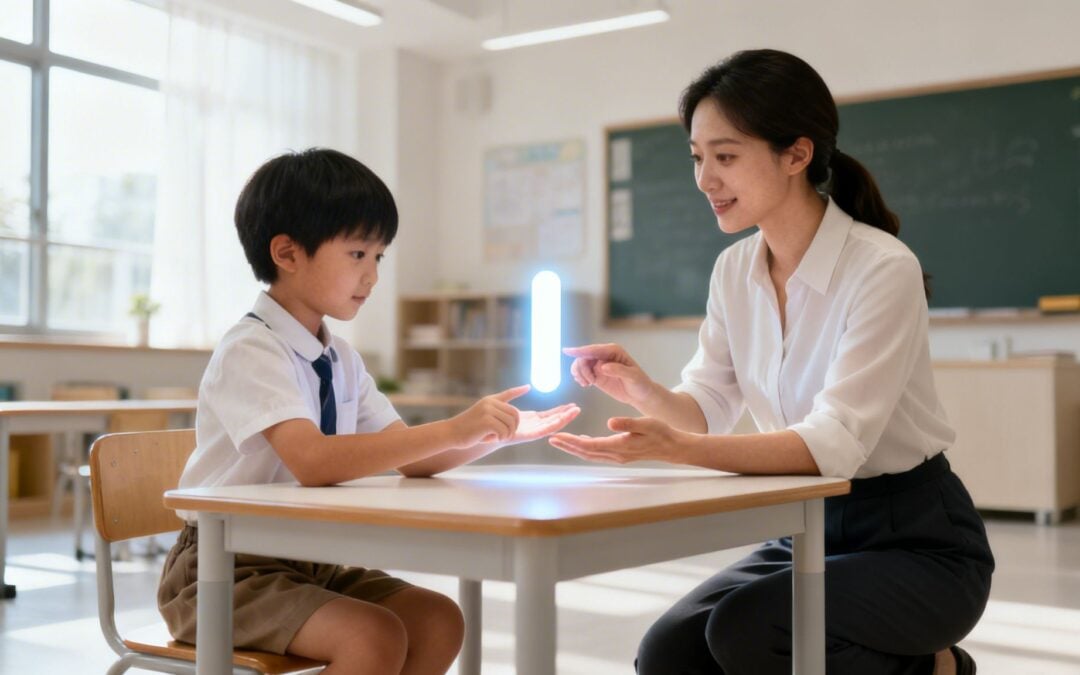
The core idea is simple: only the person holding a specific object (the "talking stick") is allowed to speak. This physically enforces the concept of taking turns and truly listening without interrupting.
For K-2 Students (Talking Stick):
Gather students in a circle and introduce a special object as the talking stick.
Pose a simple question, like, "What is your favorite thing to do on the weekend?"
The student holding the stick shares their answer. They then pass it to another student, who must first say, "I heard you say that you like…" before sharing their own answer. This small step reinforces the listening component.
For 3-5 Students (Building on the Concept):
Use the talking stick for more complex topics, such as, "What makes a good friend?"
After one student speaks, the next must ask a clarifying question about what they shared before offering their own opinion. For example, "You said being honest is important. Can you give an example of that?"
For 6-8 Students (Structured Debates):
Evolve the talking stick into a more formal debate on a relevant topic (like school uniforms or social media rules).
Assign students to "pro" and "con" sides. Each speaker gets a set amount of time to make their point.
Before offering a rebuttal, the opposing side must accurately summarize the previous speaker's argument. This ensures they were listening to understand, not just to respond.
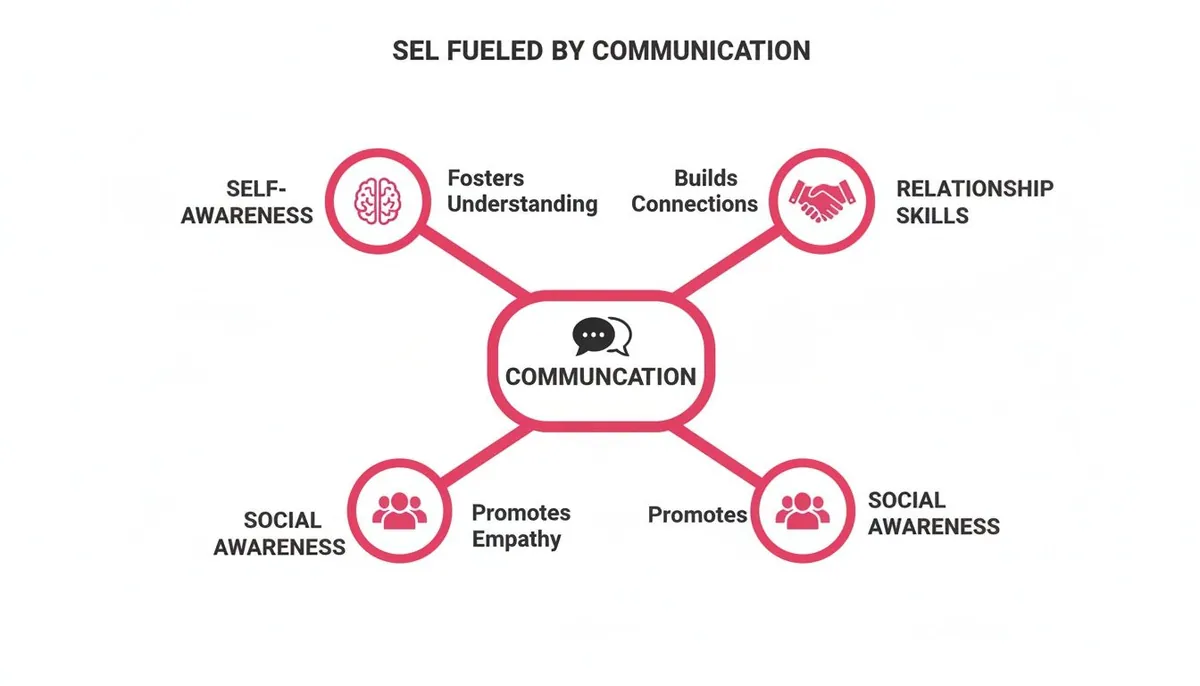
This infographic really shows how these communication skills directly fuel the key areas of social-emotional learning.
As you can see, strong communication acts as the central hub connecting self-awareness, social awareness, and relationship skills. Without it, real social-emotional growth just isn't possible. These classroom strategies are so vital because they prepare students for a future where clear and empathetic interaction is everything. A 2023 report found that knowledge workers spend up to 38.9 hours every week on communication, yet 44% feel dissatisfied with their tools, leading to huge productivity losses. By teaching these skills early, we help students avoid those same struggles in their future academic and professional lives.
How Parents Can Strengthen Communication Skills at Home
When a school fully commits to nurturing emotional intelligence, it does so much more than just improve the campus climate. It’s giving every student a toolkit for life, equipping them with skills to thrive long after they’ve left the classroom. The ability to understand and manage our emotions isn't just about feeling good—it’s a powerful compass for navigating our careers and personal lives.
This focus on EQ is what prepares kids for the real world they’ll enter as adults. The benefits aren't just ideas on paper; they show up as stronger leadership, better job performance, and even higher earnings over a lifetime.
From the Classroom to the Conference Room
For school leaders, the connection between a child's emotional skills and their future career success is becoming impossible to ignore. It’s the ‘why’ behind investing in programs that build these abilities from the ground up. When you teach a student what emotional intelligence is through hands-on practice, you’re not just helping them make friends—you’re preparing them for their first job interview, their first team project, and their first leadership role.
The business world has certainly caught on. In fact, 75% of Fortune 500 companies now actively invest in EQ training for their teams. They know that skills like empathy, self-regulation, and collaboration are the secret sauce for building effective teams and compassionate leaders. By teaching these skills in K-8, we’re giving our students a huge head start.
An emotionally intelligent school doesn't just produce successful graduates; it cultivates a healthier, more connected community. The skills learned on the playground today are the same ones that will lead to a promotion tomorrow.
The Data on High-EQ Organizations
The ripple effect of emotional intelligence goes beyond individual success—it can transform entire organizations. This has huge implications for the kind of learning environments we create in our schools. Research clearly shows that when companies embed EQ at every level, from the front desk to the C-suite, they see incredible gains.
This link between EQ and performance is well-documented. A 2025 global report found that employees in high-EQ companies are 13x more likely to excel and 18x more successful in their roles. For school leaders, this data highlights how programs like Soul Shoppe's, which foster belonging and teamwork, directly prepare students for these kinds of outcomes. You can learn more about the powerful emotional intelligence statistics that drive today’s top companies.
Building Healthier School Communities
The benefits also circle right back to the school community itself. An emotionally intelligent campus isn’t just a better place for students—it's a better place for the adults, too. Schools with strong social-emotional learning programs often report:
Higher Teacher Retention: Educators feel more supported and less burned out when they work in a positive, collaborative environment.
Stronger Parent Engagement: When a school prioritizes the whole child, parents and guardians feel more connected and want to be more involved.
A Culture of Safety: A shared language for handling emotions and resolving conflict naturally reduces bullying and creates a space where everyone feels psychologically safe.
These results prove that EQ is not a "soft skill" but a foundational pillar for lifelong achievement and well-being. To discover more about how these skills create positive school environments, you might be interested in the key benefits of social-emotional learning. By investing in emotional intelligence, schools are building a legacy of success that truly lasts a lifetime.
Frequently Asked Questions About Emotional Intelligence
Once you start digging into emotional intelligence, a lot of questions pop up. That’s a good thing! It means you're thinking about how these ideas work in the real world with real kids. Here, we’ll tackle some of the most common questions we hear from parents, teachers, and school leaders.
Getting curious about EQ is the first and most important step. Let’s get you some clear answers.
Is Emotional Intelligence Something You Are Born With?
This is a great question, and the answer is incredibly hopeful. No, emotional intelligence isn't a fixed trait like eye color. It's a flexible set of skills that anyone can learn, practice, and get better at over their entire life.
You might notice some kids seem more naturally tuned in to their own feelings or the emotions of others. But with the right guidance and practice, every single child can strengthen their EQ.
Think of it like learning to play an instrument. Some people might have a natural ear for music, but no one becomes a skilled musician without practice. Emotional intelligence works the same way—it grows with effort and repetition.
How Can We Measure a Child’s Progress in EQ?
Measuring emotional intelligence isn't like giving a spelling test where you get a clear score. Instead, we track progress through behavioral observations over time. You’re looking for positive changes in how a child navigates their day-to-day social and emotional world.
Here are a few key shifts parents and teachers can look for:
Practical Example (Improved Frustration Tolerance): A student who used to rip up their paper when a math problem got hard now takes a deep breath and asks for help instead. That's a huge win.
Practical Example (Greater Empathy): A child spots a classmate sitting alone at recess (social awareness) and invites them to play. This shows they can recognize and respond to someone else’s feelings.
Practical Example (Using Emotional Vocabulary): Instead of just saying, "I'm mad," a child might be able to say, "I feel annoyed because my tower fell down." This points to growing self-awareness.
When you start noticing these small but significant shifts, you know a child's EQ skills are taking root.
What Is the First Step for a School to Implement an EQ Program?
Bringing an emotional intelligence program to your entire school can feel like a massive project, but the first step is actually quite simple: establish a shared language and a common goal.
Before you roll out any new curriculum, bring your staff together. Ask the question, "What do we want our school to feel like?" This discussion gets everyone on the same page and builds the buy-in you need to succeed. From there, you can introduce a few foundational tools—like a common set of feeling words or a consistent strategy for resolving conflict—that all classrooms can start using right away.
Ready to bring the power of emotional intelligence to your school community? Soul Shoppe provides research-based, experiential programs that equip students, teachers, and parents with the tools they need to thrive. Explore our assemblies, workshops, and school-wide programs at soulshoppe.org.
Welcome to our practical guide to Social-Emotional Learning (SEL) for elementary students. In an environment where emotional intelligence is as critical as academic knowledge, providing young learners with tools to understand their feelings and connect with others is essential. This article offers a deep dive into powerful sel activities for elementary students, designed to be practical, engaging, and effective for teachers, counselors, and parents alike.
We move beyond abstract ideas to give you actionable steps, specific examples, and adaptations for different age groups. For instance, instead of just suggesting "breathing exercises," we detail how a "Bear Breath" technique can calm a first grader's pre-test jitters, while a "4-7-8 Breathing" script can help a fifth grader manage frustration during a group project. This guide is your roadmap to implementing these important practices.
Our goal is to help you cultivate resilient, emotionally intelligent learners who are ready to collaborate, solve problems, and succeed. The following curated collection of activities will help build a strong foundation for lifelong well-being and academic success. You will find detailed instructions for everything from peer empathy exercises to growth mindset lessons, all organized to be easily implemented in a classroom or at home. Let's explore the activities that will foster a more connected, safe, and empathetic community for your students.
1. Mindfulness and Breathing Exercises
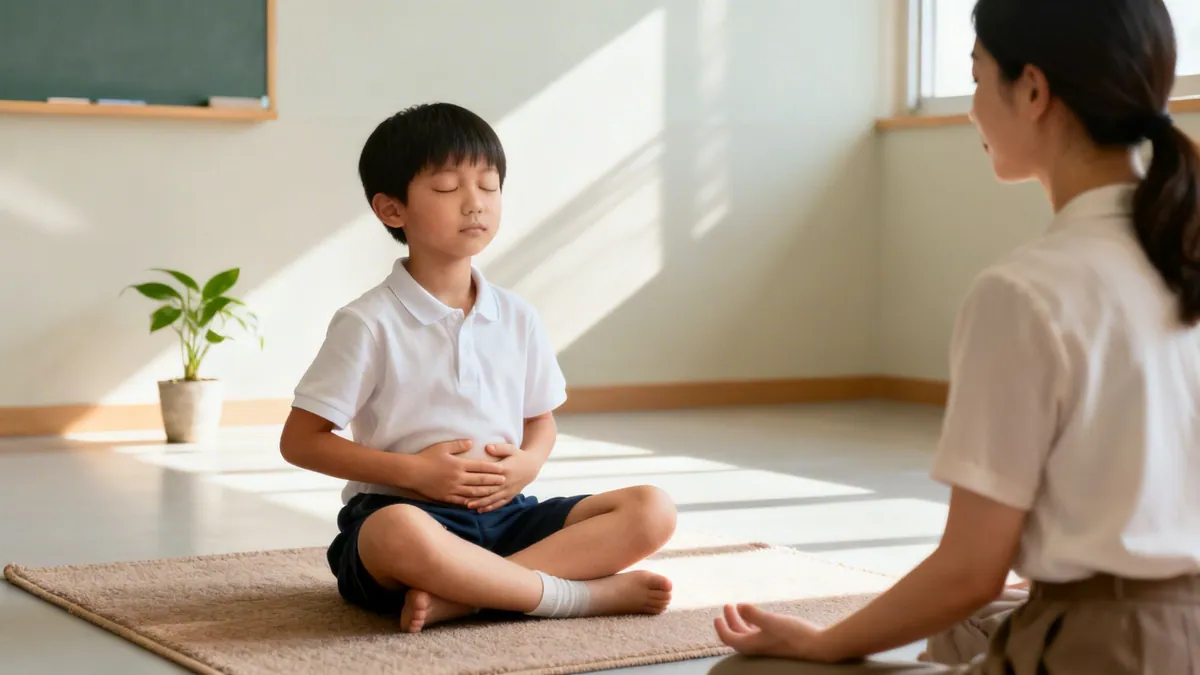
Mindfulness and breathing exercises are structured practices that teach students to anchor their attention in the present moment. These foundational SEL activities for elementary students help them develop self-awareness and self-management by learning to calm their own nervous system, particularly during moments of high energy, stress, or conflict. The core idea is simple: by focusing on the physical sensation of breathing, a child can create distance from overwhelming emotions and respond more thoughtfully.
To deepen the understanding of these practices, educators can explore resources that explain in detail what mindfulness meditation entails. These exercises are not about emptying the mind but rather about paying attention on purpose, without judgment. This skill is critical for building emotional intelligence and resilience.
How to Implement in Your Classroom
Effective integration relies on consistency and modeling. You can introduce these practices as "brain breaks" between subjects, as a centering routine to start the day, or as a cool-down activity after recess.
Belly Breathing: Have students place a hand on their belly and feel it rise and fall like a balloon as they inhale and exhale slowly. Practical Example: Before a spelling test, say, "Let's take three balloon breaths. Put your hand on your belly. Breathe in and feel the balloon get bigger… now breathe out and let the air out slowly."
Box Breathing: Guide students to inhale for a count of four, hold for four, exhale for four, and hold for four. Drawing a square in the air with their finger can help them track the steps. Practical Example: When the class is noisy after recess, say, "Let's get our focus back with box breathing. Trace a square in the air. Breathe in… hold… breathe out… hold."
Five Senses Grounding: When a student is anxious, ask them to name five things they can see, four things they can feel, three things they can hear, two things they can smell, and one thing they can taste. Practical Example: If a child is crying over a scraped knee, you could say, "Okay, let's calm our body. Can you tell me five blue things you see in the room right now?"
Classroom Tip: Practice alongside your students. When they see you taking deep breaths before a challenging lesson, it normalizes the strategy and demonstrates its practical application in everyday life. Start with sessions as short as one minute and gradually increase the duration as students become more comfortable.
2. Emotion Identification and Feelings Vocabulary Activities
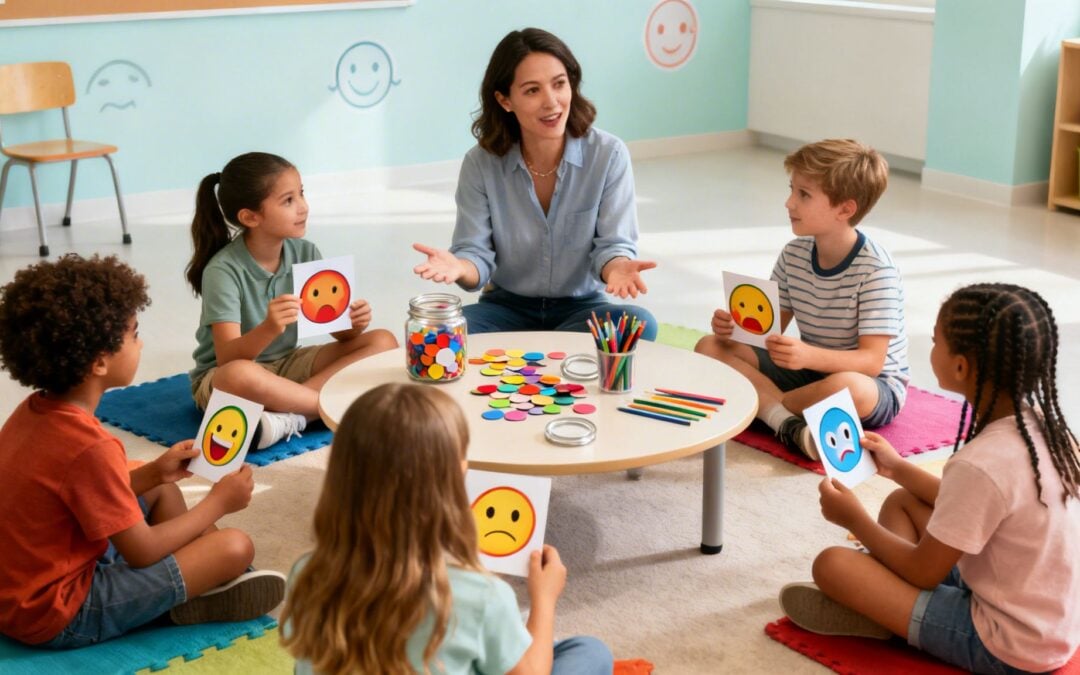
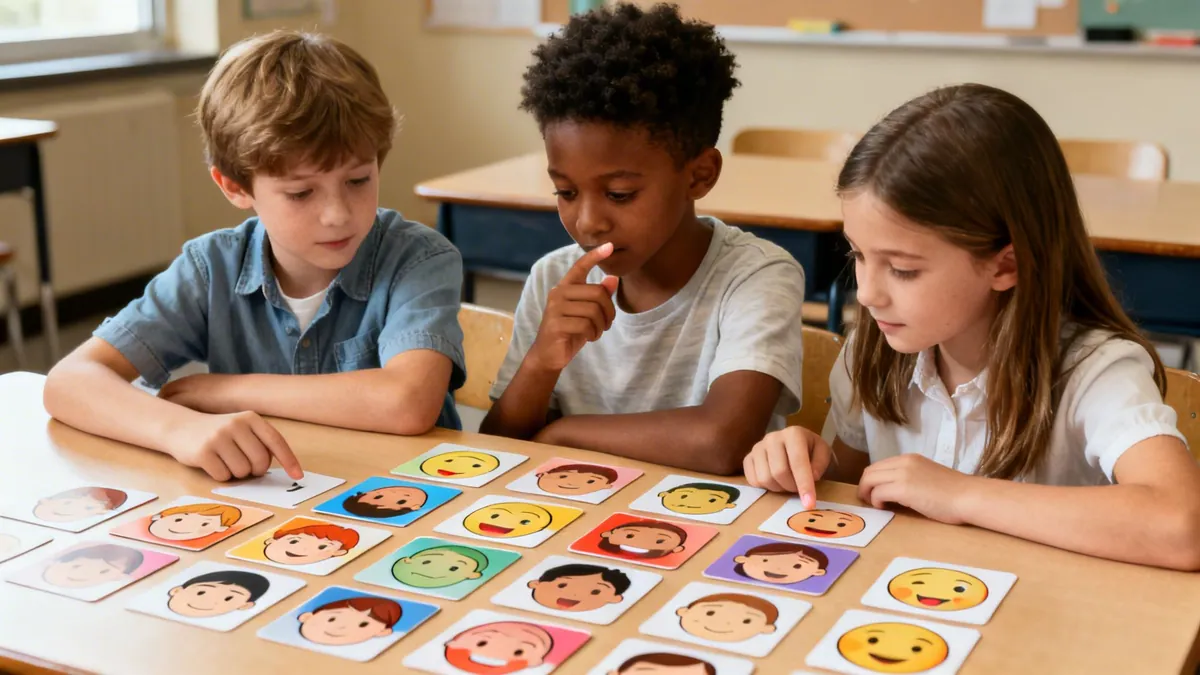
Emotion identification activities are interactive lessons and games designed to expand students' emotional vocabulary, helping them name and understand feelings in themselves and others. These foundational SEL activities for elementary students build emotional literacy, a critical component of self-awareness and social awareness. The goal is to give children the specific words they need to move beyond "mad" or "sad" to more nuanced feelings like "frustrated," "disappointed," or "anxious," enabling better communication and self-regulation.
Pioneered by experts like Marc Brackett at the Yale Center for Emotional Intelligence, this work emphasizes that if you can name an emotion, you can begin to manage it. By making feelings vocabulary a regular part of classroom conversation, educators create a safe environment where all emotions are acknowledged as valid, even if the behaviors they cause need guidance.
How to Implement in Your Classroom
Integrating these activities works best through consistent, playful practice rather than a single lesson. Use them during morning meetings, as transitions, or in response to social situations that arise naturally.
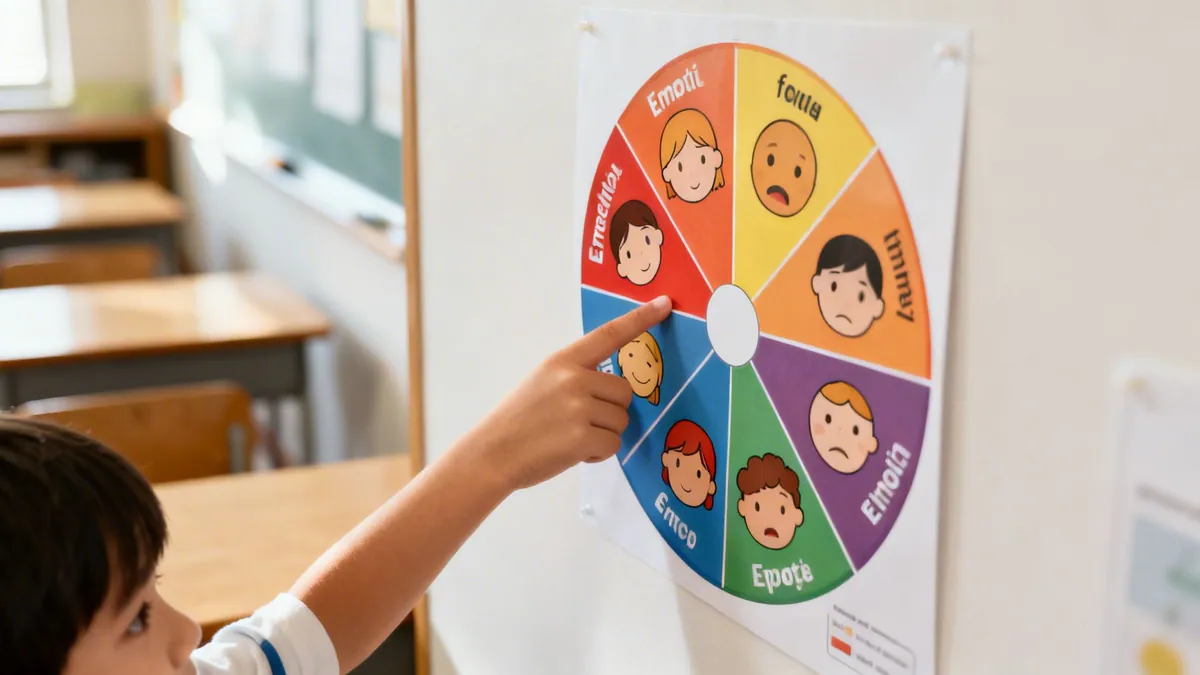
Feelings Wheel or Chart: Create a large, visible feelings wheel in the classroom. During check-ins, students can point to the emotion that best describes how they feel, providing a low-pressure way to share. Practical Example: During morning meeting, have students put a clothespin with their name on it next to the feeling on the chart that best matches their mood.
Emotion Charades: Write different emotions on cards. A student picks a card and acts out the feeling without words, while classmates guess. Practical Example: A student picks "frustrated." They might stomp their foot lightly and cross their arms. Another student guesses, "Are you angry?" The teacher can then ask, "What's the difference between angry and frustrated?"
Literature-Based Discussion: During read-alouds, pause and ask, "How do you think this character is feeling right now? What clues in the story or pictures tell you that?" Practical Example: While reading Where the Wild Things Are, pause and ask, "When Max was sent to his room, what feeling was he showing? Look at his face. Is it just anger, or maybe disappointment too?"
Classroom Tip: Collaboratively create a classroom "emotions anchor chart" with your students. As you introduce new feelings words throughout the year, add them to the chart with simple definitions or drawings. This co-created resource fosters ownership and makes the vocabulary more meaningful.
To find more games, charts, and tools for your classroom, you can find further resources for teaching emotional vocabulary to kids that make learning about feelings engaging and effective.
3. Gratitude and Positive Reflection Practices
Gratitude and positive reflection practices are simple yet powerful exercises that teach students to intentionally notice and appreciate the good in their lives. These foundational SEL activities for elementary students build self-awareness and social awareness by shifting focus from problems to positives. The core principle, supported by positive psychology research, is that training the brain to look for what's working builds resilience, strengthens relationships, and improves overall well-being.
By consistently identifying things they are thankful for, students learn to recognize the value in everyday moments, people, and their own abilities. This practice counters negativity bias and helps children develop a more balanced and optimistic outlook, which is crucial for managing challenges and building strong emotional health.
How to Implement in Your Classroom
Integrating gratitude into your daily routine can be simple and quick, making it a sustainable practice. The key is modeling authentic appreciation and providing structured opportunities for students to share. You can add these activities to your morning meeting, use them as a calm-down transition, or conclude the day on a positive note.
Gratitude Journals: Provide notebooks where students can write or draw something they are grateful for each day. Practical Example: At the end of the day, prompt students: "Today, draw or write about one person who was kind to you." For younger students, provide the sentence starter, "I am thankful for…"
Appreciation Circles: During a morning meeting, have students go around the circle and complete the sentence, "Today, I am grateful for…" This builds community as students listen to their peers' appreciations. Practical Example: On a Monday, you might ask, "Share one thing you are grateful for that you did this weekend."
Thank You Letters: Guide students in writing and delivering letters of appreciation to classmates, school staff, or family members. This directly practices relationship skills and empathy. Practical Example: Before a holiday break, have students write a short thank-you note to the school custodian, librarian, or a cafeteria worker, telling them one specific thing they appreciate.
Classroom Tip: Expand the concept of gratitude beyond material things. Use sentence starters to help students appreciate experiences ("I'm grateful for learning how to…"), people ("I'm thankful for my friend because…"), and personal strengths ("I'm proud that I was able to…"). This teaches them to find value in a wide range of life experiences.
For additional guidance on fostering a culture of thankfulness, explore these practical ways to show gratitude that can be adapted for both school and home environments.
4. Cooperative Learning and Team-Building Games
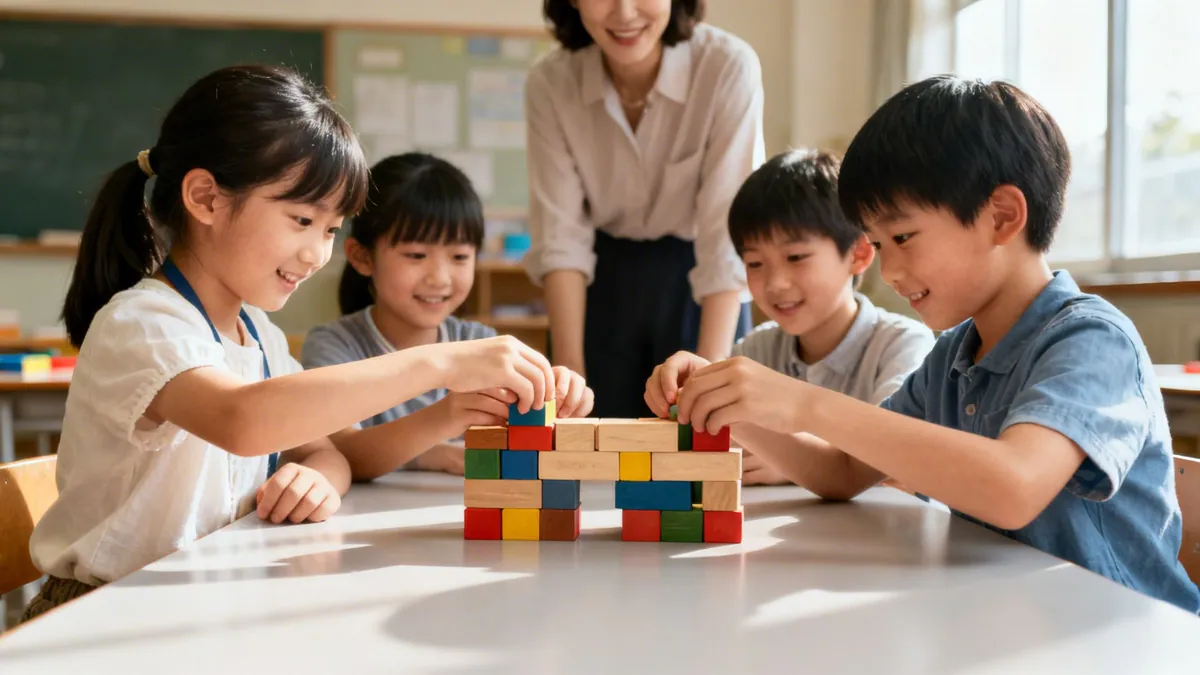
Cooperative learning and team-building games are structured group activities designed to build collaboration, communication, and problem-solving skills. These essential SEL activities for elementary students create an environment where interdependence is necessary for success, which helps foster a sense of belonging and reduces feelings of isolation. The focus is on shared goals, requiring students to listen to peers, negotiate ideas, and work together, thereby strengthening relationship skills and social awareness.
By participating in these activities, students learn to appreciate diverse perspectives and contribute to a common objective. The process helps them understand the give-and-take of working in a group, a critical life skill. To better understand the framework behind these interactions, educators can find value in exploring resources that explain what collaborative problem-solving is and how it supports student development. These games are not just about fun; they are carefully designed practice for real-world social navigation.
How to Implement in Your Classroom
Successful integration depends on clear structure and intentional debriefing. You can use these games as icebreakers, brain breaks, or dedicated time during morning meetings to build a strong classroom community from the very beginning of the school year.
Human Knot: Have a small group of students stand in a circle, reach across to grab the hands of two different people, and then work together to untangle themselves into a single circle without letting go. Practical Example: Split the class into groups of 6-8. After they form a "knot," tell them, "Talk to your teammates to figure out who needs to move where. You might have to go under someone's arms!"
Silent Sequencing: Give each student in a small group a card with a number, a letter of the alphabet, or part of a picture sequence. The group must line themselves up in the correct order without speaking. Practical Example: Give a group of five students cards showing the life cycle of a butterfly. They must use gestures and observation to line up in the correct order: egg, caterpillar, chrysalis, butterfly, etc.
All Aboard: Mark a small area on the floor with tape (the "ship"). Challenge a group of students to fit entirely inside the space. Gradually make the ship smaller in each round, requiring more creative problem-solving and cooperation. Practical Example: Start with a hula-hoop. Challenge a group of 8 to get both feet inside. Then, fold a large towel in half and challenge them again.
Classroom Tip: After each activity, lead a short debrief session. Ask questions like, "What was challenging about that?" or "What did your team do well to succeed?" This reflection is where the most significant SEL learning occurs, as it connects the game to real-life teamwork and communication skills.
5. Peer Empathy and Perspective-Taking Activities
Peer empathy and perspective-taking activities are structured exercises designed to help students understand and share the feelings of others. These essential SEL activities for elementary students focus on building social awareness and relationship skills by encouraging children to see situations from another person’s viewpoint. The main goal is to develop both the cognitive ability to imagine another's experience and the emotional capacity to connect with their feelings, which is foundational for kindness, conflict resolution, and positive relationships.
This approach is central to the work of experts like Daniel Goleman, who identifies empathy as a key component of emotional intelligence. Programs like Soul Shoppe's bullying prevention curriculum put these ideas into practice, teaching students that understanding someone else's perspective is the first step to resolving conflicts peacefully. These activities move beyond simply telling students to "be nice" and give them the tools to actually understand why their actions affect others.
How to Implement in Your Classroom
Integrating empathy-building exercises requires creating a safe space where students feel comfortable sharing and exploring different viewpoints. You can use literature, real-life scenarios, or structured role-plays as a springboard for these discussions.
Character Perspective Switch: During a read-aloud, pause the story and ask students to act out how a different character might feel. Practical Example: After reading The Three Little Pigs, ask, "How would the story be different if the wolf told it? What might he say about why he was blowing the houses down? Maybe he was just cold and had a bad cough?"
Empathy Interviews: Pair students and provide them with gentle, open-ended questions to ask each other, such as "Can you tell me about a time you felt really proud?" or "What is something that makes you feel happy?" This builds active listening skills and mutual understanding. Practical Example: Give partners three minutes each. Student A asks Student B, "What's your favorite thing to do on the weekend and why?" Student A can only listen and then summarizes what they heard.
Scenario Role-Play: Present a common, low-stakes conflict, like two students wanting to use the same playground ball. Have them role-play the situation and then switch roles to experience the other side. Debrief with questions like, "What did it feel like to be in their shoes?" Practical Example: Set the scene: "Maria and Leo both want the red ball at recess." Ask two students to act it out. Then say, "Okay, switch! Now, Leo, you're Maria. How does it feel to see someone else grab the ball you wanted?"
Classroom Tip: Start with fictional characters or hypothetical situations before moving to real classroom conflicts. This creates a safe distance, allowing students to practice empathy skills without feeling personally targeted. Regularly celebrate and point out instances where students show genuine understanding or compassion for a peer.
For more resources on fostering empathy and peaceful conflict resolution, explore the tools offered by the Junior Giants Strike Out Bullying partnership, which provides excellent models for youth programs.
6. Social-Emotional Learning Circles and Community Meetings
Social-Emotional Learning (SEL) circles and community meetings are structured group discussions where students share experiences, solve problems, and build a sense of belonging. These dedicated times create a predictable space for voice, connection, and collective problem-solving. This practice is one of the most effective SEL activities for elementary students because it directly develops relationship skills, social awareness, and responsible decision-making in a safe, peer-supported environment. The core idea is that by sitting in a circle, every member is equal and visible, fostering a community where listening is as important as speaking.
These meetings establish a consistent rhythm for relationship-building and maintenance, moving beyond academic instruction to nurture the whole child. Concepts like the soul circles developed by Soul Shoppe emphasize creating psychological safety, allowing students to express themselves without fear of judgment. This routine practice strengthens the classroom ecosystem, making it more resilient to conflict and more conducive to learning.
How to Implement in Your Classroom
Success with community circles depends on consistency and clear expectations. You can hold them daily as a morning meeting to set a positive tone or weekly to address emerging classroom issues. They can also be used as needed for problem-solving or celebrating successes.
Establish a Routine: Begin each day with a 10-15 minute morning meeting. Include a greeting, a sharing component, a group activity, and a brief message for the day to build predictability. Practical Example: Start with a "Handshake Greeting" where students walk around and shake 3 classmates' hands. Then have them share one thing they're excited to learn today.
Use a Talking Piece: Introduce a special object, like a small decorated stone or a soft ball, as a "talking piece." Only the person holding the object may speak, which teaches patience and respectful listening. Practical Example: Hold up a "talking stone" and say, "We are going to pass this around the circle. When it's your turn, please share one goal you have for this week. If you don't want to share, you can just pass it to the next person."
Set Clear Norms Together: Co-create guidelines with your students. Examples include: "Listen with your heart," "Speak your truth," "Respect the talking piece," and "What's said in the circle stays in the circle."
Provide Sentence Starters: Support reluctant speakers with prompts like, "I feel happy when…" or "One challenge I'm facing is…" This lowers the barrier to participation. Practical Example: Write on the board: "I'm proud that I…" and invite students to complete the sentence when it's their turn.
Classroom Tip: Start with low-risk topics. Ask students to share their favorite weekend activity or something they are proud of. As trust builds, you can gradually move toward more complex conversations, such as resolving a playground conflict or discussing ways to make the classroom more inclusive.
For additional guidance on facilitating these powerful conversations, explore the principles of restorative circles in schools which offer frameworks for repairing harm and strengthening community bonds through structured dialogue.
7. Growth Mindset and Resilience-Building Lessons
Growth mindset and resilience-building lessons teach students that intelligence and skills can be developed through dedication and hard work. These critical SEL activities for elementary students shift the focus from fixed traits to the power of effort, practice, and learning from mistakes. Popularized by researchers like Carol Dweck, these lessons help children build resilience by reframing failure as an essential part of the learning process, empowering them to persist through challenges.
The core principle is teaching students about neuroplasticity, the brain's ability to form new connections. When children understand their brain can grow stronger with effort, they see challenges not as roadblocks but as opportunities. This fosters self-management and a positive, motivated approach to learning that extends far beyond the classroom walls.
How to Implement in Your Classroom
Integrating a growth mindset requires intentional language, celebratory framing of mistakes, and consistent reinforcement. You can weave these concepts into daily instruction, feedback, and classroom culture.
Introduce "The Power of Yet": When a student says, "I can't do this," add the word "yet." This simple linguistic shift frames the task as an achievable goal rather than an impossible one. Practical Example: A student says, "I can't tie my shoes." You respond with a smile, "You can't tie your shoes yet. Let's practice one step."
Create a "Mistake Wall" or "Productive Struggle" Board: Dedicate a space in the classroom to celebrate mistakes as learning opportunities. Have students share what they learned from an error, normalizing the experience and highlighting its value. Practical Example: Post a sticky note that says, "I kept getting 15 instead of 16, but I learned I was forgetting to carry the one!"
Use Process-Focused Feedback: Instead of praising intelligence ("You're so smart!"), praise the process and effort. Practical Example: Instead of "You're a great artist," say, "I love how you used so many different colors in your drawing and how you kept working on the details."
Share Stories of Resilience: Discuss famous figures or even your own personal stories of overcoming challenges through persistence. This shows students that struggle is a universal part of success. Practical Example: Read a picture book about Michael Jordan being cut from his high school basketball team and talk about how he used that failure to motivate himself.
Classroom Tip: Model a growth mindset yourself. When you make a mistake in front of the class, acknowledge it openly and talk through how you will fix it or what you learned. This authentic modeling is powerful and shows students that everyone is a learner.
For a deeper dive into the research and practical applications, Carol Dweck's work on mindset theory provides foundational knowledge for educators aiming to build resilient, motivated learners.
8. Conflict Resolution and Peer Mediation Training
Conflict resolution and peer mediation training are structured programs that equip students with the skills to manage disagreements constructively. These essential SEL activities for elementary students focus on relationship skills and responsible decision-making by teaching a clear, step-by-step process for peaceful problem-solving. Instead of relying on adult intervention for every dispute, students learn to become active agents in creating a positive and supportive school climate.
Tips for Success
Start with Prevention: Focus on building a positive community with proactive circles before using them to address conflict. This establishes the trust necessary for difficult conversations.
Invest in Training: Ensure staff are well-trained in facilitation, trauma-informed practices, and the specific protocols for restorative justice. This is critical for success.
Use Consistent Protocols: Employ a consistent structure, language, and use of a talking piece across all circles. This makes the process predictable and safe for all participants.
Maintain Regularity: Hold circles routinely, at least monthly, so they become an integrated part of the school culture rather than a rare event only for problems.
3. Social Stories and Character Education Through Narrative
Social stories are a powerful social emotional learning strategy that uses narrative to teach social-emotional competencies and model healthy behaviors. The approach is rooted in the brain’s natural affinity for storytelling, making SEL concepts relatable and memorable. Students analyze characters' emotions, decisions, and relationships, then connect these lessons to their own lives and experiences.
Using carefully selected literature helps students understand complex social situations in a safe, structured way. For example, a class might read The Giving Tree to discuss generosity, or a middle school group could analyze a character's choices in a conflict. This method builds empathy, perspective-taking, and problem-solving skills, translating fictional scenarios into real-world social awareness.
How to Implement Narrative-Based Learning
Integrating stories into your SEL practice involves more than just reading a book. The real learning happens in the reflection and discussion that follow.
Read-Alouds with a Focus: Choose a book that deals with a relevant theme like friendship, loss, or courage. Pause during reading to ask, "How do you think the character is feeling right now? What clues in the story tell you that?" Practical example: While reading The Invisible Boy by Trudy Ludwig, a teacher pauses and asks, "When no one chose Brian for their team, what do you think was happening in his stomach? Has anyone ever felt that way?"
Book Clubs for Deeper Analysis: In small groups, have students discuss a shared text. For older students, assign roles like "Connection Connector" (finds links to real life) or "Feeling Finder" (tracks character emotions). Practical example: A 7th-grade book club reading Wonder by R.J. Palacio discusses how Julian's fear manifests as cruelty, connecting it to similar bystander behaviors they may have witnessed.
Writing and Role-Playing: After a story, ask students to write an alternate ending or a diary entry from a character's perspective. They can also act out a key scene, exploring different ways to handle the situation. Practical example: After reading a story about sharing, a parent and child can role-play. The parent pretends to be a friend who wants to play with a toy, and the child practices saying, "You can have a turn in five minutes."
Tips for Success
Prepare Thoughtful Questions: Move beyond simple comprehension. Ask open-ended questions that prompt reflection, such as, "Has anything like this ever happened to you?" or "What would you have done differently in this situation?"
Model Vulnerability: Share your own connections to the story's themes. Saying, "This story reminds me of a time I felt left out, and it was really hard," creates a safe space for students to share.
Connect to the Classroom: Explicitly link the story's lessons back to classroom dynamics. For example, "Remember how the characters in our book worked together? Let's try that same approach for our group project."
Choose Diverse Stories: Select books that feature characters from a wide range of backgrounds and experiences to build empathy and cultural understanding. Reading a variety of books on emotions for children is an excellent starting point for this work.
4. Collaborative Learning and Cooperative Group Work
Collaborative learning involves structured small-group activities where students work interdependently toward shared goals. This approach requires clear communication, cooperation, and mutual support. Unlike traditional group projects, this method includes explicit instruction in social skills, individual accountability, and positive interdependence. These social emotional learning strategies teach teamwork, perspective-taking, and conflict resolution while improving academic outcomes.
By working together, students learn to value diverse viewpoints and navigate disagreements constructively. This process strengthens peer relationships and builds a sense of classroom community. When students depend on each other for success, they develop empathy and a greater sense of responsibility for both their own learning and that of their peers.
How to Implement Collaborative Learning
Successful implementation hinges on clear structure and explicit teaching of social skills. Here are practical ways to integrate cooperative work:
Jigsaw Activities: Divide a topic into smaller parts. Assign each student in a group one part to become an "expert" on. Students then return to their original groups to teach their peers what they learned. Practical example: For a science unit on ecosystems, one student in a group learns about producers, another about consumers, and a third about decomposers. They then regroup and teach each other, so the whole group understands the food web.
Think-Pair-Share: Pose a question to the class. Give students time to think individually, then pair up with a partner to discuss their ideas before sharing with the larger group. Practical example: A history teacher asks, "What are three reasons the American colonists wanted independence?" Students think for 60 seconds, discuss their ideas with the person next to them, and then pairs share their best idea with the class.
Cooperative Problem-Solving: Present a complex math problem or science challenge that requires multiple perspectives to solve. This encourages students to combine their strengths and reason together. Practical example: A group of 4th graders is given 20 straws and a roll of tape and tasked with building the tallest possible freestanding tower. They must communicate, test ideas, and compromise to succeed.
Tips for Success
Assign Clear Roles: Use role cards (e.g., Facilitator, Recorder, Timekeeper, Encourager) to ensure every student has a specific responsibility. This prevents some students from dominating while others disengage.
Model and Monitor: Explicitly teach skills like active listening and giving constructive feedback. Actively circulate and provide guidance as groups work, rather than assuming cooperation will happen automatically.
Build in Reflection: After a group activity, have students reflect on their process. Ask, "How did we work as a team? What is one thing we could do better next time?"
Ensure Individual Accountability: While the final product may be a group effort, assess individual contributions through quizzes or separate components to ensure everyone is learning. For more guidance on this, learn about collaborative problem-solving as a tool for developing these essential skills.
5. Empathy-Building Exercises and Perspective-Taking Activities
Empathy-building exercises are structured activities that guide students to understand and feel what others experience, developing genuine empathy beyond simple sympathy. This social emotional learning strategy involves role-plays, interviews, and guided reflections that build the capacity to recognize others' emotions, understand different viewpoints, and respond with compassion. The core objective is to help students step into someone else's shoes, even for a moment, to see the world from their perspective.
Empathy is foundational to reducing bullying, improving peer relationships, and creating inclusive school communities. When students can connect with the feelings of others, they are less likely to cause harm and more likely to offer support. These activities move empathy from an abstract concept to a felt experience, making it a powerful tool for social harmony.
How to Implement Empathy-Building Exercises
Integrating these activities requires thoughtful planning and a safe environment where students feel comfortable being vulnerable. Here are practical ways to bring these practices into your classroom or community:
Role-Playing Scenarios: Have students act out a bullying scenario, taking on the roles of the person being bullied, the bystander, and the aggressor. Afterwards, lead a discussion about the feelings and thoughts of each character. Practical example: A teacher presents the scenario: "Someone new joins the class and has a different accent." Students role-play a scene where one student makes fun of the accent and another invites the new student to play. The class then discusses how each role felt.
Student Story Panels: Create a forum where students can volunteer to share personal stories about their identity, family traditions, or overcoming a challenge. This helps peers see the diverse experiences within their own classroom. Practical example: During Hispanic Heritage Month, a student volunteers to share how their family celebrates Día de los Muertos, explaining the significance of the ofrenda and sharing photos.
Community Walks: Take students on a walk through the school or neighborhood with a specific lens, such as looking for accessibility challenges for someone in a wheelchair or noticing how different groups use public spaces. Discuss your findings afterward. Practical example: Students tour the school and note that the water fountain is too high for a first-grader to reach easily, or there's no ramp to access the stage.
Tips for Success
Create Psychological Safety: Before asking for vulnerable participation, establish clear group norms for respectful listening and non-judgment. Reassure students that their feelings are valid.
Debrief Thoroughly: Always follow an activity with a structured debriefing session. Ask questions like, "What did you feel during that?" and "What did you learn?" to help students process the experience and ensure they don’t leave in a distressed state.
Connect to Action: End discussions with a forward-looking question: "Now that we understand this better, what will we do differently as a class?" This turns empathy into positive action.
Use Diverse Scenarios: Ensure your activities represent a wide range of identities, circumstances, and backgrounds to broaden students' understanding of the human experience. The Soul Shoppe's Strike Out Bullying curriculum offers powerful, pre-built activities that promote empathy and inclusion.
6. Emotion Identification and Naming with Visual Tools
This foundational social emotional learning strategy involves systematic instruction to help students recognize, name, and understand the full spectrum of human emotions. By using visual supports like emotion wheels, feeling charts, and vocabulary cards, students learn to move beyond simple labels like 'good' or 'bad.' They develop precise emotional language and begin to connect their feelings to specific physical sensations and situational triggers.
This ability to accurately identify and label feelings is a critical first step toward self-regulation and empathy. When students can name an emotion, they gain a sense of control over it. This skill paves the way for effective communication, stronger peer relationships, and more constructive conflict resolution, as they can express their needs clearly instead of acting out.
How to Implement Emotion Identification
Making emotional literacy a part of the daily routine is key to its success. Here are some practical ways to integrate this practice:
Morning Check-ins: Start the day by having students point to a face on a color-coded feelings chart or emotion wheel to show how they are feeling. This normalizes emotional expression from the moment they arrive. Practical example: Each morning, students move a clothespin with their name on it to a section of a "Feelings Wheel" labeled "Happy," "Calm," "Sad," "Worried," or "Angry."
Literary Analysis: During read-alouds or literature discussions, pause to identify a character’s emotions. Ask questions like, "How do you think they are feeling? What clues in the text tell you that?" Practical example: A teacher says, "The author wrote that the character's 'shoulders slumped.' What emotion does that body language show? Let's check our feelings chart. Does that look like 'disappointed' or 'frustrated'?"
Body-Emotion Mapping: Lead activities where students identify where they feel emotions in their bodies. For example, "Where do you feel worry in your body? Is it a tight feeling in your chest or butterflies in your stomach?" Practical example: After a challenging math problem, a teacher asks, "Let's do a body scan. Notice if you feel any tightness in your shoulders or jaw. That might be a clue that you were feeling frustrated. Let's take a deep breath and relax those muscles."
Tips for Success
Start with Core Emotions: For younger students (K-1), begin with primary feelings like happy, sad, angry, and scared before gradually introducing more nuanced words like frustrated, disappointed, or content.
Model Your Own Feelings: Normalize having emotions by naming your own. Saying, "I'm feeling a little frustrated because the projector isn't working," shows students that adults have feelings too.
Validate, Don't Judge: Reinforce the message that all feelings are okay, even if certain behaviors are not. Use the phrase, "All feelings are okay; not all behaviors are okay" to separate the emotion from the action.
Use Diverse Visuals: Employ a variety of representations including charts, photos of real faces, and drawings of different body postures to help students recognize non-verbal emotional cues.
7. Peer Mentoring and Buddy Systems
Peer mentoring and buddy systems are structured relationships where older or more socially skilled students provide guidance and friendship to younger or struggling peers. This approach fosters a sense of belonging for mentees while developing leadership, responsibility, and empathy in mentors. This is one of the most effective social emotional learning strategies for building a positive school-wide culture.
When implemented thoughtfully, peer mentors serve as positive role models and a crucial safety net. They can reduce feelings of isolation, help new students adjust, and act as supportive upstanders who intervene when they see peers in need. This creates a powerful ripple effect, strengthening the entire school community from within.
How to Implement Peer Mentoring
A successful program relies on clear structure, training, and consistent support. Here are practical ways to get started:
Cross-Grade Buddies: Pair older students with younger ones for specific activities. For example, have 8th graders read to kindergarteners once a week or help them during school-wide assemblies. Practical example: A school pairs a 5th-grade class with a 1st-grade class for "Reading Buddies." Every Friday, the 5th graders visit the 1st-grade classroom and read a picture book to their buddy.
Transition Mentors: Assign student mentors to help new students navigate their first few weeks of school. Mentors can give school tours, explain schedules, and introduce the new student to friends. Practical example: An 8th-grade "Ambassador" is paired with a new 6th grader. The ambassador eats lunch with them for the first week, shows them how to open their locker, and introduces them to other students.
Targeted Support: Create a formal mentoring program where trained students are paired with peers who may be experiencing social isolation, academic difficulties, or behavioral challenges. Practical example: A student who consistently struggles on the playground is paired with a socially-savvy "Peer Helper" who is trained to invite them into games and model positive communication.
Tips for Success
Provide Ongoing Training: Equip mentors with essential skills. Offer training sessions on active listening, showing empathy, problem-solving, and knowing when to ask an adult for help.
Match Peers Thoughtfully: Consider personalities, shared interests, and specific needs when pairing mentors and mentees to increase the likelihood of a strong, positive connection.
Create Structured Activities: At the beginning, provide mentors with conversation starters or simple, structured activities to do with their mentees to help break the ice and build rapport.
Recognize and Reward Mentors: Publicly acknowledge the contributions of your mentors. Celebrate their leadership during assemblies, feature them in school newsletters, or give them special responsibilities.
8. Conflict Resolution and Problem-Solving Skill Building
This strategy involves direct instruction in using structured frameworks to address disagreements, solve problems collaboratively, and manage interpersonal challenges. Students learn specific steps, such as identifying the problem, listening to perspectives, generating solutions, and implementing agreements. The goal is to reframe conflicts from sources of resentment into valuable opportunities for learning, relationship building, and developing personal agency.
Effective conflict resolution is one of the most practical social emotional learning strategies for creating a safe and respectful school climate. When students possess the tools to solve their own problems, they build confidence and reduce their reliance on adult intervention for minor disputes. This skill set is directly linked to improved peer relationships, decreased bullying, and a more cooperative classroom atmosphere.
How to Implement Conflict Resolution Skills
Integrating structured problem-solving requires explicit teaching and consistent practice. Here are practical ways to build these skills in your classroom or at home:
Peer Mediation: Train older students as peer mediators to help younger students resolve disputes on the playground or in the cafeteria. This empowers students and frees up adult time. Practical example: Two 3rd graders are arguing over a swing. A trained 5th-grade "Peacekeeper" guides them through a script: each person gets to say what happened and how they feel, then they brainstorm solutions like taking turns for five minutes each.
Problem-Solving Protocols: Use morning meetings to teach a simple problem-solving protocol. For example, "I feel ___ when ___ because ___. I need ___." Role-play common scenarios to practice. Practical example: A teacher has two students practice with a scenario. Student 1 says, "I feel frustrated when you talk while I'm reading because I lose my place. I need you to wait until I'm done with my page."
Visual Aids: Display posters outlining the steps for conflict resolution in the classroom, the "peace corner," and other common areas. Refer to these steps when conflicts arise. Practical example: A poster on the wall shows four steps: 1. Cool Down. 2. Use "I-Statements." 3. Brainstorm Solutions. 4. Agree on a Plan. When a conflict happens, the teacher points to the poster and asks, "What is our first step?"
Tips for Success
Start with Low Stakes: Practice the steps with small, unemotional problems first, like deciding on a game to play at recess, before tackling more heated conflicts.
Teach One Step at a Time: Break down the process. Focus one week on active listening, the next on brainstorming solutions, and so on, to avoid overwhelming students.
Model the Behavior: When a disagreement occurs between you and a student or another adult, narrate your own conflict resolution process out loud. For example, "Let's both take a breath. Can you tell me your perspective on this? I want to understand."
Celebrate Success: Publicly acknowledge when students successfully resolve a conflict on their own. This reinforces the value of the skill and encourages others to use it.
To see these communication tools in action, explore Soul Shoppe's workshops on conflict resolution, which give students hands-on practice.
9. Community-Building Rituals and Consistent Relationship-Focused Routines
Community-building rituals are predictable, relationship-focused practices that intentionally build trust, safety, and connection within a group. These routines, such as morning meetings, closing circles, and shared traditions, create a stable environment and a powerful sense of belonging. The goal is to establish a classroom culture where students feel seen, valued, and psychologically safe enough to be themselves.
This feeling of being "in this together" is a cornerstone of effective social emotional learning strategies because it provides the security needed for students to take social risks, practice empathy, and support their peers. When students know they are part of a consistent, caring community, they are more willing to engage authentically, ask for help, and collaborate on solving problems. This foundation of trust makes all other SEL work more impactful.
How to Implement Community-Building Rituals
Successfully building a strong community requires consistency and genuine participation. Here are practical ways to bring these routines into your classroom:
Morning Meetings: Start each day with a 10 to 15-minute meeting. Include a quick greeting (like a special handshake or wave), a sharing activity where students answer a fun prompt, and a brief group activity or song. Practical example: A class starts the day with a "Ripple Greeting" where one student greets the person next to them by name, who then greets the next person, and so on around the circle.
Closing Circles: End the day with a closing circle. Ask students to share a success from the day, something they learned, or a "shout-out" for a classmate who showed kindness. Practical example: Before dismissal, a teacher asks, "Let's go around the circle and share one 'rose'—a good thing from today—and one 'thorn'—a challenge from today." This gives insight into students' experiences.
Classroom Traditions: Establish unique traditions, such as a "High-Five Friday" where you greet every student at the door with a high-five, or a class cheer to celebrate collective achievements. Practical example: A class creates a "Mistake Museum" poster where they post sticky notes about mistakes they made and what they learned from them, celebrating that mistakes are part of learning.
Tips for Success
Be Intentional from Day One: Start the school year with activities specifically designed to build community and co-create classroom agreements or a charter.
Protect the Time: Treat your community-building time as non-negotiable. Avoid canceling it for academic catch-up, as these rituals are essential for student well-being and learning.
Share Leadership: Rotate the role of meeting leader to students. This empowers them and gives them ownership over the community's culture.
Be Authentic: Show genuine interest in students' lives, share appropriately about your own, and participate fully in the rituals. Your presence sets the tone.
10. Student Leadership and Voice Opportunities
Authentic student voice means intentionally creating roles where students have genuine influence over school life, from policies to peer relationships. This social emotional learning strategy moves beyond token positions to give students a real stake in decision-making. By empowering them to lead initiatives, facilitate discussions, and shape their own environment, schools build agency, responsibility, and a deep sense of ownership among the student body.
When students help design school improvements or mediate peer conflicts, they develop critical social-emotional skills like perspective-taking, problem-solving, and communication. This approach makes schools more responsive to student needs, especially for those from historically marginalized groups. It transforms the school from a place where things happen to students into a community they actively create and maintain.
How to Implement Student Leadership
Building genuine student influence requires a commitment to sharing power and providing support. Here are some concrete ways to integrate student voice:
Peer Conflict Resolution: Establish a student-led restorative committee to help peers resolve conflicts. Train them in mediation and restorative questions to guide conversations toward mutual understanding and repair. Practical example: A middle school trains a "Student Court" to hear cases of minor conflicts, such as name-calling. The students on the court don't issue punishments but help the involved parties create a "repair plan."
School Improvement Projects: Create a youth council that gathers peer feedback about school climate, safety, or belonging. Task them with designing and implementing a school-wide initiative, such as a kindness campaign or a project to improve a common area like the library or playground. Practical example: A student council surveys their peers and finds that the playground is boring for older students. They propose a new four-square court and a Gaga ball pit, present the plan to the principal, and help fundraise for it.
Shared Governance: Include student representatives on key decision-making bodies, such as school climate committees or even panels for hiring new staff. Their unique perspective is invaluable. Practical example: A student is invited to sit on the hiring committee for a new vice-principal. The student prepares questions to ask candidates about how they would connect with students and support their well-being.
Tips for Success
Be Transparent: Clearly define what decisions students can influence. Be honest about administrative constraints or non-negotiables to build trust.
Provide Scaffolding: Offer leadership training, coaching, and regular check-ins. Students need skills and support to succeed in these roles.
Recruit Intentionally: Actively invite and encourage students from diverse and underrepresented backgrounds to participate, ensuring all voices are heard.
Celebrate Contributions: Publicly recognize student leaders and their accomplishments to validate their work and inspire others.
Debrief and Reflect: Discuss both successes and setbacks. Frame challenges as learning opportunities for everyone involved.
For tools that equip students with the communication and empathy skills needed for leadership, consider programs that focus on conflict resolution like the Soul Shoppe Peace Path.
10 SEL Strategies: Side-by-Side Comparison
Practice
Implementation complexity
Resource requirements
Expected outcomes
Ideal use cases
Key advantages
Mindfulness and Self-Regulation Practices
Low–Medium — simple routines but needs consistency
Minimal materials; short daily time; teacher training for fidelity
Empowers students and increases equity when power is shared
Putting Learning into Action: Creating Your SEL Toolkit
We've explored a powerful collection of ten social emotional learning strategies, from the quiet introspection of mindfulness to the dynamic collaboration of group work and the community-building power of restorative circles. Each strategy serves as a distinct tool, designed not to add another task to your day but to fundamentally improve the way young people communicate, self-manage, and connect with others. The journey through these methods reveals a clear and consistent message: effective SEL is intentional, integrated, and authentic.
The real impact of these practices doesn't come from a one-time assembly or a single lesson. It’s born from consistency. A second-grade teacher who starts each morning with an emotion check-in using a feelings wheel gives students a daily opportunity to practice self-awareness. A middle school that commits to using peer conferencing for minor disagreements teaches conflict resolution skills in the real-world moments they are needed most. A parent who uses a social story to prepare their child for a challenging social situation, like attending a birthday party, provides a scaffold for success. These small, repeated actions build the neural pathways for empathy, resilience, and emotional intelligence.
From Theory to Authentic Practice
The most important takeaway is that mastering social emotional learning strategies is not about perfection; it's about participation. Your role as an educator, parent, or community leader is to create the space for this learning to occur and to model it yourself.
Start Small, But Start Now: Resist the urge to implement everything at once. Choose one or two strategies that feel most urgent or natural for your environment. Perhaps it’s establishing a ‘Peace Corner’ for self-regulation in the classroom or introducing ‘I-Statements’ during family disagreements at home.
Embrace Imperfection: There will be moments when a restorative circle feels awkward or a conflict resolution attempt doesn't go smoothly. These are not failures; they are learning opportunities. Acknowledge the challenge and try again. This models resilience for the students watching you.
Connect and Customize: The strategies outlined, from peer mentoring to student leadership roles, are frameworks, not rigid prescriptions. Adapt them to fit your students' ages, developmental stages, and unique cultural backgrounds. The best SEL initiatives feel like an organic part of your community’s culture, not a separate program dropped in.
A Core Insight: The ultimate goal is to move from "doing SEL" as an activity to "being SEL" in our daily interactions. When we internalize these practices, they become a natural part of how we build relationships, solve problems, and create supportive environments where every child can feel safe, seen, and valued.
By consistently applying these social emotional learning strategies, we give students more than just coping mechanisms. We equip them with a durable toolkit for life. They learn to navigate complex social landscapes, build and maintain healthy relationships, advocate for their needs respectfully, and understand the perspectives of others. These are the foundational skills that support not only academic achievement but also long-term mental health, career success, and responsible citizenship. You are not just teaching a subject; you are nurturing the whole person, preparing them to build a more compassionate and connected world.
Ready to bring a structured, school-wide approach to social emotional learning to your community? Soul Shoppe provides evidence-based programs and practical tools that empower students and staff with a shared language for empathy and conflict resolution. Visit Soul Shoppe to see how our on-site and digital resources can help you build a culture of kindness and respect.
Picture this: a child so excited to share an answer they blurt it out before the teacher finishes the question. Or a toddler who, overcome with frustration, snatches a toy from a friend. These moments aren't about being "bad"—they're windows into a developing skill called impulse control.
Think of it less as a switch for good behavior and more like learning to ride a bike. It takes time, practice, and a whole lot of guidance to find that balance.
Why Impulse Control Is a Skill Every Child Needs
At its core, impulse control is the ability to hit the pause button between feeling an urge and acting on it. It’s the brain's internal braking system. For kids, that system is still being built, which is why they so often seem to act first and think second.
This skill is the bedrock for making friends, doing well in school, and handling all the big emotions that come with growing up. When we actively teach impulse control, we’re helping children strengthen that internal pause button, leading to calmer classrooms and more cooperative homes.
The Real-World Impact of Impulse control
A child who can manage their impulses can wait their turn for the slide instead of pushing ahead. They can raise their hand instead of shouting. These might seem like small things, but they are huge victories in their social and emotional journey.
This ability to pause and think has a ripple effect on a child's entire world. Strong impulse control helps children:
Build Healthier Friendships: They learn to share, take turns, and talk through disagreements instead of grabbing or hitting. For example, instead of snatching a toy, they learn to say, "Can I have a turn when you're done?"
Succeed Academically: They're better able to focus on instructions, stay on task, and resist the constant distractions of a busy classroom. For example, they can listen to all the directions for an art project before immediately starting to paint.
Manage Big Emotions: They find ways to use their words to express frustration rather than defaulting to a meltdown. For example, instead of throwing their blocks when a tower falls, they can say, "I'm so mad it fell over!"
A child’s capacity for self-control is one of the most important predictors of positive outcomes. It's more than just behavior management; it's about giving them the tools for lifelong well-being.
It's a Foundational Life Skill
Ultimately, helping kids with impulse control is about preparing them to handle life's frustrations and setbacks with grace. It’s a cornerstone of social-emotional learning that helps them feel seen, understood, and in charge of their own actions.
Activities that require focus and respect for others can be a huge help. For example, exploring how structured physical programs aid in building confidence and discipline in children shows how external routines can build internal strength. When we model and teach this skill, we’re not just correcting a behavior—we're building a child's resilience from the inside out.
How a Child's Developing Brain Shapes Impulsive Behavior
To really get why a child might snatch a toy or blurt out an answer, we have to look under the hood at their developing brain. It helps to think of it as a team with two very different players: one is a speedy, emotional "first responder," and the other is a thoughtful, slower "planning manager." The dynamic between these two is the secret to understanding impulse control.
The first responder is the limbic system, which you can think of as the brain's emotional core. It's where big feelings like excitement, frustration, and fear come from. This part of the brain is fully formed and running the show from a very young age, which is why toddlers and young children have such powerful, immediate reactions to everything.
The planning manager is the prefrontal cortex, located right behind the forehead. This is the brain's CEO, responsible for logic, thinking ahead, and most importantly, hitting the brakes on those sudden urges. But here's the catch: the prefrontal cortex is the very last part of the brain to fully mature. Its major development continues well into a person's early 20s.
The Accelerator and the Brakes
Picture a car with a super-sensitive gas pedal but brakes that are still being installed. In a child's brain, the emotional limbic system is that powerful accelerator, while the developing prefrontal cortex is the unreliable brake. This imbalance is exactly why children so often act first and think later.
Their emotional engine revs high with excitement or curiosity, and the impulse to do something is immediate. The thoughtful "planning manager" simply hasn't built up the strength or speed to consistently jump in and say, "Hang on, let's think this through."
Practical Example: A five-year-old sees a colorful cupcake on the kitchen counter. Their limbic system (the first responder) practically shouts, "I want that now!" and sends an urgent signal to grab it. Their prefrontal cortex (the planning manager) is supposed to intervene with, "Wait, we should ask first," but that connection is still a bit slow and weak. The result? The child's hand is already reaching for the cupcake before the "stop" signal even has a chance to arrive.
Building Brain Connections Through Co-Regulation
Knowing about this developmental gap completely changes how we should look at discipline. When a child acts impulsively, it isn't a sign of bad behavior or defiance. It's a signal that their brain's braking system needs a helping hand. This is where co-regulation comes in. By acting as their external "brakes," we help children navigate overwhelming feelings and impulses they can't yet manage on their own.
Co-regulation isn't just about stopping a single impulsive act. It's the process of lending a child your own calm and logic, which actively helps build and strengthen the neural pathways between their emotional brain and their thinking brain.
This process is a fundamental part of developing crucial self-management skills. You can learn more about these foundational abilities by checking out our guide on what are self-management skills.
Here’s what co-regulation looks like in action:
Lending Your Calm: When a child is getting worked up, you make a point to stay calm yourself. This gives them a steady emotional anchor in their storm. Practical example: Your child starts crying loudly because their sibling won't share. Instead of matching their volume, you get down on their level and speak in a soft, steady voice.
Narrating the Feeling: You give them the words for what they're feeling. For instance, "You seem really frustrated that your turn is over." Practical example: "I can see you're very angry that the block tower fell. It's okay to feel that way."
Guiding the Next Step: You offer a clear, simple solution. "How about we take three deep breaths together before we decide what to play next?" Practical example: "It’s not okay to hit. Let's use our strong hands to squeeze this pillow instead, and then we can talk about it."
Every single time you guide a child through this process, you’re doing so much more than just correcting a behavior. You are physically helping to build the brain architecture they need for lasting impulse control. You're not just correcting them; you are essentially being their prefrontal cortex until their own is strong enough to take the wheel.
Realistic Milestones for Impulse Control Development
It’s one thing to know that impulse control develops over time, but it’s another to know what’s “normal” for a specific age. We don’t expect a toddler to read a chapter book, so we shouldn’t expect them to have the same self-restraint as a ten-year-old. Setting realistic expectations is the very first step in offering support that actually works.
Think of this as a developmental map. It’s here to help you recognize what’s age-appropriate and spot when a child might need a little extra coaching.
The brain's emotional center and its logical "planning center" mature at very different speeds. This timeline gives you a great visual of how that gap influences a child's ability to manage their impulses from moment to moment.
As you can see, the emotional, reactive part of the brain is online and ready to go from early on. The thoughtful, planning part? That takes years to fully connect. This is exactly why our patience and consistent coaching are so critical.
To help you set appropriate expectations, here's a look at the typical journey of impulse control, from grabbing toys in preschool to navigating social situations in middle school.
Impulse Control Milestones From Preschool to Middle School
Age Group
Common Impulsive Behaviors
Emerging Self-Regulation Skills
Preschool (3-5)
Grabbing toys, blurting out thoughts, big emotional reactions (tantrums) to small problems.
Beginning to understand simple rules, can wait for very short periods with reminders, starts to label feelings.
Early Elementary (6-8)
Acting out when tired or excited, interrupting conversations, difficulty losing games gracefully.
More awareness of social rules, can follow multi-step directions, can use simple calming strategies (like taking a deep breath).
Upper Elementary (9-11)
Rushing through work, occasional sarcastic or unfiltered comments, getting distracted by peers.
Better at thinking before acting, can understand another person’s perspective, starts to use problem-solving skills independently.
These milestones aren't rigid rules but gentle guides. Every child develops at their own pace, and skills can look strong one day and disappear the next—especially when a child is tired, hungry, or overwhelmed.
A Closer Look at Each Stage
Preschoolers (Ages 3-5)
At this age, the world is all about immediate wants and needs. Their brain’s emotional "first responder" is in the driver's seat, while the logical "planning manager" is just learning to give directions. Impulsive behavior isn't just common; it's their default setting.
Practical example: A four-year-old sees a shiny red truck in another child's hands. Their brain screams, "I want it!" and their hand grabs it. They aren’t being mean—they simply haven't built the neural wiring yet to pause, consider the other child, and ask for a turn.
Early Elementary (Ages 6-8)
As kids start school, their "planning manager" starts to get stronger. They have a better grasp of rules and are more aware of others' feelings, but their impulse control is still pretty inconsistent. It takes a lot of mental energy for them to manage their urges.
Practical example: Think of a seven-year-old in a board game. They know the rules say to wait for their turn, and they manage for a few rounds. But as the game gets exciting, they might forget and roll the dice early. They have the knowledge, but consistent follow-through is still a work in progress.
This is a perfect time to focus on a child’s emotional literacy. Digging into the full spectrum of child emotional development gives you a much richer context for all the changes happening under the surface.
During these years, impulse control is like a flickering lightbulb. It shines brightly in moments of calm but can easily go out when a child is tired, hungry, or overstimulated. Consistency and gentle reminders are your best friends.
Upper Elementary (Ages 9-11)
This stage often brings a major leap in self-regulation. The prefrontal cortex—the brain’s CEO—is making huge strides. This allows kids to think more logically about consequences and get a better handle on their immediate desires.
Practical example: You'll notice they can hold back impulses more reliably, even when they're excited or upset. A nine-year-old working on a group project might disagree with a friend's idea. Instead of blurting out, "That's a dumb idea!" (something they might have done a few years ago), they're now more capable of pausing to say, "What if we tried it this way instead?"
This shows a real ability to filter that first reaction and choose a more constructive path. It's a huge milestone that shows all that earlier groundwork is finally paying off.
Effective Classroom Strategies for Impulse Control
Building a classroom that supports impulse control isn't about stamping out every single outburst. It’s about creating a predictable, supportive space where kids can practice hitting their own internal "pause button" with you as their guide. These techniques are designed to be woven right into your daily classroom life, turning ordinary moments into powerful learning opportunities.
The real key is to shift from correcting impulsive behaviors after they happen to proactively teaching the skills that prevent them in the first place. This simple change helps create a calmer, more focused, and cooperative learning environment for everyone.
Implement the Stop, Think, Act Framework
The "Stop, Think, Act" model is a simple but incredibly powerful mental script. It helps children interrupt their own impulses, and your job is to make this internal process visible and external until they can manage it on their own.
It works because it gives kids a concrete, three-step process to follow when they feel that sudden urge. It breaks down a really complex self-regulation skill into small, memorable parts.
You can use consistent verbal cues throughout the day for those common challenges:
Lining up for recess: "Okay, everyone, before we all jump up, let's Stop and look at the door. Think about what a quiet, safe line looks like. Now, let's Act by pushing in our chairs and walking."
Answering a question: "I see so many excited hands! Remember to Stop before you call out. Think about your answer. I'll call on someone to Act and share it with us."
Starting a new activity: "Pencils down for a moment. Let's all Stop and listen to the directions. Think about the very first step. When I say 'go,' you can Act."
Make Waiting Concrete with Visual Timers
For a child who struggles with waiting, being told to "wait five minutes" can feel like an eternity. Waiting is an abstract concept, but you can make it tangible and way less frustrating with visual timers.
A visual timer physically shows the passage of time, which reduces anxiety. Kids can see that the waiting period has a clear, predictable end, making it much easier to manage their patience.
Try these in your classroom:
Practical example: Use a simple sand timer for short waits, like when students are taking turns in a game.
Practical example: A Time Timer (the kind where the red disk slowly disappears) is great for longer stretches, like during independent reading.
Practical example: For class-wide transitions, project a large digital countdown timer on the board so everyone can see it.
"I can see you're excited to use the computer. Let's set the timer for five minutes. When all the sand is at the bottom, it will be your turn."
Use Role-Playing for Common Conflicts
Practicing how to handle tough situations when everyone is calm is one of the best ways to prepare students for real-life disagreements. Think of role-playing as building muscle memory for positive social behaviors.
It works because students can safely try out communication and problem-solving skills without the pressure of a real, emotional conflict. This helps them build a script for what to say and do when they feel frustrated or unheard.
Set up short, simple scenarios based on common classroom problems:
Scenario: Two students both reach for the last green marker.
Script: Have one student practice saying, "Can I use it when you're done?" instead of just grabbing it. Then, have the other student practice responding, "Sure, you can have it in two minutes."
Debrief: Ask the class, "What did you notice? How did that feel better than just grabbing the marker?"
Structured classroom management programs can be incredibly effective at reducing impulsivity. For instance, research from Johns Hopkins trials on the Good Behavior Game—a classroom intervention for disruptive behaviors—found that kids in the program showed lasting reductions in impulsive and aggressive actions all the way through adolescence. It’s proof that consistent, structured strategies yield powerful, long-term benefits for impulse control in children.
Proactive Environmental and Instructional Support
Beyond direct instruction, the way you set up your classroom and deliver your lessons can make a huge difference in reducing impulsive behaviors. For students who need more support, consider these self-regulation strategies for students.
Here are a few key adjustments you can make:
Provide Seating Options: Offer wobble stools or resistance bands on chair legs to give students a quiet outlet for their physical energy.
Break Down Instructions: Instead of giving all the directions at once, deliver them one or two steps at a time.
Preview Transitions: Give a heads-up five minutes before a change. Say, "In five minutes, we will clean up our art supplies and get ready for math."
Offer Brain Breaks: Schedule short, 2-3 minute movement breaks between periods of focused work to help everyone reset.
Fun Home Activities That Build Self-Regulation
You don't need workbooks or rigid lessons to build impulse control in children. In fact, some of the most powerful opportunities are hiding in plain sight—in your playroom, in your kitchen, and in your daily routines.
The real key is to make practicing self-regulation feel like a game, not a chore. When you do, you help your child build the mental muscles for patience, listening, and thinking before they act, all in a safe and playful space.
Games That Teach the "Pause" Button
Classic childhood games are perfect for practicing response inhibition—the ability to stop an action that’s already in motion. It’s all about hitting that internal "pause button" on command.
Red Light, Green Light: This one is a classic for a reason. When you yell "Red Light!", a child has to fight the powerful urge to keep running and freeze in place. It’s a direct, physical way to practice stopping an impulse.
Freeze Dance: This works the same muscle. Kids have to dance with abandon until the very second the music stops, training them to pay close attention and control their bodies instantly.
Want to add a challenge? Try changing the rules. For a practical twist, tell them to "freeze" when the music starts and "dance" when it stops. This makes them inhibit their old habits and adapt on the fly, adding another layer of cognitive control.
Activities for Following Steps and Delaying Gratification
So many household activities are natural lessons in patience and following a sequence. These are the skills that help counter that powerful "I want it now!" urge that every child feels.
Building self-control isn't about rigid discipline; it's about playful practice. When a child learns to wait for a cookie to bake or a turn in a game, they are building the foundation for bigger life skills like waiting to speak or thinking before acting.
Baking Together
Following a recipe to bake cookies or a cake is a fantastic, multi-step lesson in managing impulses. Your child can’t just dump everything into the bowl at once and expect a good result.
Patience: They have to wait for each ingredient to be measured and added.
Following Directions: They learn that steps must be followed in a specific order to get the treat they want.
Delayed Gratification: And of course, the ultimate test is waiting for the cookies to bake and cool before they can finally take a bite.
Building with Blocks or LEGOs
When a child is following instructions to build a specific model, they have to resist the urge to just start clicking random bricks together. They have to slow down, find the correct pieces, and connect them in the right order. This activity strengthens their ability to manage frustration and stick with a plan.