

8 Essential Mindfulness Activities for Elementary Students in 2026
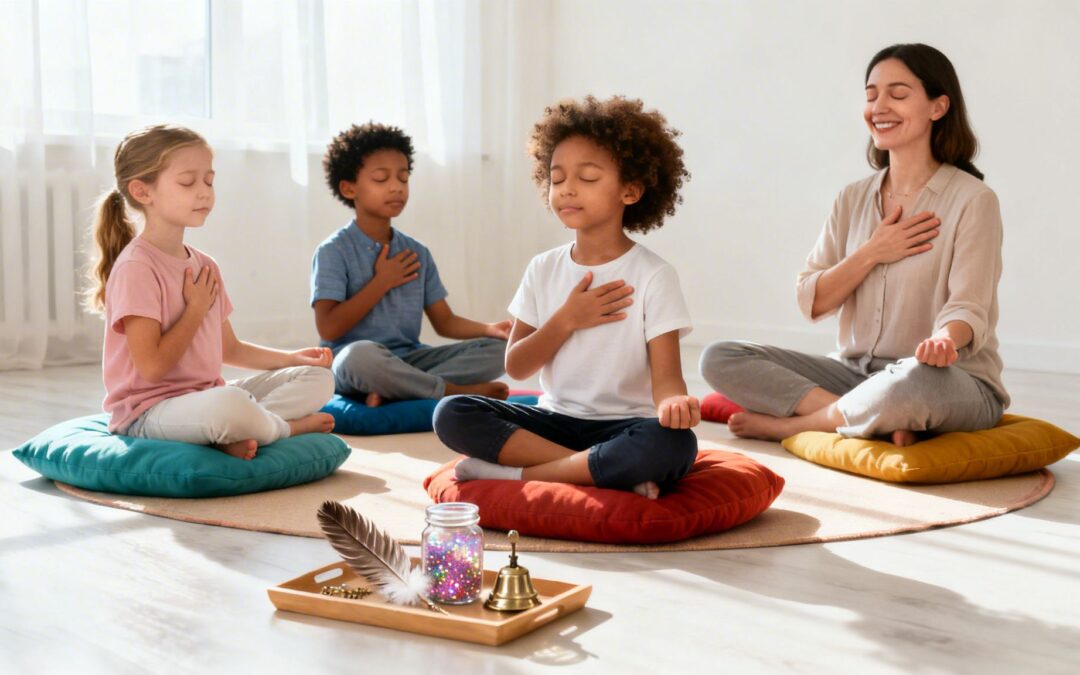
In a world filled with constant stimuli, young students often face significant challenges with focus, stress, and emotional regulation. The ability to manage these pressures is a critical life skill, and mindfulness offers a direct, powerful pathway to developing it. This guide moves beyond theory to provide a practical toolkit of mindfulness activities for elementary students, specifically designed for easy implementation in both classrooms and at home. The goal is to make abstract concepts like self-awareness and presence concrete and engaging for children.
Inside, you will find a curated collection of exercises that are both fun and foundational. We present a variety of options, from simple breathing techniques and body scan meditations to mindful movement and gratitude practices. Each activity is broken down with clear, step-by-step instructions, making them accessible even for educators and parents new to mindfulness.
To ensure these practices are effective and age-appropriate, every item includes:
- Specific grade-level adaptations for students from kindergarten through fifth grade.
- Alignment with core Social-Emotional Learning (SEL) competencies.
- Practical tips for teachers and caregivers to lead the activities successfully.
This article is more than just a list; it is a resource for building a supportive environment where children can learn to understand their inner world, manage big emotions, and cultivate a sense of calm and focus. These are not just momentary fixes but essential skills that will support their well-being for years to come.
1. Breathing Exercises and Breathwork
Structured breathing exercises, often called breathwork, are a fundamental component of any effective mindfulness program for elementary students. These techniques teach children how to consciously use their breath to influence their nervous system, providing a powerful and accessible tool for managing stress, emotions, and focus. By concentrating on the simple, repetitive rhythm of inhaling and exhaling, students can anchor themselves in the present moment, quieting anxious thoughts and calming their bodies.
This practice is foundational because the breath is always available. Unlike other tools that require specific materials or settings, a student can use a breathing technique anywhere-at their desk before a test, on the playground during a conflict, or at home when feeling overwhelmed.
Common Breathing Techniques for Kids
- Belly Breathing: Students place a hand on their stomach and imagine a small balloon inside. As they breathe in through their nose, they feel their belly expand like the balloon filling with air. As they breathe out slowly through their mouth, they feel the “balloon” deflate. This encourages deep, diaphragmatic breathing which is naturally calming. Practical Example: A teacher might say, “Let’s get our ‘Belly Buddies’ out!” Students lie down, place a small stuffed animal on their belly, and watch it rise and fall as they breathe.
- Five Finger Breathing: Students hold one hand up with their fingers spread. Using the index finger of their other hand, they slowly trace up their thumb while inhaling, and trace down the other side while exhaling. They continue this for all five fingers, providing a multisensory experience that combines touch, sight, and breath. Practical Example: Before a spelling test, a teacher can say, “Let’s do our ‘High Five Breath’ to calm our butterflies.” The class does the exercise together for a minute.
- Box Breathing: Ideal for older elementary students, this technique involves a four-part count. Students inhale for a count of four, hold their breath for four, exhale for four, and hold again for four. Visualizing drawing a square can help them remember the pattern. Practical Example: After a noisy recess, a teacher can guide the class: “Let’s draw our boxes with our breath. Inhale 2, 3, 4… Hold 2, 3, 4…” to help them settle.
Implementation Tip: Model these exercises yourself during class. When you take a moment to do Five Finger Breathing before starting a new lesson, you normalize the practice and show students that everyone can benefit from a mindful pause.
Putting Breathwork into Practice
Integrating breathing exercises into daily routines makes them second nature. A kindergarten teacher might start the day with “Belly Buddies,” where students lie down and place a small stuffed animal on their belly to watch it rise and fall with their breath. A fifth-grade teacher could use Box Breathing as a two-minute transition tool after a lively group activity to help the class reset and focus for independent work.
These simple yet effective practices are some of the most important self-regulation strategies for students to learn. By giving children a concrete way to manage their internal state, you empower them to handle challenges with greater resilience and awareness. The consistency of the practice is key; breathing exercises done during calm moments build the neural pathways needed to access the skill during times of high stress.
2. Body Scan Meditation
Body scan meditation is a guided practice where students bring gentle, moment-to-moment attention to different parts of their body. By systematically moving their focus from their toes to the top of their head, children learn to notice physical sensations like warmth, tingling, tightness, or comfort without judgment. This activity builds a crucial mind-body connection, helping students recognize how emotions like stress or excitement manifest physically.
This practice is an excellent addition to mindfulness activities for elementary students because it teaches interoception, the sense of the internal state of the body. Developing this skill allows children to identify and address feelings before they become overwhelming. A student who learns to notice the knot in their stomach before a test can then use a calming strategy, like breathwork, to self-soothe.
Common Body Scan Approaches for Kids
- Weather Report: Students imagine different weather patterns in each body part. They might notice “sunny warmth” in their hands, a “tight storm cloud” in their shoulders, or “gentle rain” in their feet. This metaphor makes abstract sensations more concrete and less intimidating. Practical Example: A counselor could ask a child, “What’s the weather like in your tummy right now? Is it stormy or calm?”
- Flashlight Focus: The guide asks students to imagine they are holding a flashlight and can shine its beam of attention on one body part at a time. They “illuminate” their toes, then their ankles, then their knees, simply observing what they feel in the light. Practical Example: A parent could say at bedtime, “Let’s get our magic flashlights. Shine it on your feet. Are they warm or cool? Now let’s move the light up to your legs…”
- Melting Scan: This version is great for relaxation. Students are guided to tense a specific body part (e.g., squeeze their fists) and then release it, noticing the feeling of the muscle “melting” like an ice cube. This actively releases physical tension. Practical Example: A teacher might say, “Squeeze all the muscles in your legs like a frozen icicle… hold it… and now let them melt into a warm puddle.”
Implementation Tip: Offer choices to ensure comfort and safety. Let students decide if they want their eyes open or closed, and whether they prefer to sit in a chair or lie on a yoga mat or carpet. For students who are anxious or have experienced trauma, normalizing the practice in a one-on-one setting first can be very helpful.
Putting Body Scans into Practice
Integrating body scans can effectively transition students between different energy levels. A physical education teacher might use a five-minute melting scan after a high-energy game to help the class calm their bodies before heading back to the classroom. A school counselor could guide a student through a quick three-minute “Flashlight Focus” scan to help them identify where they are feeling anger after a playground conflict.
Starting with shorter, three-to-five-minute scans helps build students’ capacity for sustained attention. Following the practice with a quiet moment for drawing or journaling about what they noticed can deepen their awareness. By learning to listen to their bodies, students gain one of the most important self-awareness strategies for emotional regulation, giving them the power to understand and respond to their internal cues with kindness and skill.
3. Mindful Movement and Yoga
Mindful movement and yoga are physical mindfulness practices that connect gentle movement, stretching, and body awareness. For elementary students, who often learn best through kinesthetic experiences, these activities are invaluable. They teach children to pay attention to their bodies’ signals, release physical tension stored from stress or long periods of sitting, and improve focus by coordinating breath with motion.
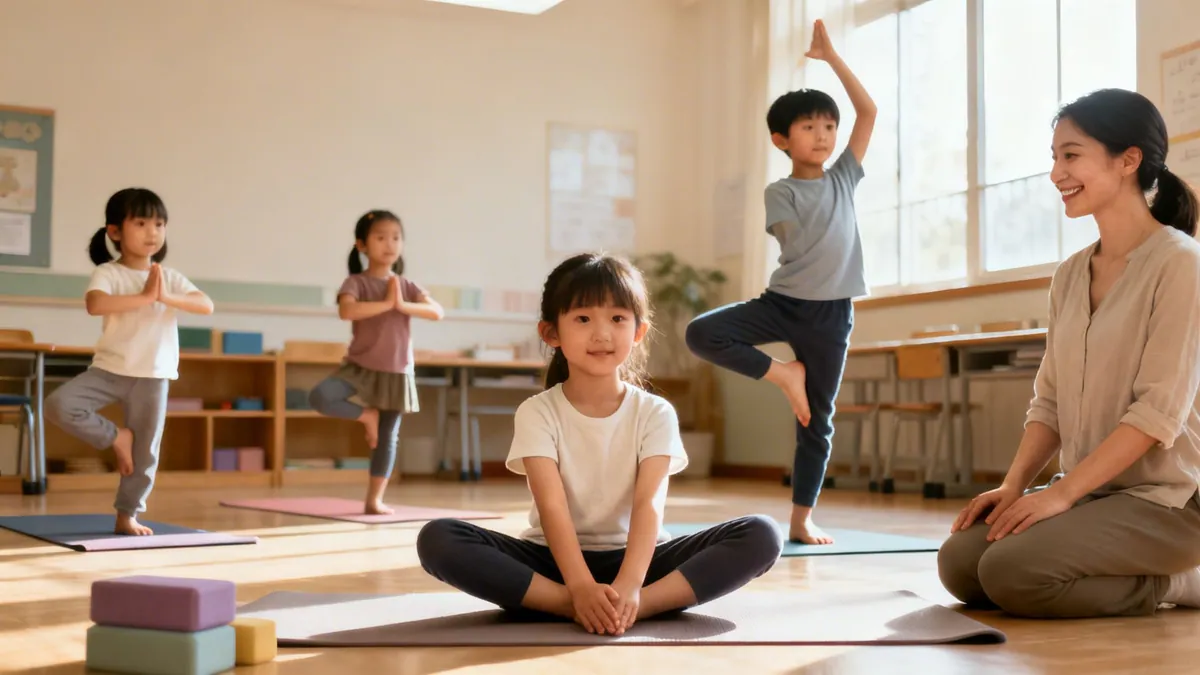
This approach is powerful because it makes mindfulness tangible. Instead of just thinking about being calm, students can feel calm in their muscles and grounded through their feet. Popularized by programs like Cosmic Kids Yoga and the Yoga Kids curriculum, these activities offer a structured yet playful way to explore the mind-body connection.