

10 Anger Management Worksheets for Teens
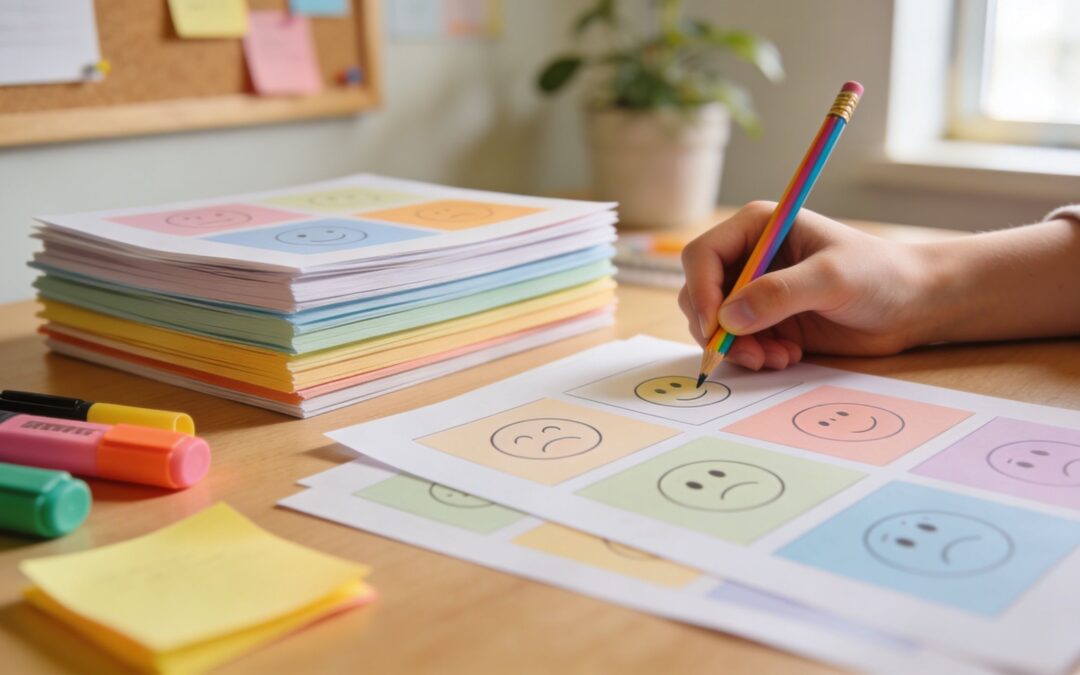
A teen slams their bedroom door after a frustrating homework assignment. A student mutters under their breath after getting a low grade. These moments are common, but they still put adults in a tough spot. You want to help without lecturing, and you need something more concrete than “calm down.”
Anger management worksheets for teens can be useful in these situations. A good worksheet provides structure during a difficult moment. It helps a teen identify what happened, notice physical cues, pinpoint the actual trigger, and choose a response that avoids escalating the situation. The worksheet is not the intervention on its own. The conversation surrounding it matters just as much.
These tools also fit well inside a wider SEL approach. Structured supports for teen anger grew out of the cognitive behavioral therapy wave in the late 1980s and early 1990s, when tools like emotion thermometers and trigger sheets became standard for adolescent emotional regulation, according to Mental Health Center Kids’ overview of anger worksheets for teenagers. If you’re supporting students with overlapping stress and worry, this free anxiety education hub is also worth keeping nearby.
Below are 10 options I’d consider in a school, counseling office, or home routine. For each one, I’m not just listing features. I’m explaining when to use it, what to say, and what usually works better in practice.
1. Running Successful Classroom Meetings Digital Workshop Binder
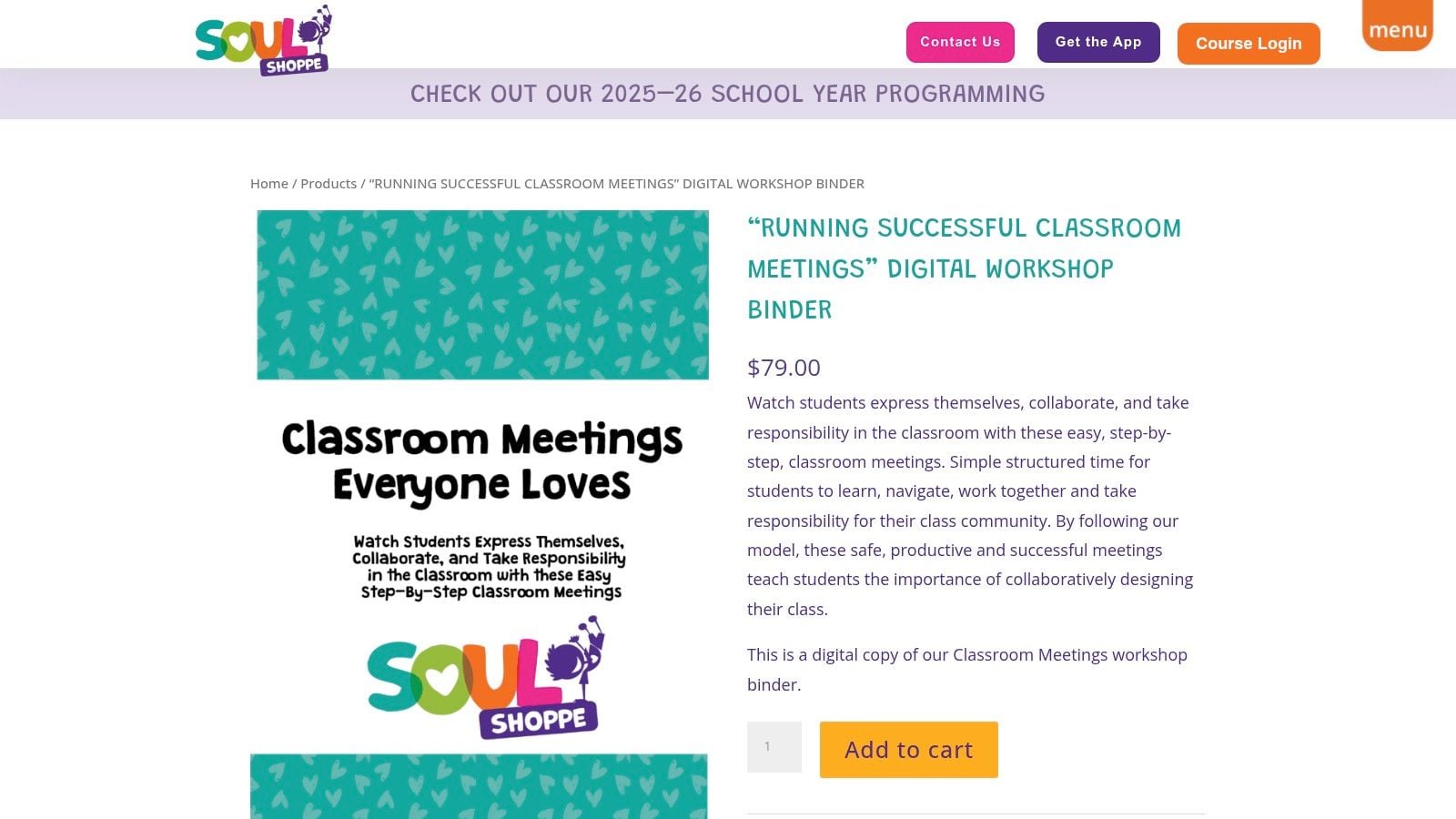
Soul Shoppe’s Running Successful Classroom Meetings Digital Workshop Binder isn’t a narrow anger worksheet pack. That’s exactly why it earns the featured spot. Anger management worksheets for teens work best when they live inside a predictable classroom routine, not as a one-time handout after a blowup.
This binder gives educators a structure for that routine. You get meeting agendas, facilitator notes, sample scripts, norm-setting activities, restorative prompts, short community-building exercises, and templates for tracking progress and family communication. Because it’s digital, teachers can adapt it for grade level, delivery format, and classroom tone instead of forcing one script onto every group.
Why it works in real settings
A lot of anger support fails because adults wait for an incident. Then they hand a teen a reflection sheet while everyone is still activated. This binder supports the opposite approach. It helps schools build shared language before conflict peaks.
Soul Shoppe describes its work as grounded in more than 20 years of research-based SEL practice. That whole-school consistency matters. In the verified data, Soul Shoppe’s experiential programs are described as aligning with long-running evidence-based SEL approaches that foster empathy and safety in schools through self-regulation tools akin to these worksheets, via Mission Prep Healthcare’s discussion of teen anger techniques and worksheets.
Practical rule: Don’t introduce anger worksheets only after a student has lost control. Introduce the language during calm moments, then reuse it during hard ones.
How to use it with teens
In advisory or homeroom, start with a five-minute emotional check-in. Then use one prompt connected to conflict, frustration, or repair. For example:
- Teacher opening: “Think of a moment this week when your reaction got bigger than you wanted. You don’t need to share details yet. Just notice what your body did first.”
- Follow-up question: “What would have helped at the level-three stage, before it became a level-eight problem?”
- Repair step: “If someone was affected by your reaction, what’s one sentence you could say that repairs instead of defends?”
That sequence works because it moves from awareness to strategy to accountability.
Trade-offs to know
The upside is structure. The possible downside is that some teachers will want support with facilitation. A binder won’t replace the judgment needed to handle a tense group discussion. Also, a fully digital format can be awkward in settings with limited printing or devices.
Still, for schools that want anger management worksheets for teens to become part of culture instead of an isolated intervention, this is the strongest implementation tool in the list.
2. Therapist Aid
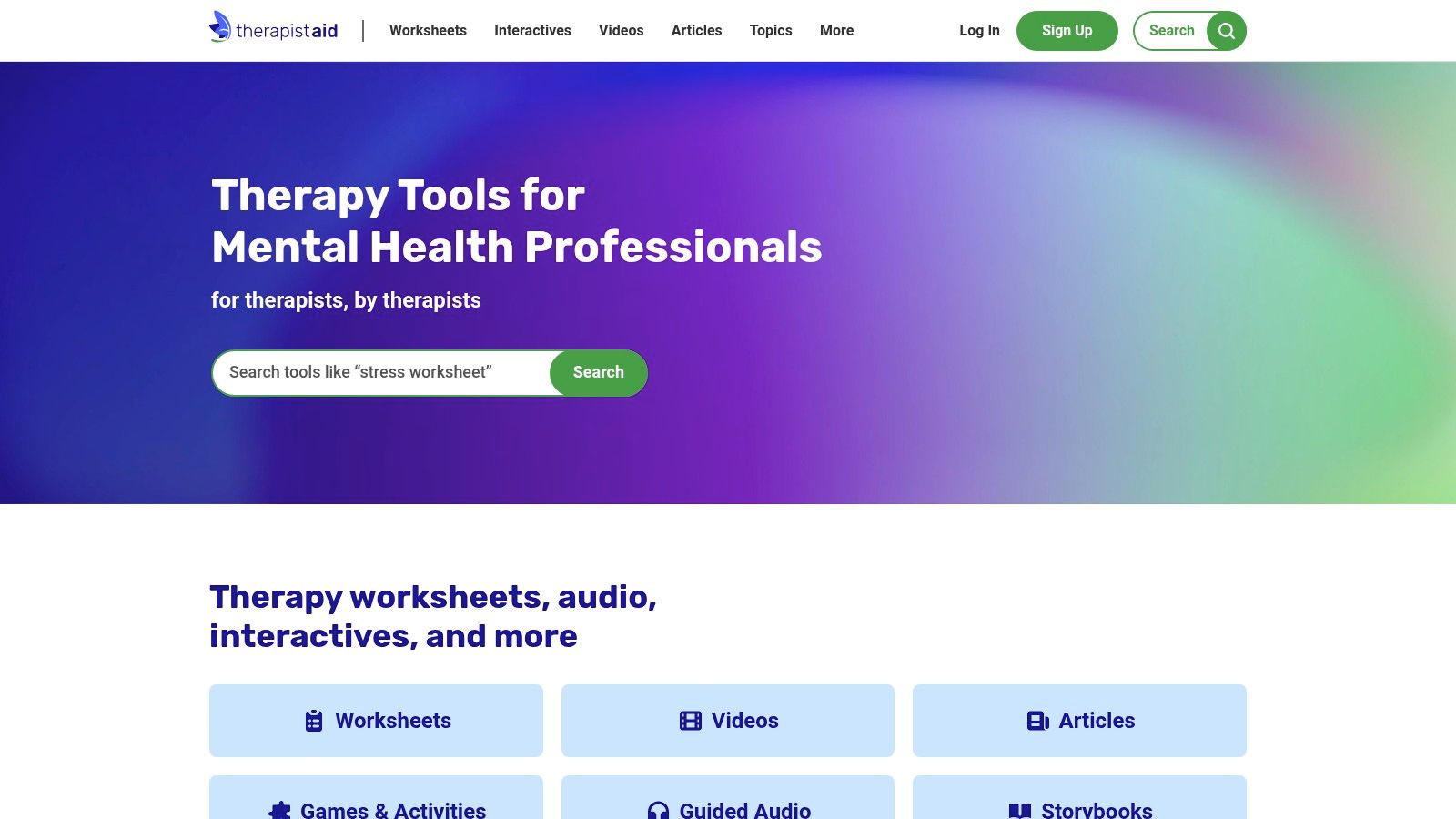
Therapist Aid is one of the easiest places to find clinician-style anger management worksheets for teens without building your own materials from scratch. Its library includes printables and fillable PDFs on triggers, warning signs, thinking patterns, and coping skills.
What stands out is consistency. The visual layout is usually clean, the language is direct, and the tools are easy to use in school counseling, short-term check-ins, or home practice. If you need a worksheet in ten minutes, this is a practical place to start.
Best fit and common snag
Therapist Aid works well with teens who can reflect in writing. It’s less effective for students who shut down with text-heavy pages. In those cases, I’d use one section only and turn it into a spoken conversation.
A simple introduction might sound like this:
“You don’t have to fill out the whole page. Circle the part that feels most true today, and we’ll talk from there.”
That lowers resistance fast.
- Use it for counseling check-ins: Pick one worksheet on triggers or warning signs and complete it side by side.
- Use it for home follow-through: Ask a parent to revisit one answer, not the whole packet.
- Avoid overload: Don’t assign three worksheets after one incident. One page is usually enough.
Some resources are free, while some advanced formats require a membership. That’s a fair trade if you want reliable materials, but not every family or school needs the paid tier.
3. Mylemarks
Mylemarks feels like it was built by someone who knows what happens in counseling offices and small groups. The site offers counseling-style printables, journals, anger meters, trigger logs, and de-escalation tools that are easy to slot into a school day.
I especially like this kind of resource for students who need repetition. A one-page anger meter can become a regular routine much more easily than a long reflection packet. That makes it useful for Tier 2 support, lunch groups, and repeat office visits.
How to introduce it without making it feel punitive
If a teen hears, “Fill this out because you were disrespectful,” the worksheet becomes a consequence. If they hear, “Let’s figure out what your anger was trying to tell you,” the worksheet becomes a tool.
Try a short script like this:
- Counselor prompt: “Point to where you were on the anger scale before you said anything.”
- Next question: “What moved you up one level?”
- Skill bridge: “What can you do at that exact level next time, before you hit the top?”
That’s concrete and easier for teens than broad processing questions.
The trade-off is cost structure. Because many items are sold individually, building a full collection can add up. Some resources also live on marketplace platforms, so the browsing experience isn’t always as efficient as a single library.
4. Between Sessions Resources

Between Sessions Resources is better for practitioners who want to assemble customized packets than for parents who just want one free printable. Its strength is workflow. You can edit PDFs, compile custom workbooks, and organize materials in a way that supports ongoing intervention.
That matters when a teen’s anger isn’t a one-sheet problem. Some students need a sequence: trigger identification first, coping scripts next, then parent communication, then repair planning. This platform supports that progression well.
Where it shines
A school counselor running a six-week group could build different packets for different students. One teen might need body-warning-sign work. Another might need assertive communication practice. Another might need family-facing handouts.
Use workbook-building tools when one worksheet keeps producing the same stuck answer. Change the task, not just the setting.
Here’s a practical way to use it:
- Week one: Trigger log.
- Week two: Body signals worksheet.
- Week three: Coping script rehearsal.
- Week four: Reflection on one real conflict.
- Week five: Repair statement planning.
- Week six: Personal anger plan for school and home.
The downside is that the platform is clinician-oriented. Teachers may find the navigation less intuitive, and the best value usually comes with a membership rather than one-off free access.
5. PositivePsychology.com

PositivePsychology.com is a strong option when you want psychoeducation and worksheets together. Some educators need that extra explanation to get buy-in from staff or families. A worksheet lands better when the adult understands the reasoning behind it.
This site is useful for anger management worksheets for teens because it doesn’t isolate anger from the rest of emotional regulation. You can pair anger reflection with mindfulness, cognitive restructuring, or resilience activities, which often leads to better follow-through.
How to use it in practice
A good approach is to teach one idea, then hand over one page. For example, explain how “hot thoughts” can intensify an already stressful situation. Then ask the teen to write one thought they had in a recent conflict and one alternate interpretation.
Use prompts like:
- “What was the fastest thought in your head?”
- “What else could be true?”
- “Which thought would help you stay in control without pretending you’re fine?”
That last question usually gets better answers than “What’s a positive thought?” Teens can spot fake positivity immediately.
A practical drawback is that some worksheets are tucked inside longer articles, so grabbing the exact file can take more clicking than it should. Premium packs also require payment. Still, it’s a good fit for adults who want a bigger SEL library, not just one anger sheet.
6. KidsHealth in the Classroom
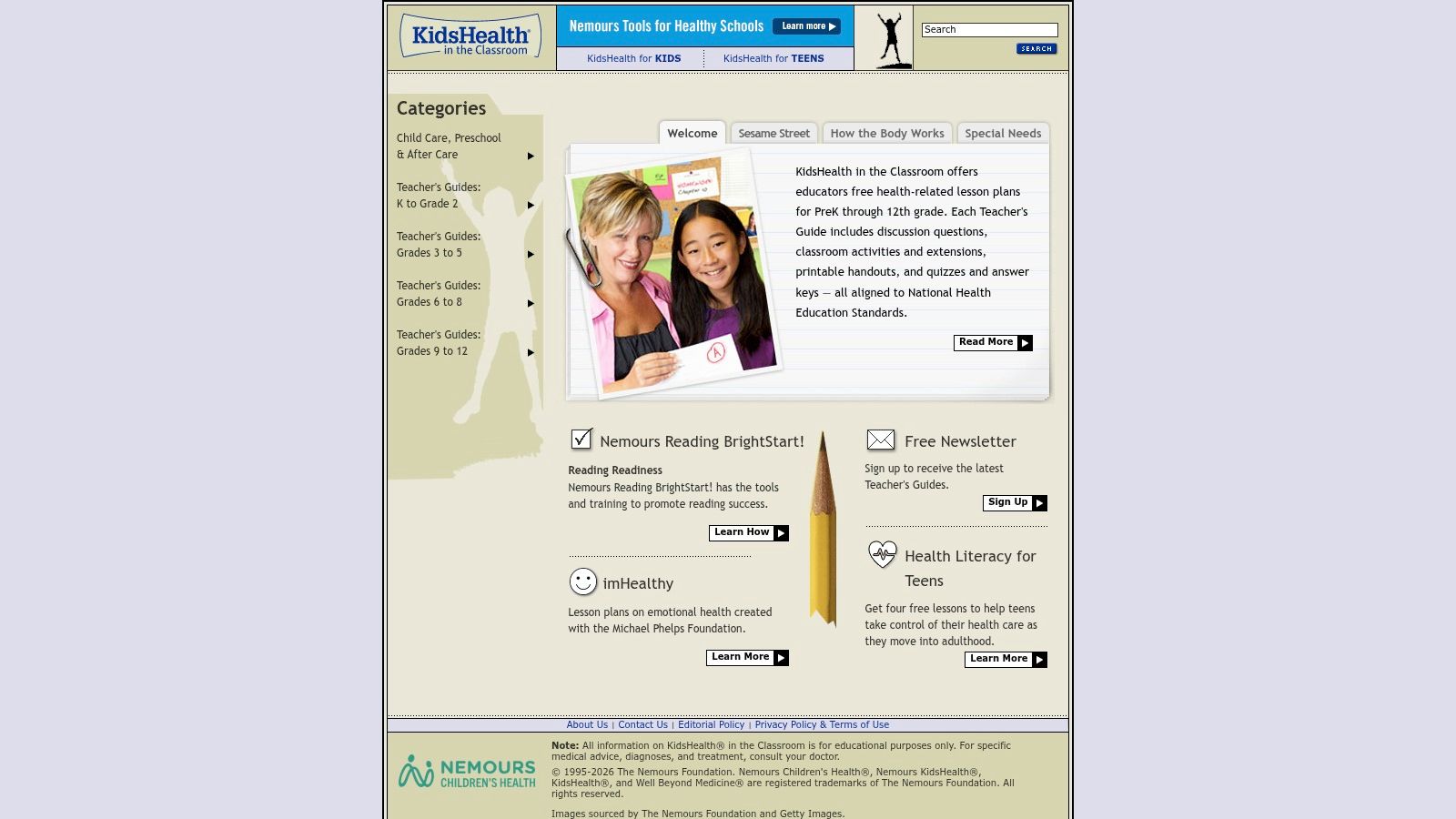
KidsHealth in the Classroom is one of the best free school-friendly options for grades 6 to 8 and up. The materials are structured as lessons with reproducible worksheets, so they work well in health, advisory, and SEL blocks.
The tone is plain, which is a strength. Some commercial materials look polished but talk over students. KidsHealth tends to use straightforward language that middle schoolers can follow.
A good choice for whole-class use
This is the tool I’d use if several students are struggling with conflict and irritability, but I don’t want to single anyone out. You can teach anger as part of a broader unit on emotions or conflict resolution, then let students practice privately.
A teacher could say:
“Everybody gets angry. We’re not deciding whether anger is good or bad today. We’re learning what happens right before our choices get worse.”
That framing reduces shame and defensiveness.
- Best for advisory: Short lesson, guided worksheet, then pair-share if the class culture can handle it.
- Best for families: Send one reproducible page home with a note asking caregivers to discuss coping choices, not punishments.
- Watch for this limitation: anger materials may be nested inside broader emotion units, so you may need to pull out the pages that fit your goal.
The design is more utilitarian than paid curricula, but for many schools, free and usable beats flashy and complicated.
7. Centervention
Centervention is especially helpful when anger is clearly masking another feeling. Its shorter, targeted printables, including tools like an anger iceberg, help students look underneath the behavior without making the exercise feel clinical.
That’s valuable because many teens say “mad” when the fuller answer is embarrassed, excluded, overwhelmed, or hurt. If you skip that step, you can teach coping skills all day and still miss the underlying problem.
How to use the anger iceberg well
Don’t start by asking, “What deeper emotion were you feeling?” That can feel too abstract. Start with the event, then move down.
Try this sequence:
- “What happened?”
- “What did people see on the outside?”
- “What was happening underneath that nobody could see?”
That’s often enough to get a useful answer.
The platform is easy to plug into Tier 1 and Tier 2 supports, especially with upper elementary and middle school students. Older teens may find some materials a little young unless you frame them carefully. Some downloads also require an educator account, which is a small barrier but not a major one.
8. TherapyByPro

The catalog includes concrete tools like anger thermometers, trigger sheets, coping plans, and broader emotional regulation templates.
The biggest advantage is format. If a teen already does homework, counseling follow-up, or check-ins on a device, fillable PDFs remove a lot of friction. You don’t have to print, collect, scan, or re-enter anything.
When this format helps most
This works especially well with teens who won’t carry a paper worksheet back and forth. A counselor can email or assign one sheet, then review it in the next meeting. Parents can also use it as a low-pressure check-in at home.
Try wording like this:
“Don’t write the perfect answer. Just mark the top two triggers that keep showing up, and we’ll build around those.”
That keeps the task short and doable.
The limitations are straightforward. It’s mostly a paid resource, and the site organization feels more clinician-centered than parent-centered. But if you want digital homework that teens can complete, this is one of the more practical choices on the list.
9. Teachers Pay Teachers
That can be a strength if you need something specific today. It can also be a weakness if you don’t vet what you’re buying.
You’ll find anger meters, reflection sheets, counseling group packs, Google Slides activities, and printable stations. Some are excellent. Some look nice but don’t do much beyond asking a teen to say they’ll “make better choices.”
How to shop without wasting time
Preview pages matter. Reviews matter. I’d also check whether the language sounds respectful to adolescents. If the worksheet reads like it was written for much younger kids, high schoolers will reject it instantly.
Use this simple filter when reviewing a listing:
- Look for concrete prompts: “What happened right before?” is better than “Describe your anger.”
- Look for skill practice: A coping plan is stronger than a coloring page alone.
- Look for transfer: The best resources ask what the teen will do next time, not only what went wrong last time.
If you’re piecing together a broader support plan, these practical emotion regulation tools can complement worksheet-based anger work.
Licensing is usually per teacher, and quality varies by seller. Still, for quick classroom-ready downloads, TPT remains useful if you approach it like a careful buyer rather than assuming every top listing is strong.
10. Whole Person Associates – The Teen Anger Workbook
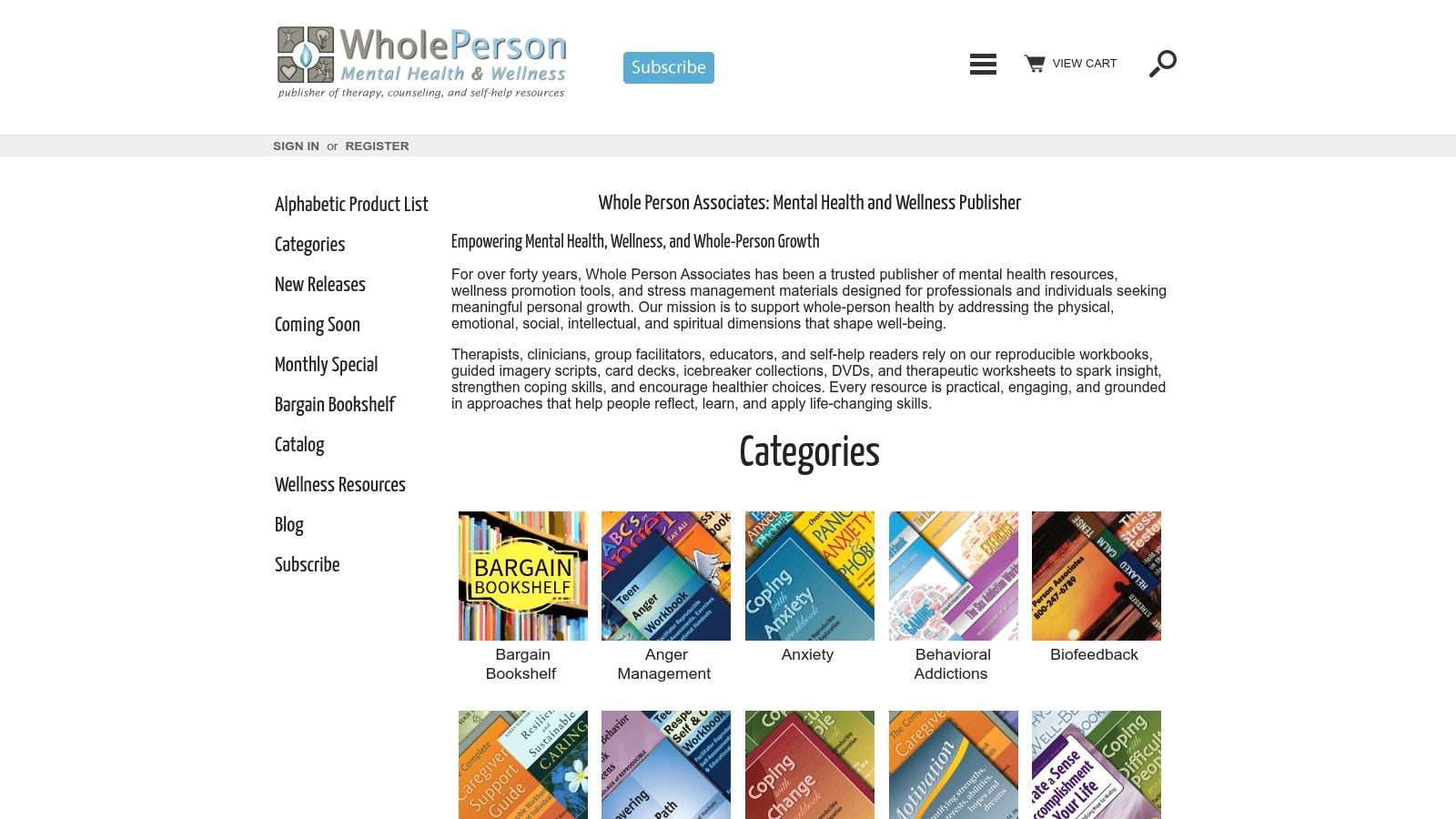
Whole Person Associates offers The Teen Anger Workbook, which is one of the better choices when you need a structured backbone for a multi-week counseling group. Instead of hunting for disconnected printables, you can pull from one reproducible, teen-focused workbook.
That kind of continuity matters. A teen who resists random worksheets may engage better when the material clearly builds from self-assessment to reflection to coping planning.
Best use in schools and homes
I’d use this with a small group, a repeated counseling series, or a family that wants a guided path rather than loose pages. The workbook format gives enough depth for recurring sessions while still letting you choose just the pages you need.
A counselor might open with:
“We’re not trying to prove you’re an angry person. We’re trying to understand your anger pattern so you can interrupt it earlier.”
That distinction often helps teens stay engaged.
The main drawback is time. Workbooks naturally include more than most school sessions can handle, so adults need to select pages instead of assigning whole sections. It’s also a paid resource rather than a free printable. But if you want a facilitator-ready sequence instead of a patchwork of handouts, it’s a strong option.
Top 10 Teen Anger-Management Worksheet Comparison
| Resource | Core offering | Best for / Target audience | Key strengths | Limitations | Price / access |
|---|---|---|---|---|---|
| Running Successful Classroom Meetings Digital Workshop Binder (Soul Shoppe) | Digital workshop binder with agendas, scripts, norms, templates | Teachers & school leaders running classroom or schoolwide meetings | Evidence-informed, editable templates, scalable, builds belonging | Requires SEL facilitation skill or coaching, needs devices/printing | Paid digital download via Soul Shoppe |
| Therapist Aid | Large library of printable & fillable PDFs focused on anger skills | School counselors, clinicians, small groups, home practice | Many free PDFs, teen filters, CBT/SEL-aligned, clear visuals | Some advanced formats behind membership, literacy-heavy worksheets | Free resources + optional paid membership |
| Mylemarks | Counseling-style printables, journals, small-group packs | Practitioners and school counselors working with kids/teens | Practitioner-focused, teen-specific resources, free samples available | Items sold separately so costs can add up, marketplace fragmentation | Mixed free + paid per item |
| Between Sessions Resources | Subscription library with editable PDFs and workbook-builder | Clinicians and schools compiling custom client workbooks | Robust workflow, client-sharing, regularly updated content | Best value needs membership, clinician-focused navigation | Subscription-based (membership) |
| PositivePsychology.com | Evidence-informed worksheets and articles with teen anger activities | Counselors seeking psychoeducation paired with practice | Research-referenced content, broad SEL library, mix of free/premium | Worksheets sometimes embedded in long articles, premium packs paid | Free articles + paid toolkits |
| KidsHealth in the Classroom (Nemours) | Classroom-ready lesson plans & reproducible worksheets for grades 6–8+ | Middle-school teachers, health/SEL educators | Entirely free, school-ready, backed by reputable health org | Anger content nested in broader units, utilitarian design | Free |
| Centervention | Short SEL activities & printables (anger iceberg, cool-downs) | Teachers supporting Tier 1–2, small groups, quick interventions | Easy to plug in, clear de-escalation focus, printable downloads | Skews to upper-elementary/middle, some downloads gated | Mixed access; some free, some require educator account |
| TherapyByPro | Fillable, editable anger worksheets and thematic bundles | Clinicians, counselors, remote/homework use | Digital-first formatting, concrete tracking sheets, large library | Predominantly paid, clinician-oriented site layout | Paid downloads/bundles, few free samples |
| Teachers Pay Teachers (TPT) | Marketplace of teacher-created anger-management packs and slides | Classroom teachers and counselors needing quick ready-to-run resources | Wide variety, low-cost options, previews & peer reviews | Quality varies by seller, licensing often per-teacher | Mostly low-cost paid items, some free |
| Whole Person Associates – The Teen Anger Workbook | Reproducible facilitator-ready teen anger workbook | Facilitators running multi-week groups, school counselors | Purpose-built teen workbook, structured multi-session design | Paid resource, book format may need adaptation for short sessions | Paid workbook / e-book via retailers |
From Worksheets to Lasting Well-Being
Anger management worksheets for teens can do a lot of good, but only when adults use them with intention. A worksheet is not a punishment, and it isn’t proof that a teen has “worked on themselves” just because they filled in the blanks. It’s a prompt. It opens the door to self-awareness, skill practice, and repair.
The most effective use is usually simple. Pick one focused worksheet. Introduce it during a calm moment. Keep the conversation concrete. Revisit the same language later when a real conflict happens. That rhythm helps teens connect reflection to action.
I also encourage adults to watch for the moment when a teen is too activated to write. In that situation, a worksheet can wait. Co-regulate first. Lower the temperature. Then come back to the page when the student can think instead of just react. A beautifully designed worksheet used at the wrong time won’t help much.
There’s also a bigger lesson underneath all of this. Anger is often the visible emotion, not the only emotion. Teens may show anger when they feel embarrassed, powerless, left out, overloaded, or misunderstood. The right worksheet helps uncover that hidden layer. Once that happens, the next step becomes clearer. Maybe the teen needs a coping plan. Maybe they need a script for speaking up. Maybe they need a classroom routine that gives them more predictability and voice.
That’s why classroom systems matter as much as individual handouts. Schools and families get better results when they create shared language around emotional regulation, conflict, and repair. Teens do better when adults respond with consistency instead of surprise, and with curiosity instead of instant judgment.
Soul Shoppe’s work sits right in that space. The organization focuses on connection, safety, empathy, and practical self-regulation tools that help students and adults build healthier school communities. For educators and caregivers, that’s the long game. Not stopping every angry moment before it happens. Teaching young people what to do with big emotions when they arrive, how to recover after mistakes, and how to stay connected to others while they learn.
Used thoughtfully, these worksheets become more than paper or PDFs. They become part of a teen’s emotional vocabulary. And that’s a skill they’ll use far beyond one hard school day.
If you want support that goes beyond stand-alone worksheets, Soul Shoppe offers research-based SEL programs, workshops, and tools that help schools and families build shared language for self-regulation, empathy, communication, and conflict resolution. It’s a strong next step for teams that want practical routines, not just isolated resources.