

8 Emotion Focused Coping Examples for Kids & Teens
A child storms off after recess because a friend wouldn’t share. Another freezes before a math test and says their stomach hurts. A middle schooler shrugs and mutters, “I don’t care,” when you can tell they absolutely do. In those moments, adults often reach for the same phrase: calm down.
The problem is that “calm down” isn’t a tool. It’s a request.
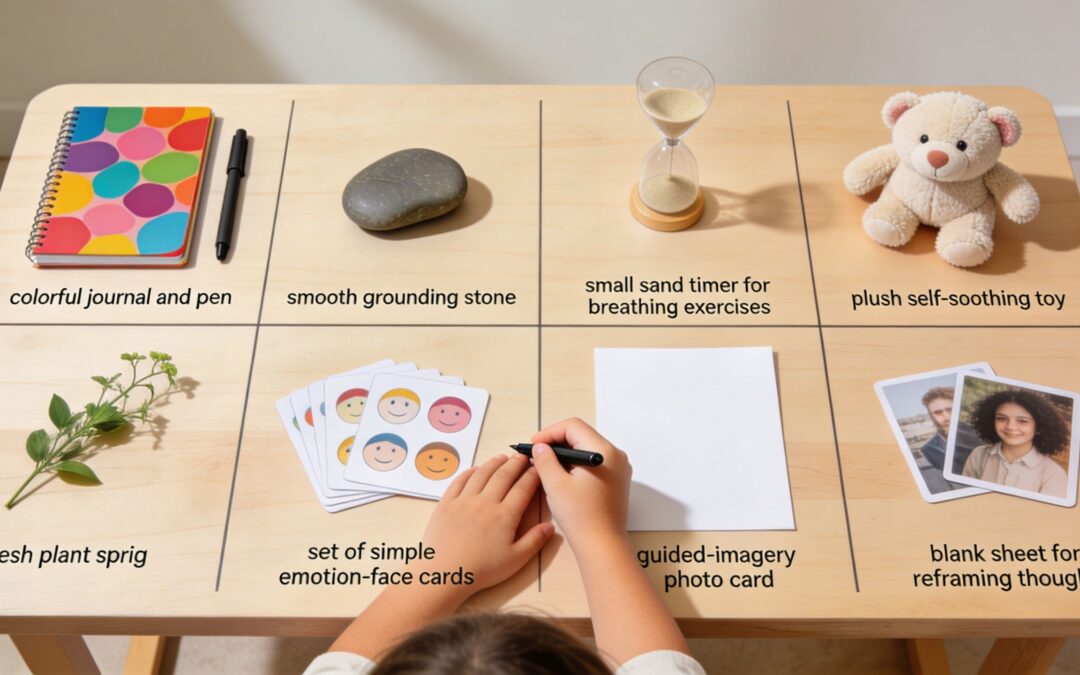
Children need actual strategies they can use when frustration, worry, embarrassment, grief, or disappointment rush in faster than their thinking brain can catch up. That’s where emotion focused coping comes in. These strategies help kids work with the feelings created by a hard situation, especially when they can’t fix the situation right away. A student can’t undo a conflict, erase a mistake, or control a family change in the moment. They can learn how to notice, express, soothe, and move through the emotions that come with it.
That matters. A 2015 meta-analysis on emotion-focused coping found that people who actively processed and expressed emotions, rather than avoiding them, showed measurable improvements in resilience and well-being. That’s an important distinction for adults in schools and homes. Not all emotion-focused coping helps. Suppressing feelings tends to backfire, while healthy emotional processing can support stronger coping.
These emotion focused coping examples are designed for real classrooms, real homes, and real kids. They’ll also strengthen the emotional intelligence that children need to handle relationships, stress, and setbacks with more confidence.
1. Mindfulness and Present-Moment Awareness
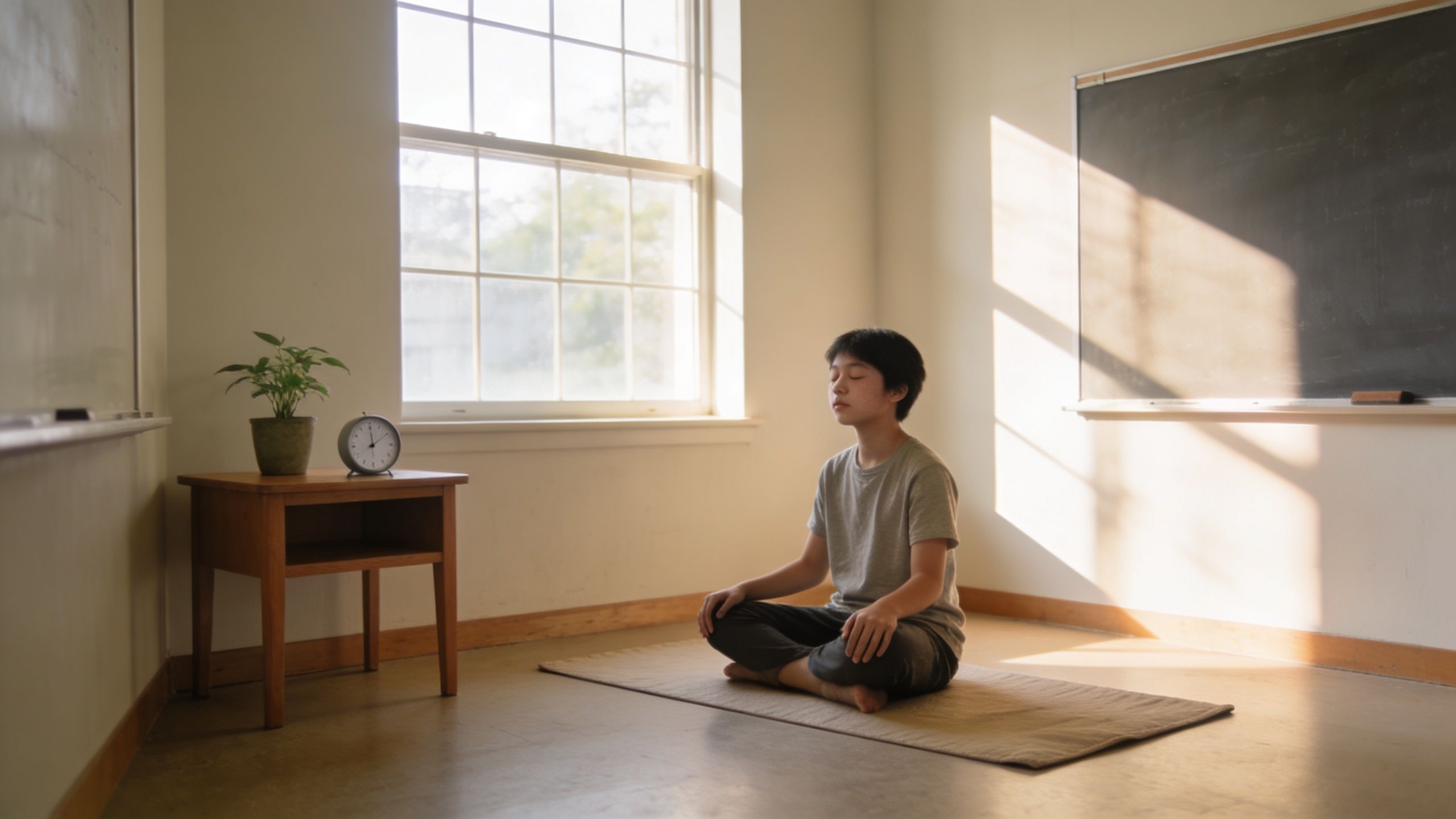
Mindfulness gives a child something concrete to do when feelings start to spike. Instead of getting pulled deeper into panic, anger, or shame, they practice noticing what’s happening right now. Breath. Feet on the floor. Hands on the desk. Sounds in the room. That pause can keep emotion from taking over behavior.
In school, this often looks simple. A third grader takes three slow breaths before opening a test packet. A teacher starts the morning with one minute of quiet noticing. A parent kneels beside a crying child and says, “Let’s feel your belly rise and fall together.”
What it sounds like with kids
You don’t need long meditations. Short, repeatable routines work better.
- For early elementary: “Name three things you see, two things you hear, one thing you feel in your body.”
- For upper elementary: “Put one hand on your chest and one on your belly. Breathe in slowly. Breathe out even slower.”
- For middle school: “Notice the thought. Don’t argue with it yet. Just label it: worried thought, mad thought, embarrassed thought.”
Practical rule: Practice mindfulness when kids are calm, not only when they’re upset. Skills learned during peaceful moments are easier to use during hard ones.
Classroom and home adaptations
A mindfulness routine works best when it’s built into the day. Try it before tests, after lunch, after conflict, or during transitions. If you want students to understand why this matters, tie it to the idea of living in the now, which helps kids shift attention away from spiraling “what if” thoughts.
Teachers can say, “We’re not trying to make every feeling disappear. We’re helping our bodies get steady enough to think.” Parents can use the same language at bedtime, before sports, or after a sibling conflict.
2. Emotional Expression and Creative Outlets

Some children can tell you exactly what they feel. Many can’t. They show it in drawings, movement, music, pretend play, or the way they slam a marker onto paper. Creative expression gives emotion a safe exit. It helps a child process feelings without needing perfect words first.
This is one of the most useful emotion focused coping examples for younger students and for older kids who shut down when asked direct questions. A child might draw “what anger looks like,” create a playlist for different moods, or act out a problem with puppets before they’re ready to talk.
Ways to use it without turning it into an assignment
The key is to focus on expression, not performance. Don’t correct the art. Don’t ask for neatness. Don’t force sharing.
- Art option: “Use color and shape to show how today feels.”
- Writing option: “Finish this sentence three times: Right now I wish…”
- Movement option: “Show me with your body what nervous feels like, then show me what steady feels like.”
- Drama option: “Let the puppet say what the student can’t say yet.”
A feelings chart for kids can help children move from broad labels like mad or sad to more accurate words like left out, embarrassed, worried, or disappointed. That added precision often lowers intensity because the feeling becomes easier to understand.
Sample adult script
Try: “You don’t have to explain it right away. You can draw it, write it, or move it.”
That kind of permission matters. A randomized trial described in this positive affect journaling overview found that journaling was linked with significant reductions in mental distress, anxiety, and perceived stress after an 8-week intervention, with benefits that persisted at follow-up. For children, the school version can be much simpler: a short reflection page, a feelings doodle, or a gratitude journal they return to regularly.
3. Social Support and Connection-Building

Kids regulate better in relationship. Even very independent children often need another nervous system nearby before they can settle their own. That’s why connection is one of the strongest emotion focused coping examples you can teach.
For some students, support means talking. For others, it means sitting next to a trusted adult, walking a lap with the counselor, or knowing there’s one peer who’ll save them a seat at lunch. The message is the same: you don’t have to carry big feelings alone.
Build support before a child is in crisis
Waiting until a student is overwhelmed is too late. Connection has to be part of the routine.
- Teacher check-ins: Greet students by name and notice changes in mood.
- Peer structures: Use partner shares, lunch groups, or buddy systems.
- Family routines: Set a daily “tell me one hard thing and one good thing” conversation.
- Counselor support: Give students a clear path for asking for help without shame.
Research summarized in this overview of coping patterns in students found that girls reported higher overall coping levels than boys, and that self-efficacy and family support influenced which coping strategies students used. The same review also noted that withdrawal was associated with depressed mood. For adults, that’s a reminder to teach help-seeking directly instead of assuming children will do it on their own.
Sample scripts for adults and peers
A supportive response sounds like this:
“You don’t have to fix it right now. Tell me what feels hardest.”
A peer can learn simple language too: “Do you want advice, or do you want me to just stay with you?” Activities that strengthen trust and belonging make these moments more likely. Schools can support that through intentional relationship-building activities woven into the week.
4. Self-Compassion and Positive Self-Talk
Many kids are much harder on themselves than adults realize. You see it after a wrong answer, a missed goal, a social mistake, or a small correction. “I’m dumb.” “Nobody likes me.” “I ruin everything.” That inner voice can turn one hard moment into a much bigger emotional crash.
Self-compassion teaches children to talk to themselves the way they’d talk to a friend. It doesn’t mean pretending everything is fine. It means meeting struggle with honesty and kindness.
Replace harsh self-talk with helpful language
Children usually need this modeled out loud. They don’t automatically know what compassionate self-talk sounds like.
Try these swaps:
- Instead of: “I’m terrible at this.”
Try: “This is hard for me right now.” - Instead of: “I messed up everything.”
Try: “I made a mistake, and I can repair it.” - Instead of: “Everyone else gets it.”
Try: “I’m still learning, just like everybody else.”
A teacher can model this after making a mistake on the board: “I don’t love getting things wrong, but mistakes help me see what to fix.” That lands because it’s real.
A quick self-compassion routine
Give students three steps they can remember:
- Name it: “This is a hard moment.”
- Normalize it: “Other people feel this way too.”
- Support yourself: “What do I need to hear right now?”
Parents can keep this concrete: “You’re disappointed. That makes sense. What would help you talk to yourself kindly?” Teachers can post positive affirmations for kids and revisit them after mistakes, not just during morning meetings.
Speak to the child in a way you hope they’ll eventually speak to themselves.
That’s one of the quietest and strongest forms of SEL teaching.
5. Reframing and Cognitive Perspective-Taking
A child’s first interpretation of an event is often the most painful one. “She didn’t wave back because she hates me.” “The teacher corrected me because I’m bad.” “I failed one quiz, so I’m going to fail everything.” Reframing helps children slow down and consider another possible explanation.
This doesn’t mean arguing kids out of their feelings. If a child feels hurt, they feel hurt. Reframing comes after validation, not instead of it.
Start with the feeling, then widen the lens
A good adult response sounds like this: “I can see why that felt embarrassing. Let’s look at what else might be true.”
Then ask questions that invite perspective:
- “What’s one other explanation?”
- “What would you say to a friend in this situation?”
- “Is this a forever problem, or a right-now problem?”
- “What facts do you know for sure?”
For younger children, use visual choices. “Do you think your friend was being mean on purpose, distracted, or upset about something else?” For older students, introduce thinking traps such as mind-reading, catastrophizing, and all-or-nothing thinking.
Real school examples
A student gets feedback on an essay and says, “My teacher thinks I’m bad at writing.” Reframing sounds like: “Your teacher spent time on comments because your writing matters and can grow.”
A student isn’t picked for a game and says, “Nobody wants me.” Reframing might be: “That felt personal. It may also have been a quick choice between friends.”
This strategy pairs well with journaling, class discussions, and restorative conversations. Adults can model it openly: “My first thought was that the meeting went badly. My second thought is that people were tired and distracted.”
6. Relaxation Techniques and Somatic Awareness
Sometimes the fastest way to help a child with big feelings is through the body, not through words. An anxious child may have tight shoulders, shaky hands, or a stomachache. An angry child may clench fists or breathe fast. Somatic coping teaches kids to notice those signals and respond before they escalate.
That’s useful because many children don’t recognize stress until it’s already overflowing. Body awareness gives them an earlier warning system.
Here’s a simple practice to introduce: