

Gratitude Journal Prompts: Build Resilience in 2026
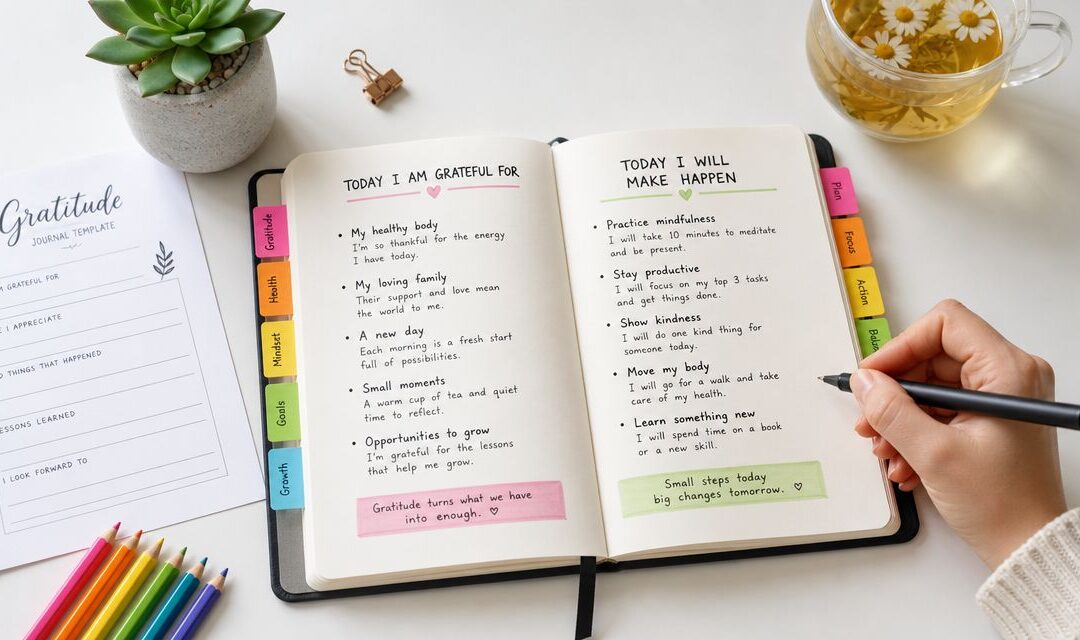
A lot of adults have lived this moment. You ask a class, your child, or a small group, “What are you thankful for?” A few hands go up. Someone says “my family.” Another says “food.” A third shrugs. The room gets quiet, and the exercise starts to feel more polite than meaningful.
That's usually not a motivation problem. It's a prompt problem.
Gratitude is more than saying thank you. It's a teachable noticing skill that can help children name support, remember moments of care, and build steadiness when school or home feels hard. In social-emotional learning, that matters because students need more than positive messages. They need repeatable practices that build self-awareness, empathy, and connection. One of the most widely used institutional versions comes from Greater Good in Action at UC Berkeley, which recommends writing down or typing up to five things you feel grateful for for 15 minutes per day, at least three times per week, for at least two weeks.
This is why gratitude journal prompts work better than vague reflection. They give children structure, language, and a safe entry point.
You can also pair gratitude work with calming practices. If you want a simple companion activity for transitions or quiet reflection, learn about meditation with Wellness Apothecary.
1. Three Good Things
This is often the easiest place to begin because it keeps the task small and concrete. Instead of asking children to feel grateful on demand, ask them to notice three good things from the day and write why each one mattered.
A first grader might write, “I'm grateful my friend shared crayons because I forgot mine.” A middle school student might write, “I'm grateful I solved one hard math problem because I didn't give up.” A teacher might write, “I'm grateful a student told me the breathing break helped because it showed me they felt safe enough to say it.”

How to use it in class or at home
The best version includes a reason. “I liked recess” is a start. “I liked recess because I finally got included in the game” builds more awareness.
Try these sentence frames:
- Something good that happened was: “My grandma picked me up.”
- Why it mattered was: “I felt relaxed in the car because she listens to me.”
- What I notice about myself is: “I feel calmer when I have one-on-one time.”
That last line is where SEL becomes visible. Students start connecting events to emotions, needs, and supports.
Practical rule: Small good things count. A warm lunch, a kind look, a seat next to a friend, or finishing an assignment all belong.
What this builds
Three Good Things supports self-awareness and resilience because it trains students to scan their day for moments of support instead of only replaying stress. That doesn't mean ignoring hard feelings. It means helping children hold more than one truth at once.
For a weekly classroom ritual, ask students to write privately on Monday through Thursday, then share only one entry on Friday if they want to. That lowers pressure. At home, parents can do the same at dinner by answering first and keeping their examples specific: “I'm grateful you told me you were frustrated instead of slamming the door.”
2. Gratitude Letter or Message Exchange
Some gratitude journal prompts stay private. This one becomes relational. Students write a short letter, note, or message to someone who helped, encouraged, or steadied them.
That “someone” can be a classroom aide, crossing guard, sibling, bus driver, custodian, teammate, or parent. Children often build more empathy when they notice the people who make daily life run smoothly.
Make the appreciation specific
A useful gratitude letter names an action, not just a person.
An elementary student might write, “Thank you to our custodian for cleaning our room every day. It helps our classroom feel safe.” A middle school student might write, “I appreciate you for sitting with me at lunch when I was nervous.” A parent can join by writing, “I appreciated how you packed your backpack without being reminded. That helped our morning feel calm.”
If students struggle to start, offer sentence stems and feeling words. Soul Shoppe's guidance on how to express your feelings in words can help adults model language that is honest and clear.
Safe ways to run the activity
Not every student wants to read a message aloud or hand it directly to someone. Give choices.
- Private delivery: Students place notes in envelopes for the teacher to deliver.
- Anonymous appreciation: Students write kind observations without signing their names.
- Whole-group gratitude: The class creates one shared letter for a school helper.
This prompt aligns closely with relationship skills. Children learn that appreciation isn't flattery. It's naming what someone did and how it affected you.
A strong gratitude message sounds like this: “You helped me when I was overwhelmed, and I felt less alone after that.”
That one sentence teaches emotional vocabulary, empathy, and connection all at once.
3. Sensory Gratitude Journaling
For students who get stuck in their heads, sensory gratitude journaling gives them something concrete to notice. Instead of searching for a big answer, they look at what they saw, heard, touched, smelled, or tasted.
That's especially helpful after transitions, conflicts, or overstimulating parts of the day. It brings attention back to the body and the present moment.
Take a simple approach like this:

- I saw: sunlight on the playground
- I heard: my table group laughing
- I felt: the soft sleeve of my sweater
- I smelled: pancakes this morning
- I tasted: cold water after PE
A grounding activity before writing
Before students journal, invite them to do a short observation walk around the classroom, hallway, or yard. Ask them to notice one steady thing for each sense. If you want a child-friendly companion exercise, Soul Shoppe offers a five senses activity for grounding and awareness.
A second-grade example might be, “I'm grateful for the smell of crayons and the sound of my friend humming because it made art feel fun.” A middle school example might be, “I'm grateful for the cold air on my face after school because it helped me calm down.”
Why this works well for overwhelmed students
This kind of gratitude doesn't force a cheerful mood. It asks students to notice what is present and steady. That's a key difference.
The broader conversation around gratitude journal prompts has increasingly emphasized trauma-sensitive variations, including prompts like “What helped you get through today?” and “What is one neutral thing that felt steady?” as discussed in this reflection on psychologically safe gratitude prompting. For many students, neutral is more accessible than joyful.
You can also add a short visual reset before writing:
This short video can help frame the moment for students who respond well to guided practice.