Soul Shoppe's work is made possible by donors and partners who care deeply about the young people in their communities! We can't do this work without you. Support our work in classrooms and on playgrounds across the nation by donating here.
A child is halfway through math when the pencil snaps. He shouts, pushes the paper away, and folds into tears. A teacher might see refusal. A parent might hear, “He knows better than this.” But in that moment, the more useful question is simpler. What skill is missing right now, and how can an adult help build it?
That question changes everything about how to have self control, especially for kids. It moves us away from labeling children as “good,” “bad,” “easy,” or “difficult,” and toward teaching, practicing, and supporting a developmental skill. Self-control grows in relationships, routines, and environments that make regulation possible.
Adults need that reminder too. Most children don't learn self-control because someone told them to “try harder.” They learn it because caring adults reduce overwhelm, name what's happening, model calm, and give them tools they can use when emotions spike.
Why Self-Control Is More Than Just Good Behavior
A child blurts out again during read-aloud. Another grabs materials instead of waiting. Another falls apart when it's time to clean up. These moments often get treated as behavior problems first.
Often, they're skill problems first.
Self-control is a teachable life skill
Self-control is not the same thing as blind obedience. It includes pausing, noticing an impulse, tolerating frustration, managing a strong feeling, and making a more helpful choice. That's why it belongs in the same conversation as reading, writing, and problem-solving. Children need instruction, practice, feedback, and support.
A major reason this matters is that self-control reaches far beyond classroom compliance. A 40-year study of 1,000 children in New Zealand found that childhood self-control was one of the strongest predictors of adult outcomes. Children in the top fifth for self-control had crime conviction rates of 13% versus 43% for those in the bottom fifth, and those patterns held regardless of initial intelligence or family socioeconomic status, as summarized in this American Scientist review of the Dunedin study.
That finding should shift the tone adults use. When we help a child wait, reset, recover, and choose again, we aren't only managing today's moment. We're strengthening a lifelong capacity.
Practical rule: Treat self-control lapses as information. They tell you where a child needs structure, modeling, or co-regulation.
What this looks like in real life
In practice, children often need adults to separate the feeling from the action.
A frustrated student can be upset without throwing supplies. The adult job is to help the child feel the feeling and contain the behavior.
A child can want to interrupt and still learn to pause. That pause usually begins with cues, routines, and repeated practice.
A child can struggle with transitions and still be capable. Needing support during change doesn't mean the child is manipulative.
This reframe matters for parents too. If your child melts down after school, that doesn't prove they're choosing chaos at home. It may mean they used up a lot of regulation during the day and need connection, food, rest, and fewer demands before they can access better skills.
Adults are not just correcting behavior
Adults are teaching children how to respond to inner experiences. That means helping them notice body signals, understand triggers, and use strategies before a problem grows. When schools and families approach self-control this way, discipline becomes more effective because it becomes more instructional.
A child who hears, “Let's slow your body down so your brain can think,” gets a path forward. A child who hears only, “What is wrong with you?” gets shame, and shame rarely improves regulation.
The Developing Brain and the Science of Self-Control
Many adults know the feeling of saying something they regret before they can stop themselves. Children live closer to that edge because their self-control system is still developing.
One simple way to explain it is the upstairs brain and downstairs brain idea. The upstairs brain handles planning, perspective-taking, decision-making, and inhibition. The downstairs brain reacts quickly to threat, frustration, excitement, and strong emotion. When a child is tired, hungry, embarrassed, overstimulated, or rushed, the reactive system can take over fast.
Self-control uses real mental energy
Self-control isn't a switch that stays on all day. It takes effort. Research summarized by the APA found that the average person spends three to four hours per day actively resisting desires, and when people attempted resistance, the rate of acting on those desires dropped from 70% to 17%, which shows both how powerful and how effortful self-control can be in everyday life, according to the APA overview on self-control research.
That matters in schools and homes because children are asked to regulate constantly. Sit still. Wait your turn. Ignore the noise. Keep trying. Use a calm voice. Share. Transition. Stop touching that. Start this instead.
By noon, many children are not being “lazy” or “defiant.” They're taxed.
Why empathy helps children build skill
When adults understand that self-control is effortful, our responses get smarter. Instead of assuming a child should already be able to handle a hard moment alone, we start offering support that helps the child borrow regulation.
That can sound like this:
Naming the state: “Your body looks revved up.”
Reducing language: “Pause. Breathe. Feet on floor.”
Offering structure: “First two calm breaths, then we solve the problem.”
Staying nearby: “I'm with you while you get regulated.”
For a deeper look at the broader set of abilities that support these moments, this piece on self-management skills for children is a useful companion.
Kids don't access self-control well when they feel unsafe, overwhelmed, or flooded. Connection helps reopen access to thinking.
A useful trade-off adults often miss
There's a difference between demanding regulation and building regulation. Demanding regulation may get short-term compliance from some children. Building regulation creates long-term capacity.
If a teacher says, “Calm down now,” that may raise pressure. If the teacher says, “Let's get your body settled first,” the child gets a usable step. If a parent launches into a lecture while a child is crying hard, the child usually can't process it. If the parent waits, co-regulates, and talks later, the lesson has a better chance of landing.
This is why routines, cues, and adult nervous-system steadiness matter so much. Children develop self-control partly through repeated experiences of being guided back into regulation.
Creating Environments That Build Self-Control
The most practical answer to how to have self control is not “use more willpower.” It's make self-control easier to use.
Research on self-control increasingly points to antecedent-focused strategies, which means changing the environment or cues before temptation, frustration, or overload takes over. That approach is about designing fewer battles, not just winning the battle after it has already started, as described in this discussion of antecedent-focused self-control strategies.
Start with friction and flow
When a child struggles repeatedly, look at the setup before you look at the consequence. Ask:
What's hard about this environment? Noise, clutter, waiting, confusing directions, too many choices.
What cue is missing? A visual schedule, a timer, a first-then card, a cleanup song.
What support is too far away? Water, fidgets, a break space, headphones, a calm adult.
Children usually do better when the expected behavior is visible and easy to start.
Here are examples that work in both classrooms and homes:
Use visual schedules. A child who argues at every transition often settles when they can see what comes next.
Prepare the body before the demand. Before homework, try snack, movement, water, and a quick preview of the task.
Limit open-ended clutter. Fewer materials in view can reduce distraction and conflict.
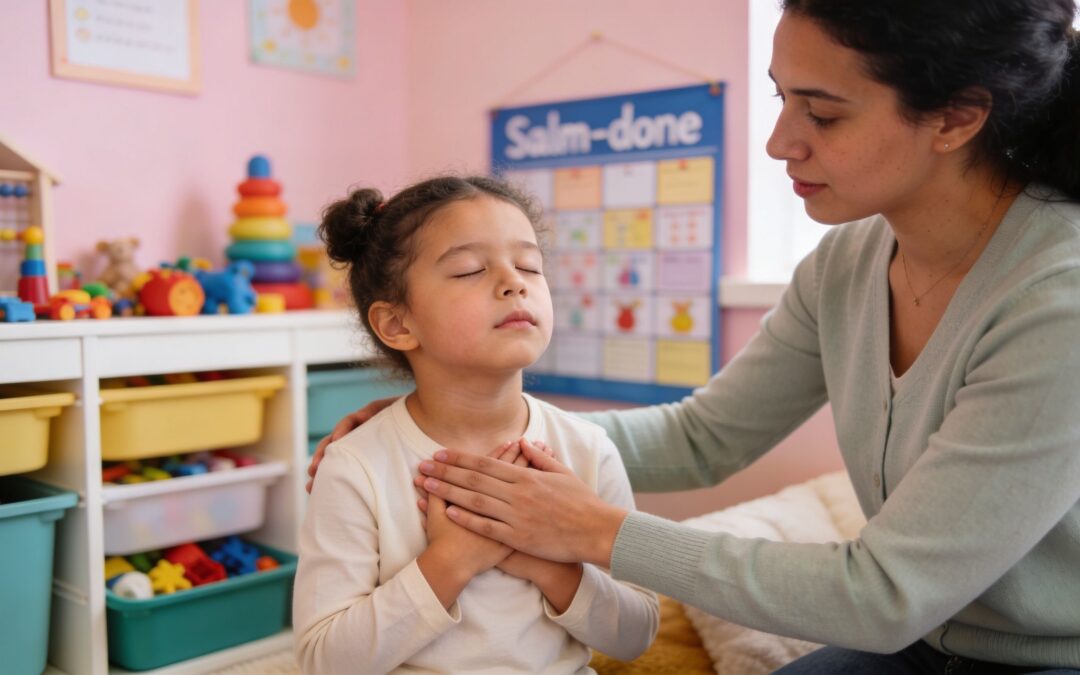
Create a calm-down spot before it's needed. A beanbag, feeling chart, paper to scribble on, stuffed animal, and breathing prompt can do a lot.
A calm-down corner is not a punishment chair. It's a place where a child can recover enough to think again. The difference is important.
A punitive space says, “Go away until you act right.” A supportive space says, “Here are tools to help your body settle.”
Good calm-down spaces usually include a few consistent options, not a giant menu. Try:
Breathing cue cards
A soft object to squeeze
A simple feelings chart
Paper and crayons
A sand timer or visual timer
Use the space during calm moments too. Practice before it's needed. Sit there together and say, “This is the place we go when our bodies need help.”
This quick video can help adults think more concretely about setting up those supports in everyday spaces.
Reduce the number of self-control demands
Some children spend the entire day in correction. That's too many battles. Environmental design can lower the total load.
Try a few swaps:
Common setup
More supportive setup
Long verbal directions
One step at a time with a visual cue
Waiting with nothing to do
Waiting with a job, object, or song
Homework right after a draining day
Short reset routine before work begins
Toys or materials everywhere
Rotated choices in labeled bins
Adult attention only after disruption
Adult connection before a tough transition
The best self-control support often looks boring from the outside. Predictable routines, clear spaces, and repeated cues don't feel dramatic. They work because they lower stress.
If you're teaching groups, this is also where one structured option can help. Soul Shoppe offers school-based SEL workshops that teach shared language for self-regulation, mindfulness, and communication, which can make it easier for adults across a campus to use the same cues and routines.
Actionable Self-Control Activities for Every Age
Willpower alone is unreliable. An evidence-based framework for self-control identifies different kinds of strategies, including situation-change approaches that modify the environment and cognition-change approaches that shift how we think. That matters because relying only on brute-force effort has a high failure rate. The same summary notes that approximately 88% of New Year's resolutions fail, which is a useful reminder that people need tools, not just good intentions, according to this overview of effective self-control strategies.
For kids, that means giving them games, routines, scripts, and planning tools they can use.
Use practice that feels like play
Self-control activities work best when they are short, repeatable, and tied to real situations. A child doesn't need a speech on discipline. The child needs lots of chances to stop, wait, notice, choose, and recover.
If you're building a more intentional sequence of lessons for a class, counseling group, or family workshop, this GroupOS training curriculum development guide is a helpful planning resource for organizing skills into teachable chunks.
The activity ideas below also pair well with these self-regulation activities for kids, especially if you want more options for movement, mindfulness, and reflection.
Age-Appropriate Self-Control Activities
Age Group
Activity Name
How It Builds Self-Control
K-2
Simon Says
Children practice listening, inhibiting an impulse, and waiting for the right cue before acting. It strengthens pause-and-check skills in a playful format.
K-2
Red Light Green Light
Kids move, stop, and restart based on an external signal. This helps with body control, attention, and shifting from action to inhibition quickly.
K-2
Freeze Dance
Children learn to enjoy excitement while still stopping their bodies on cue. This is useful for kids who lose control when energy rises.
K-2
Stuffed Animal Breathing
A child lies down with a stuffed animal on their belly and watches it rise and fall. This makes breathing visible and gives the body a concrete way to slow down.
K-2
First-Then Cards
“First shoes, then playground” or “First clean up, then story” helps children tolerate delay. The visual sequence lowers arguing and makes expectations easier to hold.
Grades 3-5
Jenga with a pause rule
Before each move, students take one breath and name their plan. This links impulse control to motor control and helps children slow themselves before acting.
Grades 3-5
Goal-setting chart
Children pick one specific self-control goal, such as raising a hand before speaking, and track practice over time. The focus stays on noticing progress, not perfection.
Grades 3-5
Marshmallow Test 2.0
Instead of a high-pressure challenge, invite children to practice delay with support. Let them brainstorm what helps waiting, such as singing quietly, looking away, or holding a fidget.
Grades 3-5
Rewind and redo
After a conflict or interruption, ask the child to replay the moment and try a better response. This builds reflection without turning the mistake into identity.
Grades 3-5
Frustration ladder
Children rank tasks from “a little hard” to “very hard” and plan what strategy fits each level. This helps them prepare before big emotions hit.
Grades 6-8
If-then planning
Students write plans like, “If I want to check my phone during homework, then I'll put it in another room until I finish one assignment.” This turns vague intentions into action steps.
Grades 6-8
Digital pause challenge
Teens choose a regular time to put devices away before sleep, homework, or meals. The key skill is changing the environment so temptation is not constantly present.
Grades 6-8
Thought reframe cards
Students practice replacing “I can't do this” with “This is hard, but I can start with one part.” This builds cognition-change skills rather than pure suppression.
Grades 6-8
Peer conflict script practice
In pairs, students rehearse how to pause, name a feeling, and ask for what they need. Self-control improves when language is available during stress.
Grades 6-8
Two-minute reset routine
Students build a personal sequence such as breathe, unclench hands, sip water, review the next step. The routine becomes a portable tool for school, home, and activities.
How to choose the right activity
Don't choose based only on age. Choose based on the moment that keeps breaking down.
If the problem is impulsive movement, use stop-start games and body cues.
If the problem is frustration, use breathing, redo practice, and task chunking.
If the problem is distraction, use environmental changes like phone placement, visual checklists, and limited materials.
If the problem is social conflict, use role-play and scripts.
A good self-control activity should transfer into real life. If a child can stop during a game but not during line-up, bring the same cue, same language, and same routine into line-up.
One more reminder for adults. Practice works better when it's brief and frequent. Five calm minutes every day usually builds more than one long lecture after a meltdown.
What to Say When Self-Control Falters
The words adults use during a child's hard moment can either increase shame or increase regulation. That doesn't mean being permissive. It means being effective.
Current summaries of self-control work point to awareness and reappraisal, not just suppression. In plain language, children do better when adults help them notice what they're feeling and rethink the moment, instead of demanding that they stuff emotions down, as discussed in this overview of self-discipline and self-awareness practices.
When a child blurts out in class
Less helpful: “Stop interrupting. You know the rule.”
That statement may be true, but it doesn't give the child a regulation tool in the moment.
More helpful: “You've got something to say. Put a hand on your knee so your body remembers to wait.”
This works because it gives the child a concrete action.
You can follow later with: “Next time you feel the idea jumping out, what can your body do first?”
When a child melts down over hard work
Less helpful: “It's not that hard. Just do it.”
That usually makes the child feel more alone and more flooded.
More helpful: “Your frustration got big. Let's get your body steady, then we'll do the first part together.”
Now the child has a sequence. Regulate first. Problem-solve second.
For families and classrooms already teaching communication tools, these I statements for kids can support calmer repair once the child is ready to talk.
When two children are in conflict
Less helpful: “Both of you stop. I don't want to hear it.”
That can end noise without building skill.
More helpful: “Pause. I'm going to help both of you slow down.” “You wanted the same thing at the same time.” “Tell what happened without blaming.” “Now tell what you need.”
This keeps the adult in a coaching role.
Scripts that regulate instead of shame
Use short phrases. A dysregulated child can't process a speech.
For escalation: “I'm here. Breathe with me.”
For impulsive action: “Pause your body.”
For frustration: “You can be upset and safe at the same time.”
For repair: “Try that again in a stronger way.”
For transitions: “First we settle, then we solve.”
“You're having a hard time” lands very differently than “You're being hard.”
One trade-off worth naming
Soft tone does not mean soft boundaries. You can be warm and firm at the same time.
A regulated adult might say, “I won't let you hit. I'm moving closer to keep everyone safe.” That is not permissive. It is clear, protective, and calm. Children learn self-control faster when the adult's boundary is steady and the adult's shame level is low.
Later, when the child is calm, then comes reflection. What happened in your body? What was the trigger? What can you do sooner next time? That's where learning sticks.
Noticing Progress and Deepening Your Practice
Most adults miss progress because they're looking for perfect behavior. Self-control rarely grows that way. It usually shows up in small shifts first.
You might notice a child pause for one second before grabbing. You might hear, “I need space,” instead of a shove. You might see a child recover faster after getting upset. Those are real gains.
Signs self-control is growing
Earlier noticing: The child recognizes frustration before it spills over.
Better language: The child can name a feeling, need, or problem more clearly.
Shorter recovery time: The upset still happens, but it doesn't last as long.
More use of tools: The child reaches for breathing, a break, a script, or a support cue.
Improved repair: After a hard moment, the child can redo, apologize, or rejoin more smoothly.
For adults supporting this work across classrooms or family systems, some teams like using a simple coaching platform to keep reflection notes, goals, and follow-up consistent. The tool matters less than the habit of noticing patterns and adjusting support.
Keep the standard realistic
Self-control is a developmental journey. Children need repetition, calm adults, and environments that don't overload them. The question is not whether a child ever loses control. The question is whether the child is becoming more able to notice, pause, recover, and choose with support.
That's meaningful growth. It deserves to be seen.
If you want more support building self-control through shared language, experiential SEL tools, and practical routines for school and home, explore Soul Shoppe. Their programs, workshops, and resources focus on helping children and adults practice regulation, empathy, communication, and conflict resolution in ways that fit everyday life.
By 8:10 a.m., a principal may already be juggling three safety concerns at once. A student is crying in the hallway after a peer conflict, a teacher needs help with a child who arrived too upset to join class, and the front office is sorting out a parent concern while trying to keep the entry process calm and orderly. That is school safety in real life. It is physical readiness, emotional regulation, and adult judgment happening at the same time.
Schools need locked doors, visitor procedures, and clear emergency plans. They also need students who can name a problem early, adults who can spot escalation before it turns into a crisis, and families who trust the school to respond with care and consistency. In my experience, safety systems hold up better when students feel connected enough to use them.
Recent reporting on school safety trends found that staff alerts overwhelmingly involve everyday situations rather than the worst-case scenarios that tend to dominate public conversation. That matches what many educators see every day. The bulk of school safety work is prevention, response, and recovery during ordinary school hours.
SEL fits directly into that work. A student who can regulate frustration is less likely to escalate a conflict. A class that has practiced empathy and repair is easier to settle after a hard moment. A teacher using trauma-informed teaching strategies can protect emotional safety while still holding clear expectations.
The ten activities below treat safety and belonging as part of the same system. They combine preparedness with relationship skills, communication routines, and emotional support so schools can build a culture that feels safe, not just one that looks prepared.
1. Active Shooter/Lockdown Drills with Trauma-Informed Debrief
The announcement comes over the intercom at 10:17. A first grader starts to cry. A middle school student goes silent and stares at the floor. The teacher locks the door, checks the corner by the bookshelf, and tries to keep her own voice steady. That moment shows what lockdown drills really measure. Procedure matters, and so does emotional regulation.
Schools do need to practice for low-frequency, high-impact emergencies. They also need to make sure the practice itself does not become a source of harm. Active shooter incidents remain rare, but the fear attached to them shapes how students, staff, and families experience any lockdown drill. A trauma-informed debrief helps schools teach safety skills while protecting trust, connection, and a sense of control.
What effective drills look like
The strongest drills are brief, calm, and clearly explained ahead of time. Staff use the same language across classrooms. Students know the routine. Adults know exactly what they are expected to do, whether that means locking doors, moving students out of sight, taking attendance, or waiting for the next direction. Younger children need simple, concrete wording. Older students can handle more context, but they still do not need graphic details.
I have seen schools get better results when they teach one message consistently. We practice so everyone knows what to do. We also check how people are feeling after the practice. That second step is where SEL belongs in a safety plan, not as an extra, but as part of the protocol.
Practical rule: End every lockdown drill with a short, structured debrief and a clear path to adult support.
That debrief can be simple. A teacher might say, “We practiced a safety routine today. If your body still feels tense or worried, you can talk with me, the counselor, or another trusted adult.” Students can take a few slow breaths, notice how their body feels, and name one adult they would go to for help. Those are safety skills too.
What often goes wrong
Problems usually start before the drill begins. Adults skip preparation, use dramatic scripts, or treat realism as the main goal. That choice has a cost. Students may leave frightened instead of prepared, and staff may miss signs that a child has been pushed past their coping capacity.
Families should hear about the drill in advance. Teachers should know which students may need a quiet check-in afterward. Office staff and counselors should have a follow-up plan for students with trauma histories, recent losses, anxiety, or behavior changes. For many schools, that is the difference between a drill that builds confidence and one that creates lingering distress.
A workable staff plan includes:
Notify families early: Use plain language so caregivers can prepare children without raising alarm.
Watch for signs of distress: Look for shutdown, tears, irritability, laughter that covers fear, or refusal to return to classwork.
Address the social piece: If students are replaying rumors, dares, or panic online, schools should teach how to handle negative peer pressure before and after safety exercises.
Include digital safety in family communication: Caregivers often need help deciding how closely to monitor children's online activity after a drill, especially when group chats start spreading fear.
One practical K-5 approach is to close with a grounding routine, a quick feelings check, and a return-to-learning task that feels predictable. Older students may do better with a brief advisory discussion about stress responses, rumor control, and where to get support. The trade-off is time. Debriefing takes minutes away from instruction. In my experience, those minutes are well spent, because a class that feels settled returns to learning faster and trusts the adults running the plan.
2. Bully Prevention and Peer Support Programs
A student gets through math, lunch, and dismissal without a single office referral, yet goes home feeling unsafe. That is often what bullying looks like at school. The problem shows up in exclusion, group chat pile-ons, whispered jokes, and the student who starts asking to stay inside during recess.
Bullying rates remain high among students ages 12 to 18, and K-8 staff usually see the pattern long before a formal report is filed. Safety planning should treat relational aggression as both a behavior issue and an SEL issue. If students cannot read social cues, manage status pressure, or speak up for a peer, the school will keep reacting after harm has already spread.
Clear consequences still matter. They just do not carry the whole load.
Schools make more progress when they teach the skills that prevent cruelty from gaining social traction. That means direct instruction in empathy, bystander action, emotional regulation, and repair after harm. It also means giving students safe ways to ask for help and training adults to respond consistently across classrooms, hallways, buses, and recess.
A practical model often includes:
a small, trained peer support group
simple reporting options for students and families
adult follow-through within a predictable time frame
classroom practice with scripts for interrupting teasing, exclusion, and rumor-spreading
restorative follow-up when students are ready to take responsibility and repair harm
One elementary example is a recess support crew. These students are not junior disciplinarians. They learn how to notice isolation, invite someone into play, use brief inclusive language, and get an adult quickly when a situation is turning mean. For students who struggle with impulsive reactions in these moments, schools can pair peer support with self-regulation strategies for students so intervention is not left to willpower alone.
Family involvement matters because bullying rarely stays on campus. It moves through texts, gaming platforms, shared photos, and private group chats. Schools should give caregivers realistic guidance on how to monitor children's online activity and how to respond when a child is excluded, pressured to forward a screenshot, or pulled into a rumor cycle.
For upper elementary and middle grades, lessons about negative peer pressure fit naturally here. Students need language they can use, such as, “I'm not adding to that,” “Leave me out of this chat,” or “We need an adult before this gets worse.”
The trade-off is staffing and time. Peer programs need training, supervision, and regular refreshers or they become symbolic. In practice, schools get the best results when bully prevention is revisited all year and built into advisory, class meetings, recess routines, and family communication, because a safer school culture depends on social skills students can use under pressure, not posters they stop seeing by October.
3. Mindfulness and Self-Regulation Workshops
Many safety incidents begin as regulation failures. A child gets overwhelmed, a conflict spikes, a hallway interaction turns physical, or a student can't recover after frustration. That's why mindfulness belongs on the safety plan, not off to the side as an enrichment extra.
This doesn't require a silent classroom and perfect posture. In schools, mindfulness is usually much simpler. It's a short breathing routine before transitions, a grounding exercise after recess, or a repeatable calming sequence before students try to solve a problem.
Keep it practical and brief
The mistake many schools make is overcomplicating it. Students don't need long lectures about mindfulness. They need routines they can remember when upset.
Effective workshop examples include:
Breathing choices: Balloon breath, square breathing, or hand tracing for younger students.
Sensory grounding: Name five things you see, four you feel, three you hear.
Reset corners: A calm space with visuals, a timer, and one or two regulation tools.
A teacher might pause after lunch and say, “Before we start science, feet on the floor, one hand on your belly, three slow breaths.” In a counseling group, students might practice identifying body signals that show anger is rising before words come out sharp.
Tie the skill to real school moments
The strongest school safety activities connect skills directly to stress points. Use regulation routines before assemblies, after fire drills, during testing weeks, and after recess conflicts. Staff should practice them too. Students notice immediately when adults ask for calm without modeling it.
One middle school team I'd recommend modeling after in spirit uses the same regulation script in every room: pause, breathe, name the feeling, choose the next step. That consistency matters more than the specific program name. Safety improves when children hear the same calming language from every adult on campus.
4. Social-Emotional Learning Assemblies and School-Wide Events
Assemblies can be forgettable, or they can reset the tone of a campus. The difference is whether the event gives students shared language they'll hear again in classrooms, hallways, lunch spaces, and on the playground.
A strong assembly doesn't try to solve every safety issue in one sitting. It introduces a few core behaviors clearly: how to include someone, how to interrupt meanness, how to ask for help, how to calm down before a conflict spreads. It also signals that these aren't counselor-only topics. They belong to the whole school.
Use assemblies to launch a shared language
The biggest advantage of a school-wide event is alignment. Everyone hears the same vocabulary at the same time. That matters because inconsistency weakens follow-through.
Good assembly themes include:
belonging and inclusion
conflict repair
safe bystander behavior
empathy in high-stress moments
speaking up when a peer needs help
The follow-up matters as much as the event. Teachers should get discussion prompts, short reflection activities, and visible phrases to reuse during the week.
Students don't remember every assembly message. They do remember the one phrase adults keep using afterward.
A K-8 example is an assembly on “pause, breathe, speak respectfully,” followed by classroom role-plays in which students practice the phrase during line disputes, lunch conflicts, and partner work frustration.
Don't confuse energy with impact
A loud, entertaining assembly can still fail if it stands alone. Schools get better results when they use these events as the kickoff to a larger SEL and safety effort. Family communication helps too. Send home the core phrases students heard so caregivers can reinforce them.
If your team wants language for that bridge, the benefits of social-emotional learning provide a practical frame for why these events belong inside a safety strategy, not outside it.
5. Crisis Communication and Family Notification Drills
Families can handle hard news better than confusing silence. When a school communicates quickly, clearly, and consistently, trust holds up under stress. When communication is slow or fragmented, even a manageable situation can feel chaotic.
That's why communication drills belong on the list of serious school safety activities. Schools should practice not only what they'll do in a crisis, but what they'll say, who will say it, and how families will receive updates.
Test the message chain before you need it
A family notification drill should answer basic questions fast. Which system sends the first alert? Who approves the wording? Who updates the website? Who handles phones at the front office? Who communicates with district leadership or first responders?
Many schools use platforms such as Everbridge or Blackboard Connect, but the specific tool matters less than the clarity of the protocol. Every message should identify the communication as a drill, use plain language, and tell families what action is or isn't needed.
Try a scenario like this: a medical emergency near dismissal causes a temporary hold. During the drill, the school sends a text, email, and app alert marked “DRILL,” then checks whether contact records are current and whether staff know how to answer common parent questions.
Debrief with families, not just staff
Schools often stop after testing the system. Don't. Ask families what they received, what felt clear, and what caused confusion. A parent who gets the message but can't tell whether to come to campus still doesn't have the information they need.
A simple drill review should cover:
Channel coverage: Which families received text, email, phone, or app notices.
Message clarity: Whether the wording answered the first three parent questions.
Backup procedures: What happens if the primary system is delayed or unavailable.
This kind of practice also supports multilingual communities. If your school communicates with families in more than one language, message templates need to be translated ahead of time, not in the middle of an emergency.
6. Threat Assessment and Violence Prevention Teams
A student turns in a writing assignment that includes violent imagery. Another student reports a troubling social media post. By lunch, rumors are spreading, teachers are worried, and the front office is fielding calls. In that moment, schools need a clear process that slows panic, gathers facts, and gets the right adults to the table.
That is the job of a threat assessment and violence prevention team.
The strongest teams are multidisciplinary and intervention-focused. An administrator may lead the process, but the best decisions usually come from a group that includes a counselor or school psychologist, a nurse when health factors matter, and staff who know the student's daily behavior. Some schools also consult school resource staff or community providers when the situation calls for it.
This work is about safety, and it is also about SEL. A student who is escalating often shows warning signs through relationships, emotional regulation, communication, or repeated conflict long before a crisis point. Teams that look only for punishment miss the chance to address the underlying need. Teams that look only for distress can miss real risk. Good practice holds both.
Build a process staff can trust
A threat assessment team should never run on hunches or hallway impressions. Staff need to know what to report, how quickly to report it, and what details help. “He was acting weird” is not enough. Specific observations are useful. Exact statements, changes in behavior, named targets, access concerns, recent stressors, and peer reports give the team something concrete to assess.
Documentation matters. So does role clarity.
One person gathers initial facts. One contacts caregivers. One manages follow-up supports. One tracks whether the safety plan is happening in class, on the bus, and during transitions. Without that coordination, schools tend to overreact in one case and underreact in the next.
Use intervention early
Some cases require immediate protective action. Others call for fast support before behavior hardens into grievance or retaliation.
A practical example: a middle school student posts a message that classmates read as threatening. The team reviews the exact post, who saw it, whether a target was named, what happened earlier that week, and whether the student has shown signs of isolation, dysregulation, or conflict with peers. The response might include parent contact, a same-day mental health check-in, increased supervision, a reentry meeting, or an emergency referral. The facts drive the plan.
I have seen schools get better results when the team asks two questions at the same time: “What is the current safety risk?” and “What SEL skill or support is missing here?” That shift keeps the process from becoming purely reactive. It also helps staff choose supports that teach replacement skills, not just impose restrictions.
Concern should trigger a process, not panic.
Schools should also train all staff to report concerns early, especially quieter indicators such as fixation, withdrawal, hopeless language, sudden social conflict, or repeated comments about revenge. Those signs do not mean violence is inevitable. They do mean a student may need adult attention now, not after a major incident.
For schools that want a clearer prevention framework across campus events and off-site activities, this guide on how AnySchool simplifies excursion safety is a useful companion to team-based planning.
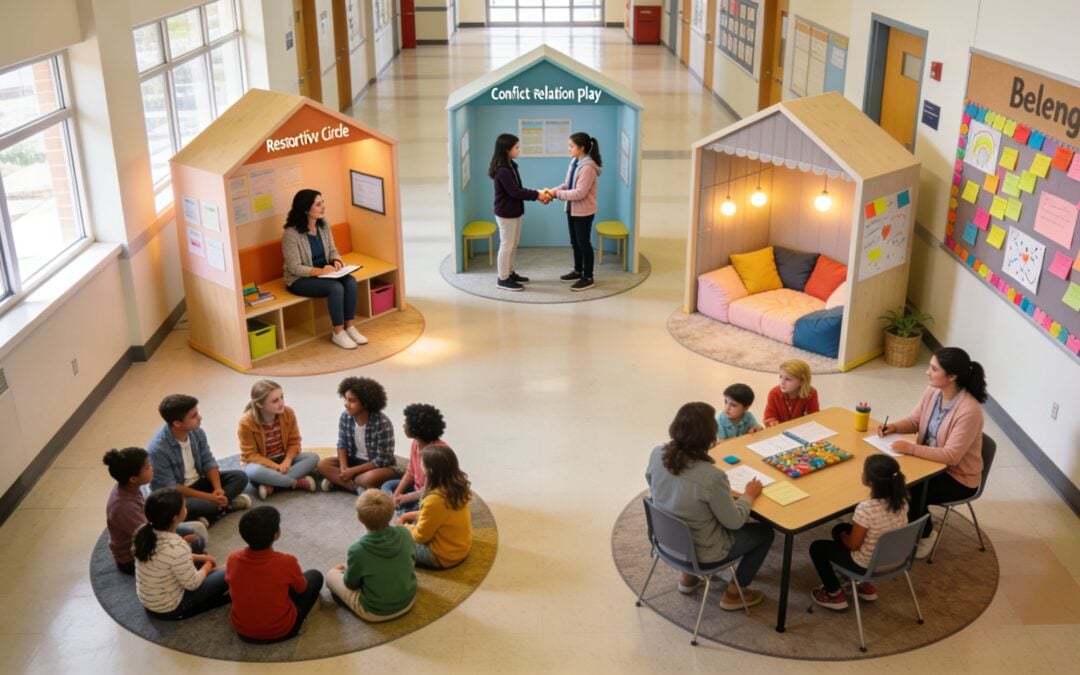
7. Classroom-Based Conflict Resolution and Restorative Practices
Two students walk into class angry from recess. One is still replaying the insult. The other is already recruiting friends to take sides. If the only school response is “stop arguing,” that conflict usually resurfaces in the hallway, on the bus, or online after school.
Classroom-based conflict resolution gives students a safer path early. It treats safety and SEL as part of the same job. Students learn how to name harm, manage strong feelings, listen with accuracy, and repair relationships before a minor conflict turns into intimidation, exclusion, or a fight.
Teach repair as a routine
Restorative practice works best in ordinary moments, not only after a major incident. A short morning circle, a partner reset after group work, or a five-minute reflection after a disagreement gives students practice with the exact skills they need under stress.
The goal is not perfect harmony. The goal is predictability.
Students do better when they know the script for conflict before emotions spike. Useful prompts include:
What happened from your point of view?
Who was affected?
What were you feeling at the time?
What do you need now to move forward safely?
What will repair look like?
In elementary classrooms, this may look like a brief teacher-led conversation with clear sentence stems and a concrete next step for tomorrow. In middle school, it often means slowing down a social conflict, separating the audience from the issue, and helping students distinguish intent from impact. That SEL piece matters. Many students are not refusing to repair. They do not yet have the language or regulation skills to do it well.
Keep accountability clear
Restorative practice needs structure. Students still need firm boundaries, adult leadership, and consequences when harm is repeated, targeted, or serious. A restorative conversation is not a free pass, and it should never replace a safety response that is already warranted.
I have found that teachers get better results when they decide one thing before the conversation starts. What must be addressed right now: emotional regulation, relationship repair, or immediate safety? That keeps the meeting focused and prevents a vague discussion that leaves everyone frustrated.
A practical example: after a group chat argument spills into first period, the teacher does not ask students to “work it out” in front of peers. The students cool down first. Then the teacher or counselor facilitates a brief process that names the harm, sets limits on future contact if needed, and creates a specific repair plan. That might include an apology, changed seating, adult check-ins, or a temporary pause on collaborative work.
Many safety problems play out in shared spaces where adults have less control and students rely more on habits. For that reason, schools should pair classroom repair routines with clear supervision plans for recess, transitions, dismissal, and extracurriculars. Schools also need practical systems for movement beyond the classroom, including trip and activity planning. For off-campus supervision, it can help to see how AnySchool simplifies excursion safety.
8. Mental Health First Aid and Crisis Intervention Training for Staff
A student in distress usually encounters a teacher, aide, bus driver, office staff member, or recess supervisor before they ever reach a counselor. That's why staff training matters so much. Adults need more than goodwill. They need a response script.
Mental Health First Aid and crisis intervention training give staff a way to notice warning signs, stay calm, and connect a student to the next level of support. For K-8 schools, the practical value is immediate. The adult in front of the student stops making the moment worse.
Here's one example of the kind of staff learning schools often use:
Train for the moment before referral
Staff members don't need to become therapists. They do need to know how to respond when a child is panicking, dissociating, making hopeless statements, or escalating toward aggression.
The most useful training is scenario-based. Practice what to say, where to stand, how to lower stimulation, when to call for help, and how to document concerns afterward.
A workable school script might sound like this:
Regulate the space: lower voice, reduce audience, move peers away.
Name what you see: “I can tell this is a lot right now.”
Offer simple choices: “Would you like water, a quiet space, or for me to stay with you while we call support?”
Transfer carefully: connect the student to the counselor, nurse, or designated crisis responder.
Support adults too
Staff can't offer calm if they're depleted and unsupported. Secondary trauma is real in schools. So is emotional overload after repeated student crises.
One practical habit is ending serious incidents with a short adult debrief. What happened, what worked, who needs follow-up, and who needs a moment before returning to class coverage. Schools that normalize this protect both student safety and staff sustainability.
9. Parent and Family Engagement Workshops on School Safety and SEL
School safety gets stronger when families hear the same language children hear at school. Without that alignment, adults can end up working against each other. A school teaches regulation and repair, while home conversations focus only on punishment or fear. Students notice the mismatch.
Family workshops can close that gap. They don't need to be formal or long. They do need to be practical.
Focus on usable skills
Parents and caregivers show up when the content helps with tonight's problems, not only policy updates. Good workshop topics include calming routines for transitions, what to say after a bullying report, how to respond when a child says school feels unsafe, and how to tell the difference between conflict and targeted harm.
One useful format is a short evening session with role-play. Adults practice responses to common student statements:
“Nobody likes me.”
“They were joking, but it felt mean.”
“I don't want to tell the teacher.”
“I'm scared about the drill.”
That gives families language they can use immediately at home.
Remove participation barriers
The content matters, but access matters too. Offer sessions at more than one time. Provide a video option when possible. Translate handouts. Keep examples age-specific.
Older data from NCES on school-related fears and avoidance reminds us that some students avoid school or certain areas because they fear harm. Families often hear about that avoidance first. When schools help caregivers respond calmly and early, they catch problems before attendance, learning, and trust erode further.
A practical addition is a take-home one-pager with school contacts, reporting pathways, and two or three SEL phrases caregivers can repeat at home. Small tools often get used more than polished binders.
10. Peer Support and Student Leadership Programs
A new student walks into the cafeteria, scans the room, and freezes for half a second. Staff may not catch that moment. Other students do.
That is why peer support belongs in any serious school safety plan. Students notice exclusion, brewing conflict, and social withdrawal long before those patterns show up in an office referral. When schools connect that student insight to SEL skills such as empathy, help-seeking, boundary-setting, and responsible decision-making, safety work gets stronger at the relationship level, not only the procedural one.
Give students real roles, clear limits, and adult backup
Peer programs work when the role is specific and supervised. Students should know how to welcome a classmate, include someone who is alone, listen without promising secrecy, and hand off safety concerns to an adult quickly. They also need regular check-ins with staff, because even capable student leaders should not carry other students' pain by themselves.
In K-8 settings, the most usable models are usually the simplest:
buddy systems between older and younger students
peer welcome teams for new students
student climate or belonging committees
affinity groups with adult facilitation
peer mediators for minor conflict, with clear referral rules
Schools often invest heavily in cameras, access control, and assessment routines, as noted earlier in the article. Those measures matter. They do not build the student-to-student trust that determines whether a child speaks up, includes a peer, or asks for help before a problem grows.
Treat student voice as operational input
Token leadership programs fade fast. If students serve on a safety or climate team, ask for observations tied to real parts of the day: arrival, hall transitions, lunch, recess, bathrooms, dismissal, and online group chats that spill into school. Then respond visibly.
Students stay engaged when adults close the loop. If a concern can be fixed, fix it. If it cannot, explain why and name the next best option.
One elementary model I have seen work well is a trained fifth-grade welcome crew. They greet new students, sit with them at lunch during the first week, notice early signs of isolation, and bring concerns to a designated counselor or administrator. It is low-cost, easy to supervise, and practical. More important, it teaches student leaders a core safety lesson: caring for peers starts with connection, and connection is often the first layer of prevention.
Watch the trade-off here. Peer leadership can strengthen belonging, but it can also overburden the same dependable students if adults are not careful. Rotate roles, keep expectations narrow, and build in adult debriefs. The goal is a safer school culture where students practice SEL skills in real situations, with adults still responsible for protection, intervention, and follow-through.
10 School Safety Activities: Side-by-Side Comparison
Program
Implementation complexity
Resource requirements
Expected outcomes
Ideal use cases
Key advantages
Active Shooter/Lockdown Drills with Trauma-Informed Debrief
High, detailed planning & trauma-informed skills
Significant staff training, counselors, coordination time
Improved preparedness with reduced psychological harm
Safety compliance, emergency readiness with mental health focus
Balances physical safety with student emotional well‑being
Bully Prevention and Peer Support Programs
Moderate–High, school‑wide sustained effort
Training for students/staff, reporting systems, ongoing coaching
Fewer bullying incidents; stronger school climate over time
Cost‑effective; leverages student influence and trust
Safety as a Shared Responsibility
A student comes in upset after a rough morning at home. By second period, that stress shows up as arguing, refusal, or shutting down. If the adults around that student only see behavior, they miss the safety issue developing in front of them. If they also see regulation, connection, and support as part of safety work, they have more ways to respond early and well.
That is the practical shift behind this whole list. School safety is not only about preparing for the worst-case event. It is also about reducing the everyday breakdowns that can grow into crisis if no one steps in skillfully. Drills, alert systems, family notification plans, and threat assessment processes all matter. So do peer support, restorative conversations, self-regulation routines, and clear emotional language that students can use under stress.
As noted earlier in the article, school violence and daily emergency response both remain real concerns for schools. That combination calls for a wider frame. Schools need protective procedures, and they need adults and students who can notice distress, slow conflict down, repair harm, and ask for help before a situation escalates.
For school leaders, the best next step is usually narrower than people expect. Choose one weak point and improve it all the way. I have seen schools make real progress by tightening one dismissal routine, adding a trauma-informed debrief after drills, or standardizing how staff respond to peer conflict. A focused change is easier to train, monitor, and sustain than a long safety plan that never reaches classrooms.
Teachers and counselors build culture through repetition. A brief check-in at the start of class. A posted script for resolving conflict. A calm-down routine students practice before they need it. A referral process every adult can explain the same way. Those habits do not replace formal safety protocols. They make those protocols more effective because students are already used to naming feelings, following directions, and seeking support.
Families are part of the same system. When home and school use similar language for reporting concerns, managing conflict, and calming the body, students get consistency instead of mixed signals. That consistency lowers confusion and helps children recover faster after mistakes, social problems, or frightening events.
If your school wants support connecting SEL with safety planning, Soul Shoppe is one option that offers experiential programs focused on self-regulation, mindfulness, communication, conflict resolution, and bullying prevention. The larger point is simple. Physical safety and emotional safety work better together than apart.
Strong schools prepare for emergencies and teach the daily skills that prevent many emergencies from growing. That is shared responsibility in practice.
Translators USA for HR document translation can also be useful when districts need family-facing safety documents and staff materials available in multiple languages with consistent wording.
If your school is ready to strengthen safety through connection, empathy, and practical SEL tools, explore Soul Shoppe for workshops, assemblies, courses, and resources that help students and adults build the shared language and everyday habits that make campuses safer.
You've just explained the directions, and a few students are already asking what to do. At home, you've asked your child to put on shoes, grab a water bottle, and meet you at the door, but only one of those things happened. Those moments are easy to read as defiance, laziness, or distraction.
Usually, they're a listening problem. Not hearing, but listening. Filtering noise, holding information, noticing tone, reading emotion, and staying present long enough to respond well. In a busy classroom or a full family schedule, that's a big skill set.
That's why games for listening matter so much. They give children low-pressure practice with attention, self-regulation, empathy, and communication repair. They also help adults shift from “Why aren't they listening?” to “What support helps them listen better?” That question changes everything.
Many adults need that reminder too. Some of the same principles that help kids tune in also show up in strong leadership tips from Corporate Challenge Events. Clear expectations, emotional safety, and repetition work across ages.
Listening games have deep roots. Maria Montessori's sensory methods date back to 1912, and active listening games have remained part of early childhood education for decades. One example, documented by Mathful Play's Listen, Count, and Guess activity, describes a classic bucket-and-object game and cites sensory play research showing 85% improvement in auditory discrimination skills among children ages 3 to 5 after four weeks of regular play.
1. Circle Listening
Some games for listening are lively. This one is quiet on purpose.
In a talking circle, students sit in a circle, and only the person holding the talking piece speaks. Everyone else listens without interrupting. That single structure slows the room down and gives children a clear experience of what respectful attention feels like.
I've seen circles work best when adults stop treating them like a performance. Children don't need a perfect answer. They need time, predictable norms, and a real chance to be heard.
How to run it well
Start small. A group of 8 to 12 is usually easier to manage than a whole class if students are new to the format. Use a simple object as the talking piece, such as a smooth stone, a small stuffed animal, or a wooden stick.
Use low-stakes prompts first:
Easy entry prompt: “What's one sound you heard on the way here?”
Belonging prompt: “What helps you feel calm at school?”
Repair prompt: “What should someone do when they interrupt by accident?”
If you want a school-based model for this work, Soul Shoppe shares practical examples in its piece on restorative circles in schools.
Practical rule: Don't force every child to speak on the first round. Passing is often what makes the circle feel safe enough for honest participation later.
This practice aligns naturally with SEL because it teaches turn-taking, perspective-taking, and emotional restraint. The strongest circles aren't the ones with the most polished sharing. They're the ones where children begin responding to one another with less sarcasm, fewer interruptions, and more patience.
A practical classroom example: after recess conflict, don't begin with “What happened?” Start with “What do you need from others so you can listen right now?” That question lowers pressure and often gets better participation.
Later, you can deepen the prompts:
Conflict awareness: “What makes listening hard when you're upset?”
Community building: “What does respect sound like?”
Reflection: “When did someone listen to you this week?”
Here's a short visual introduction you can use if students need to see the structure before trying it.
2. Sound Mapping and Soundscaping
When a room feels overstimulated, children often need help noticing sound before they can manage it. Sound mapping is one of the simplest games for listening because it turns attention into something visible.
Ask students to sit still for a few minutes and listen for sounds near and far. Then invite them to draw a map of what they heard. A bird outside the window might go in the top left corner. A heater hum might sit near the bottom edge. A classmate's pencil tap might appear close by with jagged lines.
Why this works
Some children process sound better when they can externalize it. Drawing, labeling, or sorting sounds gives them another pathway into listening. It also supports emotional regulation because it anchors attention in the present moment.
This works well:
Short first round: Try a brief listening window with younger students.
Choice in response: Let students draw, write, or talk through their sound map.
Feeling connection: Ask which sounds felt calming, annoying, surprising, or comforting.
This does not work well:
Overloading the task: Too many directions at once turns a mindful activity into a compliance test.
Mandatory eyes closed: Some students listen better with eyes open and a soft gaze.
Correcting their perception: If a child heard a “buzzing whirr” and another heard “air noise,” both may be accurately describing the same sound.
A strong example is using a rain recording, playground ambience, or a short nature soundscape after lunch. Students listen, map what they notice, then compare their drawings. That comparison matters. It teaches that two people can hear the same environment differently without either person being wrong.
Sometimes the most useful debrief question is, “Which sound was easiest for you to ignore, and which was hardest?”
For sensory-sensitive learners, lower the complexity. Use fewer sound layers, offer headphones if appropriate, and allow nonverbal responses such as pointing to icons or placing stickers on a printed page.
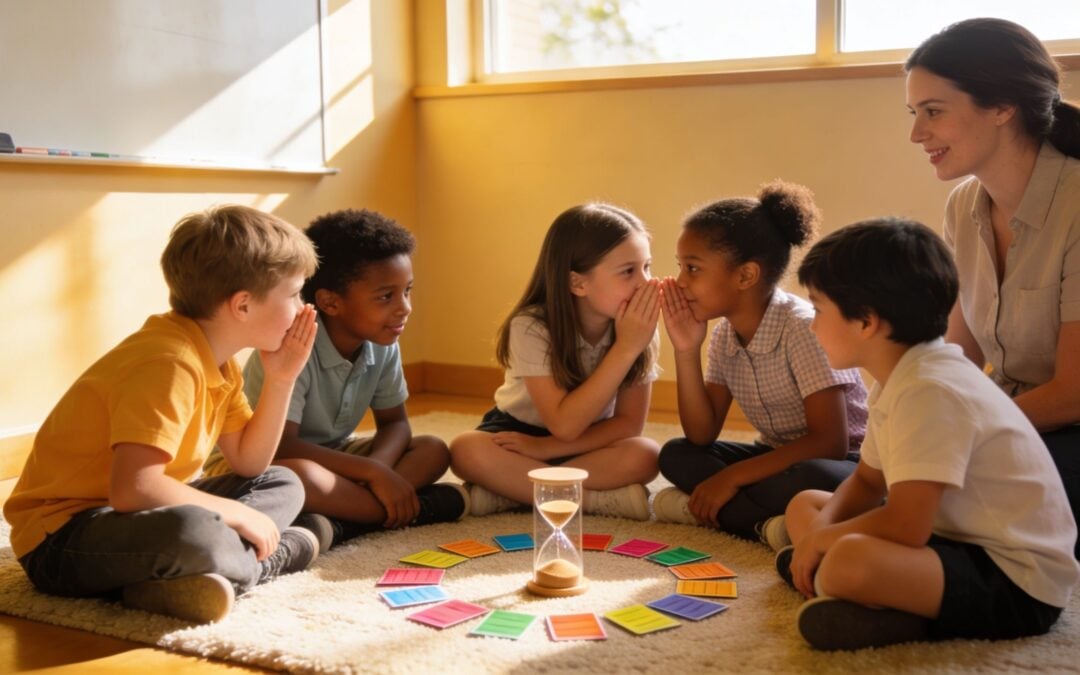
3. Telephone and Whisper Down the Lane
Telephone gets dismissed as a silly party game, but in practice it's one of the clearest ways to teach how communication breaks down. That makes it one of the most useful games for listening if you debrief it carefully.
The traditional version often rewards the funniest mistake. The better version rewards careful listening, kind repair, and curiosity. Instead of laughing at the person who “messed it up,” the group studies what changed and why.
Make the point bigger than the punchline
Use a meaningful sentence rather than random nonsense. Try something like, “After art, please put the brushes in water and place your painting on the drying rack.” That mirrors the kind of language children hear all day.
Then ask:
Where did the message shift?
What made it hard to hear clearly?
Did anyone make an assumption instead of checking?
What could a listener say if they need repetition?
The learning is in the analysis. Students start noticing that speed, embarrassment, background noise, and guessing all affect accuracy.
This is also where digital listening games can support practice. By 2025, 68% of U.S. K-8 classrooms use digital listening games, and a 2024 Journal of Educational Psychology study linked that use with 45% better attention spans among 5,200 students, as summarized in this overview of audio-based listening games on YouTube. In classrooms, that translates into a useful principle. Repetition and novelty help, but only when students stay emotionally relaxed enough to keep trying.
A good variation is “clarifying Telephone.” Before passing the message, each student may ask for one repeat. That tiny adjustment changes the game from gotcha to skill-building.
If children leave the game thinking, “Listening is hard for everyone sometimes,” you've done it right.
This game is especially useful after peer conflict. It gives students a concrete example of how quickly meaning changes when people assume instead of checking.
4. Tone Detective
Children often focus on words and miss the emotional message carried by tone. “I'm fine” can mean calm, embarrassed, irritated, or seriously hurt. Tone Detective teaches students to listen for pace, volume, pitch, and inflection, not just vocabulary.
Say the same short phrase several ways. “I didn't know that,” works well. Read it as excited, worried, annoyed, shy, playful, and disappointed. Then ask students to identify the feeling and explain what clues they heard.
Keep the emotion task concrete
Don't begin with unlimited answers. Offer a small set of choices if students are hesitant. This reduces performance anxiety and gives language to children who feel the emotion but can't name it yet.
For support, pair this game with a visual tool like Soul Shoppe's feelings chart for kids. Students can point to likely emotions before discussing the clues they heard.
A few strong prompts:
Clue hunt: “Was the voice fast or slow?”
Mismatch check: “Did the tone match the words?”
Personal link: “When have you heard that tone before?”
Repair practice: “What could you say if you weren't sure what the person meant?”
This is useful in classrooms, counseling groups, drama, and family meetings. It's also one of the best games for listening when students struggle with conflict because it trains them to notice emotional cues before reacting.
If you want recorded samples, teachers and creators sometimes use tools similar to professional AI voiceovers for creators to produce multiple versions of the same phrase. The key is not the technology. The key is discussing what students heard and how tone affects trust.
A trade-off worth naming: this game can tempt adults to act like there's always one correct answer. There often isn't. A voice can sound both nervous and irritated. Let students hold mixed interpretations when they can explain their reasoning.
5. Instruction Following and Simon Says
Simon Says survives for a reason. It asks children to pause, inhibit impulse, and hold verbal information in mind. Those are all real listening demands.
Still, the classic trick format can backfire. Some children love the speed and challenge. Others feel publicly caught making mistakes. If your goal is SEL, the better version is cooperative.
Shift from elimination to support
Instead of putting students “out,” keep everyone in and invite peer support. One student gives directions. The group succeeds together when everyone understands what to do.
Try commands like:
Movement plus sequence: “Touch your head, turn once, then sit.”
Mindful action: “Take a breath, tap your knees twice, then show me a quiet thumbs-up.”
Partner cue: “Point to your elbow, then check whether your partner needs the directions repeated.”
That last step matters. It turns listening into a shared responsibility.
Soul Shoppe offers related practice ideas in its active listening activity, and the structure transfers well to classrooms, counseling groups, and home routines.
What works:
Start short: Use two-step directions before increasing complexity.
Normalize repetition: Teach “Can you say that again?” as a strength, not a weakness.
Add visuals when needed: Gestures, icons, or a model student can reduce overload.
What doesn't work:
Fast rapid-fire commands: Students stop processing and start guessing.
One-size-fits-all expectations: Some children need movement or a visual cue to listen well.
The first commercial listening game, Simon, sold 25 million units by 1990, according to the same verified background summary that tracks the growth of digital listening play. That long popularity makes sense. Sequential listening taps a skill children use constantly, from lining up to solving math problems.
6. Partner Mirroring and Reflecting Back
If I had to choose one activity that most directly teaches listening as empathy, it would be this one. One child speaks. The partner listens and reflects back what they heard. Then the speaker confirms, corrects, or adds nuance.
The structure is simple, but the skill is not. Most children, and plenty of adults, rush to advise, defend, or tell their own story. Reflecting back interrupts that habit.
Sentence stems help a lot
Give listeners language they can lean on:
Content stem: “What I heard was…”
Feeling stem: “It sounds like you felt…”
Accuracy stem: “Did I get that right?”
Repair stem: “What did I miss?”
Begin with easy topics. Favorite snacks. Weekend plans. A game they like. Only move into conflict or emotion after students understand the process.
Soul Shoppe's article on empathetic listening offers language that fits this kind of partner work well.
Listening back to someone is often harder than speaking. That's why the first rounds should be short.
This format is especially effective for peer mediation, counseling check-ins, and home conversations between siblings. One practical example: after a disagreement, ask each child to reflect the other person's concern before they explain their own. The pace slows immediately. The heat often drops with it.
There's a broader reason this structure matters. A 2022 CASEL meta-analysis cited in the verified background found SEL contexts like Soul Shoppe's programs can reduce classroom disruptions by 27% across 317 studies. Reflective listening isn't the only reason, but it's one of the practices that helps children feel heard enough to re-enter problem-solving.
7. Story Listening and Retelling
Read-alouds and audio stories are some of the most flexible games for listening because they let children practice attention, memory, inference, and emotional understanding all at once.
The format can be very simple. Read a short story, then ask students to retell what happened, draw one important scene, act out a part, or explain how a character felt. The variation in responses is part of the value. Children learn that good listening includes details, sequence, and perspective.
Build retelling around meaning
Pick stories with emotional texture. Friendship problems, exclusion, kindness, nervousness, repair. Then pause at useful moments and ask:
Prediction: “What do you think will happen next?”
Emotion check: “How is this character feeling right now?”
Personal connection: “Have you ever felt something similar?”
Perspective shift: “Would another character tell this story differently?”
One of my favorite classroom moves is to let one student retell the events and another retell the feelings. That distinction helps children notice that listening isn't only about plot.
This type of play-based listening has global relevance too. UNESCO's 2021 report, cited in the verified background, notes that 1.2 billion children benefit from play-based learning and that 65% in major markets show SEL gains. Story listening fits that pattern because it gives children a safe, shared experience to interpret together.
For extension, pair stories with creative media. Teachers who want examples of multi-format narrative experiences can borrow ideas from creative digital production insights, then adapt them in age-appropriate ways through audio, drawing, drama, and discussion.
A common mistake is over-quizzing comprehension. If every story turns into a test, listening becomes performative. A better approach is to mix one recall question with one feeling question and one open interpretation question.
8. Listening Walk and Mindful Observation
A listening walk is one of the cleanest resets for a noisy group. Students walk indoors or outdoors, paying attention to the soundscape around them. No talking during the observation phase. Just noticing.
Afterward, they share what they heard. A truck backing up. Shoes on gravel. A bird call. Ventilation. Distant laughter. Wind in leaves. The room usually feels different after this. More grounded. Less reactive.
Keep the structure tight
Before the walk, set a clear frame. Tell students how long they'll be quiet, where they'll walk, and what they should listen for. Near sounds. Far sounds. Human sounds. Nature sounds. Mechanical sounds.
Then debrief with prompts like:
Surprise: “What sound did you notice that you usually ignore?”
Emotion: “Which sound felt calming or irritating?”
Awareness: “What did silence help you hear?”
Connection: “What does this place sound like when people take care of it?”
For younger students, collect responses on chart paper. For older students, invite quick journaling or sketch notes.
This activity also supports children who don't want to speak right away. They get to listen first, then contribute from direct experience. That's a gift for quieter students and for those who need time to process language.
The verified background also highlights an underserved need here: adapting listening activities for neurodivergent and sensory-sensitive learners, including support with visual cues, reduced auditory complexity, movement breaks, and alternative ways to respond. That's especially important on listening walks. Some children may do better noticing one assigned category of sound rather than every sound at once.
Silence shouldn't feel punitive. It should feel purposeful.
8-Game Listening Comparison
Activity
Implementation complexity
Resource requirements
Expected outcomes
Ideal use cases
Key advantages
Circle Listening (Talking Circles)
Medium, needs trained facilitation and time
Talking piece, clear norms, quiet space
Equity of voice, trust, active listening, belonging
Inclusive, calming, connects students to environment
Putting Listening at the Heart of Your Community
These games for listening do more than fill five or ten minutes. They shape the emotional climate of a room. When children practice listening with structure, choice, and reflection, they learn that paying attention is not just about compliance. It's about care.
That shift matters in every setting. In classrooms, it helps students follow directions, join group work, and recover from conflict with less defensiveness. At home, it helps siblings hear one another more clearly and gives caregivers better tools than repeating the same instruction louder. In counseling and SEL spaces, it builds the conditions for honesty. Children speak more openly when they trust that someone will listen.
A pattern shows up across nearly all of these activities. Listening improves when the task is clear, the pressure is low, and the adult values understanding over speed. It gets worse when children are rushed, shamed, overloaded, or expected to show listening in only one acceptable way. That's the trade-off practitioners have to keep in view. A game can be engaging and still exclude a child if the format is too noisy, too fast, or too public.
That's why adaptation isn't an extra. It's part of good facilitation. Some children need visuals. Some need movement. Some need fewer sound layers, partner support, or the option to respond by drawing instead of speaking. Those adjustments don't water the activity down. They make the listening work more honest and more inclusive.
If you're choosing where to start, pick one game that matches your biggest need right now. If your group interrupts constantly, use Circle Listening. If directions fall apart, try the cooperative Simon Says variation. If conflict keeps escalating, use Partner Mirroring. If the room feels buzzy and dysregulated, start with Sound Mapping or a Listening Walk.
Then watch closely. Notice who settles. Notice who opens up. Notice which children do better when the pace slows and the expectations are named clearly. Those small observations will tell you more than any script.
Soul Shoppe is one option for schools that want to embed these kinds of SEL practices more intentionally through workshops, assemblies, coaching, and related resources. However you approach it, the core work stays the same. Teach children how to listen with empathy, attention, and regulation, and you change what becomes possible in that community.
If you want support building a school or family culture centered on empathy, communication, and psychological safety, explore Soul Shoppe for practical SEL programs and resources you can use with children and the adults who care for them.
Most adults meet goal setting when they're already overwhelmed. A preschooler meets it while standing in one sock, refusing the other shoe, and melting down because the zipper feels “wrong.”
That's why goal setting for preschoolers has to look different. It can't feel like pressure. It has to feel like help.
In early childhood settings, I've found that the best goals are woven into ordinary moments. Getting dressed. Putting blocks away. Waiting for a turn. Carrying a napkin to the table. These small efforts teach children something bigger than task completion. They teach, “I can try. I can keep going. I can do one step at a time.”
Why Tiny Goals Lead to Big Confidence
A four-year-old doesn't wake up wanting a lecture about perseverance. They want to do what the big kids do, feel capable, and get through the day without everything turning into a struggle.
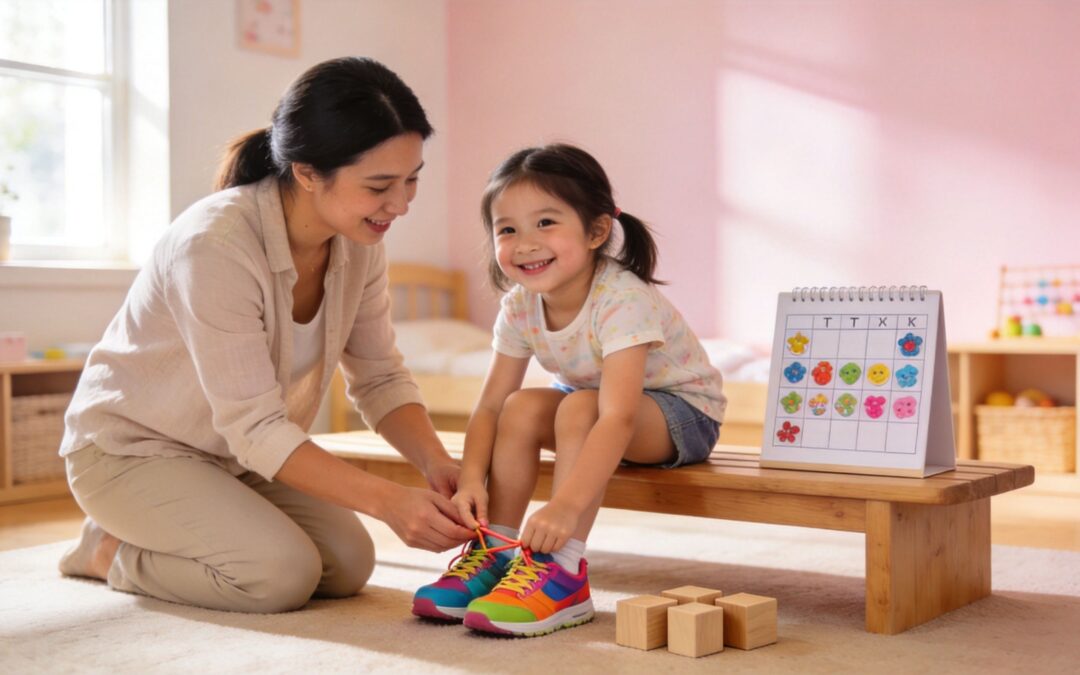
That's why tiny goals work so well. When a child hears, “Your job is to put both shoes by the door,” that feels doable. “Get ready by yourself” often doesn't. One is clear. The other is too big to hold in mind.
Everyday struggles are often hidden learning moments
Think about a common morning scene. A child can't get their coat on. An adult is late. Voices get tighter. The child shuts down.
Now shift the frame. Instead of “Come on, get dressed,” try a small mission: “Today your goal is to put one arm in your coat by yourself.” That changes the emotional tone right away. The child has a target they can reach.
Small success builds momentum. Children start to expect that effort leads somewhere. That mindset matters. If you want a deeper family-friendly read on nurturing children's growth mindset, it pairs well with this approach because both focus on helping kids see progress as something they can create.
Practical rule: If a goal leads to instant frustration, it's probably too large. Shrink it until the child can act on it right away.
Confidence grows through repetition, not speeches
Preschoolers build confidence from doing, not from being told they're capable. When they repeat a manageable goal across several days, they begin to trust themselves.
That's especially important in social-emotional learning. A child who learns, “I can carry my cup to the sink,” is also learning to tolerate frustration, recover from mistakes, and stay with a task. Those are self-management muscles.
You can see this same idea in confidence from the inside out. Real confidence doesn't come from constant praise. It grows when children experience themselves as effective.
A few preschool-friendly goals that build this kind of confidence:
Self-care goal: Put your socks in the hamper.
Classroom goal: Push in your chair after snack.
Friendship goal: Use words when you want a turn.
Cleanup goal: Put three blocks in the bin.
None of these sound dramatic. That's the point. Tiny goals let children practice success often enough that “I can't” slowly becomes “I'll try.”
The Building Blocks of a Preschooler's Goal
Adults usually think of goals as future plans. Preschoolers need goals they can see, touch, and do today.
A developmentally appropriate goal for this age is small, concrete, visual, and close in time. “Be more responsible” won't mean much to a four-year-old. “Put your cup on the tray after snack” will.
What a good preschool goal looks like
A strong preschool goal usually has these features:
It's observable: You can tell whether it happened. “Wash hands before snack” works. “Have better listening” is too vague.
It's short-term: The child can experience it soon, often within the day or over several days.
It's action-based: It focuses on what the child will do, not on a personality trait.
It fits the routine: It lives inside real moments like arrival, cleanup, centers, snack, or bedtime.
A useful test is this. Can the child picture the goal in their mind? If not, simplify it.
Process goals beat broad outcome goals
For young children, process matters more than outcome. “Try both shoes before asking for help” is often a better goal than “Put on shoes perfectly.”
This approach protects motivation. Preschoolers are still developing planning, working memory, and frustration tolerance. When adults choose goals that are too broad, children can feel like they've failed before they've even started.
A helpful overview of how early learning goals fit into child development can be found where Grow With Me explains early years learning. It gives useful context for why daily routines matter so much in the early years.
A preschool goal should sound more like a next step than a life lesson.
Predictability helps children stay engaged
Routine matters even more than many adults realize. A 2023 study on preschoolers' goal adaptation found that children were more likely to adjust their approach when changes in a task were predictable, while unpredictable changes were more disruptive, especially for children under 4.5 years.
That finding matches what teachers see every day. If the goal-setting routine changes constantly, some children spend all their energy figuring out the format instead of doing the task.
Here's what predictability can look like in practice:
Everyday setting
Less helpful approach
More helpful approach
Arrival
New chart, new language, new expectation each day
Same visual, same phrase, same first step
Cleanup
“Clean everything up”
“Put five cars in the basket”
Dressing
Rushed adult takeover
Same sequence each time, with one child-owned step
Many adults make goal setting sound heavier than it needs to be. Preschoolers respond best when it feels conversational, shared, and tied to something they already want to do.
Start with one real moment. Maybe your child wants to pour water without spilling. Maybe your students rush through cleanup. That's enough. You don't need a special unit or a formal meeting.
A simple visual can help make the idea concrete.
Say less, guide more
Use short sentences and invite the child into the plan.
Try language like this at home or in the classroom:
Name the goal
“Our goal is to put the books back on the shelf.”
“Your goal is to carry your plate to the counter.”
Ask for the first step
“What do you do first?”
“Which book will you pick up?”
Notice effort
“You kept trying even when the zipper got stuck.”
“You remembered the basket without me telling you again.”
Keep the next step small
“Tomorrow, your goal is to do the first button.”
“Next time, let's try two toys before cleanup help.”
This kind of language reduces power struggles. It also gives children practice thinking in sequence, which is a major part of early self-regulation.
Model your own goals out loud
Preschoolers learn a lot from hearing adults think aloud. You can model goals in ordinary language without turning it into a lesson.
For example:
During snack prep: “My goal is to put all the cups on the table before I sit down.”
During cleanup: “I'm going to finish putting the markers in the box.”
During transitions: “My goal is to find my keys and my water bottle before we leave.”
When adults do this, children start to understand that goals aren't just demands adults place on kids. Goals are tools people use to help themselves.
Later in the section, this short video can reinforce the idea for families and educators who like to see concepts modeled in action.
Make the goal visible
For preschoolers, invisible ideas fade fast. A drawing, a photo, or a simple picture card keeps the goal in view.
Research from Boston Children's Health Physicians notes that visually representing goals can support follow-through. For preschoolers, drawing the goal can increase task completion for independence skills by up to 50% compared with verbal instructions alone.
That doesn't mean every family needs a perfect chart. It means the child benefits from seeing what they're aiming for.
Try these easy versions:
Draw it: Sketch a toothbrush, backpack, or toy bin.
Use a photo: Take a picture of the child completing the step.
Make a first-then card: “First shoes on, then outside.”
Use one symbol: A cup icon near the sink means “put cup here.”
“Our goal is something we can see and do.”
Sample scripts for common preschool moments
Adults often ask for exact words. Here are a few.
Situation
Try saying
Morning dressing
“Your goal is one sleeve by yourself. I'll help with the other one if you need it.”
Classroom cleanup
“We're all working on one cleanup goal. Put three items where they belong.”
Turn-taking
“Your goal is to ask for a turn with words.”
Bedtime routine
“Let's draw your bedtime goal. Pajamas first, then book.”
The simpler the script, the more likely children are to remember it and act on it.
A Toolbox of Goal-Setting Activities and Examples
Sometimes adults understand the concept but still wonder, “What goal should I use tomorrow?”
The easiest answer is to start where the child already bumps into difficulty. If mornings are hard, build a morning goal. If transitions are rough, create a transition goal. If a child wants to help, turn that desire into a helper goal.
For families who like paper tools, journals, or planners for older kids and adults, it can be interesting to look at strategic partners for personal growth. For preschoolers, though, the “planner” is usually much simpler: a photo, a picture card, a basket label, or a tiny checklist with images.
Sample Preschool Goal-Setting Ideas
If you're planning classroom routines, preschool lesson plan ideas can help you connect goals to the flow of the day.
Domain
Example Goal
What to Say
Activity Idea
Self-Care & Independence
Put both shoes by the door
“Your goal is shoes by the mat.”
Make a shoe spot with tape or a picture label
Self-Care & Independence
Wash hands before snack
“What comes first before we eat?”
Put picture cues by the sink
Self-Care & Independence
Zip coat after help starting
“You pull it up after I click it.”
Practice on a dressing board or jacket station
Helping & Community
Carry one napkin to the table
“Today you're our napkin helper.”
Set up a helper basket near meals
Helping & Community
Put one book back after reading
“When you finish, the book goes home to the shelf.”
Match books to shelf labels with pictures
Helping & Community
Greet one classmate or family member
“Can you say good morning to one friend?”
Use arrival name cards
Quiet Time & Focus
Sit and look at one book for a few minutes
“Your goal is book time with your body calm.”
Create a cozy reading spot
Quiet Time & Focus
Finish one simple puzzle step
“Let's find the edge piece first.”
Offer a small puzzle with a tray
Quiet Time & Focus
Stay with one center before switching
“Pick one job, then we'll check back.”
Use a center choice card
Movement & Motor Skills
Hop to the line
“Can your feet do two hops to the line?”
Make a hop path with floor spots
Movement & Motor Skills
Carry a tray with two hands
“Your goal is two hands all the way.”
Practice with beanbags or cups
Movement & Motor Skills
Stack blocks carefully
“Build up, then stop and look.”
Challenge the child to make a short tower
Social-Emotional Skills
Ask for help with words
“What can you say if it's too hard?”
Practice with puppets
Social-Emotional Skills
Wait for one turn
“Your goal is to wait, then go.”
Use a turn-taking game
Social-Emotional Skills
Use a calm-down spot
“When your body feels big, you can go to your cozy spot.”
Add a visual choice card for calming tools
Choose the goal by watching, not guessing
The best examples come from observation. Notice where a child nearly succeeds. That's usually the sweet spot.
For example:
A child who throws all the toys during cleanup may not need “better behavior.” They may need a smaller cleanup target.
A child who avoids drawing may need a goal around sitting for one short art step, not finishing a whole project.
A child who always asks for help immediately may need a goal like “try one step, then ask.”
Classroom lens: Strong goals often begin with, “I noticed you can almost do this.”
That tone protects dignity. It invites partnership instead of correction.
Tracking Progress with Purpose and Joy
Tracking can help children stay engaged, but only if it feels encouraging. When adults turn tracking into pressure, preschoolers either perform for the reward or avoid the task altogether.
The better approach is to make progress visible while keeping the emotional message clear. We're noticing effort. We're not grading worth.
That matters because self-recording changes the child's role. They're no longer just receiving adult feedback. They're participating in their own growth.
Simple self-recording tools work best:
Pom-pom jar: Add one pom-pom after the child completes the agreed step.
Picture checklist: The child marks off images, not words.
Sticker path: One sticker for each day they practice.
Goal ladder: Each rung shows one tiny part of the task.
The tool should match the child's developmental level. If the tracker is confusing, it becomes one more demand.
Keep celebration grounded in effort
There's nothing wrong with being happy when a child meets a goal. The key is what you highlight.
Try responses like:
“You kept working when it felt tricky.”
“You remembered the first step on your own.”
“You came back after getting frustrated.”
“You used your picture card to help yourself.”
Those comments teach children what to value in themselves.
A supportive classroom routine can strengthen this. During meeting time, children might share one goal they're practicing or one step they tried that day. In many classrooms, simple daily check-ins and reflection tools create the emotional safety needed for that kind of sharing.
When tracking stops helping
Sometimes a chart loses its power. Sometimes a child starts demanding the sticker more than caring about the skill. That's your cue to adjust.
You might:
Simplify the tracker: Move from a weekly chart to one card.
Change the visual: Use photos instead of icons.
Shorten the time frame: Track one routine, not the whole day.
Pause the tool: Keep the goal, remove the chart for a while.
Tracking should support ownership. If it starts feeling like surveillance, it's time to reset.
Adapting Goal Setting for Every Child
Many goal-setting resources often fall short. They offer one chart, one script, and one version of success. Preschoolers don't come in one version.
Some children are highly verbal and eager to announce a goal. Others communicate through movement, gestures, AAC, or very few words. Some love visual charts. Others respond better to real photos, objects, or a short adult-child routine repeated the same way every day.
If a child has communication differences, don't assume they can't participate in goal setting. Change the entry point.
For example:
For children with limited verbal language: Offer two photo choices. “Coat” or “hands washed.”
For children with motor challenges: Make the goal about one meaningful part of the routine they can own.
For children who are easily overwhelmed: Use one goal in one setting, with the same adult and same visual each time.
For highly active children: Build movement into the goal. “Carry two cushions to the circle” may work better than “sit still nicely.”
For cautious or shy children: Start privately. A public goal-share can come later, or not at all.
Use tools that match the child, not adult convenience
Sticker charts are popular because adults can set them up quickly. But quick for adults isn't always accessible for children.
Better options might include:
Real photos instead of cartoon icons
Object cues like an actual spoon, shoe, or book
Single-step boards rather than multi-step charts
Simple tech supports if a child responds well to them
Choice-based language so the child has some ownership
The most effective goal is the one the child can understand, enter, and experience as success.
In inclusive practice, child-led doesn't mean child-alone. It means we watch carefully, adapt thoughtfully, and refuse to confuse compliance with growth.
If you want support building inclusive, practical SEL routines around goal setting, communication, and self-regulation, Soul Shoppe offers programs and resources designed to help school communities and families create more connection, confidence, and belonging for every child.
A student walks in from recess with a scraped knee. A classmate shrugs and says it was an accident. The adult nearby heard laughter before the fall, but missed the moment of contact. At home that afternoon, the same child says, "I'm fine," yet starts asking to skip the bus, gym, or lunch line.
Physical bullying often hides inside those unclear moments. Adults usually picture a visible fight, but many physical bullying examples begin as quick acts that are easy to dismiss. A shove in a crowded line. A trip framed as clumsiness. Hair grabbed during a tense exchange. A backpack slapped from a student's hands while others watch. Like a smoke alarm that chirps before a full alarm sounds, these smaller incidents can signal a larger pattern.
What separates bullying from rough play or a single conflict is not just the contact. It is the repeated behavior, the intent to intimidate, and a power imbalance between the students involved.
Federal school crime and safety reporting summarized by the National Center for Education Statistics describes physical bullying among the forms students report at school, including being pushed, shoved, tripped, or spit on, as shown in NCES Indicators of School Crime and Safety reporting on bullying victimization. For many students, the injury is only part of the harm. The bigger change is often internal. They start scanning the hallway, avoiding transitions, or choosing isolation because school no longer feels predictable.
The examples below are designed for real decisions adults make every day. Each one pairs a physical bullying behavior with a three-part toolkit: signs you can observe early, prevention steps that reduce the chance of escalation, and SEL-based response scripts you can use in the moment. That structure helps teachers, caregivers, and school staff do more than label behavior. It helps them notice patterns sooner, respond calmly, and teach safer ways to handle conflict.
1. Hitting, Punching, and Striking
This is the form adults recognize fastest. One student hits another in the arm during math centers. A child gets punched in the back after days of taunting. A student uses an object, not just a hand, to strike someone and then claims they were “messing around.”
A documented school case from Boston Children's Hospital shows how serious this can become. In that account, a fifth-grade student named Samantha experienced ongoing bullying that escalated into a male classmate punching her in the back after repeated harassment. After the assault and an inadequate school response, she missed 30 days of school that year, described in Boston Children's Hospital's account of Samantha's story.
What adults usually notice first
Students who are being hit often change their body language before they tell the full story. They may flinch when a certain peer gets close, protect one side of their body, ask to stay inside during recess, or suddenly want an adult nearby during transitions.
Teachers may also notice social warning signs. A peer group goes quiet when an adult approaches. Witnesses look at one another before answering. The targeted student minimizes what happened, but their face shows fear.
Check injury patterns: Bruises on upper arms, shoulders, ribs, or the back can signal targeted contact rather than ordinary play.
Watch for protective behavior: A child who turns sideways, ducks, or keeps distance from one student may be telling you something without words.
Protect witnesses: Students are more likely to report when they know adults won't name them publicly.
Practical rule: Don't ask only, “Did he hit you?” Ask, “Has this happened before, and who was nearby each time?”
Prevention and response script
Prevention starts with clear adult language. Students need to hear that striking someone is not a joke, not horseplay, and not something they have to solve alone. Staff also need a shared response: stop the behavior, separate students calmly, check for injury, gather statements privately, and document specifics.
Try language like this:
“I saw contact that wasn't safe. I'm separating you now. We'll talk privately, and I'm going to make sure everyone is okay.”
For the targeted student:
Name safety first: “You didn't deserve to be hit.”
Invite detail gently: “Tell me what happened right before, during, and after.”
Offer choice: “Would you like to talk here, with the counselor, or with another trusted adult?”
For the student who hit:
Set a firm boundary: “You may be upset, but you may not use your body to hurt someone.”
Build accountability: “You're going to tell me what choice you made, what impact it had, and what repair is needed.”
2. Pushing, Shoving, and Tripping
A student reaches the stairwell with the rest of the class, then hesitates. Another student brushes past and clips their shoulder just hard enough to throw them off balance. By the time an adult turns, it looks like clumsiness.
That is part of why pushing, shoving, and tripping are missed so often. The act is quick, the setup is easy to hide, and the target is often left looking like the one who “fell.” Yet the message lands with force. You are not safe when I am near you.
Unlike an isolated accident, bullying with body contact follows a pattern. It often shows up in motion. Hallways, lunch lines, dismissal areas, locker rows, and classroom doorways give a student cover because everyone is already squeezed together. For a child on the receiving end, each transition can start to feel like crossing a narrow bridge while someone keeps shaking the rails.
A common example is subtle but repeated. One student gets nudged off the walking path every morning. Another is tripped near the same table during lunch pickup. Nobody sees a punch, but one child keeps losing space, balance, and dignity.
Here's a short visual resource that can support staff discussion during training meetings:
Signs adults can observe early
The first question is not just, “Did contact happen?” It is, “Who benefits from the confusion?” Rough play tends to be shared and stops when someone is uncomfortable. Bullying keeps one student in control and the other on alert.
Watch for these patterns:
Repeated loss of balance near the same peer: The same child stumbles, drops belongings, or arrives upset after passing one student or group.
Body language before contact: A student may tense up, slow down, hug the wall, or wait for others to go first.
Hot spots in transition spaces: Corners, bottlenecks, and crowded entry points make it easier to hide targeted contact.
Social fallout after the shove or trip: Snickering, glances between peers, or a chorus of “It was an accident” can signal coordination, not chance.
A useful adult question is: “If this were truly accidental, why does it keep happening to the same student in the same places?”
Prevention and response script
Prevention starts with supervision that matches the behavior. If adults only monitor the middle of a hallway, students learn to use the doorway, blind corner, or end of the line. Staff presence should move with the traffic pattern, much like crossing guards stand where collisions are most likely, not where the view is easiest.
Name the rule clearly before problems start. Students need to hear that using your body to move, block, or topple someone is physical bullying when it is repeated, targeted, or meant to intimidate.
Use language like this in the moment:
To stop the behavior: “Stop. Give each other space. I saw unsafe contact.”
To the targeted student: “Come with me. I want to check that you're okay and hear what happened.”
To the student who shoved or tripped: “You do not get to use your body to control someone else's movement. Tell me what you did.”
To witnesses: “If you saw the setup, tell me privately. Reporting safety concerns helps people stay safe.”
At home, caregivers can ask questions that uncover patterns instead of treating each incident as a random fall. Try, “Where were you right before it happened?” “Who was closest to you?” and “Has this happened with the same student before?”
That three-part response matters. Adults notice the signs, reduce risk in the places where it happens, and use calm, specific scripts that build accountability. That is how a “small shove” stops being brushed off and starts being addressed for what it is.
3. Spitting and Saliva-Based Attacks
A student gets to the classroom door, wipes their cheek with a sleeve, and says, “It's nothing.” An adult who misses that moment may miss the whole pattern. Spitting often happens fast, in public, and with just enough deniability to make a child doubt whether telling will help.
This form of physical bullying can leave little visible injury, but the impact is often intense. It violates personal boundaries and adds humiliation to the harm. For many students, that public disrespect is what lingers.
Spitting can happen in a lunch line, on a bus, across a table, or during a passing period when supervision is split between several directions at once. Shared spaces raise the risk because the behavior is quick and witnesses may laugh, freeze, or look away. The National Center for Education Statistics reports that students commonly experience bullying in places such as hallways, cafeterias, and classrooms, which helps explain why saliva-based attacks can be easy to carry out and hard to confirm without a prompt adult response (NCES report on student bullying locations).
What adults can watch for early
Students rarely announce this kind of harm directly. Shame often shuts the door before a child has words.
Look for signs that work like smoke before a fire becomes obvious:
Sudden cleanup behavior: wiping the face, shirt, backpack, or desk right after peer contact
A quick change in expression: disgust, freezing, or tearing up after laughter nearby
Avoidance of a specific seat or route: especially in lunch areas, bus seats, or crowded transitions
Peer audience behavior: laughing, recording, chanting, or gathering around the target
Minimizing language: “It was a joke,” “It's fine,” or “Don't tell anyone”
A targeted student may also ask to go to the bathroom immediately, stop eating, or become unusually quiet for the rest of the period.
Prevention that fits this behavior
Prevention needs to match how the behavior works. Spitting is opportunistic. It thrives in brief, public moments when adults are nearby but not tuned in.
Try these steps:
Cover high-risk transition points: stand where students bottleneck, turn corners, or bunch up while waiting
Teach the rule in plain language: tell students that spitting on a person or at a person is physical aggression and humiliation, not joking
Interrupt audience rewards: address laughing, filming, and crowding as part of the incident, because social payoff often keeps the pattern going
Create private reporting paths: some students will disclose on paper, by check-in, or after class more easily than in front of peers
Build repair into follow-up: consequences matter, and so do skills for impulse control, empathy, and respectful conflict
SEL-based response scripts adults can use right away
The first job is regulation. A child who has been spit on often feels exposed, angry, and ashamed at the same time. Adults help by lowering the temperature without lowering the seriousness.
Use language like this in the moment:
“Stop. Spitting on someone is physical aggression. I'm helping the student who was targeted first.”
For the targeted student:
Protect dignity: “Come with me. You do not need to explain this in front of other students.”
Restore control: “You can wash up now. I'll make sure you have privacy and support.”
Reduce self-blame: “This was done to you. You are not in trouble for reporting it.”
For witnesses:
Set responsibility: “If you saw what happened, tell me privately. Laughing or recording adds harm.”
For the student who spit:
Name the behavior: “You used your body to disrespect and humiliate someone.”
Prompt ownership: “Tell me exactly what you did.”
Set the next step: “You will be part of a follow-up process that includes accountability, repair, and a plan so this does not happen again.”
That three-part toolkit matters here. Adults need observable signs, prevention matched to the setting, and calm scripts that protect dignity while holding firm boundaries. Without that structure, spitting gets dismissed as a gross joke. With it, adults can identify the pattern early and respond with the seriousness it deserves.
4. Hair Pulling and Grabbing
Hair pulling is painful, sudden, and personal. In many schools, it appears during arguments, on the playground, in line, or as part of ongoing teasing about appearance. Some students describe it as feeling trapped, especially when the contact targets the head, scalp, or neck area.
For some children, hair has cultural, family, or identity significance. That means the harm isn't just physical. A student may feel exposed, disrespected, and singled out in ways adults miss if they focus only on whether there was a visible injury.
What makes this form especially distressing
A student may start avoiding hairstyles they normally love. They may become unusually protective of their head, refuse to sit near a certain peer, or react strongly when someone reaches behind them. Teachers sometimes notice this first during circle time, carpet work, or crowded transitions.
This is also a good place to remember a basic distinction. Bullying involves repetition and power imbalance. A one-time conflict between equally matched students still needs intervention, but repeated grabbing of one child by another is a different pattern. McMillen Health's explanation of physical bullying emphasizes those core features.
Observe appearance-based teasing: Hair pulling is often preceded by comments about texture, length, style, or grooming.
Ask in a low-pressure setting: Students may disclose more in a walk-and-talk than in a formal office meeting.
Document exact contact: “Grabbed braid,” “pulled ponytail,” or “held back of hood/hair” is more useful than “students got physical.”
Prevention and response script
Adults should interrupt immediately and avoid treating this as minor horseplay. Once hair is involved, many students experience the act as both pain and public control.
Try these scripts:
In the moment: “Hands off. Move back. Hair and head contact are not okay.”
To the targeted student: “I'm sorry that happened. Tell me where you were grabbed and whether this has happened before.”
To the student who grabbed: “You crossed a physical boundary. We'll address the harm and the pattern.”
A strong SEL response includes more than consequences. It teaches bodily boundaries, impulse control, and respectful repair.
5. Kicking, Stepping On, or Using Feet as Weapons
A kick under the table. A stomp on the heel in line. A student on the ground while another uses their feet to intimidate, strike, or pin space around them. These are some of the most alarming physical bullying examples because the force can be significant and the fear can spread quickly to bystanders.
In many schools, adults hear about these incidents after the fact because they happen during fast movement. Recess transitions, PE, dismissal, and crowded hallways create openings for this kind of aggression.
Why this form needs urgent attention
Kicking can signal escalation. Even when the visible injury looks small, the message is domination. Students who use their feet this way may also be testing how much they can get away with in spaces adults supervise loosely.
Global and U.S. patterns show physical bullying remains widespread. In a TIMSS analysis across 21 middle-income countries, bullying victimization increased from 2019 to 2023, with 4th graders reporting 56% and 8th graders 64%, according to the Center for Global Development analysis of TIMSS bullying data. Those figures include environments where physical aggression is part of the larger bullying pattern.
Look for targeted lower-body injuries: Shin bruises, stepped-on shoes, ankle complaints, and fear during line movement can all be clues.
Check group dynamics: A crowd closing in around the event often means intimidation is part of the act.
This kind of contact requires a high-alert response. Separate students, check for medical needs, and gather witness statements promptly. Don't let the situation get rewritten as “they were both playing” before facts are collected.
Use clear language:
“I saw unsafe contact with feet. Everyone step back. I need space, names, and witnesses now.”
Then move into support and accountability.
For the targeted student: “You're safe with me right now. Tell me where you were kicked or stepped on.”
For the aggressor: “Using your feet to hurt or intimidate someone is serious. We're addressing safety first, then responsibility.”
For the group: “Standing around, laughing, or surrounding someone makes the harm worse. If you saw it, your job is to report what you saw.”
6. Pinching, Scratching, and Skin-Targeted Attacks
This form often slips under adult radar because the marks can be small or fade quickly. A student pinches another under the lunch table. Someone scratches an arm during line-up. A child digs nails into a classmate when the teacher's back is turned.
Because the injury may not look dramatic, adults sometimes miss the pattern. The targeted student learns that reporting “small” pain doesn't get a big response. That silence gives the aggressor room to continue.
Small marks can still signal a big problem
Pinching and scratching are often deliberate, sneaky, and repeated. They can also overlap with relational aggression, especially when the aggressor smiles, whispers, or threatens the student not to tell. The physical act becomes one part of a larger control pattern.
A college case study on bullying described physical aggression as behavior that harms through physical damage or threats, and included severe incidents in unsupervised settings, as discussed in this collegiate bullying case study from Hanover College. While the setting is older, the lesson applies in K-8 schools: less visible forms of aggression often persist where adults assume nothing serious is happening.
Take every report seriously: Don't wait for a dramatic mark.
Invite specifics: Ask where on the body, when it happened, and whether the same student has done it before.
Track repeated complaints: “Keeps pinching me” matters even if each single incident seems minor.
Prevention and response script
Students need words for bodily boundaries. Many younger children can say “stop” but still need adult help to define what counts as harmful physical contact.
Try this language:
To the class or group: “If contact causes pain, fear, or humiliation, it's not a joke.”
To the targeted student: “Show me where it happened if you want to. I believe you, and I'm writing this down.”
To the aggressor: “Using your hands or nails to hurt someone in a hidden way is still physical bullying.”
Parents can support by noticing patterns at home. If a child says someone “always messes with me” but struggles to explain, ask whether that includes pinching, scratching, or quick painful touches others may not see.
7. Choking, Blocking Airways, and Neck-Targeted Violence
A recess aide turns and sees one student's forearm pressed across another child's neck near the play structure. A nearby group laughs because they think it is roughhousing. The child being held is not laughing. This kind of incident needs the same level of urgency adults would use for any breathing concern.
Choking, covering the mouth or nose, or putting pressure on the neck crosses far beyond ordinary conflict. Airway restriction can cause injury fast, and neck-targeted force can become dangerous before visible marks appear. For educators and caregivers, it helps to view this behavior as both a medical concern and a bullying concern. One response protects the body. The other protects the student's sense of safety at school.
What adults should look for
Observable signs are often easy to miss if adults expect a dramatic scene. A student may cough, gasp, hold their throat, cry without explaining why, or go unusually quiet after an incident. Some children avoid the cafeteria, bus line, locker room, or playground afterward because those are places where peers can corner them for a few seconds without much notice.
School avoidance can follow serious peer aggression. According to the CDC's 2023 Youth Risk Behavior Survey, many students report bullying at school, and many also report missing school because they felt unsafe. In a neck-targeted incident, fear often lasts longer than the physical contact itself.
A useful analogy for adults is this: pressure to the airway works like cutting off a fire alarm. The child's body reads immediate danger, even if the event is brief and even if peers dismiss it as a joke.
Prevention starts with fast adult recognition
Students need clear teaching that the neck, throat, mouth, and nose are off-limits in conflict and play. This should be stated plainly, not left inside a general rule like “keep hands to yourself,” which some children hear but do not fully apply during horseplay.
Prevention steps that help include:
Increase adult supervision in transition spaces, on playground edges, and in other spots where students cluster tightly.
Teach students to report breathing-related aggression right away, even if it lasted only a moment.
Correct joking language immediately. “I was just messing around” should not reduce the response.
Document location, students involved, witness names, and physical symptoms the same day.
SEL-based intervention script for staff and caregivers
Short, calm language helps because frightened students often cannot process long explanations.
In the moment: “Hands off. Step back. We are getting help now.”
To the targeted student: “I am with you. Breathe as comfortably as you can. We're going to the nurse.”
To witnesses: “Tell me only what you saw and heard, one person at a time.”
To the student who used force: “Pressure on the neck or blocking breathing is dangerous. You will be separated from this student now while we address safety.”
After the student is medically checked and regulated enough to talk, SEL support should focus on restoring predictability. Many children need a map for what happens next, just as they would after any serious scare.
Validate: “What happened was serious, and adults are taking it seriously.”
Name the safety plan: “Here is who you can go to, where you will check in, and how we will keep space between you and that student.”
Reduce performance pressure: “You do not need to tell the story perfectly right now. We can come back to details.”
For parents, one practical question can open the door: “Did anyone put hands near your neck, cover your mouth, or keep you from breathing comfortably?” Children do not always label that as choking, especially if peers called it playing.
8. Destruction of Property Paired with Physical Intimidation
A student reaches for their backpack and another child jerks it away, dumps the contents on the floor, and stands close enough that picking anything up feels unsafe. The broken item matters. The blocked body matters too. When damage to belongings is used to frighten, control, or corner a student, adults should treat it as physical bullying, not just a property issue.
This pattern often works like taking away a child's tools for belonging and learning at the same time. Glasses, lunch, headphones, class materials, medication pouches, mobility aids, and communication devices are not just objects. They help a student see, eat, participate, move, and stay regulated. If peers target those items while using physical presence, grabbing, crowding, or threats, the message is clear: “Your safety and access depend on me.”
What adults should look for
Students do not always report this directly. Some say they are “careless” or that they “lost” things. Others stop bringing valued items to school because avoiding the target feels safer than asking for help.
A National Center for Education Statistics report on student bullying shows that bullying remains a common school experience for students ages 12 to 18. In day-to-day practice, property intimidation can be easy to miss because adults see the torn notebook or broken glasses but not the body blocking the exit, the hand grabbing the bag, or the group closing in.
Watch for patterns such as these:
Repeated missing or damaged items: notebooks, pencils, lunch containers, jackets, chargers, or glasses come home broken or do not come home at all.
Avoidance around belongings: a student quits bringing favorite items, assistive tools, or needed school supplies.
Fear-based explanations: “It's fine,” “I dropped it,” or “I don't need it” said with visible tension.
Hot spot timing: losses that happen in hallways, buses, locker areas, cafeterias, or unsupervised transition times.
Bodily intimidation paired with damage: peers crowd the student, slap items away, stand over them, or prevent them from retrieving what was knocked down.
One useful question is simple and concrete: “Did someone touch your things while making you feel physically unsafe?” That wording helps children who would not use the word bullying but do recognize fear in their body.
Prevention and response script
Adults help most when they address the whole incident. Replacing a broken folder without naming the intimidation is like mopping up water while the faucet is still running.
Start with safety and access. Make sure the student can get through the school day with what they need, then document the object damage and the physical behavior that surrounded it.
Use clear language:
“Damaging or taking someone's things while using force, blocking, or threats is physical bullying. I am addressing the safety issue and the property loss.”
For the targeted student:
Reduce shame: “You did not cause this by bringing your things to school.”
Restore access: “Let's get what you need for class, lunch, or dismissal right now.”
Create predictability: “Here is where you can keep your belongings, who will check in with you, and what to do if someone comes near your things again.”
For the student who caused harm:
Name the behavior plainly: “You used another student's belongings to control and scare them.”
Connect action to impact: “That interfered with their learning, dignity, and sense of safety.”
Require repair: “You will be part of replacing or restoring the item, and you will follow a plan that keeps space and stops any further contact.”
For witnesses or peers nearby:
Coach bystander action: “If you see someone's things being grabbed or knocked down, get an adult right away. Do not join the crowd.”
This category deserves careful follow-up because the object is often only the surface. The deeper issue is power. When adults respond to both the damaged belonging and the intimidation around it, students learn that safety includes their body, their tools, and their right to participate in school without fear.
8-Point Comparison of Physical Bullying Examples
A quick chart can help adults sort out what they are seeing, but only if it answers the questions teachers and caregivers ask in the moment. What might this look like before it becomes obvious? What might a child say at home? What is my first goal in the first few minutes?
The table below works like a field guide. It does more than label the behavior. It helps adults notice early signs, respond with a clear first step, and choose language that protects safety and dignity.
Physical bullying example
What a teacher might see
What a parent might hear
First response goal
SEL-based script adults can use
Hitting, Punching, and Striking
A student flinches when someone walks by, covers their face, or keeps unusual distance from one peer. You may also notice repeated "rough play" that only goes one way.
"He keeps finding me at recess." "I don't want to go near the basketball court." "It was nothing, I just got hit."
Stop contact, check for injury, and separate students without debate about blame in front of peers.
"Hands are not for hurting. I am stopping this now. You will move with me, and we will sort out what happened once everyone is safe."
Pushing, Shoving, and Tripping
One student gets knocked off balance in lines, doorways, stairs, or crowded transitions. The same child may start hanging back to avoid being near certain classmates.
"I keep getting bumped." "They say it was an accident." "I don't want to walk in with them."
Treat the body contact seriously, even if the student causing harm calls it a joke or accident.
"A safe body keeps space. Whether it was called a joke or not, your body made school unsafe for someone else. We are fixing that now."
Spitting and Saliva-Based Attacks
A student wipes their face or clothing, looks shocked, or suddenly goes quiet while nearby students laugh or recoil. Humiliation is often visible before details are shared.
"Someone spit on me." "Don't make me go back." "Everybody saw."
Protect dignity first. Move the student to privacy, help them clean up, and avoid making them retell the event in front of others.
"What happened to you was not okay. Let's get you cleaned up and somewhere private, then I will handle the reporting and follow-up."
Hair Pulling and Grabbing
A child reaches for another student's hair, hood, head covering, or backpack area near the neck. The targeted student may start changing hairstyles, seating spots, or routes through school.
"They keep touching my hair." "She grabbed me from behind." "I don't want to wear my hair like this anymore."
Stop the grabbing, name the boundary clearly, and recognize that this can also carry identity-based harm.
"Your hands do not go on another person's hair, head, or clothing. That crossed a body boundary and a respect boundary. We are addressing both."
Kicking, Stepping On, or Using Feet as Weapons
A student is kicked under a desk, stepped on in line, or cornered on the ground while others watch. Shoes may be used to dominate when adults are not looking directly.
"They stomped on my foot on purpose." "He kicked me under the table." "I tried to move away."
Check for pain or injury right away and interrupt any group dynamic that is turning one child into a target.
"Feet stay on the floor and away from other people's bodies. I am checking for injury first, and you will not remain near this student right now."
Pinching, Scratching, and Skin-Targeted Attacks
Small marks show up again and again. The student may struggle to explain them, especially if the harm happens in close quarters during centers, carpet time, or bus seating.
"It didn't leave a big mark." "She keeps pinching me." "Nobody sees it happen."
Take repeated low-visibility harm seriously before it becomes a pattern the child expects adults to miss.
"Small injuries still matter. If someone keeps pinching or scratching you, that is not minor to me. I am documenting it and making a plan to stop it."
Choking, Blocking Airways, and Neck-Targeted Violence
Hands near the throat, pressure on the neck, blocking the mouth or nose, or any report that a child could not breathe or speak normally.
"He put his hands on my neck." "I couldn't breathe." "My throat hurts."
Get immediate medical help and treat it as a high-danger event. Student safety comes before interviews or discipline discussions.
"I am calling for medical support now. Anything involving breathing or the neck is treated as an emergency."
Destruction of Property Paired with Physical Intimidation
A student's items are grabbed, thrown, stomped on, or hidden while the student is blocked, crowded, or threatened. Fear around the object matters as much as the object itself.
"They took my stuff." "I couldn't get it back." "They broke it while I was right there."
Restore access, reduce shame, and respond to the intimidation, not just the damaged item.
"Your things should not be used to scare or control you. First, we are getting back what you need. Then I will address the force and the property damage together."
One useful pattern to remember is this: the less visible the injury, the easier it is for adults to minimize the behavior. Pinching, tripping, and stepping on feet often get brushed off because they can look small from across the room. For the targeted student, though, repeated low-level contact can feel like a dripping faucet. One drop may seem minor. Constant drops change how safe the whole room feels.
That is why a strong comparison chart should help adults notice, not just summarize. The best response is rarely complicated at first. Stop the behavior, protect the targeted student, use plain language, and follow up with the SEL tools that teach boundaries, repair, and accountability.
From Intervention to Prevention Building a Culture of Safety
Recognizing physical bullying examples is only the beginning. The deeper work is building a school culture where students know bodily boundaries matter, adults respond consistently, and peers understand that safety is a shared responsibility. Children are more likely to speak up when they trust that adults will stay calm, take action, and protect their dignity.
That means schools need more than a discipline policy on paper. They need shared language across classrooms, hallways, cafeterias, buses, and playgrounds. A student shouldn't hear one message from a counselor, another from a recess aide, and a third from a classroom teacher. Consistency lowers confusion and raises reporting.
Prevention also gets stronger when adults look beyond the visible injury. A shove, spit, or hair grab may last seconds. The impact can linger much longer in the form of dread, school avoidance, or constant scanning for danger. Students learn from adult reactions. When adults minimize patterns, students stop reporting. When adults notice, document, follow up, and teach repair, students begin to trust the system again.
SEL belongs at the center of that work. Empathy helps students understand harm. Self-regulation helps them pause before acting. Communication skills help them use words instead of force. Conflict resolution helps them handle frustration without turning another child into a target. None of that replaces accountability. It makes accountability more effective.
Schools can start with a few practical moves:
Teach clear definitions: Students should know the difference between conflict, rough play, and bullying.
Map hot spots: Review where incidents happen most often, especially transition spaces and loosely supervised areas.
Create easy reporting channels: Students need multiple trusted adults and simple ways to ask for help.
Follow through visibly: Without sharing private details, let students see that adults do act on reports.
Coach bystanders: Peers should know when to get help, what to say, and how to support the targeted student safely.
Families play a key role too. Parents and caregivers can ask specific questions, notice avoidance patterns, and partner with schools early. “Who were you with?” and “Has this happened before?” often open more useful conversations than “Was everything okay?”
A whole-school SEL approach can support this prevention work. Soul Shoppe is one example of an organization that helps school communities cultivate connection, safety, empathy, self-regulation, communication, and conflict resolution through experiential programming for students and adults. For schools trying to move from reactive discipline to a more preventive culture, that kind of support can be part of a broader safety plan.
When adults respond with clarity, warmth, and consistency, students learn an important truth. School is a place where harm is taken seriously, where repair is expected, and where every child's body deserves respect.
If your school or family is looking for practical SEL tools to prevent bullying and strengthen student safety, Soul Shoppe offers programs, workshops, and resources focused on empathy, connection, self-regulation, and conflict resolution.