

10 Preschool Lesson Plan Ideas for 2026
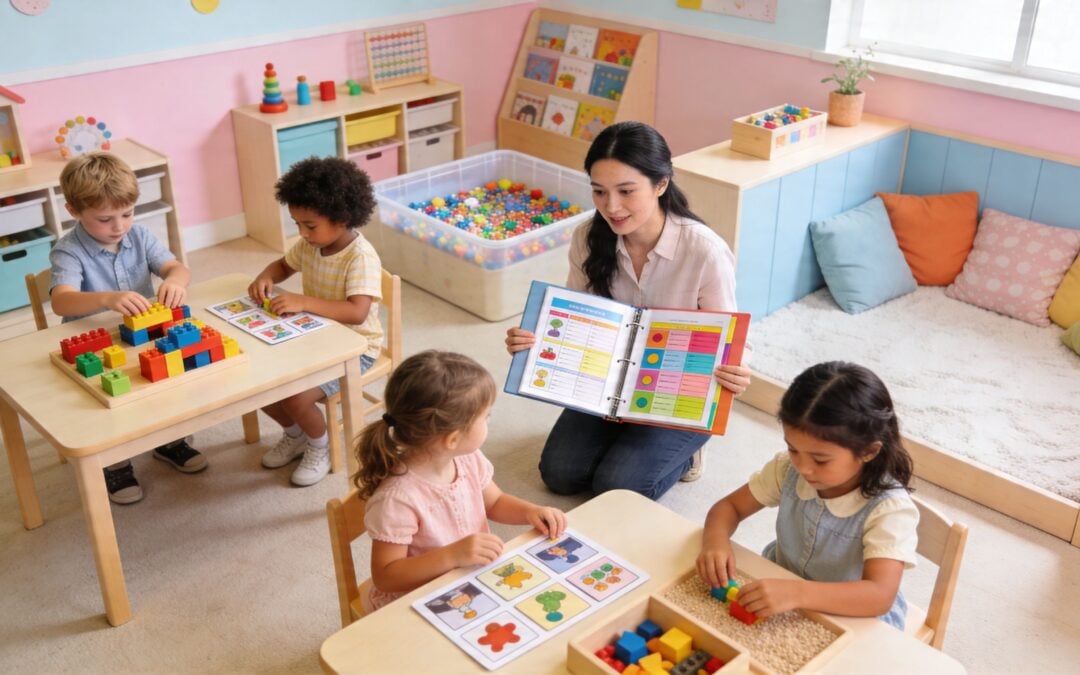
Beyond ABCs, the strongest preschool lesson plan ideas build a classroom where children learn how to be with themselves and with other people. You can see the difference quickly. One child is disappointed that the blue marker is gone, but instead of melting down, she says, “I’m frustrated.” Two children both want the same truck, and with support, they try turns instead of grabbing. A quiet child starts to join circle because the routines feel safe and predictable.
That kind of room doesn’t happen because a teacher added a poster about feelings. It happens because social-emotional learning is built into the day, not saved for a special lesson once a week. Preschoolers need repeated practice with naming emotions, calming their bodies, listening, solving problems, and feeling that they belong. Those skills are just as teachable as counting, sorting, or letter recognition.
That’s also why the best preschool lesson plan ideas aren’t only about themes like apples, weather, or community helpers. They connect academic learning with concrete social practice. Early math standards already point in this direction. Kindergarten students in the Common Core are expected to organize, represent, and interpret data in categories, including comparing how many are in each group, according to CCSS-aligned guidance summarized here. In preschool, that can look like graphing favorite feelings, tallying classroom choices, or sorting how classmates like to greet each other.
Busy teachers and parents don’t need more cute activities without a plan. They need lessons that work in real classrooms, with wiggles, conflicts, uneven language development, and a wide range of needs. The ideas below are built for that reality. Each one includes a clear activity, practical examples, differentiation moves, simple assessment, and a home extension so the lesson doesn’t stop at pickup.
1. Emotion Recognition and Naming Circle
Start with the simplest skill, giving feelings names children can use. Sit in a circle with a mirror, a few emotion cards, and one short picture book. Pick just three or four feelings at first, such as happy, sad, frustrated, and excited. More choices sound richer, but too many labels at once usually create guessing instead of understanding.

Ask children to look at a card, copy the face, then check themselves in the mirror. That mirror matters. Preschoolers often understand feelings better when they can connect the word to a face and body, not just hear an adult define it.
How to run it
Read a familiar story and pause on one page. Ask, “How does the character feel?” Then follow with, “What do you see that makes you think that?” That second question keeps the conversation grounded in observable clues like eyebrows, tears, posture, or voice.
At transition times, repeat a quick ritual. Children can point to a feeling card as they come to circle, lunch, or rest. If you want to deepen the work, Soul Shoppe’s guidance on naming feelings and helping kids find the words they need fits naturally with this kind of daily practice.
Practical rule: Don’t correct a child too quickly if they misread a feeling. Ask what they noticed first. The explanation often tells you more than the answer.
For differentiation, offer visual choices instead of open-ended questions for children with limited expressive language. For sensory-sensitive children, skip exaggerated group mimicking if it feels like too much and let them point or match instead.
- Assessment: Note whether a child can match a facial expression to a feeling word, identify a character’s emotion, or name their own feeling with support.
- Home extension: Send home two or three feeling words with simple prompts like “When did you feel excited today?”
- What works: Repetition, mirrors, and familiar books.
- What doesn’t: Abstract discussions about emotions without visual support.
2. Mindfulness and Breathing Activity Stations
Some children need movement to calm. Some need touch. Some need a script. A single whole-group breathing lesson rarely reaches everyone, which is why stations work well.
Set up three calm choices around the room. One can be bubble breathing. One can be a stuffed animal “belly buddy” station where children watch the toy rise and fall on their stomach. One can be a sensory station with a glitter bottle or soft fabric squares for slow touch and observation.

Keep the language concrete. “Smell the flower, blow out the candle” works better than “regulate your nervous system.” Practice when children are calm, not only after a conflict. If you wait until a child is already overwhelmed, the strategy feels like a demand instead of a tool.
Best station choices for preschool
A short rotation is enough. Preschool attention is brief, and calm practice should feel accessible, not heavy.
- Bubble breathing: Children inhale, then blow slowly enough to make one large bubble instead of many fast ones.
- Belly buddy breathing: Children lie down and watch a plush toy move as they breathe.
- Slow-move path: Tape simple footprints on the floor and invite heel-to-toe walking.
Soul Shoppe’s explanation of the belly breathing technique gives families and staff a shared routine, which helps children use the same language across settings.
Teachers often ask whether mindfulness belongs in preschool. It does, if it stays physical, brief, and optional in delivery. Children don’t need long silent meditations. They need usable calming habits.
Some children will giggle through the first few rounds. That’s normal. Stay steady and keep going.
For differentiation, let children choose between seated, standing, or lying-down options. For children who resist stillness, begin with movement and end with one breath.
- Assessment: Watch whether children can copy the breath pattern, choose a calming station, or return to group with less support over time.
- Home extension: Send one breathing phrase home and encourage families to use it before bedtime or transitions.
- What works: Consistent routines and visual prompts.
- What doesn’t: Treating calming tools as consequences.
3. Kindness and Empathy Circle Stories
Books are one of the easiest ways to teach empathy because they let children practice noticing another person’s inner world. Choose stories with clear social moments. A character is left out. Someone makes a mistake. A friend helps. Keep the plot simple enough that children can track both action and feeling.
Read slowly and stop often. Ask, “What might help right now?” That question moves children from emotion recognition into response. You’re not only naming sadness. You’re teaching what caring can look like.
Turning story time into social practice
After reading, act out one moment with puppets or stuffed animals. If the story shows a child dropping blocks and feeling upset, one puppet can offer help, one can laugh, and children can compare the outcomes. This keeps empathy concrete.
Soul Shoppe’s approach to teaching empathy pairs well with this kind of discussion because preschoolers learn best when caring language is practiced, not merely praised.
Use a class kindness chart, but keep it descriptive. Write or draw what happened: “Mila got a tissue for Ben” or “Jordan moved over so Ava had space.” Avoid turning kindness into a competition for stickers.
- Assessment: Listen for whether children can identify how a character feels and suggest one helpful response.
- Differentiation: Offer picture choices for children who struggle with open discussion. For children with social communication differences, rehearse one response line such as “Do you want help?”
- Home extension: Send home one book title and one dinner-table question, such as “When did someone help you today?”
One strong example is a classroom “kindness replay.” After lunch, the teacher briefly retells one helpful moment from the morning and asks children to show the feeling on their faces. That simple replay ties story language to real classroom life.
4. Conflict Resolution and Problem-Solving Role-Play
This lesson belongs in every preschool room because conflicts will happen anyway. The question isn’t whether children will argue over materials, space, or turns. The question is whether they’ll have any script beyond grabbing, crying, or shutting down.
Use a very simple scenario first. Two children want the same shovel. One child says, “I had it.” The other says, “I want it now.” Freeze the action and ask the group what the children could say or do next.
Lead in with a visual support, then show the role-play clip below during teacher planning or for family workshops.