

What Are Self Management Skills: A Practical Guide for Students
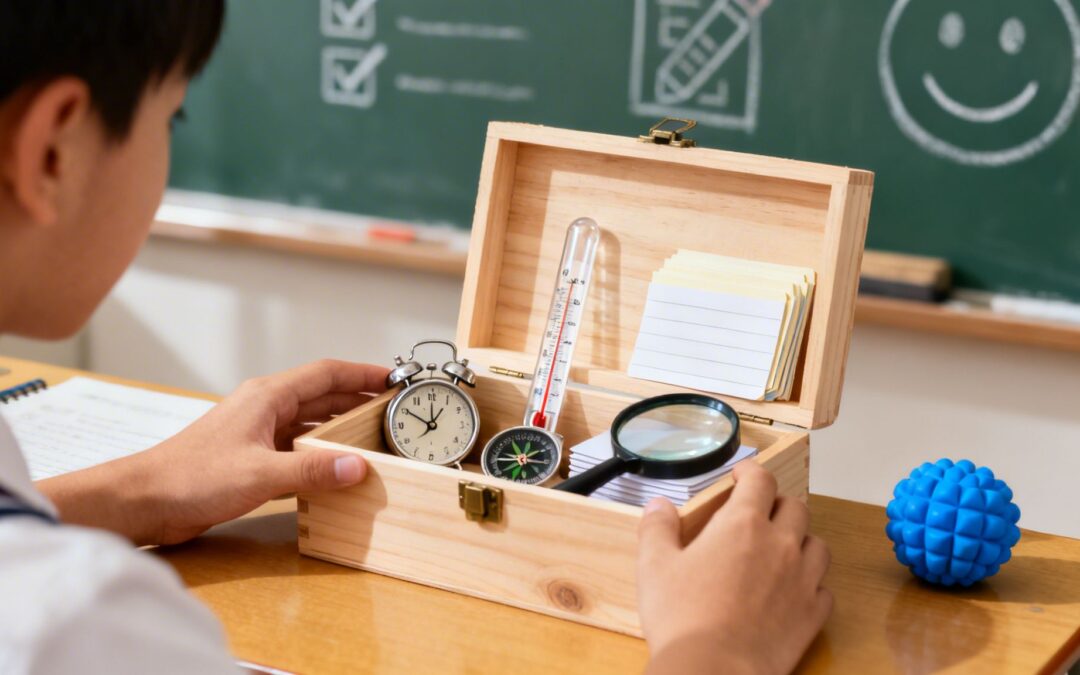
When we talk about self-management, we’re really talking about the practical tools students use to take charge of their own thoughts, feelings, and actions to get where they want to go. It’s the ability to steer their own ship, whether they’re navigating tricky homework, managing big emotions, or working towards a personal milestone. This isn’t just a “nice-to-have”—it’s a core skill for success both in and out of the classroom.
Understanding Your Student’s Inner Toolkit
Think of self-management not as one single skill, but as a personal toolkit every child carries with them. Inside are all the specific instruments they need to handle daily challenges and build a strong foundation for whatever comes next. Just like a builder needs a hammer for one job and a measuring tape for another, a student needs different self-management skills for different situations.
For example, when a student gets frustrated with a tough math problem, their emotional regulation tool helps them take a deep breath instead of just giving up. When they’d rather be playing video games but have a project due, their impulse control tool helps them stay focused. Developing these skills isn’t about turning kids into perfect, rule-following robots; it’s about empowering them to make thoughtful choices for themselves.
Self-management is the bridge between knowing what to do and actually doing it. It empowers students to take ownership of their learning, behavior, and emotional well-being, turning potential into real-world competence.
This internal toolkit has a huge impact on every part of a student’s life. A child with strong self-management skills is much better equipped to:
- Succeed Academically: They can map out study time, stay focused during lessons, and push through when subjects get tough. A practical example is a student using a planner to schedule 30 minutes for homework before playing, ensuring it gets done.
- Build Healthy Friendships: They’re able to manage their reactions during disagreements and really listen to another person’s side of things without getting overwhelmed. For instance, a student who feels upset can say, “I need a minute,” instead of yelling at their friend.
- Develop Resilience: They can handle stress, bounce back from setbacks, and walk into new situations with a sense of confidence. A resilient student who fails a test might think, “Okay, that didn’t work. I’ll ask the teacher for help and try a new study method.”
The Core Components of Self Management
To really get what’s inside this toolkit, let’s break down the key skills that all work together. Each one plays a unique role in helping a student navigate their world with more confidence and control.
Here’s a quick look at these essential components. As parents and teachers, our job is to help students recognize which tool is needed for the job and give them chances to practice using it.
The Core Components of Self Management
| Skill Component | What It Looks Like in a Student |
|---|---|
| Emotional Regulation | Taking a moment to calm down after a disagreement on the playground. |
| Impulse Control | Raising their hand instead of shouting out the answer in class. |
| Goal-Setting | Breaking a large book report into smaller, manageable steps. |
| Organization | Keeping their backpack tidy and remembering to bring home their homework folder. |
| Stress Management | Using a breathing exercise before a test to reduce anxiety. |
| Attention Control | Finishing their reading assignment even when siblings are playing nearby. |
When we see these skills as distinct but connected tools, it becomes much easier to pinpoint where a student might need extra support and how we can provide it. Building these skills one by one gives students the foundation they need to manage themselves effectively in any situation.
Exploring the 6 Pillars of Self Management
It helps to think of self-management as a “toolkit” a student carries with them. Let’s open that toolkit and look at the 6 essential instruments inside. These are the pillars that hold up a student’s ability to navigate their world with intention and control.
Each is a distinct skill, but they all work together—much like you need different tools to build a sturdy house. To make these ideas real, we’ll explore each pillar with a simple analogy and practical examples that parents and teachers can spot in everyday life. This helps turn abstract concepts into behaviors you can actually see, support, and encourage.
This diagram shows how a student’s success toolkit connects their thoughts, feelings, and actions, turning them into a powerful cycle for achievement.
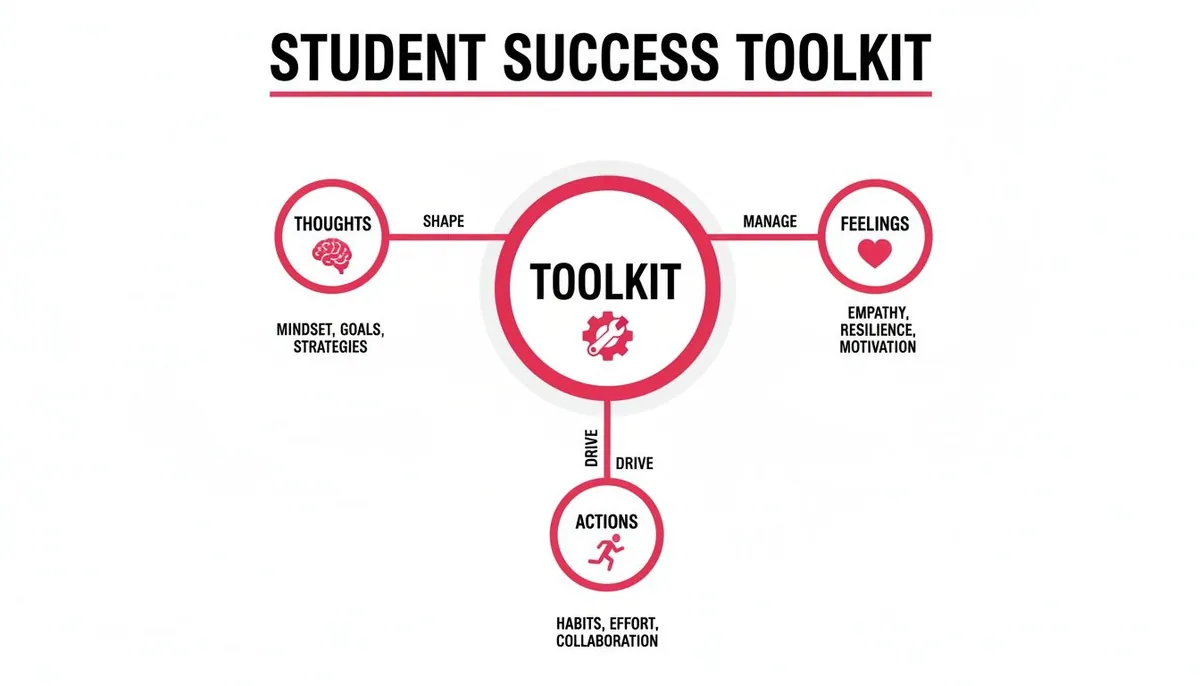
The visual reminds us that self-management isn’t just about what kids do. It’s about helping them understand the powerful link between what they think, how they feel, and the choices they make.
1. Emotional Regulation: The Feelings Thermostat
Think of emotional regulation as a child’s internal “feelings thermostat.” It helps them notice when their emotional temperature is rising—from cool and calm to warm and annoyed, or even hot and angry. The goal isn’t to get rid of big feelings, but to learn how to keep them in a comfortable, manageable range.
A child with a well-calibrated thermostat can sense frustration building and use a strategy to “cool down” before a full-blown meltdown. This is absolutely foundational for learning and getting along with others.
- Example for a Teacher: A kindergartener, accidentally pushed in line, feels their “thermostat” spike. They remember the class breathing exercise, put a hand on their belly, and take three slow breaths instead of pushing back.
- Example for a Parent: An eight-year-old is about to lose a board game. They start to feel angry, but instead of flipping the board, they say, “I’m feeling frustrated, I need a minute,” and step away.
- Example for a Student: A student gets a lower grade on a quiz than they wanted. Instead of crumpling the paper in anger (hot), they feel a pang of disappointment (warm), take a deep breath, and decide to ask the teacher how they can improve for the next one.
2. Impulse Control: The Mental Brakes
Impulse control is like having a reliable set of “mental brakes.” It’s the ability to hit pause between feeling an urge and acting on it. For a student, this means stopping to think before speaking, acting, or making a choice—especially when a more immediate, less helpful option is so tempting.
Without these brakes, a student might blurt out answers, grab a toy from a friend, or get sidetracked by their phone instead of finishing homework. Learning to use these brakes is crucial for classroom conduct and making safe, thoughtful decisions.
This skill is all about creating a moment of choice. It’s the pause that allows a student to ask, “Is this a good idea right now?” and steer toward a better outcome.
- Example for a Teacher: A student is so excited they know the answer that they start to shout it out. They catch themselves, put their mental brakes on, and raise their hand instead.
- Example for a Parent: A teenager sees a new video game they desperately want. Their first impulse is to spend all their allowance money. Instead, they pause and decide to save half of the money and put the other half toward the game.
- Example for a Student: A fifth-grader is working on a group project, and a classmate suggests an idea they strongly disagree with. Their first impulse is to say, “That’s a stupid idea!” Instead, they apply their mental brakes, pause, and rephrase: “I see what you’re saying, but what if we tried this instead?”
3. Goal Setting: The Personal Roadmap
Goal-setting is a student’s “personal roadmap.” It helps them see where they’re going and plan the steps to get there. This skill transforms huge, overwhelming tasks—like a science fair project or learning a new instrument—into a series of smaller, more achievable milestones.
A good roadmap doesn’t just show the final destination; it highlights the route, potential stops, and the progress made along the way. This builds a sense of agency and teaches students how to work toward future accomplishments. It’s also tightly linked to motivation; as you can learn in this guide on how to develop self-discipline, breaking down goals makes it possible to keep going.
- Example for a Teacher: To prepare for a spelling bee, a teacher helps a student set a goal of learning 5 new words each day, rather than trying to memorize 50 words the night before.
- Example for a Parent: A child wants to save up for a new bike. A parent helps them create a “roadmap” by figuring out how much they need to save from their allowance each week and creating a chart to track their progress.
- Example for a Student: A middle schooler wants to get a B in math but currently has a C. They create a “roadmap” with a parent that includes:
- Destination: Earn a B or higher.
- Route: Complete all homework, study for 20 minutes each night, and ask for help once a week.
- Milestone: Check their grade every Friday to see if they’re on track.
4. Organization: The Tidy Backpack
Organization is about creating order in a student’s physical and mental worlds. Think of it as keeping a “tidy backpack”—both literally and figuratively. When a student’s backpack, desk, and schedule are organized, they can find what they need, remember deadlines, and approach their work with a clear head.
The opposite is a chaotic, overflowing backpack where homework gets lost and important papers are crumpled. This disorganization creates a ton of unnecessary stress and wastes mental energy that should be going toward learning.
- Example for a Teacher: A teacher shows the class how to use a color-coded folder system: a red folder for math, a blue one for reading. This helps students visually sort their work and find materials quickly.
- Example for a Parent: Before bedtime, a parent and child do a “backpack check” together, making sure homework is packed, old papers are taken out, and gym clothes are ready for the next day.
- Example for a Student: A student knows exactly where their homework folder is. They have a specific pocket for important papers, so they hand in the permission slip calmly and start their day ready to learn. This reduces anxiety and builds independence.
5. Stress Management: The Pressure Valve
Stress management works like a “pressure valve.” Everyone feels pressure from school, friends, and home life. This skill allows a student to safely release that pressure before it builds up and leads to an explosion of anxiety, anger, or just shutting down completely.
Learning to spot the signs of stress (like a racing heart or tense shoulders) and use healthy release strategies is one of the most important self-management skills for long-term well-being. It goes hand-in-hand with self-awareness, which gives students the ability to recognize their feelings in the first place. You can read more about building that crucial foundation in our detailed guide on self-awareness skills.
- Example for a Teacher: A teacher notices students are getting antsy before a test. They lead the class in a one-minute “chair stretch” to release physical tension and reset their minds.
- Example for a Parent: A teenager is stressed about a social situation at school. Instead of letting them bottle it up, a parent suggests going for a walk together to talk it out, releasing emotional pressure.
- Example for a Student: A high schooler feels overwhelmed by an upcoming exam. Instead of panicking, they use their “pressure valve” by taking a five-minute break to listen to music or talk to a friend. This helps them return to studying with a clearer mind.
6. Attention Control: The Focus Flashlight
Finally, attention control is like having a “focus flashlight.” In a world overflowing with distractions, this skill allows a student to shine a bright beam of concentration on what matters most in the moment—whether it’s the teacher’s voice, a book, or a math problem.
It also means noticing when the flashlight has drifted away and gently guiding it back to the task. This isn’t about forcing concentration for hours on end, but about learning to manage and direct one’s focus with intention.
- Example for a Teacher: During silent reading, a teacher quietly prompts a daydreaming student by saying, “Shine your flashlight on your book,” providing a simple, non-judgmental cue to refocus.
- Example for a Parent: A child is trying to do homework while the TV is on. A parent helps them manage distractions by saying, “Let’s turn the TV off for 20 minutes so you can use your full focus flashlight on this worksheet. Then you can watch.”
- Example for a Student: A student is reading at home while their younger sibling watches cartoons in the same room. They feel their “flashlight” drifting toward the TV. They recognize this, stand up, and move to a quieter spot at the kitchen table to finish their work. They didn’t just notice the distraction—they took action to manage it.