A Parent and Teacher Guide to Anxiety Coping Skills for Kids
Anxiety coping skills are the tools we give children to help them navigate feelings of worry, fear, and stress. Think of them as emotional first aid—things like grounding techniques, deep breathing exercises, and simple ways to reframe scary thoughts. They equip kids to handle emotional bumps in the road in a healthy, constructive way.
Understanding Childhood Anxiety in Today’s World
Before we jump into specific strategies, it’s important to get a clear picture of what anxiety actually looks like in children today. We’re not just talking about the occasional butterflies before a school play. For many kids, it’s a much more persistent response to a world packed with academic pressure, tricky social dynamics online, and the echoes of global uncertainty.
For a child, anxiety often feels different than fear. Fear is usually a reaction to a clear and present danger, like a dog barking loudly. Anxiety, on the other hand, is that nagging sense of dread about something that might happen down the road.
For example, a child might feel fear when seeing a spider (an immediate threat), but they feel anxiety when lying in bed worrying that a spider might be in their room.
Distinguishing Normal Worries from Heightened Anxiety
It’s completely normal for a child to worry about a test or feel shy on the first day of school. These are just part of growing up. But when those worries become so big and persistent that they get in the way of daily life—school, friendships, sleep—it might signal a need for more support. You can learn more about the specific signs of stress in children and how to spot them.
Here’s how anxiety can show up differently than typical worries:
- Intensity: A child might worry about a spelling test. But a child struggling with anxiety might lose sleep for a week straight leading up to it, feel sick to their stomach, or refuse to go to school on test day.
- Duration: Everyday worries tend to pass quickly. Anxious feelings can hang around for days or even weeks, casting a shadow over everything. For example, a typical worry about a sleepover ends once the child has fun, but anxiety might cause them to worry about the next sleepover weeks in advance.
- Physical Symptoms: Anxiety often brings real physical complaints. Think frequent stomachaches, headaches, or constant tiredness that isn’t linked to any medical illness. A child might consistently ask to go to the nurse’s office on Mondays before a math test they find difficult.
It’s a tough reality, but the global prevalence of anxiety disorders in children has become a major concern. About 14% of children worldwide experience some form of mental health challenge, with anxiety being one of the most common, especially for older kids and teens.
Why Coping Skills Are a Core Life Skill
Teaching children how to manage anxiety is as fundamental as teaching them to read or tie their shoes. It’s not about trying to get rid of worry completely—that’s not realistic or even healthy. The goal is to give them the tools to work with their feelings so their feelings don’t run the show.
When we reframe anxiety as a signal from their bodies, not a character flaw, we empower them to listen and respond in a helpful way. For more support and information on children’s well-being, exploring general resources for mental health awareness can be incredibly valuable.
Creating emotionally safe spaces, both at home and in the classroom, is the absolute first step. This means building an environment where kids feel seen, heard, and validated when they share what’s scaring them.
For example, if a child is afraid of the dark, instead of saying, “There’s nothing to be scared of,” try something like, “I hear that you’re feeling scared when the lights are out. It feels pretty lonely in the dark sometimes. What could we do to make it feel a little safer?” This simple shift from dismissal to empathy opens the door for a child to build true resilience.
Tangible Coping Skills for Young Children (Grades K-2)
When you tell a kindergartener to “just relax,” you might as well be speaking another language. For young children in grades K-2, abstract ideas about feelings are confusing. Their brains are wired for concrete, physical experiences, so our strategies for teaching anxiety coping skills need to be tangible—something they can see, touch, and do.
The goal is to connect their big feelings to simple, physical actions. This process builds a kind of emotional muscle memory, turning an overwhelming internal state into a manageable, hands-on task. By making coping skills sensory-based and even playful, we give them tools they can actually understand and use on their own.
Create a Calm-Down Corner
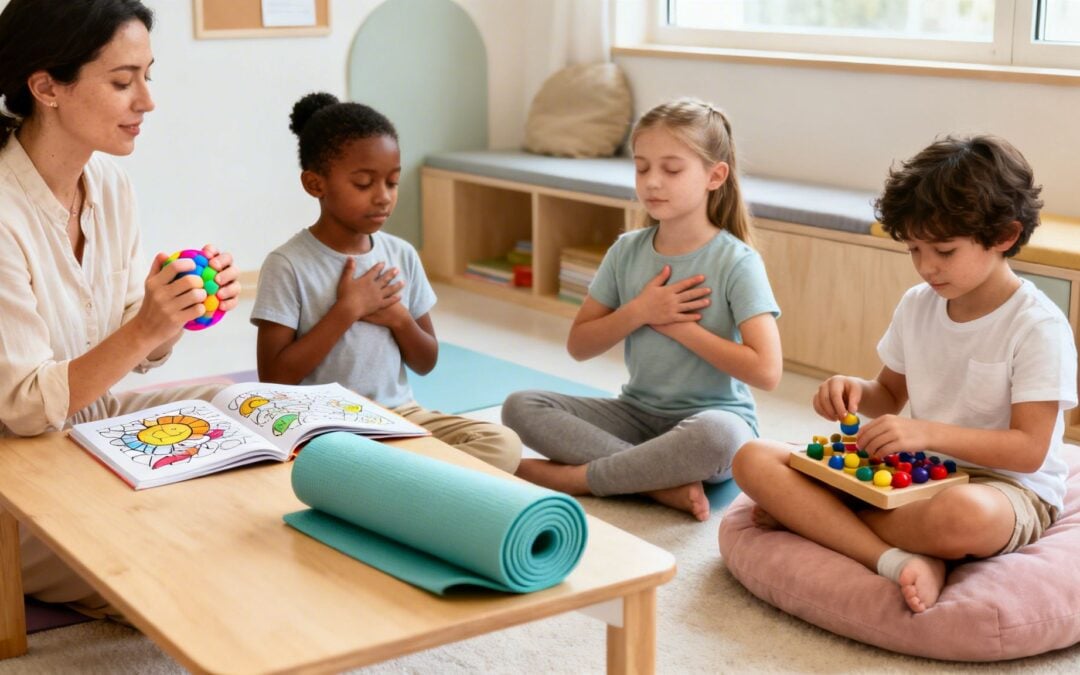
One of the most powerful tools in my experience is a designated “Calm-Down Corner” or “Peace Corner.” This isn’t a timeout spot for bad behavior; it’s a safe, cozy space a child can choose to visit when they feel overwhelmed. The space itself should feel like a warm hug, creating a positive association with self-regulation.
To make it effective, fill it with sensory items that help soothe an agitated nervous system. These tools give all that anxious energy a place to go.
- Soft Textures: A fuzzy blanket, a soft rug, or a few large pillows are perfect.
- Squishy Toys: Stress balls, textured fidgets, and squishy toys help release physical tension in their hands.
- Weighted Items: A weighted lap pad or a heavy stuffed animal can provide a grounding, calming pressure that feels incredibly secure.
- Practical Example: A teacher might notice a student getting wiggly and frustrated during math. She could quietly say, “It looks like your body needs a break. Would you like to spend five minutes in the Calm-Down Corner with the weighted lizard?”
Learning how to use these tools is a foundational part of teaching children how to self-soothe.
Use Visuals to Anchor Breathing
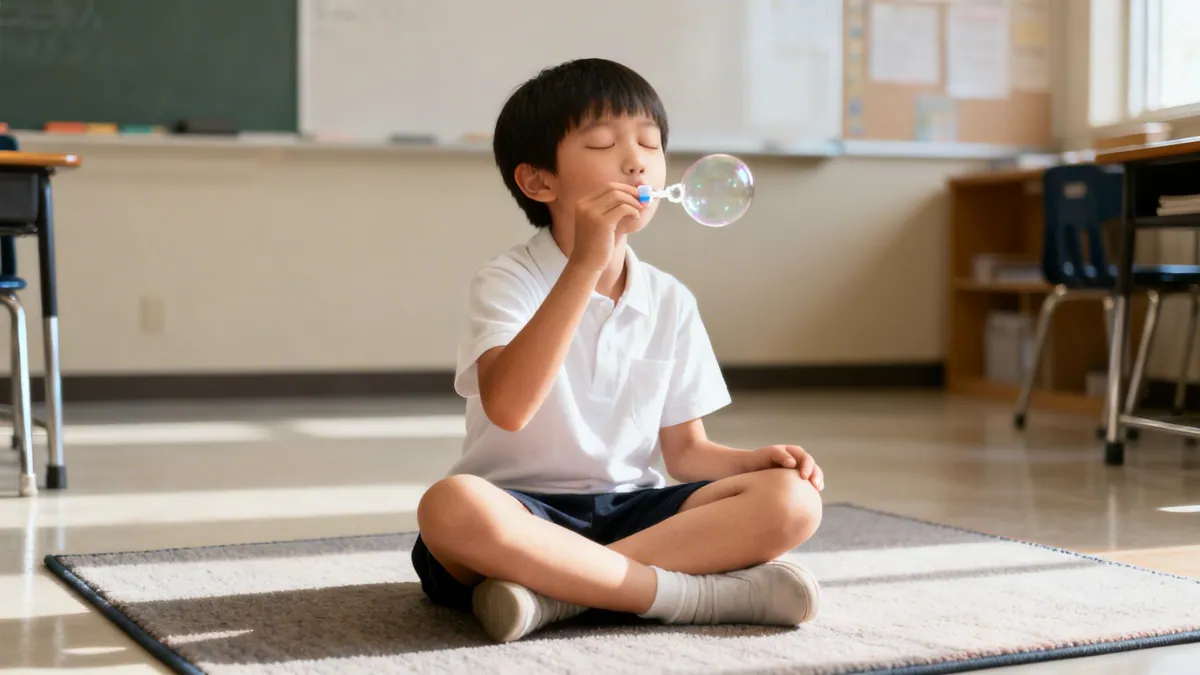
Deep breathing is a game-changer for anxiety, but telling a young child to “take a deep breath” often leads to quick, shallow gasps that do more harm than good. We have to make the process visual and interactive. It needs to feel less like a chore and more like a gentle game.
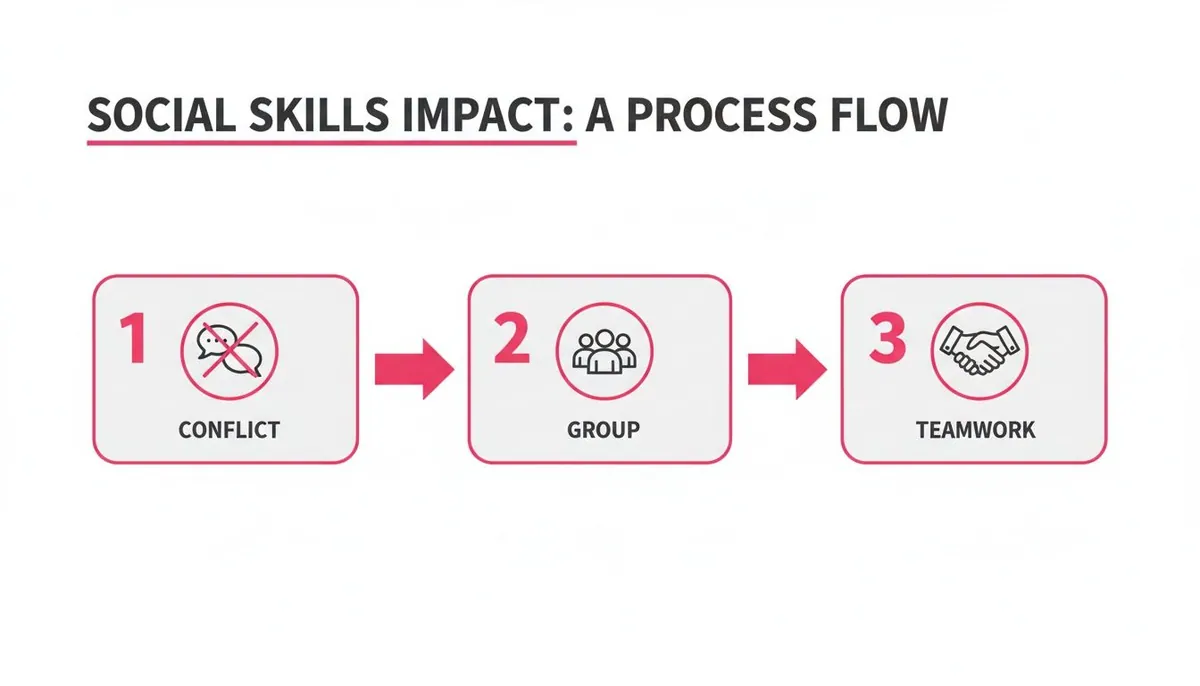
This simple process flow shows how we can guide a child from recognizing an anxious signal to using a skill with our help.
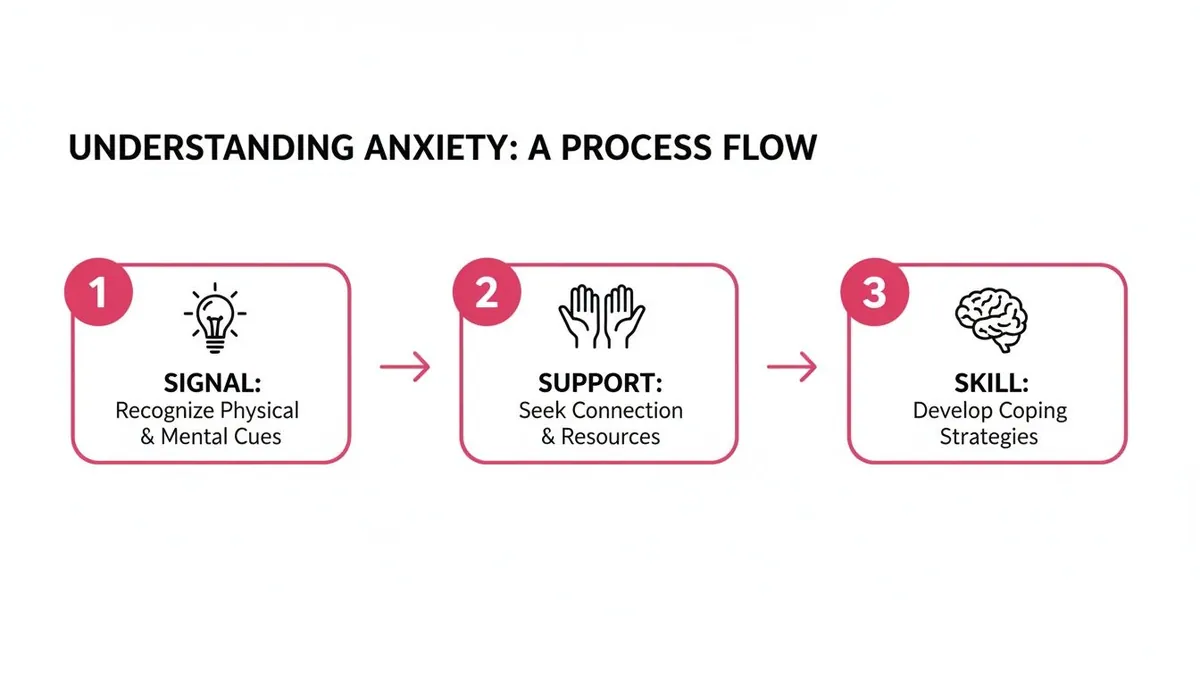
This visual reminds us that our job is to help kids first notice the Signal (their body’s clue that they’re anxious), offer loving Support, and then guide them toward a tangible Skill. This framework builds their confidence and independence over time.
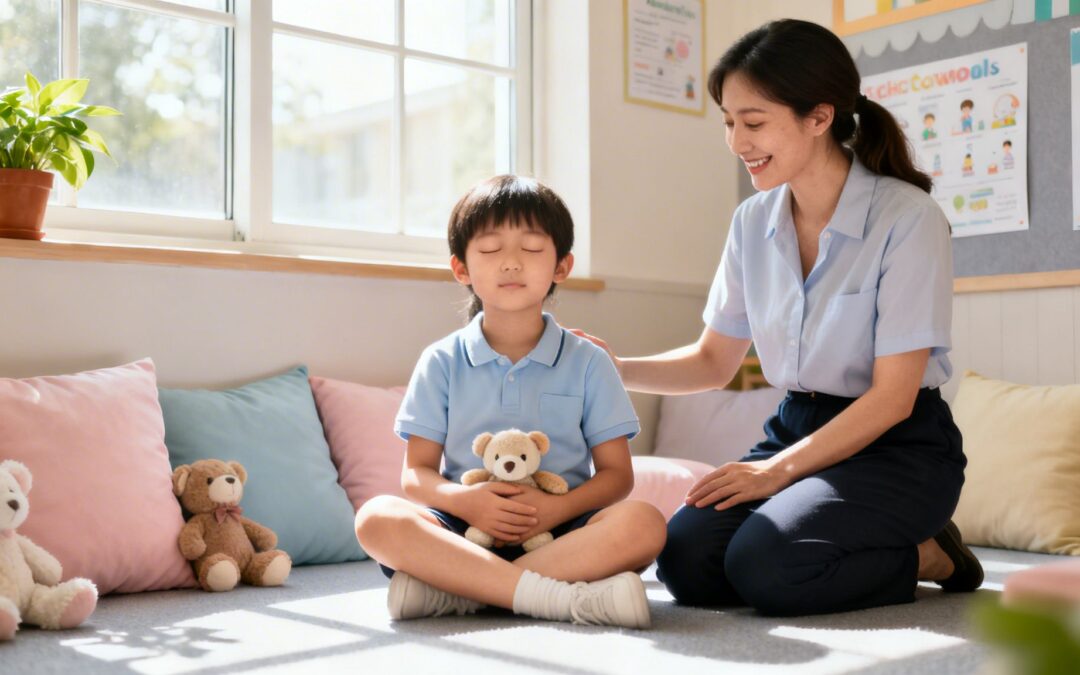
A fantastic way to practice this is with “Stuffed Animal Breathing.” Have the child lie down and place a favorite stuffed animal on their belly. Then, guide them with a soft, gentle voice.
Example Script: “Let’s give your teddy bear a slow ride. Take a big breath in through your nose and make your belly rise up high, like a balloon. 1… 2… 3… Now, breathe out slowly through your mouth and let the teddy bear float back down. 1… 2… 3… 4…”
Watching the toy rise and fall gives them a concrete visual for the rhythm of deep, calming breaths. It transforms a complex concept into a simple, observable action they can control.
Introduce Worry Monsters and Worry Boxes
Young children often can’t find the words for their anxieties. Giving their worries a physical form makes them feel less scary and much more manageable. This is where tools like a “Worry Monster” or a “Worry Box” can be magical.
A Worry Monster is just a special puppet or a decorated tissue box with a big mouth. Introduce it as a friendly creature that loves to eat worries for lunch.
Here’s how it works:
If a child is anxious about a parent leaving at drop-off, you can say, “It sounds like you have a big worry about saying goodbye. The Worry Monster is really hungry today. Let’s draw a picture of that worry and feed it to him so he can gobble it all up!”
The child can draw or write what’s bothering them on a small piece of paper, then physically “feed” it to the monster. This simple, symbolic act helps them externalize the fear, giving them a real sense of control and relief.
To help you get started, here are a few simple, age-appropriate skills you can introduce in the classroom or at home.
Core Coping Skills for Grades K-2
| Coping Skill | Classroom or Home Activity | What It Teaches |
|---|---|---|
| Belly Breathing | Stuffed Animal Breathing: Lie down, place a toy on the belly, and watch it rise and fall with each deep breath. Flower & Candle: Pretend to smell a flower (breathe in) and blow out a candle (breathe out). | Body awareness and how to slow down the nervous system. |
| Grounding | 5 Senses Game: Name 5 things you can see, 4 you can touch, 3 you can hear, 2 you can smell, and 1 you can taste. Chair Push-Ups: While seated, push hands down on the chair to feel the strong muscles in your arms. | Pulls focus away from anxious thoughts and back to the present moment. |
| Externalizing Worries | Worry Monster/Box: Draw or write down a worry and “feed” it to a special box or puppet. | Makes abstract fears tangible and provides a sense of control over them. |
| Sensory Soothing | Calm-Down Corner: Use a designated space with soft blankets, squishy toys, or weighted lap pads. | How to self-soothe using sensory input to calm the body. |
These activities are more than just distractions; they are the building blocks of lifelong emotional regulation. By weaving these simple practices into daily routines, we normalize the process of managing emotions and empower kids with skills they’ll use for years to come.
Helping Older Elementary Kids Understand Their Worries (Grades 3-5)
By the time kids hit the upper elementary grades, their minds are making some incredible leaps. They’re starting to think more abstractly, which is fantastic for learning but can also open the door to more complex worries. While the sensory tools we use with younger kids are still great to have on hand, students in grades 3-5 are ready for some real cognitive strategies.
This is the perfect age to pull back the curtain and teach them about the fascinating mechanics of their own brains. Giving them this knowledge is empowering—it helps them understand what’s happening inside when big feelings take over.
This shift couldn’t come at a better time. Diagnosed anxiety among children has been climbing, with 2022–2023 data showing that 11% of U.S. children ages 3-17 have received a diagnosis. But that might just be the tip of the iceberg. Global research suggests as many as 20.5% of young people experience significant anxiety symptoms, hinting that the official numbers don’t capture the full picture.
The Upstairs vs. Downstairs Brain
One of the most powerful analogies for this age group is the “upstairs brain” and the “downstairs brain.” It’s a simple, sticky way to explain a complex process.
You can frame it like this: the upstairs brain (the prefrontal cortex) is our “Wise Owl” or “Thinking Brain.” It’s the part that helps us make smart choices, solve problems, and calm ourselves down.
Then there’s the downstairs brain (amygdala and limbic system), which is our “Guard Dog” or “Feeling Brain.” Its job is to sniff out danger. When it senses a threat—whether it’s a real emergency or just a scary thought—it starts barking. And when it barks really loud, it can cause us to “flip our lid.”
When a child “flips their lid,” the connection between the calm upstairs brain and the reactive downstairs brain temporarily snaps. The Guard Dog takes over completely, making it almost impossible to think clearly or listen to reason. Explaining this helps kids see their intense reactions not as a personal failure, but as a normal (and temporary) brain state.
Try This: A hand model makes this concept click instantly. Make a fist with your thumb tucked inside. Your wrist is the brainstem, your tucked-in thumb is the “downstairs brain,” and your fingers wrapping over the top are the “upstairs brain.” When you’re calm, it’s a connected fist. But when you flip your lid, your fingers fly up, leaving the thumb (downstairs brain) exposed and in charge. You can practice this with a child after a difficult moment, saying, “It looks like your Guard Dog was in charge then. What can we do to help your Wise Owl come back online?”
The 5-4-3-2-1 Grounding Trick
When a child’s mind is caught in a spiral of “what ifs,” grounding techniques are the lifeline that pulls them back to the present moment. The 5-4-3-2-1 method is a go-to because it methodically engages all five senses, forcing the brain to focus on the here and now instead of future fears.
Walk them through it gently. No rush.
Practical Example: A student is frozen with test anxiety. A teacher can kneel beside them and whisper:
- See: “Okay, quietly look around and name 5 blue things you can see in the classroom.” (The poster, Maya’s shirt, the recycling bin…)
- Feel: “Great. Now, can you tell me 4 things you can feel? Wiggle your toes in your shoes. Feel the desk under your hands.” (My feet in my shoes, the smooth desk, my soft sweater…)
- Hear: “Good job. Now listen closely. What are 3 things you can hear right now?” (The clock ticking, someone turning a page, the fan humming…)
- Smell: “Almost there. Take a sniff. What are 2 things you can smell?” (The pencil shavings, the dry-erase marker…)
- Taste: “Last one. What is 1 thing you can taste?” (The mint from my toothpaste this morning.)
This technique works because it interrupts the anxiety cycle by redirecting the brain’s attention. Of course, having the words for their feelings is a huge help, too. Building a rich feelings vocabulary is key, and you can find some great ideas in our guide to teaching emotional vocabulary for kids.
Becoming a Thought Detective
Another game-changer for this age group is “thought challenging.” This skill teaches kids to be detectives of their own minds, investigating their worries instead of just accepting them as fact. When we learn to question our anxious thoughts, we can build resilience in children and help them navigate life’s inevitable bumps.
Start by helping a student catch their “worry thought.” Then, you can gently prompt them to put it on trial with one simple but powerful question: “Is my worry 100% true?”
Here’s How It Looks in Action:
A student is completely panicked about giving her book report.
- Worry Thought: “Everyone is going to laugh at me. I just know I’m going to mess up and fail.”
- Challenge Question: “Okay, let’s investigate. Is it 100% true that everyone will laugh? Have you ever seen the entire class laugh at someone’s report before? What’s a more likely thing to happen? What’s one thing you know you did well when you practiced?”
- Balanced Thought: “I feel really nervous, and that’s okay. Some kids might not be listening, but probably no one will laugh. I practiced my first page a lot, so I know I can start strong. I’m just going to do my best.”
This simple process is incredibly empowering. It shows kids they can talk back to their anxiety, shifting them from feeling like a victim of their worries to being a resourceful problem-solver. It’s a foundational skill for a healthy inner dialogue that will serve them for years to come.
Advanced Self-Advocacy Skills for Middle Schoolers (Grades 6-8)
Pro-Tips for Success
Connect the movement to the emotion. Use explicit language like, “It looks like you have some big angry energy in your body. Let’s stomp it out like a dinosaur!” This helps children build self-awareness. Offer choices whenever possible, asking, “Do you need to run around outside or do some quiet stretches?” This empowers them to recognize and respond to their body’s needs, turning physical activity into a lifelong self-regulation strategy.
4. Sensory Regulation and Self-Soothing Techniques
Sensory-based strategies are powerful kids anger management activities that engage the senses to calm the nervous system and interrupt escalating emotions. These techniques provide tangible, physical input that helps ground a child, pulling their focus away from overwhelming anger and into the present moment. By activating the body’s parasympathetic (calm-down) response through sensory tools, children develop portable and discrete skills they can use in almost any setting to manage their feelings effectively.
Why It Works
When a child feels angry, their nervous system enters a state of high alert. Sensory input, as highlighted by occupational therapy and trauma-informed practices, provides a direct pathway to de-escalation. Squeezing a stress ball, feeling the weight of a blanket, or watching glitter fall in a sensory bottle offers predictable, rhythmic input that soothes the brain. This physical feedback helps children feel more in control of their bodies, which in turn helps them regain control over their emotions.
How to Implement It
Creating access to sensory tools allows children to find what works best for them.
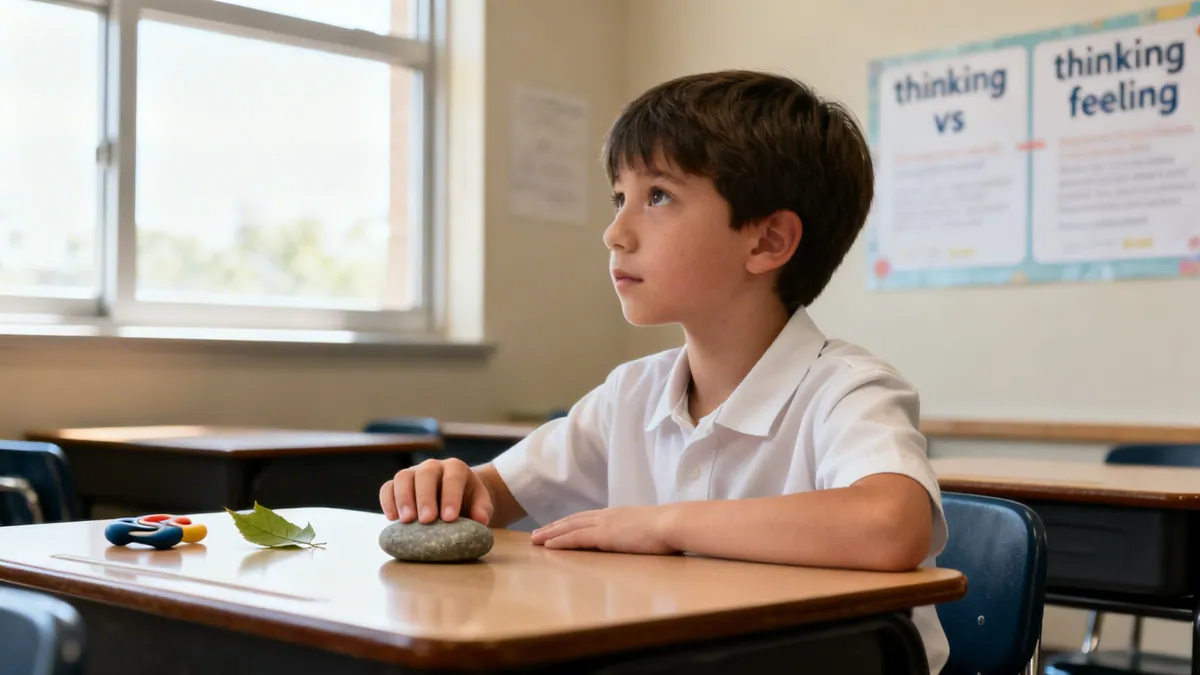
- Create a Sensory Toolkit: Assemble a personal box or bag with items like fidget spinners, stress balls, textured putty, and small, smooth stones. This allows a child to have their preferred tools available at their desk or in a backpack.
- Practical Example (Teacher): A student has a small, discreet bag on their desk. When they start to feel overwhelmed during a test, they can quietly reach in and squeeze a piece of therapy putty under the desk to self-regulate without disrupting others.
- Design a Calm-Down Corner: Designate a quiet space in the classroom or at home with soft pillows, a weighted lap pad or blanket, noise-canceling headphones, and a sensory bottle. This provides a safe retreat for children to co-regulate or self-soothe when feeling overwhelmed.
- Incorporate Sensory Breaks: Proactively schedule short sensory breaks throughout the day. This could involve listening to calming music for three minutes, doing wall pushes, or using an aromatherapy diffuser with lavender. Regular breaks can prevent emotional overload before it starts.
- Practical Example (Parent): After a busy day at school, the parent suggests, “Let’s have 10 minutes of quiet time. You can choose to play with your kinetic sand or look at your glitter jar before we start homework.”
For more ideas, discover these strategies for teaching children how to self-soothe.
Pro-Tips for Success
To maximize the benefits, introduce sensory tools during calm moments. Explain that these are “helper tools” for big feelings, not toys. Assess each child’s unique sensory preferences; some may find a weighted vest calming, while others prefer visual input like a bubble timer. Regularly rotate the items in a toolkit or calm-down corner to maintain interest. Most importantly, model using these tools yourself to normalize sensory regulation as a healthy coping skill for everyone.
5. Social-Emotional Learning (SEL) and Family Partnership
Social-Emotional Learning (SEL) provides a comprehensive framework for teaching children essential life skills, including anger management. When schools intentionally partner with families to reinforce these skills, the impact is magnified. This integrated approach creates a consistent environment where children learn and practice self-awareness, self-management, and responsible decision-making, ensuring that the strategies taught in the classroom are understood and supported at home.
Why It Works
Anger doesn’t just happen at school. By creating a strong school-home connection, children receive consistent messages and use a shared vocabulary to describe their feelings. According to frameworks established by CASEL, consistent reinforcement across different settings helps internalize skills more deeply. When a teacher uses “The Zones of Regulation” to help a child identify they are in the “red zone” (intense anger), and a parent uses the same language at home, the child builds a more robust understanding of their emotional state and the tools needed to return to the “green zone” (calm and focused).
How to Implement It
A unified approach requires clear communication and shared resources between educators and caregivers.
- Host Family Workshops: Organize workshops, like those offered by Soul Shoppe, that teach parents the same anger management and communication strategies their children are learning. Practice skills together, such as using “I-statements” to express feelings without blame.
- Provide Take-Home Guides: Send home simple, one-page guides or family activity packets that explain a specific strategy, like belly breathing or creating a calm-down corner. Include conversation starters for family discussions about managing big emotions.
- Practical Example: A teacher sends home a newsletter with the “Emotion of the Week” (e.g., “Frustration”) and a conversation starter: “Ask your child about a time they felt frustrated today and what size the problem was.”
- Use Shared Language: If the school uses a specific curriculum like Second Step or PBIS, share key terms and concepts with families through newsletters, emails, or a parent app. This ensures everyone is speaking the same emotional language.
- Practical Example: The school teaches the “Stop, Opt, and Go” problem-solving method. A parent, seeing their child get upset over a toy, can say, “Looks like we have a problem. Let’s use our ‘Stop, Opt, and Go’ skills. What are some options here?”
For more information on building these foundational skills, explore this guide on social-emotional learning for kids.
Pro-Tips for Success
To build a thriving partnership, focus on accessibility and practicality. Ensure all materials are jargon-free and available in multiple languages. Offer workshops at various times (mornings, evenings, virtual) to accommodate different family schedules. Start by sharing one simple, actionable tip per week that parents can implement immediately, like modeling how to take a calming breath when frustrated. By celebrating family successes and creating a non-judgmental space for collaboration, you build a powerful, supportive community dedicated to the child’s emotional well-being.
6. Creative Expression and Arts-Based Activities
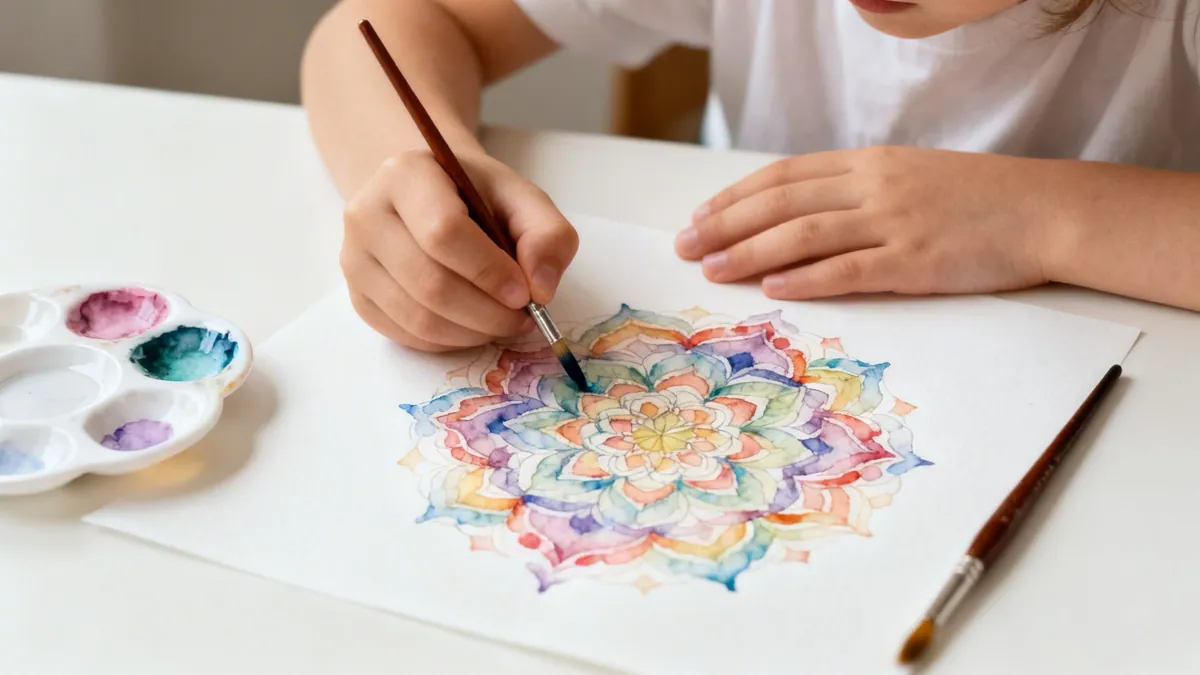
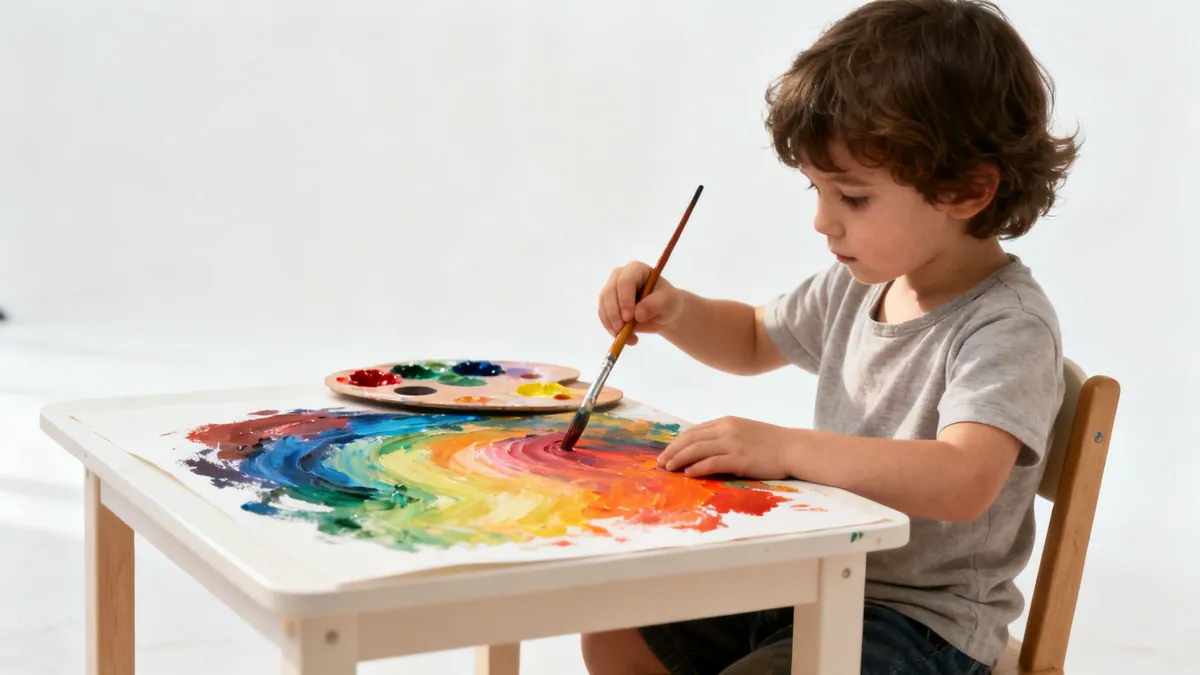
Creative expression offers a powerful, non-verbal pathway for children to process complex emotions like anger. Activities such as drawing, painting, music, or storytelling allow kids to externalize feelings they may not have the words to describe. This process bypasses cognitive barriers, providing a safe and constructive outlet for emotional release and self-exploration, making it one of the most effective kids anger management activities for those who struggle with verbal communication.
Why It Works
Arts-based activities engage different parts of the brain than verbal processing, tapping into the emotional and sensory centers. As pioneers in art therapy like Edith Kramer demonstrated, the creative act itself can be therapeutic, providing a sense of control and mastery over overwhelming feelings. When a child draws their “anger monster” or bangs on a drum, they are transforming an internal, abstract feeling into a tangible, external object or sound, which can then be observed, understood, and managed.
How to Implement It
You can easily adapt creative arts for anger management in various settings.
- Anger Scribbles & Transformation: Give the child a piece of paper and crayons, instructing them to scribble as hard and fast as they can to get their anger out. Afterward, guide them to look at the scribble and turn it into something new, like an animal or a landscape. This transforms the negative energy into a creative product.
- Practical Example (Parent): “Wow, you have a lot of angry feelings. Grab this red crayon and let’s get all that angry scribble out on the paper. Okay, now that it’s out, what do you see in those lines? I see a dragon’s wing!”
- Emotional Color Mapping: Provide a blank outline of a person and ask the child to color in where they feel anger in their body. Use different colors for different feelings. This helps build emotional awareness and the mind-body connection.
- Create an “Anger Comic”: Have children draw a simple comic strip depicting a situation that made them angry. The final panel should show their character using a positive coping strategy to handle the feeling. This combines storytelling with problem-solving.
- Practical Example (Teacher): During a class lesson, the teacher provides comic strip templates. “Today, let’s draw about a time we felt mad. In the first box, draw what happened. In the second, draw your mad face. And in the third box, draw yourself using one of our calming strategies.”
Pro-Tips for Success
To make these activities effective, focus on the process, not the product. Emphasize that there is no right or wrong way to create, and the goal is to express feelings, not to make a perfect piece of art. Provide a variety of open-ended materials like clay, paint, and collage supplies. Afterward, you can ask gentle, open-ended questions like, “Tell me about your picture,” to encourage reflection without judgment. This approach builds trust and encourages authentic emotional expression.
7. Conflict Resolution and Peer Mediation Programs
Structured conflict resolution and peer mediation programs are transformative kids anger management activities that address the root social causes of frustration. These approaches teach children constructive communication, perspective-taking, and collaborative problem-solving skills. Instead of just managing the internal feeling of anger, these programs equip kids with the tools to resolve the external conflicts that often trigger it, fostering a safer and more empathetic school or home environment.
Why It Works
Anger frequently stems from interpersonal conflicts like misunderstandings, unfairness, or feeling disrespected. Conflict resolution training, influenced by pioneers like William Ury and Roger Fisher, teaches children to move from adversarial positions to collaborative problem-solving. Peer mediation empowers students to facilitate this process for their classmates, which builds leadership skills and reinforces a culture of shared responsibility for maintaining peace. This proactive approach reduces disruptive incidents and builds essential relationship skills.
How to Implement It
You can introduce these concepts through structured lessons and programs.
- “I-Statements”: Teach children to express their feelings without blaming others. The formula is: “I feel [emotion] when you [specific behavior] because [reason].”
- Practical Example: Instead of a child yelling, “You’re so mean! You always cut in line!” they learn to say, “I feel frustrated when you cut in front of me because I was waiting my turn.”
- Active Listening Practice: Pair students up and have one share a simple story while the other listens without interrupting. The listener’s job is to then summarize what they heard and ask a clarifying question. This builds the empathy needed to understand another’s point of view during a conflict.
- Practical Example (Teacher): “Okay, partners, Alex is the speaker and Maria is the listener. Maria, your job is to listen so well that you can repeat back what Alex said about his weekend. Your only question can be, ‘Can you tell me more about that?'”
- Establish a Peer Mediation Program: With adult guidance, train older students to be neutral mediators. Set up a designated “peace corner” or mediation space where students can go to resolve disputes. Mediators don’t solve the problem; they guide their peers through a structured process to find their own solution, a core principle of programs like those from Soul Shoppe.
Pro-Tips for Success
To ensure these programs are effective, start by teaching foundational skills in calm, non-conflict situations. Use role-playing with common scenarios, like disagreements over playground equipment or classroom materials. Provide adult supervision and ongoing coaching for peer mediators to help them navigate difficult conversations. Celebrate successful mediations to reinforce the value of peaceful problem-solving and showcase it as a strength within the community.
8. Cognitive Behavioral Techniques and Thought-Pattern Intervention
Cognitive-behavioral approaches teach children to identify and challenge the anger-triggering thoughts that fuel their feelings. These powerful kids anger management activities focus on the idea that our thoughts, not just external events, shape our emotions. By learning to intervene in their thought patterns, kids can reframe situations, reduce the intensity of their anger, and choose more constructive responses, building incredible emotional resilience.
Why It Works
Cognitive Behavioral Therapy (CBT), pioneered by Aaron Beck, is based on the cognitive model: situations trigger thoughts, which then create feelings and lead to behaviors. Unhelpful thinking patterns, such as catastrophizing (“This is the worst thing ever!”) or black-and-white thinking (“It’s all ruined!”), can escalate anger. By teaching children to become “thought detectives,” we empower them to question these automatic negative thoughts and replace them with more balanced, helpful ones, breaking the cycle before anger takes over.
How to Implement It
These strategies can be adapted for both home and classroom settings, making abstract concepts concrete.
- Thought Records (The A-B-C Model): Use a simple worksheet to help children identify the Activating event (what happened), their Beliefs (what they thought), and the Consequences (how they felt and what they did). This visual map helps them see the direct link between their thoughts and feelings.
- Practical Example: A: Sam didn’t invite me to his party. B: My thought was, “Nobody likes me and I have no friends.” C: I felt really angry and sad, so I slammed my door. After reflection, a helpful thought could be, “Maybe Sam’s mom only allowed him to invite a few people.”
- Coping Cards: Create small, portable cards with pre-written “cool thoughts” or coping statements. When a child feels angry, they can pull out a card with a phrase like, “I can handle this,” “It’s okay to make mistakes,” or “This feeling will pass.”
- Problem-Solving Steps: Guide children through a structured process when they face a frustrating problem. Help them: 1. Define the problem clearly, 2. Brainstorm at least three possible solutions, 3. Think about the pros and cons of each, and 4. Pick one to try. This builds their sense of agency.
- Practical Example (Parent): “The problem is you want to play video games but your homework isn’t done. Let’s brainstorm three ideas. 1. Do it all now. 2. Do half now and half later. 3. Ask if you can do it tomorrow. What are the pros and cons of each choice?”
Pro-Tips for Success
To make these techniques effective, start by practicing with low-stakes scenarios. Use examples from books or TV shows to identify a character’s unhelpful thoughts before applying the concept to the child’s own life. Create visual aids like a “thought-changing flowchart” and celebrate every time a child successfully catches and reframes a hot thought. This builds their confidence and normalizes the idea that everyone has unhelpful thoughts sometimes.
8-Point Comparison: Kids Anger Management Activities
| Item | Implementation complexity | Resource requirements | Expected outcomes | Ideal use cases | Key advantages |
|---|---|---|---|---|---|
| Mindfulness and Deep Breathing Exercises | Low–Moderate (needs facilitator skill for best results) | Minimal (no materials; optional apps/visual aids) | Improved emotional regulation, reduced stress/anxiety, better focus | Daily classroom routines, transitions, universal K–8 use | Evidence-based, scalable, easy to integrate |
| Emotion Identification and Labeling Activities | Moderate (explicit instruction and practice) | Low (emotion charts, posters, time for modeling) | Expanded emotional vocabulary, clearer communication, fewer explosive outbursts | Teaching emotional literacy, small groups, early interventions | Prevents emotional flooding; empowers communication |
| Physical Movement and Gross Motor Activities | Moderate (scheduling, supervision, program coordination) | Moderate–High (space, equipment, sometimes trained instructors) | Immediate tension release, improved mood and self-regulation, reduced aggression | Kinesthetic/high-energy students, brain breaks, PE or after-school programs | Immediate, satisfying outlet; improves fitness and engagement |
| Sensory Regulation and Self-Soothing Techniques | Low (simple setup; teach boundaries) | Low (fidgets, noise-canceling headphones, DIY kits) | Rapid calming for reactive children; better in-the-moment regulation | Students with sensory needs, discreet classroom supports, individual toolkits | Portable, inclusive, accessible without formal training |
| Social-Emotional Learning (SEL) and Family Partnership | High (whole-school rollout, ongoing training) | High (program costs, teacher PD, family engagement resources) | Long-term behavior change, improved school climate, sustained academic and social gains | School- or district-wide initiatives, when home–school alignment is a goal | Addresses root causes; creates consistent shared language; measurable outcomes |
| Creative Expression and Arts-Based Activities | Low–Moderate (materials and facilitation for therapeutic depth) | Low–Moderate (art/music supplies; occasional therapist/counselor) | Emotional processing, catharsis, increased self-expression and confidence | Children who struggle to verbalize, counseling groups, enrichment activities | Nonverbal outlet; engaging; produces tangible artifacts of growth |
| Conflict Resolution and Peer Mediation Programs | Moderate–High (training, protocols, oversight) | Moderate (training time, adult supervision, coordination) | Reduced peer conflict, improved relationships, student leadership development | Schools with frequent peer disputes, restorative justice implementations | Empowers students; addresses social sources of anger; reduces staff burden |
| Cognitive Behavioral Techniques and Thought-Pattern Intervention | Moderate–High (requires skilled teaching and practice) | Low–Moderate (worksheets, counselor time, training) | Cognitive restructuring, reduced rumination, improved long-term anger control | Older elementary/middle students, small-group or individual counseling | Targets root cognitive drivers; evidence-based and portable skills |
Putting It All Together: Creating a Culture of Emotional Safety
Navigating the landscape of big emotions is a journey, not a destination. The kids anger management activities detailed throughout this guide, from deep breathing exercises and emotion labeling to creative expression and conflict resolution, are more than just isolated interventions. They are individual tools in a much larger toolkit designed to build a comprehensive culture of emotional intelligence and psychological safety, both in the classroom and at home. The ultimate goal is not to eliminate anger, a natural and valid human emotion, but to empower children with the skills to understand, manage, and express it constructively.
Success hinges on consistency and integration. A “Calm-Down Corner” is most effective when its use is modeled and encouraged consistently, not just after an outburst. Similarly, the language of “I-statements” from a conflict resolution lesson becomes truly powerful when adults use it in their own interactions, demonstrating respect and clear communication for children to emulate.
Key Takeaways for Lasting Impact
To transform these activities from a checklist into a living practice, focus on these core principles:
- Integration Over Isolation: Weave these strategies into the fabric of your daily routines. For example, start the day with a one-minute “Belly Breathing” exercise (from our Mindfulness section) or use the “Feelings Wheel” during a morning meeting to check in. This normalizes emotional awareness.
- Modeling is a Must: Children learn more from what we do than what we say. When you, as a teacher or parent, feel frustrated, narrate your own process. You might say, “I’m feeling really frustrated that the computer isn’t working. I’m going to take three deep breaths before I try again.” This provides a real-time, authentic example of emotional regulation.
- Create a Shared Language: Consistently using terms like “triggers,” “coping skills,” and “expected vs. unexpected reactions” gives children a concrete vocabulary to articulate their experiences. This shared language reduces the shame and confusion often associated with intense feelings.
Your Actionable Next Steps
Building this supportive environment is an ongoing process. Start by selecting one or two activities that resonate most with your child’s or students’ needs. Perhaps it’s introducing sensory bins for tactile regulation or establishing a simple peer mediation process for common playground disagreements.
Celebrate small victories. Acknowledge when a child independently chooses a coping strategy or uses an “I-statement” to express their frustration. This positive reinforcement is crucial for building confidence and motivating continued effort. Remember, the journey of mastering emotional regulation is filled with progress and setbacks. By approaching it with patience, empathy, and consistency, we equip children with the foundational skills for lifelong resilience, stronger relationships, and profound emotional well-being. These aren’t just kids anger management activities; they are life skills that build a more compassionate and understanding world.
Ready to take the next step in creating a safe, empathetic, and emotionally intelligent community? Soul Shoppe provides research-based, experiential SEL programs that bring these concepts to life for entire schools. Explore how Soul Shoppe can equip your students, staff, and families with the practical tools needed for effective self-regulation and conflict resolution.