

10 School Safety Activities for a Thriving School in 2026
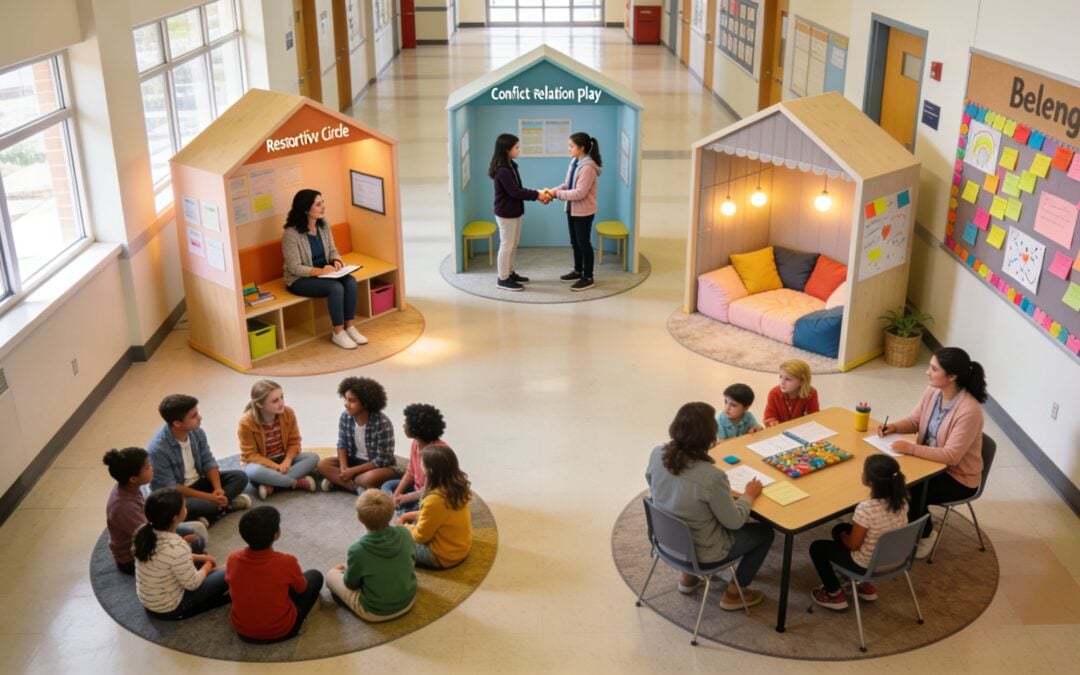
By 8:10 a.m., a principal may already be juggling three safety concerns at once. A student is crying in the hallway after a peer conflict, a teacher needs help with a child who arrived too upset to join class, and the front office is sorting out a parent concern while trying to keep the entry process calm and orderly. That is school safety in real life. It is physical readiness, emotional regulation, and adult judgment happening at the same time.
Schools need locked doors, visitor procedures, and clear emergency plans. They also need students who can name a problem early, adults who can spot escalation before it turns into a crisis, and families who trust the school to respond with care and consistency. Safety systems tend to hold up better when students feel connected enough to use them.
Recent reporting on school safety trends found that staff alerts overwhelmingly involve everyday situations rather than the worst-case scenarios that tend to dominate public conversation. That matches what many educators see every day. The bulk of school safety work is prevention, response, and recovery during ordinary school hours.
SEL fits directly into that work. A student who can regulate frustration is less likely to escalate a conflict. A class that has practiced empathy and repair is easier to settle after a hard moment. A teacher using trauma-informed teaching strategies can protect emotional safety while still holding clear expectations.
The ten activities below treat safety and belonging as part of the same system. They combine preparedness with relationship skills, communication routines, and emotional support so schools can build a culture that feels safe, not just one that looks prepared.
1. Active Shooter/Lockdown Drills with Trauma-Informed Debrief
The announcement comes over the intercom at 10:17. A first grader starts to cry. A middle school student goes silent and stares at the floor. The teacher locks the door, checks the corner by the bookshelf, and tries to keep her own voice steady. That moment shows what lockdown drills really measure. Procedure matters, and so does emotional regulation.
Schools do need to practice for low-frequency, high-impact emergencies. They also need to make sure the practice itself does not become a source of harm. Active shooter incidents remain rare, but the fear attached to them shapes how students, staff, and families experience any lockdown drill. A trauma-informed debrief helps schools teach safety skills while protecting trust, connection, and a sense of control.
What effective drills look like
The strongest drills are brief, calm, and clearly explained ahead of time. Staff use the same language across classrooms. Students know the routine. Adults know exactly what they are expected to do, whether that means locking doors, moving students out of sight, taking attendance, or waiting for the next direction. Younger children need simple, concrete wording. Older students can handle more context, but they still do not need graphic details.
Schools tend to get better results when they teach one message consistently. We practice so everyone knows what to do. We also check how people are feeling after the practice. That second step is where SEL belongs in a safety plan, not as an extra, but as part of the protocol.
Practical rule: End every lockdown drill with a short, structured debrief and a clear path to adult support.
That debrief can be simple. A teacher might say, “We practiced a safety routine today. If your body still feels tense or worried, you can talk with me, the counselor, or another trusted adult.” Students can take a few slow breaths, notice how their body feels, and name one adult they would go to for help. Those are safety skills too.
What often goes wrong
Problems usually start before the drill begins. Adults skip preparation, use dramatic scripts, or treat realism as the main goal. That choice has a cost. Students may leave frightened instead of prepared, and staff may miss signs that a child has been pushed past their coping capacity.
Families should hear about the drill in advance. Teachers should know which students may need a quiet check-in afterward. Office staff and counselors should have a follow-up plan for students with trauma histories, recent losses, anxiety, or behavior changes. For many schools, that is the difference between a drill that builds confidence and one that creates lingering distress.
A workable staff plan includes:
- Notify families early: Use plain language so caregivers can prepare children without raising alarm.
- Watch for signs of distress: Look for shutdown, tears, irritability, laughter that covers fear, or refusal to return to classwork.
- Use same-day support strategies: Point teachers to trauma-informed teaching strategies they can use right after the drill.
- Address the social piece: If students are replaying rumors, dares, or panic online, schools should teach how to handle negative peer pressure before and after safety exercises.
- Include digital safety in family communication: Caregivers often need help deciding how closely to monitor children's online activity after a drill, especially when group chats start spreading fear.
One practical K-5 approach is to close with a grounding routine, a quick feelings check, and a return-to-learning task that feels predictable. Older students may do better with a brief advisory discussion about stress responses, rumor control, and where to get support. The trade-off is time. Debriefing takes minutes away from instruction. Those minutes are usually well spent, because a class that feels settled returns to learning faster and trusts the adults running the plan.
2. Bully Prevention and Peer Support Programs

A student gets through math, lunch, and dismissal without a single office referral, yet goes home feeling unsafe. That is often what bullying looks like at school. The problem shows up in exclusion, group chat pile-ons, whispered jokes, and the student who starts asking to stay inside during recess.
Bullying rates remain high among students ages 12 to 18, and K-8 staff usually see the pattern long before a formal report is filed. Safety planning should treat relational aggression as both a behavior issue and an SEL issue. If students cannot read social cues, manage status pressure, or speak up for a peer, the school will keep reacting after harm has already spread.
Clear consequences still matter. They just do not carry the whole load.
Schools make more progress when they teach the skills that prevent cruelty from gaining social traction. That means direct instruction in empathy, bystander action, emotional regulation, and repair after harm. It also means giving students safe ways to ask for help and training adults to respond consistently across classrooms, hallways, buses, and recess.
A practical model often includes:
- a small, trained peer support group
- simple reporting options for students and families
- adult follow-through within a predictable time frame
- classroom practice with scripts for interrupting teasing, exclusion, and rumor-spreading
- restorative follow-up when students are ready to take responsibility and repair harm
One elementary example is a recess support crew. These students are not junior disciplinarians. They learn how to notice isolation, invite someone into play, use brief inclusive language, and get an adult quickly when a situation is turning mean. For students who struggle with impulsive reactions in these moments, schools can pair peer support with self-regulation strategies for students so intervention is not left to willpower alone.
Family involvement matters because bullying rarely stays on campus. It moves through texts, gaming platforms, shared photos, and private group chats. Schools should give caregivers realistic guidance on how to monitor children's online activity and how to respond when a child is excluded, pressured to forward a screenshot, or pulled into a rumor cycle.
For upper elementary and middle grades, lessons about negative peer pressure fit naturally here. Students need language they can use, such as, “I'm not adding to that,” “Leave me out of this chat,” or “We need an adult before this gets worse.”
The trade-off is staffing and time. Peer programs need training, supervision, and regular refreshers or they become symbolic. In practice, schools get the best results when bully prevention is revisited all year and built into advisory, class meetings, recess routines, and family communication, because a safer school culture depends on social skills students can use under pressure, not posters they stop seeing by October.
3. Mindfulness and Self-Regulation Workshops

Many safety incidents begin as regulation failures. A child gets overwhelmed, a conflict spikes, a hallway interaction turns physical, or a student can't recover after frustration. That's why mindfulness belongs on the safety plan, not off to the side as an enrichment extra.
This doesn't require a silent classroom and perfect posture. In schools, mindfulness is usually much simpler. It's a short breathing routine before transitions, a grounding exercise after recess, or a repeatable calming sequence before students try to solve a problem.
Keep it practical and brief
The mistake many schools make is overcomplicating it. Students don't need long lectures about mindfulness. They need routines they can remember when upset.
Effective workshop examples include:
- Breathing choices: Balloon breath, square breathing, or hand tracing for younger students.
- Sensory grounding: Name five things you see, four you feel, three you hear.
- Reset corners: A calm space with visuals, a timer, and one or two regulation tools.
A teacher might pause after lunch and say, “Before we start science, feet on the floor, one hand on your belly, three slow breaths.” In a counseling group, students might practice identifying body signals that show anger is rising before words come out sharp.
Tie the skill to real school moments
The strongest school safety activities connect skills directly to stress points. Use regulation routines before assemblies, after fire drills, during testing weeks, and after recess conflicts. Staff should practice them too. Students notice immediately when adults ask for calm without modeling it.
For classrooms that need concrete supports, these self-regulation strategies for students can anchor daily routines.
One middle school team I'd recommend modeling after in spirit uses the same regulation script in every room: pause, breathe, name the feeling, choose the next step. That consistency matters more than the specific program name. Safety improves when children hear the same calming language from every adult on campus.
4. Social-Emotional Learning Assemblies and School-Wide Events

Assemblies can be forgettable, or they can reset the tone of a campus. The difference is whether the event gives students shared language they'll hear again in classrooms, hallways, lunch spaces, and on the playground.
A strong assembly doesn't try to solve every safety issue in one sitting. It introduces a few core behaviors clearly: how to include someone, how to interrupt meanness, how to ask for help, how to calm down before a conflict spreads. It also signals that these aren't counselor-only topics. They belong to the whole school.
Use assemblies to launch a shared language
The biggest advantage of a school-wide event is alignment. Everyone hears the same vocabulary at the same time. That matters because inconsistency weakens follow-through.
Good assembly themes include:
- belonging and inclusion
- conflict repair
- safe bystander behavior
- empathy in high-stress moments
- speaking up when a peer needs help
The follow-up matters as much as the event. Teachers should get discussion prompts, short reflection activities, and visible phrases to reuse during the week.
Students don't remember every assembly message. They do remember the one phrase adults keep using afterward.
A K-8 example is an assembly on “pause, breathe, speak respectfully,” followed by classroom role-plays in which students practice the phrase during line disputes, lunch conflicts, and partner work frustration.
Don't confuse energy with impact
A loud, entertaining assembly can still fail if it stands alone. Schools get better results when they use these events as the kickoff to a larger SEL and safety effort. Family communication helps too. Send home the core phrases students heard so caregivers can reinforce them.
If your team wants language for that bridge, the benefits of social-emotional learning provide a practical frame for why these events belong inside a safety strategy, not outside it.
5. Crisis Communication and Family Notification Drills
Families can handle hard news better than confusing silence. When a school communicates quickly, clearly, and consistently, trust holds up under stress. When communication is slow or fragmented, even a manageable situation can feel chaotic.
That's why communication drills belong on the list of serious school safety activities. Schools should practice not only what they'll do in a crisis, but what they'll say, who will say it, and how families will receive updates.
Test the message chain before you need it
A family notification drill should answer basic questions fast. Which system sends the first alert? Who approves the wording? Who updates the website? Who handles phones at the front office? Who communicates with district leadership or first responders?
Many schools use platforms such as Everbridge or Blackboard Connect, but the specific tool matters less than the clarity of the protocol. Every message should identify the communication as a drill, use plain language, and tell families what action is or isn't needed.
Try a scenario like this: a medical emergency near dismissal causes a temporary hold. During the drill, the school sends a text, email, and app alert marked “DRILL,” then checks whether contact records are current and whether staff know how to answer common parent questions.
Debrief with families, not just staff
Schools often stop after testing the system. Don't. Ask families what they received, what felt clear, and what caused confusion. A parent who gets the message but can't tell whether to come to campus still doesn't have the information they need.
A simple drill review should cover:
- Channel coverage: Which families received text, email, phone, or app notices.
- Message clarity: Whether the wording answered the first three parent questions.
- Backup procedures: What happens if the primary system is delayed or unavailable.
This kind of practice also supports multilingual communities. If your school communicates with families in more than one language, message templates need to be translated ahead of time, not in the middle of an emergency.
6. Threat Assessment and Violence Prevention Teams
A student turns in a writing assignment that includes violent imagery. Another student reports a troubling social media post. By lunch, rumors are spreading, teachers are worried, and the front office is fielding calls. In that moment, schools need a clear process that slows panic, gathers facts, and gets the right adults to the table.
That is the job of a threat assessment and violence prevention team.
The strongest teams are multidisciplinary and intervention-focused. An administrator may lead the process, but the best decisions usually come from a group that includes a counselor or school psychologist, a nurse when health factors matter, and staff who know the student's daily behavior. Some schools also consult school resource staff or community providers when the situation calls for it.
This work is about safety, and it is also about SEL. A student who is escalating often shows warning signs through relationships, emotional regulation, communication, or repeated conflict long before a crisis point. Teams that look only for punishment miss the chance to address the underlying need. Teams that look only for distress can miss real risk. Good practice holds both.
Build a process staff can trust
A threat assessment team should never run on hunches or hallway impressions. Staff need to know what to report, how quickly to report it, and what details help. “He was acting weird” is not enough. Specific observations are useful. Exact statements, changes in behavior, named targets, access concerns, recent stressors, and peer reports give the team something concrete to assess.
Documentation matters. So does role clarity.
One person gathers initial facts. One contacts caregivers. One manages follow-up supports. One tracks whether the safety plan is happening in class, on the bus, and during transitions. Without that coordination, schools tend to overreact in one case and underreact in the next.
Use intervention early
Some cases require immediate protective action. Others call for fast support before behavior hardens into grievance or retaliation.
A practical example: a middle school student posts a message that classmates read as threatening. The team reviews the exact post, who saw it, whether a target was named, what happened earlier that week, and whether the student has shown signs of isolation, dysregulation, or conflict with peers. The response might include parent contact, a same-day mental health check-in, increased supervision, a reentry meeting, or an emergency referral. The facts drive the plan.
Schools tend to get better results when the team asks two questions at the same time: “What is the current safety risk?” and “What SEL skill or support is missing here?” That shift keeps the process from becoming purely reactive. It also helps staff choose supports that teach replacement skills, not just impose restrictions.
Concern should trigger a process, not panic.
Schools should also train all staff to report concerns early, especially quieter indicators such as fixation, withdrawal, hopeless language, sudden social conflict, or repeated comments about revenge. Those signs do not mean violence is inevitable. They do mean a student may need adult attention now, not after a major incident.
For schools that want a clearer prevention framework across campus events and off-site activities, this guide on how AnySchool simplifies excursion safety is a useful companion to team-based planning.
7. Classroom-Based Conflict Resolution and Restorative Practices
Two students walk into class angry from recess. One is still replaying the insult. The other is already recruiting friends to take sides. If the only school response is “stop arguing,” that conflict usually resurfaces in the hallway, on the bus, or online after school.
Classroom-based conflict resolution gives students a safer path early. It treats safety and SEL as part of the same job. Students learn how to name harm, manage strong feelings, listen with accuracy, and repair relationships before a minor conflict turns into intimidation, exclusion, or a fight.
Teach repair as a routine
Restorative practice works best in ordinary moments, not only after a major incident. A short morning circle, a partner reset after group work, or a five-minute reflection after a disagreement gives students practice with the exact skills they need under stress.
The goal is not perfect harmony. The goal is predictability.
Students do better when they know the script for conflict before emotions spike. Useful prompts include:
- What happened from your point of view?
- Who was affected?
- What were you feeling at the time?
- What do you need now to move forward safely?
- What will repair look like?
In elementary classrooms, this may look like a brief teacher-led conversation with clear sentence stems and a concrete next step for tomorrow. In middle school, it often means slowing down a social conflict, separating the audience from the issue, and helping students distinguish intent from impact. That SEL piece matters. Many students are not refusing to repair. They do not yet have the language or regulation skills to do it well.
Keep accountability clear
Restorative practice needs structure. Students still need firm boundaries, adult leadership, and consequences when harm is repeated, targeted, or serious. A restorative conversation is not a free pass, and it should never replace a safety response that is already warranted.
I have found that teachers get better results when they decide one thing before the conversation starts. What must be addressed right now: emotional regulation, relationship repair, or immediate safety? That keeps the meeting focused and prevents a vague discussion that leaves everyone frustrated.
A practical example: after a group chat argument spills into first period, the teacher does not ask students to “work it out” in front of peers. The students cool down first. Then the teacher or counselor facilitates a brief process that names the harm, sets limits on future contact if needed, and creates a specific repair plan. That might include an apology, changed seating, adult check-ins, or a temporary pause on collaborative work.
Many safety problems play out in shared spaces where adults have less control and students rely more on habits. For that reason, schools should pair classroom repair routines with clear supervision plans for recess, transitions, dismissal, and extracurriculars. Schools also need practical systems for movement beyond the classroom, including trip and activity planning. For off-campus supervision, it can help to see how AnySchool simplifies excursion safety.
8. Mental Health First Aid and Crisis Intervention Training for Staff
A student in distress usually encounters a teacher, aide, bus driver, office staff member, or recess supervisor before they ever reach a counselor. That's why staff training matters so much. Adults need more than goodwill. They need a response script.
Mental Health First Aid and crisis intervention training give staff a way to notice warning signs, stay calm, and connect a student to the next level of support. For K-8 schools, the practical value is immediate. The adult in front of the student stops making the moment worse.
Here's one example of the kind of staff learning schools often use: