Soul Shoppe's work is made possible by donors and partners who care deeply about the young people in their communities! We can't do this work without you. Support our work in classrooms and on playgrounds across the nation by donating here.
A teen slams their bedroom door after a frustrating homework assignment. A student mutters under their breath after getting a low grade. These moments are common, but they still put adults in a tough spot. You want to help without lecturing, and you need something more concrete than “calm down.”
Anger management worksheets for teens can be useful in these situations. A good worksheet provides structure during a difficult moment. It helps a teen identify what happened, notice physical cues, pinpoint the actual trigger, and choose a response that avoids escalating the situation. The worksheet is not the intervention on its own. The conversation surrounding it matters just as much.
These tools also fit well inside a wider SEL approach. Structured supports for teen anger grew out of the cognitive behavioral therapy wave in the late 1980s and early 1990s, when tools like emotion thermometers and trigger sheets became standard for adolescent emotional regulation, according to Mental Health Center Kids’ overview of anger worksheets for teenagers. If you’re supporting students with overlapping stress and worry, this free anxiety education hub is also worth keeping nearby.
Below are 10 options I’d consider in a school, counseling office, or home routine. For each one, I’m not just listing features. I’m explaining when to use it, what to say, and what usually works better in practice.
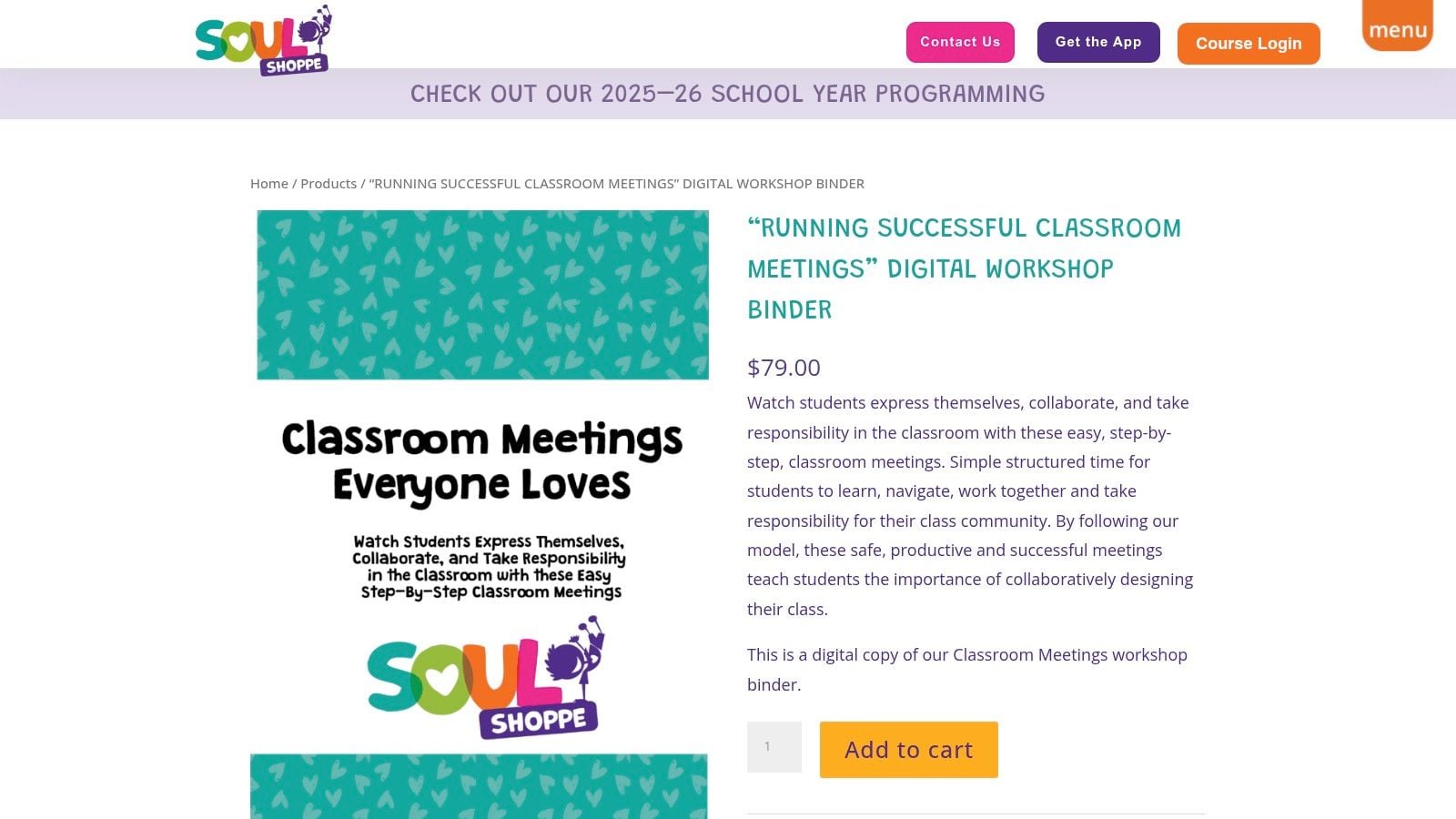
1. Running Successful Classroom Meetings Digital Workshop Binder
Soul Shoppe’s Running Successful Classroom Meetings Digital Workshop Binder isn’t a narrow anger worksheet pack. That’s exactly why it earns the featured spot. Anger management worksheets for teens work best when they live inside a predictable classroom routine, not as a one-time handout after a blowup.
This binder gives educators a structure for that routine. You get meeting agendas, facilitator notes, sample scripts, norm-setting activities, restorative prompts, short community-building exercises, and templates for tracking progress and family communication. Because it’s digital, teachers can adapt it for grade level, delivery format, and classroom tone instead of forcing one script onto every group.
Why it works in real settings
A lot of anger support fails because adults wait for an incident. Then they hand a teen a reflection sheet while everyone is still activated. This binder supports the opposite approach. It helps schools build shared language before conflict peaks.
Soul Shoppe describes its work as grounded in more than 20 years of research-based SEL practice. That whole-school consistency matters. In the verified data, Soul Shoppe’s experiential programs are described as aligning with long-running evidence-based SEL approaches that foster empathy and safety in schools through self-regulation tools akin to these worksheets, via Mission Prep Healthcare’s discussion of teen anger techniques and worksheets.
Practical rule: Don’t introduce anger worksheets only after a student has lost control. Introduce the language during calm moments, then reuse it during hard ones.
How to use it with teens
In advisory or homeroom, start with a five-minute emotional check-in. Then use one prompt connected to conflict, frustration, or repair. For example:
Teacher opening: “Think of a moment this week when your reaction got bigger than you wanted. You don’t need to share details yet. Just notice what your body did first.”
Follow-up question: “What would have helped at the level-three stage, before it became a level-eight problem?”
Repair step: “If someone was affected by your reaction, what’s one sentence you could say that repairs instead of defends?”
That sequence works because it moves from awareness to strategy to accountability.
Trade-offs to know
The upside is structure. The possible downside is that some teachers will want support with facilitation. A binder won’t replace the judgment needed to handle a tense group discussion. Also, a fully digital format can be awkward in settings with limited printing or devices.
Still, for schools that want anger management worksheets for teens to become part of culture instead of an isolated intervention, this is the strongest implementation tool in the list.
2. Therapist Aid
Therapist Aid is one of the easiest places to find clinician-style anger management worksheets for teens without building your own materials from scratch. Its library includes printables and fillable PDFs on triggers, warning signs, thinking patterns, and coping skills.
What stands out is consistency. The visual layout is usually clean, the language is direct, and the tools are easy to use in school counseling, short-term check-ins, or home practice. If you need a worksheet in ten minutes, this is a practical place to start.
Best fit and common snag
Therapist Aid works well with teens who can reflect in writing. It’s less effective for students who shut down with text-heavy pages. In those cases, I’d use one section only and turn it into a spoken conversation.
A simple introduction might sound like this:
“You don’t have to fill out the whole page. Circle the part that feels most true today, and we’ll talk from there.”
That lowers resistance fast.
Use it for counseling check-ins: Pick one worksheet on triggers or warning signs and complete it side by side.
Use it for home follow-through: Ask a parent to revisit one answer, not the whole packet.
Avoid overload: Don’t assign three worksheets after one incident. One page is usually enough.
Some resources are free, while some advanced formats require a membership. That’s a fair trade if you want reliable materials, but not every family or school needs the paid tier.
3. Mylemarks
Mylemarks feels like it was built by someone who knows what happens in counseling offices and small groups. The site offers counseling-style printables, journals, anger meters, trigger logs, and de-escalation tools that are easy to slot into a school day.
I especially like this kind of resource for students who need repetition. A one-page anger meter can become a regular routine much more easily than a long reflection packet. That makes it useful for Tier 2 support, lunch groups, and repeat office visits.
How to introduce it without making it feel punitive
If a teen hears, “Fill this out because you were disrespectful,” the worksheet becomes a consequence. If they hear, “Let’s figure out what your anger was trying to tell you,” the worksheet becomes a tool.
Try a short script like this:
Counselor prompt: “Point to where you were on the anger scale before you said anything.”
Next question: “What moved you up one level?”
Skill bridge: “What can you do at that exact level next time, before you hit the top?”
That’s concrete and easier for teens than broad processing questions.
The trade-off is cost structure. Because many items are sold individually, building a full collection can add up. Some resources also live on marketplace platforms, so the browsing experience isn’t always as efficient as a single library.
4. Between Sessions Resources
Between Sessions Resources is better for practitioners who want to assemble customized packets than for parents who just want one free printable. Its strength is workflow. You can edit PDFs, compile custom workbooks, and organize materials in a way that supports ongoing intervention.
That matters when a teen’s anger isn’t a one-sheet problem. Some students need a sequence: trigger identification first, coping scripts next, then parent communication, then repair planning. This platform supports that progression well.
Where it shines
A school counselor running a six-week group could build different packets for different students. One teen might need body-warning-sign work. Another might need assertive communication practice. Another might need family-facing handouts.
Use workbook-building tools when one worksheet keeps producing the same stuck answer. Change the task, not just the setting.
Here’s a practical way to use it:
Week one: Trigger log.
Week two: Body signals worksheet.
Week three: Coping script rehearsal.
Week four: Reflection on one real conflict.
Week five: Repair statement planning.
Week six: Personal anger plan for school and home.
The downside is that the platform is clinician-oriented. Teachers may find the navigation less intuitive, and the best value usually comes with a membership rather than one-off free access.
5. PositivePsychology.com
PositivePsychology.com is a strong option when you want psychoeducation and worksheets together. Some educators need that extra explanation to get buy-in from staff or families. A worksheet lands better when the adult understands the reasoning behind it.
This site is useful for anger management worksheets for teens because it doesn’t isolate anger from the rest of emotional regulation. You can pair anger reflection with mindfulness, cognitive restructuring, or resilience activities, which often leads to better follow-through.
How to use it in practice
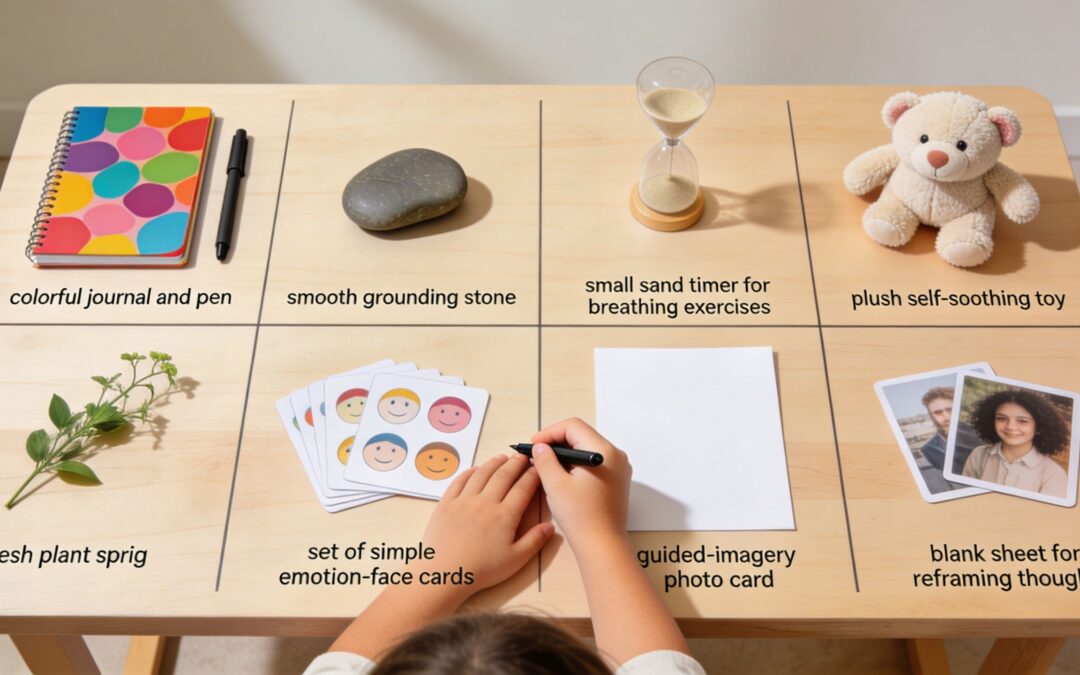
A good approach is to teach one idea, then hand over one page. For example, explain how “hot thoughts” can intensify an already stressful situation. Then ask the teen to write one thought they had in a recent conflict and one alternate interpretation.
Use prompts like:
“What was the fastest thought in your head?”
“What else could be true?”
“Which thought would help you stay in control without pretending you’re fine?”
That last question usually gets better answers than “What’s a positive thought?” Teens can spot fake positivity immediately.
A practical drawback is that some worksheets are tucked inside longer articles, so grabbing the exact file can take more clicking than it should. Premium packs also require payment. Still, it’s a good fit for adults who want a bigger SEL library, not just one anger sheet.
6. KidsHealth in the Classroom
KidsHealth in the Classroom is one of the best free school-friendly options for grades 6 to 8 and up. The materials are structured as lessons with reproducible worksheets, so they work well in health, advisory, and SEL blocks.
The tone is plain, which is a strength. Some commercial materials look polished but talk over students. KidsHealth tends to use straightforward language that middle schoolers can follow.
A good choice for whole-class use
This is the tool I’d use if several students are struggling with conflict and irritability, but I don’t want to single anyone out. You can teach anger as part of a broader unit on emotions or conflict resolution, then let students practice privately.
A teacher could say:
“Everybody gets angry. We’re not deciding whether anger is good or bad today. We’re learning what happens right before our choices get worse.”
That framing reduces shame and defensiveness.
Best for advisory: Short lesson, guided worksheet, then pair-share if the class culture can handle it.
Best for families: Send one reproducible page home with a note asking caregivers to discuss coping choices, not punishments.
Watch for this limitation: anger materials may be nested inside broader emotion units, so you may need to pull out the pages that fit your goal.
The design is more utilitarian than paid curricula, but for many schools, free and usable beats flashy and complicated.
7. Centervention
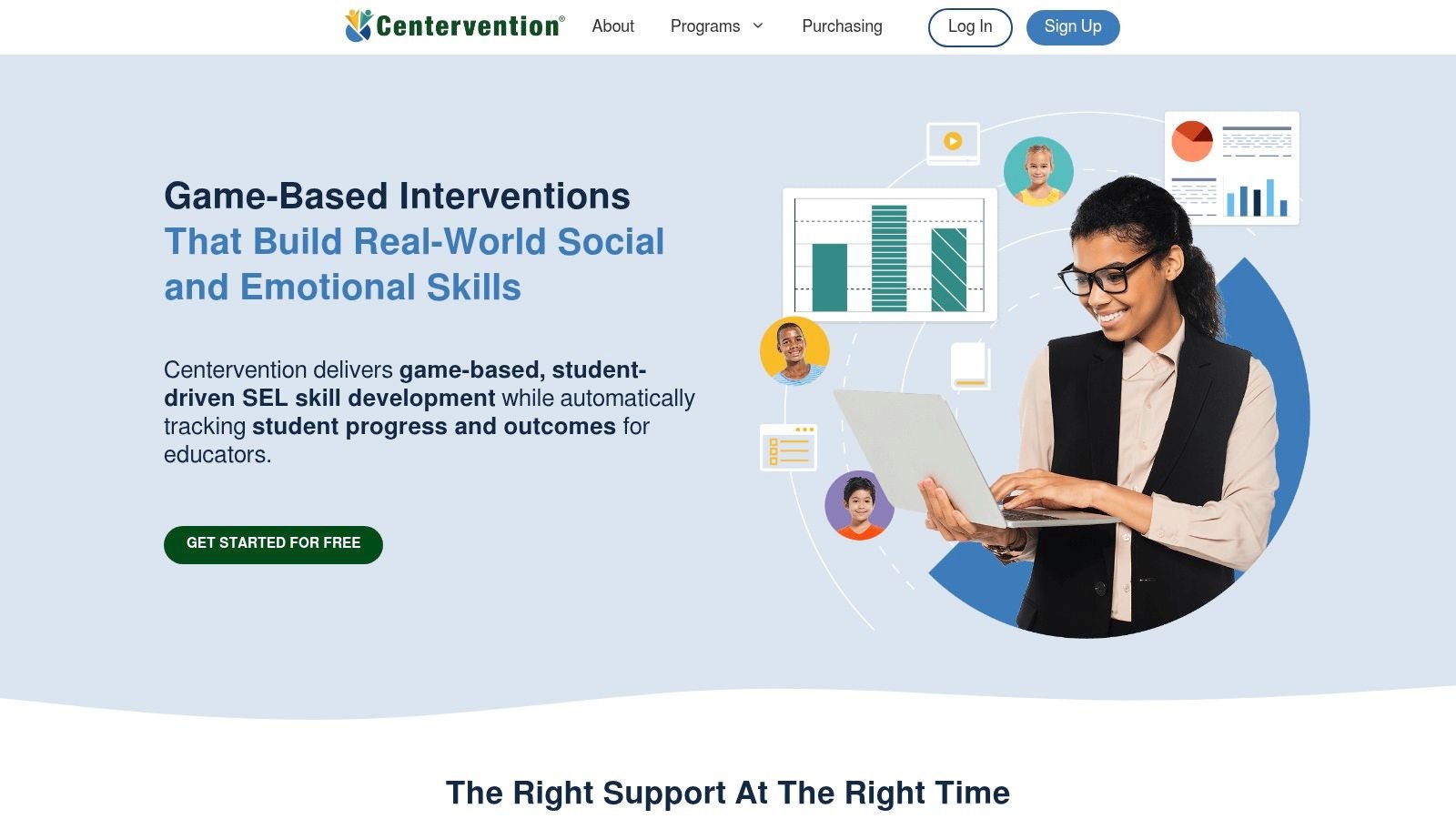
Centervention is especially helpful when anger is clearly masking another feeling. Its shorter, targeted printables, including tools like an anger iceberg, help students look underneath the behavior without making the exercise feel clinical.
That’s valuable because many teens say “mad” when the fuller answer is embarrassed, excluded, overwhelmed, or hurt. If you skip that step, you can teach coping skills all day and still miss the underlying problem.
How to use the anger iceberg well
Don’t start by asking, “What deeper emotion were you feeling?” That can feel too abstract. Start with the event, then move down.
Try this sequence:
“What happened?”
“What did people see on the outside?”
“What was happening underneath that nobody could see?”
That’s often enough to get a useful answer.
The platform is easy to plug into Tier 1 and Tier 2 supports, especially with upper elementary and middle school students. Older teens may find some materials a little young unless you frame them carefully. Some downloads also require an educator account, which is a small barrier but not a major one.
8. TherapyByPro
TherapyByPro is a solid digital-first option for schools or clinicians who want editable, fillable anger management worksheets for teens. The catalog includes concrete tools like anger thermometers, trigger sheets, coping plans, and broader emotional regulation templates.
The biggest advantage is format. If a teen already does homework, counseling follow-up, or check-ins on a device, fillable PDFs remove a lot of friction. You don’t have to print, collect, scan, or re-enter anything.
When this format helps most
This works especially well with teens who won’t carry a paper worksheet back and forth. A counselor can email or assign one sheet, then review it in the next meeting. Parents can also use it as a low-pressure check-in at home.
Try wording like this:
“Don’t write the perfect answer. Just mark the top two triggers that keep showing up, and we’ll build around those.”
That keeps the task short and doable.
The limitations are straightforward. It’s mostly a paid resource, and the site organization feels more clinician-centered than parent-centered. But if you want digital homework that teens can complete, this is one of the more practical choices on the list.
9. Teachers Pay Teachers
Teachers Pay Teachers is less a curriculum and more a marketplace. That can be a strength if you need something specific today. It can also be a weakness if you don’t vet what you’re buying.
You’ll find anger meters, reflection sheets, counseling group packs, Google Slides activities, and printable stations. Some are excellent. Some look nice but don’t do much beyond asking a teen to say they’ll “make better choices.”
How to shop without wasting time
Preview pages matter. Reviews matter. I’d also check whether the language sounds respectful to adolescents. If the worksheet reads like it was written for much younger kids, high schoolers will reject it instantly.
Use this simple filter when reviewing a listing:
Look for concrete prompts: “What happened right before?” is better than “Describe your anger.”
Look for skill practice: A coping plan is stronger than a coloring page alone.
Look for transfer: The best resources ask what the teen will do next time, not only what went wrong last time.
Licensing is usually per teacher, and quality varies by seller. Still, for quick classroom-ready downloads, TPT remains useful if you approach it like a careful buyer rather than assuming every top listing is strong.
10. Whole Person Associates – The Teen Anger Workbook
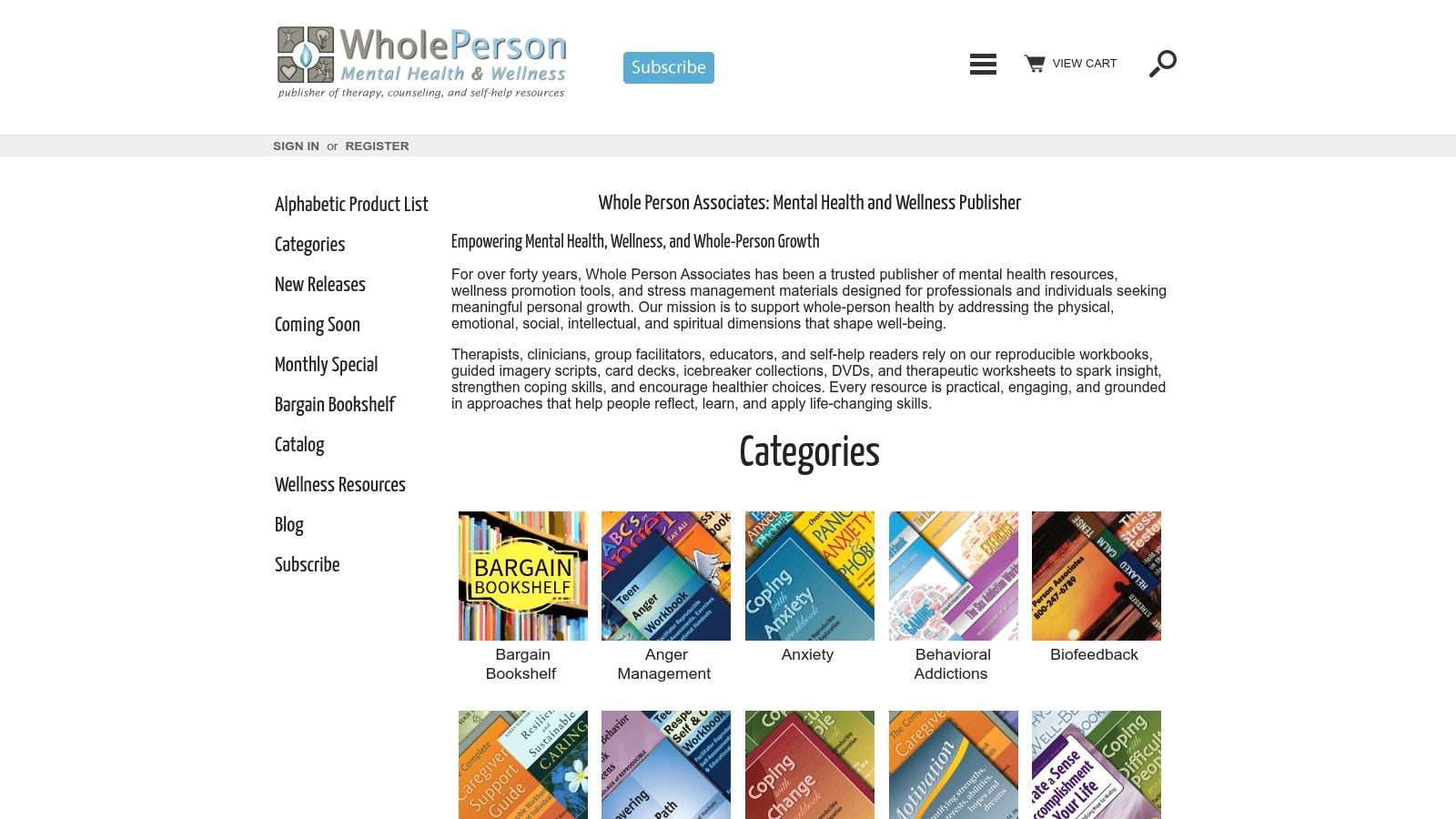
Whole Person Associates offers The Teen Anger Workbook, which is one of the better choices when you need a structured backbone for a multi-week counseling group. Instead of hunting for disconnected printables, you can pull from one reproducible, teen-focused workbook.
That kind of continuity matters. A teen who resists random worksheets may engage better when the material clearly builds from self-assessment to reflection to coping planning.
Best use in schools and homes
I’d use this with a small group, a repeated counseling series, or a family that wants a guided path rather than loose pages. The workbook format gives enough depth for recurring sessions while still letting you choose just the pages you need.
A counselor might open with:
“We’re not trying to prove you’re an angry person. We’re trying to understand your anger pattern so you can interrupt it earlier.”
That distinction often helps teens stay engaged.
The main drawback is time. Workbooks naturally include more than most school sessions can handle, so adults need to select pages instead of assigning whole sections. It’s also a paid resource rather than a free printable. But if you want a facilitator-ready sequence instead of a patchwork of handouts, it’s a strong option.
Top 10 Teen Anger-Management Worksheet Comparison
Resource
Core offering
Best for / Target audience
Key strengths
Limitations
Price / access
Running Successful Classroom Meetings Digital Workshop Binder (Soul Shoppe)
Digital workshop binder with agendas, scripts, norms, templates
Teachers & school leaders running classroom or schoolwide meetings
Quality varies by seller, licensing often per-teacher
Mostly low-cost paid items, some free
Whole Person Associates – The Teen Anger Workbook
Reproducible facilitator-ready teen anger workbook
Facilitators running multi-week groups, school counselors
Purpose-built teen workbook, structured multi-session design
Paid resource, book format may need adaptation for short sessions
Paid workbook / e-book via retailers
From Worksheets to Lasting Well-Being
Anger management worksheets for teens can do a lot of good, but only when adults use them with intention. A worksheet is not a punishment, and it isn’t proof that a teen has “worked on themselves” just because they filled in the blanks. It’s a prompt. It opens the door to self-awareness, skill practice, and repair.
The most effective use is usually simple. Pick one focused worksheet. Introduce it during a calm moment. Keep the conversation concrete. Revisit the same language later when a real conflict happens. That rhythm helps teens connect reflection to action.
I also encourage adults to watch for the moment when a teen is too activated to write. In that situation, a worksheet can wait. Co-regulate first. Lower the temperature. Then come back to the page when the student can think instead of just react. A beautifully designed worksheet used at the wrong time won’t help much.
There’s also a bigger lesson underneath all of this. Anger is often the visible emotion, not the only emotion. Teens may show anger when they feel embarrassed, powerless, left out, overloaded, or misunderstood. The right worksheet helps uncover that hidden layer. Once that happens, the next step becomes clearer. Maybe the teen needs a coping plan. Maybe they need a script for speaking up. Maybe they need a classroom routine that gives them more predictability and voice.
That’s why classroom systems matter as much as individual handouts. Schools and families get better results when they create shared language around emotional regulation, conflict, and repair. Teens do better when adults respond with consistency instead of surprise, and with curiosity instead of instant judgment.
Soul Shoppe’s work sits right in that space. The organization focuses on connection, safety, empathy, and practical self-regulation tools that help students and adults build healthier school communities. For educators and caregivers, that’s the long game. Not stopping every angry moment before it happens. Teaching young people what to do with big emotions when they arrive, how to recover after mistakes, and how to stay connected to others while they learn.
Used thoughtfully, these worksheets become more than paper or PDFs. They become part of a teen’s emotional vocabulary. And that’s a skill they’ll use far beyond one hard school day.
If you want support that goes beyond stand-alone worksheets, Soul Shoppe offers research-based SEL programs, workshops, and tools that help schools and families build shared language for self-regulation, empathy, communication, and conflict resolution. It’s a strong next step for teams that want practical routines, not just isolated resources.
More Than Words: Turning Self Love Mantras into Lifelong Skills
A child misses one math problem and whispers, “I’m so dumb.” Another gets left out at recess and decides it means nobody likes them. A middle schooler scrolls through photos, compares their life to everyone else’s, and grows quieter by the day. Most adults who care for kids have heard some version of this inner critic. It shows up in classrooms, on car rides home, at bedtime, and in the moments after a mistake.
Self love mantras can help, but only when we treat them as practices instead of posters. If a child says words they don’t believe, the phrase can feel fake. If an adult uses a mantra only after a meltdown, it becomes a rescue tool instead of a life skill. Kids need repetition, modeling, and language that matches their real experience.
That matters because self-affirmation isn’t just a trendy idea. A 2025 meta-analysis covering 17,748 participants across 129 independent studies found that self-affirmation interventions were linked with meaningful improvements in self-perception, general well-being, and social well-being, while also reducing psychological barriers like anxiety, according to this October 2025 review summary on positive affirmations. For educators and families, that’s a useful reminder that brief, low-cost practices can support emotional health when they’re taught well.
The key is teaching children how to use self love mantras in daily life. The eight mantras below work best when adults connect them to feelings, choices, relationships, and repair. That’s where they become part of SEL, not just positive talk.
1. I Am Enough
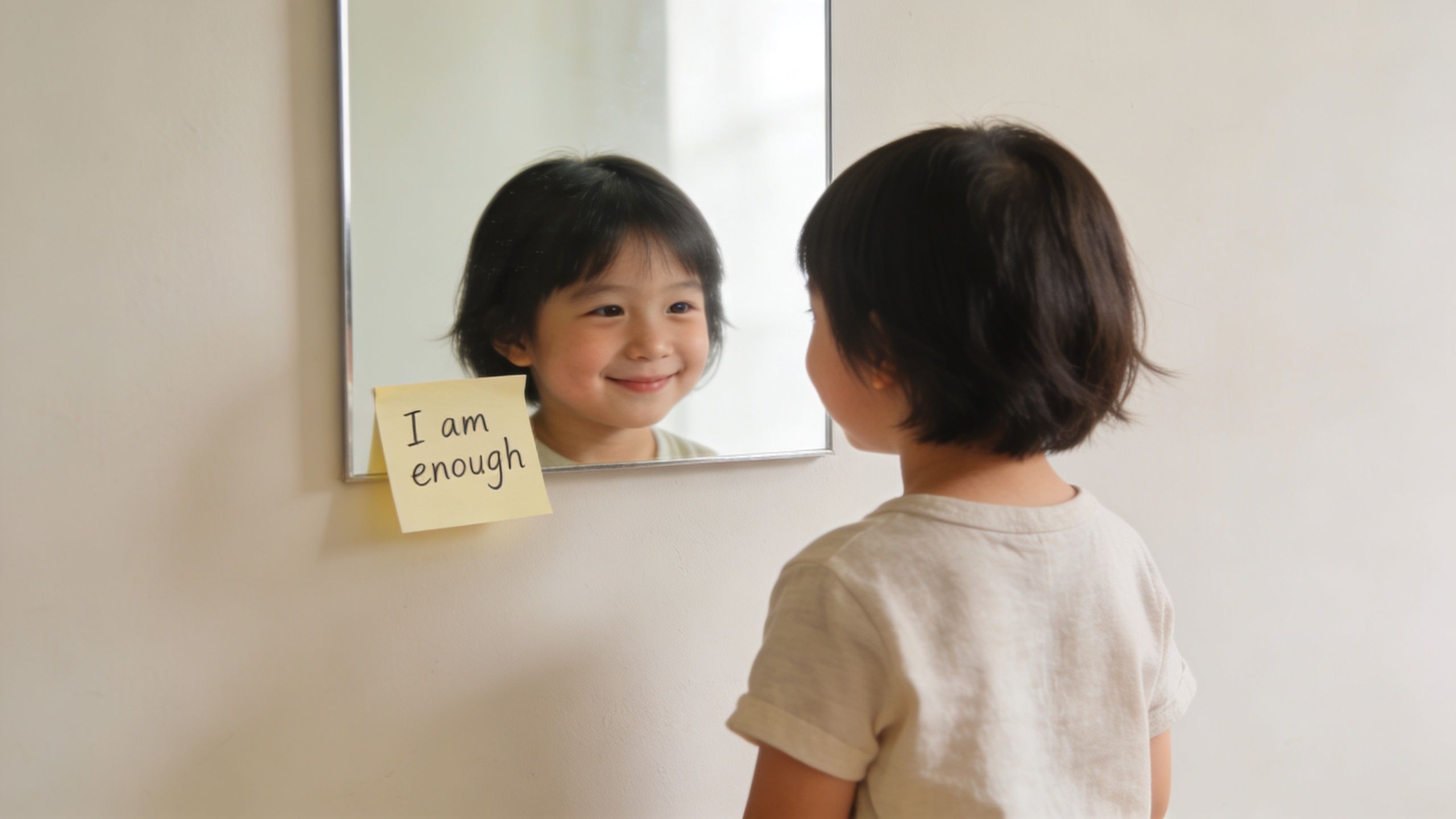
“I am enough” is often the first mantra kids need, especially the ones who think worth comes from grades, popularity, athletic skill, or always getting it right. This phrase pushes back on the belief that value must be earned. It tells a child, “You still belong, even when things are hard.”
For younger students, keep it concrete. “I am enough even when I spill paint.” “I am enough even when reading feels tricky today.” Older students can go deeper. “I am enough even if I’m not chosen first.” “I am enough even when I’m still figuring out who I am.”
How to teach it so kids believe it
Don’t ask students to chant this phrase with no context. Tie it to common school moments.
Morning meeting prompt: Ask, “What is one thing that makes you enough today, even before you achieve anything?”
After mistakes: Say, “You made an error. Your value didn’t change.”
At home: When a child says, “I’m bad at everything,” respond, “You’re disappointed. And you’re still enough.”
Practical rule: Pair the mantra with a real situation. Children trust specific language more than broad praise.
A teacher might say, “I didn’t explain that as clearly as I wanted. I’m still enough, and I can try again.” That kind of adult modeling matters. Kids learn self-acceptance when they hear adults practice it out loud.
This mantra also fits naturally with belonging work. A hallway poster can help, but daily language matters more. During partner work, class circles, or transitions, remind students that everyone enters the room with equal worth. If you want extra family-friendly language support, Kubrio's guide for parents offers confidence-building ideas that can complement this practice.
2. I Choose to Be Kind to Myself
Some children talk to themselves in ways they’d never use with a friend. They call themselves stupid, annoying, ugly, lazy, or behind. This mantra matters because it introduces agency. A child may not control every feeling, but they can learn to shift how they respond to themselves.
The phrase “I choose” is important. It turns self-kindness into an action, not a personality trait. Kids don’t have to wait until they naturally feel compassionate. They can practice it on purpose.
A simple classroom script
Try this after a student makes a mistake in front of others:
Teacher: “What did your inner voice just say?” Student: “That I messed everything up.” Teacher: “Would you say that to a friend?” Student: “No.” Teacher: “Try again with kindness.” Student: “I made a mistake, but I can keep going.”
That short exchange teaches more than the mantra alone.
Use the Friend Test: “Would you say this to a friend?”
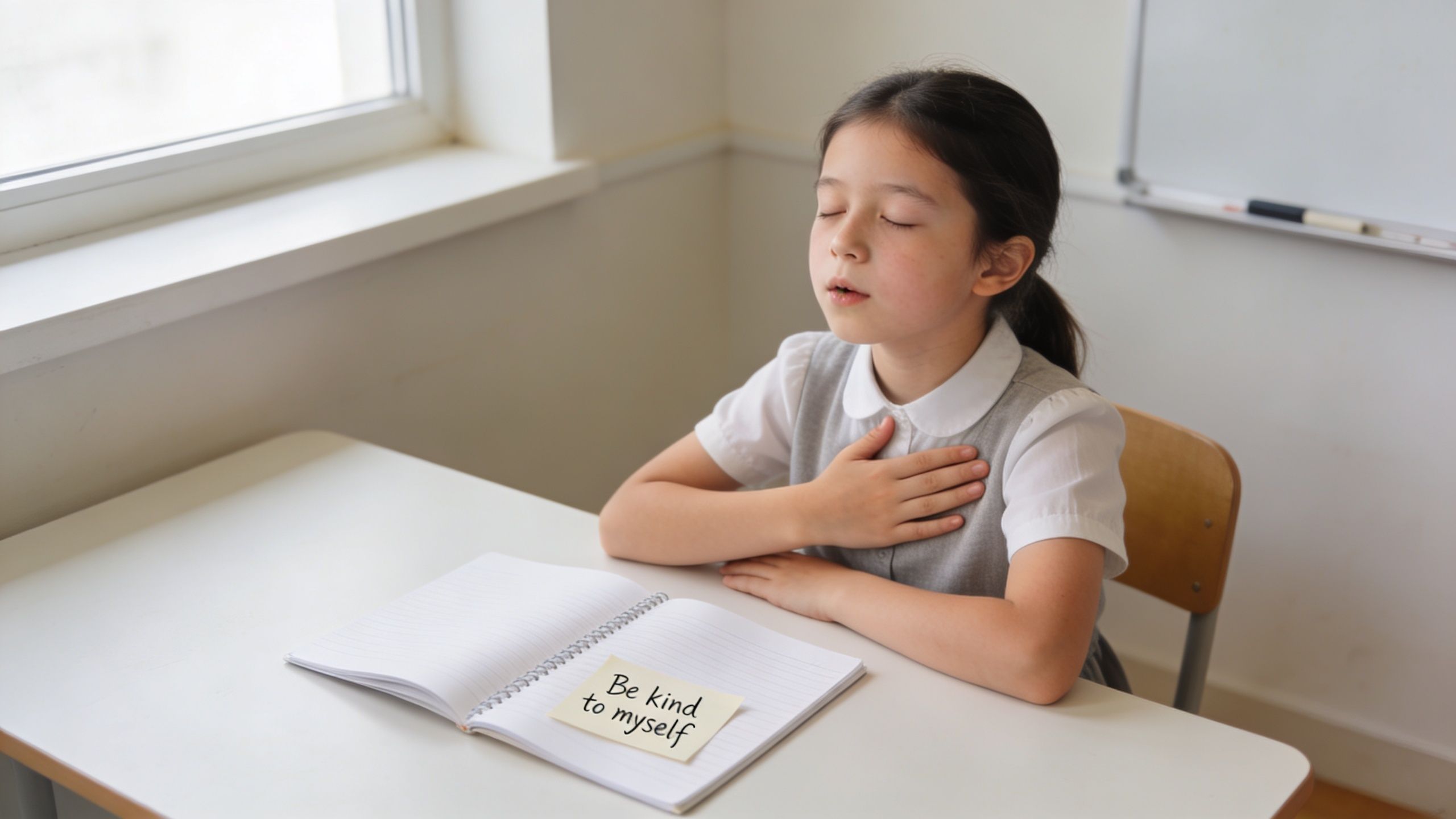
Add a body cue: Hand on heart, one slow breath, then the mantra.
Keep it brief: Long speeches rarely help in a dysregulated moment.
When children are upset, calm first and coach second.
At home, this often comes up after sports, homework, or social conflict. A parent can say, “It sounds like your inner voice is being rough. What would it sound like if you chose to be kind to yourself right now?” That question invites reflection without shaming the child for being hard on themselves.
Self love mantras work better when they sound believable. If “I love everything about myself” feels too far away, “I choose to be kind to myself” is often more honest and more usable. For adults who want language ideas rooted in compassionate self-talk, how to speak life over yourself offers prompts that can be adapted for older students and caregivers.
3. My Feelings Are Valid
Children often hear two unhelpful messages about feelings. One is “Don’t feel that.” The other is “Feel whatever you feel and do whatever comes next.” Neither teaches regulation. “My feelings are valid” gives kids a healthier middle path.
This mantra tells students that emotions are real and important, but emotions don’t get to run the whole room. A child can be angry and still not hit. They can feel jealous and still act respectfully. They can feel sad and still ask for help.
The sentence that should always follow
Teach this pair together:
All feelings are okay. Not all behaviors are okay.
That one line helps students separate emotion from action. It’s especially useful during conflict.
For example, a fourth grader says, “She didn’t pick me, and now I hate her.” Instead of correcting the feeling, an adult might say, “Your feelings are valid. It hurts to feel left out. Let’s find a safe way to say what you need.” That moves the child toward communication instead of suppression.
A counselor might use this mantra with a student who’s been told to “stop crying.” A teacher might use it when a student comes in upset after recess. A caregiver might use it after bedtime tears that seem too big for the situation. In each case, the message is the same. Your feelings make sense. You still need tools.
Practical SEL moves
Name the feeling first: frustrated, embarrassed, worried, disappointed, lonely
Connect feeling to need: space, comfort, repair, clarity, a break
Offer a safe action: breathe, draw, write, talk, ask for support
This mantra also supports psychological safety. Students are more likely to ask for help when they trust that adults won’t mock, minimize, or rush them. In a classroom community, that changes everything. Kids become more honest, more empathic, and more able to hear each other.
4. I Am Growing and Learning
Some students decide very early who they are. “I’m bad at math.” “I’m not a good reader.” “I’m the shy kid.” “I always mess up.” Once that story hardens, effort starts to drop. This mantra loosens the story.
“I am growing and learning” is one of the most useful self love mantras for school because it protects dignity while making room for change. It tells a child that struggle isn’t proof of failure. It’s part of development.
What this sounds like in real life
A kindergartener rebuilding a block tower can say, “I’m growing and learning how to make it steady.” A fifth grader revising an essay can say, “I’m learning how to organize my ideas.” A middle school student after an awkward peer interaction can say, “I’m growing in how I handle conflict.”
That language matters because it shifts identity from fixed to active.
Praise strategy: “You kept trying a new way.”
Praise persistence: “You stayed with it when it got hard.”
Praise reflection: “You noticed what wasn’t working and adjusted.”
When adults praise only talent, students often become more fragile. When adults praise process, students usually become more resilient.
A lesson snippet teachers can use
Write two statements on the board:
“I can’t do this.”
“I’m growing and learning.”
Ask students which statement helps the brain stay open to practice. Then invite them to rewrite common fixed thoughts.
“I’m bad at spelling” becomes “I’m learning spelling patterns.”
“I always ruin group work” becomes “I’m learning how to collaborate.”
“I’m not artistic” becomes “I’m growing my creative confidence.”
This mantra also works well in public repair. If an adult forgets directions or loses patience, they can say, “I’m growing and learning too.” That protects authority while modeling humility. Kids don’t need perfect adults. They need adults who can repair.
5. I Deserve Rest and Boundaries
Many children live in a constant state of “go.” School, homework, sports, activities, screens, social tension, and pressure to perform can wear them down. Adults often do the same to themselves. This mantra reminds kids that rest isn’t a reward for being productive enough. It’s part of being human.
Boundaries are a form of self-respect. Rest is a form of regulation. When we teach both together, children learn that caring for themselves helps them show up better for others.
What kids need to hear
Students often think rest means quitting. Reframe it.
Rest can be active: drawing, swinging, reading, building, listening to music
Rest can be quiet: alone time, breathing, lying down, looking out a window
Boundaries can be kind: “I need space,” “I’m not ready to talk yet,” “I can’t play right now”
A third grader might need a calm corner after lunch. A sixth grader might need fewer after-school commitments for a season. A parent might set a family boundary around device-free evenings so everyone can decompress.
The wider self-improvement app market shows how much people are looking for support in practices like affirmations, meditation, and positive self-talk. In the United States, that market reached $1.22 billion in 2024, up from $762 million in 2022, according to this WebWire report on self-improvement apps. That doesn’t mean an app replaces adult relationships. It does show that many families want accessible tools for emotional regulation and daily reflection.
Adult modeling counts most
Children notice when adults preach boundaries but never take them. If a teacher works through every lunch, kids absorb that. If a parent answers messages all evening while saying “rest matters,” kids absorb that too.
Say the boundary out loud. “I’m taking a few quiet minutes so I can reset.” “I can help after I finish this task.” “I’m resting because my body needs it.” That gives students permission to care for themselves without guilt.
6. I Celebrate My Unique Qualities
Comparison can flatten a child’s sense of self. One student wishes they were louder. Another wishes they were calmer. Another tries to hide a learning difference, cultural identity, family background, or personality trait just to fit in. “I celebrate my unique qualities” interrupts that pressure.
This mantra helps students notice what is distinct and valuable about them. Not better than others. Not more important. Distinct. That’s a powerful shift for identity and belonging.
Try an identity-based activity
Give students a page with the outline of a shield or a superhero badge. In different sections, ask them to fill in:
something they’re proud of
a way they help others
a quality that makes them unique
a challenge they’re learning to work with
a part of their identity they want respected
Then invite students to share only what feels safe to share. The goal isn’t performance. The goal is recognition.
An introverted student might write, “I notice things other people miss.” A highly energetic student might write, “I bring excitement and ideas.” A child with ADHD might identify creativity, humor, and quick thinking as strengths. A multilingual student might celebrate the ability to move between worlds.
Children build self-love faster when adults name strengths that are specific, observable, and not tied only to achievement.
This mantra is especially useful when correcting behavior. If a student interrupts constantly, you might say, “Your enthusiasm is a strength. We’re working on timing.” If a student withdraws, you might say, “Your thoughtfulness matters. I want to make sure your voice gets space too.” That protects identity while addressing the skill gap.
Schools can also support this through books, class discussions, heritage celebrations, and community norms that make difference visible and welcome. Self love mantras become more believable when the environment reinforces them.
7. I Am Responsible for My Choices, Not Everyone's Happiness
This mantra is more advanced, but many children need it. Some students feel responsible for keeping everyone okay. They monitor friends, absorb adult stress, over-apologize, or panic when someone is upset with them. Others get manipulated by peers who use guilt to control them.
This phrase helps students understand healthy responsibility. They are responsible for their own words, tone, actions, and repair. They are not responsible for controlling every other person’s emotional state.
A useful way to teach it
Draw two circles on the board or on paper.
In my control:
my choices
my words
my apology
whether I ask for help
whether I tell the truth
Not in my control:
another person’s mood
whether someone forgives me right away
another child’s friendship choices
how fast someone calms down
That visual is simple, and kids remember it.
A student might say, “I can invite them to play, but I can’t make them have a good day.” Another might say, “I’m responsible for apologizing for teasing. I’m not responsible for whether they want space afterward.” Those are healthy, grounded statements.
Care about people deeply. Don’t carry what belongs to them.
Use it in conflict resolution
In peer conflict, adults sometimes accidentally reinforce over-responsibility. They pressure one child to fix everything emotionally. A better script sounds like this: “Own your part. Speak respectfully. Make repair where you can. Let the other person have their own feelings.”
This mantra is especially helpful for natural caretakers, high achievers, and students affected by trauma, who may become hyper-focused on keeping others stable. For a short visual teaching tool on boundaries and emotional responsibility, this video can support older students and adults:
When students learn this distinction, empathy gets healthier. They can be kind without disappearing.
8. I Matter, and So Does Everyone Else
This may be the most community-centered of all the self love mantras. It holds two truths at once. I matter. Other people matter too. That balance is the heart of strong SEL work.
Some children hear messages that center only the self. Others are taught to disappear for the comfort of others. This mantra resists both extremes. It teaches dignity with empathy.
Where this shows up at school
Use this phrase when addressing exclusion, bullying, interruption, or social hierarchy.
If two students are in conflict, an adult might say, “You both matter in this conversation.” If a child is excluded from a game, a teacher might say, “Everyone here matters. How can we make space with fairness?” If a classroom is dominated by a few loud voices, the teacher can remind the group that quieter students matter too.
This idea also fits with whole-school belonging practices. In classrooms, every student can hold a visible role. In circles, every student can have the option to speak. In projects, every student can contribute in a meaningful way. The words need action beside them.
Why consistency matters
Google Trends and market reporting suggest that interest in self-improvement often spikes around moments like New Year’s and then fades, which is one reason schools and families need practices that last beyond a burst of motivation. One market summary notes that the broader U.S. self-improvement market was valued at $12.0 billion in 2024, with projections for growth through 2028, while behavior support is also shifting toward digital and hybrid formats, according to this self-love trend market overview. In schools, that’s a reminder to build routines, not one-off inspiration.
A practical classroom ritual is a closing circle where students complete one sentence stem: “Today I mattered when…” or “Someone else mattered to me when…” Those prompts move the mantra from abstract to lived.
“My voice matters, and your voice matters” is also a strong reset for class discussions. It slows defensiveness and invites listening. That’s how self-love grows into community care.
Promotes community-wide empathy, inclusion, and safety
Building a Culture of Self-Love, One Mantra at a Time
These eight mantras work best when adults treat them as skills to practice, not slogans to repeat. A child usually won’t internalize “I am enough” after hearing it once on a poster. They start to believe it when a teacher says it after a mistake, when a parent repeats it after disappointment, and when the school culture reflects it through belonging, repair, and respect.
The strongest approach is simple and steady. Pick one mantra for the week. Introduce it in plain language. Connect it to common student experiences. Practice it during calm moments, then return to it during hard ones. That rhythm helps children use the words when they need them.
Believability matters too. Some self love mantras fail because they ask kids to leap too far from their lived reality. Guidance on affirmation practice consistently points to the need for authenticity and belief alignment, especially for young people who quickly reject language that feels fake or performative, as discussed in this reflection on self-love mantras and authentic phrasing. In practice, that means “I’m learning to trust myself” may work better than “I never doubt myself.”
Development also matters. A second grader, a seventh grader, and a child recovering from peer exclusion won’t all connect with the same words in the same way. Age-specific and challenge-specific adaptation is one of the biggest gaps in common mantra advice, especially when schools want to align the practice with self-awareness, emotion regulation, relationship skills, and conflict resolution, as noted in this discussion of self-love mantras for different emotional needs. Teachers and caregivers can close that gap by adjusting the language, examples, and expectations.
A few habits make these practices stick:
Model the mantra yourself: Let children hear you recover from mistakes with respect.
Use it in ordinary moments: transitions, homework frustration, recess conflict, bedtime reflection
Keep it connected to behavior: validate feelings, then guide safe choices
Invite student ownership: let children rewrite mantras in words that sound like them
Revisit often: consistency matters more than intensity
This is the heart of social-emotional learning. We help children build an inner voice that is kinder, steadier, and more truthful. Over time, that voice supports resilience, empathy, and healthier relationships. A classroom or family that practices these mantras together doesn’t just raise confident kids. It builds a community where people know they matter, where repair is possible, and where belonging is practiced every day.
If you want help turning these ideas into shared language, schoolwide routines, and practical SEL experiences, Soul Shoppe offers programs, workshops, and resources that support connection, safety, empathy, and emotional skill-building for students, educators, and families.
A child is melting down over homework. Another freezes before a quiz. In the hallway, two students are still carrying the stress of a conflict from recess. In moments like these, “calm down” usually doesn’t help. Kids need something concrete they can do with their body, breath, attention, or senses.
That’s where grounding techniques for kids can help. These are simple practices that bring attention back to the present moment and give children a safer, steadier place to start from. They also fit naturally into a larger SEL routine at school or at home, where the goal isn’t just to stop a hard moment, but to build skills for the next one.
This guide focuses on practical use. You’ll find clear why-it-helps explanations, step-by-step directions, age-aware adaptations, and examples for classrooms, homes, and quiet corners. If you’re also looking for mindfulness support in other life transitions, this guide to expat mindfulness in Italy offers a different but related lens on staying present under stress.
1. 5-4-3-2-1 Sensory Grounding Technique
When a child’s mind is racing, sensory input can be easier to access than words. The 5-4-3-2-1 method works by helping them notice what’s around them right now instead of staying stuck in worry, panic, or anger.
It’s a strong first tool because it’s simple, portable, and easy to model. At the same time, one important gap in existing guidance is that grounding techniques often lack clear age-differentiated directions across K-8, especially for younger children and neurodivergent learners, as noted by Raising Children Network’s grounding and calming exercise guidance.
How to teach it
Guide the child through five things they can see, four things they can touch, three things they can hear, two things they can smell, and one thing they can taste. Speak slowly and let them point instead of talk if words are hard in the moment.
For a kindergartener, shorten it to 3-2-1. For an older student, keep the full sequence and invite more detail, such as “What do you notice about that sound?” or “Is that texture smooth, rough, warm, or cool?”
Practical rule: Teach this when kids are calm first. A skill practiced only during distress often feels too hard to use.
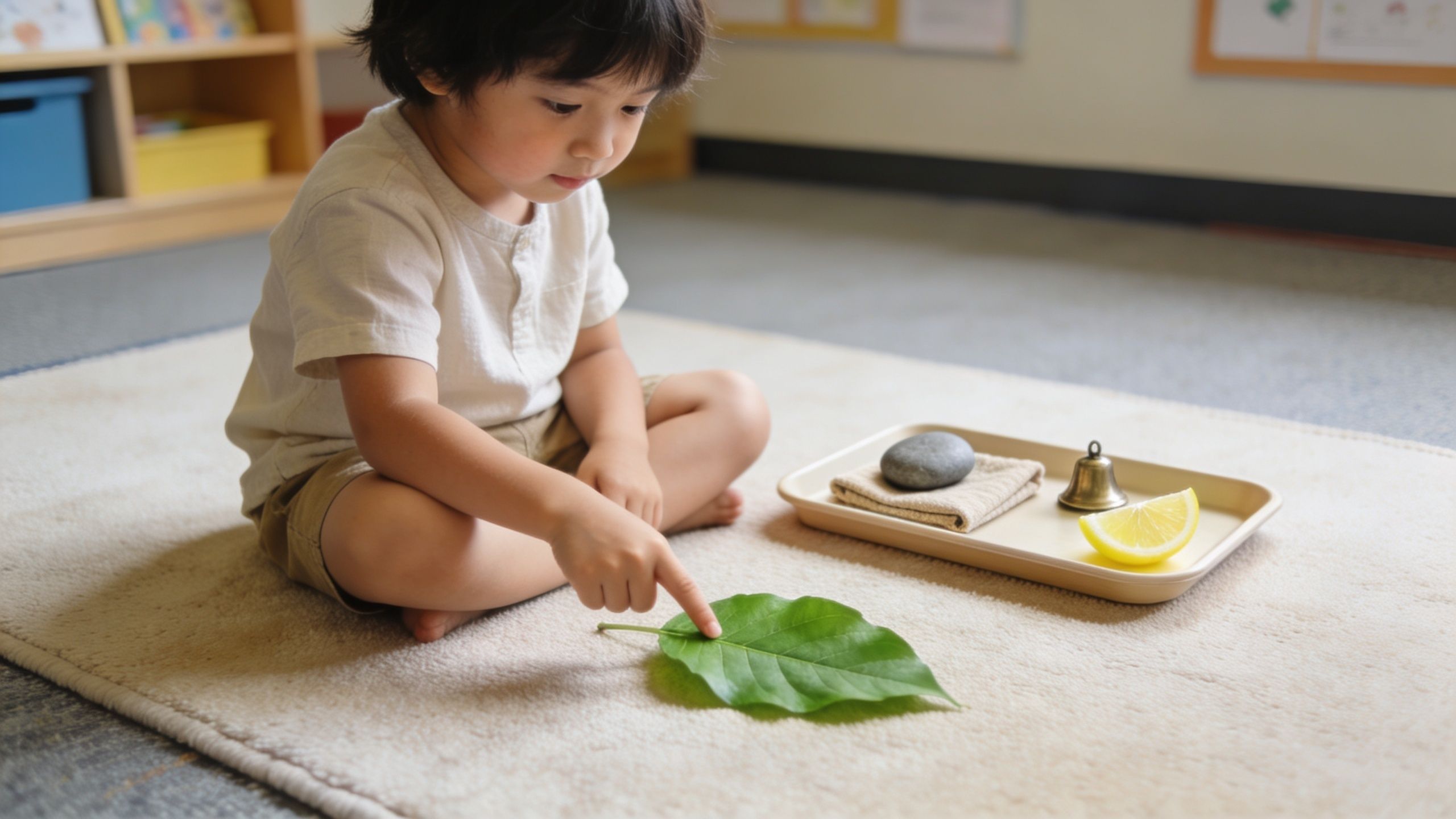
A teacher might say, “Let’s find five blue things in the room.” A parent might try, “Press your feet into the floor. What can you feel with your socks on?” If you want a related classroom extension, Soul Shoppe’s 5 senses activity can help make sensory noticing part of normal daily practice.
2. Box Breathing
Some children need a rhythm they can follow. Box breathing gives them one. Equal counts for inhale, hold, exhale, and hold can make a stressful moment feel more organized and less chaotic.
This works especially well before transitions, tests, bedtime, or difficult conversations. It also helps adults co-regulate because the teacher or caregiver can do it alongside the child instead of just directing them.
How to do it
Draw a square in the air or on paper. As you trace one side, breathe in. Trace the next side and hold. Trace the third side and breathe out. Trace the fourth side and hold again.
Use short counts for younger children. Older students may like counting in their head. If holding feels uncomfortable, skip the hold and do a slower in-breath and out-breath.
Classroom example: A teacher traces a square on the board before a spelling test and the whole class breathes together.
Home example: A parent sits on the edge of the bed and says, “Let’s draw a square with our finger and breathe with each side.”
Sports example: A coach invites players to do one round before stepping onto the court.
Sample script
Try: “Breathe in as we go up. Hold at the top. Breathe out as we come down. Rest at the bottom.”
If a child gets more tense with breath work, don’t force it. Offer an external anchor instead, like tracing the square with a finger while watching you breathe. For another gentle breathing routine, Soul Shoppe’s belly breathing technique can be a helpful companion practice.
3. Grounding Mat, Sensory Station, and Grounding Object Use
Sometimes kids don’t need more talking. They need a place and an object. A calm corner, grounding mat, or small sensory kit can give them a predictable routine when emotions start to rise.
This approach is useful because it turns grounding into part of the environment. Instead of waiting for an adult to invent support in the moment, the room itself offers support.
What to include
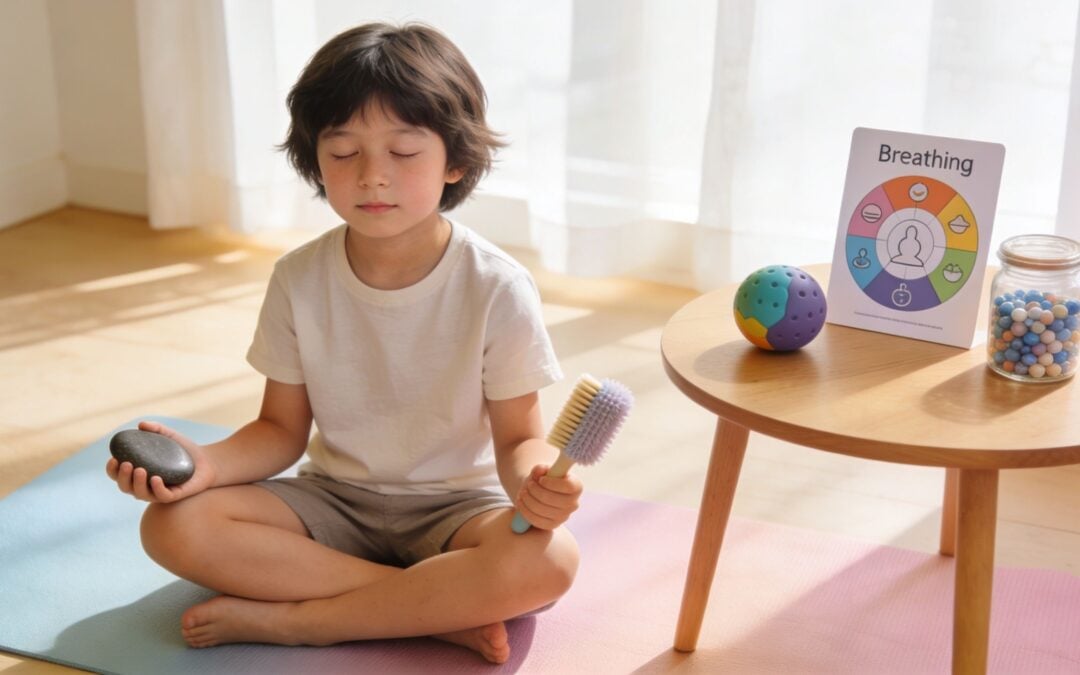
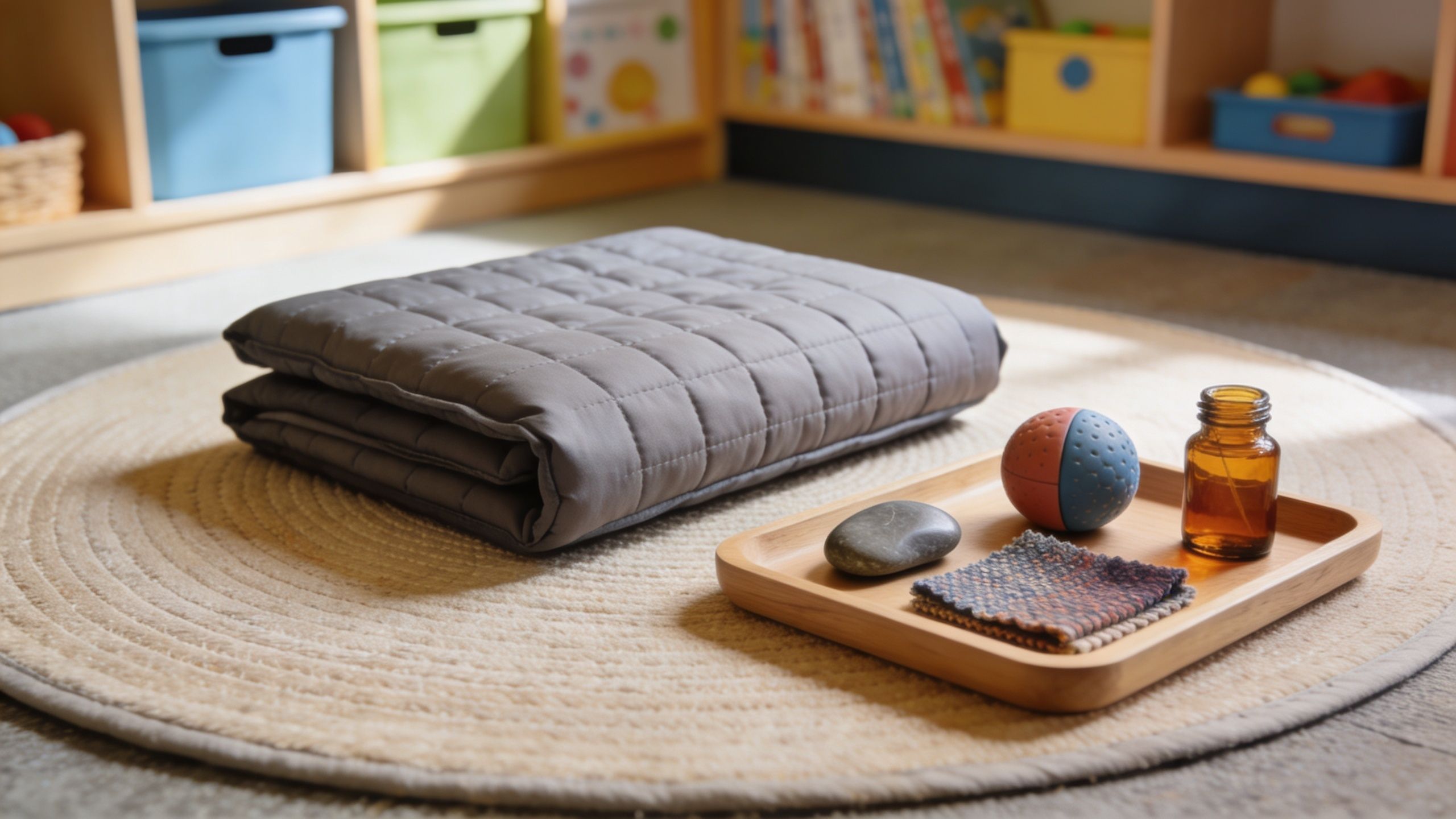
A grounding space can be very simple. A rug square, textured fabric, stress ball, visual timer, soft lighting, and a few clear prompts are often enough.
A grounding object should be small, sturdy, and familiar. Good options include a smooth stone, a fabric swatch, a fidget, or a weighted lap pad used under supervision when appropriate. Some families also like cozy comfort items, such as the kinds discussed in this article on Warmies for soothing relief, as long as the child uses them safely and they fit the setting.
How to make it work in real life
Give the station a neutral name like “reset spot” or “calm corner,” not “problem area.” Teach every child how to use it, not only the children adults think “need it.”
At school: A student takes a two-minute reset with a fidget and returns to the group.
At home: A child goes to a cozy corner after an argument with a sibling and squeezes a pillow while looking at a visual choice card.
In counseling: A counselor offers a regulation kit with a smooth stone, putty, and a grounding card.
One challenge schools still face is that measurement and whole-school integration of grounding practices remain underexplored, including how to document use, train staff, and build routines around them, according to Mental Health Center Kids on grounding exercises for kids.
Later, you can add a homemade visual tool like Soul Shoppe’s glitter sensory bottle, which gives children something concrete to watch while their body settles.
A simple demonstration helps children understand what belongs in a reset routine.
4. Progressive Muscle Relaxation PMR
Some children carry stress in their body long before they can name it. Their shoulders climb up, fists clench, jaws tighten, and legs bounce. Progressive muscle relaxation helps them feel the difference between “tight” and “loose.”
That body awareness matters. A child who notices tension earlier has a better chance of using support before the feeling gets too big.
How to guide it
Start with just a few body parts. Ask the child to squeeze their hands into fists, hold briefly, then let go. Next, scrunch shoulders up toward ears, hold, then drop. Then press toes into the floor and release.
Use playful language. “Squeeze your hands like you’re holding lemons” is easier for many kids than “activate your hand muscles.”
Some children respond best when the body moves first and the words come later.
Examples by setting
In a classroom, a teacher might lead a one-minute version after lunch. “Hands tight, now soft. Shoulders up, now down.” In a home bedtime routine, a parent can move from toes to head with dim lights and a quiet voice.
For younger children, keep it short and concrete. For middle schoolers, explain the why: “Your body sometimes stays braced even when the hard moment is over. Releasing muscles sends a different message to your system.”
If a child has pain, injury, or a medical condition that makes tensing uncomfortable, skip the squeeze and focus on noticing and softening instead.
5. Mindful Movement and Walking Meditation
Not every child calms by sitting still. Some regulate through motion. Mindful walking, stretching, wall pushes, and slow patterned movement can help children who feel trapped or buzzy when adults ask them to “use a quiet strategy.”
This is often a better match for kids who need proprioceptive input, who’ve been sitting too long, or who get more dysregulated during inward-focused exercises.
What it looks like
A walking meditation doesn’t need to be formal. Ask the child to walk slowly and notice each foot touching the floor. Invite them to feel heel, middle, and toes. That alone can shift attention from spiraling thoughts to present-moment sensation.
In a classroom, this may look like a mindful hallway line. At home, it may be a slow lap around the backyard before homework. In PE, it might be a cool-down with steady breathing and long stretches.
Simple reset: Have students push their palms into the wall, then step back and notice how their arms feel.
Transition support: Ask children to carry books with both hands and walk slowly to the next space.
Morning routine: Lead three stretches and ask, “What do you notice in your body now?”
Trauma-informed note
Offer movement as an invitation, not a command. Some children need choice to feel safe. “Would you rather do slow walking, wall pushes, or stretching?” often works better than “Everyone do this now.”
This technique also adapts well for inclusive settings because you can change the movement without changing the purpose. One child might walk, another might press hands together, and another might do seated shoulder rolls.
6. Bilateral Stimulation and Butterfly Hug Technique
The Butterfly Hug is one of the most portable grounding techniques for kids. A child crosses their arms over their chest or shoulders and taps left-right-left-right in a gentle rhythm. The alternating pattern can feel organizing and soothing, especially when emotions are intense.
Because the child does it themselves, it can feel private and instill a sense of agency. That makes it useful in classrooms, counseling spaces, and homes.
How to teach the Butterfly Hug
Show the child how to cross their arms so each hand rests on the opposite shoulder or upper arm. Then model a slow alternating tap. Keep the pressure light unless the child clearly prefers firmer input and that’s appropriate.
Add a phrase if it helps. “I’m safe right now,” “I can get through this,” or “One tap at a time” gives language to the rhythm.
When to use it
This is a strong option after a conflict, during a counseling check-in, before sleep, or during a hard transition. A school counselor might teach it to a student who gets flooded after peer conflict. A parent might use it after a nightmare. A teacher might model it across the room, providing a non-verbal cue for a student who doesn’t want verbal attention.
Ask permission before introducing any body-based strategy, especially with children who have trauma histories or strong touch sensitivities.
If crossing the arms feels awkward, try tapping knees with both hands while seated. The same left-right pattern can still offer a sense of structure and calm.
7. Mindful Coloring and Creative Arts Grounding
For some children, a blank page is easier than a direct question. Art creates space. It gives busy hands something to do and gives the nervous system a slower rhythm to follow.
Mindful coloring is less about making something pretty and more about staying with the process. The child notices color choice, pressure, pattern, and repetition. That’s the grounding piece.
How to set it up
Offer a few options, not just one worksheet. Some children want detailed patterns. Others need broad shapes, free drawing, collage, or tearing paper and gluing it down.
Invite slow attention. You might say, “Notice how the crayon feels on the paper,” or “Can you fill this shape without rushing?” Keep the tone light. This shouldn’t feel like another performance task.
School example: A teacher keeps a coloring basket available during soft-start mornings.
Counseling example: A student colors while talking because eye contact and direct conversation feel too intense.
Home example: Parent and child color side by side after school before discussing the day.
Make the art part of the regulation routine
Pair coloring with calming music, a visual timer, or a cup of crayons the child chose themselves. If the child wants to talk about the picture, listen. If they don’t, that’s fine too.
Soul Shoppe’s anxiety coloring pages can be one easy starting point for families or teachers who want ready-made materials.
A helpful script is: “There’s no right way to do this. We’re just letting your hands and brain slow down together.”
8. Guided Visualization and Mindful Imagery
Some kids settle when they can picture a place, scene, or action that feels safe and steady. Guided visualization uses imagination as an anchor. It can be especially helpful before tests, at bedtime, or after a stressful event once the child is calm enough to listen.
This technique works best when the child already has some trust in the adult leading it. The voice, pacing, and choice of imagery matter.
How to lead it well
Keep it short. Ask the child to close their eyes only if they want to. Looking down, drawing while listening, or focusing on a spot on the wall can work just as well.
Use concrete sensory details. “Feel warm sand under your feet” may help one child, while another prefers “Sit in a treehouse with a soft blanket and hear leaves moving outside.” Personalized imagery is often more effective than generic scripts.
Safety and examples
A school counselor might guide a student to imagine a safe reading nook before a presentation. A parent might lead a bedtime image of floating on a cloud or resting in a fort made of pillows. A coach might invite athletes to picture the first calm, steady moments of a performance.
Avoid imagery that could backfire. Water scenes may not feel calming to every child. Darkness, storms, or isolation may also be poor choices for some children.
End slowly. Ask the child to notice the room again, wiggle fingers, press feet into the floor, and look around before jumping back into activity.
Comparison of 8 Kid-Friendly Grounding Techniques
Technique
Implementation complexity
Resource requirements
Expected outcomes
Ideal use cases
Key advantages
5-4-3-2-1 Sensory Grounding Technique
Low, easy to teach with modeling and brief practice
Minimal, no special equipment; optional visual chart
Highly customizable, powerful for imaginative children; evidence‑based
Putting Grounding into Practice From Technique to Habit
These eight grounding techniques for kids work best when they become part of daily life, not just emergency responses. A child who has practiced box breathing during morning meeting is more likely to use it before a test. A student who knows the calm corner routine during peaceful moments is more likely to choose it during conflict. Repetition builds familiarity, and familiarity builds access.
Adults are most vital in this process. Children usually don’t learn regulation from a poster on the wall. They learn it from watching how grownups slow down, offer choices, use predictable language, and stay present. When a teacher says, “Let’s take one steady breath together,” or a parent says, “You don’t have to talk yet, let’s squeeze the pillow first,” they’re teaching far more than a coping trick. They’re teaching safety.
Grounding also works better when it matches the child and the moment. A sensory scan may help one student, while another needs walking, coloring, or a grounding object. Some children need fewer steps. Some need visual prompts. Some need the adult to co-regulate first and teach later. That flexibility is especially important because current guidance still leaves real gaps around age-specific implementation and whole-school measurement and integration, as noted earlier.
A practical rhythm helps. Choose one technique for the week in your classroom or at home. Model it during calm times. Keep language consistent. Put materials where kids can reach them. Normalize use for everyone, not just children who are visibly struggling. That approach supports dignity and belonging, which are central to strong SEL practice.
You don’t need to use all eight techniques at once. Start with two or three that fit your setting. A classroom might combine box breathing, mindful movement, and a sensory station. A family might rely on 5-4-3-2-1, coloring, and bedtime visualization. The most effective toolkit is the one children remember and use.
Soul Shoppe is one organization that offers SEL resources centered on connection, safety, empathy, self-regulation, mindfulness, communication, and conflict resolution. For schools and families trying to build a shared language around calming and grounding, that kind of broader SEL support can help these techniques stick over time.
If you want support building a more connected, emotionally safe school community, explore Soul Shoppe for SEL programs, tools, and resources that help kids and grownups practice self-regulation, communication, and empathy together.
A child storms off after recess because a friend wouldn’t share. Another freezes before a math test and says their stomach hurts. A middle schooler shrugs and mutters, “I don’t care,” when you can tell they absolutely do. In those moments, adults often reach for the same phrase: calm down.
The problem is that “calm down” isn’t a tool. It’s a request.
Children need actual strategies they can use when frustration, worry, embarrassment, grief, or disappointment rush in faster than their thinking brain can catch up. That’s where emotion focused coping comes in. These strategies help kids work with the feelings created by a hard situation, especially when they can’t fix the situation right away. A student can’t undo a conflict, erase a mistake, or control a family change in the moment. They can learn how to notice, express, soothe, and move through the emotions that come with it.
That matters. A 2015 meta-analysis on emotion-focused coping found that people who actively processed and expressed emotions, rather than avoiding them, showed measurable improvements in resilience and well-being. That’s an important distinction for adults in schools and homes. Not all emotion-focused coping helps. Suppressing feelings tends to backfire, while healthy emotional processing can support stronger coping.
These emotion focused coping examples are designed for real classrooms, real homes, and real kids. They’ll also strengthen the emotional intelligence that children need to handle relationships, stress, and setbacks with more confidence.
1. Mindfulness and Present-Moment Awareness
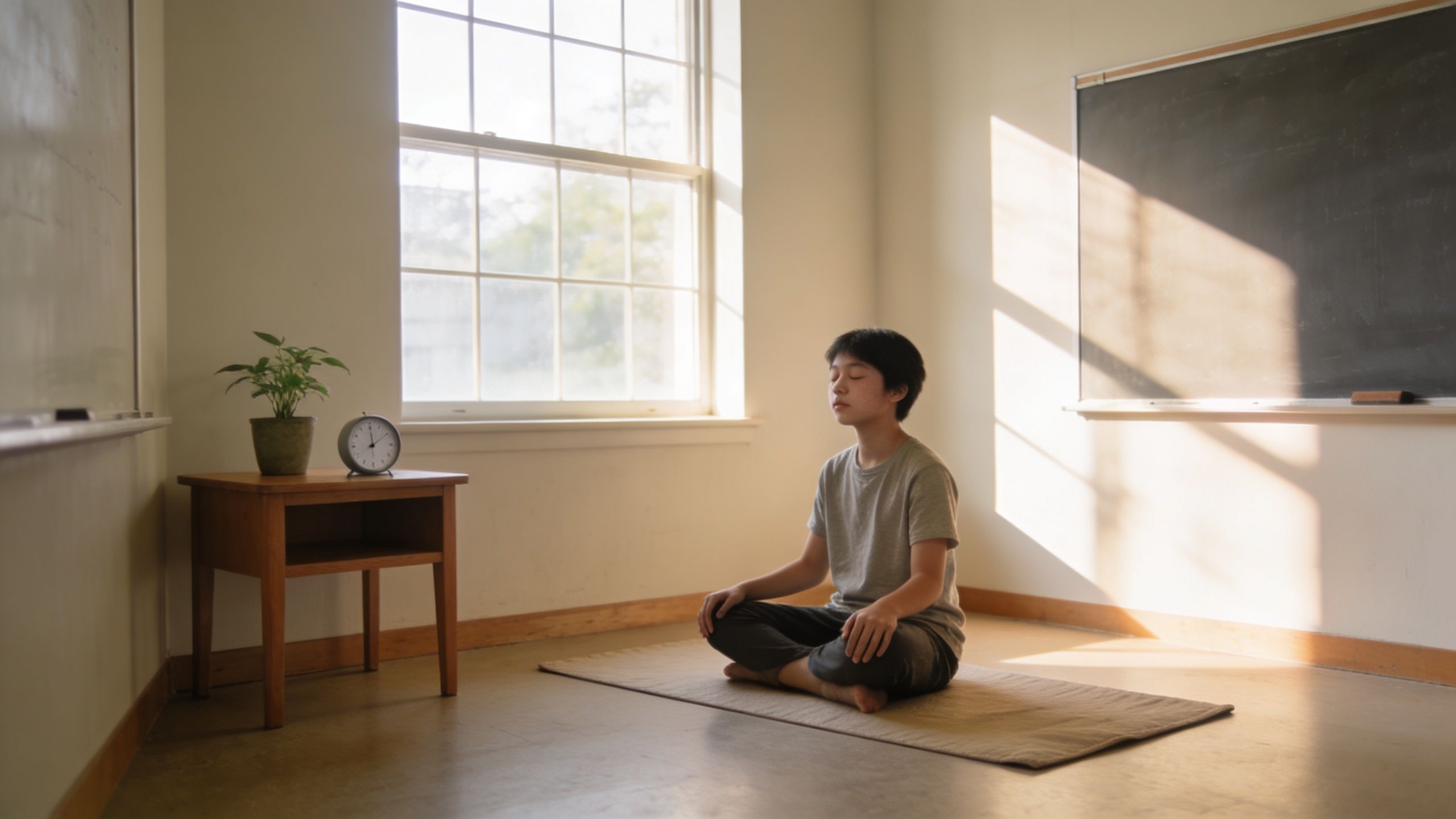
Mindfulness gives a child something concrete to do when feelings start to spike. Instead of getting pulled deeper into panic, anger, or shame, they practice noticing what’s happening right now. Breath. Feet on the floor. Hands on the desk. Sounds in the room. That pause can keep emotion from taking over behavior.
In school, this often looks simple. A third grader takes three slow breaths before opening a test packet. A teacher starts the morning with one minute of quiet noticing. A parent kneels beside a crying child and says, “Let’s feel your belly rise and fall together.”
What it sounds like with kids
You don’t need long meditations. Short, repeatable routines work better.
For early elementary: “Name three things you see, two things you hear, one thing you feel in your body.”
For upper elementary: “Put one hand on your chest and one on your belly. Breathe in slowly. Breathe out even slower.”
For middle school: “Notice the thought. Don’t argue with it yet. Just label it: worried thought, mad thought, embarrassed thought.”
Practical rule: Practice mindfulness when kids are calm, not only when they’re upset. Skills learned during peaceful moments are easier to use during hard ones.
Classroom and home adaptations
A mindfulness routine works best when it’s built into the day. Try it before tests, after lunch, after conflict, or during transitions. If you want students to understand why this matters, tie it to the idea of living in the now, which helps kids shift attention away from spiraling “what if” thoughts.
Teachers can say, “We’re not trying to make every feeling disappear. We’re helping our bodies get steady enough to think.” Parents can use the same language at bedtime, before sports, or after a sibling conflict.
2. Emotional Expression and Creative Outlets
Some children can tell you exactly what they feel. Many can’t. They show it in drawings, movement, music, pretend play, or the way they slam a marker onto paper. Creative expression gives emotion a safe exit. It helps a child process feelings without needing perfect words first.
This is one of the most useful emotion focused coping examples for younger students and for older kids who shut down when asked direct questions. A child might draw “what anger looks like,” create a playlist for different moods, or act out a problem with puppets before they’re ready to talk.
Ways to use it without turning it into an assignment
The key is to focus on expression, not performance. Don’t correct the art. Don’t ask for neatness. Don’t force sharing.
Art option: “Use color and shape to show how today feels.”
Writing option: “Finish this sentence three times: Right now I wish…”
Movement option: “Show me with your body what nervous feels like, then show me what steady feels like.”
Drama option: “Let the puppet say what the student can’t say yet.”
A feelings chart for kids can help children move from broad labels like mad or sad to more accurate words like left out, embarrassed, worried, or disappointed. That added precision often lowers intensity because the feeling becomes easier to understand.
Sample adult script
Try: “You don’t have to explain it right away. You can draw it, write it, or move it.”
That kind of permission matters. A randomized trial described in this positive affect journaling overview found that journaling was linked with significant reductions in mental distress, anxiety, and perceived stress after an 8-week intervention, with benefits that persisted at follow-up. For children, the school version can be much simpler: a short reflection page, a feelings doodle, or a gratitude journal they return to regularly.
3. Social Support and Connection-Building
Kids regulate better in relationship. Even very independent children often need another nervous system nearby before they can settle their own. That’s why connection is one of the strongest emotion focused coping examples you can teach.
For some students, support means talking. For others, it means sitting next to a trusted adult, walking a lap with the counselor, or knowing there’s one peer who’ll save them a seat at lunch. The message is the same: you don’t have to carry big feelings alone.
Build support before a child is in crisis
Waiting until a student is overwhelmed is too late. Connection has to be part of the routine.
Teacher check-ins: Greet students by name and notice changes in mood.
Peer structures: Use partner shares, lunch groups, or buddy systems.
Family routines: Set a daily “tell me one hard thing and one good thing” conversation.
Counselor support: Give students a clear path for asking for help without shame.
Research summarized in this overview of coping patterns in students found that girls reported higher overall coping levels than boys, and that self-efficacy and family support influenced which coping strategies students used. The same review also noted that withdrawal was associated with depressed mood. For adults, that’s a reminder to teach help-seeking directly instead of assuming children will do it on their own.
Sample scripts for adults and peers
A supportive response sounds like this:
“You don’t have to fix it right now. Tell me what feels hardest.”
A peer can learn simple language too: “Do you want advice, or do you want me to just stay with you?” Activities that strengthen trust and belonging make these moments more likely. Schools can support that through intentional relationship-building activities woven into the week.
4. Self-Compassion and Positive Self-Talk
Many kids are much harder on themselves than adults realize. You see it after a wrong answer, a missed goal, a social mistake, or a small correction. “I’m dumb.” “Nobody likes me.” “I ruin everything.” That inner voice can turn one hard moment into a much bigger emotional crash.
Self-compassion teaches children to talk to themselves the way they’d talk to a friend. It doesn’t mean pretending everything is fine. It means meeting struggle with honesty and kindness.
Replace harsh self-talk with helpful language
Children usually need this modeled out loud. They don’t automatically know what compassionate self-talk sounds like.
Try these swaps:
Instead of: “I’m terrible at this.” Try: “This is hard for me right now.”
Instead of: “I messed up everything.” Try: “I made a mistake, and I can repair it.”
Instead of: “Everyone else gets it.” Try: “I’m still learning, just like everybody else.”
A teacher can model this after making a mistake on the board: “I don’t love getting things wrong, but mistakes help me see what to fix.” That lands because it’s real.
A quick self-compassion routine
Give students three steps they can remember:
Name it: “This is a hard moment.”
Normalize it: “Other people feel this way too.”
Support yourself: “What do I need to hear right now?”
Parents can keep this concrete: “You’re disappointed. That makes sense. What would help you talk to yourself kindly?” Teachers can post positive affirmations for kids and revisit them after mistakes, not just during morning meetings.
Speak to the child in a way you hope they’ll eventually speak to themselves.
That’s one of the quietest and strongest forms of SEL teaching.
5. Reframing and Cognitive Perspective-Taking
A child’s first interpretation of an event is often the most painful one. “She didn’t wave back because she hates me.” “The teacher corrected me because I’m bad.” “I failed one quiz, so I’m going to fail everything.” Reframing helps children slow down and consider another possible explanation.
This doesn’t mean arguing kids out of their feelings. If a child feels hurt, they feel hurt. Reframing comes after validation, not instead of it.
Start with the feeling, then widen the lens
A good adult response sounds like this: “I can see why that felt embarrassing. Let’s look at what else might be true.”
Then ask questions that invite perspective:
“What’s one other explanation?”
“What would you say to a friend in this situation?”
“Is this a forever problem, or a right-now problem?”
“What facts do you know for sure?”
For younger children, use visual choices. “Do you think your friend was being mean on purpose, distracted, or upset about something else?” For older students, introduce thinking traps such as mind-reading, catastrophizing, and all-or-nothing thinking.
Real school examples
A student gets feedback on an essay and says, “My teacher thinks I’m bad at writing.” Reframing sounds like: “Your teacher spent time on comments because your writing matters and can grow.”
A student isn’t picked for a game and says, “Nobody wants me.” Reframing might be: “That felt personal. It may also have been a quick choice between friends.”
This strategy pairs well with journaling, class discussions, and restorative conversations. Adults can model it openly: “My first thought was that the meeting went badly. My second thought is that people were tired and distracted.”
6. Relaxation Techniques and Somatic Awareness
Sometimes the fastest way to help a child with big feelings is through the body, not through words. An anxious child may have tight shoulders, shaky hands, or a stomachache. An angry child may clench fists or breathe fast. Somatic coping teaches kids to notice those signals and respond before they escalate.
That’s useful because many children don’t recognize stress until it’s already overflowing. Body awareness gives them an earlier warning system.
Here’s a simple practice to introduce:
Simple body-based tools that work in classrooms
Relaxation doesn’t have to be elaborate. The best tools are short, repeatable, and easy to do without drawing attention.
Box breathing: Inhale, hold, exhale, hold using the same count.
Hand squeeze and release: Tighten fists, then relax them.
Shoulder reset: Lift shoulders to the ears, hold, then drop.
Grounding through touch: Press feet into the floor or hands onto the desk.
Stretch break: Reach high, fold forward, then roll back up slowly.
For younger children, make it playful. “Pretend you’re squeezing lemons in both hands.” For older students, explain the purpose directly: “Your body is activated. We’re helping it come back to steady.”
Sample script for tense moments
Try: “Before we talk, let’s help your body feel safer.”
Some families also like calming sensory rituals at home, including scents tied to bedtime or quiet time. If that interests you, this piece on Aroma Warehouse essential oils insights offers ideas adults can consider alongside breathing, stretching, and other relaxation habits. In school settings, keep it simple and inclusive, since not every student can tolerate scent-based supports.
7. Acceptance and Emotional Validation
A lot of children think a feeling is a problem that must be erased immediately. Adults sometimes reinforce that without meaning to. We rush to distract, fix, persuade, or explain away. But feelings often settle faster when children feel understood.
Acceptance means helping a child notice, “I feel angry,” or “I feel scared,” without piling shame on top of the feeling itself. Validation means saying that the emotion makes sense in context, even if the behavior still needs limits.
Validation is not the same as permission
This distinction matters. You can validate a feeling and still stop harmful behavior.
Validate the feeling: “You’re really angry that the game ended.”
Hold the limit: “I won’t let you throw the marker.”
Offer support: “Let’s figure out what your anger needs right now.”
Children learn that emotions are allowed, but not every action is. That’s a powerful lesson for school culture and family life.
Phrases adults can keep ready
Use short statements that sound natural:
“It makes sense that you feel that way.”
“You don’t have to like this feeling for it to be real.”
“We can make room for the feeling and still choose a safe next step.”
A child who hears these messages repeatedly starts to internalize them. Over time, that reduces the urge to suppress emotions or act them out. A longitudinal study on emotion-oriented coping found that emotion-oriented coping played a meaningful role in change over time among women in treatment, underscoring the value of emotional expression and processing in difficult, hard-to-control circumstances. In child-friendly terms, feelings often need attention before growth can happen.
8. Meaning-Making and Values-Based Action
Some emotional experiences stay with children because the event touched something important. A bullying incident may affect a child profoundly because belonging matters to them. A failed project may sting because they care about competence. Meaning-making helps kids connect the feeling to what matters, instead of seeing pain as random or pointless.
This is especially helpful after disappointment, loss, exclusion, or unfairness. The question shifts from “How do I get rid of this feeling?” to “What does this feeling tell me about what I care about?”
Help children connect feelings to values
Ask open-ended questions:
“Why did this matter so much to you?”
“What does this show you care about?”
“What kind of person do you want to be in response to this?”
A child upset about a friend conflict may realize they value loyalty. A student crushed by a poor grade may realize they care deeply about improvement. Once values are clear, action becomes possible.
Turn insight into a next step
Values-based action doesn’t require a grand gesture. It can be small and concrete.
A student who felt excluded might choose to include someone else tomorrow. A child hurt by teasing might help create kinder class norms. A middle schooler discouraged by a setback might make a study plan that reflects persistence.
This is one place where emotion-focused and problem-focused coping meet. First the child names and processes the feeling. Then they act in a way that lines up with who they want to be. That combination builds resilience with real staying power.
Post-loss, collective trauma processing, identity and value work
Transforms suffering into purposeful action and sustained motivation
Putting It All Together: Blending Strategies for Resilient Kids
The strongest coping toolkit isn’t built around one perfect strategy. It’s built around options. A child might need mindfulness before a test, journaling after a friendship conflict, body-based relaxation during a shutdown, and self-compassion after making a mistake. Different moments call for different supports.
That’s why these emotion focused coping examples work best when adults treat them as flexible tools, not rigid programs. Start by helping the child regulate the emotional storm. Breathe. Draw. Name the feeling. Sit with a trusted adult. Once the child is steadier, move toward problem-solving. Make the plan. Repair the friendship. Practice the skill. Ask for help.
This sequence matters because dysregulated children usually can’t reason their way out of distress first. They need to feel safe, seen, and settled enough to think clearly. Emotion-focused coping creates that opening. Then problem-focused coping can do its job.
For teachers, this may mean building a few routines into the day instead of waiting for crisis. A calm corner. A check-in ritual. A class breathing pause after recess. A feelings chart near the meeting rug. A regular writing prompt that lets students process emotion without being put on the spot.
For parents, it often means changing the first response. Instead of “You’re fine” or “Go calm down,” try “I can see this is a lot” or “Let’s help your body first.” That small shift teaches children that emotions are manageable, not dangerous.
Research also supports the idea that adaptive emotional processing matters more than suppression. The distinction is important in schools and homes alike. We don’t want children to stuff feelings down. We want them to learn how to notice, express, and move through them safely.
If a child’s distress is persistent, severe, or interfering with daily life, bring in more support. A school counselor, pediatrician, or licensed mental health professional can help assess what’s going on and what level of care is needed. Some schools also look to SEL organizations such as Soul Shoppe for workshops, courses, and community-based support that give children and adults shared language for self-regulation, empathy, and connection.
And if you’re helping a child prepare for a big transition, emotional coping belongs there too, right alongside academic skills. Practical readiness includes the ability to handle frustration, ask for support, and recover from mistakes. This InchBug guide to kindergarten readiness is a useful reminder that school success depends on more than letters and numbers.
If you want more support teaching kids how to name feelings, regulate big emotions, and build safer relationships, explore Soul Shoppe. Their SEL resources and programs are built to help school communities and families practice these skills in everyday life.
A child hovers beside your desk, paper in hand, needing help but not asking. Or your own child says, “Nothing happened,” even though you can see the broken lamp and the worried face. Most adults read these moments as behavior problems first. In practice, they’re often trust problems.
When children don’t trust the people around them, they protect themselves. They hide mistakes. They test limits. They stay quiet when they’re confused. They act “fine” while their nervous system is working overtime. In a classroom, that looks like disengagement, perfectionism, tattling, shutdown, or quick conflict. At home, it can look like denial, blame, avoidance, or big reactions to small corrections.
That matters even more right now. The share of American adults who say "people generally can be trusted" fell from 46% in 1972 to 34% in 2024, according to Pew Research Center polling on Americans’ trust in one another. Children are growing up inside that climate. They absorb the tension, the guardedness, and the habit of expecting disappointment unless adults actively teach another way.
In schools and families, trust in relationship isn’t a soft extra. It’s the condition that makes honesty, learning, repair, and belonging possible. A child who trusts you is more likely to take academic risks, tell the truth sooner, recover after conflict, and let your guidance matter. A child who doesn’t trust yet will often need safety before they can use any skill you’re trying to teach.
This work also asks adults to widen the lens. Sometimes a child’s hesitation is connected to stress in the larger family system. For new parents especially, emotional strain can shape the tone of connection at home, which is why resources on understanding PPD symptoms can be part of trust-building, not separate from it. In schools, the adult relationship itself remains one of the strongest daily levers. Soul Shoppe has written helpfully about the power of a positive teacher-student relationship because children learn safety through repeated interactions, not speeches.
Introduction The Foundation of Learning and Safety
Trust starts long before a child says, “I trust you.” It shows up in whether they hand you the crumpled test, admit they were the one who pushed, or ask for help before they melt down. In practical terms, trust in relationship means a child expects your response to be safe, steady, and honest.
Adults sometimes try to speed this up with reassurance. We say, “You can tell me anything,” or “I’ll always be here.” Those words matter, but children believe patterns more than promises. They study tone, timing, follow-through, and whether you stay regulated when things get messy.
Why children read trust through behavior
A child rarely announces, “I don’t feel relationally safe with you right now.” They show you instead.
Common trust signals include:
Delayed honesty because the child expects blame, shame, or overreaction.
Constant checking because the child doesn’t know if rules or adult moods will change.
Refusal to try because mistakes feel too risky.
Over-helping or pleasing because staying in the adult’s good graces feels safer than being authentic.
When adults respond only to the visible behavior, trust can drop further. The child learns that the surface issue gets addressed, but the underlying fear does not.
Children don’t need perfect adults. They need adults whose responses are understandable.
Why this is central to learning
A trusting child can tolerate correction. A guarded child hears correction as danger. That one difference shapes everything from classroom participation to sibling conflict to bedtime honesty.
In schools, this affects whether students contribute ideas, recover after social bumps, and ask clarifying questions when they’re lost. At home, it affects whether children tell you about friendship problems, accidents, and worries before those problems grow.
That’s why trust-building has to be intentional. It isn’t built only in big talks after a problem. It’s built in transitions, check-ins, redos, and the ordinary moments adults are tempted to rush through.
What Trust Really Means in a Child's World
Adults often talk about trust as if it’s one thing. In a child’s world, it develops in layers. The child who follows directions because they want to avoid trouble is not yet trusting in the same way as the child who comes to you with tears, tells the truth, and expects care.
The first layer is rule-following
At the beginning, many children operate from deterrence-based trust. They follow rules because they know what happens if they don’t. This isn’t fake trust. It’s early trust. The child is learning whether adults are predictable and whether the environment has boundaries.
You can see this in a student who lines up properly when the teacher is watching but unravels during less supervised moments. Or a child at home who tells the truth only when the evidence is obvious. The child is still deciding whether honesty and vulnerability are safe.
This level needs structure. It does not need harshness.
Helpful adult moves at this stage:
Clear expectations stated in simple language.
Predictable consequences that aren’t shaming.
Calm repetition instead of surprise reactions.
Fast repair opportunities so mistakes don’t become identity.
The second layer is predictability
Next comes knowledge-based trust. Here, the child begins to relax because your responses become knowable. They’ve gathered enough experience to think, “When I’m upset, this adult doesn’t mock me. When I make a mistake, the correction is firm but safe. When they say they’ll come back, they do.”
Research discussed in a couples therapist’s guide to building trust in relationships highlights where many trust gains occur, pointing to a simple truth drawn from the work of Dr. John Gottman and Brené Brown. Trust grows in the “smallest moments” of consistency and reliability. Each fulfilled micro-commitment becomes a positive data point for the nervous system.
That nervous system piece matters. Children don’t evaluate trust only with logic. Their bodies keep score. If an adult is warm one day and explosive the next, the child stays vigilant. If the adult is consistent, the child begins to save less energy for self-protection and has more available for learning, play, and connection.
A useful lens: Every interaction adds a data point. Children don’t average your intentions. They react to your pattern.
The deepest layer is relational safety
The strongest form is identification-based trust. The child believes, at a deep level, “This adult sees me, cares about me, and wants to understand me.” At this stage, the relationship can hold more truth, more complexity, and more repair.
A few signs you’re moving into this layer:
The child volunteers hard information before you discover it.
They tolerate disagreement without assuming rejection.
They accept guidance because they feel respected, not controlled.
They seek connection after conflict instead of avoiding you.
This level doesn’t mean the child always agrees, complies, or stays calm. It means the relationship remains intact even when limits, feelings, and accountability are present.
What this looks like in daily life
A second grader spills paint and freezes. In a low-trust moment, they deny it and blame a classmate. In a growing-trust moment, they whisper, “I messed up.” In a strong-trust moment, they say, “I knocked it over. Can you help me fix it?”
A middle schooler gets left out by friends. In low trust, they say school was “fine” and carry it alone. In stronger trust, they say, “Something happened, but I don’t know how to explain it.” That opening is huge. Adults often miss it because they want the full story right away.
Trust in relationship grows when adults recognize these small openings and respond with steadiness, not interrogation.
Core Strategies for Building Foundational Trust
The most effective trust-building work is ordinary. It doesn’t look dramatic. It looks like doing what you said you’d do, keeping your tone understandable, and protecting a child’s dignity when they’re struggling.
Build the day so children can predict it
Children trust adults faster when the environment feels legible. They want to know what happens next, what the rules are, and how adults respond under stress.
In a classroom, that means stable opening routines, visible transition cues, and consistent responses to common disruptions. At home, it means bedtime that follows a familiar order, correction that doesn’t depend on the adult’s mood, and follow-up after hard moments rather than pretending they didn’t happen.
A simple example from coaching: if a student often escalates during writing, don’t wait for the refusal. Start with a two-minute preview. “First brainstorm, then one sentence, then check in.” You’re not lowering expectations. You’re lowering uncertainty.
What doesn’t work is using unpredictability to gain an advantage. Surprise consequences, public call-outs, or warmth that vanishes the moment a child struggles all weaken trust.
Follow through on the small stuff
Adults often think trust breaks happen only in major moments. Most trust erosion is smaller. You said you’d check their drawing and forgot. You promised one more story and changed your mind without explanation. You told a student you’d revisit a conflict after lunch and never came back.
Those moments count because children are collecting evidence.
Practical micro-commitments that matter:
Time promises like “I’ll come back in five minutes.”
Attention promises like “I want to hear the rest after I finish helping this group.”
Boundary promises like “I won’t share that with the class.”
Repair promises like “We’ll redo this when we’re both calm.”
When you can’t follow through, name it directly. “I said I’d come back before recess and I missed that. I’m sorry. I’m here now.” That response protects trust more than silence.
Field rule: Never make a promise just to calm a child down. Make fewer promises and keep them.
Validate before you problem-solve
Validation is not agreement. It’s the act of showing the child that their internal experience makes sense from where they stand. This is one of the fastest ways to reduce defensiveness.
Many adults skip this because they’re trying to be efficient. A child says, “It’s not fair.” The adult replies, “Life isn’t always fair.” True, but unhelpful in the moment. The child now has two problems: the original frustration and the feeling of not being understood.
Try language like this instead:
“That felt embarrassing.”
“You really wanted a different outcome.”
“I can see why your body got big right there.”
“You don’t have to like the limit to know I’m staying with you.”
These statements settle the nervous system because they communicate, “I get your experience.” Once the child feels met, they’re more able to hear a limit, a correction, or a next step.
Keep a vault for vulnerability
Children watch what adults do with private information. If a student tells you who they have a crush on, who excluded them, or what they’re scared of, they’re handing you something fragile. If that information turns into gossip, teasing, or unnecessary public discussion, trust drops fast.
Confidentiality with children doesn’t mean secrecy about safety concerns. It means discernment. Share only what needs to be shared, with the people who need to know, and tell the child when you must widen the circle.
Examples:
In class: Don’t use one child’s personal story as a lesson example unless you’ve gotten clear permission.
At home: Don’t retell your child’s embarrassing moment to relatives while they’re in the room.
In counseling or support roles: Tell the child upfront when privacy has limits.
A useful script is: “I’m glad you told me. I’m going to be careful with this.”
Use consistent language across settings
Shared phrases make trust portable. When a child hears the same core messages at school and at home, the world feels more coherent.
Useful repeated language includes:
For mistakes: “We tell the truth and fix what we can.”
For conflict: “Slow down. What happened, what did you feel, what do you need now?”
For emotional intensity: “Your feelings are welcome. Unsafe behavior isn’t.”
For reassurance: “You’re not in trouble for telling the truth.”
Later in the day, this short video can help adults reflect on how relationship habits shape trust over time.
Choose connection before correction when possible
Correction matters. Children need limits. But the order matters too. A connected correction sounds different from a disconnected one.
Compare these:
Less helpful: “How many times have I told you?”
More helpful: “Pause. Try that again with respect.”
Less helpful: “Stop crying. It’s not a big deal.”
More helpful: “Your feelings are big. I’m going to help you get steady.”
Less helpful: “Why would you do that?”
More helpful: “Tell me what was happening right before.”
One option schools use for this kind of shared language is Soul Shoppe’s Tools of the Heart, an online course designed to help young people identify, manage, and express feelings and needs in ways that support healthy relationships. The broader principle is what matters most: children need practical language for emotions and conflict, not just reminders to “be nice.”
Actionable Activities for Classroom and Home
Trust grows faster when it has a routine place to live. If adults only address it after conflict, children start to associate trust with damage control. The better approach is to build small rituals that make honesty, listening, and peer support normal.
Start with a simple meeting ritual
In classrooms, one of the strongest low-prep practices is a brief circle or morning meeting prompt that asks for a little truth without forcing disclosure.
Try prompts like:
One thing I need today
A time someone helped me recently
A mistake I fixed
Something that helps me feel calm
The key is pace. Don’t rush to fill silence. Don’t praise only polished answers. Thank students for honesty, especially when it’s small and awkward.
A teacher might model first: “One thing I need today is patience with technology.” That kind of answer shows students they don’t need a perfect response to participate.
Use peer-support structures, not just adult support
Children build trust in relationship not only with adults but with one another. A field-tested approach is to create regular moments where students notice and name support.
One activity inspired by Soul Shoppe’s “I Got Your Back” philosophy works well in elementary and middle grades:
Invite students to think of a time someone included, helped, or stood up for them.
Give them one sentence frame: “I felt supported when you…”
Let students share in pairs or write notes.
End by asking, “What kind of class do we become when people do this more often?”
This changes the social norm. Instead of only tracking harm, students start tracking care.
Try role-play when words disappear in real conflict
Children rarely access their best language in the middle of a heated moment. Practice has to happen before conflict.
Good role-play scenarios include:
A friend breaks your pencil and says it was an accident.
You weren’t picked for a game and think it was on purpose.
You told a secret and now regret it.
An adult corrected you in front of others and you felt embarrassed.
Keep the first round short. Then ask:
What did you feel first
What made trust go down
What words would help trust come back
That last question is where learning sticks.
Create one dependable family ritual
At home, trust-building works best when it’s woven into an existing routine. Dinner, car rides, bedtime, and weekend walks are all strong containers.
A favorite is Rose, Thorn, Bud:
Rose means something good from the day.
Thorn means something hard.
Bud means something you’re hoping for.
This ritual helps children learn that a relationship can hold joy, struggle, and uncertainty all at once. That’s a major trust lesson. It tells them they don’t have to perform “fine” to belong.
Trust-building activities at a glance
Activity
Best For (Age)
Context
Time Required
Morning meeting check-in
K-8
Classroom
5 to 10 minutes
“I felt supported when…” partner share
Grades 2-8
Classroom or group program
10 minutes
Conflict role-play with redo
Grades 3-8
Classroom, counseling, home
10 to 15 minutes
Rose, Thorn, Bud
K-8
Home dinner or bedtime
5 minutes
Promise tracker
Grades 1-8
Classroom or home
Ongoing, brief daily review
Private note box for concerns
Grades 3-8
Classroom
5 minutes to set up, brief follow-up
One activity that often surprises adults
A promise tracker sounds simple, but it can shift a relationship quickly. Put one sticky note or small card where the child can see it. Write one commitment for the day from the adult and one from the child.
Examples:
Adult: “I’ll check your work before recess.”
Child: “I’ll tell the truth if I need help.”
Ultimately, ask only two questions: “Did we do what we said?” and “If not, what happened?” No lecture. Just accountability and repair. Children learn that trust isn’t magic. It’s built through visible follow-through.
Navigating Trust Breaks and Rebuilding Connection
Adults break trust. Teachers lose patience. Parents say they’ll stay calm and then snap. A staff member shares something too publicly. A child reaches for honesty and gets met with intensity. The break may be brief, but the impact can linger.
A structured repair process matters because trust isn’t evenly distributed among children. Research summarized in an open-access review on cognitive trust, relationship beliefs, and attachment notes that insecure attachment styles can account for 42% of the variance in trust levels, and children from divorced homes often score lower on dyadic trust. For those children especially, an inconsistent apology can feel like one more proof point that adults aren’t reliable.
What repair sounds like
A useful repair has four parts.
Name the impact clearly “I raised my voice, and that probably felt scary and embarrassing.”
Give brief context without defending yourself “I was frustrated, but that wasn’t your job to carry.”
Make room for the child’s experience “What was that like for you?”
State a concrete behavior change “Next time I’m going to pause before I respond, and if I need a minute, I’ll say that.”
That’s stronger than “Sorry, okay?” because it restores clarity. The child learns what happened, why it mattered, and what will be different.
Repair sentence: “You didn’t deserve that version of me.”
A classroom example
One upper elementary teacher I supported got overwhelmed during a noisy transition and spoke sharply to the whole class. The room went quiet, but not in a good way. Several students withdrew for the rest of the morning. Instead of moving on, the teacher repaired after lunch.
She said, “I spoke to you in a way that didn’t feel respectful. The noise level needed to change, but my tone wasn’t okay. If that made you shut down or feel mad, I understand. Next time I’m going to stop and use our signal instead of yelling.”
The class softened almost immediately. A few students nodded. One said, “I thought we were all in trouble.” That was the opening. The teacher clarified the behavior expectation, then invited a reset. Trust didn’t return because she was perfect. It returned because she was accountable.
What doesn’t help
Some repair attempts fail because adults rush to relieve their own discomfort.
Avoid these patterns:
Forced forgiveness by asking, “We’re good now, right?”
Long explanations that sound like self-justification
Buying back trust with treats, privileges, or sudden softness
Repeating the same apology without changing behavior
Children watch for congruence. If the adult says the right words and repeats the same rupture, trust stays thin.
For a more detailed look at repairing after relational mistakes, Soul Shoppe’s guidance on how to earn trust back after it’s been damaged is a useful companion for educators and caregivers.
Measuring and Sustaining a Culture of Trust
Trust becomes culture when it’s visible in how a group functions, not just in one strong relationship. You can hear it in the hallway, see it in partner work, and feel it in how adults handle mistakes.
A practical reason to measure it is urgency. A recent counseling article notes that the CDC reports 60% of U.S. youth experience loneliness, which makes targeted trust-building especially important in school communities and families. That same discussion argues that progressive trust-building can reduce isolation and bullying by addressing relational safety at the root, as described in this piece on why trust matters in relationships and youth development.
Signs you can observe without a survey
Look for behavior shifts that suggest children expect safety.
Strong indicators include:
Students ask for help earlier instead of waiting until they’re overwhelmed.
Peers step in supportively rather than watching conflict escalate.
Children admit mistakes faster with less elaborate covering.
Adults hear more honest disagreement and less silent compliance.
At home, the equivalents are just as telling. Children start volunteering more of their day. Siblings recover faster after conflict. Family members use shared language instead of defaulting to blame.
Simple ways to track progress
You don’t need a formal instrument to notice movement. A few lightweight checks can reveal a lot.
Try these:
Fist-to-five safety check Ask, “How safe does it feel to share openly in this class or family?” Keep it quick and repeat periodically.
Repair log Track whether conflicts end with punishment only, or with understanding and a next step.
Help-seeking count Notice whether students increasingly ask questions, request clarification, or seek support before behavior escalates.
Peer-support noticing Record moments when children include, defend, help, or comfort one another without adult prompting.
If a school wants to sustain this work over time, restorative structures help. Soul Shoppe’s article on what restorative practices in education are and how they work offers a practical frame for turning isolated trust moments into shared community habits.
Trust is measurable when honesty becomes less costly.
The Lifelong Impact of Early Trust
The child who learns trust early carries that lesson into friendships, classrooms, teams, and future family life. They don’t become conflict-free. They become more able to tell the truth, ask for repair, and stay connected when something goes wrong.
That’s why trust in relationship belongs at the center of SEL work. Small moments matter. Predictability matters. Repair matters. Children don’t need adults who get it right every time. They need adults who are clear, steady, and willing to come back after a rupture with humility and action.
For teachers, that may mean changing the first two minutes of a hard conversation. For parents, it may mean keeping one promise more carefully, listening one beat longer, or repairing one sharp moment before bedtime. Those choices look small. In a child’s nervous system, they’re not small at all.
When adults build trust on purpose, children stop spending so much energy on protection. They can use that energy to learn, connect, create, and grow.
Soul Shoppe helps school communities build the kind of trust children can feel through experiential SEL programs, shared language, and practical tools for communication, conflict resolution, and belonging. If you want support bringing this work into your classroom, campus, or home community, explore Soul Shoppe.
The last five minutes of the day often tell the truth. A student is still carrying hurt from recess. Another is proud and restless after finally finishing a project. Backpacks slam shut, chairs scrape, and an adult asks, “How was your day?” The response is usually short because many children need a better doorway into reflection than a broad question or an empty page.
Journal entry prompts give them that doorway.
A useful prompt lowers the pressure without lowering the thinking. It gives students enough structure to get started and enough choice to answer honestly. That balance matters in SEL work. If a prompt is too vague, students freeze. If it is too scripted, they write what they think adults want to hear. The goal is not polished writing. The goal is helping students notice what happened, name what they felt, and decide what to do next.
That’s because reflection supports emotional regulation, mindfulness, and self-awareness. In practice, I have seen the same prompt work differently across ages and even across different days with the same child. A kindergartner may need to draw first and talk second. An upper elementary student may be ready to connect feelings to a specific event. A middle schooler can often handle a prompt that asks for patterns, choices, and repair.
This article is built for actual use, not just inspiration. The ten prompt types below function as mini lesson plans within a larger SEL framework. Each one includes grade-level adaptations for K-2, 3-5, and 6-8, sample student responses, and classroom or home variations such as exit tickets, partner shares, and quick write routines. For families and teachers who want to extend the work beyond the notebook, simple ways to show gratitude in daily interactions can reinforce what students write about.
There are trade-offs to keep in mind. Some prompts fit best during morning meeting, while others are more effective after conflict, during advisory, or at bedtime. Some students open up in writing. Others need to speak, sketch, or dictate first. Good SEL journaling stays flexible, predictable, and emotionally safe. Done well, it gives children and adolescents a repeatable way to understand themselves, relate to others, and carry insight from one day into the next.
1. Gratitude and Appreciation Reflection
A student walks in upset after a hard bus ride, and a broad prompt like “What are you grateful for?” falls flat. Gratitude reflection works better when it starts with something specific the student can name from the last few hours.
This prompt helps students notice support, comfort, effort, and small positive moments that are easy to miss during a busy day. It also builds a habit of paying attention to relationships, which makes it useful as more than a feel-good writing task. In practice, that matters. Students who struggle with regulation, including those affected by the link between ADHD and feelings, often need concrete reflection tools rather than vague requests to “be positive.”
Grade-level adaptations
K-2: “Draw a picture of someone who helped you today. Tell them, or write one word, why you are thankful.”
Sample response: a drawing of a friend sharing a crayon, with the word “sharing.”
3-5: “Write about three things that went well today, big or small. Why did they make you feel good?”
Sample response: “I’m grateful my friend sat with me at lunch because I was lonely. I’m also grateful for the sunny weather at recess and that I understood the math lesson.”
6-8: “Describe a time someone showed you support when you didn’t expect it. How did it change how you saw that person or the situation?”
What works in practice
Keep the writing brief. One to three sentences is often enough, especially at the start. Longer entries can produce richer thinking for some students, but they can also turn gratitude into a compliance task. A quick, specific reflection usually gets more honest responses than a polished paragraph.
Adult modeling matters here. “I appreciated how Maya held the door when my hands were full” gives students a usable example. “Be thankful” does not.
This prompt also works best when teachers and caregivers allow different response modes. Younger children may draw and label. Some students will talk first and write second. Others do better with a sentence stem, a partner share, or an exit ticket. If gratitude writing starts to sound forced, switch the question. Ask, “Who made today easier?” or “What helped you get through a hard part of the day?” That keeps the focus grounded in real experience.
A strong classroom variation is a pair-share after writing, with a clear boundary that students only share what feels comfortable. At home, a family gratitude jar keeps the routine short and visible. To connect reflection to action, Soul Shoppe’s ways to show gratitude offers family- and school-friendly examples, and these self-regulation strategies for students pair well with gratitude prompts on tougher days.
Start with what was helpful, not what was perfect.
2. Emotion Identification and Self-Regulation
Many students can feel a big emotion before they can name it. That gap matters. If a child can’t tell the difference between frustration, embarrassment, disappointment, and anger, it’s much harder to choose a helpful response.
This prompt slows the moment down. Instead of asking kids to explain everything, it asks them to notice what they felt, what set it off, and what they did next.
Grade-level adaptations
K-2: Use an emotion chart with faces. “Circle the face that shows how you felt when you couldn’t build your tower. What did you do to feel better?”
Sample response: the student circles “angry” and draws three deep breaths.
3-5: “Today, I felt ___ when ___. To help myself, I tried ___.”
Sample response: “Today, I felt frustrated when I couldn’t solve the word problem. To help myself, I tried asking a friend for a hint.”
6-8: “Reflect on a moment you felt a strong emotion. What signs did you notice in your body? Was your response helpful or unhelpful? What could you do differently next time?”
What helps and what doesn’t
What helps is normalizing the full range of emotions. What doesn’t help is rewarding only calm, tidy answers. Students need to know that “I was really mad” is acceptable language if it’s followed by reflection.
A co-created calming strategies chart gives students something concrete to reference in their writing. In many classrooms, a fast emotional check-in at the start of the day also helps adults catch patterns before behavior escalates. If you’re supporting students who have a harder time reading and managing emotional intensity, this discussion of the link between ADHD and feelings offers useful context for caregivers.
Practical rule: Don’t ask for regulation before you teach regulation.
For families and schools that want a shared toolbox, Soul Shoppe’s self-regulation strategies for students can pair well with this kind of journaling. The journal becomes the reflection space. The strategy chart becomes the action space.
3. Growth Mindset and Challenge Reflection
A challenge prompt helps students move from “I’m bad at this” to “I’m learning how to do this.” That shift sounds small, but it changes behavior. Students who can reflect on effort, strategy, and next steps usually stay engaged longer than students who read every mistake as proof that they can’t succeed.
This kind of journaling is especially useful after tests, group work, performances, and social setbacks. The writing doesn’t need to celebrate struggle. It needs to help students make sense of it.
Try these versions
K-2: “Draw a picture of something that was hard for you. Now draw what you did to keep trying.”
Sample response: a student draws struggling to tie a shoe, then practicing with a parent.
3-5: “Write about a ‘beautiful oops,’ a mistake that taught you something. What did you learn?”
Sample response: “My beautiful oops was spelling a word wrong in my story, but it gave me an idea for a funnier word to use instead.”
6-8: “Describe a recent academic or social challenge. What strategies did you use? What happened after you kept trying? What will you try next time?”
The trade-off
There’s a common mistake with growth mindset journaling. Adults sometimes push students to end every reflection with a neat success story. That can make the writing feel fake. A stronger prompt leaves room for partial progress.
Students can write, “I still don’t get fractions, but I asked a better question today.” That’s honest growth. It respects effort without pretending the problem disappeared.
A useful classroom exit ticket is one sentence: “One thing I learned from a mistake today was…” At home, parents can model their own imperfect learning. A child is more likely to write truthfully if the adults around them do too.
If you want language and activities that support this reflection style, Soul Shoppe’s growth mindset activities for kids that truly stick gives practical ways to reinforce the “not yet” mindset outside the journal.
4. Acts of Kindness and Empathy Exploration
A student holds the door for a classmate who is carrying a project, then sits down without saying a word. No adult praises it. By dismissal, the moment is gone unless someone helps the class notice why it mattered.
That is the job of this prompt type. It teaches students to pay attention to how everyday choices affect other people. Over time, that shifts kindness from a rule adults repeat to a habit students can name, reflect on, and choose again.
This category works especially well for students who do not see themselves as leaders. They may never volunteer to be the “helper,” but they still include, wait, notice, and repair. Journaling helps them see that empathy often shows up in small, quiet actions.
Prompt examples by age
K-2: “Who helped someone today? Draw what happened. How do you think the other person felt?”
Sample response: a drawing of a classmate picking up spilled crayons, with the teacher writing, “She felt better because she was not alone.”
3-5: “Be a kindness detective. Write about one kind thing you saw today. What happened before it? What changed after it?”
Sample response: “I saw Maria invite the new student to play at recess. Before that, he was standing by himself. After that, he was smiling and running with the group.”
6-8: “Describe a time you chose kindness when it would have been easier to ignore someone, join in, or stay silent. What helped you make that choice? What impact did it have?”
What actually helps students go deeper
The strongest empathy journals stay concrete. “Someone was nice” is too vague to teach much. Students learn more from prompts that ask who was affected, what changed, and what clues showed the other person’s feelings.
That same principle matters when adults respond. Specific feedback builds awareness. “You noticed that your partner looked embarrassed and waited for them” gives students language for empathy. General praise does not.
A useful follow-up question is: “What did that action change for someone else?” That question moves the reflection past good behavior and into perspective-taking.
There is a trade-off here. Public kindness routines such as a “Kindness Caught” wall can build a strong class norm, but they can also make some students perform kindness for recognition. Private journaling often gets more honest reflection, especially for older students who are sensitive to peer judgment. In practice, I use both. Public noticing sets the culture. Private writing helps students examine motive, impact, and missed chances.
These prompts are easy to adapt into mini-lessons instead of using them only as independent writing:
Exit ticket: “One kind thing I noticed today was ___, and it mattered because ___.”
Pair-share: Students read one sentence from their journal, then their partner adds, “The feeling I heard in that story was ___.”
Morning meeting follow-up: Invite students to write about a time they wished someone had noticed their feelings.
Home connection: Ask caregivers to share one small act of kindness they saw at home, then have the child reflect on how it affected the family.
If students need more direct teaching before they write, Soul Shoppe’s how to teach empathy with clear, student-friendly practices pairs well with this prompt type. It gives teachers and caregivers language they can model before asking students to reflect independently.
5. Conflict Resolution and Perspective-Taking
Students often replay a conflict in one direction only: what the other person did. Journaling gives them a safer place to sort out the whole interaction before speaking aloud. That matters because many kids can think more clearly on paper than in the heat of the moment.
This prompt is best used after a cooldown, not during peak upset. Reflection before regulation usually backfires.
How to phrase it
K-2: “Draw the problem. Now draw what each person wanted. What is a fair solution?”
3-5: “Write the story from two sides. First, tell what happened from your point of view. Then tell it from the other person’s point of view. What did each person want?”
6-8: “Rewrite your side of the conflict using an I-statement: ‘I felt ___ when you ___ because ___. Next time, I would like ___.’ Then reflect: what might make it hard for the other person to agree?”
What actually works
Private writing before a restorative conversation often produces better repair than immediate forced sharing. Students have time to move from blame to clarity. They can spot what they wanted, what the other person may have wanted, and what still needs repair.
What doesn’t work is using the journal as a punishment. “Go write about what you did wrong” turns reflection into compliance. A better invitation is: “Write so you can understand what happened and what you want to do next.”
Useful follow-up questions include:
What were you hoping would happen? This helps students identify unmet needs, not just surface behavior.
What do you think the other person was hoping for? This builds perspective-taking without requiring agreement.
What repair is possible now? This keeps the writing connected to action.
At home, this prompt can help after sibling conflict if each child gets separate time and space to write or draw first. In school, it pairs well with a Peace Path or any restorative routine students already know.
6. Body Awareness and Mindfulness Reflection
A student comes in from recess rubbing their stomach. Another starts tapping a foot faster right before a quiz. A third looks calm until shutdown hits all at once. Body-awareness journaling helps students catch stress earlier, name what they notice, and choose a regulating strategy before behavior takes over.
Used well, this is more than a prompt. It is a short SEL routine: notice, name, respond, reflect. That structure matters because students often need direct teaching here, not just an open-ended question on a page.
Age-based prompt ideas
K-2: “After we did our starfish breaths, where in your body feels calm? Color that spot on this body outline.”
Classroom variation: Use it as a 2-minute morning check-in or calm-down corner activity. Some children will draw instead of write, and that is often the better fit.
3-5: “Think about a time you felt worried. Where did you feel it in your body? What helps that part of your body relax?”
Classroom variation: Try this as an exit ticket after a test, performance task, or class meeting. Pair-share can work if students are allowed to pass.
Sample response: “I feel worry in my tummy like butterflies. Taking a drink of water helps.”
6-8: “What are your body’s early warning signs for stress? What are the signs you’re feeling relaxed and focused? How can you use that information during a busy school week?”
Classroom variation: Ask students to make a two-column list: “stress signals” and “reset strategies.” That format feels more private and concrete than a long personal reflection.
What actually works
Keep the focus on patterns, not disclosure. Students do not need to explain why they feel activated in order to learn what their body is telling them. For many kids, especially those carrying stress outside school, that difference is what makes the activity usable instead of overwhelming.
Choice is required here. A student should always be able to switch from internal sensations to external grounding: what they see, hear, touch, or do to settle. That flexibility matters because there is still a gap in many journaling resources around developmental specificity and trauma-informed practice, as noted in this discussion of missing guidance in common journal prompt resources.
Before journaling, a short guided reset helps. This quick video can support that transition:
A few trade-offs are worth naming. Body scans can help some students slow down, but they can also increase distress for students who do not feel safe focusing inward. Younger students usually do better with concrete body maps, colors, and simple sentence stems. Older students often want privacy, shorter prompts, and the option to keep their writing unread.
If body-focused reflection increases stress, switch the prompt immediately. Safety comes first.
7. Identity and Belonging Exploration
Students do better when they feel seen. They also do better when they can see themselves clearly. Identity journaling helps with both. It gives students language for their values, interests, communities, traditions, and strengths, and it creates room for complexity.
This prompt is especially helpful for students who feel flattened by labels. The child who’s “the quiet one,” “the math kid,” or “the one who gets in trouble” often has much more to say when the prompt opens wider.
Prompts that invite belonging
K-2: “Draw yourself in the middle of the page. Around you, draw and label the people, places, and things that are important to you.”
3-5: “Create an identity web. Put ‘Me’ in the center, then add family traditions, hobbies, favorite foods, languages you speak, and other important parts of who you are.”
6-8: “Where do you feel most like your true self? Describe that group or place. What makes it feel safe and real for you?”
Practical use in classrooms and homes
Literature helps here. After reading a story with themes of identity, culture, friendship, or belonging, students can compare the character’s experience with their own. That gives them some distance, which often leads to more honest reflection.
A gallery walk can also work if sharing is optional. Some students love displaying an identity web. Others don’t. Belonging grows when students have choice, not when disclosure is expected.
This is also a strong family prompt. Caregivers can ask about family values, traditions, and the communities a child feels part of. Those conversations help students connect private identity with public belonging.
8. Peer Support and Social Connection Reflection
A student has a hard morning, walks into class quiet, and says they are fine. By the end of the day, one classmate has shared supplies, another has invited them into a group, and a teacher has checked in twice. Many children miss those moments unless we teach them how to notice support, name it, and use it.
Peer support journaling helps students map relationships, practice help-seeking, and recognize that they also matter to other people. That shift matters in SEL work. Students who can identify safe people and small connection points are often better prepared to join groups, repair hurt feelings, and ask for help before a problem grows.
Prompts that build social awareness and support-seeking
K-2: “Draw a picture of a time someone helped you at school. What did they do? How did it make you feel?”
3-5: “Make a support map with three circles: friends, family, and school adults. Write one way each person can help you.”
6-8: “Write about a recent moment when you felt supported, included, or checked on. What made that moment feel real? What could you do to offer that kind of support to someone else?”
How to use this prompt well
This prompt works best when students get concrete categories. “Who supports you?” is too broad for many children. “Who helps you when you are confused, left out, upset, or stuck?” gives them a way in.
It also helps to treat social connection as teachable behavior, not personality. A student does not need to be outgoing to build connection. They need practice with specific moves such as asking to join, thanking a peer, checking on someone, or naming one trusted adult.
For classroom use, this can become a quick exit ticket, a partner share, or a private journal entry. In K-2, students can draw and dictate. In grades 3-5, a support map usually works better than a full paragraph. In grades 6-8, I would add one planning question: “What is one small social step you could take this week?” That turns reflection into action without forcing public sharing.
A sample response from an upper elementary student might sound like this: “I wrote my counselor because I was nervous about a friendship problem. She helped me think of what to say first. I also realized my friend Maya helped by saving me a seat at lunch.”
A middle school response might be more understated: “My friend asked why I was quiet in science. It was only one sentence, but it helped because it showed someone noticed.”
At home, caregivers can keep this simple. Ask, “Who helped you today?” and “Who did you help?” Those two questions build reciprocity, which is different from popularity.
Some students cannot name a support person yet. Start with possibility instead: “Who might be safe to ask next time?” That response still gives you useful information and can guide follow-up support.
9. Values and Purpose Reflection
Students make better choices when they have words for what matters to them. Values journaling helps children and adolescents connect behavior to identity. Instead of only asking, “What did you do?” the prompt asks, “What kind of person do you want to be?”
That shift is powerful for motivation. It also makes SEL more durable. Rules can be followed when adults are present. Values travel with the student.
Prompt examples
K-2: “What are our class rules, like be kind or be safe? Draw a picture of you following one. Why is it important?”
3-5: “What are three words you want people to use to describe you, like kind, honest, or creative? Write about one thing you did today that shows one of those words.”
6-8: “If you could make one positive change at our school, what would it be and why? What value, like fairness, community, or fun, does that change connect to?”
Useful structures
A values sort works well before writing. Students can choose a few value words from a larger list, then explain why those words matter right now. That’s often easier than asking them to generate values from scratch.
Another option is to connect values to current events, stories, or media. Ask, “What value did this character act on?” Then invite students to compare. The journal becomes a place for thinking, not just reporting.
In classrooms, a values word wall helps students find language they might not use on their own. At home, families can connect the prompt to everyday moments: honesty after a mistake, courage before a tryout, fairness during a disagreement, generosity during sharing.
10. Feedback Integration and Growth Planning
A student gets a paper back, sees three correction marks, and decides, “I’m bad at this.” That reaction is common. A good journal prompt slows the moment down and teaches a different habit. Students learn to name the feedback, sort their feelings, and choose one next step they can try.
This prompt works best after graded work, conferences, peer review, performances, or behavior coaching. The goal is not to make feedback feel pleasant. The goal is to make it usable.
Prompt examples
K-2: “Your teacher said, ‘Try to make your letters sit on the line.’ Practice three letters on this page. Circle the one that matches the line best. What helped you do that one well?”
3-5: “What did I do well? What is one part I need to improve? What is one step I will try on my next assignment?”
6-8: “Look at feedback from your last project, discussion, or behavior reflection. Which comment was hardest to accept? Which comment can help you improve most? Write two specific actions you will take next time.”
What makes this work
Students often need help separating identity from performance. “You need stronger evidence” is about the draft, not the student. “Wait to speak until your classmate finishes” is about a skill, not character. Writing gives enough distance for students to respond with more thought and less defensiveness.
Specificity matters here. “Try harder” rarely changes anything. “Add one example from the text before turning in my paragraph” gives the student something visible and measurable. For younger children, that may mean practicing one letter, one transition, or one breathing strategy. For older students, it may mean setting a process goal, such as checking the rubric before submission or asking one clarifying question during revision time.
I have found that this prompt is strongest when the journal entry ends with a plan the student can revisit within a few days. Keep the plan small. If the next step is too big, students avoid it. If it is concrete and close in time, they are more likely to follow through and notice progress.
Useful structures
A simple template helps students who freeze after receiving criticism:
What feedback did I get?
How did I feel when I heard it?
What part do I agree with?
What will I do next?
You can also vary the format so it fits the setting. Use it as an exit ticket after a writing conference. Turn it into a pair-share where students practice restating feedback in neutral language. At home, caregivers can ask, “What is one thing you want to keep doing, and what is one thing you want to change next time?” That keeps the conversation focused on growth instead of shame.
Sample student responses
K-2 sample: “My best letter is m because it sits on the line. I went slow.”
3-5 sample: “I explained my idea clearly. I need to use more details from the text. Next time I will highlight two details before I start writing.”
6-8 sample: “The hardest feedback was that I interrupted during group work because I did not notice I was doing it. The most helpful part was the suggestion to write my idea down first. Next time I will jot notes while others talk and wait until one person finishes before I speak.”
Over time, these entries show students a pattern. Feedback stops being a one-time reaction and becomes part of an ongoing learning plan. That shift matters in academics, behavior, and relationships.
Upper elementary/middle grades, advisory, leadership work
Anchors behavior in values and boosts engagement
Feedback Integration and Growth Planning
Medium–High, requires skillful feedback practices and follow-up
Teacher feedback training, time for goal setting, tracking tools
Better receptivity to critique, actionable growth steps, tracked progress
After assessments, peer review, conferences, goal-setting periods
Turns feedback into concrete plans and accountability
Putting Prompts into Practice Your Next Step
It is 2:10 p.m. The class just came back from recess. Two students are upset, one is withdrawn, and the group is louder than usual. That is not the moment for a long, open-ended writing task. It is the moment for one prompt, a clear routine, and a response format students already know.
Start there. Choose one prompt type that fits the need in front of you, then use it long enough to see patterns. In classrooms and at home, I usually see stronger results when adults stay with one category for two to four weeks instead of rotating constantly. Emotion identification works well during dysregulated stretches. Growth mindset prompts help after frustration or academic setbacks. Kindness, conflict resolution, and peer support prompts fit periods of social friction. The goal is not to cover all ten categories. It is to build a reflection habit students can use.
This article is built to support that kind of implementation. Each prompt type can function as a mini-lesson, not just a writing question. Teachers and caregivers can adjust the same core prompt for K-2, grades 3-5, and grades 6-8, then shift the format based on time and energy. A prompt can become an exit ticket, a pair-share, a morning meeting opener, a restorative follow-up, or a private journal entry. That flexibility matters because SEL works best when it fits real routines, not ideal ones.
Keep the structure predictable. Use the same notebook, half-sheet, or digital form each time. Tell students whether the response is private, optional to share, or expected to be discussed with a partner. Offer more than one response path. Drawing, sentence stems, checkboxes, dictation, and bullet points all count if they help students notice what happened, name what they felt, and decide what to do next.
Consistency matters more than length.
Research on expressive writing has long suggested that repeated reflection can support emotional processing and stress reduction. School journaling usually looks different from formal expressive writing studies. It is shorter, more scaffolded, and often tied to community routines. The practical takeaway still holds. Students get more from a steady practice than from a one-time “big reflection” activity.
Digital tools can help adults plan, but they should stay in a supporting role. One 2025 projection in PromptDrive’s article on AI prompts in research workflows says generative AI prompt adoption among education and market research professionals stands at 65% in 2025, up from 33% the prior year. That may help with drafting prompt banks, sorting themes, or organizing teacher notes. It does not replace adult judgment about developmental fit, cultural responsiveness, privacy, or signs that a student needs a conversation instead of another written response.
That trade-off is easy to miss. Efficient planning is useful. Over-automated SEL is not.
Younger students, multilingual learners, and students with trauma histories often need more adaptation than generic journaling resources provide. A first grader may need a picture prompt and one sentence stem. A fourth grader may do better with a feelings scale and a partner share before writing. A middle school student may need the option to pass, write privately, or respond to an outward-facing prompt such as, “What helps our class feel respectful during group work?” Flexibility is part of strong implementation, not a watered-down version of it.
It also helps to decide ahead of time what adults will do with what students write. If students disclose conflict, fear, or isolation, someone needs a follow-up plan. If entries are never revisited, students quickly learn that the routine is performative. Strong practice includes simple response systems: brief teacher check-ins, a note home when appropriate, a reteach for the whole group, or a small goal-setting conference. Reflection should lead to support, not just documentation.
You can also place prompts where they solve real problems. Use them after recess, after peer conflict, before tests, after read-alouds, during advisory, or at the close of the school day. Families can use the same prompt at dinner or bedtime with oral responses instead of writing. For older students and adults who want broader reflection ideas, meaningful self-discovery journaling prompts may offer additional inspiration. For schools and families seeking SEL support that includes practical tools for self-regulation, empathy, communication, and conflict resolution, Soul Shoppe is one relevant option to explore.
Start with one prompt type. Teach the routine clearly. Watch how students respond, then adjust the scaffolds, format, and follow-up. That is how journal prompts become a usable SEL practice instead of one more good idea that never sticks.
If you want support turning journal entry prompts into a consistent SEL practice, explore Soul Shoppe for programs, courses, and tools designed to help school communities and families build connection, empathy, safety, and practical self-regulation skills.