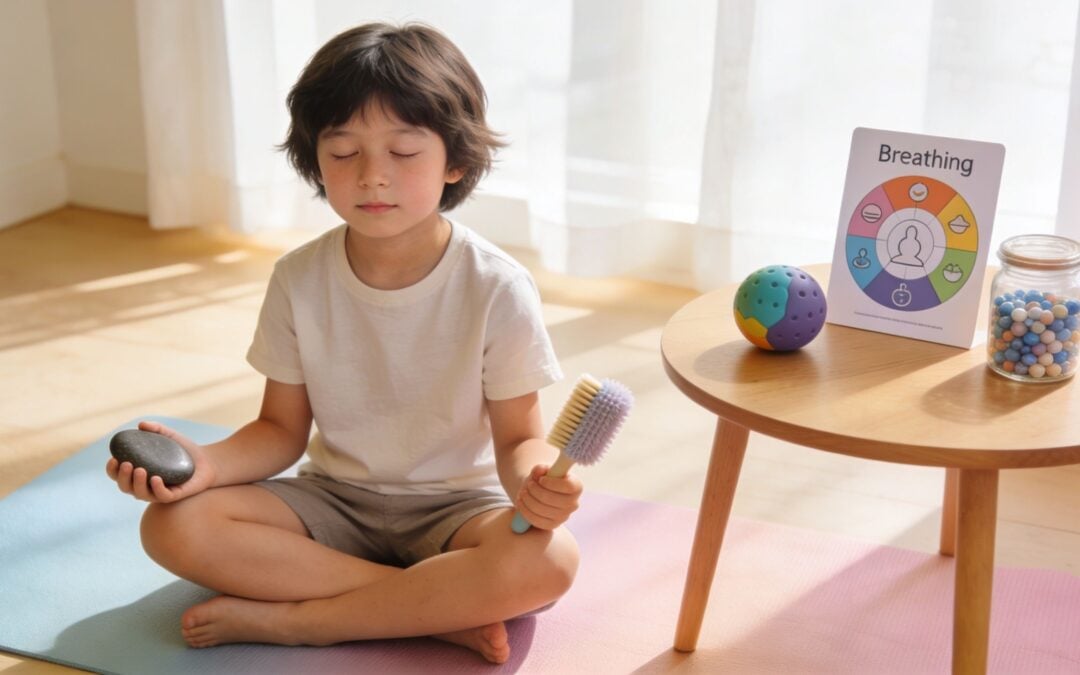
A child is melting down over homework. Another freezes before a quiz. In the hallway, two students are still carrying the stress of a conflict from recess. In moments like these, “calm down” usually doesn’t help. Kids need something concrete they can do with their body, breath, attention, or senses.
That’s where grounding techniques for kids can help. These are simple practices that bring attention back to the present moment and give children a safer, steadier place to start from. They also fit naturally into a larger SEL routine at school or at home, where the goal isn’t just to stop a hard moment, but to build skills for the next one.
This guide focuses on practical use. You’ll find clear why-it-helps explanations, step-by-step directions, age-aware adaptations, and examples for classrooms, homes, and quiet corners. If you’re also looking for mindfulness support in other life transitions, this guide to expat mindfulness in Italy offers a different but related lens on staying present under stress.
1. 5-4-3-2-1 Sensory Grounding Technique
When a child’s mind is racing, sensory input can be easier to access than words. The 5-4-3-2-1 method works by helping them notice what’s around them right now instead of staying stuck in worry, panic, or anger.
It’s a strong first tool because it’s simple, portable, and easy to model. At the same time, one important gap in existing guidance is that grounding techniques often lack clear age-differentiated directions across K-8, especially for younger children and neurodivergent learners, as noted by Raising Children Network’s grounding and calming exercise guidance.
How to teach it
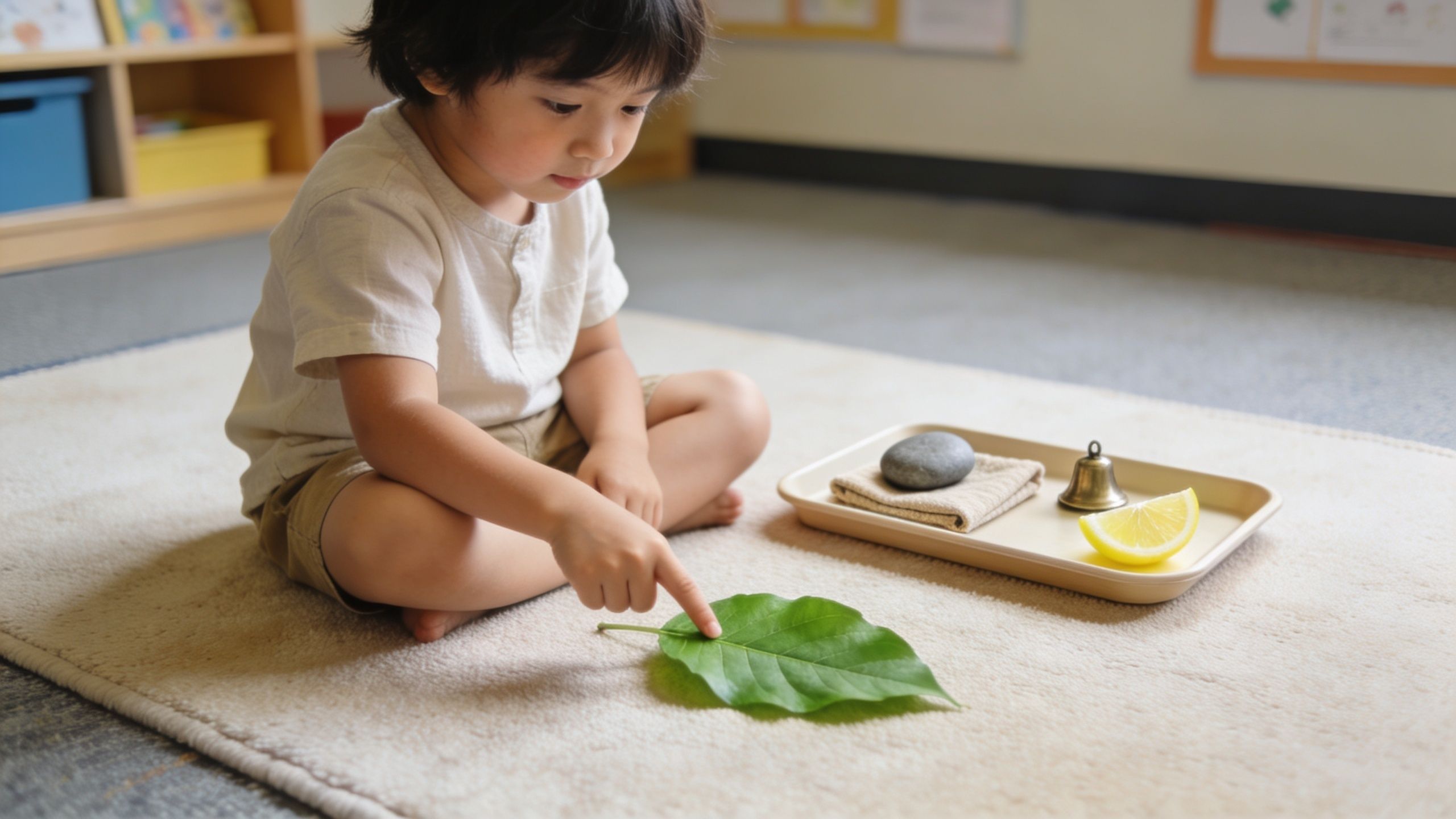
Guide the child through five things they can see, four things they can touch, three things they can hear, two things they can smell, and one thing they can taste. Speak slowly and let them point instead of talk if words are hard in the moment.
For a kindergartener, shorten it to 3-2-1. For an older student, keep the full sequence and invite more detail, such as “What do you notice about that sound?” or “Is that texture smooth, rough, warm, or cool?”
Practical rule: Teach this when kids are calm first. A skill practiced only during distress often feels too hard to use.
A teacher might say, “Let’s find five blue things in the room.” A parent might try, “Press your feet into the floor. What can you feel with your socks on?” If you want a related classroom extension, Soul Shoppe’s 5 senses activity can help make sensory noticing part of normal daily practice.
2. Box Breathing
Some children need a rhythm they can follow. Box breathing gives them one. Equal counts for inhale, hold, exhale, and hold can make a stressful moment feel more organized and less chaotic.
This works especially well before transitions, tests, bedtime, or difficult conversations. It also helps adults co-regulate because the teacher or caregiver can do it alongside the child instead of just directing them.
How to do it
Draw a square in the air or on paper. As you trace one side, breathe in. Trace the next side and hold. Trace the third side and breathe out. Trace the fourth side and hold again.
Use short counts for younger children. Older students may like counting in their head. If holding feels uncomfortable, skip the hold and do a slower in-breath and out-breath.
- Classroom example: A teacher traces a square on the board before a spelling test and the whole class breathes together.
- Home example: A parent sits on the edge of the bed and says, “Let’s draw a square with our finger and breathe with each side.”
- Sports example: A coach invites players to do one round before stepping onto the court.
Sample script
Try: “Breathe in as we go up. Hold at the top. Breathe out as we come down. Rest at the bottom.”
If a child gets more tense with breath work, don’t force it. Offer an external anchor instead, like tracing the square with a finger while watching you breathe. For another gentle breathing routine, Soul Shoppe’s belly breathing technique can be a helpful companion practice.
3. Grounding Mat, Sensory Station, and Grounding Object Use
Sometimes kids don’t need more talking. They need a place and an object. A calm corner, grounding mat, or small sensory kit can give them a predictable routine when emotions start to rise.
This approach is useful because it turns grounding into part of the environment. Instead of waiting for an adult to invent support in the moment, the room itself offers support.
What to include
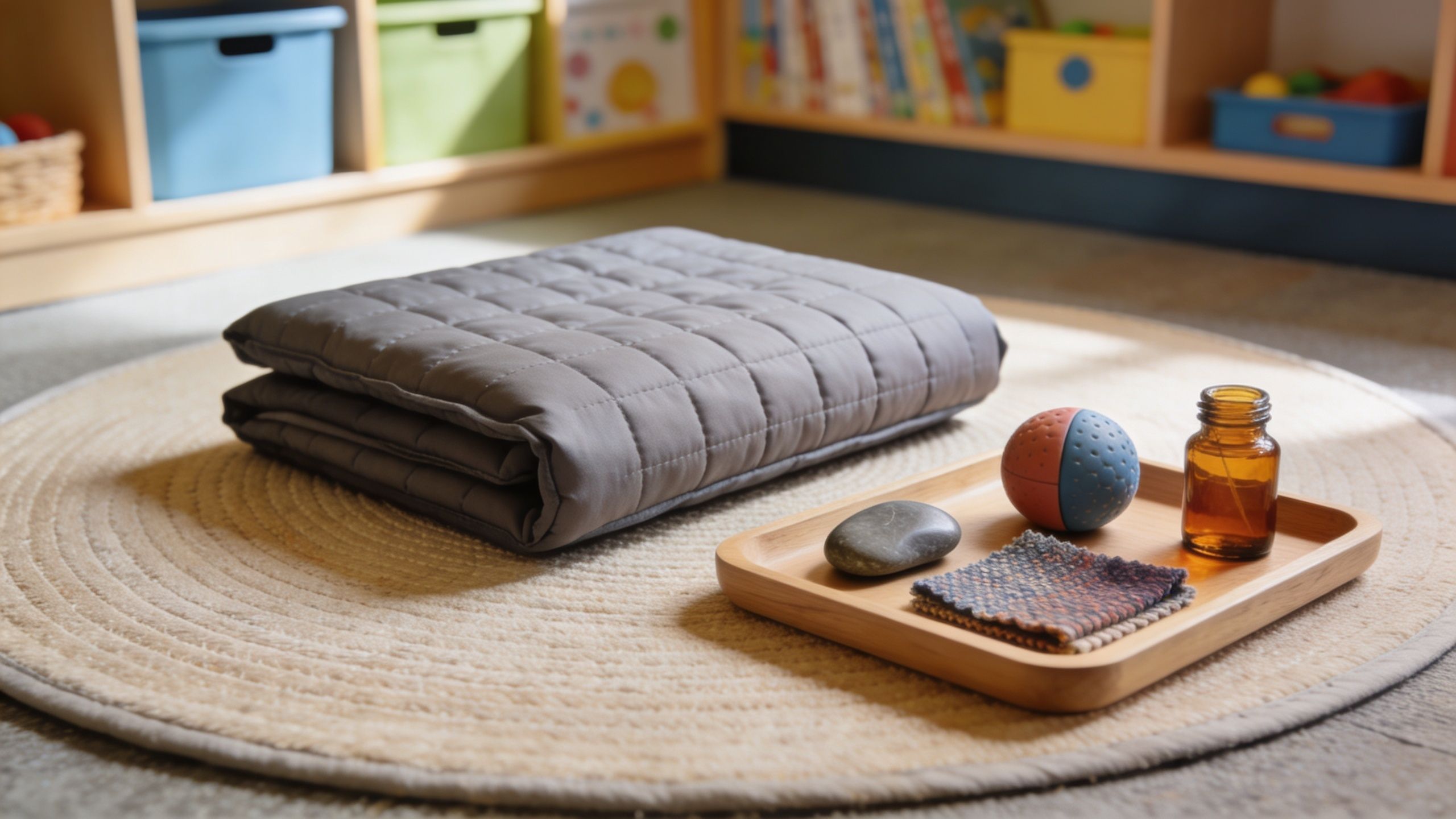
A grounding space can be very simple. A rug square, textured fabric, stress ball, visual timer, soft lighting, and a few clear prompts are often enough.
A grounding object should be small, sturdy, and familiar. Good options include a smooth stone, a fabric swatch, a fidget, or a weighted lap pad used under supervision when appropriate. Some families also like cozy comfort items, such as the kinds discussed in this article on Warmies for soothing relief, as long as the child uses them safely and they fit the setting.
How to make it work in real life
Give the station a neutral name like “reset spot” or “calm corner,” not “problem area.” Teach every child how to use it, not only the children adults think “need it.”
- At school: A student takes a two-minute reset with a fidget and returns to the group.
- At home: A child goes to a cozy corner after an argument with a sibling and squeezes a pillow while looking at a visual choice card.
- In counseling: A counselor offers a regulation kit with a smooth stone, putty, and a grounding card.
One challenge schools still face is that measurement and whole-school integration of grounding practices remain underexplored, including how to document use, train staff, and build routines around them, according to Mental Health Center Kids on grounding exercises for kids.
Later, you can add a homemade visual tool like Soul Shoppe’s glitter sensory bottle, which gives children something concrete to watch while their body settles.
A simple demonstration helps children understand what belongs in a reset routine.
4. Progressive Muscle Relaxation PMR
Some children carry stress in their body long before they can name it. Their shoulders climb up, fists clench, jaws tighten, and legs bounce. Progressive muscle relaxation helps them feel the difference between “tight” and “loose.”
That body awareness matters. A child who notices tension earlier has a better chance of using support before the feeling gets too big.
How to guide it
Start with just a few body parts. Ask the child to squeeze their hands into fists, hold briefly, then let go. Next, scrunch shoulders up toward ears, hold, then drop. Then press toes into the floor and release.
Use playful language. “Squeeze your hands like you’re holding lemons” is easier for many kids than “activate your hand muscles.”
Some children respond best when the body moves first and the words come later.
Examples by setting
In a classroom, a teacher might lead a one-minute version after lunch. “Hands tight, now soft. Shoulders up, now down.” In a home bedtime routine, a parent can move from toes to head with dim lights and a quiet voice.
For younger children, keep it short and concrete. For middle schoolers, explain the why: “Your body sometimes stays braced even when the hard moment is over. Releasing muscles sends a different message to your system.”
If a child has pain, injury, or a medical condition that makes tensing uncomfortable, skip the squeeze and focus on noticing and softening instead.
5. Mindful Movement and Walking Meditation
Not every child calms by sitting still. Some regulate through motion. Mindful walking, stretching, wall pushes, and slow patterned movement can help children who feel trapped or buzzy when adults ask them to “use a quiet strategy.”
This is often a better match for kids who need proprioceptive input, who’ve been sitting too long, or who get more dysregulated during inward-focused exercises.
What it looks like
A walking meditation doesn’t need to be formal. Ask the child to walk slowly and notice each foot touching the floor. Invite them to feel heel, middle, and toes. That alone can shift attention from spiraling thoughts to present-moment sensation.
In a classroom, this may look like a mindful hallway line. At home, it may be a slow lap around the backyard before homework. In PE, it might be a cool-down with steady breathing and long stretches.
- Simple reset: Have students push their palms into the wall, then step back and notice how their arms feel.
- Transition support: Ask children to carry books with both hands and walk slowly to the next space.
- Morning routine: Lead three stretches and ask, “What do you notice in your body now?”
Trauma-informed note
Offer movement as an invitation, not a command. Some children need choice to feel safe. “Would you rather do slow walking, wall pushes, or stretching?” often works better than “Everyone do this now.”
This technique also adapts well for inclusive settings because you can change the movement without changing the purpose. One child might walk, another might press hands together, and another might do seated shoulder rolls.
6. Bilateral Stimulation and Butterfly Hug Technique
The Butterfly Hug is one of the most portable grounding techniques for kids. A child crosses their arms over their chest or shoulders and taps left-right-left-right in a gentle rhythm. The alternating pattern can feel organizing and soothing, especially when emotions are intense.
Because the child does it themselves, it can feel private and instill a sense of agency. That makes it useful in classrooms, counseling spaces, and homes.

How to teach the Butterfly Hug
Show the child how to cross their arms so each hand rests on the opposite shoulder or upper arm. Then model a slow alternating tap. Keep the pressure light unless the child clearly prefers firmer input and that’s appropriate.
Add a phrase if it helps. “I’m safe right now,” “I can get through this,” or “One tap at a time” gives language to the rhythm.
When to use it
This is a strong option after a conflict, during a counseling check-in, before sleep, or during a hard transition. A school counselor might teach it to a student who gets flooded after peer conflict. A parent might use it after a nightmare. A teacher might model it across the room, providing a non-verbal cue for a student who doesn’t want verbal attention.
Ask permission before introducing any body-based strategy, especially with children who have trauma histories or strong touch sensitivities.
If crossing the arms feels awkward, try tapping knees with both hands while seated. The same left-right pattern can still offer a sense of structure and calm.
7. Mindful Coloring and Creative Arts Grounding
For some children, a blank page is easier than a direct question. Art creates space. It gives busy hands something to do and gives the nervous system a slower rhythm to follow.
Mindful coloring is less about making something pretty and more about staying with the process. The child notices color choice, pressure, pattern, and repetition. That’s the grounding piece.
How to set it up
Offer a few options, not just one worksheet. Some children want detailed patterns. Others need broad shapes, free drawing, collage, or tearing paper and gluing it down.
Invite slow attention. You might say, “Notice how the crayon feels on the paper,” or “Can you fill this shape without rushing?” Keep the tone light. This shouldn’t feel like another performance task.
- School example: A teacher keeps a coloring basket available during soft-start mornings.
- Counseling example: A student colors while talking because eye contact and direct conversation feel too intense.
- Home example: Parent and child color side by side after school before discussing the day.
Make the art part of the regulation routine
Pair coloring with calming music, a visual timer, or a cup of crayons the child chose themselves. If the child wants to talk about the picture, listen. If they don’t, that’s fine too.
Soul Shoppe’s anxiety coloring pages can be one easy starting point for families or teachers who want ready-made materials.
A helpful script is: “There’s no right way to do this. We’re just letting your hands and brain slow down together.”
8. Guided Visualization and Mindful Imagery
Some kids settle when they can picture a place, scene, or action that feels safe and steady. Guided visualization uses imagination as an anchor. It can be especially helpful before tests, at bedtime, or after a stressful event once the child is calm enough to listen.
This technique works best when the child already has some trust in the adult leading it. The voice, pacing, and choice of imagery matter.
How to lead it well
Keep it short. Ask the child to close their eyes only if they want to. Looking down, drawing while listening, or focusing on a spot on the wall can work just as well.
Use concrete sensory details. “Feel warm sand under your feet” may help one child, while another prefers “Sit in a treehouse with a soft blanket and hear leaves moving outside.” Personalized imagery is often more effective than generic scripts.
Safety and examples
A school counselor might guide a student to imagine a safe reading nook before a presentation. A parent might lead a bedtime image of floating on a cloud or resting in a fort made of pillows. A coach might invite athletes to picture the first calm, steady moments of a performance.
Avoid imagery that could backfire. Water scenes may not feel calming to every child. Darkness, storms, or isolation may also be poor choices for some children.
End slowly. Ask the child to notice the room again, wiggle fingers, press feet into the floor, and look around before jumping back into activity.
Comparison of 8 Kid-Friendly Grounding Techniques
| Technique | Implementation complexity | Resource requirements | Expected outcomes | Ideal use cases | Key advantages |
|---|---|---|---|---|---|
| 5-4-3-2-1 Sensory Grounding Technique | Low, easy to teach with modeling and brief practice | Minimal, no special equipment; optional visual chart | Quick present‑moment focus; reduces acute anxiety/overwhelm | Classroom transitions, test nerves, home meltdowns (ages 4+) | Portable, concrete sensory focus; adaptable by age |
| Box Breathing (Square Breathing) | Low–moderate, simple rhythm but needs practice | Minimal, no materials; visual square or counting aid optional | Rapid physiological calming via parasympathetic activation; improved focus | Test anxiety, panic responses, discreet classroom calming | Evidence‑based, quick, discreet, easy to remember |
| Grounding Mat / Sensory Station & Grounding Objects | Moderate, requires setup, rules, and upkeep | Moderate–high, sensory tools, space or kits, ongoing maintenance | Supports self‑soothing, reduces adult intervention, aids sensory processing | Calm corners, special ed, children with sensory needs (K–8) | Tangible, customizable tools; good for sensory differences and autonomy |
| Progressive Muscle Relaxation (PMR) | Moderate, guided scripts and 5–10 min practice required | Minimal, quiet space; optional audio guidance | Reduces muscle tension; builds body awareness and relaxation skills | PE cool‑downs, bedtime routines, students with somatic tension | Directly targets physical tension; evidence‑based mind‑body benefits |
| Mindful Movement & Walking Meditation | Moderate, needs space and clear expectations | Minimal, open space; no equipment; optional music | Reduces restlessness; improves focus and proprioceptive regulation | Kinesthetic learners, ADHD support, movement breaks, transitions | Combines movement with mindfulness; suits active children |
| Bilateral Stimulation & Butterfly Hug | Low, simple to teach but requires trauma‑sensitive use | Minimal, no materials; self‑administered | Quick calming; bilateral activation that can aid emotional processing | Trauma‑informed self‑soothing, quick regulation in classrooms | Discreet, portable, self‑directed; grounded in EMDR approaches |
| Mindful Coloring & Creative Arts Grounding | Low–moderate, needs supplies and facilitator framing | Low, basic art materials and workspace | Calming through creative focus; supports nonverbal emotional processing | Counseling, calm stations, children who prefer creative outlets | Non‑stigmatizing, engaging, builds pride and fine motor skills |
| Guided Visualization & Mindful Imagery | Moderate, requires skilled facilitation and quiet setting | Low, quiet space; scripts or prerecorded audio | Immersive relaxation; reduces anxiety and rehearses coping | Therapy, anxiety management, performance prep, bedtime | Highly customizable, powerful for imaginative children; evidence‑based |
Putting Grounding into Practice From Technique to Habit
These eight grounding techniques for kids work best when they become part of daily life, not just emergency responses. A child who has practiced box breathing during morning meeting is more likely to use it before a test. A student who knows the calm corner routine during peaceful moments is more likely to choose it during conflict. Repetition builds familiarity, and familiarity builds access.
Adults are most vital in this process. Children usually don’t learn regulation from a poster on the wall. They learn it from watching how grownups slow down, offer choices, use predictable language, and stay present. When a teacher says, “Let’s take one steady breath together,” or a parent says, “You don’t have to talk yet, let’s squeeze the pillow first,” they’re teaching far more than a coping trick. They’re teaching safety.
Grounding also works better when it matches the child and the moment. A sensory scan may help one student, while another needs walking, coloring, or a grounding object. Some children need fewer steps. Some need visual prompts. Some need the adult to co-regulate first and teach later. That flexibility is especially important because current guidance still leaves real gaps around age-specific implementation and whole-school measurement and integration, as noted earlier.
A practical rhythm helps. Choose one technique for the week in your classroom or at home. Model it during calm times. Keep language consistent. Put materials where kids can reach them. Normalize use for everyone, not just children who are visibly struggling. That approach supports dignity and belonging, which are central to strong SEL practice.
You don’t need to use all eight techniques at once. Start with two or three that fit your setting. A classroom might combine box breathing, mindful movement, and a sensory station. A family might rely on 5-4-3-2-1, coloring, and bedtime visualization. The most effective toolkit is the one children remember and use.
Soul Shoppe is one organization that offers SEL resources centered on connection, safety, empathy, self-regulation, mindfulness, communication, and conflict resolution. For schools and families trying to build a shared language around calming and grounding, that kind of broader SEL support can help these techniques stick over time.
If you want support building a more connected, emotionally safe school community, explore Soul Shoppe for SEL programs, tools, and resources that help kids and grownups practice self-regulation, communication, and empathy together.