

10 Practical Communication Skills Activities for K-8 Students in 2026
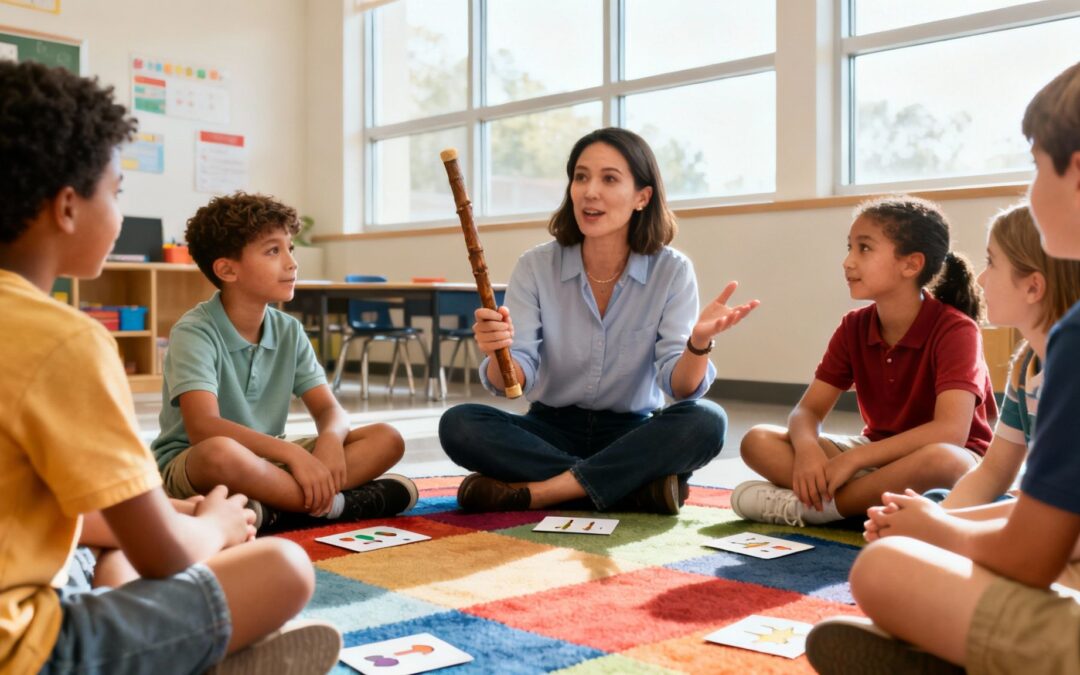
Effective communication is a cornerstone of social-emotional learning (SEL), academic achievement, and lifelong success. While the phrase “use your words” is a common refrain in classrooms and homes, teaching children how to use their words constructively requires more than just a simple reminder. It demands intentional practice through engaging, hands-on communication skills activities that build a sophisticated toolkit for expressing thoughts, understanding others, and navigating complex social situations.
This comprehensive guide moves beyond basic instruction to provide a curated collection of practical, grade-tiered activities designed for K-8 students. Educators, administrators, and parents will find detailed, step-by-step instructions for implementing powerful exercises that foster essential competencies. We will cover a broad spectrum of skills, from active listening and interpreting nonverbal cues to resolving conflicts and practicing empathy.
Instead of abstract theories, you will find actionable strategies you can implement immediately. Each activity is structured to be both educational and engaging, helping students develop the confidence and ability to communicate clearly and respectfully. These exercises are not just about preventing misunderstandings; they are about building stronger relationships, fostering a positive school climate, and equipping students with the tools they need to thrive in all aspects of their lives. Whether you’re a teacher looking for a new lesson plan or a parent hoping to support your child’s social growth, this resource provides the concrete activities needed to turn communication theory into a practiced, everyday skill.
1. Active Listening Circles
Active Listening Circles are structured conversations designed to teach students how to listen with the intent to understand, not just to reply. In this activity, students sit in a circle and take turns speaking on a specific prompt while the others practice focused, respectful listening. This simple yet powerful exercise builds empathy and creates a safe space for sharing.
This practice is fundamental among communication skills activities because it directly addresses the often-overlooked listening component of dialogue. It helps students learn to honor others’ perspectives, reduce interruptions, and appreciate the value of each person’s voice.
How It Works
Purpose: To develop active listening skills, promote empathy, and build a sense of community and psychological safety.
Time: 15–20 minutes
Materials: A talking piece (e.g., a small ball, decorated stone, or stuffed animal) and a discussion prompt.
Step-by-Step Directions:
- Arrange the Circle: Have students sit in a circle where everyone can see each other.
- Introduce the Prompt: Present a simple, open-ended prompt.
- Practical Example (K-2): “Share your favorite part of the day so far.”
- Practical Example (3-5): “Talk about a skill you’d like to learn.”
- Practical Example (6-8): “Describe a time you showed kindness to someone.”
- Explain the Rules: The person holding the talking piece is the only one who can speak. Everyone else’s job is to listen quietly and attentively, without planning their response.
- Begin the Circle: Hand the talking piece to a starting student. After they share, they pass it to the next person.
- Closing: Once everyone who wishes to share has spoken, briefly thank the group for their respectful listening.
Tips for Implementation
- For Younger Students (K-3): Keep prompts concrete and focused on recent experiences. Use a visually engaging talking piece. Model active listening by nodding and making eye contact with the speaker.
- For Older Students (4-8): Introduce more complex prompts related to feelings, challenges, or goals. After the circle, you can lead a brief reflection on what it felt like to be truly listened to.
- Differentiation: Offer students the “right to pass” if they don’t feel comfortable sharing. This ensures the circle remains a low-pressure, safe environment.
This structured approach is a cornerstone of building a positive classroom culture. To see how these principles are integrated into a broader curriculum, you can explore the tools and strategies in Soul Shoppe’s comprehensive Peace Path® conflict resolution program.
2. Role-Playing and Perspective-Taking Scenarios
Role-Playing Scenarios are interactive exercises where students act out realistic social situations to practice communication strategies and understand different viewpoints. By stepping into another person’s shoes, students can safely explore complex emotions, practice conflict resolution, and build empathy. This hands-on method bridges the gap between knowing what to do and actually doing it in a real-life situation.
This technique is a core component of effective communication skills activities because it moves beyond theoretical discussion into practical application. It helps students develop emotional intelligence and flexible thinking, preparing them to navigate friendship challenges, peer pressure, and other social hurdles with confidence and compassion.
How It Works
Purpose: To build empathy, practice problem-solving, develop conflict resolution skills, and learn to communicate effectively in challenging situations.
Time: 20–30 minutes (including debrief)
Materials: Scenario cards (pre-written situations), optional props to set the scene.
Step-by-Step Directions:
- Introduce the Scenario: Present a relatable conflict or situation.
- Practical Example (K-3): “Two friends both want to be the line leader.”
- Practical Example (4-8): “A student overhears their friends making fun of another classmate’s new haircut.”
- Assign Roles: Assign students roles within the scenario (e.g., the friends, a bystander). It is often powerful to have students play roles that are different from their typical experience.
- Act It Out: Give students a few minutes to act out the scene. Encourage them to use “I” statements and express the feelings of their character.
- Pause and Discuss: Stop the role-play at a key moment and ask observers: “What did you notice about their body language?” or “What is another way this could be handled?”
- Debrief: After the role-play, have students step out of their roles. Discuss how it felt to be each character and what they learned about the situation and themselves.
Tips for Implementation
- For Younger Students (K-3): Use simple, concrete scenarios like sharing a toy or asking to join a game. Use puppets or props to help them feel more comfortable acting.
- For Older Students (4-8): Introduce more complex social dynamics, such as navigating gossip, handling peer pressure online, or disagreeing respectfully with a friend’s opinion.
- Differentiation: Provide sentence starters like “I feel ___ when you ___” or “I need ___” to support students who struggle with expressing themselves. Allow students to participate as active observers if they are not ready to act.
Role-playing is a dynamic tool for building a proactive and empathetic school culture. To learn how to integrate these scenarios into a structured conflict resolution framework, explore Soul Shoppe’s acclaimed student leadership and peer mediation programs.
3. Nonverbal Communication and Body Language Activities
Nonverbal Communication and Body Language Activities teach students to recognize and interpret the powerful messages sent through facial expressions, gestures, posture, and personal space. These exercises help participants understand that a significant portion of communication is conveyed without words, making body awareness essential for effective social interaction.
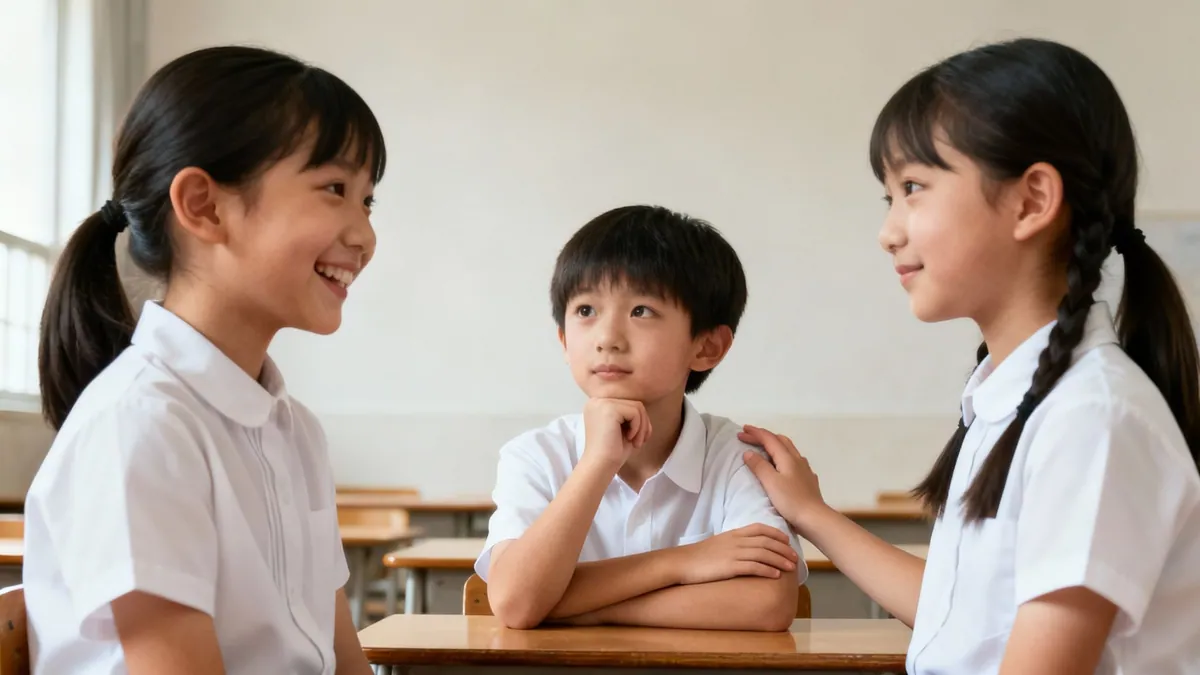
These practices are vital among communication skills activities because they equip students with the ability to “read the room” and align their own nonverbal cues with their intended message. This focus on conscious communication builds self-awareness and empathy, which are core components of Soul Shoppe’s approach to creating respectful school environments.
How It Works
Purpose: To build awareness of nonverbal cues, improve the ability to interpret body language, and practice expressing emotions and intentions without words.
Time: 15–25 minutes
Materials: Varies by activity; may include emotion flashcards, masking tape for personal space bubbles, or a video recording device.
Step-by-Step Directions:
- Introduce the Concept: Explain that we communicate with our bodies, not just our words. Use a simple example: “What does it look like when someone is excited versus when they are sad?”
- Choose an Activity: Select an age-appropriate exercise. A great starting point is Emotion Charades.
- Explain the Rules: For Emotion Charades, a student draws a card with an emotion (e.g., happy, frustrated, surprised) and must act it out using only their face and body. The other students guess the emotion. Practical Example: A student acting out “frustrated” might cross their arms, furrow their brow, and sigh loudly without making any noise.
- Facilitate and Model: Demonstrate an emotion yourself to start. Encourage students to be bold in their expressions and observant in their guessing.
- Debrief: After the game, discuss what specific cues helped students guess the emotion. Ask, “What did their shoulders do? What about their eyebrows or mouth?”