Soul Shoppe's work is made possible by donors and partners who care deeply about the young people in their communities! We can't do this work without you. Support our work in classrooms and on playgrounds across the nation by donating here.
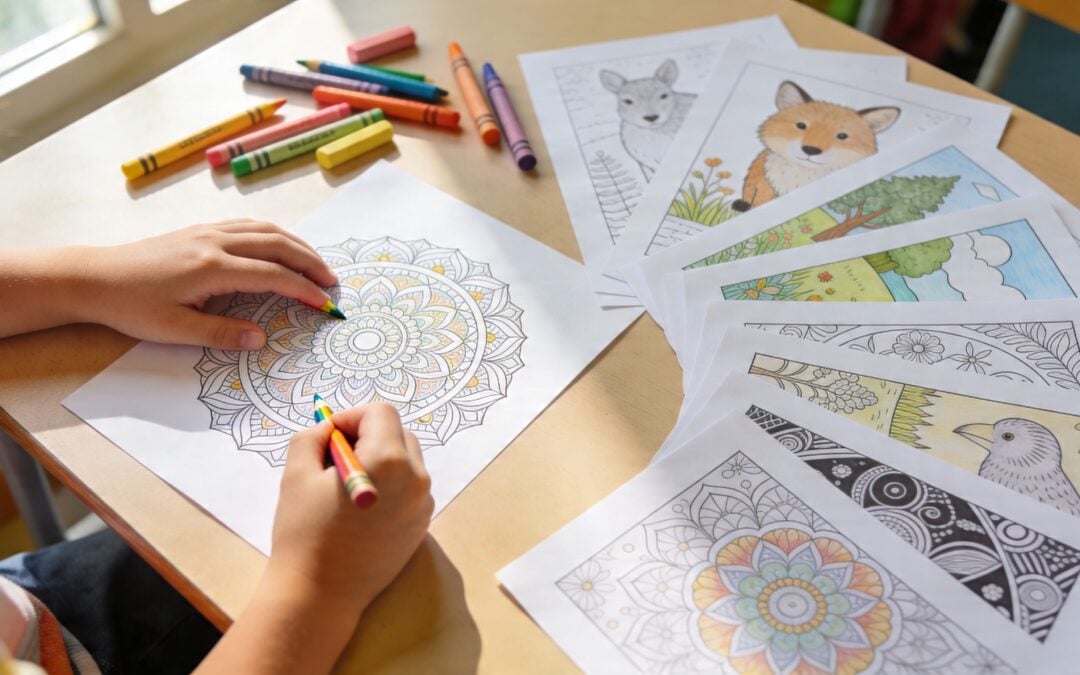
A student walks in already keyed up. Maybe it's a quiz day. Maybe recess went badly. Maybe nothing obvious happened, but you can see it in the tight shoulders, the quick breathing, the way the pencil taps the desk. In those moments, anxiety coloring pages can help because they give kids something simple, concrete, and regulating to do with their hands while the nervous system settles.
That doesn't mean every coloring page works the same way. Some are really coping-skills lessons in disguise. Some are best for a calm-down corner. Some work because an adult sits beside the child and co-regulates. Others are better for small groups, counseling offices, or independent use during transitions. The printable matters, but the pairing matters more. A page plus a script, a check-in, or a reflection prompt turns coloring from filler into SEL practice.
There’s also a real reason educators keep returning to coloring. A 2018 study in the IAFOR Journal of Arts & Humanities found that coloring activities, especially mandala coloring, reduced state anxiety in adolescents more than free-form coloring or puzzle controls. That matters in schools because we often need tools that work in the moment, not just ideas students are supposed to remember later.
I’ve used coloring pages before class meetings, after lunch, in counseling groups, and during those tense weeks when test worry rises. The strongest resources don't just say "relax." They help kids name feelings, notice body signals, and practice what to do next.
Below are the anxiety coloring pages and printable tools I’d trust with students, staff, and families. Each one includes a practical way to use it, because the best printable in the world won't do much if adults don't know how to frame it.
1. National Institute of Mental Health Stand Up to Stress! Coloring & Activity Book
The NIMH Stand Up to Stress! Coloring & Activity Book is the one I’d hand to a school team that wants a trustworthy starting point. It isn’t only a stack of pretty pages. It teaches kids what stress feels like, what coping looks like, and how to reach for help in language upper-elementary students can understand.
I like it for grades 3 through 6 because it meets students where they are. The design is approachable, and the activities don't assume a big counseling vocabulary. It also comes from a mental health agency, which gives principals and counselors confidence when they’re sending materials home.
Best way to use it at school
This works well in a short-term counseling group, a health block, or a re-entry plan for a student who’s been overwhelmed. Because it mixes coloring with coping content, you can move from regulation to conversation without switching materials.
Try a simple three-step routine:
Color first: Give students two quiet minutes to start one page before any discussion.
Name the signal: Ask, "What does worry feel like in your body right before it gets big?"
Choose one strategy: Have each student circle or say one coping action they could try later that day.
A practical classroom example: before a spelling test, invite students to color for a few minutes while practicing a slow inhale and exhale. That pairing fits with school-based interest in quick regulation tools, and child anxiety support works best when adults teach coping explicitly, not only react after stress spikes. If you want language to extend the lesson, Soul Shoppe’s guide to anxiety coping skills for kids offers helpful phrases teachers and caregivers can borrow.
Practical rule: Don’t hand out the whole booklet at once. Pick one page that matches the moment, such as body clues, calming strategies, or asking for support.
One more reason this resource stands out. The booklet is easy to distribute in school communities because it’s free and available in English and Spanish on the NIMH site.
2. Sesame Workshop Coloring to Calm Down and Color Me Calm
When a child needs connection more than instruction, I reach for Sesame Workshop’s Coloring to Calm Down resources. These pages are short, warm, and easy to use with an adult sitting nearby. That matters because many anxious moments in early childhood and elementary settings are really co-regulation moments.
These aren't the pages I’d use for a deep lesson on anxiety. They’re better for reset points. Think arrival time, after a conflict, before bedtime at home, or while waiting for a counseling appointment.
Why they work with younger children
Sesame Workshop understands how to keep the activity light while still prompting awareness. Kids can color without feeling like they’re in a "lesson," but the adult can still guide attention toward breathing, noticing, and settling.
Here’s a script teachers and caregivers can use while coloring together:
"Let’s color one part slowly. While you do that, see if your shoulders feel tight or soft. I’m going to make my breathing slower too."
That adult modeling piece is the whole point. If the grownup’s voice gets slower and their posture relaxes, the page becomes a shared calming routine instead of a demand to "calm down."
Use this resource when you want:
A fast transition reset: Keep a few copies by the door for students who need help shifting into class.
A family handoff tool: Send one page home with a note suggesting an adult color alongside the child.
A calm corner routine: Pair the page with crayons, a timer, and one feeling prompt.
If you're helping adults build that side-by-side support, Soul Shoppe’s post on teaching children how to self-soothe gives language that fits this style well.
The main limitation is scope. You won’t get a huge library or school-specific anxiety themes. But for young students who need a gentle entry point, these anxiety coloring pages are easy to trust and easy to repeat.
3. GoZen! Printable Library and Calm Down Corner Kit
If you’re outfitting a whole counseling office, grade-level team, or district calm-down space, GoZen! Plus is one of the more complete options. I wouldn’t describe it as a coloring-page site alone. It’s an SEL printable system that includes mindful coloring inside a broader library of journals, posters, activities, and regulation tools.
That broader setup is useful because anxiety coloring pages work best when they aren’t isolated. A child may color first, then use a feelings chart, then write a coping plan, then practice self-talk. GoZen! makes that sequence easier.
Where it fits best
This is strongest for adults who want consistency across settings. A counselor can use one page in a small group, a teacher can place a related version in the calm corner, and a caregiver can reinforce similar language at home.
A practical implementation example looks like this:
Morning check-in: Student identifies energy level or feeling.
Coloring choice: Student selects a mindful coloring page tied to calm, focus, or strengths.
Reflection: Adult asks, "What changed in your body while you colored?"
Transfer: Student picks one strategy to use when worry returns.
That’s the kind of structure many schools need. Without it, coloring can drift into "something to keep kids busy." With it, students start linking internal states, actions, and outcomes.
A 2019 Pepperdine University study involving 160 undergraduates found that four structured coloring conditions, including adult coloring books, all significantly reduced state anxiety after anxiety induction, with no significant differences among conditions. I wouldn’t transfer college findings directly onto every child setting, but the takeaway is useful for educators. The regulating effect may come less from finding the "perfect" page and more from giving students a structured, contained coloring experience they can put to use.
The downside is cost. Much of the library sits behind a subscription or paid product. Still, for schools that want a reusable SEL bank rather than a one-off printable, it’s a strong option.
4. Teachers Pay Teachers Feeling Nervous at School Coloring Pages
The Feeling Nervous at School Coloring Pages on Teachers Pay Teachers stands out because it focuses on familiar school triggers. That specificity matters. A lot of anxiety coloring pages are generic. Kids color hearts, swirls, or flowers, but no one helps them talk about the cafeteria, hallway noise, substitute teachers, or tests.
This kind of resource is useful when a student’s worry is tied to predictable school moments. If the anxiety shows up during transitions or academic pressure, context-specific pages often open the door faster than broad mindfulness designs.
Good fit for counseling groups and check-ins
I’d use these pages with a small counseling group for students who all struggle with school-day nerves. Each student colors a page tied to a common trigger, then shares what that moment feels like and what helps.
You can make the conversation concrete with prompts like:
Before the moment: "What does your body do when you know this part of the day is coming?"
During the moment: "What helps a little, even if it doesn’t make the feeling disappear?"
After the moment: "Who can notice you’re having a hard time and support you?"
Some children can color and talk at the same time. Others need the coloring first and the talking later. Let the page lower the pressure before you ask for words.
This resource also pairs well with classroom support planning. A teacher might notice that one student always melts down before independent work. The child colors a page about school worry with the counselor, identifies body clues, then practices a one-sentence help script such as, "Can you get me started?" That kind of bridge from page to action is what makes the printable worthwhile.
The caution with Teachers Pay Teachers is consistency. Listings vary by seller, visual quality, and licensing terms. Review carefully before sharing across a whole team.
5. St. Jude Children’s Research Hospital Free Coloring Pages
St. Jude’s free coloring pages are a good reminder that anxiety support doesn't always need to look overtly clinical. These pages aren’t framed as a full anxiety curriculum. Instead, they offer art-centered activity sheets that work well in waiting spaces, family events, classrooms, and counseling offices where you want calming engagement without making a child feel singled out.
That matters for students who resist anything that feels like "therapy work." Sometimes a playful page is the safer doorway.
Best use for mixed-age settings
I especially like resources like this when you have a broad age range or a public-facing setting. A family night, a school wellness fair, or a counseling waiting room needs materials that feel welcoming to many kinds of kids.
Try setting up a coloring station with one short invitation:
"You can color anything you like. While you color, notice one thing your hands are doing and one thing your breathing is doing."
That prompt keeps the tone low-pressure. It doesn’t force disclosure, but it still builds awareness.
This type of use fits with the broader picture of coloring as an accessible support. In a randomized trial with patients receiving treatment for generalized anxiety disorder, adding coloring therapy for three weeks led to statistically superior outcomes compared with the control group on measures including HAMA, SAS, and positive mood, according to the PMC article on coloring therapy and anxiety outcomes. In school terms, I’d translate that carefully. Coloring won’t replace clinical care, but it can serve as a practical adjunct that supports regulation and coping.
For implementation, keep the expectations simple:
Offer choice: Lay out several pages instead of assigning one.
Keep tools easy: Crayons, markers, and colored pencils should all be available.
Skip forced sharing: Let students decide whether they want to talk after coloring.
The tradeoff is focus. Because these pages aren’t specifically built around school anxiety or coping scripts, the adult has to provide the SEL framing.
6. Awkward Critters Free SEL Activities with Anxiety Themes
There’s something powerful about giving anxiety a character. The Awkward Critters activities page does that in a way younger students can understand. Instead of asking children to explain a vague internal storm, it lets them relate to a creature, compare experiences, and talk about worry with a bit more distance.
That distance can lower shame. A child who won’t say, "I get anxious at school" might say, "Raven worries a lot when things feel uncertain."
A strong option for K to 5 bibliotherapy
These pages work best when paired with the Awkward Critters books, but they still have value on their own. I’d use them in a classroom read-aloud, a lunch bunch, or a home setting where a parent wants to open a feelings conversation without overwhelming the child.
A scriptable activity:
Read or summarize the character.
Invite the child to color while thinking about times they feel similar.
Ask, "What does Raven do when worry gets loud?"
Then ask, "What helps you when your worry gets loud?"
That sequence matters because children often need to talk about the character first before they can talk about themselves.
Why character pages can be easier than abstract pages
Many mandala-style anxiety coloring pages regulate through rhythm and repetition. Character pages do something different. They normalize emotion. They tell children, "This feeling exists. It has patterns. You are not the only one."
I’ve seen this work particularly well with students who are verbal but guarded. If direct SEL worksheets lead to shrugging or joking, a character-based page can bypass that resistance.
The limitation is depth and volume. This isn’t a giant printable library, and it works best when adults lean into the relational side. If you hand out the page without discussion, you’ll miss most of its value.
7. Empowering Education Mindful Coloring K to 2 lesson and printable
A first-grade class comes in from recess loud, wiggly, and slightly off balance. Handing out crayons alone will not settle that energy. The Empowering Education mindful coloring lesson for K to 2 helps teachers turn coloring into a taught regulation routine with clear language, pacing, and reflection.
That distinction matters in early grades. Young students often treat coloring as a race, a performance task, or a chance to compare work. This lesson redirects attention to sensory noticing. In practice, that means the adult is teaching the process the same way they would teach lining up, partner talk, or how to use a calm corner.
I like this resource because it answers the question many teachers wonder: what do I say while students color? A good SEL printable is only half the tool. The other half is the script that helps children slow their bodies and name what changed.
Best use: teach it before students need it
Use this lesson during a neutral part of the day, not only after a meltdown or difficult transition. Regulation routines work like fire drills. Children benefit when they practice the steps while calm, so the routine feels familiar when stress is higher.
A simple classroom sequence might sound like this:
"Today we are practicing mindful coloring. Our job is to notice our hands, our breath, and the way the crayon moves."
"Put both feet on the floor. Let your shoulders soften."
"Color one small section slowly. There is no prize for finishing first."
"Pause and check in. Is your body feeling busy, steady, tight, or calm?"
That last step is where the SEL learning happens. Without reflection, coloring stays an art activity. With reflection, it becomes practice in self-awareness.
If your class already uses short regulation routines, this lesson fits well alongside other mindfulness activities for students that build attention and body awareness.
As noted earlier in the article, structured coloring appears more helpful for calming than completely open-ended coloring in some settings. For a K to 2 teacher, the practical takeaway is straightforward. A page with simple structure, plus adult guidance, often works better than saying, "Here, color this," and hoping students settle.
Use with care: If a child starts worrying about neatness, staying in the lines, or picking the "right" color, shift the goal right away. Say, "We are practicing slow breathing and steady hands, not making a perfect picture."
This is not a giant printable library, and that is part of its value. It gives adults a lesson they can teach, repeat, and adapt. In a classroom or counseling group, that repeatable routine is often what helps a simple coloring page become a regulation tool.
8. Monday Mandala Large free catalog of mandala coloring pages
If you need sheer variety, Monday Mandala is practical. The site has a large catalog, and that’s a real advantage in school settings because anxiety coloring pages aren't one-size-fits-all. One child settles with simple shapes. Another wants intricate repetition. Another needs something in between.
This is the kind of site I’d use to stock a calm corner binder or counselor file cabinet. Print several levels, sort them by complexity, and let students choose.
Differentiation is the real value here
An anxious student who’s already overloaded may do better with wide spaces and fewer decisions. A student who ruminates might benefit from a more detailed design that holds attention longer.
I’d label folders something like this:
Easy start: Large spaces, simple lines, less visual demand.
Steady focus: Moderate detail for students who want a bit more engagement.
Deep focus: Intricate pages for older students who enjoy repetitive coloring.
That organization helps adults match the page to the child’s state instead of grabbing whatever is on top.
There’s also a broader cultural reason these pages are so widely available. The adult coloring book market has grown significantly as mental health awareness and mindfulness practices have become more mainstream, according to Techsci Research’s adult coloring book market overview. In schools, that wider adoption means educators can now access more printable formats, themes, and digital options than they could a decade ago.
The drawback is obvious. Monday Mandala doesn’t provide the SEL framing for you. You have to add the language, the check-in, and the closure. Still, for volume and flexibility, it’s hard to beat.
9. Mindful Art Center Free mandala coloring pages
Sometimes you don’t want an enormous catalog. You want a small, clean set you can print today and use tomorrow. That’s where the Mindful Art Center mandala printables are helpful.
The pages feel teacher-ready. They’re especially useful for upper elementary and middle school students who may resist cartoonish designs but still respond to a quiet, structured visual task.
Good for brain breaks and counselor drop-ins
I’d keep these for moments when a student needs a reset but not a long processing conversation. The page itself does some of the work because the repeating pattern naturally encourages slow attention.
A simple counseling office routine:
Student chooses a mandala.
Adult says, "You don’t need to finish. Just start with one section."
After a few minutes, adult asks, "Are things feeling faster, slower, or the same inside?"
That final question matters because it teaches self-observation without pressure.
Start with a corner or one ring of the mandala. Many anxious students calm faster when the task feels finite.
These pages also work well for test-prep weeks. I’ve seen teachers place one on each desk as students enter, with soft music and a brief breathing cue. It changes the emotional temperature of the room without taking much time.
The tradeoff is scope. This is a small library, and the pages aren’t designed for specific triggers like peer conflict or classroom performance anxiety. But for quality, ease, and a more mature visual style, it’s a solid choice.
10. KidMinds Free mandala coloring pages for kids
The KidMinds mandala coloring pages for kids are useful when you want one larger set that can stretch across several grades. The mix of simpler and more detailed pages makes it easier to support siblings at home, mixed-age groups, or classrooms where students have different attention spans.
This is the kind of printable bank I’d recommend to families who say, "Can you just give me one thing I can keep on hand for rough evenings or stressful mornings?"
How to turn a free set into an SEL routine
Because the pages themselves aren’t anxiety-specific, the adult has to provide the structure. The good news is that structure can be simple.
Try this at home or at school:
Before coloring: Ask the child to rate their body as "busy," "in-between," or "calm."
During coloring: Invite them to color one small section at a time.
After coloring: Ask, "What does your body need next, water, movement, quiet, or help?"
That last question keeps the activity from becoming an endpoint. Coloring helps a child settle enough to notice the next need.
There’s still a gap in the field. Adult-focused content dominates many searches and printable collections, while evidence-informed, school-ready anxiety coloring pages for children remain less developed, as discussed in Clarity Clinic’s article on printable coloring pages for stress and anxiety. In practice, many educators are still adapting general coloring resources into child-centered SEL tools on their own.
KidMinds works well for that kind of adaptation. It gives you enough variety to build a system:
Transition pages for arrival or after recess
Test-day pages for quiet entry routines
Home copies for backpacks or caregiver support
It’s not a specialized intervention, but it is flexible, approachable, and easy to reuse.
Anxiety Coloring Pages, 10-Resource Comparison
Resource
Core features
Target audience
Unique strength
Limitations
Price / Access
National Institute of Mental Health, “Stand Up to Stress!” Coloring & Activity Book
30+ pages blending psychoeducation and colorable activities; ages 8–12; English & Spanish; public-domain PDF
Upper-elementary students, school counselors, district distribution
Government-produced, evidence-aligned content with explicit reuse rights
Skews to 8–12; may need scaffolding for K–1; not pure coloring-only pack
Free, public-domain download
Sesame Workshop, “Coloring to Calm Down” / “Color Me Calm”
Single-page calm coloring with mindfulness prompts; variants for families and military
Early childhood, caregivers, kindergarten teachers for co-regulation
Trusted brand; designed for adult–child co-coloring and modeling calm
Limited number of pages; not targeted to specific school anxiety scenarios
Free printable
GoZen!, Printable Library & Calm Down Corner Kit
1,000+ SEL printables including mindful coloring, journals, posters; licensing guidance
Schools, counselors, districts seeking comprehensive SEL kits
Extensive, lesson-aligned library with educator scaffolds and org licensing
Most content behind paywall; account setup and cost may exceed small budgets
20-page curated mandala packet for kids; varied complexity and print guidance
Primary through early middle-school teachers and families
Larger single free set that bridges early grades to middle school
Not explicitly labeled for anxiety; blog ads may appear
Free download
Beyond the Page: Fostering Resilient, Emotionally Aware Kids
Anxiety coloring pages are one of my favorite low-barrier supports because they’re easy to introduce and easy to repeat. A teacher can keep a folder in a desk. A counselor can slide a page across the table without turning the moment into a big event. A caregiver can print one at home and sit beside a child who’s having a hard night. That accessibility matters.
But the page is only the beginning. Coloring works best when adults treat it as a regulation tool, not a distraction tactic. If the message is "Do this so you stop bothering people," kids feel that. If the message is "This can help your body settle so you can notice what you need," the same page becomes respectful and useful.
That’s why pairing matters so much. A simple breathing prompt, a body-awareness question, or a closing reflection can turn coloring into real SEL practice. Even a short script helps. "What do you notice in your hands?" "Did your breathing change?" "What might help next?" Those questions build interoception, language, and agency.
It also helps to match the resource to the purpose. If you need explicit coping instruction, NIMH is a better fit than a generic mandala page. If a child needs co-regulation, Sesame Workshop is often stronger than an independent printable. If you’re stocking a calm corner for many ages, a broad catalog like Monday Mandala or KidMinds gives you needed range. If you want school-specific discussion, a focused Teachers Pay Teachers resource may open better conversations.
In classrooms, I recommend teaching coloring routines before students are dysregulated. Practice them during morning meeting, SEL block, or a quiet Friday reset. That way, when anxiety rises, the routine already feels familiar. Kids don’t have to learn a new strategy in the middle of a hard moment.
For counselors and administrators, the bigger implementation question is consistency. If every adult uses different language, students have to start over in each room. A shared script helps. You might decide that every adult in the building uses the same three prompts: "What are you noticing in your body?" "What helps you feel a little steadier?" and "What do you need next?" Once those become routine, any anxiety coloring page can fit into a wider support system.
Families need that consistency too. When a school sends home a printable, add one or two lines for caregivers. Keep it plain. "Color with your child for a few minutes. You don’t need to fix the feeling. Just notice together and ask what might help next." That kind of guidance makes home use much more effective.
Most important, remember what success looks like. The goal isn't to eliminate anxiety. Kids need to know that worry, stress, and uncertainty are part of life. The goal is to help them recognize those feelings earlier, respond with tools instead of panic, and trust that support is available. Coloring can help create that bridge because it slows the moment down enough for awareness and choice to return.
When schools build around that idea, anxiety coloring pages stop being throwaway printables. They become part of a culture of emotional safety, shared language, and everyday resilience. For schools and districts that want a more thorough approach, Soul Shoppe offers experiential programs and curriculum designed to help students and staff build connection, self-regulation, empathy, and strong school communities.
If you want more than a folder of printables, Soul Shoppe can help your school build the kind of SEL culture where tools like anxiety coloring pages take hold. Their workshops, assemblies, coaching, and curriculum give students and adults shared language for mindfulness, self-regulation, communication, and conflict resolution so support feels consistent across classrooms, counseling spaces, and home connections.
You’re probably reading this in the middle of real life. A student is tapping a pencil. Another is asking for help while half the class is still settling down. At home, dinner is on the table, but everyone’s attention is somewhere else. One child is replaying what happened at recess. A grownup is thinking about tomorrow’s schedule.
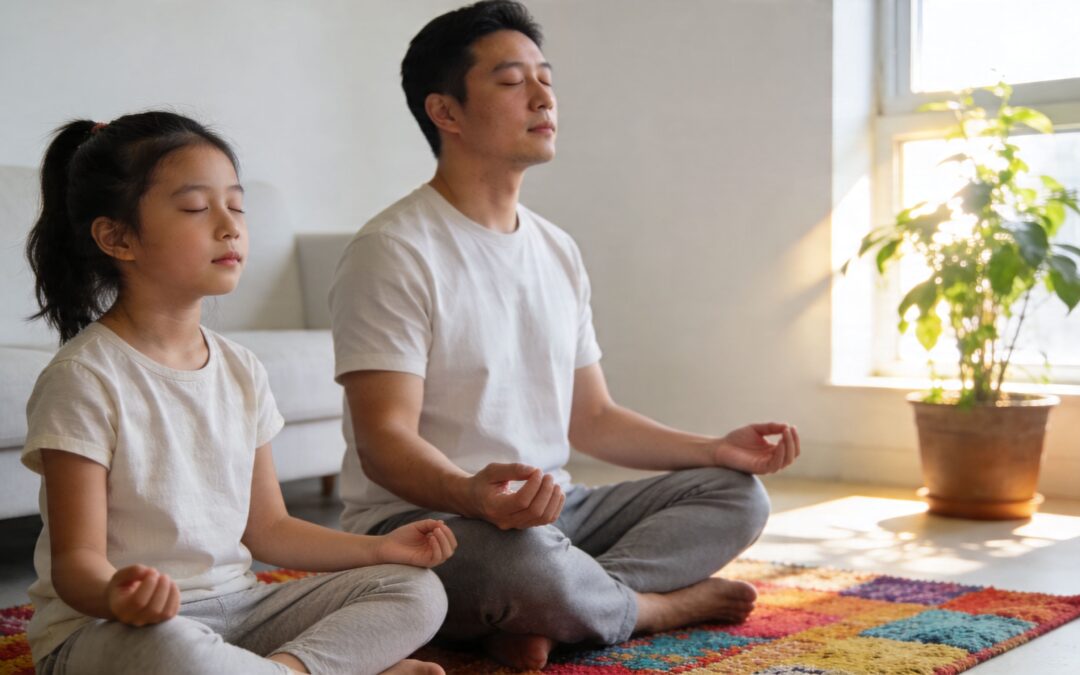
That’s usually where “living in the now” gets misunderstood. It can sound vague, lofty, or unrealistic. In schools and homes, it’s not any of those things. It’s the practical skill of noticing what is happening inside and around you, then returning your attention to this moment with enough steadiness to make a wise next choice.
As educators and caregivers, we don’t need children to become perfectly calm or meditative. We need them to notice, “My body is tight.” “My mind is racing.” “I’m not listening.” “I need a reset.” That kind of presence changes how kids learn, how adults respond, and how relationships recover after stress.
From Scattered Moments to Mindful Connection
The quiz papers are face down. A teacher says, “Begin,” and the room looks ready. Still, one student is frozen after a hard recess moment. Another is on a third trip to the sharpener. A third has already decided, “I’m bad at math,” before reading question one.
At home, the pattern can look quieter but feel just as familiar. A caregiver asks about the day while packing lunches in their head for tomorrow. A child shrugs, says “fine,” and carries worry from the bus ride, the group project, or the lunch table into the evening.
These are ordinary moments of attention slipping away.
Researchers Matthew Killingsworth and Daniel Gilbert found that people spend about 47% of their waking hours thinking about something other than what they are doing, a pattern they linked with lower happiness in their published study in Science. In classrooms and homes, that drift shows up in ways adults know well. Directions need repeating. Conflict escalates fast. A child’s body is in the room, but their attention is stuck in a different moment.
What living in the now actually means
Living in the now means bringing attention back to what is happening here, in this body, in this room, at this moment, so a child or adult can choose the next action with more care.
That sounds abstract until you watch it in practice. Presence works like putting both feet back on the ground before taking the next step. You are not erasing the past. You are not ignoring what comes next. You are helping the nervous system register, “I am here now, and I can notice what is true before I act.”
In Soul Shoppe programs, that often starts with something simple and concrete, because children learn this skill best by doing it, not by hearing a lecture about mindfulness.
In a classroom, that might sound like:
Before a lesson: “Check in with your body. Are your shoulders up or down? Let them drop.”
During conflict: “Pause. Tell me what happened in one sentence. Then tell me what you feel right now.”
Before speaking: “Put a hand on your chest or desk. Feel the surface. Now say your words.”
At home, it might look like:
At pickup: “Do you want to start with your mind, your body, or your feelings?”
At dinner: “Let’s each name one thing we notice right now. A sound, a smell, or how our body feels in the chair.”
At bedtime: “What is one thing your body is still holding from today? What would help it settle?”
For restless children, “notice your breath” can feel too vague or too hard. A better entry point is often sensory and external. “Find three blue things.” “Press your feet into the floor.” “Push your hands together for five seconds.” These are present-moment practices too.
For children who resist, the goal is not perfect participation. It is a small return of attention. A muttered answer counts. One second of eye contact counts. A child tapping their knees while listening counts.
For children who have experienced trauma, presence needs to feel safe, predictable, and chosen. Some children do better looking at a spot on the wall than closing their eyes. Some need movement before reflection. Some need the adult to say, “You do not have to share. Just notice whether your body feels fast, slow, tight, or loose.”
That is what mindful connection looks like in real life. It is brief, teachable, and repeatable. And over time, these small routines help children build the inner pause that makes learning, repair, and relationship more possible.
The SEL Science of Being Present
A student walks in from recess still carrying the argument that happened on the blacktop. Their body is in the classroom, but their attention is still outside. Then math starts. A classmate bumps their chair. The pencil drops. The student snaps.
That sequence is common in K to 8 spaces. It is also teachable.
Present-moment awareness gives children a way to notice what is happening inside them before the feeling takes over their words or actions. In SEL terms, it supports the skills underneath the skills. A child needs to notice frustration before they can manage it. They need to catch the tightening shoulders, hot face, or racing thoughts before they can make a different choice.
Research has linked school-based SEL to stronger emotional skills, behavior, and academic functioning, and mindfulness-informed approaches are often studied as part of that picture. If you work in a school or support a busy home, the takeaway is practical. Presence helps children get to regulation, connection, and learning faster because it gives them a small pause between experience and reaction.
How presence supports each SEL skill
Educators often ask, “What does being present change?” A simple way to explain it is to picture a traffic light. Presence helps a child notice the yellow light. Without that moment of noticing, they go straight from feeling to action.
Here is how that shows up across SEL:
Self-awareness starts with noticing. “My stomach feels tight.” “My hands want to grab.” “I am getting embarrassed.”
Self-management follows awareness. “I can press my feet down.” “I can ask for a break.” “I can try again instead of tearing the page.”
Social awareness gets stronger when a child has enough steadiness to notice another person’s face, tone, or need.
Relationship skills improve when students can stay in the moment long enough to listen, repair, and respond.
Responsible decision-making depends on a brief pause. Even two seconds can change what happens next.
A principal may talk about school climate. A counselor may talk about co-regulation. A teacher may say, “I need the class back with me.” These are different names for the same human capacity.
A classroom example
A student gets a problem wrong and embarrassment rises fast. If no one has taught present-moment skills, that feeling often turns into behavior right away. The paper gets crumpled. A peer gets blamed. The student checks out.
With practice, the sequence can look different:
The student notices heat in the face and tightness in the chest.
They hear a familiar cue such as, “Pause and plant your feet.”
They press both feet down or place a hand on the desk.
They take one slower breath or ask for help.
That is observable SEL. It is not a theory. It is a routine the nervous system can learn through repetition.
This matters even more for children who are restless, resistant, or carrying stress from hard experiences. For those students, “pay attention” is often too vague. A concrete cue works better. “Feel your shoes on the floor.” “Look for two corners in the room.” “Push your palms together.” Soul Shoppe’s approach works well here because it gives children simple tools they can try in real time, instead of asking them to understand a big idea first.
Adults need the same practice. A teacher who notices, “My voice is getting sharp,” can reset before correction turns into power struggle. A parent who realizes, “I am asking questions too fast,” can slow the conversation and help a child feel safer.
People sometimes hear “be present” and picture a calm child sitting still with folded hands. That picture leaves out real life.
A child can be present while angry. A teacher can be present while frustrated. Presence means noticing what is here with enough clarity to respond on purpose.
That distinction matters in classrooms and homes. The goal is not a performance of calm. The goal is a return to awareness.
For children with trauma histories, that return must feel safe and chosen. Some students regulate better with eyes open. Some need movement before reflection. Some will only tolerate a five-second check-in, and that still counts. The science matters because it points us toward practice. Children build presence through repeated, supported experiences of noticing, naming, and returning.
Core Practices for Building Present-Moment Awareness
The strongest classroom and home routines are concrete. Children do better when the practice is short, repeatable, and tied to something they can feel in their body.
Start there.
Sensory grounding that works in real time
Sensory grounding helps restless students because it gives attention a job. Instead of saying, “Calm down,” you say, “Notice.”
Try a Sound Scavenger Hunt when the room is buzzy.
Script:
“Let your body get still enough to hear.”
“Find one sound close to you.”
“Now one sound far away.”
“Now one sound you didn’t notice at first.”
“Open your eyes and tell me just one.”
This works well before independent work, after recess, or during a noisy transition at home.
Another favorite is Color Find.
Script:
“Look around and find three things that are blue.”
“Now two things that are soft.”
“Now one thing that helps this room feel safe.”
That last prompt matters. It helps children connect presence with safety, not just compliance.
Breathwork kids can actually do
Some children love breathing exercises. Some feel awkward or resistant. Keep the language simple and avoid making it feel performative.
Five-Finger Breathing is often a good entry point.
Script:
“Hold up one hand like a star.”
“Use one finger from your other hand to trace up a finger as you breathe in.”
“Trace down as you breathe out.”
“Keep going until you reach the thumb again.”
For younger children, I say, “Smell the flower, blow the pinwheel.” For older students, I say, “Match your breath to your hand and let your shoulders drop if they want to.”
If you want more ready-to-use activities, Soul Shoppe’s article on mindfulness exercises for kids offers classroom-friendly ways to build this habit.
Movement for children who don’t want to sit still
Some students connect to the present through movement faster than through stillness. That’s not a problem. It’s useful information.
Try Robot to Ragdoll.
Script:
“Stand tall like a robot. Tight arms, tight legs, tight face.”
“Freeze.”
“Now melt into a ragdoll. Loose shoulders, loose knees, loose jaw.”
“Do that two more times and notice which feels better for learning.”
You can also use Push the Wall.
Script:
“Place your hands on the wall.”
“Push slowly and feel your muscles turn on.”
“Take one breath.”
“Step back and notice if your body feels more ready.”
For many children, especially after conflict or overstimulation, pressure and movement are more regulating than verbal reminders.
When a child can’t access quiet attention, offer a body-based path into the moment.
A reflection tool for older students and adults
For upper elementary, middle school, and grownups, structured reflection can help uncover what keeps pulling attention away from the present. One useful approach is the Wheel of Life. According to this explanation of the Wheel of Life coaching tool, K-8 adaptations such as a Student Wheel show 70% self-regulation gains in SEL programs.
A simple Student Wheel might include:
Friendships
Schoolwork
Family
Rest
Play
Body and health
Hobbies
Feelings
Ask students to rate how each area feels right now, then choose one small improvement. Not a total life overhaul. Just one next step.
Examples:
“Friendships feels low. I will sit with one safe person at lunch.”
“Schoolwork feels stressful. I will ask the teacher my first question instead of waiting.”
“Rest feels low. I will put my backpack away before snack so my body can settle.”
This works because presence grows when children can name what is pulling on them.
Later in the day, you can pair that reflection with a communication routine. If you’re helping students or family members respond with more care, this guide to active listening is a helpful companion. Presence and listening reinforce each other.
A short guided practice for busy days
Use this when you have two minutes and not a second more.
“Put both feet on the floor.”
“Notice where your body touches the chair.”
“Take one breath in.”
“Take one slower breath out.”
“Name one feeling in your mind.”
“Look at one thing in the room that stays still.”
“Begin.”
A simple video can help adults and children practice outside the moment of stress too.
What to remember
Not every practice fits every child every day. One student settles with breath. Another needs movement. Another needs to draw before talking.
That isn’t inconsistency. That’s responsive teaching.
Weaving 'Now' Moments into Your Classroom and Home
The most effective presence practices don’t live in a special binder. They live inside the day you already have.
A teacher doesn’t need a new 30-minute block. A caregiver doesn’t need a perfect evening routine. What helps most is attaching a small “now” moment to places that already repeat.
That’s also how habits become part of a group culture. Children learn by watching one another, borrowing language, and repeating shared routines. If you want a useful overview of how that process works, this explanation of social learning concepts gives a clear frame for why modeling matters so much.
In the classroom
Try matching practices to predictable moments:
Morning arrival Greet students, then offer one settling choice: hand on heart, wall push, or three quiet breaths.
Before transitions Ring a chime or give a verbal cue such as, “Notice your feet before you move.”
Before assessments Invite students to unclench hands, drop shoulders, and look at one corner of the paper before starting.
After recess or lunch Use sound noticing, stretching, or one sentence stem: “Right now my body feels…”
After conflict Don’t rush to a full discussion. Start with regulation. “Can you feel your feet? Are you ready to talk now or in two minutes?”
For teachers wanting additional age-appropriate ideas, this Soul Shoppe piece on teaching mindfulness to children offers practical ways to fold these routines into school life.
At home
Families can build the same habit without calling it mindfulness if that word doesn’t fit.
Try these anchors:
In the car “Before we talk, let’s each notice one thing we can see outside.”
At meals “What does your first bite taste like?” “What does your body feel like today?”
During homework frustration “Stop. Shake out your hands. Tell me what your brain is saying right now.”
At bedtime “What happened today that your body is still holding?” “What is over now?”
The routine matters more than the label. A one-minute reset done daily teaches more than a long lesson done rarely.
Activity adaptations for living in the now
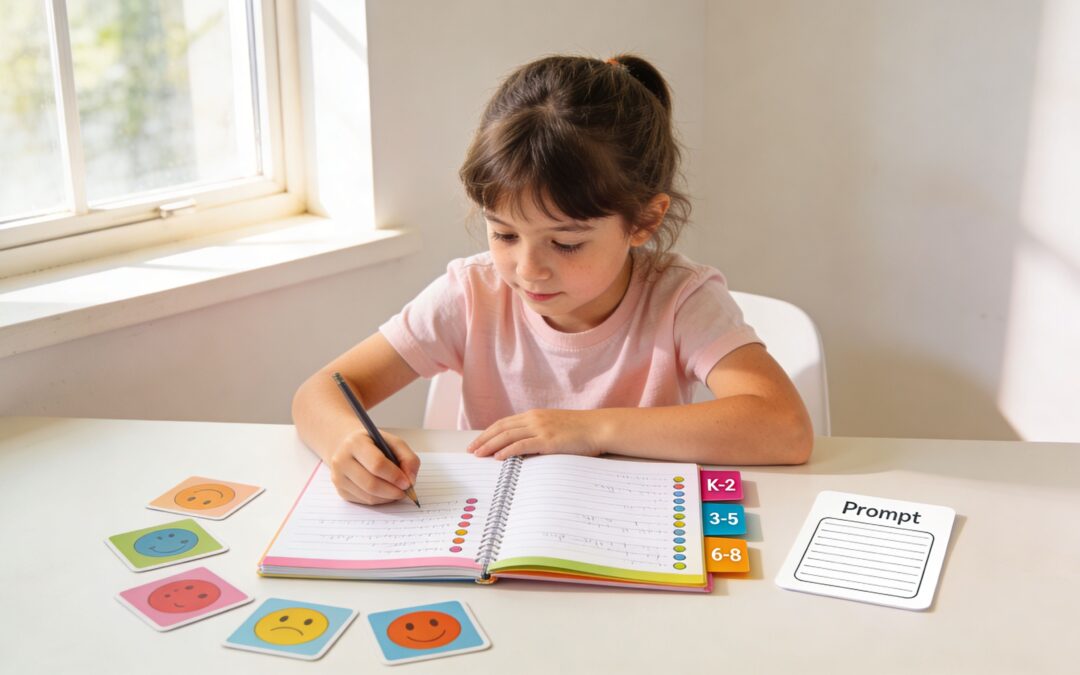
Practice
Grades K-2 (Ages 5-7)
Grades 3-5 (Ages 8-10)
Grades 6-8 (Ages 11-14)
Sound noticing
Listen for one near sound and one far sound
Identify three layers of sound in the room
Notice sound without judging it as annoying or good
Breathing practice
Smell the flower, blow the pinwheel
Five-finger breathing with slower exhale
Silent counted breathing before tests or transitions
Body check-in
“My body feels wiggly, sleepy, or tight”
Name body sensations and choose a reset tool
Track body cues linked to stress, conflict, or avoidance
Mindful movement
Stretch high, fold low, shake out arms
Robot to Ragdoll or wall push before work time
Short movement reset, then self-direct back into focus
Reflection
Draw the feeling with color
Sentence stem: “Right now I need…”
Brief journal entry on what is pulling attention away
Conflict repair
“I didn’t like that” with adult support
Pause, breathe, say what happened
Pause, regulate, then use respectful problem-solving language
A few ready-made routines
Some readers get stuck because they like the idea but can’t picture when to use it. Here are examples.
Morning Meeting Starter “Show me with your fingers how ready your body feels for learning. One means not ready yet. Five means ready. If you’re below a three, choose a reset.”
Transition Tamer “When you hear the signal, freeze your feet, soften your face, and take one breath before moving.”
Pre-Test Focuser “Your job is not to feel perfect. Your job is to arrive. Eyes on the page. One inhale. Longer exhale. Start with the easiest problem.”
Bedtime Wind-Down “Let’s tell the truth about the day. What felt good? What felt hard? What can your body let go of now?”
These small scripts help children trust the routine. Over time, they begin to use the language without being prompted.
Troubleshooting Resistance and Deepening the Practice
Many children don’t respond to “let’s be mindful” with calm appreciation. They giggle. They groan. They stare at you. Some become more activated when asked to be still.
That response makes sense.
The brain doesn’t naturally rest in the present for long stretches. A key challenge is that the present moment is neurologically hard to inhabit, and our brains may spend 50-75% of waking hours mind-wandering, as described in this discussion of why the present is hard to access. That difficulty can be even more pronounced for children, who are still developing the skills that support impulse control and attention.
When children say it’s silly
Don’t argue. Translate the practice into plain purpose.
Instead of:
“We’re doing mindfulness now.”
Try:
“We’re helping our brains get back.”
“We’re giving your body a reset.”
“We’re making it easier to learn.”
“We’re noticing what’s happening before it gets bigger.”
For some students, naming the benefit lowers resistance. For others, choice lowers resistance more than explanation does.
Offer options:
Sit or stand
Eyes open or lowered
Breathe, stretch, draw, or listen
Join now or watch first
Choice protects dignity.
When a child is restless or dysregulated
Stillness is not the first intervention for every nervous system. If a child is bouncing, agitated, or close to a meltdown, start with action.
Try this sequence:
Orient by looking around the room.
Press hands together or push against a wall.
Move with marching, stretching, or carrying books.
Name one body sensation.
Then invite one breath if it feels accessible.
That order matters. Regulation often moves from body to breath, not the other way around.
Some children need to arrive through motion before they can arrive through attention.
A trauma-informed approach
For children who have experienced chronic stress, the phrase “just be in the moment” can feel impossible. If the body is scanning for danger, calm attention won’t come from pressure.
Use these trauma-informed principles:
Lead with safety Keep your voice steady. State what will happen next.
Offer predictability Repeat the same short routine often.
Avoid forced participation Invite. Don’t demand.
Use external anchors Sounds, objects, textures, and movement can feel safer than closing eyes or focusing inward.
Respect the no A child who declines may still be learning by watching.
If a student says, “I hate this,” you can respond with, “Thanks for telling me. You can keep your eyes open and just listen for one sound.” That keeps the door open.
For neurodiverse learners
Many neurodiverse students benefit from present-moment practices, but they may need adaptation.
Consider:
shorter directions
visual prompts
tactile supports
movement before reflection
concrete language instead of metaphor
reduced emphasis on silence
For one child, a fidget may support focus. For another, doodling while listening may be the pathway to staying present. Don’t confuse a nontraditional regulation strategy with disengagement.
Reflection without judgment
Adults often turn mindfulness into another performance metric. Children can feel that instantly.
Instead of asking, “Did you do it right?” ask:
“What did you notice?”
“Was your body more settled, less settled, or the same?”
“Which tool helped a little?”
“What should we try next time?”
For adults, useful reflection sounds like:
“When did I feel most available today?”
“What pulled me out of the moment?”
“What helped me return without force?”
“Did I ask children for presence that I wasn’t practicing myself?”
These questions build awareness without shame.
The grownup obstacle
Many adults say, “I don’t have time.”
Often what they mean is, “I don’t have capacity for one more thing.” That’s real. So don’t add another thing. Put presence inside what you already do.
Try:
one breath before answering a hard email
both feet on the floor before speaking to a child in distress
one moment of silence before starting the car
noticing your jaw during a tense meeting
Living in the now becomes sustainable when it stops being a performance and starts becoming a return.
Your Soul Shoppe Toolkit for Lasting Change
Children learn presence through repetition, relationship, and shared language. Adults do too. That’s why one-off reminders rarely create lasting change. A school or family needs routines, cues, and tools people can use when emotions are calm and when emotions are big.
A structured practice helps. According to this presentation on cultivating presence through daily protocols, 70% of participants sustain more than 30 minutes of daily presence after 30 days, with a 25% drop in cortisol. The same source reports that bringing 10-minute daily Now Circles into K-8 settings has led to 60% gains in peer empathy. For educators, that points to something practical. Presence grows when it is taught as a repeatable routine, not treated as a one-time inspiration.
What lasting implementation looks like
In schools, lasting change usually includes:
Shared language Students and staff use the same words for noticing feelings, needs, and regulation tools.
Predictable practice Presence shows up during arrival, transitions, conflict repair, and academic stress.
Adult modeling Students see grownups pause, reset, and repair in real time.
Family connection The same simple tools travel home in accessible ways.
Reflection Teachers and caregivers track what helps different children return to the moment.
A defined toolkit matters more than enthusiasm alone.
One practical option for schools and families
Soul Shoppe is one resource schools use to teach self-regulation, mindfulness, communication, and conflict resolution through experiential SEL programs, workshops, assemblies, coaching, and family-facing supports. If you’re looking for materials that help turn these ideas into repeatable school and home routines, their overview of social-emotional learning tools is a useful starting point.
For principals and SEL leaders, the practical question is often not “Does presence matter?” It’s “How do we help busy adults teach it consistently?” The answer usually includes scripts, modeling, and a small set of rituals that can be used across grade levels.
A simple action plan
If you want this to stick, keep it narrow at first.
Pick one moment of the day Arrival, before tests, after recess, dinner, or bedtime.
Choose one routine Sound noticing, wall push, five-finger breathing, or a one-sentence body check-in.
Use the same words for two weeks Consistency helps children feel safe enough to participate.
Offer choice Let children engage through breath, movement, drawing, or listening.
Reflect briefly Ask, “What helped?” instead of “Did it work?”
Small daily practice beats occasional intensity. Children trust what adults repeat.
What success really looks like
Success is not a perfectly serene classroom or a child who always pauses before reacting.
Success looks more like this:
a student notices they’re overwhelmed sooner
a teacher catches tension before snapping
a parent chooses curiosity instead of immediate correction
a class returns to focus faster after disruption
a child uses one learned phrase during conflict instead of shutting down
Those are meaningful signs of growth. They are also the building blocks of belonging.
Living in the now is not about escaping real life. It’s about meeting real life with more awareness, steadiness, and care. In schools and homes, that changes the climate one small moment at a time.
If you want support turning these ideas into daily practice, explore Soul Shoppe for school-based SEL programs, family resources, and experiential tools that help kids and grownups build presence, empathy, and connection together.
Beyond ABCs, the strongest preschool lesson plan ideas build a classroom where children learn how to be with themselves and with other people. You can see the difference quickly. One child is disappointed that the blue marker is gone, but instead of melting down, she says, “I’m frustrated.” Two children both want the same truck, and with support, they try turns instead of grabbing. A quiet child starts to join circle because the routines feel safe and predictable.
That kind of room doesn’t happen because a teacher added a poster about feelings. It happens because social-emotional learning is built into the day, not saved for a special lesson once a week. Preschoolers need repeated practice with naming emotions, calming their bodies, listening, solving problems, and feeling that they belong. Those skills are just as teachable as counting, sorting, or letter recognition.
That’s also why the best preschool lesson plan ideas aren’t only about themes like apples, weather, or community helpers. They connect academic learning with concrete social practice. Early math standards already point in this direction. Kindergarten students in the Common Core are expected to organize, represent, and interpret data in categories, including comparing how many are in each group, according to CCSS-aligned guidance summarized here. In preschool, that can look like graphing favorite feelings, tallying classroom choices, or sorting how classmates like to greet each other.
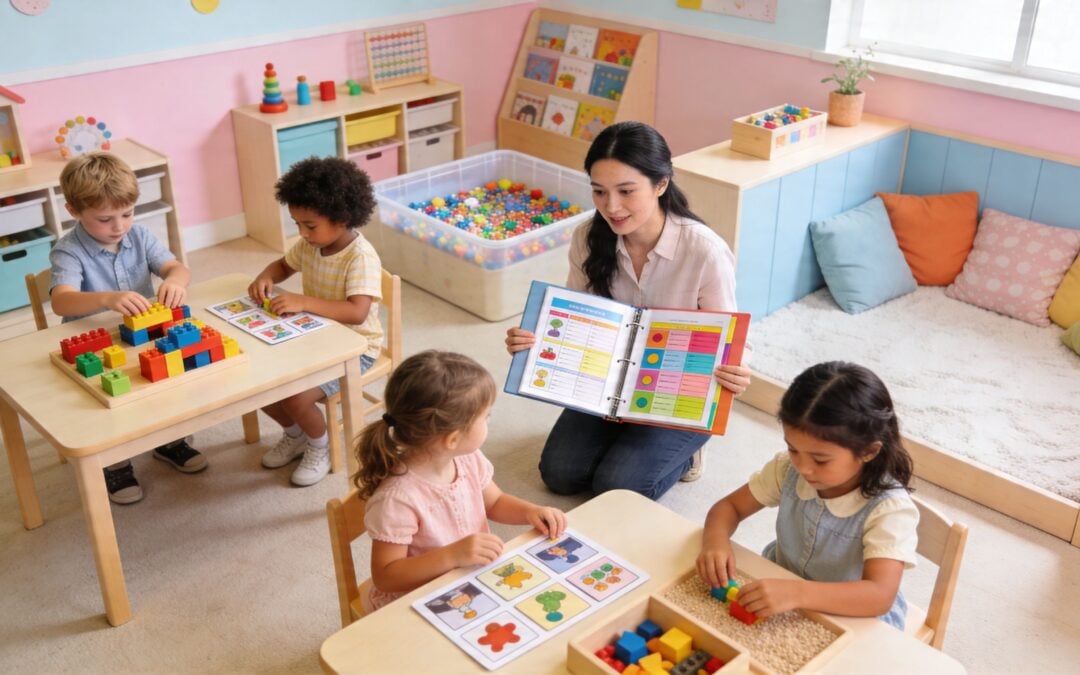
Busy teachers and parents don’t need more cute activities without a plan. They need lessons that work in real classrooms, with wiggles, conflicts, uneven language development, and a wide range of needs. The ideas below are built for that reality. Each one includes a clear activity, practical examples, differentiation moves, simple assessment, and a home extension so the lesson doesn’t stop at pickup.
1. Emotion Recognition and Naming Circle
Start with the simplest skill, giving feelings names children can use. Sit in a circle with a mirror, a few emotion cards, and one short picture book. Pick just three or four feelings at first, such as happy, sad, frustrated, and excited. More choices sound richer, but too many labels at once usually create guessing instead of understanding.
Ask children to look at a card, copy the face, then check themselves in the mirror. That mirror matters. Preschoolers often understand feelings better when they can connect the word to a face and body, not just hear an adult define it.
How to run it
Read a familiar story and pause on one page. Ask, “How does the character feel?” Then follow with, “What do you see that makes you think that?” That second question keeps the conversation grounded in observable clues like eyebrows, tears, posture, or voice.
At transition times, repeat a quick ritual. Children can point to a feeling card as they come to circle, lunch, or rest. If you want to deepen the work, Soul Shoppe’s guidance on naming feelings and helping kids find the words they need fits naturally with this kind of daily practice.
Practical rule: Don’t correct a child too quickly if they misread a feeling. Ask what they noticed first. The explanation often tells you more than the answer.
For differentiation, offer visual choices instead of open-ended questions for children with limited expressive language. For sensory-sensitive children, skip exaggerated group mimicking if it feels like too much and let them point or match instead.
Assessment: Note whether a child can match a facial expression to a feeling word, identify a character’s emotion, or name their own feeling with support.
Home extension: Send home two or three feeling words with simple prompts like “When did you feel excited today?”
What works: Repetition, mirrors, and familiar books.
What doesn’t: Abstract discussions about emotions without visual support.
2. Mindfulness and Breathing Activity Stations
Some children need movement to calm. Some need touch. Some need a script. A single whole-group breathing lesson rarely reaches everyone, which is why stations work well.
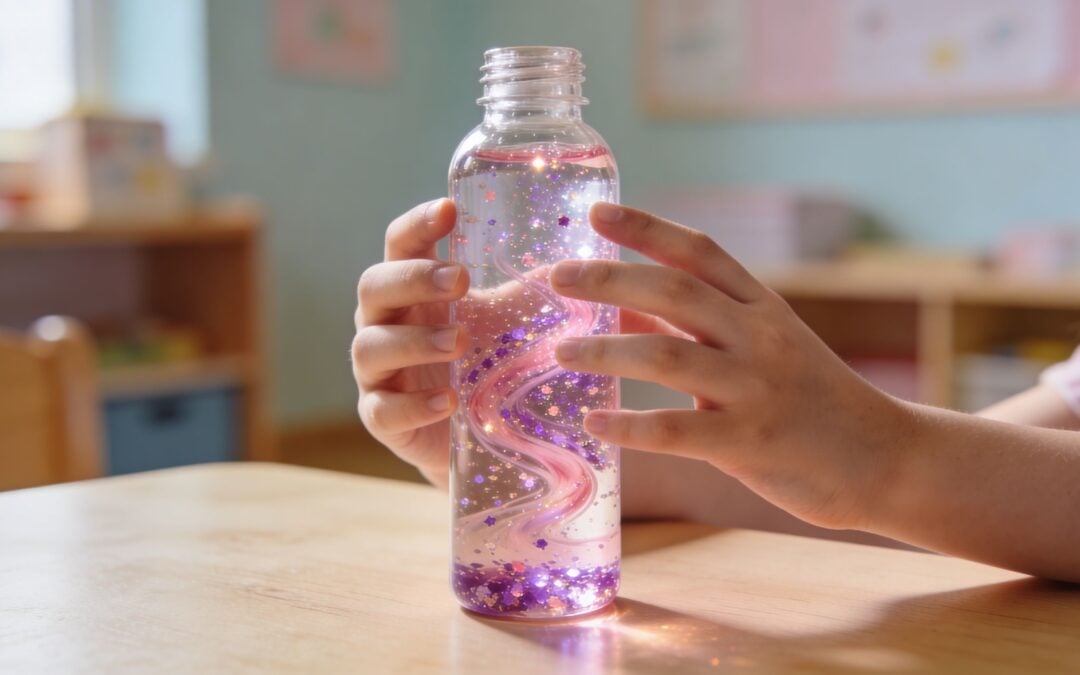
Set up three calm choices around the room. One can be bubble breathing. One can be a stuffed animal “belly buddy” station where children watch the toy rise and fall on their stomach. One can be a sensory station with a glitter bottle or soft fabric squares for slow touch and observation.
Keep the language concrete. “Smell the flower, blow out the candle” works better than “regulate your nervous system.” Practice when children are calm, not only after a conflict. If you wait until a child is already overwhelmed, the strategy feels like a demand instead of a tool.
Best station choices for preschool
A short rotation is enough. Preschool attention is brief, and calm practice should feel accessible, not heavy.
Bubble breathing: Children inhale, then blow slowly enough to make one large bubble instead of many fast ones.
Belly buddy breathing: Children lie down and watch a plush toy move as they breathe.
Slow-move path: Tape simple footprints on the floor and invite heel-to-toe walking.
Soul Shoppe’s explanation of the belly breathing technique gives families and staff a shared routine, which helps children use the same language across settings.
Teachers often ask whether mindfulness belongs in preschool. It does, if it stays physical, brief, and optional in delivery. Children don’t need long silent meditations. They need usable calming habits.
Some children will giggle through the first few rounds. That’s normal. Stay steady and keep going.
For differentiation, let children choose between seated, standing, or lying-down options. For children who resist stillness, begin with movement and end with one breath.
Assessment: Watch whether children can copy the breath pattern, choose a calming station, or return to group with less support over time.
Home extension: Send one breathing phrase home and encourage families to use it before bedtime or transitions.
What works: Consistent routines and visual prompts.
What doesn’t: Treating calming tools as consequences.
3. Kindness and Empathy Circle Stories
Books are one of the easiest ways to teach empathy because they let children practice noticing another person’s inner world. Choose stories with clear social moments. A character is left out. Someone makes a mistake. A friend helps. Keep the plot simple enough that children can track both action and feeling.
Read slowly and stop often. Ask, “What might help right now?” That question moves children from emotion recognition into response. You’re not only naming sadness. You’re teaching what caring can look like.
Turning story time into social practice
After reading, act out one moment with puppets or stuffed animals. If the story shows a child dropping blocks and feeling upset, one puppet can offer help, one can laugh, and children can compare the outcomes. This keeps empathy concrete.
Soul Shoppe’s approach to teaching empathy pairs well with this kind of discussion because preschoolers learn best when caring language is practiced, not merely praised.
Use a class kindness chart, but keep it descriptive. Write or draw what happened: “Mila got a tissue for Ben” or “Jordan moved over so Ava had space.” Avoid turning kindness into a competition for stickers.
Assessment: Listen for whether children can identify how a character feels and suggest one helpful response.
Differentiation: Offer picture choices for children who struggle with open discussion. For children with social communication differences, rehearse one response line such as “Do you want help?”
Home extension: Send home one book title and one dinner-table question, such as “When did someone help you today?”
One strong example is a classroom “kindness replay.” After lunch, the teacher briefly retells one helpful moment from the morning and asks children to show the feeling on their faces. That simple replay ties story language to real classroom life.
4. Conflict Resolution and Problem-Solving Role-Play
This lesson belongs in every preschool room because conflicts will happen anyway. The question isn’t whether children will argue over materials, space, or turns. The question is whether they’ll have any script beyond grabbing, crying, or shutting down.
Use a very simple scenario first. Two children want the same shovel. One child says, “I had it.” The other says, “I want it now.” Freeze the action and ask the group what the children could say or do next.
Lead in with a visual support, then show the role-play clip below during teacher planning or for family workshops.
A simple problem-solving path
Children need a short sequence they can remember under stress. Long scripts fall apart in real moments.
Say the problem: “We both want the truck.”
Listen: Use a talking object so each child gets a turn.
Pick a solution: Trade, take turns, use a timer, or find another similar item.
Check back: “Did that work?”
Soul Shoppe shares helpful examples in these conflict resolution activities for kids, and the key is the same in preschool as in older grades. Children need repeated rehearsal before a real disagreement.
What doesn’t work is forcing apologies on demand. A child can say “sorry” and still have no idea what to do next time. What works is helping children name the problem, hear another person, and try a concrete next step.
“Use your words” is too vague for most preschoolers. Give them the actual words.
For inclusive practice, use picture cards showing options like wait, trade, ask, or help. For children who struggle with transitions, keep the same conflict routine every day and post it at child height.
Assessment: Notice whether a child can state the problem, wait for a turn to speak, or choose from two possible solutions.
Home extension: Share the same classroom script with families so children hear the same language at home.
5. Belonging and Classroom Community Building
If children don’t feel they belong, every other lesson gets harder. They’re less willing to speak, take risks, ask for help, or recover from mistakes. Community building isn’t extra. It’s part of classroom management, family engagement, and learning readiness all at once.
A strong belonging lesson can be as simple as a daily greeting choice board. Children choose a wave, fist bump, dance move, or verbal hello. Then they see their photo moved from “home” to “school” on an attendance board. That small ritual tells a child, “You’re seen. You matter here.”
Routines that help children feel included
The strongest routines are predictable and visible. They don’t depend on which adult is leading that day.
Name practice: Use every child’s name often and learn the correct pronunciation from family members.
Shared jobs: Give every child a real classroom role, not just the most confident children.
Cooperative play: Choose activities where children build or create together instead of competing.
Family presence: Display family photos at eye level and refer to them naturally during the day.
For a simple movement option, cooperative games for team building can be adapted for preschool with shorter turns and clear visual expectations.
One useful classroom project is a “We Belong Here” mural. Each child adds a handprint, photo, or drawing of something important to them. During circle, children introduce one piece of their section. That works better than generic “all about me” pages that end up on a wall without shared discussion.
Assessment: Watch who enters easily, who hangs back, who knows classmates’ names, and who joins group tasks with support.
Differentiation: Offer nonverbal greeting choices, visual job cards, and a quiet participation option for children who warm up slowly.
Home extension: Ask families to send a photo, favorite song, or short note about what helps their child feel safe.
6. Social Stories and Friendship Skills Curriculum
Some social skills have to be taught directly. “Be nice” doesn’t tell a child how to join a game, ask for a turn, or respond when someone says no. Social stories help because they break a social moment into clear, repeatable steps.
Pick one friendship skill and stay with it for several days. Joining play is a good starting point. Read a short homemade social story with photos of your classroom: “I see children playing. I can watch first. I can say, ‘Can I play?’ I can join gently.” Using real photos from your room makes the story easier to transfer into daily play.
One skill at a time works best
Children learn social routines through repetition and consistency. When adults switch language constantly, children don’t know what to hold onto.
Try a mini-cycle like this over one week:
Day one: Read the social story and model the skill.
Day two: Practice with puppets.
Day three: Rehearse in centers with adult support.
Day four: Notice and narrate real examples.
Day five: Review with photos of children using the skill.
This is especially helpful for neurodiverse learners and children who need more predictability around social expectations. Existing preschool planning resources often leave that adaptation gap wide open, even though inclusive classrooms need concrete modifications for sensory needs, transitions, and social communication support, as discussed in this overview of inclusive preschool education gaps.
What works is using the same short language across adults. “Watch, ask, join gently” is easier than a long lecture in the block area.
Assessment: Track whether a child can use one step independently, such as watching first or asking to join.
Differentiation: Use picture cue cards, peer models, and shorter practice bursts in low-stress settings.
Home extension: Send the social story home so families can rehearse the same script before playdates or sibling play.
7. Self-Awareness and Personal Strengths Discovery
Preschoolers benefit from hearing what they’re good at, but broad praise isn’t enough. “Good job” fades quickly. Specific reflection helps children build a more stable sense of self.
Create a weekly “strength spotlight” for one child. Use photos, a quote, and one or two teacher observations. “You kept trying to fit the puzzle piece even when it was tricky.” “You noticed Maya was sad and brought her a tissue.” That kind of feedback teaches children to connect actions with identity.
Make strengths visible and specific
This lesson works best when strengths include both academic and social qualities. Otherwise, children start to think only fast finishers or strong talkers have value.
Use a small display or binder page with prompts like:
I enjoy
I’m learning
My friends know me for
One thing I’m proud of
Children can dictate responses while you write. Revisit those statements later so they don’t become a one-time poster and disappear into wall décor.
A nice extension is a “teacher noticing board” near sign-in. Families can read one sentence about what their child did well that day. Keep it concrete and effort-based.
Children believe the stories adults repeat about them. Make those stories accurate, generous, and specific.
For differentiation, let children respond through pointing, drawing, choosing photos, or moving objects instead of speaking. For children who struggle with self-expression, start with preference language: “I like,” “I don’t like,” “I want,” and “I need.”
Assessment: Listen for whether children can name a preference, a strength, or a task they’re still learning.
Home extension: Invite families to share one strength they see at home so school and home language align.
What works: Documentation, photos, and child dictation.
What doesn’t: Empty praise that gives no usable information.
8. Listening and Respectful Communication Lessons
Listening has to be taught as a physical and social skill. Preschoolers don’t automatically know how to wait, track a speaker, or respond respectfully, especially in a busy room with noise, movement, and competing interests.
Begin with a game, not a lecture. Sound scavenger hunts work well. Ask children to close their eyes for a few seconds and identify what they hear: a bell, footsteps, a zipper, water running. Then connect that same body posture to listening to a friend.
Teach what listening looks like
A visual checklist helps because “listen” is invisible unless you make it concrete. Draw simple icons for eyes watching, body still, mouth quiet, and ears listening.
The progression can look like this:
Model: Teacher and assistant show good and poor listening in a playful way.
Practice: Children use a talking object during partner share.
Reflect: Ask, “What did listening help us do?”
For early childhood classrooms, this kind of communication practice belongs alongside academics. Preschoolers naturally gather and organize information through hand-raising counts, tallying, and classroom voting, and teachers can help them see those moments as real data work, according to Stanford’s DREME guidance on data in the preschool classroom. A simple example is voting on which song to sing, then listening while classmates explain their choice.
What doesn’t work is expecting long carpet discussions without scaffolds. What works is short turns, visible supports, and specific praise such as, “You waited until Ana finished.”
Assessment: Watch whether a child can wait for a turn, repeat back one idea, or face the speaker during a short exchange.
Differentiation: Use visual timers, partner talk before whole group, and movement breaks between speaking turns.
Home extension: Encourage families to use one listening game during car rides or meals.
9. Celebrating Diversity and Inclusive Community Practices
Children notice differences early. They notice skin tones, languages, family structures, mobility devices, hairstyles, food, and names. If the classroom stays silent, children still form ideas. Inclusive teaching means guiding those observations with respect instead of pretending everyone is the same.
Start by looking at the room itself. Do the books, dolls, puzzles, dramatic play items, and posters reflect the children you teach and the wider world? If not, the lesson begins with changing the environment.
Small classroom choices send big messages
Use books and materials that include many kinds of families, cultures, and abilities in everyday situations, not only in holiday units. Normalize difference through routine conversation. “Ayaan says hello to grandma in Arabic.” “Lena has two homes.” “Mateo uses headphones when the room feels loud.”
This area is often underdeveloped in common preschool planning resources. Much of the available content still centers academic themes while offering limited guidance for directly embedding social-emotional learning into daily instruction, including empathy, emotional regulation, and peer connection, as noted in this discussion of a social-emotional integration gap in preschool planning.
One practical activity is a family story share. Invite each family to contribute a photo, object, song, greeting, or favorite food tradition. Keep it simple so participation is realistic. A family doesn’t need to come in person to be included.
When bias shows up, respond calmly and clearly. Children need correction without shame and guidance without silence.
For differentiation, preview new cultural materials for children who need routine, and provide sensory alternatives during music, food, or celebration activities. Inclusion isn’t only representation. It’s also access.
Assessment: Notice whether children show curiosity respectfully, use classmates’ names correctly, and include peers whose backgrounds differ from their own.
Home extension: Ask families to share one word, ritual, or tradition they’d like honored in the classroom.
10. Teaching Resilience and Growth Mindset Through Challenge Activities
A good challenge activity is hard enough to require effort and manageable enough that children can still succeed with support. That balance matters. If the task is too easy, children don’t practice persistence. If it’s too hard, you get shutdown, avoidance, or frantic behavior.
Try a building challenge with recycled materials, blocks, tape, and clothespins. Ask children to make a bridge for a toy animal or a house that won’t fall when the table is gently tapped. Then pause halfway through and ask, “What are you trying now?” That question shifts attention from outcome to strategy.
How to teach persistence without pressure
Use growth-minded language all through the lesson. “You’re still figuring it out.” “That didn’t work yet.” “What else could you try?” Keep your tone matter-of-fact. If adults become overly excited or evaluative, children start performing for approval instead of staying with the task.
Children also benefit from early exposure to data and investigation through play. Researchers and teacher supports connected to early childhood data science describe a need for practical tools that help teachers bridge abstract ideas through concrete experiences like sorting, observing, and representing information in play-based ways, as explained in Adding Data Science to Preschool Math. In a resilience lesson, children can compare which building designs stood longer or sort strategies that helped.
A reflection circle after the challenge is where much of the learning lands. Ask, “What was tricky?” “What did you do when it got frustrating?” “Who changed their plan?”
Assessment: Notice whether a child stays with a task, asks for help, tries a second strategy, or recovers after a mistake.
Differentiation: Offer graduated materials, visual step cards, and a break option for children who become overwhelmed.
Home extension: Send home one challenge prompt using common household materials and encourage families to praise effort and strategy, not speed or perfection.
These preschool lesson plan ideas work because they treat social-emotional learning as daily instruction, not an add-on. Children don’t build empathy from one kindness poster. They build it by hearing feelings named, watching adults model repair, practicing scripts in real moments, and revisiting the same skills across the year. That repetition is what turns a lesson into a habit.
If you’re trying to improve your planning, start smaller than you think you should. Pick one routine and make it consistent. An emotion check-in at arrival. A breathing station after recess. A friendship script in the block area. A class kindness replay before dismissal. Most classrooms improve through steady practice, not through a giant reset.
That matters in modern early childhood settings because the academic side of preschool has gotten more complex. Preschool enrollment reached 58% of 3 to 5-year-olds in the United States by 2023, according to the measurement lesson plans overview citing NCES data. At the same time, teachers are being asked to support early math, language, behavior, inclusion, and family partnership. The most workable response isn’t to carve the day into disconnected programs. It’s to teach whole-child skills through what you’re already doing.
For example, graphing can become a feelings lesson when children sort how they feel at morning meeting. That connects naturally to early standards for organizing and interpreting category data. A collaborative art project can become a belonging lesson when each child contributes something personal and the class practices noticing one another’s ideas. Story time can become empathy practice when children pause to read facial expressions and suggest caring responses. The strongest preschool lesson plan ideas do double duty.
Teachers also need permission to notice trade-offs. Whole-group discussions build shared language, but some children will participate better with puppets, picture cards, or partner talk first. Open-ended activities encourage voice and creativity, but many children need clear visuals and repeated scripts before they can succeed in them. Calm corners help when they’re taught proactively. They don’t help much when they’re introduced only after a child is already dysregulated and feels sent away.
Inclusion has to stay at the center of this work. If a lesson depends on long verbal responses, children with language delays or social communication differences may get left out. If it depends on noisy sensory materials, some children will spend the lesson coping rather than learning. If it assumes all families can attend daytime events or send supplies, belonging becomes uneven. Good planning anticipates those barriers and offers more than one path into participation.
Keep assessment simple and useful. In preschool, the best assessment often looks like a clipboard note, a photo, or one sentence recorded after an interaction. Can the child name a feeling with support? Ask to join play? Recover after frustration? Wait for a turn? Use a calming strategy? Those observations tell you more than a polished final product.
There’s also real value in shared language across school and home. Children do better when teachers, counselors, administrators, and caregivers use the same short phrases for breathing, listening, problem-solving, and repair. That’s one reason many schools look for SEL partners that support adults as well as children. Soul Shoppe’s work is built around connection, safety, empathy, and practical tools that school communities can use, including research-based experiential programs delivered over more than 20 years.
The goal isn’t a perfect classroom with no conflict, no tears, and no noise. Preschool shouldn’t look like that. The goal is a room where children learn what to do with big feelings, mistakes, and differences. When SEL sits at the heart of your planning, the classroom becomes calmer, clearer, and more humane. Children don’t just learn letters, numbers, and routines. They learn how to live and learn alongside other people.
If you want support turning these ideas into shared schoolwide practice, Soul Shoppe offers practical SEL programs, workshops, and tools that help children and adults build empathy, communication, conflict resolution, and belonging in everyday classroom life.
More than words. That’s what you’re dealing with when a student erases a drawing until the paper tears, or when a child knows an answer but won’t risk saying it out loud. Those moments often get labeled as perfectionism, shyness, or sensitivity. In practice, they’re often early signs of shaky self-worth.
That matters because self-esteem in girls can decline sharply in early adolescence. One summary of the research notes that girls’ self-esteem peaks around age 9, and body image satisfaction drops from 75 percent at ages 8 and 9 to 56 percent at ages 12 and 13, according to findings cited by Journal Buddies. By the teen years, body concerns and outside pressures can become even louder.
Praise helps, but praise alone is flimsy. Kids can become dependent on hearing “good job” and still crumble the moment something feels hard, awkward, or imperfect. Strong self-esteem grows from the inside out. It’s built through self-awareness, honest reflection, problem-solving, and the ability to recover after disappointment.
That’s where journaling earns its place. Structured prompts can support stress reduction, self-awareness, confidence, and perspective-taking, with benefits described in therapeutic writing research summarized by PositivePsychology’s journaling prompts guide. For teachers and parents, journaling also works because it’s flexible. You can use it in a morning meeting, after recess conflict, at counseling check-in, or as part of a bedtime routine.
The most effective self esteem journal prompts don’t ask kids to repeat empty positive phrases. They help children notice strengths, name values, process setbacks, and see proof of their own growth.
Below are eight journaling methods I’d use with K to 8 students. Each one serves a different psychological purpose, includes concrete examples, and works best when adults keep the tone steady, warm, and specific.
1. Daily Affirmations and Strengths Recognition
This is the simplest place to start, and it’s also the easiest place to get it wrong.
A lot of adults hand kids an affirmation like “I am amazing” and hope repetition will do the rest. Usually it doesn’t. Children trust evidence more than slogans. If the writing feels fake, they disengage fast.
Make affirmations concrete
The strongest affirmations are tied to real behavior.
A kindergartner who shared crayons can write, “I am a helpful friend because I shared my crayons today.” A 3rd grader might write, “My strength is persistence. I kept trying on my math page even when I felt stuck.” A middle school student can go further: “I handled a hard social moment calmly. I listened to my friend before giving advice.”
That shift matters. The child isn’t just claiming a trait. They’re identifying proof.
Practical rule: Never ask kids to write an affirmation without also asking, “What happened today that makes this true?”
In classrooms, I like sentence stems for younger or hesitant writers:
I am good at: helping, drawing, listening, building, noticing, trying again
I showed strength when: I kept going, told the truth, asked for help, included someone
Today I’m proud of: one action, not a whole identity
What works and what doesn’t
What works is specificity, repetition, and adult modeling. A teacher can write on the board, “I am patient because I explained the directions again without rushing.” That gives students a believable model.
What doesn’t work is forcing intensity. Kids don’t need to declare that they love everything about themselves. They need language for noticing what’s sturdy in them.
A few practical supports help:
Build a strengths bank: Post words like brave, thoughtful, persistent, creative, fair, calm, curious.
Pair self and peer noticing: Let students write one strength they saw in themselves and one they saw in a classmate.
Keep it short: Two sentences is enough if they’re honest.
2. Challenge Reflection and Problem-Solving Journal
Students build self-esteem faster from “I got through something hard” than from “I’m good at everything.”
That’s why challenge reflection is one of the most practical self esteem journal prompts you can use. It turns failure, conflict, and frustration into usable information.
Turn setbacks into evidence of capability
Younger students do well with an “Oops to Aha” format.
A 1st grader might write: “Oops: My block tower kept falling. Aha: I made the bottom wider. Now I know: I can try a different plan.”
A 4th grader can handle more emotional detail: “My challenge was working with a partner I didn’t know. I felt nervous and quiet. I asked what idea they wanted to start with. That helped us begin.”
A 7th grader can reflect on choices: “I got a low quiz grade and blamed the teacher at first. If I’m honest, I didn’t review until the night before. Next time I’ll make a study plan and use my organization skills.”
That last sentence is the key. Reflection without a next step can become rumination.
A structure kids can repeat
Use the same few prompts each time:
What happened: Name the challenge clearly.
How I felt: Frustrated, embarrassed, left out, confused, angry, disappointed.
What I did: The action taken, even if it was imperfect.
What I learned: One takeaway.
What I’ll try next: One concrete step.
Struggle is not a sign that a prompt failed. It’s often the exact material the child needs to work with.
What works here is normalizing challenge before asking students to reflect. Teachers can briefly share age-appropriate examples: “I mixed up our schedule this morning and had to regroup.” That lowers defensiveness.
What doesn’t work is turning journaling into a post-mistake punishment. If a child only writes after conflict or failure, they’ll start associating journaling with shame. Use it after challenges, yes, but also after recovery and repair.
For classrooms, anonymous “challenge examples” can help. A counselor or teacher can keep a folder of composite entries like “I felt left out at recess” or “I froze during a presentation” so students see that hard moments are common, not proof that something is wrong with them.
3. Values and Identity Exploration Journal
A student bombs a test, gets left out at lunch, or sees a friend get more attention online. By the end of the day, one quiet belief can take over: maybe I only matter when I perform, fit in, or look right.
Identity journaling interrupts that pattern. In this method, the goal is not just expression. It is helping kids build self-respect around values, roles, culture, character, and choice. That makes it a different tool from challenge reflection or affirmations. It helps children answer a steadier question: Who am I, even on an off day?
Help students define themselves beyond outcomes
For younger students, keep identity work concrete and visible. A 2nd grader might make a “Me Shield” with four sections:
people who matter to me
things I enjoy
strengths I use
one rule or belief I try to live by
That last section often tells you the most. A child who writes “Include others” or “Tell the truth” is starting to root identity in values.
Upper elementary students can connect values to behavior. A 5th grader might write, “I value honesty. I told my mom I broke the vase. I felt nervous, but I did what matches who I want to be.” That is fundamental work. The student is linking action, discomfort, and identity.
Middle school students are usually ready for contradiction and context. An 8th grader might write, “At home I’m funny and creative, but at school I stay quiet. I think I’m worried people will judge me.” That kind of entry gives adults something useful to respond to. It points to belonging pressure, not a lack of personality.
Use prompts that build identity language
Children often need words before they can reflect clearly. Give them a values menu and let them choose a few that feel true or aspirational: kindness, courage, creativity, fairness, loyalty, curiosity, responsibility, humor, faith, family, service, justice.
Then use prompts like these:
Which value mattered most to you today?
Where did your actions match that value?
Where did they drift away from it?
What part of yourself feels easy to show?
What part do you keep private?
Who are you with different people?
What do you want to be known for?
This works especially well in grades 4 through 8, when students are trying on identities quickly and often publicly. Some children answer too fast with labels they think adults want to hear. Slow them down. Ask for a moment, not a slogan.
How to implement it well at home or in class
Use identity journaling once or twice a week, not every day. Daily use can make the writing feel forced, especially for students who are still figuring themselves out.
In classrooms, I recommend giving students choice in format. Some write paragraphs. Some sort value cards first. Some draw identity maps with circles for family, friends, school, interests, culture, and beliefs. If you want a related way to help students notice what matters in their lives, these gratitude activities for kids pair well with values work because they move children from vague feelings to specific meaning.
At home, parents can keep the conversation light but honest. “What felt most like you today?” usually gets a better response than “What are your values?” The trade-off is speed versus depth. Simpler questions get more participation. Richer questions produce better insight, but only when trust is already there.
What helps and what gets in the way
What helps is making room for layered identity. A child can be shy in class and loud with cousins. Athletic and artistic. Caring and still learning how to handle anger. Kids need to see that complexity is normal.
What gets in the way is turning identity work into branding. If adults push children to pick one neat answer to “who am I,” journaling starts to shrink them instead of helping them grow. Identity develops through repetition, testing, and revision.
As noted earlier in the article, concerns about appearance and outside approval can distort self-worth, especially for older students. That is why this journaling method matters. It gives kids another place to stand.
4. Gratitude and Appreciation Journaling
A 3rd grader has a hard recess, comes back upset, and writes, “Nothing good happened today.” That is the moment this journaling method earns its place. Gratitude and appreciation journaling helps children widen the frame enough to notice support, relief, effort, and small wins without denying what hurt.
Used as a self-esteem tool, gratitude is not a feel-good list. It trains attention. Children who regularly fixate on mistakes, exclusion, or comparison need practice spotting what supported them, what mattered, and what they contributed themselves. That shift can build steadier self-worth because the child starts to see, “My day was hard, and I still noticed care, choice, and strength.”
Specificity matters. “I’m grateful for my family” is a start, but “I’m grateful my dad waited with me before school because I was nervous” gives the brain something real to hold onto. The same is true at school. “I’m grateful my friend shared a swing at recess because I felt left out” is stronger than a vague list item. So is self-appreciation: “I’m grateful I took three breaths instead of yelling.”
That last category is easy to skip. I do not recommend skipping it. If gratitude only points outward, some children learn to appreciate everyone except themselves.
For younger students, keep the method concrete and brief. A kindergarten or 1st grade journal can use “Three Good Things” with pictures and a few dictated words. A 3rd or 4th grader can finish the stem “I appreciated ___ because ___.” Middle school students usually benefit from a two-part entry: one thing they received, one thing they did.
A better prompt set than “What are you grateful for?”
The prompt shapes the depth of the answer. Rotate the lens so the practice stays active:
Support: Who helped you today, and what did they do?
Moment: What felt calm, fun, or meaningful?
Self: What did you handle well, even if it was small?
Body and senses: What did you notice that made the day easier or better?
Repair: What got better after a hard moment?
The word “because” often does the heavy lifting. Without it, many entries stay shallow.
There is also a real trade-off here. Daily gratitude can become performative if adults push it too hard or use it to shut down disappointment. A child who says, “I’m still mad,” should not be corrected into gratitude on command. The practice works better after the feeling is acknowledged. Then journaling can help the child add complexity: “I was angry after lunch, and I was also grateful my teacher checked on me.”
For classroom use, this method works well in advisory, morning meeting follow-up, calm-down corners, or Friday reflection. For home use, a shared notebook by the dinner table or bedside usually gets better follow-through than a formal workbook. Families and teachers who want more hands-on extensions can pair this section with these gratitude activities for kids that help children notice specific moments of care and joy.
Used consistently, gratitude and appreciation journaling becomes a resilience tool. It helps children record evidence that good experiences, caring relationships, and personal effort are still present, even on days that do not feel easy.
5. Growth Mindset and Learning Journey Journal
Monday morning, a student stares at a page and says, “I’m just bad at this.” By Friday, that same student may still find the work hard, but the journal can help them say something more accurate: “I used a different strategy, and part of it worked.”
That shift matters. This method builds self-esteem by helping children separate identity from current performance. In this toolkit of eight journaling approaches, the growth mindset journal is the tool for resilience under challenge. It teaches students to track progress, strategy, and recovery after mistakes.
Help students record change they can actually see
Children rarely build confidence from praise alone. They build it from evidence.
A 1st grader can tape in two handwriting samples and finish the sentence, “In September I needed help with ____. Now I can ____ on my own.” A 5th grader might write, “Flashcards were not enough for multiplication facts. Skip-counting and a partner game helped more.” In middle school, the reflection can get more precise: “I still get nervous in science, but asking one question before labs helped me understand the directions.”
Those examples do more than sound positive. They document process. That is the difference between empty encouragement and useful self-belief.
Use prompts that connect effort to strategy
Students need language they can use during hard moments, not just after success. Prompts like these work well:
What felt hard today, specifically?
What strategy did I try first?
What changed after I got stuck?
What mistake showed me what to practice next?
What can I say instead of “I’m bad at this”?
What is one sign I know more today than I did last week?
For younger students, keep it concrete and brief. “One thing I can do now is…” works better than abstract reflection. For grades 4 through 8, add comparison prompts and revision notes so students can examine how learning changed over time.
I usually recommend a weekly “learning journey” page with three parts: what improved, what still feels shaky, and what strategy to try next. That structure is simple enough for follow-through and strong enough to show patterns across a month or grading period.
Protect the journal from becoming fake positivity
There is a real trade-off here. Growth mindset language helps, but it can also irritate students if adults use it as a script instead of support.
A child who hears “just keep trying” after repeated frustration often feels misunderstood. The journal works better when adults acknowledge the barrier and then guide reflection: “What part is confusing?” “What have you already tried?” “What support would help?” Self-esteem grows when students feel competent and honest, not when they are pushed to sound optimistic.
That is why “yet” needs a companion. “I can’t do this yet” should lead to “My next step is…” Without that second part, the phrase becomes classroom wallpaper.
Match the method to age and setting
In K to 2, use drawings, stickers, sentence stems, and before-and-after work samples. In grades 3 to 5, students can track strategies across subjects and notice which ones help. In grades 6 to 8, the journal can include revision reflections, test corrections, project checkpoints, and short entries about persistence, planning, and asking for help.
For teachers, this aligns well with SEL goals around self-awareness, self-management, and responsible decision-making. For parents, it works best after homework, music practice, sports, or any moment where frustration tends to show up quickly. A short entry is enough if it captures one challenge, one action, and one next step.
Visible artifacts strengthen the practice. Keep drafts, corrected work, reading logs, and goal check-ins together so students can review their own evidence. If you want ready-to-use classroom extensions, Soul Shoppe’s growth mindset activities for kids that stick pair well with this journal routine.
Used consistently, this journal helps children build a more durable kind of confidence. They stop asking, “Am I smart at this?” and start asking, “What helps me learn this?”
6. Peer Feedback and Compliment Collection Journal
Some students cannot name a single strength in themselves, even when everyone around them can see several.
A compliment journal helps bridge that gap. It gives children a place to collect evidence from real relationships. Not flattery. Observations.
Teach students to gather useful feedback
For younger students, this can be very simple. A kind note gets taped into a journal with a quick drawing of how it felt to receive it.
In 4th grade, I’d use structured sentence frames during class meeting: “I noticed you…” “You helped me by…” “I appreciate your…”
Then students reflect in writing: “Maria said I was a good leader because I made sure everyone had a job in our group.”
In 7th grade, a monthly review works well: “I noticed people often say I’m funny and easy to talk to. I don’t usually think of that as a strength, but maybe it is.”
That reflection step is where the confidence grows. Otherwise students just collect compliments without integrating them.
Protect the process from becoming performative
This method can backfire if it turns into a popularity contest. The fix is structure.
Use brief routines like:
Compliment circles: Every student both gives and receives.
Specific praise only: No “you’re nice.” Ask for actions.
Private collection options: Some kids don’t want public attention.
Home-school connection: Invite one note a week from a caregiver or sibling.
A 2020 Journal of Consumer Research study found that low self-esteem can shape choices in self-verifying ways, including a tendency to choose options that align with negative self-views, as discussed in the study abstract and article page. In school terms, students sometimes reject positive evidence because it clashes with the story they already believe about themselves. That’s why compliment journaling needs repetition. One kind note won’t usually override a negative self-concept.
“I notice you waited for me when I was behind” is stronger than “You’re a good friend.”
What works is helping students ask, “What strength does this feedback reveal?” Leadership, humor, patience, courage, fairness, creativity, reliability. Give them words for what they’re collecting.
What doesn’t work is vague praise, public pressure, or sarcasm disguised as humor. Adults need to teach feedback carefully and monitor the tone.
7. Self-Compassion and Inner Friend Journal
Many students talk to themselves in ways they would never use with another human being.
“I’m so stupid.” “No one likes me.” “I ruin everything.”
If those thoughts go unchallenged, journaling can accidentally become a place where self-criticism gets rehearsed instead of softened. That’s why self-compassion prompts matter.
A useful video can help introduce the idea before writing:
Teach the inner friend voice
For younger children, separate “worry thoughts” from “kind thoughts.”
If a child spills paint: Worry thought: “I’m so clumsy.” Kind thought: “Accidents happen. I can clean this up.”
A 5th grader can use the friend test: “My inner critic said I’m the worst at kickball. What would I tell a friend? I’d say it was one turn and they’ll get another chance.”
An 8th grader can write more fully: “My inner critic shows up after bad grades and tells me I’m not smart enough. My inner friend says this is disappointing, but one grade doesn’t define me.”
Children begin to learn that painful feelings don’t need to become identity statements.
Three elements to build into prompts
The self-compassion approach often works best when students practice three moves:
Self-kindness: Can I speak to myself gently
Common humanity: Do other people struggle with this too
Mindfulness: Can I notice the feeling without becoming the feeling
Try prompts like:
What is my inner critic saying
What would I say to a good friend
What do I need right now
What is true, even though this is hard
A 2023 study on young adults found that higher self-esteem reduced depression risk, while more daily social media time increased the odds of depressive symptoms and weakened the protective link between self-esteem and depression, according to the Mobile Screen Time Project article in PMC. For older students especially, that means journaling may work better when adults also help them notice digital triggers. Middle schoolers can add prompts like, “What app or post made me feel smaller today?” and “What helped me come back to myself?”
What works is modeling self-compassion out loud. Teachers can say, “I forgot that stack of papers. That’s okay. I’ll fix it.” Parents can do the same.
What doesn’t work is asking kids to “be positive” when they’re upset. Self-compassion isn’t denial. It’s honesty without cruelty.
8. Goal-Setting and Personal Agency Journal
A student says, “I want to do better,” but cannot tell you what “better” means by Friday. That is usually a confidence problem on the surface and a planning problem underneath.
A goal-setting journal helps children connect effort, choices, and results. That matters for self-esteem because kids start to see themselves as people who can act on their world, not just react to it. Of the eight journaling methods in this guide, this one is the clearest tool for building agency.
Start with a goal the child can own
Self-esteem grows faster when the goal feels personal and reachable.
A kindergartner’s goal might be, “Zip my coat by myself.” The journal entry can be a simple drawing with boxes for practice days. A 4th grader might write, “I want to finish a long book. I will read 10 pages each night.” A 7th grader may choose a social goal, such as, “I want to make one new friend this semester. This week I will say hi to someone in science and ask a classmate to work together.”
The trade-off is real. Adult-chosen goals are often easier to manage, but student-chosen goals create stronger follow-through. Teachers and parents still need guardrails. Help the child narrow the target, set a timeline, and choose a first step that can happen soon.
Use prompts that lead to action
Open-ended reflection is useful, but agency journals work best when prompts push toward a decision. I usually look for five parts:
What do I want to get better at
Why does this matter to me
What is my first step
What might get in the way
What will I do if I get stuck
Those questions turn a wish into a plan. They also give adults something concrete to coach. Instead of saying, “Try harder,” you can ask, “Which step felt too big?” or “What support would help next time?”
Make progress visible
Children often miss their own growth because it happens gradually. A journal solves that if the format is simple enough to maintain.
Goal ladders, checkboxes, short weekly reflections, and quick teacher or parent notes all work. Younger students usually do better with visuals. Older students can handle written reflections about effort, obstacles, and adjustment. The point is not to fill pages. The point is to create a record that says, “I made a plan, I followed part of it, I changed what was not working, and I kept going.”
That pattern builds durable self-belief.
Keep the routine small enough to last
This method breaks down when adults make it too ambitious. A detailed journal used for four days does less good than a five-minute routine that lasts six weeks.
Use what already exists in the day. Try a two-minute homeroom check-in, a Friday advisory reflection, or a brief bedtime entry at home. As noted earlier in this article, schools often run into the same practical barriers with journaling: limited time, uneven buy-in, and difficulty tracking growth in ways that go beyond mood in the moment. A lean routine solves more of that than a perfect template.
For families or educators who want a clearer structure for student-owned targets, Soul Shoppe’s guide to goal setting for kids fits well with this journal practice.
One caution matters here. Do not use the journal only to record whether the child succeeded. Record strategy use too. A student who changed plans, asked for help, or started again after a setback is building agency, even before the final goal is complete.
Motivation building, executive function support, individualized plans
Builds agency via measurable progress; fosters intrinsic motivation
Putting Prompts into Practice Making Self-Esteem a Daily Habit
A Monday morning journal routine can fall apart fast. One student says they have nothing to write, another rushes through two words, and an adult starts wondering whether the whole idea is too much effort for too little return.
That moment usually does not mean the method is wrong. It means the routine is still new.
These eight journaling methods work when they become part of ordinary life, not a one-time reset after a hard day. Self-esteem grows through repeated practice. Students need steady chances to notice strengths, recover from mistakes, name what matters to them, accept care, and make small decisions that build agency.
Start with one method, not all eight. Use it for two weeks before you switch. In a classroom, that might mean three minutes during morning meeting, after recess, or as an exit routine. At home, it may work better after dinner or before bed. In counseling groups, one shared format across several sessions usually gives better results than introducing a new prompt set every time.
Repetition matters because depth comes later. Early entries are often brief, flat, or performative. Younger children may copy what they think adults want to hear. Older students may test whether the journal is private. Give the routine time to become safe and familiar before you decide it is not working.
Match the journal type to the problem you are seeing. A child who shuts down after mistakes usually benefits more from challenge reflection, growth mindset prompts, or self-compassion than from generic affirmations. A child who depends on constant praise often needs identity and values work. A discouraged learner may need a journal that tracks effort, strategy, and progress. A child who cannot name a single positive trait may need strengths recognition or a compliment collection journal first because those formats lower the demand.
Modeling changes the tone. When adults write too, journaling feels less like a task and more like a tool. A teacher might say, “I’m writing about a time I got frustrated and tried again.” A parent might share one gratitude sentence or one goal for the day. Students do not need a long speech. They need to see that reflection is something real people use.
Choice also keeps the habit going. Some children need sentence stems. Some do better with drawing plus one line of writing. Some older students will write more openly in a private notebook with little discussion. The goal is not one perfect format. The goal is a repeatable practice of noticing, naming, and responding to inner experience.
If you are building the habit into the start of the day, attach it to a cue that already happens. A sharpened pencil on each desk, a journal basket by the door, a calm song after breakfast, or the same chair by the bed can do more than a motivational talk. This piece on how to create a morning routine that sticks offers a useful reminder that consistency is usually built through simple cues, not willpower.
For schools and families that want wider SEL support around belonging, empathy, and emotional skills, Soul Shoppe is one relevant option. Their work focuses on helping school communities build connection, safety, and shared language that students can use every day. That context matters. Self-esteem is easier to build in environments where children feel known and respected.
The journal itself is only part of the work. The stronger influence is the relationship around it. When a child learns, over time, “I can tell the truth about what I feel. I can notice what is good in me. I can keep going after a hard moment,” that is the kind of self-esteem that holds up outside the page.
If you want support building these habits across a classroom, counseling program, or school community, explore Soul Shoppe. Their SEL programs, workshops, and resources can help students practice reflection, empathy, self-regulation, and healthy connection in ways that fit everyday school life.
A child is under the table. Another is crying because the math page feels impossible. At home, your own child is yelling that their socks feel wrong, their brother touched their stuff, and now everything is too much.
Those moments don't need a lecture first. They need a bridge back to calm.
One of my favorite tools for that bridge is a glitter sensory bottle. It looks simple, and that’s part of its power. A sealed bottle with water, glue, and glitter gives a child something concrete to hold when their feelings are anything but. Their eyes track the swirling sparkle. Their hands stay busy. Their breathing often begins to slow without anyone demanding, “Calm down.”
That’s why this tool has stayed in classrooms, counseling spaces, and family homes for years. It isn’t just a cute craft. It’s a practical support for self-regulation, transitions, mindfulness, and emotional language.
More Than a Craft The Power of a Simple Glitter Bottle
I remember offering a glitter bottle to a student during a rough transition after recess. He wasn't ready to talk. He wasn't ready to problem-solve. He was only ready to say, “Everyone is too loud.”
So we didn’t start with words. I handed him the bottle, sat nearby, and said, “Watch until the glitter settles. I’ll stay with you.”
That was enough to interrupt the spiral.
A glitter sensory bottle works because it gives children an outside object that matches their inside experience. When feelings are scattered, the glitter is scattered too. When the motion slows, children can see what settling looks like.
Why this simple tool matters
Glitter sensory bottles became popular in early childhood education and therapy in the early 2010s, with tutorials appearing on educational websites by 2015. That growth lined up with wider school interest in social-emotional learning. According to Children's Learning Centers of Fairfield County, citing CASEL, SEL programs reached 27% of U.S. students by 2017, up from 3% in 2011.
That rise matters in everyday practice. Schools needed tools that were easy to introduce, easy to repeat, and simple enough for children to understand.
A bottle like this can support:
Big feelings: anger, frustration, disappointment, or sensory overload
Transitions: entering class, leaving recess, moving to homework, bedtime, or car rides
Quiet reset routines: calm corners, counselor offices, reading nooks, and family reset spaces
Mindfulness lessons: making breathing visible and concrete for children who don't connect with abstract instructions
A child doesn't need to explain everything before they can start regulating.
Where families and teachers often get stuck
Many adults dismiss this tool because it seems too small. They think, “It’s just glitter in a bottle.” I understand that reaction.
But children often need regulation strategies that are visible, repeatable, and low-pressure. A glitter bottle checks all three boxes. It gives the nervous system something predictable to follow.
If you're building a calm corner or looking for other engaging craft activities for kids, this kind of hands-on project fits beautifully because it isn't only about making something. It's about creating a tool children can use later, when emotions rise and words disappear.
The Science of Calm Developmental and SEL Objectives
When a child watches glitter drift downward, a few helpful things happen at once. Their eyes focus on one moving target. Their body gets a cue to pause. Their brain shifts from reacting outward to noticing inward.
That’s why this tool can work even when a child isn’t ready to talk.
A visual anchor for a busy nervous system
Children in distress are often dealing with too much input at once. A glitter sensory bottle narrows attention. Instead of tracking every sound, face, and demand in the room, they track one slow visual event.
That matters in both classrooms and homes. Predictable movement can reduce the pressure to respond right away. It offers a nonverbal path toward regulation.
In therapeutic contexts, the effect has been measured. A 2022 study referenced by the National Autism Center included sensory tools like these in 40% of effective behavior plans, with a 45% decrease in agitation episodes when used as a 2 to 3 minute visual timer. The same source explains that the settling time can mirror calming deep breathing cycles. That finding is summarized by Cultivate BHE’s overview of glitter sensory bottles for autism support.
How this connects to SEL skills
A glitter bottle isn't the lesson by itself. It's a support for the lesson.
When adults pair the bottle with simple reflection, children begin to build core SEL capacities:
Self-awareness: “My body feels tight.” “My thoughts are racing.”
Self-management: “I can pause before I yell.”
Attention control: “I can stay with one thing until I feel steadier.”
Emotional language: “My feelings were stormy. Now they’re quieter.”
For educators who want shared language around development, social-emotional development in children gives a helpful frame for understanding how these skills grow over time.
Why neurodivergent children often respond well
For many children with ADHD, autism, sensory processing differences, or high anxiety, verbal directions can add pressure during a hard moment. “Use your words” may be too much too soon.
A glitter sensory bottle can help because it asks very little at first. Watch. Hold. Breathe. Wait.
That simplicity makes it useful as a co-regulation tool. The adult doesn’t have to fix everything immediately. They can sit nearby and offer a calm rhythm.
Practical rule: Use the bottle before the child is fully escalated whenever possible. Early support works better than emergency support.
The metaphor children understand quickly
One reason this works so well in SEL lessons is that the metaphor is easy to grasp.
You can say:
“When we shake the bottle, it looks like our thoughts when we’re upset.”
“The glitter isn’t bad. It’s just moving fast.”
“Your feelings can be big and still settle.”
That kind of language is respectful. It doesn't shame the child for being dysregulated. It normalizes the experience and gives them a picture for what regulation feels like.
For older elementary and middle school students, I often add one sentence: “Calm doesn’t mean no feelings. It means your body is ready to think again.”
How to Make a Perfectly Mesmerizing Glitter Bottle
A good glitter bottle should do one thing well. It should move slowly enough to hold attention, but not so slowly that it turns into murky sludge.
Most first attempts go wrong for a simple reason. People guess the ratios.
The best results come from understanding what each ingredient does.
The master recipe
Experiments with sensory bottle recipes show that the glue-to-water ratio shapes the settling speed. According to The Craft-at-Home Family’s clear-glue sensory bottle experiment, a 3:1 water-to-clear-glue ratio yields a benchmark 3-minute settling time, and using clear school glue instead of pre-mixed glitter glue can create up to 4 times longer glitter suspension.
That means clear glue gives you more control over the calming effect.
Here’s the setup I recommend most often.
What to gather
A clear plastic bottle: Choose a sturdy bottle that feels solid in small hands. Smooth-sided plastic bottles work well in classrooms.
Warm water: Warm water helps the glue dissolve more smoothly.
Clear school glue: Clear glue usually gives a cleaner, slower visual effect than glitter glue.
Fine glitter: Fine glitter stays in motion longer. A little chunky glitter can add visual interest.
Optional food coloring: One or two drops are enough if you want tint.
A funnel and spoon: These cut down on frustration and spills.
Strong adhesive for the lid: Super glue is a common choice for the threads.
If you're working on a sensory unit, 5 senses activities for kids can pair nicely with the bottle-making process because children can talk about what they see, hear, and feel as they create.
How to build it
Fill the bottle with warm water first. Don’t fill it all the way. Leave room for the glue and the glitter to move.
Add clear glue. Aim for that 3:1 water-to-clear-glue ratio if you want a slower, calming descent.
Pour in glitter. Start modestly. You can always add more. Too much glitter can make the bottle visually crowded.
Add color if you want it. A drop or two of food coloring is plenty.
Close the lid temporarily and shake. Watch the movement before you seal it for good.
Adjust if needed. If the glitter drops too fast, add more clear glue. If it barely moves, add a little more water.
A short demonstration can help if you want to see the process in action.
What each ingredient is doing
Children love making these, but adults need to know why the recipe works.
Ingredient
Job in the bottle
What happens if you use too much
Warm water
Helps mix the contents smoothly
Bottle may settle too fast if there’s too much water
Clear glue
Slows the glitter and creates that floating effect
Bottle can become thick and cloudy
Fine glitter
Gives the visual tracking effect
Can become dense if overloaded
Food coloring
Adds theme and visual appeal
Can darken the bottle too much
Adhesive on lid
Keeps the bottle classroom-safe
Without it, leaks are much more likely
The step people skip
The lid has to be sealed as if a determined child will test it. Because they will.
I apply adhesive on the lid threads, screw the lid on tightly, wipe the rim, and let it cure fully before the bottle goes into a calm corner. If I’m making a class set, I test each bottle by turning it upside down over a sink first.
If the bottle is meant for school use, don't send it into circulation until you've tested for leaks.
A few first-try fixes
The glitter falls too fast: Add more clear glue, shake again, and retest.
It looks muddy: Use less coloring and less filler next time.
It feels boring: Mix fine glitter with a small amount of chunky glitter for contrast.
The bottle is too full: Pour out a little liquid. Motion needs space.
A successful glitter sensory bottle should feel soothing, not chaotic. When you shake it, the movement should invite watching. If it makes your eyes jump around or if everything drops immediately, keep adjusting.
Creative Variations for Different Ages and Goals
Once you’ve made one reliable bottle, you can start matching the design to the child and the moment. That’s when this tool becomes much more than a generic calm-down jar.
Different fillers create different experiences. Some bottles are best for quiet recovery. Others work better for short transitions, focus resets, or sensory curiosity.
How movement changes the goal
Advanced recipes can be tuned by changing the liquid base. A Day in Our Shoes explains that adding 25% baby oil or mineral oil creates layered movement, while 10% to 20% glycerin can slow glitter descent by 2 to 4 times. The same source notes that a drop of dish soap can reduce glitter clumping by over 90%.
Those adjustments give you options.
A faster bottle can support a child who needs a brief reset and then wants to get back to work. A slower bottle can support a child who needs more help staying with one calm activity.
Sensory Bottle Recipes and Their SEL Purpose
Bottle Type
Key Ingredients & Adjustments
SEL Objective
Ideal for Ages
Classic Calm Bottle
Water, clear glue, fine glitter
Self-regulation during upset moments
K-5
Deep Breathing Bottle
Add glycerin for slower drift
Pacing breaths and extending calm
K-8
Ocean Bottle
Blue tint, baby oil or mineral oil for layered flow, ocean-themed fillers
Younger children usually do best with a cleaner visual field. Too many sequins, beads, and novelty items can make the bottle feel busy instead of soothing.
Older children often enjoy a bottle that feels less “babyish.” I’ve had good success with:
Ocean themes: especially when tied to science or habitats
Galaxy themes: great for writing, art, or quiet reflection
School-color bottles: useful when students help make a shared set for the classroom calm corner
Simple examples from real use
A kindergarten teacher might keep an ocean bottle near the rug area and say, “Take one minute to watch the waves settle before we start.”
A fourth-grade teacher might use a darker galaxy bottle before a test and say, “Eyes on the glitter. Shoulders down. Slow breath in, slow breath out.”
At home, a parent might hand a child a feelings-themed bottle during sibling conflict and ask, “What color matches your body right now?”
The best variation isn't the prettiest one. It's the one a child will use.
Keep the design purposeful
When adults get excited, bottles can become overdecorated. I say that with love because I’ve made those bottles too.
If your goal is calm, keep these design choices in mind:
Choose one visual focus: Too many fillers compete for attention.
Use color intentionally: Softer or cooler tones often feel less activating.
Test movement before sealing: A beautiful bottle that settles poorly won’t get used.
Label the purpose: “Breathing Bottle,” “Transition Bottle,” or “Peace Corner Bottle” helps adults stay consistent.
The strongest classroom sets usually include a few different styles, not one bottle for every situation.
Integrating Sensory Bottles into Your Classroom and Home
A glitter bottle helps most when adults introduce it before a child is in full distress. If the first time a child sees it is during a meltdown, it can feel like one more demand.
Treat it like any other SEL tool. Teach it when everyone is calm. Practice it when no one urgently needs it. Then it’s available when emotions spike.
In the classroom
A glitter sensory bottle belongs best in a defined space. That might be a peace corner, a calm-down spot, a counselor table, or a quiet chair near the library area.
The key is this. The bottle should feel like a support, not a consequence.
I introduce it with language like:
“This is a tool for helping your brain and body get steady. It is not a punishment spot. It is one choice you can make when you need a reset.”
That script matters. Children quickly notice whether a regulation space is respectful or controlling.
A simple routine that works
Many teachers overcomplicate calm-down procedures. Keep it short.
Notice the early sign. “I see your hands are tight.”
Offer the tool. “Do you want the glitter bottle or a quiet seat first?”
Stay nearby if needed. Some children regulate better when an adult remains physically present.
Reflect after the settle. “What does your body need next?”
That last step is where the SEL learning happens. A physical tool is useful, but reflection helps the child build transfer.
Research supports that pairing. A 2025 study in the Journal of School Psychology found that when sensory tools were used within SEL programs with guided reflection, they reduced student dysregulation by 28%. That finding is summarized in this discussion of sensory tools and guided reflection.
If you're building out a broader practice around regulation, teaching mindfulness to children offers a useful companion approach.
A glitter bottle meditation
Here’s a script I’ve used with students from early elementary through middle school:
“Shake the bottle once.”
“Watch the glitter move.”
“Let your eyes stay with one part of the bottle.”
“Breathe in slowly.”
“Breathe out slowly.”
“When the glitter settles, notice if your body changed at all.”
For younger children, I shorten it even more. “Shake. Watch. Breathe. Wait.”
For older students, I add, “You don’t have to force calm. Just observe.”
In morning meetings, circles, and group spaces
A glitter bottle can also support shared emotional language.
Try these uses:
Feeling check-in: Pass the bottle around. Each student names one feeling word.
Transition to listening: One shake, then everyone gets quiet before instructions.
Conflict repair pause: Use it as a settling object before peers talk through a disagreement.
Writing prompt: “If your mind looked like this bottle today, what would it show?”
These routines help students see regulation as normal and teachable.
At home
Families often need practical uses, not theory.
A glitter sensory bottle can help during:
Before homework: a short reset after school
Sibling conflict: a pause before discussing what happened
Bedtime: a steady visual cue for slowing down
Leaving the house: a transition ritual when mornings are rough
Here’s a parent script that works well: “Your body looks overwhelmed. Let’s watch the bottle first, then we’ll talk.”
That sequence respects timing. Children can’t always process conversation and regulate at the same moment.
What not to do
A good tool can lose its value if adults misuse it.
Avoid these common mistakes:
Don’t force it: An offered tool works better than a demanded one.
Don’t use it as exile: “Go sit over there with the bottle” can feel shaming.
Don’t expect magic: It supports regulation. It doesn't replace relationship.
Don’t skip repair: After calm returns, children still need help naming what happened and what comes next.
Troubleshooting Common Glitter Bottle Problems
Even experienced teachers make a bottle that flops sometimes. Usually the issue is easy to fix once you know what you’re looking at.
The glitter sinks too fast
This is the most common problem. The liquid is usually too thin.
Add a little more clear glue, shake again, and retest. If you want the bottle to become part of a child’s regular calming routine, it can also help to pair the visual pause with other self-soothing strategies for kids.
The glitter clumps together
Clumping usually means the fillers are sticking or the mixture needs a small adjustment.
Try adding a drop of dish soap if the bottle hasn’t been permanently sealed yet. Swirl gently and watch whether the glitter begins to spread more evenly.
Sometimes the fix is tiny. One small adjustment can change the whole feel of the bottle.
The bottle looks cloudy
Cloudiness often comes from overmixing, too much color, or ingredients that don’t blend cleanly.
Let the bottle sit for a while before deciding it failed. If it still looks muddy, rebuild with less food coloring and fewer fillers.
The bottle leaks
If the lid leaks, retire the bottle until you can fix it properly.
Dry the lid and threads completely, reapply strong adhesive, close it firmly, and let it cure fully. I always test repaired bottles upside down over a sink before handing them back to children.
The bottle is too busy to feel calming
A glitter sensory bottle should draw the eye, not overwhelm it.
If there are too many sequins, beads, or competing colors, start over with a simpler recipe. In regulation tools, less is often more.
Frequently Asked Questions About Glitter Sensory Bottles
Are glitter sensory bottles safe for toddlers?
They can be, if adults use a sturdy plastic bottle, seal the lid securely, and supervise use. For very young children, avoid sharp fillers or anything that could become unsafe if the bottle opened.
Do I have to use glitter?
No. Some children prefer beads, sequins, pom-poms, or themed confetti. If you're trying to reduce mess or avoid traditional glitter, you can still create a visually engaging bottle with other fillers.
How do I clean the outside?
Wipe the outside with a damp cloth and dry it well. If little hands have made it sticky, a mild soap on the cloth usually does the job. Keep water away from the lid seam if the seal is aging.
How long does a glitter sensory bottle last?
A well-made bottle can last a long time if it stays sealed and is handled with care. In classrooms, I check bottles regularly for cloudiness, leaks, or cracked plastic. If the contents stop moving well, I rebuild rather than trying to save a bottle that no longer works.
What age is best for a glitter sensory bottle?
They can work across a wide age range. Younger children often use them for sensory soothing and transition support. Older students may use them more intentionally for mindfulness, focus, and emotional reset.
Should I make one bottle or several?
Start with one strong, reliable bottle. Use it. Observe who responds to it and when. Then make additional versions for different needs, such as a slower breathing bottle or a simpler transition bottle.
If you want more practical tools for helping children build empathy, self-regulation, communication, and psychological safety, explore Soul Shoppe. Their work supports schools, families, and communities with experiential social-emotional learning that children can apply in real life.