What Is Social Skills Training and Why It Matters Now
Social skills are the essential foundation upon which friendships, academic success, and future opportunities are built. Think of them as the sturdy frame of a house—without that solid structure, everything else is shaky. Social skills training is all about giving children a practical toolkit to navigate their world confidently. It helps them read social cues, communicate with respect, and build real connections.
In a world where digital interaction so often takes the place of face-to-face connection, these skills have become more critical than ever. The ability to cooperate, listen, and manage emotions isn’t a “soft skill” anymore; it’s a non-negotiable part of a child’s development. You can explore the bigger picture of this growth in our guide on what is social-emotional development.
Building the Foundation for Future Success
Social skills training goes way beyond just teaching good manners. It’s about equipping students with the tools to understand their own feelings and, just as importantly, empathize with what others are feeling. This isn’t about memorizing rigid rules; it’s about building genuine emotional intelligence.
A teacher might see a classroom disagreement over a shared toy not as a problem to be punished, but as a perfect teaching moment. Instead of making accusations, students learn to use “I-statements” to express themselves.
Practical Example: During a group activity, a student feels their idea was ignored. Instead of saying, “You never listen to me!”, the teacher can guide them to say, “I feel frustrated when my idea isn’t heard because I want to help the team.” This simple shift empowers children to solve problems together without placing blame.
Social skills are the bedrock of a positive school climate. When students feel seen, heard, and understood, they are more engaged, more resilient, and better prepared to learn. Fostering these skills creates a ripple effect, improving everything from classroom behavior to academic outcomes.
Preparing Students for a Changing World
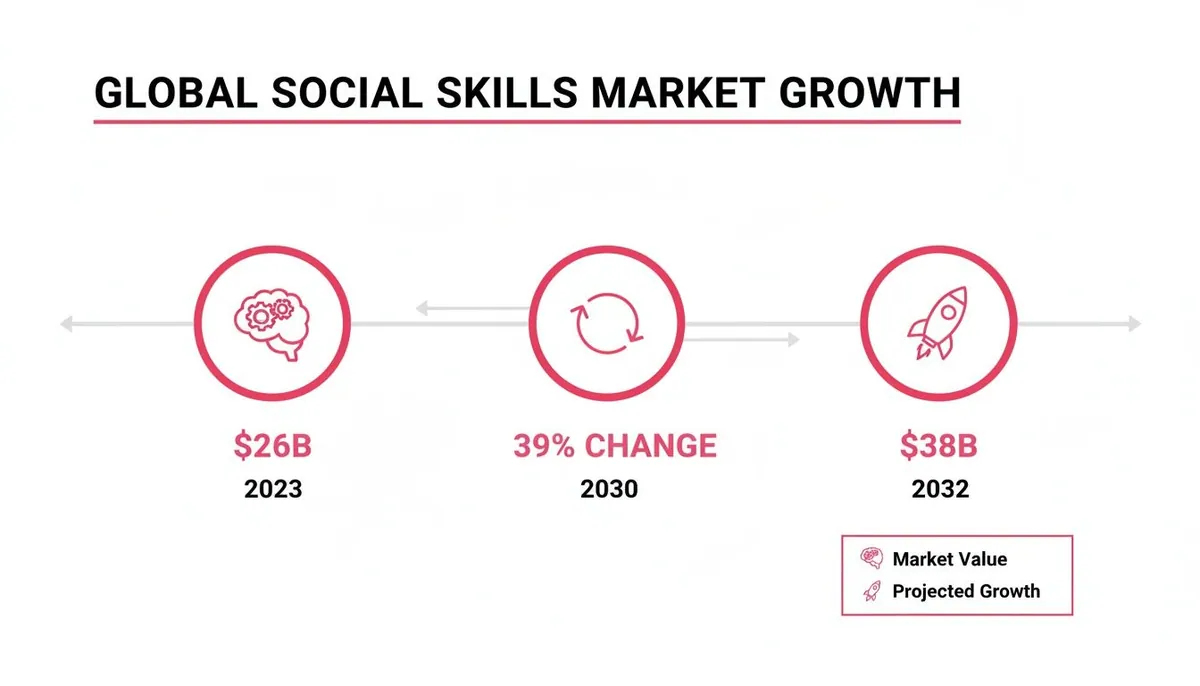
The importance of these skills extends far beyond the playground. The global market for soft skills training is booming, hitting USD 26 billion in 2023 and projected to reach USD 38 billion by 2032. Employers know that skills like teamwork, communication, and creative problem-solving are essential for success.
With experts predicting that nearly 39% of core worker skills will change by 2030, social and emotional learning is a crucial investment in our kids’ futures.
Ultimately, social skills training is about fostering connection and building resilience. By giving students a shared language for empathy and respect, we create safer, more supportive learning environments where every single child has the chance to thrive.
Understanding the Core Components of Social Skills
Social skills training isn’t about making kids memorize a list of rules for how to act. It’s much deeper than that. It’s about building a practical, intuitive foundation that helps children connect with others and navigate their world with confidence.
To make it simple, we can break these abilities down into three core pillars: Connecting with Others, Understanding Yourself, and Navigating Social Situations. Think of them as the three legs of a stool—if one is wobbly, the whole thing feels unstable. A child needs all three to feel balanced and secure in social settings.
Connecting With Others
This first pillar is all about looking outward. It covers the skills needed to build relationships and truly understand the people around us. Key pieces here include empathy—the ability to feel with someone—and active listening, which is about hearing to understand, not just waiting for your turn to talk.
For a student, this is so much more than just being quiet while a classmate is speaking. It’s making eye contact, nodding, and maybe even rephrasing what they heard to show they were really tuned in.
Practical Example: During a group project, one student practices active listening by saying, “So, if I’m hearing you right, you think we should start with the research part first? That’s a good idea. We could also…” This simple step shows they valued their peer’s input before jumping in with their own thoughts.
Understanding Yourself
The second pillar turns the focus inward. Before a child can really manage their relationships with others, they need a solid handle on their own internal world. This comes down to self-awareness (knowing what you’re feeling and thinking) and emotional regulation (managing those feelings in healthy ways).
This is where a child learns to identify that their stomach is fluttering because they feel nervous, not just because it hurts. From there, they can start using strategies to calm those feelings instead of letting them take over and run the show.
Practical Example: A student feels a surge of frustration after losing a board game in class. Instead of yelling or knocking over the pieces, they remember a technique they learned. They walk over to the classroom’s “calm-down corner” for two minutes, take a few deep breaths, and then rejoin the group, ready to move on.
A groundbreaking 2023 OECD survey of 130,000 students found that schools with structured social-emotional learning programs saw remarkable benefits. Students in these environments reported 25% higher feelings of psychological safety and belonging, and they even showed an 11% gain in achievement scores. You can learn more about these findings on nurturing social and emotional learning.
Navigating Social Situations
Finally, the third pillar brings the internal and external worlds together. This is where kids apply their self-awareness and empathy to handle real-world interactions. The core skills here are respectful communication and collaborative problem-solving. This is all deeply rooted in the principles of social learning, which explains how we pick up new behaviors by watching and interacting with others.
This pillar helps children handle everything from asking to join a game on the playground to working through a disagreement with a friend. It gives them a kind of script for navigating those tricky moments with confidence and respect. For a deeper look at these skills, check out our guide on the five core SEL competencies explained.
This chart shows just how much the social skills market is expected to grow, which really underscores how critical these abilities are for preparing students for the future.
The data points to a major trend: what starts as social skills training in the classroom becomes a highly valued asset in the global workforce.
How to Integrate Social Skills Training in the Classroom
Let’s be honest: the thought of squeezing another subject into an already packed school day can feel overwhelming. But what if social skills training wasn’t “another thing” to teach? What if it was a new lens for seeing your entire day?
The most powerful way to build social skills is to make them part of the very fabric of your classroom culture. This means moving beyond one-off lessons and weaving skill-building moments into the routines you already have. When you do this, you create a shared language around respect, empathy, and problem-solving that students start to use naturally.
Transform Morning Meetings into Skill-Building Sessions
Your daily morning meeting is the perfect launchpad. Before you even get to the day’s agenda, you can dedicate just five or ten minutes to a specific social skill. It sets a positive, intentional tone for everything that follows.
This small daily practice grounds students and builds community in a low-stakes, supportive way. Over time, these brief sessions compound, creating a powerful foundation of social competence.
Practical Example: Teaching “I-Statements”
An “I-Statement” is a simple tool that helps kids express their feelings without blaming anyone else. You can introduce it with a quick morning meeting agenda:
Introduce the Goal (1 min): “Today, we’re going to learn a way to share our feelings without starting an argument. It’s called an ‘I-Statement.'”
Model the Skill (2 min): “So, instead of saying, ‘You took my crayon and made me mad,’ I could say, ‘I feel frustrated when my crayon is taken because I wasn’t finished.’ See how I focused on my own feeling?”
Group Practice (2 min): Have students turn to a partner and practice turning a “You-Statement” (like, “You’re being too loud”) into an “I-Statement” (like, “I feel distracted when it’s loud because I’m trying to read”).
Leverage Teachable Moments Throughout the Day
Some of the most profound learning doesn’t happen on a schedule. A disagreement on the playground or a miscommunication during group work isn’t a disruption—it’s a live-action coaching session for social skills.
When you spot a social challenge unfolding, stepping in to guide students through it in real-time makes the lesson stick. It shows them how to apply these skills precisely when they need them most.
Practical Example: A Playground Disagreement
Imagine two fourth-graders, Alex and Ben, arguing over who was first in line for the swings. Instead of just sending them to the back of the line, you can turn this into a teachable moment.
Step 1: Stop and Breathe. Approach calmly. “Okay, let’s pause for a second. Both of you take one deep breath.” This simple act helps lower the emotional temperature.
Step 2: Guide with Questions. “Alex, can you tell Ben how you’re feeling using an ‘I-Statement’?” Alex might try, “I feel upset because I thought I was next.”
Step 3: Encourage Active Listening. “Ben, what did you hear Alex say?” This simple question ensures Ben is listening to understand, not just waiting for his turn to talk.
Step 4: Brainstorm Solutions. “What are two ways we could solve this so it feels fair to both of you?” Maybe they decide to take turns for five minutes each or even swing together.
By reframing everyday conflicts as learning opportunities, educators empower students to become independent problem-solvers. This process builds a resilient classroom community where challenges are seen as a chance to grow together, not as a source of division. To learn more, check out our guide on how to build classroom community.
Use Structured Activities to Reinforce Concepts
While teachable moments are pure gold, structured activities give students a safe space to practice without the pressure of a real conflict. These planned exercises can be fun, engaging, and easy to adapt for different age groups.
Think of these activities as the practice drills that help turn a conscious, clunky effort into an automatic, natural skill.
Here are a few ideas you can use tomorrow:
For Younger Students (K-2): Emotion Charades. Write different emotions (happy, sad, frustrated, surprised) on cards, maybe with little cartoon faces. A student picks a card and acts out the feeling without words while the class guesses. This builds their emotional vocabulary and helps them read nonverbal cues.
For Older Students (3-5): Collaborative Problem-Solving. Put a real-life challenge on the board, like: “Our class has too much leftover trash after lunch. In your groups, come up with three solutions we could all try.” This gets them working as a team, listening to different ideas, and finding a consensus.
For Middle Schoolers (6-8): Perspective-Taking Scenarios. Present a short scenario like: “A new student joins your class and eats lunch alone. What are three possible reasons why they might be sitting alone, and what is one small thing you could do to make them feel more welcome?” Discussing their answers helps them challenge assumptions and practice empathy.
How to Reinforce Social Skills at Home
The skills a child picks up in a classroom are just one piece of the puzzle. For social skills to truly stick, they need to be practiced in the one place kids feel safest and spend most of their time: at home. Building a bridge between school and home life reinforces what your child is learning, showing them that these skills matter everywhere, not just in front of a teacher.
The great news is this doesn’t mean you need to run formal lessons or set up complicated activities. The most powerful social skills training happens naturally, woven into the simple, everyday moments you already share as a family. These low-prep, high-impact strategies can turn routine interactions into powerful learning opportunities.
Turn Dinnertime into Connection Time
Think of the family dinner table as the perfect social skills laboratory. It’s a natural time to disconnect from screens and actually reconnect with each other. By asking thoughtful questions, you can steer conversations that build empathy, perspective-taking, and the art of listening.
Instead of the classic “How was your day?”—which almost always gets a one-word answer—try using more specific prompts to get the ball rolling. The goal is to encourage storytelling and reflection.
Dinner Table Conversation Prompts:
To Build Empathy: “What was one kind thing you saw someone do for someone else today?” or “Tell me about a time you felt really proud of a friend.”
To Practice Perspective-Taking: “If you could switch places with any character from a book or show, who would it be and why?”
To Encourage Self-Awareness: “What was the hardest part of your day? What was the easiest part?”
These kinds of questions create a space where sharing feelings is normal and listening to others is an expected part of the routine. If you’re looking for more ways to nurture this crucial skill, check out our guide on how to teach empathy.
Model Healthy Conflict Resolution
Kids are always watching. They learn so much more from what we do than from what we say. One of the most important lessons you can teach is how to disagree respectfully, and the best way to teach it is to model it yourself.
This doesn’t mean you need to stage major arguments in front of your kids. It’s actually about handling the small, everyday disagreements with grace and respect.
Practical Example: You and your partner disagree on what movie to watch. Instead of getting frustrated, you can model a healthy compromise out loud. You could say, “Okay, I see you really want to watch the action movie, and I’m more in the mood for a comedy. How about we watch your pick tonight, and we can watch mine tomorrow?”
This brief exchange teaches volumes. It shows that it’s okay to have different opinions, that listening to another person’s perspective matters, and that finding a solution together is the real goal. You’re demonstrating that conflict doesn’t have to be a scary thing; it can actually be productive.
Use Screen Time Productively
Let’s be real, screen time is a part of daily life in most homes. Instead of seeing it as just a passive activity, you can turn movies, TV shows, and even video games into active social learning moments. The characters and their stories provide perfect, low-stakes examples of complex social situations.
The key is to chime in with a few thoughtful questions during or after the show. This simple step transforms passive watching into an active, reflective experience that builds critical social awareness.
Questions to Ask During a Movie or Show:
“How do you think that character felt when their friend said that?” This question nudges your child to step into a character’s shoes and practice empathy.
“What could they have done differently in that situation?” This encourages critical thinking and problem-solving, letting them brainstorm better social strategies from the sidelines.
“Have you ever felt like that character before?” This helps them connect what’s happening on-screen to their own real-life experiences, deepening their self-awareness.
By weaving these small practices into your daily life, you create a supportive home environment where social skills aren’t just taught, but lived. This partnership between school and home is what helps children take these crucial skills and apply them with confidence in every part of their lives.
Choosing the Right Social Skills Program for Your School
For school leaders and SEL coordinators, picking a social skills program can feel like walking through a crowded marketplace. Every option promises big results, so how do you find the one that will actually make a real, lasting difference in your school’s culture? The trick is to look past the marketing noise and use a clear, thoughtful framework to weigh your options.
A great social skills training program is more than just a purchase; it’s an investment in your students’ long-term happiness and academic growth. To make sure that investment pays dividends, you need a partner who offers more than just a box of lessons. You need a program built on a solid foundation, designed to weave right into the fabric of your school community.
Is the Program Grounded in Research and Evidence?
The first and most important question to ask is simple: is this program based on real evidence? This means its methods are rooted in proven research about how kids learn and develop socially and emotionally. A program without this foundation is like a house built on sand—it might look good at first, but it won’t hold up over time.
Look for programs that can clearly explain their “why.” Do they pull from established frameworks in child development and psychology? A research-backed program ensures you aren’t just chasing the latest trend but are putting strategies in place that have a real history of success.
A program’s philosophy should be transparent and easy to grasp. If you can’t see the ‘why’ behind the ‘what,’ it’s a red flag. The best programs are built on a deep understanding of childhood development and social learning principles.
Does It Prioritize Hands-On Learning?
Kids learn social skills by doing, not by filling out worksheets. The most effective training gets students on their feet, engaging in hands-on activities where they can practice communication, teamwork, and conflict resolution in the moment.
Think of it like learning to ride a bike. You can read a manual about balance and pedaling all day, but you only truly learn when you get on and start wobbling. The same goes for social skills. Look for programs that are packed with role-playing, group challenges, and guided practice instead of just passive learning.
Practical Example: A program that uses interactive games to teach empathy is miles more effective than one that just defines the word. An activity where students have to build something together without talking, for instance, forces them to rely on nonverbal cues and develop a much deeper awareness of what their peers are thinking and feeling.
Does It Support Your Staff and Engage Families?
A program is only as good as the people who bring it to life every day. Any curriculum you consider should come with robust training and ongoing support for your teachers and staff. This is critical for making sure everyone feels confident and equipped to use the program’s language and strategies consistently across the entire school.
Just as important is a real plan for family engagement. When parents and caregivers are given tools to reinforce the same skills at home, it creates a powerful, unified community approach. That bridge between school and home is what makes the learning stick. As you explore programs, don’t forget to look into funding options, including specific special education grants for teachers that can help make it happen.
Finally, think about how technology can support your work. According to the 2023 Coursera Global Skills Report, the demand for soft skills training online is massive, and this trend is absolutely reflected in K-12 education. Well-designed digital tools can help equalize access to high-quality SEL, with schools using them seeing 20-30% better emotional regulation outcomes. You can read the full report to learn more about global skills trends.
How to Know If It’s Working: Measuring Growth in Social Skills
So, you’re putting in the effort to teach social skills. How can you tell if it’s actually making a difference? The good news is, you don’t need complicated spreadsheets or formal assessments. Moving beyond a gut feeling is more about knowing what to look for and celebrating the small wins that signal real, lasting change.
The goal isn’t perfection; it’s progress. When you can spot how new skills in empathy, confidence, and problem-solving are starting to take root, you’ll know what’s working and where a child might need a little extra support.
Tracking Progress in the Classroom
For educators, measuring social skills can be woven right into the fabric of the school day. It’s all about observing patterns and gathering simple, practical insights that paint a clear picture of student growth.
Here are a few straightforward ways to do it:
Simple Observation Checklists: During group projects or playtime, keep a basic checklist handy. Did a student really listen to a peer’s idea without interrupting? Did they offer to help someone who was stuck? Ticking these boxes over time shows you which skills are sticking.
A Dip in Disciplinary Data: Take a look at the trends in playground squabbles or classroom disagreements. A noticeable drop in incidents over a few months is a powerful sign that students are starting to use their new conflict resolution tools on their own.
Before-and-After Pulse Checks: Use simple, anonymous surveys to get a feel for the classroom climate. Asking questions like, “Do you feel like your ideas are respected here?” or “Do you know who to ask for help when you’re upset?” can reveal a lot about their sense of belonging and psychological safety.
Seeing the Skills Come to Life at Home
For parents, success often shows up in those subtle but powerful moments when you aren’t looking. It’s about noticing when your child uses a new skill without being prompted, especially when their emotions are running high.
Keep an eye out for these concrete signs of progress:
Independent Problem-Solving: You overhear your kids working through a fight over a video game themselves, using calm words instead of shouting. That’s a huge win.
Using “Feeling” Words: Instead of a meltdown, your child says, “I’m so frustrated that this won’t work!” This shows a massive leap in their ability to recognize and name their own emotions.
Spontaneous Empathy: Your child sees a friend looking sad at the park and walks over to ask if they’re okay. This is when you know the lessons on empathy are becoming a natural, heartfelt response, not just a rule they’re following.
Ultimately, the most important metric is a child’s growing confidence in social situations. When you see them willingly join a group, speak up for themselves respectfully, or bounce back from a minor social fumble, you know the training is making a real impact.
Celebrating these small, consistent steps is everything. Recognizing that your child chose to take a deep breath instead of yelling is just as important as them making a new friend. This focus on gradual improvement makes the journey of social and emotional learning a positive and empowering one for everyone.
Common Questions About Social Skills Training
Even with the best intentions, diving into social skills training can bring up a few questions for parents and educators alike. Let’s walk through some of the most common ones to help you feel confident and clear as you get started.
How Early Can Social Skills Training Begin?
Social learning starts the day a child is born, but more structured training can begin as early as preschool. At this age, it’s all about the fundamentals: sharing, taking turns, and listening when a friend is talking. These early experiences lay the essential groundwork for navigating more complex social situations down the road.
Practical Example: A preschool teacher might use a puppet to model how to ask for a toy instead of just grabbing it. The puppet could say, “May I have a turn with the blue block, please?” This simple, playful demo makes a big concept easy for a three-year-old to grasp and try out themselves.
Is Social Skills Training Only for Children with Diagnosed Needs?
Absolutely not. While it’s a critical support for children with developmental challenges like Autism Spectrum Disorder (ASD), social skills training benefits every child. In a world full of screens, all kids need direct guidance on how to read social cues, handle their emotions, and work through disagreements. It’s a universal life skill.
Think of social skills training like learning to read or do math. Some students might need more intensive support, but it’s a core competency that helps every single learner succeed, both in the classroom and out in the world.
What if a Child Resists or Doesn’t Seem Interested?
It’s completely normal for a child to push back, especially older students who might feel singled out. The key is to make it feel relevant and empowering, not like a punishment. Frame it as learning “people skills” that will help them make friends, nail that group project, or even handle tricky situations online.
Connecting the skills to their own goals is a game-changer.
For the child who wants more friends: Focus on simple conversation starters or how to join a game on the playground. For example, practice saying, “That looks fun! Can I play next time there’s an opening?”
For the student who dreads group work: Practice active listening and how to share ideas without talking over others. For example, role-play phrases like, “That’s a great point. To build on that, we could also…”
For the kid who gets frustrated easily: Introduce a simple calming tool, like the STOP method (Stop, Take a breath, Observe, Proceed), to help them feel more in control of their reactions. For example, have them practice STOP when a puzzle piece doesn’t fit or a video game level is too hard.
When kids see—through consistent and positive reinforcement at school and home—that these skills make their lives easier and more fun, the resistance will start to fade.
At Soul Shoppe, we give schools and families the tools and support to build emotionally intelligent, resilient communities. Our programs transform school culture from the inside out by teaching a shared language of empathy and respect. Learn more about how Soul Shoppe can support your students.
In a world filled with constant challenges, building a child’s inner strength and resilience is more critical than ever. Positive affirmations for kids are far more than just feel-good phrases; they are practical, science-backed tools for shaping a child’s brain, building self-esteem, and fostering a growth mindset. These simple, powerful “I am” or “I can” statements, when practiced consistently, help children internalize positive beliefs about themselves and their abilities. For a child struggling with a difficult math problem, repeating “I can solve hard problems” can shift their mindset from defeat to determination. Similarly, a child feeling anxious about making friends can find comfort in the statement, “I am a good friend and people want to be my friend.”
This guide moves beyond simple lists, offering educators, school counselors, and parents a deep dive into the ‘how’ and ‘why’ of using affirmations effectively. You will find a comprehensive collection of affirmations organized by age and theme, complete with actionable strategies for integrating them into daily life. We’ll provide specific examples for classroom morning meetings, calming corners, and at-home routines. Beyond the power of positive words, research also highlights the profound impact of practices like exploring the art therapy benefits for mental health, which can complement verbal affirmations by providing a creative outlet for expression. Prepare to unlock a simple yet profound way to nurture the emotional well-being of the children in your care, turning simple words into a foundation for lifelong confidence.
1. I Am Brave
The affirmation “I Am Brave” is a foundational statement that helps children build courage and resilience. It’s not about eliminating fear but about acknowledging it and choosing to act anyway. This powerful phrase empowers kids to face a variety of challenges, from academic hurdles to complex social situations, fostering a belief in their own capability to handle difficulty.
For children, bravery can look like many different things: raising a hand in class when unsure of the answer, trying a new activity, or speaking up when they see something unfair. Reciting “I Am Brave” provides a mental anchor, helping them access their inner strength when they feel nervous or intimidated. This is one of the most effective positive affirmations for kids because it directly addresses the anxieties that can hinder learning and social growth.
Why It Works and When to Use It
This affirmation is particularly effective because it connects directly to Social-Emotional Learning (SEL) competencies like self-awareness and self-management. Organizations like Soul Shoppe integrate this concept into their research-based programs, recognizing that bravery is a skill that can be practiced and developed.
Use “I Am Brave” in moments that require social or emotional courage:
Before Presentations: A student can quietly repeat the phrase before speaking in front of the class. For example, before a book report, a teacher can lead the class in saying, “I am brave enough to share my ideas.”
During Conflict Resolution: It can be used as a grounding statement before peer-led mediations. A mediator might start by having both students say, “I am brave enough to listen and speak respectfully.”
Anti-Bullying Initiatives: Empowering bystanders to act is a key part of bullying prevention. A practical example is teaching students to say to themselves, “I am brave enough to tell a teacher,” when they witness unkind behavior.
By repeating “I Am Brave,” children internalize the idea that courage isn’t the absence of fear, but the decision to move forward despite it. This mindset shifts them from a passive role to an active one in their own lives.
Practical Tips for Implementation
Connect to Specific Actions: Pair the affirmation with a tangible goal. For example, “I am brave enough to ask the teacher for help” or “I am brave enough to join the game at recess.” For more ideas on developing this skill, explore these confidence-building activities for kids.
Create Visual Reminders: Display brave role models or stories in the classroom. To further encourage this quality, an inspiring Be Brave Wall Sticker Quote can serve as a daily visual reminder.
Start Small and Celebrate: Encourage practice in low-stakes situations first, like sharing an idea in a small group. Acknowledge and celebrate all acts of bravery, no matter how small, to reinforce the behavior. For example, a teacher could say, “David, I saw you were nervous to share your drawing, but you did it anyway. That was very brave.”
2. I Can Learn and Grow
The affirmation “I Can Learn and Grow” is deeply rooted in the concept of a growth mindset, popularized by Stanford researcher Carol Dweck. This powerful statement teaches children that their abilities are not fixed but can be developed through dedication and hard work. It reframes challenges and mistakes not as failures, but as essential opportunities for learning, which helps build academic and emotional resilience.
For a child, this mindset shift is critical. Instead of thinking “I’m bad at math,” they learn to think “I can improve at math with more practice.” This affirmation gives them the language to express this belief, turning moments of frustration into productive learning experiences. These are some of the most important positive affirmations for kids because they directly support the creation of psychologically safe classrooms where students feel comfortable taking risks.
Why It Works and When to Use It
This affirmation directly supports key Social-Emotional Learning (SEL) skills like self-efficacy and perseverance. It helps children understand that effort is the path to mastery. Soul Shoppe’s resilience-building workshops often center on this principle, teaching students that their brains are like muscles that get stronger with exercise.
Use “I Can Learn and Grow” to foster a positive approach to challenges:
During Difficult Assignments: When a student feels stuck, a teacher can say, “This is a tricky problem. Let’s say together, ‘I can learn and grow from this challenge,’ and then try a new strategy.”
After Receiving Feedback: It helps children see constructive criticism as a tool for improvement, not a judgment. A practical example is a student telling themselves, “The teacher’s note isn’t saying I’m bad at writing; it’s showing me how I can learn and grow as a writer.”
In Reflection Journals: Students can use it as a prompt to track their progress. For instance, a journal entry could start with: “This week, I learned and grew in science by finally understanding how plants get their food.”
By internalizing “I Can Learn and Grow,” children move away from a fear of failure and toward a love of learning. It empowers them to embrace the process of improvement, which is a foundational skill for lifelong success.
Practical Tips for Implementation
Model Growth Mindset Language: As an adult, openly share your own learning struggles. Say things like, “This is tricky for me, but I know I can learn and grow by trying a different way.”
Use the Power of “Yet”: Actively replace “I can’t do it” with “I can’t do it yet” in classroom conversations. This small change reinforces the idea that ability is a journey, not a destination. To explore this concept further, you can find valuable strategies in this guide to developing a growth mindset for kids.
Celebrate the Process, Not Just the Outcome: Praise students for their effort, the strategies they try, and their persistence. For example, say, “I saw how you kept working on that problem even when it was hard. Your brain is growing stronger!”
3. I Am Kind and Caring
The affirmation “I Am Kind and Caring” helps children build empathy, compassion, and pro-social behaviors. This statement shifts kindness from being just an action to a core part of their identity. By regularly affirming this trait, kids learn to see themselves as people who naturally show concern for others, which positively influences their peer interactions, conflict resolution skills, and overall classroom community.
This affirmation is a cornerstone for creating a positive social environment. It encourages children to think beyond themselves and consider the feelings and perspectives of their peers. Reciting “I Am Kind and Caring” serves as a mental cue to act with compassion, whether that means including a classmate at recess, offering help to someone who is struggling, or simply listening with an open heart. These are some of the most important positive affirmations for kids as they directly foster the emotional intelligence needed for healthy relationships.
Why It Works and When to Use It
This affirmation powerfully supports Social-Emotional Learning (SEL) competencies such as social awareness and relationship skills. Programs like Soul Shoppe build their entire curriculum around these ideas, understanding that empathy is a teachable skill that prevents bullying and creates safer schools.
Use “I Am Kind and Caring” to promote a positive and inclusive climate:
During Morning Meetings: Start the day with a group recitation to set a compassionate tone. For example: “Today, we will remember: I am kind and caring. Let’s look for ways to show that.”
Before Collaborative Work: Remind students to be kind and caring partners before they begin group projects. A teacher could say, “As you work with your partner, remember to listen to their ideas, because you are a kind and caring teammate.”
In Conflict Resolution Circles: Use it as a centering thought to encourage empathetic problem-solving. For instance, begin a mediation with, “Let’s remember we are all kind and caring people, and solve this problem from that place.”
When children identify as kind and caring, their actions naturally follow. This affirmation doesn’t just ask them to do kind things; it encourages them to be kind people.
Practical Tips for Implementation
Create Kindness Anchor Charts: Brainstorm with students what being “kind and caring” looks and sounds like. Examples might include: “Looks like: Sharing a pencil.” “Sounds like: ‘Are you okay?'” Write their examples on a chart and display it in the classroom as a constant visual reminder.
Pair with Specific Actions: Connect the affirmation to concrete behaviors. For example, “I am kind and caring, so I will invite someone new to play” or “I am kind and caring, so I will give a compliment.”
Recognize and Celebrate: Create a “Kindness Spotting” routine where students can acknowledge the kind and caring acts they see from their peers. This reinforces the behavior and builds a positive community. For more strategies, explore these methods for teaching kindness in the classroom.
4. I Can Help Others
The affirmation “I Can Help Others” shifts a child’s focus from their own needs to their capacity to contribute positively to their community. It builds a sense of agency and social responsibility, framing children as capable helpers and supportive peers. This powerful statement encourages them to recognize their own strengths and use them to assist classmates, which reduces isolation and fosters healthy peer relationships.
For kids, helping can mean offering to explain a math problem, including someone in a game, or simply offering a kind word. When children repeat “I Can Help Others,” they begin to see themselves as active, valuable members of their social groups. This mindset is one of the most constructive positive affirmations for kids because it directly counters feelings of helplessness and is a cornerstone of anti-bullying work, turning bystanders into supportive upstanders.
Why It Works and When to Use It
This affirmation directly supports the Social-Emotional Learning (SEL) competency of relationship skills, specifically social awareness and responsible decision-making. Programs focused on peer support and empathy, like those offered by Soul Shoppe, are built on the principle that children have the capacity to support each other when given the right tools and encouragement.
Use “I Can Help Others” to build a supportive classroom or home environment:
During Group Work: Encourage students to see themselves as resources for one another. A teacher might say, “If you finish early, remember ‘I can help others’ and see if a teammate needs support.”
For New Students: Frame helping a new classmate as a leadership opportunity. For instance, “Leo, you are a great helper. Can you show our new student, Maya, where the cubbies are?”
Bystander Intervention: Teach it as a precursor to action when a peer is being treated unfairly. A practical example is role-playing a scenario where a student tells themselves, “I can help by going to get Mr. Davis,” instead of just watching.
By internalizing “I Can Help Others,” children move from being passive observers to engaged participants in their social world. They learn that their actions, big or small, can make a meaningful difference to someone else.
Practical Tips for Implementation
Teach Specific Helping Skills: Don’t just say “help”; teach what helping looks like. For example, “I can help by asking, ‘Do you want to play?'” or “I can help by showing you how I solved the first step.”
Start with Low-Stakes Opportunities: Create classroom jobs or assign partners for a simple task. Acknowledge and praise these small acts specifically: “I saw you helping Alex put the blocks away. That was a great example of being a helper.”
Establish Clear Protocols: When dealing with conflicts or bullying, provide clear steps for how to help safely, such as telling an adult or inviting the targeted peer to walk away with them. Ensure children know they have adult support.
Celebrate Helping Actions: Create a “Helping Hands” bulletin board where students can post notes about how a classmate helped them. This makes prosocial behavior visible and valued by the entire community.
5. I Make Good Choices
The affirmation “I Make Good Choices” is a powerful tool for developing responsible decision-making and self-regulation. It empowers children by shifting their focus from external rules to their own internal capacity to choose their actions and responses. This phrase is foundational for building executive function and impulse control, which are critical skills for academic success and social harmony.
For kids, a “good choice” might be sharing a toy instead of grabbing it, taking a deep breath when frustrated, or choosing to start their homework. Reciting “I Make Good Choices” reinforces the idea that they are in control of their behavior. This is one of the most practical positive affirmations for kids because it directly supports positive classroom management and helps students learn constructive ways to handle conflict and difficult emotions.
Why It Works and When to Use It
This affirmation directly supports the Social-Emotional Learning (SEL) competency of responsible decision-making. It is a cornerstone of programs like Positive Behavioral Interventions and Supports (PBIS) and is frequently used by school counselors because it promotes self-awareness and accountability. Organizations like Soul Shoppe build their self-regulation training around this core concept, teaching students that they have the power to think before they act.
Use “I Make Good Choices” to guide behavior in key moments:
During Transitions: Say it as a class before moving from a fun activity to a quiet one. For example: “Okay team, we are about to line up. Let’s remember, ‘I make good choices,’ and show me a quiet, safe line.”
Before Independent Work: Use it to set the intention for staying on task and focused. A practical example: “Before you start your work, tell yourself, ‘I make good choices about how I use my time.'”
Conflict Resolution: It serves as a reminder to choose words and actions that solve problems, not make them bigger. A teacher could guide students by asking, “What is a good choice you can make right now to solve this?”
By internalizing “I Make Good Choices,” children begin to see themselves as capable decision-makers. This mindset empowers them to pause, consider consequences, and act with intention rather than on impulse.
Practical Tips for Implementation
Teach Decision Frameworks: Explicitly teach a simple model like “Stop, Think, Choose.” Then, connect the affirmation to this process. Say, “When we stop and think, we can make a good choice.”
Role-Play Scenarios: Practice common classroom challenges, such as disagreements over supplies or what to do when feeling frustrated. Ask students, “What good choice could you make here?” For example, act out a scene where someone cuts in line and practice the good choice of using words instead of pushing.
Reflect After Mistakes: After a poor choice, frame the conversation around the future. Ask, “What good choice will you make next time?” This turns errors into learning opportunities without shame. You can find more strategies for teaching self-regulation in our guide to mindfulness activities for kids.
6. I Belong Here
The affirmation “I Belong Here” addresses one of the most fundamental human needs: acceptance and connection. This statement directly counters feelings of isolation, loneliness, and social anxiety, which can often lead to exclusion and bullying. It fosters a sense of psychological safety, assuring children that their presence is valued within their community, whether that’s a classroom, a team, or their family.
For a child, feeling like they belong means they can be their authentic self without fear of judgment. It’s the difference between sitting alone at lunch and confidently joining a group. Reciting “I Belong Here” helps children internalize this sense of security and worth. This is one of the most important positive affirmations for kids because it lays the groundwork for healthy social development, active participation, and emotional well-being.
Why It Works and When to Use It
This affirmation is powerful because it reinforces a core component of Social-Emotional Learning (SEL): relationship skills and social awareness. Organizations like Soul Shoppe build their entire mission around creating cultures of belonging in schools, recognizing that a child’s ability to learn is directly tied to their feeling of safety and inclusion. This concept is also supported by belonging researchers like Brené Brown, who highlight its importance for courage and resilience.
Use “I Belong Here” to build a strong and inclusive community:
During Morning Meetings: Start the day with a communal recitation to set a welcoming tone. A practical example: “Let’s look around at everyone in our classroom community and say together, ‘I belong here.'”
Welcoming New Students: Pair a new student with a peer mentor and use this phrase as part of their introduction to the class. For instance, the whole class could say, “Welcome, Sarah! We are so glad you are here. You belong here.”
In Anti-Bullying Initiatives: Explicitly teach that everyone belongs and empower students to reinforce this message with their peers.
Before Collaborative Projects: Remind students that every member’s contribution is essential to the group’s success by saying, “Everyone in this group has an important role. You all belong here.”
By repeating “I Belong Here,” children develop a strong internal belief that they are an integral part of their community. This mindset shifts them from feeling like an outsider to an active, engaged, and valued participant.
Practical Tips for Implementation
Pair with Inclusive Actions: The affirmation must be supported by genuine practices. For example, use it during community-building circles where every student has an opportunity to speak. Create a “Welcome Wall” with photos of all students.
Create Specific Statements: Make it more personal by adding to the phrase, such as, “I belong in this classroom, and my voice matters,” or “I belong on this team, and my friends are happy I’m here.”
Celebrate Diversity: Intentionally highlight and celebrate the different cultures, backgrounds, and abilities within the classroom to show that diversity is what makes the community strong. Address any act of exclusion immediately to maintain the authenticity of your message.
7. I Can Calm Myself Down
The affirmation “I Can Calm Myself Down” is a powerful tool for developing emotional self-regulation. It empowers children by teaching them they have internal control over their big feelings, shifting their perspective from being overwhelmed by emotions to being capable of managing them. This statement, when paired with concrete calming techniques, gives students the agency to navigate stress, frustration, and anxiety constructively.
Instead of simply reacting to emotional triggers, a child who uses this affirmation learns to pause and choose a more effective response. This skill is crucial for preventing behavioral issues and resolving social conflicts peacefully. By internalizing “I Can Calm Myself Down,” children build a foundation for lifelong emotional intelligence. It stands out as one of the most practical positive affirmations for kids because it directly addresses the need for self-management, a key to success in both school and life.
Actionable Implementation Tips
To embed experiential learning into your teaching practice, focus on creating structured, safe, and reflective activities.
Start with Low-Risk Activities: Begin with simple, fun games to build trust and psychological safety before moving to more complex role-plays or discussions.
Model and Demonstrate: Always provide clear instructions and demonstrate an activity first. This reduces confusion and encourages hesitant students to participate.
Build in Reflection Time: The learning happens in the debrief. Practical Example: After a team-building game where students had to build a tower together without talking, ask reflective questions like, “What was challenging about communicating without words?” and “How did you show respect for your teammates’ ideas?”
Adapt for All Learners: Modify activities to suit different age groups, physical abilities, and learning needs. The goal is participation, not perfection.
Connect Activities to Skills: Ensure every game or role-play has a clear learning objective. Practical Example: To teach empathy, have students participate in an activity where they must guide a blindfolded partner through a simple obstacle course, forcing them to consider their partner’s perspective and needs.
Memorable, practice-based learning; adaptable and highly engaging
Putting People First: Your Next Steps in Professional Growth
Navigating the landscape of professional development topics for teachers can feel overwhelming, but the journey always leads back to a single, powerful truth: education is fundamentally a human endeavor. The most impactful growth doesn’t come from a new app or curriculum alone; it emerges from strengthening the connections between educators, students, and families. The topics explored in this article, from implementing Social-Emotional Learning frameworks to fostering teacher resilience, all share a common thread. They prioritize the people who make up your school community.
Investing in these areas is an investment in creating a culture where everyone feels safe, valued, and equipped to thrive. When we move beyond a compliance-based approach to professional development and embrace a people-first mindset, the results are transformative. We see educators who are not just managing their classrooms but are truly leading them with empathy and insight. We see students who can navigate conflict, understand their emotions, and build supportive peer relationships.
Synthesizing Your Learning and Taking Action
The path to a more connected school culture is built one intentional step at a time. As you reflect on the ten key topics we’ve covered, consider which one resonates most with your school’s current needs. Is it the foundational work of establishing a common SEL language, or is it a more targeted initiative like training peer mediators to empower students?
Here are some actionable next steps to turn inspiration into implementation:
Conduct a Needs Assessment: Before launching a new initiative, gather feedback from your staff. A simple survey or a brief discussion at a staff meeting can reveal where your team feels they need the most support. Do they feel equipped to handle classroom conflicts? Are they struggling with burnout? Let their voices guide your focus.
Start Small and Build Momentum: You don’t need to tackle everything at once. Success often comes from mastering one area and using that momentum to fuel the next. For example, begin by introducing a 3-minute mindfulness practice at the start of every staff meeting. This micro-PD models a technique teachers can immediately use with their students and demonstrates a commitment to educator well-being.
Create a Cross-Functional Team: Form a small, voluntary committee of teachers, administrators, and even a school counselor to champion your chosen professional development topic. This distributed leadership model builds buy-in and ensures the initiative is a shared responsibility, not just another top-down mandate.
The Lasting Impact of Human-Centered Professional Growth
Choosing to focus on professional development topics for teachers that build emotional intelligence and relational capacity creates ripples that extend far beyond the classroom walls. When a teacher learns empathetic listening skills, they don’t just use them with a disruptive student; they apply them in parent-teacher conferences, turning potentially contentious conversations into collaborative partnerships. When a school commits to psychological safety, it doesn’t just reduce teacher turnover; it creates an environment where educators feel secure enough to innovate, take risks, and grow.
To truly elevate classroom practice, understanding the broader principles of growth is essential; for instance, exploring understanding why challenge is key to personal development can provide a powerful framework for ongoing learning. By embracing these challenges, we cultivate resilient, compassionate, and emotionally intelligent citizens prepared for a complex world. The ultimate goal is not just to improve academic outcomes but to nurture the whole child and the whole educator, creating a school community where everyone can reach their full potential.
We have spent years partnering with educators on exactly this. See our Professional Development Program for on-site and virtual workshops, or staff training if you want the whole team working from the same playbook.
In today’s complex world, the ability to navigate challenges, understand different perspectives, and collaborate on solutions is more critical than ever. For educators and parents, fostering these skills goes beyond academic instruction; it requires equipping students with practical social-emotional learning (SEL) tools. To move beyond worksheets and focus on building resilient young problem-solvers, educators can leverage strategies like Problem Based Learning, which challenges students to solve real-world problems. This approach sets the stage for deeper, more meaningful engagement.
This article provides a curated collection of ten powerful, classroom-ready problem-solving activity models designed for K–8 students. Each entry is a deep dive, offering not just a concept but a comprehensive guide. You will find step-by-step instructions, practical examples for teachers and parents, differentiation tips, and clear connections to core SEL competencies.
We will explore a range of powerful techniques, from the analytical Five Whys and Fishbone Diagrams to the empathetic practices of Restorative Circles and Empathy Mapping. You’ll discover how to implement structured dialogue with protocols like Brave Space Conversations and Collaborative Problem-Solving. The goal is to provide actionable frameworks you can use immediately to build a more connected, empathetic, and resilient school community. These aren’t just activities; they are frameworks for transforming your classroom or home into a dynamic space for growth, aligning with Soul Shoppe’s mission to help every child thrive. Let’s explore how these proven strategies can empower your students.
1. The Five Whys Technique
The Five Whys technique is a powerful root-cause analysis tool that helps students and educators move past surface-level issues to understand the deeper, underlying reasons for a problem. By repeatedly asking “Why?” (typically five times), you can peel back layers of a situation to uncover the core issue, which is often emotional or social. This problem solving activity is excellent for addressing conflicts, behavioral challenges, and social dynamics in a way that fosters empathy and genuine understanding.
This method transforms how we approach discipline, shifting the focus from punishment to support. Instead of simply addressing a behavior, we seek to understand the unmet need driving it.
How It Works: A Classroom Example
Imagine a student, Alex, consistently fails to turn in his math homework. A surface-level response might be detention, but using the Five Whys reveals a more complex issue.
Why didn’t you turn in your homework? “I didn’t do it.” (The initial problem)
Why didn’t you do it? “I didn’t understand how.” (Reveals a skill gap, not defiance)
Why didn’t you ask for help? “I was afraid to look dumb in front of everyone.” (Uncovers social anxiety)
Why were you afraid of looking dumb? “Last time I asked a question, some kids laughed at me.” (Identifies a past negative social experience)
Why do you think they laughed? “Maybe they don’t like me or think I’m not smart.” (Pinpoints the root cause: a feeling of social isolation and a need for belonging)
This process reveals that the homework issue is not about laziness but about a need for a safe and inclusive classroom environment. The solution is no longer punitive but focuses on building community and providing discreet academic support.
Key Insight: The Five Whys helps us see that behavior is a form of communication. By digging deeper, we can address the actual need instead of just reacting to the symptom.
Tips for Implementation
Create a Safe Space: This technique requires trust. Ensure the conversation is private and framed with genuine curiosity, not interrogation. Start by saying, “I want to understand what’s happening. Can we talk about it?”
Model the Process: Teach students the Five Whys method directly. Use it to solve classroom-wide problems, like a messy coatroom, so they learn how to apply it themselves. Practical Example: A teacher might say, “Our coatroom is always a mess. Why? Because coats are on the floor. Why? Because the hooks are full. Why? Because some people have multiple items on one hook. Why? Because there aren’t enough hooks for our class. Why? Because our class size is larger this year.” The root cause is a lack of resources, not student carelessness.
Be Flexible: Sometimes you may need more or fewer than five “whys” to get to the root cause. The goal is understanding, not adhering strictly to the number.
For more tools on building a supportive classroom culture where this problem solving activity can thrive, explore our Peace Corner resources.
2. Fishbone Diagram (Ishikawa Diagram)
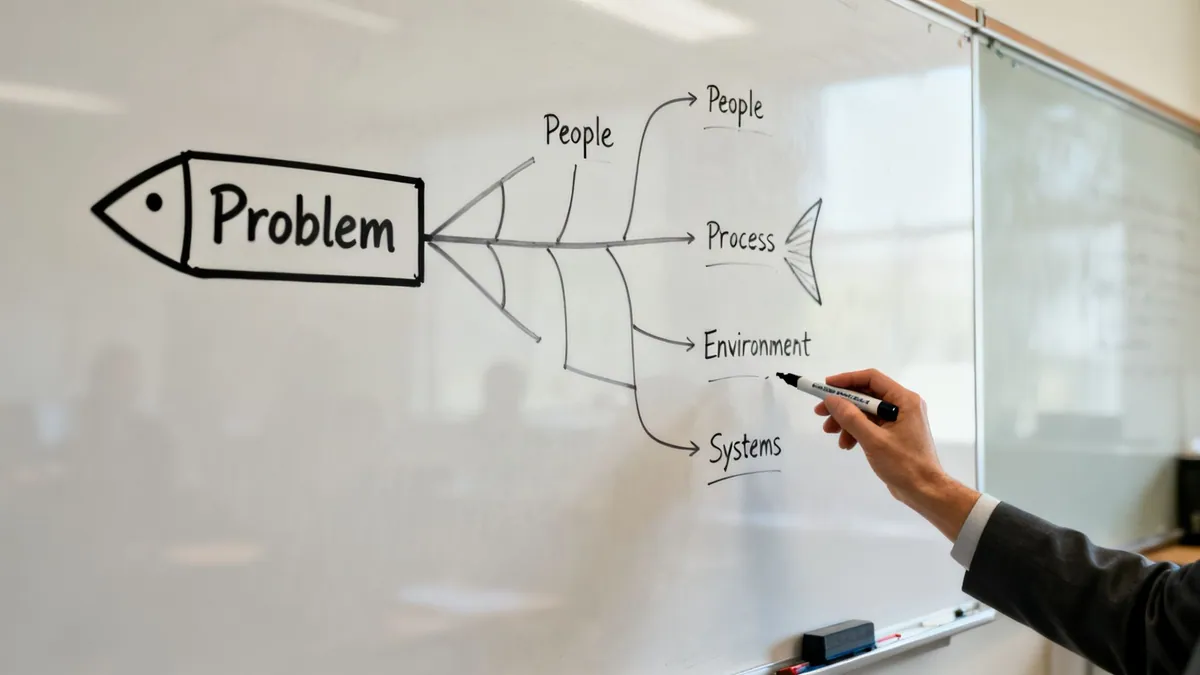
The Fishbone Diagram, also known as an Ishikawa or Cause and Effect Diagram, is a visual tool that helps groups brainstorm and map out the potential causes of a specific problem. Its structure resembles a fish skeleton, with the “head” representing the problem and the “bones” branching out into categories of potential causes. This problem solving activity is ideal for unpacking complex, multi-faceted issues like bullying, student disengagement, or chronic classroom disruptions.
It encourages collaborative thinking and prevents teams from jumping to a single, simplistic conclusion. Instead, it systematically organizes potential factors into logical groups, making it easier to see how different elements contribute to the central issue.
How It Works: A School-Wide Example
Imagine a school is struggling with low student engagement during Social-Emotional Learning (SEL) blocks. The problem statement at the “head” of the fish is: “Students are disengaged during SEL time.” The team then brainstorms causes under key categories.
Instruction (Methods): Lessons are not culturally relevant; activities are repetitive; delivery is lecture-based rather than interactive.
Environment (Setting): Classroom setup doesn’t support group work; SEL is scheduled right before lunch when students are restless.
People (Students/Staff): Staff lack confidence in teaching SEL topics; students don’t see the value or feel it’s “not cool.”
Resources (Materials): The curriculum is outdated; there are not enough materials for hands-on activities.
By mapping these factors, the school can see that the issue is not just one thing. The solution must address curriculum updates, teacher training, and scheduling changes. To help visualize potential causes for a problem, explore more detailed examples of Cause and Effect Diagrams.
Key Insight: Complex problems rarely have a single cause. The Fishbone Diagram helps teams see the interconnectedness of issues and develop more comprehensive, effective solutions.
Tips for Implementation
Be Specific: Start with a clear and concise problem statement. “Why do 4th graders have frequent conflicts during recess?” is much more effective than a vague statement like “Students are fighting.”
Involve Diverse Voices: Include teachers, students, counselors, and support staff in the brainstorming process to gain a 360-degree view of the problem.
Customize Your Categories: While traditional categories exist (like People, Process, etc.), adapt them to fit your school’s context. You might use categories like Policies, Peer Culture, Physical Space, and Family Engagement. Practical Example: For the problem “Students are frequently late to school,” a parent-teacher group might use categories like: Home Factors (alarms, morning routines), Transportation (bus delays, traffic), School Factors (boring first period, long entry lines), and Student Factors (anxiety, lack of motivation).
Focus on Action: After completing the diagram, have the group vote on the one or two root causes they believe have the biggest impact. This helps prioritize where to direct your energy and resources.
3. Design Thinking Workshops
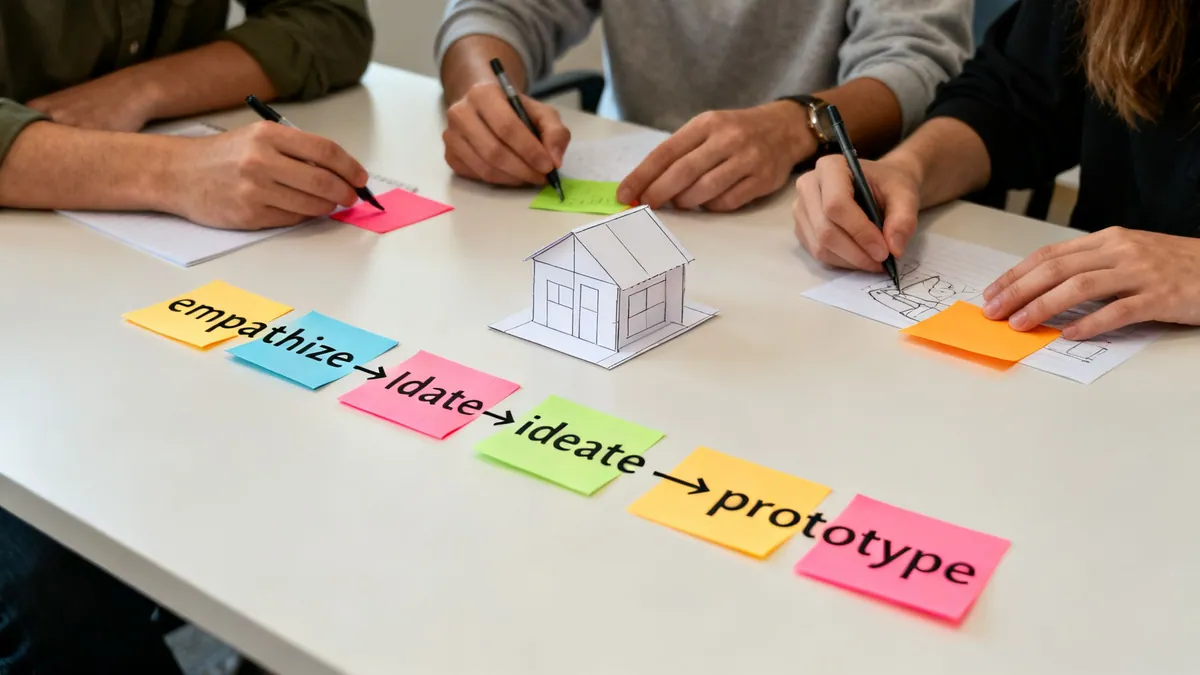
Design Thinking is a human-centered problem-solving framework that fosters innovation through empathy, collaboration, and experimentation. This problem solving activity guides students and educators to develop creative solutions for complex school challenges, from social dynamics to classroom logistics, by focusing on the needs of the people involved. It builds skills in critical thinking, communication, and resilience.
This approach shifts the focus from finding a single “right” answer to exploring multiple possibilities through an iterative process of understanding, ideating, prototyping, and testing. It empowers students to become active agents of positive change in their own community.
How It Works: A School Example
Imagine a group of students is tasked with improving the cafeteria experience, which many find chaotic and isolating. Instead of administrators imposing new rules, students use design thinking to create their own solutions.
Empathize: Students conduct interviews and observations. They talk to peers who feel lonely, kitchen staff who feel rushed, and supervisors who feel stressed. They discover the long lines and lack of assigned seating are key pain points.
Define: The group synthesizes their research into a clear problem statement: “How might we create a more welcoming and efficient lunch environment so that all students feel a sense of belonging?”
Ideate: The team brainstorms dozens of ideas without judgment. Suggestions range from a “talk-to-someone-new” table and a pre-order lunch app to music playlists and better line management systems.
Prototype: They decide to test the “conversation starter” table idea. They create a simple sign, a few icebreaker question cards, and ask for volunteers to try it out for a week.
Test: The team observes the prototype in action, gathers feedback from participants, and learns what works and what doesn’t. They discover students love the idea but want more structured activities. They iterate on their design for the next phase.
This process results in a student-led solution that directly addresses the community’s needs, building both empathy and practical problem-solving skills.
Key Insight: Design Thinking teaches that the best solutions come from deeply understanding the experiences of others. Failure is reframed as a valuable learning opportunity within the iterative process.
Tips for Implementation
Start with Curiosity: Frame the problem as a question, not a foregone conclusion. Begin with genuine interest in understanding the experiences of those affected without having a solution in mind.
Encourage ‘Yes, And…’ Thinking: During the ideation phase, build on ideas instead of shutting them down. This fosters a creative and psychologically safe environment where all contributions are valued.
Prototype with Low-Cost Materials: Prototypes don’t need to be perfect. Use cardboard, sticky notes, role-playing, and sketches to make ideas tangible and testable quickly and cheaply. Practical Example: To improve hallway traffic flow, students could create a small-scale model of the hallways using cardboard and use figurines to test different solutions like one-way paths or designated “fast” and “slow” lanes before proposing a change to the school.
For structured programs that help build the collaborative skills needed for design thinking, explore our Peacekeeper Program.
4. Restorative Practices and Peer Mediation
Restorative Practices and Peer Mediation offer a powerful framework for resolving conflict by focusing on repairing harm rather than assigning blame. This approach shifts the goal from punishment to accountability, healing, and reintegration. As a problem solving activity, it teaches students to take responsibility for their actions, understand their impact on others, and work collaboratively to make things right. It is especially effective for addressing complex issues like bullying and significant peer disagreements.
This method builds a stronger, more empathetic community by involving all affected parties in the solution. It empowers students to mend relationships and rebuild trust on their own terms.
How It Works: A Classroom Example
Imagine a conflict where a student, Maria, spread a hurtful rumor about another student, Sam. Instead of just sending Maria to the principal’s office, a peer mediation session is arranged. A trained student mediator facilitates the conversation.
Setting the Stage: The mediator establishes ground rules for respectful communication. Each student agrees to listen without interrupting and speak from their own experience.
Sharing Perspectives: The mediator first asks Sam to share how the rumor affected him. He explains that he felt embarrassed and isolated. Then, Maria is given a chance to explain her side.
Identifying Needs: The mediator helps both students identify what they need to move forward. Sam needs an apology and for the rumor to be corrected. Maria needs to understand why her actions were so hurtful and wants to be forgiven.
Creating an Agreement: Together, they create a plan. Maria agrees to privately tell the friends she told that the rumor was untrue and to apologize directly to Sam. Sam agrees to accept her apology and move on.
This process resolves the immediate conflict and equips both students with skills to handle future disagreements constructively.
True, lasting success with social emotional learning for kids happens when it becomes part of a school’s DNA. One-off activities are a great start, but a whole-school approach is what transforms the entire learning environment, weaving empathy and respect into the fabric of every interaction. This is the difference between SEL being just another item on a checklist and it becoming the very foundation of your school’s mission.
This unified commitment is about more than a new curriculum; it’s a culture shift. It begins when leadership champions SEL, provides meaningful professional development for all staff, and creates a shared language around emotions that’s used everywhere—from the principal’s office to the playground.
When a whole school community gets on the same page, the climate changes. You start to see behavioral issues decrease as a safer, more supportive atmosphere emerges—one where every single student feels like they belong and can truly thrive.
Championing SEL from a Leadership Level
For a school-wide culture of empathy to really take hold, it has to be championed from the top down. School administrators and educational leaders are the ones who steer the ship. When their support is visible and vocal, it sends a clear message to staff, students, and parents that SEL is a core priority, not just another passing trend.
This kind of leadership involves a few key actions:
Integrating SEL into the School Mission: Making sure social and emotional well-being are explicitly written into the school’s vision and mission statements.
Modeling SEL Skills: Demonstrating empathy, active listening, and respectful communication in every interaction with staff, students, and families.
Allocating Resources: Dedicating time in the school schedule for SEL practices and budgeting for professional development and supportive materials.
A principal who starts a staff meeting by asking everyone to share a “win” from their week is doing more than just being friendly. They are actively modeling the community-building practices they want to see in every classroom, making SEL a lived value, not just a posted one.
Building Staff Capacity Through Professional Development
Teachers and staff are on the front lines, but they can’t do this work without support. Meaningful professional development is what gives them the confidence and skills to weave SEL into their daily instruction and interactions.
Effective training goes way beyond a one-off workshop. It needs to provide ongoing coaching and chances to collaborate. It should empower staff not only to teach SEL concepts but also to manage their own emotional well-being, which helps prevent burnout and creates a more regulated classroom for everyone. Practical Example: A school might offer a training series on restorative practices, where teachers learn how to lead circles to resolve classroom conflicts, giving them a practical tool they can use immediately.
This investment in staff is a direct investment in student success. The global SEL market is projected to surge from USD 1.13 billion in 2022 to USD 5.21 billion by 2029—a clear sign of this massive shift in educational priorities. You can discover more about what’s driving this trend in the full market research.
Creating a Shared Language for Empathy
One of the most powerful parts of a whole-school approach is establishing a common vocabulary for feelings and conflict resolution. When everyone—from the bus driver to the librarian to the students themselves—uses the same words for emotions and problem-solving, it creates a consistent and predictable environment.
For example, a school might adopt simple tools like “I-statements” for expressing feelings (“I feel frustrated when…”) or a specific process for working through disagreements. This shared language cuts down on confusion and gives students the tools to navigate social situations more effectively, no matter where they are on campus. Practical Example: A school adopts the “Stop, Walk, and Talk” method for playground conflicts. Every staff member is trained to guide students through this same three-step process, ensuring consistency.
This consistency is a key ingredient in how to improve school culture from the ground up. By creating this unified framework, a school doesn’t just teach empathy—it lives it.
Common Questions About Social Emotional Learning
As social emotional learning for kids gets more time in the spotlight, it’s only natural for parents and educators to have questions. You want to understand what it really means for your child or your school.
Let’s cut through the noise and get straight to the heart of what SEL is, what it isn’t, and why it matters so much.
Is SEL Just Another Passing Educational Trend?
Not at all. While the term “social emotional learning” might feel new, the ideas behind it are as old as education itself. They’re rooted in decades of solid research on child development and human psychology.
Unlike fads that come and go, SEL has a huge body of evidence showing its positive impact on everything from academic performance to student behavior and long-term well-being. The goal was never to replace core subjects like math or reading. Instead, SEL gives kids the tools—like focus, resilience, and teamwork—that help them succeed in those subjects and, frankly, in life. It’s a lasting, research-backed approach to educating the whole child.
How Do I Know if SEL Is Actually Working?
You’ll see it in the little things, day in and day out. Success in SEL isn’t measured by a test score; it’s measured by observable changes in how kids navigate their world.
Success in SEL is visible when a child can name their frustration instead of having a tantrum, or when a group of students works through a disagreement respectfully instead of arguing. It’s about watching them grow into more aware, empathetic, and capable individuals over time.
You can look for specific signs of progress:
In School: A teacher might notice fewer discipline issues, more students helping each other without being prompted, and better focus during lessons. You’ll see it in how they participate in class and work together on projects.
At Home: You might see your child handle disappointment with more grace, show genuine empathy for a sibling, or start talking about their feelings more openly.
Our School Has a Tight Budget. Can We Still Implement SEL?
Absolutely. Effective social emotional learning for kids doesn’t require a huge budget or a fancy, pre-packaged curriculum. It can start with simple, powerful shifts in school culture that cost nothing more than intention.
Meaningful change often begins by weaving small, high-impact practices into the daily routine. A “mindful minute” to help students center themselves before a test, using a “morning meeting” to build community, or creating a shared, simple process for resolving conflicts can make a world of difference. The key is to start small and be consistent.
How Does SEL at School Connect with What I Do at Home?
The most powerful SEL happens when school and home are partners. When kids hear the same language and see similar behaviors in both places, the skills stick. It creates a consistent, predictable world where they feel safe enough to practice what they’re learning.
You can build this bridge in simple ways. Ask your child open-ended questions that go beyond “How was school?” Try asking, “What was something that made you feel proud today?” or “Was there a time when you felt confused?” For more in-depth discussions and ongoing insights, you can explore further articles and resources to find new strategies.
Reading stories together and talking about the characters’ feelings and choices is another fantastic tool. But most importantly, modeling how you manage stress or work through a disagreement teaches a lesson no worksheet ever could. This reinforcement helps children internalize these crucial skills for life.
At Soul Shoppe, we provide schools with the tools, programs, and support needed to build a culture of empathy and connection from the ground up. Our research-based, experiential approach helps students and staff develop a shared language for resolving conflict and understanding emotions. Learn how Soul Shoppe can help your school community thrive.