Soul Shoppe's work is made possible by donors and partners who care deeply about the young people in their communities! We can't do this work without you. Support our work in classrooms and on playgrounds across the nation by donating here.
You can feel when a group of young people isn't really a group yet. A few students carry every discussion. A few stay silent. Someone gets left out during partner work. A small disagreement at recess or practice somehow follows everyone back indoors. Adults often respond by adding a quick icebreaker and hoping the energy shifts.
Sometimes it helps. Often it doesn't.
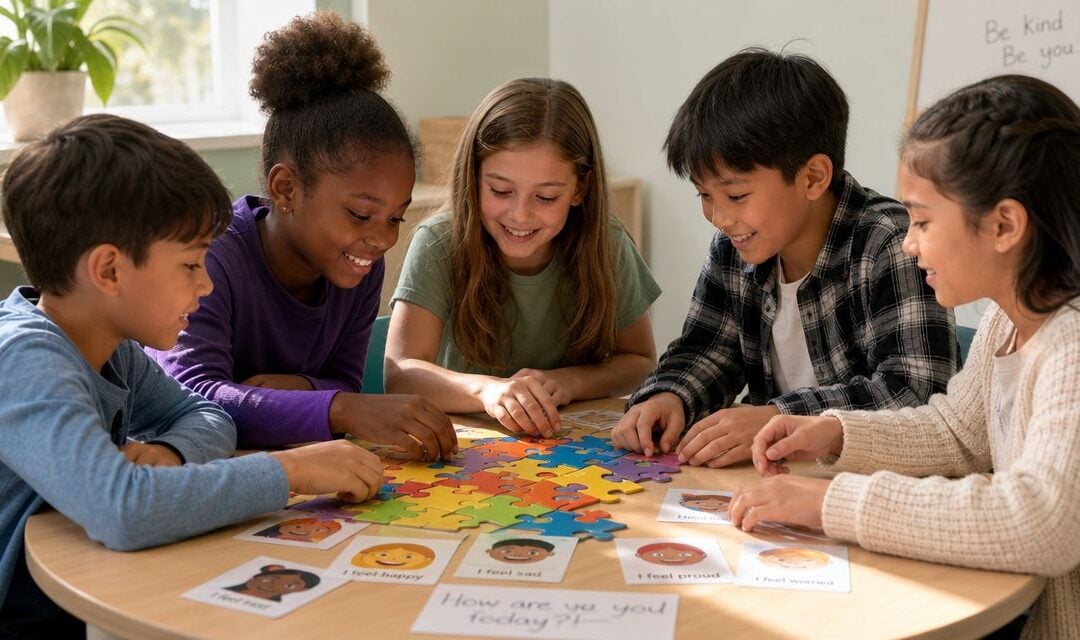
The missing piece usually isn't effort. It's skill-building. Young people need repeated practice with listening, turn-taking, self-regulation, problem-solving, repair after conflict, and shared responsibility. That's why the best team building activities for youth do more than fill time. They teach social-emotional skills in a form kids can use with classmates, teammates, siblings, and friends.
That matters even more now. A peer-reviewed meta-analysis found team-building interventions in sports significantly improve team cohesion, with the strongest effects on task cohesion, and the benefits were most pronounced for participants aged 15 to 20 and for collegiate teams. In practice, that points facilitators toward shared goals, role interdependence, and repeated problem-solving instead of random novelty games (peer-reviewed meta-analysis on team-building and cohesion).
The list below is built from that lens. Each activity connects directly to SEL, includes facilitation moves that work in real settings, and offers ways to adapt for K-8 students, including virtual formats. If you're planning a field trip or off-campus bonding day, this Perth school outing planning guide can also help with logistics.
1. Circle Discussions and Talking Circles
A talking circle works because it slows the room down. Instead of rewarding the loudest student or the fastest answer, it gives each child a clear turn and a reason to listen. That builds self-awareness, respectful communication, and the sense that everyone belongs in the space.
This is one of the most reliable team building activities for youth when a class feels fragmented. It's especially useful after transitions, after conflict, or at the start of a new term when students need structure more than hype.
How to lead it well
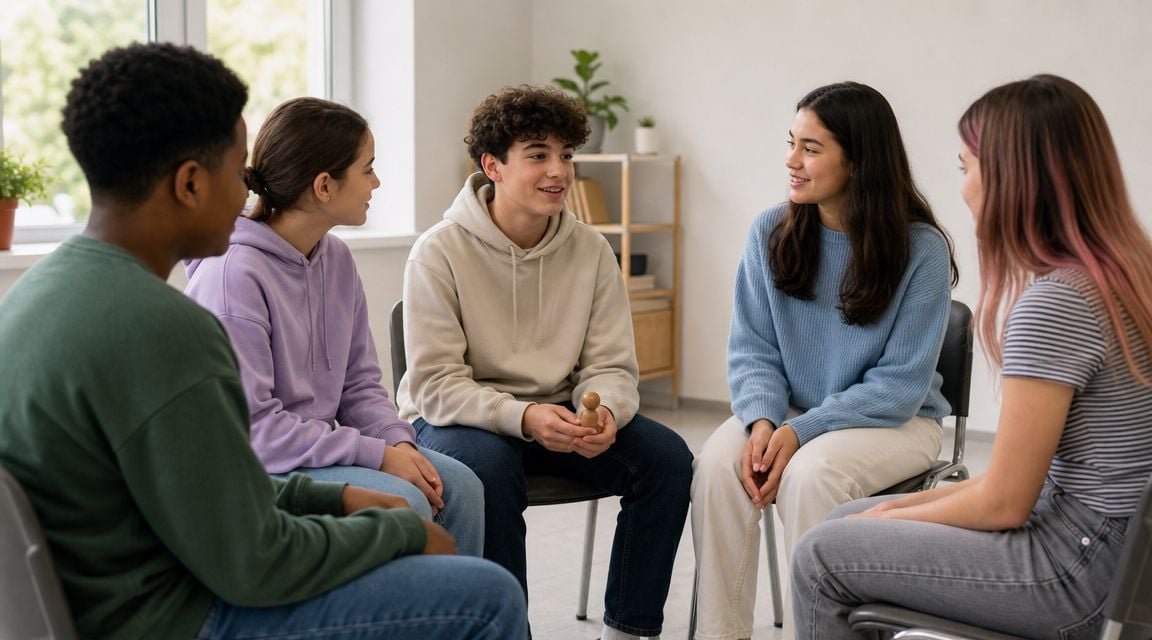
Seat everyone in a real circle if possible. Use a visible talking piece such as a small ball, smooth stone, or classroom mascot. Only the person holding it speaks, and passing is always allowed.
Start with low-risk prompts:
K-2: “What's one thing that helps you feel ready to learn?”
3-5: “What's one way a classmate can show kindness during group work?”
6-8: “What helps you feel included in a group, and what shuts you down?”
Keep the first rounds short. In elementary settings, I'd rather end a circle while students still feel successful than stretch it until they get restless.
Practical rule: Don't begin with “share a vulnerable moment.” Begin with “share a preference, a strength, or a hope.” Safety grows before honesty deepens.
Real examples and adaptations
A morning meeting circle in a second-grade classroom might use sentence stems like “Today I can help my class by…” A middle school advisory can use circles to repair tension after group project drama. In after-school programs, circles work well before a cooperative challenge, because they create the listening culture the challenge will require.
For virtual groups, keep the circle shape symbolically. Put students in gallery view, use a digital speaking order, and invite responses with sentence stems in chat for students who aren't ready to speak out loud.
2. Cooperative Games and Low-Ropes Courses
Not every physical challenge builds teamwork. Some just expose who is fastest, strongest, or most comfortable taking over. Cooperative games work when the task requires everyone, and when the facilitator treats reflection as part of the activity, not an optional extra.
The strongest youth team-building work usually comes from structured, facilitation-led experiences rather than one-off games. That broader demand is showing up beyond schools too. The global team building service market is estimated at USD 6.99 billion in 2026 and projected to reach USD 40.35 billion by 2035, implying a 21.52% CAGR, according to Business Research Insights on the team building service market.
What builds skill instead of just excitement
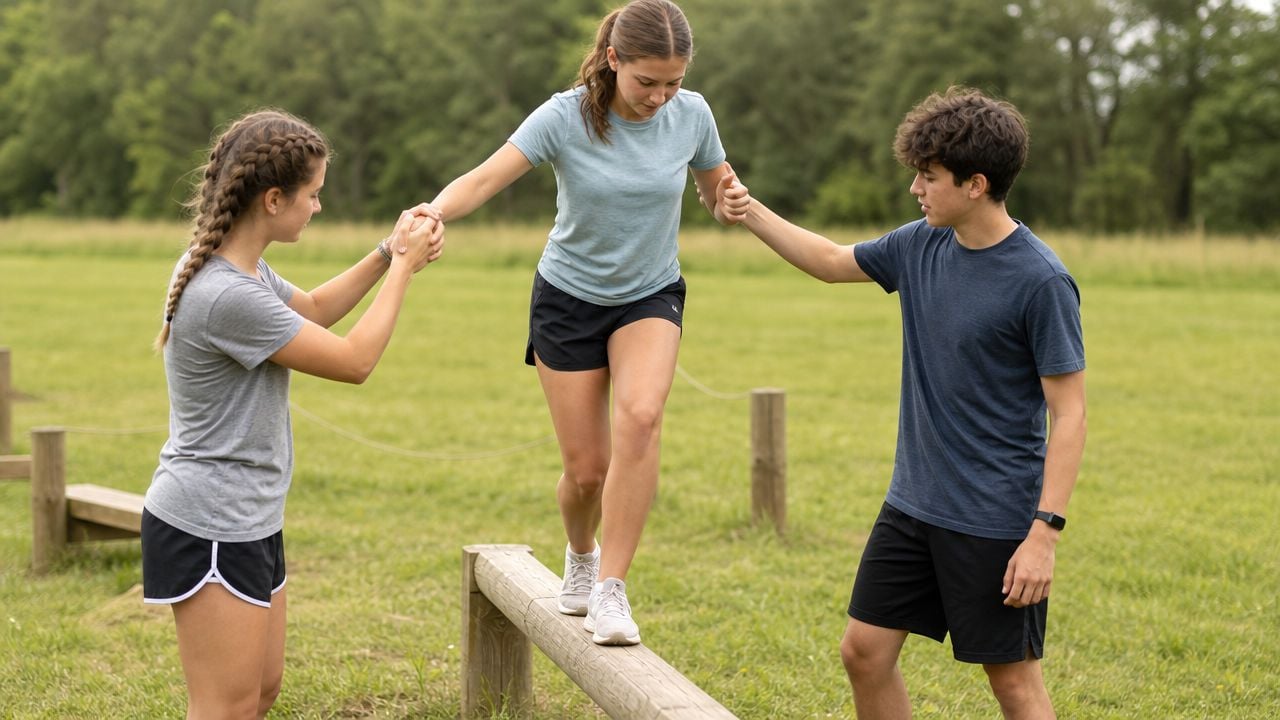
A low-ropes style challenge, cup-stacking relay, group balance task, or “cross the river” game teaches planning under pressure. Students have to assign roles, notice who hasn't spoken, and adjust when the first plan fails.
Good facilitation sounds like this:
Before: “How will you make sure everyone has a job?”
During: “Pause. Who has an idea we haven't heard yet?”
After: “What did your team do when the first strategy stopped working?”
That sequence is where the SEL learning lives. Without it, students just remember whether they won.
For indoor options, cooperative board games can do similar work with lower physical demand. Families looking for calmer formats can find teamwork board games that reward planning and shared decision-making.
A short video can help staff picture the setup before running a challenge:
K-8 adjustments
With K-2, use very short tasks and obvious roles such as holder, watcher, encourager, and checker. Grades 3-5 can handle layered rules. Middle schoolers usually need challenge-by-choice language, because forced participation can quickly become performative or unsafe.
3. Empathy Mapping and Perspective-Taking Exercises
When students say, “She was being rude,” they're usually naming impact, not understanding perspective. Empathy mapping helps them pause long enough to ask what another person might be thinking, feeling, hearing, and needing.
That matters in classrooms because many youth activities focus on fun but skip the mechanism that actually builds connection. Empathy work helps students separate intent from impact and move from blame to curiosity.
A simple format that works
Put a scenario in the center of a chart. Examples:
A student is left out during recess.
A new classmate doesn't join the group project.
Two friends stop talking after one interrupts the other in front of the class.
Then divide the page into four areas: says, thinks, feels, and needs. Have students work in pairs or trios and fill in each area for one person in the scenario.
Keep the room grounded with reminders:
Understanding isn't agreement.
We're exploring possibilities, not mind-reading.
Avoid stereotypes. Stay close to the actual situation.
A fourth-grade class might map the feelings of a student who loses a turn and reacts loudly. An eighth-grade advisory might examine a group-chat conflict and identify where assumptions took over.
Understanding another student's perspective doesn't excuse hurtful behavior. It gives the group a better shot at repairing it.
Age adaptations and virtual use
For younger students, use pictures and sentence stems such as “They might feel…” and “They may need…” Older students can compare multiple perspectives from the same event, which is often where the richest discussion happens.
If you want more structured classroom prompts, these perspective-taking activities offer useful follow-up ideas. Online, students can complete shared empathy maps in Google Slides or Jamboard-style tools, then discuss what changed when they looked beyond first impressions.
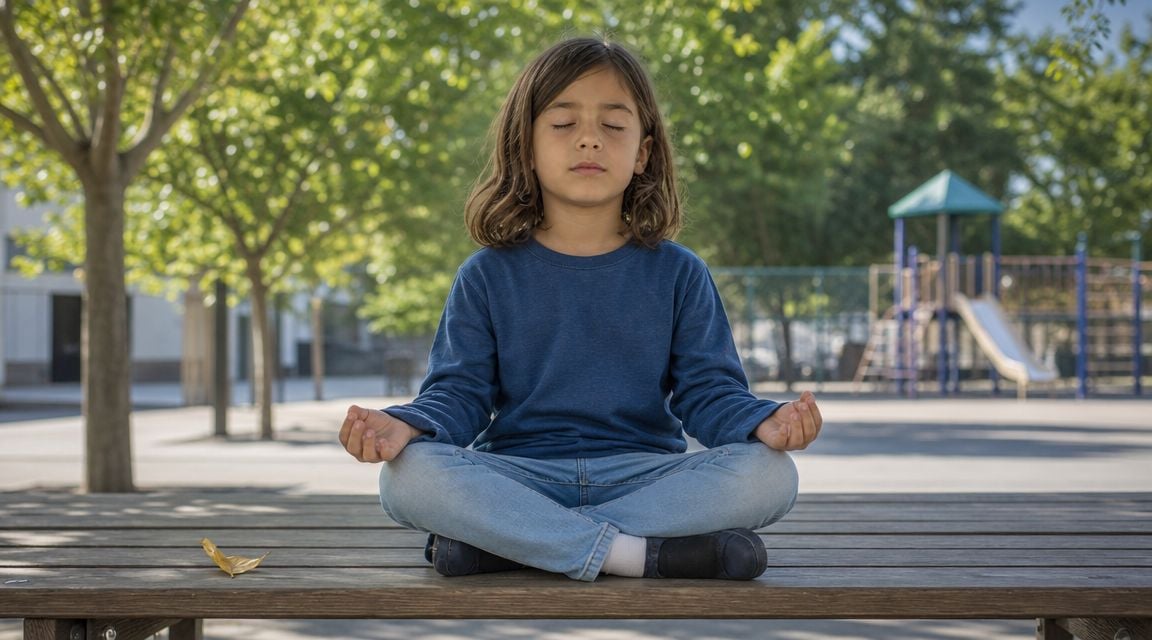
4. Mindfulness and Grounding Practices for Group Regulation
A dysregulated group can't collaborate well. Students who are overstimulated, frustrated, or embarrassed often look “uncooperative” when what they need is help returning to baseline. Group mindfulness gives everyone a shared reset without singling anyone out.
This is also an inclusion issue. Many popular lists of team building activities for youth lean heavily on loud, physical, high-energy games. That can leave out neurodivergent, disabled, or sensory-sensitive students. It's worth noting that Playmeo's activity guidance explicitly favors movement-heavy formats and warns against long periods of sitting still, which is useful in some settings but not a fit for every learner. A better approach is to offer lower-arousal options alongside active ones, especially because a global youth mental-health overview notes that 1 in 7 adolescents aged 10 to 19 lives with a mental disorder (Playmeo activity guidance).
Grounding practices that don't feel forced
You don't need a long meditation. You need a repeatable routine students can trust.
Try one of these:
Breathing with an object: Students place a beanbag or stuffed animal on their lap or desk and watch it rise and fall.
Five-senses scan: Name one thing you can see, hear, feel, smell, and notice in your body.
Wall push or chair press: Students use light physical pressure to settle their systems before group work.
Quiet doodle minute: Students draw repeated shapes while breathing slowly.
For K-2, keep language concrete. “Let's get our bodies ready.” For middle school, explain the purpose plainly. “We're taking two minutes so your brain can shift out of reaction mode.”
Virtual options and facilitation notes
In online groups, use brief grounding at the start and before breakout rooms. Invite camera-off participation if needed. Students can trace a square on their desk, hold an object with texture, or do a short hand stretch while listening.
These mindfulness group exercises can help adults build a routine that feels age-appropriate instead of overly scripted.
5. Collaborative Project-Based Learning
Short activities reveal team habits. Longer projects reshape them.
Collaborative project-based learning asks students to work together toward something that matters beyond the game itself. A class garden, student-run kindness campaign, buddy reading event, or school mural requires planning, patience, and follow-through. Students learn that teamwork isn't only about getting along. It's about coordinating strengths over time.
Why it works so well for SEL
Projects make interdependence visible. The student who struggles during whole-group discussion may shine when designing posters. The student who talks constantly may learn that deadlines, materials, and listening matter just as much as enthusiasm.
A good project also creates natural moments for SEL instruction:
Self-awareness: “What role suits me?”
Self-management: “How do I handle frustration when our plan changes?”
Relationship skills: “How do we disagree without stalling the whole group?”
Responsible decision-making: “What serves the shared goal?”
A practical elementary example is a fifth-grade kindness week planned by student teams. One group handles announcements, another designs visuals, another prepares welcome cards for younger students. In middle school, a service-learning project can include a reflection protocol every week so the process gets as much attention as the product.
What adults often get wrong
The common mistake is assigning a group project without teaching collaboration. Students then reenact every unhealthy pattern they already have.
Build in role clarity, midpoint check-ins, and conflict repair. Ask teams to name one contribution from each member before each milestone. If one student is doing everything, intervene early. “Equal” doesn't always mean identical, but every student should be meaningfully necessary.
6. Peer Mentorship and Buddy Programs
Some students open up faster to another young person than to an adult. That's why buddy systems and peer mentorship can be so powerful. They create belonging through relationship, not just through activity design.
For younger children, cross-age buddies reduce anxiety and make large school environments feel more navigable. For older students, mentoring builds leadership with real responsibility attached to it.
Practical examples that hold up in real schools
A kindergarten and fifth-grade reading buddy program is a classic because it's predictable and easy to sustain. The older students practice patience, encouragement, and modeling. The younger students get individual attention and a familiar face in the hallway.
In middle school, a sixth-grade transition buddy program can help new students learn routines, lunch procedures, and social norms. The best pairings usually come from shared interests, not just convenience.
Use structure:
Shared activity: Read together, solve a challenge, make a poster, or play a cooperative game.
Predictable routine: Same day, same place, same opening and closing ritual.
Adult oversight: Staff should coach mentors, not just assign them.
Give mentors scripts before you give them responsibility. “How can I help?” and “Do you want advice or just someone to listen?” go a long way.
K-8 and virtual adaptations
Primary-grade buddies may need side-by-side tasks with clear materials. Older students can handle more open-ended check-ins, but they still need boundaries. Mentors aren't counselors. They're trained peers who offer welcome, consistency, and encouragement.
Virtual buddy programs work best with short shared tasks like reading a page together, playing a drawing game, or responding to a prompt in a shared slide deck. Keep sessions brief and supervised.
7. Restorative Circles and Conflict Resolution Practices
When conflict happens, many adults want a fast answer. Who started it. What rule was broken. What consequence fits. That may stop the moment, but it often doesn't repair the relationship.
Restorative circles work differently. They help students name harm, hear impact, take responsibility, and make specific agreements for what happens next. That's team building in its most honest form, because real groups aren't bonded by avoiding conflict. They're bonded by learning how to move through it.
What this sounds like in practice
A restorative process might include questions such as:
What happened from your point of view?
Who was affected?
What were you thinking and feeling at the time?
What needs to happen now to make things as right as possible?
A third-grade circle after repeated recess exclusion will sound different from a middle school circle about a rumor or group chat issue. The structure stays the same. The language changes.
Preparation matters. Meet with students first. Make sure everyone understands the process and has support. A circle shouldn't become a stage for surprise accusations.
Don't use restorative language as a softer punishment script. Students can tell the difference. Don't force immediate vulnerability either. Some children need time, co-regulation, or a separate conversation before they're ready to participate meaningfully.
A practical school example is a lunchroom conflict where two students agree not only to stop the behavior, but to change seating, use a check-in adult, and practice a repair phrase when tension rises again. That level of specificity is what makes the circle useful.
8. Creative Expression and Arts-Based Team-Building
Some children communicate best with words. Others don't. Arts-based team-building creates another door into connection. A mural, skit, rhythm piece, collage, or group movement task lets students contribute through image, sound, gesture, and design.
This can be especially effective with shy students, multilingual learners, and students who tense up during direct discussion. Art gives them a role before it asks for a speech.
SEL benefits hidden inside creative work
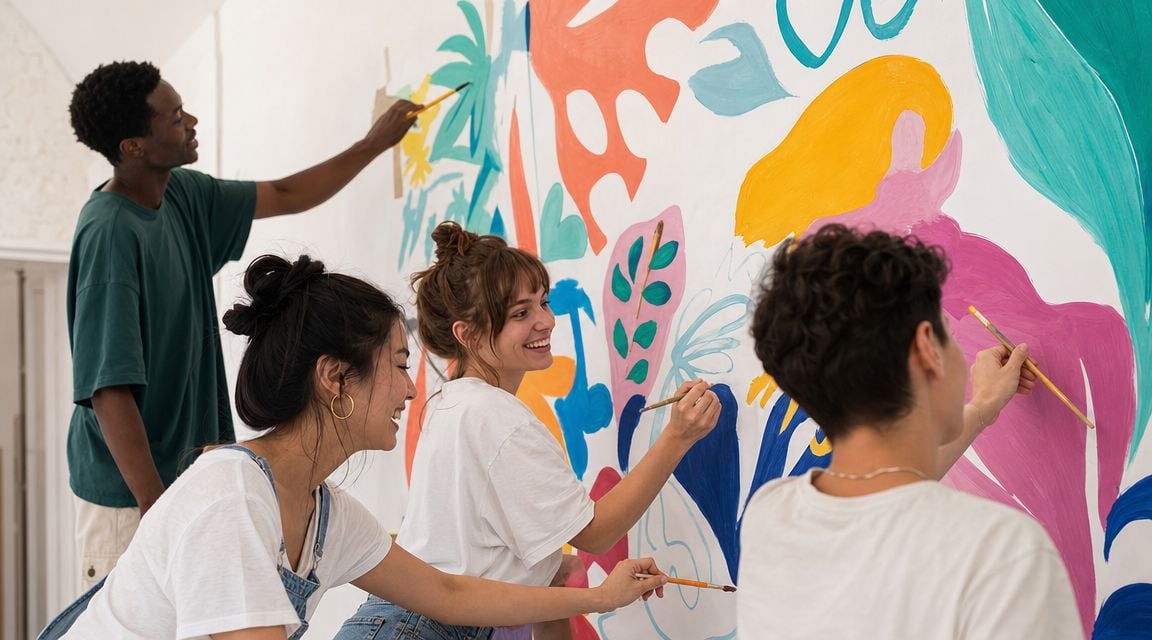
A collaborative mural teaches negotiation. A class poem teaches attentive listening. A short skit about playground conflict teaches perspective-taking and repair.
One effective format is “identity squares.” Each student decorates one square to show strengths, interests, family, or hopes. Then the group arranges all squares into one display. Younger students can draw favorite places or feelings. Older students can add words or symbols tied to values and community agreements.
Keep the message clear. The standard isn't artistic talent. The standard is contribution, respect, and reflection.
Facilitation moves that help
Use prompts that invite voice without forcing disclosure:
K-2: “Draw what helps our class feel kind.”
3-5: “Create a symbol for teamwork.”
6-8: “Show what inclusion looks like, and what gets in its way.”
Afterward, ask students to describe one choice they made and one contribution they noticed from someone else. That simple reflection turns a craft into community-building.
A single activity can warm up a group. It can't carry a school culture on its own.
The most durable results come when adults teach shared SEL language across classrooms, grade levels, and routines. That's what helps team building activities for youth stick. Students hear the same ideas in a morning meeting, during recess repair, in project work, and when a counselor supports a friendship issue.
Why consistency matters
Many schools use strong activities but weak follow-through. A class does a trust game on Tuesday, then adults handle Thursday's conflict with sarcasm, public correction, or inconsistent expectations. Students notice the mismatch immediately.
When SEL is integrated, adults can reference familiar tools:
Name the feeling
Pause and regulate
State impact
Ask for what you need
Make a repair plan
That consistency helps the whole community. Guidance linked through CDC school connectedness materials has emphasized that school connectedness is associated with lower rates of bullying, violence, substance use, emotional distress, and suicide risk. The practical implication is simple. Connection isn't an extra. It's protective when schools build it on purpose.
For schools wanting a deeper grounding, these benefits of social-emotional learning connect the classroom practice to the broader developmental picture.
A real implementation example
An elementary school might teach one communication tool per month, use it in assemblies, and post the language in classrooms. A middle school advisory program might pair weekly SEL mini-lessons with peer discussion circles and common conflict-resolution scripts.
That's less flashy than a one-day event. It works better.
10. Digital Connection and Virtual Team-Building
Virtual team-building often fails for one reason. Adults copy an in-person activity and move it onto a screen. The result feels flat, awkward, or exhausting.
Online connection needs tighter structure, shorter segments, and more participation pathways. Chat, annotation, polls, reaction icons, and breakout rooms can help quieter students contribute in ways they might avoid in person.
Formats that translate well online
A few options work especially well:
Virtual check-in circles: One prompt, one sentence, one shared norm about listening.
Collaborative slide decks: Each student adds one page about strengths, goals, or support needs.
Digital empathy scenarios: Small groups discuss a conflict case, then report back with repair ideas.
Shared creative challenges: Draw a mascot, co-write a story, or build a class playlist with a reason for each choice.
For K-2, keep adults nearby if possible and use visual prompts. For grades 3-5, use partner breakout rooms with a clear task card. For middle school, give students a job in the session, such as chat host, timekeeper, or recap reporter.
Inclusion and pacing
Virtual settings can increase access for students who struggle with transportation, sensory overload, or medical barriers. They can also increase disconnection if sessions are too long or too talk-heavy.
Keep expectations visible and humane. Not every student wants a camera on all the time. Participation can include speaking, typing, drawing, reacting, or contributing to a shared document. The point is meaningful presence, not one rigid performance style.
Increases accessibility and flexibility; supports remote inclusion
Putting Connection at the Center of Your Community
The strongest team building activities for youth don't ask students to pretend conflict doesn't exist. They give young people tools to handle it better. They don't assume belonging will appear just because children share a room. They build routines, language, and experiences that make belonging more likely.
That's why the “why” matters as much as the activity itself. A talking circle teaches equal voice. A low-stakes cooperative challenge teaches role interdependence. Empathy mapping teaches perspective-taking before judgment hardens. Mindfulness helps a group return to regulation. Restorative practice teaches that mistakes can be addressed without giving up on the relationship. Project-based learning shows students that shared work can produce something meaningful. Buddy systems prove that welcome can be organized, not left to chance. Arts-based collaboration widens the definition of participation. SEL integration keeps all of it from becoming random.
For school leaders, the practical question isn't which one is best in the abstract. It's which one your community is ready to do consistently. If a class is emotionally flooded, start with grounding and brief circles. If students are polite but disconnected, try collaborative projects and buddy structures. If conflict keeps resurfacing, invest in restorative routines and adult facilitation skills. If inclusion is a concern, audit every activity for sensory load, communication demands, and hidden barriers before you launch it.
The trade-off is simple. One-off events feel easy to schedule, but they rarely shift group culture on their own. Repeated practice takes more planning, but it gives students a real chance to build habits. In my experience, children don't need perfect facilitation. They need adults who are consistent, respectful, and willing to slow the group down enough for learning to happen.
Families can use many of these approaches at home too. A short dinner-table circle, sibling collaboration project, or repair conversation after conflict teaches the same core habits. Schools and caregivers don't need separate playbooks. Young people benefit most when the adults around them reinforce the same messages about empathy, regulation, communication, and repair.
If your school wants more support, Soul Shoppe is one relevant option. The organization offers workshops, assemblies, coaching, and resources focused on connection, safety, empathy, mindfulness, communication, and conflict resolution for school communities.
If you want support building a more connected school culture, explore Soul Shoppe for workshops, resources, and practical SEL tools that help students and adults practice empathy, communication, self-regulation, and conflict repair together.
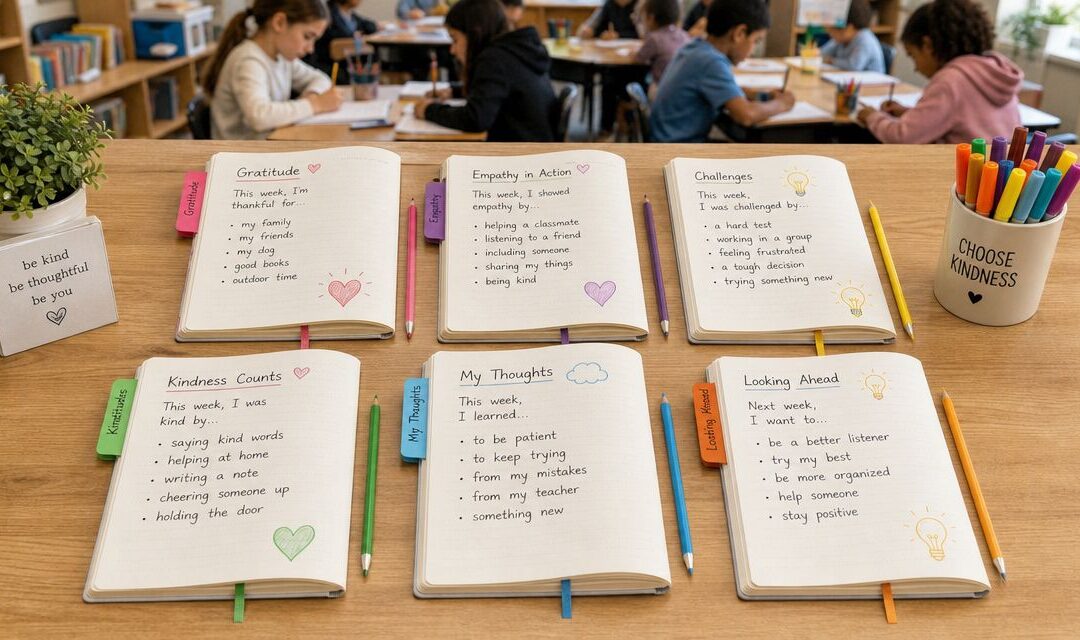
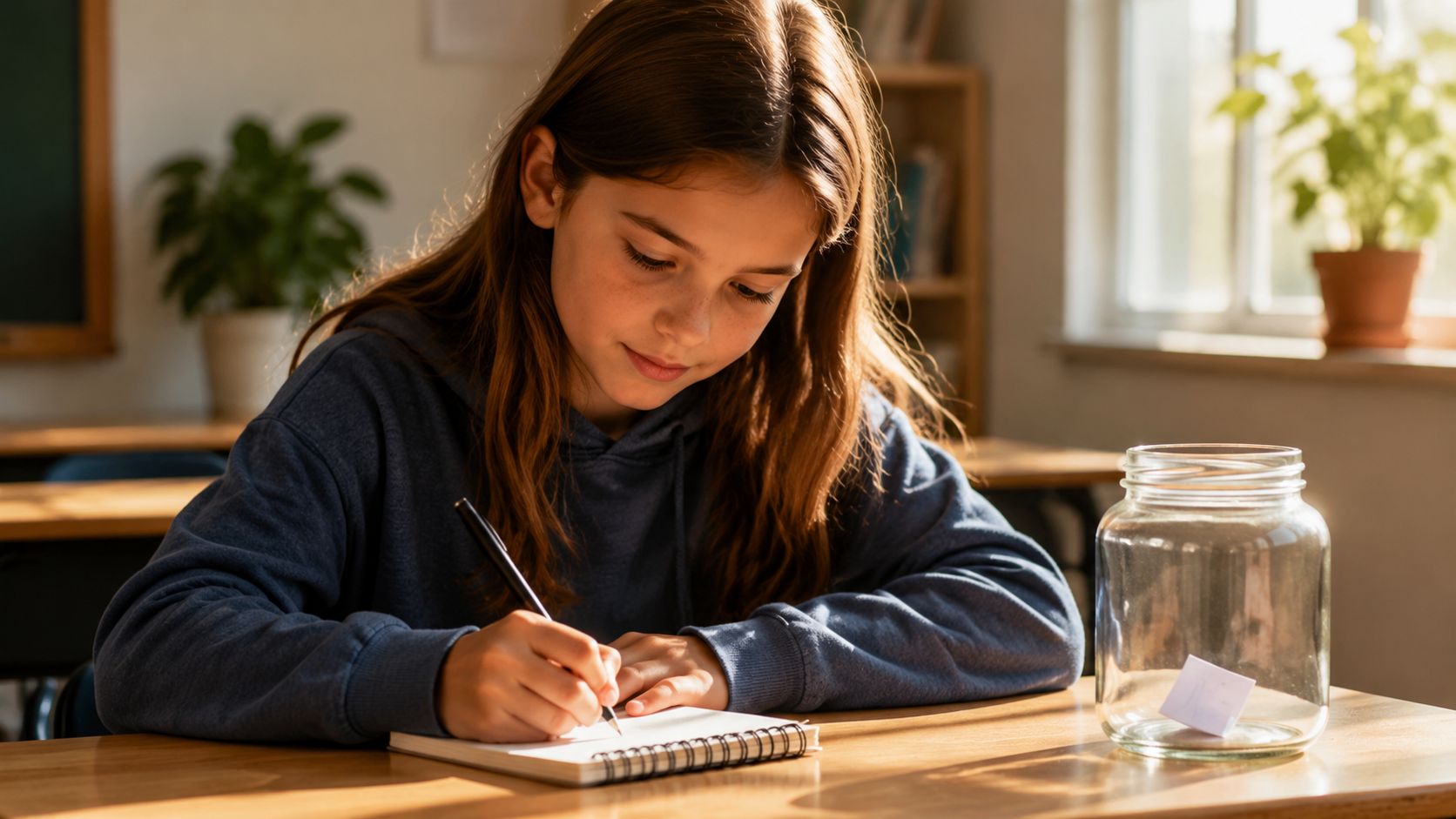
A lot of adults want students to journal, but the moment they try to make it happen, the same problems show up. A blank page feels too open-ended. Some students write one sentence and stop. Others turn the notebook into a play-by-play of their day without doing much reflection. And when a prompt gets too personal, participation drops fast.
That's why journal prompts for students work best when they're structured, brief, and tied to a clear purpose. Prompts have a long classroom history as a structured writing tool, including documented use in statistics education, where a 1998 study discussed in the Association for Psychological Science's article on incorporating writing into an introductory statistics course links periodic journal writing about fears and anxieties with reduced statistics anxiety. In schools today, that same core idea still holds up. Give students a low-stakes way to put thoughts into words, then connect that reflection to learning, relationships, and self-regulation.
For K-8 educators and families, journaling is more than a diary. It can support emotional regulation, problem solving, identity development, and classroom belonging. If you also want literacy support alongside SEL, these practical reading comprehension methods pair well with reflective writing.
The prompt types below are organized by SEL theme and grade band, with examples you can use this week. Keep what fits. Skip what doesn't. A good journaling routine should feel doable, not idealized.
1. Gratitude and Appreciation Journaling
Gratitude prompts are often the easiest place to start, especially with younger students. They're concrete, emotionally safe for most children, and simple to repeat without feeling stale. A student who can't yet write a full paragraph can still answer, “Who helped me today?” or “What made me smile at recess?”
For K-2, keep it highly specific. “I'm thankful for my family” is fine, but “I'm thankful Maya saved me a seat at lunch” builds stronger emotional awareness because the child is naming a real interaction. In grades 3-5, students can expand to weekly reflections such as “What's something hard that turned out better than I expected?” In middle school, appreciation journals work well when they include peers, teachers, routines, and small moments, not just big life blessings.
Prompts that work in real settings
K-2 classroom prompt: “Draw one thing that felt good today and write one sentence about it.”
Grades 3-5 prompt: “Who made your day easier this week, and what did they do?”
Middle school prompt: “What's one part of your life you usually overlook but appreciate more now?”
Home routine prompt: “What is one thing from today you want to remember because it felt kind, calm, or fun?”
A gratitude journal doesn't need to become performative. Students shouldn't feel pressure to sound cheerful or deep.
Practical rule: Start with one honest thing. Forced gratitude usually produces flat writing and eye-rolls.
If you want to tie this theme to concrete community habits, Soul Shoppe's ideas for ways to show gratitude can help students move from reflection into action. That shift matters. Writing “I appreciate my bus driver” is useful. Writing it, then making a thank-you note, is even better.
What doesn't work is overloading the practice. “List ten things you're grateful for” can feel repetitive fast. One or two meaningful responses is usually stronger than a long list of filler.
2. Self-Regulation and Emotional Check-In Journaling
Some students don't need another open-ended question. They need a format. Emotional check-in journaling works because it gives structure to feelings that otherwise come out sideways through shutdowns, blurting, conflict, or tears.
Start with a simple tracking method. Younger students often do best with colors, faces, or a traffic-light system. Older students can handle a short written reflection: “I felt frustrated in math because I didn't know what to do next. I asked for help after sitting in silence for too long.” That kind of sentence builds self-awareness and gives adults insight without turning the journal into therapy.
A quick visual can help launch the habit.
Good structures for daily use
Red, yellow, green check-in: “What color am I right now? What happened?”
Emotion thermometer: “Where is my stress level this morning?”
Trigger and response frame: “What set me off? What did I do next?”
Reset reflection: “What helped me calm down, even a little?”
This format becomes much stronger when students are taught feeling words first. “Bad” and “fine” won't take them far. Build vocabulary such as disappointed, left out, tense, embarrassed, relieved, and proud. Then connect the writing to a routine. Soul Shoppe's strategies for daily check-ins for students with mood meters and reflection tools fit naturally here.
One caution matters. If you ask students to write about feelings, you need a plan for privacy and follow-up. Some prompt collections focus on emotional expression but don't address opt-in participation, alternatives, or sensitive disclosures, even though student mental health strain remains an active concern, as noted in this college journal prompt resource discussing classroom prompt gaps and student well-being concerns. In practice, that means students need options such as drawing, using a code, writing only to themselves, or choosing a less personal prompt.
3. Mindfulness and Present-Moment Awareness Journaling
Mindfulness journaling is useful when students seem scattered, overstimulated, or rushed from one task to the next. The writing itself should come after a short experience. A breathing pause, a sensory scan, a quiet observation walk, or a body check gives students something real to notice.
For K-2, use five senses language. “I hear…” “I see…” “I feel…” works well after a calm minute by the window or on the rug. In grades 3-5, students can reflect on what distracted them and what helped them refocus. Middle school students can handle more nuanced prompts about mental noise, stress, or what it feels like to slow down.
Prompt ideas by grade band
K-2: “What are three things you noticed when the room got quiet?”
Grades 3-5: “What did your body feel like before and after breathing slowly?”
Grades 6-8: “What kept pulling your attention away today, and what helped you return to the present moment?”
Home use: “Where in your day did you feel most calm, even briefly?”
A common mistake is expecting students to become serene on command. That's not how this works. Some children will feel calmer. Some will feel restless and annoyed. Both responses are usable.
Wandering thoughts aren't a failure. They're the material students can write about.
If you want a schoolwide bridge between calm-down routines and reflection, Soul Shoppe's article on mindfulness for students offers language adults can adapt. Keep the activity short. Two or three quiet minutes followed by one solid prompt usually beats a long guided exercise that students tune out.
4. Conflict Resolution and Problem-Solving Journaling
Conflict journals work best after a real disagreement, not as an abstract character lesson. A student had an argument during group work. Someone felt excluded at recess. A sibling grabbed a game controller and the evening blew up. Those are the moments when writing can slow the story down enough for problem solving.
Instead of asking, “How did that make you feel?” and stopping there, use a sequence. What happened first? What did I think it meant? What did I do? What could I try next time? The structure matters because students often jump straight from event to blame.
A simple reflection sequence
Step 1: “What happened?”
Step 2: “What was I feeling?”
Step 3: “What might the other person have been feeling?”
Step 4: “What did I do that helped or hurt the situation?”
Step 5: “What's one better next step?”
For grades 1-3, keep it oral first, then write a sentence or draw a sequence. In grades 4-5, students can do a two-column reflection with “my view” and “their view.” Middle school students can prepare for a restorative conversation by drafting what they want to say, what they want to own, and what they need moving forward.
When families or teachers skip the perspective-taking part, these entries become complaint logs. That doesn't build much. The more useful version asks students to hold two truths at once: “I was upset” and “the other person also had a perspective.”
Soul Shoppe's guidance on conflict resolution strategies for kids pairs well with this type of journaling because students need language they can use out loud after they write. The journal is preparation. It shouldn't be the end point.
5. Growth Mindset and Learning From Mistakes Journaling
This category is where journal prompts for students can connect SEL to academics without feeling forced. Students make mistakes all day. They misread directions, bomb a quiz, forget materials, overestimate how long homework will take, and freeze when work gets hard. If journaling only celebrates strengths, it misses one of the best uses of reflection.
The trick is keeping the writing practical. “Write about a failure” can feel dramatic or vague. “Describe one mistake you made this week, what it taught you, and what you'll try next” is much more usable.
Better prompts than “What did you do wrong?”
Primary grades: “What was tricky today, and who or what helped you keep going?”
Upper elementary: “What mistake taught you something important this week?”
Middle school: “Where did you get stuck, and what strategy will you use next time?”
Academic version: “What part of this assignment showed you what you still need to practice?”
I've seen teachers get better results when they occasionally model their own learning frustration. A short example like, “I rushed directions and confused everyone, so next time I'll chunk them,” gives students permission to write authentically instead of pretending they always know what to do.
A youth-focused journaling guide from Waterford shows how broad student prompts have become for children and adolescents, including prompts related to emotional regulation, problem solving, identity, gratitude, and relationships, while framing journaling as something that helps people “big and small alike” feel better in its guide to journal prompts for kids. That range matters here because mistake-reflection prompts don't need to stay academic. A student can learn from blowing up at a friend just as much as from missing five spelling words.
What doesn't work is grading the vulnerability. Assess completion, stamina, or use of reflection routines if you must assess something. Don't score the student's inner life.
6. Kindness, Empathy, and Peer Connection Journaling
Some students struggle to notice kindness unless it's dramatic. Journaling can train attention toward the smaller moments that build community. A partner waited. Someone invited another student into a game. A classmate noticed a dropped pencil and picked it up. Those details matter because they make empathy visible.
With younger students, start with observation before expectation. Asking a child to perform kindness for the journal can turn it into point-scoring. Asking, “What kind thing did you notice today?” usually gets more genuine responses.
Prompts that build peer awareness
K-2: “Who helped someone today? What did they do?”
Grades 3-5: “When did you notice someone else's feelings and respond kindly?”
Grades 6-8: “Describe a time you could've ignored something but chose to include, support, or speak up.”
Family version: “How did someone in our home make life easier today?”
This theme also works well with appreciation notes, partner interviews, and brief reflection after community circles. Students who don't like long writing can still complete a strong entry by finishing sentence starters such as “I felt connected when…” or “Someone showed empathy when…”
Classroom note: Celebrate specific behaviors, not “nice kids.” Students need to see that empathy is something they do, not a trait only some people have.
A weak version of this practice stays generic. “Be kind” isn't enough. A stronger version names actions, context, and impact: “I noticed Eli was alone, asked him to join us, and then he smiled and started talking.” That kind of journaling strengthens social memory. It helps students recognize what belonging looks like.
7. Identity, Values, and Belonging Journaling
Identity prompts can be some of the most meaningful and some of the most mishandled. When adults rush them, students feel exposed. When adults make them too broad, students produce shallow answers. The safest and most useful approach is choice.
A child can write about family traditions, favorite places, names they're proud of, languages they hear at home, values they want to live by, or times they felt included. They should also be able to pass on topics that feel too personal. That's especially important in diverse classrooms where students may be grieving, newly immigrated, questioning parts of identity, or are private.
Safer ways to invite self-expression
Offer options: Let students pick from identity, values, interests, or belonging prompts.
Allow multiple formats: Writing, drawing, lists, labeled pictures, or sentence frames all count.
Avoid assumptions: Don't require students to write about “mom and dad,” holidays they may not celebrate, or cultural traditions they may not want to explain.
Keep sharing optional: Reflection can still be powerful when it stays private.
A few examples work well across grade bands. K-2 students can complete “One thing that makes me me is…” Grades 3-5 can respond to “What do you want people to understand about you?” Middle school students can write about where they feel most like themselves and what values they want others to notice in their actions.
This is also where psychological safety matters most. Prompt lists often give ideas but not enough guidance on accessibility, alternatives, or how to respond to sensitive content. In practice, adults need to think ahead. What will a multilingual student do if the prompt is emotionally rich but language-heavy? What's the alternative for a student who doesn't want to disclose? Those design choices matter as much as the prompt itself.
8. Goal-Setting and Progress Tracking Journaling
Goal journals are useful because they move reflection toward agency. Instead of only processing feelings after something happens, students begin naming what they want to work on and how they'll know they're making progress.
Keep the goal small enough to see. “Be better at math” is too vague. “Show my work on every multi-step problem this week” is clear. The same applies to SEL goals. “Be nicer” won't help much. “Invite one classmate into a game at recess” gives the student a behavior they can try.
A realistic journal routine
One education resource recommends 30-minute journaling sessions one or two days per week, with prompts selected from a jar and entry length adjusted to age and stamina. You don't have to copy that exact routine, but the underlying idea is solid. Put journaling on the calendar, give students a format, and scale the writing load to their developmental level.
Try prompts like these:
Primary grades: “What is one thing you want to get better at this week?”
Upper elementary: “What goal did you work on today, and what helped?”
Middle school: “What got in the way of your goal this week, and what will you adjust?”
Home use: “What's one habit our family is practicing together?”
The most common mistake is setting goals and never revisiting them. A goal journal without check-ins becomes a storage bin for abandoned intentions. Weekly review matters. So does flexibility. If a student chose the wrong goal, help them revise it instead of turning that into another failure story.
9. Social Skills and Communication Journaling
Students often know they had a rough interaction, but they can't yet explain why it went badly. Communication journals slow that moment down. They help students notice timing, tone, word choice, body language, and whether they listened.
This works well after partner work, class discussions, friendship problems, or difficult conversations at home. A student might write, “I interrupted because I thought my idea would be forgotten,” or “I said ‘whatever' when I felt embarrassed.” That kind of reflection creates better insight than a generic reminder to “use kind words.”
Prompts for conversation awareness
Listening prompt: “When did you really listen today? How do you know?”
Assertiveness prompt: “What did you need to say but almost didn't?”
Repair prompt: “Did you need to fix a conversation today? What happened next?”
Friendship prompt: “What helps you feel heard by other people?”
A good communication journal isn't about scripting perfect social behavior. It's about pattern recognition. Students begin to see, for example, that they shut down when they feel corrected, or that they talk over peers when they're excited, or that they avoid asking for help because they don't want to seem confused.
This is one of the strongest categories for role-play plus reflection. Let students practice a sentence stem such as “I felt left out when…” or “Can we try that again?” Then ask them to journal afterward about what felt easy, awkward, or effective. The writing becomes a bridge between social-skills instruction and real-life use.
10. Wellness, Self-Care, and Mental Health Journaling
Wellness journals can be helpful, but they need careful boundaries. A school or home journal isn't a diagnostic tool, and students shouldn't feel responsible for turning private distress into polished writing for adults. Keep the focus on awareness, routines, stress signals, coping tools, and help-seeking.
That means prompts like “What helps your body feel ready for the day?” are often more useful than broad invitations to unpack everything. Students can track sleepiness, energy, movement, overwhelm, calm-down choices, breaks, hydration, or what routines help them reset after school.
Stronger prompts for support and prevention
K-2: “What helps your body feel calm?”
Grades 3-5: “What are your clues that you need a break?”
Grades 6-8: “What coping strategy helped this week, and when didn't it work?”
Help-seeking prompt: “If you needed support, which grownup could you talk to?”
There's also an important implementation question here. Schools often want journaling to support SEL, behavior, reflection, and wellness all at once. But prompt routines work better when adults are clear about their purpose. A recent discussion of self-care prompts and school-related reflection gaps points to a real issue in journal prompts for better self-care: educators need ways to support mental health and SEL without overreaching, invading privacy, or pretending every benefit can be neatly measured from the writing itself.
If a student writes something concerning, the response should come from school or family support systems, not from deeper journaling prompts. The journal can open a door. It shouldn't be asked to carry the whole load.
Moderate, requires explicit social skills teaching
Conversation prompts, role-play supports, debrief time
Improved communication, confidence, reduced social anxiety
Social skills groups, debriefing difficult conversations
Strengthens interpersonal skills and shared language
Wellness, Self-Care, and Mental Health Journaling
Moderate–High, sensitive facilitation and protocols required
Wellness trackers, referral pathways, staff training
Normalized mental health talk, early identification of concerns
Wellness promotion, at-risk student monitoring, prevention work
Encourages self-care; connects students to supports
Putting Prompts into Practice Your Next Steps
The best journaling routines aren't the most elaborate ones. They're the ones students will do. In a busy classroom, that often means one prompt, a clear time limit, and a predictable structure. At home, it might mean a shared notebook at the dinner table, a bedtime check-in card, or a quiet weekend reflection page.
Start with the need in front of you. If your class feels dysregulated, begin with emotional check-ins or mindfulness prompts. If friendships are fraying, use kindness, empathy, or conflict-resolution writing. If a student shuts down after mistakes, try growth reflections tied to specific school tasks. Journal prompts for students work better when they respond to a real moment instead of an ideal plan.
Keep expectations realistic. Some students will write paragraphs. Some will draw and label. Some will need sentence starters for months before they can write independently. That isn't a sign the practice is failing. It's a sign that support should match readiness.
A few routines consistently help:
Model the kind of reflection you want: Short, honest examples beat polished speeches.
Protect privacy: Don't require public sharing of personal entries.
Offer choices: Give students an alternative prompt or non-writing format when needed.
Stay clear about purpose: A prompt for writing fluency is different from a prompt for emotional regulation.
Use journals to notice patterns, not control students: Reflection should build agency.
One practical question comes up often. Should journals be graded? In most SEL-centered uses, grading the content backfires. It can make students perform insight instead of practicing it. If accountability matters, grade completion, participation in the routine, or use of a structure. Leave the student's private meaning-making alone unless they choose to share.
Another question is frequency. More isn't always better. A sustainable routine is better than a burst of enthusiasm that disappears in two weeks. If you're new to journaling, choose one prompt type and repeat it long enough for students to understand the pattern. Once the habit feels normal, add another category.
For school leaders, this is also where implementation matters more than prompt quantity. Staff need a shared understanding of what journaling is for, what happens when a student discloses something serious, how privacy is handled, and how prompts are adapted for multilingual learners, neurodivergent students, and reluctant writers. The prompt list is the easy part. The adult response system is what makes the practice safe and sustainable.
If you want outside support, Soul Shoppe is one relevant option for schools and families looking to strengthen self-regulation, mindfulness, communication, and conflict resolution through SEL programming and practical tools. That kind of support can help adults connect journaling to a wider shared language, so the notebook isn't a stand-alone activity but part of daily community practice.
Choose one prompt type. Try it for a few weeks. Notice what students respond to, where they need more structure, and what kinds of reflection help them function better with themselves and with other people. That's when journaling becomes more than writing. It becomes a usable skill.
If you want help turning journal prompts into a broader SEL practice, explore Soul Shoppe for programs, tools, and resources that support connection, safety, empathy, and practical student reflection at school and at home.
You can usually tell when a child needs social support before they say it out loud. A student hangs back during partner work. A child melts down when a game doesn't go their way. Siblings can't get through dinner without interrupting each other. At school, the problem shows up as conflict, exclusion, and constant reteaching. At home, it can look like clinginess, avoidance, or “nobody wants to play with me.”
Social skills matter because kids use them everywhere. They need them to join a group, repair a mistake, read a room, manage frustration, and stay connected when things feel hard. That's why social skills activities for kids work best when they're practical, repeatable, and tied to real situations children experience.
This isn't a matter of “just be kind.” Kids need direct teaching, guided practice, and a lot of low-stakes repetition. That need is still very real. In a 2025 Gallup survey of U.S. parents of school-age children, 45% said the COVID-19 pandemic negatively affected their child's social skills development, and 22% said those social difficulties were still ongoing.
The good news is that social growth responds to intentional practice. A 2025 meta-analysis in Frontiers in Psychology reviewed 14 studies on designed physical activities for preschoolers, screened 7,074 articles, and found a significant positive effect on social skills with a standardized mean difference of 0.63 and p < 0.0001. The same review found that interventions lasting 12 weeks showed a significant benefit. That lines up with what practitioners see every day. Structured, play-based practice works.
If you're also thinking about teamwork and belonging through movement, this piece on developing young athletes through sports connects well with the activities below.
1. Circle Discussions and Community Meetings
Circle time works because every child can see every other child. That sounds simple, but it changes behavior. Kids listen better, wait more intentionally, and start noticing that their classmates have different reactions, worries, and ideas.
A strong circle isn't a free-for-all. It's structured, predictable, and short enough that kids can succeed. If you want more ways to build that routine, these classroom community building activities pair well with circle practice.
Mini-lesson plan
Objective: Build listening, turn-taking, empathy, and perspective-taking.
Materials: Chairs or floor spots in a circle, one talking piece, one prompt card.
How to run it:
Set agreements: Review simple norms like “one person talks at a time,” “pass if needed,” and “listen to understand.”
Use a low-risk opener: Try “What's one thing that made you laugh this week?” before asking deeper questions.
Pass the talking piece: Only the student holding it speaks. That physical cue helps younger children especially.
Close with reflection: Ask, “What did you hear that helped you understand someone else better?”
Adaptations that actually help
Kindergarten students usually do better with quick prompts, visual supports, and movement built in. Middle school students often respond better when circles feel purposeful, such as discussing group conflict after a project or checking in after a tense week.
Practical rule: Start shallow, then go deeper. If adults rush kids into vulnerable sharing, the circle gets quieter, not stronger.
For assessment, don't overcomplicate it. Watch for who can wait, who responds to another child's idea, and who begins to use respectful language without being prompted.
2. Role-Playing and Scenario-Based Learning
When kids freeze in a hard moment, it's often not because they don't care. It's because they haven't rehearsed what to say. Role-play gives them a script, a safe reset, and another chance.
A common mistake is choosing scenarios that are too loaded too soon. Start with manageable moments. Joining a game. Handling an interruption. Disagreeing about the rules. Save more intense conflict for later, once the group trusts the process.
Mini-lesson plan
Objective: Practice communication, problem-solving, and perspective-taking in realistic situations.
Joining play: “Can I join?” followed by different possible peer responses.
Handling exclusion: “There's no room for you” and how to respond without escalating.
Fixing a mistake: Bumping into someone's project or saying something hurtful.
How to run it:
Model first: Adults demonstrate both an unhelpful version and a helpful version.
Assign roles: Speaker, listener, observer.
Replay with coaching: Pause and let students try a stronger response.
Reflect: Ask observers what words, tone, and body language made the interaction work better.
Later in the lesson, a short video can reinforce the same skill set.
For differentiation, give reluctant students sentence starters like “I feel…” or “Can we try…” Older students benefit from reverse role-play, where they argue the opposite side and then discuss what changed in their understanding.
3. Mindfulness and Breathing Exercises
Some kids know the right social move, but they can't access it when they're flooded. That's where regulation matters. Social skills and self-regulation are tied together. If a child's body is in fight, flight, or shutdown, conversation skills won't carry the moment.
The best mindfulness routines for kids are concrete. Long silent meditations often backfire with younger students or restless groups. Short, sensory-based practices are more usable. Belly breathing is one example, and this guide to the belly breathing technique gives a simple model adults can teach quickly.
Mini-lesson plan
Objective: Help kids notice body signals and return to a calmer state before social situations escalate.
Materials: Floor spots or chairs, one visual breathing cue, optional pinwheel or stuffed animal.
How to run it:
Name the body clue: “Your shoulders are tight,” “Your face feels hot,” or “Your hands feel fast.”
Teach one breathing pattern: Inhale slowly, pause, exhale slowly. Keep the wording simple.
Pair breath with image: Smell the soup, cool the soup. Inflate the balloon, deflate the balloon.
Use it before stress: Practice during calm moments, not only after conflict.
Doesn't work: treating breathing like a punishment, forcing stillness, or expecting kids to regulate on command after one lesson.
Some children regulate better with movement first. Wall pushes, stretching, or a slow walk can make breathing practice more accessible.
Assessment can be observational. Can the child identify a feeling in their body? Can they choose a calming strategy with support? Can they return to a group task with less friction than before?
4. Peer Mentoring and Buddy Programs
Kids often accept coaching from peers in ways they resist with adults. That's the value of a buddy system. A calm older student can model how to greet, how to include someone, or how to recover after an awkward moment without it feeling like a lecture.
Cross-age programs work especially well during transitions. Think fifth graders with kindergarteners, or middle school students supporting incoming students during lunch, recess, or orientation. The relationship needs structure, though. Good intentions alone don't make a mentoring program safe or useful.
Mini-lesson plan
Objective: Build connection, reduce isolation, and give students repeated practice with prosocial behavior.
Materials: Pairing list, simple activity menu, reflection sheet for mentors.
How to run it:
Train the mentors: Practice active listening, encouragement, and boundaries before any pairing begins.
Give each pair a task: Read together, solve a simple puzzle, play a turn-taking game, or do a “get to know you” interview.
Keep routines consistent: Same day, same place, same opening ritual helps both children settle in.
Debrief privately: Mentors need a place to ask, “What do I do if my buddy won't talk?” or “What if they get upset?”
Smart differentiation
Pair by interest when possible. A sports-loving older student and a younger child who also likes movement will usually connect faster than a randomly assigned pair. For students with social anxiety, start side-by-side with a shared task instead of face-to-face conversation.
Assessment can include mentor reflections, adult observation, and simple student feedback such as “I felt comfortable,” “I had fun,” or “I knew what to do.”
5. Collaborative Games and Team-Building Activities
If you want fast information about a group's social strengths, give them a shared challenge and step back. Collaborative games reveal who takes over, who disappears, who can negotiate, and who gets stuck when the plan changes.
This category of social skills activities for kids is especially useful because the learning is visible. You can watch communication happen in real time. You can also stop the game, coach a skill, and let students try again.
Mini-lesson plan
Objective: Practice cooperation, shared problem-solving, and flexible thinking.
Materials: One team challenge, such as cups and index cards, a cooperative board game, or hoops for a movement activity.
How to run it:
Give one common goal: Build the tallest structure, move across the room together, or solve a puzzle as a team.
Assign rotating roles: Facilitator, encourager, material manager, reporter.
Pause for coaching: If one student dominates, stop and ask the team how they'll make sure every voice is heard.
Debrief right away: “What helped your team?” and “What got in the way?”
One evidence-based design detail matters here. Guidance on children's activity design emphasizes that stronger social gains come from structured, cooperative formats such as role-play, turn-taking games, and joint make-believe because they directly train subskills like following rules, perspective-taking, and self-regulation. In cooperative “Islands” games, using about one hoop per three children creates the kind of negotiation and shared problem-solving you want to teach.
Real trade-offs
Cooperative games can become competitive very quickly if adults praise speed, winning, or the loudest leader. Keep the spotlight on process. Ask who invited others in. Ask who adapted when the plan failed. That's where the social learning lives.
6. Emotion Identification and Expression Practices
A lot of conflict starts with a child feeling something they can't name. When that happens, behavior becomes the message. They shove instead of saying “I felt left out.” They cry instead of saying “I'm embarrassed.” They shut down instead of saying “This feels too hard.”
Emotion practice needs to be regular and low stakes. If adults only ask kids to name feelings in the middle of a meltdown, they're asking for a skill the child hasn't learned yet.
Mini-lesson plan
Objective: Help children recognize, label, and express feelings clearly.
Materials: Feeling cards, an emotion wheel, drawing paper, or a simple “zones” visual.
How to run it:
Start basic: Happy, sad, mad, scared. Add more nuanced feeling words later.
Connect body to feeling: “Where do you feel worry?” “What does frustration look like in your shoulders or jaw?”
Use examples from stories or class life: “How do you think Maya felt when nobody picked her group?”
Practice expression: “I felt left out when…” and “I need…”
Assessment ideas
Young children: point to a feeling face and match it to a situation.
Older students: describe mixed emotions, triggers, and a respectful way to express them.
Children don't need adults to approve every feeling. They need adults to help them express feelings safely and clearly.
A practical extension is an emotion check-in board at the start of the day. It gives teachers quick information and normalizes emotional language without turning every check-in into a therapy session.
7. Conflict Resolution and Peer Mediation Training
Many adults jump into child conflict too early. That solves the immediate noise problem, but it often prevents kids from learning how to repair. Peer mediation and conflict resolution routines create a middle space between “figure it out yourselves” and full adult takeover.
The key is clarity. Children need a repeatable script. They also need to know when a problem is too serious for peer mediation. Safety issues, coercion, and strong power imbalances always go to adults.
Mini-lesson plan
Objective: Teach students to handle everyday conflict using respectful language and active listening.
If a child keeps “winning” mediations because they're more verbal, the process needs adult adjustment. Fair mediation isn't about whose argument sounds smarter. It's about helping each child state needs, hear impact, and reach a workable repair.
8. Empathy-Building Stories and Literature Discussions
Books give kids a safe way to practice perspective-taking. They can talk about a character's choices before they're ready to talk about their own. That distance helps.
This works best when adults don't stop at “Was that kind?” Better questions go further. Why did the character react that way? What might they have been feeling underneath the behavior? What else could a friend have done?
Mini-lesson plan
Objective: Build empathy, perspective-taking, and respectful discussion.
Read with pauses: Stop at key moments of conflict, exclusion, or repair.
Ask perspective questions: “What does this character know that the others don't?” “How might two people see this moment differently?”
Connect to student life: “When have you seen a misunderstanding like this happen at school?”
Add a response task: Draw a better ending, write a supportive line, or role-play a repair conversation.
A strong book list matters. Diverse protagonists, family structures, identities, and abilities widen the empathy practice. For early grades, these picture books about kindness can spark concrete conversations without making the lesson feel heavy.
Different ages, different moves
Primary students often need visual cues and short prompts. Middle school students can handle ambiguity, unreliable narrators, and social complexity. Don't flatten those discussions. The point isn't to force one correct answer. The point is to help students consider another person's inner world.
9. Service Learning and Community Contribution Projects
Some children build social confidence faster when the focus isn't on themselves. Service learning helps because it shifts the question from “Do people like me?” to “How can we help?” That change reduces social pressure and gives students a meaningful shared role.
The strongest projects are not adult-designed charity performances. They solve a real problem that students understand. A campus welcome project for new students. A buddy reading program. A kindness card effort for isolated community members. A student-led cleanup tied to school pride.
Mini-lesson plan
Objective: Build empathy, responsibility, and teamwork through meaningful contribution.
Materials: Project plan, student roles, reflection tool, supplies based on project.
How to run it:
Let students identify a need: What feels hard, lonely, messy, or disconnected in the school or community?
Choose one manageable project: Keep the scope tight enough for follow-through.
Reflect on impact: Ask what students learned about teamwork, community, and other people's needs.
A useful literacy tie-in is storytelling. Students can write class books, appreciation notes, or short narratives connected to the project. For teams exploring that angle, this guide to children's book creation offers a practical creative extension.
Service projects build social skills best when students have to plan together, divide work, and reflect together. The service matters, but the collaboration matters too.
10. Social Skills Groups and Friendship-Building Clubs
Whole-class activities help most children. Some kids still need a smaller, safer place to practice. That's where friendship groups, lunch groups, and counselor-led social skills clubs become useful.
The tone matters a lot. If the group feels like remediation, students resist it. If it feels like a place to connect, practice, and have some success with peers, students come back.
Mini-lesson plan
Objective: Give students targeted practice with conversation, joining play, emotional regulation, and friendship repair.
Materials: Small group space, conversation prompts, games, role-play cards.
How to run it:
Keep the group small: Enough peers for interaction, not so many that quiet students disappear.
Teach one concrete skill at a time: Greeting, asking a follow-up question, entering a group, handling “no,” or repairing after conflict.
Model, then practice: Adults demonstrate, students rehearse, then the group reflects.
Bridge to real life: Plan where the student will use the skill next, such as recess, lunch, advisory, or home.
Differentiation and assessment
Interest-based groups can lower the social barrier. A drawing club, Lego club, or game club often creates more authentic conversation than a group that only talks about friendship. For assessment, track whether students use the target skill outside the group with adult support, then with less support over time.
A final caution. Don't expect one good group session to transfer automatically to the cafeteria or playground. Generalization takes coaching across settings. That's normal.
10-Item Comparison: Social Skills Activities for Kids
Practice
Implementation complexity
Resource requirements
Expected outcomes
Ideal use cases
Key advantages
Circle Discussions and Community Meetings
Medium, requires skilled facilitation and consistent scheduling
Trained facilitator(s), time block, circle protocols/talking piece
Improved sense of belonging, empathy, listening skills
Whole-class community building, restorative responses, morning meetings
Equitable voice, builds psychological safety and shared language
Role-Playing and Scenario-Based Learning
Medium–High, needs scenario design and facilitation
Prepared scenarios, props/scripts, facilitator training, reflection time
Improved social competence, reduced isolation, practiced skills
Targeted interventions, students with social anxiety or skill gaps
Intensive, individualized practice with peer support and feedback
From Activities to Habits: Fostering Social Skills Daily
These activities work best when adults stop treating social learning like a special event. A one-off kindness lesson won't do much if the rest of the week is rushed, reactive, and full of correction. Kids build social strength through repetition. They need regular chances to listen, negotiate, calm down, repair, and try again.
That daily integration can be simple. A classroom teacher opens with a quick check-in and ends group work with a reflection on teamwork. A parent pauses sibling conflict long enough for each child to state what happened and what they need. A counselor teaches one repair phrase and helps staff reinforce it across recess, lunch, and dismissal. Small routines create consistency, and consistency is what turns a taught skill into a usable habit.
The trade-off is time. Every adult supporting children feels that pressure. It can seem faster to solve the problem yourself, separate the kids, or move on. In the short term, that often is faster. In the long term, it keeps the adult in the center of every disagreement. Teaching social skills takes more intention up front, but it gives children more independence later.
The other reality is that not every activity fits every child on every day. Some kids thrive in circles and hate role-play. Some will talk in a friendship club but freeze in a whole class meeting. Some regulate through breathing. Others need movement before words. That isn't failure. It's information. Effective social skills activities for kids are flexible enough to meet different developmental levels, communication styles, and sensory needs.
If you're leading a school or supporting children at home, the most useful question isn't “Which one activity fixes this?” It's “What routine can I teach, repeat, and reinforce until kids start using it on their own?” That's where progress becomes visible. You hear more respectful disagreement. You see smoother transitions. Children start including one another without being prompted. Conflict still happens, but it becomes more manageable and more teachable.
For schools that want structured support, Soul Shoppe offers social-emotional learning programs, workshops, and resources focused on practical tools for self-regulation, mindfulness, communication, and conflict resolution. The value of that kind of support is consistency. Shared language across classrooms, counselors, and families gives children more chances to practice the same skills in different settings.
Social growth doesn't come from one perfect lesson. It comes from adults building environments where connection, empathy, and repair are expected parts of everyday life.
If you want support turning these ideas into schoolwide practice or home routines that children can use, explore Soul Shoppe for experiential SEL programs, workshops, and practical resources centered on connection, safety, and empathy.
The block area is busy. One child is building a tall tower. Another reaches for the last long block. A third child bursts into tears because someone “looked at me mean.” If you work with preschoolers, that scene probably feels familiar.
These moments can look small to adults, but they’re where children learn some of their biggest life lessons. They’re learning how to wait, how to ask, how to notice another person’s feelings, and how to repair a hard moment. That’s social-emotional learning in real time, and it matters just as much as early literacy and number sense.
We know early social development has lasting importance. A 20-year study highlighted by RWJF followed nearly 800 kindergarteners and found that stronger early social competence was linked to better adult outcomes later on. That’s one reason so many educators now treat social skills as teachable, daily practice instead of “nice if there’s time.”
The good news is that preschoolers don’t need long lectures. They need repetition, play, modeling, and kind adults who know how to slow social moments down. The activities below are practical social skills activities for preschoolers you can use at school, in a counseling group, or at home. If you’re also thinking about the larger goal of helping children connect across differences, this idea of building social bridges for kids is a helpful lens.
1. Emotion Recognition Circle
Before children can solve problems together, they need words for what’s happening inside them. Emotion recognition gives them that starting point. When a child can say “I’m frustrated” instead of screaming or grabbing, you’ve already reduced the intensity of the moment.
This activity works best as a short, predictable ritual. I like it at morning meeting, after recess, or anytime the group needs to reconnect.
How to run it
Gather children in a circle with a small set of feeling cards. Start with four basic feelings: happy, sad, mad, and scared. Hold up one card at a time and ask, “What do you notice about this face?” rather than “What is this?” That small shift helps children read clues instead of guessing a right answer.
Then invite mirror practice. Children look at themselves and try the face. You might say, “Show me a surprised face,” then ask, “What do your eyebrows do when you feel surprised?” Preschoolers love the physicality of this, and it helps them connect body signals to emotions.
A simple classroom example: “Jada wanted the blue marker, but Mateo was using it. How might Jada feel?” Let children offer more than one answer. Frustrated, sad, disappointed, impatient. That’s where emotional vocabulary grows.
Practical rule: Keep the pace gentle. If a child doesn’t want to share publicly, let them point to a card, whisper to you, or simply listen.
Easy adaptations for different children
Some children jump right in. Others need more safety.
For shy children: Let them hold the card for you instead of speaking first.
For children with limited language: Offer two choices, such as “sad or mad?”
For children who become overwhelmed: Use real classroom situations later, one-on-one, rather than putting them on the spot in the group.
If you want a visual tool that children can keep using beyond circle time, a simple feelings chart for kids can help create shared language across the room.
2. Cooperative Games and Turn-Taking Activities
Some preschool games create winners and losers too quickly. Cooperative games do the opposite. They teach children that success can be shared, and that waiting, helping, and noticing others are part of the fun.
That matters because preschool social skills interventions can be especially effective. A 2024 meta-analysis in Frontiers in Psychology reviewed randomized controlled trials and found designed physical activities significantly improved preschoolers’ overall social skills, with the strongest effects seen in 12-week interventions.
Try these first
Start small. Two or three children can learn the rhythm of waiting and responding before you scale up to the full class.
Pass the soft ball: Sit in a circle and pass one ball with a simple script. “My turn, your turn.” Pause between passes so children feel the wait.
Group tower: Give one tray of blocks to a small group and invite them to build one structure together. Narrate social moves you want to see: “You made space for her idea.”
Parachute shake and freeze: Everyone holds the edge and works together to lift, lower, and freeze on cue.
I also like adapted movement games. In a cooperative version of Red Light, Green Light, the group’s job is to help everyone get across together. Children cheer for friends who stop successfully instead of racing to beat them.
What to say while they play
Your language shapes the learning. Use short narration that names the invisible skill.
Notice waiting: “You had the ball and you remembered whose turn was next.”
Notice repair: “He bumped your space, and you both kept going.”
Notice inclusion: “You moved over so everyone could fit.”
For families trying to replace passive screen time with connection-rich play, this roundup on how to reduce screen time with these toys pairs well with cooperative routines.
If you want more game ideas you can simplify for younger children, Soul Shoppe’s collection of sharing games for elementary students offers structures you can adapt for preschool by shortening turns and adding visuals.
3. Peer Buddy System and Buddy Assignments
A buddy system gives children a simple message: no one has to do preschool alone. For children who tend to wander, cling to adults, or hover near the edges of play, a buddy can make the day feel more predictable and less lonely.
This isn’t about forcing friendship. It’s about creating repeated chances to practice friendly habits with support.
What buddying can look like in preschool
Keep the assignment concrete. “Buddy” is too vague if children don’t know what it means yet. Tie it to specific moments.
For example, buddies can:
walk together to wash hands
sit together during snack once a week
help each other carry materials
check whether their partner has what they need for an activity
One child might say, “Come with me to the rug.” Another might help by pointing to the cubby or waiting at the door. These are small acts, but they build responsibility and awareness.
A strong buddy system is structured, not sentimental. Preschoolers need to be shown what helping looks and sounds like.
Pair thoughtfully and teach the role
Be intentional with matches. Pair a confident child with a gentle one, not the loudest child with the quietest. Sometimes two children with similar interests work beautifully. Sometimes a child who loves routines is the perfect partner for a child who struggles during transitions.
Model the exact language you want buddies to use:
“Do you want to come play?”
“You can stand by me.”
“Let’s ask the teacher together.”
“It’s your turn first.”
Rotate pairings over time so children practice with more than one peer. And keep expectations modest. A successful buddy period might last only one transition or one center block.
If you’d like more ways to create intentional peer connection, these relationship building activities can help extend the buddy idea into the whole classroom culture.
4. Conflict Resolution and Problem-Solving Circles
Preschool conflict usually sounds repetitive. “She took it.” “He won’t let me.” “I had it first.” Adults can solve these disputes quickly, but if we always step in as judge, children miss the chance to learn how repair works.
A problem-solving circle slows the moment down. It teaches children that conflict is something we can talk through, not just react to.
A simple preschool script
Use the same sequence every time. Consistency matters more than eloquence.
Try this:
What happened?
How do you feel?
What did you want?
What can we do now?
Keep children close, calm, and brief. You’re not looking for perfect storytelling. You’re helping each child feel heard and guiding them toward one workable next step.
A classroom example: Two children both want the same dump truck. You sit with them and say, “Tell me what happened.” One says, “I had it.” The other says, “I wanted it.” You reflect both. “You were using it. You wanted a turn.” Then offer choices if needed: timer, trade, play together, or find a similar truck.
This short video can help adults picture restorative language in practice:
When children need more support
Not every child can enter a circle right away. Some need regulation before conversation.
For children who are crying hard: Start with breathing or water, then return.
For children who go silent: Let them point to feeling cards or repeat after you.
For children who get stuck on blame: Keep returning to the present question, “What can help now?”
A meta-analysis on preschool social skills interventions found especially strong effects for preschool-aged children, including stronger outcomes on targeted skills like social initiation, turn-taking, and prosocial behaviors. That’s one reason direct teaching in moments like these can make such a difference.
If you want a fuller framework, these restorative circles in schools offer language and structure you can simplify for young children.
5. Empathy and Perspective-Taking Through Storytelling and Role-Play
Stories let children rehearse social life from a safe distance. A child who can’t yet talk about their own hurt feelings may readily explain why a puppet feels left out or why a story character needs help.
That’s why books, puppets, and dramatic play belong on any list of social skills activities for preschoolers. They make invisible feelings visible.
Use stories to ask better questions
Pick books with clear emotional moments. You don’t need a “social skills” label on the cover. You need characters who want something, lose something, worry, wait, or reconnect.
As you read, pause and ask:
“How do you think he feels right now?”
“What do you see that makes you think that?”
“What could a friend do?”
“Has our class ever had a moment like this?”
Children often give wonderfully concrete answers. “She’s sad because no one scooted over.” That’s empathy beginning to take shape.
Bring the story into play
After reading, move into role-play. Use puppets, stuffed animals, or dramatic play props. One puppet can say, “Can I play?” Another can say, “We need one more builder.” Practice both sides.
Dramatic role-play is especially useful because repeated pretend play gives children chances to revisit social themes. The preschool resource discussion from Begin Learning on social skills activities highlights dramatic role-play, group art, turn-taking games, and emotion charades as useful ways to build communication, empathy, and collaboration.
Children often show more empathy in pretend play than in direct conversation. Use that doorway.
For a child who resists joining group role-play, start with one adult and one puppet. Let the child be the audience first. Then invite them to hand the puppet a prop. Participation can grow in layers.
6. Mindfulness and Breathing Exercises for Group Calm
Some children need social coaching after they’re calm. Others need calming before any coaching can work. Mindfulness and breathing support that first step.
In preschool, this should stay concrete and brief. We’re not asking children to sit still for long periods. We’re helping them notice their bodies, slow down, and return to the group safely.
A few preschool-friendly calming routines
I like to teach two or three strategies and use them often.
Belly breathing: Children place a small stuffed animal or their hands on their belly and watch it rise and fall.
Butterfly breathing: Arms crossed over chest, hands on shoulders, slow breaths with gentle taps.
Five-senses grounding: Name something you can see, hear, or feel in the room.
Use these when the group is already fairly calm, not only during meltdowns. That way the skill feels familiar instead of corrective.
A practical example: after an energetic transition, dim the lights slightly, ring a soft chime, and invite everyone to do three balloon breaths. “Smell the flower. Blow up the balloon.” Then move into story time or small groups.
Make it optional without making it invisible
Some children won’t close their eyes. Some dislike deep breathing cues. Some need movement more than stillness. That’s fine.
Offer choices such as:
hands on belly or hands on knees
sitting on the rug or standing at the back
breathing with you or observing
Soul Shoppe has spent more than 20 years delivering research-based tools for mindfulness, communication, and self-regulation in school communities. That kind of shared language matters because calming strategies work best when adults and children both know what to call them and when to use them.
Keep your tone neutral. Mindfulness isn’t a consequence. It’s a support.
7. Gratitude and Appreciation Practices
Preschoolers often notice what feels unfair before they notice what feels kind. Appreciation practices gently rebalance that attention. They teach children to look for help, kindness, effort, and connection.
This isn’t about forced politeness. It’s about helping children recognize that other people’s actions affect them in good ways.
Start with specific appreciation
General praise stays fuzzy. Specific appreciation teaches social awareness.
Instead of “Say something nice to Leo,” try:
“What did Leo do that helped today?”
“Who made space for you at the table?”
“Who helped fix a problem?”
Children’s answers become more meaningful right away. “Mila gave me the tape.” “Ethan waited for me.” “My teacher helped when I was sad.”
One easy ritual is an appreciation circle to conclude the day. Another is an “I noticed” board where children draw a picture of someone helping, sharing, or including. Nonverbal children can point to photos, choose symbols, or add a sticker to a class gratitude chart.
Keep the routine warm and balanced
Appreciation should feel steady, not performative.
Model first: Let children hear adults appreciate each other.
Spread it around: Make sure the same outgoing children don’t receive all the public recognition.
Connect it to actions: Focus on what someone did, not who is “good.”
A lovely example is after cleanup. Pause and say, “Who noticed a helper?” One child might say, “Nora put the crayons back for everybody.” Another might add, “And she helped me find the lid.” That kind of noticing builds belonging over time.
Appreciation helps children see themselves as people who affect others positively. That identity matters.
8. Inclusive Play and Belonging Activities
Every class has children who don’t slide easily into group play. Some hover nearby. Some watch. Some want connection but become overwhelmed when it arrives. Social growth won’t happen if participation always depends on a child entering the group independently.
Inclusive play means building entry points on purpose. It’s one of the most important social skills activities for preschoolers because belonging is the soil where every other skill grows.
Create easier ways to join
Don’t rely on “Just go ask if you can play.” That’s a big leap for many preschoolers.
Instead, build supports:
visual cards with phrases like “Can I build too?”
assigned play partners during centers
small interest-based groups, such as trains, sensory bins, or animal play
adult-facilitated entry, such as “Sam has an idea for the bakery. Can we make room?”
For some children, joining is easier in a small, structured activity than in free play. A group mural, a cooking project, or a teacher-led block challenge can create natural roles and reduce social guesswork.
Adapt for anxious, autistic, or reluctant children
Many children need pacing and sensory support, not pressure. If a child has social anxiety, selective mutism, sensory sensitivities, or difficulty reading social cues, start with safety.
You might:
practice the activity one-on-one first
let the child participate beside the group before inside the group
use a familiar peer as a bridge
shorten the interaction and end while it still feels successful
Positive Action’s discussion of social activities for kids notes one example of reducing eye-contact pressure for some autistic children by starting with a sticker on the forehead rather than expecting direct gaze right away. That’s the kind of thoughtful scaffold many classrooms need. You can read more in their piece on social skills activities and games for kids.
Home-school consistency also helps children generalize these skills. Little Planet Preschool emphasizes that social development takes time, practice, and coaching from caring adults. Their article on building social skills in preschool is a useful reminder to keep language and expectations aligned across settings.
Play centers, supporting diverse learners, anti-exclusion efforts
Intentionally prevents exclusion; supports vulnerable children
Weaving Social Skills into Your Daily Rhythm
The most effective social skills teaching rarely looks dramatic. It looks like a teacher pausing before stepping in. It looks like a parent helping two children find words instead of deciding the winner. It looks like a counselor giving a class the same simple script often enough that children start using it on their own.
That daily repetition matters because social development grows through lived experience. Children learn empathy when someone helps them notice another child’s face. They learn cooperation when a game is built so everyone needs each other. They learn self-regulation when adults treat calming down as a skill, not a punishment.
You don’t need to implement all eight activities at once. Start with the one your group needs most. If your class is quick to cry or grab, begin with emotion recognition. If transitions fall apart, try buddy assignments. If children are excluding one another, put your energy into inclusive play structures and appreciation routines.
Then stay with it long enough for the routine to become familiar. Preschoolers thrive on repetition. The first week may feel clunky. The third week often feels easier. Over time, children begin using the language and moves you’ve modeled: “You can have a turn after me.” “He looks sad.” “Want to be my buddy?” “Let’s fix it.”
Adults need support too. Teachers and families are more consistent when they share language, expectations, and a few go-to practices. That’s where a whole-community approach can help. Soul Shoppe’s work is built around practical, experiential SEL tools that support self-regulation, communication, conflict resolution, and belonging across both school and home. Their approach fits especially well for communities that want more than isolated lessons. They want habits, rituals, and shared language that children encounter again and again.
Keep the tone hopeful. Social mistakes are part of learning. Preschoolers aren’t “bad at friendship.” They’re learning friendship. And they learn best with calm adults, simple structures, and lots of chances to try again.
If you’re also looking for playful ideas for younger children and mixed-age family settings, these fun activities for toddlers can complement early SEL routines at home.
If you want help turning these ideas into a consistent, schoolwide or family-supported SEL practice, explore Soul Shoppe. Their programs, workshops, digital tools, and educator resources are designed to help children and the adults around them build empathy, communication, self-regulation, and real belonging.
You’re probably here because you’ve seen the same pattern many adults see. A child shuts down after one mistake. Another brushes off every compliment. One student dominates group work to hide insecurity, while another stays quiet because they’ve already decided they’re “not good at it.” In those moments, kids don’t just need encouragement. They need repeated experiences that help them feel capable, valued, and connected.
That’s why self esteem building activities for kids work best when they’re concrete and predictable. Empty praise fades fast. Specific feedback, meaningful roles, and structured reflection stick. They give children evidence they can use the next time they face a challenge, conflict, or disappointment.
This matters for more than feelings. A large Millennium Cohort Study analysis of 6,209 children found that frequent engagement in arts activities such as music, drawing, painting, making things, and reading for enjoyment was positively associated with higher self-esteem at age 11. For teachers and parents, that’s a useful reminder that confidence grows through everyday practice, not a single big talk.
If you’re also thinking about movement-based confidence builders, some families pair SEL routines with activities like martial arts for kids because consistent practice, self-control, and skill mastery can reinforce the same message: “I can learn hard things.”
The ideas below are built as grab-and-go mini lesson plans. Each one includes a simple objective, materials, steps, and ways to adapt for different ages or learning needs. You can use them in a classroom morning meeting, counseling group, after-school program, or at the kitchen table tonight.
1. Strength-Based Recognition & Positive Behavior Systems
Some children rarely hear what they do well in language that feels believable. “Good job” is kind, but it’s too vague to build sturdy self-esteem. A stronger approach is to name the exact action, habit, or character strength a child showed.
A simple recognition circle can do this in ten minutes. Students sit in a circle, and each child names one classmate’s observable strength using a sentence stem like, “I noticed you helped clean up without being asked. That shows responsibility.” Over time, children start to internalize a more accurate picture of themselves.
Mini lesson plan
Objective: Help children connect positive identity with specific actions.
Materials:
Sentence stems on chart paper or index cards
Sticky notes or small slips of paper
A wall space, bulletin board, or digital board for recognition notes
Optional token system for classroomwide positive behaviors
Steps:
Model first: Give two or three examples aloud. Keep them concrete, such as “I noticed Maya waited for her turn during the game. That shows patience.”
Practice together: Invite students to help improve vague praise. Turn “He’s nice” into “He invited me to join the group at recess.”
Run the circle: Let each child recognize one peer. Younger children can draw a picture instead of speaking.
Save the evidence: Post notes on an appreciation wall or place them in personal folders children can revisit.
Close with reflection: Ask, “Which strength was easiest for you to notice today?” and “Which strength do you want to practice tomorrow?”
Real example in school and at home
In a third-grade classroom, a teacher might use this after morning meeting every Friday. In a family setting, one adult can run a mini version at dinner by asking each child to name one helpful thing a sibling did that day.
Recognition systems work best when they’re steady, not flashy. A “caught being kind” card, ClassDojo point for collaboration, or a simple classroom appreciation wall can all support the same habit if adults use specific language consistently. If you want more structure around praise and feedback, Soul Shoppe’s post on positive reinforcement in the classroom offers practical language choices that fit this approach.
Practical rule: Praise the behavior, connect it to a strength, and keep it believable.
Differentiation
For younger children: Use pictures for strengths like kindness, courage, and teamwork.
For multilingual learners: Offer sentence frames and allow home-language responses.
For neurodiverse learners: Provide options for private recognition instead of public speaking.
For equity: Track who receives recognition so the same confident children don’t get all the attention.
This is one of the most effective self esteem building activities for kids because it helps children feel seen by a community, not just corrected by it.
Self-esteem gets stronger when kids can point to progress. That’s especially true for children who think ability is fixed. They need visible proof that effort, strategy, and support move them forward.
A goal wall, reflection journal, or digital portfolio makes growth visible. Instead of asking, “Did I win?” children start asking, “What did I improve?” That shift lowers shame and builds resilience.
Mini lesson plan
Objective: Help children build confidence by tracking effort, strategy, and growth over time.
Materials:
Goal sheet or journal page
Markers or pencils
Sticky dots, mini charts, or portfolio folders
Optional Seesaw or Google Classroom portfolio
Steps:
Choose one small goal: Keep it narrow. A student might choose “I will read aloud with a clear voice” or “I will solve word problems by underlining key information.”
Name the plan: Ask the child to list one strategy they’ll try, one obstacle they might hit, and one person who can help.
Track often: Use quick check-ins two or three times a week. Students can color a chart, record a voice note, or write one sentence.
Reflect on setbacks: If the plan isn’t working, ask, “What can you try next?” instead of “Why didn’t you do it?”
Share evidence: At the end of the cycle, students present one piece of proof that they grew.
Classroom example
A fifth-grade teacher might ask students to set a speaking goal before presentations. One child writes, “I want to look up at the audience three times.” After each practice, the student marks a simple tracker. By presentation day, the child doesn’t need inflated praise. They have evidence.
At home, parents can use the same structure for routines like tying shoes, learning multiplication facts, or entering soccer practice with a calm body. A refrigerator chart works fine. What matters is that children notice change over time.
Language that builds confidence
Try this: “You haven’t mastered it yet.”
Try this: “What strategy helped most?”
Try this: “What did you do differently this time?”
Avoid this: “You’re so smart.”
Avoid this: “You’re just not a math person.”
Soul Shoppe’s piece on growth mindset in the classroom gives useful language for helping students stay with hard tasks without tying their worth to perfect performance.
Some children need confidence before they’ll try. Others need a successful try before confidence appears. Progress tracking helps both.
Differentiation
For K-2: Use picture goals and sticker progress charts.
For older students: Add a short reflection prompt such as “What did I learn about myself?”
For children who get overwhelmed: Limit goals to one habit for one week.
For perfectionists: Celebrate strategy changes, not just results.
This activity teaches a powerful truth. Confidence doesn’t always arrive first. Sometimes it follows repeated effort.
3. Collaborative Community Service Projects
Kids often feel better about themselves when they experience themselves as helpful. Service gives children a direct answer to the question, “Do I matter here?” When they can see that their actions improve something for someone else, self-esteem becomes grounded in contribution.
This is one reason service projects work so well in schools and youth programs. They combine teamwork, responsibility, and visible impact. Even small projects can change how a child sees their role in a community.
Mini lesson plan
Objective: Build self-worth through shared responsibility and meaningful contribution.
Materials:
Chart paper for brainstorming
Basic project supplies based on the service idea
Reflection sheets or journals
Camera or display board for documenting the project
Steps:
Start with need-finding: Ask, “What does our school or neighborhood need more of?” Let students brainstorm real problems.
Choose one manageable project: Options include a school garden, campus cleanup, peer reading buddies, thank-you cards for support staff, or a donation drive.
Assign roles: Give every child a specific job. Photographer, organizer, greeter, sorter, waterer, announcer, and recorder all count.
Do the work: Keep sessions short and regular so the project feels doable.
Reflect after each session: Ask, “How did we help?” and “What did you contribute today?”
Real examples
A kindergarten class can maintain one raised garden bed and take turns watering, weeding, and observing growth. A middle school advisory can partner with a younger grade for buddy reading once a week. A family can organize a neighborhood litter walk and let children create the route and supply list.
For younger children: Keep projects concrete and visible, like planting flowers or making welcome cards.
For older children: Add student leadership in planning and communication.
For children with language or processing differences: Offer visual job cards and hands-on roles.
For hesitant children: Pair them with a buddy and assign one clear task first.
Contribution is often more stabilizing than praise. A child who thinks, “I helped,” is building a stronger identity than a child who only hears, “You’re great.”
Service belongs on any strong list of self esteem building activities for kids because it moves confidence out of the abstract and into action.
4. Mindfulness & Self-Regulation Practice
A child spills paint, freezes, and then whispers, “I’m bad at everything.” That moment is not just about paint. It is about what the child believes the mistake means.
Mindfulness and self-regulation practice help children separate a hard moment from their identity. When a child learns how to slow breathing, notice body signals, or reset after frustration, they get evidence that they can handle discomfort. Self-esteem grows from that evidence. It grows when a child can say, “I got upset, and I knew what to do next.”
Regulation works like a reset button for the nervous system. The goal is not a perfectly calm child. The goal is a child who starts to recognize, “My heart is racing. My shoulders are tight. I can use a strategy.” That shift matters because children often mistake dysregulation for failure. A simple routine teaches them to read it as a skill-building moment instead.
Mini lesson plan
Objective: Help children build confidence by practicing one calm-body strategy they can use during everyday stress.
Materials:
Stuffed animal or beanbag for breathing-buddy practice
Soft mat or carpet spot
Visual breathing card or calm-down poster
Optional timer or guided audio
Steps:
Name the skill clearly: Say, “Today we are practicing how to help our bodies settle.” Keep the focus on skill, not behavior control.
Teach one strategy only: Start with belly breathing, hand tracing, or a 5-4-3-2-1 grounding routine. One tool at a time helps children remember what to do.
Model it where children can see it: Breathe slowly, relax your shoulders, and narrate what you notice. For example, “My breath is getting slower now.”
Practice during neutral moments: Introduce the routine at morning meeting, after lunch, or before independent work. Children learn best before they are overwhelmed.
Use it in predictable stress points: Repeat the same strategy before tests, transitions, presentations, or re-entry after recess. Repetition turns the strategy into a habit.
Reflect in one minute or less: Ask, “What did you notice in your body?” or “When might this help you later today?”
Two easy examples
For early elementary, give each child a stuffed animal to place on their belly while they lie on the floor. Ask them to watch it rise and fall for five slow breaths. That visual cue makes an invisible skill easier to understand.
For older students, teach a 30-second grounding routine before presentations. Feet on floor. One slow inhale. One long exhale. Then ask them to notice five things they can see. Quick routines often work better with older children because they feel private and practical.
If you want a larger bank of classroom-ready tools, Soul Shoppe’s guide to self-regulation strategies for students fits well with this kind of daily practice.
What to say when a child struggles
The language adults use matters. A child in distress often borrows the adult’s words before they can form their own.
Say: “Your body is having a hard time. Let’s help it.”
Say: “You’re learning a skill.”
Say: “Wandering thoughts are normal. Come back to your breath.”
Avoid: “Calm down.”
Avoid: “You know better.”
A short guided example can help adults picture the pace and tone children usually respond to best:
Differentiation
For movement-seeking children: Use wall pushes, chair yoga, marching in place, or stretching instead of stillness alone.
For sensory-sensitive children: Offer quiet choices and let them keep eyes open or sit farther from the group.
For multilingual learners: Pair spoken prompts with gestures, picture cues, and repeated routine language.
For children affected by stress or unpredictability: Keep the sequence simple and consistent. Gentle invitations work better than pressure.
Children do not build self-esteem by staying regulated all day. They build it by learning that they can return to steady, one practice at a time.
5. Student Leadership & Peer Mentoring Programs
One of the fastest ways to change a child’s self-image is to give them a real job that matters to other people. Leadership roles tell students, “We trust you.” Peer mentoring adds another powerful message: “You have something to offer.”
These roles don’t need to be big or formal. A buddy reader, recess game leader, new-student ambassador, or classroom tech helper can all strengthen confidence when the role is clear and supported.
Mini lesson plan
Objective: Build self-esteem through responsibility, service, and trusted leadership.
Materials:
Role cards or job descriptions
Simple scripts for mentors or helpers
Reflection sheet
Badge, clipboard, or other role marker if helpful
Steps:
Choose roles intentionally: Match students to roles based on strengths and readiness, not popularity.
Teach the role: Show exactly what the job looks like. Practice with scripts and role-play.
Start small: Keep leadership windows short at first so students experience success.
Provide support: Check in after each session and troubleshoot without shame.
Reflect on impact: Ask, “How did your role help someone today?”
Examples that work
A fourth grader can greet a new student each morning for the first week and walk them through lunch and recess routines. A middle school student can serve on a peer mediation team with adult coaching. A first grader can be the line leader who checks that everyone has a partner before leaving the room.
Leadership also helps adults notice strengths that traditional academics don’t always reveal. The quiet child may be an excellent welcome buddy. The energetic child may shine when leading movement breaks. The student who struggles with written work may be wonderful at helping younger children organize materials.
Give children roles that let them be useful, not just visible.
Differentiation
For younger students: Use concrete classroom jobs with visual reminders.
For older students: Add peer mentoring, conflict support, or event planning.
For shy students: Offer leadership that happens in pairs or behind the scenes.
For students who’ve struggled behaviorally: Start with one highly supported responsibility that lets them rebuild trust.
This category of self esteem building activities for kids is especially powerful for children who’ve been defined by what they do wrong. A meaningful role gives them a different story to live into.
6. Strengths-Finder Activities & Personal Brand Exploration
Some children can list their mistakes in seconds but freeze when asked what they’re good at. Strengths work helps them build a vocabulary for who they are at their best. That kind of language supports more authentic self-esteem than generic compliments ever could.
You don’t need a formal assessment to do this well. Tools like CliftonStrengths or VIA Character Strengths can be useful with older students, but an informal inventory works too. Ask children what feels easy, what others come to them for, and when they feel proud of how they handled something.
Mini lesson plan
Objective: Help children identify personal strengths and use them in real settings.
Materials:
Strengths list with child-friendly language
Reflection sheet or “strengths shield” template
Markers, magazines, or collage materials
Optional student conference folder
Steps:
Introduce strengths language: Offer words like brave, curious, organized, caring, creative, fair, persistent, and thoughtful.
Invite self-reflection: Ask children to choose three strengths that fit them and write or draw examples.
Add outside feedback: Peers, teachers, or family members contribute one strength they see.
Apply the strengths: Ask, “Where can you use this in school, at home, or with friends?”
Create a strengths product: Students make a shield, poster, slide, or short speech about their strengths.
Real examples
A second grader might identify “helpful,” “creative,” and “careful,” then show those through helping a classmate zip a coat, inventing a game at recess, and checking plant pots in the class garden. A seventh grader might choose “fair,” “determined,” and “good listener,” then connect those to student council, sports practice, or sibling conflicts at home.
This works best when adults revisit strengths during ordinary moments. If a child says, “I’m bad at school,” you can answer with something more grounded: “You stayed with that problem even when it got frustrating. Persistence is one of your strengths.”
Differentiation
For K-2: Use picture cards and role-play examples of each strength.
For grades 3-8: Add written reflection and application to group roles.
For children with expressive language challenges: Let them sort cards, point, or use photos.
For families: Create a “family strengths board” where each person adds examples over time.
The reason this belongs on a practical list is simple. Children need language for their identity, not just language for their mistakes.
A child’s self-esteem can drop quickly when discipline focuses only on what they did wrong. That doesn’t mean children shouldn’t be held accountable. It means accountability should preserve dignity while helping them repair harm.
Restorative practices do that by asking students to face impact, hear others, and make things right. Instead of a shame-based message of “You are the problem,” the child hears, “Your choices had an impact, and you can help repair it.”
Mini lesson plan
Objective: Build self-respect and empathy by teaching children how to repair harm without losing belonging.
Materials:
Restorative question cards
Talking piece for circles
Reflection sheet
Repair plan template
Steps:
Teach in calm moments: Introduce restorative questions before conflicts happen.
Use a simple script: Ask, “What happened?” “Who was affected?” “What do you need now?” and “How can we repair this?”
Hold a brief circle or conference: Keep the tone calm, specific, and forward-looking.
Make a repair plan: Include one action, one timeline, and one follow-up check.
Reconnect the student: End with a clear message that they still belong in the community.
Example scenario
Two students argue during group work. One grabs materials and calls the other “useless.” A punitive response might remove the student from class and stop there. A restorative response still addresses the harm, but it also guides the student to hear the impact, apologize in a meaningful way, and help rebuild trust in the group.
Soul Shoppe’s article on restorative practices in education offers a useful foundation for adults who want sentence stems and routines they can use consistently.
Repair builds stronger self-esteem than punishment alone because it teaches, “I can make this right.”
Differentiation
For younger children: Use puppets, visuals, and one-sentence repair plans.
For older students: Add written reflection before the conference.
For students who shut down: Offer drawing, private writing, or a shorter one-on-one conversation first.
For classrooms: Use proactive circles regularly so the process feels familiar before conflict happens.
Restorative practice belongs on any serious list of self esteem building activities for kids because children need to know they can make mistakes, take responsibility, and still remain worthy of connection.
7-Point Comparison: Self-Esteem Activities for Kids
Program
Implementation complexity
Resource requirements
Expected outcomes
Ideal use cases
Key advantages
Strength-Based Recognition & Positive Behavior Systems
Low–moderate: set routines and facilitation skills required
Minimal cost; simple tracking tools and staff training
Greater belonging, confidence, and documented positive feedback
A child walks into class after a rough morning, misses two problems, snaps at a classmate, and decides, “I’m bad at this.” Another child has the same kind of morning but hears, “You’re having a hard moment. Let’s use your plan, repair the problem, and keep going.” The difference is not luck. It is the culture around the child.
That culture teaches self-esteem every day. Children build a steady sense of worth when adults notice specific strengths, make growth visible, give them meaningful ways to contribute, teach calming routines, offer real responsibility, and treat mistakes as something to repair rather than an identity label. Self-esteem works like a house frame. Single activities can help, but daily routines are what hold everything up.
Consistency matters more than intensity. One compliment poster or one confidence lesson may feel nice in the moment, but it rarely changes a child’s self-story by itself. What helps is a pattern the child can count on. A Monday goal check-in, a two-minute breathing reset before a test, a Friday recognition circle, or a familiar repair conversation after conflict gives children repeated proof that they are capable, valued, and still included when things go wrong.
For educators, the most useful question is simple: where can belonging live inside the schedule you already have? That shift matters. Busy teachers do not need seven more things to plan from scratch. They need grab-and-go structures they can place into morning meeting, independent work, transitions, recess, advisory, or closing circle.
Each activity in this list works best as a mini-lesson plan. Start with a clear objective. Choose a few basic materials. Teach the steps. Then adjust for the children in front of you. For example, recognition can happen with sentence stems for younger students and peer nominations for older ones. Goal tracking can use stickers, checklists, or reflection journals. Restorative questions can be spoken aloud, drawn, or practiced with role-play cards.
Parents can use the same approach at home on a smaller scale. You do not need to recreate a classroom. Pick one routine that matches your child’s current need and repeat it long enough for it to feel familiar. A weekly family appreciation round, a homework calm-down plan, a simple progress chart on the fridge, or a short sibling repair script after conflict can do a great deal because children learn from what happens again and again.
Keep expectations realistic.
Healthy self-esteem does not mean a child feels confident all the time. It means the child begins to believe, “I can handle hard feelings. I can improve. I can ask for help. I can make things right.” That belief is quieter than constant confidence, but it lasts longer.
For this reason, experiential activities matter so much. Children usually do not build self-worth from speeches. They build it from lived evidence. They breathe through frustration and notice their body settle. They help a younger peer and see that they have something to offer. They hear a classmate name a strength and realize others notice their effort. They track progress across days or weeks and learn that change is possible.
If you are deciding where to begin, match the activity to the problem you see most often. If children compare themselves harshly, start with strength-based recognition. If they give up quickly, use growth mindset goals and visible progress tracking. If the room feels disconnected, try service projects or peer leadership. If conflict keeps damaging relationships, start with restorative routines that teach accountability and return.
The goal is bigger than a single lesson. You are building a place where children feel seen clearly, challenged kindly, and welcomed back after mistakes. Once that happens, the activities above stop feeling like extras. They become part of how children learn who they are.