

Self Esteem Building Activities for Kids: Self-Esteem
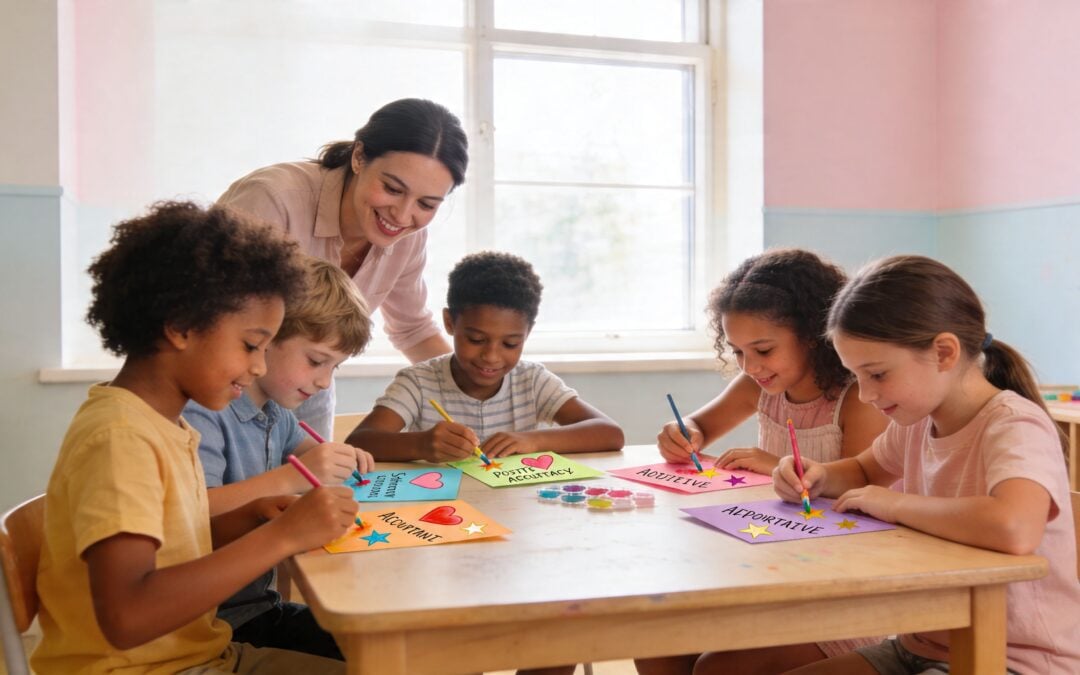
You’re probably here because you’ve seen the same pattern many adults see. A child shuts down after one mistake. Another brushes off every compliment. One student dominates group work to hide insecurity, while another stays quiet because they’ve already decided they’re “not good at it.” In those moments, kids don’t just need encouragement. They need repeated experiences that help them feel capable, valued, and connected.
That’s why self esteem building activities for kids work best when they’re concrete and predictable. Empty praise fades fast. Specific feedback, meaningful roles, and structured reflection stick. They give children evidence they can use the next time they face a challenge, conflict, or disappointment.
This matters for more than feelings. A large Millennium Cohort Study analysis of 6,209 children found that frequent engagement in arts activities such as music, drawing, painting, making things, and reading for enjoyment was positively associated with higher self-esteem at age 11. For teachers and parents, that’s a useful reminder that confidence grows through everyday practice, not a single big talk.
If you’re also thinking about movement-based confidence builders, some families pair SEL routines with activities like martial arts for kids because consistent practice, self-control, and skill mastery can reinforce the same message: “I can learn hard things.”
The ideas below are built as grab-and-go mini lesson plans. Each one includes a simple objective, materials, steps, and ways to adapt for different ages or learning needs. You can use them in a classroom morning meeting, counseling group, after-school program, or at the kitchen table tonight.
1. Strength-Based Recognition & Positive Behavior Systems
Some children rarely hear what they do well in language that feels believable. “Good job” is kind, but it’s too vague to build sturdy self-esteem. A stronger approach is to name the exact action, habit, or character strength a child showed.

A simple recognition circle can do this in ten minutes. Students sit in a circle, and each child names one classmate’s observable strength using a sentence stem like, “I noticed you helped clean up without being asked. That shows responsibility.” Over time, children start to internalize a more accurate picture of themselves.
Mini lesson plan
Objective: Help children connect positive identity with specific actions.
Materials:
- Sentence stems on chart paper or index cards
- Sticky notes or small slips of paper
- A wall space, bulletin board, or digital board for recognition notes
- Optional token system for classroomwide positive behaviors
Steps:
- Model first: Give two or three examples aloud. Keep them concrete, such as “I noticed Maya waited for her turn during the game. That shows patience.”
- Practice together: Invite students to help improve vague praise. Turn “He’s nice” into “He invited me to join the group at recess.”
- Run the circle: Let each child recognize one peer. Younger children can draw a picture instead of speaking.
- Save the evidence: Post notes on an appreciation wall or place them in personal folders children can revisit.
- Close with reflection: Ask, “Which strength was easiest for you to notice today?” and “Which strength do you want to practice tomorrow?”
Real example in school and at home
In a third-grade classroom, a teacher might use this after morning meeting every Friday. In a family setting, one adult can run a mini version at dinner by asking each child to name one helpful thing a sibling did that day.
Recognition systems work best when they’re steady, not flashy. A “caught being kind” card, ClassDojo point for collaboration, or a simple classroom appreciation wall can all support the same habit if adults use specific language consistently. If you want more structure around praise and feedback, Soul Shoppe’s post on positive reinforcement in the classroom offers practical language choices that fit this approach.
Practical rule: Praise the behavior, connect it to a strength, and keep it believable.
Differentiation
- For younger children: Use pictures for strengths like kindness, courage, and teamwork.
- For multilingual learners: Offer sentence frames and allow home-language responses.
- For neurodiverse learners: Provide options for private recognition instead of public speaking.
- For equity: Track who receives recognition so the same confident children don’t get all the attention.
This is one of the most effective self esteem building activities for kids because it helps children feel seen by a community, not just corrected by it.
2. Growth Mindset Goal-Setting & Progress Tracking
Self-esteem gets stronger when kids can point to progress. That’s especially true for children who think ability is fixed. They need visible proof that effort, strategy, and support move them forward.
A goal wall, reflection journal, or digital portfolio makes growth visible. Instead of asking, “Did I win?” children start asking, “What did I improve?” That shift lowers shame and builds resilience.
Mini lesson plan
Objective: Help children build confidence by tracking effort, strategy, and growth over time.
Materials:
- Goal sheet or journal page
- Markers or pencils
- Sticky dots, mini charts, or portfolio folders
- Optional Seesaw or Google Classroom portfolio
Steps:
- Choose one small goal: Keep it narrow. A student might choose “I will read aloud with a clear voice” or “I will solve word problems by underlining key information.”
- Name the plan: Ask the child to list one strategy they’ll try, one obstacle they might hit, and one person who can help.
- Track often: Use quick check-ins two or three times a week. Students can color a chart, record a voice note, or write one sentence.
- Reflect on setbacks: If the plan isn’t working, ask, “What can you try next?” instead of “Why didn’t you do it?”
- Share evidence: At the end of the cycle, students present one piece of proof that they grew.
Classroom example
A fifth-grade teacher might ask students to set a speaking goal before presentations. One child writes, “I want to look up at the audience three times.” After each practice, the student marks a simple tracker. By presentation day, the child doesn’t need inflated praise. They have evidence.
At home, parents can use the same structure for routines like tying shoes, learning multiplication facts, or entering soccer practice with a calm body. A refrigerator chart works fine. What matters is that children notice change over time.
Language that builds confidence
- Try this: “You haven’t mastered it yet.”
- Try this: “What strategy helped most?”
- Try this: “What did you do differently this time?”
- Avoid this: “You’re so smart.”
- Avoid this: “You’re just not a math person.”
Soul Shoppe’s piece on growth mindset in the classroom gives useful language for helping students stay with hard tasks without tying their worth to perfect performance.
Some children need confidence before they’ll try. Others need a successful try before confidence appears. Progress tracking helps both.
Differentiation
- For K-2: Use picture goals and sticker progress charts.
- For older students: Add a short reflection prompt such as “What did I learn about myself?”
- For children who get overwhelmed: Limit goals to one habit for one week.
- For perfectionists: Celebrate strategy changes, not just results.
This activity teaches a powerful truth. Confidence doesn’t always arrive first. Sometimes it follows repeated effort.
3. Collaborative Community Service Projects
Kids often feel better about themselves when they experience themselves as helpful. Service gives children a direct answer to the question, “Do I matter here?” When they can see that their actions improve something for someone else, self-esteem becomes grounded in contribution.
This is one reason service projects work so well in schools and youth programs. They combine teamwork, responsibility, and visible impact. Even small projects can change how a child sees their role in a community.
Mini lesson plan
Objective: Build self-worth through shared responsibility and meaningful contribution.
Materials:
- Chart paper for brainstorming
- Basic project supplies based on the service idea
- Reflection sheets or journals
- Camera or display board for documenting the project
Steps:
- Start with need-finding: Ask, “What does our school or neighborhood need more of?” Let students brainstorm real problems.
- Choose one manageable project: Options include a school garden, campus cleanup, peer reading buddies, thank-you cards for support staff, or a donation drive.
- Assign roles: Give every child a specific job. Photographer, organizer, greeter, sorter, waterer, announcer, and recorder all count.
- Do the work: Keep sessions short and regular so the project feels doable.
- Reflect after each session: Ask, “How did we help?” and “What did you contribute today?”
Real examples
A kindergarten class can maintain one raised garden bed and take turns watering, weeding, and observing growth. A middle school advisory can partner with a younger grade for buddy reading once a week. A family can organize a neighborhood litter walk and let children create the route and supply list.
Research on the Boys & Girls Clubs of America’s “True to Me” program reported lasting benefits for participants. Three years after participation, 60% of girls showed significantly improved body confidence, 78% felt more confident and capable at school, 71% reported better peer relationships, and 53% had improved family relationships. That reinforces an important point for adults. Structured experiences that help kids see themselves positively can support both confidence and relationships over time.
Differentiation
- For younger children: Keep projects concrete and visible, like planting flowers or making welcome cards.
- For older children: Add student leadership in planning and communication.
- For children with language or processing differences: Offer visual job cards and hands-on roles.
- For hesitant children: Pair them with a buddy and assign one clear task first.
Contribution is often more stabilizing than praise. A child who thinks, “I helped,” is building a stronger identity than a child who only hears, “You’re great.”
Service belongs on any strong list of self esteem building activities for kids because it moves confidence out of the abstract and into action.
4. Mindfulness & Self-Regulation Practice
A child spills paint, freezes, and then whispers, “I’m bad at everything.” That moment is not just about paint. It is about what the child believes the mistake means.
Mindfulness and self-regulation practice help children separate a hard moment from their identity. When a child learns how to slow breathing, notice body signals, or reset after frustration, they get evidence that they can handle discomfort. Self-esteem grows from that evidence. It grows when a child can say, “I got upset, and I knew what to do next.”

Regulation works like a reset button for the nervous system. The goal is not a perfectly calm child. The goal is a child who starts to recognize, “My heart is racing. My shoulders are tight. I can use a strategy.” That shift matters because children often mistake dysregulation for failure. A simple routine teaches them to read it as a skill-building moment instead.
Mini lesson plan
Objective: Help children build confidence by practicing one calm-body strategy they can use during everyday stress.
Materials:
- Stuffed animal or beanbag for breathing-buddy practice
- Soft mat or carpet spot
- Visual breathing card or calm-down poster
- Optional timer or guided audio
Steps:
- Name the skill clearly: Say, “Today we are practicing how to help our bodies settle.” Keep the focus on skill, not behavior control.
- Teach one strategy only: Start with belly breathing, hand tracing, or a 5-4-3-2-1 grounding routine. One tool at a time helps children remember what to do.
- Model it where children can see it: Breathe slowly, relax your shoulders, and narrate what you notice. For example, “My breath is getting slower now.”
- Practice during neutral moments: Introduce the routine at morning meeting, after lunch, or before independent work. Children learn best before they are overwhelmed.
- Use it in predictable stress points: Repeat the same strategy before tests, transitions, presentations, or re-entry after recess. Repetition turns the strategy into a habit.
- Reflect in one minute or less: Ask, “What did you notice in your body?” or “When might this help you later today?”
Two easy examples
For early elementary, give each child a stuffed animal to place on their belly while they lie on the floor. Ask them to watch it rise and fall for five slow breaths. That visual cue makes an invisible skill easier to understand.
For older students, teach a 30-second grounding routine before presentations. Feet on floor. One slow inhale. One long exhale. Then ask them to notice five things they can see. Quick routines often work better with older children because they feel private and practical.
If you want a larger bank of classroom-ready tools, Soul Shoppe’s guide to self-regulation strategies for students fits well with this kind of daily practice.
What to say when a child struggles
The language adults use matters. A child in distress often borrows the adult’s words before they can form their own.
- Say: “Your body is having a hard time. Let’s help it.”
- Say: “You’re learning a skill.”
- Say: “Wandering thoughts are normal. Come back to your breath.”
- Avoid: “Calm down.”
- Avoid: “You know better.”
A short guided example can help adults picture the pace and tone children usually respond to best: