

Mastering Positive Reinforcement in the Classroom
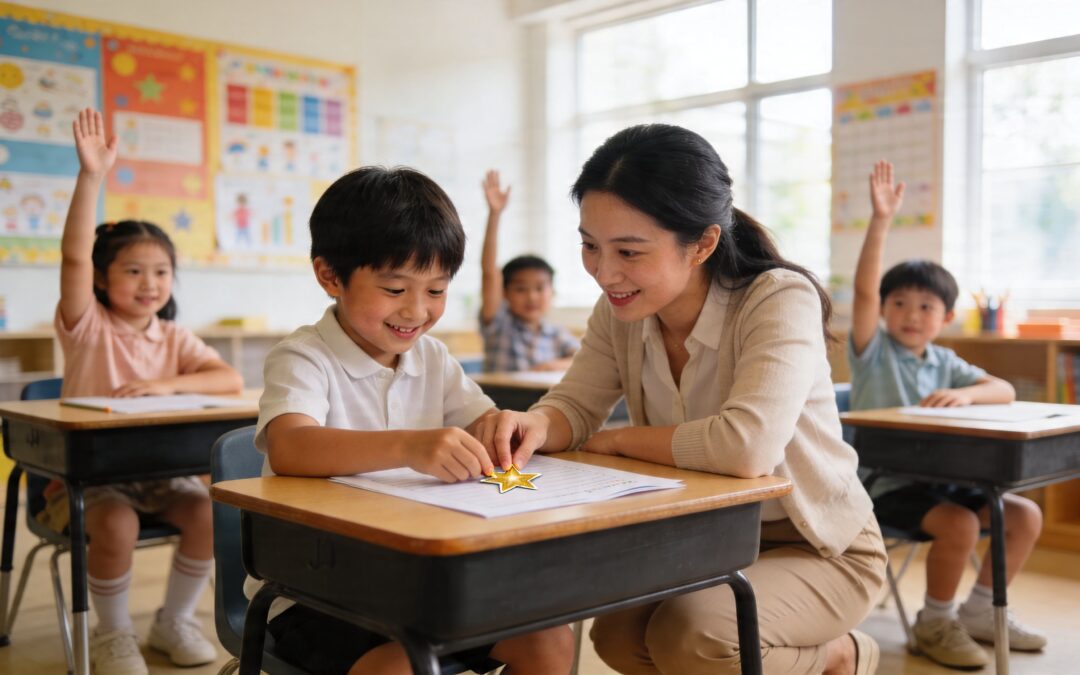
By 10:15 a.m., the lesson hasn’t really failed, but it has started to fray. Two students are whispering. One keeps tapping a pencil. Another calls out without raising a hand. You redirect, then redirect again. By lunch, you’ve spent more energy stopping small problems than teaching.
Most K-8 educators know this feeling. The class isn’t “out of control,” but the steady drip of interruptions wears everyone down, including you. Students get more correction than connection. You leave school wondering why you talked so much about what not to do.
Positive reinforcement in the classroom offers a different path. It doesn’t mean ignoring behavior problems. It means teaching yourself to notice, name, and strengthen the behaviors you want to see more often.
At its simplest, positive reinforcement means this: when a student shows a helpful behavior, the adult responds in a way that makes that behavior more likely to happen again. That response might be praise, attention, a classroom privilege, a note home, or a simple nod at the right moment.
Punishment asks, “How do I stop this?” Positive reinforcement asks, “How do I grow this?”
That shift matters. It changes the emotional tone of the room. It also changes what students learn about themselves. Instead of hearing only what’s wrong, they begin hearing what’s working, what they’re capable of, and how they belong.
From Surviving to Thriving in the Classroom
Ms. Alvarez teaches fourth grade. Her students are bright, funny, and full of opinions. They also blurt, drift, poke at each other’s attention, and turn every transition into a negotiation. Nothing is dramatic enough for an office referral, but the room never settles for long.
She starts the day with reminders.
“Eyes up.”
“Stop talking.”
“Not now.”
“Please get started.”
By the end of the week, she’s exhausted. Her students are hearing her voice all day, but they aren’t absorbing the message she wants to send.

Then she makes one small change. Instead of opening independent work time with another warning, she starts narrating what’s already going well.
“I see Jayden opened his notebook right away.”
“Thank you, Mina, for getting your materials ready.”
“Table 3 is using quiet voices so everyone can think.”
Three minutes later, more students are working. Not because she offered a prize. Not because she became permissive. She changed where the spotlight went.
What positive reinforcement looks like in real life
In schools, positive reinforcement often gets reduced to sticker charts. Those can help, but the heart of the practice is bigger than stickers. It’s about building a classroom where students know adults are paying attention to effort, regulation, kindness, and repair.
That can sound like:
- Naming effort: “You stuck with that tricky paragraph even when it felt frustrating.”
- Highlighting routines: “You came in, hung up your backpack, and got started without a reminder.”
- Reinforcing social skill: “I noticed you made space for your partner to share.”
Positive reinforcement works best when students feel seen, not managed.
This approach also supports the larger work of climate and belonging. A classroom gets calmer when students trust that adults will notice progress, not just mistakes. That same principle matters schoolwide, too, especially if you're thinking about how to improve school culture.
What it is not
Teachers sometimes hesitate because they worry this sounds like bribery. It isn’t. Bribery happens before a behavior in an attempt to stop a problem. Positive reinforcement happens after a desired behavior, so students can connect their action with a meaningful response.
It also isn’t fake cheerfulness. Students can tell when praise is inflated or generic. “Good job” repeated all day won’t carry much weight. Specific, grounded feedback will.
The Science of Encouragement and Student Engagement
Students repeat behaviors that bring connection, clarity, or success. That’s one reason positive reinforcement in the classroom works so well. It gives students a clear map: “This action helped. I can do it again.”
The idea comes from behavioral psychology, but you don’t need a textbook to use it. Imagine tending a garden. Whatever gets watered grows stronger. In classrooms, attention is water. If students get the most adult attention for disruption, disruption can spread. If they get meaningful attention for effort, regulation, and cooperation, those behaviors become easier to repeat.
What research tells us
A landmark study by Brigham Young University researchers observed 2,536 students and found that teachers’ use of positive reinforcement, such as praise, rewards, and attention, resulted in students focusing on tasks up to 30% more compared to control conditions without such strategies (Veracross summary of the study).
That finding matters because focus is not a small outcome. On-task behavior affects everything else. Students can’t practice reading strategies, solve math problems, or participate in discussion if they’re disconnected from the task.
Positive reinforcement also fits naturally with the kind of classrooms many educators already want to build. If you're using discussion, movement, partner work, and reflection, this overview of active learning in education is useful because active classrooms need more than compliance. They need students who can engage, recover, and contribute.
Why this connects to SEL
When reinforcement is done well, it does more than increase compliance. It helps students build internal skills.
A student hears, “You took a breath and asked for help instead of shutting down.” That message teaches self-awareness. Another hears, “You disagreed respectfully and explained your thinking.” That builds communication and emotional control.
Those are social-emotional competencies, not just behavior goals. They’re also part of what makes classrooms feel safe. Students learn that mistakes don’t erase their value. They learn they can repair, try again, and still belong.
Practical rule: Reinforce the behavior you want to become part of the student’s identity.
That might be persistence, honesty, turn-taking, flexible thinking, or courage. Over time, students stop hearing praise as random approval and start hearing it as information about who they’re becoming.
If your school is working to connect behavior supports with emotional growth, this piece on the benefits of social-emotional learning offers a helpful lens. The strongest reinforcement systems don’t just quiet a room. They build confidence, belonging, and trust.
Building a Reinforcement-Rich Classroom Routine
A good reinforcement system should reduce your mental load, not add a second job. The goal isn’t to praise every breath students take. The goal is to make positive feedback more intentional, more specific, and more consistent than it is on your hardest days.
Start with one behavior at a time
Pick one or two behaviors that would make the biggest difference if more students did them regularly.
For example:
- During instruction: eyes on speaker, materials out, hand raised
- During independent work: starting promptly, asking for help appropriately, staying with the task
- During transitions: moving safely, cleaning up, following the first direction
Name the behavior in positive language. “Walk to the carpet” works better than “Don’t run.” “Use one voice at a time” works better than “Stop shouting.”

Use praise that teaches
Specific praise tells students exactly what worked. Generic praise tells them very little.
Here’s the difference:
| Less helpful | More useful |
|---|---|
| Good job | You got your notebook open and started the warm-up right away |
| Nice work | You checked your answer and fixed your mistake without giving up |
| I’m proud of you | You included your quieter partner in the conversation |
A simple sentence frame helps:
“I noticed you ___, and that helped ___.”
Examples:
- “I noticed you waited until your partner finished, and that helped your group stay respectful.”
- “I noticed you went back to the text for evidence, and that helped strengthen your answer.”
- “I noticed you took a breath before responding, and that helped you stay in control.”
Keep a few low-lift reinforcers ready
Not every student responds to the same thing. Build a small menu.
- Social reinforcement: specific praise, a smile, a thumbs-up, brief check-in, positive note home
- Tangible reinforcement: sticker, token, punch card, bookmark, classroom coupon
- Activity-based reinforcement: line leader, choice time, read-aloud seat choice, helping job, partner pick
- Natural reinforcement: extra trust, leadership, more independence, sharing work with the class
The most sustainable systems often rely on social and activity-based reinforcement more than prizes.
A structured option can help if your class needs more visible support. You might use:
- A simple point chart for table groups.
- Individual punch cards for one target behavior.
- A class marble jar tied to a shared celebration like extra game time or outdoor reading.
If you use tokens, connect them to effort and growth. Don’t reserve them only for perfect behavior.
Watch your praise-to-reprimand pattern
Many teachers have heard of a 3:1 or 4:1 praise-to-correction goal. The exact number matters less than building the habit of giving more positive feedback than you currently do. Research shows that when teachers maintain praise rates at least equal to reprimand rates, class performance can increase by 60-70%, and the key is intentional consistency in increasing positive feedback (Whole Child Counseling summary).
That doesn’t mean you count every sentence all day. Try a lighter version:
- Morning check: Choose one period to track.
- Tally marks: Put a small sticky note on your clipboard and mark praise and correction.
- Reflection question: “Did I notice as much good as I corrected today?”
If your ratio is low, don’t chase perfection. Increase by a little and keep going.
A short video can help if you want to hear examples and see the tone in action.