If we want to truly stop bullying, we have to move beyond reactive punishments and start building a proactive culture of safety and respect from the ground up. The most durable solution isn’t a single program but a unified strategy that weaves together school-wide policies, classroom-level social-emotional learning (SEL), and active family partnerships. This guide offers a clear roadmap for creating an environment where every child feels secure enough to thrive.
Building a Foundation of Safety to Stop Bullying
When we ask how to stop bullying, the real answer isn’t a one-time assembly or a catchy slogan. It’s about creating a fundamental shift in the school’s ecosystem. It means building a place where empathy is taught as intentionally as mathematics and where kindness is woven into the daily fabric of school life. This approach moves beyond just telling students “don’t bully” and instead gives them the skills to understand one another.
Why a Unified Strategy Matters
A disconnected approach almost always falls flat. A school might have a strong anti-bullying policy on the books, but if teachers aren’t equipped with classroom strategies and parents aren’t involved, the policy remains just words on paper. A plan that actually works requires everyone to be on the same page, speaking the same language of respect and support.
This is where the three pillars come into play. Creating a protective net around students requires a team effort, with each group playing a vital role. This shared responsibility is key to building a strong foundation of safety.
Three Pillars of Bullying Prevention
Stakeholder Group
Key Responsibility
Example Action
School Leadership
Establishes clear, consistent policies and expectations for behavior.
Implementing a school-wide reporting system and restorative justice protocols.
Teachers & Staff
Implements daily practices that foster empathy, communication, and conflict resolution.
Leading daily morning meetings focused on SEL skills like perspective-taking.
Parents & Caregivers
Reinforces these values at home and maintains open lines of communication with the school.
Discussing the school’s “kindness” theme at home and practicing empathy with their child.
When these three groups work in concert, they create a powerful, protective net around students. A huge part of this foundation is fostering a strong sense of psychological safety.
The Power of Social-Emotional Learning
The statistics on bullying are staggering. A massive global analysis found that 25% of students are victims, while another 16% are stuck in the cycle as both bullies and victims. This isn’t just a behavior issue; it’s a public health crisis tied to severe emotional distress.
But the research also points to a powerful solution. Schools that implement comprehensive SEL programs see bullying incidents drop by as much as 30%. Why? Because they teach core skills like empathy, self-awareness, and self-regulation. These are the building blocks of a kind and respectful community.
A truly safe school isn’t just free from physical harm—it’s a place where every child feels seen, heard, and valued. This sense of belonging is the ultimate antidote to bullying.
By focusing on these proactive strategies, we do more than just stop negative behaviors—we actively build a positive culture. A key step in this process is learning how to create a safe space where students feel comfortable enough to be themselves and ask for help when they need it. This playbook provides the practical, actionable methods to make that vision a reality.
Designing Your Whole-School Prevention Plan
While strategies like cool-down corners and buddy benches are essential, they really only work when the adults in the building champion them. Let’s be honest: improving school culture isn’t a top-down mandate or a bottom-up wish. It’s a shared mission, actively driven by both leaders and staff working together.
Real, lasting change happens when the entire team commits to modeling the very behaviors they want to see in their students. This shared ownership is what turns a set of good ideas into the school’s cultural DNA. When a principal shows vulnerability or a teacher spearheads a new kindness initiative, they create ripples of positive influence. This collective effort is the engine that moves a school from simply having a mission statement to truly living it.
Leaders Must Model the Way
School leaders, especially principals, set the emotional tone for the entire campus. If a leader is stressed, isolated, and focused only on compliance, that anxiety will inevitably trickle down. On the flip side, when a leader models emotional intelligence and trust, they create a foundation of psychological safety for everyone.
This often starts with vulnerability. A principal who openly admits to not having all the answers or shares a personal challenge makes it safe for teachers to do the same. This simple act builds a culture where staff feel secure enough to take risks, ask for help, and connect on a human level.
Practical Example for Leaders
Instead of a staff meeting focused purely on logistics, try starting with a brief, structured check-in. A principal might model this by saying, “This week was a tough one for me because of X, but I’m feeling hopeful about Y. How is everyone else doing?” This small shift normalizes open communication and puts well-being front and center.
The impact of strong leadership is undeniable. When leaders are intentionally developed, the effects cascade through the entire school community, fostering a culture that directly supports student learning.
Empowering Staff as Culture Champions
The most powerful culture shifts aren’t dictated from the principal’s office. They’re nurtured in classrooms and teacher teams. When you empower staff to become leaders in this work, you ensure that new initiatives are relevant, authentic, and actually stick around.
Forget those one-off, “sit-and-get” workshops. The key is sustained professional development that is collaborative and practical. When teachers have ongoing opportunities to learn from each other, they build collective capacity and ownership over the school’s climate. Investing in a robust professional development program for educators is one of the most direct ways to build this internal expertise.
Here are a couple of ways to empower your team:
Peer Observation Cycles: Instead of formal evaluations, teachers can observe each other with a specific focus, like “How are I-statements being used to resolve conflict?” Afterward, they offer supportive feedback, creating a collaborative and non-judgmental learning loop.
Teacher-Led Initiatives: Look for teachers who are passionate about social-emotional learning and empower them to lead a small initiative on their grade level. This could be anything from piloting a new morning meeting structure to organizing a school-wide kindness challenge.
The Ripple Effect of Investing in People
Investing in your people isn’t just a “nice-to-have”—it has a measurable impact on the entire school. This was demonstrated powerfully in 2023 when the Global School Leaders organization partnered with 10 organizations to reach 4,271 school leaders and 68,293 teachers, impacting over a million students. You can discover more about their global impact and see how targeted training boosts learning outcomes.
When school leaders and staff feel equipped and supported, a powerful chain reaction kicks off. Teacher morale improves, which reduces burnout and turnover. In turn, students benefit from more stable, positive relationships with their educators. This supportive environment ultimately leads to fewer behavioral issues and stronger academic achievement—creating a thriving culture where everyone can succeed.
Engaging Families as Authentic Community Partners
A positive school culture doesn’t stop at the dismissal bell. It spills out into the parking lot, follows kids home, and weaves itself into the fabric of the community. To make that happen, we have to move beyond the once-a-year open house or the standard PTA meeting and start building real, authentic partnerships with families.
The goal is to create a genuine two-way street. It’s about shifting from simply informing parents to truly involving them. When families understand the social-emotional language their kids are learning—the same tools for handling big feelings or resolving conflicts—they can reinforce those skills at home. That alignment is where the real magic happens for a child’s development.
Moving Beyond the Bake Sale
Building these partnerships means creating opportunities that are meaningful and, just as importantly, accessible. Let’s be real: many parents are juggling inflexible work schedules, language barriers, or maybe just feel a little intimidated by the school environment. The key is to meet them where they are.
Here are a few ideas that work:
Host Family SEL Nights. These aren’t lectures; they’re hands-on workshops. A teacher might model how to use “I-statements,” then have parents and kids practice together with a common scenario, like how to share a new toy. It’s practical, it’s engaging, and it connects home and school.
Create a Parent-Led Welcome Committee. There’s nothing more isolating than being the new family. A small committee of current parents can make all the difference by reaching out, answering those little questions everyone has, and inviting newcomers to a casual coffee. It instantly makes a big school feel like a village.
Share the Good Stuff. Keep it simple. Use an app like ClassDojo or Remind to send a quick, positive note or a photo. A picture of a student beaming with pride over their art project does more to build a positive connection than a dozen newsletters.
Making Every Interaction Inclusive
True partnership is built on a foundation of inclusivity. Every single family, no matter their background, language, or life situation, needs to feel seen and respected. Often, this comes down to small, intentional gestures that send a big message.
When families feel genuinely welcomed and respected, they are far more likely to become active partners in their child’s education. This partnership is a cornerstone of a healthy and vibrant school culture.
To build that sense of belonging, try this:
Vary Your Meeting Times. Not everyone can make a 9 AM meeting on a Tuesday. Mix it up with morning, afternoon, and evening options to show you respect everyone’s schedule.
Provide Translation Services. Having translators at key events or sending home important documents in multiple languages is a powerful way to say, “You belong here. We want to hear from you.”
Ask for Their Input. Before you plan that big family event, send out a quick survey. Ask what activities they’d actually enjoy and what times work best for them. When you co-create events with your community, you get so much more buy-in.
By taking these small but powerful steps, you can start breaking down those invisible walls. You can transform your relationship with families from a simple mailing list into a dynamic, supportive partnership—and that’s essential for a positive school culture that truly lasts.
Measuring Progress and Sustaining a Thriving Culture
Improving school culture isn’t a destination; it’s a journey. Once you’ve put new strategies into motion, the real work begins: figuring out what’s actually working and creating a durable cycle of improvement. Without this piece, even the most brilliant initiatives can fizzle out over time.
This isn’t just about proving that your plan worked. It’s about learning, adapting, and getting better. By building a rhythm of data collection, honest reflection, and smart adjustments, you ensure those positive changes stick around and become a core part of who you are as a school.
Look Beyond the Obvious Metrics
When we hear the word “data,” it’s easy to jump right to the hard numbers. And yes, quantitative metrics are definitely important—they give us a clear, objective snapshot of certain behaviors. But they only tell part of the story.
To really get a feel for the impact of your efforts, you have to blend those hard numbers with the human experience. It’s about pairing the “what” with the “why.”
Key Metrics to Track:
Quantitative Data (The What): This is your measurable evidence. Look for shifts in things like attendance rates, disciplinary referrals, and participation in after-school activities. A noticeable drop in office visits for conflict is a fantastic sign that new resolution skills are taking root.
Qualitative Data (The Why): This is where you capture the feelings and perceptions that truly define a culture. Use short, anonymous climate surveys for both students and staff. Ask pointed questions like, “On a scale of 1-5, how connected do you feel to at least one adult in this building?”
Create a Sustainable Cycle of Improvement
A thriving culture doesn’t happen by accident. It requires a deliberate and predictable process—not a one-time project, but an ongoing commitment to listening, reflecting, and acting. This is how your school stays responsive to the real needs of its community.
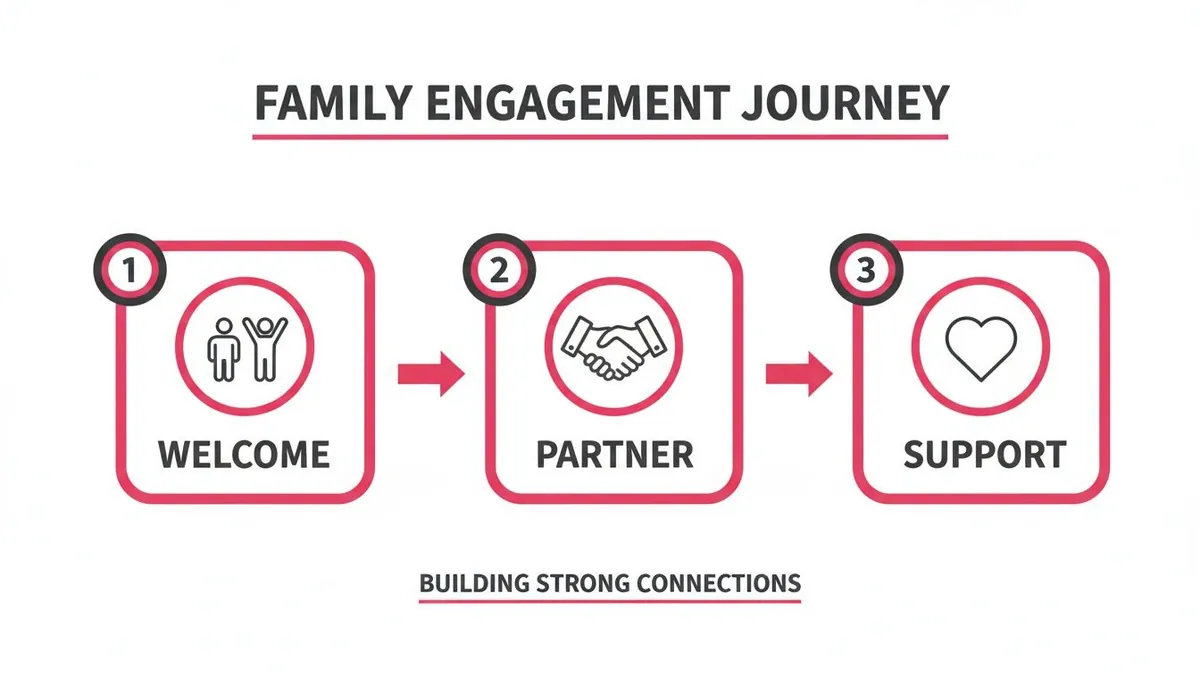
The path to a better school culture involves intentionally welcoming, partnering with, and supporting families every step of the way.
This visual shows how each step builds on the last, creating a stronger, more collaborative community over time.
This isn’t just a local effort; it’s a global one. Take Estonia’s Future School programme, launched in 2017, which has successfully transformed school culture by focusing on co-creation and evidence-driven decisions. By constantly monitoring and reflecting, they’ve been able to foster truly meaningful change. You can learn more about their framework for sustainable improvement and its impressive results.
An Action Plan in Motion
Let’s make this real. Imagine a middle school wants to boost the sense of belonging among its 6th graders. Their initial culture audit revealed that many new students felt isolated and adrift, especially during lunch.
Here’s what their action plan for one semester could look like:
The Goal: Increase the percentage of 6th graders who report “feeling a sense of belonging” from 45% to 65% by the end of the semester.
The Strategies:
Place “Conversation Starter” cards on all 6th-grade lunch tables.
Train 8th-grade student leaders to act as “Lunch Buddies” twice a week.
Launch a weekly “6th Grade Connect” club focused on non-athletic games and activities.
The Measurement:
Monthly: Use a quick, one-question pulse survey: “Did you have a positive conversation with a peer at lunch today?”
Quarterly: Hold short focus groups with 6th graders to hear their stories and get direct feedback.
End of Semester: Re-administer the original climate survey to measure the change in belonging.
By breaking down a huge goal into smaller, measurable steps, the school can see exactly what’s working and what isn’t. If the survey data isn’t moving, they can adjust—maybe the club needs a different focus, or the Lunch Buddy strategy needs a tweak.
This cycle of action and reflection is what builds momentum. It transforms the abstract goal of improving school culture into a series of achievable, data-informed steps that lead to real, lasting change.
Your Questions About School Culture, Answered
As you start the work of improving your school’s culture, it’s completely normal for practical questions to pop up. Navigating the real-world hurdles of time, resources, and getting everyone on the same page is just part of the process.
Here are some straightforward answers to the questions we hear most often. The goal is to give you the confidence to move from idea to action and create lasting, positive change for your students and staff.
How Long Does It Take to See Real Change?
This is the big one, and the honest answer is: it depends. You’ll often feel small, positive shifts within just a few months of putting consistent practices into place, like morning meetings or a shared way of handling conflicts. You might overhear students using “I-statements” on their own or notice fewer arguments on the playground. These are huge wins!
However, deep, lasting cultural change—where these new mindsets and behaviors become the default for everyone—is a longer journey. Meaningful transformation typically takes 1 to 3 years of sustained effort. It’s a marathon, not a sprint, built on the back of consistent daily actions, not a few big, flashy events.
The key is to celebrate the small wins. When you acknowledge the incremental progress—like a quieter hallway or more hands in the air during discussions—it keeps the momentum going and shows everyone their hard work is making a real difference.
What If We Have Limited Time and Resources?
We get it. The idea of piling on another initiative can feel completely overwhelming. The good news is that many of the most powerful school culture strategies don’t require a big budget or extra hours. They’re about refining what you’re already doing.
Integrate, Don’t Add: Weave social-emotional learning into your existing lessons. A 10-minute morning meeting can easily replace a standard roll call. Use reading time to talk about a character’s feelings and choices, instantly turning a literacy lesson into an empathy lesson.
Focus on High-Impact, Low-Effort Strategies: A “buddy bench” on the playground costs next to nothing but can have a massive impact on students’ sense of belonging. A simple, school-wide greeting—like a fist bump at the classroom door—takes just seconds but builds powerful connections day after day.
For more ideas tailored to the K-12 environment, exploring the broader landscape of elementary and secondary education can offer great context on making the most of the resources you have.
How Do We Get Skeptical Staff on Board?
It’s a given that not everyone will be an immediate champion of a new idea, and that’s perfectly okay. The best way to build buy-in with hesitant staff isn’t with a top-down mandate, which often just creates resistance.
Instead, start small, show results, and empower your teacher leaders. Find a few passionate teachers—your “early adopters”—and give them the support to pilot a new strategy in their classrooms. When their colleagues start seeing it work and hearing positive stories from students, that’s when the magic happens.
Here’s What That Looks Like in Practice
Imagine a couple of teachers start using restorative circles to handle classroom conflicts. In the next staff meeting, they share a story about how a circle helped two students mend a friendship and get back to learning. Suddenly, it’s not just an abstract idea anymore. Their peers see the real-world benefit firsthand. That kind of peer-to-peer evidence is far more persuasive than any directive from leadership ever could be.
At Soul Shoppe, we believe every school deserves a culture where both students and adults feel safe, connected, and ready to thrive. Our programs provide the practical tools and shared language your community needs to build that positive change from the inside out.
Bullying prevention programs are far more than just a set of rules; they are frameworks designed to build a school community that is safe, respectful, and genuinely connected. Instead of simply reacting after the fact, these programs proactively teach kids essential skills like empathy, conflict resolution, and what it means to be a responsible bystander. They work to stop bullying before it ever gets a chance to start.
The most effective programs pull the entire school community into the effort—students, staff, and families—to build a lasting culture of kindness.
Moving Beyond Discipline to Build a Safer School
From playground scuffles to tension in the classroom, it’s clear that old-school discipline models just aren’t cutting it anymore. School leaders are shifting their focus from reacting to incidents to proactively building a culture where every single student feels safe, seen, and supported. This guide is your practical roadmap for choosing and implementing bullying prevention programs for schools that truly work to foster empathy, conflict resolution, and self-regulation.
The stakes couldn’t be higher. Globally, the numbers are staggering: nearly one in three students—that’s 33%—report being physically attacked at school at least once a year. Bullying touches another third of students every single month, and now, cyberbullying affects one in ten kids. These aren’t just statistics; they represent young people who are twice as likely to struggle with severe loneliness, insomnia, and even suicidal thoughts, derailing both their learning and their mental health. You can find more details in the full UNESCO report on these findings.
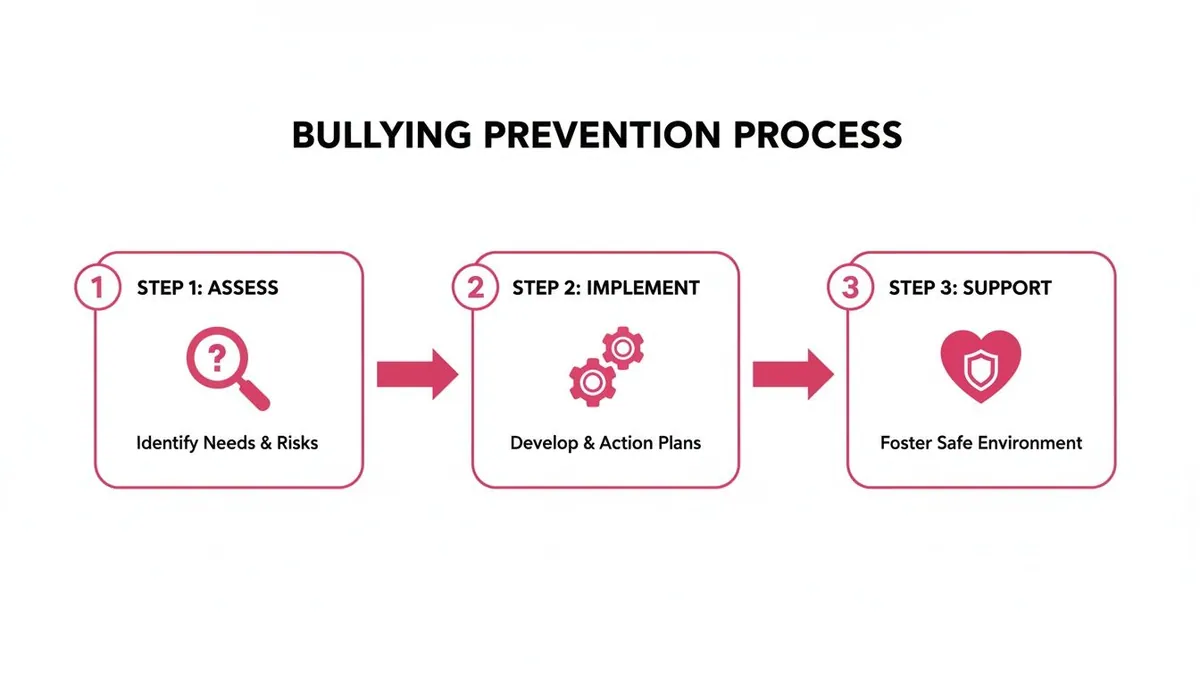
A successful prevention strategy isn’t a one-and-done event. It’s a continuous cycle.
As you can see, the process flows from assessing your school’s unique needs, to implementing thoughtful strategies, and finally, to providing the ongoing support that makes a safe environment sustainable.
The Shift to a Whole-School Approach
A real solution takes more than an anti-bullying assembly or a few posters in the hallway. The programs that create lasting change adopt a whole-school approach, weaving prevention into the very fabric of the campus culture. This means everyone—and I mean everyone—has a part to play.
Here are the core components of this approach:
Social-Emotional Learning (SEL): This is where we explicitly teach students how to manage their emotions, show empathy for others, and build healthy relationships. A practical example is a teacher using “I-statements” to help students express their feelings without blaming others (e.g., “I feel upset when I’m interrupted,” instead of “You always interrupt me.”).
Consistent Staff Training: Every adult on campus, from teachers to bus drivers to cafeteria staff, needs to be equipped with the same language and tools to identify and de-escalate bullying. For example, all staff could be trained to use the same three-step response: 1. Stop the behavior. 2. Support the students involved. 3. Report the incident. This ensures a student gets a consistent, supportive response no matter who they talk to.
Family and Community Engagement: Parents and caregivers need to be partners in this work. You can bring them on board by providing resources and workshops that reinforce the skills being taught at school. For example, send home a handout explaining the “Peace Path” conflict resolution model students are learning, so parents can use the same steps to resolve sibling squabbles at home.
The core idea is simple but powerful: instead of just punishing bad behavior, we must actively teach and model the good behavior we want to see. This transforms the school environment from a place of rules to a community of shared values.
This proactive stance aligns perfectly with restorative practices, which focus on repairing harm and rebuilding relationships rather than just assigning blame. You can learn more by exploring our detailed guide on what restorative practices in education look like. By embracing this mindset, you equip your entire school with the tools to cultivate a supportive community where learning and kindness can truly thrive.
Assessing Your School’s Unique Climate and Needs
Choosing the right bullying prevention program doesn’t start with a catalog or a sales pitch. It starts with holding up a mirror to your own school. Before you can find a solution that sticks, you have to get a clear, honest picture of the social and emotional landscape on your campus. Relying on assumptions is a recipe for a failed initiative; gathering real data is the only way to make sure you’re solving the problems you actually have.
This whole process has to begin with listening to your students. They are the undisputed experts on their own social world—they know where they feel unsafe, what kinds of conflicts pop up most often, and what keeps them from speaking up. A well-designed, anonymous survey is one of the best tools for uncovering these truths.
Gathering Actionable Data From Students
A truly effective survey goes way beyond a simple “Are you being bullied?” checkbox. It digs deeper to uncover the context and patterns behind what your students are experiencing every day.
Think about including questions that pinpoint specific challenges:
Where is it happening? “Where do you feel the least safe on campus? (e.g., hallways between classes, the back of the school bus, the cafeteria).”
When is it happening? “During which part of the school day do you see the most pushing, shoving, or mean words?”
Why isn’t it being reported? “What’s the main reason you might not tell an adult if you or a friend were being bothered? (e.g., ‘I’m worried it will make things worse,’ ‘I don’t know who to tell,’ ‘The adults don’t do anything about it’).”
This kind of data can lead to some surprising revelations. I once worked with a middle school principal who discovered that the vast majority of conflicts were erupting in the chaotic three minutes between classes. That single insight led to a simple yet powerful change: adding more adult supervision in the hallways and training peer mediators to de-escalate tension during those transitions. The problem wasn’t a lack of rules; it was a lack of structure in a very specific time and place.
Uncovering Hidden Patterns in Existing Reports
Your school already has a goldmine of data sitting in filing cabinets: incident reports. Instead of letting them collect dust, start treating them like a dataset. When you analyze them together, you can spot patterns that a single write-up would never reveal.
Look for trends. For example, a teacher might notice that a specific group of students is frequently involved in conflicts during recess. By analyzing the reports, they realize these incidents almost always happen near the basketball court over rule disputes. The solution could be as simple as teaching a mini-lesson on sportsmanship and providing a clear set of rules for the game. This kind of analysis helps you shift from a reactive, disciplinary mindset to a proactive, preventative one. As you develop your strategies, it’s also smart to consider inclusive design principles to ensure your solutions work for every student.
By treating incident reports as data points rather than just records of misconduct, you can identify the root causes of conflict and design targeted interventions that address the underlying issues.
Facilitating Honest Conversations With Focus Groups
While surveys give you the “what,” focus groups give you the “why.” These small, structured conversations are a powerful way to hear the real stories behind the numbers from students, teachers, and parents. The goal is simply to create a safe space for honest dialogue.
For students, this might mean separating groups by grade and having a trusted, neutral facilitator lead the chat. For teachers, it’s a chance to share what they see firsthand in the classroom and on the playground. And for parents, focus groups can uncover concerns about communication and reveal how school conflicts are spilling over into life at home.
To get the ball rolling, try some open-ended prompts:
For Students: “Describe a time you saw someone being a really good friend to another student. What did that look like? What happened that made it a positive moment?”
For Teachers: “What’s the biggest social challenge your students are facing this year that we might not see on paper? Can you share a specific (anonymous) example?”
For Parents: “What kind of support would help you feel more confident talking to your child about kindness and respect? For example, would a list of conversation starters or a workshop on social media be helpful?”
Pulling together this comprehensive data—from surveys, reports, and real conversations—builds the foundation for your entire prevention strategy. It’s what ensures the program you ultimately choose is a perfect fit for your school’s unique needs. If you want a quick pulse-check on where your school stands right now, taking a brief online school safety quiz can be a great place to start.
Once you’ve pinpointed your school’s unique needs, the next step is sorting through the sea of bullying prevention programs for schools. It’s a crowded market out there, and it can be tough to tell the difference between a program with a flashy brochure and one that actually creates lasting change.
The secret is to cut through the noise and focus on strategies backed by solid evidence. Effective programs aren’t just about discipline; they’re about proactively building skills and shaping your school’s entire culture.
What to Look For in an Effective Program
The best programs all share a few non-negotiable features. They go way beyond a one-off assembly or a few posters in the hallway and instead weave prevention into the very fabric of the school day. This isn’t a small task—it requires a multi-layered approach that gets everyone on campus involved.
As you evaluate your options, keep an eye out for these key elements:
A Whole-School Approach: This is a big one. It means every single adult, from the principal to the bus driver, gets trained and uses the same language to talk about and address bullying. A practical example is having everyone on staff use the same definition for bullying (e.g., “It’s intentionally hurtful, it’s repeated, and there’s a power imbalance.”) so there’s no confusion.
Explicit Skill-Building: The program should actively teach skills like empathy, self-regulation, and how to resolve conflicts peacefully. This often falls under the Social-Emotional Learning (SEL) umbrella. For instance, a program might include a lesson where students practice identifying emotions on flashcards and then discuss a time they felt that way.
Clear and Safe Reporting Procedures: Students absolutely must know how to report bullying and feel confident that their concerns will be taken seriously and handled with care. A practical example is a school creating a simple online form or a designated “reporting box” in the library, giving students multiple, low-pressure ways to speak up.
A program’s true strength lies in its consistency. A one-off event might create a temporary buzz, but a long-term, integrated strategy is what transforms a school’s climate for good.
The Power of Consistent Implementation
Long-term commitment is where the real magic happens. Take the Olweus Bullying Prevention Program (OBPP), which has been studied for over 40 years. Schools using OBPP saw significant drops in students bullying others after just one year. But the longer they stuck with it, the better the results.
In fact, students in schools without the program were nearly 40% more likely to be bullied. The data also showed that when schools stopped using the program, bullying rates crept back up. It’s powerful proof that consistency is the secret sauce. You can read more about the long-term effectiveness of the Olweus program and its impact.
This really drives home how important it is to pick a program your school can stick with not just for one year, but for many. It’s about making prevention a core part of your school’s identity.
To help you sift through your options, I’ve put together a checklist of what to look for. Think of this as your guide to evaluating and comparing different programs based on what we know works.
Key Features of Effective Bullying Prevention Programs
Essential Feature
Why It Matters
What to Look For in a Program
Whole-School Buy-In
Ensures consistent messaging and responses from all staff, creating a united front against bullying.
Training modules for teachers, administrators, support staff (e.g., cafeteria workers, bus drivers), and parents.
Data-Driven Approach
Uses school-specific data (surveys, incident reports) to identify problems and measure progress.
Tools for conducting anonymous student climate surveys before and after implementation.
Social-Emotional Skill Building
Teaches core competencies like empathy, impulse control, and conflict resolution that reduce aggressive behavior.
Dedicated lessons or integrated activities focused on recognizing emotions, perspective-taking, and problem-solving.
Positive School Climate Focus
Aims to build a supportive, inclusive community where bullying is less likely to take root.
Activities that promote positive peer relationships, inclusivity, and a sense of belonging.
Clear Policies & Reporting
Establishes transparent, well-communicated rules and procedures for addressing bullying.
Clear, accessible reporting systems for students and defined protocols for staff investigation and response.
Bystander Empowerment
Trains students who witness bullying to intervene safely and effectively.
Teaches specific, actionable strategies for bystanders, such as speaking up, distracting, or getting an adult.
Family & Community Engagement
Involves parents and caregivers as partners in reinforcing anti-bullying messages at home.
Parent workshops, newsletters, and resources that explain the school’s approach and how they can support it.
Using a framework like this helps ensure you’re choosing a program with the right DNA—one that’s built for sustainable, positive change.
Comparing Different Program Models
Bullying prevention programs aren’t one-size-fits-all. They often fall into a few different categories, each with its own focus. Knowing these models will help you find the best fit for the needs you uncovered in your assessment. To really dig into a program’s potential impact, it helps to have a structured way to think about it; a practical guide to using a logic model for program evaluation can be an excellent tool for this.
Here’s a quick breakdown of the common types:
Curriculum-Based: These programs focus on explicitly teaching social skills and anti-bullying lessons right in the classroom. Think of a 4th-grade class doing a weekly lesson on identifying feelings, followed by role-playing how to handle a disagreement without yelling or pushing.
Bystander Intervention: The goal here is to empower students who witness bullying to step in safely or get help. For example, a middle school program might teach students to create a group chat to support a classmate who is being excluded online, or to privately tell the targeted student, “That wasn’t okay, and I’m here for you.”
Restorative Practices: This approach is about repairing harm and rebuilding relationships after a conflict. Instead of just giving a suspension, students involved might participate in a “restorative circle” with a trained facilitator to talk about what happened, how it affected everyone, and what needs to be done to make things right.
One common thread you’ll see in the strongest models is the integration of SEL. When students learn to manage their emotions and understand others, you’re building the foundation for a kinder school from the ground up. For more on this, check out our guide on powerful social-emotional learning programs for schools.
By carefully weighing these approaches against your school’s unique climate, you can find a program that does more than just fix today’s problems—it builds a safer, more connected community for years to come.
Gaining School-Wide Buy-In for Your New Program
Pro-Tip: Connect the strategies to a shared vocabulary like the “Zones of Regulation.” For example, “When you feel like you’re in the yellow zone, which tool from our toolbox could help you get back to green?”
Classroom and Home Adaptations
Classroom Calm-Down Corner: Create a designated quiet space in the classroom stocked with visual cards and sensory tools from the toolbox. Students can independently visit this corner to self-regulate.
Individual Student Toolkits: For students who need more support, create a small, portable toolkit with a few of their favorite strategy cards and sensory items that they can keep at their desk.
Family “Feelings First-Aid Kit”: At home, families can create a special box decorated together. When a family member feels overwhelmed, they can go to the kit and choose a tool, normalizing the act of self-regulation for everyone.
To create a robust system of support, Soul Shoppe’s programs focus on teaching students these practical self-regulation tools, helping to establish a consistent, school-wide language for emotional management. You can explore more detailed options in this guide to self-regulation strategies for students.
7. Collaborative Conflict Resolution Role-Play
Collaborative Conflict Resolution Role-Play provides a structured and safe environment for children to practice navigating disagreements. In these scenarios, students step into different roles within a conflict, act out the situation, and then work together to find peaceful solutions. This hands-on method is one of the most practical emotional intelligence activities for kids because it moves beyond theory and allows them to build real-world problem-solving and communication skills.
This activity directly develops empathy, perspective-taking, and negotiation, which are essential competencies for building and maintaining healthy relationships. It transforms conflict from something to be feared into a manageable and even productive experience.
Learning Goals & Core Skills
Primary Goal: To develop practical conflict resolution skills and the ability to find mutually respectful solutions.
Core SEL Skills: Relationship Skills (communication, cooperation, conflict resolution), Social Awareness (empathy, perspective-taking).
Additional Benefits: Enhances responsible decision-making, improves active listening, and reduces peer conflicts by equipping students with proactive strategies.
How to Play: Step-by-Step Instructions
Choose a Relevant Scenario: Select a conflict that is common for your students. Practical examples: For younger kids (K-2), this could be a disagreement over sharing a toy (“It’s my turn!”). For older students (Grades 3-8), it might involve exclusion from a group (“Why wasn’t I invited to the party?”) or a misunderstanding on social media.
Establish a Safe Space: Clearly state that this is a practice session. The goal is to learn, not to blame or judge. Make participation optional and create a supportive atmosphere.
Assign Roles: Assign students roles in the scenario, such as the two people in conflict and an observer or bystander. Briefly explain each character’s perspective and what they want.
Begin the Role-Play: Have students act out the conflict. Allow it to unfold for a minute or two, then pause the scene.
Debrief and Brainstorm Solutions: Lead a discussion with the entire group. Ask questions like, “How did each person feel?” “What did the observer notice?” and “What is a different way this could have been handled?” Brainstorm and then role-play a more positive resolution, perhaps using “I-statements.”
Pro-Tip: Always debrief after a role-play. This is where the most critical learning happens. Focus the conversation on feelings, different viewpoints, and the impact of various actions and words.
Classroom and Home Adaptations
Restorative Circles: Use role-play within a restorative circle to explore a real classroom conflict. This allows students to understand different perspectives and co-create a solution to repair harm.
Peer Mediation Training: Role-playing is a cornerstone of peer mediation programs. It gives student mediators the chance to practice active listening, impartiality, and guiding peers toward a resolution.
Family Problem-Solving: At home, parents can use this to address sibling squabbles. For example, if two children are fighting over the TV remote, pause and say, “Let’s role-play this. You can be your brother, and he can be you. How does it feel?”
Activities like these are central to Soul Shoppe’s programs, which focus on giving students the tools to resolve conflicts peacefully. By practicing these skills in a controlled setting, children build the confidence to apply them in their daily lives.
8. Acts of Kindness Challenge and Gratitude Practice
The Acts of Kindness Challenge and Gratitude Practice is a sustained activity that builds prosocial behavior by encouraging children to intentionally perform kind acts and consciously recognize things they are thankful for. This dual focus nurtures empathy and strengthens community bonds, making it one of the most impactful emotional intelligence activities for kids. By engaging in these practices, children shift their focus outward to the needs of others and inward to appreciate the positive aspects of their own lives.
This practice directly develops relationship skills and social awareness while fostering a positive, strengths-based mindset that can improve overall well-being and school climate.
Learning Goals & Core Skills
Primary Goal: To cultivate prosocial behaviors (kindness, helping) and a mindset of gratitude.
Core SEL Skills: Social Awareness (empathy, perspective-taking), Relationship Skills (building positive relationships, social engagement).
Additional Benefits: Increases positive emotions, reduces feelings of isolation, builds a supportive peer culture, and enhances self-compassion.
How to Play: Step-by-Step Instructions
Introduce the Concepts: Explain what “kindness” (doing something to help or make someone happy) and “gratitude” (feeling thankful) mean. Use age-appropriate examples.
Set Up a Challenge or Routine: Create a system to track progress. This could be a classroom “Kindness Tree” where students add a leaf for each kind act, or a personal “Gratitude Journal” for daily entries.
Model the Behavior: The adult must actively model both kindness and gratitude. Say things like, “I am so grateful for how you all helped clean up just now,” or perform a kind act for a student.
Prompt for Action: Provide daily or weekly prompts. Practical examples: For kindness, suggest “give someone a genuine compliment” or “help a classmate with their work without being asked.” For gratitude, ask, “What is one small thing that made you smile today?” or “Name one person you are thankful for and why.”
Share and Reflect: Create regular opportunities for sharing. This can be done through a morning meeting circle where students share an act of kindness they witnessed or something they wrote in their gratitude journal.
Pro-Tip: Emphasize that kindness is about the intention, not the size of the act. A small, sincere compliment can be just as powerful as a large gesture. Celebrate effort and intention to build momentum.
Classroom and Home Adaptations
Kindness Tracker: Create a large bulletin board where the class tracks its collective acts of kindness, aiming for a shared goal (e.g., 100 acts for a class party).
Gratitude Jar: Keep a jar in the classroom or at home. Family members or students can write down things they are thankful for on small slips of paper and read them aloud once a week.
Family Dinner Topic: Make gratitude a regular topic at the dinner table. Each person shares one thing they were grateful for that day, fostering connection and positive reflection.
Soul Shoppe programs often integrate gratitude and connection practices to build a school culture where kindness is the norm. Sustained activities like this challenge are fundamental to creating empathetic and responsible communities.
9. Mindfulness and Body Awareness Practices
Mindfulness and body awareness practices teach children to tune into the present moment, noticing their thoughts, feelings, and bodily sensations without judgment. Activities like guided breathing, body scans, and mindful movement build the crucial skill of interoception, the ability to understand internal signals from the body. These practices are powerful emotional intelligence activities for kids because they create a vital pause between a feeling and a reaction, laying the foundation for self-regulation and thoughtful responses.
By learning to observe their inner world calmly, children develop a stronger sense of self-awareness and gain tools to manage stress, anxiety, and overwhelming emotions.
Learning Goals & Core Skills
Primary Goal: To develop the ability to notice internal thoughts and physical sensations without immediate reaction.
Core SEL Skills: Self-Awareness (recognizing internal states), Self-Management (regulating emotions and impulses).
Additional Benefits: Improves focus and attention, reduces anxiety, enhances emotional regulation, and promotes a sense of calm.
How to Play: Step-by-Step Instructions
Choose a Simple Practice: Start with a brief, accessible activity. A great one is “Belly Breathing.” Have children place a hand on their belly and feel it rise and fall as they breathe in and out slowly.
Find a Quiet Space: Minimize distractions by dimming lights or finding a calm corner. Students can sit comfortably in a chair or on the floor.
Guide the Practice: Use a calm, gentle voice to lead the activity. For example, to guide Belly Breathing, you could say, “Breathe in slowly through your nose, letting your belly fill up like a balloon. Now breathe out slowly, letting all the air hiss out of the balloon.”
Keep it Short: Begin with sessions of just 1-3 minutes, especially for younger children (K-2). Gradually increase the duration as they become more comfortable.
Debrief and Normalize: After the practice, ask students what they noticed. Reassure them that it’s normal for their minds to wander. The goal isn’t to have an empty mind but to gently bring focus back to the breath or body.
Pro-Tip: Consistency is more important than duration. A daily 2-minute practice is more effective than a weekly 15-minute session. Weave it into existing routines, like the start of the day or after recess.
Classroom and Home Adaptations
Mindful Transitions: Use a chime or a moment of silent breathing to transition between subjects. This helps students reset their focus and calm their nervous systems.
Counseling Groups: School counselors can use guided body scans to help students with anxiety identify where they feel stress in their bodies, building a key mind-body connection.
Bedtime Routine: At home, parents can guide their children through a simple body scan, helping them relax before sleep. Ask them to notice how their toes feel, then their feet, then their legs, and so on.
For more ideas on integrating these practices, discover additional mindfulness activities for students. Soul Shoppe programs often incorporate these foundational skills to help students build the self-awareness needed for healthy emotional regulation.
10. Social Stories and Emotion Scenario Discussions
Social Stories and Emotion Scenario Discussions use narrative as a powerful tool to explore complex social and emotional landscapes. This method involves structured conversations around stories, videos, or real-life scenarios where children analyze characters’ feelings, motivations, and choices. It is one of the most effective emotional intelligence activities for kids because it provides a safe, indirect way to practice empathy, perspective-taking, and problem-solving.
By examining a character’s journey, children can build their emotional vocabulary and understand cause-and-effect in social situations without the pressure of personal disclosure. This approach bridges the gap between abstract emotional concepts and real-world application.
Learning Goals & Core Skills
Primary Goal: To develop empathy and perspective-taking by analyzing characters’ emotional experiences and decisions.
Core SEL Skills: Social Awareness (understanding others’ perspectives), Responsible Decision-Making (analyzing situations, considering consequences).
Additional Benefits: Builds emotional vocabulary, enhances critical thinking, and strengthens communication skills.
How to Play: Step-by-Step Instructions
Select a Relevant Story: Choose a book, a short video clip, or a prepared scenario that features a relatable emotional conflict. For younger students (K-2), use simple picture books about sharing or feeling left out. For older students (Grades 3-8), use chapter books or real-world scenarios about peer pressure, gossip, or standing up for others.
Read or Present the Scenario: Share the story with the group, pausing at key emotional moments.
Facilitate a Guided Discussion: Use open-ended questions to prompt reflection. Avoid questions with simple “yes” or “no” answers.
Ask Probing Questions: Guide the conversation with questions like, “How do you think that character was feeling in that moment? What clues tell you that?” or “What might have happened right before this to make them feel that way?” and “What could they have done differently?”
Connect to Personal Experience: Gently invite students to connect the story to their own lives by asking, “Has anyone ever felt a little bit like that character?” This step makes the learning personal and meaningful.
Pro-Tip: Focus on validating all interpretations. Emphasize that different people can feel differently in the same situation, and there is no single “right” emotional response.
Classroom and Home Adaptations
Daily Read-Alouds: Teachers can integrate emotion-focused questions into any classroom read-aloud, turning standard literacy time into a powerful SEL lesson. For example, while reading The Giving Tree, a teacher could pause and ask, “How do you think the tree feels when the boy takes its apples? How does the boy feel?”
Conflict Resolution Practice: Use scenarios drawn from real (but anonymized) classroom conflicts. For instance, “Let’s talk about a situation where two friends both want to use the same swing at recess. How might they both be feeling?”
Dinner Table Conversations: Parents can discuss characters from TV shows, movies, or books the family enjoys together. Asking “Why do you think the villain was so angry?” can spark deep conversations about motivation and empathy.
To further explore the pedagogical benefits of narrative engagement, especially in fostering emotional growth, you might find valuable insights into how interactive stories can enhance empathy and critical thinking. This approach, central to many Soul Shoppe programs, uses scenarios to build a foundation for empathy and responsible choices.
10 Emotional Intelligence Activities for Kids: Side-by-Side Comparison
Curriculum lessons, counseling groups, anti-bullying work
Safe, relatable way to explore emotions, connects to literacy
Putting It All Together: From Activities to Everyday Habits
We have explored a robust collection of ten dynamic emotional intelligence activities for kids, from the lively engagement of Emotion Charades to the quiet introspection of a Feelings Journal. Each activity, whether it’s an Empathy Interview or a Collaborative Conflict Resolution Role-Play, serves as a powerful building block for developing the five core competencies of social-emotional learning: self-awareness, self-management, social awareness, relationship skills, and responsible decision-making.
The true magic, however, lies not in completing these activities once, but in transforming them from isolated lessons into ingrained daily habits. The ultimate goal is to create an environment where emotional intelligence is not just taught, but lived. This transition from activity to habit is where lasting change takes root, shaping how children interact with their world long after the lesson is over.
From One-Time Lessons to Lasting Habits
The key to fostering genuine emotional intelligence is consistency and integration. A single session of Restorative Circles can be powerful, but when it becomes the standard way your classroom addresses conflict, it fundamentally shifts the culture from punitive to restorative. Likewise, an Emotion Regulation Strategy Toolbox is most effective when it’s a living resource, not just a one-day craft project.
Consider these practical steps to bridge the gap:
Routine Integration: Start each day or class period with a quick Feelings Temperature Check. This simple, two-minute practice normalizes conversations about emotions and gives you valuable insight into your students’ readiness to learn. Instead of asking “How are you?”, try “Where are you on the mood meter today?”
Language Reinforcement: Consistently use the vocabulary of emotions introduced in activities. When a student is visibly upset, you might say, “It looks like you’re feeling frustrated. What tool from our toolbox could help you manage that big feeling right now?” This connects the abstract concept to a real-time, actionable strategy.
Connecting Activities: Link different SEL practices together. After a difficult group project, you could use a Talking Piece Practice to have students share one thing they appreciated about a partner’s contribution. This weaves relationship skills and gratitude into academic work.
The Ripple Effect of Emotional Intelligence
Investing in these emotional intelligence activities for kids does more than just create a calmer classroom or a more peaceful home. You are equipping children with the essential skills they need to navigate the complexities of life with resilience, empathy, and confidence. A child who can identify their own feelings (self-awareness) is less likely to have an outburst. A child who can understand a friend’s perspective (social awareness) is more likely to be a supportive and inclusive peer.
By committing to these practices, we’re not just helping kids manage their feelings in the moment; we’re empowering them to build healthier relationships, navigate future challenges with resilience, and become the compassionate, self-aware leaders of tomorrow.
The impact extends far beyond the individual child. When a school community embraces SEL, it sees reductions in bullying, improved academic engagement, and a stronger sense of belonging for everyone. You are laying the groundwork for a generation that can solve problems collaboratively, communicate with kindness, and contribute positively to society. The daily practice of an Acts of Kindness Challenge or discussing a social scenario isn’t just a lesson for today; it’s an investment in a more empathetic and connected future.
Ready to take this school-wide? Our K–6 programs turn these concepts into daily practice, with the workshops and staff training to keep them going. Our Tool Cards put the same language in students’ hands.
Restorative practices in education are about making a fundamental shift in how we think about student behavior. Instead of just punishing kids for breaking rules, the focus is on repairing harm and strengthening relationships. It’s an approach that moves past traditional consequences to get to the root of what’s happening and understand its impact on the whole community.
Shifting from Punishment to Connection
For decades, the go-to disciplinary model in many schools has been punitive. The main questions were always, “What rule was broken?” and “What’s the punishment?” This is kind of like yanking weeds out of a garden without ever checking the health of the soil. You might get rid of the visible problem for a moment, but you haven’t done anything to fix the conditions that let the weed grow in the first place. Often, a student’s behavior is just a form of communication—a signal that a need isn’t being met or that they feel disconnected.
Restorative practices, on the other hand, are all about nurturing that soil. This mindset flips the script and asks a totally different set of questions:
Who was harmed by this action?
What do they need to feel whole again?
Whose job is it to meet those needs and make things right?
This shift acknowledges a simple truth: when a student acts out, the harm doesn’t just stop with them. It ripples outward, affecting other students, teachers, and the entire feeling of the classroom. The goal is no longer just to punish one person but to mend those relationships and bring the student back into the community in a way that helps everyone learn and grow.
To give you a clearer picture, let’s look at how these two mindsets stack up side-by-side.
Punitive vs. Restorative Approaches at a Glance
Aspect
Traditional Punitive Approach
Restorative Practices Approach
Core Philosophy
Rule-breaking requires punishment and exclusion.
Harm to relationships requires repair and inclusion.
Guiding Questions
What rule was broken? Who is to blame? What punishment is deserved?
Who was harmed? What are their needs? How can we make things right?
Primary Goal
Deter future misbehavior through negative consequences.
Repair harm, restore relationships, and build community.
Focus
On the rule-breaker’s actions and assigning blame.
On the needs of everyone affected (the person harmed, the person who caused harm, and the community).
Typical Actions
Detention, suspension, expulsion, loss of privileges.
Restorative chats, circles, peer mediation, conferences, community service.
Outcomes
Can lead to resentment, shame, and disconnection.
Fosters empathy, accountability, and a stronger sense of belonging.
Seeing them laid out like this makes the difference pretty stark, doesn’t it? One is about enforcing rules, while the other is about nurturing people.
Moving Beyond Zero Tolerance
This isn’t a new idea that just popped up out of nowhere. It’s a direct response to a long history of exclusionary discipline in our schools. For years, research has shown how zero-tolerance policies—like automatic suspensions for relatively minor issues—are tied to lower achievement and higher dropout rates, especially for students of color. Restorative practices offer a powerful, more effective alternative. The real magic happens when you focus on building community in the classroombefore conflict ever starts, using tools like classroom circles and shared agreements to create a genuine sense of belonging.
The central idea is that human beings are happier, more cooperative and productive, and more likely to make positive changes in their behavior when those in positions of authority do things with them, rather than to them or for them.
Fostering a Culture of Belonging
At its heart, this approach is about creating safer, more supportive schools where every single student feels seen, heard, and valued. When we teach kids how to communicate their feelings, listen with empathy, and solve problems together, we’re giving them skills they’ll use for the rest of their lives. A core part of guiding these important dialogues involves mastering the art of asking questions that open up conversation instead of shutting it down. When a strong community becomes the foundation, academic and social success naturally follow.
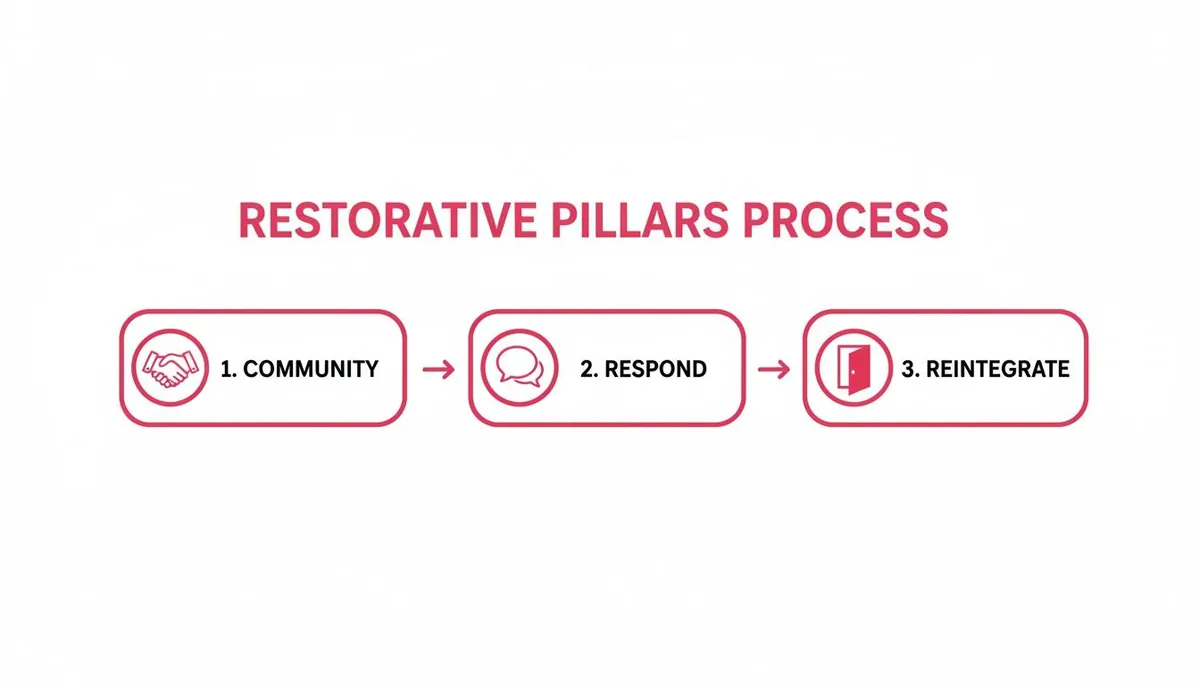
The Three Pillars of a Restorative School
To really get what restorative practices are all about in a school setting, it helps to think of them as having three core pillars. These aren’t separate concepts; they’re interconnected stages that build on each other to create a resilient, supportive school culture. You can picture them as the foundation, the framework, and the open door of a restorative building.
The whole system works on a simple but powerful idea: the relationship bank account. Every positive chat, shared laugh, and moment of understanding is a deposit. When conflict comes up—and it always does—the community has this deep well of trust and connection to draw from to make things right.
Pillar 1: Building Community
This is the proactive, foundational pillar, and honestly, it’s where most of the real work happens. Building community is all about intentionally making those daily deposits into the relationship bank account. It’s about creating a genuine sense of belonging and psychological safety for every single student and staff member.
This is the essential groundwork that has to be in place before any harm occurs. Without a strong community, trying to respond to conflict is like trying to build on sand—there’s no shared trust to fall back on. This pillar is all about creating the shared experiences and norms that bind everyone together.
How This Looks in Practice:
Teacher Example: A teacher can kick off each day with a simple morning circle where every student shares how they’re feeling, perhaps using a “weather report” metaphor. A student might say, “I’m feeling sunny today because I have art class,” or “I’m a little cloudy because I didn’t sleep well.” This simple act normalizes talking about feelings and builds empathy from the first bell.
Parent Example: At home, a parent can create a similar ritual during dinner. Each family member could share one “rose” (something good that happened) and one “thorn” (a challenge they faced) from their day. This builds the habit of open communication.
Classroom Example: Instead of the teacher just handing down a list of rules, the class works together to create agreements for how they want to treat each other. A teacher might ask, “What does respect actually look like and sound like in our room?” The students’ own answers become their shared commitments.
A core belief of restorative practices is that it’s far better to build a strong community than to constantly have to repair a broken one. This proactive work of building social capital is the most critical piece of the puzzle.
Pillar 2: Responding to Harm
The second pillar is responsive—it kicks in when something goes wrong. When a conflict happens or someone is hurt, the focus immediately shifts away from blame, rules, and punishment. The key questions are no longer about who broke what rule, but about repairing the relationships that were damaged.
The goal is to understand the real impact of an action and give everyone involved a voice in figuring out the solution. This is where the school draws on all that trust built in the first pillar to navigate tough conversations. It turns moments of conflict into powerful opportunities for learning and growth.
How This Looks in Practice:
Parent Example: A parent finds out their child took a toy from a sibling. Instead of an immediate timeout, they might ask, “What happened? How do you think your brother felt when he couldn’t find his favorite toy? What do you think you can do to make it right?” This encourages accountability and empathy, not just compliance.
Teacher Example: A teacher sees two students arguing over a ball during recess. They pull them aside for a quick restorative chat: “I can see you’re both upset. Can each of you tell me your side of the story? What do you need to happen so you can both feel okay and get back to playing?”
Pillar 3: Reintegrating Individuals
This final pillar is maybe the most overlooked, but it’s absolutely vital. After the harm has been addressed and a plan for repair is in place, the community has to consciously and actively welcome the student back into the fold. This step is what prevents the shame and isolation that so often follow traditional punishment.
Reintegration makes sure that a student’s mistake doesn’t become their permanent identity. It sends a powerful message: “We are not throwing you away. You are still part of this community, and we will support you as you move forward.” This final step closes the loop, reinforcing the strength and resilience of the entire community.
How This Looks in Practice:
Teacher Example: After a student returns from an in-school suspension, their homeroom might hold a brief circle. The student could share what they learned, and their classmates can offer words of support, making it clear they are glad to have them back.
Parent Example: After a teenager breaks a family rule and has a consequence (like losing phone privileges), a parent can make a point to connect the next day. They might say, “I know yesterday was tough. I want you to know we love you, and we’re a team. Let’s talk about how we can make tomorrow better.” This separates the behavior from the person.
Putting Restorative Practices Into Action
Knowing the philosophy is one thing, but making it real in the hallways and classrooms? That’s where the magic happens. Shifting to a restorative model isn’t about one single program; it’s about having a toolbox of strategies ready to go. Think of it in three tiers, moving from proactive community-building for everyone to more intensive support when serious conflicts pop up.
And schools are catching on. According to recent federal school safety data, a whopping 59% of U.S. public schools reported using restorative practices in the 2021–22 school year. That’s a huge jump from just 42% in 2017–18, showing a clear move toward building connection over just handing out punishment.
Tier 1: Proactive Strategies for Everyone
The foundation of it all is Tier 1. These are the everyday, universal things you do to build a strong sense of community and stop conflicts before they even start. This is where you make daily deposits into the “relationship bank account.” The most powerful tool here? The community-building circle.
Circles are beautifully simple. They create a dedicated space where every single student has a voice and feels like they truly belong.
How to Run a Morning Check-In Circle
Set the Space: Get everyone in a circle where they can see each other. No desks or tables in the way—just open space.
Use a Talking Piece: This is key. Pick a special object (a smooth stone, a small stuffed animal) that gets passed around. Only the person holding it can speak.
Establish the Tone: The facilitator, usually the teacher, explains the circle’s purpose and shares a simple agreement, like “Respect the talking piece” or “Listen from the heart.”
Offer a Prompt: Ask a simple, low-stakes question to get the conversation flowing.
Pass the Piece: The facilitator goes first to model, then passes the talking piece around the circle. It’s always okay for a student to pass if they don’t feel like sharing.
Practical Examples: Circle Prompts for Different Ages
For Teachers (Grades K-2): “What’s one thing that made you smile this morning?” or “If you could be any animal, what would you be and why?”
For Teachers (Grades 3-5): “Share a time you felt proud of yourself this week,” or “What’s one thing you’re excited to learn?”
For Parents (at the dinner table): “What was the best part of your day?” or “What’s one thing you’re looking forward to this weekend?”
For Teachers (Grades 6-8): “What’s one challenge you’re navigating right now?” or “Who is someone you can count on for support, and why?”
This whole process is captured perfectly in the Restorative Pillars Process flow.
As the visual shows, you have to build that strong community first. It’s the bedrock that allows you to effectively respond to harm and, eventually, bring everyone back together.
Tier 2: Responsive Strategies for Minor Conflicts
Tier 2 kicks in when those smaller, everyday conflicts happen—think arguments on the playground or disagreements between friends. The go-to tool here is the restorative chat. It’s a quick, informal conversation that turns a moment of discipline into a moment of learning.
The goal of a restorative chat isn’t to figure out who’s right and who’s wrong. It’s to help students see each other’s point of view and work together to find a way forward.
Imagine two kids arguing over a ball. Instead of a time-out, a teacher can pull them aside for a quick restorative chat. It only takes a minute or two.
Having some go-to questions makes these conversations feel natural instead of forced.
Practical Scripts for Restorative Conversations
This table offers some simple, powerful questions you can use in restorative chats or circles. The idea is to move from blame to understanding and repair.
Situation
Key Restorative Questions to Ask
Goal of the Conversation
Two students argue over a game.
1. “What happened?” (Listen to each person.)
2. “What were you thinking at the time?”
3. “How has this affected you? How do you think it affected the other person?”
4. “What do you need to move forward?”
Help students understand the impact of their words/actions and collaboratively find a solution.
A student is disruptive in class.
1. “I noticed you were [describe behavior]. What was going on for you then?”
2. “Who do you think was affected by that?”
3. “What can we do to make things right and get back to learning?”
Connect behavior to impact on the community and empower the student to take responsibility for repair.
A student feels left out.
1. “What happened from your perspective?”
2. “What was it like for you when that happened?”
3. “What would have made it better?”
4. “What do you need from your classmates to feel included?”
Validate the student’s feelings, build empathy in others, and create a plan for inclusion.
These simple scripts are powerful because they teach kids how to solve their own problems. They are a core part of our guide to conflict resolution strategies for students.
Tier 3: Intensive Strategies for Significant Harm
For bigger issues—bullying, theft, or physical fights—you need a more formal and intensive approach. This is Tier 3, which often involves a formal restorative conference. It’s a structured meeting that brings together everyone impacted by an incident to collectively figure out how to repair the harm.
This isn’t a quick fix. A conference requires careful preparation and a trained facilitator to guide the process.
Practical Example: A Formal Conference
Imagine a student vandalized a school bathroom. A punitive response would be suspension. A restorative conference, however, would involve a meeting with the student, their parents, the principal, and the janitor who had to clean up the mess. The janitor would share how the act impacted their workload and morale. The student would have to face this direct impact, and the group would work together on a repair plan, which might include the student helping the janitor with after-school cleanup for a week.
Key Elements of a Formal Conference:
Participants: The meeting includes the person who caused the harm, the person who was harmed, and supporters for each (like parents, friends, or trusted staff members). A neutral facilitator is essential.
Voluntary Participation: Everyone has to agree to be there. You can’t force restoration.
Structured Process: The facilitator uses a script of restorative questions to keep the conversation safe, focused, and productive for everyone.
The Outcome: The group works together to create a written agreement. It clearly states what the person who caused harm will do to make things right, whether that’s an apology, replacing a broken item, or doing something for the community.
As schools continue to weave restorative practices into their culture, exploring effective online teaching strategies can also help deepen that sense of connection and engagement, making the classroom feel like a supportive community, whether it’s in-person or online.
How Restorative Practices Fuel Social-Emotional Learning